← Squawk Pod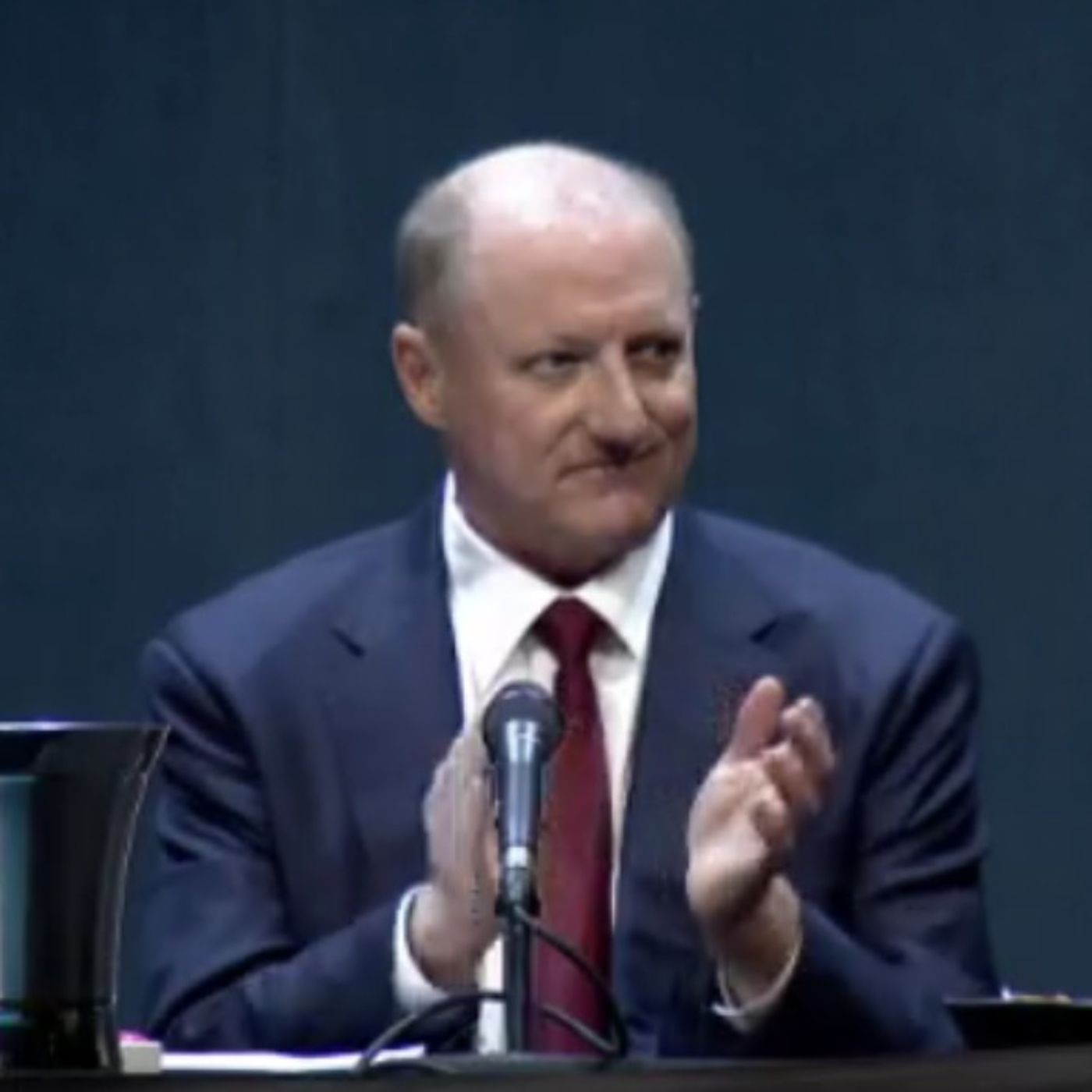
Squawk Pod
Berkshire Hathaway 2026 Annual Meeting: Part 3 5/3/26
01:08:17
In the third and final episode from the Berkshire Hathaway Annual Meeting in Omaha, CEO Greg Abel takes the second Q&A session alongside BNSF Railway CEO Katie Farmer and Adam Johnson, CEO of NetJets and President of Berkshire’s consumer products, services, and retailing businesses. Together, the three address questions about the future of Berkshire’s subsidiaries, the current inflation environment, and much more. And finally, CNBC’s Becky Quick and Mike Santoli recap the busy day with highlights from both Q&A sessions and Becky’s interview with Warren Buffett. For more Berkshire Hathaway coverage: https://www.cnbc.com/2026/05/02/warren-buffett-berkshire-hathaway-annual-meeting-2026-live-updates.html For past Berkshire Hathaway annual shareholder meetings: https://buffett.cnbc.com/annual-meetings/
Loading summary
Transcript176 lines
- [00:00]
Everpure Representative
Your data lives everywhere on prem in the cloud across apps. Bring it all together with Everpure, the platform that acts like a living system, delivering the latest in data performance, security and innovation without ever slowing you down. Sophisticated enough to anticipate your ever changing data needs, yet simple enough to feel like second nature. Tame your data chaos with Everpure and make storage and data management the simplest part of your business. Visit everpeardata.com to learn more.
- [00:28]
Fidelity Trader Plus Announcer
Introducing FidelityTrader plus, the next generation of advanced trading from Fidelity. Customize your tools and charts and access them seamlessly across desktop, web and mobile for faster trades anywhere you go. Try the all new Fidelity Trader Plus. Learn more about our most powerful trading platform yet@fidelity.com TraderPlus investing involves risk, including risk of loss Fidelity Brokerage Services, LLC Member NYSE SIPC.
- [01:01]
Becky Quick
Hi everyone, this is CNBC's Becky Quick in Omaha, Nebraska. And you are listening to part three of our full coverage of the 2026 Berkshire Hathaway annual Shareholder Meeting. We pick up here with the second session of questions and answers hosted by Berkshire's new CEO, Greg Abel. With him on stage was Katie Farmer, CEO of the BNSF Railroad and Adam Johnson, CEO of NetJets and new President of Berkshire's consumer products, service and retailing business.
- [01:31]
Greg Abel
Welcome back. I hope you enjoyed the break. Becky Warren, thank you for that exceptional interview. Appreciate that. Well, we're very fortunate to have Katie and Adam in these leadership roles again. It was a very purposeful have them on stage. We want them to have the opportunity to engage with our owners, our shareholders and we really do look forward to the the question. So thank you for joining us on stage again. Thank you. Becky. Again, great to have you back. Thank you for that interview and if you'd like to start, thank you.
- [02:17]
Katie Farmer
Okay.
- [02:18]
Becky Warren
Thanks Greg.
- [02:19]
Becky Quick
This question comes from Chris Fried in Philadelphia, Pennsylvania, who wants to know how has the current geopolitical situation in the Middle east impacted Berkshire subsidiaries?
- [02:32]
Greg Abel
Sure, I'll touch on it and then I'll make sure because it impacts really in a variety of ways all our businesses. But what I'm most proud of are our businesses. We operate these businesses for the long run just like we do for obviously for our shareholders. We take a long term approach. There's not many days and I used to joke when I more had Adams rule, there wasn't a day I woke up where the phone wasn't ringing with good news. Yeah, that phone rang. You knew you're going to have a bit of a challenge and we have that portfolio. But that's okay, we'd be talking and we always worked our way through it and we have a team that would lean in and we'd come through and it could be anything. And we never tried to use that as a reason we couldn't do something or get to the, to the right place. And what I've seen associated with the obviously the war in Iran and the various conflicts in the Middle east is again, a team is very much taking the approach that that's the situation we're in, we can manage our business and we very much quickly move to what's the best solution for our customers, how can we deliver and continue to deliver what we've done to them and what's their expectations around that. And our teams will work incredibly hard to come up with with solutions. I touched on lspi, the drag reduction agent on the pipeline company. They don't usually sell a lot of product into the Middle east as far as moving, it's more a domestic based product for Canada. In the US when you think of a drag reduction agent on pipelines literally being cargo planes, about that chemical being moved in the Middle east to help free up supply and I remove that, some of that constraint. So there's so many things that go on when they start trying to figure out how to solve the challenge. Now what I would say is it doesn't mean there's not immediate impacts to our businesses. If you think of companies in America, around the globe, petroleum is in natural gas matter is such a fundamental input to so many products. And the reality is, if you think I touched on our chemical group, their input is generally a petroleum product and the output is the various products they produce, obviously that are byproducts of that. But their input costs have effectively doubled in a very short period of time. But again we'll manage through that. And that's the beauty of being part of Berkshire. They know first we'll take care of our customer, we'll find the right answer and we'll manage the challenges and the value creation will be there in the end. So there's some short term pressure on our chemical businesses. If you looked at their first quarter profits individually, they would be down because they're or flat to down because they've got some challenges, for example on the, on the input side. But they're delivering what the customer needs and that rebalances over a period of time where our prices will move up pursuant to our contracts. We'll be treated fairly in the end in that they'll reset and then man wind a Little bit slower. But the point is unfortunate situation and we've got, you know, men of service and women of service over there and putting themselves at risk. And
- [06:11]
that in itself is scary because a lot of our employees have family involved. But you know, as far as running
- [06:19]
our businesses, it's really heads down. We'll get through this and we'll keep operating everything for the long run. And again, it includes how we'll operate our assets. We're not going to put the asset at risk to try to get to a short term outcome because a petroleum price is higher or petrol petroleum prices are high.
- [06:40]
It's very much continuing to take that
- [06:42]
long term perspective, Katie. Obviously it can impact demand and what's being brought in on the coast. Are you seeing that or what else are your observations?
- [06:56]
Katie Farmer
Yeah, it's interesting and Warren has said this in the past before. The railroad is a really good reflection of what's happening in the industrial and the consumer economies because our loadings really cut across all the various commodities. We touch agricultural products, we touch coal, the industrial commodities like cement and steel and aggregates. You know, certainly our intermodal business, which is such a big part of our business, reflects what's going on with the consumer. And so we're seeing the impact from the conflict in the Middle east in a couple of different ways. First of all, I would say that if you look across our various commodities, it's created an opportunity for some of those commodities just because of the disruption in the supply chain. In addition to that, you know, we see commodities like aggregates and steel, things like that, that, that are, that are favorable and we're seeing an increase in those. But then some of the commodity areas that use energy in the manufacturing of those commodities are certainly being impacted by the increasing fuel prices. The largest segment of our business, as I mentioned, is intermodal. And so as fuel prices increase, our intermodal business become competitive. And so we're seeing an increase there relative to what's happening in the Middle East. I would say in general though, as we think about it, if fuel prices stay too high for too long, it has an impact on consumer demand. And when that happens, that cuts across all of our businesses.
- [08:29]
Greg Abel
And have you started to see that yet? That obviously when you think of, I touched on it being an input to many of our companies, but really globally it's an input to so many things. And as that price pressure moves up, obviously the, the demand side is challenged. Are you seeing that yet?
- [08:47]
Katie Farmer
Yeah, we're seeing some. We are starting to see that impact Some of the businesses. I would also say, Greg, as we talk to some of our large intermodal customers, what they are telling us, some of the big retailers are the customers are having to make choices now. So as fuel prices go up, they make choices about what they're buying. And so that's where I get back to. If, if it is a prolonged higher fuel price environment, I do do believe that we will see that customer impact across our businesses.
- [09:17]
Greg Abel
Thank you, Adam. Across your businesses, what are you seeing? What do you, what are you feeling?
- [09:25]
Adam Johnson
Yeah, I mean, certainly, you know, when you see, when you see the increases that have occurred in the instant spikes, in some cases that occurred certainly on the consumer product side, on the real retail side, it has affected some of the demand on that side. I would also tell you that we have also faced multiple times at NetJets with a hundred dollars a gallon or $100 a barrel pricing. We see those spikes, we see the demand. I haven't seen it on the NetJet side. We went from really the last two years from about 5 to 5, 40 a gallon. We're seeing spikes up to 7 a gallon. I would tell you if I see that kind of sitting at seven and a quarter, 750 a gallon, then you'll see it start impacting even on the higher end side, on the net jet side. So we're feeling it. It's, you know, it's not the first time we've had to deal with this. You know, we're prepared to deal with those things and make adjustments where we need to. But this certainly is affecting, I would say, some of the retail businesses and some of the consumer product businesses.
- [10:27]
Greg Abel
Great. Thank you, Adam, and thank you, Becky for the question. We'll now move to station five. Good afternoon.
- [10:38]
Manjap Singh
Manjap Singh from Mountain House, California. Warren has spoken very highly of both you, Greg and Katie. So I'm grateful to have you both leading our company. And I'd like to ask each of you a question. Greg, as you know, the Berkshire system relies on decentralization. Each manager runs their own subsidiary. As CEO, which operating units do you think need more oversight? And how will you handle a manager who. Who underperforms? And Katie, As Greg highlighted, BNSF's profitability lacks its competitors. With eventual technology advancements and autonomous driving trucking costs will continue to drop. How will be NSF maintain its competitive advantage from competitors and new technology?
- [11:49]
Moderator/Interviewer
Great.
- [11:50]
Greg Abel
Thank you. So, associated with the letter I wrote to all of you as owners, I
- [11:57]
highlighted some important as I've touched on values.
- [12:01]
One of them was our decentralized model. I also touched on risk discipline, capital allocation. And when we think of our businesses, we have an exceptional group of leaders
- [12:16]
and businesses and yes, they do own their businesses. As Katie touched on it in her video, as Adam's alluded to it and talked about it, there's a great deal of ownership in each of our. Across each of our subsidiaries and that's absolutely how we'll continue to operate and see it as an extremely effective model. They're closest to their customers, they understand what needs to be done and if they think like an owner, we get very good outcomes across the group of companies. I would highlight though that with decentralized model we do not take responsibility. And I was one of those. I ran bhe it's a great set of responsibilities or Berkshire Hathaway Energy shouldn't be abbreviating.
- [13:10]
Sorry, but when I ran it that
- [13:12]
that autonomy meant you embraced it and there was a great amount of accountability that came with it and sheer pride that you wanted to do things right.
- [13:24]
We've got a clear set of.
- [13:26]
When we talk about integrity and how I started it, we have a lot of expectations and that's where both on the, on the integrity how they approach managing their business and servicing their customers. And I've said there's a lot of external factors we can observe but our primary engagement is with their. Are they managing the risk and risk and foremost, do they see themselves as that chief risk officer you've heard us discussed many times. Are they good allocators capital with the capital they have there? Because even capital you have to manage your operating expenses. Well, I view everything, you know that, that when we're spending money on a. It may be a capital expenditure, it can be an operating expenditure. You're deploying our, our, our shareholders capital. Are we doing that well? And we focus on that. So that's part of that equation of allocation capital.
- [14:23]
And the reality is if we're seeing
- [14:27]
a situation where we're underperforming or we're seeing some potentially poor decisions, that's where we engage and have a discussion. And usually it's relative and I touched a bit on this with Katie, it's relative to what we see externally and just really trying to understand where our performance gaps are.
- [14:48]
And, and then it quickly moves to. And we have.
- [14:53]
We don't have the people at corporate to go in and quote help. So it's not like we send in an army.
- [14:59]
But there's generally some people within our subsidiaries or maybe someone we know that could help them with that, with that performance gap because we do treasure continuous improvement and strongly, as you've heard, believe in operational excellence. And there's, as I've said, there's room for us to get better. And that's how we would approach the situations where we see the gap and need to close it. Katie, maybe you can probably touch on both.
- [15:25]
Katie Farmer
Absolutely. So thank you for the question. And as I said, we absolutely know that it's critically important that we continue to drive an efficient operation, that we continue to have a competitive cost structure, and that we continue to close the gap with our competitors relative to our profitability. There's a couple of specific things that we're working on and it's really about operationalizing the improvement that we saw in 2025 into the first quarter of 2026 and making sure that we're really institutionalizing that. So the first thing that we really focused on in 2025 was we knew that we needed to improve our single car operational efficiency. And when I say single car unit operational efficiency, we run a couple of different networks. We run our intermodal network, we run our agricultural and our coal network, our boat networks, and then the balance of it is what we call our car load network, our single car network. And that's where we, we have non unit train. It takes a lot of operational focus, it takes a lot of work effort and it consumes a lot of resources. And so anything you do to improve that single car network is good for all of your customers. It frees up resources, it creates capacity, it allows you to handle the same amount of volume, if not more, with fewer assets. And that translates through then to the improvement that you're seeing in the profitability. An example of that is in the first quarter of this year we handled more volume than we did in the first quarter of last year, but we did it with 260 fewer locomotives. That translates into a more consistent service product for our customers. And it also translates into better financial results, which is what you saw in the first quarter of 2026. So we're spending a lot of time ensuring that we have operational excellence not in just all those other networks, but in the network that frees up resources and drives improvement and operational excellence for all of our customers. The second area, and you heard Greg talk about this earlier, was around our technological transformation. We really believe that in addition to driving that operational discipline that you saw in 2025 and into 2026, that working with the new BNSF tech organization to drive that next step level of improvement and so you, you saw units dwell in our terminals, less time. That translated through to the financial results that I talked about. You saw velocity improve as well. And so how do we leverage technology then to take the next step? Level improvement. So I'm excited about what we're doing there. We're literally attracting data center scientists, operations research folks, and we're putting them alongside of our operators in our network operations center. We're looking at things like digital twins, which gives us the opportunity to model how we run the railroad before we actually run the railroad. We're looking at opportunities to do predictive ETAs for our customers, which allows our customers to have a better product. It allows us to turn the assets faster. And then last, what I would say is that we're just, it's good old fashioned going to work on attacking the largest structural cost buckets. We had a record for the first quarter in our fuel efficiency. That's the kind of thing we want to do because it makes us competitive with trucks. It is good for the environment and it's good for our financials. So those are the things we're doing to close the gap relative to profitability. Now your question about competing with trucks. I would say a couple of things with that. First of all, we have the largest intermodal franchise of all of the railroads. We have a unique relationship with J.B. hunt and we have been extremely successful in converting over the road freight. We've done more of that than anybody. So we know how to compete with trucks. But your question about technology is a good one. And I would say that we in the past have invested in a system called positive train control, which is a safety overlay that allows us to operate the railroad efficiently. As you know, we operate in a closed circuit. And so we have the ability to your point ultimately to run the train with fewer people than we operate with today. And in fact, if you go way back in time, we used to operate the trains with five people on the train. Now we're down to two people on most of our trains. So the technology will continue just like most industries will continue to evolve. And we're continuing to look at that as well. The last point I would say with that though is that we also have to be allowed to innovate. And so we need regulation that supports, supports the ability for railroads to be able to compete with trucks. As you said, we know that there are trucks out there running today in our state. In Texas along I45, we just, there was just a pilot with autonomous trucks. What we have to be able to do is to be able to compete with that and to be able to innovate. And so we're going to need regulations that allow the railroads to be able to do that. So that's how I think about competing, ensuring that we're closing the gap, as well as maintaining our competitive advantage with trucks.
- [21:05]
Greg Abel
Thank you, Katie.
- [21:13]
Adam, on that, on that point and Katie's point, you know, you came literally. Adam had left for a very brief stint 10 years ago and had a very senior role in NetJets and had effectively been recruited to be CEO of another business that was going public. And we were fortunate enough to convince
- [21:35]
Adam to come back.
- [21:36]
But he came back to a challenging situation. The asset was underperforming. We had billions of dollars of debt back to ourselves, to the parent company, but it was debt that had been incurred and some real challenges. When you think about how we address underperformance and how do we get a business back on track,
- [22:00]
Maybe you just
- [22:01]
want to touch on that period of time and that bringing the business back and how you achieve that.
- [22:09]
Bori Wong
Yeah.
- [22:09]
Adam Johnson
Well, one, I will tell you. I came back on June 1st of 2015 and that Monday, Monday afternoon, and many of the team that's up here today, we got in a room and I asked a question about how many people really understand sort of the bookends of our business. NetJets is complicated. We're ad hoc. We're on scheduled. We fly to thousands of airports. Commercial airlines will fly to 50 to 100 airports. We fly to 150 countries around. So it's a very complicated business. And I asked the question, did the team, how many people do you think really understand the bookends of our business? And I didn't like the answer. I won't tell you what the answer was, but it was too few and it sort of started there. And what we did was we really said, you know, to build this culture the way we want it. If I understand what you're doing, you understand what I'm doing at deeper and wider levels, we're going to do good things together. So it sort of started on that Monday afternoon. And when we started building that back, I will tell you, it was also a reinforcement from probably from Greg. I remember my first board meeting prep, and I was excited and we were starting to kind of move, and I was talking about growth and we're going to get this right. We're going to grow. And Greg pulled me aside in a very kind way, and he said, why don't you pay $1 back to Warren and work on getting your debt down. That was the teaching lesson. I took that to heart. I heard it clearly, and I actually already knew that. And so we just started really putting our blinders on and we said, safety and service, safety and Service. Warren bought NetJets after becoming a customer in 1995, bought NetJets in 1998, and he did a video for us that we still use. And he said, I want safety and I want service. And we've been really focused on making sure everybody stays in that alleyway. That in large part, plus a lot of hard work, is why we were able to pay our debt back. We're able to pay cash back to Berkshire Hathaway and move our way, as I said in the video, out of the other comm and be first in the service business. And I'm proud of that. So great.
- [24:14]
Greg Abel
Thank you, Adam.
- [24:15]
Thank you, Katie. Becky.
- [24:24]
Becky Warren
Okay, this kind.
- [24:25]
Becky Quick
This comes from Brian Simpkins in San Diego, California. The question is, has Berkshire Hathaway considered seeking any tariff relief or reimbursement programs for its wholly owned operations, operating businesses exposed to import costs? And how significant is that impact across the portfolio?
- [24:45]
Greg Abel
Let me, let me start with the
- [24:47]
impact across our portfolio because it's, it's very close to discussing the situation in the Middle east in that, yes, there were, there was the tariffs and each business may have fallen under a different tariff or what they were importing. And, and we'd gone through it once already in the, in the first term of the administrator in administration. And there, there were lessons learned there.
- [25:14]
So we were both better, better prepared in how to manage through it and had realigned a certain amount of our, our input.
- [25:22]
So it, you know, that was valuable.
- [25:25]
The second thing was, it's as I
- [25:27]
described with the, with the conflict. It was heads down and we'll just manage ourselves through it. You know, listen, there, there's some cost pressures here. We'll figure out how we're going to continue to serve the customer. We'll work through, on, on delivering what they need. And there has to be some reasonable expectations on the other side that we'd recover those tariffs from our, from, through the, either through a direct contract with them or through the product we're creating. And, and that was a good approach in that we just held our course and wanted to continue to service them. So, yes, there is financial impacts, but our team did a really remarkable job of addressing it and really minimizing the impact to any of our businesses as far as recovering it. That would definitely be at our operating level, they would be making such a decision.
- [26:25]
But.
- [26:25]
But overall, right now, our perspective has been there's a. There's a lot to sort out when it comes to refunds, what we're eligible for. And, and so at this point in time, we're very much taking an approach that if it's appropriate, our teams will evaluate it.
- [26:44]
Moderator/Interviewer
And, And.
- [26:44]
Greg Abel
And again, it'll be a discussion with our customers and, and with a number of them. So it's an operating subsidiary decision, but we're not naive to it in that we're encouraging them.
- [26:55]
There's a lot to be sorted out
- [26:57]
at this moment in time, and we're not pursuing them. That doesn't mean we may not have a subsidiary. And I'll look to our team on stage here that may be pursuing one or seeking one. Katie, Anything?
- [27:11]
Katie Farmer
Not as far as the reimbursement, but I would say just as far as the impact of the tariffs and what we're seeing with our customers, you know, I would say that in early 2025, we saw several of our customers pulling forward shipments in advance, in advance of the tariffs. And, you know, we certainly saw our volumes ramp up at the beginning of 2025 because people were trying to get ahead of the implementation of the tariffs. So we did see, you know, an increase in volumes through early 2025 that really stabilized. Then in the back part of 2025 and then into 2026. I would say that our customers have really adapted to the tariffs and adjusted to the tariffs. With that said, it does cause some uncertainty. And I think where we see that really showing up is, you know, it's very difficult for our customers from a planning perspective. And I think it's keeping some capital on the sidelines as far as investment in manufacturing facilities. And it's just really the uncertainty of the tariffs that. That really is what we're seeing reflected with our customers.
- [28:19]
Greg Abel
Thank you, Adam.
- [28:21]
Adam Johnson
Yeah, I mean, I would echo both those points. One, I would probably use, you know, Berkshire Hathaway Automotive, Jeff Rocker, who is an excellent, you know, CEO of that division. You know, his. The new and used sales are, you know, slightly down and in Q1 of this year compared to last year. And part of that is sort of that same effect from the terrifying that occurred a year ago to today. I had to smile because we were collecting. Okay. It's changed every day, as we know, and you manage through that. And just understanding the tariff. Bouncing ball was a job in itself, but I had to smile because I was actually calling our CEOs just to get their take on it. And the 32 companies in the portfolio, consumer product services, in retail, it's a stat that I love. They've actually been around on average 88 years. And only 0.5% of American businesses have been around more than 80 years. Our average in that sector from a founding standpoint is 88 years. And several of the five of the companies, specifically companies that were founded in the 1800s and when I called those CEOs, they said we've been dealing with tariffs for a hundred years, you know, kind of thing. And so not being dispensive at all of tariffs. The point is, I look at the whole tariff conversation as you're always going to have a curveball up, I think of the CEOs in the last, you know, seven, eight years we've had to deal with a global pandemic, the highest inflation, four years, and now this thing, you know, the bouncing ball of tariffs. So the businesses have done an excellent job of managing through that. I wouldn't put it in the fun department of the things we have to deal with, but we're learning it and I think we're in a pretty decent spot moving forward.
- [30:04]
Greg Abel
So thank you, Adam. We'll move to station six.
- [30:14]
Amir Rayhani
Good afternoon, My name is Amir Rayhani from Vancouver, Canada. Thank you for hosting us and thanks to everyone at headquarters that makes this weekend possible. Berkshire's investments in the five Japanese trading houses was passive. Good business at good prices, financed by GPN. Your Tokyo Marine deal is fundamentally different. A 10 year joint M and A and reinsurance partnership. That's a level of operational integration Berkshire has never done internationally. What does that look like in practice? And does it signal a broader shift toward active international partnerships under your leadership? And to put you on the spot, Greg. Canada versus USA and hockey. Who are you cheering for? Sorry, sorry.
- [31:12]
Greg Abel
Now I'm in trouble. Yeah. She did an exceptional job of discussing Tokyo Marine and I'll touch on it.
- [31:25]
But what. And I teed it up a bit
- [31:29]
in saying it is a strategic relationship
- [31:33]
less than a financial transaction.
- [31:36]
Yes, we like the two and a half percent investment in the Tokyo Marine. And, and that will be a long term
- [31:45]
investment. It's the type of investment we put with our other five investments in Japan. We really think of those as forever
- [31:53]
because it goes beyond the investment and it's very much around the relationships we want to build there.
- [31:58]
And you'll continue to see that
- [32:02]
Ajit expanded on the underwriting opportunity that we do jointly participate in their risk and rewards associated with effectively also 2.5% of
- [32:14]
their book there now and that's again part of the financial transaction.
- [32:21]
But there's also great deal of faith there. We, as Ajit said, and really Ajit says, and I take his word for
- [32:28]
that, but it's an exceptional company and, and their performance has been remarkable.
- [32:36]
So we're thrilled to have them. And then the third thing that was touched on was the partnership highlighted a variety of things, how we would like
- [32:46]
the relationship to develop and that's not defined yet.
- [32:51]
So we'll continue to let that take its proper form. They're the type of partner that has the same culture, same values as usual. So there's little question it's going to be exceptional for many years to come. But as far as pursuing an absolute acquisition in insurance or something like that, that'll evolve with time. And that would be obviously the discussions as Ajit and the senior team at
- [33:16]
Tokyo Marine would be having.
- [33:18]
And if such an opportunity materializes, we'd be thrilled with it. Now to the really tough question. Canada versus U.S. in hockey. I did find a way and it can cause a lot of angst in my own family. So I remember waking up that morning and Canada was playing the men. But I'd already decided a little bit earlier that when it came to the Canadian men versus the US men, Connor McDavid plays for Edmonton and therefore I was in cheer because being from Edmonton, I would, I would cheer for the Canadian men's team and I've always followed the US Women and I love what a program the US Hockey and I love USA Hockey and how they approach the coaching and the, and the development of the youth. And I think they've done a great job there. So I chose to cheer for the US Women and it was the perfect outcome for me. So little selfish in finding that type of outcome.
- [34:23]
Katie Farmer
I will say Greg, Greg and I had an Oiler Stars bet last year.
- [34:27]
Greg Abel
Yes, true.
- [34:28]
Katie Farmer
And we the losing person had to wear the jersey of the other and I now own Oilers gear.
- [34:33]
Greg Abel
Yeah, Katie owns some Oilers jersey and unfortunately this year neither of us that they're both on the sidelines very quickly. But thank you for that question. Becky.
- [34:48]
Becky Quick
This question comes from a shareholder who didn't want to be identified. But it's a variation of a question that I got from several shareholders. Is there any future circumstance that you could envision Berkshire divesting businesses or being broken up? If so, what are those circumstances? The shareholder also writes, note, I don't want this to happen, but it's a commonly discussed. It's commonly discussed among followers of the company.
- [35:16]
Greg Abel
Yes.
- [35:17]
So the. So when we think of the question, and I think it's a good one because we've always highlighted there's certain circumstances
- [35:27]
that we may not be the best owner of a business we've touched on. If there's labor issues that we cannot resolve. I would take it to the point. Then further in my letter I touched on if there's reputational risks that we're not willing to ever have our owners or shareholders or Berkshire experience and that we have to. Maybe the business has evolved, the customers have evolved, but if there's that type of situation, then that company does not belong in the Berkshire family and it may be a fine business that can be owned by someone else, but it may mean we don't own it. I would then take it a little bit further. I touched on a couple things or one other thing before I jump to that would be we've often talked that if we have a business that is unsustainable and no longer generating operating cash for our shareholders, we have to make some serious decisions around that. If there's someone else who could operate it and make it be more successful both for the customer and for our employees, then we have to consider that otherwise that business is unfortunately in a place where we can't just fund it and experience losses. We would wind it down over a period of time, but we'd look for a better solution for our customers, employees. So that's always been the case. Well that, that at least from my perspective has always been the case. And how we'll continue to do it, I would say we're taking it, we take the, the obligation and, and making sure capital is properly deployed obviously very seriously. I touched on the regulatory compact at Energy and that that has to exist and we have to be, if we have capital deployed there, we have to get a fair return. We have a situation where we've actually announced we're selling a portion of Pacific Corp. Our Washington state utility.
- [37:34]
And that's really a function of the
- [37:36]
fact that we have a multi state process. In Pacific Corp. There's six different states and each customer is impacted in different ways. And I've already said there's, we very much focus on what's the needs of our each state and how can we best service them. And unfortunately we are in a situation in Washington where they clearly had policy that they wanted from Pacific Corp. And it was having a significant impact on the costs of our other states. And as much as we would have liked to seen what we call a multi state compact. That is, how do they balance all that? It wasn't occurring and our other states were bearing costs that they felt were not theirs that were being imposed by another state. So we consciously said this isn't working for the six states and the one state who had very specific policies and wanted them implemented. We chose to exit. We found a very good purchaser who very much supported and could implement what was required at that state. So there we, there we have evolved and it's a situation where it just didn't make sense for Berkshire to be an owner of that asset or our owners to be an owner of that asset. And it'll be, I believe, a better outcome for the state and for their customers. So there are those situations where we would, we would divest and we will always approach things that when we buy something, it's forever. When we acquire a utility, we tell the regulators it's forever. But it has to be a relationship that works and if it's broken, we'll find a better path both for the company, the employees, customers, and obviously for Berkshire. Yep, yep.
- [39:32]
Becky Quick
Greg, there's a second part of that question though that gets at least is there a, is there a point point where some of the parts or something, Is there a point where it doesn't make sense for Berkshire to be a conglomerate where you would break up the company?
- [39:44]
Greg Abel
Yeah. So to the second part of the question. Absolutely not. We, we, I touched on it early. We, we, we are a conglomerate, but we are an efficient conglomerate. We, we don't have layers of management. We don't have a bunch of committees telling our businesses how to run, how they're going to manage their customer relationships. We try to the odd time, create frameworks so there's value shared across the businesses so they're aware of what our other businesses are doing and technologies. That's one of them. We like our framework now. We think it's very effective across three of our businesses. So of course we want them to
- [40:27]
understand it, but we don't create layers.
- [40:31]
I remember when Adam took on the role, I nicely said, there'll be no corporate group supporting you either in Omaha or amongst your own team. He's got folks in NetJets and they always step up and take more responsibility, including when I was in that role
- [40:51]
or in the vice chairman role.
- [40:55]
But the one thing we don't do is create layers of bureaucracy or other
- [41:01]
decision trees around it.
- [41:03]
And I think so many conglomerates end up with layers and layers of costs that don't add value
- [41:11]
to the overall corporation.
- [41:13]
I'm even careful when I talk about our metals group and our chemicals group because there are a group in call it maybe in my vision. I see similar opportunities. Opportunities. I want them to work together, but they don't have a corporate group on top of them or anybody directing them on what to do. They find ways to work together because they have a lot of the can have the same challenges, can have the same customers. So we see our conglomerate structure working without the bureaucracy and bloated costs. We see a great opportunity to continue to move capital across those different groups in a very tax efficient way. Other people can't say I want to move capital. BNSF is a great example. Yes, they, they have a strong operating results and they generate, they're in a cycle in their, their business cycle right now where there's certain amount of capital we have to deploy into it. But we also receive substantial dividends from, from BNSF on an annual basis. We can take that capital and decide is it needed in a different operating business or do we see opportunities in equities. And if we don't see those opportunities, we're happy to not happy. But we understand the logical home right now is us Treasuries. We think that's a good asset. We prefer to see that deployed in a different fashion. Yes, when the opportunity presents itself. But it allows us to really move that capital across the group. So I actually the answer to the conglomerate is yes, we understand we're one. We see it operates very effectively and we do not see ourselves divesting of subsidiaries for that reason or ever breaking off a group.
- [43:08]
Moderator/Interviewer
Thank you.
- [43:17]
Greg Abel
Okay. Station, station seven.
- [43:25]
Bori Wong
Hi, Greg. Hi Greg, Katie and Adam. My name is Bori Wong. I'm here from Chengdu, China on behalf of myself and my parents, investment partner Xu. Thank you very much for this opportunity. And congratulations, Greg, on surviving your first year as CEO.
- [43:49]
Greg Abel
Thank you.
- [43:50]
Bori Wong
I'm sure the sea feels a bit warmer than it used to be. As you lead Berkshire into this new chapter, what would you say is the most significant evolution in your personal framework for assessing cash flow, certainty and margin of safety compared to Warren's. And specifically, are you more inclined towards technology companies that exhibits the same robust cash flows? Thank you for continuing the legacy of Mr. Warren Buffett and Char Mr. Charlie Munger.
- [44:28]
Greg Abel
Thank you. So I think I'll start with the important part of that question. I mean, as far as how Berkshire, how Warren thought about it, how Berkshire thought around approaching investments, quote our margin of safety around investments and how we approach it. We're absolutely aligned there. And that starts with our culture and values and how we've approached everything over the years. So if I go back to looking at opportunities in energy and it may have been an acquisition or we're deploying significant capital, it quickly went to yes, we understood the opportunity, but Warren and I'd want to have this conversation. Where's the risk and do we really understand the risk associated with this? And I have a really great example is that we were acquiring NV Energy in the had the opportunity to acquire it and Warren was actually coming back from China and had been over there and I was waiting for him to arrive and land in Seattle and give them an update that we had this potential opportunity. And I very much knew the occur the the opportunity and what the the value proposition was. I clearly had three significant risks in my mind that was anxious to discuss with Warren. And in the in Warren landed and I had a short presentation sent him asking him to just give me a call. It was literally one page but just to really trigger it, can we have this conversation? And the immediate conversation we had was yeah, the economics, you'll. You couldn't agree more. Understood them, went right to the biggest risk. And I was just getting ready to walk him through the two or three risks I'd seen and want to make sure we understood it and were comfortable and wanted his input. And the risk was fundamentally rooftop solar. And how would it disrupt that business and disrupt our customer? We discussed it, we understood it was a challenge. I remember saying to Warren, well that's part of the reason I'm sure we have this opportunity to acquire this public company, that there is certain amount of risk and the board and the management team have decided that they didn't see the same opportunity we did. But Warren went right to it and was all around the risk and that risk did surface 12 months later, 18 months. We managed our way through it, our team did a great job. But so I don't see there being incremental margins or we think of risk differently. We think of them as in the Berkshire mindset that we're going to understand the economic prospects of this opportunity. And as I said, we really go to that 10 year window potentially and say what's the business look like 10 years from now and is there enough safety margin 10 years from now? Is what we see it the outcome? Do we see an outcome? And if we don't understand what that looks like 10 years from now? I know Warren would say this, I would say then we don't do it. There's no safety margin or maybe we can adjust some numbers or there'll be synergies or something of that. We have to have a vision of what that's going to feel like and look like. And that really is how we approach it. Now, touching on technology companies, we're not going to ever say, geez, this is a specific sector for us or we need to be in it. If there's something in the technology sector or in that group of companies and we understand one of those companies to understand again what their opportunities are and what we view as the economic prospects for it and we have an understanding of what those risks are that doesn't preclude us just because it's in a technology sector or that. But it would start with back to the fundamentals of do we understand it? Do we under both the opportunities and the risks. And and then is it and then is it fairly valued relative to that? And that's all that's always going to be the approach. So thank you for your excellent question. Now, Becky, if this is okay, we're going to and so please pick your toughest question. But we're beyond one o' clock now. This will be our last question for today, so we look forward to it. And then I'll have some conclusionary thoughts and comments. But thank you, Becky.
- [49:32]
Becky Quick
This question comes from Joseph Matias and he said Warren had Charlie's partnership for most of his tenure as CEO, which naturally reduced the risk of subpar investment decisions. Who will serve as the Charlie for Greg?
- [49:56]
Greg Abel
And they're a reason why they're in the rafters together. That was an incredible partnership and one that you can't replicate. But what I would start with is that very fortunate to see still have Warren as our chairman and that's very important and it makes for an excellent transition. Have an exceptional board of directors that I'm comfortable reaching out to any of them individually depending on the circumstances and either the risk we're dealing with or an opportunity that may be present in any of our businesses or one that may be coming our way. So we're fortunate to have that exceptional group in place. And then it really comes back to our team that's in place. And I said this when I was answering to Warren from Omaha that we want Berkshire to endure and that means yes, I want to lead Berkshire and I'll be a strong leader. I strongly believe that and I'll take Berkshire for it. But it will be as you always need a single leader and I think we strongly understand that. But you surround Yourself with great people and they're already here. I've been fortunate on the non insurance operation to operate with Adam's 32 and the 18 that I still get to interact with a lot. Those 50, including Adam and Katie, obviously have an exceptional working relationship with Ajit and fortunate with that and would seek counsel regularly. Even even as vice chairmans, we would constantly have a conversation around he may be making an insurance decision or I was making a decision around one of our non operating businesses and the first thing we'd cross check is how's it impact your group. So have an amazing relationship and someone
- [52:07]
I immensely value the input.
- [52:11]
And then across our CEOs, we're so fortunate to have a great group that I would reach out to any of them on a specific circumstance and ask them for their input and I generally know where they've dealt with a challenge or a significant opportunity and I'd be the first to seek it out and say let's talk about it and figure out our path forward. And it may be that it was someone on their team that really dealt with it and then I'd want to be talking to their team. So fortunately because of Berkshire and the way we're created, again it is a unique structure but we have an immense amount of resources around us. And then we have our team in Omaha who's supported Warren for all those years. They're remarkable folks. There's, there's not a lot of them but they are good and they're, and they're exceptional and we're fortunate to have them as part of the team. So it will be such that Berkshire endures and will endure as a, as a team, but clearly with leadership. So thank you Becky, that last question. Thank you. So as we, as we wrap up today, obviously I can't help but thank everyone for joining us this morning and early afternoon, both as our long term shareholders, those that are our newer shareholders and all, again, all of you that came for the experience. It's, it's greatly appreciated. We enjoy this engagement. It all comes together because there's a, an individual warn as highlighted in the, in the past pulls together the exhibit hall, pulls together everything here. I'd like to acknowledge her, Melissa Shapiro. Thank you.
- [54:17]
And then the light was over on that table.
- [54:20]
But we do have and we made this announcement in December. Our long standing cfo, Mark Hamburg is retiring in June of this year. We're very fortunate that then he will stay on for an incremental year as an advisor to our incoming cfo, as a personal friend advisor to myself. We will have Mark's knowledge resource and it's immense when it comes to Berkshire. I like to. Mark has been a our CFO for 34 years. This not this June, the following June when he when he truly retires it'll be 40 years with Berkshire and it's been such an incredible career and has worn so he wears so many hats in this organization. I mean he's, he's helping Melissa Melissa's organizing and doing all but when she has a question she went to Mark to look for the answer around be at the annual meeting. He's our corporate secretary. I like to say to replace Mark we hired a cfo but we also hired a general counsel. It took two to replace him and more than that. So Mark, thank you for your incredible contributions to Berkshire. Warren has highlighted those and I can only echo all that. Thank you so much. Now lastly again thank you for this remarkable experience for all of us at Berkshire. We treasure what we call Owner's Day, that opportunity to communicate around what's going on in Berkshire because we're so proud of it, absolutely committed to it and passionately believe in Berkshire. But equally the engagement of all you throughout the day yesterday into this afternoon just greatly appreciated. Thank you and look forward to seeing you next May. Thank you.
- [56:57]
Discover Credit Card Announcer
It's smart to always have a few financial goals and a really smart one you can set earning cash back on what you buy every day. And with Discover you can get this Discover automatically matches all the cash back you've earned at the end of your first year. Seriously, all of it. And we trust you to make smart decisions. After all, you listen to this show see terms@discover.com Credit Card Introducing FidelityTrader plus
- [57:24]
Fidelity Trader Plus Announcer
with customizable tools and charts you can access across all your devices. Try our most powerful trading platform yet@fidelity.com TraderPlus investing involves risk including risk of loss Fidelity Brokerage Services LLC Member NYSE
- [57:36]
AT&T Business Wireless Announcer
SIPC before we had ATT Business Wireless coverage, our delivery GPS wasn't the most reliable. Once our driver had to do a 14 point turn to get back on route. A 14 point turn. An influencer even livestream the whole thing not good for business. Now with AT&T business Wireless routes are updating on the fly and deliveries are on time. And the influencer did get us 53
- [58:01]
Fidelity Trader Plus Announcer
new followers though at&t business wireless connecting changes everything.
- [58:11]
CNBC Narrator/Reporter
There you have it. The 61st Berkshire Hathaway Annual meeting is in the books. That was Greg Abel's first time running the show, but he did get a Little help from the chairman, Warren Buffett. Buffett sat down with Becky ahead of the afternoon session and delivered a number of newsy comments. We'll kick things off. He kicked things off by saying that he is staying cautious with his own investments.
- [58:34]
Moderator/Interviewer
I think it's all working. It's all working. It isn't our ideal surrounding area or environment I should say in terms of deploying cash for Berkshire, but in terms of how we got the right management, we got the right arrangement and you know, we can pick our spots and, and, and nobody can tell us what to do exactly. And, and so sometimes we're doing nothing but other, other times we get quite
- [59:13]
CNBC Narrator/Reporter
active but with stock sitting at record highs and at elevated valuations. Becky pressed him on the overall valuation picture and whether he sees opportunities anywhere. Here's what he said.
- [59:26]
Moderator/Interviewer
I've compared the markets to a church with a casino attached. And, and people can move between the church and casino and, and I would say there are more people in the church and more people in the casino. But the casino's gotten very attractive to people. You know, if you're buying one day options or selling them, I mean that
- [59:48]
Becky Warren
is,
- [59:51]
Moderator/Interviewer
that's not investing, it's not speculating, it's gambling just totally. There's nobody that can explain why they're buying an option for one day unless they maybe the funnel that made the four hundred and some thousand dollars from knowing when we were going in the events away like doing. But I mean that's pretty. And the quantity of those things is just incredible. So we've never had people in a more gambling mood than now. But that doesn't mean that investing is terrible.
- [60:28]
CNBC Narrator/Reporter
That's of course been a persistent theme of Warren Buffett's for a very long period of time. He's always been skeptical of short term traders ability to outperform the market or certainly outperform a longer term shareholder. The church attached to the casino and the, the pot, the attendance varies between those. So when asked about the impacts, just to get to Greg Abel's Q and A of the Iran war on Berkshire, Abel said while it impacts businesses in a variety of ways, he echoed Buffett's emphasis on long term thinking.
- [60:57]
Greg Abel
It impacts really in a variety of ways all our businesses. But what I'm most proud of are our businesses. We operate these businesses for the long run just like we do for obviously for our shareholders. We take a long term approach. There's not many days and I used to joke when I more had Adam's role, there wasn't a day I woke up where the phone wasn't ringing with good news. That phone rang. You knew you're going to have a bit of a challenge and we have that portfolio, but that's okay. We'd be talking and we always worked our way through it and we have a team that would lean in and we'd come through and it could be anything. And we never tried to use that as a reason we couldn't do something or get to the, to the right place. And what I've seen associated with the, obviously the, the war in Iran and the various conflicts in the Middle east is again, a team that is very much taking the approach that that's the situation we're in, we can manage our business and we, we very much quickly moved to what's the best solution for our customers, how can we deliver and continue to deliver what we've done to them and what's their expectations around that. And our teams will work incredibly hard to come up with solutions.
- [62:20]
CNBC Narrator/Reporter
Abel was also asked about his willingness to divest holding companies, invest subsidiary companies, and whether Berkshire will remain a conglomerate under his leadership.
- [62:31]
Greg Abel
We are a conglomerate, but we are an efficient conglomerate. We don't have layers of management. We don't have a bunch of committees telling our businesses how to run, how they're going to manage their customer relationships. We try to the odd time, create frameworks so there's value shared across the businesses so they're aware of what our other businesses are doing and technologies, that's one of them. We like our framework now. We think it's very effective across three of our businesses. But the one thing we don't do is create layers of bureaucracy or other
- [63:12]
decision trees around it.
- [63:13]
And I think so many conglomerates end up with layers and layers of costs
- [63:18]
that don't add value in, in, in to the, to the overall corporation.
- [63:23]
So I actually, the answer to the conglomerate is yes, we understand we're one, we see it operates very effectively and we do not see ourselves divesting of subsidiaries for that reason or ever breaking off a group.
- [63:41]
Moderator/Interviewer
Thank you.
- [63:46]
CNBC Narrator/Reporter
As you can see, our Becky Quick is back with us. You know, I thought that was an interesting answer and you pressed him on this idea. Do you envision down the road there'd be any kind of a breakup, some kind of a big spin off or something like that? Pretty much swatted that away. However, before that, he did express a willingness under some circumstances to sell some businesses. It seemed pretty narrow in terms of what it would take, but I did think that was relevant. He seemed to Want to get on the record with that?
- [64:10]
Becky Warren
Yeah. Because I think in some ways he said, look, this is the same way I've been looking at things for a while. That's not necessarily the way it was seen. I think, under Warren and Charlie originally, the deal was, if we buy you, we buy you, you're forever. And that was something that brought you in. Back again to the idea of Greg's roots as an operator. If a business is losing money, we're not going to continue to sustain that. If we can find somebody else who can run that business better, we'll sell it off. We're going to. To do what's best for our shareholders, also for the employees of that company, as he said, to not want to wind something down. But he said, if we have to, we'll wind something down.
- [64:44]
CNBC Narrator/Reporter
Yeah. I mean, as the questioner said, I get this from a lot of investors in Berkshire, that, the curiosity around that now, on one level, it's like, what are you going to do? Sell a business for cash and just add to the cash you're not doing anything with?
- [64:56]
Becky Warren
Right.
- [64:56]
CNBC Narrator/Reporter
But in the, in the, you know, I guess in just a general capital allocation, you don't want capital to be eroded on one end of the business, even if it's, you know, relatively small.
- [65:05]
Becky Warren
It's the definition of capitalism. Right. The idea of a profit motive, that is what drives things to be more efficient. And he's basically saying, we're capitalists, believe in that idea when it comes to it. I think the question of the conglomerate was an important one, though, because it's a question that I got several times in the shareholder questions that were sent in. And you probably get this all the time, too, just in talking to people who follow the company. That's. That's the question, will the conglomerate make sense? Because conglomerates over time don't tend to make sense. Berkshire has been the standout that says, we're going to stand alone on this. There's always been. The question is, will there be some sort of activist who tries to come in and break things up and tries to say, is it more valuable if you break these things apart than the sum of the parts by putting them together? And that's part of the reason I wanted that answer on the record.
- [65:49]
CNBC Narrator/Reporter
Yeah, exactly. And, you know, his characterization of it's an efficient conglomerate or an effective conglomerate? And what Warren and Charlie always said was, well, we let the businesses run, they have to be profitable. They give us the cash because we have a great track record of actually getting returns on newly Invested cash that works really well even if there's no supposed coherent strategy as to why these businesses should be under one roof.
- [66:14]
Becky Warren
Right. And, and Greg laid that out again, the idea that this is a really taxable, efficient way of taking capital from one business and putting it in other businesses. Now in the past under Warren Buffett, that's always meant that you can take that money and invest it in stocks because he was such a stake a great stock picker. I think the evolving idea of this company is you could take that money and use it to do huge capex in, you know, maybe Berkshire Hathaway Energy. Maybe if you're looking to do something, maybe with the railroad, maybe it's one of the other businesses you can buy and acquire. They're bolt on businesses for some of those and let them expand, increase your operations. So I think we have to look at that idea of capital allocation more broadly and differently than we have under Warren Buffett as the CEO.
- [66:55]
CNBC Narrator/Reporter
And there was that other question from the room that gave Greg the opportunity to create any differentiation between his approach to capital allocation and what kind of emergency safety you look for in the cash flow metrics and would you look at technology you more closely?
- [67:11]
Becky Warren
Right.
- [67:11]
CNBC Narrator/Reporter
He declined the opportunity to point to any daylight between him and Warren on that basis. There's a Berkshire Hathaway way.
- [67:17]
Moderator/Interviewer
Right.
- [67:18]
CNBC Narrator/Reporter
And that's where we're going to keep going.
- [67:19]
Becky Warren
Very thin layers kept coming back to the idea of we're not building a bureaucracy with a lot of layers. We want to make sure that we operate efficiently and that's why this conglomerate works versus others.
- [67:28]
Bori Wong
Yeah.
- [67:28]
CNBC Narrator/Reporter
And then the question of who is your Charlie? Was kind of fun at the end. No individual yet appointed to that role.
- [67:35]
Becky Warren
A lot of people.
- [67:35]
Greg Abel
Yeah.
- [67:36]
Becky Warren
But I will say again back to that idea of when he and Ajit were on stage together. It was a very natural flow to watch some of those things happening too. But the reason that you're seeing people like Katie Farmer and Adam Johnson, who's now running 32 companies.
- [67:47]
Greg Abel
Yes.
- [67:48]
Becky Warren
Is because he's relying more heavily on someone like Adam to do a lot of that lift.
- [67:51]
CNBC Narrator/Reporter
Fascinating nugget Adam highlighted, which is that the average age of the company is now under his purview is 88 years. And that's 30 some, you know, consumer companies.
- [68:00]
Manjap Singh
Right.
- [68:01]
CNBC Narrator/Reporter
Quite remarkable. And they, and they use that as a way of downplaying these kind of near term challenges like tariffs and like Iran war.
- [68:08]
Becky Warren
Like we've, we've seen this before.
- [68:09]
CNBC Narrator/Reporter
Right. The idea that comes through somewhere in the culture We've seen this before, even if we personally haven't seen it before.
- [68:15]
Greg Abel
Right.
- [68:16]
CNBC Narrator/Reporter
What about Warren's comments? Anything what most struck you about those,
- [68:20]
Becky Warren
you know, the idea. I think you guys played some. I didn't hear the sound because I was walking back from the stage, but I think you played some of the ideas of. He's still looking around and things don't look all that cheap in the market. Not huge opportunities. And by the way he's looking. Yeah, like he comes to the office five days a week. He's still pretty involved in that. He told us when we last sat down with them last month that yeah, he had made a small purchase at that point. So he's still playing every day looking for these things and they're active. But I think he and Greg both would love to get a phone call at any point if there's a seller of a business they might be interested.
- [68:53]
CNBC Narrator/Reporter
Even a year ago when he first announced that he was going to be stepping down as the end of this year, you could, you could actually perceive his eagerness to get that call over the course of the next year or so while he was still going to be day to day involved.
- [69:05]
Becky Warren
Right.
- [69:06]
CNBC Narrator/Reporter
As he still is.
- [69:06]
Katie Farmer
Right.
- [69:07]
Becky Warren
Anyway, that concludes things for CNBC's coverage of Berkshire's 61st annual shareholder meeting. Mike, it's been a pleasure. Yeah, it's been great hanging out here with lots more to come. Mike and I are going to be reunited on Monday morning, in fact, on Squawk Box. I'll still be on the ground here in Omaha and we'll be bringing you more information from what we've been learning all weekend. Mike and Melissa Lee are going to be holding down the fort back at the NASDAQ. That program starts of course, at 6:00am Eastern time. Don't miss it. Bye everybody. That does it for us.
- [69:41]
Amir Rayhani
When I lost my sight, I found a way to win.
- [69:44]
Greg Abel
Bank of America champions.
- [69:45]
Discover Credit Card Announcer
Blind soccer player and coach Antoine Craig.
- [69:48]
Greg Abel
And everyone who dares to ask, what would you like the power to do? Bank of America proud to be the official bank of FIFA World Cup 2026 bank of America NA member FDSE Building
- [69:57]
Discover Credit Card Announcer
a portfolio with Fidelity Basket Portfolios is kind of like making a sandwich. It's as simple as picking your stocks and ETFs, sort of like your meats and other topics and managing it as one big juicy investment. Now that's pretty good. Learn more@fidelity.com baskets Investing involves risks, including risk of loss. Fidelity Brokerage Services LLC Member NYSE SIPC
- [70:26]
Hannah (RO Partner)
I'm Hannah I've lost 75 pounds in 20 months with GLP1s diet and exercise on RO. I've gone from struggling to run a mile to running farther every day. You can Access FDA approved GLP1s online. Get the support you need to reach
- [70:41]
Katie Farmer
your weight loss goals.
- [70:42]
Hannah (RO Partner)
Go to Ro Co Weight to see if you qualify. I'm a paid RO partner. 20% average weight loss in one year in non diabetics with obesity or overweight with a weight related medical condition versus 3.1% in placebo arm RX only. To stay informed about serious side effects, go to Ro Co Safety.
- [71:02]
Becky Quick
Thanks for listening to our coverage of the Berkshire Hathaway Annual Shareholder Meeting. Want more information about Warren Buffett or Greg Abel? Sign up for CNBC's Buffett Watch newsletter to get the latest headlines and video clips. Go to buffettnewsletter.com check out our show notes for links to more resources and a listening guide to this podcast. And if you liked what you heard today, let us know. I'm on X at the Handle Eckyquick. Or you can write a brief review on Apple Podcast. Follow Squawkpod to get the best of our morning shows. Squawkbox every day. We're available wherever you listen to podcasts.
- [71:41]
Chase Sapphire Lounge Announcer
The day begins at the Chase Sapphire Lounge by the Club at Boston Logan Airport, you get the clam chowder. In San Diego, it's Tostadas New York Espresso Martini. It's 10:00am why not? It's the quiet before your next flight, the shower that resets your day, the menu that lets you know where you are. This is access to over 1300 airport lounges and every Sapphire Lounge by the Club. And one card that gets you in Chase Sapphire Reserve now even more rewarding.
- [72:06]
Greg Abel
Learn more@chase.com Sapphire Reserve cards issued by JP Morgan Chase bank and a member FDIC subject to credit approval.