← Squawk Pod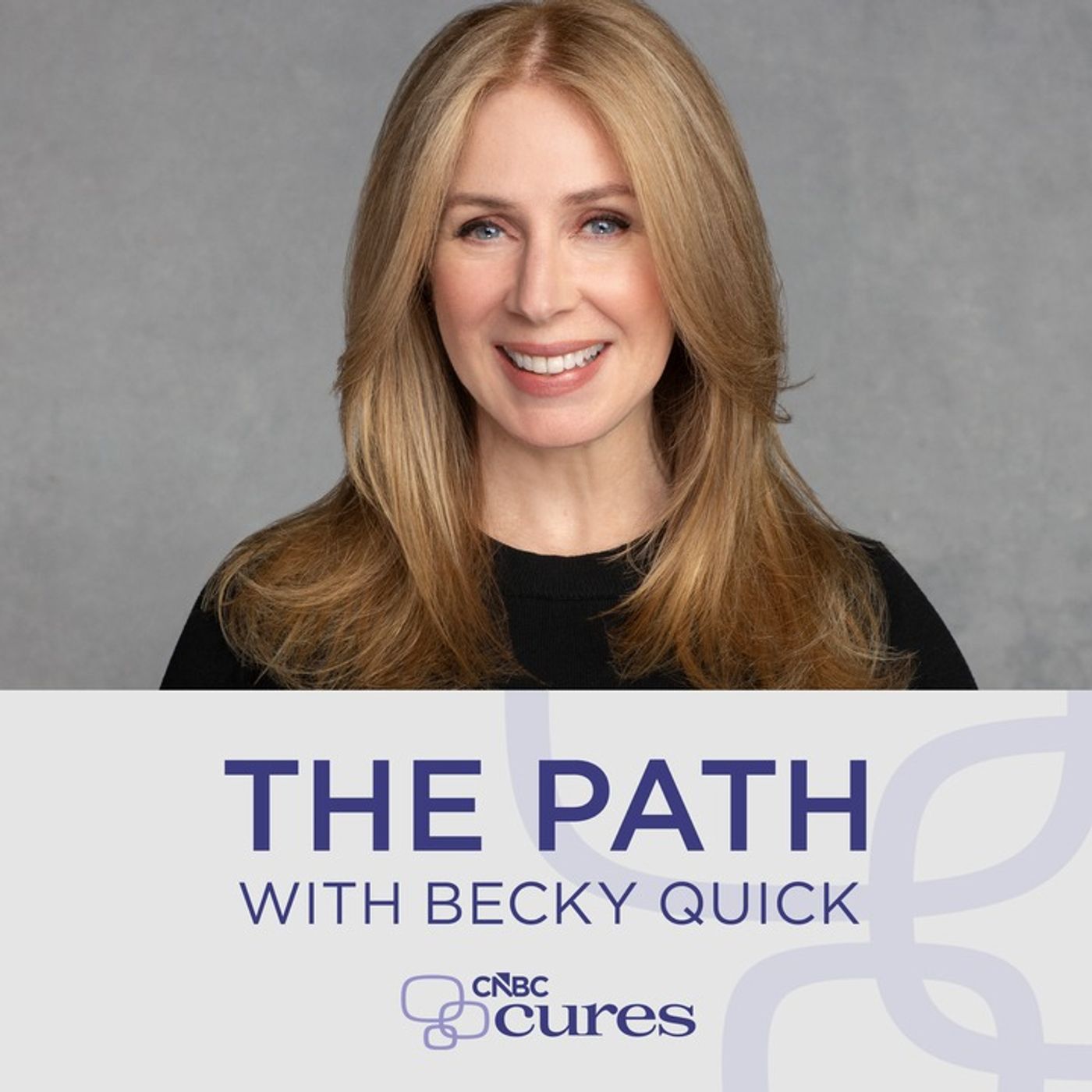
Squawk Pod
Bonus: The Path with Becky Quick: A Father’s Rare Determination 7/2/26
00:44:13
John Crowley does not stop at bad news. His two young children, Megan and Patrick, were babies when they were diagnosed with Pompe disease, a rare and fatal form of muscular dystrophy. Crowley changed his entire life in a race against the clock to find a treatment for his kids and reinvented his career at the same time. It was a breakthrough that inspired a Hollywood film, he tells Becky Quick for CNBC Cures. Since then, Crowley has built two biotech companies focused on rare diseases that were later acquired by larger pharmaceuticals and today leads the industry lobbying group, BIO. Check out the video playlist of the first season of The Path: https://www.youtube.com/playlist?list=PLVbP054jv0Ko-hAZBSDwZaejelC-FMjc_ Join us in advancing awareness and understanding of rare diseases. Visit CNBC.com/Cures to access more clips, resources, or to sign up for our weekly newsletter. Learn more about rare disease – and what to do in a diagnosis – at the National Organization for Rar...
Loading summary
Transcript174 lines
- [00:00]
John Crowley
Hey, Fidelity.
- [00:02]
Brendan Fraser
Can I get a second opinion on
- [00:03]
John Crowley
stocks in the Fidelity app?
- [00:05]
Fidelity Representative
With Fidelity, it's easy to get an outside opinion from independent experts in a single score. And then when you're ready, trade US stocks and ETFs with no commissions.
- [00:16]
Brendan Fraser
That's right.
- [00:16]
Fidelity Representative
I am always right.
- [00:18]
Brendan Fraser
Investing involves risk, including risk of loss. $0 commission does not apply to customers designated by Fidelity as a professional equity trader. A limited number of ETFs are subject to a service fee of $100. See details@fidelity.com commissions. Fidelity Brokerage Services, LLC Member NYSE SIPC
- [00:30]
Fidelity Representative
not every sale happens at the register. Before AT&T business Wireless, checking out customers on our mobile POS systems took too long. Basically a staring contest where everyone loses. It's crazy what people will say during an awkward silence. Now transactions are done before the silence takes hold. That means I can focus on the task at hand and make an extra sale or two. Sometimes I do miss the bonding time. Sometimes.
- [00:55]
John Crowley
AT&T business Wireless connecting changes everything. The grief, the fear, the anxiety. Every day was a borrowed day for our kids. What are we gonna do?
- [01:09]
Interviewer (possibly Joe Kernen or Andrew Ross Sorkin)
It's that sense of desperation. Like, if I don't do this, nobody will.
- [01:13]
John Crowley
Desperation, fear, Determination.
- [01:22]
Becky Quick
I'm Becky Quick. Welcome to the path from CNBC Cures, a podcast series about the people, the strug, the science of rare disease and the determination to do something about it. I'm a mom of a child with a rare genetic disease.
- [01:38]
John Crowley
Happy birthday to me.
- [01:43]
Becky Quick
My nine year old daughter Kaylee has a condition that's called Syngap1. She's part of a small patient group. There are only about 1700 other people in the world with this diagnosis. Essentially, she only produces half of the syngap protein that's needed for brain development. That means that she has seizures, developmental delays and intellectual disabilities. But what Kaylee doesn't lack is courage. Go, go. More determination. Recently, Kaylee went a little further into the world with a little less of a safety net.
- [02:21]
Interviewer (possibly Joe Kernen or Andrew Ross Sorkin)
Swim, baby.
- [02:23]
Becky Quick
Swimming on her own at our local pool without a swim belt for the very first time. Kaylee, you can do it. And she did great. She went for it. She jumped right in. Her feet touched the bottom. She popped right back up. Kaylee, I'm so proud of you. And then she swam from one end of the pool to the other. Yay. From Kaylee on her own power. Determined to do it on her own. That moment was a breakthrough for Kaylee. But it took so much work for her to get there. No problemo.
- [02:54]
John Crowley
Yay for Kay
- [02:58]
Brendan Fraser
again.
- [02:59]
Becky Quick
We Were. We are so proud.
- [03:03]
Fidelity Representative
Ready?
- [03:04]
John Crowley
Three.
- [03:04]
Fidelity Representative
Wow.
- [03:04]
John Crowley
Oh, we're not winning.
- [03:08]
Becky Quick
My guest today is the father of not one, but two children with a rare disease. He knows a lot about transformations that seem sudden but have extraordinary work and raw courage behind them. John Crowley took the shocking news that his two small children, one just a newborn, had fatal diseases. He changed his entire life, and he made a so incredible that it became a Hollywood movie. And what was amazing to me was that I had met John Crowley 10 years ago. And welcome back to Squawk Box here on cnbc, first in business worldwide.
- [03:45]
John Crowley
Now let's bring in John Crowley. He's the CEO of Amicus Therapeutics, which focuses on rare diseases. John, it's good to see you on set. Great. Great to be here.
- [03:53]
Becky Quick
He was a guest on Squawkbox in the summer of 2016. I was there. I was pregnant with Kaylee, and I had no idea that I was about to join the rare disease path that John had been on for so long. John, first of all, what is Pompe
- [04:07]
Interviewer (possibly Joe Kernen or Andrew Ross Sorkin)
disease and how are your kids?
- [04:09]
John Crowley
Sure. So Pompe disease is a rare neuromuscular disease.
- [04:13]
Becky Quick
In fact, I had no memory of that segment of even meeting him until it was pointed out to me while we were planning for this interview. What you're talking about is incredibly noble. I laud it. But what generally happens with smaller companies
- [04:25]
Interviewer (possibly Joe Kernen or Andrew Ross Sorkin)
is that one of these big pharmaceutical companies will wait until you have a hit and then try and buy the company. Your market capitalization's under a billion dollars. How do you prevent that from happening?
- [04:35]
John Crowley
Keep focusing on building an independent, fully integrated biotech company where you're right. We're in that unique space now, Becky, where we have an approved drug, but we're also working on a terrific pipeline.
- [04:47]
Becky Quick
Tells you a little bit about how life can change and how quickly.
- [04:51]
Interviewer (possibly Joe Kernen or Andrew Ross Sorkin)
Ben, is that out of your shot? Do you guys need the.
- [04:57]
Becky Quick
I'll do it for you. Take one.
- [04:59]
John Crowley
Ready?
- [05:00]
Interviewer (possibly Joe Kernen or Andrew Ross Sorkin)
There we go.
- [05:01]
John Crowley
I'm Crowley. I'm the president and CEO of Bio, the Biotechnology Innovation Organization. We are the world's largest organization advocating for and developing policies to promote biotechnology, hopes, cures.
- [05:14]
Interviewer (possibly Joe Kernen or Andrew Ross Sorkin)
Why don't we go back to the beginning? Back to the 1990s. You are working and you've got a family, and all of a sudden you find out that Megan and Patrick, your two young children, you get this devastating diagnosis.
- [05:28]
John Crowley
Well, it's something you don't expect. And I just finished graduate school. Grew up in New Jersey. My dad was a cop here in North Jersey and kind of have your plan in life. And we had our second and third children very quickly. And it was by about a year of age that we noticed Megan wasn't pulling up in the crib, wasn't taking those first steps. Incredibly bright little baby. And so you go from pediatrician to pediatrician to neurologist, from blood test to scan to deep muscle biopsy. And it was In March of 1998, Friday the 13th, we got the diagnosis that Megan had this rare form of muscular dystrophy. And honestly, Becky, to that point our greatest fear was that we would be told she may never walk. And when the doctor told us about this rare disease that we'd never heard of, there's no history in our family, one of now 10,000 known rare diseases, I asked him, what can we do? And he, you know, looked at us and just said, I'm sorry, there's nothing you can do. Enjoy the time you have. Megan is going to get very sick very soon and probably won't live to be a couple of years old. And then he looked down on the car carrier where we had our seven day old son Patrick, and said there was a 25% chance that he may have the disease and needed to be tested, which we did very quickly and found out his diagnosis. So it was pretty devastating very early on. But even in those first hours, couple of days, you know, we go through a lot of emotions, the grief, the fear, the anxiety, and settled really on determination, determined to learn everything we could about this rare disease, devastating disease, fatal disease, and then very quickly determined to find anybody who could offer any hope.
- [07:13]
Interviewer (possibly Joe Kernen or Andrew Ross Sorkin)
You're looking at your 15 month old daughter and your 7 day old son and thinking, I have probably months left, maybe years if I'm lucky. That's gotta be pretty devastating.
- [07:32]
John Crowley
Yeah. I remember Becky, the ride back from. We were living in California for a brief time and that's where we got the diagnosis at Oakland Children's Hospital. We're living in a town called Walnut Creek. And so it was about a half hour drive back on a cold rainy day. And I remember Eileen and I were just silent in the car. We only had Patrick with us. And I remember just trying to keep the strength on that car ride, my mind racing, thinking, what are we going to do? What are we going to do? Who can I call? And I remember walking in the house and candidly, not having the strength to even look at Megan and just went in the room for about an hour and just thought, what are we going to do?
- [08:12]
Interviewer (possibly Joe Kernen or Andrew Ross Sorkin)
Who did you call?
- [08:18]
John Crowley
My father in law Marty, who was back east, called my mom, called a couple of close friends, called one of my mentors who was a Catholic priest. So probably five calls that afternoon, that evening and really late that night, actually went to the airport, picked up my father in law who was on a late night flight, got right on a plane to come out to California, picked him up at sfo. And then early the next morning, I went to the library. Google didn't even exist. I went to the library. It was, I think Netscape Navigator. And I found a little bit of hope that night of some researchers at Duke University. I went to the library and found out what I could and Monday morning started calling those couple of researchers around the world, starting in Rotterdam in the Netherlands and then all the way to Duke University to introduce myself, say, I have two children, we have two children with this disease, can I come see you?
- [09:17]
Interviewer (possibly Joe Kernen or Andrew Ross Sorkin)
So you started that journey of advocacy almost immediately.
- [09:23]
John Crowley
I started the journey of education immediately. And then connections, relationship building, and then, yes, and again all of it within days, weeks of advocacy, advocating first for our children alone, not even knowing how many kids were out there with this, starting to connect with a couple of families and then slowly becoming the advocate for many families. But it was not like one day we woke up and said, okay, we're going to build a foundation and we're going to get a website and we're going to be patient. I didn't even know what patient advocacy was. It just, I think as a parent, it just kind of came naturally and it does for millions of parents.
- [10:04]
Interviewer (possibly Joe Kernen or Andrew Ross Sorkin)
It's that sense of desperation, like, if I don't do this, nobody will.
- [10:08]
John Crowley
Desperation, fear, determination.
- [10:13]
Interviewer (possibly Joe Kernen or Andrew Ross Sorkin)
They told you that your 15 month old daughter might not live to see two years. I mean, the countdown and the months and the clocks, how did you find that determination?
- [10:22]
John Crowley
It was, you know, you realize you have two challenges, and we often, we all do when facing a health crisis. And one is to address the challenge of biology, whatever the medical problem is, and the other is the challenge of time, the race against the clock. And it's kind of the irony of this, right, because what we're trying to fight for is time. Time for our children, time with the people they love. Give them as long and healthy and happy a life as possible. And so for us, there was this great sense of urgency that launched us into this whole world.
- [10:54]
Interviewer (possibly Joe Kernen or Andrew Ross Sorkin)
Did you ever worry that, yes, whatever
- [10:57]
John Crowley
your, whatever your next question is, but
- [10:59]
Interviewer (possibly Joe Kernen or Andrew Ross Sorkin)
did you worry that, oh my gosh, I'm spending the time, the last moments I might have with her, you know, in that.
- [11:05]
John Crowley
That first year from the diagnosis, Megan did get very sick very, very quickly. Almost died in the hospital. But she was tough back then. Even at 20 months old, her heart stopped three times and had to be intubated. And we just. In some ways, we thought over those couple of days with nature would just take its course, but she didn't want to give up. I remember looking in her eyes in the intensive care unit that she wanted to fight, and so we said we'd fight too. And so. And a couple of months later, we went through it again with Patrick. So in the course of a year, you go from two seemingly healthy children to two children in wheelchairs on ventilators, nursing care, and we're trying to patch it together. And our nights and weekends are consumed with reading medical papers and science papers and going to conferences and trying to get people involved in research until, you know, about another year later, in the spring of 2000, I had found a handful of researchers, one of whom had a technology that he thought very, very early that could apply. And Eileen and I, my wife, had a long talk about, you know, the kids lives may be very short. Do I want to miss what time we may have? And we just. I think more than anything, we didn't want to have any regrets. I didn't want to look back years later and wished we had done something more.
- [12:20]
Interviewer (possibly Joe Kernen or Andrew Ross Sorkin)
What is Pompe disease exactly? How does it manifest?
- [12:23]
John Crowley
The children are missing an enzyme that, you know, you and I without the disease, all of us without the disease, we make this enzyme. It breaks down sugar stored in the form of glycogen in a particular part of the muscle cell. It affects skeletal muscle, it affects heart muscle, breathing muscles, swallowing muscles. And that's why it can be so devastating. And it can be diagnosed as early as infancy, all the way to. There are, you know, more attenuated forms of the disease that can be diagnosed in adolescence or adulthood. But in almost every case, particularly with children without intervention, it's 100% fatal.
- [13:00]
Interviewer (possibly Joe Kernen or Andrew Ross Sorkin)
There was not much that they could do originally when you got this diagnosis. What could they do to try and keep it at bay?
- [13:07]
John Crowley
There was nothing they could do to keep the disease. Kind of relentless progression of the disease without that enzyme, with the sugar, the glycogen building up in the muscle, slowly destroying the muscle. Megan and Patrick's heart, by a year and a half of age or so, the left side of their heart, that does the pumping, majority of the pumping, it was three times normal size. And that's what would have been the most Fatal part for them. So we knew we had to develop a medicine that could intervene first in the heart and then hopefully breathing muscles and skeletal muscles to make them stronger. And the goal was, with the technology at the time, the only possible answer would be to develop a. A lab based, lab made enzyme that could replace their natural enzyme.
- [13:49]
Interviewer (possibly Joe Kernen or Andrew Ross Sorkin)
So you went to Georgetown for undergraduate, you went to Notre Dame for your law degree, you went to Harvard for your mba.
- [13:57]
John Crowley
I had a lot of student loans.
- [13:58]
Interviewer (possibly Joe Kernen or Andrew Ross Sorkin)
Yes, you had a lot of student loans and a lot of knowledge. But you were not somebody who was steeped in medical research.
- [14:05]
John Crowley
No, I was terrible in science. It's not where. Not where, where my interest lied. And what you find is, you know, you've got to learn it. You've got to learn it as a parent so you can advocate for your children to find the right doctors to think about other ideas. And that's what's, you know, I think in many ways so rewarding for so many families is that there is so much knowledge out there now and for us to be able to learn as best I could, science. And then when I eventually started a biotech company with that researcher, I thought, you know, I had the mba. I'll do the business plan and figure a way to raise money and build spreadsheets, they'll do the science. And I realized in about two days, you can't do that unless I understood the science. So from the scientific founder to our researchers, to graduate students, I hired at night when I was out in Oklahoma City where the first company was founded. I had to learn biology, biochemistry, genetics.
- [14:59]
Interviewer (possibly Joe Kernen or Andrew Ross Sorkin)
And I mean, that's what kind of blows me away, the idea of putting this together as a parent who's juggling everything else, the role of that parent advocate. There's nothing that can replace that.
- [15:12]
John Crowley
There's nothing stronger. No, there's nothing stronger. And we've seen it now over and over again over the years that we've been involved, Becky. Where the whole notion of hope is driven in these childhood rare diseases by parents and in the adult rare diseases by the person living with the disease, their family members, their spouse, whatever it is. And that's what makes this such a strong community.
- [15:36]
Becky Quick
We'll be right back after this.
- [15:40]
Fidelity Representative
Hey, Fidelity.
- [15:42]
John Crowley
What's it cost to invest with the Fidelity app?
- [15:45]
Fidelity Representative
Start with as little as $1 with no account fees or trade commissions on US stocks and ETFs.
- [15:52]
John Crowley
Hmm, that's music to my ears.
- [15:54]
Fidelity Representative
I can only talk.
- [15:56]
Brendan Fraser
Investing involves risk, including risk of loss. 0 account fees apply to retail brokerage account only $0 commission does not apply to customers designated by Fidelity as a professional equity trader. A limited number of ETFs are subject to a service fee of $100. See details@fidelity.com commissions Fidelity Brokerage Services LLC
- [16:08]
John Crowley
Member NYSE SIPC this is a Monday.com
- [16:12]
Becky Quick
ad the same Monday.com helping people worldwide
- [16:15]
Fidelity Representative
getting work done faster and better.
- [16:17]
Becky Quick
The samemonday.com designed for every team and every industry. The same Monday.com with built in AI scaling your work from day one the samemonday.com that your team will actually love using the samemonday.com with an easy and intuitive setup. Go to Monday.com and try it for free. Yes the same Monday.com Thursday, July 16
- [16:42]
John Crowley
CNBC Sport and Boardroom Join Fanatics Fest for Game Plan groundbreaking ideas shaping the future of sports and entertainment. Request Your invite at CNBCEvents.com/game plan.
- [16:59]
Becky Quick
Welcome back to the Path. I'm Becky Quick Bio CEO John Crowley's journey of building something life saving for his children from nothing but a stunning and stark diagnosis inspired a 2010 movie about his family's story. Extraordinary Measures starred Brendan Fraser the unrelenting
- [17:18]
Interviewer (possibly Joe Kernen or Andrew Ross Sorkin)
efforts of a man called John Crowley
- [17:19]
John Crowley
who does live and breathe and walk
- [17:21]
Brendan Fraser
the earth, and he's one of the most principled individuals I've ever met. I'm honored to have played him and
- [17:25]
Becky Quick
Harrison Ford as a composite character representing the early doctors that John worked with to find a cure for Megan and Patrick.
- [17:34]
Brendan Fraser
Well, I think it was a wonderful positive story about somebody who took control of adversity in his life and made a difference. He was able to create a therapy for his kids who have a difficult
- [17:46]
John Crowley
genetic disease called Pompeii.
- [17:49]
Becky Quick
John Crowley is a seasoned biotech executive now, but he didn't start that way in the late 1990s.
- [17:56]
Interviewer (possibly Joe Kernen or Andrew Ross Sorkin)
Let's talk a little bit about how you started that journey. You went to work for a pharmaceutical company almost immediately.
- [18:02]
John Crowley
I was a consultant at a business school for a little bit and then I worked at Bristol Myers Squibb.
- [18:07]
Interviewer (possibly Joe Kernen or Andrew Ross Sorkin)
So how did you come together to think, okay, I can actually pull this off, I can create a new company because nobody else is going to do this.
- [18:16]
John Crowley
I never thought I could pull it off, but at some point I thought I had to do it. And it was about two years into this journey with Megan and Patrick. About two years into my role, I worked in marketing at bms. Incredible company. Wonderful mission to extend and enhance human life. But I never went there to learn the business so I can go start my Own company. I went there because it was a good job, it was close to family back here in New Jersey. It was great health insurance. And again, it was my nights and weekends consumed. And about two years into that journey, finding a brilliant scientist in Oklahoma who had an idea for how to make a medicine, who realized that he couldn't do it in the context of a university. It had to be a startup biotech company and we needed a lot more money. Tried to find him a CEO. And with a handful of people based in Oklahoma, very early stage, and no money, we realized one night on a phone call, the best we could do was me at 31 years old or so. And that was tough. That was a tough decision as well, to quit that job, that security. But again, I kind of come back to. We just didn't want to have any regrets. And so in some ways we had everything to lose, and in some ways we had nothing to lose.
- [19:25]
Interviewer (possibly Joe Kernen or Andrew Ross Sorkin)
What was the moment that you said, okay, we're going to do this, and what was the conversation you and Aileen had? Because that security you were getting for your job. You have three children, two of whom had this terrible disease and an older
- [19:40]
John Crowley
one with high functioning autism.
- [19:42]
Interviewer (possibly Joe Kernen or Andrew Ross Sorkin)
Right. So that is a leap of faith.
- [19:45]
John Crowley
I remember it well. I was on the phone with the researcher in Oklahoma. We were both frustrated he couldn't find a CEO. And I said to him, almost half jokingly, I said, heck, you know, Bill, maybe I should come out there and run it for you. It was this kind of awkward pause, and he said, could you come out tomorrow?
- [20:01]
Interviewer (possibly Joe Kernen or Andrew Ross Sorkin)
What was it like trying to find the funds to keep everything afloat while launching this new company?
- [20:07]
John Crowley
Oh, it was on a shoestring. It was, you know, out in Oklahoma City. The doctor had raised very, you know, tens of thousands of dollars. And, you know, we knew that we were going to do an angel round. And so we had the memorandum put together. I think the original minimum investment was $250,000. We were seeking a million dollars. I only needed four people, relatively small amount of money, put the business plan together. And in the meantime, we were running low on cash, needed to find other ways. I think that the doctor took out cash advances on his credit cards, I took cash advances on ours. We took a home equity loan to provide some of the funding of. And now in my career in biotech, Becky, I've raised well over $2 billion for biotech companies. The hardest money I raised actually wasn't the home equity loan or the cash advances. They were painful, but they weren't hard the hardest was that Angel Round took us about six months. A million dollars for a million dollars, I had to lower the minimum investment from 250,000 to 5,000, and it took 37 individuals. So that was the hardest I ever had to work for capital for a biotech company. And I've always remembered that, even in my role now, that that's kind of the heart and soul of how we make medicines in this country. Knowing that about 70% of all medicines come out of academic research, start with startup biotech companies. I didn't know it or realized that everything that it took in the ecosystem back then, we were just passionate, desperate. We were young, and that's kind of how we set about. And then eventually brought in some small amounts of venture capital.
- [21:41]
Interviewer (possibly Joe Kernen or Andrew Ross Sorkin)
The doctor and the plan that he had, what was the mechanism that he thought would work on Pompe?
- [21:47]
John Crowley
We knew what we needed to do was to make an enzyme to replace the defective or missing enzyme for Megan and Patrick and for thousands of others, so that we would create in human host cells, we would create the enzyme. So genetic engineering, recombinant protein engineering, and in Pompeii, it's special, too. You not only need to make the missing protein in the labs, you need to make sure it can get into the muscles. And to do that, you need to make sure it has these carbohydrates. So if you think of this as the protein attached to it, of the carbohydrates, kind of the lock and the key, and that was the most difficult part. And that was the brilliance of the science that he had, not only making the protein, but making those the right key for the lock. But I make it sound somewhat easy. It was unbelievably difficult. Just the core science. And then even beyond the core science, we realized we needed to manufacture this for clinical studies. And that's an art and a science in its own right. The capabilities, the capacity to do that. We realized we needed a lot more money, we needed more expertise. And we also realized that the drumbeat of time was continuing. And every time there was a setback, every time somebody told me, oh, the experiment didn't go well, we need another 60 days, or it's going to take six months to find a contractor to make it. Every. You know, when I'd come back on Thursday night or Friday, I could see the kids were just a little bit weaker. That was hard, but that was the pressure.
- [23:18]
Interviewer (possibly Joe Kernen or Andrew Ross Sorkin)
And time is the enemy.
- [23:19]
John Crowley
Time was the enemy.
- [23:21]
Interviewer (possibly Joe Kernen or Andrew Ross Sorkin)
And that's when the Genzyme deal came about.
- [23:23]
John Crowley
It Was we had two term sheets. And this all happened very fast. In fact, at hbs, they wrote a case study on it called A Father's Love. And it's our choice. We could do a large partnership with Genentech. They'd purchase 20% of the company, fund our programs. We could go public on that. Or Henry Tremere, the visionary leader of Genzyme, we could be acquired by Genzyme. And there's pros and cons to each of those. And my recommendation to our board at the time was that we be acquired because. Because Genzyme was the expert in the field in this class of rare diseases. They had more capabilities than any company in the world. And because of Henry. You know, for Henry, he had the passion, he had the vision. And for him, it would become the most important and expensive program in Genzyme's history, which it did become.
- [24:13]
Interviewer (possibly Joe Kernen or Andrew Ross Sorkin)
They spent how much to acquire the company?
- [24:15]
John Crowley
Just over $100 million to acquire our little company. So our angel investors did very well inside of a year and a half for Eileen and I, you know, we never had any. Any. Any means. I think we had a negative net worth. So to have a bit of security for the kids and family was terrific. And then I went to Genzyme and ran the Pompe program.
- [24:36]
Interviewer (possibly Joe Kernen or Andrew Ross Sorkin)
But the biggest issue for you was, how quickly can we get this into the arms of the patients?
- [24:41]
John Crowley
The race against time continued. Every day was a borrowed day for our kids.
- [24:45]
Interviewer (possibly Joe Kernen or Andrew Ross Sorkin)
And let's talk about the first trial when you went to Genzyme, the first trial, human trials that came about, it had to be so wonderful to have this happening, but your kids weren't eligible.
- [24:59]
John Crowley
The way the first trials were structured, it was for very young infants. And by this point, our kids were four or five years old, so they didn't qualify. And that was hard. But the program I was running, when the doctors designed a study that wouldn't include our children and the second study didn't include our children, that was devastating. And it was that. The day before, I found out the decision from the medical and science teams at Genzyme that our kids wouldn't be included in the next study. The day before, we were at, the doctor, did echocardiograms on the children and showed the hearts continuing to enlarge. And I had never. Not since the original diagnosis, Becky, I hadn't asked a doctor how long I did that day. And she said very hesitatingly, Megan, a year, Patrick, maybe six months. And so it became very, very real at that time. And really Hard, really hard, John.
- [26:00]
Interviewer (possibly Joe Kernen or Andrew Ross Sorkin)
I can't even imagine that somebody tells you that this program that you've designed and has now been developed and going into patients, but your kids don't qualify. I mean, you are more restrained than I are, than I am, because nobody died in that office.
- [26:17]
John Crowley
It was through some really tough conversations. That's probably the closest I've come to losing it in professionally, emotionally, and then just kind of buckle down and say, okay, we've got another problem. How do we solve it? And by that point, I didn't know what else to do. And so I remember going to Henry and describing the problem for him, and he was very sympathetic to it and said, let me see what we can do. And eventually, within a week or so, they came back and they had the idea for a separate study for Megan and Patrick. Now we had the problem. Once that was designed, within a couple of weeks, a major academic center declined to treat the kids because I was the executive of a company developing the medicines, and that was the next level of challenge. So the team there, to their credit at Genzyme, and a lot of people stepped up to help, went to a small Catholic hospital here In New Jersey, St. Peter's University Hospital, that had never done a clinical study, and they constituted their review board, and they approved the study. And we got a call and a Christmas card delivered to our house. It was 2002, Christmas card delivered. Just inside was the official notice from the hospital, the approval of the study. And I tell people, you know, you have tough days at work sometimes. That was a good day at work. That was a good day for.
- [27:42]
Interviewer (possibly Joe Kernen or Andrew Ross Sorkin)
What did you think? You went right home and told Aileen all of this?
- [27:45]
John Crowley
The card actually came to the house. Oh, it was on Christmas Eve. So, yeah, that was a good Christmas Eve. That was a good dinner. Still have the card and still have the letter. And now we had to begin planning, Right. And so it went to the hospital the two days after Christmas, met the geneticist, set up the trial, and took the kids in a couple of weeks later on, they were infused on January 9, 2003, on what would have been my dad's 63rd birthday.
- [28:14]
Interviewer (possibly Joe Kernen or Andrew Ross Sorkin)
And when they were receiving the treatments, how long did it take before you realized this?
- [28:20]
John Crowley
I realized that night. I had always asked the doctor, I'm like, their muscles are loaded with this stored form of sugar, this glycogen. What happens if the enzyme, God willing, gets in there and clears it out? And the experts told me, they said it's all just metabolized, just like sugar. They May get a sugar high of some sort, but it should be safe. We've seen this in other children, and hopefully their hearts will respond very quickly. And I remember that night I had. We were there. I pressed the button to start Megan's infusion. Eileen pressed it to start Patrick's. We waited a few hours. Everything was safe. And, you know, you look at this IV bag, and it looks like water, Right? Just clear. And you're like, you know, talk about a miracle of science, a miracle of life. But it seemed so simple. I remember going home, we had John Jr. And I had to get him fed and get to bed. Eileen stayed in the hospital with him that night. And she called. And in the background, I heard them laughing. And they actually portrayed that in the film about our family, that scene. And. And it kind of dawned on me, and I said, that's exactly what they said would happen. And so then from there, we started to see, slowly, the kids, particularly Megan, starting to do things she couldn't do. Starting to take a fork, starting to reach a brush for her own hair, Sitting up more straight. But it wasn't until week 12, after the sixth infusion. It's in every other week. Lifelong Enzyme Therapy, where we went in for the report on the heart. And that was. I remember the doctor coming in. She had a smile on her face. And Patrick is in his bed, Megan's in her bed, and she's in kindergarten, right. And she's sitting there doing her coloring books or whatever. And the doctor put up the X rays, the before and after of the chest on the X ray, the light box. And you didn't need to be a cardiologist to see the differences. Profoundly enlarged heart in a child and the next one much smaller. And we were very excited and had seen this in other children, but to see it in your own kids was a real gift. And remember going over to Megan and describing her. She's an incredibly bright, precocious kid describing it, but she's five years old, and she's looking at me like, what's dad talking about? She still gives me that look at 29, but. And I finally just said to her, I said, megan, this just means you're gonna live to be an old lady. And she just kind of put her arms around me and said, thank you. So again, that's. That's a good day at work.
- [30:45]
Interviewer (possibly Joe Kernen or Andrew Ross Sorkin)
That's a great day. I still can't get over the fact that you did this, what, in four years?
- [30:51]
John Crowley
Yeah. Start to finish within the context of a biotech company or Companies within three years. And just shy of five years of a kid's diagnosis. How, how, you know Becky, many years later and now still involved in biotech, we look back and think about that. I think it was brilliant science. I think it was a lot of caring people, vision, a lot of risk taking, a lot of passion, some prayer and luck, all of that coming together. And even then, you know, in the first year again the kids hearts were fixed and that was the most life threatening challenge. They were breathing better, Megan in particular over her ventilator. She was sitting up, she was getting so much stronger. And then after about a year I noticed some slippages in her strength and we realized that I thought you know, it was a bad day or a bad week but then we realized that what we had invented, that first enzyme was a good first generation therapy. Fixed the kids hearts, made them stronger for a while but we needed to do better that the disease, that, that relentless progression, the disease was continuing. I thought it was done. And my journey, my foray into biotech a couple of years, it's never. I didn't grow up as a kid dressing as a biotech CEO and for Halloween and I'd go do something else in life. But then I realized that maybe this was a bit of a journey, a bit of a calling and that we weren't done and that we weren't done with Pompe disease. We needed a better therapy and that there were 10,000 other rare diseases without a treatment. And that's kind of what led me to this as a career
- [32:36]
Becky Quick
more to come on the path. Stay with us. You're never just one thing. You're the boss. Hey Google, when's my next meeting? The athlete that class wrecks me and their mom. Everyone in the all new Mazda CX5
- [32:50]
Fidelity Representative
more to move every side of you.
- [32:51]
Becky Quick
Learn more@mazdausa.com Google is a trademark of Google LLC.
- [32:54]
John Crowley
Sequences shortened and simulated with my Sapphire preferred card.
- [32:57]
Brendan Fraser
We took a trip to a desert
- [32:58]
John Crowley
Oasis earning five times the points on Chase Travel, two times the points on all other travel plus $100 hotel credit. Chase Sapphire preferred the car that's preferred for a reason.
- [33:07]
Brendan Fraser
Cards issued by JPMorgan Chase bank and a member FDIC subject to credit approval terms apply.
- [33:11]
Fidelity Representative
Not every sale happens at the register before AT&T business Wireless. Checking out customers on our mobile POS systems took too long. Basically a staring contest where everyone loses. It's crazy what people say during an awkward silence. Now transactions are done before the silence takes hold. That means I can focus on the Task at hand and make an extra sale or two. Sometimes I do miss the bonding time.
- [33:35]
John Crowley
Sometimes at and t was business. Wireless connecting changes everything.
- [33:44]
Interviewer (possibly Joe Kernen or Andrew Ross Sorkin)
Tell me about what you do at Bio.
- [33:47]
John Crowley
So at Bio we have about a thousand member companies, biotechnology companies, from our largest biotech and biopharmaceutical companies to small mom and pop startup companies all around the country and outside the United States. Our job is to develop policies that promote this virtuous circle of innovation, everything that it takes to make newer and better medicines. So promote good policies at the federal and state level, stop bad ideas, bad policies and allow this ecosystem to thrive, this biomedical research ecosystem that in this year is just now celebrating its 50th anniversary. It's a very young industry and it's a uniquely American born industry, an American driven industry and it's being challenged from abroad, it's being challenged from within. So that's what we do and access as well, to make sure that we not only have great innovation, great new therapies, vaccines, treatments, but that everybody in need has access anywhere in the world.
- [34:53]
Interviewer (possibly Joe Kernen or Andrew Ross Sorkin)
What are the biggest challenges right now? If you have to pick two or three?
- [34:57]
John Crowley
If I look back over the, you know, when our kids are first diagnosed, the challenge was science. Science, medicine, manufacturing, regulatory. I never thought of what was happening in Washington D.C. only until pretty recently in the last decade or so. And I realize now we've never had a greater need of newer and better medicines. We've never had more technologies. Even in Pompe disease, there are now almost a dozen new technologies being discovered for next generation therapies. So the science, the technology is there, it's just exploding. We're in the golden age of medicine. We're not on the cusp anymore. We're curing these diseases. And the biggest challenges, Becky, are man made. We're getting in our own way. You know, we're denying capital to innovators. We're putting risk and uncertainty in the regulatory process where it doesn't need to be. It's gotten to the point where it just takes too much time, too much money, there's too much uncertainty and inconsistency to develop medicines, which raises the cost of capital, which means that fewer companies get formed, fewer new technologies move forward, most of which we know are not going to succeed. They're going to fail somewhere along the way. So it's never going to be without significant risk. But let's do everything we can when we look at these policies, when we talk about drug pricing. Absolutely. Let's figure out what are the economic Barriers. Why does somebody go without their medicines? And whether it's a co pay a co insurance, whatever it may be, we have to solve that. Or if it's a medical insurance plan problem where they're denied access by their insurer, we can address that. Those are the real challenges. Let's make sure we have a strong, modernized, efficient FDA that people can rely upon. And so that's why I took this role, to help develop the next hundreds of new companies in biotech.
- [36:48]
Interviewer (possibly Joe Kernen or Andrew Ross Sorkin)
What are we doing right? One or two things.
- [36:53]
John Crowley
The model still holds today. That whole model of our research grounded in our great academic institutions. It's a remarkable strategic advantage for the United States sometimes it's also done at the NIH campus, many times funded by the nih. And that's the core of basic research in this country. We've done that well. It's threatened today. We need to continue that, that succeed, to ensure that succeeds. But we do that well and we do entrepreneurship really well in this country. You know, there's a great rising challenge and threat from China and the Chinese biotech industry. We can't let China win in biotech. And this is a. As a former intelligence officer, this is my perspective here as well, that the
- [37:37]
Interviewer (possibly Joe Kernen or Andrew Ross Sorkin)
former intelligence officer in the Navy.
- [37:39]
John Crowley
In the Navy. Naval Navy intelligence officer. And having a uniquely vivid perspective of some of the threats from abroad, the world and everybody living in it is a better, safer, healthier, more prosperous place. When the United States, together with our allies, lead in biotech, that's being threatened. So when we do what we do right, we do academic research, let's not squander that. Let's invest even further in strong academic research and entrepreneurship. Academics develop core technologies, companies develop medicines.
- [38:13]
Interviewer (possibly Joe Kernen or Andrew Ross Sorkin)
That's what I was going to ask you about. You said the doctor in the first company that you became the CEO of, in that very new fledgling enterprise realized that he couldn't do this at an academic institution. Why?
- [38:27]
John Crowley
That's never been the model. You know, even if we could make it as efficient and modernized as possible, it's still going to be incredibly risky to make new medicines, particularly with very, very difficult targets that we need to tackle. And it's going to take time and significant amounts of money. That's not the academic model. It's hard enough to fund basic research in our universities when it comes to this risk reward of entrepreneurship and starting companies. That's how we make medicines. That's the lifeblood. That's the capital that flows from angel investors, venture investors, public market equity investors, and ultimately the strategic Investments or the M and A done by our largest companies. That's this very unique virtuous circle that doesn't happen anywhere else in the world.
- [39:07]
Interviewer (possibly Joe Kernen or Andrew Ross Sorkin)
Is there a movement beyond rare? Is there something that you look at and say if we can get this area of healthcare right, we can figure out a lot more?
- [39:16]
John Crowley
I think there's a movement within rare and a movement beyond rare and they're very related to you. Think about the unmet need today, Becky. We've got some wonderful new treatments and some life saving therapies, like in Pompe disease, like in cystic fibrosis, other rare disorders. But 95% of these diseases, 10,000 diseases affecting about 10% of all people collectively have no therapy at all. So even in the rare diseases, we have a long way to go. But if we could do this right, if we could accelerate science where we have these technologies, finally, we'll not only alleviate an enormous amount of suffering for children especially and adults, but we'll unlock the secrets to many other diseases. You know, brain disorders, right? It used to be when I was younger, you know, kids would be put in very large buckets, right? They had epilepsy, they had cerebral palsy or their mental retardation, used to refer to it as. Now, more and more we realize those kids, when we look at their human genome, many, perhaps most, actually have a human genetic disease, as your family discovered. And so once you have that knowledge, then we can start to think about tools and pathways to apply. But within so many of these brain diseases, rare brain diseases, that's going to teach us the secrets of the brain. And how do we address Alzheimer's and Parkinson's and that whole family of devastating disorders that affect so many humans. And you see it in heart disease, liver disease, muscle disease has huge implications for human healthcare. And that's just on the biomedical side. Then there's the whole notion that we've got to find a way to make the discovery, development faster, more cost effective, take down the cost of development, manage the risk and ensure access for everybody. And nothing drives me crazier than when I hear regulators or payers either explicitly or oftentimes implicitly state that, well, that life's just not worth saving.
- [41:19]
Interviewer (possibly Joe Kernen or Andrew Ross Sorkin)
I'm with you.
- [41:20]
John Crowley
That's. Yeah, I know you are. That's.
- [41:26]
Interviewer (possibly Joe Kernen or Andrew Ross Sorkin)
How do you measure life? How do you.
- [41:28]
John Crowley
You certainly don't measure it economically and you don't measure it with quality adjusted life years. And there's no economic model, there's no AI model. I think you just start. I think you start with a fundamental, fundamental premise of the value of life. And every day, the value of life, particularly in our children. And if you start there, the rest of it falls out. And let's make sure, you know, we're not only making these great drugs, medicines, but we're getting them to everybody in need and we're getting them to these families, these children, as soon as possible. And there are ways to do that. And if we take those, you know, not only the innovation model, but the payment model, we can apply that to broader populations.
- [42:11]
Interviewer (possibly Joe Kernen or Andrew Ross Sorkin)
How are Megan and Patrick today?
- [42:14]
John Crowley
Megan and Patrick are great today. And we're blessed, you know, all of us are blessed with every day. Megan again, now just 29 years old. Patrick, 28 years old. Megan went on to complete high school at Princeton High School in New Jersey, great student. Went on to the University of Notre Dame, near and dear to our hearts. And Megan finished in four years with a double major, went to the University of North Carolina, got her master's in Chapel Hill in social work. And Megan's a social worker today with the Make a Wish foundation of New Jersey. And Patrick works in a flower shop staffed by all people with disabilities. And her older son, John, living with high functioning autism, ended up during COVID falling in love with one of Megan's nurses who moved in with us. Never thought that one didn't see that coming. And they got married several years ago. And we have two beautiful little grandchildren, Stella and Scarlett. I love that. Blessed in everything.
- [43:09]
Interviewer (possibly Joe Kernen or Andrew Ross Sorkin)
I love that. And happily ever after for all of you.
- [43:14]
John Crowley
You know, we've got this pillow on the couch in our family room, Eileen and I, and it just says, remember, as far as everyone knows, we're a nice, normal family.
- [43:23]
Interviewer (possibly Joe Kernen or Andrew Ross Sorkin)
So you mentioned, you referenced the movie Extraordinary Measures where Brendan Fraser played you, Keri Russell played Aileen.
- [43:33]
John Crowley
Yeah.
- [43:34]
Interviewer (possibly Joe Kernen or Andrew Ross Sorkin)
What's it like to have a Hollywood movie kind of written off of your life story?
- [43:38]
John Crowley
You know, it was great for our family, great for our cause and the things we believe in. But in many ways, we were a proxy for millions of families in this journey together. I was comfortable when the Wall Street Journal reporter wrote her stories, Gita Anand, and then wrote a book Less comfortable with Hollywood. My dad was a cop here in Englewood growing up, so he didn't go to a lot of Hollywood cocktail parties. But it was really Harrison Ford who read the Wall Street Journal stories and portrayed a composite of characters and the scientists we had worked with. And he was the executive producer of the film. It was really he and the producers who wanted to tell this story. And they told it in a beautiful way. My daughter Megan does say it does contain one of the great exaggerations in all of Hollywood, though. And that's how they picked an actor who's six foot five to play me in Brendan Fraser. So she's got her sense of humor.
- [44:31]
Interviewer (possibly Joe Kernen or Andrew Ross Sorkin)
You were 31 when you got your children's diagnosis, is that right?
- [44:35]
John Crowley
Yes, long time ago.
- [44:37]
Interviewer (possibly Joe Kernen or Andrew Ross Sorkin)
If you could go back and tell 31 year old John Crowley something, because I know this has been a very unexpected journey, what. What would you tell him?
- [44:48]
John Crowley
Probably two things. One, that it's. It's going to be a marathon, not a sprint. So that, that perspective of, yes, it's a race against time, but take time, right? Take time with the people you know you love. I think probably the second thing would be that, you know what, it's gonna turn out okay. Maybe not how you envision life, but it's gonna be okay.
- [45:16]
Interviewer (possibly Joe Kernen or Andrew Ross Sorkin)
I love that. I think that's perfect
- [45:22]
John Crowley
every day. Yeah.
- [45:24]
Interviewer (possibly Joe Kernen or Andrew Ross Sorkin)
Here we are.
- [45:25]
John Crowley
Yeah.
- [45:28]
Becky Quick
That's a wrap on our first season of the Path for CNBC Cures. We started these interviews and this podcast without a grand plan, but I've met some incredible people on this rare disease journey and I feel honored and supported being able to walk with every one of them, even for just a conversation.
- [45:46]
John Crowley
I am Selma Blair. I am an actress, a writer and an advocate. I live with Ms. My name is Luke Rosen and before anything, I'm Susanna's dad. My name's Guy spear. I have GBM or glioblastoma, grade four.
- [46:02]
Becky Quick
Hi, I'm Nicole.
- [46:02]
Brendan Fraser
And I'm Kyle Muldoon. And we're KJ's parents.
- [46:06]
John Crowley
Jeff Allen. I was crazy enough to sign up
- [46:09]
Interviewer (possibly Joe Kernen or Andrew Ross Sorkin)
for the Beast Games.
- [46:10]
Brendan Fraser
I'm Adam Anderson. I have the privilege of representing the northern part of Pinellas county in the Florida House.
- [46:17]
John Crowley
My name is Dan Gilbert.
- [46:19]
Brendan Fraser
I am the founder and chairman of Rocket Companies, owner of the Cleveland Cavaliers.
- [46:23]
Becky Quick
I'm Becky Quick.
- [46:25]
John Crowley
I'm Matt Quayle.
- [46:26]
Becky Quick
We work at CNBC and we have a daughter who has a rare genetic disease called syngap1. Thank you for being with us on this first season for watching or listening to the path. Our podcast episodes are available on YouTube or wherever you listen to podcasts. Thank you for your comments, your emails, your social media posts. I am overwhelmed by your kindness and
- [46:49]
John Crowley
your interest in what we've been doing here.
- [46:51]
Becky Quick
And for those who are feeling alone or isolated, just know you are not. Thank you for joining us on this path that we're all navigating And I know it feels like a lonely path, but it's really not when we're brought together. The path toward regulatory approval. The path toward the most independent living we can find for our children. The path to finding answers. The path to a diagnosis. The path to a community. The path to a cure. I'm Becky Quick, and I'll see you next time.
- [47:29]
John Crowley
Hey Fidelity what's it cost to invest
- [47:32]
Fidelity Representative
with the Fidelity app? Start with as little as $1 with no account fees or trade commissions on U.S. stocks and ETFs.
- [47:40]
Brendan Fraser
Hmm.
- [47:41]
John Crowley
That's music to my ears.
- [47:43]
Fidelity Representative
I can only talk.
- [47:45]
Brendan Fraser
Investing involves risk, including risk of loss. Zero account fees apply to retail brokerage accounts only. Zero dollar commission does not apply to customers. Designated by Fidelity as a professional equity trader. A limited number of ETFs are subject to a service fee of $100. See details@fidelity.com commissions Fidelity Brokerage Services LLC Member NYSE SIPC.