← Squawk Pod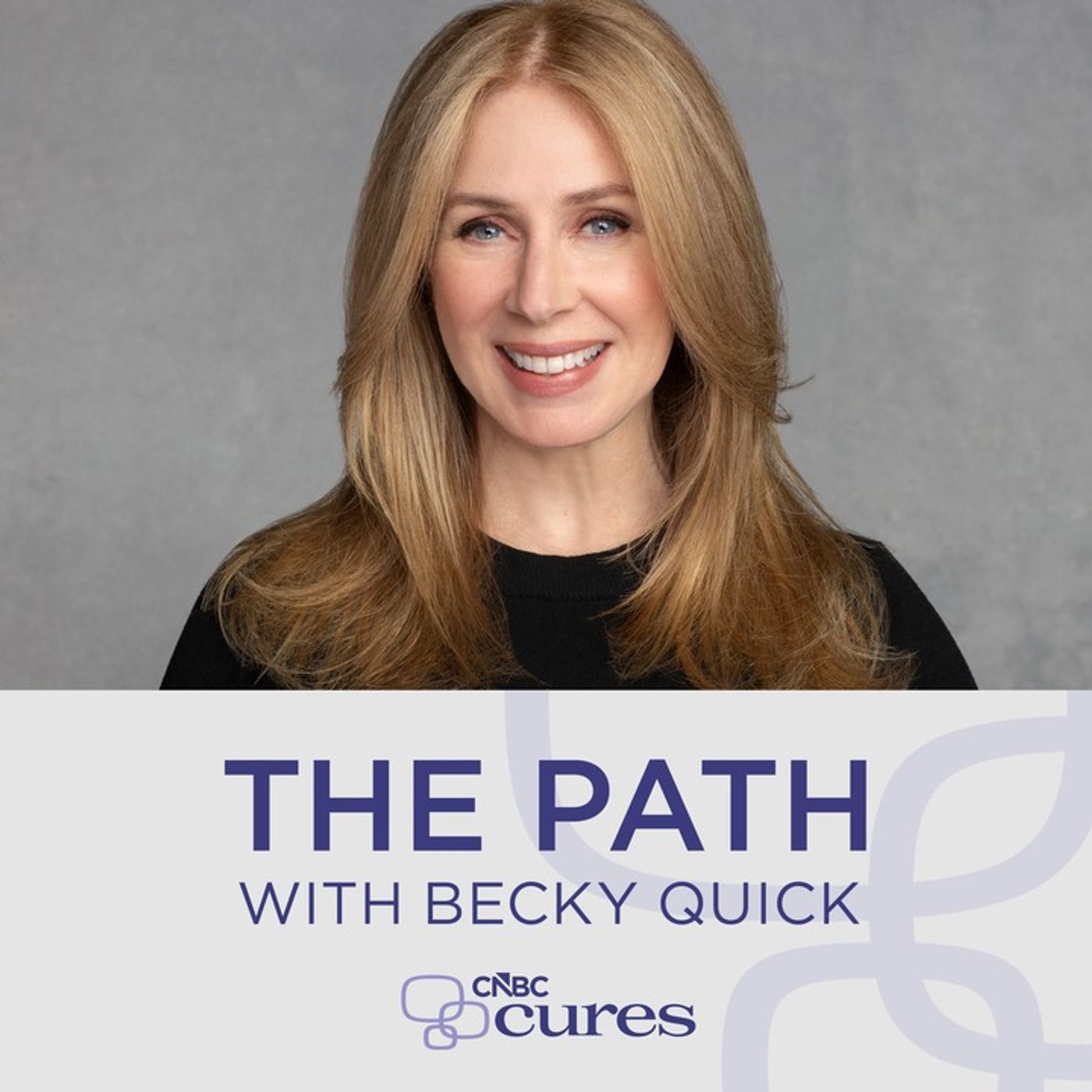
Squawk Pod
Bonus: The Path with Becky Quick: The Value of a Life 6/5/26
00:48:16
Noted value investor Guy Spier first gained the public's attention in 2007 when he and a partner paid just over $650,000 at a charity auction to have lunch with the world's most famous investor, Warren Buffett. Spier launched his fund Aquamarine in 1997, following closely to Buffett’s principles, but closed it down in early 2026 and returned money to investors following a diagnosis of the brain cancer glioblastoma. He tells Becky Quick how facing the end of his life taught him the true meaning of value. Check out Guy Spier’s podcast and videos: https://www.youtube.com/@GSpier12 Read his newsletter: https://www.guyspier.com/ Join us in advancing awareness and understanding of rare diseases. Visit CNBC.com/Cures to access clips, resources, or to sign up for our weekly newsletter. Learn more about rare disease – and what to do in a diagnosis – at the National Organization for Rare Disorders: https://rarediseases.org/ Follow Becky Quick on X: @BeckyQuick Please share your thou...
Loading summary
Transcript151 lines
- [00:00]
Everpure Narrator
Your data lives everywhere on prem in the cloud across apps. Bring it all together with Everpure, the platform that acts like a living system, delivering the latest in data performance, security and innovation without ever slowing you down. Sophisticated enough to anticipate your ever changing data needs, yet simple enough to feel like second nature. Tame your data chaos with Everpure and make storage and data management the simplest part of your business. Visit everpuredata.com to learn more.
- [00:27]
Schwab/Ameritrade Announcer
Trading at Schwab is now powered by Ameritrade, bringing you an expanding library of education with even more ways to sharpen your trading skills. Access new online courses, insightful webcasts, articles, engaging videos and more, all curated just for traders. Plus guided learning paths with content designed to fit your unique interests and no sifting to find exactly what you need so you can spend your time learning to trade brilliantly. Learn more@schwab.com trading
- [00:57]
Guy Spier
I discover that I've got a brain tumor and my life changed completely on that date. I'm grieving that I won't maybe see my grandchildren ever. Who cares about money at that point? Fuck it. The median survival rate is like 14 or 15 months for this and somehow I'm going strong.
- [01:22]
Becky Quick
I'm Becky Quick. This is the path from CNBC Cures. My day job as a journalist has taken me to some pretty crazy places. We are live from the NASDAQ market site in Times Square, live on Capitol Hill for special coverage of the inauguration, something you could probably only see right here in China. I'm Becky Quick in Davos, Switzerland. But there's another part of my life I like to say it's the best part. I'm a mom to a nine year old daughter with a rare genetic disease. She is one of the millions of Americans with a diagnosis that comes with more questions than answers. Cayley's disease is syngap1. There is no cure. It's a neurodevelopmental disorder that causes conditions like autism, seizures and intellectual disability. People with Syngap often have difficulty communicating in traditional ways.
- [02:21]
Commercial Announcer
Okay,
- [02:24]
Guy Spier
Grandpa took.
- [02:29]
Becky Quick
My daughter is the inspiration for CNBC Cures. Talking about my family's experience isn't easy, but your messages, your emails, the social media and comments right here on the podcast, they all mean so much and I thank you. Sometimes, Kaylee, CNBC cures and my day job all come together. That's what happened when I was on assignment at the most unusual corporate annual meeting that you can actually imagine wanting to attend.
- [02:56]
Guy Spier
Here we have everything from Cherry Dilly bars to the Traditional classic chocolate dilly bar.
- [03:00]
Becky Quick
We are here live in Omaha, Nebraska.
- [03:03]
Interviewer (CNBC Cures host)
Hey, Man Gekko.
- [03:05]
Becky Quick
One time I met spongebob squarepants, but this is way more exciting. I've been covering Warren Buffett's famous Berkshire Hathaway annual shareholders meeting for more than 20 years. So you start to get to know people.
- [03:18]
Interviewer (CNBC Cures host)
No hello.
- [03:20]
Becky Quick
I spoke to a man who is facing the end of his life. We talked about love, truth, grief, hope. It's pretty familiar territory for anyone in the rare disease community.
- [03:31]
Guy Spier
I read about your daughter last night.
- [03:33]
Becky Quick
We talked a lot about Kaylee and what really matters. We talked about value. It was an intense conversation. There were tears, but there was also laughter and hope. And I want to share this conversation with you. Guy Spier has been among the 40,000 shareholders traveling to Omaha, Nebraska, for decades now. He is one of the many who are eager to soak up the wisdom of legendary investor Warren Buffett, the CEO of the conglomerate from 1965 through 2025.
- [04:14]
Guy Spier
I've compared the markets to it. Church with a casino attached. Our chairman, Warren Buffett. My name's Guy Speer. I met Becky Quick maybe 15 years ago because I had lunch with Warren Buffett.
- [04:34]
Becky Quick
Until this year, he was a noted investor in his own right, overseeing the hedge fund Aquamarine. He and A friend spent $650,000 in a charity auction for a lunch date that changed his life at that point.
- [04:48]
Guy Spier
I discovered a year and a half ago that I have gbm, or glioblastoma grade four. And I've just sent all my money back, outside money back to my investors.
- [04:58]
Becky Quick
In a remarkable letter in early 2026, Spier announced his diagnosis of a rare brain cancer and his intention to close his investment fund, which at the time was worth nearly half a billion dollars.
- [05:11]
Guy Spier
The person I saw before that was Pete Childen, wasn't it? Yeah, yeah, yeah.
- [05:16]
Interviewer (CNBC Cures host)
We've had lots of things in my family over the years that have happened, but there's nothing like when it's.
- [05:21]
Becky Quick
We sat down on the sidelines of the Berkshire annual meeting. He brought a few friends. I brought a camera crew.
- [05:27]
Guy Spier
All I wanted to do now is talk to Becky, you know?
- [05:31]
Becky Quick
And we started with when he first knew something was wrong after a day out skiing with his family.
- [05:38]
Guy Spier
We had a beautiful day. It was a super cold day in November. And on the car journey back from Klosters to Zurich, I had a grand mal seizure. And I was sitting next to my wife in the car. She didn't know what was going on. But the next thing I know, I'm In a helicopter on my way to Hearst London Hospital. An mri, and I wake up the next day, and I discover that I've got a brain tumor. And my life changed completely on that date. I didn't know what a brain tumor was, and I didn't know it existed. And it certainly didn't happen to me. That happened to other people. I struggled on or. I continued to think that I could live a normal life. But then in the middle of 2025, I had a new series of focal seizures, and I had to have a second surgery, and obviously the treatment hadn't worked. And then in the end of December of last year, I had a third surgery, and I could see that I couldn't continue to run the fund. And so I took the decision to send the money back. So it was a very, very difficult year. I feel a lot better now because I sent this letter in January, and that was the first time I could come completely clean and open about what I had. And so, although I don't like where I am, at least I'm not living a double life. And for a while there, I was living a double life because the lawyers get in the way, and they say, you can't say this to the investors. You have to send the money back in this way. Only say this. Don't say that.
- [07:12]
Interviewer (CNBC Cures host)
Really? They told you you couldn't. What was happening with your health?
- [07:16]
Guy Spier
I was honest about that. I'd had a brain tumor and it was taken out, but they didn't want to have anything that said that maybe my performance had suffered because that would give them, potentially, the outside investors, the potential to say, we didn't know and you didn't tell us at the right time.
- [07:36]
Interviewer (CNBC Cures host)
Wow.
- [07:36]
Guy Spier
And so I was completely free to be completely honest once we'd sent all the money back.
- [07:43]
Interviewer (CNBC Cures host)
Your letter was so moving. It's the reason that I wanted to reach out to you and be able to talk to you here. I didn't know what was going on, but you were so eloquent in how you laid this out. Not only what you're dealing with, but how you're dealing with it. How did you decide what to say? How did you kind of figure out where you are right now?
- [08:02]
Guy Spier
Everybody's had nightmares, but I've never experienced that. You go to sleep and life is wonderful, and then I wake up to the nightmare, and you want to pinch yourself out. Who has not woken up and said, oh, my God, it was just a nightmare. It's not the real life.
- [08:19]
Interviewer (CNBC Cures host)
Tell me what glioblastoma is. And what the doctors have told you, what you're dealing with right now, I don't know much.
- [08:29]
Guy Spier
So glioblastoma is a tumor of the glial cells. Glial cells are not neurons, but they're all over the brain, and they do a lot of cleaning up, and they do a lot of support work for the neurons. They start developing networks of their own, and they start firing like neurons. They're not supposed to fire like neurons. And depending where it happens in the brain, it can happen in all sorts of places in the brain. And the brain is the control center. But unlike other kinds of cancer, where you can completely remove the tumor, and especially if you catch it early, in glioblastoma, the tumor is within. It's like seeds in the ground, if you like, or fungus. It just grows everywhere. After my first seizure, I lost my ability to pronounce words in foreign languages. So I used to be good at. I can still read in foreign languages, but I lost my ability to pronounce. I thought that was bad enough, and I complained bitterly to the doctors. I said, this sucks. And they're sort of saying, you've got nothing to worry about. Like, call me up when you can't walk. And that was beyond anything that I could think about. Second time, my second surgery, I lost feeling the right side of my. I lost taste as well. So wine, even good wine, tasted funny to me, and that I didn't like very much. The third surgery, that was the worst because I lost. I cannot type anymore. So I do a lot of amateur videos. So I've lost fine motor control in these fingers. But you tell the surgeon, he says, oh, I'm not worried about that. I'm like, wait a second.
- [10:15]
Interviewer (CNBC Cures host)
Yeah, it sucks. But that also worries you about what he thinks is potentially coming.
- [10:20]
Guy Spier
That's what's so hard. I mean, I don't know what I am. Sure it's the same with you. The doctors are the most kind, gentle. They care so much. And the doctor is, in this case, the surgeon who's basically become a friend. I mean, I've got him on speed dial. And it's funny because I said, how can I survive the best? And he says, you need to keep a positive mental attitude. And so I say, but you're a doctor. So how does that work scientifically? And he says, I don't know, but it works. I say, are you a scientist, or are you some kind of, like, quirk, you know? And he never really explained it, but I went through a depression. It was Terrible. It was very, very difficult. And I tried everything. And at some point I realized that getting upset about it was not going to help. So I stopped getting upset about it. And I really did discover that movement, any kind of movement, helps. So if I'm on the rowing machine, whatever I do that, that engages in movement helps me feel better. So I do as much as I can, which is a lot less than I would like to do.
- [11:23]
Interviewer (CNBC Cures host)
And the positive mental attitude, you think it works?
- [11:29]
Guy Spier
You know, there's that moment when you can fall into depression or to feel unhappy and to feel, why did this happen to me? And it sucks and I don't want it. And every time I've allowed myself to go in that direction, I haven't found anything good there. So it's like, why go there again?
- [11:57]
Interviewer (CNBC Cures host)
We're at the Berkshire Hathaway annual meeting in Nebraska. When I heard you were coming, I thought, oh my gosh, I have to talk to God.
- [12:04]
Guy Spier
Yeah, I'm so excited.
- [12:05]
Interviewer (CNBC Cures host)
I want to see what he's doing. What's the experience been like for you here?
- [12:08]
Guy Spier
So I love being here. It's my happy place. I've been coming for the last 20 years or more and I have so many friends here from all over the world. And there's non stop fun, non stop meeting people and hanging out. But I did too much yesterday. So I was all day on the floor. I was in the meeting, listening to your interview, doing three things at once, saying hello to people, and I finally got to bed at 12 o' clock last night. Wow, that was a little bit late for me. And then this morning I'm frustrated because I want to go running and I want to go for the run. I had the precursor to a focal seizure called. What is it called? An aura. So my, my upper lip started shaking a little bit and I started to feel numbness, more numbness than usual in my thumb. And that is a precursor. It can be a precursor to a seizure. It can also be a panic attack. And it is a reminder to me. I want to feel that everything is okay and I can go running with the rest of them and sport and work out. And it's a reminder to me that I'm not okay.
- [13:20]
Interviewer (CNBC Cures host)
How are you feeling right now? Did the rest help? Okay.
- [13:23]
Guy Spier
Yeah. Yeah. And talking to you feels great. I feel your energy of empathy and that comes across very, very clearly. And if I may be so bold, the woman that I met 15 years ago, that was a different woman.
- [13:39]
Interviewer (CNBC Cures host)
You don't know what's going on in other people's lives. But when you talk about it, or I talk about it, it gives you a connection. And then you instantly have a deeper relationship and a deeper revelation of what's happening with someone.
- [13:55]
Guy Spier
The funny thing is that I know that I'd rather be innocent and I'd rather not have that deeper connection. If you like me, too. Yeah, exactly. There's me, too.
- [14:06]
Interviewer (CNBC Cures host)
But if we're here, I think we're better off for it.
- [14:10]
Guy Spier
Yeah, we'd rather be innocent. You know,
- [14:15]
Interviewer (CNBC Cures host)
you're right. There's knowledge and information that I really wish I didn't have. The year that you and Munesh decided to go after that charity auction, the Glide charity auction, what's your plan for this lunch?
- [14:28]
Guy Spier
We'll be talking about anything they're interested in. We'll talk as long as they want to talk, and we'll talk about the subjects they want to talk. And if you want to pay 660,000, we'll talk about anything you want to talk about. Becky.
- [14:38]
Commercial Announcer
The winner dines with seven friends and Buffett himself at the Smith and Wollensky restaurant here in New York City. And the winners for this year's lunch join Ms. Becky Quick.
- [14:46]
Interviewer (CNBC Cures host)
Hi, Dylan.
- [14:47]
Becky Quick
Hello, everybody. The winners this year are Manish Pabrai and Guy Spieren. $650,100 is what you two paid to have a two and a half hour lunch with Mr. Buffett. Was it worth it?
- [14:57]
Guy Spier
The lunch is free. All the money went to Glide. And how many times do you give to charity and you don't get a lunch with Warren Buffett? So this had double bonus.
- [15:06]
Becky Quick
You guys sound like you're still kind of walking on clouds here.
- [15:09]
Guy Spier
Absolutely.
- [15:10]
Interviewer (CNBC Cures host)
First of all, why did you do that? And second of all, let's talk about the experience.
- [15:16]
Guy Spier
You know about the experience very well, but I thought it was the dumbest idea in the world. I really did. Yeah. Because I was like, I'm going to pay all of this money to just have lunch with somebody. And Mohnish convinced me to do it. He said, look, it's not just lunch. It's not paying a charity. You actually sit and talk to him for three or four hours, and we know so much about him, but we'll learn more and all of these things. He convinced me very quickly that it was the right thing to do. So I was nervous as hell. Did you pick up on that?
- [15:49]
Interviewer (CNBC Cures host)
No. Nervous that when you were growing, sitting
- [15:51]
Guy Spier
down to lunch with him, the worst. Yeah, all through. The worst thing was, was that I was afraid that he wouldn't like me. But it was a, it was a magical experience and I did learn an enormous amount. And I mean, you know, I mean, you know Warren far better than I do. But just being in the room with him once, and that's the only time I really talked to him fully. I mean, a couple of times, maybe in his office for five minutes. I learned so much about how it is to be somebody in his shoes. First of all, I learned that I would never be Warren Buffett and there wasn't any point trying.
- [16:32]
Interviewer (CNBC Cures host)
I didn't realize you were so nervous beforehand. Afterwards, how did you feel?
- [16:37]
Guy Spier
I was dazed. I was like, I didn't. I mean, first of all, I wanted to continue forever and ever and ever. And he was there for like three and four hours, you know, but at some point we had to shut it down. I mean, it's now 15, 20 years later. So maybe I'm not dazed now, but it was a. You know, you have these moments which fundamentally change you. And that fundamentally changed me.
- [17:01]
Becky Quick
We'll be right back with more of the Path
- [17:05]
Uber Announcer
at Uber, every single driver is required to pass a thorough background check before they can start driving. That means any prospective driver goes through a multi step screening process checking for any impaired driving or criminal offenses. But the checks don't stop there. Every year, every Uber driver is background checked again, so the person picking you up today meets the same standards as the day they started.
- [17:25]
Interviewer (CNBC Cures host)
Hey, how's it going? Yeah, good, thanks.
- [17:28]
Uber Announcer
Annual Driver Screenings from Uber One more way Uber is putting safety at every turn. Learn more@uber.com safety trading@schwab is now powered
- [17:36]
Schwab/Ameritrade Announcer
by Ameritrade, bringing you an expanding library of education with even more ways to sharpen your trading skills. Access new online courses, insightful webcasts, articles, engaging videos and more, all curated just for traders. Plus guided learning paths with content designed to fit your unique interests and no sifting to find exactly what you need so you can spend your time learning to trade brilliantly. Learn more@schwab.com trading tired of overpaying with DirecTV?
- [18:05]
Commercial Announcer
Dish offers a reliable low price every month without surprises. Get the TV you love and start watching live sports news and the latest movies, plus your favorite streaming apps all in one place. Switch to Dish today and lock in the lowest price in satellite TV, starting at $89.99 a month with our two year price guarantee. Call 888, add dish or visit dish.com today.
- [18:36]
Interviewer (CNBC Cures host)
Let's talk about investing and value investing, which you've long employed. When you look at your Diagnosis. And you look back at value investing, you've written a couple of things that I thought were pretty interesting. The time you spent on mining stocks, you kind of wonder why you spent so much time on mining stocks.
- [18:57]
Guy Spier
I always ask the question, should I have been an investor, actually? Because I think I may have been a good academic. And I really do think today there are too many people, and I'm quite likely one of them, whose mind would have been better used. I mean, we have too many people trying to chase money in the stock market, and that's not good for society. And I'm one of those people. And in a way, I'm glad that I'm not in that race anymore. And maybe I should have become an engineer with Elon Musk, try to do something there. I mean, he really is making a difference in the way that all these financial people are not. And there's room for a few of them. But should I not have gone and done something else? I mean, I've opened up a whole new world of biochemistry and medicine, and you see these great people working for their whole lives to make some discovery that may make our lives better. And if just a little bit of that brain power that I have, some brain power went in that direction or in going to Mars or whatever else it is, rather than just trying to make money in the stock market. So I do have some regrets in that regard. I forgive myself, if you like, but once you've hit a certain target about what net worth you want to have and how much is enough, maybe it's time to start doing something else.
- [20:25]
Interviewer (CNBC Cures host)
Where are you right now, just in terms of. You said you're trying to take on as many people, potential cures and therapies as you can.
- [20:31]
Guy Spier
Yeah.
- [20:31]
Interviewer (CNBC Cures host)
What does that look like? What does that mean?
- [20:33]
Guy Spier
I didn't want to know, and it's in the latter, about my disease. I wanted to live my life. And I think that after my third surgery, I realized I have to engage with it, and especially because we were out of all the standard of care. So I am not really very knowledgeable about the biochemistry behind what I've got and what cures there are. So I've done my first experimental treatment, which involves rearradiation of the tumor with a photosensitizer, which makes it more likely that it will kill tumor cells. So I spent a month in a hospital in Munster in Germany, which is a wonderful place with wonderful doctors, and I was doing a. You have the CNBC squawk box. I have the education of a value investor Podcast and I was interviewing various people. It's fun to do and you learn about all sorts of things. Now I've done my first podcast interviewing the doctors who treated me in Minster. In a way, it's the same idea that you're doing with this, which is shine a spotlight on the people who are doing basic research to further medical knowledge. And so that's my first treatment. The second treatment I hope I qualify for it will be a personalized vaccine that will happen in the University of Tubingen with a company called Sigat. And it's not proven. It may work, it may not work, it may extend life, it may not. And by the way, and you know, somehow in the last two months, I don't know, I have this year, I started taking antidepressant medication. I mean, we have plenty of therapists in our lives. So I have a psychotherapist who's an oncologist, psycho oncology. And I go to her and she says, look, you can tritrate it doing a drop by drop. So I started with one drop of St. Talopram and then two drops and then three drops. Now I'm on 10 milligrams, which is the equivalent of 10 drops. And I want to taper it off. And the various people have said, no, I can't taper it off. Why was I saying that? I was saying that for a good reason. Yes, because I don't know if it's the escitalipram or something else, but recently I've just come to this place where I just said, fuck it, I don't fucking care. I am beyond the date. So the median survival rate is like 14 or 15 months for this. And somehow I'm going strong. So every day is basically a gift. So I might as well celebrate. And I don't know if that. I hope it stays that way. I don't know when at some point something will happen like I'll have a seizure or I'll lose something that is valuable to me, that I'll go into a depression again. But I know that I have to celebrate today. I don't know where that came from or what we were saying before afterwards, but it was important to say, I think.
- [23:37]
Interviewer (CNBC Cures host)
No, it is. I mean, it's just in terms of what you're dealing with, what the diagnosis is, how you, you fight that and what the next steps are.
- [23:46]
Guy Spier
So I've said this many times and at some point I'll be repeating myself, but I don't know how many people have heard it. So Warren, in his letter, his final letter, he says that the batting average of the Grim Reaper is 100%. He gets us all in the end. But I don't like this idea of a battle of cancer or a battle with any disease because at the end of the day, we all die. And I like this idea of you're playing a game against the grim reaper. And for every day that you're around, our job is to win as many points against the grim reaper as we possibly can. And that we do that by not hurting ourselves or others and doing the things that we love. Doing this interview, being with your daughter, having a family meal. And somehow right now, I hope it stays that way. Mohnish used to say he's not afraid of death, I'm afraid of death. That's completely flipped. It seems to me right now. I don't know how long it stays that way. And something else that I don't know. I mean, I sense from you that you have strong love and support around you.
- [25:05]
Interviewer (CNBC Cures host)
Oh, absolutely. I'm very fortunate to have my husband, to have my children, my. My parents, my. My brothers and my sisters in laws. So there's a very strong support system.
- [25:14]
Guy Spier
So I feel like the only reason why I can be the way I am is because I feel deeply loved.
- [25:20]
Interviewer (CNBC Cures host)
Yeah.
- [25:21]
Guy Spier
And there's something like courage or coeur heart, but it doesn't come from me. It comes from the love that comes in from me. And I think that I'd be a wreck if I didn't have that unconditional love coming in. And I have a huge amount of it, more than most people. And so that's where I can be brave. And it's actually not brave. It's because I have so much love coming in, if you like. And I haven't completely figured out in my head, but the two somehow go together.
- [25:50]
Interviewer (CNBC Cures host)
You know, what is it about sharing your story? What really motivated you to do that?
- [25:55]
Guy Spier
I remember the first time I was at the Berkshire Hathaway meeting and I realized that this guy was just telling the truth. He was just saying how it is. And that's not who I was at that moment. First of all, I mean, the Charlie Munger famous expression, you know, if. If you tell the truth, you don't need to worry about what you've said to whom and when. And so I wanted to get the truth out there. I didn't know what would happen and I didn't know where it would go, but. But I know. And actually I thought that I'd feel better after writing the letter than I did. So I thought that I'd feel complete release and complete happiness. But it's a miserable thing to have to write about. The fact that you're shutting down your fund and the way your life, you thought your life would be going is not how it's going. I mean, it's not the way you want. It's a tragedy in a way, and it's an awful thing.
- [26:46]
Becky Quick
You have
- [26:49]
Interviewer (CNBC Cures host)
a theory that you wrote about, and I think it's one that's pretty important to rare disease, and that is this idea of the bathtub situation, the draining bathroom. Yeah. So what is that empty and bathtub theory?
- [27:04]
Guy Spier
Yeah. So if you have a chronic disease, you have a B, where you live a long time with some kind of disability, you have lots of people around who will continue to learn about the disease and to advocate for cures and to talk to doctors about it and to talk in public about it. But it's happening. It's not as fast as being shot to death, but it's happening so fast. So the bathtub is that you just have. You have the number of people who are getting the disease, but the bathtub never gets to get filled with the focus groups and support groups because it's being emptied the whole time. Unlike other diseases.
- [27:44]
Interviewer (CNBC Cures host)
Right. In the patient population, it's really hard to do trials because those trials take time.
- [27:49]
Guy Spier
The big drug companies aren't interested because there are small markets and they're interested in big markets like weight loss drugs. And so there are many drugs that are on the shelf or cures that are potential. But you need a lot of money behind them to get them through what is called, I don't know if you know, the Valley of death. The value of death is from pre trial to, what is it called? Phase three. That is the value of death. And to get through it, I mean, I've been learning so much. So now I'm starting to say, well, in my case, maybe I should fund some of that research. I could take a certain chunk of the money that I built up and fund it, and I'm willing and happy to do it. And so there are some entrepreneurs who, they're more interested in making a lot of money. So they have one lottery ticket. And so they don't want to partner with big drug companies, not yet, because it'll be too dilutive for them. Then there's the other side, people who really just want to advance the science and they don't care about making money. And so I'm learning about a whole New universe of people who are out there. And I was telling the analyst in my office, I said, I know how to make money. It's going to Berkley Hathaway. And following those kinds of people and making those kinds of investments, all of the investments in the biotech space, they're binary outcomes. There are many gaps in what we could be doing to advance cures for rare diseases, which just need a little bit more of attention, which is why what you're doing is great. And I feel so privileged to be here to help you to do that.
- [29:29]
Interviewer (CNBC Cures host)
So glad to get to sit down and talk with you. I mean, Guy, from the minute I read your story, you've just been so eloquent in how you've written about it and in how you were handling it. How did you get to that Zen spot?
- [29:42]
Guy Spier
My wife, I don't know what it would be like to have somebody who ran away from what I'm going through. And in a way, we've gotten a lot closer. But I think at the end of the day, if I didn't have my wife who gave me unconditional love, that would not help. And you know, it's funny, I was thinking it's possible that in gbm, I may be the most prominent person who's got it and the most able to direct my own, because now we're beyond HMOs and people reimbursing. So. But I'm able to pay for. For therapies privately, so I'm perhaps the most likely to find therapies that work, if you like. I'm willing to go on every trial that will have me, but. But I don't know at what point. So last year, I mean, there were times when, when Laurie would drop me off at the office and I would just be with tears streaming down my face because. And after the hospital visit, after the doctor's visit, where he brings me up to speed or us up to speed about what my outlook is like, which is not pleasant. And, you know, I say to Laurie, laurie, this is not the life that I wanted to give you. And you're sort of grieving that I know you understand. I'm grieving that I won't maybe see my grandchildren ever, or I won't see my children get married or I won't see my children graduate from university. And I, you know, that's. Who cares about money at that point? And I don't know when I'm going to fall into that again, But I've realized that there's only a Certain amount of grief that one can do, I just say, fuck it, you know, I'm here. And actually, in my case, you know, yeah, I can't type, but I'm here. I'm talking to you. I didn't have a focal seizure this morning, so life is. I went for a 1.2 kilometer run, but I went for a run, so celebrate that. Not what I will not be able to do tomorrow.
- [31:55]
Interviewer (CNBC Cures host)
I love that that is the right attitude to go into.
- [31:58]
Guy Spier
Yeah. I just hope I keep it. And what it's worth saying that I don't feel brave because I don't know if I'll be that way tomorrow. So I don't know when it will change, you know, but, yeah, I love that. Well, you know, and we haven't talked about your journey, and I only found out about your journey last night. I was innocent to how much suffering there is in the world, and I was so blessed. I mean, I had 61amazing years where I didn't even know what suffering was. You know, I thought suffering was having a bankruptcy or something like that, and. But I also realized that there's so much more suffering out there. So much more than I can even imagine. And I know that you're going through something very, very similar. And my heart goes out to you.
- [32:48]
Interviewer (CNBC Cures host)
Thank you. Yeah, thank you. But I do go back to this all the time. And I think you said this when you sat down, just how fortunate you and I have both been and our families, too. And I think your attitude is the right one coming at this. And this is information we wish we didn't have. But we're here, so what do we do with it?
- [33:10]
Guy Spier
Yeah. And we talk about it. Partly talk about it doesn't solve the problems, but somehow it makes it better. And we share and we empathize and
- [33:18]
Interviewer (CNBC Cures host)
that we hope that somebody else takes something away from any of this. There's too many people who don't talk about it, who feel too alone.
- [33:24]
Guy Spier
That's true. That's true. And we're both lucky with that. Well, congratulations for you, because that, you know, I was not speaking to such a big audience when you went public with what you went public with. And does it feel better for you?
- [33:41]
Interviewer (CNBC Cures host)
Some days. Some days not. Look, I'll be honest with you. Some days I don't feel like talking to everybody else about it. And there's. Sometimes you can't escape that. But I'm gratified by how many people are willing to share their stories with me now. I think that makes me a more approachable person. And I'm really grateful to hear because I think it's easy to feel sorry for yourself or for your family or for anybody else until you're able to pick your head up and look around and try and be there for each other. Right.
- [34:19]
Guy Spier
Yeah. There's something that I learned a long time ago, which is if you try and help somebody else, somehow makes your painless. Yeah, something like that.
- [34:28]
Interviewer (CNBC Cures host)
Yeah.
- [34:28]
Guy Spier
And. But yeah, it sucks. It does suck, you know, and it does. Yeah.
- [34:41]
Interviewer (CNBC Cures host)
I'm really glad to see you guys.
- [34:42]
Guy Spier
Yeah, I'm glad to see you too. Yeah, thank you. By the way, I didn't. I. I'm happy to share. So I have a medical device in my head that I have not yet used. But the bump here that you see is actually something called an Amaya reservoir. And at some point they may introduce something straight into my brain that may help in one way or another. So I don't know if you can see it, but I have a little bump and I think I should have a Mohican or what do you call it? A Mohawk.
- [35:08]
Interviewer (CNBC Cures host)
Mohawk, yeah.
- [35:10]
Guy Spier
But I was going to go somewhere else about that, but I've forgotten what I was going to say.
- [35:15]
Interviewer (CNBC Cures host)
So what's the device? What will it potentially do?
- [35:18]
Guy Spier
So it's a catheter, basically, that leads into the resection cavity. And so you have something called the blood brain barrier, which makes it very hard for most drugs to get into the brain. I can see you know all about it, but this is a way of introducing certain therapies straight into the brain.
- [35:40]
Interviewer (CNBC Cures host)
So it's basically like a shunt that avoids the blood brain barrier, Correct?
- [35:44]
Guy Spier
Yeah. And I didn't fully understand the blood brain barrier and it made a horrible sound. After my operation, whenever I went to the toilet, I was. So. So is that maybe too much? Too much information? But so. So the first time I had to do a number two after my operation, you know, again, who gives a shit? Fuck it, you know, I might be dead in a week, you know, so who cares? I had this gurgling sound and I was scared as hell. So I'm on the phone to my surgeon saying I have this gurgling sound. What is going on? And he said, oh, it's fine. So it's worth saying all the surgeons are complete optimists. You have to be an optimist to be a surgeon. Otherwise you wouldn't be a fucking surgeon, you'd be something else. So they always believe everything is going to be fine.
- [36:44]
Becky Quick
We'll be right back.
- [36:47]
Commercial Announcer
This episode is brought to you by Schwab Market Update, an original podcast from Charles Schwab. Join host Keith Lansford for this information packed daily market Preview delivered in 10 minutes or less, including projected stock updates, monetary policy decisions, and key results and statistics that may impact your trading. Download the latest episode and subscribe@schwab.com MarketUpdatePodcast or find Schwab Market Update wherever you get your podcast out on the road,
- [37:17]
Love's Rewards Announcer
it's nice to have a partner who can help you make the most of your journey. A partner like the Love's Rewards app. With Love's Rewards along for the ride, you save 10 cents on every gallon of gas every time you fill up at Love's and up to 25 cents on every gallon of auto diesel. That's why it's the best fuel discount program on the road. Download the app today, then watch those savings add up mile after mile. Love's Rewards Save and earn at every turn. Terms apply. Not available in all states.
- [37:46]
Angie Hicks
Hi, I'm Angie Hicks, co founder of angie. When you use Angie for your home projects, you know all your jobs will be done well. Roof repair, done well. Kitchen sink install, done well. Deck upgrades, done well. Electrical Upgrade, done well. Angie's been connecting homeowners with skilled pros for nearly 30 years, so we know the difference between done and done well. Angie the one you trust to find the ones you trust. Find a pro for your project@angie.com
- [38:19]
Becky Quick
this is the path. I'm Becky Quick.
- [38:26]
Interviewer (CNBC Cures host)
What are you guys doing? Are you riding with your brother?
- [38:29]
Becky Quick
I've been traveling a lot recently, both for work and for family events.
- [38:34]
Interviewer (CNBC Cures host)
Here you go.
- [38:35]
Commercial Announcer
Wave to Daddy.
- [38:36]
Becky Quick
Wave to Daddy.
- [38:36]
Interviewer (CNBC Cures host)
Wave to Daddy.
- [38:37]
Becky Quick
And I really kind of worry about getting away from our routines because when you have a special needs child, routine is key. But my daughter Kaylee surprises me. She shines really brightly in situations where I might have fear. Kaylee is fearless.
- [39:02]
Guy Spier
So after my first surgery, I lost the ability to pronounce words in a foreign language the way I was used to pronounce them. So I used to be able to do a pretty good error error in Spanish. Now I need to practice it and it's nowhere near good. And I have a Mexican wife, so to roll your eyes and I can't. And I used to be able to. Yeah, exactly. I used to do it a bit better. And also I have trouble finding words in English. So I was trying to find the name of my friend Jillian and I just couldn't. I couldn't find it. And the neurologist said, don't worry about it. That's not terrible. And I'm like, yeah, fine. For you to say that is, you know, I'm in my brain. That's who I am. That's who my personality is. And you say, it's not a problem, it's a problem. But my wife, she. I don't say that she loves it, but she says, finally, you're thinking a little bit slower and you're not talking as fast, and I can get a word in edgeways. So she actually enjoys it in that regard.
- [40:02]
Interviewer (CNBC Cures host)
Yeah. That is the bright side of things. Right.
- [40:06]
Guy Spier
To find those there are silver linings. And I don't know how you will take this, given where you are. So, two things. One is that I think that from the outside, you think that everybody who's suffering a rare disease is going through the same journey, but actually every journey is individual and different. And I think that that's true within gbm. And so even I don't know what it's like with what you have.
- [40:38]
Interviewer (CNBC Cures host)
My daughter's syngth is syngap. And you're right, every syngap patient has a different variation of it, different degrees of difficulty.
- [40:47]
Guy Spier
Yeah. My children have grown up with more of anything they could possibly ask for. And we've been completely open with them with what I've got. And my daughter, my eldest daughter is at Columbia. I have two children who are now going to be at Northeastern University. But they were, to varying degrees, less responsible than I think that they could have been at their age. But when this happens, they develop a lot of responsibility, and so that's a silver lining. I now see them taking their lives a lot more seriously. And they are aware, in a way that few children their age are of how precious and valuable life is. And you can't just consider your father will be around for the next 10 years. Now, I hope you don't mind me saying it, but I don't know the pain that it is to not be able to give your daughter the things that we want for all our children to graduate from university, from high school, to have normal friends, to have her first love affair, to get married. And in a way, I have had all of those things, and my children will have all of those things. And all I can do is say I can't. I mean, I don't know, did anybody know how to handle you and how to give you comfort?
- [42:23]
Interviewer (CNBC Cures host)
You know, Kaylee wakes up every day and smiles and she laughs every day. And I think those are small victories, but they're victories we'll take every day.
- [42:37]
Guy Spier
Yeah. Yeah.
- [42:43]
Interviewer (CNBC Cures host)
You know, my brother had a traumatic brain injury, and I used to try and figure out how to comfort my mother. And that's what I would tell her, is that Brian would laugh every day. And I think you probably realize this, that you take the gifts that we're given every day.
- [43:07]
Guy Spier
Right.
- [43:08]
Interviewer (CNBC Cures host)
And you have to embrace those. And sometimes it's easier to keep pushing through when people aren't so nice to you. So you're being far too nice to me, but I appreciate it. Yeah. And I think that's the biggest lesson we all take is don't take things
- [43:29]
Guy Spier
for granted and take every gift as they are given. I find myself wishing that my wife was here right now because she would know how to be in this situation much better than me.
- [43:44]
Interviewer (CNBC Cures host)
And you're doing great. Gosh, I've lost my train of thought now. Sorry.
- [43:47]
Guy Spier
Good. I'm going to learn. Thank you.
- [43:49]
Interviewer (CNBC Cures host)
Do you need a tissue?
- [43:52]
Guy Spier
I'm like, I'll take one.
- [43:55]
Interviewer (CNBC Cures host)
I hope that's not the one I already wiped my nose with. All right, let's talk a little bit about value investing, how you got into that to begin with, and how you became a follower of Warren Buffett's. Why did you start coming here?
- [44:09]
Guy Spier
So I took a very bad decision after graduating from business school because I thought that this guy who was a kind of a Pied Piper, who was also a Harvard Business School graduate, was willing to make me a vice president. And I thought that was a big deal. And he said, you'll be doing deals from day one. They were shitty deals, I can tell you. So that's what I was doing. And it was miserable, and I hated it. And I should have left that job right away the first two weeks and redone my career plan. But during that time, I walked into a bookstore called. It was called Bloomberg Books. It was on Broadway, downtown, a little further down from Wall Street. And I picked up Fibozzi on bonds. I picked up the Intelligent Investor. I read the Intelligent Investor introduction with Warren Buffett, and I was hooked. And then I started playing with mock portfolios with net nets, and it worked. And I saw that the returns were higher than I would have just picked some stupid stocks. And so my father says, well, if you like the guy so much, why don't you write to him and maybe he can offer you a job? I'm like, he's not going to offer me a job. He's got plenty of people. But I did do was order up the annual report. I call up headquarters because there was no Internet of that type at that time. I said, can you send me an annual report? And I read the annual report, and this is maybe 1994, something like that. And then I say, well, what would Warren Buffett do in my shoes? And so I look at the portfolio companies, and he's got Coca Cola. So I order up the report of any report of Coca Cola. And Geico was a publicly traded company, so I order up that any report and Cap Cities, abc. And I see three businesses that are gushing cash. And the net income line is far smaller than the cash flow from investments line. And I see that even in those days, those companies were all buying back shares. And it's better than an mba. I never got taught that in the mba. And I said, I want to be doing what he's doing. And then I showed up in Omaha
- [46:38]
Interviewer (CNBC Cures host)
for an annual meeting.
- [46:39]
Guy Spier
Yeah, I showed up and I bought some shares. I didn't know I wanted to be an investor until I saw Warren Buffett and I said, that's what I want to be doing. And I like the fact that he's not selling to anybody. And then I realized that I could combine being not very good at sales, not very good at all the EQ stuff, but I was maybe a good analyst, and I thought that I could be like him. But the minute I came here, my world changed. Yeah, but then my father comes along and says, look, why don't you invest my money? And I gave up. And I was lucky. I had. I could start with a. With. With money that my father gave me. And then I got friends and family, and so I started from there, if you like.
- [47:21]
Interviewer (CNBC Cures host)
So aquamarine is really the equivalent of the Buffett partnership. The early days, that's what you were.
- [47:27]
Guy Spier
A poor, poor substitute. But, you know, and that, that's, you know, I mean, you know, all of these things, but the. You don't. You. You only have to get a small proportion of what Warren Buffett got, right? To have an amazing result.
- [47:43]
Interviewer (CNBC Cures host)
And I think you said at one point, too, I forget where I read this. Value investing is about patience and how do you think about patience and how
- [47:58]
Guy Spier
that plays out now, in a way, now I'm very impatient. What sucks is these medical advances take so much time. We want it yesterday, basically. When it comes to value investing, I think that I'm so bad at executing, I'm unable to put on my clothes in the morning. Yesterday I lost three things during the day. I lost my phone at one point, I lost my bag at some point. I'M just like, it's hard to change the world when you can't find your keys.
- [48:34]
Interviewer (CNBC Cures host)
What did you say? If you wait long enough, you win. Maybe a lot, maybe a little, but you win. Is that still your view on life today?
- [48:44]
Guy Spier
So you've asked me a question that I haven't. So it's definitely true with where you want to invest your money and you know, whether you win big or small, that's where you want to be. I mean, it's taken me for a complete loopy that I haven't really started to figure out because suddenly I don't have all the time in the world. At least I don't. I mean, I can invest for future generations in the investing side. When it comes to me personally, my term discount rate is actually very high now because I need to bring all of this consumption into the present in all sorts of ways. So I've been using NetJets a lot more. I've been flying business in first class a lot more. We got an expensive bottle of wine last night. So yeah, all of that consumption is coming into the present, if you like. It's just that I wouldn't. Maybe I will. Maybe I'll live for another 20, 30 years. I hope so. But if I don't, I won't live to see the results.
- [49:46]
Interviewer (CNBC Cures host)
Does that, that makes sense? Yeah, yeah, that makes a lot of sense.
- [49:51]
Guy Spier
And I think that I was very, very happy in my life. And you know, some people are this way. I enjoyed in a way, saving for the future, saving up consumption for a future date. I didn't need so much consumption for the present. I loved what I was doing. Strange things. I mean, I was always reading self help books. I was reading the biographies of the great and best business people out there. Now I'm just reading classics because I really don't care about what Elon Musk did recently. Although it's great to look from a distance. Why? Because I don't care anymore. In a way, my whole orientation to certain things in life has completely changed.
- [50:34]
Interviewer (CNBC Cures host)
I love sitting down with you, so appreciate your evolution of thought on so many things. It makes me sit back and try to reevaluate my own list of what's the most important thing too. And it's hard to do when you're busy all the time. I really thank you for putting a focus on that and for sitting down with us today.
- [50:57]
Guy Spier
Yeah, thank you for the opportunity.
- [51:02]
Becky Quick
Thank you for joining us. It has been a privilege going on this journey with all of you. We have one remaining episode of our first season of the Path, John Crowley is a father who wouldn't take a grim diagnosis or the word no for an answer. He raised $100 million to save his two children from a severe and often fatal disorder.
- [51:23]
Interviewer (CNBC Cures host)
So the science, the technology is there. It's just exploding. We're in the golden age of medicine. We're not on the cusp anymore. We're curing these dis diseases. And the biggest challenges, Becky, are manmade. We're getting in our own way.
- [51:35]
Becky Quick
You can subscribe to the CNBC Cures Weekly newsletter for our latest stories, video clips and more resources. Send us an email cnbc.censnbc.com episodes of the Path are on YouTube, cnbc.com and podcast platforms. We'd love it if you would share your thoughts and ideas in the comments. A big thank you to our producers and the sponsors supportive team at CNBC and we'll see you next time.
- [52:07]
Schwab/Ameritrade Announcer
Trading at Schwab is now powered by Ameritrade, bringing you an expanding library of education with even more ways to sharpen your trading skills. Access new online courses, insightful webcasts, articles, engaging videos and more, all curated just for traders. Plus guided learning paths with content designed to fit your unique interests and no sifting to find exactly what you need so you can spend your time learning to trade brilliantly. Learn more@schwab.com trading.