← Squawk Pod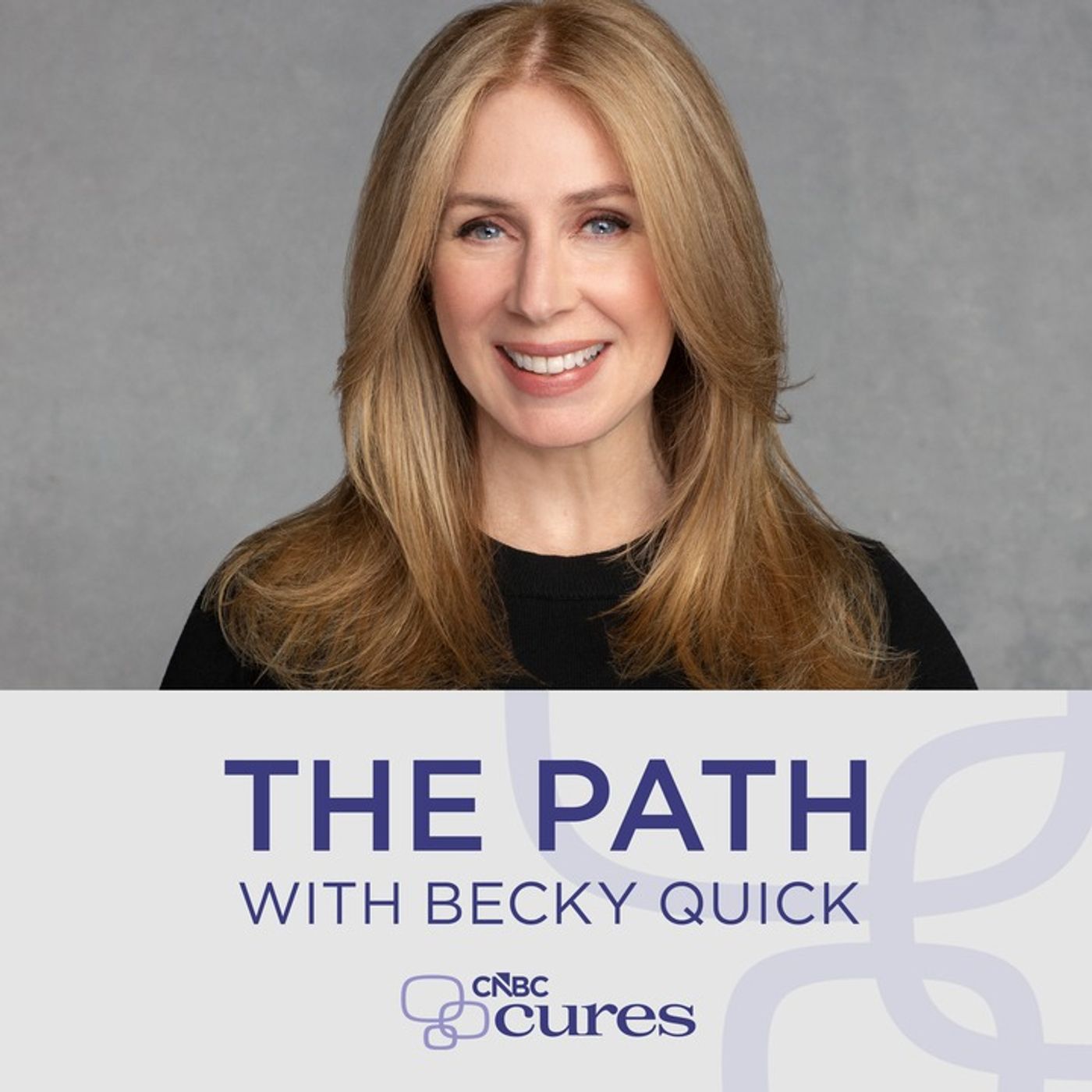
Squawk Pod
The Path with Becky Quick: Finding Hope 1/30/26
00:42:57
Luke Rosen was working as an actor and writer in New York when his daughter Susannah was diagnosed with KIF1A, an ultra-rare neurodegenerative condition. It's often fatal. At the time they received Susannah's diagnosis, Luke and his wife Sally didn't have much hope. There was no treatment for KIF1A, and there wasn't much work being done on it among researchers. But Luke, one of the most optimistic people you'll ever meet, did what so many parents of children with rare diseases do...he threw himself at the problem. He and Sally started the KIF1A.org Foundation so they could start building research that could go towards finding a treatment for their daughter. It was the beginning of a long journey for the family. Ultimately, that journey led them to the n-Lorem Foundation, an organization founded by CNBC Cures Advisory Board member Dr. Stan Crooke that offers free ASO treatments to individuals with nano-rare diseases. Thirty years in the making, Antisense oligonucleotide (ASO) te...
Loading summary
Transcript148 lines
- [00:00]
Becky Quick
Thy ticket, Lady Jennifer of Coolidge. Well, many thanks, good sir. Here is my Discover card. They accept Discover at Renaissance Fairs? Yeah, they do here. Discover is accepted at the places I love to shop. Get it with the times. With the times. You're playing the loot. Yeah, and it sounds pretty good, right?
- [00:23]
Luke Rosen
Discover is accepted at 99% of places that take credit cards nationwide. Based on the February 2025 Nielsen report.
- [00:32]
Becky Quick
Strayer University, we help students like you go from is it possible? To anything is possible by offering access to up to 10 no cost gen Ed courses so you can reach your goals affordably and fast. Visit Strayer. Edu to learn more. No cost gen Ed is provided by Strayer University affiliate sophia. Eligibility rules apply. Connect with us for details. Strayer University is certified to operate in Virginia by Chef and has many campuses, including at 2121 15th Street north in Arlington, Virginia.
- [01:04]
Luke Rosen
Well, gosh, if this is the last thing she sees, do I want to be looking at her and smiling or do I want her to know exactly how I feel and that I'm terrified and crying?
- [01:12]
Stan Crook
Oh, let's see. Can you see?
- [01:18]
Luke Rosen
There's this purity that isn't the disease, it's the person. This isn't normal and this isn't pain free. Foreign.
- [01:34]
Becky Quick
I'm Becky Quick. This is the Path from CNBC Cures, a podcast series about the people, the struggles and the science of rare disease. If you listened to or watched our first episode. Thank you. Thank you so much for opening your hearts to my family and our daughter's story. She's one of the millions of Americans with a rare genetic disease. Kaylee's disease is called syngap1. It's a neurodevelopmental disorder that causes conditions like autism and intellectual disability. People with syngap often have difficulty communicating and there is no cure. At least right now. Happy birthday to me.
- [02:16]
Stan Crook
Happy birthday to me.
- [02:20]
Becky Quick
Deciding whether to share Kaylee's story was something that my husband Matt and I struggled with for years. Why you don't want to go?
- [02:27]
Luke Rosen
Well, Kaylee and I get to wrestling.
- [02:29]
Becky Quick
We are both very private people and we are especially protective of Kaylee. And not being able to ask her consent on this project made us second guess ourselves for a long time. But the outreach and response has been incredible. It's beyond anything either of us has ever experienced. We've received thousands of emails, texts and calls and your comments on YouTube and across social media. Many of you shared your stories about children like Kaylee who or about people you love who are walking this Path of rare disease. Please let's keep this conversation going. We've set up a new email address. It's cnbc.curesmbc.com you can email us to share your story or to learn more about the CNBC Cures Initiative. But the response has been overwhelming and gratifying. I called this series the Path for a few reasons. Rare and the life around it is not one and done like my daughter's therapies that are very targeted. It's repetition, reinvention, recommitment again and again and again. Today's story is about two heroes who have done just that. And they have offered hope, brought by courage, by pioneering science, and by astonishing bravery. Luke Rosen is a hero to me. He is such a good friend. And in another life, he played heroes on television. He also happens to be a real life firefighter in New York. I first met Luke Rosen a couple of weeks into my daughter's syngap1 diagnosis. And he was wonderful. He answered my questions patiently, thoughtfully. He gave me hope.
- [04:06]
Luke Rosen
Wait.
- [04:06]
Becky Quick
Okay. Okay.
- [04:10]
Luke Rosen
My name is Luke Rosen, and before anything, I'm Susanna's dad, and I have an incredible family. And my wife Sally and I started a foundation called kif1a.org.
- [04:22]
Becky Quick
First of all, tell me about yourself.
- [04:25]
Luke Rosen
I was born in New York. My mom's a Boston Irish. You know, my dad was Brooklyn Jew through and through, and it's just, you know, doomed from the beginning. Sally and I met in college, so we've been together for about 20 years and we've been married for 10. We were living on the Upper west side in Manhattan, and I had, at that point had a pretty, you know, thriving career as an actor in New York and a writer. The bureau will need a full review of your hiring practices. That's necessary. The deceased officer had four different Social Security numbers attributed to his name. And Sally works with a wonderful chef. And so we had a really great thing going. We had a really good normal, right? We had our first child, Nat. He was incredible. And then three years later, that's when we had Susanna. And that's when our world changed.
- [05:15]
Becky Quick
Tell me about when you first realized there was something different, something that was going on.
- [05:22]
Luke Rosen
We realized something different was going on with Susanna in the bathtub. Sally has this incredible way of when the kids are in the bath, she sings this little song like, kick, kick, kick, kick, kick, right? And then when Susanna got in the bath, we started going in there to sing the kick song. She couldn't kick her legs. After we found out that she couldn't kick we went to the hospital, and we sought pretty urgent. Urgent care about it.
- [05:53]
Becky Quick
How old was Susanna?
- [05:54]
Luke Rosen
She was two and a half.
- [05:55]
Becky Quick
But she was walking already.
- [05:57]
Luke Rosen
She was couch surfing.
- [06:00]
Becky Quick
Okay.
- [06:01]
Luke Rosen
And she was, you know, army crawling, but she was walking with assistance. But she still. We knew she had a very ataxic gait. She didn't have great balance. And then the more we learned about the disease, we knew that that walking and that ability to ambulate would probably not be in her Future.
- [06:24]
Becky Quick
What is KIF1A?
- [06:26]
Luke Rosen
KIF1A is a molecular motor protein that is really vital for brain function and especially neuronal growth and neuronal health, the health of your neurons. And it's a really important gene and a really important protein for all of us. We all have a KIF1A gene, and Susanna has a mutation in her KIF1A gene that. It's called a toxic gain of function mutation. And when I heard that, I thought, oh, gain of function. That's good. That's not good. And so the function that that gene gains is giving off this really toxic element of protein that slowly kills the nerves in her brain and kills the nerves in her whole body.
- [07:18]
Stan Crook
Yeah.
- [07:19]
Becky Quick
How has that journey kind of progressed from the time when she was two and a half years old and you rushed her to the hospital?
- [07:26]
Luke Rosen
Yeah, the journey's. It's. It's a different answer every day. Right. I mean, the. The journeys progressed physically and medically, and the journeys progressed emotionally. You find your tribe quickly, like you and I, you know, it was. You find somebody else who's feeling as isolated as you are. We watch our kids, you know, slowly lose the ability to walk, to talk to. She has several seizures a day. But in the midst of all these challenges, we're also fighting for treatment. Right. That doesn't exist, and it didn't exist.
- [08:02]
Becky Quick
And so you took on this kind of incredible path to go out there, create the foundation, and try and find out what you could possibly do. How did you start it? How did you even know where to begin?
- [08:18]
Luke Rosen
Someone told us, you know, she's an incredible physician. You may know Wendy Chung, and Wendy was the first person to tell us about the disease. And what first person to see Susanna and really give us the diagnosis.
- [08:33]
Becky Quick
It is just incredibly hard to be a parent in this situation. It feels sometimes like the weight of the world is on your shoulders. KIF1A has no treatment. It has no treatment. It has no cure. It has nothing other than symptomatic relief right now. And we know that left to Its own devices. It will kill our children. Children.
- [08:50]
Luke Rosen
Wendy said, this is very articulate and very empathetically told us that, you know, we don't know much about the disease. Susanna probably won't walk. Susanna will probably have a lot of seizures. She probably will be in a wheelchair. And we don't know much about the lifespan of your daughter. So there were a lot of tears in that room. And Sally and I just kind of sat there and I. I've said this before, but I. In my head, I kept saying to myself, how am I going to tell Matt? Like, how am I going to tell her older brother? How am I going to tell her older brother that all of this. Like, how do I do that?
- [09:38]
Stan Crook
And.
- [09:41]
Luke Rosen
Wendy looked right at me in the eyes and she said, he is going to grow up to be a remarkable young man. And he is. But he's remarkable in a way that nobody should have to be, you know? So that was. That was the beginning of our incredibly new and terrifying normal.
- [10:05]
Becky Quick
Thank you, Dr. John.
- [10:08]
Stan Crook
Class. There you go.
- [10:11]
Luke Rosen
When we got Susanna's diagnosis, I got the call from the doctor to go over and pick up the. Get the paper or get the actual diagnosis. And that's when I'm reading this paper or I'm reading this horrific publication about brain atrophy, about death, about what is about to happen. And I came home to tell Sally and I was. I opened the. Like, looked in our kitchen and she was. Her back was to me getting something out of refrigerator, and she didn't see me. And I thought in my head, maybe I could give Sally another two. Maybe if I go out and just get a coffee or something, I could give her two minutes without knowing this, without knowing that our daughter is really sick, and without knowing that our lives have completely changed. Can I just give her that two minutes of not knowing what she's about to find out? I just stood there for an extra minute and looked at her until she turned around. And that's when. That's when I said, look, this is. We have a really sick kid. And it was terrifying. And we haven't cried like that. Then it brings you closer or. Or it splinters you. And I'm thankful that it brought us closer because I don't know. I wouldn't be anything without her.
- [11:47]
Becky Quick
I mean, that extra. The idea that you thought of giving her that extra few minutes of the last peace you're ever gonna have in your life.
- [11:55]
Luke Rosen
Yeah. Cause it is. I mean, imagine if we could just have another.
- [12:00]
Becky Quick
Ignorant day.
- [12:01]
Luke Rosen
Another ignorant day. Instead we have to become smart in ways that we never thought we had to be. Yeah, another ignorant day. I wish I had a few more of those.
- [12:15]
Becky Quick
We'll be right back.
- [12:19]
Keith Lansford
This episode is brought to you by Schwab Market Update, an original podcast from Charles Schwab. Join host Keith Lansford for this information packed daily market Preview delivered in 10 minutes or less, including projected stock updates, monetary policy decisions, and key results and statistics that may impact your trading. Download the latest episode and subscribe@schwab.com Market Update podcast or find Schwab Market Update wherever you get your podcasts. What if you could monitor the health of your career? For most people, it starts out strong. A new exciting job where it feels like anything is possible. But somewhere along the line, things change. That promotion you expected never happened. You haven't had a raise in ages and you're starting to feel irrelevant. These are early warning signs that your career is about to flatline. You need to get yourself immediately to Strawberry Me, where a certified career coach will help bring it back to life. And your coach will push you, challenge you, and help you put together a plan to get ahead, either at your current job or by helping you land a new, more rewarding one. Every Strawberry coach is certified in career resuscitation. Go to Strawberry Me Coaching and get 50% off your first coaching session. That's Strawberry Me Coaching. Now is the most affordable time ever to find out if career coaching is right for you.
- [13:48]
Monday.com Narrator
Close your eyes. Focus. Listen to work getting done with Monday.com relax as AI does the manual work while your teams are aligned on a single source of truth? Feel the sensation of an AI work platform so flexible and intuitive it feels like it was built just for you. Notice you're limitless. Now open your eyes. Go to Monday.comstart for free and finally breathe.
- [14:22]
Becky Quick
Welcome back to the Path. I'm Becky Quick. Put it on my eyebrow. I mean, I don't want people to not realize that Susanna has real spark. I mean she's pretty amazing too. Yeah, she's got all these things she's dealing with, but she's funny.
- [14:45]
Luke Rosen
She's funny. She is funny. She the other day when we find ourselves in the emergency room a lot for random reasons we were in the emergency room and our doctor was not there. So we find ourselves and I think you might know this very well too is you're educating the medical community too. And so I could tell Dr. Said, you know, we'll be right back. I knew they were going to Google it, right?
- [15:16]
Becky Quick
And what is Kifwena Yeah, yeah, yeah.
- [15:19]
Luke Rosen
And so, but Susanna, they were coming in and they, Susanna saw the, you know, the, the cart that has the, you know, the vital stuff on it, the, the cuff for the blood pressure and all that stuff. And, and she just went like this. She put out her arm and put out her hand and was like, you know, pulse ox and if you're taking blood, just do it.
- [15:47]
Becky Quick
The other hero in this story is Dr. Stanley Crook. He is the founder of Ionis Pharmaceuticals.
- [15:54]
Stan Crook
Hello, everybody, I'm Stan.
- [15:56]
Becky Quick
He's even appeared on CNBC as a biotech leader like he did on this.
- [16:00]
Stan Crook
Hit get about 200, I think 220 million if it's an anecense drug and pre commercial milestones and 90 million pre commercial milestones if it's a different modality. So it's, in the end, it's focused on the patient. And I think the patients will be the big winners. All right, good luck. We appreciate it. Dr. And Biogenidec, quite a partner to have.
- [16:23]
Luke Rosen
And did you hear all that gobbled up?
- [16:26]
Stan Crook
They're a wonderful group. Yeah, they are.
- [16:27]
Luke Rosen
But Carl Icahn, how did he know about Biogen? How does he. You think he knew all that? You think he knew about antisense technology? He had a gut on this.
- [16:36]
Becky Quick
But it's the work he's doing now, a pioneering technique of turning short synthetic strands of genetic code, DNA or rna, into medicine that will be his legacy.
- [16:47]
Stan Crook
Hi, I'm Stan Crook. I founded and am chairman and CEO of nlorem, a nonprofit foundation doing its best to help extremely rare patients, patients with extremely rare diseases. Before that, I was founder, chairman, CEO and lead scientist at a company called Ionis that created innocence technology, the technology we use at nlorem. Yeah, well, I think rare disease, the definition of rare disease is changing as we sequence more humans. And rare disease was defined by the FDA as a population of 200,000 or less patients with. With a particular disease. But we now know that there are many, many mute pathogenic mutations that produce disease in far fewer patients. We at Enlarm are focused on a particular slice of the population called nanorare. And our focus is on these patients because they have no hope. There is no solution for them other than what we can offer. And one of the reasons that they have no hope and no solution is that they're so rare. A nanorre mutation is a pathogenic mutation with a known prevalence of less than 30 humans in the world. If you can imagine the isolation and the desperation and the lack of information that's available when you're one of 30 or one of 10 patients in the whole world. And these patients have always existed, but they got lumped into other diseases. And we know them now because we're sequencing human beings and identifying this very, very rare spectrum of genetic diseases.
- [18:39]
Becky Quick
How did you get involved in nanoware? What led you to that point?
- [18:44]
Stan Crook
Well, at the time, I was running Ionis, which is the company I founded, and I was visited by two sets of parents, both of whom had boys with mutations in a gene called SCN2A. There are a lot of gene names, but it encodes a sodium channel. And we are electrical machines, and we function because we can move electrical charges around, and those are called ions. And so the SCN2A codes for a protein that. That moves sodium ions across membranes. And as a consequence, these boys just had horrible syndromes. If you can imagine your child seizing all day, every day, and being. Having movement disorders, ballistic movement disorders that you can't control. Autonomic dysfunction, inability to control breathing, heart rate. I mean, it was just terrible disease. And they were there to see if we could help them. And I had to tell them that indication was just too small for iOS to pursue commercially. But in that conversation, I realized that the technology that we had invented was efficient enough that I could make a drug for one of those boys and give it to them. Just give it to them. And that that stayed with me.
- [20:25]
Becky Quick
Was that kind of like a lightning moment for you?
- [20:27]
Stan Crook
It was. It was a gravitational moment. And I realized that I had led the creation of this technology that could, in principle, do this. And there were patients like these boys in need. And I kept looking at the space, and the more I looked, the more desperate it looked and the worse the conditions became and the more it became very clear that it's something that I was equipped with to try to deal with. And so in 2020, when I retired from Ionis, I found it in Lorem.
- [21:17]
Becky Quick
It's got a lousy name. Anti Sense technology.
- [21:19]
Stan Crook
Well, yeah, I didn't make that up. But so, you know, your genes are read left to right, and that. That makes sense. You have a second strand of DNA that's the opposite direction. That's called an antisense strand. And so the idea of antisense technology was take advantage of the genetic code directly and create little, instead of poly, many nucleotides, little oligo, a few of these genetic letters that would then use the genetic information directly to bind to a specific target in rna. And that direction that the ASO is designed for is the innocence direction. And so it made sense to call it anisense oligonucleotides from a scientific perspective. But as people have told me for about 40 years now, bad branding.
- [22:22]
Becky Quick
Antisense aglionucleotide. I know it's a mouthful, but an ASO therapy is a way to correct disease causing protein levels in patients. Sometimes your body produces too much of a protein, sometimes it's not enough. In my daughter Kaylee's case, her brain's not producing enough syngap protein. If there was a way to convince her body to boost the production of that syngap protein through a therapeutic injection, let's say we have real reason to believe that with the proper levels, her brain could develop more fully, it could make the synapses fire properly, build stronger connections, and that would help her in many, many ways. It's promising. It's not a permanent solution.
- [23:03]
Luke Rosen
So I went to different conferences, Global Genes and some other opportunities where there were lots of rare disease families together. And then I honed in on those two groups, Huntington's disease and sma. And both of those diseases were being treated with an antisense oligonucleotide or an aso. And I went to one company and I said, can you make an ASO for Susanna? Kids like her? And. And the answer at first was too rare. Sorry, sickening to. To say the word market size in the same sentence as our kids. Horrific degenerative disease. Right. You're certainly not thinking about a market size, but. And I was so mad. But then I realized that, okay, what Wendy was telling me to do was to find out what they were, what their mission, what their approach was, what their strategy was. And then that's what we started doing. And I recall banging down Stan Crook's door and just calling and calling and calling until he got back to me. And that's one of the first times that I felt a lot of hope. And this like, isolation on that island of rare disease that we're on. I felt other people coming onto it and saying, hey, do you need a raft to get off this island?
- [24:38]
Becky Quick
What were the next steps? How long did it take? From the time she was accepted to the program to the point where she actually received her first asotherapy.
- [24:48]
Luke Rosen
Two years, maybe a little bit over. And now I know they've significantly decreased that time, but Susanna was, I, I think, the second person. So it was really just sorting out things. I remember being in the endoscopy suite when she finally did get dosed.
- [25:05]
Stan Crook
We're in the.
- [25:06]
Luke Rosen
I think we were in the. OR at that point. And some of the people in that room, I was in there. And some of the people in that room, I looked, and they were like, you know, let's hope this works.
- [25:18]
Becky Quick
And you watch them, I guess, start to inject it. It was iv. Or was it.
- [25:23]
Luke Rosen
So we had to leave after. So we went in. She was anesthetized. And by the way, people don't. Didn't tell us that when your child is being anesthetized, sometimes they shake a lot. And so the first time Susanna had anesthesia, and it wasn't for this. It was for another time, you know, we. It was most. Isn't this so hard when your child is going. Going under and you're there and you think, well, gosh, if this is the last thing she sees, like, how do I want to look for her? Do I want to be looking at her and smiling? Or do I want her to know exactly how I feel? And that I'm terrified and crying? And so she. She closed her eyes and fell asleep. And I just. I kissed her on her forehead and Sally kissed her and. And we. We left and we just waited. And it was really. But that I kept thinking about that this. What if this is. What if this is the last time she. She sees me as she was falling asleep. And that was. How do you want your child to remember you? How do you. Because if I was being honest with her at that moment and probably most of her life, the answer was terrified and helpless. And, you know, that's not what you want your children to think of you, but that's how I feel with these diseases.
- [26:55]
Becky Quick
So what did you do? Did you smile?
- [27:00]
Luke Rosen
I did. And I lied to her because I. And that's. You know, I forced a smile. Well, I mean, it was the first time we left the hospital feeling good instead of leaving with this catastrophic news that something else had happened. But, you know, just forcing that smile because I know. Imagine how scared she was.
- [27:21]
Becky Quick
Right? No, I've done the same thing.
- [27:24]
Luke Rosen
You've done the same thing. How do you. How do you. Do you smile? I don't know. What.
- [27:29]
Stan Crook
Yeah.
- [27:30]
Becky Quick
Yeah. You don't want them to feel worse than they already do or scared.
- [27:35]
Luke Rosen
As scared as we are.
- [27:36]
Becky Quick
Yeah.
- [27:37]
Luke Rosen
Or do. Or does she even understand that? I don't. I don't know.
- [27:41]
Becky Quick
Well, I think I know for sure. Kayleigh feels my anxiety levels and my fear factor, so anything I can do to shut that down?
- [27:54]
Luke Rosen
Look at you go all by yourself. Nat looked at me and said, is this medicine going to Help Susanna think differently. And I said, well, what do you mean? And he said, is it going to help her, like, play with other kids? Is it going to. I don't know. And that notion, it hit me pretty hard that, no, she's probably not going to read. You know, she's probably not going to do these things that we all take so for granted. And, you know, Sally said the other day, just. I wish she could just read a sentence. You know, if she just read something, that's. Because, you know, that would be remarkable. But it's just not in the cards.
- [28:41]
Becky Quick
I used to wish all the time, think if she could just have a friend.
- [28:46]
Luke Rosen
Yeah. Yeah. And I can tell that they want a friend. Susanna wants a friend. She can't have a sleepover. You wanna roar? People don't quite understand what intellectual disability is. And it's so severe for kids like ours. And. And she can't confide in somebody because she doesn't know what that means. And she can't. She'll hug somebody.
- [29:20]
Stan Crook
Yeah.
- [29:21]
Luke Rosen
You know, so maybe there's a physical, but people don't necessarily know how to react to that.
- [29:28]
Stan Crook
Yeah.
- [29:30]
Luke Rosen
And I knew my son was really in tune and. And an empath when he started describing people who are in wheelchairs of just getting around differently.
- [29:45]
Stan Crook
Yeah.
- [29:46]
Luke Rosen
Because you could tell that there's this purity that kids have that goes away. It's fleeting. Right. But he's so committed to his sister and to normalizing what's not normal. But it's. It's kind of a. It's an endeavor that's going to be really hard. This isn't normal and this isn't pain free.
- [30:15]
Becky Quick
We'll be right back.
- [30:18]
Monday.com Narrator
Close your eyes. Focus. Listen to work getting done with Monday dot com. Relax as AI does the manual work while your teams are aligned on a single source of truth? Feel the sensation of an AI work platform. So flexible and intuitive it feels like it was built just for you. Notice you're limitless. Limitless. Now open your eyes. Go to Monday.com, start for free and finally breathe.
- [30:48]
Becky Quick
At Capella University, we believe accessible education can make a difference. That's why we offer scholarship opportunities to all eligible students. Un futuro diferente esta mas cerca de lo que cres con Capella University. Learn more at capella.edu.
- [31:03]
Luke Rosen
What made you confident that you could.
- [31:06]
Stan Crook
Do something that hadn't been done before?
- [31:08]
Becky Quick
I have no fear of failure. Trailblazing women, Changing the game. One of my favorite pieces of advice. Think about what your boss's Boss needs leadership can look in many, many different forms. It really does come down to just trusting yourself.
- [31:22]
Luke Rosen
Life is short and you just gotta.
- [31:24]
Becky Quick
Think big to accomplish big things. Julia Boorstin hosts CNBC Changemakers and Power Players. New episodes every Tuesday, wherever you get your podcasts. Welcome back to the Path. I'm Becky Quick hat put on.
- [31:45]
Luke Rosen
And.
- [31:45]
Stan Crook
Then I got a paz.
- [31:52]
Becky Quick
And what did you see after the second dose?
- [31:54]
Luke Rosen
It was breakfast. So this, you'll understand this, our breakfast together as a family is insane. I mean, it's, you know, things are getting thrown. Susanna's very trapped. She has a lot of tremors. And so she was, you know, people are spilling things and my son is getting anxious because all this is happening. He has to go to school and we're cleaning up everything and it's never a peaceful breakfast. But one morning after she had received treatment, we were sitting at breakfast and I was like, something is wrong. Like, what is wrong? Something's horribly wrong. But it wasn't. It was the fact that it was quiet and we were able to like, look at each other. And she hold up her. Her tremor was gone. So the treatment and it has since she no longer has a tremor. And now that's not a, you know, that's not an FDA approved outcome measure. Right. Or an endpoint. But it is something that just means the world to us because we can have that time together. And still to this day, we can have that time together. And she still has her challenges and problems, but just that tremor going away where we can have breakfast together. That's when I knew that the drug was working. Look at that.
- [33:16]
Stan Crook
Get up.
- [33:18]
Becky Quick
You know.
- [33:21]
Luke Rosen
You okay?
- [33:24]
Becky Quick
What other signs point to that? What other signs tell you because you're right. This idea of trying to put up a clinical trial where you say, these are our endpoints, this is what we have to meet. That's really hard to sometimes get to those measurable outcomes, scientifically measurable outcomes, even though, you know, as a parent that there's progress taking place.
- [33:45]
Luke Rosen
Yeah. And we made mistakes with that trial. Just one mistake. And, and that was one of the tools they were using to measure her ambulation is something called the six minute walk test. You walk for six minutes around these cones and. But one thing that this treatment wasn't targeting, wasn't affecting is Susan. The disease does, you know, she was losing her ability to walk slowly. And right now she's fully in a wheelchair. So that measure slowly moved. It doesn't matter to us because, you know, we're not going to force her out of her wheelchair and try to get her to walk. Right. Her fuel tank was on empty every day at 2:00pm yeah. And she would be writhing in pain because she had this. And that's the hardest part is she had. Has this horrible peripheral neuropathy. And so she was writhing in pain. And in her. In her own way, she would wake up and say, you know, my feet are burning on the inside. And was a hard. The pain. Seeing your daughter in pain, I mean, you know, is just. But her peripheral neuropathy started going away, so those painful mornings were gone. If you can eliminate pain, like, God, that was. That's it. You know, I don't have to see her in pain anymore. And she would come home from school at. Barely make it through a couple of hours of school, and then she would just be in bed because she was having seizures all night in her sleep and wasn't getting the right sleep. And so that went away. She was a little bit more. She was more energetic and focused and slowly could make it through an entire day of school. So she wasn't in pain or as much pain. She was making it through school. Breakfast wasn't such a catastrophe. And she was able to sit through a baseball game and sing songs that. And. And we are so fortunate that our daughter, out of all the challenges she has that, you know, she can express herself in ways that I know others can't. And I never take that for granted, because that is one thing that is just, you know, we look at it. And this is something that Dr. Chung had told me too, when I said, how do we. How should we look at this? Like, what is the decision? How should we look at this? And she said, it's like a highway with five lanes on it. And those lanes are, you know, cognition, fine motor, gross motor, all these different, you know, sight. Suzanne is losing her vision right now, which is really hard. And you need to focus on just a few of those lanes because for you, those lanes are going to start falling off the highway. And so we did. We had somebody say, you know, we were able to decide, well, let's focus on communication and let's focus on. Let's focus on maybe cognition or you didn't know what. What to expect. Losing sight is really hard because how do you give somebody. And this is. How do you give a kid the ability to, you know, see what we can see out the window? And then. And then within a year, take it away. You take away. It's not fair.
- [37:38]
Stan Crook
It's not easy peasy, lemon squeezy.
- [37:45]
Becky Quick
So is the asotherapy working?
- [37:50]
Luke Rosen
Yes. It's also clear to us that her disease is progressing so much that it would possibly. You know, her body's been through so much. And so when a younger kid was able to get the aso, we met her. Incredible. She was two. And I thought, I think she might be okay like this, you know, but Susanna's body was hard, but those little things that. This are huge impact, you know? And so, yes, the ASO is working. And I know we're still looking for the next thing because it's not a. It's just working is a hard thing to say. It was a working. It's making her life better. I mean, she's still not going to get up and run a marathon or. Or speak in a full sentence or. She does. Her speech got much better, actually, so I couldn't say that her speech was. She has great. Especially with song. She relates everything to song.
- [39:03]
Stan Crook
Yeah.
- [39:06]
Luke Rosen
But she's. She's still having. Now she has catatonic. Catatonia. Catatonic moments.
- [39:15]
Stan Crook
So she.
- [39:15]
Luke Rosen
When we thought they were seizures. Right. But she was in her wheelchair, so we were just saying, oh, she'd have a drop seizure. Because if she was not in her wheelchair.
- [39:24]
Becky Quick
Yeah.
- [39:25]
Luke Rosen
But now they're lasting 40 minutes and they're. That's not a seizure. So we were trying to figure out what that is, and turns out that it's catatonic moment or catatonic. So we're still trying to figure out these enigmatic parts of the disease. Right. But yes, the treatment's working because we can have breakfast together. Yeah.
- [39:49]
Becky Quick
And a baseball game.
- [39:50]
Luke Rosen
And a baseball game.
- [39:52]
Becky Quick
Fantastic.
- [39:53]
Luke Rosen
Yeah. She sang the National Anthem. She worked on for eight months, but she sang the National Anthem. We had an FDNY Toronto Fire fundraiser, and Susanna and her friends worked for eight months with their music teacher on how to sing the National Anthem.
- [40:11]
Becky Quick
Oh, my gosh.
- [40:12]
Luke Rosen
And so the kids came out and there are a lot of fans there, and the kids were singing the National Anthem in their own way. And when we looked over and saw the firefighters banging their sticks and all these people were in the stands, like, celebrating these kids, it was pretty incredible.
- [40:31]
Stan Crook
Oh, let's see. Can you see by the dawn D.
- [40:42]
Becky Quick
Like Luke, you and I were talking earlier, and one of the things that has always struck me, and I know you too, is that, you know, we're the lucky ones. We've got resources, we've got family support systems. You know, I was an older parent, so I was not young and inexperienced in Trying to figure this out had places. You know, I was trained to be a journalist and figure things out. We've both met people along the way who are so much less fortunate, and those are the people that I would most like to help on this.
- [41:15]
Luke Rosen
Yeah, that's really hard to be in the position where. Where you're privileged enough to actually seek out the right people and the right information. And there was somebody who called me and said, my daughter was just diagnosed with this disease. And I said, did you read the paper this time? There was one clinical paper with a horrible title. It said, mutations in KIF1A cause brain atrophy and death.
- [41:51]
Becky Quick
That's the first thing you see as a parent who has just gotten a diagnosis and the neurologist or geneticist who tells you about it has never heard of this disease.
- [42:02]
Stan Crook
Yeah.
- [42:02]
Luke Rosen
And he said, I couldn't afford the $35 on PubMed, which is the platform where you get the actual papers. I thought, my God, everybody has the right to learn about their disease. But also, what if I didn't have that $35? Would we be able to have kind of galvanized this community or. I don't know.
- [42:29]
Becky Quick
So it's not very often talked about the pressure that this puts on the family and that it puts on marriages, too. How do you and Sally deal with it?
- [42:39]
Luke Rosen
We don't. It's. It's so hard. You're right. It's so hard. I mean, we. And you and I were talking about this. Have. I can't remember last time Sally and I spent the same night in the bed. Nope. Right.
- [42:51]
Becky Quick
As somebody who always has to sleep with the child, who needs attention in case there's a seizure in the middle of the night, in case somebody wakes up.
- [42:57]
Luke Rosen
So it's hard to have a marriage where you're not sleeping in the same bed as your partner. That's hard. And that's just. The connection is hard. And I don't know how single parents do it.
- [43:11]
Stan Crook
I don't either.
- [43:12]
Luke Rosen
But that statistic about. I. I don't know where to source it. I, you know, saw it on a global gene stack sheet. But that statistic that 80% of marriages fail in a rare disease community. And that doesn't shock me because it is so hard to just. I don't know. When we went out for a date, a dinner, you know, we have takeout in the hospital, and when Susanna's asleep, maybe we can, you know, just have a moment. But it takes us a very specific skill set to put Susanna to sleep at Home. So we have to be home by six to do that.
- [43:58]
Stan Crook
Right?
- [43:58]
Luke Rosen
It's. It's. Yeah. A lot. And I, you know, I. I'm an open book. But we do, you know, we have. We schedule intimacy on our Google calendar. You know, like, how are we gonna maintain a healthy relationship at all? I mean, that can. Might be tmi, but it's. Yeah. One of the skill sets, I think you. Going back to your question is the notion that you just have to stop. If the world. If everyone in the world just stopped caring about what people thought of them. Right. The world would be better place, probably. And I think the. The. I had to stop thinking about what anybody thought of me, and I had to go asked everybody for help.
- [44:44]
Becky Quick
One of the things I think I'm grateful for all the time is that my husband Matt loves Kaylee as much as I do. Like, that is a huge blessing and a true joy.
- [44:54]
Luke Rosen
Absolutely. Yeah. I mean, this. Seeing these kids so full of love. There's this purity that isn't the disease, it's the person. I hope that never goes away. You know, the trajectory of disease. If she doesn't go treated, she's probably going to die. And if we can slow that down and curb that severity of disease, then. Then maybe, you know, wheelchair or not, maybe I'll be able to, you know, dance with her at a prom or something. And that's something you think would never. Becky, that's something you can never.
- [45:44]
Becky Quick
Put.
- [45:45]
Luke Rosen
A price tag on measure. Yeah. But.
- [45:51]
Becky Quick
Oh, I think you're gonna get that dance.
- [45:55]
Luke Rosen
I think so, too.
- [45:56]
Becky Quick
Yeah.
- [45:56]
Luke Rosen
Yeah. YouTube.
- [45:58]
Becky Quick
Yeah.
- [46:00]
Luke Rosen
Thanks, Becky.
- [46:01]
Becky Quick
Thank you, Oak. Thank you for joining me on the Path, a podcast and videocast launching with CNBC Cures, where we're trying to build a community and make walking this path feel a little less lonely. You can subscribe to the CNBC Cures newsletter that will give you the latest news on rare disease advances, legislative and regulatory attention, or the stories of patients and families who are waging the battles of their lives. Join us in person at the upcoming inaugural CNBC Cures Summit in New York on March 3rd. Registration and details are available at cnbc.com cures episodes of the Path are on YouTube, cnbc.com and podcast platforms. Tell us what you think in the comments. We've been inundated, but we love hearing all of your stories. Please keep sharing them and let us know your questions too. Keep coming back. Thank you to our producers and the team at CNBC for their incredible work and support. They've been unbelievable and I appreciate it. More than they know. We'll see you next time. This is a Monday.com ad. The same Monday.com designed for every team. The same Monday.com with built in AI scaling your work from day one. The same Monday.comwith an easy and intuitive setup. Go to Monday.com and try it for free.