← Squawk Pod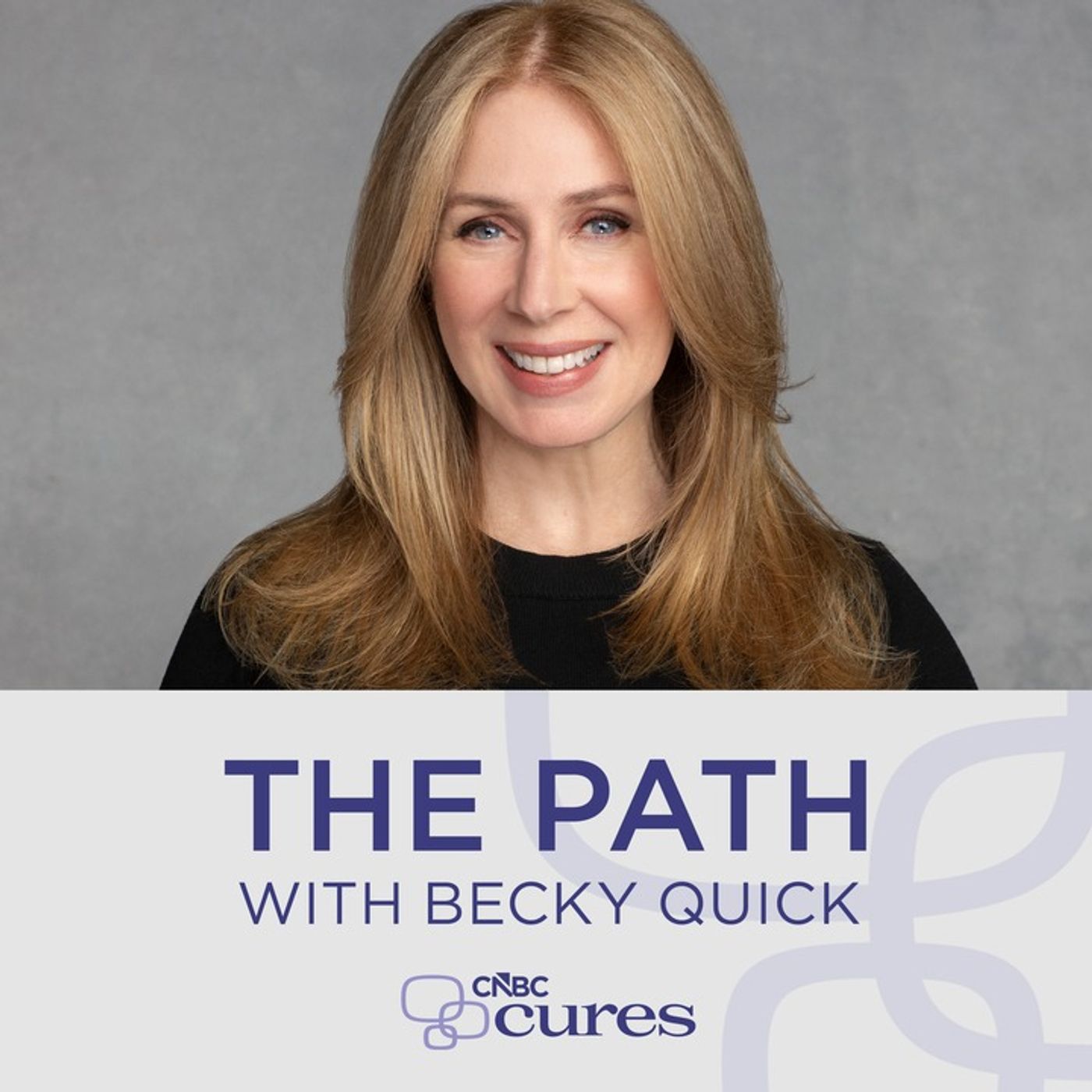
Squawk Pod
The Path with Becky Quick: Unlocking the Rare Genetic Code 2/10/26
00:42:11
“Please, not that one” Adam Anderson and his wife Brianne thought near the start of their rare disease journey when a doctor listed Tay-Sachs Disease as a potential diagnosis for their young son Drew. Rarer than rare, this genetic metabolic disorder causes progressive brain and spinal cord damage that can lead, often, to death in early childhood. 80% of rare diseases have a genetic origin. Hundreds of millions of people around the world suffering from a rare disease can trace the root cause of their symptoms back to an abnormality in their genetic code. For generations, there was no way for doctors to track this. But advances in genetic testing have made it so we can unlock the secrets hidden in our DNA faster than ever before. After losing Drew in 2019, Anderson’s life took on a new path. He ran for local office in Florida and became a leader in rare disease policy, creating a new genetic screening program allows parents of newborns to receive free whole genome sequencing at bir...
Loading summary
Transcript180 lines
- [00:00]
A
This episode is brought to you by Schwab Market Update, an original podcast from Charles Schwab. Join host Keith Lansford for this information packed daily market Preview delivered in 10 minutes or less, including projected stock updates, monetary policy decisions and key results and statistics that may impact your trading. Download the latest episode and subscribe@schwab.com market update podcast or find Schwab Market Update wherever you get your podcasts.
- [00:30]
B
Mic check 12 Are we recording? Hi, I'm Michelle Bernstein, an award winning.
- [00:36]
A
Chef, restaurateur and mom.
- [00:39]
B
I have a lot on my plate.
- [00:40]
A
Including my psoriatic arthritis symptoms.
- [00:43]
B
That's why I was prescribed Cosentyx.
- [00:46]
A
It helps me move better. Cosentyx Secukenumab is prescribed for people 2 years of age and older with active psoriatic arthritis. Don't use if you're allergic to Cosentyx before starting, get checked for tuberculosis. An increased risk of infections and lowered ability to fight them may occur. Like tuberculosis or other serious bacterial, fungal or viral infections, some were fatal. Tell your doctor if you have an infection or symptoms like fevers, sweats, chills, muscle aches or cough had a vaccine or plan to, or if inflammatory bowel disease symptoms develop or worsen, serious allergic reactions and severe eczema like skin reactions may occur. Learn more at 1-844-cosentyx or cosentyx.com Ask.
- [01:24]
B
Your rheumatologist about Cosentyx.
- [01:32]
A
We set up a state funded newborn screening program to offer children whole genome sequencing at birth free of charge. So it's an issue.
- [01:42]
B
Any parent who wants to put their.
- [01:44]
A
Child into this, yes, it's an opt in program so it involves their consent.
- [01:48]
B
When you think about Drew, is he forever 4 years old in your mind?
- [01:54]
A
Oh, that's a great question.
- [01:57]
B
Foreign this is the path. I'm Becky Quick. Thank you for coming back. Three seconds two in my 25 years at CNBC reporting on the stock markets in American business, This is the most important work I've done, bringing light to the sometimes dark and murky world of rare disease. Bye bye. Our nine year old daughter Kaylee, our youngest child has a rare genetic disease. Her journey and her battles have changed me in so many ways. All for the better. But walking that path, each slow step at a time is not an easy one.
- [02:43]
A
That's Kaylee and Julie.
- [02:45]
B
Kaylee and Julie. A rare disease diagnosis can be overwhelming, confusing, devastating. And for families navigating a new normal, it can be lonely.
- [02:57]
A
You know the breath comes out of your lungs.
- [03:01]
B
Hi.
- [03:04]
A
Who'S A happy baby. Who's my boy? Andrew Jones.
- [03:12]
B
Adam Anderson's story is like the story of many parents who face the unimaginable trying to get help for a child with a medical condition that doesn't make any sense, that they probably have never heard of.
- [03:25]
A
There was a list of, I don't know, maybe about two dozen or so conditions, and Tay Sachs was the one that was the absolute worst. None of them were good, but it was. Please, not that one.
- [03:39]
B
Rare diseases impact tiny populations. Just getting a diagnosis can be an odyssey.
- [03:45]
A
There were many, and they were all wrong.
- [03:47]
B
But maybe the path that we, as rare disease families are walking doesn't have to be that lonely if we do it together.
- [03:59]
A
She passed away on just before Christmas of 2019. December 22nd.
- [04:05]
B
So he was only four years old.
- [04:07]
A
Four years old. Four years old. So I felt like if we canceled Christmas, we'd be giving in. We couldn't do that.
- [04:17]
B
Adam lost a child and did the hard thing.
- [04:20]
A
We fought. We fought.
- [04:23]
B
He turned that loss into action almost immediately.
- [04:26]
A
What if we can get to them before they have symptoms? What if we can get to them before the neurological damage is done?
- [04:32]
B
He changed his life. He changed his career.
- [04:35]
A
We're celebrating the signing and the funding of HB907, the Sunshine Genetics Act.
- [04:44]
B
He changed laws, opening new paths to genetic testing and helping other families. This is the path to change. The path to answers.
- [04:54]
A
God, is this really where you want me to be in this room right now? I don't want to be in this room. Right.
- [04:59]
B
The path to community.
- [05:01]
A
If that's where I'm led, that's where I'm supposed to be.
- [05:05]
B
The path to a cure.
- [05:13]
A
It was true. Happy little guy.
- [05:15]
B
Smiley. Yeah, that's probably what, like, three or four months?
- [05:18]
A
Yeah, about that.
- [05:19]
B
Yeah.
- [05:20]
A
Yep. I'm Adam Anderson. I have the privilege of representing the northern part of Pinellas county in the Florida House. I am a loving husband, married my high school sweetheart, and a proud father of three beautiful children, Kaylee, Julie, and Andrew. It's been the greatest blessing of my life to be able to be a father and be able to, you know, have such an important role in the lives of. Of your children. It's. I don't know if there's anything more satisfying than that.
- [05:52]
B
What happened with Drew, that was different than your other children?
- [05:56]
A
Well, Drew was born. He was our third child. And you don't think a whole lot when you have the third child. It's pretty. Pretty routine. It was for. For me, anyway. It's easy for a dad to Say that, I guess, right? Hi.
- [06:09]
B
Who's a happy baby? Are you ready to be baptized?
- [06:16]
A
He was a happy, happy baby. He was perceived to be very healthy. There were no warning signals, no red flags. And I remember thinking after he was born that this is it and our family's complete. What's today? January 2016.
- [06:34]
B
Drew's first sleigh ride.
- [06:40]
A
You know, this is. Now we have the classic American family, right? Two loving parents. He had two older sisters. Now I got my boy. We had the dog, right? So we had the whole package. But around six months or so of age, Brianne started noticing some things that weren't quite right. I didn't believe her. Our pediatrician didn't believe her. But moms know these things, right? And I always say that there's really nothing more powerful than the mama bear advocate. Dads are pretty good, too, but there's nothing stronger than a mama bear who thinks her cubs threatened. And that's what it was. So we spent the better part of a year, a little longer. What's so funny? I love you, buddy. But Drew would not hit his mark, so. He wouldn't. He was missing some of his developmental milestones. And I remember the pediatrician saying, well, you know, you have to understand, you have two daughters that are also pretty far advanced. Our daughter Kaylee was literally running on her first birthday. And that's not common. So they tell us, well, your boys are just a little bit slow, lower. You just. Mom, you have to just accept it. It's. It's what it is. And that was my opinion, too. And then not making the milestones change to some regression. And that's where I said, okay, well, that's not. Something's not right there.
- [08:08]
B
Regression in terms of what?
- [08:10]
A
He was sitting up and then was having a hard time sitting up. He was able to hold his head up perfectly fine, and then, you know, wasn't able to hold it up all the time. Smaller things. And then he would. He'd get the regular colds that kids go through as they're building their immune system. Every time that would happen, he'd suffer from another regression of something. So then doctors started listening, and we started receiving, unfortunately, the. The wrong diagnosis for several months.
- [08:45]
B
What kind of things were doctors telling you at that point?
- [08:48]
A
There was a whole list there, you know, just torticollis on your neck. So, you know, things that were more physically developmental, some more cognitive. Cerebral palsy was one. There were many, and they were all wrong. And then it was probably around 15 months old, that where we finally Pushed very hard to get genetic testing completed on Andrew. And that gave us the ultimate diagnosis that he had Tay Sachs disease.
- [09:20]
B
And Tay Sachs, had you ever heard of it at that point?
- [09:23]
A
Never heard of it. We heard of it when we were kind of going through these missed diagnoses, but we really started learning about it when we finally got the genetic panel done. There was a list of, I don't know, maybe about two dozen or so conditions that could be detected on this particular genetic test. And I remember researching thoroughly every single one of them. And Tay Sachs was the one that was if the absolute worst that, that it could have been outcome. So there's almost everything else on that panel. None of them were good, but it was, please not that one. And unfortunately, unfortunately that's what it was.
- [10:04]
B
What, what is Tay Sachs? For people who aren't familiar with it.
- [10:07]
A
Tay Sachs is a, is an ultra rare genetic disorder. So, you know, the rare disease sphere, they're all rare or they're considered rare. This is ultra rare. So at the time there were, I think about 16 children that were affected by Tay Sachs disease in the United States. In the United States. In the United States. Not a whole lot more than that around the world. You know, over time, the community was so small that either Brianne or I had a personal relationship with every known family that had Tay Sachs disease around the globe, as far as India, Brazil, South America and throughout the United States. So it's a very small community, but it's a condition that is much more common in the Ashkenazi Jewish community, which we are not. So when a mom goes to the doctors the first time that they're pregnant, they're usually screened for this. They'll ask those questions if you have this ancestry, and the answer was no for us, and then move on. Right. But it's a, it's a very, very debilitating disease. So it, it affects your cognitive function, it causes paralysis, loss of fine motor skills, gross motor skills. Probably the, the hardest really were the seizures. The seizures were, were pretty horrible there. There were days when we were trying to get them under control where Drew would have 50, 60, even 70 seizures in a single day, which is very, very difficult as a parent to, to see that, not, not be able to do anything about it.
- [11:41]
B
Right. The seizure started before or after your.
- [11:45]
A
Diagnosis, probably around, around that, the same time, and then definitely got, got worse after.
- [11:53]
B
So the, the day you got the diagnosis, where were you? Do you remember how you felt that day?
- [11:59]
A
Yes, I definitely do. We were, we were at Chop in, in Philly Children's Hospital, the Children's Hospital of Philadelphia, can't say enough great things about that hospital. And they do a phenomenal job. And we probably spent an hour and a half or so with the. The geneticist walking us through the results. And, you know, we knew that was the. The last thing that we wanted to hear come out of her mouth. And it was almost like just, you know, the breath comes out of your lungs. This was a debilitating message to. To. To hear. And he. Drew was with us, and I had to be the strong one there. And that. That was hard. That was really hard. I remember leaving that visit and Brianne not even being able to walk out of the elevator. It was. It was hard to get back to the car.
- [12:59]
B
Was it just the three of you?
- [13:00]
A
It was.
- [13:02]
B
Who held Drill?
- [13:05]
A
Well, it was hard for me, not hard for her not to give him up, actually, but, you know, we've always both hold him all the time. Yeah.
- [13:14]
B
So you hear it's Tay Sachs. At that point, they don't have any real therapy or no. Anything they can really tell you to do.
- [13:23]
A
That might have been the hardest part of it is that, you know, we knew that there were no treatments. We knew that there was really nothing that can be done. But then when you hear a medical professional also tell you that, it's just. It really, really hits home, you know, so the message was more or less spend as much time as you can with it.
- [13:45]
B
So what did you all do?
- [13:47]
A
We fought. We fought. So we regrouped. You know, we had that. That gut punch that lasted a couple days, but. And this goes back to the Mama Bear, right? Mama Bear went out and. And found every. Every support group, every nonprofit that was somewhat even related to Tay Sachs disease, networked with. With every family that. That she could, found all the best caretakers, neurologists, not just from. From this area, but beyond. We traveled all over the place. Hello, my name is Brianne. I wanted to int. Family, the Andersons.
- [14:26]
B
But first I wanted to meet the.
- [14:30]
A
The guest of the hour, Andrew. Andrew was diagnosed with Tay Sachs disease. And we found it. We found a research doctor up at UMass. Dr. Miguel Esteviz is his name. Still working on curing Tay Sachs disease today. And he was working on a clinical trial. And that gave us a lot of hope. A lot of hope. So we almost immediately went and scheduled some time with him and drove up to Boston. He got to know Drew, he got to know our family, and we realized they needed money to do this. So we set our sights to Doing everything we could to raise money through the different nonprofits. The Cure Tay Sachs foundation was a phenomenal. One brand still serves on the board of the Cure Tay Sachs foundation today. And they, they. That organization and a collective group of parents helped get this gene therapy off the ground. And, And. And it's working? Um, unfortunately, it's working. Unfortunately. It was, it was too late for Drew to be able to receive it, but it, It. Yes, it's working. Um, it's. It's halting the progression of. Of Tay Sachs.
- [15:39]
B
Wow.
- [15:40]
A
They're on their ne. The second round of it now. So there's some kinks that need to be. Need to be worked out, but there, there's definitely promise for sure.
- [15:47]
B
The second round of the gene therapy, the gen.
- [15:49]
A
The trial. Yeah.
- [15:50]
B
How many kids were enrolled in the trial? The first one in the.
- [15:53]
A
I want to say just a handful. Definitely not a dozen. Just a handful. Because there's not a lot of these kids, and it's very difficult for these research doctors to be able to. To find them. And that's one of the things that we really wanted to solve is how do we. How do we figure out a way where we can diagnose these children early on and be able to offer their parents an opportunity to receive a gene therapy, even if it's a clinical trial, to receive a treatment before they're symptomatic. So if we know that there's a condition that has a treatment that's halting progression of the disease, what if we can get to them before they have symptoms? What if we can get to them before the neurological damage is done? Can we stop it from ever presenting itself? That's the promise.
- [16:41]
B
Hi. Come and check. Let's go back and just talk a little bit more about Drew. He was born in August of 2015.
- [16:55]
A
Yes.
- [16:56]
B
So that means you got your diagnosis around November of 2016.
- [17:01]
A
Yeah, it was. Yeah, around Christmas time.
- [17:04]
B
And the progression of his disease, did that happen pretty rapidly?
- [17:10]
A
It did. You know, sometimes when you're really in the thick of it as a caretaker, it's hard to see that, as they say, the days are long and the years are short. Right. And it's very true when you're in an acute, intense situation of being a caretaker. But it did.
- [17:27]
B
Yeah.
- [17:27]
A
It was every time he had any kind of infection, a respiratory infection, a common cold, he would suffer from regression. His body just couldn't recover from the stress of having some other illness to deal with. So we were always very adamant about keeping as much of a germ free environment as possible, which we had a toddler and. And a seven year old. Right. So that we're in public school, it's almost impossible to do. Right. But we did, you know, we made it through it. The girls were phenomenal caretakers for their little brother. They were. They were involved all the time.
- [18:07]
B
Yeah. His sister's one of the pictures that he showed me. His sisters are reading to him in bed too.
- [18:13]
A
Yeah.
- [18:13]
B
On special time for everybody.
- [18:15]
A
It always was. Yeah. One tractor. We'd encourage that because they were learning how to read at the time. So they're practicing reading and getting to spend time with their brother. He loved it too.
- [18:30]
B
We'll be right back. Did you know about one in three people with plaque psoriasis may also develop.
- [18:38]
A
Psoriatic arthritis, which causes joint pain, stiffness and swelling?
- [18:43]
B
Does this sound like you.
- [18:47]
A
Listen to.
- [18:47]
B
What it sounds like to be a million miles away? Trimfya Guselcomab, taken by injection is a.
- [18:58]
A
Prescription medicine for adults with moderate to severe plaque psoriasis who may benefit from taking injections or pills or phototherapy. And for adults with active psoriatic arthritis.
- [19:09]
B
Serious allergic reactions and increased risk of infections and liver problems may occur.
- [19:13]
A
Before treatment, your doctor should check you for infections and tuberculosis.
- [19:16]
B
Tell your doctor if you have an.
- [19:18]
A
Infection, flu like symptoms, or if you need a vaccine.
- [19:22]
B
Imagine being a million miles away. Explore what's possible. Ask your doctor about Tremphya. Tap this ad to learn more about Tremphyard, including important safety information.
- [19:35]
A
Building a portfolio with Fidelity Basket Portfolios is kind of like making a sandwich. It's as simple as picking your stocks and ETFs, sort of like your meats and other topics, and managing it as one big juicy investment.
- [19:50]
B
Mmm.
- [19:51]
A
Now that's pretty good. Learn more@fidelity.com baskets Investing involves risks, including risk of loss. Fidelity Brokerage Services llc. Member nyse, sipc, thy ticket lady, Jennifer of Coolidge.
- [20:07]
B
Well, many thanks, good sir. Here is my Discover card. They accept Discover at Renaissance fairs? Yeah, they do here. Discover is accepted at the places I love to shop. Get it with the Times. With the Times. You're playing the lute.
- [20:26]
A
Yeah. And it sounds pretty good, right? Discover is accepted at 99 of places that take credit cards nationwide, based on the February 2025 Nielsen report. And that was right before Christmas, I think. I think he passed away maybe a week or two after that picture was taken.
- [20:45]
B
He's a Jets fan.
- [20:47]
A
Well, you know, they. They say you're born jets fan. So that's how I became one. So yes, he was a Jets fan, too. He was born jets fan.
- [20:54]
B
The only way you become a Jets fan, I guess.
- [20:57]
A
I don't think jets fans are made. I think they're born. And this was Christmas Day. Three days later, Drew passed away on just before Christmas of 2019, December 22nd.
- [21:13]
B
So he was only four years old.
- [21:15]
A
Four years old. Four years old.
- [21:20]
B
What did your family do after that?
- [21:23]
A
Well, Christmas is a really big deal in the Anderson household, that many call me Father Christmas in my family. And I knew that we host Christmas every year. It's a tradition for many years, 20, 30 people in our house. And we plan to host that year just like we did all the other years. And a lot of our extended family wanted to relocate. Christmas dinner that night. They wanted to bring it to one of their houses. But I was adamant about not doing that for a few reasons. One, I owned Christmas, and I wasn't giving that up, but I wanted to make sure we kept the consistency of. Of for our family, for your daughters, for our daughters, and for the rest of our family, too. This was a hard situation, not just for us. You know, sometimes we had to be strong for our parents and our siblings and. And our. And our cousins. And that kept us going, though. It kept us going. So I felt like if we canceled Christmas, we'd be giving in. We couldn't do that. So we hosted Christmas.
- [22:25]
B
But then you did move back to Florida. This was right around the pandemic.
- [22:31]
A
Yes, very, very beginning of the pandemic.
- [22:35]
B
And you moved back down. And I guess over the course of the next year, that's when you were deciding or you were kind of being pushed to run for state legislature.
- [22:43]
A
I was being motivated by my cousin firmly, at times, rejecting his motivation. And Brienne had asked me, she said, well, are you praying about this? And I said, well, I don't know. You know, I asked. I asked God for guidance and strength on. On a regular basis, daily. She said, no, no.
- [23:03]
B
Are you.
- [23:03]
A
Are you asking God to lead you where he wants you to be? And I thought, huh, I don't think so. I don't think I've ever done that. So I started doing that every day. Still do it every day today. And that was the catalyst because these doors started opening up, opportunities were preventing presenting themselves. And there were many times when I'd think, like, God, is this really where you want me to be in this room right now? I don't want to be in this room. Right. But, you know, I've always had the belief that if that's. If that's where Where I'm led, that's where I'm supposed to be. Right. And if, if the door opens and I don't walk into it, I'm just doing a disservice. And at the same respect, some doors closed. I mean, that wasn't the direction to go, but it definitely turned out to be the right thing to do, as much as I rejected it myself. Yeah.
- [23:54]
B
Part of your experience as a parent, and in particular as a parent to Drew has helped mold the type of state representative you are. How does your experience play into the way you are helping govern the state?
- [24:11]
A
That's a great question. I would say it's molded just the person in general as well. Right. I never, when I, when I first agreed to run for office, I never intended on working on rare disease policy. A lot of people think that's what I. I assume. Yeah, a lot of people. A lot of people assume that and that. And that's. That's fair because it's made up such a giant portion of what I've worked on. But that wasn't the intent initially. That's just a free market pro business guy that wanted to. Small business owner my whole life. But once I got elected and I found myself serving on some healthcare committees, I realized the impact that we can have. And I also realized pretty quickly the lack of support for the rare disease community that existed in government across the board. And I also realized that's something we can change and that's something that I actually have the ability to change. And you know, coming back to. Into this regular prayer of lead me where you want me to be. That's where I kept going. That's where I continue to be led. And now fast forward. I can't give up. Senate Bill 1582. Importantly, the bill creates the Andrew John Anderson Pediatric Rare Disease Grant Program to provide grants to advance research and cures for rare pediatric diseases. This initiative was led by Representative Anderson from Pinellas county, who lost his son to an ultra rare disease when his son was just 4 years old.
- [25:44]
B
Your biggest success to date has been the Sunshine Genetics Law. What is it? How did it come about? What does it do?
- [25:53]
A
We're celebrating the signing and the funding of HB 907, the Sunshine Genetics Act. It's truly a historic milestone that's giving Florida a once in a generation opportunity to lead the nation. The Sunshine Genetics act is a very exciting, transformative, truly landmark piece of legislation, which is wild to think that because it originated from my scribble notes on it on a cocktail napkin.
- [26:25]
B
How did. What were you doing with a cocktail napkin in your hand? Where, what was the conversation you were having at the time?
- [26:30]
A
It was just happened to be what I had in front of me that I could write on. And I started having some ideas about and realizing some problems. And you know, where, how can we get these, I was trying to think about how can we get these children to these pre clinical and clinical trials before they're symptomatic, how do we do that? Because I had networked a lot with research doctors from around the country and especially throughout the state and there's a number of these even going on today where these therapies are providing tremendous promise. They're stopping progression of these diseases, but they're not able to reverse, reverse course, reverse it. They can stop it or slow it, but they can't reverse it. Right. And so many of these rare diseases, they have just so significant and detrimental impacts on your overall health. So once you have deterioration of brain matter, it's very difficult or impossible possible to get that back. Right. But what if you could stop it from happening in the first place? So I'm scribbling notes and you know, how do we do this? What if we can have this? What if we can add it to newborn screening? Another problem was, you know, how do we, how do we get our universities to work together? So instead of siloing there, instead of siloing, right. Why, why are universities competing? Right. And if you think about it from a state policy standpoint, we're funding these universities, right? So it's a good business decision. Why are we funding Florida State for a viral vector manufacturing facility And University of South Florida? I'm just making up for something similar. They should work together, right? So I started drafting this. The cocktail napkin turned into real paper, right. And then it took about eight or nine attorneys to fix what I put on paper and make it actually something that could be voted on and passed. But it's giving Florida truly a once in a generation opportunity to lead the nation in genomic and precision medicine. And it's solving a few problems. So the first is, it's solving the, the problem of this diagnostic odyssey. So when I, when I talk about this publicly and in the legislature too, people are always so surprised to learn that it could take four to five years on average, sometimes seven or eight years to diagnose a child with a rare disease. They might spend 7, 10, even more. There's research that just came out that suggests it takes 17 trips to doctors to diagnose a child with a Rare.
- [29:00]
B
Disease that even sounds low.
- [29:02]
A
And some. That's an average. Right. So some are even way more than that. As hard as our situation was and how difficult it was to go through 15 months of not getting the diagnosis is actually very fast. Right. Compared to what many parents have to deal with. So I wanted to solve that. So what we did is we set up a state funded newborn screening program to offer children whole genome sequencing at birth free of charge.
- [29:31]
B
So for any parent who wants to put their child into this.
- [29:35]
A
Yes, it's an opt in program, so it involves their consent. It's starting as a pilot program right now. So we have one hospital so far that's identified and we've secured enough funding to be able to cover is sequencing at that hospital for about the next year or so. But the intent is to bring this statewide. So we're going to continue to advocate for more funding to bring statewide. But we're really relying heavily too on the private sector because this is a true public private partnership in terms of.
- [30:05]
B
Florida puts up some of the money, but the rest of it has to be raised.
- [30:08]
A
That's right, yeah. Yep, yep. And we've put it up. We've put it up. So, you know, I was thinking about this as I was coming in today, where a lot of times when it comes to innovation, whether it's in healthcare or aerospace or energy, the private sector looks to the government for help, for subsidies or grants. But in the case of the Sunshine Genetics act in Florida, we've already built it. We've built the airport, we have the Runway, we have the planes. The planes are fueled up, they're ready to fly. How far we can fly those planes just depends on what additional funding that we can bring in.
- [30:47]
B
And where are you looking for funding? Where are you hearing places that might be able to jump in, companies that might be able to jump in.
- [30:55]
A
I think, I think the best really are going to be the companies that depend on this pipeline. Right. So the companies that are looking for these undiagnosed children so that they can treat them early. Right. And there's many of them, there's many great rare disease companies run by phenomenal people. The biotech sector. I'm really happy and excited that the nation's premier genetic diagnostic company, GeneDx, is our first partner in the program. They have an amazing team of people at GeneDx and just a wealth of expertise that we're able to leverage in Florida to be able to expand the program.
- [31:37]
B
It sounds like a nearly impossible task because this sounds like a great Idea. But actually getting Florida to not only pass the legislation, but then to put up money for some of this too. How difficult of a process was that?
- [31:51]
A
It's not easy to make a law. That's what our founding fathers wanted. And it's true. The Sunshine Genetics act had seven committee stops that it had to clear through throughout the process before it could get to the House floor and the Senate floor. And for people that are familiar with the legislative process, seven committee stops. Sometimes people think that's a kiss of death that somebody high up wants to kill your bill because it's almost impossible to get that done. We have a 60 day session. So that means that that bill needs to be heard in the committee pretty much every week or we just run out of time. But we were able to get it done and it was passed unanimously. Bipartisan, every single committee stop. On the House floor, on the Senate floor, and then ultimately signed by Governor DeSantis.
- [32:39]
B
Wow. Congratulations.
- [32:40]
A
Yeah, thank you. Thank you.
- [32:45]
B
What next? Do you start fundraising right away? How do you do that?
- [32:49]
A
We're fundraising now for it. And there's been some really phenomenal early interest in the program. I think folks in other states are a little surprised that Florida beat them to this, which I find personally satisfying. But the reality is we're not competing with these other states. This is a framework that I hope other states will adopt. I want other states to bring these kinds of programs there. This is not a Florida issue. It's not a New York issue. It's not a California. It doesn't matter. It's not a federal issue. It's something that can be done at the state level. We don't have to wait for the federal government to enact these kinds of policies. It's hard to get things done in D.C. states can be much more nimble, and it just takes a champion. So I've had a few states representatives in other states reach out to me that are interested in exploring it, which is exciting.
- [33:41]
B
I guess the question would be, do you want to take your newborn baby and put them in something that could put their basic identity at risk? And how do you control that? How do you control that information? How do you make sure that it's not misused?
- [33:54]
A
Absolutely critical. So we need to protect that. Right? So we can't let this sense, this genetic information. This is DNA. It's sensitive information. Right. We can't let that fall in the hands of people that want to do you harm. We can't let it fall in the hands of our enemies. We can't Let it fall into the hands of people that want it for profit. Right? So it needs to be guarded closely so the parents will own this information from day one and that's protected by hipaa. Right? So they're able to communicate with their physicians. But then after that it's. The information is de identified.
- [34:32]
B
Okay.
- [34:33]
A
So it's completely anonymous when it, when it's stored.
- [34:35]
B
Okay.
- [34:36]
A
And then from there, members of the consortium that are part of the Sunshine Genetics act can then use that for research purposes.
- [34:43]
B
There is more of the path coming up.
- [34:49]
A
Sling is the live TV service that puts you in charge. Choose your plan. Orange for sports and entertainment favorites favorites Blue for news and reality. Or select for the essentials. Only pay for the stuff you actually watch and pause your subscription anytime. Because paying for TV or not watching, that's just rude. No long term contracts, no nonsense. Pick your plan, add what you want. Sling lets you do that. Visit sling.com to learn more. Flowers die in three days. Matching underwear for Meundies. That's a gift that lasts. Meundies creates matching prints for couples and friends. Same adorable designs in different cuts for each of you. All made from their signature ultramodo fabric that feels incredibly soft. With 90,000 five star reviews, MeUndies matching prints are the perfect gift. Valentine's Day is February 14th, so don't wait. Get exclusive deals up to 50% off at Meundies.com SXM code sxm that's Meundies.com sxm code sxm at Strayer University, we help students like you.
- [35:49]
B
Go from will I to why not? For over 130 years, we've been innovating higher education to make it more more affordable, accessible and attainable so you can reach your goals. Go from thinking, can I? To yes, I can and keep striving. Visit strayer.edu to learn more. Strayer University is certified to operate in Virginia by Chevinus. Many campuses, including at 2121 15th Street north in Arlington, Virginia. This is the path and I'm Becky Quick.
- [36:22]
A
It's always such a pleasure to be back here on campus at fsu. Your work today is providing hope to countless families. But it's just a matter of time before that hope is transformed into cures for rare diseases. The genomic medicine industry is estimated to reach $100 billion in just a few short years. And right now, Florida only has a very, very tiny sliver of that industry. Right now, we're missing out on a huge opportunity for our state. But the Sunshine Genetics act will solve that problem. Florida is now the first and only state in the nation to offer a newborn screening program that's this comprehensive. This is very exciting. So Florida State is now home to the first of its kind. It's the Florida Institute for Pediatric Rare Diseases. And there's a number of components to it. The Sunshine Genetics act actually codified that institute into statute to ensure that it goes on to live forever. So someone has to change the law to be able to do away with the, with the Florida Institute for Pediatric Rare Diseases.
- [37:36]
B
And that is not easy to do.
- [37:38]
A
And that is not easy to know. It's also not easy to put it into law, but to get that done. So this institute is now the home of a regional CLIA certified genetic testing lab. So that's one of the big components. It's also. They already have, it's relatively new, but they already have 23 ongoing research projects right now in the rare disease space that are fully funded, operational, spread across a number of different types of conditions and diseases, and spread across a number of different departments at the university also. I think what I'm probably most excited about, though, at the Florida Institute for Pediatric Rare Diseases is that there will be a new clinical health center for undiagnosed rare diseases. So this institute will serve as a destination for families to be able to go to from around the state and from outside the state when they can't find the answers that they need through their primary care channels that, that they have. And the approach really flips that traditional healthcare system upside down, where if you have a condition, you go to the doctor, they'll order the simplest, least expensive, narrowest test typically. Right. If they don't find what they want, maybe they'll graduate to a little bit more comprehensive and a little bit more comprehensive. At the Institute for Pediatric Rare Diseases, it starts with whole genome sequencing. So from day one, the entire genome is mapped and then they work, work from there to figure out the diagnosis, faster process you get the diagnosis within a couple days.
- [39:18]
B
Yeah.
- [39:19]
A
As opposed to this diagnostic odyssey that's taking six, seven years for folks without that. The other really powerful thing and the opportunity that exists with this new institute is that through the Sunshine Genetics act and the consortium that's established there, once that diagnosis is received, those healthcare professionals can then connect them with researchers and clinical trials that are going on throughout the country.
- [39:45]
B
Wow.
- [39:46]
A
So the hope is that that will be the conduit to be able to help these parents get their children into these early stage clinical trials.
- [39:54]
B
And that's amazing.
- [39:56]
A
Stop progression of diseases yeah, that is amazing.
- [39:58]
B
You know, you and I were talking a little earlier and just the idea that when you say rare disease, people think it's an orphan disease. There's not much you're going to be able to do about it. I think you think differently.
- [40:12]
A
You have to think differently. Right. So I don't know why we call them rare diseases because not a lot.
- [40:18]
B
Of people have them.
- [40:19]
A
Usually each one of them is rare by itself. Right, that's true. But when we look at them collectively, and I try to change this narrative all the time, any opportunity that I get is that when we look at rare diseases collectively, there's, there's almost 10,000 known rare diseases that affect 30 million people in the United States. So when we look at them as a group, that's more than the people that live in Texas or more than the people that live in Florida. The two, two of the top three most populous states in our country. More people than live in one of those states is affected by a rare disease. So when we look at them as a group or even within categories of rare diseases, there's many rare diseases that each individual one might be, might affect, I don't know, 100,000 people, but that category might affect millions. So if we're focused on research and development of treatments for that category of diseases, that's I think the ticket really to get more of the biotech and the pharma companies engaged and involved.
- [41:21]
B
And investors.
- [41:22]
A
And investors, absolutely.
- [41:24]
B
And that's what makes the difference. I think you look at this from a capitalist perspective.
- [41:28]
A
That's right.
- [41:29]
B
If you want to get things done, you gotta have a market, you gotta have money.
- [41:33]
A
That's exactly right. I am a capitalist. Right. I'm a free market capitalist at heart and always will be. And I realized early that in the, in the case of Tay Sachs, a Merc is never going to invest money into solving a rare genetic disorder that they can sell to 16 people a year. It's not going to happen. We can't expect them to do that. Right. But that's where I think government's role in, and universities role in the research is that we can support that pre clinical work, we can support the early research and then foster a collaborative pathway so those universities can then work with the biotech industry, can then attract capital to bring these platform technologies, platform treatments to market.
- [42:19]
B
Bigger picture, is this scalable nationally what you're doing in Florida?
- [42:23]
A
Absolutely, it's scalable nationally. Absolutely. We've built it, we have the template for this. And while it's starting As a pilot, our first goal is to scale this across the state. But other states can and should look into this and I'm happy to make myself available. I tell them other representatives of states all the time, I'll do anything I can to help bring this to their state. The way newborn screening works is that it's somewhat driven by the federal government, but the states have all the control over it. So each state would need to adopt it.
- [42:57]
B
You've had some huge success in getting all this accomplished. What's been the biggest hurdle that you've had to clear along the way?
- [43:08]
A
Well, it's never easy to make a big change. It takes a lot of support. It takes a team of people. I've been very, very fortunate, very blessed to have great, great co sponsors over in, in the Senate and the support of our Speaker, Danny Perez and the incoming Senate president in the Florida Senate, Jim Boyd. And they, they believe in this mission.
- [43:38]
B
And.
- [43:41]
A
They'Ve been very supportive of it. I would say the biggest obstacle is not quite been legislative, it's just been the amount of time that I have to spend away from home. Yeah, that's, that's probably the hardest part.
- [43:53]
B
When you think about Drew, is he forever 4 years old in your mind or.
- [43:58]
A
Oh, that's a great question. No, actually he's not. You know, I, I see him as a 10 year old boy. I, I do. You know, it was probably about a year or so. It still happens once in a while, but in the year after he passed away, he, he passed away in a little after three in the morning and I was woken at three. And I'm so fortunate that I was, I was able to hold him in my arms when he passed away. And for at least a year straight, I'd wake up every single morning at about 3 o' clock and I wouldn't say it wasn't a haunting experience by any means. I loved it. I, I loved it. And in fact, you know, thinking about having this conversation that, that happened this morning actually. But he, he came to me as a 10 year old boy. Yeah. Not a 4 year old boy. He's healthy, he's free.
- [45:02]
B
I bet he's proud of what he sees you doing.
- [45:06]
A
I wonder about that. Yeah. You know, a lot of times people will say, well, you're doing this for your boy, it's a legacy. And I suppose it is, but I'm doing it for the other kids. That's really what motivates me.
- [45:25]
B
Adam, I want to thank you for sharing your time and sharing your story. And I look forward to talking to you much more about this stuff.
- [45:33]
A
Me too. Me too.
- [45:37]
B
Thank you for tuning into the Path, a podcast and video cast with CNBC Cures. We are starting to build a real community here. I love seeing your comments on YouTube, not the ones from the bots about crypto trading, but the support and the personal stories that you've shared. Like Len, who has a daughter who's about to undergo groundbreaking ASO therapy for her neurodevelopmental disorder that's caused by a rare genetic mutation. Lynn is hoping to hear her daughter's voice one day. And Lynn, we are hoping for that too. I'm honored and overwhelmed by the outpouring from all of you. We're trying to respond to as many of you as quickly as we possibly can, but we're still building the infrastructure here and Preparing for our first annual conference on March 3rd in New York City. Ultimately, building this community is our goal, so please be patient. Stay with us. Let's keep this conversation going. If you are in need of help, resources, guidance, please visit the cnbc.com cures webpage. We have more of your stories there, as well as links to organizations that we feature in our coverage. Subscribe to the CNBC Cures newsletter that will give you the latest news on rare disease advances, legislative and regulatory attention, or the stories of many brave patients and families. Thank you as always to our producers and the team at cnbc, and we will see you next time on the path. The Jack Welch Management Institute at Strayer University helps you go from I know the way to I've arrived with our top 10 ranked online MBA. Gain skills you can learn today and apply tomorrow. Get ready to go from make it happen to Made it happen and keep striving. Visit strayer.edu Jack Welchmba to learn more. Strayer University is certified to operate in Virginia by Chev and its many campuses, including at 2121 15th Street north in Arlington, Virginia.