Podcast
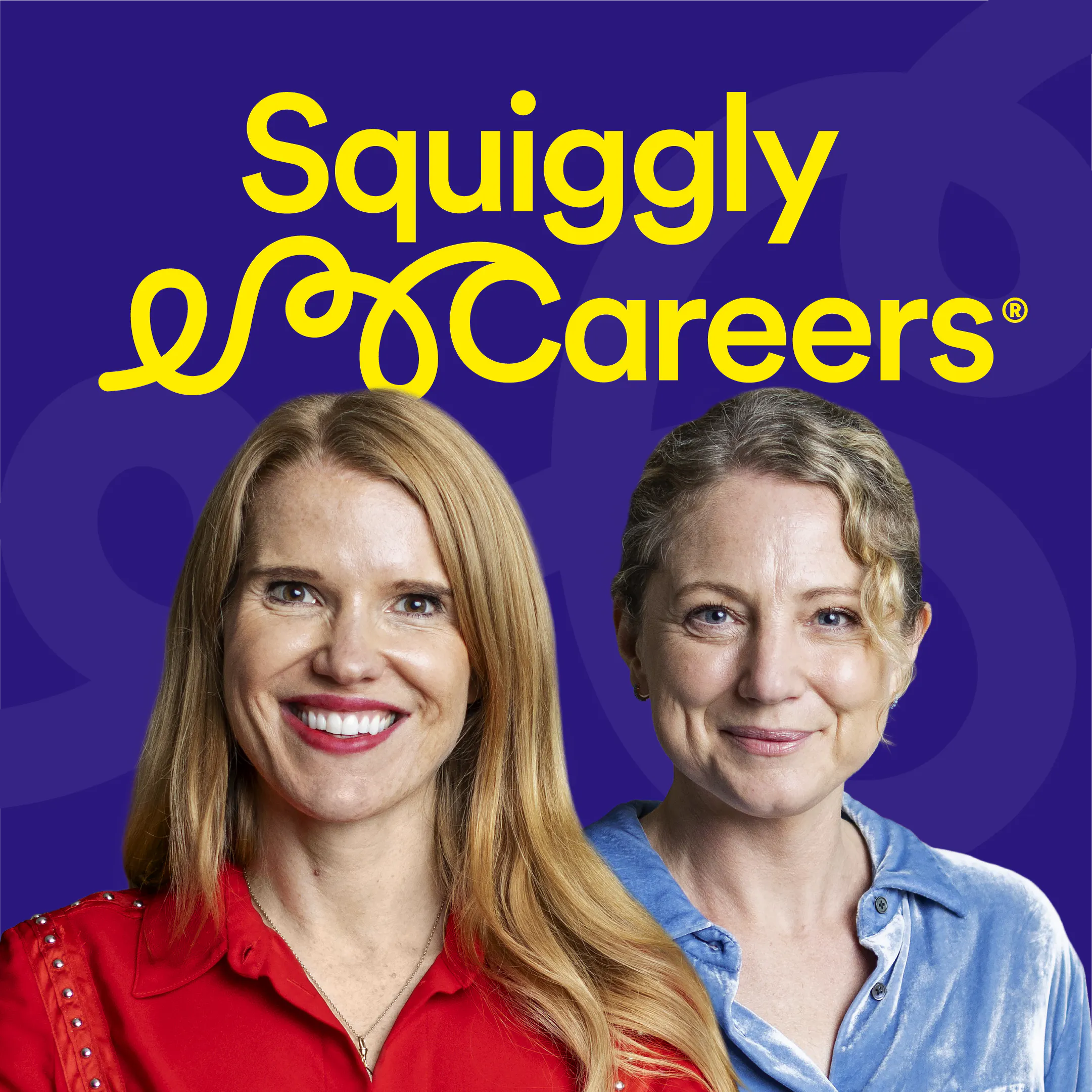
Squiggly Careers
Hosted by The Squiggly Career · EN
Squiggly Careers is a weekly podcast that will help you take control of your career development. Hosted by the founders of Squiggly Careers. (https://www.amazingif.com/), Sarah Ellis and Helen Tupper, together they cover all things work: from how to manage stress and overcome your confidence gremlins to micro-aggressions and discovering your strengths. Each episode is full of ideas, actions, hints, and tips that you can put into practice straight away.
Every so often they take a break from talking to each other to interview other people who are leading the way in making work better. Past guests include entrepreneur and philanthropist Dame Stephanie Shirley, author of The Joy of Work Bruce Daisley, and neuroscience expert Amy Brann.
The Squiggly Careers podcast has been recommended by Harvard Business Review, Stylist, Marie Claire and Management Today.
For more ideas, tools and inspiration every week, you can also sign up to their Squiggly Careers newsletter.
Hosted on Acast. See acast.com/privacy for more information.
118episodes
Episodes
Newest firstAll episodes

#585 What to make of a life with Jim Collins (A Career Well Spent Series)
Yesterday00:38:56Tap to summarizeAre you feeling lost in a career fog or facing a major transition? In this special episode, Sarah is joined by legendary author and researcher Jim Collins to explore what it really takes to build a fulfilling life and career. This episode of part 3 of 4 in the 'Career Well Spent Series' Drawing on Jim's new book 'What to Make of a Life', they explore what it really means to navigate life's 'cliffs' and 'fog'. 🎯 What You'll Learn – Discover 'simplex stepping' to make progress when you are lost in a career fog – Identify your unique 'encodings' and how to develop them into super strengths – Flip the arrow of money to align your work with your inner fire – Explore why your biggest and most creative years can happen later in life For questions about Squiggly Careers or to share feedback, please email: helenandsarah@squigglycareers.com Need some more squiggly career support? 1. Download our free career tools: https://www.amazingif.com/toolkit/ 2. Sign up for our Skills Sprints: https://www.amazingif.com/squigglysprints/ 3. Sign up for our Squiggly Careers Newsletter, a weekly summary of the latest squiggly career tools: https://bit.ly/squigglynewsletter_pod 4. Order our new book Learn Like a Lobster: https://www.amazingif.com/books/ Learn more about your ad choices. Visit podcastchoices.com/adchoices
Transcribe →#584 How to Create Your AI Learning Plan
6d ago00:06:13Tap to summarizeAI is changing quickly, which can make it hard to know where to start. If you're feeling overwhelmed by everything there is to learn, you're definitely not alone. In this Shortcut, Sarah shares how to use the Squiggly Careers Learning Navigator to turn AI into something practical and personal. Instead of trying to learn everything, you'll identify what matters most for your role, connect learning to your day-to-day work, and create a simple plan you can build on over time. 🎯 What you'll learn - How to decide what's most useful for you to learn about AI right now - How to use the Learning Navigator to prioritise your learning - How to connect AI experiments to your everyday work so learning sticks - How to create a simple, practical plan for building your AI skills over time Need some more squiggly career support? 1. Download our free career tools: https://www.amazingif.com/toolkit/ 2. Sign up for our Skills Sprints: https://www.amazingif.com/squigglysprints/ 3. Sign up for our Squiggly Careers Newsletter, a weekly summary of the latest squiggly career tools: https://bit.ly/squigglynewsletter_pod 4. Order our new book Learn Like a Lobster: https://www.amazingif.com/books/ Learn more about your ad choices. Visit podcastchoices.com/adchoices
Transcribe →
#583 Big Time with Laura Vanderkam (A Career Well Spent Series)
1w ago00:35:26Tap to summarizeDo you feel constantly defeated by a packed calendar and rushed for time? Reclaiming control of your schedule starts with changing how you view your 168 hours. This episode of part 2 of 4 in the 'Career Well Spent Series' Drawing on Laura’s bestselling books '168 Hours' and 'Big Time', Helen explores what it means to achieve true time abundance, and what your default response to a busy calendar reveals about you. 🎯 What You'll Learn – Understand the difference between time abundance and time scarcity – Apply the 'Would I do this tomorrow?' test to new commitments – Track your time to separate feelings from facts – Establish a weekly planning routine to reduce panic – Build your career capital with four simple actions a week – Reclaim control and autonomy over your daily diary For questions about Squiggly Careers or to share feedback, please email: helenandsarah@squigglycareers.com Need some more squiggly career support? 1. Download our free career tools: https://www.amazingif.com/toolkit/ 2. Sign up for our Skills Sprints: https://www.amazingif.com/squigglysprints/ 3. Sign up for our Squiggly Careers Newsletter, a weekly summary of the latest squiggly career tools: https://bit.ly/squigglynewsletter_pod 4. Order our new book Learn Like a Lobster: https://www.amazingif.com/books/ Learn more about your ad choices. Visit podcastchoices.com/adchoices
Transcribe →#582 How to use AI as your thought partner
2w ago00:06:48Tap to summarizeOutsourcing your thinking to AI erodes the value of your contribution and means you are less likely to make a distinctive difference. Using AI as a thought-partner is a skill which can help you to refine your thinking, communicate more clearly and spot gaps before you share your perspective with other people. In this shortcut, Helen talks through how you can use AI as a thought-partner for your career, your weekly work and the relationships you build to help you to be at your best. 🎯 What You'll Learn - how to use AI as a squiggly career coach - how to use AI to help you reduce overwhelm and find focus - how to use AI to better understand your stakeholders and adapt your approach For questions about Squiggly Careers or to share feedback, please email: helenandsarah@squigglycareers.com Need some more squiggly career support? 1. Download our free career tools: https://www.amazingif.com/toolkit/ 2. Sign up for our Skills Sprints: https://www.amazingif.com/squigglysprints/ 3. Sign up for our Squiggly Careers Newsletter, a weekly summary of the latest squiggly career tools: https://bit.ly/squigglynewsletter_pod 4. Order our new book Learn Like a Lobster: https://www.amazingif.com/books/ Learn more about your ad choices. Visit podcastchoices.com/adchoices
Transcribe →
#581 The 100 year life with Lynda Gratton (A Career Well Spent Series)
2w ago00:35:13Tap to summarizeHow do we design a career that lasts a lifetime without running out of energy? In this episode, Sarah talks to world-renowned expert Lynda Gratton about how to navigate a multi-stage, 100-year life. This episode of part 1 of 4 in the 'Career Well Spent Series' Drawing on Lynda Gratton's groundbreaking research and her new book 'Living the Hundred-Year Life', Sarah and Lynda discuss what it really means to design a multi-stage career, and what your balance of productivity and nurture threads reveals about your current career design. 🎯 What You'll Learn – How to manage the tension between productivity and nurture – Why 'calm' is often our weakest thread and how to rebuild it – What the pivotal 40s mean for the future of your career – How to use AI to amplify your human strengths – Why curiosity is your most important career skill – How to run small experiments to test new career paths For questions about Squiggly Careers or to share feedback, please email: helenandsarah@squigglycareers.com Need some more squiggly career support? 1. Download our free career tools: https://www.amazingif.com/toolkit/ 2. Sign up for our Skills Sprints: https://www.amazingif.com/squigglysprints/ 3. Sign up for our Squiggly Careers Newsletter, a weekly summary of the latest squiggly career tools: https://bit.ly/squigglynewsletter_pod 4. Order our new book Learn Like a Lobster: https://www.amazingif.com/books/ Learn more about your ad choices. Visit podcastchoices.com/adchoices
Transcribe →
#580 Small actions to increase your assertiveness
3w ago00:09:40Tap to summarizeDo you struggle to speak up in meetings or find yourself watering down your ideas? Assertiveness isn't about being the loudest person in the room; it is built through small, daily actions. In this episode, Helen shares simple actions to increase your assertiveness. 🎯 What You'll Learn – How to quash qualifiers like "maybe" and "just" – The power of being the person who creates clarity – How to offer alternative perspectives to stop groupthink – Making a habit of offering a question and a suggestion – How to identify and fix your default assertiveness mistakes For questions about Squiggly Careers or to share feedback, please email: helenandsarah@squigglycareers.com Need some more squiggly career support? 1. Download our free career tools: https://www.amazingif.com/toolkit/ 2. Sign up for our Skills Sprints: https://www.amazingif.com/squigglysprints/ 3. Sign up for our Squiggly Careers Newsletter, a weekly summary of the latest squiggly career tools: https://bit.ly/squigglynewsletter_pod 4. Order our new book Learn Like a Lobster: https://www.amazingif.com/books/ Learn more about your ad choices. Visit podcastchoices.com/adchoices
Transcribe →
#579 How to build an M-shaped career
3w ago00:31:56Tap to summarizeDo you feel like you were never meant to master just one thing? It is time to move beyond the traditional career path and embrace the potential of an M-shaped career. In this episode, Helen and Sarah explore what it means to develop mastery across multiple areas. 🎯 What You'll Learn – Define the M-shaped career model and why it is a competitive advantage – Identify your existing areas of deep expertise – Learn how to connect the dots between seemingly unrelated skills – Use reflective questions to map your own M-shaped development This episode is brought to you in partnership with the Post-it® Brand. If today’s episode sparked an idea, stick it down, find out where to buy Post-it® products at go.3M.com/squiggly For questions about Squiggly Careers or to share feedback, please email: helenandsarah@squigglycareers.com Need some more squiggly career support? 1. Download our free career tools: https://www.amazingif.com/toolkit/ 2. Sign up for our Skills Sprints: https://www.amazingif.com/squigglysprints/ 3. Sign up for our Squiggly Careers Newsletter, a weekly summary of the latest squiggly career tools: https://bit.ly/squigglynewsletter_pod 4. Order our new book Learn Like a Lobster: https://www.amazingif.com/books/ Learn more about your ad choices. Visit podcastchoices.com/adchoices
Transcribe →#578 How to overcome your distraction downfall
4w ago00:08:50Tap to summarizeDo you find yourself constantly checking your phone or email instead of focusing on your most important work? In this squiggly shortcut, Helen shares practical ways to beat distraction and reclaim your attention. Drawing on Nir Eyal's research on becoming indistractable, they explore what it really means to develop this skill, and what your default response to it reveals about you. 🎯 What You'll Learn – Identify your personal distraction downfall – Understand why you are attracted to distractions – Learn why avoidance triggers procrastination – Audit your environment for high-attention work – Master the "not yet" rule to build focus – Find the best timing for your deep work For questions about Squiggly Careers or to share feedback, please email: helenandsarah@squigglycareers.com Need some more squiggly career support? 1. Download our free career tools: https://www.amazingif.com/toolkit/ 2. Sign up for our Skills Sprints: https://www.amazingif.com/squigglysprints/ 3. Sign up for our Squiggly Careers Newsletter, a weekly summary of the latest squiggly career tools: https://bit.ly/squigglynewsletter_pod 4. Order our new book Learn Like a Lobster: https://www.amazingif.com/books/ Learn more about your ad choices. Visit podcastchoices.com/adchoices
Transcribe →
#577 How to solve tame, critical and wicked work problems
4w ago00:28:16Tap to summarizeNot all problems are created equal, and trying to solve them all the same way is likely to result in frustration. In this episode, Helen and Sarah explore how to identify whether you are facing a tame, critical, or wicked problem and the specific approach needed to make progress on each. Drawing on the work of Keith Grint, they explore what it means to develop this skill, and what your default response to it reveals about you. 🎯 What You'll Learn – Identify the three distinct types of problems you encounter at work – Apply the right process to clear up recurring tame problems – Manage high-stakes critical problems without losing control – Reframe wicked problems to move from stuck to progress – Use 'What if' and 'What would' questions to unlock new perspectives – Prioritize actions to stop overthinking complex challenges For questions about Squiggly Careers or to share feedback, please email: helenandsarah@squigglycareers.com Need some more squiggly career support? 1. Download our free career tools: https://www.amazingif.com/toolkit/ 2. Sign up for our Skills Sprints: https://www.amazingif.com/squigglysprints/ 3. Sign up for our Squiggly Careers Newsletter, a weekly summary of the latest squiggly career tools: https://bit.ly/squigglynewsletter_pod 4. Order our new book Learn Like a Lobster: https://www.amazingif.com/books/ Learn more about your ad choices. Visit podcastchoices.com/adchoices
Transcribe →#576 Set yourself up to fail, so you're more likely to succeed
Jul 1600:05:12Tap to summarizeWant to achieve your biggest career goals this year? The answer might lie in planning exactly how you could fail first. Drawing on research from New York University on mental contrasting, Helens explore how balancing your biggest career opportunities with your realistic obstacles can significantly increase your chance of success. 🎯 What You'll Learn – What is mental contrasting and why does it build resilience? – How to identify what you want to be true in 12 months – Why optimism blindness might be holding your career back – How to honestly audit the obstacles in your way – What practical actions can reduce your risk of failure – How to take one simple step this week to move forward For questions about Squiggly Careers or to share feedback, please email: helenandsarah@squigglycareers.com Need some more squiggly career support? 1. Download our free career tools: https://www.amazingif.com/toolkit/ 2. Sign up for our Skills Sprints: https://www.amazingif.com/squigglysprints/ 3. Sign up for our Squiggly Careers Newsletter, a weekly summary of the latest squiggly career tools: https://bit.ly/squigglynewsletter_pod 4. Order our new book Learn Like a Lobster: https://www.amazingif.com/books/ Learn more about your ad choices. Visit podcastchoices.com/adchoices
Transcribe →