← Stars on Suspense (Old Time Radio)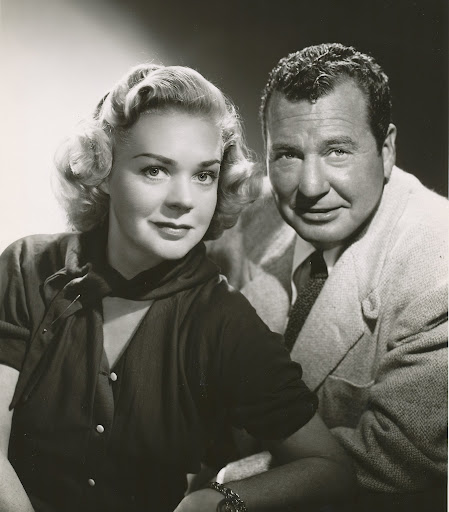
Stars on Suspense (Old Time Radio)
Episode 422 - Favorites from 1951
04:35:46
The first lady of Suspense, comedy legends, Oscar-winning stars, and some of radio’s best character actors fill out the casts of my favorite Suspense shows from 1951. Agnes Moorehead races across town to save a stranger from a date with a killer in...
Loading summary
Transcript1,135 lines
- [00:00]
Narrator/Announcer
Would you hand me that, please? Thank you. Now, let's see. Survey. Survive. Susanna. Suspect. Ah, here we are. Suspense. Meaning held in doubt, expressing doubt. The state of being uncertain, undecided or insecure. State of anxious expectation or waiting for information such as to keep one in suspense. Therefore delay acquainting him with what he is eager to know. Suspense.
- [00:50]
Podcast Host/Eliot Lewis
Hello and welcome to Stars on Suspense, where I'm back with more of my favorite episodes from radio's outstanding theater of thrills. Today, our journey through the years of suspense takes us to 1951, which was Eliot Lewis first full year as director of the program. The major trends of Lewis tenure are on full display here. Comedians in dramatic roles, stories based on historical events, and shows that incorporate music in new and interesting ways, such as using a ballad to bridge the scenes of an episode. This turned out to be another year where picking favorites was tough, but I narrowed it down to nine. Up first is the first lady of suspense, Agnes Moorhead. We'll hear her twice today. First in the Death Parade. Originally aired on February 15, 19, 1951. This story could almost be called Sorry, Wrong Letter as a riff on Ms. Moorhead's most famous suspense show. She plays a woman who finds a letter on the ground addressed to a stranger. And when she opens the envelope, she discovers this stranger's life is in danger with a man who may kill her before the day is out. Now Ms. Moorehead has to race across town to find this woman and hopefully save her life. Like her character in Sorry, Wrong Number, Agnes Moorehead plays a very unsympathetic protagonist who makes her job harder by antagonizing everyone she approaches for help. It's the type of character that few people played better than her, and that performance makes this a great episode. Then we've got what may be My All Time 1 favorite suspense episode from March 8, 1951, starring Ronald Coleman. It's a vision of death. Coleman and suspense MVP Cathy Lewis play a husband and wife mentalist act who dazzle nightclub audiences night after night with their well rehearsed performance. But then one night, his wife predicts the right answers without using their secret code. And it appears she's actually developed psychic powers. Her predictions come true one after another. And that's bad because her latest prediction is that their manager plans to murder her up. Third is Jack Benny in what I'd say is his best appearance on suspense. From April 5, 1951. It's murder in G flat. Radio's legendary comedian plays a piano tuner who accidentally trades bags on the train with a stranger. Batman ends up with Benny's piano tools and Benny ends up with $25,000 in stolen money. Money that many people, including the man on the train, are eager to recover. Speaking of Jack Benny, our fourth show stars his longtime co star Phil Harris, along with Harris real life wife Alice Fay in Death on my hands from May 10, 1951. It's a rare dramatic turn for Harris, who outside of radio may be best known today for his vocal performances in classic Disney cartoons like the Jungle Book, the Aristocats and Robin Hood. In the show, he plays a band leader whose gig in a small town may be his last. During a meeting with a young fan, a gun accidentally goes off and kills her. Now Harris is facing a lynch mob and only Alice Fay playing his ex wife can get him out of town alive. This was an interesting show for several reasons, not only for Mr. And Mrs. Harris playing it very straight as opposed to their songs and comedy on their own weekly show, but it was directed by Elliot Lewis, who each week showed off his silly side as Phil Harris's sidekick on their program. Program Then we've got a Ripped from the Headlines tale of atomic espionage from June 28, 1951. It's the case for Dr. Singer. Someone is smuggling secrets to the Russians and the FBI has to figure out who's behind it before it's too late. It's a procedural, but it's so well executed that it makes my favorites list. The script is by Blake Edwards, the creator of Richard diamond and later the director of the Pink Panther films, among others. And the cast is a lineup of great radio actors including Joseph Kearns, Larry Thor, Howard McNear, Larry Dobkin, Herb Butterfield and Paul Freeze. Agnes Moorhead returns in the Evil of Adelaide winters from September 10, 1951. She plays a phony spiritualist who preys on wealthy people who have recently lost loved ones and claims to get them in touch with their late relatives. Her latest Mark is a man whose son was killed in the war and his desire to speak to his son leads him to invite Ms. Moorehead to live with him so she can constantly summon his spirit. She thinks she's got it made, but she may have underestimated the man's yearning to once again be with his son. Charles Laughton stars as a real life murderer in Neil, Doctor of poison, from September 17, 1951. Cream was a Scottish medical doctor and he was also a serial killer who poisoned at least 10 women in three countries before he was caught and hanged. This episode does a good job of dramatizing his story with a great Charles Laughton performance. But for the whole picture, I highly recommend Dean Jobs book the Case of the murderous Dr. Cream, which tracks Cream's criminal career alongside the advent of modern police investigation techniques. And it tells the fascinating story of how this man was able to evade capture for so long. And we'll close with a double shot of Richard Widmark, one of my favorite scenes suspense stars. We'll hear him first in a tale from the history books in the Hunting of Bob Lee from October 29, 1951. It's the story of a violent and bloody feud in post Civil war Texas. And it's set to the haunting strains of a ballad, a technique Elliot Lewis would use several times during his suspense run. And for our final 1951 show, Richard Widmark stars in a murderous revision from December 3, 1951. He plays a radio mystery writer who's tired of his boss's critiques of his scripts. So with the help of a homemade recording studio, he plans to murder his boss and transcribe the entire affair. Few people were better than Richard Widmar. Get slowly building up intensity. And this show puts his talents to great work.
- [08:17]
Narrator/Announcer
Autolyte and its 96,000 dealers present suspense. Tonight, Autolyte brings you the story of a woman who finds a letter warning of death and has only three hours to deliver it. A transcribed tale we call the Death Parade, starring Ms. Agnes Moorhead. Before our play begins, here is a word about Autolite from our good friend Harlow Wilcox. Hi, Harlow. You got the time? Always have the time to discuss those great ignition engineered auto light spark plugs hap. No. The time of day. Day or night, those matchless marvels designed by autolight ignition engineers are magic flying for merry motoring. Harlow, I'd like to know what time it is. Oh, oh. 10 to 1. 10 to 1? Yeah, 10 to 1. That when you replace worn out spark plugs in your car with ignition engineered auto light spark plugs, you'll get smoother performance, quick starts, gas savings. Oh, three o' clock then. Your watch is working with all the precision of auto light spark plugs. Hap. Why, they're designed by the same autolight engineers who design the complete ignition system for many leading makes of our finest cars. And that's why Autolite spark plugs are world famous for quality and dependability. And now, with the death parade and the performance of Ms. Agnes Moorhead, autolight hopes once again to keep you in suspense. Some parade, huh? I'll say something about a parade. Yeah. You can say that again. Well, I guess it's all over. Sure has been a nice day for it. Yeah. Not a clown in the. Hey. Hey, look. Up there on the roof. Where? The Benson building. Hey, look out. Look out.
- [10:21]
Various Characters/Actors
She's gonna fall.
- [10:22]
Narrator/Announcer
She's gonna fall. Go back. Go back.
- [10:25]
Various Characters/Actors
No. No, Don.
- [10:40]
Narrator/Announcer
All right, now, Ms. Johnson, let's try and talk about this. This girl fell or was pushed off a roof this morning. You say you were the only other person there at the time.
- [10:50]
Various Characters/Actors
I was. I told you. Oh, what do you mean, push? You think that. Oh, how can you.
- [10:57]
Narrator/Announcer
I. I know you're upset. Just take it easy.
- [11:00]
Various Characters/Actors
Upset? I'm nearly out of my mind. I don't see how you can expect me to tell you. Accuse me and not. How can you believe me? So unfeeling. All I was trying to do was just always freezing in here. You've no right to keep me in here.
- [11:14]
Narrator/Announcer
Try some coffee. It'll make you feel better. You've told us you know something about this accident. Something more than we already know.
- [11:25]
Various Characters/Actors
Yes, I do, Lieutenant. I. I mean, it never would have happened. Don't you see?
- [11:29]
Narrator/Announcer
Sure. Sure. Well, come on. Hey, this'll help.
- [11:32]
Various Characters/Actors
Well, I'm so nervous, I. Oh.
- [11:36]
Narrator/Announcer
Oh, it spilled. Oh, that's all right. We'll clean it up later.
- [11:40]
Various Characters/Actors
That's how it started. That's how it started this morning. Just like that. The coffee. That poor girl wouldn't have died if the coffee hadn't spilled. That's just how it started. My name's Ellen Johnson.
- [11:55]
Narrator/Announcer
Oh, I told you that.
- [11:57]
Various Characters/Actors
I work at the Farnsworth chemical plant. For 12 years I've been there and never missed an hour of work. That is, until today.
- [12:03]
Narrator/Announcer
Was so unnecessary.
- [12:05]
Various Characters/Actors
That horrible, rude little man.
- [12:07]
Narrator/Announcer
He was the one.
- [12:08]
Various Characters/Actors
I'm very precise about my daily habits. Very. When you live alone, you arrange things that way. In the morning, I get up and allow myself time to take coffee and toast at the cafe on the corner. I've always disliked cooking. In the morning, I leave the cafe at 8:15 precisely, in order to be at my destination exactly at nine. Well, this morning it was the same. Just the same. Except that horrible man. He was just awful. As I sat at the counter, you know, I could feel him. There he was, two seats away, thin and dark, making a nasty noise as he drank his coffee. It was all his fault.
- [12:44]
Narrator/Announcer
Are you going to see the parade this afternoon, miss?
- [12:47]
Various Characters/Actors
Well, I'm afraid I'll be working too bad.
- [12:49]
Narrator/Announcer
Should be good for business.
- [12:50]
Various Characters/Actors
I imagine so.
- [12:51]
Narrator/Announcer
Anything else?
- [12:52]
Various Characters/Actors
No, thank you.
- [12:53]
Narrator/Announcer
Thank you 25 mm. Coffee and toast, right?
- [12:56]
Various Characters/Actors
Yeah, that's right. Hey, you can pass the sugar with morning.
- [12:59]
Narrator/Announcer
See you tomorrow. What's the matter? I asked for the sugar. You can't pass it.
- [13:03]
Various Characters/Actors
I beg your pardon.
- [13:05]
Narrator/Announcer
Yeah, sure.
- [13:08]
Various Characters/Actors
Oh, why, look at that. You deliberately spilled that coffee all over my mouthy.
- [13:14]
Narrator/Announcer
Ain't that a shame? What a clumsy. Gee, am I sorry.
- [13:23]
Various Characters/Actors
He wasn't. He wasn't in the least sorry. He'd done it on purpose. On purpose? I was wearing a gray silk dress.
- [13:29]
Narrator/Announcer
And it's probably ruined.
- [13:31]
Various Characters/Actors
He just stood there and wiped at the stain with his napkin, smiling dirty, crooked teeth. I pushed him away and I walked out. I knew I was going to be late because I had to change, so I went home again. Well, if I hadn't gone home, this awful thing might never have happened. It took me 15 minutes to get back to the apartment, change my dress and leave again for the office. Well, I'd walked three blocks when I saw the letter. It was lying on the pavement in front of an apartment house. It was unsealed and addressed simply to Ms. Sheila Mannix. No house number or street. Dear Sheila Mannix, you don't know me. I just got into the city. It doesn't matter who I am, but this is a warning. Believe me, you better take notice. Jack's got it in for you. I stopped reading. There was some more, but I didn't.
- [14:27]
Narrator/Announcer
Want to go on.
- [14:28]
Various Characters/Actors
It frightened me a little, and. Well, I'm not one to pry into other people's business, but this, this wasn't prying. Really, it wasn't. The letter was important. Whoever had written it must have forgotten to put the address on it, and it had fallen out of their pocket. I made up my mind then. I would go into the apartment house. It was possible that the writer lived there and on his way out, had dropped it. Janitor. That was janitor. Oh, janitor.
- [14:56]
Narrator/Announcer
That's here. Yeah.
- [15:02]
Various Characters/Actors
Are you the janitor?
- [15:03]
Narrator/Announcer
Yeah. I'm sorry, we got no vacancy.
- [15:05]
Various Characters/Actors
No, I don't want. Look, this letter, it's not addressed. Do you know the handwriting?
- [15:10]
Narrator/Announcer
I thought maybe a body by that name living here.
- [15:13]
Various Characters/Actors
Oh, I didn't ask you that. All I want you to do is to me tell. Tell me if you recognize the handwriting. It might belong to someone living here.
- [15:19]
Narrator/Announcer
How come you opened it?
- [15:20]
Various Characters/Actors
Well, it was lying on the pavement outside.
- [15:22]
Narrator/Announcer
She'll give it to the mailman.
- [15:23]
Various Characters/Actors
It's important. I mean, what's in the letter is important. I think she ought to get it.
- [15:27]
Narrator/Announcer
So the post office will Forward it.
- [15:29]
Various Characters/Actors
Well, can't you see there's no address? How can they forward it? How stupid.
- [15:33]
Narrator/Announcer
Listen, you don't have to get nasty. I told you, she don't live here no more.
- [15:37]
Various Characters/Actors
I'm sorry. Who doesn't live here anymore?
- [15:40]
Narrator/Announcer
Mannix. She had two a. About six months ago, Sheila Mannix lived here.
- [15:45]
Various Characters/Actors
Where did she move to? Can you tell me?
- [15:46]
Narrator/Announcer
No. Forward.
- [15:48]
Various Characters/Actors
But I must find her.
- [15:49]
Narrator/Announcer
I'm sorry, lady, I can't help.
- [15:58]
Various Characters/Actors
Then I thought of the police. I should have told them about the letter, but I didn't. I. I didn't know what else was in it then. So I went back to my own apartment and I looked through the telephone book. There were two Sheila Mannix's listed. The first lived on Maple street and the second on South Tower. I rang the Maple number first. Hello? Hello, is this Miss Sheila Mannix? Speaking. Mrs. Sheila Mannix?
- [16:31]
Narrator/Announcer
Who's this?
- [16:32]
Various Characters/Actors
My name is Ellen Johnson, and I found a letter this morning addressed to Sheila Mannix. Oh, God. Well, I thought it was important and I wanted to make sure it got to the right party. Yes, sir. Who's it from? Well, that's it. I don't know. Well, why don't you open it? Well, I have, but I only read a few lines.
- [16:50]
Narrator/Announcer
Oh.
- [16:51]
Various Characters/Actors
Do you know someone named Jack? Uh, Jack? Yeah, I have a nephew. Well, then, perhaps maybe he lives in Colorado, though. Well, it seems to be some sort of a warning. Warning? Yes. I'm afraid I don't understand. Well, the letter says that Jack has got it in for you. It's a. Well, a warning from. Oh. Well, I'm afraid the letter isn't for me. My Jack is 10 years old. Oh. Oh, well, I'm sorry to have trouble you. It's all right. Goodbye. As I hung up, I. I looked at my watch. It was 9 o'.
- [17:28]
Narrator/Announcer
Clock.
- [17:28]
Various Characters/Actors
There was my job, but I just had the second chilamatics listed in the directory. Lived on South Tower. I dialed the number and I wanna. I got the letter out of my purse and read it. This time. I read all of it. Dear Sheila Mannix, you don't know me. I just got into the city matter who I am, but this is a warning. Believe me. You better take notice. Jack's got it in for you. He was drunk one night and told me about it. Somebody you knew pretty well died last year. He didn't fall off that building. He was pushed and Jack did it. He said he was going to get you, too. I would have told the police, but they'd start to get Nosy about me. Jack's on his way here, and from the way he talks, he better not find you around. He talked crazy about a parade. The corner of Maine and Thomas and 12 o'.
- [18:28]
Narrator/Announcer
Clock.
- [18:28]
Various Characters/Actors
That's when he's going to do it. A friend. I sat there holding a piece of paper that carried a death warning for a woman I'd never seen. And I knew where and when she was going to be killed.
- [18:59]
Narrator/Announcer
Auto light is bringing you Ms. Agnes Moorhead in the death parade. Tonight's production in radio's outstanding theater of thrills, suspense.
- [19:19]
Various Characters/Actors
The second Sheila Mannix's address was 317 S. Tower St. I got my car out and I drove there. It must have been nearly a quarter to 10 when I drew up outside. It was an old rooming house. Oh, hurry up. Come on, come on, come on. What do you want? I'm very sorry to trouble you. Is. Is your name. You'll have to talk louder. I can't hear you. I'm sorry. I. I wonder if you could tell me, is your name Sheila Mannix? No, it's not. But the phone. The phone book has a Sheila Mannix listed at this address. Oh, it's her phone. She pays for it. I never have no cause to use it. She does live here, then? Yes, she has a room upstairs. What's the matter? Well, does she work? Is she at work now? Well, how should I know? I never ask her where she goes. What's she done? You mean you don't know where she works? Do you know where she lived before she moved here? No. You see, she never says nothing. She's quiet and keeps to herself. Where can I find her? It's important. Important that I learn where she is right away. Well, she'll be home prompt by seven. She always is, you know. You come back then, if you got to see her. Well, seven will be too late. I've got to find her now before 12. There ain't no use shouting at me. I can't tell you no more than I already have. I don't know nothing about shelter. Good morning. Now, I knew that I'd wasted far too much time. I had to call the police. There was a drugstore in the corner and I ran down the block to it.
- [21:05]
Narrator/Announcer
Good morning. Can I help you? Yes.
- [21:07]
Various Characters/Actors
Do you have a phone?
- [21:08]
Narrator/Announcer
One over there, but it's out of order.
- [21:10]
Various Characters/Actors
Oh, then could I use yours? It's an emergency.
- [21:13]
Narrator/Announcer
I'm sorry I don't have a private place.
- [21:15]
Various Characters/Actors
I have to call the police. I've never been mixed up in Anything like this before? It's a letter I found this morning. A warning about somebody being killed.
- [21:22]
Narrator/Announcer
There's a phone in the next door. You can use that.
- [21:25]
Various Characters/Actors
Maybe. Maybe you know her. She lives down the block.
- [21:27]
Narrator/Announcer
Who?
- [21:28]
Various Characters/Actors
Sheila Mannix. She's the one. At least I think so.
- [21:31]
Narrator/Announcer
Mannix? Sure, sure. She comes in often to have a prescription filled. Very nice young woman.
- [21:36]
Various Characters/Actors
Do you know anything about her? I mean, where she works? I've got to find her right away.
- [21:39]
Narrator/Announcer
No, I.
- [21:40]
Various Characters/Actors
Please, it's urgent. I asked her landlady. She didn't know.
- [21:43]
Narrator/Announcer
Well, it seems to me she did mention it.
- [21:45]
Various Characters/Actors
One thing you must think. Please.
- [21:47]
Narrator/Announcer
Well, now, it was just the other day we were chatting while I filled her prescription, she said something about.
- [21:52]
Various Characters/Actors
Was it a restaurant? A cash department store? Elevator operator, Cats, clothes, shoes. Telephone operator, maybe?
- [21:59]
Narrator/Announcer
Oh, no. Doesn't hit. I'm sorry.
- [22:00]
Various Characters/Actors
You're not thinking.
- [22:01]
Narrator/Announcer
Trust. Listen, ma', am, if I could help you, I would. But.
- [22:04]
Various Characters/Actors
Oh, my friends in the neighborhood. Somebody you might know who.
- [22:09]
Narrator/Announcer
Never mentioned them.
- [22:11]
Various Characters/Actors
Oh, can't you remember? Maybe. Maybe she worked in an office, huh?
- [22:15]
Narrator/Announcer
Excuse me a moment. Customer. You better go next door and call the police.
- [22:18]
Various Characters/Actors
But can't you remember?
- [22:19]
Narrator/Announcer
I'll be back.
- [22:20]
Various Characters/Actors
Maybe a chorus girl. Does she work in a bookstore? Oh, well, I can't wait. I'll come back after I've called. Oh, a bar. What will they think? A woman going into a bar. Ma'.
- [22:36]
Narrator/Announcer
Am.
- [22:36]
Various Characters/Actors
Huh?
- [22:36]
Narrator/Announcer
Wait a minute. Look, I remember. You said bookstore. It's a book company. Simmons Book and Stationery Corporation. That was it. Simmons Book and Stationery Corporation.
- [22:44]
Various Characters/Actors
Thank you. It's on Main. Yes, I know the place. Thank you very much. Simmons Book is stationary. Why, I had been there dozens of times. She might even have waited on me. I looked at my watch. Was 10:30? I really meant to call the police from the bar, but I didn't know how long it would take to explain. And even then, they might not investigate without seeing the letter first. I thought of the corner of Maine and Thomas. The parade, 12 o'. Clock, an hour and a half. I ran to get my car. I knew that once I found Sheila Mannix and gave her the warning, she'd be safe.
- [23:27]
Narrator/Announcer
Good morning. May I help you?
- [23:28]
Various Characters/Actors
Yes, please. I'd like to speak to Ms. Mannix. Ms. Sheila Mannix. I understand that she works here.
- [23:33]
Narrator/Announcer
Yes, yes, of course. Is there anything I can help you with?
- [23:37]
Various Characters/Actors
No, no, thank you. It's personal.
- [23:39]
Narrator/Announcer
Oh, yes. One minute, please.
- [23:45]
Various Characters/Actors
I'd found her and it was going to be all right. Now, while I waited I looked at the books lining the walls. I was standing in front of the mystery section. Do you know the first title that caught my eye was Time for a Murder?
- [23:57]
Narrator/Announcer
I'm very sorry, ma', am, but one of the other girls tells me that Ms. Mannix had an appointment.
- [24:01]
Various Characters/Actors
She's not here.
- [24:02]
Narrator/Announcer
I'm sorry. Now, perhaps I.
- [24:03]
Various Characters/Actors
But where did she go? Let me talk to the girl.
- [24:05]
Narrator/Announcer
I think to the doctor.
- [24:07]
Various Characters/Actors
What doctor? When did she leave?
- [24:08]
Narrator/Announcer
Well, if you'll wait here, I'll find out for you. Oh, I could have cried.
- [24:19]
Various Characters/Actors
It was almost 11 o' clock and that silly, precious little sales mini took forever. How long does it take to get an address? I started to walk to the back of the store when he came down the aisle toward me.
- [24:29]
Narrator/Announcer
I'm sorry to have taken so long. A customer on the phone, you know.
- [24:32]
Various Characters/Actors
It's all right, I don't care. Just give me that doctor's address.
- [24:35]
Narrator/Announcer
Oh, yes, yes, I have it right here. Dr. Morton, 101 flower. 101 flower.
- [24:41]
Various Characters/Actors
Dr. Morton. When did she leave?
- [24:43]
Narrator/Announcer
Oh, I forgot to ask if you'll.
- [24:45]
Various Characters/Actors
No, no, I'm going there now. Listen, if she comes back, if I miss her, you tell her to stay right here. Don't let her leave the store again until I come back. It's a matter of life and death.
- [24:54]
Narrator/Announcer
Oh, all right. Is something wrong?
- [25:01]
Various Characters/Actors
Something wrong? I ran to a telephone booth. I knew that I'd done as much as I could alone to save that poor girl.
- [25:13]
Narrator/Announcer
Police Department. Sergeant Leonard, please.
- [25:15]
Various Characters/Actors
Listen carefully. There's a murder going to be committed at 12 o'.
- [25:18]
Narrator/Announcer
Clock. Who is this?
- [25:19]
Various Characters/Actors
Oh, that doesn't matter. My name's Ellen Johnson. I found a letter in the street this morning. It was to a woman called Mannix. Sheila Mannix.
- [25:27]
Narrator/Announcer
Would you spell that, please?
- [25:28]
Various Characters/Actors
Mannix. M A, N, N, I, X. There's not time for.
- [25:31]
Narrator/Announcer
When did you find the letter?
- [25:33]
Various Characters/Actors
I told you, this morning. Oh, what difference does it make? It was at nine, I think.
- [25:37]
Narrator/Announcer
Why didn't you call earlier?
- [25:39]
Various Characters/Actors
I didn't because. Well, I tried to find her myself. I think I know where she is.
- [25:43]
Narrator/Announcer
But have you got the letter with you?
- [25:44]
Various Characters/Actors
Yes, yes, I have.
- [25:45]
Narrator/Announcer
Would you read it, please?
- [25:46]
Various Characters/Actors
Well, there isn't time. You've got to send some men here. It's a warning. Somebody called Jack is going to kill her. At 12 o' clock on the corner of Main and Thomas.
- [25:54]
Narrator/Announcer
There's a parade going on. Then what does this woman look like? Can you give us a description?
- [25:59]
Various Characters/Actors
No, I've never seen her. I don't even know Her?
- [26:01]
Narrator/Announcer
You say you think you know where she is?
- [26:03]
Various Characters/Actors
Yes, at a Dr. Morton, 101 Flower Street.
- [26:06]
Narrator/Announcer
Where are you calling from?
- [26:07]
Various Characters/Actors
Simmons Book and Stationery Store. She works here.
- [26:10]
Narrator/Announcer
Will you get a description of the woman, please? I'll wait.
- [26:12]
Various Characters/Actors
Yes, yes, of course. Don't hang up. I found the young man again, and he told me what Sheila Mannix looked like. I got back to the phone and told the officer short, about 5 foot 2, thin, possibly 90 pounds, wearing a brown coat with a brown shoulder strap bag.
- [26:35]
Narrator/Announcer
We'll try to find her, Ms. Johnson. Now, please stay there. I'll have an officer come to the store to pick up the letter.
- [26:47]
Various Characters/Actors
I put the receiver on the hook and sat in the booth. I was shaking and my hands were wringing Wet. It was 11:20. Somewhere outside, I heard a band playing. The parade must have started. I stayed in the shop and the minutes passed. 11:30, 25 to 12. At 20 minutes to, I just couldn't stand it any longer. The waiting, you know, the awful waiting. I had to do something. I called Sheila Mannix's house again. There was just that chance, that slight chance. Maybe she went home after the doctor. Maybe she's there. Two more. Wait. No, three. Let it go. Three more. Oh, be there, be there, be there. You must. You've just got to be. Hello? Ms. Mannix? Ms. Mannix, you'll never know. Listen, you don't know me, but I. I have to speak louder. I can't hear a thing on this thing. Who is this? Is this Miss Mannix? Miss Mannix ain't here. This is the landlady.
- [27:43]
Narrator/Announcer
Oh, Mars.
- [27:44]
Various Characters/Actors
I'm cleaning up. Is there a message? I couldn't stay in that store any longer, so I gave the letter to the salesman and told him to give it to the police. When they arrived, it was quarter to 12. Main street was alive with people. It seemed as though the whole city had turned out to watch the parade. I pushed my way along the street towards the intersection. I just couldn't have stayed away if it were my own life depending on it. The crowd was so thick that it was impossible to see anything from the street, and I just had to see. Then I thought of the Benson building and the roof. If I was up on the roof, I could see everything that happened on that corner. It was five to 12 when I got in the elevator and took it up to the 19th floor. I had to walk to the roof, and I could hardly breathe as I opened the door and stepped out into the bright sun. Insane. Instinctively, you know, I knew that this Was the building the same building that the man in the letter had been pushed from last year? For a minute, I. I didn't see anyone. And then at the corner, standing near the edge, looking down, I saw a short woman, quite thin, dressed in a brown coat with a shoulder strap.
- [28:59]
Narrator/Announcer
B.
- [29:03]
Various Characters/Actors
Miss Mannix. You are Miss Mannix, aren't you? I. I've been looking for you. It's about a man called Jack. He's looking. Oh, it's all right. It's all right. Don't be frightened. Don't be frightened. Don't move back. Don't. Don't. Don't. The edge. Don't. What's the matter? Get away from there. No, no, you'll just.
- [29:48]
Narrator/Announcer
Huh? That's how it happened.
- [29:52]
Various Characters/Actors
Yes. Yes, I tried.
- [29:53]
Narrator/Announcer
You spend from 9 o' clock till 12 looking for her, and then you don't call us till 45 minutes before it happens.
- [30:00]
Various Characters/Actors
I told you. Why, I just.
- [30:02]
Narrator/Announcer
You know something, Ms. Johnson? I think you're lying.
- [30:07]
Various Characters/Actors
Lying? How dare you say that. I was doing what I thought.
- [30:11]
Narrator/Announcer
You pick up a letter, a warning letter. You go to a janitor, you call people on the phone, but not the police. You visit Sheila Mannix's house, talk to the landlady, talk to the neighborhood druggist, to the salesman in the bookstore. All witnesses, all alibis.
- [30:25]
Various Characters/Actors
I want her to find her, to warn her.
- [30:27]
Narrator/Announcer
Don't. Then you call the police when you're sure it's too late.
- [30:30]
Various Characters/Actors
How did I know she'd be up there? How?
- [30:33]
Narrator/Announcer
You set up a nice alibi for yourself. You were alone with Sheila Mannix. Who's to say you didn't push her?
- [30:40]
Various Characters/Actors
Oh, stop it. You don't know what you're talking about. You've no right. I. I was trying to help her, that's all. I won't listen to you.
- [30:48]
Narrator/Announcer
I'm going home now. You sit down. Oh, I'm holding you for a while. We're going to check, Ms. Johnson. We're going to do a lot of checking.
- [30:56]
Various Characters/Actors
Arrest me. I was a good citizen. I did my duty. I tried to save her. And you're going to.
- [31:01]
Narrator/Announcer
Oh, yeah. Can I see you for a minute? Sure. You stay right there. Miss. We're not true. This happened last year.
- [31:09]
Various Characters/Actors
Murder.
- [31:11]
Narrator/Announcer
Murder.
- [31:11]
Various Characters/Actors
That's what he's saying. That I murdered her book.
- [31:14]
Narrator/Announcer
She called about an hour ago. She's saying that to me.
- [31:17]
Various Characters/Actors
After all, I was only trying to warn the poor girl.
- [31:22]
Narrator/Announcer
Take a look at the report.
- [31:24]
Various Characters/Actors
He's saying it's about me. I know it. I know it. I Know it.
- [31:27]
Narrator/Announcer
Okay. All right, that. That does it, then. All right, Ms. Johnson, we know what happened now.
- [31:35]
Various Characters/Actors
No. What do you mean, you know? I told you, that's how it happened. Every word.
- [31:40]
Narrator/Announcer
I'll tell you something. I've got to believe you. There's nothing I can do about it.
- [31:44]
Various Characters/Actors
Nothing you can do. Well, what should you do? Instead of frightening the life out of me, you should thank me for doing.
- [31:49]
Narrator/Announcer
You listen to me for a change. I'd like nothing better than to throw the book at you, but I can't. We've got the man called Jack. He was picked up on the parade. There.
- [31:57]
Various Characters/Actors
You see? There? I was right.
- [32:00]
Narrator/Announcer
The fellow who wrote that letter you found called the police about an hour ago. He told us the story. That's how we got our boy.
- [32:07]
Various Characters/Actors
Then she was safe. He couldn't kill her. She wasn't in any danger then, was she?
- [32:11]
Narrator/Announcer
Oh, yes, she was. You, because you found her and frightened her to death.
- [32:16]
Various Characters/Actors
I was only telling her that there was nothing to be afraid of.
- [32:19]
Narrator/Announcer
Sure, sure. That's all. Do you know that she was standing in the same place where her boyfriend was killed a year ago? And then you come along and mention the name of the man she knew killed him. Now maybe you know why she was afraid and backed away from you. You didn't know a thing, huh? Well, I want you to know something, though. I want you to sleep with for the rest of your life. If you called the police when you picked up that letter, Sheila Mannix would be alive right now. You think about that.
- [32:48]
Various Characters/Actors
I can't see where I was wrong. Oh, maybe I should have called sooner. But I did call. If you hadn't taken so long.
- [32:56]
Narrator/Announcer
Get out. Go on, get out. It's too bad we can't send you where the other guy's going. He killed last year. You did it today just as sure as if you'd shot her. Go on.
- [33:10]
Various Characters/Actors
It's all right, Lieutenant. I understand. I can see why you're up here.
- [33:14]
Narrator/Announcer
It.
- [33:15]
Various Characters/Actors
And I'm sorry, Sergeant. You understand that I was only doing what I thought, right, don't you? It wasn't my fault. It wasn't. If they'd got there sooner, it never would have happened. I've nothing to reproach myself about. Nothing. Oh, I'm so upset. A whole day's work and my gray silk dress ruined. They'll never be able to get that coffee stain out.
- [34:11]
Narrator/Announcer
Suspense presented by Autolite Tonight's star, Ms. Agnes Moorhead. Backward, turn backward oh, time in your flight and give us a minute to Talk Auto Light. That's a good idea, Hap. But it would take us hours to tell about the more than 400 fine products made by Autolight for cars, trucks, planes and boats in 28 plants from coast to coast. These include complete electrical systems used as original equipment on many leading makes of cars. Electric windshield wipers, starting motors, wire and cable, voltage regulators, coils, distributors, generators. All engineered to fit together perfectly, work together perfectly as a part of the Autolite team. So, friends, don't accept electrical parts supposed to be as good, ask for and insist on Autolite original factory parts at your neighborhood service station, car dealer, garage or repair shop. And remember, you're always right with Autolight. Next week on suspense. In answer to your many requests, Backseat Driver repeated for you with its original stars, fibber McGee and Molly. And during the month of March, you will hear Mr. William Bendix, Mr. Ronald Coleman and Mr. Jack Carson, all on suspense. Suspense is produced and directed by Elliot Lewis with music composed by Lucian Morowek and conducted by Lud Bluskin. Portions of this program were transcribed. Tonight's cast included Joseph Kearns, Jack Crucian, Byron Cain, Shimon Ruskin, Jerry Housner, Lou Krugman, Jeanette Nolan, Jane Ofello and Lou Merrill. For some interesting backstage pictures of Agnes Moorhead rehearsing for today's suspense play, see the current issue of Quick magazine. The Death Parade was written by Shirley Gordon and adapted for suspense by Anthony Ellis. Agnes Moorhead is currently on tour with Charles Locke, Charles Boyer and Sir Cedric Hardwick in the drama quartet presentation of man and Superman. And remember, next week on suspense, Bibba McGee and Molly in Backseat Driver.
- [36:39]
Various Characters/Actors
You can buy world famous Autolite standard type or resistor type spark plugs. Auto Light stay full. Batteries Autolyte electrical parts at your neighborhood Autolite dealers. Switch to Auto Light. Good night.
- [36:50]
Narrator/Announcer
This is CBS, the Columbia Broadcasting System. Autolite and its 96,000 dealers present. Suspense. Tonight, Auto Light brings you a story of a mind reader who discovers his nightclub act is not a fake. A story we call A Vision of Death. Starring Mr. Ronald Coleman. Before our play begins, here is a word about Autolyte from a good friend of ours. Greetings, I. Wilcox. Why, it's that amazing, magnificent mystic and great glass globe gazer, Sabu the Swami. What's on my mind? You think of your best friend. Everybody's best friend. The Auto Light stay full. The battery that needs water only three times a year in normal car use. Now, the glass shows a glass even more powerful than mine. Well, that's the fiberglass retaining mat. Protecting every positive plate in the Autolite Stay Full Battery. They prevent shedding and flaking and give the Stay full longer life as proved by tests conducted according to accepted life cycle standards. Now I see many smiling faces on the thousands of drivers who visit their masterful, merry and marvelous neighborhood autolyte battery dealers for an Autolite Stay Full, the battery that needs water only three times a year in normal car use. Now the crystal ball shows words of wisdom. I know you're always right with Autolight. And now with a vision of death and the performance of Mr. Ronald Coleman. Autolite hopes once again to keep you in suspense. If I speak too rapidly for your stenographer, you'll tell me, won't you? Lieutenant, no offense, but he impresses me as someone who has to sit on the floor to put his shoes on. And don't hesitate to stop me if I seem to wander away from the point. I mean to say this is my first and I hope final appearance in a police precinct. And I should hate to give a sloppy performance. We were always known, Aurora and I, for the smoothness and gem like precision of our act. And as for this murder rap, I suppose it was cold Is concerned an acquaintance with our act is the essential rabbit. Awfully good act. Smart, informal, occasionally humorous and always mystifying. Well, the act always began with music. Never with the cliche fanfare of trumpets or roll of drums. I would saunter out to the center of the floor and say something like, good evening. You are about to witness an exhibition of mental telepathy. Ladies and gentlemen, may I introduce Aurora, my wife. They never failed to give her a hand. What would they applaud by? The vision she presented as she came toward me. There's never been anyone as lovely as Aurora. The most beautiful flash in the profession. Aurora, would you care to tell the audience or shall I?
- [40:31]
Various Characters/Actors
You tell them the audience. Judd. While I tie the blindfold across my eyes.
- [40:35]
Narrator/Announcer
Ladies and gentlemen, all mind readers employ a gimmick. A gimmick is a trick, a device. For example, when the mind reader threading his way through the audience says to the mind reader sitting blindfolded on the stage, a lady has given me a small object which I now hold in my hand. What is it? And the mind reader sitting blindfolded replies, a silver coin. The answer has not come through mind reading. No, it has come through the gimmick. A cue or signal communicated through the very question itself.
- [41:05]
Various Characters/Actors
But we don't do that.
- [41:07]
Narrator/Announcer
We do not. You will notice, ladies and gentlemen, that I never speak to Aurora. At all. Are you ready, Rory?
- [41:15]
Various Characters/Actors
Ready, Judd.
- [41:16]
Narrator/Announcer
Here we go, then. You, sir. You have something good. Concentrate upon it like a good chap.
- [41:22]
Various Characters/Actors
The gentleman holds a. In his hand it is a Mexican peso bearing the date 1892.
- [41:33]
Narrator/Announcer
Oh, that's. That's very clever of you, madam. I'll be surprised if she gets this.
- [41:38]
Various Characters/Actors
One the lady holds.
- [41:40]
Narrator/Announcer
How about you, young man?
- [41:41]
Various Characters/Actors
Her other hand.
- [41:53]
Narrator/Announcer
A sucker once born remains a sucker till death. The audience never realized, never in all the years we worked, that although I was not speaking to Aurora directly, my chatter nevertheless was loaded with signals and cues for her guidance. By revealing the gimmick, we concealed the gimmick. And that, Lieutenant, is the ne plus ultra of gimmicks. Yes, it was as crude as that. But it enabled us to work 50 weeks a year here and abroad at an average of over a thousand a week. Of course, I always gave some credit for our success to our agent, Harry Arnold. Although Rory was inclined to give him no credit at all. Good news, Judd. I've managed to book the act into the College Inn in Chicago with a four week guarantee. Not bad, huh?
- [42:34]
Various Characters/Actors
Get him. He managed to book the act. I suppose they never heard of us in Chicago. I suppose we weren't held over there six weeks when we played the Sans Souci in 1948.
- [42:44]
Narrator/Announcer
You think it's easier to get a four week guarantee these days? Money is short, money is tight.
- [42:48]
Various Characters/Actors
I've never yet heard you say money is long. Money is loose. You have to sweat for your 10%, don't you? Yes, you do. In a pig's ear, you do.
- [42:57]
Narrator/Announcer
Agents, they're all like, oh, there's gratitude for you. There's the milk of human memory. What were you when I first saw you? Nothing. Not this much. Playing 10 a day on the canvas in Menasha, Wisconsin, and paid off in bottle tops. I worked, I schemed, I sweated.
- [43:12]
Various Characters/Actors
Listen to him. You'd think he had to get out there on the floor every night. You'd think he was the one spent 11 months, 12 hours a day memorizing the code. You think it was his name in lights. Agents. All they know is how to live off a dead whale. Scum of the earth.
- [43:27]
Narrator/Announcer
Look, I'm not gonna take that from you. You hear me?
- [43:28]
Various Characters/Actors
You'll take it, baby. Along with the 10%. You'll take it and you'll chew it, and you'll swallow it. And you'll keep it down, too. How do you like that?
- [43:35]
Narrator/Announcer
I'm warning you, kid, don't push me too far. Don't push me. Children, children. On your way, Harry. And don't let it get you down. I think a four week guarantee is pretty good. Oh, thanks, Judd. If it wasn't for you, Judd, I just. Oh, why go into it? I'm going for a walk. But aside from these altercations between Rory and Harry, it was smooth sailing. We wore the best, ate the best, drank the best, stayed at the finest hotels. And every Saturday night after the performance, Harry would bring us our salary. He'd bring it in cash. Thousand, twelve, fifty, fifteen hundred. I have the old performers distrust of checks being given too many with a high latex content. Anyway, life couldn't have been more placid. And then one evening about five weeks ago, soon after we opened at the Grove here in town, a frightening thing occurred. We just begun the act and I was out in the audience. You will notice, ladies and gentlemen, that I never speak to Aurora at all. Are you ready, Rory?
- [44:46]
Various Characters/Actors
Ready, Jan.
- [44:48]
Narrator/Announcer
Here we go then. Now you, madam.
- [44:50]
Various Characters/Actors
The lady holds in her hand a compact. It is platinum and bears her initials, R.C.
- [44:59]
Narrator/Announcer
You. You, sir. You, sir.
- [45:01]
Various Characters/Actors
Holding an engagement ring. In it are three small diamonds.
- [45:07]
Narrator/Announcer
I. I miss.
- [45:11]
Various Characters/Actors
The young lady is holding. It's a small cameo brooch, kind of.
- [45:19]
Narrator/Announcer
Rory? Rory. Maurice. Maurice. Music. I picked Rory up from the floor and hurried with her to our dressing room, almost beside myself with anxiety. I placed her on the couch, dampened a towel and put it on her forehead and began to chafe her wrists. Rory? Rory, honey. Rory. John, what happened? I was in the bar. Do you want me to get a doctor? No, no, no. I don't know. Get out. Leave us alone. Get out. Harry. Get out.
- [45:47]
Various Characters/Actors
John. John, I'm here.
- [45:50]
Narrator/Announcer
Rory, Are you all right?
- [45:52]
Various Characters/Actors
I guess so. I don't know what happened.
- [45:55]
Narrator/Announcer
You fainted away. Try to remember what happened.
- [45:59]
Various Characters/Actors
I felt funny. I don't remember.
- [46:02]
Narrator/Announcer
No, no. Try. Try, Rory, try. Try to remember. It's important.
- [46:07]
Various Characters/Actors
I can't. Why is it important?
- [46:10]
Narrator/Announcer
Oh, you don't know, Rory. You don't know. You were calling out the answers before I even had a chance to give you the cue. Do you believe in telepathy, Lieutenant? I don't mean the sort of thing Rory and I usually did. I mean real telepathy. I never did either. Until that night. I don't mind telling you I was badly shaken. I mean, after all, I knew we'd been using a gimmick. And suddenly it began to happen without the gimmick. Scared us to death. We didn't know what we were getting into. But we Went on with the act. And in my mind I began to search about for the answer. I found it, of course. You'll find a gimmick in almost everything if you look hard enough. I've got it, Rory. We've worked together so long that you know what I'm going to say before I say it. From my inflection, my pauses, even my movements.
- [47:14]
Various Characters/Actors
You see, Judd, that has to be it.
- [47:16]
Narrator/Announcer
Oh, this is marvelous. When Harry gets back, I'll tell him about it.
- [47:19]
Various Characters/Actors
And if I last until tomorrow, he can ask the management for more dough.
- [47:23]
Narrator/Announcer
Yeah, as soon as he gets back next Thursday.
- [47:26]
Various Characters/Actors
Tonight? How much more should we ask for?
- [47:28]
Narrator/Announcer
Well, we. Tonight. What made you say tonight?
- [47:33]
Various Characters/Actors
I don't know, Judd.
- [47:35]
Narrator/Announcer
Oh, you were there when he told me he'd be in Palm Springs till Thursday. What? What made you say tonight?
- [47:41]
Various Characters/Actors
I don't know. What difference does it make? Stop picking on me. So I made a mistake. So what?
- [47:46]
Narrator/Announcer
I don't see how you could make such a mistake. That's all.
- [47:48]
Various Characters/Actors
Judd. Leave me alone. I've been worried half crazy about really being able to read your mind. I've been under a strain. So Harry's coming back Thursday and not tonight. All right. You satisfied? He'll be here Thursday and not tonight.
- [48:02]
Narrator/Announcer
You Judson Stone, Mister. This dressing room, eh? What is it? A telegram. Sign here. Oh. Sign for it, will you? Rory.
- [48:11]
Various Characters/Actors
There you are, kid. I'm sorry I blew up in your face. Judd. Judd, what's the matter?
- [48:20]
Narrator/Announcer
It's. It's from Harry. He's coming in tonight. And he did, too, Lieutenant. Rory was so upset by it, she couldn't go on at all that evening. She had no explanation for how she knew. None whatsoever.
- [48:41]
Various Characters/Actors
I don't know, Judd. I just don't know. My mind seems to go blank, and I seem to hear a voice whisper in my ear, harry Arnold will be with you tonight. That's all.
- [48:54]
Narrator/Announcer
When we got to our suite at the hotel, Harry was there waiting for us. What happened? What happened? You both looked like ghosts. Harry, I'll tell you some other time. Leave us alone, will you? All right, all right. I'm going to. Just came back to wish you a happy birthday and to give you this. That's it. Oh, yeah. Thanks. Thanks, Harry. Thanks. What is it? Well, open it, why don't you?
- [49:14]
Various Characters/Actors
It's a bathrobe. A red silk bathrobe with your initials.
- [49:19]
Narrator/Announcer
That's right. It's a. How does she know? How do you know?
- [49:23]
Various Characters/Actors
Get out of here. Get out of here. John, make him get out of here.
- [49:26]
Narrator/Announcer
Look, I won't be talked to like that. I don't care who she is. I won't be talking. Shut up. For heaven's sake. Shut up and go away. Leave us alone. What? Go. Get out. Get out. You. You too, Ch. He's got you talking against me, too, huh? All right, I'm going. I'm going. But from here on in, it's strictly business between us. I wash my hands. He kept his word, Lieutenant. From that time on, he kept himself to himself. And I was prepared to let it go at that, much as I liked Harry. Until the night I was awakened by Rory moaning in her sleep. No.
- [50:07]
Various Characters/Actors
No, please.
- [50:08]
Narrator/Announcer
Rory. Rory, wake up. You're having a bad dream. Rory, no.
- [50:13]
Various Characters/Actors
What? What, Jed?
- [50:17]
Narrator/Announcer
Is it all right? I'm here. I'm here. What? Rory? The voice whispering again.
- [50:26]
Various Characters/Actors
Yes. Oh, John.
- [50:29]
Narrator/Announcer
What?
- [50:30]
Various Characters/Actors
He's going to kill me. Harry Arnold is going to kill me.
- [50:39]
Narrator/Announcer
And that, Lieutenant, was the beginning of the end of that. Autolite is bringing you Mr. Ronald Coleman with Kathy Lewis in a vision of death. Tonight's production in radio's outstanding theater of thrills. Suspend Rory. Rory, get a grip on yourself.
- [51:23]
Various Characters/Actors
He's going to kill me. Harry is going to kill me.
- [51:26]
Narrator/Announcer
Don't be ridiculous. Stop it now. It was just a bad dream.
- [51:29]
Various Characters/Actors
Harry is going to kill me.
- [51:30]
Narrator/Announcer
Will you stop that? Will you stop saying that?
- [51:32]
Various Characters/Actors
Don't hold me frightened. Harry is going to kill me.
- [51:38]
Narrator/Announcer
Now you've had a bad dream.
- [51:40]
Various Characters/Actors
I tell you, he hates me. He hates me, Judge.
- [51:45]
Narrator/Announcer
John.
- [51:45]
Various Characters/Actors
Harry is going to kill me.
- [51:54]
Narrator/Announcer
I'm a rational man, Lieutenant. I've always felt, for example, that when Hamlet says, there are stranger things in heaven and earth than are dreamt of in your philosophy. Horatio. Horatio ought to reply. Tell Natasweeny. I knew there was no such thing as mental telepathy. I knew it as well as I know. I'm sitting here talking to you up here in my head. I knew it. And yet the next afternoon I found myself entering a gun shop and purchasing a revolver and a box of bullets. Determined that before Harry Arnold could so much as injure one hair of Rory's head, I would kill him. I should have gone directly to the police first. You're using hindsight, Lieutenant. I had all that out with Rory.
- [52:36]
Various Characters/Actors
Please, Judd, please. Go to the police and tell them about this. Let them handle it.
- [52:41]
Narrator/Announcer
Tell them what? That by reading his mind, we've learned Harry intends to murder you.
- [52:45]
Various Characters/Actors
They'll believe us. They've got to believe us.
- [52:48]
Narrator/Announcer
They're reasoning like a child. They'll decide that it's either a publicity stunt or else we're both lunatics.
- [52:53]
Various Characters/Actors
If I tell them about the telegram and the birthday presents.
- [52:56]
Narrator/Announcer
Rory, we have no proof.
- [52:58]
Various Characters/Actors
But we have to do something.
- [52:59]
Narrator/Announcer
What? Tell me what? You know he intends to kill you. I know he intends to kill you, but what can we do? I can't simply put a bullet in his heart next time I see him. How could I explain it? My wife had a premonition that he was going to murder her. Do you know when he's going to do it or how he's going to do it?
- [53:22]
Various Characters/Actors
No, he hasn't decided yet. Isn't there anything we can do?
- [53:29]
Narrator/Announcer
Nothing. Except wait. I reacted to the waiting as you might expect, Lieutenant. Sleeplessness, loss of appetite, growing irritability. I flared up at everyone. Waiters, chambermaids, elevator boys, the manager of the club. The manager of the club? Yes. He finally said to me, stone, what the devil's gotten into you? I'd really like to know. None of your business. I'm only trying to be nice. Boy, shut up and let me alone. Yeah, sure, I'll let you alone. I'd let you alone right now if your contract didn't have another week to run. But after that, I'll let you strictly alone. You'll never work this club again. Maniac. I began to drink quite heavily, quite noticeably. I was going crazy just from the waiting. And then. And then the waiting came to an end. It was around three in the morning. I was sitting up in bed in the dark, smoking, when Rory opened her eyes and said, Judd.
- [54:35]
Various Characters/Actors
Yes, the voice.
- [54:38]
Narrator/Announcer
Yes.
- [54:40]
Various Characters/Actors
He's. He's going to kill me. Here. Right here in this room.
- [54:47]
Narrator/Announcer
Rory.
- [54:48]
Various Characters/Actors
Saturday. This Saturday. At midnight.
- [54:54]
Narrator/Announcer
Rory. Rory, sweetheart.
- [54:56]
Various Characters/Actors
He's going to shoot me. He has a gun and he's going to shoot me. He's going to get you downstairs in the manager's office at the club. And while you're there, he's going to come up here.
- [55:13]
Narrator/Announcer
Rory. Rory, listen to me. I want you to listen to me. You're mistaken. Do you understand? You've been having another bad dream, and that's all there is to it.
- [55:21]
Various Characters/Actors
Oh, no, Jed, I swear it. He just thought of it. Just this minute, he's standing at a bar. Standing there all by himself, drinking. He's just this minute beside it.
- [55:37]
Narrator/Announcer
You're making it up. Yeah.
- [55:38]
Various Characters/Actors
No. It's the bar over at the Tuscany Hotel. I see it so clearly.
- [55:48]
Narrator/Announcer
You're wrong. You're wrong. I'll prove you're wrong.
- [55:51]
Various Characters/Actors
Dad.
- [55:52]
Narrator/Announcer
Give me the bar of the Tuscany, will ya? Over on Sunset.
- [55:55]
Various Characters/Actors
One moment, please.
- [55:57]
Narrator/Announcer
You'll see, Rory, he's not there at all. You'll see. It's just a dream. Just a bad dream. Tuscany cocktail lounge. Hello, Is Harry Arnold there at the bar? Harry Arnold? No, I'm sorry, he's not. He's not. You sure of that? Oh, sure, I'm sure. He was here all evening. Left about a minute ago. I said good night to him myself. You want me to call? It wasn't a dream. No, no, no, no, Rory, don't. Don't. Don't worry. Trust me. Trust me. When Harry comes tomorrow night, you won't be here at all. But I will. Look, Lieutenant, my hands. See? Just the memory of how I felt at that moment and my hands begin to tremble again. Amazing, isn't it? Well, that was last Thursday night, or rather Friday morning. And towards daybreak, Rory subbed herself to sleep. But I was restless. I got dressed and went downstairs and got into my car. A long drive has always relaxed me, but when I got behind the wheel, I don't know what it was. Possibly the fresh air. But all at once I felt as though I couldn't keep my eyes open for another moment. I simply. I simply had to have sleep. So I crawled into the back seat, curled myself up in one corner, pulled the rug over me and went out like a light. Hello, satin skin.
- [57:26]
Various Characters/Actors
Hello, Harry.
- [57:27]
Narrator/Announcer
I was awakened around noon by the sound of voices.
- [57:32]
Various Characters/Actors
Look businesslike.
- [57:33]
Narrator/Announcer
Where is he?
- [57:33]
Various Characters/Actors
I don't know. Since he hasn't got the car, he must be out walking. Don't you have some papers or something I could be examining? Just to make it look good in a pocketful?
- [57:41]
Narrator/Announcer
Here.
- [57:41]
Various Characters/Actors
All right.
- [57:42]
Narrator/Announcer
He fall for it last night, Just.
- [57:44]
Various Characters/Actors
Like he fell for all the rest of it. Red bathrobe, the plants in the audience. He even phoned the bar just after you left. I timed it beautifully.
- [57:51]
Narrator/Announcer
Oh, satin skin, satin skin. I can hardly keep away from you.
- [57:54]
Various Characters/Actors
After tomorrow night, we'll have all the time in the world for each other.
- [57:57]
Narrator/Announcer
Harry, you bought the whole story, huh? Midnight tomorrow, your place, Every word of it.
- [58:01]
Various Characters/Actors
Just do what you have to do. Remember to come to the dressing room before the eight o' clock show. And tell him you've set up a meeting with Stamper, the manager, in his office at 12.
- [58:08]
Narrator/Announcer
I want them to shake hands and be friends again. I'll tell him.
- [58:10]
Various Characters/Actors
Don't forget. When you come to the door at midnight, keep talking to the elevator boy. Don't let him go. Whatever you do, you'll want him to testify. With self defense.
- [58:17]
Narrator/Announcer
Don't worry. I won't forget a thing. You'll handle all the rest of it?
- [58:20]
Various Characters/Actors
Yeah, yeah, just leave it to me.
- [58:21]
Narrator/Announcer
No, I mean about his gun. That's. That's pretty important, you know.
- [58:23]
Various Characters/Actors
Don't worry. It will misfire.
- [58:34]
Narrator/Announcer
It'd be difficult for me to tell you what I felt as they walked away, Lieutenant. One part of me felt the way a man ought to feel, I suppose, when he learns that the woman he loves is not only unfaithful but plotting his death as well. But another part of me felt only relief. Relief at learning there was a gimmick in this, too. They'd been fairly clever for amateurs. Harry had a good excuse for carrying a gun to protect the cash he brought me each Saturday. My own behavior in recent weeks would lend weight to what he would probably offer in his defense. But I must have been crazy. But for no reason at all, I pointed a revolver at him and threatened his life. But he had to shoot in self defense. The presence of the elevator boy. That could mean only that Harry would shoot just as soon as I opened the door. I'd be found dead with a revolver in my hand and a heartbroken agent at my side. Tableau. Then I found myself hoping, as I never hoped before, that they'd come to their senses before Saturday. That they'd realize what a vicious, inhuman thing it was they were planning. But just before the 8 o' clock show that night, there was a knock at the door of our dressing room. Come in, Judd. I've been talking to Stampa, the manager. He's sorry there's bad blood between you. Wants to square it. I told him you'd be in his office at 12 to talk things over. All right with you? Yeah. We don't want it so that we never work here again, do we? I mean, there's no reason we should. No reason at all.
- [60:05]
Various Characters/Actors
Button my dress, Judge.
- [60:07]
Narrator/Announcer
See you later, Judd. Yeah. Later. We did the show and then went up to our suites. I helped Rory pack a small overnight bag. I loaded the revolver. And then there was nothing to do but wait. The minutes passed. Nine o', clock. 10, 10:30. And I waited.
- [60:29]
Various Characters/Actors
Judd.
- [60:30]
Narrator/Announcer
Yes?
- [60:31]
Various Characters/Actors
I don't want you to go.
- [60:33]
Narrator/Announcer
It's best that you do.
- [60:34]
Various Characters/Actors
Doesn't seem right to leave you here alone.
- [60:37]
Narrator/Announcer
Things might not go as I planned. I might not be able to stop him. And if I fail to stop him. No. No, it's best that you go. Just wait at the motel until you hear from me. What time is it?
- [60:51]
Various Characters/Actors
Almost 11. Two minutes of 11.
- [60:55]
Narrator/Announcer
I'm out of cigarettes.
- [60:58]
Various Characters/Actors
Desk.
- [60:59]
Narrator/Announcer
This is Mr. Stone in 1101. Please. Send up a carton of Players, will you?
- [61:03]
Various Characters/Actors
Right away, Mr. Stone.
- [61:06]
Narrator/Announcer
I want you to go now, Rory.
- [61:08]
Various Characters/Actors
Judd, let me call the police, please.
- [61:10]
Narrator/Announcer
It will be useless. We've gone into it and it'll be useless.
- [61:14]
Various Characters/Actors
Then come with me. He won't find anybody here.
- [61:17]
Narrator/Announcer
Then he'd choose another place, another time. Here's your valise.
- [61:23]
Various Characters/Actors
You have your gun?
- [61:24]
Narrator/Announcer
In my pocket.
- [61:25]
Various Characters/Actors
You won't take any chances. I don't know what I'd do if you were hurt, or any.
- [61:30]
Narrator/Announcer
I won't take any chances. Let me help you on with your coat.
- [61:35]
Various Characters/Actors
Judd. I love you so.
- [61:37]
Narrator/Announcer
Yes, I know. And I love you, Rory. I really do, you know. Ready?
- [61:45]
Various Characters/Actors
Yes. 11 o'. Clock. He'll be here in an hour.
- [61:52]
Narrator/Announcer
Go now, Rory. Kiss me goodbye.
- [61:56]
Various Characters/Actors
Judd.
- [62:00]
Narrator/Announcer
The cigarettes. Get them, will you, darling, While I find change.
- [62:09]
Various Characters/Actors
Harry. Rory. Rory.
- [62:18]
Narrator/Announcer
Rory. I shall always remember the look on Harry's face, Lieutenant, as she sank to the floor. They'd concocted a bad dream between him, and it had come true. I'll bet he still doesn't know how it happened. And if you pass it cell, Lieutenant, you might tell him. Whisper the word gimmick into his ear. That's what I said, gimmick. I gimmicked the clock while Rory was dressing. Set it back a full hour. It was 11 to her, but 12 to him. I adore gimmicks. Don't. Suspense. Presented by AutoLight Tonight star, Mr. Ronald Coleman. My occult powers do reveal that every driver's automobile has a life both long and bright. When it has parts by Autolight, well, that's fortune telling. There's no doubt about Swami. You know Autolite makes over 400 fine products for cars, trucks, planes and boats in 28 plants from coast to coast. These include complete ignition systems used as original factory equipment on many leading makes of our finest cars. Generators, coils, distributors, electric windshield wipers, voltage regulators, wire and cable starting motors, and many more. They're all engineered to fit together perfectly. Work together perfectly because they're all part of the Autolite team. So friends, don't accept electrical parts supposed to be as good. Ask for and insist on Autolite original factory parts at your neighborhood service station, car dealer, garage or repair shop. Remember, you're always right with Autolight. Next week on Suspense. Our star will be Mr. Van Johnson in Strange for a Killer. And in weeks to come, you will hear such famous stars as Ms. Joan Crawford, Mr. Jack Carson and Mr. Jack Benny. All on suspense. Suspense is produced and directed by Elliot Lewis with music composed by Lucian Morowek and conducted by Lud Bluskin. In tonight's play, Kathy Lewis was heard as Aurora and Larry Dobkin as Harry. Others in the cast were Florida Edwards, Joseph Kearns and Charles Calvert. A Vision of Death was written by Jerry Hausner and adapted for suspense by Walter Newman. Ronald Coleman may be heard each week on his own radio program, the Halls of Ivy. And remember, next week on suspense. Mr. Van Johnson as a man who suspects a murderer is holding as hostages his wife and child. A story we call strange for a killer.
- [65:20]
Various Characters/Actors
You can buy world famous Autolite staple batteries, Autolyte resistor type spark plugs or standard type spark plugs. Autolyte electric electrical parts at your neighborhood auto light dealers. Switch to auto light. Good night.
- [65:31]
Narrator/Announcer
This is CBS, the Columbia Broadcasting System. Autolite and its 96,000 dealers present suspense. Tonight, Autolite brings you a story of treachery and greed. A story we call Murder in g flat. Starring Mr. Jack Benny. Greetings, Pepito. My favorite free holy friar. What's on the menu? The special, Senor Wilcoxi, is Autolyte staple. You mean you're serving the battery that needs water only three times a year in normal car use. What is better for quick, dependable starts? Ah, nothing's better than an Auto Light Stay Full. That frisky friend of car owners from coast to coast. But. But you don't want one, senor. Everybody wants an Auto Light Stay Full. The buxom battery with fiberglass retaining mats protecting every positive plate to prevent shedding and flaking. And to keep the Autolite Stay Full Battery power packed for Paramount Performance. See? See how you want it, senor? Why, it's perfect just as it is, Pepito. And built to give longer life, as proved by tests conducted according to accepted life cycle standards. So, friends, have your neighborhood Autolite battery dealer serve your car an Autolite Stay Full battery. The battery that needs water only three times a year in normal car use. See? See? And remember, you're always right with Autolight. And now with Murder in G Flat and the transcribed performance of Mr. Jack Benny, autolyte hopes once again to keep you in suspense. A lieutenant in here, sir. In the rec hall. What's he doing in the rec hall? Well, he thought he'd tune the piano while I was waiting. Lieutenant. Sunday night. Why couldn't you guys pick a better night than Sunday night? My one day off and I have to come down. Sorry we had to call you, Joe. This the guy, huh? Yeah. Hey, you. That's it. C flat. If I had my wrench. This is the Lieutenant. Oh, I'm sorry, Lieutenant. Oh, my name is Remington. Hercules Remington. That's it, Joe. We checked. Pardon me, Lieutenant, but my wife Martha is going to be awfully worried. You see, I haven't seen her since this morning. They told me. You haven't seen your wife since this morning? No, and I thought that if I could phone her and at least tell her where I am. Where'd you pick him up? Coney Island. Joe, he called us in there. Yes, and I should have called my wife too. Look, Lieutenant, I don't want to seem persistent about this. You'll have plenty of time later to call your wife. Now give the Lieutenant the story in detail, just like you told it to me on the way down here to the station. What kind of work do you do, Remington? Well, I'm a piano tuner, Lieutenant. Yours is out of tune. C flat. Lieutenant. See if I could get my bag. I do. Look, Remington, I haven't got all night. Now either get on with your story or I'll have to. All right, Lieutenant, but. But I really would like to call my wife first. Start your story. All right, all right. But there's any explaining to be done to my wife, you guys will have to do it. We'll be happy to. Now go ahead. Yes, Ernie. Well, Lieutenant, this whole mess started yesterday morning. Saturday. I got up, had breakfast with my wife Martha and my Uncle Herman. He's my black sheep uncle of the family. He's a carnival man. Came to work at the World's Fair here and has been living with us ever since. I think he ought to pay at least one third of the rent. But Martha, well, she feels sorry for him. Anyway, I left the house around 10 o' clock on my way to the Lippenridge School of Music. I usually tune their pianos on the first Saturday of the month, you see, because they there aren't any classes there. On that Saturday I catch the BMT at 57th and get off at Union Square. Well, yesterday morning I got on the subway, just like I always do. I carry a little ordinary brown bag with all my tools in it and usually lay it right next to me under the seat. I was just sitting there thinking hard, wondering how I was going to meet the bills at the end of the month when a man sat down next to me. He shoved something under the seat and just sat there staring ahead. B flat. D flat. B flat. B flat. B flat, B flat. I beg your pardon? Oh, I'm sorry. I guess I got carried away for a moment. Four stops later the man got up, reached the under the seat, pulled out a little brown bag and started for the door. I remember noticing he was bald headed and wearing big black horn rimmed glasses. For a minute I thought he'd stolen my bag of tools. But I reached my hand under the seat and found my bag was still there. I remember sort of chucking to myself thinking of the coincidence that he'd been carrying the same type of bag. Well, anyway. Anyway, I got off at Union Square and walked up to the Lippenridge School of Music on 14th. There are four floors there, you know, a piano on each floor. I usually start at the top and work my way down. Well, since the school doesn't have any classes on Saturday, the place was deserted. Hmm, that one's sour. Yeah, D flat. I'll soon have that in shape. What the. I zipped open my bag to take out my tuning hammer and my wedges. But. But there were no tools in my bag. The tools were gone and in their place were bundles and bundles of crisp 10$. And then it hit me. The little bald headed man on the subway. The man who sat down next to me. This bag belonged to him. He picked up mine by mistake. There was no name on the bag, no identification of any kind. I started counting one of the bundles. Each bundle contained $1,000 in $10 bills and there were 25 bundles. I had just come here to $25,000. When I got home, Martha was washing some clothes out on the back porch and Uncle Herman was rolling pennies for his pitch penny concession. I called both of them into the living room, pulled all the shades down, closed and locked all the doors and set the bag on the table.
- [73:01]
Various Characters/Actors
Hercules, what are you doing back home so soon?
- [73:03]
Narrator/Announcer
What kind of nonsense is this? Nephew. Martha. Uncle Herman. You look awful pale. I guess I do.
- [73:11]
Various Characters/Actors
Hercules, what's the matter with you?
- [73:13]
Narrator/Announcer
Listen to me, both of you. I. I'm rich.
- [73:18]
Various Characters/Actors
Oh, for heaven's sakes, Hercules, act your age.
- [73:22]
Narrator/Announcer
I'm not lying to you. Look, I got to get out. We'll both of you be quiet for just a minute. Sounds like he's drunk.
- [73:28]
Various Characters/Actors
Are you sick, Hercules?
- [73:29]
Narrator/Announcer
Look, I'm not sick and I'm not drunk. I've got it right here. You've got what? Look. Wow.
- [73:38]
Various Characters/Actors
Hercules.
- [73:39]
Narrator/Announcer
Now do you believe me? Now do you believe I'm not sick or drunk? Look at it. $25,000. $25,000. That's a lot of money.
- [73:50]
Various Characters/Actors
Hercules. Hercules, where'd you get all this money?
- [73:54]
Narrator/Announcer
I found it. Found it.
- [73:55]
Various Characters/Actors
Found it?
- [73:56]
Narrator/Announcer
Yes, I.
- [73:58]
Various Characters/Actors
Listen to me, Hercules Remington. Don't you lie to me. Where'd you get all that money?
- [74:02]
Narrator/Announcer
I told you, Martha, I. I found it.
- [74:05]
Various Characters/Actors
I haven't lived with you for 10 years for nothing. I know when you're lying to me. Now tell me, where'd you get all this money?
- [74:11]
Narrator/Announcer
If I tell you the truth, I. I know you won't believe me.
- [74:14]
Various Characters/Actors
Well, tell me anyway.
- [74:16]
Narrator/Announcer
Well, all right. Look at this. This morning I got on the subway just like I always do. Some little bald headed man with black horn rimmed glasses sat down next to me. When he got up to get off the subway, I noticed he was carrying a brown bag just like mine. At first I thought it was mine, but mine was still under the seat. Anyway, when I got to the music school, I opened my bag and all this money was in it. Sounds fantastic, Hercules, but it's the truth. The little man picked up my bag by mistake. I searched this one for some identification, but there isn't any.
- [74:52]
Various Characters/Actors
Then. Then you mean the little bald headed man has your bag with the tools in it?
- [74:58]
Narrator/Announcer
I guess he does.
- [74:59]
Various Characters/Actors
It seems odd that anyone would be carrying this much money around in a little brown bag.
- [75:04]
Narrator/Announcer
Odd or not, the fact still remains that I didn't steal it.
- [75:08]
Various Characters/Actors
Well, I guess there isn't any way that you can get a hold of this man. So we'll just have to turn the money over to the police.
- [75:14]
Narrator/Announcer
The. The police?
- [75:17]
Various Characters/Actors
Yes, I said the police.
- [75:19]
Narrator/Announcer
But. But why? Why?
- [75:23]
Various Characters/Actors
Good heavens, Hercules, you don't expect to keep this money.
- [75:26]
Narrator/Announcer
Why not?
- [75:27]
Various Characters/Actors
It isn't ours.
- [75:28]
Narrator/Announcer
Why? Why isn't it ours? I found it. I didn't steal it. Martha.
- [75:32]
Various Characters/Actors
Hercules.
- [75:33]
Narrator/Announcer
Martha, don't you see? Maybe this is fate. Maybe we were meant to have this money. Maybe.
- [75:39]
Various Characters/Actors
Tracy, you're out of your head. You're talking like a madman. And I won't have it. But Martha, you didn't come by this money honestly. It isn't legally yours.
- [75:48]
Narrator/Announcer
Now wait a minute, Martha. Maybe Hercules is.
- [75:50]
Various Characters/Actors
You stay out of this, Uncle Herman. Hercules, you're going to take this money to the police.
- [75:55]
Narrator/Announcer
No, no I'm not. I'm not going to take this to the police or anyone else. Do you understand me? I'm not going to take this money to the police.
- [76:03]
Various Characters/Actors
Hercules, I don't understand you at all. But mark my words, you'll pay for this.
- [76:11]
Narrator/Announcer
Well, don't pay no attention to her, nephew. But why does she have to be that way? Why can't she understand me just this once. Why can't she see my side of it? I didn't steal this money. No, you didn't, Nephew. And I'm gonna keep it. Sure you are, nephew. Sure you are. You're going to keep it. You bet I am. The next morning. That was this morning Sunday. Martha wouldn't speak to me at all. Her eyes were all red and puffed up. I could see that she'd been crying. Uncle Herman wasn't doing much talk. Martha just kept sniffling as she put it around the stove. Martha, my peach isn't peeled.
- [77:03]
Various Characters/Actors
Peel it yourself.
- [77:04]
Narrator/Announcer
But I. Here, I'll peel it for you, Nephew. Thanks, Uncle Herman. Martha, please, won't you try?
- [77:12]
Various Characters/Actors
Don't talk to me.
- [77:13]
Narrator/Announcer
Oh, don't be too hard on him, Martha. After all, a man's got her own.
- [77:16]
Various Characters/Actors
I told you once. Uncle Herman, you said stay out of this. It's none of your business.
- [77:20]
Narrator/Announcer
Sorry. She's plenty mad. Well, ain't you going to answer the phone? Hello? Mr. Remington? Yes? Hercules Remington? Yes. Who is this, please? I. I want to return your bag of piano tools to you, Mr. Remington. I. I believe there was a slight mix up. I believe in my haste I picked up your bag instead. But. But how did you find me? I mean. Oh, it was quite simple. There's only one piano tuner with the initials HR In New York City. Well, well, what do you know? You do want your piano tools back, don't you? Mr. Remington, listen to me. I don't think you'd like the idea of not being able to tune any more pianos. What? And I'd like to have my bag returned, of course. As soon as possible. Yes. Tonight. Tonight. At 9:30. Tonight. Meet me at Madison Square Garden. Madison Square Garden. At 9:30 at the 49th street entrance. The door on the far end will be left slightly open. And Please be prompt, Mr. Remington, with my brown bag. You see, it will displease my business partner considerably if he finds I've lost the bag. All right. The 49th street entrance. The door on the far end. Hercules, what's wrong? Well, you're as white as a ghost. I am? You sure are. I guess I should be. That was the little bald headed man with horn rimmed glasses. Uncle Herman, I've just lost $25,000. Uncle Herman went in the living room to read the Sunday paper. I went in the bedroom to tell Martha about the phone call, but she wasn't there. In fact, she wasn't anywhere in the house. She was gone. And I figured that she'd probably gone over to her sister's house. I was so nervous the rest of the afternoon I couldn't eat a thing. I left the house for Madison Square Garden about 9 o'. Clock. From riches to rags in about 24 hours and I was back riding the subway. I walked up 8th Avenue to the Garden. I turned and walked up 49th street to the entrance. And stopped. Sure enough, one of the doors on the far end was open a little. Just as the little man had told me it would be. I slipped in through the open door. It was pitch black. I couldn't see a thing. Hello? Hello. Anybody here? Hello? Is there anyone here? What the. I stumbled over something and almost fell. I struck a match and looked down at a body. The body of the little man in horn rimmed glasses. His head was all covered with blood. I stopped to blow out the match. Then something caught my eye. Lying next to his body was my brown bag with the initials HR and next to the bag covered with blood, was my tuning hammer. Autolite is bringing you Mr. Jack Benny in Murder in G Flat. Tonight's production in radio's outstanding theater of thrills. Suspense. Senor Wilcox, why does the Autolite stay full Battery need water like Pepito needs a hole in the head? Well, Pepito, the Autolite stay full needs water only three times a year in normal car use. Because that consistently conserving and constantly cooperating battery has over three times the liquid protection of batteries without stay full features. And why is the Autolite stay full strong as a bull's because of the fiberglass retaining mats protecting every positive plate. They prevent shedding and flaking and keep the power producing materials in place. Greater convenience and dependable starting. Yes, Senor. Right, Pepito. And in addition, the Autolite stay full battery gives you longer life as proved by tests conducting according to accepted life cycle standards. And all these make the Stay full welcome as fiesta after Fiesta. Right you are. So friends, visit your neighborhood Autolite battery dealer for an Autolite stay full. The battery that needs water only three times a year in normal car use. Your Autolite batteryman is fully equipped to give you the best in battery advice and service. Because. Because you are always right with Auto Light. And now Auto Light brings back to our Hollywood sound stage. Mr. Jack Benny in Elliot Lewis's production of Murder in G Flat. A tale well calculated to keep you in suspense. Please, Lieutenant, may I call my wife? I want finish your story first, Mr. Remington. You can call her after that. Oh, all right. Now, you were standing over the body of this man in Madison Square Garden. You Found your tuning hammer next to the body. Yes, yes, my tuning hammer. Let me tell you, Lieutenant, I was scared. Plenty scared. Here I was standing over a dead man in Madison Square Garden, and clutched in my hand was his brown bag containing $25,000. Who would kill them? Who would? But I couldn't stop to think about that now. I had to get out of there and fast and take my bag and hammer lying on the floor with me. I started to reach for my bag when a sound. G flat. Someone had opened up a knife. Whoever it was coming toward me. I blew out the match and waited. Who was in that corridor with me? Was it the business partner of the little man? Was it? I started to move backwards, and then a big black figure loomed up at me. With all my strength, I brought the brown bag swinging up from the floor. I ran until I thought my legs were dropped. My mind was all fogged up now. I couldn't think straight. Who was the guy who just tried to kill me? One thing I knew for sure. I had to get of this money until I could think things out. But where? Where could I get rid of it? I neared the corner of 59th and 8th Avenue and. And then saw it. A bus terminal. Why not a public locker in the. In the bus station? I opened the door and walked in. Scranton, Pittsburgh and Philadelphia. Leaving in 10 minutes? Yes, ma', am, in about 20 minutes. Excuse me, mister. I'd like to have a key for a locker. Just a second. G sharp. What'd you say? Hmm? Oh. Oh, nothing. What do you know? Haven't got an empty one right now. Have to wait a little while. You mean out of all of these hundreds of lockers, you. You haven't got one empty? Well, I'm sorry, mister, but you can see for yourself a lot of servicemen in town over the weekend. Well, how long will it be? 10, 15 minutes, maybe a couple hours. Okay, I'll wait. I'll sit over there. I bought a paper at the newsstand and sat down on one of the benches. I didn't even know what I was reading. I just kept. And then I saw it on page two. A complete account of a robbery that had occurred on Friday night at one of the downtown post offices. Two bandits had escaped with $25,000. In $10 this was. Must have been. But would the police believe a story like that? Of course they wouldn't. I had the money, and it was my tuning hammer there lying next to the body in the garden. I got out of that bus tournament in a hurry and walked up 8th Avenue. Where could I go? The only place I could think of was Coney Island. Coney island and Uncle Herman and his pitch penny could session. It was late, and the the island amusement park was almost deserted. It was cold and close to 11. Uncle Herman was leaning against the side of his concession as I walked up. My nephew. But what are you doing out this way? Uncle Herman, Quick, let's go on back. All right. There ain't no customers anyway. Yeah. What happened, Hercules? Did you give the money back to the man? I went to meet him at the garden, just like he told me. But when I got there and I found him, he was dead. Dead? He'd been beat over the head with my tuning hammer. Why, Hercules. I was just about to grab my hammer and bag and get out of there when someone made a lunge at me in the dark. But I got away. I went to a bus terminal to put the money in a locker. I had to wait. And then I read that the money is stolen. Post office money. Oh, you got yourself in a mess, Nephew. I'm frantic. I don't know what to do. That's why I came here. Well, I'm glad you did, nephew. Glad you did. But what am I gonna do? Best thing would be to go back and get that hammer and bag. Leave the money here. I'll hide it for you. But maybe I ought to go to the police. You can't go to the police with that story. They'd never believe you, Hercules. I know. Bring your bag of. Come with me, nephew. I got a hiding place for that money that no one will ever find. Uncle Herman locked his place up, and then he led me over to the fun house. It was closed now, and the place was all dark, but Uncle Herman had a key. He led me up some stairs to a high ramp that people climb on, you know, to slide down the big chute. He stopped one of them, dear nephew, right under this top chute. We'll just pry one of the boards loose a little and slip the bag with the money underneath. No one in the world will ever look for it. There we are. Now, give me the bag, nephew. Here you are. Uncle Herman. Are you sure that no one will find it here? Absolutely, nephew. You and I are the only ones who know where it is. There's nothing to be afraid of. Now, hand me the bag. Here you are. That's it. Now, let's just check to make sure that. What's the matter, Uncle Herman? Where's the money, nephew? The money? What are you talking about? It's in The. Is this what you call money? Why, this bag's got nothing in it but bundles of torn newspaper. I don't understand. I. Hercules, dear nephew, what did you do with the money? I don't know. It was in there. You saw it yourself when I brought it home. This is a scheme of yours, Hercules. Scheme? Trying to cheat on your dear old uncle, aren't you, Hercules? Uncle Herman, what are you talking about? Where's the money, Hercules? G flat that knife. G flat. This ain't no time to play games with your uncle, Herman. Hercules. Uncle Herman. Where were you tonight? What's that, Hercules? G flat. Your knife. It's G flat. Looks like this thing has got you going, Hercules. It was you in the garden, wasn't it, Uncle Herman? You killed him. Let's not waste any more time, nephew. Now tell me where that money. I don't know. Stop lying to your dear uncle, Hercules. I'm not lying. I usually use this knife to scale fish. The smell of fish is stronger than the smell of blood. But I tell you, I don't know where that money is. You're lying to me. You came down here just to throw me off, didn't you? Make me think you lost the money. Uncle Herman. Stay away from me. All right, Hercules. So you won't tell your dear uncle. He rushed at me with the knife. I stepped back, tripped over the board he had pried loose and fell down. But Uncle Herman, he went hurtling over me, head over heels down the long slide. When I got back down the bottom of the slide chute, he was dead. The uncle had his neck broken. Lieutenant, what about the money? Well, Mr. Remington's wife turned it over the authorities this morning about 11 o'. Clock. She said the money wasn't his and she didn't want him carrying it around. Well, I guess that'll be all, Mr. Remington. You can go now. But isn't it dangerous? I mean, the. The partner is still. We picked up his business partner a few hours after the robbery. Oh. Just in case you happen to come across another $25,000 that doesn't belong to you, promise me that you'll get in touch with the authorities. William. Mr. Remington. Oh, I've learned my lesson, Lieutenant. Believe you me, I have. Yeah, Good. Oh, for heaven's sakes. I almost forgot. I got to call my wife. She's probably frantic by now. There's a payphone right outside in the corridor. Payphone? Yeah, right around the corner. You can't miss it. Hi. Well, she's waited this long. I think I'll just tell her when I get home. Suspense presented by autolite. Tonight's star, Mr. Jack Benny. Ah, fine meal, Pepito. So long. Hey. No dessert, Senor Wilcox. I never desert, Pepito. I'm always faithful to those 400 fine products for cars, trucks, tractors, planes and boats made by autolight in 28 plants from coast to coast. These include complete ignition systems used as original factory equipment on many leading makes of our finest cars. Generators, coils, distributors, electric windshield wipers, voltage regulators, wire and cables, starting motors and many more. They're all engineered to fit together perfectly, work together perfectly. Because they're all part of the Autolite team. So, friends, don't accept electrical parts supposed to be as good. Ask for and insist on Autolite original factory parts at your neighborhood service station, car dealer, garage or repair shop. Remember, you're always right with Auto Light. Next week on Suspense Ourselves stars will be Lucille Ball and Desi Arnaz in Early to Death. And in weeks to come, you will hear such famous stars as James Stewart, Anne Baxter and Rosalind Russell, all on Suspense. Suspense is produced and directed by Elliot Lewis. With music composed by Lucian Morow and conducted Violet Bluskin. Murder in G Flat was written for Suspense by Richard George Peduccini. Portions of this program were transcribed. In tonight's cast, Joseph Kearns was heard as Uncle Herman. B. Benedara as Martha and Larry Thor as the lieutenant. Others in the cast were Clayton Post, Jack Crucian and Paul Freeze. Jack Benny may be heard each Sunday on CBS on his own radio program, the Jack Ben. And remember, next week on Suspense, Lucille Ball and Desi Arnaz in a story about a mysterious airplane crash in the mountains of Mexico. A tale we call early to Death.
- [94:33]
Various Characters/Actors
You can buy Auto Light. Stay full. Batteries, Auto Light. Resistor type or standard type spark plugs, Auto Light electrical parts at your neighborhood Autolite dealers. Switch to Autolyte. Good night.
- [94:44]
Narrator/Announcer
Tonight, Autolite salutes the men and women leaders in Boys clubs all over America. This is National Boys Club Week. A time to remember that our Boys Club serve the boy, the community and the nation by training tomorrow's leaders today. This is CBS, the Columbia Broadcasting System. Autolyte and its 96,000 dealers present suspense. Tonight, Autolyte brings you the story of an accidental death and an attempted escape. Death on My Hands, starring Phil Harris and Alice Fay. Hi, Harlow. Well, flood my carburetor. If it isn't Oscar the orating auto. What's up, my hood, Harlow? It's been nearly 5,000 miles since my last spark plug check and you're set for a session with your Autolite spark plug. Deal, Oscar. His exclusive new plug check indicator will quickly show the condition of your spark plugs and whether they're right for your style of driving. I'm not up to par, Harlow. I've lost my usual pep on the hills and I'm using too much gasoline. Well, if the plug check indicator shows your spark plugs need cleaning or adjustments, your Autolite spark plug dealer has all the equipment to do the job right. And if my plugs are worn out, Harlow? Then he'll replace the worn out spark plugs with ignition engineered auto lights, resistor type or standard type spark plugs to give you smoother performance, quick starts and gas savings. So, friends, have your spark plugs checked regularly. And when you do see your neighborhood Autolite spark plug dealer. And remember, you're always right with auto light. And now, with death on my hands and the performances of Alice Fay and Phil Harris, Autolite hopes once again to keep you in suspense. Suspense? I won't mention the name of the town. It won't help any. I don't think I'll even tell you what part of the country it's in. It's just a place in a long valley with hundred year old elms and hills you can't see. And the people. Well, maybe they're not much different than anybody else. 2500 of them. The kids went to schools with big lawns and long walks. The men walked up Oak street from the mills right after the five o' clock whistle. Some stopped for a beer at Mike's or the Green Rooster or Eddie's Tavern. And some went right on home. Sounds wonderfully ordinary, doesn't it? That's what I thought until they tried to hang me.
- [98:06]
Various Characters/Actors
Dixie. Dixie. Oh, Dixie.
- [98:10]
Narrator/Announcer
I can't believe it.
- [98:12]
Various Characters/Actors
It's me, all right. I. I saw you from across the street.
- [98:15]
Narrator/Announcer
Well, what in the world are you doing in this little town, Julia?
- [98:18]
Various Characters/Actors
Oh, just.
- [98:19]
Narrator/Announcer
Just getting a little rest. Don't give me that. Your idea of rest was always to sit in an air conditioned cocktail lounge. Gee, you look good. Well, what about you? I wish you'd have stayed with the band, Julia.
- [98:32]
Various Characters/Actors
I just. Just felt like drifting. Dixie.
- [98:35]
Narrator/Announcer
Where did you drift? All over.
- [98:38]
Various Characters/Actors
Ended up with a carnival.
- [98:39]
Narrator/Announcer
A carnival?
- [98:40]
Various Characters/Actors
I saw the posters about you and the band playing for the high school dance tonight. I couldn't believe it.
- [98:45]
Narrator/Announcer
Well, you don't get young doing one nighters. But you see a lot of country and some swell people. You, for example.
- [98:51]
Various Characters/Actors
How are all the boys?
- [98:53]
Narrator/Announcer
Well, I'm the only one of the original bunch left.
- [98:56]
Various Characters/Actors
No.
- [98:56]
Narrator/Announcer
Yeah. Sugar Thompson went with Kenton. Bill Candoli joined a circus in Cleveland, married a snake charmer. Oh, no. Yeah. And then Squeak Hanley lost himself up with the law in Virginia. You know how it goes. I got all new sidemen now. Just kids.
- [99:11]
Various Characters/Actors
Yeah, things change, don't they?
- [99:13]
Narrator/Announcer
Yeah, they do. Hey, look, Julia, why don't you drop in at the dance?
- [99:17]
Various Characters/Actors
They'd think I was an old science teacher.
- [99:19]
Narrator/Announcer
Nah, you'll knock em dead. No, no.
- [99:22]
Various Characters/Actors
Look, Dixie, I want to talk to you. I'm at the embassy across from the railroad station, the only hotel in town. I'll see you after the dance outside and we'll have a sandwich and a drink and a talk, huh?
- [99:34]
Narrator/Announcer
Okay, that's the way you want it? Look, it's the high school auditorium, you know. Uh huh. Well, I'll see you.
- [99:42]
Various Characters/Actors
Dixie.
- [99:42]
Narrator/Announcer
Yeah.
- [99:44]
Various Characters/Actors
Who's singing in my place now?
- [99:48]
Narrator/Announcer
Me. We walked opposite directions and caught each other looking back a couple of times. She looked good then. She always had. There'd never been anything wrong with how Julia looked that night at the high school dance. I played like I hadn't played for weeks. Man, that band caught fire. You should have seen the faces of those kids dancing by the bandstand. They looked at me as if I invented music. And me, a third rate clarinet player. Trouble was as far from my mind as Carnegie hall is from Bop City. It was backstage after the dance that the bubble blew up in my face. Here's the lute, boss. Look at it. Big coarse notes. Yeah. What does it come to, Teddy? Well, a cashier says 1200 round simoleons, but I'd count it myself. That's not bad for this town. Listen, it's a lot better than standing on vine street waiting for a recording date. I'll take this kind of loot any day in a week. I better put this in my bag. Hey, that bag must be loaded by now. I got two weeks taken there, but I'll drop it in the bank when we get to Kansas City. Are you still carrying that gun for protection? Yeah, Ted, right here. I wouldn't know how to use it though. Loaded every chamber. See, those things give me the creeps. Hey, what else you got in that bag? Just some publicity pictures of me. I'm gonna get some new ones though. Get them while you're young. When they start camouflaging those age lines in your face, the cost goes up by leaps and bounds. Yeah, no, I know, Teddy. Tell the boys I'll be at the next stop, tomorrow. Oh. Who'd you tie up with? Julian?
- [101:35]
Various Characters/Actors
She here?
- [101:36]
Narrator/Announcer
Well, I'll be done. Small world, huh? What's she doing now? I'll tell you tomorrow. We got about six years talking to. Doing eight hours. Now, get on out of here. Yeah, right, boss. Come in, come in. I'll be in with you in a minute, Julia. I just want my.
- [101:58]
Various Characters/Actors
My name isn't Julia. It's Emily.
- [102:01]
Narrator/Announcer
Oh, hello, Emily. Hello. What can I do for you?
- [102:05]
Various Characters/Actors
Well, they all dared me to come in and tell you how much we liked your music.
- [102:09]
Narrator/Announcer
Well, bless you. So you liked it, huh?
- [102:12]
Various Characters/Actors
Never had such a good band at our dance before. It was like having Benny Goodman.
- [102:17]
Narrator/Announcer
Well, now, aren't you sweet? I'll tell Benny when I see him.
- [102:21]
Various Characters/Actors
Do you have a picture I could have?
- [102:23]
Narrator/Announcer
Well, I don't have any real good ones, but, hey, I'll tell you what. You give me your name and address, and I'll send you one autographed with love. To Emily, my prettiest fan.
- [102:32]
Various Characters/Actors
I can see some in that suitcase.
- [102:33]
Narrator/Announcer
No, those aren't any good. They're kind of old. I mean, I just gotta get one.
- [102:37]
Various Characters/Actors
They dared me.
- [102:38]
Narrator/Announcer
All right, but don't pull that suitcase. Kid, look out.
- [102:41]
Various Characters/Actors
Ah.
- [102:43]
Narrator/Announcer
Kid. Kid, what did you do? She fell to the floor and her head suddenly spurted red. For a moment I was so shocked I didn't know what to do. Then I bent over and I picked her up and I ran to find the nearest doctor. I ran almost four blocks with people staring at me like I was crazy. I couldn't even feel myself. I was just a thought. Get to a doctor. Get to a doctor. And I finally did. She died instantly. No doctor in the world could help her from then on. It was a nightmare. There's only four policemen in town and they were all handling highway traffic 30 miles away because of a big mill fire. I told the doctor and the people who crowded around me that I'd stay in town and face a police inquest. The next morning there was some grumbles and some nasty words, but nobody stopped me from checking in at the Embassy Hotel. But I was there only an hour when I realized I wasn't going to get off that easily. A group of men formed outside the hotel and stood looking up at my window. Then all of a sudden, I realized they wanted to lynch me. Listen. Now, listen. Down there, I know you're there. You don't need no rocks through no windows. You don't need any lousy notes. I know why you're there. The longer you wait, Dixie. The tighter the rope's gonna be. You're never gonna use a rope on me. Never. Do you understand? Never. Who is it? Who is it?
- [104:29]
Various Characters/Actors
Julian?
- [104:36]
Narrator/Announcer
What do you want?
- [104:37]
Various Characters/Actors
Who are you doing? All the shouting at them.
- [104:41]
Narrator/Announcer
Those people down there, if you can call them people. They threw a note through the window on a rock. They want me for killing that girl.
- [104:50]
Various Characters/Actors
Maybe I can help you.
- [104:52]
Narrator/Announcer
What can you do?
- [104:53]
Various Characters/Actors
Don't kick a friendship in the face, Dixie. You never know when it'll come in handy.
- [104:58]
Narrator/Announcer
Yeah, tell me all about it. Look at him down there, watching the window. Like hound dogs with a treed possum.
- [105:04]
Various Characters/Actors
Oh, Dixie, why don't you think of something to do?
- [105:06]
Narrator/Announcer
Do?
- [105:07]
Various Characters/Actors
Instead of just burning off steam, think.
- [105:09]
Narrator/Announcer
In the past hour I've thought more than a Greek philosopher did in a lifetime. But it all boils down to me ending up with a tag on my toe.
- [105:17]
Various Characters/Actors
I wish I could help you.
- [105:19]
Narrator/Announcer
Look, what are you hanging around me for? They might try to do something to you if they find out you've been nice to me.
- [105:25]
Various Characters/Actors
I'll take my chances. I got nothing else to do.
- [105:28]
Narrator/Announcer
Oh, thanks. Don't waste your time. I don't think it's gonna pay off. You know what? They make me feel like a criminal. They found my car.
- [105:38]
Various Characters/Actors
They did?
- [105:38]
Narrator/Announcer
Yeah. Somebody told the manager. What's his name? Abdo. Car's three miles north of here in an empty riverbed, burned to a crisp. The only thing in the world I own.
- [105:49]
Various Characters/Actors
Aw, Dixie, don't let it get you.
- [105:51]
Narrator/Announcer
But how much do they want? Julia? An accident is an accident. That means it wasn't done on purpose. She grabbed the bag and the gun went off and she would. She was just a little kid.
- [106:06]
Various Characters/Actors
Dixie. Dixie, stop it. You're not doing yourself any good this way. It could happen to anyone. To me or the people next door or even to one of them down there. Come on, sweetheart, and sit down here with me.
- [106:21]
Narrator/Announcer
Wait a minute.
- [106:23]
Various Characters/Actors
What is a tixie?
- [106:25]
Narrator/Announcer
More of them. And they got guns now, not just clubs and ropes. Guns.
- [106:29]
Various Characters/Actors
Get away from that window.
- [106:30]
Narrator/Announcer
Maybe I don't want to. Maybe I could get them to shoot me from here, and then it. Well, it'd be over with. Like that.
- [106:37]
Various Characters/Actors
Get back from that window.
- [106:38]
Narrator/Announcer
Come on. Let go of me. They wouldn't shoot. They want their fun later. Do what I say.
- [106:46]
Various Characters/Actors
You gotta think, Dixie. You gotta think of some way to get out of here.
- [106:51]
Narrator/Announcer
Sorry that girl got killed. Sorry as an honest man can be, but. Well, there's no point in dying to prove it.
- [106:59]
Various Characters/Actors
I think God Understands.
- [107:00]
Narrator/Announcer
Dixie, it's just another rock.
- [107:04]
Various Characters/Actors
No, it isn't. Look. What? Oh, never mind. Dixie, it's what you said.
- [107:08]
Narrator/Announcer
Wait a minute. Now it's something else. What is it? Don't hide it from me. Give it to me. Oh, shoot. One of her shoes. What are they gonna throw up next, her body?
- [107:21]
Various Characters/Actors
Dixie, let me take it. Let them keep it. You dirty, dirty.
- [107:29]
Narrator/Announcer
Oh, Dixie.
- [107:31]
Various Characters/Actors
Dixie, if there was only something we could do.
- [107:36]
Narrator/Announcer
Harrison, when people get like that, they're just as.
- [107:40]
Various Characters/Actors
I'm not gonna let this happen. I'm not gonna.
- [107:42]
Narrator/Announcer
Julia, listen. They're breaking the door down. They're coming in.
- [107:48]
Various Characters/Actors
We've got to get out of here somehow.
- [107:49]
Narrator/Announcer
Get out? There's no way to get out. Now. Now go back to your room, Julie.
- [107:53]
Various Characters/Actors
I won't.
- [107:54]
Narrator/Announcer
I said go on. It's too late.
- [107:56]
Various Characters/Actors
Dixie. They're coming down the hall.
- [108:11]
Narrator/Announcer
Autolite is bringing you Phil Harris and Alice Fay in Death on My Hands. Tonight's production in radio's outstanding theater of thrills. Suspense. Yippee. Why the loud levity, my loquacious limousine? I jest, visited my neighborhood auto light spark plug dealer, Harlow. Did he check your spark plugs with the nimble nemesis of nefarious spark plugs? The auto light plug check indicator? Yes, sir, Harlow. And it showed that my plugs were not functioning properly. So he replaced those worn out spark plugs with the matchless magic manifested by the multiple magnificence of ignition engineered Autolite spark plugs. Hey, Oscar. Right. And now I'm giving smoother performance, quick starts and gas savings. Well, it pays to see your neighborhood auto light spark plug dealer. He carries ignition engineered auto light spark plugs. The world famous spark plugs that are designed by the same engineers who design complete ignition systems for many leading makes of our finest car. And I'm off for a spring fling. So long. So, friends, see your neighborhood auto light spark plug dealer soon. And have him replace worn out spark plugs with ignition engineered Autolite resistor type or standard type spark plugs. Remember, you're always right with Autolight. And now, Autolight brings back to our Hollywood soundstage. Alice Fay and Phil Harris in Elliot Lewis's production of Death on My Hands. A tale well calculated to keep you in sausage spend. Quiet, Julia. Don't make any noise.
- [110:15]
Various Characters/Actors
It only sounds like one person.
- [110:16]
Narrator/Announcer
One person can carry a gun.
- [110:20]
Various Characters/Actors
Couldn't be them, Dixie. They wouldn't knock.
- [110:23]
Narrator/Announcer
Who is it? Abda. Hotel owner. Let me. All right. What's on your mind? They broke in the door downstairs. I stopped them in the Lobby. They had ropes and guns.
- [110:42]
Various Characters/Actors
Thank you, Abdul.
- [110:43]
Narrator/Announcer
Oh, don't thank me. I told them that they couldn't come in after you, but that you would go out. You don't mean that. I told them within 15 minutes. Abdul, let me stay a little longer. In the name of humanity. Till. Till I can dope this out. I got enough money. I don't worry about money. Well, what have you got to lose? Listen, I gave you a break. They could have come in here and got you and torn you up in little pieces. But I said no. One little word. How long after you are gone I have to live in this town? You've got your troubles, I've got mine. That's the way things work. What's the matter with this town? Why does it act the way it does? After what you did, you expect them to treat you with brotherly love? You got to be born here before they think you're human. There's a lot of world outside this flea bitten town, and most of it's better. They should be happy that someone brings a little of it in with them once in a while. What you brought in was tragedy. But it was an accident. A statistic. The kind of thing insurance companies make a fortune predicting. Don't blame me. Blame that big wheel of chance. Dixie, I just didn't get the right number on this spin, that's all. Well, you got now 13 minutes to think of another.
- [112:03]
Various Characters/Actors
What can I do for you, Dixie? Tell me something.
- [112:06]
Narrator/Announcer
Just let me alone.
- [112:08]
Various Characters/Actors
Well, I'm gonna do something anyway.
- [112:12]
Narrator/Announcer
Did you turn on the radio?
- [112:14]
Various Characters/Actors
I turned on the radio.
- [112:15]
Narrator/Announcer
Turn it off. I'm not going to turn it off.
- [112:17]
Various Characters/Actors
I'm not going to.
- [112:19]
Narrator/Announcer
What do you want music for?
- [112:21]
Various Characters/Actors
Because I want to dance.
- [112:22]
Narrator/Announcer
Are you crazy?
- [112:23]
Various Characters/Actors
Ah, come on, Dixie, dance with me. Come on. It used to take your mind off things.
- [112:29]
Narrator/Announcer
Oh, I know, but I.
- [112:30]
Various Characters/Actors
Come on. Come on. That's it.
- [112:32]
Narrator/Announcer
Oh, pull me closer, Dixon. Oh, I wish this hadn't happened so I could enjoy you.
- [112:41]
Various Characters/Actors
Julia, let's. Let's just pretend this is the future and we're dancing somewhere and in love.
- [112:48]
Narrator/Announcer
And how can I think like that when all I can see are those guys down there loading buckshot and guns. Just Dixie, Dixie, just dance. But I can still think. Oh, honey, this is wonderful. You know, I've played for a lot of dances. I never realized until now what it does to you inside.
- [113:12]
Various Characters/Actors
What does it do to you, Dixie?
- [113:15]
Narrator/Announcer
Makes me wish I'd have gone to high school. I never got there. That was early autumn done by the Woody Herman Aggregate a band that plays the blues. Not that you're blue right now. And this is Charlie Schaefer, your early evening platter party host on Knok. And I want to remind you that if you have any request whatsoever, just dial Knok. The switchboards are waiting. Now, how about a little bit of Glenn Miller? In the mood. How you like that? I can request any tool in the world, but I can't save my life. What a great place to live.
- [113:56]
Various Characters/Actors
Let's dance some more.
- [113:57]
Narrator/Announcer
Yeah. Yeah. What should I request? Don't break the news to Mother. Or maybe I'm in the mood for life.
- [114:01]
Various Characters/Actors
Oh, Dixie, don't talk like that. Dixie.
- [114:08]
Narrator/Announcer
Give me the railroad station freight division.
- [114:12]
Various Characters/Actors
Dixie, what are you doing?
- [114:13]
Narrator/Announcer
Stop talking. Hello? Hello? What time does the next freight train leave? Yeah, I, I, I have some valuable freight I want to put on board. Oh, an hour, huh? Are you sure? The time? Exactly one hour. Well, I, I guess there wouldn't be time tonight. Thanks anyway. Dixie, you just couldn't get to that train. It's my only chance. But I need an hour, an hour of safety to get to it.
- [114:45]
Various Characters/Actors
I'll be right back.
- [114:46]
Narrator/Announcer
Where you going? To find a policeman.
- [114:48]
Various Characters/Actors
Or to talk to those men or to do something.
- [114:50]
Narrator/Announcer
The police are all over in another town. They couldn't get here in town.
- [114:53]
Various Characters/Actors
You just wait here.
- [114:54]
Narrator/Announcer
I'll be right back. Emily, if if anybody caught me on my knees like this, talking. I suppose they'd think I was crazy. But I'm not. Emily, you know it was an accident, pure and simple. It wasn't my fault. Only nobody really believes it. They're waiting for me outside your people. And they want me in exchange for you. Only it isn't an exchange. It's it's just blood. Revenge. An eye for an eye. And it doesn't make sense. I know that saying all this will never do you any good. But Emily, I just wanted you to hear how sorry I am. How deeply and tragically sorry I am. Emily, have a good long rest. Maybe someday I'll meet you in person again. Will talk about. And that someday might be today. Hey. What are you doing down in the lobby, young lady? Where are you going?
- [116:24]
Various Characters/Actors
Ms. Abdo, we've just got to do something. Get some police or get rid of those men out there.
- [116:29]
Narrator/Announcer
I have long ago sent somebody for the police. But I don't expect him to get here.
- [116:34]
Various Characters/Actors
Why don't you let him stay here longer?
- [116:36]
Narrator/Announcer
Because I can only hold this man a while. After that, they come in. I don't want to see it.
- [116:44]
Various Characters/Actors
Why do these men want him?
- [116:46]
Narrator/Announcer
I don't want to talk anymore.
- [116:49]
Various Characters/Actors
Well, I'm gonna find out.
- [116:54]
Narrator/Announcer
Where are you going? Lady, I want to ask you why you want Dick. That ought to be plain.
- [117:00]
Various Characters/Actors
He didn't kill that girl. It wasn't his fault.
- [117:03]
Narrator/Announcer
You must have a better reason. Whose little girl was it? Yours or yours? Whose?
- [117:13]
Various Characters/Actors
Is that why you want him? Because it was one of your children?
- [117:16]
Narrator/Announcer
Lady, you'd better go on about your business and leave ours to us. We got our own reasons for getting that skunk. What'd you find out? Julia? What happened?
- [117:37]
Various Characters/Actors
Abdo's been trying to get the police.
- [117:39]
Narrator/Announcer
They won't come. Don't worry. How many of their neighbors do you think they'll shoot down to save me? I don't know, Dixie.
- [117:45]
Various Characters/Actors
I don't know.
- [117:45]
Narrator/Announcer
Look, I got five minutes, that's all. Five minutes to walk out of here, and I need an hour.
- [117:51]
Various Characters/Actors
I'm sure the ringleader of that gang would. I talked with him. I'm sure he's the father.
- [117:58]
Narrator/Announcer
Oh, it's the use. I give up. But you can't, Dixie.
- [118:01]
Various Characters/Actors
You can.
- [118:02]
Narrator/Announcer
What do you expect me to do? Perform a miracle? It's Abdo. Let me in. Are you. Are you ready to go, son? No, I'm not ready to go. I still got five minutes. Are you? Must have made a mistake with the time. Your time is up. It is like. Look at this watch. Look at it. Still better than four minutes. I'm sorry, but now is the time before they come in the hotel after you. I don't get it. I don't get this whole setup. Why did you bother to stop them once if you send me out to them now? I did what I felt I must do. For me, that was enough. Well, I'm not going. Do you understand? I'm not going to. He'll have to work to get me. Haven't you done enough to me already? To you? The little girl you who was killed was my little girl. Oh, Mr. Abdo, I'm. I'm really sorry. I'll go. You won't have any more trouble from me.
- [119:17]
Various Characters/Actors
I'm going with you. Dixie.
- [119:19]
Narrator/Announcer
Yeah. I'd turn off the lights in the lobby at my turn.
- [119:24]
Various Characters/Actors
Shall we take the elevator?
- [119:26]
Narrator/Announcer
No, honey, the stairs. I want to make it last as long as I can.
- [119:33]
Various Characters/Actors
Dixie not see. I want to cry.
- [119:36]
Narrator/Announcer
Bly. But it wouldn't help. I'm having trouble enough seeing.
- [119:41]
Various Characters/Actors
Now I'll go out with you and fight.
- [119:45]
Narrator/Announcer
Let me. Dixon, you're gonna stay right here in this lobby. You said you'd do anything for me, and that's what I want you to do.
- [119:52]
Various Characters/Actors
How are you gonna do it?
- [119:54]
Narrator/Announcer
I'm going out. Turn right alongside the building. And then I'm gonna run. Run, you hear me? Then maybe, somewhere, somehow, I can find help. So long, Julia. Dicksie. I love you. Good. Take it easy, Holden. Stay right where you are. Why should I? Shut up. If you know what's good for you, walk over to that car. Make it fast. Take that gun out of my face. You know what I tell you? Stop talking.
- [120:31]
Various Characters/Actors
There he is.
- [120:33]
Narrator/Announcer
All right, everyone stay where you are. Hey, what do you think you're trying to do? I said stay where you are. I'll put a bullet through the face of the first man who moves. Are you gonna let a guy get away with a crime like that? Maybe kill him. Whatever or not. Come on, guys. The next one will go through somebody's head. I want you to notice this badge on my coat. You people pay me to protect you and everybody against lawlessness in this town. And I'm going to earn my money whether you want me to or not. Some more police will be here in two minutes. And anybody standing around will be arrested. Now go on home. Break this up. All the fun is over. Can you drive? Thank you, Officer. I said, can you drive? Well, I could yesterday, but I don't know now. My knees. I'll try. I gotta be ready for anything. Where do I go? The jail. That's all right, my sir. You'll be safe there.
- [121:39]
Various Characters/Actors
Hello.
- [121:40]
Narrator/Announcer
Hello. Julia, would you care to go and get that sandwich we talked about a thousand years ago?
- [121:47]
Various Characters/Actors
Oh, I'd love to, Dixie. What did they say?
- [121:51]
Narrator/Announcer
The Coroner acquitted me 10 minutes ago. Accidental homicide.
- [121:55]
Various Characters/Actors
Oh, that's wonderful. Well, what are you gonna do now, Dixie?
- [122:00]
Narrator/Announcer
Oh, just catch up with the band and drift, I guess.
- [122:05]
Various Characters/Actors
Dixie, I. I don't suppose I could.
- [122:07]
Narrator/Announcer
Go back with the band?
- [122:08]
Various Characters/Actors
Well, just singing, that's all.
- [122:10]
Narrator/Announcer
You could do a bigger job than that if you want to.
- [122:12]
Various Characters/Actors
You mean it?
- [122:13]
Narrator/Announcer
Sure. Look, here's your wedding ring. You know, I never threw it away. Suspense presented by Autolight Tonight stars Phil Harris and Alice Fay. Friends, this is Harlow Wilcox again to remind you that Autolight is the world's largest independent manufacturer of automotive electrical equipment. AutoLight makes over 400 products for cars, trucks, tractors, planes and boats in 28 plants from coast to coast. These products include world famous ignition engineered Autolite spark plugs which are carried by your neighborhood Autolite spark plug dealer. See him soon. And have worn out spark plugs replaced with Ignition engineered Autolite resistor type or standard type spark plugs for smoother performance, quick starts and gas savings. And remember, you're always right with Autolight. Next week on Suspense. Our star will be Mr. Charles Boyer in Another Man's Poison. And in weeks to come, you will hear such famous stars as Jeff Chandler and Dick Powell on Suspense. Suspense is produced and directed by Elliot Lewis. With music composed by Lucian Morowek and conducted by Lud Bluskin. Death on My Hands was written for Suspense by John Michael Hayes and E. Jack Newman. Included in tonight's cast were Joseph Kearns, Herb Butterfield, Barbara Whiting, Byron Kane, Franklin Parker and gil Spring Stratton, Jr. Alice Fay and Phil Harris may be heard on their own radio program every Sunday over another network. And remember, next week on suspense. Mr. Charles Boyer. In a tale we call Another Man's Poison.
- [124:19]
Various Characters/Actors
You can buy world famous autolike resistor or standard type spark plugs. Autolite staple batteries, Auto light electrical parts at your neighborhood Autolite dealers. Switch to Autolite. Good night.
- [124:30]
Narrator/Announcer
We want to thank the National Safety Council for choosing Autolite for the Council's Public interest award of 1950. This award is presented in recognition of exceptional service to safety. Autolite is proud to have been chosen as one of the leaders in this important field. And pledges continued efforts toward accident prevention on the highway. This is cbs, the Columbia Broadcasting System. You are about to hear a story suggested by actual events. So that no innocent person shall suffer. Names and places have been changed. Auto light and its 96,000 dealers. Bring you a story from the front pages of our great metropolitan newspapers. A story taken from life. Tonight's presentation of suspense. Tonight, Autolite presents the case for Dr. Singer. A story about atomic spies in the United States today. How they operate, how they are caught. Hi, Hap. So long, Harlow. So long. You haven't even said hello yet. Well, this is our last show till fall, isn't it? It sure is, Hap. And that means we won't have a chance to talk about that great Autolite Stay Full battery. The battery that needs water only three times a year in normal car use. Until after our vacation. Harlow. If folks don't know by now that the Autolite Stay Full battery is tops in dependability, convenience and long life. Then I give up. Well, no need to give up, Hap. Because the Autolite Stay Full is famous from coast to coast. Car owners everywhere know it has over three times the liquid reserve of batteries without Stay Full features. And needs water only three times a year in normal car use. My neighbor Bought one just the other day. Car owners know, too, that fiberglass retaining mats protect every positive plate to prevent shedding and flaking. And give the auto light stay full longer life as proved by tests conducted according to accepted life cycle standards. That's mighty important news for every car owner, Harlow. It sure is, Hap. So, friends, take a tip from me and see your neighborhood Autolite battery dealer soon. Ask him for an Autolite stay full. The battery that needs water only three times a year. In normal car use. You'll be sure of the best because you're always right with Autolite. And now with the case for Dr. Singer. Autolite hopes once again to keep you in suspense. Minus 30. Minus 25. Wednesday, May 15, 1951. Minus 20. Early morning. Six men watch and wait. Minus 15. Minus 10. Minus 5, 0. Congratulations, gentlemen. I suggest we have some coffee. May 16, 1951. Confidential to Major General Carl Buscher, Atomic Energy Commission. From Professor Leland R. Young regarding thermonuclear H23. At 6:30am May 15, H23 was successfully detonated without the use of U235. Enclosed here with technical data compiled after explosion. Complete destruction up to 10 miles. The most powerful weapon yet discovered. Complete destruction up to 10 miles. And set off without the use of the a bomb. Thermonuclear H23 is top secret. This is the story, not certainly, of the development of H23, but of the fact that it still remains top secret. It January 3, 1951. Confidential. To Headquarters Military Intelligence, Washington, D.C. from American Embassy, Switzerland. This morning a man was shot as he entered the building. Before he lost consciousness, he identified himself as Dr. Rudolph Elman. He was taken to the hospital where his condition has been reported critical. Nurse.
- [130:14]
Various Characters/Actors
Yes?
- [130:15]
Narrator/Announcer
I am Colonel Meshikov. I wish to see Mr. Farnsworth, the American consul.
- [130:19]
Various Characters/Actors
Oh, just one moment, Doctor.
- [130:22]
Narrator/Announcer
Yes?
- [130:23]
Various Characters/Actors
This is.
- [130:23]
Narrator/Announcer
I am Colonel Mishikov. I wish to see Mr. Farnsworth. Well, he's. You have a man here who has identified himself as Dr. Rudolph Elman. Yes, we have. His real name is Worashin. He's an escaped convict, and I have orders from my government to take him into custody. Dr. Elman. No, he's not a doctor. His name is Borishin. He is an escape. And whoever he is, he's dying. Now, Doctor, I am here representing my country. I have authority. Colonel Meshikov, you have no authority in this hospital. If you wish to see the patient, I would suggest you obtain permission from the chief of staff. I see. Now, if you will excuse me, Doctor. Yes, I presume Mr. Farnsworth obtained permission. He did. Good day, Colonel. Nurse.
- [131:07]
Various Characters/Actors
Yes, Doctor.
- [131:12]
Narrator/Announcer
Thermonuclear weapons. I discovered the plan a week ago. Mr. Farnsworth? Yes, Colonel Mishakov. Oh, no. He's here. I just spoke to him in the hall. I sent him to the staff chief for permission. Did he know I was here?
- [131:29]
Various Characters/Actors
Yes, Doctor.
- [131:34]
Narrator/Announcer
Adrenaline. Doctor is dead. Two Headquarters Military Intelligence. Washed out. Washington, D.C. from Henry W. Farnsworth, American Embassy, Switzerland. Dr. Rudolph Elman died here at 5:50pm this day. Obtained statement of great importance. If deceased is really Elman, Soviet government claims he is Alexander Voroshin, escaped convict and citizen of USSR please advise. Yes? Dr. Singer? Yes. This is Professor Young. Would you please come up for security? Certainly. Well, George, I've got these rundowns on the pile. Wonderful, wonderful. I got to go up to security. I'll go over them with you as soon as I'm finished. Still going to play poker, didn't they? Wouldn't miss it. I'll give you a buzz when I'm through. All right. Come in, Doctor. Dr. Singer, this is Mr. Whiteside and General Bushard. I know the general. How are you, sir? Just fine, Doctor. Mr. Whiteside. How do you do? How do you do, Doctor? Sit down, George. Thank you. Mr. Whiteside is from the FBI. Oh. Did you know a Dr. Elman? Rudolph Elman? Yes, very well. I studied under him in Germany. Here's a picture. Is this the man you knew? Yes. Much thinner. But this is Dr. Elman. We taught at the same university. He's dead. When did he die? During the war. This man died four days ago. And this is not Dr. Ellman. He was killed by the Nazis trying to escape from Germany. This man was shot in front of the American Embassy in Switzerland. We've known for some time that Dr. Elman was a prisoner in Siberia working on thermonuclear weapons. How are your experiments coming, Doctor? I'm afraid that's confidential, General. Even to you. Ellman knew just about how far you'd progress. That's impossible. This is a portion of his testimony recorded just before he died. It was sent to us by Farnsworth of the American Embassy in Switzerland. Sure this man was Ellman. Ellman was a brilliant physicist, was he not, doctor? Extremely brilliant. If information concerning your work here was smuggled out, he would be capable of understanding it. Ellman would not only be capable, but extremely useful. General, are you suggesting that someone on my staff. I suggest you read Ellman's statement concerning your work here on Thermonuclear. Weapons. Good grief. Professor Young. I've read it, George. But this shows knowledge of our progress as late as a month ago. Is it accurate? Extremely. Lacking in a few details. Ellman was dying. Extremely accurate. What does this mean, sir? It means that someone working on H23 is acting as a spy. But who? Myself, Professor Young and four others are the only ones who could possibly have access to this kind of information. Ellman knew that you were close to what he calls in his statement the most powerful weapon of our times. His exact quote. The one weapon that might mean the difference between peace or total destruction. He escaped to let us know that someone is passing on this information. Do you know who it is? No. Professor Young said the same thing you did. It has to be one of six men. Professor Young, yourself, Doctor, Dr. Mitchell, Dr. Evans, and your assistants, Mr. Bromwell or Mr. Collings.
- [135:23]
Various Characters/Actors
Can't believe.
- [135:24]
Narrator/Announcer
Believe it. These men are all trusted. So was Klaus Fuchs completely trusted? Seems impossible. We have to find him. If you don't know who he is, don't you think it a little dangerous to confide in me? After all, I might be the one. He might be. But that's all been discussed. If we're going to find this man, someone, one of the five men working on your experiment, has to help. We can't send in an outsider. Our man would get suspicious. Professor Young had to be notified. He's in charge of this plant. But we still need one of the men actually working on the project. Professor Young's only been supervised. We picked you. Why? Past record. My colleagues have records equally as trustworthy. We know all the records, Doctor. And I know these men I work with, Mr. Whiteside. Then perhaps you'll be able to find out which one is a traitor. I don't know. I repeat, what if I'm the traitor? Then I. I don't think you'd be foolish enough to continue sending information. And if the information doesn't continue to leave the country? We've accomplished two things. We've kept the project a secret, and we've found out that our man is onto us. Yes. Yes, I suppose that's right. If they steal 823 from us. Well, Officer, anything else? I think we've covered everything. Come on, George. I'll buy us a drink. Nothing else for me at the moment. Is the General No. Nice to see you again, Dr. Singer. Thank you, General. Oh, I imagine I'll see you again, Mr. Whiteside. I imagine so, Doctor. Yes, of course. What do you think, Whiteside? About Singer? Yeah, I'm interested in him, General. It might help if we get to know a bit more about him. He's the man. I don't know. That's what we've got to find out. Autolite is bringing you the case for Dr. Singer. Tonight's production in radio's outstanding theater of Thrills. Suspense. Say, Harlow, what are you gonna do on your vacation? Why, Hap, as an advocate of the Autolite Stay Full battery. The battery that needs water only three times a year in normal car use. I'm going to advise all car owners to adopt that adept, adaptable and amazing actuator of abundant and dep. Dependable starts always in there pitching, eh, Harlow? You said it, Hap. And it's all because the Auto Light Stay full. Offers greater convenience and longer life. Greater convenience? Sure, Hap. Because the Autolite Stay full. Has over 3 times the liquid reserve of batteries without stay full features. That's why it needs water only three times a year in normal car use. Longer life too, Harlow. Right you are, Hap. Because Life ensuring fiberglass retaining mats protect every positive place to prevent shedding and flaking. And give the Autolite stay full longer life. As proven by tests conducted according to accepted life cycle standards. Well, I'll see you next August, Harlow. So long, Hap and friends. Before you start your vacation, see your Autolite battery dealer. He's the expert on battery advice and service. Ask him for an Autolite Stay Full battery. And remember, you're always right with Autolite. And now, Autolite returns you to our Hollywood soundstage and Elliot Lewis's production of the case for Dr. Singer. A tale well calculated to keep you in suspense. Confidential. From Special Agent Whiteside to Division 33, Federal Bureau of Investigation Investigation, Washington, D.C. talked with Dr. Singer and he has agreed to proceed as planned. Advise Charlie. Hi, Charlie. Hey, Penny. Sit down. Have a beer. Thanks. Been waiting long? About five minutes. How's Margie? Okay. Had the flu. One of the kids got it. Now, don't you know I gotta get it sooner or later. I had it. It's miserable. How's business? We got us 3 tons of whitefish yesterday. With the price. What do you have, boys? Benny. Beer? Just beer. Two beers. All right. Fish been running Just great. Day before yesterday we rolled in with over four tons. How's your business? Fine. Got two men on all of them apartments bug 24 hour stakeout. What about Singer? So far, nothing. He works right with him? Maybe. I don't know. Checking I've done so far, they all look pretty clean. Sure. Boy, we want smart. If it is Singer, smart as they come. I'll give you a reporter. Hold it. Two beers. 50 cents. Well, cheers. Yeah. And good luck. I hope your next catch is the biggest yet. Confidential. To Major General Carl Buscher, Atomic Energy Commission, Washington, from Professor Leland R. Young regarding thermonuclear H23. Dr. Singer has informed me that H23 experiments are proceeding on schedule. With luck, completion should be possible within the month. Singer has nothing else to report in regard to our previous discussion. Evans. Yeah, just a minute. Here. Here's a chart on the fishing yield. Certainly checks. 21 trillion calories. Oh, we're close now. Eliminate the carbon. How's Bramwell doing? Well, he's turning tired. You look tired, Singer. A little. Something wrong? No, no, no, no. I. I want to see how Brwell's doing. Don't forget poker tonight. No, I won't. Br. Singer. I'm still too low. How low? 3,600,000. Got to go back. I had ho4 as high as 19 million. What was the reaction time? Well, it's pretty close to 100,000. Very close. I think we should talk it over. Evans just finished his vision. Yield 21 trillion. Guess I am holding things up, huh? You've got the hardest job. Mitch and Collings are down at the reactor pile. Let's get them and talk. Yeah, Benny? Yeah, Charlie? I got something I'd like you to hear. All right. I'll see you at the office in an hour. I'll raise lookout.
- [142:58]
Various Characters/Actors
Singer.
- [143:00]
Narrator/Announcer
You know, I don't think he has them. I don't know. He's had them all night. Oh, excuse me, Collie. No, it's all right. What you boys have to do is put up some money to find out. All right, I'll just call. Brother, I admire your courage, my friend. I haven't want to handle the last two hours. I gotta just let you be the hero. Let's see em. Full house. Aces and trades. What did I tell you? I knew he had a praise your pot. Well, here, my openers. You are without a doubt the luckiest. Played poker for another hour and went home. Nothing unusual. Cigarette? Yeah, thanks. Still no lead. Boy, I tell you, if it is Singer, he's real careful. Yeah. Something new? Got word from the other side today. Counterintelligence. Our boys say the Russians haven't had any message on the progress of the bomb for a couple of weeks now. They're worried. They're worried? If we only had one lead. We will have the minute they finish their experiment. Someone's Going to have to make his contact then. If it's Singer or any of those men, we'll get him. I'm even having their mothers in law watched. 92,238 plus neutron. 92,239 plus gamma radiation. 92,239 decays to 93 neptunium 239 plus beta electron. 23 minutes. Check. 93 neptunium 239 decays to 94,239. Heavens. Come here. Mitchell. Hollings. What is it? I've got it. I. I think I've got it. Carbon is completely isolated. Well, look. Look for yourself. Hmm? Oh, yes, yes. Let me see. Yes. Here. Collins. Mm. Well, this is it. Congratulations, Bromwa. Congratulations, Rami. Very close. Well, gentlemen, H 2023 is no longer theory. We can now begin to assemble the first one. Confidential. To Major General Carl Buscher, Atomic Energy Commission, Washington. From Special Agent Whiteside, Federal Bureau of Investigation, regarding conclusion of H23 experiments. Counterintelligence has informed us that the Russians are in possession of the news of the same. They have not yet obtained details. How could it get out? How? I don't know, General. Charlie here's had him watched every second. I. I don't know. I know what they did better than they do, every one of them. They're clean. Let's stop kidding ourselves. Somebody's not clean. The experiment was licked four days ago. Professor Young says they're working now to assemble the bomb. Then what do we do? Send the details by courier to the Russians? We might as well. We still have some time. What about Singer? I don't know. Charlie. Yeah? Got those reports? Yeah. Let's go through them again. General, these are a survey of the movements of every man on that experiment. We'll pick up with a report starting four days ago. Go ahead, Charlie. Okay. Professor Young. March 15th, 8:30am Escorted to lab. No contacts. 12 noon and Co. With Singer. Bromwell and Evans. Went to lunch. No contact. Wait a minute. What about the waiter? He's clear. We've already checked that. All right, go on. 1:00pm Return to lab. No contacts. 5:30pm Escorted home. No contacts. 8:00pm Dr. And Mrs. Singer arrived. Stayed until 11:00pm Returned home. Retired. Dr. Evans. March 15, 8:30am Escorted to lab. No contacts. 12 noon, in company with Singer, Bromwell and Young. Went to lunch. No contact. Same waiter. General. 1pm Returned to lab. No contacts. 5:30pm Escorted home. No contacts. 7:30pm Called Dr. Singer. Asked him if he could play poker that night. Dr. Singer declined. 5:00pm Singer escorted to doctor. Doctor's office for checkup. Sinus trouble, 5:30pm Escorted home. No contacts. Remain in house. Rest of night. Okay, now, this is the 16th. Start with Mr. Collings. 8:30, escorted to lab. No contacts. 12 noon, lunch with Agent Dietrich. 12:30, half hour appointments with dentist as scheduled. Cavity 1:15. Escorted back to lab. No contact. Wait a minute. Yeah? Look, it might be nothing, but it's worth a try. I want every man on that experiment examined. What for? A complete medical general, the works, Professor. Young. Young, Singer, Evans, Collings, all of them. And today. No explanations. Confidential. From Special Agent Whiteside to Major General Carl Busher. Examinations completed and proceeding as planned. We should know in a day or two. Anything yet? Oh, Benny. No. No, nothing. He's alone in his office. When did you plant the mic? Early this morning. Superintendent let me in. It's in the cabinet. Put the phones on. Yeah. Suppose he doesn't show up? Then we'll try the others. Hold it.
- [148:48]
Various Characters/Actors
Mr. Collings is here, doctor.
- [148:50]
Narrator/Announcer
Oh, lucky you caught me, Mr. Collings. I was going out for lunch. I'm certainly glad I could get around. See what's bothering you. A little. Shouldn't have been neglected. Just get up in the chair. I'll have a look at it.
- [149:00]
Various Characters/Actors
All right.
- [149:02]
Narrator/Announcer
Been giving me a little trouble the last week. Mm. And we should have seen to at your last visit. Hey, Brian. Bad enough. Certainly have to fill it this time. I'll just get some Novocaine. How's work? Tires. Just open your mouth as far as you can. Way open. That's it. There. Well, that'll be all, nurse. You might as well get your lunch.
- [149:27]
Various Characters/Actors
Thank you, doctor.
- [149:29]
Narrator/Announcer
You should have really taken care of this long before now. I couldn't help it. Haven't had a moment to myself nearly three months. Thought I could let it go. And the work lit up. Numb yet? Getting them. What do you have for me, Brahmos? Formula. Can you get detailed sketches on the weapon when it's finished? No, it's been too dangerous. I can't take a chance now. I want the plants. No, this is all. It's too dangerous. All right. Give me what you have $3,000 of. Here you are and here you are. That's it. That's the man we want. Come on, Charlie. Is that the only door out of the office? Either of those doors? The only way. Well, thank you, doctor. Take some aspirin at the top of this. Get the dentist. Right. Mr. Collings. Oh, yes. White sign. Federal Bureau of Investigation. You're under arrest. I can't believe it. Neither can I. Professor Young Collings. For $3,000. He had to work quickly, I guess. After that medical. I hired him, trained him. He was a student of mine 10 years ago. How did it work, Mr. Whiteside? It was a chance. Professor Young Collings had paid three or four visits to that dentist complaining of several cavities. Just as Dr. Singer complained of sinusitis and Dr. Evans of recurrent insomnia. However, when we had all of you men examined by medical men attached to this experiment, we discovered Mr. Collins teeth to be in perfect cond. Work done on a healthy mouth. If it hadn't been for Ellman. Ellman gave his life to tell us how much Russia knew of our thermonuclear research. You thought it was me, didn't you? Yes, Dr. Singer. For a while. I can't blame you. I really can't. I was wrong. I'm sorry. Oh, that's all right. You know, in a way, I'm. I'm glad it was Collings. Oh, I don't know. It's cleaner somehow. It. It keeps the trust and the faith alive in all of us. And that's the biggest thing we have. You know, Trust in each other and faith. Well, may I go now? Yes, Doctor. I have work to do.
- [152:21]
Various Characters/Actors
SA.
- [152:45]
Narrator/Announcer
Presented by Autolike Harlow Wilcox speaking. Next week will mark national holidays for two great countries. On July 1, Canada commemorates the 84th anniversary of its founding as a nation. And on July 4, the United States celebrates the 175th anniversary of the Declaration of Independence. May we all recognize the importance of these two great days in our lives and make continuation of our freedoms a must for ourselves, our children and the generations to follow. Suspense is produced and directed by Elliot Lewis, with music composed by Lucian Morowek and conducted conducted tonight by Wilbur Hatch. The case for Dr. Singer was written for suspense by Blake Edwards. In tonight's story, Joseph Kearns was heard as Dr. Singer. Larry Thor as Whiteside, Herb Butterfield as General Busher and Clayton Post as Charlie. Featured in the cast were Ken Christie, Ted von Eltz, Howard McNair, Paul Freeze, Larry Dobkin, Edgar Barrier, John Stevenson and Truda Morrison. Tonight's suspense program is the last for this season. Suspense on television will continue throughout the summer. And we'll be back on the CBS Radio network the last week in August. Until then, this is Harlow Wilcox for Autolight, wishing you a pleasant summer. This is cbs, the Columbia Broadcasting System. You are about to hear a story based on Actual events to protect the innocent. Names and places have been changed. Autolite and its 96,000 dealers bring you Ms. Agnes Moorhead in a story taken from life. Tonight's presentation of suspense. Tonight, Autolight presents the evil of Adelaide Winters. A story about the awful results of a Woman's Greed. Starring Ms. Agnes Moorhead. Well, there's Stanley Smart, the brainy boss of our bustling baseball club. What's the matter, Stan? Battery trouble? Yeah, Hollow. I forgot to fill my battery with water and it's dead as a cellar dweller's pennant chances. Well, why not farm it out in favor of an auto Light Stay Full battery. The battery that needs water only three times a year in normal cars. Lots on the ball, hey, Hollow? Ah, it sure has, Stan. Because the famous Autolite Stay Full has over three times the liquid reserve of batteries without stay Full features. And that advantage alone helps overcome one of the greatest causes of battery failure. Sounds like just what I need, Hollow. Why, Stan? The Autolite Stay Full is tops in dependable starting power and gives longer life as proved by tests conducted according to accepted life cycle standards. Oh, lead me to it, Hollow. Just call Western Union by number and ask for operator 25. She'll quickly and without obligation tell you the name and address of your nearest Autolite battery dealer who handles the famous Autolite Stay Full, the battery that needs water only three times a year in normal car use. And remember, from bumper to tail light, you're always right with Auto Light. And now with the evil of Adelaide Winters and the performance of Ms. Agnes Moorhead, Autolyte hopes once again to keep you in suspense.
- [156:52]
Various Characters/Actors
I am grateful for any chance to tell my story to explain my position in the entire horrible affair. Since the doctors finally removed the bullet from the base of my skull, I'm able to speak. For over six years, my body has been paralyzed and I have had to remain silent. But now I can speak. You weigh it. You weigh all the facts about whether I did Edward Porter more harm than good. The war years had made the work of astral communicators, mediums. They'd made our work important and necessary. We believe it's as necessary as life itself to believe in life after death. Especially during a war when people's loved ones are dying. It's important. Mediums bring courage to despair. Did you get all the newspapers?
- [157:45]
Narrator/Announcer
Yeah, Adelaide, I got them all.
- [157:48]
Various Characters/Actors
Read me the list.
- [157:50]
Narrator/Announcer
Now for the week of July 8, the War Department announces the following members of the army listed as dead. PFC Thomas.
- [157:58]
Various Characters/Actors
Just those missing in action. Robert, please.
- [158:01]
Narrator/Announcer
Oh, Ad lade. I. I still don't like it.
- [158:04]
Various Characters/Actors
It doesn't make much difference if you like it.
- [158:06]
Narrator/Announcer
Now, look. I taught you everything about this medium racket.
- [158:08]
Various Characters/Actors
Oh, yes. You taught about tin horns blowing and faces painted with phosphorescent coloring. You taught me a series of Halloween tricks, carnival mumbo jumbo. I made it pay, Robert. I made it a science.
- [158:22]
Narrator/Announcer
You took them from me.
- [158:23]
Various Characters/Actors
I didn't need them. I have. Inside you. Don't I know about people's superstition and desperation? I can read people's weaknesses. Did you teach me those things? You. You don't know anything. Not even your own weakness. You're a terrible weakness, Adelaide. Don't you need me, Robert? I don't need you. I did once, but not now. Not anymore. Go ahead. Go ahead. Walk out. Walk out the front door.
- [158:45]
Narrator/Announcer
Please don't talk like that, Adelaide. You know I'd never leave you.
- [158:49]
Various Characters/Actors
Of course I do, but.
- [158:51]
Narrator/Announcer
Look, haven't we made enough? All the people we've taken so far helped, Robert.
- [158:55]
Various Characters/Actors
That's why you've never been a successful medium. We haven't taken or used anyone. We've helped them.
- [159:01]
Narrator/Announcer
Rich old dowagers who are on their last legs anyway. People with nothing but time and dough to waste.
- [159:06]
Various Characters/Actors
People who've lost their loved ones. The bereaved and despairing. We give them hope. The widows and weeping mothers. We bring them contact with their loved ones who've died on some distant battlefield.
- [159:17]
Narrator/Announcer
I don't know. I wish I understood you. I wish I knew what you want.
- [159:21]
Various Characters/Actors
I want money and happiness, and they're the same.
- [159:24]
Narrator/Announcer
But we've got money.
- [159:25]
Various Characters/Actors
Not enough. Read me the list of those missing in action, Robert. And their addresses and their phone numbers, please.
- [159:33]
Narrator/Announcer
PFC Timothy Aldington. 927 N. King Ave, Cutler 9.
- [159:39]
Various Characters/Actors
It's not a good neighborhood.
- [159:40]
Narrator/Announcer
Oh, Adelaide. Would it be simpler to just contact the relatives of the men who are killed? Wouldn't it be easy to work them? No.
- [159:47]
Various Characters/Actors
I told you, no. With a man missing in action, who's to say my information about how or if he died is right or wrong? Wrong who? Not even the War Department. Not even the men who are supposed to know. Continue, Robert.
- [160:00]
Narrator/Announcer
Staff Sergeant Abe Feinman. 826 East 32nd Street.
- [160:04]
Various Characters/Actors
Very poor district. People are poor.
- [160:07]
Narrator/Announcer
I see. Corporal John Porter, 1438 Williamsburg Road. Hammer 47.
- [160:13]
Various Characters/Actors
Call that one. Robert. Use that phone. I'll listen in on this one.
- [160:17]
Narrator/Announcer
All right. Hello? Is this Mr. Porter? Yes. Corporal John Porter's father. I'm his father. What is it? This is the war Department. You found him. I'd almost given up hope. But you found my sin alive. Your son is dead, Mr. Porter.
- [160:52]
Various Characters/Actors
Well, all right. You can say what you like. But mostly. And I've pieced the reports together. Mostly. Missing in action means the worst kind of death in a war.
- [161:00]
Narrator/Announcer
Old people.
- [161:01]
Various Characters/Actors
Officials argued with me. They say that missing in action only means missing.
- [161:05]
Narrator/Announcer
Yes, but for how long?
- [161:07]
Various Characters/Actors
Edward Porter. That was his name. Edward the father. He didn't. And even though he was skeptical when I telephoned him, he came to my office skeptically. But in desperation. Don't you see? He came to my office with the hope he'd find his dead son.
- [161:23]
Narrator/Announcer
I usually never come to these things.
- [161:26]
Various Characters/Actors
You don't believe in them, Mr. Porter?
- [161:29]
Narrator/Announcer
I don't know. I knew once. I don't know now.
- [161:32]
Various Characters/Actors
Well, it's difficult to know anything for certain in moments like this.
- [161:35]
Narrator/Announcer
I've been a realist all my life. Well, so have I. I'm a successful businessman. I've always dealt with facts. Facts and figures.
- [161:42]
Various Characters/Actors
Well, this is real, Mr. Porter.
- [161:44]
Narrator/Announcer
Maybe. I mean. I don't know.
- [161:47]
Various Characters/Actors
What you really mean is you. You hope so. You hope it's true. You hope it's real.
- [161:53]
Narrator/Announcer
Yes. Yes, that's it. I hope it's real, that it's not a racket.
- [161:59]
Various Characters/Actors
Rackets are only out for money. Well, I will want money, Mr. Porter. I must live too. But I only want your money if I've helped you. Do you understand? Only if I've made the life of the astral world, the life beyond this one. Only if I've made it bring happiness to you.
- [162:16]
Narrator/Announcer
You're a good woman, Mrs. Winters. A good woman.
- [162:20]
Various Characters/Actors
We shall start, Mr. Porter, with the lights on, with all things visible to you. We shall start. What could Edward Porter turn to? His friends? They all had their own problems. The same kind or different. But problems could he turn to. His work didn't mean anything anymore. Or his money. He had only gathered it for his son. His only son. His only child. And that child was dead. Only I could help. And we tried for seven days to make contact with his son. Seven days devoted to. Exclusively to Edward Porter. I hear. I. I hear the faint sounds of guns firing. Yes, it's. It's very distant. Very distance. I can't quite. Yes. Yes. A face.
- [163:30]
Narrator/Announcer
I. I cannot.
- [163:32]
Various Characters/Actors
I cannot see the face. A voice. Yes, it's a voice.
- [163:38]
Narrator/Announcer
It was terrible, the way I die. Who. Who is it? Is it John? John, Is it you?
- [163:48]
Various Characters/Actors
Voice? I speak. Look, we're friends.
- [163:54]
Narrator/Announcer
I was afraid of dying. But now here now it is beautiful. Dying is hard, but death is beautiful. Please. Please. Who? John. I am John.
- [164:12]
Various Characters/Actors
It is John.
- [164:14]
Narrator/Announcer
Father, I must leave. Do not lose me. No, John. Stay. Please stay. Do not lose me. John. Dear son. My son. Mrs. Withers. Well.
- [164:42]
Various Characters/Actors
We'Ve reached him.
- [164:43]
Narrator/Announcer
Mr. Porter.
- [164:45]
Various Characters/Actors
We'Ve reached your son.
- [164:47]
Narrator/Announcer
Thank you, Mrs. Winters. Thank you. Thank you. Thank you.
- [165:00]
Various Characters/Actors
Some say I should have known. Some say I made him ill. That the shock. Well, that it affected him. But I say it would have happened anyway. But because he had nothing to hold on to, nothing. I gave him something. You may disagree with the astral science. You may. That you're right. But who else did Edward Porter any good when his son was killed in combat? Who else brought him any comfort for that horrible, horrible thing? I did. Only I. Maybe that's why he would sit for extra hours waiting. Knock just for a seance. For me. I had brought him happiness.
- [165:49]
Narrator/Announcer
Mrs. Winders.
- [165:49]
Various Characters/Actors
Come in. Come in. Mr. Porter. Oh, I've helped so many people today. So many. But that's my dedication. Anyone who needs help, maybe too many. Why did you say that? Why too many? How could I possibly help too many?
- [166:05]
Narrator/Announcer
Never mind. Let's begin.
- [166:06]
Various Characters/Actors
You're acting unusual today, Mr. Porter. Is something wrong? I mean, is there a. A new problem I can help you with?
- [166:14]
Narrator/Announcer
I said begin. No talk. Begin.
- [166:16]
Various Characters/Actors
Well, now, see here, Mr. Porter. I offer my services. I give freely of my services to help others. But after all, that doesn't give license to you or anyone else. Well, even you. I mean, considering the amount of sessions we've had. I know, but it doesn't even give you a right to talk like that. Did you hear me, Mr. Porter? Mr. Porter.
- [166:40]
Narrator/Announcer
I can't stand your spending so much time with others. It's my work, Mrs. Winters. I want all your time.
- [166:47]
Various Characters/Actors
That's quite impossible and quite expensive.
- [166:49]
Narrator/Announcer
I can afford it. I must be with my son more.
- [166:52]
Various Characters/Actors
We'd be pestered all day long by other clients, Mr. Porter. They'd keep coming.
- [166:56]
Narrator/Announcer
I know, I realize.
- [166:57]
Various Characters/Actors
And McBain, my assistant, he's always been with me.
- [167:01]
Narrator/Announcer
Bring him. Both of you live in my home. It's a huge house. Since my wife died years ago. But you know all that. Since she died and.
- [167:10]
Various Characters/Actors
Yes, I know.
- [167:10]
Narrator/Announcer
Now, my son. I know. I need your help. You can bring my son to me. You must. You must.
- [167:18]
Various Characters/Actors
Well, I. I would be failing mankind if I didn't. I would be failing my duty. Of course, Edward.
- [167:28]
Narrator/Announcer
Of course. Autolyte is bringing you Ms. Agnes Moorhead with Joseph Kearns and her. But Butterfield in the Evil of Adelaide Winters. Tonight's production in radio's Outstanding Theater of Thrills, Suspense. Well, that's the old ball game. Congratulations, Stan. Never could have managed it without that pitcher, Harlow. You mean Ace McDougall? No, my new Auto Light stave full. That's the power pitcher for perfect starts. What a battery. Oh, you visited your autolite battery dealer, eh, Stan? Yes, sir. And I found his name by calling Western Union and asking for operator 25. Well, you're set now because the Auto light Stay full needs water only three times a year in normal car use. And what's more, it gives longer life, as proved by tests conducted according to accepted life cycle standards. You can't beat that winning compilation. No, sir. Hollow right you are. So, friends, see your nearest autolite battery dealer soon. To quickly learn his address, call Western Union by number and ask for operator 25. Without obligation, she will tell you where you can buy an auto light Stay full the battery. That proves you're always right with Auto light. And now, Auto Light brings back to our Hollywood soundstage, Ms. Agnes Moorhead in Elliot Lewis's production of the Evil of Adelaide Winters. A dramatic report, well calculated to keep you in suspense.
- [169:32]
Various Characters/Actors
Why should I think there was anything wrong in moving into Edward Porter's huge home? It was a beautiful new home for his son. But now his son was dead in the war and I was bringing his son to him, making Edward Porter think the life his son had gone to was really a better life, a fuller life, a happier life. Maybe that should have been my warning. Maybe I should have known. But the money was so wonderful. The house was so beautiful. The money and house for a dead man's voice once a day. Only Robert McBain warned against it.
- [170:13]
Narrator/Announcer
I just picked up the mail. There's a letter for you.
- [170:16]
Various Characters/Actors
Me? A letter for me? Here.
- [170:18]
Narrator/Announcer
War Department.
- [170:20]
Various Characters/Actors
You opened it? You opened my mail?
- [170:22]
Narrator/Announcer
It's addressed to Porter, but it's for you.
- [170:25]
Various Characters/Actors
What was it? What did it say?
- [170:27]
Narrator/Announcer
Yeah, read it yourself. Seems the government doesn't like mediums posing as the War Department.
- [170:33]
Various Characters/Actors
Who could have told them about me?
- [170:35]
Narrator/Announcer
Well, they don't mention any names, but.
- [170:36]
Various Characters/Actors
They say mediums have been contacting the parents of war casualties. I've done that. They must be me.
- [170:40]
Narrator/Announcer
Well, what difference does it make? We've taken Porter for. Enough.
- [170:43]
Various Characters/Actors
You shut up.
- [170:44]
Narrator/Announcer
I'm warning you, Adelaide. I can see it. You can't. I can see his eyes. When? When you walk past him. It's time to lay off. To get out. Oh, no.
- [170:53]
Various Characters/Actors
Oh, no.
- [170:54]
Narrator/Announcer
Robert.
- [170:55]
Various Characters/Actors
You would like that you'd like me to run, to leave all this. Well, I won't. Because I'm going to marry Edward Porter.
- [171:05]
Narrator/Announcer
Mar. Oh, you can't. You wouldn't. Adelaide, I've worked for you. I've loved you. I've. I've hung around because I loved you.
- [171:14]
Various Characters/Actors
And you can still hang around. Robert.
- [171:16]
Narrator/Announcer
No. No, not now. Not now. I won't.
- [171:19]
Various Characters/Actors
You're getting brave again, Robert. This is a comfortable life. Just being a dead man's voice. Going to throw it over for love? I'm not marrying for love. Why should you throw all this away for love?
- [171:34]
Narrator/Announcer
Did he ask you to marry him?
- [171:36]
Various Characters/Actors
Speak up, Robert. I can't hear you.
- [171:38]
Narrator/Announcer
I said, did he ask you to marry him?
- [171:41]
Various Characters/Actors
No. But he will.
- [171:43]
Narrator/Announcer
Oh, you're awfully sure of yourself about everything.
- [171:45]
Various Characters/Actors
Of course he'll ask. Because he must hold on to me. I'm the only person who can bring his son to him every day. Like a clock. Like a stopwatch. Like a pistol shot.
- [172:00]
Narrator/Announcer
Something's wrong with him. I'm warning you.
- [172:02]
Various Characters/Actors
Yes, I can bring his son to him. Like a stopwatch. Robert. Even now I say no one, no one could have foreseen the events. I'm sure of that. As sure as I am that no one would have acted any differently than I did. As little by little, I became the most important thing. The only thing in Edward Porter's life. The only thing beside a voice he worshipped. Yes, worshiped. Could any woman refuse such advocates? Admiration? Such love?
- [172:42]
Narrator/Announcer
John sounded happy, Adelaide.
- [172:44]
Various Characters/Actors
What? What, Edward?
- [172:46]
Narrator/Announcer
I said he sounded happy. Happier than I've ever heard him.
- [172:50]
Various Characters/Actors
Yes, they are happy in that other world.
- [172:53]
Narrator/Announcer
How wonderful to feel happy again. To feel hopeful.
- [172:57]
Various Characters/Actors
To share your life with someone. Yes.
- [173:00]
Narrator/Announcer
To share it with you.
- [173:02]
Various Characters/Actors
Edward.
- [173:05]
Narrator/Announcer
John didn't say much today. That isn't like him. He's always talkative. I wonder if I've been saying the right things to him.
- [173:15]
Various Characters/Actors
Adelaide, you speak of him as if he's like us.
- [173:21]
Narrator/Announcer
Isn't he?
- [173:22]
Various Characters/Actors
Well, of course. We're all one spirit. Of course he's like us. But we have a life on this world to live before the other one. We have so much to live for.
- [173:31]
Narrator/Announcer
Can it compare to the other world beyond the grave?
- [173:34]
Various Characters/Actors
Why, no. But we must wait our time. We cannot ignore this life. We are in it. We must live as best we can.
- [173:44]
Narrator/Announcer
I don't know if I ever could without John. This was built for my son.
- [173:50]
Various Characters/Actors
But you haven't lost him. Through me, you regain John.
- [173:54]
Narrator/Announcer
That's why all this is yours, at least.
- [173:56]
Various Characters/Actors
Well, I'm only a kind of employee.
- [173:58]
Narrator/Announcer
Don't say that, Daw.
- [173:59]
Various Characters/Actors
I'm paid a salary.
- [174:01]
Narrator/Announcer
You're not an employee.
- [174:02]
Various Characters/Actors
Am I?
- [174:02]
Narrator/Announcer
More like a member of the family. Like.
- [174:06]
Various Characters/Actors
But not actually. There's a great difference between like and actually.
- [174:11]
Narrator/Announcer
You're the family. You and John and I.
- [174:14]
Various Characters/Actors
You and I. John is a spirit now.
- [174:19]
Narrator/Announcer
You and John and I. One family. One unit again.
- [174:22]
Various Characters/Actors
I'm not your wife. You speak like I'm your wife. I'm not Edward. Not at all.
- [174:29]
Narrator/Announcer
You will be my wife. My dear, my wonderful wife. Edward.
- [174:36]
Various Characters/Actors
Kind, sweet Edward. My husband. Edward.
- [174:44]
Narrator/Announcer
I sense something odd here. Now, with us.
- [174:49]
Various Characters/Actors
No, Edward. No, darling.
- [174:52]
Narrator/Announcer
Like we were with John for the first time. As if we were with John.
- [174:57]
Various Characters/Actors
No, Edward, it's not that.
- [174:58]
Narrator/Announcer
True. He wanted us to share our happiness with him. Like he wanted us to be with him.
- [175:13]
Various Characters/Actors
I was terrified. I'd never seen it before. Reaction like his. Well, once, a woman, she just disappeared one day. She'd lost her husband and two children. An automobile accident. And I calmed her down in seances. Talking to her dead family. Making them seem real. Then one day, she just disappeared and left a note. She said she was going to join them.
- [175:36]
Narrator/Announcer
He. He's sick. He's dangerous.
- [175:39]
Various Characters/Actors
Adeline, you're trying to intimidate me.
- [175:40]
Narrator/Announcer
He doesn't know what's real or not.
- [175:42]
Various Characters/Actors
You're jealous of.
- [175:43]
Narrator/Announcer
Again. I'm trying to tell you how dangerous it is.
- [175:45]
Various Characters/Actors
How dangerous?
- [175:46]
Narrator/Announcer
Robert, I. I don't know exactly.
- [175:49]
Various Characters/Actors
Will he turn me over to the police?
- [175:50]
Narrator/Announcer
There's more. Something more.
- [175:52]
Various Characters/Actors
Will he demand his money back? The money he's paid me?
- [175:54]
Narrator/Announcer
Oh, I. I don't know.
- [175:55]
Various Characters/Actors
The money means nothing to him.
- [175:57]
Narrator/Announcer
He's losing his reason. His what?
- [176:00]
Various Characters/Actors
What? How? Don't generalize. Be specific.
- [176:04]
Narrator/Announcer
If you're as smart as you say you are, you ought to run.
- [176:06]
Various Characters/Actors
Not until I have all of the.
- [176:09]
Narrator/Announcer
This. You can walk out that front door now. With me.
- [176:12]
Various Characters/Actors
I have to stay and get what I worked for. It's mine.
- [176:15]
Narrator/Announcer
You're scared I won't leave.
- [176:17]
Various Characters/Actors
Not for anything. Not until I'm married to him.
- [176:19]
Narrator/Announcer
You're really frightened. You're just putting on an act.
- [176:21]
Various Characters/Actors
Nothing can make me leave. Nothing. Nothing. Nothing.
- [176:25]
Narrator/Announcer
You know I'm right. Please. Please, Adelaide.
- [176:27]
Various Characters/Actors
You know you're a coward. You're a coward, Adelaide. Co I should have listened to Robert's warning. I should have. But how could I take the advice of a man I didn't respect? How I couldn't even accept Robert's advice when Edward Porter cancelled the seances for one Entire day. Even though he was with me every minute of those 24 hours. Even when he sat in a chair in my room while I slept, not speaking, just watching. Always watching. Even then I couldn't admit Robert was right. I had to be right. I had always been right. Even though I barely slept. I was afraid to sleep. So terribly afraid. Even then I couldn't admit Robert was right. That Edward Porter was past my control.
- [177:23]
Narrator/Announcer
Adelaide. Adelaide.
- [177:27]
Various Characters/Actors
I'm not asleep. Edward.
- [177:29]
Narrator/Announcer
I thought you were. I've been watching you for hours.
- [177:33]
Various Characters/Actors
And I've been watching you, too, Edward. I couldn't sleep. So very strange.
- [177:39]
Narrator/Announcer
Have I?
- [177:39]
Various Characters/Actors
Like you didn't trust me.
- [177:41]
Narrator/Announcer
Oh, but I do. I do, my dear. My dear Edelaide. I trust you more than I've ever trusted any human being I've known.
- [177:50]
Various Characters/Actors
What's wrong? What's bothering you?
- [177:54]
Narrator/Announcer
How much does this mean to you?
- [177:57]
Various Characters/Actors
Our marriage?
- [177:58]
Narrator/Announcer
This house?
- [177:59]
Various Characters/Actors
Nothing without you, Edward.
- [178:00]
Narrator/Announcer
And my money.
- [178:01]
Various Characters/Actors
Only something to share with you.
- [178:03]
Narrator/Announcer
Nothing more.
- [178:04]
Various Characters/Actors
Nothing. You're my life.
- [178:06]
Narrator/Announcer
And you're mine. You and John. Both of you.
- [178:10]
Various Characters/Actors
Why do you keep saying that? What about John? John is dead, Edward. He's waiting. But he's not with us.
- [178:17]
Narrator/Announcer
Yes.
- [178:18]
Various Characters/Actors
Not really.
- [178:19]
Narrator/Announcer
What does John mean to you?
- [178:22]
Various Characters/Actors
A son. Your son and mine.
- [178:25]
Narrator/Announcer
You love him as I love him.
- [178:27]
Various Characters/Actors
I told you that.
- [178:30]
Narrator/Announcer
Edward. Why do we have to wait?
- [178:31]
Various Characters/Actors
Edward, I don't understand.
- [178:33]
Narrator/Announcer
Why must we keep him waiting?
- [178:36]
Various Characters/Actors
You can't be serious.
- [178:38]
Narrator/Announcer
You said this world, this material world, meant nothing without me.
- [178:41]
Various Characters/Actors
No, Edward. No. This is I world. This is the one we live in.
- [178:46]
Narrator/Announcer
What is there to wait for? This is a place of evil and sin and corruption. You said so. You've shown me that.
- [178:53]
Various Characters/Actors
Edward. Edward. That gun. Put it away.
- [178:56]
Narrator/Announcer
You've shown me the beautiful world that lies beyond.
- [178:59]
Various Characters/Actors
It was exaggerated. I mean, under strain and upset, things get distorted. We. We see what we want to. Don't you understand? It's not perfect. Beyond. It isn't.
- [179:08]
Narrator/Announcer
Don't say that. You taught me faith. Don't lose faith now. Don't be afraid of leaving this world.
- [179:13]
Various Characters/Actors
It's the only world. The only one. There's no astral world beyond. None. It was a lie. I only wanted money and position. Believe me. Only money and position. And the rest was a lie.
- [179:24]
Narrator/Announcer
John's voice. A lie. John's voice. My own son's voice. I know his voice. In a crowd in eternity. I know his voice.
- [179:31]
Various Characters/Actors
I'll show you.
- [179:32]
Narrator/Announcer
I'll show you.
- [179:32]
Various Characters/Actors
It was a lie. Robert McBane is. He's in his room. Come on. Come on. Come to his room. Edward.
- [179:37]
Narrator/Announcer
Come back here. Edward.
- [179:38]
Various Characters/Actors
It's a lie. It's a lie, Robert. And he'll tell you there's no life beyond. He'll tell. Robert. Tell him that you. Robert. Robert, where are you? Oh, no.
- [179:49]
Narrator/Announcer
Oh, no.
- [179:50]
Various Characters/Actors
The coward. The coward. He left. It was a lie. It was a lie. There's no life beyond. There's no life beyond.
- [179:57]
Narrator/Announcer
Don't be afraid.
- [179:58]
Various Characters/Actors
Stop, Edward. Stop. Stop. Stop. You're insane.
- [180:17]
Narrator/Announcer
John.
- [180:26]
Various Characters/Actors
Six years it's been. Been just lying here. Not able to talk. To tell my side of it. But now it's out. Now you know, you judge. You judge whether I did harm.
- [181:12]
Narrator/Announcer
Suspense Presented by Auto Light. Tonight's star, Miss Agnes Moorhead. And here she is again, first lady of suspense, Ms. Moorehead.
- [181:23]
Various Characters/Actors
Thank you, Harlow. First lady of Suspense is a title I'll always cherish.
- [181:28]
Narrator/Announcer
Agnes, I believe this was your 20th appearance as Star of Suspense.
- [181:32]
Various Characters/Actors
I guess you're right, Harlow. Write with Autolight. You see, I've been here so often, I can do the commercials. But seriously, I thoroughly enjoy suspense. And I'm looking forward to the next time.
- [181:42]
Narrator/Announcer
Well, it'll be soon, Agnes. Because you're an important, important part of the big Autolite family. A friendly family extending from coast to coast. In 28 plants. Autolite makes over 400 products for cars, trucks, planes and boats. Complete electrical systems used as original factory equipment on many leading makes of our finest cars, trucks and tractors. Autolite batteries, including the famous Autolite Stay Full ignition engineered. Autolite Standard and resistor type spark plugs. All backed by constant Autolite research and precision built to assure top performance. So remember, from bumper to tail light, you're always right. With Auto Light. Next week on suspense. Our star will be Mr. Charles Lawton. In another story based on actual events. Concerning a man historically famous as the most notorious poisoner who ever lived. A dramatic report we call Neil Cream, doctor of Poison. In weeks to come, we shall also present Mr. Tony Curtis and Ms. Jean Crane. All on Suspense. Suspense is produced and directed by Elliot Lewis with music composed by Lucian Marlick and conducted by Lud Gluskin. The Evil of Adelaide Winters was written for suspense by Arthur Ross. In tonight's story, Herb Butterfield was heard as Porter and Joseph Kearns as McBain. Agnes Moorhead may be seen in the fall tour of the first Drama Quartet presentation of the the Dream Sequence of Man and Superman. And remember, next week on suspense. Mr. Charles Lawton. In another story based on actual events, a dramatic report we call Neil Cream, doctor of Poison.
- [183:49]
Various Characters/Actors
Phone Western Union by number and ask for operator 25. There is no charge for this service. Service switch to Auto Light. Good night.
- [184:08]
Narrator/Announcer
This is the CBS Radio Network. You are about to hear a story based on actual events. To protect the innocent, names and places have been changed. Autolite and its 96,000 dealers bring you Mr. Charles Lawton in a story taken from life. Tonight's presentation of suspense. Tonight, Auto Life presents Neil Cream, Doctor of Poison. A story concerning a man historically famous as the most notorious poisoner who ever lived. Starring Mr. Charles Lawton. Hello, Harlow. Well, hi, Hap. Boy, you just can't beat the system, can you? What system? Why, the electrical system of your Autolite equipped car. And it works for you every time you press the starter button, blow your horn, light your lights or use your radio or heater. Harlow. You mean Auto Light makes coils, distributors and all the other important units that make up the complete electrical system? They sure do, Hap. With all units and their thousands of component parts related like a team by Autolight. Engineering, design and manufacturing skill to give you the smoothest performance money can buy. Harlow, even I couldn't improve on that. Thank you, Hap. So, friends, because the electrical system is so important to the smooth and efficient operation of your car, treat your car to a periodic checkup. See your car dealer or visit your nearest authorized Autolite service station. Listed in the classified section of your telephone directory. Or call Western Union by number and ask for operator 25. She will quickly tell you the address of the authorized auto light service station nearest you. And remember, from bumper to tail light, you're always right with Autolite. And now with Neil Cream, doctor of poison. And the performance of Mr. Charles Lawton. Autolite hopes once again to keep you in suspense. Dr. Cream. May I see her now? Doctor? Dr. Cream. There was nothing I could do. I'm sorry. Terribly sorry. I tried everything. You tried everything? Sorry. I did what I could. It was too late. Don't go in now. I must go in. I must. I must see her. I'm sorry. Emily. Emily. Baby girl. Emily. Emily. Doctor, my wife's dead. Come away. I'll attend things. She's dead. I wasn't with her. My love. My little girl. She got me my life. Oh, Emily. Emily. Emily. Emily. But that was Emily, my only wife. She left me a widower with an income of £400 a year. It's rather extraordinary how long it took her to die. To look at the girl, you'd never have thought it. She was thin and sickly, but in possession of what must have been the constitution of an ox. I'd been poisoning her steadily for six months and expected her certainly to die within three. It was a case history for the Medical Journal. So I wrote them a paper about it. Anonymously, of course. Inspector Waring. Sergeant Dean. Sir. Get a letter here from the editor of the Medical Journal. Why did they forward it to the Yard? There's a manuscript that came with the letter. Just a moment, sir. Resistance to physiological action of alkaloid poisoning cases. Quite anonymous. What's the matter with that? The Medical Journal people seem to feel that the man who wrote it did the job too. Put it on my desk. I'll be there in half an hour. Writer. Three weeks after Emily died, I made arrangements to moved to London. There was no trouble. But then I hadn't thought there would be. The good doctor had made out a certificate based upon the history which I supplied. I had decided upon a refined intestinal disorder which bore a magnificent Latin name and closely paralleled the symptoms brought about by the poison administered. So much for the late and unlamented Emily Cream.
- [189:37]
Various Characters/Actors
I'm sure as I you'll find this room most suitable, sir.
- [189:40]
Narrator/Announcer
Oh, doctor. Dr. Cream. Dr. Neil Cream, ma'. Am.
- [189:43]
Various Characters/Actors
Oh, how nice. I have another board. Who's a doctor? Well, very nearly. Medical student, don't you know, Mr. Bridgman? Ever such a nice gentleman.
- [189:52]
Narrator/Announcer
Really.
- [189:53]
Various Characters/Actors
You'll find a very refined atmosphere in my house, Doctor. And scrupulously clean. Very scrupulous.
- [190:00]
Narrator/Announcer
Sure of that, Mrs. Minns? I think this will do very nicely.
- [190:02]
Various Characters/Actors
May I ask, Doctor, how long you plan to allow us the pleasure of your company?
- [190:06]
Narrator/Announcer
I'm afraid I have no idea of that, Mrs. Mins. You see, I only just arrived from home. I. My. My wife died there a month ago.
- [190:13]
Various Characters/Actors
Oh, how sad. How terribly sad.
- [190:17]
Narrator/Announcer
I thought that here in London I might forget. You look understanding. You do understand that, don't you?
- [190:22]
Various Characters/Actors
Oh, poor dear man. Of course. Oh, my. I understand. I'm a widow myself. Only my daughter Daisy and me. How I do feel for you.
- [190:34]
Narrator/Announcer
You're so kind.
- [190:35]
Various Characters/Actors
Oh, not at all, I'm sure. You will join us for tea, won't you?
- [190:41]
Narrator/Announcer
I should be delighted. Thank you so much. I had found a boarding house in Bloomsbury, off the Tottenham Court road. The proprietress, Mrs. Minns, was a tall, bony sort of woman. A type that I particularly despise. Not at all nourishing to a man of my disposition. Now, the daughter she'd mentioned I hoped would be a better prospect. But I knew that I would have to be careful there. After unpacking I went down to tea. Oh, sorry I didn't meet the bar.
- [191:17]
Various Characters/Actors
Oh, that's quite all right. I'm sure you must be. You must be the new boarder. Dr. Cream.
- [191:23]
Narrator/Announcer
Yes, I. I've been asked in to tea.
- [191:24]
Various Characters/Actors
Oh, they're waiting for you. You're in for it. I'll pass muster, as poor old dad used to say.
- [191:30]
Narrator/Announcer
Yeah. Oh, dear, is that dreadful?
- [191:32]
Various Characters/Actors
You'll see.
- [191:33]
Narrator/Announcer
What bad is that?
- [191:34]
Various Characters/Actors
Worse. Oh, excuse me. I got to put the kettle on. Maid's day off, you know.
- [191:38]
Narrator/Announcer
May I help you?
- [191:39]
Various Characters/Actors
Of course not.
- [191:40]
Narrator/Announcer
Then you could help me pass muster when we come back. Oh.
- [191:44]
Various Characters/Actors
You know, you're not at all what I expected.
- [191:46]
Narrator/Announcer
What did you expect?
- [191:48]
Various Characters/Actors
Well, from the way Mum talked, I don't know. Oh, all right. Come along.
- [191:58]
Narrator/Announcer
Daisy Minns was not a beauty by any means, but there was a spark and honesty, good humor that I found most enjoyable. We got on famously. But it was too soon to think about Daisy. Perhaps later. It was the evening of the fourth day after my arrival in London that I met Mildred Vickers. It was at a pub in Hammersmith. She was a sweet little thing, large brown eyes, rosy cheeks. Perhaps encouraged by a touch of rouge. Altogether delightful. I must say that I flattered her with attentions not usually received in a flowers, dinner, the theater. She was very grateful. Oh, Todd, you.
- [192:51]
Various Characters/Actors
Yes. Goodbye. Thanks very much.
- [192:55]
Narrator/Announcer
Goodbye.
- [192:56]
Various Characters/Actors
I wanted to tell you earlier tonight. I can't see you anymore.
- [193:00]
Narrator/Announcer
You can't? You're joking.
- [193:03]
Various Characters/Actors
I'm not. You've been a duck. We've had a lovely time, but it's finished. My young man's coming home tomorrow. He phoned me this morning from Southampton. His boat's come in.
- [193:12]
Narrator/Announcer
You're young man. Your young man.
- [193:18]
Various Characters/Actors
She'll wake up. The Holy House. Millie.
- [193:20]
Narrator/Announcer
Millie, you'll be the death of. Now, come along. Let's get inside.
- [193:23]
Various Characters/Actors
You can't. I'm serious. It's like you said, laughs and all sorts of fun. It's. It's over. Now, you be a good boy.
- [193:31]
Narrator/Announcer
Now you get inside.
- [193:32]
Various Characters/Actors
Stop it. Don't you go.
- [193:35]
Narrator/Announcer
Millie. Millie. I'm sorry. I didn't mean to lose my temper. But you know, the way you told me. You know, it's a shock. I thought you were joking.
- [193:44]
Various Characters/Actors
I'm sorry. Really I am.
- [193:46]
Narrator/Announcer
I'm. I'm very fond of you, Millie. A chap gets fond and then. Well. One last kiss, Millie. Just one last kiss. Of course.
- [193:59]
Various Characters/Actors
I knew you'd be a sport about it.
- [194:05]
Narrator/Announcer
Millie. Millie. I can't let you go. I can't.
- [194:07]
Various Characters/Actors
Oh, crikey.
- [194:08]
Narrator/Announcer
Millie, let's talk it over.
- [194:09]
Various Characters/Actors
There's nothing to talk.
- [194:10]
Narrator/Announcer
I'm just gonna sit quietly and talk. I promise I'm not going to make any trouble for you. I just want you to understand.
- [194:15]
Various Characters/Actors
Understand what? I'm tired.
- [194:17]
Narrator/Announcer
Please, it's not too much to ask. We'll just have one drink and you'll listen to me. And if you want me to go, I'll go. I'll quietly. No bother. Everything's serene.
- [194:25]
Various Characters/Actors
I'm sorry. It all sounds Ephesus sad, but my young man's coming in tomorrow.
- [194:31]
Narrator/Announcer
Will you stop talking about your young man? Milly, I'm. I didn't mean that, you know. I'm not angry. Please. Now, will you look here. There's so much that. So much that I can give you. I'm not young, you know, anymore. But you. You found me attractive. You do find me attractive, don't you? Often. Don't you? What are you smiling about? What the heck. What are you laughing at? Millie. Millie. Millie.
- [195:00]
Various Characters/Actors
Stop your shouting. You think I want the police on me?
- [195:02]
Narrator/Announcer
No, no, no, no, no, no. You want me to go?
- [195:06]
Various Characters/Actors
That's right.
- [195:07]
Narrator/Announcer
Well, I'll be as good as my word then. Millie, there's no hard feelings?
- [195:10]
Various Characters/Actors
Of course not, silly.
- [195:11]
Narrator/Announcer
Farewell drink?
- [195:12]
Various Characters/Actors
Not for me, thanks.
- [195:13]
Narrator/Announcer
Just a splash. We're gonna drink to your young man.
- [195:16]
Various Characters/Actors
Wouldn't he just laugh if he knew?
- [195:17]
Narrator/Announcer
Wouldn't he just.
- [195:19]
Various Characters/Actors
You ought to find yourself a nice widow. Someone like you, and settle down.
- [195:27]
Narrator/Announcer
Yes, I know what you mean. Millie. Here we are.
- [195:31]
Various Characters/Actors
Thanks. No office like a good boy.
- [195:40]
Narrator/Announcer
Millie, I suppose I really should tell you that I don't care about you at all. That nonsense that I was saying before. I didn't mean it, you know. I don't quite understand why I said anything. You're not worth it. You nasty little. Yeah, that doesn't it. It doesn't burn for long, though. You annoyed me very much by chucking me over. Not that I cared because of you. But me, you see. And it isn't going to be long. I just want you to know. Can you hear me? I just want you to know that every time we went to a public place together, I was ashamed. Ashamed to be seen with someone like you. Good night. Auto Light is bringing you Mr. Charles Lawton in. Neil Cream, doctor of poison. Tonight's production in radio. Outstanding Theater of Thrills suspense. Say, Harlow, if I need a new coil for my car's auto light electrical system, won't most any coil fit? Sure, Hap. And white shoelaces fit. Black shoes but they don't match. Right you are. But every part in the Autolite electrical system does match perfectly with every other part to give your car the smoothest performance money can buy. You mean the Autolite Coil, distributor, generator, they're all related? You bet they are, Hap. Because the units that make up the complete Auto Light electrical system and their thousands of component parts are all related by Autolight engineering, design and manufacturing. And are used as original factory equipment on many leading makes of our finest cars, trucks and tractors. Now, that's good enough for me, Harlow. So, friends, take a tip from me and specify Autolite original factory parts. When replacements are needed for your Autolite equipped car, you'll find it pays. Because you're always right with Autolight. And now, Auto Light brings back to our Hollywood soundstage. Ms. Charles Lawton in Elliot Lewis's production of Neil Doctor of Poison. A dramatic report, well calculated to keep you in suspense. For the next two or three nights. I stayed in at the boarding house. I don't think I felt well. I couldn't sleep. My sleep wasn't at all restful. I had dreams. Horrible, frightening dreams. I remember that just before I dropped off to sleep one night soon after Milly was taken, that I thought to myself that I must speak to Mrs. Mint about the cooking. All that heavy stuff. Dr. Cream. Dr.
- [199:11]
Various Characters/Actors
Cream.
- [199:13]
Narrator/Announcer
Doctor. Dr. Cream. Wake up. Wake up, Doctor. It's all right. It's all right in the matter. I hope you'll forgive the liberty, sir. I'm afraid you were having a nightmare. Sounded as though you were being murdered. Murdered? You thought I was? Oh, did I say anything? You screamed, sir. Oh, is that all it sounded? Well, I'm awfully sorry. I was Quite all right. It's very good of you to be concerned. You're that young medical student Mrs. Minns told me about, aren't you? Mr. Bridgman, sir. Yeah, that's right. Bridgman. We shall have a chat one day soon. Lunch perhaps? You specializing? I haven't made up my mind yet, Doctor. Good, good, good. Lots of time for that. Yes. Well, I think I'd better go back to bed. I'll decide to have troubled you. Not at all. Good night. Good night. I wonder, is he lying? Did I say something? Did he hear it? I wonder. Two weeks passed and I was safe. Nobody knew. Nobody unless Mr. Edward Bridgman, the medical student. I'd taken him to lunch two or three times and we talked medicine for the most part. But he had a way of looking curious and knowing. I decided to write the Letter to Scotland Yard, Commissioner. Inspector Waring here. I think. I think we've got something more on that poison case in Hull and Millie Vickers. Yes, A letter says, to whom it may concern. I have information which can lead to the arrest of the person responsible for the murder of Millie Vickers and Hammersmith. Is it worth £3,000? If so, leave the money at the pillar box on the corner of Kensington and Earl's Court Road. Plain wrapping paper will do. Handed. Signed, A. O', Brien, Private Detective. Hmm? Yes, sir. Yes, we'll see to it straightaway. It was aggravating not to be able to learn whether the police had accepted my offer. I could have used the money, but other more important things were occupying my time. Mr. Bridgman, I loathe bright young men and I. I had a feeling that he was watching me cleverly and carefully. I had to put a stop to that. He knew, that was certain. So I took to following him. As far as I could make out, he didn't voice his suspicions to the police. But there was a girl. He met her from time to time. And one day when they were having tea together, I think he saw me because from where I stood, I. Outside the tea shop, I saw Mr. Bridgman lean across the table and talk rapidly to his sweetheart. That would have to be taken care of. It was a week later. I beg your father.
- [202:40]
Various Characters/Actors
Oh, yes.
- [202:41]
Narrator/Announcer
You must think me awfully rude, but aren't you Edward Bridgman's young lady?
- [202:45]
Various Characters/Actors
Why. Why, yes, but I don't think.
- [202:47]
Narrator/Announcer
No, no, no. We haven't met. Edwards told me so much about you, though. I saw you together as I went by on the bus last. Last week you were coming out of a tea shop.
- [202:56]
Various Characters/Actors
That's right. In Oxford Street.
- [202:59]
Narrator/Announcer
Look here, I wanted to meet you for a long time to talk about Edward. Oh, well, I mean, you're going together.
- [203:09]
Various Characters/Actors
I suppose so, in a way.
- [203:11]
Narrator/Announcer
Exactly. I'm very fond of him, you know, As a matter of fact. Fact, I've spoken to some colleagues of mine in the profession, you understand. And your Edward has a future, I think.
- [203:23]
Various Characters/Actors
That's. That's sweet of you, Mr. No, it's Doctor. Doctor, of course. He has spoken of you. You're staying at the same boarding house.
- [203:30]
Narrator/Announcer
Yes, we are. I hope he's. Hope, he said. Nice.
- [203:34]
Various Characters/Actors
Oh, yes, but you know Edward, he. He doesn't talk much about anybody, does he?
- [203:41]
Narrator/Announcer
Yes, that is what I wanted to talk to you about. Now, do you think we could go somewhere? You'd like a spot of tea? Which I could drink?
- [203:47]
Various Characters/Actors
Well, I don't know. You see, I really should.
- [203:49]
Narrator/Announcer
This is really important to Edward. Clever little devil, but a rotten actress. You know Edward. He doesn't talk much about anybody, does he? Because I could see through her plan perfectly well. Trapped me into an admission of guilt and then call the police. But I was ready for that. Well, it was a little sad. I didn't even know her name. She had. She had a pretty face and a pretty figure. No name, just Mr. Bridgman's young lady. It was dark when we walked along along the quiet road leading to our house. I'd been the perfect gentleman and had escorted her home. She died behind a hedge, convulsively. But within three minutes I made sure that there was no outcry. Nobody heard, nobody saw and nobody cared. Except perhaps for a medical student. To whom it may concern. Ask Mr. Edward Bridgman, who lives in Mrs. Minn's boarding house, what he knows about the murders of Millie Vickers and Joyce Hamilton. He killed them both. I offer this Information greatest. A. O', Brien, Trafford. Detective. Yes.
- [205:38]
Various Characters/Actors
Evening, Dr. Cream.
- [205:39]
Narrator/Announcer
Hello, Daisy. Come in for a chatter as to sore throat.
- [205:43]
Various Characters/Actors
Neither. Mum asked me to ask you something. She wonders how long you'll be staying.
- [205:48]
Narrator/Announcer
I'm perfectly happy. I hadn't thought of moving. Why?
- [205:51]
Various Characters/Actors
I don't know. Mum didn't say. I'll tell her what you said.
- [205:54]
Narrator/Announcer
Daisy. Daisy, Just a minute. Close the door like a good girl. I want to talk to you.
- [206:00]
Various Characters/Actors
Gentlemen, lodgers, doors must be kept open when receiving female company.
- [206:05]
Narrator/Announcer
Drat. That notice. I've read it too. And I just closed the door and. Don't be silly, Daisy. Come here. Have you read about the murders? The poisoner?
- [206:17]
Various Characters/Actors
Who hasn't?
- [206:18]
Narrator/Announcer
What do you think?
- [206:19]
Various Characters/Actors
Well, I don't. But Mum says he's one of those. You know.
- [206:23]
Narrator/Announcer
Hey, shall I tell you a secret?
- [206:26]
Various Characters/Actors
What?
- [206:26]
Narrator/Announcer
You won't tell?
- [206:27]
Various Characters/Actors
Of course not. What?
- [206:28]
Narrator/Announcer
I think I know who the murderer is.
- [206:32]
Various Characters/Actors
Really? Have you told the police?
- [206:34]
Narrator/Announcer
Well, yes. I wrote them a letter. I told them who it was.
- [206:38]
Various Characters/Actors
No. Who?
- [206:40]
Narrator/Announcer
Come here. Edward Bridgman.
- [206:43]
Various Characters/Actors
Oh, you're pulling my leg.
- [206:45]
Narrator/Announcer
Very pretty leg, Daisy. But I'm not.
- [206:47]
Various Characters/Actors
How do you know? I know. It's Dotty.
- [206:50]
Narrator/Announcer
I know I do.
- [206:52]
Various Characters/Actors
Oh, Dr. Cream, you are the one. Oh, I should know better than to listen to you. Always joking. Well, I gotta go downstairs now. Mum will be wondering.
- [207:02]
Narrator/Announcer
Daisy. Daisy, wait. I've got to tell you something.
- [207:10]
Various Characters/Actors
Darn.
- [207:11]
Narrator/Announcer
I could have killed her. She thought it was a joke. There had been so many things to tell her. Clues, proof, everything to Help get rid of the medical student. And she wouldn't listen. And after she'd gone, I was afraid. I was afraid that she might remember. Darn, I could have killed her. It was Saturday, two days after I'd posted the letter to Scotland Yard. I thought I'd take a walk to Hyde Park. And was leaving my room to go downstairs when the front door bell rang.
- [207:43]
Various Characters/Actors
Good afternoon, gentlemen.
- [207:45]
Narrator/Announcer
Mrs. Minn?
- [207:46]
Various Characters/Actors
Yes?
- [207:46]
Narrator/Announcer
Away from Scotland Yard.
- [207:48]
Various Characters/Actors
Police.
- [207:49]
Narrator/Announcer
I should like to have a word with a Mr. Edward Bridgman. Does he live here?
- [207:53]
Various Characters/Actors
Yes. Won't you come in? Is anything wrong?
- [207:58]
Narrator/Announcer
Is he at home?
- [207:59]
Various Characters/Actors
He's in the drawing room, I think. Shall I call him?
- [208:02]
Narrator/Announcer
Yes, if you don't mind.
- [208:04]
Various Characters/Actors
Not at all, I'm sure. Mr. Bridgman?
- [208:08]
Narrator/Announcer
Yes, Mrs. Minns. Mr. Bridgman? Yes? I'd like to speak to you, if you don't mind. Oh? What about? Tell me, is there somewhere we can. Afternoon, everybody. Oh, hello, doctor. Nice, dear. I thought I'd take a walk.
- [208:23]
Various Characters/Actors
Mum. All right if I go to the cinema with Agnes? Oh, Elise. Run along, Daisy. Don't be home late. Mr. Bridgman.
- [208:31]
Narrator/Announcer
Come along, Daisy. I'll walk along with you.
- [208:34]
Various Characters/Actors
You were right all the time, Doctor. Oh, and to think I didn't believe you.
- [208:38]
Narrator/Announcer
What do you say, miss? Oh, just a little joke of ours, Inspector. Nothing at all. Come along, Daisy. I can't wait. Just a moment, sir. Miss, do you know something about this?
- [208:49]
Various Characters/Actors
Of course I do. But Dr. Cream told me wrote a letter to you about Mr. Bridgman. He told me. Didn't you, doctor?
- [208:57]
Narrator/Announcer
Dr. Cream. You wrote us a letter signed A. O'. Brien. Bridgman's your man, sir. I wanted to spare him the humiliation. That's your man. I told Daisy I thought he might try to harm. What are you saying? I never heard. All right, Mr. Richmond. I don't think we shall need to trouble you. Come along, Doctor. If you don't mind, there are a few questions we should like to ask you at the Yard. Of course. Of course. Having set that this case history my own. Let the judge and all responsible for my unfair trial be warned that death will come to them from an unseen agency. What I did, I did in honor and right. No human power has the right to condemn me. Those that died died because of their own misdeeds. I have been merely the instrument of justice. For this I cannot hang. Neil cream. M Demon Dr. Neil Cream it won't hurt, will it? I can't stand pains. It. It won't hurt, will it? Suspense Presented by Autolite tonight, star, Mr. Charles Lawton. Friends, this is Harlow Wilcox again to remind you that Autolyte is the world's largest independent manufacturing manufacturer of automotive electrical equipment. In 28 plants from coast to coast, Autolite makes over 400 products for cars, trucks, planes and boats. These include complete electrical systems used as original factory equipment on many leading makes of our finest cars. Ignition engineered, Autolite standard and resistor type spark plugs, Autolite batteries, including the famous Autolite Stay Full battery electric windshield wipers, fuel pumps, speedometers and many more. All are backed by constant Autolite research and are precision built to assure long dependability. So remember, from bumper to tail light, you're always right with Auto Light. Next week on suspense. Our star will be Mr. Tony Curtis. In another story based on actual events. A dramatic report concerning the bribes offered and taken by college athletes. A story we call the McKay college basketball scandal. In weeks to come, we shall also present Ms. Jean Crane and other stars, all on suspense. Neil Cream, Doctor of Poison, was written for suspense by Anthony Ellis. Suspense is produced and directed by Elliot Lewis with music composed by Lucian Morowic and conducted by Lud Gluskin. Featured in tonight's cast were Charles Davis, Betty Harford, Jeanette Nolan, Georgia Ellis, OMA Lawton, Herb Butterfield and Joseph Kearns. Charles Lawton may be seen in the fall tour of the first drama quartet presentation of the dream sequence of man and Superman by Bernard Shaw. And remember, next week on suspense, Mr. Tony Curtis. In another story based on based on actual events, a dramatic report we call the McKay college basketball scandal.
- [213:42]
Various Characters/Actors
For the location of your nearest authorized Autolite service station or your nearest Autolite spark plug or battery dealer, phone Western Union by number and ask for operator 25. Switch to autolite. Good night.
- [213:56]
Narrator/Announcer
This is the CBS Radio Network. You are about to hear a story based on actual events. To protect the innocent, names and places have been changed. Autolite and its 96,000 dealers bring you Mr. Richard Widmark in a story taken from life. Tonight's presentation of suspense. Tonight, Autolyte presents the Hunting of Bob Lee. The true story about the most famous of all Texas Feuds. Starring Mr. Richard Widmark.
- [214:59]
Various Characters/Actors
Here it comes, folks. Here it comes.
- [215:01]
Narrator/Announcer
You're so right, Johnny. Plugjack. Cold weather is on its way. And now's the time to take your car to your neighborhood Autolite spark plug dealer for a change of oil grease, some antifreeze.
- [215:11]
Various Characters/Actors
And check those spark plugs too.
- [215:13]
Narrator/Announcer
Right, Johnny? Because the spark plugs are the very heart of your car's ignition system. And when they're right. Your chances of starting even in coldest weather are better than ever. If your spark plugs are worn out, then your Autolite spark plug dealer will install ignition engineered resistor type or standard type auto light spark plugs for smoother performance, quick starts and gas savings. So prepare for cold weather driving now.
- [215:37]
Various Characters/Actors
And check those spark plugs too.
- [215:39]
Narrator/Announcer
Yes, friends, see your neighborhood Autolite spark plug dealer this week. Just call Western Union by number and ask for operator 25. She'll quickly tell you the name and location of your nearest Autolite spark plug dealer. And remember, from bumper to tail light, you're always right with Auto light. And now, with the hunting of Bob Lee and the performance of Mr. Richard Widmark, autolite hopes once again to keep you in south spins. Wake up. Wake up, darling Cory. And go get me my gun. I know hand for trouble, but I'll die before I run. Lee ranch Fannin County, June 26, 1868 editors, Texas News, Barnum, Texas. Gentlemen, if you will permit me the use of your valuable columns, I would like to give you a true statement on what is known as the Pilot Grove difficulty. Notwithstanding that there's been no killing in the village except Dr. Pierce. But to begin, I was raised in this state. I came home from the war a hated man. Merely because my fortunes had not suffered during the war as at those of my neighbors. And that was the basis for the hatred. I was too prosperous. They used my habit of dressing as an excuse for the first real trouble. But when I rode into the village into Pilot Grove, I wore a black suit and a hat with a plume. In was that hat that started the trouble. They were waiting in front of Nelson's saloon. Hold up, Lee. We want talk with you. Hold that. Ho. Ho. Stand ho. Ho there. What do you have to say to me? We want to know who you are to be dressing like that. Are you lording it over us with your fancy suit? Why should I lord it over anybody? I dress the way that pleases me. No man would ever wear a hat like that. It's for a woman. I'm wearing it. Evans, we can see that. That makes you worse than a woman. Only one reason you wear it. You think you're better than us. Takes more than a plume to make you better. And I'll see that hat pulled down around your neck. You want to try that, Evans? I'll see it there. You talk mighty brave. Still upon your horse. Then I'll get down. Oh. Stand there. Stand there. Whoa. Don't take it from him, Evans. Now, Evans, if you or any one of the rest of you think you can tell me how to dress. This is the time to begin. Go ahead, Evans. We're behind you. Don't take it from him, Evan. Shove a hat down his throat. All right, I will. Good boy, Evan. Get him now. You got some dirt on you.
- [218:58]
Various Characters/Actors
Hit him now.
- [219:03]
Narrator/Announcer
Evans. Pull him out from under that horse.
- [219:05]
Various Characters/Actors
Pull him out. Come on. He got stepped on. Move that horse.
- [219:07]
Narrator/Announcer
Come on. Pull him out.
- [219:09]
Various Characters/Actors
Pull him out.
- [219:09]
Narrator/Announcer
Come on. Pull that horse. Stand there. Stand there. The devil. Look at him. Look at him. He's dead, boys. Look at the back of his head. Did you hear that, Lee? I heard. Evans is dead. And you killed him, Lee. He fell under my horse. You knocked him there. It was a fair fight and I knocked him down. Your sword was that way. You killed him, Lee. And we'll get you for him. He's not the only one who'll die in Pilot Grove. You can remember that, Lee. You pay for this. Ain't that right, boys? That's right. There's no sense in my talking to you. You all know it was a fair fight. But you built up a hate. And you'll think what you want to think. So do what you want to do. I'll be waiting. You won't wait long. You, Madison. You can give me back my hat. I want to say this strongly, gentlemen. I did not kill Hugh Evans. Those men knew I didn't, or they would have killed me. Then they were all armed, but nobody drew a gun. So I left them on a road back home where my wife and my brother waited for me.
- [220:32]
Various Characters/Actors
Why did you fight, Bob? Why did you let them make you fight?
- [220:36]
Narrator/Announcer
I had to, Corey, I.
- [220:37]
Various Characters/Actors
Hold still.
- [220:38]
Narrator/Announcer
You shouldn't have, Bob. Now they got you, Evans dead. Couldn't help that, Henry.
- [220:43]
Various Characters/Actors
Hold still.
- [220:44]
Narrator/Announcer
It's what they've been waiting for. Something like this. Sometimes a man can't sit back.
- [220:49]
Various Characters/Actors
Sometimes it's smarter to.
- [220:51]
Narrator/Announcer
A man can't be insulted in the street and sit back. Now, I'm not a man for trouble. I came home to live in peace. They started this. I've done nothing that I wasn't pushed into. Way they're thinking is, you kill one of theirs now, they'll kill you if they can, and that's what they'll try. There's nothing I can do about the way they're thinking. But I'll wait for it. As this group of men had been known before to raid ranches for profits. I thought they might ride to mine if they were planning retaliation. However, Groundless. So I prepared accordingly. I sent my three ranch hands to take all the horses, saving two, into hiding a few miles away. And then, at nightfall, with lamps unlighted and with my wife afforded such protection as possible, my brother and I sat down with our rifles at open windows and waited. Now, these might seem to you gentlemen unnecessary precautions, but they would not seem so if you knew this band of cutthroats. However, we were relieved sometime after when we heard two horses approach the house. Saw two men dismount in honesty, near the front door. The Union soldiers. What do they want? I don't know, but put your rifle aside.
- [222:17]
Various Characters/Actors
Who is it, Bob?
- [222:19]
Narrator/Announcer
Union soldiers.
- [222:20]
Various Characters/Actors
Why have they come here?
- [222:21]
Narrator/Announcer
We'll find out. Light another lamp, Cory. Evening, men. We're looking for Bob Lee. You found him. I'm Bob Lee. What do you want? I've come to take you to Sherman. I have orders to put you under arrest. Put me under arrest? For the murder of Hugh Evans. That was no murder. It was a fair fight, and I knocked him down, but he died by accident. You'll have a chance to say all that to my officers at Sherman. You'll come peaceably, won't you, Lee? Of course I'll come peaceably, Bob. The Union army is a just army, and I'll be treated fairly, Cory. That's more than I can expect from Boren and Beer and the others. Of course I'll go peaceably. In truth, I was anxious to yield myself to arrest because I knew that by fair trial no army court could find me guilty of murder. So I surrendered in good faith, believing even in right. But I was soon to learn that those two men who took me weaponless from my house were not Union troops at all. They were imposters with forged orders shaming the uniform. And they turned me over to Boren and ten or a dozen others in Choctaw Bottom, where I was summarily tied to a tree before a fire. You can say what you want, Lee, but you'll be thanking us before we're done here. I'll thank the day that sees the end of you, Boren. And you, Sam Bear and Wilson. And Maddox, Lewis, Peacock, all of you. You might have seen your last one. Did you ever think of that? Are you trying to scare me, Maddox? Cause you don't, none of you. Do you want to get yourself killed, Lee? Never mind, Maddox. Don't listen to him. We brought you here to give you a chance to live. You give me a chance to live? That's what I said. Ask the rest of Boys. Now what kind of talk is that? To give me a chance to live? You mean you think you hold the right to give anybody a chance to live? You're nothing but filth, all of you. Filth. Is he? I say kill him and be done with it. Now this isn't the time for talk like that, Lee. Some of the boys would just as soon knock your brains out right now. You don't hear me begging them not to. Yeah, but don't. Boys, get out of. Wait, wait. We brought him here to give him a chance. Get it over with. Now listen to me, Lee. You want to live, don't you? You got a wife to live for. You're young man comes back from a war, he doesn't want to die. Say what you have to say. Blair there has a paper we're asking you to sign. If you don't sign it, we'll kill you. Here. Now get in the firelight Beer and read it to him. This is what those thieves demanded of me in their nose. That I sign over to them a bill of sale upon my ranch, the buildings, the cattle and horses and all other property. That I promise, payable on demand, $2,000 in gold and that I and my family leave the state forever. They threatened to kill me if I did not sign and also to kill me if I failed to meet the demands. So balance and certain death against probable death in the future. I decided to give them my signature. But I forced myself to suffer their beatings and their insults for three long hours so that they'd get no inkling of a plan that was in my mind Now. After being released, I thought to set about proving the illegal of the note they held and turned the civil law upon the scoundrels. So in the company of my brother the next morning I rode into Pilot Grove to inquire about legal counsel. Although we still sought peace, we went armed. I with two pistols and a rifle, my brother with two pistols. It so happened that I first stopped for information at Nelson's saloon. And in front of there I saw one of the men from the night before. Jim Maddox. I didn't notice out there if he was armed, but he was not when he followed us in a few minutes later. There he comes, Bob. I'm unarmed, Lee. I'm not starting to play, Maddox, but if you feel like backing up some of the things you said last night, I'll loan you a gun. I come in to say I was sorry about that. The rest of the boys got me riled up. I sure didn't expect to see you in town this morning. Well, I'm here. I came in to prove that note I signed isn't worth anything. Be quiet, Bob. And you can tell Boren and the others that if you've got enough brains to understand. That note wasn't my idea, Lee. I didn't have nothing to do with it. Then we've got nothing to talk about. Goodbye. You talk too much, Bob. I can't be driven by anybody. This isn't a time for pride. You got to let him know first chance you get. You came out on top last night. That's wrong, Bob. Maddox will get the boring book they wanted me to. Without a chance to draw Meddux. That's no. Bob. Bob, what do you do? Bob? What do you do? Wake up. Wake up, darling Corey and go. Autolite is bringing you Mr. Richard Widmark in the Hunting of Bob Lee. Tonight's production in radio's outstanding theater of thrills. Sa spens.
- [228:39]
Various Characters/Actors
Folks. Winterize right now. Please do. And check those important spark plugs too.
- [228:45]
Narrator/Announcer
That's potent and pertinent patter, Johnny Plug Jack. Cold weather is coming fast and it's not a bit too soon to have the oil and grease changed antifreeze put in. And check those spark plugs too, right, Johnny? Because when they're right, your chances of starting even in coldest weather are better than ever. So visit your Autolite spark plug dealer. His exclusive auto light plug check indicator will instantly show you if your spark plugs are right for the cold driving days ahead. If cleaning or adjustments are needed, he has the latest equipment to do the job quickly. If replacements are needed, he has resistor type or standard type auto light spark plugs. They're ignition engineered for smoother performance, quick starts and gas savings. And used as original factory equipment on many leading makes of our finest cars, trucks and tractors. So plan now to have your car winterized this week. And remember, check those spark plugs too. Be sure see your neighborhood Auto Light spark plug dealer. Because from bumper to tail light, you're always right with Auto Light. And now Auto Light brings back to our Hollywood soundstage. Mr. Richard Whitmark in Elliot Lewis's production of the Hunting of Bob Lee. A dramatic report well calculated to keep you in suspense.
- [230:11]
Various Characters/Actors
Wake up, darling Corey. Run down.
- [230:22]
Narrator/Announcer
What I am writing you, gentlemen is the truth. It was a cold blooded shooting. The bullet ended one side of my face, tearing my cheek and breaking my jawbone. Came out on the other side of my head, just in front of my ear. Maddox left me for dead and well I might be, had it not been for the timely aid and skill of the late Dr. Pierce, who I mentioned at the beginning. I may add here that this excellent person later who nursed me in his own home, was later killed by this gang. He was murdered in the presence of his family for the reason that he saved my life. In time, I was well enough to return to my ranch. But my face will always be twisted by scars. My cattle had been stolen. One of my hands had been killed, and the other two frightened and sought work elsewhere. The difficulty had become a true feud. My wife had been removed to safety in Hunt county and I was forced to take up arms myself. I'll stand with you. Whatever you say, Bob. We can't be hounded anymore. I don't see how it can get any worse. Except for one thing, Henry. Once we start out, we can't come back here. There's nothing to stay for anyway. All right, then. We'll pack some food and blankets. Ride out late this afternoon. It's sure the ranch is being watched, so we'll ride north as though we're leaving. Then tonight, when we're clear, we'll cross over the blackjack, come back the other way. Where to, Bob? I made a list, Henry and I put Jim Maddox at the top. Under him there's Sam Beer and William Dixon and Israel Boren and Louis Peacock. It was at this time that my brother and I were first called outlaws. That is not now nor never was true. All we wanted was peace and there was no law and order. We never killed an unarmed man or never without giving a man a chance. Why, that first night when we got to the Maddock shack, he was alone there with his guns hung. We could have killed him through the window. This is far enough. I want to go in alone. I can see how you would. Yeah, but he might remember my voice. If you knock on his door and if he asks you, tell him you're John Baldock. That bourn's ain't you? All right, Bob. Step to the side when he opens. Who's there? John Baldock. Bourne sent me. All right. Hey. What? I've come to clear it up with you and me. Medux. I'm not armed. You said that before. You put your gun on. What if I want? Then I'll kill you where you stand. Put it on. You'll have a chance to draw. You don't have to watch me. Turn around. Buckle your gun on. Turn around so you can see where it is. Bob. It's all right. You tried to draw from where it was hanging. I think this is a night we'll remember, Henry. Sam Beer's next on the list. Then we moved into Jernigan Thicket to safety because. And Peacock and the others had enlisted aid from Kansas. Some 30 strong, we were told. Hired killers. So we were forced to move by night. All right, Henry? I'm all right. I look for him on the right side, you on the left. We'll go in then, Bob there. Move farther down while we can. They see us now. Sam Beer, William Dixon. The Lee brothers have come to clear it up with you and us. What do you want, Lee? We want you to stand up from your table and start a play so we won't have to kill you sitting there. They're going to dump the table. What are you going to do? Back to the door. You've heard what the le have had from these men. If they have any friends here, this is the time to speak up. One day, about 12 after that, when my brother and I returned from hunting to the shack in Jernigan Thicket, we were surprised to see Israel Boren waiting for us, unarmed and with his hands in the air. What does he want? Hold back, boys. You can see I came a peace. Then leave in peace Boren. Where that whole host dance, Settler. Leave, Boren and come back wearing your gun. No, wait. I came in peace. You've got no right to come in peace. Bob can't.
- [236:26]
Various Characters/Actors
We're here, Henry.
- [236:48]
Narrator/Announcer
My brother was killed there in the thicket by rifles hidden in the brush. Boran and his hired gunmen took advantage of the fact that we always gave our enemies a chance and lured us in with an unarmed man. I killed Israel Boren after that. And I looked for Peacock, but I couldn't find him. And then I learned he put a thousand dollars on my head. And more gunmen came to hunt me. From Kansas, I moved to Gibson Thicket, then to Thatcher. And there were so many men, I could hardly move at all. And then finally, after three months, although I vowed that I'd die before I ran, I left the county and rode to see my wife.
- [237:34]
Various Characters/Actors
Oh, Bob, what have they done? What have they done so that we can't be man and wife and live the way we want to live is finished.
- [237:42]
Narrator/Announcer
Now I've seen my brother killed. I've avenged him. I've done what I can. I can't do anymore.
- [237:52]
Various Characters/Actors
There are things to do. There are places we can go. We started in Fan County. We can start someplace else.
- [238:01]
Narrator/Announcer
Yes. Yes. Yes, we can. But I've One more thing I have to do, K. I write a letter about this trouble we've had to the newspaper in Bonham. When the people read it, they'll know the truth. That I'm not a criminal. That I wanted peace and I couldn't have it. And so I say in conclusion that I have done what I can to procure. I have been driven farther than most men, I think, and any violence I have done has been justified. And finally, I am still willing to surrender myself to any impartial civil authority at any time, since I know I am right. I'm sorry to take so much of your valuable time and your newspaper to space, but a great many people have no idea of the true origin of all this trouble. I remain yours, Robert Lee.
- [239:16]
Various Characters/Actors
There's no danger here, Bar.
- [239:18]
Narrator/Announcer
Are you sure? If Peacock had followed, I'd have known. I'm sure, Corey. I'll post a letter, be back in 30 minutes.
- [239:26]
Various Characters/Actors
Then we can talk about where we'll go.
- [239:29]
Narrator/Announcer
Well, after four months, Cory, I. I think there should be much to talk about. You wait in the house.
- [239:38]
Various Characters/Actors
Please hurry.
- [239:38]
Narrator/Announcer
I will. You go inside. Come on, boy. Come on, wake up.
- [239:50]
Various Characters/Actors
Wake up your inquiry.
- [239:56]
Narrator/Announcer
And go get me my gun. I know. And for trouble. But I'll die before I run, Sam. Suspense A true story of the Old west presented by Autolight Tonight star Mr. Richard Widmark. That was a powerful story, Richard Widmark. A western drama we'll remember for a long time. Thanks, Harlow. I really enjoyed playing Bob Lee. And may I thank the other members of the cast for their wonderful support? They were a great team. Reminds me of the Autolite team, Dick. Working together for better performance. Yes, I see what you mean. Yes. AutoLight makes over 400 products for cars, trucks, tractors, planes and boats. And they're engineered to work together perfectly. Autolite makes a complete line of ignition engineered spark plugs, both standard and resistor types. Autolite batteries, including the famous Autolite stay full. In fact, Autolite makes complete electrical systems. No wonder from bumper to tail light, you're always right with Autolite. Next week on Suspense, our star will be Mr. Joseph Cotton, as a man who, in a most unusual fashion, tried to clear himself of the suspicion of murder. A dramatic report we call the Trials of Thomas Shaw. In weeks to come, we shall also present Mr. John Hodiak, Mr. John Lund and Mr. Frank Lovejoy, all on suspense. Suspense is produced and directed by Elliot Lewis, with music composed by Lucian Morwick and conducted by Lud Gluskin. Mysteria Lee was the ballad singer. The Hunting of Bob Lee was based on the book by C.L. sonicson and was adapted for suspense by Gil Dowd. Featured in tonight's cast work. Kathy Lewis, Lou Krugman, Junius Matthews, William Conrad, Harry Bartel, Byron Cain and Joseph Kearns. Tonight's appearance of Mr. Widmark was made possible through the kind permission of 20th Century Fox Studios, whose current release is the Desert Fox, starring James Mason. And remember, next week on suspense. Mr. Joseph Cotton. In another story based on actual events. A dramatic report we call the Trials of Thomas Shaw.
- [243:30]
Various Characters/Actors
For the location of your nearest Autolite spark plug or battery dealer or your nearest authorized Autolite service station, phone Western Union by number and ask for operator 25. Switch to autolyte. Good night.
- [243:43]
Narrator/Announcer
This is the CBS Radio Network. Autolite and its 96,000 dealers present suspense. Tonight, Autolight presents transcribed a murderous revision. The story about a man who made a recording of a violent death. Starring Mr. Richard Widmark. Hi, Hap. Meet the team. Where? Why, right under your car's hood. Hampton. The Autolite electrical system. The family team of precision made units, including the coil, distributor, starting motor and the other parts that make up the complete Autolite electrical system. Used as original factory equipment on many leading makes of our finest cars, trucks and tractors. What does this team do, Harlow? Why, Hap? It goes to work for you every time you press the starting switch, sound your horn or play radio. The Auto Light electrical system does all that, huh, Harlow? Right, Hap. Because all its units are related, like a family team by Autolite engineering, design and manufacturing skill for the smoothest performance money can buy. So, friends, when your Autolite equipped car needs replacement parts, insist on Autolite original factory parts. Because from bumper to tail light, you're always right with Autolight. And now with a murderous revision and the performance of Mr. Richard Widmark, autolite hopes once again to keep you in suspense. Yeah? What did you want to see me for? Oh, Chris, come in. Sit down. Did you get to hear the show Sunday? I don't like to listen to the show. Why not? Because I don't, that's all. You missed a good one. I put some zip in that closing scene. I want you to hear it. Got the playback ready? Hand me that record, Mark Part two, will you? Thanks. I don't know, Chris. I don't make you come to rehearsals. You don't have to sit in the control room all day. Least you can do is listen to the show at home. Well, listen to this now.
- [246:38]
Various Characters/Actors
George. Honest, I didn't mean it. George.
- [246:40]
Narrator/Announcer
Get this, Chris. Get this do you mean to say that you didn't really mean it when you told my brother you didn't love him? You forget, Doris, that I heard you every word while I was hiding behind the davenport the night my mother was here.
- [246:50]
Various Characters/Actors
George, I beg you, don't do this thing. Put down the gun, George.
- [246:54]
Narrator/Announcer
This is only what you deserve. You tricked me for the last time, Doris. You tricked me for the last time. What did you change it for? What was wrong with the ending? The way it was. Why did you change it? I'll just take it easy, Chris. I'll tell you why. I changed it because it was wordy and repetitious. It didn't tell the story. The boys upstairs. The boys upstairs. Yeah, that's just what I thought. The boys upstairs, they do everything but breathe for you. Did it ever occur to you that maybe people are wordy and repetitious? Chris, I'm trying to tell you. The scene, the way you wrote it just didn't play. Yeah, that. That's right. All the trade cliches drag em out. It didn't live. It didn't play. It didn't make the right goosebumps come out on your left elbow. How did you ever get into this business? Whoever let you into a radio studio? I'll tell you what's wrong with you. What you need is a good psychiatrist. Don't you tell me I need a psychiatrist. Let go me. I said let go. Why, you're nuts. Now you listen to me. For two years now, I've turned out a murder a week for you, week in and week out. A murder a week. I eat murder, I talk murder. I get dream murder. And for what? Every time I turn in a decent script, you chop the heart out of it. Your contract's up next week, Chris. You got only one more script to do. We'll write it and get out. You get better than a script. You'll get everything you deserve. I'm going to show you what a real murder sounds like. I'm going to show you if I have to kill you to do it. Good evening. This is a recording of an actual murder. The first as far as I know. Not written, not rehearsed, but well planned. It is respectfully dedicated to Mr. Ken Avery, Editor and producer of the radio program Murder Please. This is my last show, Mr. Avery. I'm delivering it to you in its entirety. Cast, music, everything. The events and persons are absolutely real. It's gonna be a great show, Mr. Avery. You'll hear everything but the climax. I'm speaking into a Microphone concealed in my desk, concealed with the other recording equipment I've rented for the occasion. The music you hear is coming from a high fidelity phonograph at my side. This program is produced, edited, directed, narrated, engineered and plotted by Christopher Turner, whose only claim to immortality is this single half hour. And now, Mr. Avery. The leading characters, in order of appearance. The murderer, Christopher Turner. The catalytic agent, your daughter, Lois, the victim, yourself. And now, please, to begin. Murder, Please. Hello? Hello, Ken. This is Chris. I hate to bother you at home, but I wanted to apologize for the way I acted. Could you drop over to my office right away? Sorry, Chris. No go. I put up with your little insanities for two years now. Temper tantrums, insults coming in, stewed to the gills. Two years of that was plenty. I see you won't change your mind. Not a chance. Maybe you can find somebody more patient than I am. Good luck. Thanks, Ken. Thanks a lot. Lovely opening scene, Mr. Avery. Thank you. You did exactly what I wanted you to do. You just threw away your last chance to save your life. Good work and excellent performance. Well, if you won't come up to my office by invitation, which I suspected you wouldn't, there's still another way. The telephone book. Listen, Mr. Avery. The sound of the flipping pages. Your daughter's phone number. Yeah. Here we are. Hello. Hello, Lois. It's been a long time. But you don't even know who this is.
- [251:52]
Various Characters/Actors
I don't recognize the voice.
- [251:54]
Narrator/Announcer
This is Christopher Turner.
- [251:55]
Various Characters/Actors
Oh, sure, Mr. Turner. How are you?
- [251:57]
Narrator/Announcer
Fine. Just fine. Well, how do you like living alone?
- [252:02]
Various Characters/Actors
All right, I guess.
- [252:03]
Narrator/Announcer
Rather be living with the folks?
- [252:05]
Various Characters/Actors
No, it's kind of independent. This way?
- [252:07]
Narrator/Announcer
Yeah. How's the writing coming?
- [252:10]
Various Characters/Actors
Not so good, Mr. Turner. I've written five scripts so far and every one of them has been rejected. I don't know what's the matter.
- [252:18]
Narrator/Announcer
Well, the reason I called was your dad and I had a talk this afternoon about you. He thought maybe I could pass on a few tips.
- [252:24]
Various Characters/Actors
Oh, I wouldn't want to bother you.
- [252:26]
Narrator/Announcer
Oh, now, this isn't an obligation on my part, Lois. I like to help young people. Say, what are you doing this evening? Well, you see, here's the point, Lois. This is the only free night I'll have this week. Things are sort of piling up, and maybe you're doing some little thing with your writing that I could straighten out in an evening.
- [252:43]
Various Characters/Actors
Well, all right, Mr. Turner.
- [252:44]
Narrator/Announcer
Good. You know where my office is?
- [252:46]
Various Characters/Actors
I don't think so.
- [252:47]
Narrator/Announcer
It's right across from the broadcasting studio is the brown building. Room 208.
- [252:51]
Various Characters/Actors
I'll be right over.
- [252:52]
Narrator/Announcer
Fine. And bring your scripts with you, huh?
- [252:55]
Various Characters/Actors
I will. I certainly appreciate this.
- [252:57]
Narrator/Announcer
Not at all. Bye. Bye. I'll be right over. And bring your scripts with you. I certainly appreciate this. Not at all. You see, that's how people talk, Mr. Avery. Let's see, what else? Oh, yes. Sound. Drawer opens. Gun taken out. Click of breach. Whirl of chamber. Bullets inserted in chamber. Three, four, five and six. Gun in drawer. Drawer closed. And now we must wait. You see, Mr. Avery, fate is a better dramatist than either of us. Just when things start getting dull, the phone rings. Hello? Hello, Chris. Hank. Oh, what's up? I tried your place all night. I tried your sister's place. Finally, I called your office. I wouldn't let myself believe it, but here you are slaving away for old man Avery again. Say, when are you gonna tell him to go take a fly and leap? I did that just today.
- [254:09]
Various Characters/Actors
No kidding.
- [254:10]
Narrator/Announcer
Yes. Well, congratulations. From here on in, nothing but bigger and better things. Yeah. Say, there's a rip roaring poker game going on over here. Just room for one more sucker. What do you say? No, I can't tonight. I'm doing my last show. Oh, forget it. For one night, why don't you live a little? Thanks, Hank, but I can't. I'm coming over and get you away from that typewriter. If I have to use force. No, I can't, Hank. The show's Sunday. Look, I got a script due tomorrow. You don't see me knocking myself out. Let him wait. Listen, Hank, you can't come over here. Don't you get it? Oh. Oh, I'm sorry, Chris. Honest. If I suspect it. Sure thing. Well, take it easy. Call me for lunch or something. You bet. Sorry, boy. Bye. Bye. That was close. Good scene, though. Lois Avery has just driven up in front of the building. She's getting out of the car carrying her scripts. She wears a cardigan sweater, tweed skirt, flat shoes. She's young, she's very pretty. A girl with everything to live for. Now she's disappeared into the building. In a moment, she'll knock on my door. And then you'll see for yourself how youth resists the threat of death. And this, Mr. Avery, would be the proper dramatic moment to end Act 1. Autolite is bringing you Mr. Richard Widmark in a murderous revision. Tonight's production in radio's outstanding Theater of Thrills South Spends. Hey, Hap. Better turn on your light, Preston. They're on. Thank you. And thank Autolite. Why, Harlow? Because in your Auto light equipped car. The lights, as well as the power for your radio and power to crank your motor are all provided by the auto light electrical system. It has to be good, huh, Harlow? You bet, Hap. And that's why complete Autolite electrical systems are used as original factory equipment on many leading makes of our finest cars, trucks and tractors. And that's good enough for me. You bet it's good, Hap. And that's why it pays to treat your car's electrical system to a periodic checkup at your authorized auto light service station or the dealer who services your make of car. You can quickly locate your nearest authorized auto light service station in the classified section of your telephone directory. Or by calling Western Union by number and asking for operator 25. And remember, from bumper to tail light, you're always right with Autolite. And now Autolite brings back to our Hollywood soundstage. Mr. Richard Widmark in Elliot Lewis's production of a murderous revision. A tale well calculated to keep you in suspense. Act two. This is Christopher Turner once again, Mr. Avery, bringing you by transcription the first recording of an actual murder ever made specifically for broadcast. The setting, my office. The music recorded, the time night. The victim, yourself, your daughter has just entered the building. And so concludes the usual resume with which we begin the second act of every murder. Please program. I hear footsteps in the hall. Your cue, Lois. Sound. Knock ON DOOR Come in. Hi, Lois. Come on in.
- [258:38]
Various Characters/Actors
Thanks. I brought the scripts with me.
- [258:42]
Narrator/Announcer
Wonderful, wonderful. Sit down.
- [258:45]
Various Characters/Actors
I hope I'm not putting you out. I always tell dad to stop imposing on my behalf, but I guess he'll never learn.
- [258:51]
Narrator/Announcer
Now, look, you're here because I want you here for no other reason. Cigarette?
- [258:56]
Various Characters/Actors
No, thanks. This is a nice office.
- [259:00]
Narrator/Announcer
It serves just a hole in the wall, but quiet. Nothing fancy.
- [259:04]
Various Characters/Actors
I like it.
- [259:07]
Narrator/Announcer
Well, how long have you been scribbling?
- [259:09]
Various Characters/Actors
Six months, Mr. Turner.
- [259:11]
Narrator/Announcer
Let's just make it Chris. What sort of things?
- [259:16]
Various Characters/Actors
Murder, mostly. Somebody told me that's what sells best.
- [259:19]
Narrator/Announcer
True, true. Well, let's just start talking about murder. Maybe something interesting will come out. Question number one. Why do you think people kill?
- [259:33]
Various Characters/Actors
Lots of reasons, I guess. Money, love, revenge.
- [259:41]
Narrator/Announcer
Not really. Only for survival. They kill for money. Only when money means life, their idea of life. They only kill for love when life depends upon that love. They only kill for revenge when life is in intolerable without it. You see?
- [259:57]
Various Characters/Actors
That's very interesting.
- [259:59]
Narrator/Announcer
Could you kill?
- [260:01]
Various Characters/Actors
I don't think so.
- [260:03]
Narrator/Announcer
Maybe you could. Here.
- [260:06]
Various Characters/Actors
See A gun.
- [260:08]
Narrator/Announcer
And Loaded.
- [260:10]
Various Characters/Actors
Please put it away.
- [260:11]
Narrator/Announcer
Take it.
- [260:12]
Various Characters/Actors
I'd rather not.
- [260:13]
Narrator/Announcer
It's very obedient. It won't fire unless you press the trigger. Take it. That's it. Now point it at. Please.
- [260:21]
Various Characters/Actors
I think.
- [260:22]
Narrator/Announcer
Now think. One touch of your finger and you kill me. One little touch. A very delicate instrument to trigger. There's a sense of power there. You feel it?
- [260:34]
Various Characters/Actors
I'm afraid.
- [260:35]
Narrator/Announcer
Fear? Yes, but exhilaration too. Like the second drink.
- [260:39]
Various Characters/Actors
I feel it. Yes.
- [260:42]
Narrator/Announcer
All right, you can give it back to me now. Well, so much for the murderer. Now, what about the victim? Afraid of death?
- [260:53]
Various Characters/Actors
Sometimes.
- [260:54]
Narrator/Announcer
What is death to you?
- [260:57]
Various Characters/Actors
Death?
- [260:59]
Narrator/Announcer
I don't know. No idea.
- [261:02]
Various Characters/Actors
Emptiness. Blackness.
- [261:07]
Narrator/Announcer
Nothing. Is that so terrible?
- [261:10]
Various Characters/Actors
Yes. Because you really don't know?
- [261:12]
Narrator/Announcer
Like the dark. Do you know any more about death than you do about me? You? Yeah.
- [261:20]
Various Characters/Actors
Well, I know you work for dad.
- [261:22]
Narrator/Announcer
Yes, but you've never even spent one hour with me. Once at lunch, you and your father sat down with me, yet you come up here alone. How do you know you can trust me?
- [261:31]
Various Characters/Actors
Suppose I don't, really.
- [261:33]
Narrator/Announcer
Look at this.
- [261:35]
Various Characters/Actors
Please put it down. It makes me terribly nervous.
- [261:37]
Narrator/Announcer
Do you have any money? A little. How much?
- [261:40]
Various Characters/Actors
$10. Maybe some change.
- [261:42]
Narrator/Announcer
Give it to me.
- [261:45]
Various Characters/Actors
Here.
- [261:46]
Narrator/Announcer
Why did you give me the money?
- [261:49]
Various Characters/Actors
Because you asked me for it.
- [261:50]
Narrator/Announcer
No, because you were hoping I'd put down the gun and if I'd said a kiss. One kiss and I'll put down the gun. What would you do?
- [261:59]
Various Characters/Actors
I suppose I. I suppose I'd give.
- [262:02]
Narrator/Announcer
But a kiss. That would be harder to give, wouldn't it?
- [262:06]
Various Characters/Actors
Yes.
- [262:07]
Narrator/Announcer
Kiss me.
- [262:11]
Various Characters/Actors
There.
- [262:12]
Narrator/Announcer
Thank you.
- [262:14]
Various Characters/Actors
Now put down the gun, please. I know it's a lesson in writing and all that, but it scares me. No, but you said you would.
- [262:22]
Narrator/Announcer
I said nothing of the kind. And if I had said it, you'd have been foolish to believe me. You can't trust a man with a gun. You feel helpless, don't you?
- [262:32]
Various Characters/Actors
Yes.
- [262:33]
Narrator/Announcer
While you could give me money, there was hope. While you could give me love, there was hope. But if all I wanted was revenge, there'd be nothing you could do to save yourself.
- [262:43]
Various Characters/Actors
Nothing.
- [262:44]
Narrator/Announcer
And if I told you that right now, right this moment, I'm gonna pull this trigger and blow you to bits? Tell me, what would you say?
- [262:51]
Various Characters/Actors
I'd try to talk you out of it.
- [262:53]
Narrator/Announcer
What would you say?
- [262:55]
Various Characters/Actors
I wouldn't know what to say.
- [262:56]
Narrator/Announcer
Then I'd shoot.
- [262:58]
Various Characters/Actors
I'd tell you about the electric chair.
- [263:00]
Narrator/Announcer
Very little threat to a man about to kill. Later, maybe, when he's running away. Then he'd think about consequences. But not now. Now it's only kill. Now, what else? What else would you say?
- [263:10]
Various Characters/Actors
I'd beg him.
- [263:11]
Narrator/Announcer
He wouldn't listen.
- [263:13]
Various Characters/Actors
I'd plead with him. I'd say, please don't kill me.
- [263:16]
Narrator/Announcer
And if he still wouldn't listen?
- [263:20]
Various Characters/Actors
Then I'd die.
- [263:37]
Narrator/Announcer
Hello?
- [263:38]
Various Characters/Actors
Bet you don't know who this is.
- [263:40]
Narrator/Announcer
I can't place the voice.
- [263:42]
Various Characters/Actors
Try.
- [263:43]
Narrator/Announcer
I haven't the slightest idea.
- [263:46]
Various Characters/Actors
Remember San Francisco and the Italian pizza? The cigarette holder?
- [263:50]
Narrator/Announcer
Vaguely. Who is this? I hate guessing games.
- [263:53]
Various Characters/Actors
Harriet.
- [263:54]
Narrator/Announcer
I know at least 18 Harriet's. Harriet who?
- [263:57]
Various Characters/Actors
Crawford. Oh, I just came in. I thought maybe you could meet me for a drink. I don't know a single solitary soul in town.
- [264:05]
Narrator/Announcer
How did you happen to call here?
- [264:07]
Various Characters/Actors
I shouldn't tell, I suppose, but Hank said you were working late at the office.
- [264:10]
Narrator/Announcer
Hank, huh?
- [264:11]
Various Characters/Actors
He gave me the number and said to be sure to call.
- [264:13]
Narrator/Announcer
Bless his heart.
- [264:15]
Various Characters/Actors
What was that?
- [264:15]
Narrator/Announcer
I said, bless his heart.
- [264:18]
Various Characters/Actors
Yeah. Well, I'll call you tomorrow.
- [264:21]
Narrator/Announcer
Yeah, you do that.
- [264:23]
Various Characters/Actors
Well, bye. Guess I'd better get going.
- [264:28]
Narrator/Announcer
Why? We're not even started yet.
- [264:30]
Various Characters/Actors
Well, if you don't put down that gun, I'm going. I don't like it.
- [264:34]
Narrator/Announcer
Sit down. I want to tell you a story.
- [264:37]
Various Characters/Actors
Now, listen.
- [264:37]
Narrator/Announcer
Please. Please sit down. Now. Now, this is just a sample plot. You can have it if you want it. It's about a writer who had great novels in him, great plays. But he was broke. So for the sake of a place to stay and a meal to eat, he started turning out radio mysteries. He turned them out until every drop of originality was squeezed out of him and all the greatness he might have been ate into him because he'd leave nothing to the world. Nothing but scripts to be swept up by studio janitors after the broadcast. Well, the writer made his decision. One day he'd do a last radio play, a radio play with an actual murder. The only chance he had for permanent survival. And he selected as his victim the man who had ground him into the dust. He selected his editor and producer, Ken Avery.
- [265:36]
Various Characters/Actors
Please.
- [265:37]
Narrator/Announcer
I like you. I like you very much. I wish this could be happening to almost anyone, but you. Get to the phone.
- [265:47]
Various Characters/Actors
What?
- [265:48]
Narrator/Announcer
The telephone.
- [265:49]
Various Characters/Actors
What for?
- [265:49]
Narrator/Announcer
You're gonna call your father.
- [265:51]
Various Characters/Actors
No. No, I won't do it.
- [265:53]
Narrator/Announcer
You'll call your father and you'll tell him to come up to my office. Now, pick up the receiver. No, wait. I'll do it. Now, take the phone. Tell him it's ringing.
- [266:13]
Various Characters/Actors
Take it.
- [266:17]
Narrator/Announcer
Hello?
- [266:19]
Various Characters/Actors
Hello, dad?
- [266:22]
Narrator/Announcer
Lois. Lois, what are you calling this time of night for? Something the matter?
- [266:27]
Various Characters/Actors
No, nothing.
- [266:28]
Narrator/Announcer
You want him to take you home and you don't feel well. Lois. Something's the matter. Where are you? You home?
- [266:36]
Various Characters/Actors
No, I. I'm at Mr. Turner's.
- [266:38]
Narrator/Announcer
Turner's? His apartment?
- [266:40]
Various Characters/Actors
His office. I don't feel very well.
- [266:44]
Narrator/Announcer
Come and take me home.
- [266:47]
Various Characters/Actors
Come and take me home. I don't feel well.
- [266:50]
Narrator/Announcer
Here. Give me the phone. Hello, Ken? Yes, Chris. Yeah. Lois came up tonight to discuss some scripts she wrote. But she doesn't feel very well. You better come and get her. I'll be right over. Sit down. We haven't got very long to wait. 20 minutes have gone by. I hear the steps in the hall. The sure, plodding steps of her father, Mr. Ken Avery. The climax. Ladies and gentlemen of the listening audience, I address to you. Mr. Avery will never hear this portion of the entertainment. Come in. Lois, are you. What is this? Sit down. There's a chair reserved for you. Lois, what's been going on here? Tell him, Lois.
- [267:44]
Various Characters/Actors
He's going to kill you. He's going to kill both of us.
- [267:47]
Narrator/Announcer
Close the door, Chris. Put that thing down. Somebody's liable to get hurt. What's the matter with you? Drinking again? Nothing to drink. Very sober. Sit down, Chris. Are you crazy? Good line. Perfectly in character. The inane cliche from the mouth of the great producer. You see, Ken, everything is being recorded right now. Your voice, Lois, is mine. Sit down. Recorded for what? For posterity. For the show. Next week, you'll have the honor of appearing on your own program as the murder victim. Here, let me show you. Right here in the desk. You see, it's a recording machine. I've stopwatched every second. It's been running exactly 25 minutes. You always made it a rule to plan the climax for 26:30. So you could have room for a final commercial. Well, that's just what I'm doing. According to my timing, you have about 1 minute and 30 seconds to live. All right, Chris, that's enough of the phony dramatics. I'll give me that thing before somebody gets hurt. Stand back. I wouldn't want to miss time. The climax of the show. This won't make a show. You won't have much editorial power, Mr. Avery, after a few seconds. There's the agency. They would put this thing on the air. No. Why not? You plan to kill me from the beginning. There's the trouble right there, Chris. There's no twist. Oh, yes, the twist. Right. The surprise ending. You told the audience to expect the murder to be successful. But our shows have to have some kind of surprise for the audience, Chris, you know that. Where's the twist. Still the editor. Right to death's door. All right, Ken. Perhaps you can provide the surprise ending that's gonna save your life. I don't have to. Oh, you provided the twist yourself, but you didn't know it. And yet the twist was part of the story all the time. Where Mr. Editor. Avery. You. You, Chris. You're the twist. Me? That's right. You're a flop, Chris. You're so used to dreaming on paper, you can't live anymore. You wrote about love because you never had it. You wrote about fortunes and you're still two bits. You wrote about murder, but you. You haven't got the guts to pull the trigger. Now give me that gun. You think I won't shoot? I know you won't. Give me that gun, you hack. What did you say? I said you were a hack. Now give me that gun. Stay away. Give me that gun, you hack. No, I'm not. Let go. Let go of my hand. Grab it, I said. Robin, let go. Chris. Chris. You always like to change the ending.
- [270:29]
Various Characters/Actors
Dad.
- [270:31]
Narrator/Announcer
It's all right, Lois.
- [270:33]
Various Characters/Actors
Dad, take me home.
- [270:35]
Narrator/Announcer
The records. They're all we have to clear us.
- [270:39]
Various Characters/Actors
Take me home.
- [270:40]
Narrator/Announcer
Please. As soon as I see what's on those records. How. Oh, this must be part one. Let's see. Good evening. This is a recording of an actual murder. The first, as far as I know, not written, not rehearsed. Suspense. Presented by Auto light tonight star, Mr. Richard Widmark. Friends, this is Harlow Wilcox again to remind you that Autolight is the world's largest independent manufacturer of automotive electrical equipment. In 28 plants from coast to coast, Autolite makes over 400 products for cars, trucks, tractors, planes and boats. These include complete electrical systems, a complete line of ignition, engineered Autolite spark plugs, both standard and resistor types. Autolite batteries, including the famous Autolite Stay full of. Autolite also makes automotive wire and cable, bumpers and hubcaps, electric windshield wipers and many more. All are backed by constant Autolite research and are precision built to highest standards of quality and performance. So remember, from bumper to tail light, you're always right with Autolight. Next week on Suspense, our star will be Mr. Victor mature as a man who made his living as an assassin. Assassin, A tale we call Blackjack. To kill. In weeks to come. We shall also present Mr. John Hodiak and Mr. Herbert Marshall, all on suspense. Suspense is produced and transcribed by Elliot Lewis with music composed by Lucian Morowic and conducted by Lud Gluskin. A murderous revision was adapted for suspense by David Ellis from A story of S L. In tonight's story, Kathy Lewis was heard as Lois, Joseph Kearns as Ken, Charlotte Lawrence as Harriet, and Jerry Hausner as Hank. Tonight's appearance of Richard Widmark was made possible through the kind permission of 20th Century Fox Studios. Mr. Widmark may soon be seen in the Technicolor production Red Skies of Montana.
- [273:14]
Various Characters/Actors
For the location of your nearest Autolite service station or your nearest Autolite spot, plugger, battery dealer, phone Western Union by number and ask for operator 25. Switch to auto light. Good night.
- [273:25]
Narrator/Announcer
This is the CBS Radio Network.
- [273:43]
Podcast Host/Eliot Lewis
We just heard my first favorite suspense shows from 1951 the Death Parade, A Vision of Death, Murder in G Flat, Death on My Hands, the case for Dr. Singer, the evil of Adelaide Winters, Neil Cream, Doctor of Poison, the Hunting of Bob Lee, and a Murderous Revision. That will do it for this week's show. Thanks so much for joining me. I hope you'll be back next week as we continue our journey with my favorites through the years of suspense. In the meantime, you can check out down these Mean Streets, my old Time Radio Detective podcast. New episodes of that show are out on Sundays. If you like what you're hearing, don't be a stranger. You can rate and review the show on Apple Podcasts or wherever you listen. And if you'd like to lend support to the show, you can visit buymeacoffee.com I'll be back next week with more of my favorite episodes, each of them a tale well calculated to keep you in.
- [274:48]
Narrator/Announcer
Suspense. Ladies and gentlemen, the chief hope of our enemies is to divide the United States along racial and religious lines and thereby conquer us. Let's not spread prejudice. A divided America is a weak America. Through our behavior, we encourage the respect of our children and make them better neighbors to all races and religions. Remind them that being good neighbors has helped make our country great and kept her free. Thank you.