
Podcast
Statecraft
Hosted by Santi Ruiz · EN
51episodes
Episodes
Newest firstAll episodes
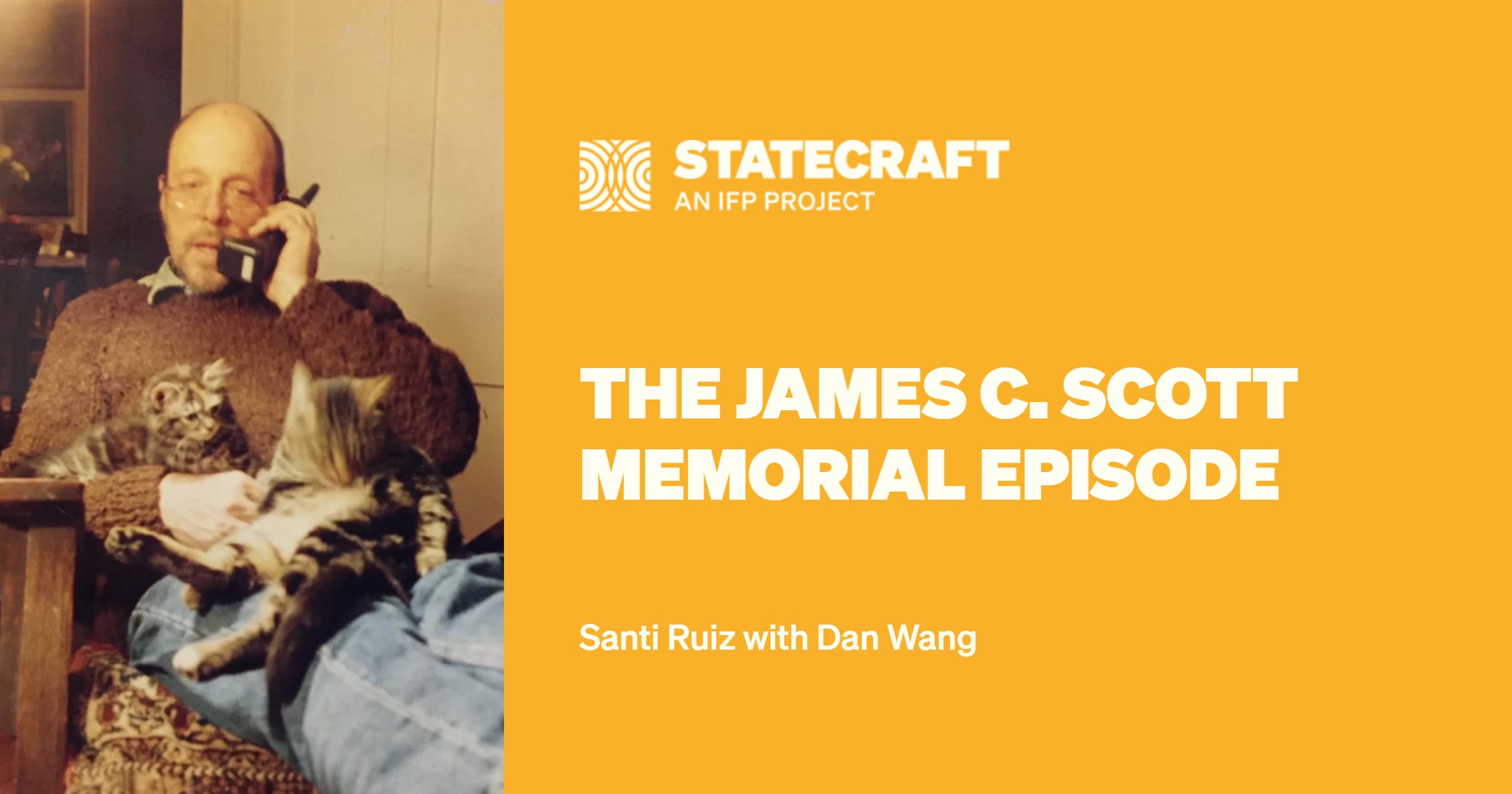
The James C. Scott Memorial Episode
2w ago01:03:46Summary readyToday, my guest is writer, thinker, and friend Dan Wang. He was on Statecraft a year ago, but this time, we're talking about a scholar who has shaped both of our thinking: the late great James C. Scott, author of (among many other classics) Seeing Like a State.We discuss:* How Scott’s fieldwork helped him understand peasant life and state capacity* How mountains impede state power, in Southeast Asia and the USA* How peasants and civil servants resist authority* The advantages of tubers over rice* Dan’s guiding principles for a career in an era of large language modelsFor the full transcript of this conversation, go to www.statecraft.pub. This is a public episode. If you would like to discuss this with other subscribers or get access to bonus episodes, visit www.statecraft.pub
Summary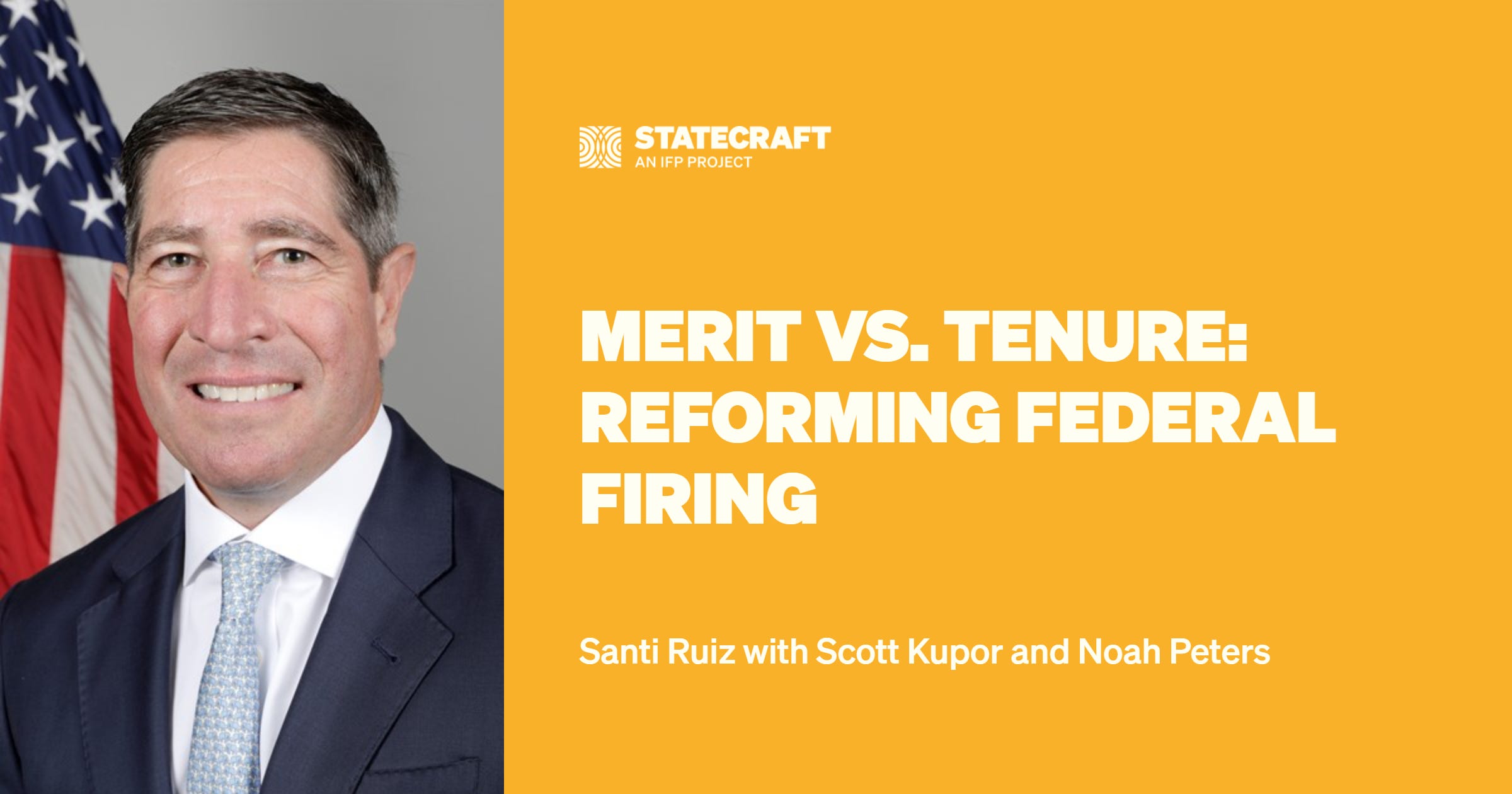
Merit vs. Tenure: Reforming Federal Firing
Jun 1700:45:45Summary readyToday we have a special repeat guest, Scott Kupor, Director of the Office of Personnel Management (OPM). The OPM is the people function in the federal government — the department that sets the rules for the various HR departments in other agencies. Director Kupor was on Statecraft six months ago, and is now a little more seasoned in the federal government.We discuss:* How veterans’ preference works in federal hiring* Who gets fired first when an agency conducts a Reduction In Force (RIF)* Proposed changes to prioritize performance during RIFs* Kupor’s progress in recruiting early career and tech talent to governmentThe full transcript for this conversation is at www.statecraft.pub This is a public episode. If you would like to discuss this with other subscribers or get access to bonus episodes, visit www.statecraft.pub
Summary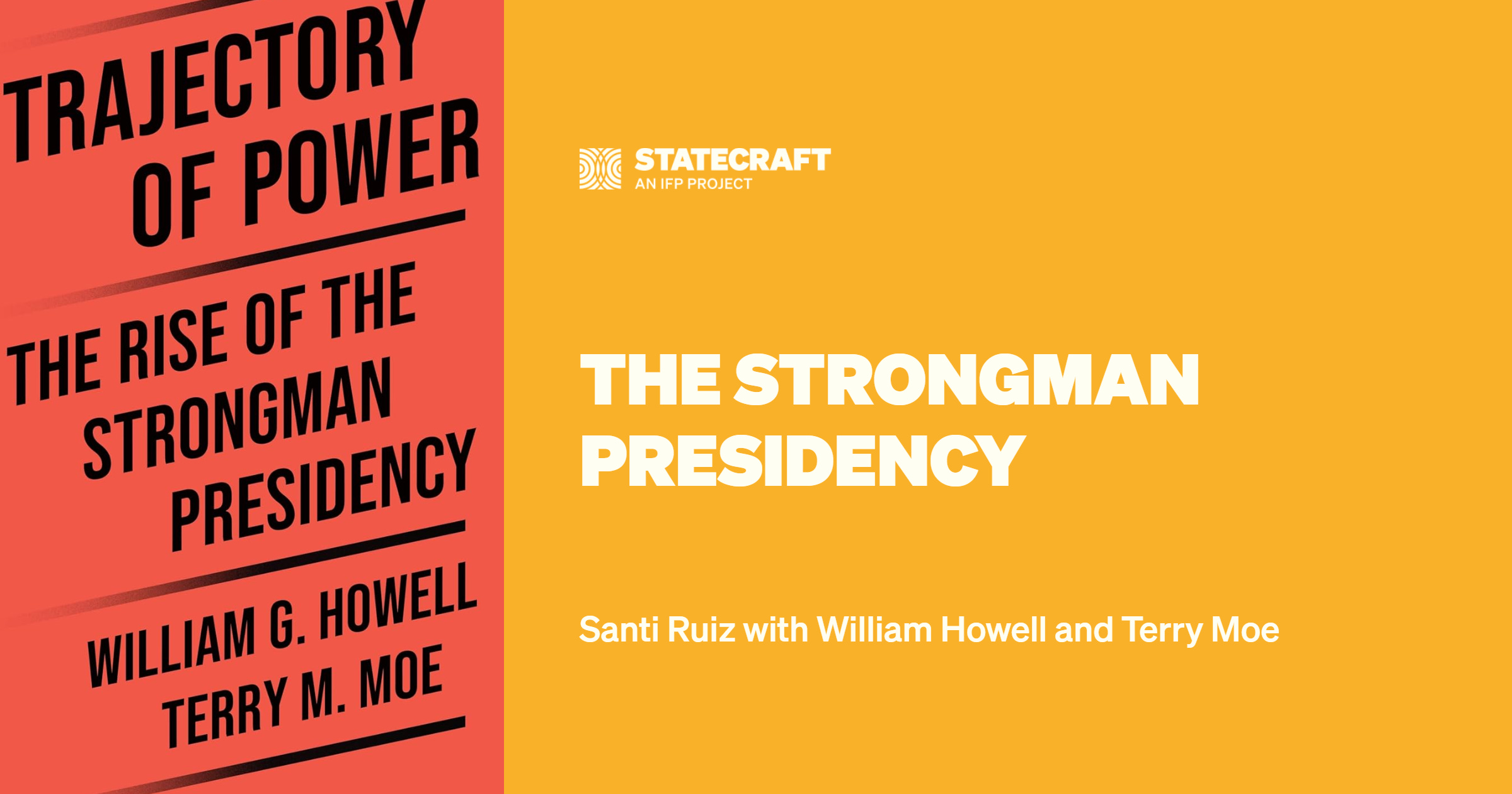
"The Strongman Presidency"
Jun 1200:58:17Summary readyOn today’s episode, we’re continuing a conversation about presidential power that we broached a couple of weeks ago on Statecraft in an essay called, “What Trump Can Learn From Nixon.” It was about the attempts, in Richard Nixon‘s one and a half presidential terms, to build what observers called the “administrative presidency” — the presidency that actually fully controlled the administrative state.My guests today have thought very deeply about presidential attempts to control the administrative state. William Howell and Terry Moe are co-authors of a book called, Trajectory of Power: The Rise of the Strongman Presidency. They’re both political scientists. Terry is a professor of political science at Stanford, and senior fellow at the Hoover Institution. Will is the Dean of the School of Government and Policy at Johns Hopkins University.We discuss:* Why most federal employees in the 1800s were mailmen, and what changed* How presidents have tried to control the administrative state* Whether Republicans have used presidential power to rein in agencies they object to* Whether the Supreme Court has been a firewall against TrumpFor the full transcript of this conversation, go to www.statecraft.pub. This is a public episode. If you would like to discuss this with other subscribers or get access to bonus episodes, visit www.statecraft.pub
Summary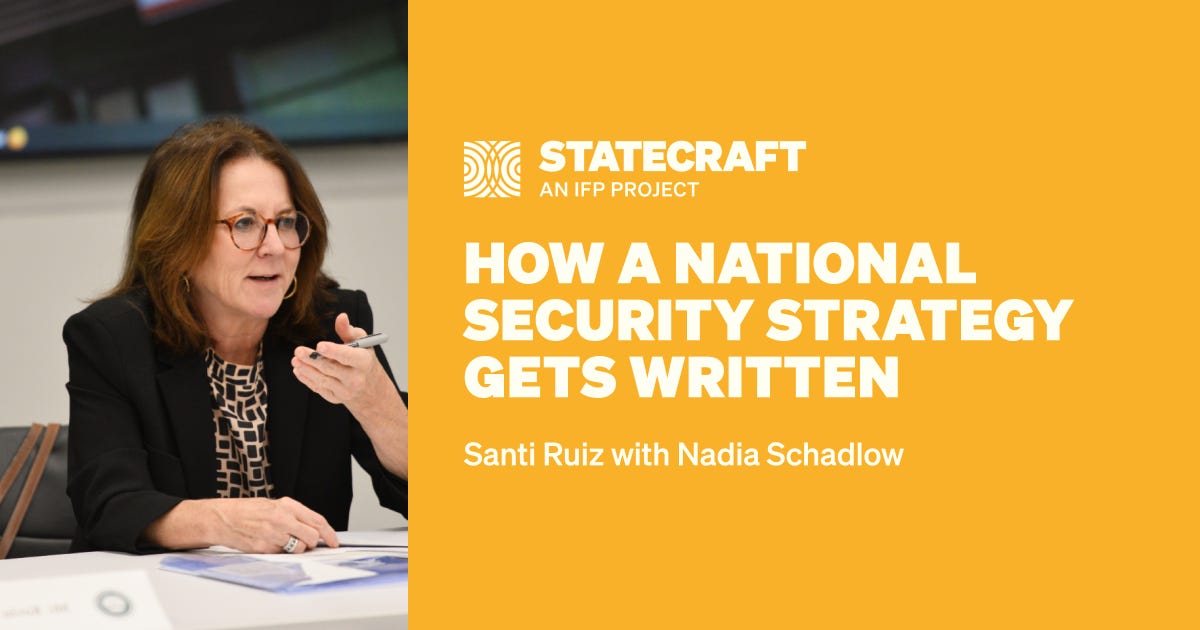
How the National Security Strategy Gets Made
Mar 1200:58:22Summary readyIn the last six months, we’ve been covering big strategic documents published by the executive branch. We’ve interviewed Dean Ball, the principal author of the Trump administration’s AI Action Plan. We’ve also spoken with Judd Devermont, who authored the Biden administration’s Strategy Toward Sub-Saharan Africa. We’re continuing the trend today, but at a higher strategic register.I’m joined by Nadia Schadlow, the former Deputy National Security Advisor for Strategy in the first Trump administration and lead architect of the 2017 National Security Strategy. Currently, Nadia is a senior fellow at the Hudson Institute where she focuses on strategy, national security, and industrial policy.We discuss:* The process of drafting the National Security Strategy* The differences between the 2017 and 2025 strategies* Why time is an underappreciated element of strategy* What to read to understand Russia betterFor the full transcript of this conversation, go to www.statecraft.pub. This is a public episode. If you would like to discuss this with other subscribers or get access to bonus episodes, visit www.statecraft.pub
Summary
Ten Thoughts on Government Data
Mar 500:13:00Summary readyGovernment data often underpins policy debates. Nevertheless, those who work with it will know how uniquely frustrating it can be. Relative to the private sector, government systems collect data in idiosyncratic ways. They prioritize continuity and legality over ease-of-use, in anticipation of a narrow set of users. As a result, these datasets can feel impenetrable.In October 2024, I was trying to understand how international students enter the US workforce: where they move for work, how many of them use programs like Optional Practical Training, and whether they stay in the US after graduating. So, I opened up a dataset from the Department of Homeland Security’s Student and Exchange Visitor Information System (SEVIS). Today this data is available on the OPT Observatory; it’s the most granular public resource available to answer these questions. But it took me over a year to produce. The process of getting there taught me as much about government data as it did anything else.For the full transcript of this conversation, go to www.statecraft.pub. This is a public episode. If you would like to discuss this with other subscribers or get access to bonus episodes, visit www.statecraft.pub
Summary
When FAFSA Broke, They Called This Guy
Feb 2601:15:08Summary readyJeremy Singer is the President of College Board, which he has led for over a decade. In that role, he oversees the SAT, AP, and other core elements of the U.S. college access ecosystem, and he’s previously had leadership roles at Kaplan and McGraw Hill Education.Why is Jeremy on Statecraft today? After the failed redesign of FAFSA in 2023, he spent six months at the Department of Education helping to ensure the 2024 launch was successful. The revised application form meant 1.7 million students were eligible for maximum Pell Grants in the 2025-26 application cycle.We discuss:* Why attempts to simplify FAFSA went so badly wrong* The problems caused by precise drafting in Congress* How Singer got FAFSA back on track* What politicians and GAO don’t understand about developing softwareThe full transcript for this conversation is at www.statecraft.pub. This is a public episode. If you would like to discuss this with other subscribers or get access to bonus episodes, visit www.statecraft.pub
Summary
How a Congressional Office Actually Works
Feb 1901:09:16Summary readyBaillee Brown is Head of Government and External Affairs at Inclusive Abundance, which works to help members of Congress get more interested in abundance-policy areas, principally housing, energy, science, innovation, and good governance.She worked on Capitol Hill for 10 years, for Congressman Scott Peters from San Diego. She began as scheduler, moved to the legislative team, and was most recently his chief of staff in the DC office.For the full transcript of this conversation, go to www.statecraft.pub. This is a public episode. If you would like to discuss this with other subscribers or get access to bonus episodes, visit www.statecraft.pub
Summary
How to Rewire City Hall
Feb 1301:01:49Summary readyJames Anderson leads the Government Innovation Program at Bloomberg Philanthropies, the umbrella for the charitable giving of billionaire and former three-term New York City Mayor Michael Bloomberg.He was Mayor Bloomberg’s communications director, leading on the design of NYC Service and on public engagement for a number of Bloomberg reforms.James has paid more attention than almost anyone to how cities work, and how they learn from each other. But is the Bloomberg model for making cities better “technocratic”? What can it do, and what can’t it do? And should mayors be “innovative”? Or are the best practices, at the end of the day, pretty straightforward? We get into these questions and more.Read this conversation transcript at www.statecraft.pub. This is a public episode. If you would like to discuss this with other subscribers or get access to bonus episodes, visit www.statecraft.pub
Summary
What’s Wrong with Nonprofits?
Feb 401:26:12Summary readyToday’s guest is Greg Berman, and we talk about nonprofits — Non-Governmental Organizations, or NGOs. Greg’s got a new book out called The Nonprofit Crisis: Leadership Through the Culture Wars, which I enjoyed. I asked him to explain his diagnosis of the nonprofit sector. What’s happened to nonprofits this century? What’s happened to how people perceive nonprofits? And are “NGOs the bad guys”? As critics from both ends of the political spectrum will argue.Greg was part of the founding team responsible for creating the Center for Justice Innovation, serving as Director from 2002 to 2020, and helping to guide it from a start-up to an org with an annual budget of more than $80 million. Alongside that, he:* Has written multiple books, mostly on reducing mass incarceration, including Trial and Error in Criminal Justice Reform and Good Courts: The Case for Problem-Solving Justice.* Has been at the center of left-liberal attempts to do criminal justice reform, especially in New York City, over the past two decades.* Was on the Board of Correction for Mayor Michael Bloomberg, and the public safety transition team for Mayor Bill de Blasio and Manhattan District Attorney Cy Vance.* Is the co-editor of a publication called Vital City, which I enjoy — it’s one part New York journalism, one part policy journal.* Is the Distinguished Fellow of Practice at the Harry Frank Guggenheim Foundation, investigating various topics related to violence.Thanks to Charles Lehman, Sean Sullivan, Oliver Traldi, Park MacDougald, Rafa Mangual, Ari Schulman, and many others for their contributions to my thinking on this piece.We discuss:* Why nonprofits matter to government service delivery* Critiques of nonprofits from the left, the right, and both sides* How the Center for Justice Innovation reduced incarceration, and why funding that work got harder* What nonprofits should do to regain public trustThe full transcript for this conversation is at www.statecraft.pub. This is a public episode. If you would like to discuss this with other subscribers or get access to bonus episodes, visit www.statecraft.pub
Summary
One Year of Trump’s Economic Statecraft
Jan 2701:32:18Summary readyWhen I got this episode on the calendar a month ago, my vision was, “Let’s get three of the smartest, most thoughtful liberals I can find on the topic of economic statecraft, and we’ll do a full assessment of the first year of Trump’s second term.” The idea was to take each of the domains — tariffs and the trade war, export controls, industrial policy — and do two things: get an accurate picture of what’s actually happened, and hear how Biden admin insiders and Democratic thinkers see them. Where are there continuities between administrations? Where have their expectations been overturned? And what lessons are they incorporating into their own worldviews?Then, in a totally novel example of economic statecraft, we grabbed Maduro and seized Venezuelan oil; we had to discuss that too.As a result, we’re doing a lot in this episode, and we leave some important questions out: the legal challenges to the current tariff regime, for example. But I think readers will come away from this episode with a clear view of the old and new tools of US policy in the realm of economic statecraft.Our guestsDaleep Singh is an economist who served in two separate periods in the Biden Administration as Deputy National Security Advisor for International Economics.Peter Harrell served as Senior Director for International Economics at the White House, jointly appointed to the National Security Council and the National Economic Council.My colleague, Arnab Datta is Director of Policy Implementation at IFP. He’s also the Managing Director of Policy Implementation at Employ America.We cover a lot of ground in this episode. Here’s our table of contents:We discuss* What is economic statecraft?* Venezuela* China and tariffs* Trade deals* Industrial policy* Lessons learnedThe full transcript for this conversation is at www.statecraft.pub This is a public episode. If you would like to discuss this with other subscribers or get access to bonus episodes, visit www.statecraft.pub
Summary