Loading summary
Transcript140 lines
- [00:02]
Megan
Hi, I'm Megan and I've got a new podcast I think you're going to love. It's called Confessions of a Female Founder, a show where I chat with female entrepreneurs and friends about the sleepless nights, the lessons learned, and the laser focus that got them to where they are today. And through it all, I'm building a business of my own and getting all sorts of practical advice along the way that I'm so excited to share with you. Confessions of a Female Founder is out now. Listen wherever you get your podcast. Hi, everyone.
- [00:38]
David Duchovny
I'm David Duchovny. Join me on my podcast, Fail Better.
- [00:41]
Megan
Where we use failure as a lens to reflect on the past and analyze the current moment. I speak with makers and performers like Rob Lowe, Rosie o' Donnell, and Kenya.
- [00:51]
David Duchovny
Barris, as well as thinkers like Kara.
- [00:53]
Megan
Swisher and Nate Silver to understand how.
- [00:56]
David Duchovny
Both personal setbacks and larger forces impact our world.
- [01:00]
Megan
Listen to Fail Better wherever you get your podcasts.
- [01:16]
David Duchovny
What they did on Canfield changed my life forever. So that's one place I will not be ever again if I don't have to be. I don't like to go back there. August 9th, period. Just the whole thing can feel is definitely a hurtful ground. Like I haven't even. I don't even ride that way. I don't even like talking about it. Oh, just the way they did him in front of her. It just tore her apart. On August 9th, I'm with Michael's siblings and we're trying to remember the good times instead of that time.
- [02:06]
Megan
August 9, 2014, changed the world. Ferguson, Missouri, was the epicenter of a movement, and Mike's name became a rallying cry for justice.
- [02:16]
David Duchovny
Sit down for Michael Brown. Sit down for Michael Brown. Michael Brown.
- [02:22]
Megan
Michael Brown.
- [02:23]
David Duchovny
He was unarmed. Gu.
- [02:30]
Megan
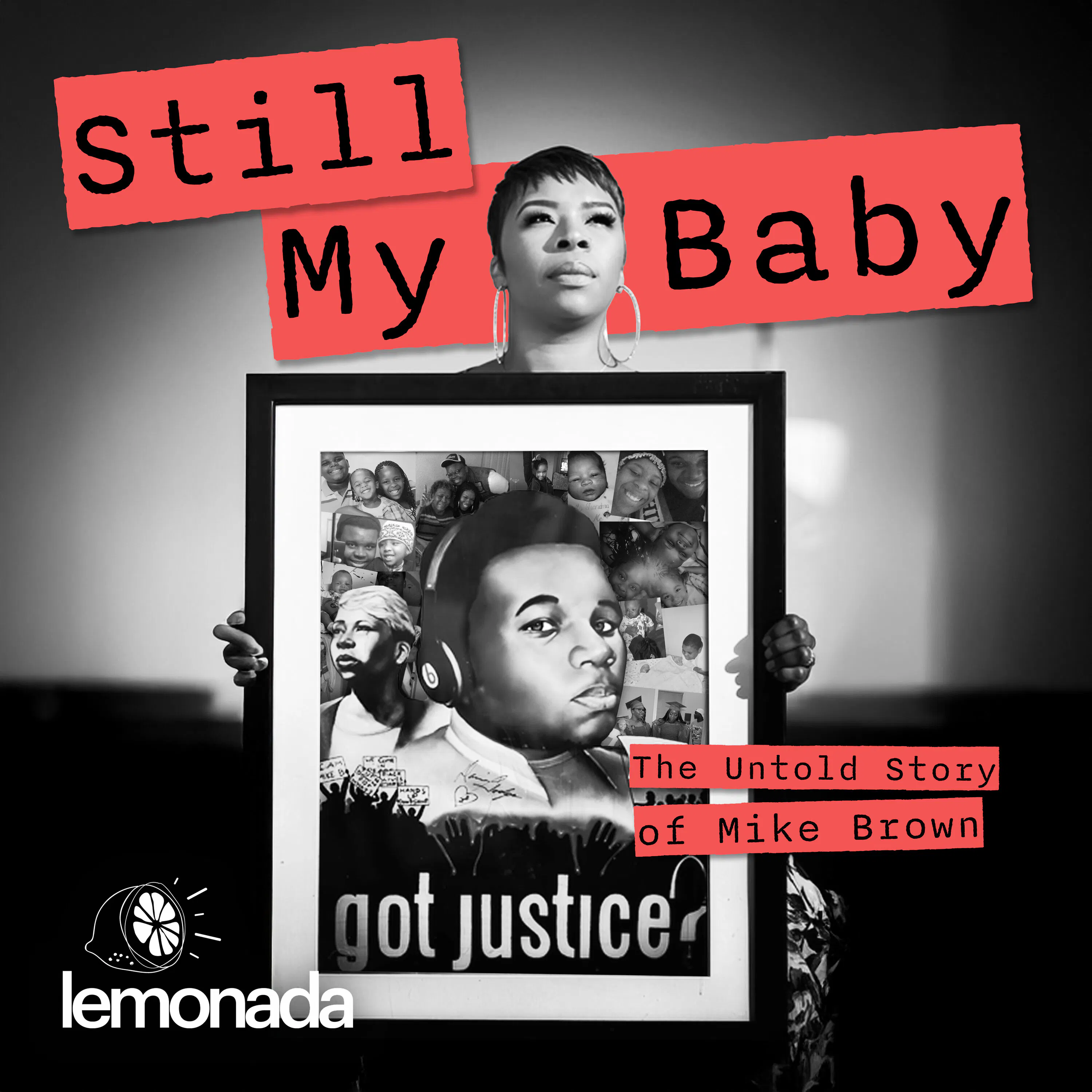
But there's another side to this story that unfolded. A story of a family's profound loss. While protesters filled the streets and news crews documented every update, Leslie was living a mother's worst nightmare. How do you process the most devastating loss imaginable when the entire world is watching? How do you balance your private anguish with the weight of a movement born from your loss? From Lemonada Media and Campaign Zero, you're listening to Still My Baby. I'm Yvette Nicole Brown. You've heard versions of this defining moment in America from the media, the police, and the protesters. But today you're going to learn about it from the people closest to Mike, his mother, Leslie, and his family. August 9, 2014, was a typical Saturday for Leslie at Straub's the upscale grocery store she worked at for years. While she was on break. Around lunchtime, she stepped outside to take a call from a co worker.
- [03:49]
David Duchovny
My co worker who worked at Strives with me, he lived on Canfield as well. He was a young man by the name of Mario. When I learned that Mario lived on Canfield, I showed him a picture of my son. Because my mom lived there and I wasn't always there.
- [04:06]
Megan
Leslie asked him to look out for Mike. Mike. When he was spending time over on Canfield Drive at his grandma's house. Mario promised he would.
- [04:15]
David Duchovny
So that day Mario called my phone and he said, leslie, is something going on on Canfield and there's somebody laying in the street? He said, I can't really say if they're dead or not. Cause there's a lot of people around them. And he said, but that picture you showed me, it kind of looked like your son. And while we were talking, my line clicked and I looked at the phone and it was my sister's number. And she never calls me at work. Cause she knows I'm at work. So I knew. And I promise you, when your kids hurt their self, you feel it. When your baby start walking, learning how to walk and they trip over a little bit or they bump their head, you feel something in you because they come from you. And I felt something instantly when I looked at that phone. And so I was my sister. And before I could even say hello, she said, they shot Mike. Mike. That's all she said. I didn't ask no questions. She didn't tell me anything past that. I didn't know who they were. I just knew I needed to get to Canfield. And I just took my phone and I think I just threw it because of what I heard. It just. I don't even want that phone around me no more, you know. And that's when I ran back into the building and it was showing on the news.
- [05:44]
Megan
Her co worker Erica, offered to drive her to Canfield.
- [05:47]
David Duchovny
All I remember saying over and over and over and over and over again was why? Why, why, why? I just remember that playing in my head over and over and over and over and over again.
- [05:57]
Megan
It was bumper to bumper traffic all along I70.
- [06:01]
David Duchovny
And when we got to the top of can, so we're still on West Florissant, I just saw. I don't even know how you say it, but it was just a number of police cars. They were all lined up on both sides of the street facing north.
- [06:19]
Megan
Neighbors and other onlookers stood in the Vicinity. Then she spotted a familiar face.
- [06:25]
David Duchovny
And I got out the car, and I saw Mike's father. When he looked at me, I looked at him. We didn't say anything. The only thing came out of my mouth was, mike. That's the only thing. And then we both look down the street, and we start running. And anything after that, I'm sure, has played on the news. When I first, you know, got on the scene, the things that I said, who I came into counter with, and when I first saw the sheet on.
- [06:56]
Megan
The ground, Leslie saw yellow tape around the white sheet on the ground and a police officer in blue standing in front.
- [07:04]
David Duchovny
She ran up to him, and I asked him, was that my son? We did not speak. We did not introduce ourselves. My only words was, is that my son? And he said, yeah. He said yes. And he nodded and said yes. And I don't remember what happened after that for probably at least a few hours. You know, I just remember crying and losing myself for a minute. And I think when I came back to it, when I felt my husband, he hugged me from the back. And I realized that I was on Canfield. Mike had not been shot. Mike had been killed.
- [08:00]
Megan
Leslie's firstborn child was lying lifeless in the street, not even fully covered by the white sheet. Nothing would ever be the same. Meanwhile, word was spreading throughout Ferguson and the surrounding area. Leslie's friends and family, the people who loved Mike fiercely, were learning what happened. One by one, they stopped what they were doing and headed to Canfield.
- [08:27]
David Duchovny
I was, like, maybe the fifth or sixth person on the scene besides the people that was already there. Like I said, Bernard was there. I seen the police. They had it taped off. And then I seen Mike.
- [08:36]
Megan
Mike.
- [08:36]
David Duchovny
And it was just like, I didn't see nothing else after that. I was at the barbershop in the barber's chair getting my hair cut at Shaq's down on Olive, near downtown. And I got a phone call from my wife, and I was like, yeah. I was like, what's going on?
- [09:02]
Megan
She said, nanny Pooh needs you.
- [09:03]
David Duchovny
And she's like, they shot Mike. Mike, man. I was at home Aug. 9, when he got killed. They called me on the phone. I was laying on my couch, and they say, belinda, you got to get over here. Everybody had this look on their face of like they was devastated or something bad happened, and I didn't know what to think or what was going on.
- [09:26]
Megan
Andre, Mike's brother and Leslie's youngest son, was one of the many family members that arrived on the scene on Canfield. Along with his sister Daisah. Even though it was over a decade ago, he remembers it vividly. He wasn't even 10 years old yet.
- [09:43]
David Duchovny
I just seen this big old crowd of people, and I seen the police calls. I seen the yellow tape. And then somehow, someway, I don't know how my sister did it. Dejah. She made her way literally to the front in the midst of all these people right there. I don't know how she did it, but she did it. But anywho, I was able to spot her right then and there. It was just crazy, but when I seen all that, it clicked in my mind, like, I knew what was going on, you know, and it was just. It was just crazy. I didn't really know how to take it in. I just took it for what it was, you know?
- [10:18]
Megan
In time, the family would learn the story of what happened earlier that day. According to confirmed sources, Mike and his friend were walking in the street when they were approached by Officer Darren Wilson in his police vehicle. He told them to move onto the sidewalk. Things escalated, leading to an altercation. The officer fired two shots, hitting Mike in the hand. Mike and his friend began to run away. The officer shot six more times, and Mike, who was unarmed, stopped and turned around. The officer fired again, killing him. Later, eyewitnesses reached out to Leslie to tell her what they saw that day. Out of the many stories, she heard, often conflicting accounts, one in particular really stuck with her. It was from a construction worker. He told Leslie that what he saw that day was haunting him, affecting his sleep, his marriage, and his job.
- [11:18]
David Duchovny
He said it all happened so fast, but he just. From the conversation he had with Mike leading up to what he saw, he could not understand why the officer did what he did. And he told me that him and his coworker were even screaming at him, like, he has his hands up. He's down, like, why do you keep shooting? He's telling me. And he was just really close where he saw everything, even the hurt and the pain in Mike's eyes.
- [11:52]
Megan
On August 9th, Mike's body laid in the street for over four hours. At first, uncovered, exposed to the hot summer sun. All the while, the crowd continued to grow.
- [12:07]
David Duchovny
There were so many people out there, you couldn't even see Mike. Mike in the street, covered up. It was terrible. I mean, terrible. But police were out there saying, get it. Get back, get back, get back. That was the main thing, too. They was like, get back, get back. And we're like, that's, you know, that's our family.
- [12:36]
Megan
What do you mean?
- [12:38]
David Duchovny
But they wouldn't let us approach in any way.
- [12:42]
Megan
Leslie's cousin Kiki remembers when tensions between the growing crowd and police started to escalate even further.
- [12:49]
David Duchovny
The tape is around Mike and the cops have everyone behind the tape and she takes off to try to get to Mike. And that's when they sick the dogs on us and pull guns out on us. So of course, that made that put our family in an uproar because she's just trying to get her son. And that's a mother's first instinct, is to get there. And I really think that's what caused all the chaos when they pulled guns out on her and told her to step back. You know, the sound was so piercing when you went over there. You know, they screaming, they hollering, you know, they mad, they upset, they cussing folks out. You know, it was just. I'll never forget that. It was just unreal. What that day changed the world seemed like over there. It did.
- [13:50]
Megan
Leslie and Mike's relatives continued to plead with the officers for information and begged to be allowed past the tape to get closer to Mike's body. But the police gave them nothing. And the hours crept on.
- [14:03]
David Duchovny
Too long. Too long for anybody to be lying in the streets. But you talking about y' all looking for evidence and this, that and the other. There's no evidence. Here it is. They telling you. Half of the people were telling them what happened.
- [14:17]
Megan
Cause they saw would be four and a half hours before police removed Mike's body from the street and placed him in a dark suv, not an ambulance.
- [14:28]
David Duchovny
They claimed the Amulams couldn't get through. But it was just. Yeah, you can tell something wasn't right. You know, something just wasn't right.
- [14:41]
Megan
All of this pain washed over the family.
- [14:45]
David Duchovny
It was such a disrespect to him. Yeah, it was such disrespect, you know, and us, like, do you even know? No, he's not world known and world famous, but he is to me. Yeah. And you. This, this not even a person that should be laying under the sheet, man. Not at all. Not at all. So it was just. Oh, Lord. It was just craziness for hours. It was very hurtful. And just. Just to see my cousin in that state, I just felt like. I don't know, I wish I could just hurt for her at that moment.
- [15:30]
Megan
In the days and weeks that followed August 9, the ripple effects of change spread outward from Ferguson and across the world. Mike's name would become world known. And it was just the beginning of Leslie's grief journey and the collective fight for justice. That's after the break. This is an ad by BetterHelp. June is Men's Mental Health Month and my guy It's Time to talk. Men today face immense pressure to perform, to provide, to keep everything together. So it's no wonder that 6 million men in the US suffer from depression every year. Men are also less likely to seek therapy than women, which means depression among men often goes under diagnosed. If you're a man and you're feeling the weight of the world, the strongest thing you can do is ask for help. Talk to someone. Anyone. A therapist, a friend, a loved one. Because real strength comes from being honest about what you're carrying and doing something about it. Therapy can help you find your way. And better help makes it easy to start. Take a short online quiz and connect with a qualified therapist from the privacy of home. Every man deserves better. Visit betterhelp.com today to get 10% off your first month. That's BetterHelp. H E L p.com.
- [16:58]
David Duchovny
Hey, I'm Reshma Sajani, founder of Girls who Code and Moms First. I consider myself a pretty successful adult.
- [17:04]
Megan
Woman, so why is it that in midlife as I'm about to turn 50.
- [17:08]
David Duchovny
I feel so stuck?
- [17:10]
Megan
Join me as I try to find the answer on my so called Midlife from Lemonada Media. I talk to experts and extraordinary guests about divorce, exercise, menopause, sex, drugs, and more to understand what we're going through.
- [17:21]
David Duchovny
And how to make the most of it.
- [17:23]
Megan
Listen wherever you get your podcasts. After Mike's killing, Leslie and her family were plunged into deep grief.
- [17:37]
David Duchovny
I felt like I sat on my mom's couch for three days. It didn't even feel like I moved because the first time I remember being at home in my bed is when I just felt like I said, I gotta see him. I gotta see him. You know, I keep seeing people who remind me, you know, and I'm just getting a glimpse of a man turning the corner or a kid with a backpack and he has this same, you know, height and build. Or I would feel this little thing he would do with our ears. He would like thump his finger across your ear and you would hear the wind. I kept telling Louis, I just need to see him.
- [18:19]
Megan
The days blurred together the way they tend to do after a loss, with time standing still and rushing forward at the same time. Kiki remembers those dark days like we.
- [18:30]
David Duchovny
Were close knit family, so it definitely hurt our family like really, really bad for Leslie. I just, I seen my Cousin. Just like God, it's just like she, she. She wasn't herself. She wasn't herself anymore.
- [18:55]
Megan
But while they were processing an unimaginable loss, a movement was starting. On August 10, after a peaceful candlelight vigil, the first of several nights of unrest began. Sitting out here peacefully protesting before, next.
- [19:15]
David Duchovny
Thing you know, I don't know how or why, they start letting these go on us.
- [19:21]
Megan
Tear gas grenades. Police officers showed up in riot gear to confront protesters the next night. They fired rubber bullets and tear gas at the crowds. Leslie remembers it was impossible to escape what was going on outside because tear gas was literally seeping into her family's home.
- [19:44]
David Duchovny
It was so strong that it was coming through our windows, like a spicy feeling, almost as if you're having an allergic reaction to something. Your eyes burn, your nose burn, and it was so strong in the air.
- [19:59]
Megan
Leslie remembers she and her family piled into the car that night, stopping to pick up her mom before heading to a downtown hotel. Nearby, tear gas hung in the air and armored police vehicles blocked streets.
- [20:11]
David Duchovny
And I couldn't believe that. Like to see it in person on a residential street with cars and somebody's hanging out the top with a assault rifle, pointing it due to an officer killing an unarmed. When you think about the base of this story and where it stemmed from, and then you see their reactions, it's like, excuse me.
- [20:35]
Megan
The militarized display of force from police, sniper rifles, armored vehicles, flash grenades and tear gas was stunning. Ferguson, with a population of 22,000 people, was more like a war zone than a small town. Some officers wore riot gear with shields, batons and helmets. Others were decked out in army style fatigues and body armor. What was happening in Ferguson was a real time representation of the police brutality happening in black communities across the country. And it was igniting a budding movement. Black lives matter. Out here to start trouble. Please don't harass us.
- [21:19]
David Duchovny
This is bigger than Mike Brown. This is bigger than Trayvon Martin. This is about making sure it doesn't happen again. This is our life as black Americans in this country, year after year after year.
- [21:31]
Megan
The protests sparked by Mike's murder were changing the way Americans talked about race and policing. It was no longer just a local issue. This was happening on a national level. Tensions were high, even reaching the White House on Aug. 12, just three days after Mike's killing. Then President Barack Obama issued a statement. We lost a young man, Michael Brown.
- [21:57]
David Duchovny
In heartbreaking and tragic circumstances. He was 18 years old.
- [22:04]
Megan
His family will never hold Michael in their arms again. As the story made headlines across the country. Protesters livestreamed clashes with police, and conspiracy theories flooded social media. Fake photos made the rounds, too, like one of a man holding a gun that people falsely claimed was Mike. Another photo supposedly showed that the officer had broken bones in his face. This was also a hoax. Legacy media also spread false and unfair narratives about Mike, with the New York Times writing that he was, quote, no angel. All of this attention, from the hateful rhetoric online to the supportive protests, was new to Leslie.
- [22:42]
David Duchovny
I knew nothing about Black Lives Matter. I knew nothing about any of that. All that I knew was that I had to make funeral arrangements for my baby boy. I had to go out and pick out his last outfit. I had to go to a funeral home and put together obituary. Those were the things that were at the forefront of my mind.
- [23:03]
Megan
One task that loomed over her was picking out the clothes Mike. Mike would be buried in.
- [23:08]
David Duchovny
I knew I had to. Nobody even offered to do it for me. I had to do it. I picked out a blue cardigan, a plaid shirt to go under his cardigan, a blue bow tie, and some blue jeans. I dressed him in a way that I would want, in a way that I knew he would like. And he had a fresh haircut, and he had a cardinal's cap because he loved a hat. I love a hat, too. But the hat couldn't go on his head because he had been shot in the top and his head was still, you know, pretty swollen, and that shot to the top of his head came out of his left eye.
- [24:00]
Megan
Leslie remembers talking to Austin Lane, the funeral director, about how she wanted Mike to look.
- [24:06]
David Duchovny
I had a picture of Mike, and I said, I want him to look just like this, like there's nothing to happen, meaning that I want him to look like himself. And I would dress him like himself and put him away, you know?
- [24:24]
Megan
The night before the funeral, Leslie and about 100 family members and friends gathered for a private viewing of Mike. Mike before he would be laid to rest.
- [24:34]
David Duchovny
They took me to a funeral home, and they walked me to the room, and I just remember them opening the doors, and I saw two rows of seats, two pews, and it felt like the long, longest walk ever. But he was at the end.
- [24:55]
Megan
Leslie remembers seeing his body for the first time before anyone else. She hoped the funeral home had made Mike look like his picture, as if he was just asleep.
- [25:06]
David Duchovny
Like, I don't want to be able to tell that his head is swollen or that his eyes gone. I want him to look just like himself. But he did a damn Good job.
- [25:17]
Megan
Mike. Mike's funeral was held on August 25, 2014. The St. Louis Cardinals baseball cap couldn't go on his head because of the swelling, so Leslie placed it on top of his casket. She also wore red, his favorite color.
- [25:33]
David Duchovny
I never imagined burying my son. And I never imagined those dynamics surrounding his death either. I never imagined the police shooting my son. Nothing of the happening to my son. It took 44 minutes to bring him here, and this man killed him within less than 44 seconds. I never imagined any of that.
- [26:08]
Megan
Over 4,500 mourners filled Friendly Temple Missionary Baptist Church in St. Louis. Among the attendees were civil rights leaders, celebrities, and representatives from the White House. Not everyone was simply paying their respects, though. Family on Mike's dad's side also showed up to sell merchandise with Mike's face on it. For Leslie, it was a slap in the face.
- [26:31]
David Duchovny
You've noticed, had one conversation with me, his mother, and you're selling neckties with his face on them at his funeral. A funeral that costs thousands of dollars. Thousands of dollars. There are celebrities here. There are pastors here from all over the world. There are people here because their heart told them to be here and what they believe. And you're selling a necktie. I was disgusted. I could not believe that. I couldn't believe that there was a website set up selling hats. I could not. And these. The. The folks who were doing it was supposed to love Mike and care about Mike, but couldn't. I tell you one thing about Mike, not one thing. His favorite food, favorite color, how he was in school, what type of big brother he was, what type of son, you know, but they thought that it was okay to profit off of Mike's death, and they're still doing that today.
- [27:44]
Megan
With everything going on, from organizing Mike's funeral to dealing with people trying to profit off her son, Leslie couldn't just grieve. As a parent who had lost her firstborn, she found herself put into a role she never could have imagined and never asked for. A mother of the movement.
- [28:04]
David Duchovny
I was on the news and on the radio and probably on a plane within a week, and I had never been on an airplane. So I was facing fears and, you know, being courageous and being like super mom. Cause when it comes down to it, we gonna do whatever we have to do. And that's just what I did.
- [28:33]
Megan
Leslie remembers sitting down for interviews at 4 or 5 in the morning, running on an hour of sleep. In just a couple of months, she appeared on ABC News, CBS Evening News, and the Steve Harvey show, just to name a few. She even testified at the UN every time she had to recount August 9th over and over again. Joining us now from St. Louis, Michael Brown's mother, Leslie McSpadden. Michael Brown Sr. And Leslie McSpadden are here. They are the parents of Michael Brown. Joining us is Leslie McSpadden. This is Michael's mom. Even so, these interviews were a way for Leslie to channel her pain into something positive, to support Mike and to avoid stewing in sadness at home.
- [29:19]
David Duchovny
With all the travel, that's where Lewis became like, you know, the parent. And he was home with them, getting them back and forth to school, helping with homework, more than I was at the time.
- [29:30]
Megan
As she became a fixture on tv, Leslie started to get recognized.
- [29:34]
David Duchovny
Going to the salon after everything happened was. It was the same as going to the grocery store, going to the airport. You're being recognized and noticed by people. They want to tell you something. They want to show you something. They want to invite you somewhere. Some people saying things that were mean and nasty, like, well, they didn't do anything when my brother was killed. Why they. Yeah, it was chaotic. It was confusion. Some people would just walk up and want to hug you.
- [30:09]
Megan
That attention followed Leslie on social media, too. Strangers even posted false statements about Leslie's parenting. She remembers that all of the disrespect and hate started right away.
- [30:22]
David Duchovny
Immediately. Immediately. Yeah. As I said when we were on Canfield, the things that I was hearing from the officers, the disrespect for Mike laying in the street four and a half hours, the disrespect to me as his mother, the disrespect for his human life. It happened immediately. It happened even before my son probably hit the ground. The disrespect started.
- [30:52]
Megan
The hate and disrespect came at Leslie from all angles. Everything from lies intended to harm Mike's reputation to criticism of Leslie's hair color. That's right, her hair color.
- [31:04]
David Duchovny
And they were making a big deal about, why do I have red hair? Why do I have red hair? Why does she have red hair? Why does it matter? I didn't know that my hair color mattered so much or defined me as a person.
- [31:17]
Megan
Belinda, Leslie's longtime friend and co worker at Straub's, remembers feeling protective of Leslie.
- [31:23]
David Duchovny
I would tell people, if you don't know her, don't talk about her. She got enough going on with the death of her child. And then y' all gonna throw salt in the wound. Oh, honey, they just. They painted a picture of Leslie, like, she was a villain. Like, she was just, oh, my God. But she wasn't that person. Not to me.
- [31:46]
Megan
Away from the cameras, Leslie was doing everything she could to stay strong for her family, for Mike's three younger siblings, and for her husband, Lewis. But at night, in her grief, she'd lay in the doorway of her bedroom waiting to feel Mike's presence.
- [32:00]
David Duchovny
And I did that for about two months until I felt Mike in the dark. And he said, my mama, right? And I know you hear these type of things from people when they tell, but it's real. It really is. It's real. He came to me and he just said, mama, I'm all right. And that gave me momentum.
- [32:31]
Megan
That night was a turning point for Leslie.
- [32:35]
David Duchovny
After that is when I knew.
- [32:40]
Megan
I.
- [32:40]
David Duchovny
Had to fight for him, you know, like, okay, let's let this be.
- [32:44]
Megan
She was in the fight. And as she witnessed more of the protesting happening in Ferguson and around the world, the cause became clearer.
- [32:55]
David Duchovny
I've gotten letters from Germany, Africa, Brazil. And these were people expressing that they have witnessed police brutality, too. And they're like, we need you down here. Like, I was in my mind, like, what do. Who do they think I am? What do they think? What powers do they think I have? What. What have I done? What am I doing? Because it's not changing my situation. So I didn't know why these people were, like, so excited and riled up and wanted me to come. And I was. You know, it was very confusing, and I didn't understand the protests. And then I come to realize that if we show up in numbers and we all are demanding the same thing, something's going to happen. Somebody's going to be looking and listening, and they're going to say, oh, we can't have all those people. We got to do something. So I unders. I started to understand the power of the protest when I saw it happening everywhere and saw that people were making paintings, shirts, signs, and they was just like, I'm with you, sister. We with you.
- [34:04]
Megan
The biggest protests were yet to come. On November 24, 2014, the grand jury would announce whether the officer who killed Mike would be indicted. Leading up to that day, there were conflicting stories circulating. Neighbors who saw the shooting said Mike had his hands up at the time he was murdered. Meanwhile, the online smear campaign ramped up. It contradicted those accounts, with people saying that Mike never had his hands up and that he had acted aggressively. Ferguson police also painted Mike as a criminal. They released security footage purporting to show Mike and his friend stealing from a convenience store on August 9th. With the video's release, they shifted public attention away from both the officer that murdered Mike and the ongoing police violence against protesters. Despite everything, Leslie and the protesters held onto hope that the truth of what happened would lead to real justice. They had this hope because President Barack Obama made a statement of support, and Eric Holder, the first black US Attorney general, met with Mike's family personally. Our investigation will be fair, it will be thorough, and it will be independent. It all made Leslie feel like this case mattered to the country and to the people in charge. That night, Leslie and her family gathered in a hotel room, holding hands in prayer. Then the news came. The St. Louis county prosecutor, Bob McCullough, announced that the grand jury decided not to indict.
- [35:38]
David Duchovny
After all, they determined that no probable cause exists to file any charge against officer Wilson and return to no true bill on each of the five indictments.
- [35:49]
Megan
Protests flared that night, and Leslie and her husband Lewis, joined people in the streets. In a cell phone video. You can see them surrounded by the crowd. In response to the lack of indictment, Leslie sobbed and exclaimed, they don't care. Next to her. Lewis was angry at the injustice, and he expressed it as well. The media chose to fixate on Leslie and Lewis reactions when crowds that night burned buildings, looted businesses, and clashed with police. They were unfairly blamed and held responsible for the most destructive actions of the protesters.
- [36:29]
David Duchovny
They did everything to make us the bad guys, and we were never the bad guys. It was the person that we never seen. It was like a ghost. The pain that was going through our house and family was something that we could not rebuild with wood and sticks and stones. And no amount of money could say, hey, you could put your house back. We could rebuild your stores. No, we can't pay for this life.
- [36:56]
Megan
What Lewis recognized was something deeper than one night. It was long, simmering pain extending far beyond Ferguson's borders across the country.
- [37:06]
David Duchovny
So it's not about, you know, burning this motherfucker down, but more or less, we on fire. And y' all have to understand that. I don't know if you feeling this pain seriously, but America needs to know, not just in Ferguson, which they love to say, but none of this is right. And as long as this going to happen in this area, it's going to keep happening. But at some point, somebody gots to hear, feel, and see that enough is enough. I'm Hasan Minhaj, and I have been lying to you. I only pretended to be a comedian so I could trick important people into coming on my podcast, Hasan Minhaj doesn't know to ask them the tough questions that real journalists are way too afraid to ask. People like Senator Elizabeth Warren. Is America too dumb for democracy?
- [38:03]
Megan
Outrageous. Parenting expert Dr. Becky.
- [38:07]
David Duchovny
How do you skip consequences without raising a psychopath?
- [38:10]
Megan
That's a good question.
- [38:11]
David Duchovny
Listen to Hassan Minhaj doesn't know. From Lemonada Media. Wherever you get your podcasts.
- [38:19]
Megan
Hi there, it's Julia Louis Dreyfus. This fall, my podcast Wiser Than Me is back for season three with even more wisdom straight from some legendary old ladies. These chickadees have a lot to teach us. Every word is a lesson in living unapologetically and focusing on the stuff that really matters. From Lemonada Media, Wiser than Me, Season 3 out now. Find it wherever you get your podcast. Subscribe to Lemonada Premium in the Apple Podcasts app and listen to every episode of season three A.D. free.
- [39:01]
David Duchovny
And at home, it was a lot of crying. At home, it was a lot of emotion. What people didn't see was a lot of heartbreak, you know, a lot of silence. You know, it's like you lose somebody that's cohesive to the group and that it's a chain. I met him. When I met him, it was a unit. It was all of them, you know, so to be around when that chain breaks and I'm a big part of this chain itself, it's like that link can never be replaced. So it's gonna always be a broken chain.
- [39:48]
Megan
All of the family members in that chain were hit hard with heartbreak. And though Leslie was awash in her own grief, she felt the weight of everyone else's, too.
- [39:58]
David Duchovny
There was a lot of grief on my shoulders, managed their grief, my grief, my husband, my mother, my father, my sister, my brother, my nieces, my nephews. Although it happened to me, I've always been that strong person in the Rockets, and they like, what we gonna do?
- [40:18]
Megan
It was especially difficult for Mike's younger siblings, Dejah, Andre, and Jasmine. In those days, Leslie advised her kids to stay close to the house because she feared for their safety. Family members like Kiki saw how tough this was for them.
- [40:34]
David Duchovny
The kids took it really hard. And then going to school and just the other kids knowing, you know, that this was their brother, like they had to take all of that in, you know, topics in classrooms about Mike. Very hard for them. Very, very hard. Yeah. And Daijah just had stepped into her big sister role, but Deja was old enough to know and she was really preserved and kind of off to herself and just didn't want to be bothered. She was processing it. She was processing it all. She became really, like, angry, you know? She became really angry at what she couldn't understand.
- [41:21]
Megan
Mike's little brother, Andre, was also processing everything in his own way. Even though he was only nine years old, he has a clear memory of his first day back at school that fall.
- [41:33]
David Duchovny
When I first walked into school, we first went in the office, Boom, all eyes, all eyes on us. I was in fourth grade at the time. And soon as we walked in, all the kids, even the kids and the teacher, everybody just looked at me. But I remember my teacher, he took me, he sat me down, little corner. He said, you know, don't worry about nothing. I'm gonna take care of you. I'm gonna make sure you good. And, you know, all that other stuff, man.
- [41:59]
Megan
The kindness from his teacher made a big impact on Andre. But those big feelings he was having, he said he had to tamp those down to get through each day becoming quieter and more reserved.
- [42:11]
David Duchovny
It was crazy, to be honest, to sum it all up in one word. It was just crazy, you know? Cause it's more than what meets the eye or what was just being displayed on tv, you know, it was more behind closed doors than what people was just seeing that was being displayed. I wasn't in that head space. I wasn't thinking like that, per se. It was just a matter of just kind of like being there, you know, like just being blank in the mind. That's really how I kind of was just living each day as they came.
- [42:37]
Megan
And at the time, the effects of Mike. Mike's death spread throughout the family, hitting Leslie's cousin Eric especially hard. He and his kids had been very close. With Mike, one of my sons and he are a year apart. And they would spend time together playing video games, joking. After Mike's murder, Eric took time off of work to support Leslie. He remembers the disbelief he felt at that time.
- [43:07]
David Duchovny
I just kept on going back.
- [43:08]
Megan
Mike ain't wanna hurt nobody, you know.
- [43:12]
David Duchovny
It was just like, why would somebody. This dude ain't gonna hurt nobody. He might laugh or joke with you and make you laugh, but he's not gonna hurt.
- [43:22]
Megan
He's a big teddy bear, you know? The loss hit Eric's with my son.
- [43:33]
David Duchovny
For the first few weeks, he didn't come out his room and he would say, dad, why? Why did they kill him? He wasn't that guy who would do anything. And he's a big guy, just like Mike, you see six' six, 250 plus pounds, and he's like, what if. What if that happens to me? He was devastated.
- [44:06]
Megan
Both of them were.
- [44:07]
David Duchovny
Because I have two sons and my daughters as well.
- [44:13]
Megan
It was really, really tough for all of my kids. That's the thing about a loss like this. The effects are so far reaching. It devastated a family, a community, and a country. Three years after Mike's murder in 2017, Leslie and Mike's dad settled their wrongful death lawsuit against the city of Ferguson, Missouri. It argued that Officer Darren Wilson used excessive force and unjustifiably shot and killed Mike. They got some money from the city, plus, Leslie continued to receive offers for paid appearances and speaking engagements. But none of it really mattered to her. In her mind, it didn't have to happen this way. The pitiful acknowledgment that was too little, too late, her family's sudden fame, these weren't things she ever asked for. She still hadn't received any justice for Mike. Mike. And all Leslie wanted was for life to go back to how it used to be when he was alive.
- [45:18]
David Duchovny
I was cool with my $10.25 from Stripes and bringing my son home a little barbecue meat and this and that and whatever. I was cool with that. I was content with that. Okay. A lot of people was in it for money, and I just was like, this is not how I want to make money. I know I have bills and I have kids and mouths to feed and things like that, but I don't want to make money because my son died. Because my son was killed. Let me stop saying he didn't die. He was killed. That was really hard for me to get over that, you know, and just to embrace that purpose that I was stepping in.
- [46:00]
Megan
It would take time for Leslie to get there. In the grand scheme of things. This was just the beginning of her journey through grief. A private loss that had become a public symbol of resistance. So what does life look like after your child's death changes the world? Next week, we'll follow Leslie's path after the protests quieted down and the cameras disappeared and see how she's navigating the long road of healing while continuing to fight for justice. Thanks for listening to Still My Baby. Now is a great time to subscribe to Lemonada Premium. You'll get bonus content like unheard clips from Leslie and some of her closest friends. Just hit the subscribe button on Apple podcasts. Or for all other podcast apps, head to lemonadapremium.com to subscribe. That's lemonadapremium.com still my baby is a Lemonada original. Podcast series created in collaboration with Campaign Zero, a non profit organization that develops data driven policy solutions to end police violence in America. Learn more about this series and the work of Campaign Zero and the Michael O D Brown we love our Sons and daughters foundation@www.stillmybaby.org. i'm your host, Yvette Nicole Brown. Lisa Fu is our lead producer. This episode was produced by Hannah Boomershine. Bobby Woody and Ivan Karayev are our audio engineers. Story editing by Jackie Danziger, our VP of Partnerships and production. Production support by Muna Danish. Our music is by Hannis Brown and apm. Executive producers are Stephanie Whittles, Wax, Jessica Cordova Kramer and Leslie McSpadden. Series consulting and editorial support by our partners at Campaign Zero, DeRay McKesson and Rachel Hislop with additional support from Jaron Longmire, Kelly Davis and Kiana Ford. If you like the show and you believe what we're doing is important, please help others find us by leaving us a rating and writing a review. And most importantly, tell your friends. Follow StillMyBaby wherever you get your podcasts or listen ad free on Amazon Music with your prime membership. Thank you for listening. We'll be back next week. Hi, I'm Megan and I've got a new podcast I think you're going to love. It's called Confessions of a Female Founder, a show where I chat with female entrepreneurs and friends about the sleepless nights, the lessons learned, and the laser focus that got them to where they are today. And through it all, I'm building a business of my own and getting all sorts of practical advice along the way that I am so excited to share with you. Confessions of a Female Founder is out now. Hear new episodes each week ad free on Amazon Music. You can also ask Alexa Alexa Play Confessions of a Female Founder with Megan on Amazon Music and she will.
- [49:03]
David Duchovny
Tired of the same old political shouting.
- [49:06]
Megan
Matches and talking points?
- [49:07]
David Duchovny
Looking for thoughtful conversations that go beyond the headlines and help you understand issues that matter.
- [49:12]
Megan
I'm Sarah.
- [49:13]
David Duchovny
And I'm Beth. Together we host Pantsuit Politics, a podcast.
- [49:16]
Megan
Where we bring grace, nuance and perspective to the news because democracy deserves more than hot takes.
- [49:22]
David Duchovny
Join us as we approach politics and current events with curiosity, empathy, and a commitment to understanding the bigger picture.
- [49:27]
Megan
If you want to stay informed without the anxiety, we're the show for you.
- [49:31]
David Duchovny
New episodes drop on Tuesdays and Fridays. Subscribe to Pantsuit Politics wherever you get your podcasts.