
Podcast
Stories From Space
Hosted by ITSPmagazine, Matthew S Williams · EN
Stories From Space Podcast With Matthew S Williams is an examination of the past, present, and future of human spaceflight. Throughout the series, we'll examine the breakthroughs that revolutionized our understanding of the Universe and our place in it.
We'll take a look at the brave individuals who work tirelessly to advance the frontiers of our understanding. We'll analyze the time-honored concepts that are getting closer and closer to realization. And we will talk to the esteemed people who continue to push the boundaries of the unknown.
There are some fascinating stories up there. Listen up!
12episodes
Episodes
Newest firstAll episodes
From Apollo to Artemis: What Lowell Observatory Knows About Going Back to the Moon | Stories From Space Podcast With Matthew S Williams
May 1500:35:15Tap to summarizeHost | Matthew S Williams For more podcast Stories from Space with Matthew S Williams, visit: https://itspmagazine.com/stories-from-space-podcast ______________________Episode Notes From Apollo to Artemis: What Lowell Observatory Knows About Going Back to the Moon Fifty years is a long time to forget how to do something. That is, more or less, where NASA stood when Artemis 1 left the pad — and where it stands now, with Artemis 2 having put humans beyond low Earth orbit for the first time in half a century. The institutional memory had thinned. The people who built Apollo had moved on, retired, or passed away. The books, as Dr. Alex Polanski puts it in this episode, had to be dusted off. Polanski, a Percival Lowell postdoctoral fellow at Lowell Observatory in Flagstaff, Arizona, joins host Matt to talk about what Artemis 2 actually proved, and why Lowell — an observatory better known for its exoplanet work and its founder's obsession with Mars — has always sat closer to crewed spaceflight than most people realize. The nine Apollo astronauts trained on the volcanic terrain of northern Arizona. They studied lunar maps made at Lowell. They walked the same ground tourists walk today, in the shadow of the Clark refractor. The conversation moves from the geology of the Moon's Highlands and Maria to the meteorite work of Dr. Nick Moskowitz, the mapping happening at the USGS office down the road, and the longer question behind all of it: is the Moon a stepping stone to Mars, or a detour? Polanski makes the case for the stepping stone — not out of caution, but because there are things we don't yet know we need to know, and a one-second light delay is a much more forgiving classroom than a twenty-minute one. And then there's what comes next. Radio telescopes in the craters of the far side, shielded from Earth's noise. Optical interferometers spread across lunar real estate, free of the atmospheric wobble that makes ground-based astronomy feel, in Polanski's words, like reading a note card at the bottom of a pool. For the first time, the possibility of actually seeing the surfaces of other stars. Percival Lowell saw canals on Mars that weren't there. He may have been looking at the veins in his own eye. A century later, his observatory is helping figure out how to look at the real thing. 🎙️ Guest: Dr. Alex Polanski, Lowell Observatory 🌐 lowell.edu ______________________ Resources Dr. Alex Polanski's Twitterhttps://x.com/AlexNeedsSpaceDr. Alex Polanski's companyhttps://x.com/LowellObs Dr. Alex Polanski's LinkedInhttps://www.linkedin.com/in/alex-polanski-9ba397113/Dr. Alex Polanski's Facebook profilehttps://www.facebook.com/alex.polanski.3 Moon to Mars / NASA's Artemis Programhttps://www.nasa.gov/humans-in-space/artemis/ ______________________ For more podcast Stories from Space with Matthew S Williams, visit: https://itspmagazine.com/stories-from-space-podcast Hosted by Simplecast, an AdsWizz company. See pcm.adswizz.com for information about our collection and use of personal data for advertising.
Transcribe →Moon To Mars | Stories From Space Podcast With Matthew S Williams
Mar 1900:27:34Tap to summarizeHost | Matthew S Williams For more podcast Stories from Space with Matthew S Williams, visit: https://itspmagazine.com/stories-from-space-podcast ______________________ SpaceX founder Elon Musk recently announced that his company, founded on the idea of creating the first city on Mars, was focusing on the Moon instead. This announcement has left many wondering why he has made such a massive pivot. There are also questions as to why he's chosen to do this now. SpaceX, Mars, Moon, NASA, Musk, Bezos, Blue Origin, Artemis, xAI, Starlink, Starship, HLS, astronauts, space, Blue Moon, New Glenn, lunar lander, lunar surface, Moon base ______________________ Resources Fraser Cain - Soundbiteshttps://www.youtube.com/watch?v=XqCx81ky8Ts ______________________ For more podcast Stories from Space with Matthew S Williams, visit: https://itspmagazine.com/stories-from-space-podcast Hosted by Simplecast, an AdsWizz company. See pcm.adswizz.com for information about our collection and use of personal data for advertising.
Transcribe →Asteroid Mining | Stories From Space Podcast With Matthew S Williams
Mar 100:27:15Tap to summarizeHost | Matthew S Williams For more podcast Stories from Space with Matthew S Williams, visit: https://itspmagazine.com/stories-from-space-podcast ______________________Episode Notes Asteroid Mining: The Promise, the Problems, and the Philosophy Asteroid mining is one of those ideas that cycles in and out of public fascination — generating enormous excitement, then fading when people realize it won't happen within the next news cycle. But the concept never truly disappears, and for good reason. Near-Earth asteroids, numbering in the millions, contain staggering quantities of precious metals, rare earth elements, and water ice. Ironically, those same materials — iron, gold, platinum, nickel, and dozens of others — were originally delivered to Earth by asteroids during the Late Heavy Bombardment period some four billion years ago. We're essentially talking about going back to the source. The three main asteroid types — carbonaceous (C-type), silicate (S-type), and metallic (M-type) — each offer distinct resources. Beyond metals, the abundance of water ice in the solar system could relieve pressure on Earth's increasingly stressed freshwater supply and fuel deep-space missions. Philosophically, the implications are profound. Thomas More and Nietzsche both wrestled with why scarcity drives human value systems. Flood the market with space-borne metals and the entire economic architecture built on scarcity begins to crumble. Orwell saw it too — abundance erodes hierarchy. The first trillionaires born from asteroid mining might find their wealth meaningless almost immediately after making it. But the darker scenarios deserve equal attention. Redistributing consumption off-world doesn't eliminate it. Space debris, environmental degradation beyond Earth, and the very real risk of exploitative labor structures in off-world operations — echoes of colonialism and indentured servitude — are not science fiction. They're logical extensions of human patterns. The enthusiasm may ebb and flow, but asteroid mining remains an inevitable chapter in humanity's story. The real question is what kind of story we choose to write around it. ______________________ Resources ______________________ For more podcast Stories from Space with Matthew S Williams, visit: https://itspmagazine.com/stories-from-space-podcast Hosted by Simplecast, an AdsWizz company. See pcm.adswizz.com for information about our collection and use of personal data for advertising.
Transcribe →What's the deal with 3I/ATLAS? | Stories From Space Podcast With Matthew S Williams
Dec 100:48:14Tap to summarizeHost | Matthew S WilliamsOn ITSPmagazine 👉 https://itspmagazine.com/itspmagazine-podcast-radio-hosts/matthew-s-williams______________________This Episode’s SponsorsAre you interested in sponsoring an ITSPmagazine Channel?👉 https://www.itspmagazine.com/sponsor-the-itspmagazine-podcast-network______________________Episode NotesInterstellar Objects (ISO) are back in the news, thanks to the arrival of 3I/ATLAS in our Solar System. But what do we actually know about this object? All indications are that it is a comet that poses no threat to Earth. Like it's predecessors, including the mysterious 'Oumuamua, it represents the dawn of a new era in astronomy.______________________ResourcesNASA - View Interstellar Comet 3I/ATLAS Through NASA’s Multiple Lenses: https://science.nasa.gov/solar-system/view-interstellar-comet-3i-atlas-through-nasas-multiple-lenses/______________________For more podcast Stories from Space with Matthew S Williams, visit: https://itspmagazine.com/stories-from-space-podcast Hosted by Simplecast, an AdsWizz company. See pcm.adswizz.com for information about our collection and use of personal data for advertising.
Transcribe →Is the Standard Model of Cosmology Wrong? | Stories From Space Podcast With Matthew S Williams
Oct 2200:35:37Tap to summarizeHost | Matthew S WilliamsOn ITSPmagazine 👉 https://itspmagazine.com/itspmagazine-podcast-radio-hosts/matthew-s-williams______________________This Episode’s SponsorsAre you interested in sponsoring an ITSPmagazine Channel?👉 https://www.itspmagazine.com/sponsor-the-itspmagazine-podcast-network______________________Episode NotesFor decades, scientists believed they had a pretty good idea of how the Universe worked. But with the deployment of Webb, a number of discoveries have emerged that are challenging this assumption. As new discoveries challenge old assumptions, scientists are beginning to wonder. Is the Standard Model of Cosmology wrong, or does it just need some adjustments?______________________ResourcesCosmology - Harvard & Smithsonian Center for Astrophysics: https://www.cfa.harvard.edu/research/science-field/cosmology______________________For more podcast Stories from Space with Matthew S Williams, visit: https://itspmagazine.com/stories-from-space-podcast Hosted by Simplecast, an AdsWizz company. See pcm.adswizz.com for information about our collection and use of personal data for advertising.
Transcribe →Interstellar Travel | A Conversation with Les Johnson | Stories From Space Podcast With Matthew S Williams
Sep 100:53:29Tap to summarizeGuest | Les Johnson, Chief Technologist NASA Marshall Space Flight Center (retired) [@NASA_Marshall]On Twitter | https://x.com/LesAuthorOn LinkedIn | https://www.linkedin.com/in/lesjohnson1/On Facebook | https://www.facebook.com/les.johnson2On YouTube | http://www.youtube.com/@interstellarresearchgroupWebsite | https://www.lesjohnsonauthor.com/Host | Matthew S WilliamsOn ITSPmagazine 👉 https://itspmagazine.com/itspmagazine-podcast-radio-hosts/matthew-s-williams______________________This Episode’s SponsorsAre you interested in sponsoring an ITSPmagazine Channel?👉 https://www.itspmagazine.com/sponsor-the-itspmagazine-podcast-network______________________Episode NotesLes Johnson has spent his life working with NASA to realize advanced propulsion concepts that could one day enable interstellar voyages. In a new volume, the Interstellar Travel Monograph, he and a select group of experts explore all of the challenges such a voyage would present, before, during, and upon arrival.______________________ResourcesInterstellar Travel Monograph: https://shop.elsevier.com/books/interstellar-travel/johnson/978-0-323-91637-0______________________For more podcast Stories from Space with Matthew S Williams, visit: https://itspmagazine.com/stories-from-space-podcast Hosted by Simplecast, an AdsWizz company. See pcm.adswizz.com for information about our collection and use of personal data for advertising.
Transcribe →The James Webb Space Telescope Naming Controversy | Stories From Space Podcast With Matthew S Williams
Aug 2500:26:42Tap to summarizeHost | Matthew S WilliamsOn ITSPmagazine 👉 https://itspmagazine.com/itspmagazine-podcast-radio-hosts/matthew-s-williams______________________This Episode’s SponsorsAre you interested in sponsoring an ITSPmagazine Channel?👉 https://www.itspmagazine.com/sponsor-the-itspmagazine-podcast-network______________________Episode NotesThe decision to name the Next Generation Space Telescope after former administrator James E. Webb has led to significant controversy and demands that it be renamed. This issue has shone a light on a dark period in the history of the U.S. and NASA and has raised questions about the agency's naming conventions.______________________ResourcesThe Lavender Scare - National Archives: https://www.archives.gov/publications/prologue/2016/summer/lavender.html#:~:text=Beginning%20in%20the%20late%201940s,the%20power%20of%20congressional%20investigation.Why NASA should have a do-over on the name of JWST - Jason Wright: https://sites.psu.edu/astrowright/2022/10/25/why-nasa-should-have-a-do-over-on-the-name-of-jwst/______________________For more podcast Stories from Space with Matthew S Williams, visit: https://itspmagazine.com/stories-from-space-podcast Hosted by Simplecast, an AdsWizz company. See pcm.adswizz.com for information about our collection and use of personal data for advertising.
Transcribe →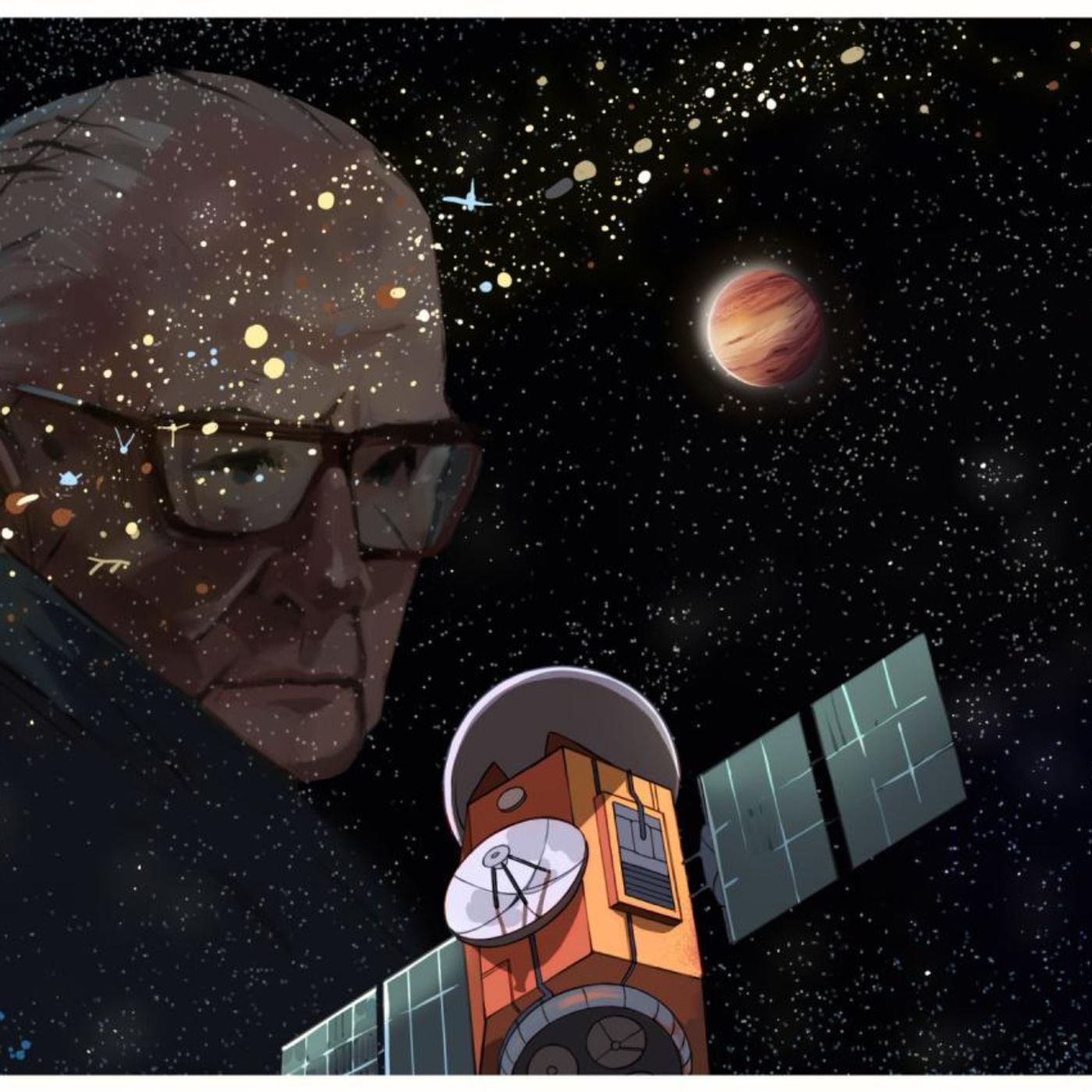
Episode 106 - Megastructures (Part III)
Aug 5, 202500:35:15Tap to summarizeSixty years ago, famed physicist Freeman Dyson theorized that advanced civilizations, in their ongoing quest to find more living space and energy, would convert their solar system into a megastructure enclosing their star. This gave rise to the concept of megastructures, many of which have been theorized over the years. These hypothetical structures are one of many technosignatures SETI researchers are on the lookout for as they probe the stars for signs of intelligent life. Hosted by Simplecast, an AdsWizz company. See https://pcm.adswizz.com for information about our collection and use of personal data for advertising.
Transcribe →
Episode 105 - Megastructures (Part II)
Jul 9, 202500:29:08Tap to summarizeNeil Blevins' artwork: http://neilblevins.com/Centauri Dreams (Paul Glister): https://www.centauri-dreams.org/ Hosted by Simplecast, an AdsWizz company. See pcm.adswizz.com for information about our collection and use of personal data for advertising.
Transcribe →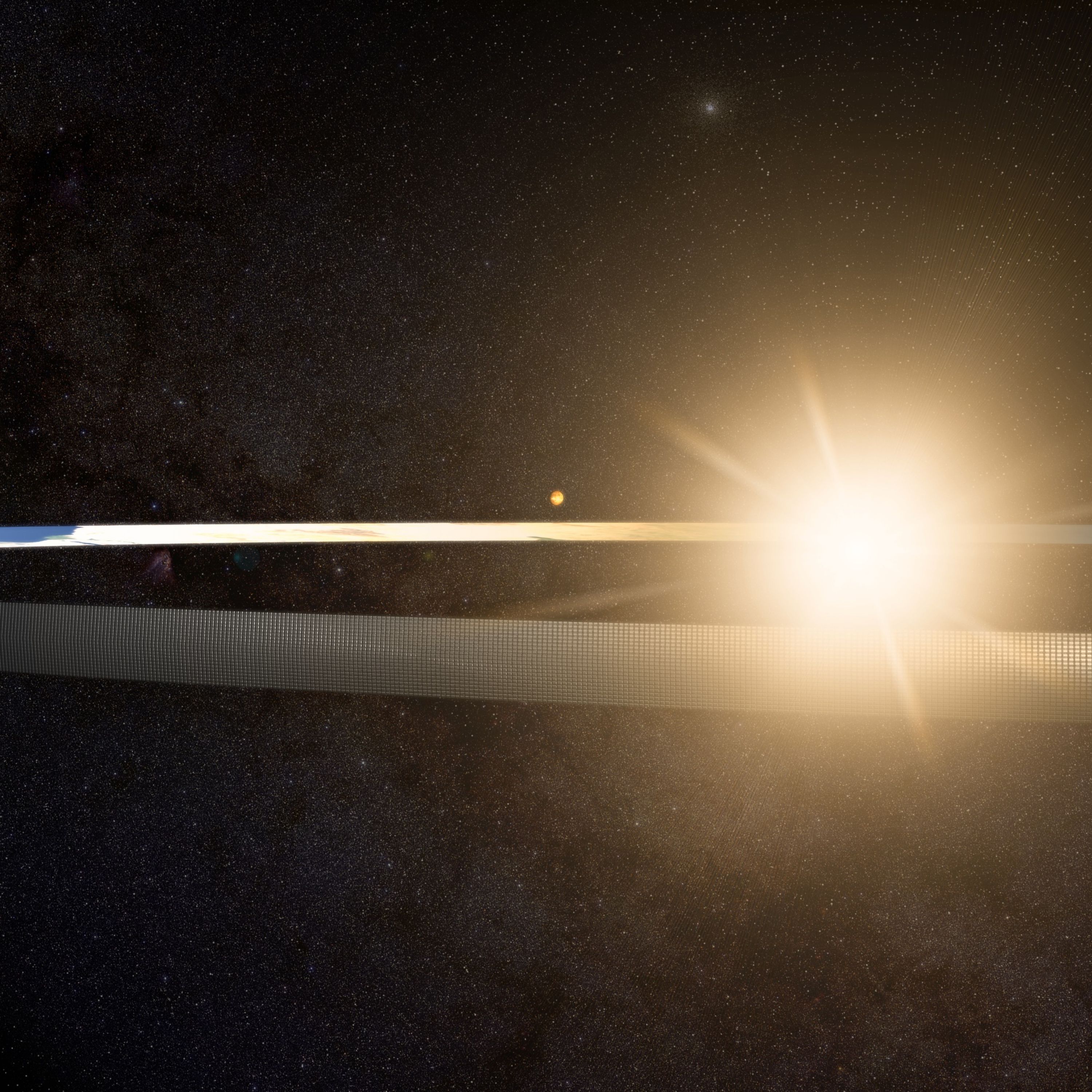
Episode 104 - Megastructures!
Jun 25, 202500:28:10Tap to summarizeIn the Search for Extraterrestrial Intelligence (SETI), scientists need to consider what technologies they should look for, including those used by a more advanced species. This has spawned the idea of Megastructures, which was first proposed in the 1960s by theoretical physicist and mathematician Freeman Dyson (who proposed the Dyson Sphere). Since then, many variations and other possible Megastructures have been proposed, all of which are fascinating and fun to think about! Hosted by Simplecast, an AdsWizz company. See https://pcm.adswizz.com for information about our collection and use of personal data for advertising.
Transcribe →