← Story Pirates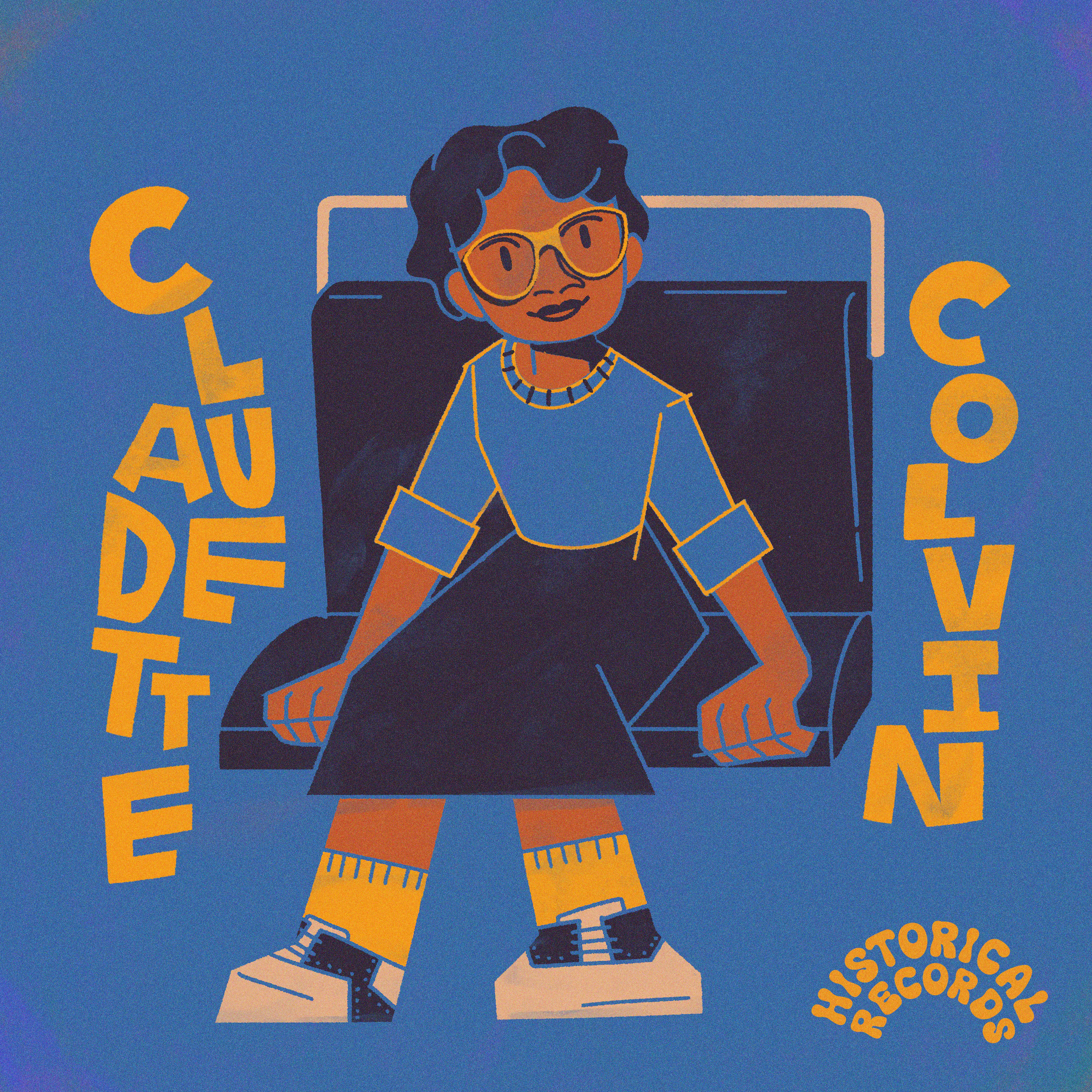
Story Pirates
Historical Records: Claudette Colvin
00:34:00
In this full episode of Story Pirates’ brand new show, Nimene creates a stirring hip-hop track about the civil rights activist Claudette Colvin, who, as a teenager, refused to give up her seat on an Alabama city bus months before Rosa Parks’ famous protest.
Loading summary
Transcript175 lines
- [00:02]
Lee Overtree
Hey, Story Pirates podcast listeners. Lee here. Now, some of you know that we debuted a brand new show this fall called Historical Records. It's for kids and families just like this one. It's hosted by Nimini from the Story Pirates and it's executive produced by Questlove. Historical Records showcases incredible people from history that you may not know about and turns their stories into a brand new hip hop track. If you like the Story Pirates, I am sure that you are going to love this show and it's inspiring too. Today we're presenting to you episode two of historical records about a 15 year old girl named Claudette Colvin who in 1955 refused to give up her seat on the city bus nine whole months before Rosa Parks did. And if you don't understand what any of that means, that's okay. Take a listen and you'll find out. It's really exciting stuff and grown ups. If you like the show, it would mean so much to us if you subscribe to the show, which is free and left a rating and review. Those things really help new people find the show. I truly hope that all of you enjoy this episode of Historical Records. Coming up after a few words for the grownups.
- [01:35]
Nimini Ware
Hello listeners, it's me, Nimini. I'm here in my top secret underground bunker. As usual, I'm with my team of sound engineer raccoons. Tina, don't be rude. Say hello. Now follow me everyone. And just a heads up, I walk very quickly. Some say that the way I walk is nearly running. But we have no time to waste because today's historical figure is Claudette Colvin. Luckily, the conditions for historical research are perfect. It's a beautiful day inside my top secret underground bunker. It might even be a beautiful day outside my top secret underground bunker. To be honest, I wouldn't know. I haven't been outside in weeks. What?
- [02:19]
Tina
Tina, that's crazy.
- [02:21]
Nimini Ware
You want me to go outside right now? Why would I do that? Wow, Tina, when you're right, you're right. Going outside is critical for my mental health. We have a lot to do, but I should take a quick moment to look outside and feel the sun on my face. Okay, I'll just peek out this emergency exit and.
- [02:45]
Disembodied Robot Voice
The alarm has been tripped.
- [02:47]
Nimini Ware
Why did I do that? Historical Records, you are now listening to Historical Wrecker. To make history, you got to have struggle. To make history, you got to show poise. Cannot be quiet, Loud as a riot. To make history, you gotta make some noise. Listeners, welcome back to Historical Records where we conduct highly experimental experiments combining history and hip hop. Today's episode is about the trailblazing civil rights activist Claudette Colvin. Also, I just tripped the alarm.
- [03:29]
Disembodied Robot Voice
The alarm has been tripped. Maybe an intruder.
- [03:33]
Tina
No, no, no.
- [03:34]
Nimini Ware
There's no intruder. It was me.
- [03:35]
Disembodied Robot Voice
I cannot take your word for it.
- [03:38]
Nimini Ware
Oh, come on. Disembodied robot voice.
- [03:41]
Disembodied Robot Voice
Please reset my system in one minute or the authorities will be called.
- [03:47]
Claudette Colvin
Oh no.
- [03:48]
Nimini Ware
I hate bureaucracy. Also, one minute. That's not a lot of wiggle room. And I don't even know where to turn off the security system. Tina, what are we gonna do? Wait, we have a security center. I passed it. That must be where we have to turn this thing off. If I'm remembering correctly, it's directly below us, about 40 stories down. Come on, raccoons, we'll take the stairs. You're right. We won't get there fast enough. Brilliant idea, Tina. We'll jump down the garbage chute and it'll take us straight there. Raccoon, you go first. Me? Now to fold myself in half and fit into the garbage chute. I really hope I fall onto something. Ugh, soft. Oh, that's nice, Tina. How nice is this? Am I right? Okay, no time. We gotta turn this thing off.
- [04:50]
Disembodied Robot Voice
You have 20 seconds to reset the system.
- [04:54]
Nimini Ware
Ah. Alright, let's open up the breaker and see what we're working with. Oh no. That is a lot of plugs and wires.
- [05:02]
Disembodied Robot Voice
Do not unplug the wrong wire.
- [05:05]
Nimini Ware
Not good. Tina, any ideas? Help.
- [05:10]
Mama
I got you, honey.
- [05:12]
Nimini Ware
Mama, what are you doing here?
- [05:14]
Mama
Well, sweetie, for one. I thought I helped you turn off the alarm. Trust me, you do not want to deal with all that paperwork.
- [05:20]
Nimini Ware
You're right about that.
- [05:21]
Mama
I just got to pull out the right plug.
- [05:24]
Roxane Gay
Ha.
- [05:24]
Nimini Ware
I did not see this coming. Mama, you sure you know which one to pull?
- [05:28]
Mama
It's this one, I think.
- [05:31]
Disembodied Robot Voice
Successful shutdown.
- [05:36]
Nimini Ware
You did it.
- [05:38]
Mama
Now. Give me a second. I gotta boot it back up. We don't want any intruders getting in here.
- [05:44]
Disembodied Robot Voice
System reset. Intruders don't stand a chance.
- [05:49]
Nimini Ware
Mom, how in the world did you know how to do that?
- [05:51]
Mama
Honey, I set up the whole security system.
- [05:54]
Nimini Ware
You did?
- [05:55]
Claudette Colvin
Yes.
- [05:56]
Mama
You had a lot on your plate at the time.
- [05:58]
Nimini Ware
Okay, I want to hear way more about that, but right now I'm running a. And I have to track down one of my historians.
- [06:04]
Mama
Of course.
- [06:05]
Nimini Ware
I'll see you later. Okay, ma.
- [06:07]
Mama
Bye, honey. I'm proud of you.
- [06:10]
Nimini Ware
Listeners, keep up with me. We're walk running to the library. And while we're on the move, I need to level with you. The good news is that I have a truly sick beat lined up for today. The slightly less good news is that I really do not know much about today's historical figure. I mean, I know Claudette Colvin was a part of the civil rights movement, fighting for equal rights for black people in America, but obviously I need more than that. And here we are at the gigantic library. Gosh, I love it in here. So now we just need to find Lee so she can give us some historical help.
- [06:44]
Claudette Colvin
Help.
- [06:45]
Nimini Ware
That was a weird echo that sounded nothing like me. Anyway, like I was saying, because I don't have enough info right now, I guess you could say I'm stuck. I'm stuck. Okay? I can't be the only one hearing that bad echo that sounds nothing like my voice.
- [06:58]
Claudette Colvin
Nimini, I'm not an echo. It's me, Lee. I'm trapped under a giant book.
- [07:03]
Nimini Ware
Whoa. Look at the Gian book. I'm coming. One, two, three, left. Phew.
- [07:13]
Claudette Colvin
Oh, that is much better.
- [07:15]
Nimini Ware
Lee, I know you like to bury your head in a book, but that was a bit much.
- [07:19]
Claudette Colvin
It was actually really informative. Until the emotional weight of history and the actual weight of that huge book became too much. Anyway, are you ready to immerse yourself in history?
- [07:32]
Nimini Ware
As long as you don't mean trapping ourselves under that book, absolutely.
- [07:36]
Claudette Colvin
Well, then, step into the history simulator.
- [07:42]
Nimini Ware
Leigh, with respect, I wish the history simulator didn't look like a gooey alien pod.
- [07:48]
Claudette Colvin
I'll consider that feedback for my next simulator.
- [07:52]
Nimini Ware
Okay, where are we headed?
- [07:54]
Claudette Colvin
To see a very brave young woman who refuses to give up her seat on the bus. Claudette Colvin.
- [08:00]
Nimini Ware
Wait, wait, wait, wait. I thought that was Rosa Parks.
- [08:03]
Claudette Colvin
Rosa Parks refused to give up her seat, but Claudette Colvin did it first.
- [08:08]
Nimini Ware
Well, that's a twist. I had no idea.
- [08:10]
Claudette Colvin
You know what? Before we go visit Claudette Colvin, let's bop around a bit, get the full context.
- [08:16]
Nimini Ware
I like it.
- [08:17]
Claudette Colvin
1964, here we come.
- [08:25]
Nimini Ware
Lee, are we on a live TV set?
- [08:28]
Claudette Colvin
You bet we are.
- [08:30]
Lee Overtree
Cool.
- [08:31]
Nimini Ware
Look at those four dudes in suits.
- [08:33]
Claudette Colvin
Those four dudes are the Beatles, and this is their USA Debut on the Ed Sullivan. There was so much exciting stuff at this time.
- [08:46]
Nimini Ware
You gotta warn me when we're taking off, Lee. Also, where are we now? What are all these buttons? Houston, we are go for launch. Lee, are we on a spaceship?
- [08:56]
Claudette Colvin
Not just any spaceship. The first one to ever land on the moon.
- [09:00]
Nimini Ware
Um, actually, Houston. Hold on a second. It seems a weird alien pod just.
- [09:04]
Lee Overtree
Appeared on our spaceship.
- [09:06]
Claudette Colvin
Uh, whoops. We gotta go. Nimini, we're taking off to March 25, 1964.
- [09:11]
Stella
Five.
- [09:17]
Nimini Ware
Lee. This crowd we're in is huge. There must be 25,000 people. And we appear to be marching toward that official looking building.
- [09:27]
Claudette Colvin
Incredible. Guess, NIMINI, there are 25,000 people, and that building is the Alabama State Capitol in Montgomery.
- [09:34]
Roxane Gay
Hmm.
- [09:35]
Nimini Ware
Why do I feel like we're witnessing one of the biggest moments of activism in the civil rights movement?
- [09:41]
Claudette Colvin
Because we are. You see, four days ago, about 3,000 people had gathered in Selma, Alabama, 54 miles away, and began the march to the Capitol.
- [09:51]
Nimini Ware
That's a long march. And you're saying most of this crowd joined the march along the way?
- [09:57]
Claudette Colvin
Yeah. For four days, people came out all along the march route dressed in their Sunday best to sit on their porches and wave at the marchers, cheering with support and admiration. And at each town, more marchers of all ages join the group, waving American flags and making front page headlines in the newspapers.
- [10:15]
Nimini Ware
And once this huge crowd gets to the Capitol, what do they do?
- [10:19]
Claudette Colvin
They're going to deliver a petition signed by black voters demanding an end to discriminatory voting registration practices.
- [10:27]
Nimini Ware
Wait, so you mean to tell me that even though black people have the right to vote in 1964, some people would still try to stop them from voting?
- [10:36]
Claudette Colvin
Exactly. Many states would use racist strategies like intentionally confusing and misleading literacy tests to prevent black voters from successfully registering.
- [10:47]
Nimini Ware
That's horrible.
- [10:48]
Claudette Colvin
It was, which is why activists were organizing and fighting to draw attention to their cause.
- [10:53]
Nimini Ware
And luckily, this march did just that. It did.
- [10:57]
Claudette Colvin
But even that was a struggle. The first two times they attempted a march to Montgomery, they were met with violent resistance from hecklers and state police. Awful images broadcast on Black and white TVs shocked people in households across the country and even motivated the president to provide U.S. army troops and the Alabama National Guard to protect the marchers on their third attempt.
- [11:18]
Nimini Ware
It sounds like it took so much organizing and fighting. Um, is that Martin Luther King, Jr. Giving a speech?
- [11:27]
Claudette Colvin
Indeed it is.
- [11:28]
Nimini Ware
Oh, I know this part. Oh. And it gives me chills every time. This is where Dr. King says, I come to say to you this afternoon, however difficult the moment, however frustrating the hour, it will not be long, because truth, crushed to earth, will rise again.
- [11:49]
Tina
How long?
- [11:50]
Nimini Ware
Not long, because no lie can live forever. How long? Not long, because you shall reap what you sow. How long? Not long, because the arc of the moral universe is long, but it bends toward justice.
- [12:08]
Claudette Colvin
Wow, Nimini, you really know that speech?
- [12:11]
Tina
Mmm.
- [12:11]
Nimini Ware
Absolutely. I have the whole thing memorized. But where does Claudette Colvin come into this? And how did a southern city like Gummery, Alabama, become the center for the civil rights movement?
- [12:23]
Claudette Colvin
Phenomenal questions. Let's stay in Montgomery, but go back a little further and take a look.
- [12:33]
Nimini Ware
I know where we are, but I don't know when we are. And why are black and white people drinking from different water fountains over there?
- [12:42]
Claudette Colvin
It's 1955, 10 years before the Voting rights march. A time when people were separated by the color of their skin. This is called segregation. And according to a set of laws called Jim Crow laws that have been around since the end of the Civil War, it's legal. That's about 100 years of laws invented to make life harder for black Americans. There are separate drinking fountains, elevators, hospitals, bathrooms and break rooms, swimming pools, churches, lunch counters. The list goes on and on.
- [13:14]
Nimini Ware
And buses. Black Americans were forced to sit in the back of buses.
- [13:18]
Claudette Colvin
And in Montgomery, 40,000 black residents ride the buses. That's 75% of the total riders in the city. And yet they are legally forced to enter through the overcrowded back door of the bus, sit in the back seats, and give up their seats for any white passengers who want to sit down.
- [13:36]
Nimini Ware
But if we're in 1955, didn't the federal government at least order schools to be integrated in 1954? Everyone should be allowed to go to school together, right?
- [13:47]
Claudette Colvin
Absolutely. That's what the law said. But the reality in Montgomery and almost everywhere in the south is that some white people were still fighting to keep people apart. And the schools black children are forced to attend are almost always the least funded with the poorest quality supplies, books and classrooms.
- [14:05]
Nimini Ware
How are those kids supposed to learn?
- [14:07]
Claudette Colvin
Luckily, there's an organization called the naacp, the national association for the Advancement of Colored People. The branch here in Montgomery was the the first in all of Alabama and was founded way back in 1913.
- [14:22]
Nimini Ware
Cool. I know about the NAACP. Their goal is to educate and organize folks in the community to fight back against segregation and other types of discrimination so that black people can get the respect and opportunities they deserve.
- [14:38]
Claudette Colvin
Precisely. And recognizing the needs of black children in Montgomery, the NAACP started a youth group. And guess who they put in charge of shaping young minds?
- [14:50]
Nimini Ware
Rosa Parks.
- [14:52]
Claudette Colvin
That's right. And what's really wild is that the thing Rosa Parks is most famous for was actually done by a 15 year old girl from her youth group.
- [15:03]
Nimini Ware
Claudette Colvin.
- [15:05]
Tina
Haha.
- [15:05]
Claudette Colvin
Bingo.
- [15:06]
Nimini Ware
Wow. It's all coming together. But Lee, why didn't Claudette Colvin get to be as famous as Rosa Parks?
- [15:14]
Claudette Colvin
Well, even Though she was the first to do it, the movement knew that she was was super young and had other things going on, like being a kid. So the movement chose to set up Rosa Parks to be nationally recognized for protesting on a bus.
- [15:30]
Nimini Ware
I truly had no idea about all that behind the scenes stuff that made the civil rights movement possible.
- [15:37]
Claudette Colvin
Yeah, even though Rosa Parks famous protest seems spontaneous. Everything was meticulously planned. Same with the march to Montgomery. It took several tries and a ton of organizations.
- [15:50]
Nimini Ware
Thank you, Leigh. That was incredibly helpful. I think I have enough information now for the song. Will you take us back to my top secret bunker?
- [15:58]
Claudette Colvin
Of course.
- [16:03]
Mama
We'Re back.
- [16:04]
Nimini Ware
Yes. Oh, and I'm late for a recording session. But luckily I brought my skateboard helmet and knee pads and am ready to roll by Lee.
- [16:13]
Claudette Colvin
Thank you, Dynamity.
- [16:15]
Nimini Ware
Okay, listeners, keep up. We are once again on the move. Left, right, down a set of stairs. Hop, hop, hop, hop, hop, hop, hop, hop. Oh, oh, yeah. Still got it. And here we are. Oh, look, the musicians are ready to go. Time to make another epic shining song for the ages. And this time, Nimini's on the mic. Claudette. That's my name. Ms. Alabama Montgomery, to be specific. Hope you don't mind these honorifics. 0905 39. The birth date of a future leader, civil rights activist, a catalyst to be. Montgomery Bus boycott began with me. Montgomery Bus Boycott. That is correct. A lot of people don't know about this juicy tidbit. Couldn't be the face of the movement because I wasn't rich and because of my complexion I'm never in the press. Just think, I was only 15, following my routine in a segregated seat. Years after that occurrence, I couldn't find work and I moved to New New York. And you got into nursing.
- [17:18]
Tina
It began with me nine months before arose There was Claudette Colby. And it began with me. Did you know? Did you know I wouldn't give up my seat? Nine months before Rosa it was Claudette Goldman.
- [17:35]
Nimini Ware
Let me start from the beginning. My dad left. Mama's wallet was thinning. See, I was born Claudette Austin. Then I went to live with my uncle and my aunt and that's how I got the name Colvin. Had a little sister, E. I was the oldest. Lost her Napoleon. God only knows my pain. I was sociologically estranged. Booker T. Washington High School. I started going there in 1952. I was in the city, a place I couldn't walk to. So riding the bus is what I had to do. It was 1955. I didn't give up my seat they called the police and they arrested me But I had been learning about my ancestry and then they use counselor with naacp So I said I know my constitutional rights. There is an empty row beside me so this isn't right. Jim Crow says blacks can't sit across from the white.
- [18:14]
Tina
We always gotta be behind them.
- [18:16]
Nimini Ware
And this I don't like pulled me off the bus. I didn't fight or bust I didn't feel fear cause I'm a. I was young and tough they put me in an adult cell with no phone call but my friends went to find my mom and it began with me.
- [18:28]
Tina
Nine months before Rosa it was Claudette Coburn and it began with me did you know? Did you know I wouldn't give up my seat? Nine months before Rosa it was Claudette Corbin.
- [18:43]
Nimini Ware
One year later we had brought her versus Gayle. I was one of five plaintiffs talking about how the law had failed all of us and we wasn't gonna take it. The federal court, they made, the Supreme Court, they made their decision. They said bus segregation was against the constitution and they ended it permanently. And it began with me.
- [19:02]
Tina
Nine months before Rosa there was Claude Covid and it began with me. Did you know? Did you know? I wouldn't give up my seat? Nine months before Rosa it was Claudette.
- [19:15]
Nimini Ware
Give me Claudette, that's my name. Miss Alabama born and raised. 0905. 39. Oh, I almost forgot. The city of Montgomery, Alabama, declared March 2nd Claudette Colvin Day. We'll be right back after a few words. For the grownups.
- [19:50]
Stella
A new year means new opportunities. And if you've been thinking about starting your own business, let this be your sign to take the leap. Of course, this decision comes with a lot of questions like how do I get started? How do I come up with a brand? How do I sell stuff to people? What am I even going to sell? Well, if you have all those questions, you can take a deep breath because Shopify's got you. Shopify makes it simple to create your brand, open for business and get your first sale. With Shopify, you can get your store up and running easily with thousands of customizable templates. No coding or design skills required. All you need to do is drag and drop. Their powerful social media tools let you connect all your channels and create shoppable posts to help you sell everywhere people scroll. And Shopify makes it easy to manage all the details like shipping, taxes and payments from one single dashboard, allowing you to focus on the important step stuff like growing your business. The best time to start your business is right now. And with Shopify, your first sale is closer than you think. Established in 2025. Has a nice ring to it, doesn't it? Sign up for your $1 per month trial period at shopify.com realm all lowercase go to shopify.com realm to start selling with Shopify today. Shopify.com realm.
- [21:14]
Claudette Colvin
Wow, that was incredible.
- [21:17]
Nimini Ware
And while the circumstances couldn't be more different, it's really got me thinking about my own life. Funny how history can inform the present, huh listeners? Hey Tina, do you know where my mom is? Ah, of course, the personal history room. Where else would she be? Yes, Tina, I know we have an interview lined up in five minutes, but I've gotta do something first. Now, do you mind if I borrow your scooter? Thanks, Tina. Right, left, Up a set of stairs. Hop, hop, hop, hop, hop, hop, hop, hop, hop, hop. Oh yeah. Still got it. And here we are. Hi mom.
- [21:58]
Mama
Hey sweetheart.
- [21:59]
Nimini Ware
Whatcha doing in here?
- [22:00]
Mama
Just looking at old pictures. Look at this one.
- [22:04]
Nimini Ware
Aw, it's me as a teenager.
- [22:06]
Mama
Honey, that's a picture of me.
- [22:09]
Nimini Ware
Wow, we really do look alike, huh?
- [22:12]
Mama
Strong genes, baby.
- [22:13]
Nimini Ware
Anyway, mom, I wanted to ask more about you setting up the security system. I still can't believe you did that.
- [22:20]
Mama
Well, getting a top secret bunker up and running is no small task. And I was thrilled to be able to pitch in. So I pulled some permits, got the security system running, hired Tina and the other raccoon and taught them how to use all the sound equipment. Just some behind the scenes details.
- [22:40]
Nimini Ware
You low key paved the way for my dream.
- [22:43]
Mama
You're not the first person in this family to love history and hip hop. And I thought your idea to combine them was genius.
- [22:51]
Nimini Ware
I had no idea you did so much to make this happen.
- [22:54]
Mama
In my experience, whenever something big happens, it takes a lot of people to pull it off.
- [23:00]
Nimini Ware
I'm learning that.
- [23:01]
Mama
Yeah, and not everyone can be the face of a movement. Some people have to set up the security system.
- [23:09]
Nimini Ware
Thanks mom. I love you and I really appreciate your support.
- [23:14]
Mama
I love you too.
- [23:15]
Nimini Ware
Oh look, my old rollerblades. I'll use those to get to the interview.
- [23:20]
Mama
Don't forget your helmet. Here.
- [23:22]
Nimini Ware
Great call. OK listeners, it's time to go meet two totally extraordinary people. Down the hall and left and right. And avoid the stairs. This time by using the elevator. Not sure why I didn't take the elevator before, but you know, you live and you learn. And speaking of learning, we have arrived at the room where I have video calls. Today we're meeting Two incredible people. Hi, Roxanne and Stella. Can you kick things off by introducing yourselves?
- [23:54]
Roxane Gay
My name is Roxanne Gay. I'm a space cowboy and. No, I'm just kidding. My name is Roxane Gay. I am a writer, a teacher, and an editor.
- [24:04]
I
My name is Stella Carolina and I am six years old. My favorite thing in life is tv. Hi, Roxanne.
- [24:14]
Mama
Hi, Stella.
- [24:16]
Nimini Ware
Stella, what were you hoping to learn from Roxanne about Claudette Colvin?
- [24:20]
I
Why do kids learn about Rosa Parks but not Claudette Colvin?
- [24:24]
Roxane Gay
That's a great question, Stella. You know, there are a couple reasons. One, when Claudette Colvin refused to give up her seat to a white woman, she was a teenager. And at the time, and quite frankly, even now, people don't always take kids seriously. So Rosa Parks, when she refused to give up her seat, she was older, she was a professional. She had, you know, the right skin tone, she had the right kind of hair. And so leaders of the civil rights movement thought that Rosa Parks might be a better person to represent the entire move. You know, that doesn't take away from what Claudette Colvin did.
- [24:59]
I
How much has changed with civil rights since Claudette Colvin was a kid?
- [25:05]
Roxane Gay
When Claudette Colvin first refused to give up her seat on that bus in Alabama, things were really different. And we still deal with racism and other forms of bigotry now. But most of the laws that made it possible for Claudette Colvin to be arrested no longer exist. We no longer live, ideally in a segregated society. Everyone gets to live together and share our communities together. We are more able to point out injustice when we see it. And I'll tell you what, cell phone cameras have done an incredible amount of good because now we can provide evidence of the issues that we deal with, particularly with police and other sort of forms of public racism that we see on a day to day basis. So things are getting better, but we shouldn't get comfortable because we have so.
- [25:55]
I
Much left to do do, like how much to do.
- [26:00]
Roxane Gay
You know, I think about that every single day. Every single day. I wonder, like, is this something we're going to solve in my lifetime? I will say that we have to continue to fight for civil rights until lawmakers can no longer decide which rights we're allowed to have. And so right now we have quite a ways left to go, but at least we know where we're headed.
- [26:26]
Nimini Ware
Stella, do you have any questions for Roxanne about her work or career?
- [26:30]
I
How are you, Roxanne, part of making change now?
- [26:34]
Roxane Gay
Well, one of the key things I try to do in my work is to talk about the issues that I find to be most pressing in ways that everyone will be able to connect to. And I always try to bring attention to the people who are taking the really big risks by protesting, sometimes even having to engage with law enforcement and doing some of the really challenging things that can come along with living the life of an activist.
- [27:03]
I
How can I be an activist?
- [27:05]
Roxane Gay
You know, one of the best ways that you can be an activist, especially at your age, is to pay attention to the news and ask questions about the world and the people that we elect as our leaders and the issues that we should all be caring about. Out.
- [27:22]
Nimini Ware
Wow. Does this mean that anyone can be an activist?
- [27:25]
Roxane Gay
Anyone can be an activist. All you have to do is care about yourself and other people and the world that we live in. If you do that, you are already well on your way to being an activist.
- [27:38]
I
I already do that, yes.
- [27:40]
Roxane Gay
See, I mean, look at you. You're an activist already, and I think that's amazing. I think more people should be willing to be an activist because there are a lot of problems in this world and it's gonna take all of us to solve them.
- [27:52]
Nimini Ware
This has been so great. Thank you both for being here.
- [27:56]
I
Thank you for answering all my questions.
- [27:58]
Roxane Gay
Well, thank you for asking the questions. It's been just the highlight of my day talking to you Stella.
- [28:07]
Nimini Ware
Listeners. Thanks for joining in today and for going on a journey with me to learn about the great Claudette Colvin and a giant. Thank you to today's guest, Stella and Roxane Gay. Remember parents and teachers. You can download a free activity related to today's episode by visiting storypirates.com historicalrecords we'll be back next week to make another historical record. Until then, remember to make history, you gotta make some noise. Bye.
- [28:45]
Lee Overtree
Historical Records is produced in partnership Story Pirate Studios, Questlove's 215 Entertainment. John Glickman and iHeart Podcasts. Executive produced by Amir Questlove Thompson, John Glickman, Lee Overtree and Benjamin Salka. Executive produced for iHeart podcasts by Noah Brown. Producers for Story Pirate Studios are Isabella Riccio, Sam Baer, Eric Gerson, Andrew Miller, Lee Overtree, Peter McNerney and Nimini Ware. Producers for 215 are Sean G, Brittany Benjamin and Zara Zolman. Hosted by Nimini Ware. Our head writer is Duke Doyle. Our historians are Gabe Pacheco and Lee Polis. Music supervision for 215 by Stroh Elliott. Scoring and music supervision for Story Pirate Studios by Eric Gerson Sound design and mixing by Sam Baer at the Relic Room in New York City. Song mastering by Josh Hahn. Theme song by Dan Foster and Eric Erson and produced by Eric Erson. Production coordination by Isabel Ericchio. Production management by Maggie Lee. The line producer for Story Pirate Studios is Glynnis Bralt. PR for Story Pirate Studios is provided by Naomi Shaw. Episode artwork by Camilla Franklin. This episode was written by Duke Doyle. The song Claudette Colvin was written by Nimini Ware and produced by Stroh Elliott, with additional production by Eric Gerson. Special guests Roxane Gay and kid interviewer Stella. This episode features performances by Barbara Curran, Tessa Hirsch, Peter McNerney, Lee Overtree and Lee Polis. Special thanks, J.T.
- [30:25]
Roxane Gay
Soo.