← Strangers on a Bench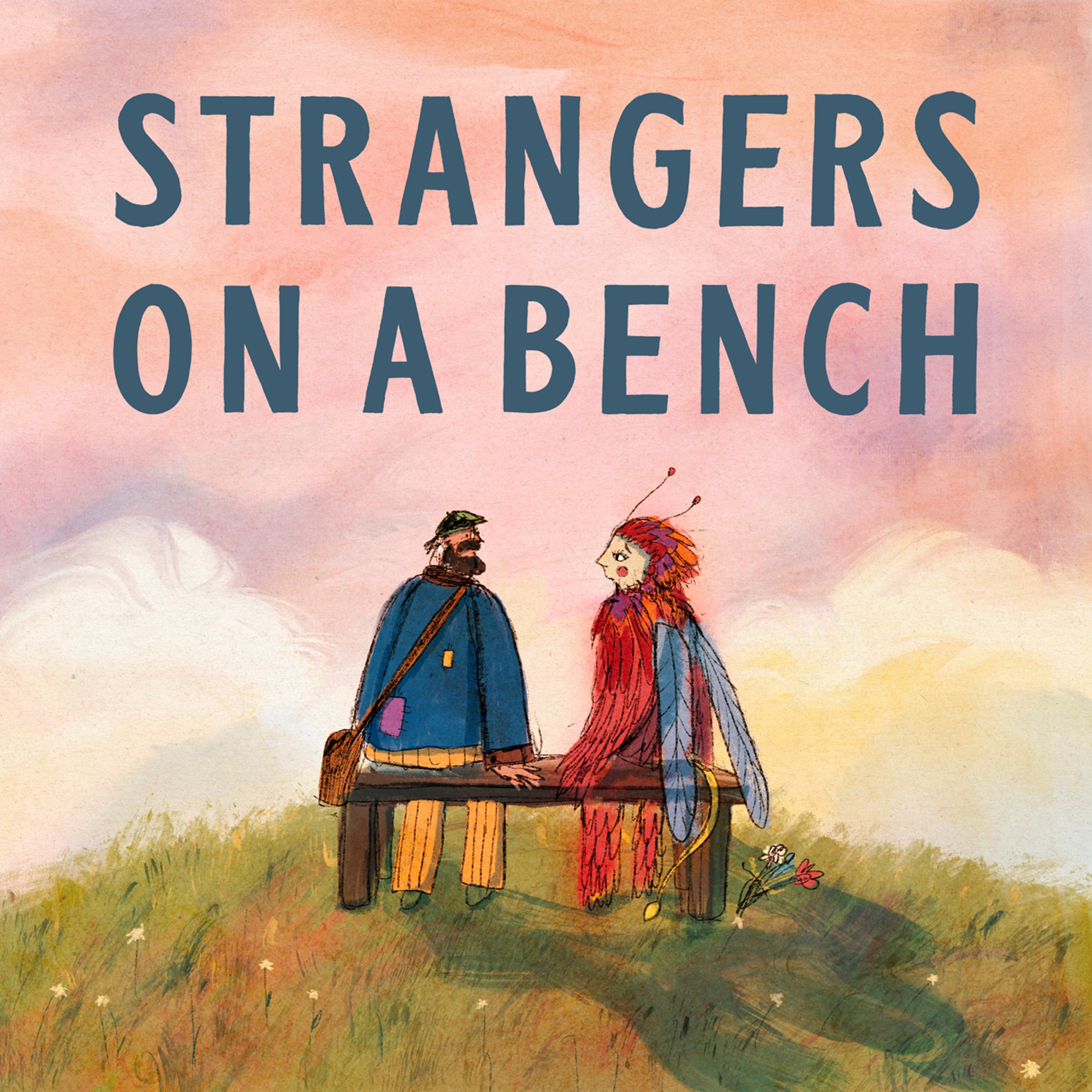
Strangers on a Bench
EPISODE 5: Michael's Tree
00:28:27
Tom Rosenthal talks to strangers on park benches, often leading to surprising revelations.
Loading summary
Transcript109 lines
- [00:04]
Host
Hello, sorry to bother you. Can I ask you a slightly odd question? I'm making a podcast called Strangers on a Bench where essentially I talk to people I don't know on benches for 10 or 15 minutes. Are you up for that? Do you want to give it a go? Do you have a favorite day of the week?
- [00:50]
John
I think Friday. I'm not really quite sure why. Maybe it's after long years of a five day week. Friday was always nice to look forward to, you know, then you were free for a couple of days at least.
- [01:13]
Host
And you still have that feeling now, even though. Are you still working?
- [01:17]
John
No, I'm retired. Thank you for asking.
- [01:22]
Host
From the days when you were working and you're looking forward to Fridays, what was a typical Friday evening that you might look forward to?
- [01:30]
John
Oh, I think it was going out to the pub with pub friends, people you knew for years. Especially in Camden Town. Yeah, that was it. It being free, you know, and been able to stay out late, have a couple of pints or more.
- [01:49]
Host
Is there one drinking establishment which you feel particular connection to from that time?
- [02:01]
John
The Black Carp.
- [02:03]
Host
Carp, the Fish.
- [02:05]
John
Black cup, a cap, Sorry, Black cat. Sorry. Black Carp. Tells you a lot about me if you know that pub.
- [02:18]
Host
I don't know that pub. Can you say anything about that pub?
- [02:21]
John
It was a gay pub and usually on a Friday night it was so busy that they had an overspill pub called the Laurel Tree in Stolfcampden High Street. It was fun. Yeah, it was fun. There was drag acts and that's how you meet people as well. When I moved to London, made lots of friends there, lots of acquaintances. Pub friends, I called them. I was taken there by a friend in London. I had come from Glasgow to work in London. It was much easier for gay people to be a bit more normal in these days. It was illegal, so you had to be careful. The first time I visited it and I saw this drag act, very, very funny.
- [03:29]
Host
Was this the first time you had seen such a thing?
- [03:32]
John
Yes, yes. They didn't have that in these days. I'm Talking about the 1950s, 60s, a long time ago. Before you were born.
- [03:45]
Host
It was before me. Can I ask why you moved to London?
- [03:52]
John
It was because of employment. I joined the civil service.
- [04:02]
Host
What did you leave behind or you had to?
- [04:05]
John
Oh, my family, my immediate family, especially my mother. She was very possessive. She didn't think I should go to London because, you know, she thought it was a wicked place. I don't know where she got these ideas from, but I was very excited. Nothing was Going to stop me, you know, just to get away from home, you know.
- [04:32]
Host
Well, I suppose if she had a possessive nature. I'm guessing you wanted to escape this nature too, right?
- [04:38]
John
I did like that, yes. And I had two brothers and a sister. I got on well with my sister, but one of the brothers, I didn't. So I was glad to get rid of him and he got married again. My possessive mother didn't want him to get married. She tried to dissuade him.
- [05:08]
Host
Did it work?
- [05:09]
John
No. Well, no, it might have done because he was very worried, you know. You think your mother. You should obey your mother, don't you? But he came to me for advice, which, you know, I thought he was my older brother and he used to bully me a bit.
- [05:29]
Host
What did he use to say?
- [05:30]
John
I said, don't be daft if you want to get married. I mean, by this time he was hitting Ill again. 30, you know. And although I knew I didn't want to get married, you know, it was normal for him and it was the right thing to do. So I think he was glad to have my support then. I loved my mother. She was all right, but, you know, she just too possessive.
- [06:01]
Host
Did she soften as she got older?
- [06:05]
John
I don't think so. She never really approved. Sometimes I feel if I had done what she told me, I would have. I don't know what I would have been doing now. Maybe working in a pub in Glasgow.
- [06:23]
Host
What does she want you to do?
- [06:26]
John
When I told her I had passed the civil service exam and I was going to London. Oh, you could get a nice job here, she said. In a warehouse or something.
- [06:48]
Host
Did she come to visit?
- [06:49]
John
I brought her down once or twice.
- [06:52]
Host
Did you ever take her to the Black Cap?
- [06:55]
John
No. No. I did tell my mother once that I was gay or homosexual. She didn't want to talk about it. Her answer was, I wish your father was here. He would know what to do. Wow.
- [07:15]
Host
Amazing. How old are you? At this point?
- [07:19]
John
I must have been about 23, 24. Just before I came to London. But she just didn't want to talk about it. And, you know, I suspect that she. She was a lesbian. Because as soon as my father died, this Auntie Mary we called her, she wasn't a real aunt, she was just a friend of my mother's. I didn't know, you know, how they became friends or anything like that, but as soon as my father died, Auntie Mary moved into our tenement flat in Glasgow and they slept in the same bed. You didn't think anything like that. And these days, as you get older, you realize.
- [08:16]
Host
So we never really found out about Auntie Mary, but she was definitely not an aunt.
- [08:21]
John
I knew her well because she came to the house a lot when my father wasn't there. My father was a seaman. He went to sea. I was very fond of Auntie Mary. She. She was a bit. Quite a clever woman. She could sew and knit and she could play the piano. We had a piano which was quite unusual. Don't know where it came from, Auntie Mary, but I had. She nursed us when we were young. Oh, wow. She helped her family a lot. But then there was a big fallout between Auntie Mary and Mother.
- [09:04]
Host
Oh, do we know what about?
- [09:07]
John
My mother had met another friend. Oh, God. Who? Another woman who liked how we drink. So my mother, she was in her 60s by this time. She'd never taken drink. They say Scots people are all drinkers, but they're not. Some are very strict non drinkers. But my mother started drinking. Am I torn? A lot of rubbish.
- [09:41]
Host
No, it's fascinating. It's brilliant. I'm very invested in Auntie Mary and her various different scenarios. So your father died when? Early 20s.
- [10:10]
John
Oh, no, my father had died when I was 12 years old.
- [10:13]
Host
Oh, sorry earlier. Can you talk to me a bit about what that was like?
- [10:22]
John
My dad was in the Merchant Navy. He travelled all over the world. I didn't really know my dad that much, but I think he was a very good. Hello, Doug. Lucky. Luck.
- [10:39]
Host
It's Lucky the dog has come to visit us.
- [10:42]
John
I'll tell you the reason as well. You've got me talking. That tree, that one there. My partner for about 25 years. His ashes are under my tree. So that's why I sit here occasionally. That was Michael.
- [11:05]
Host
Wow. Can I ask what. Why that tree?
- [11:10]
John
He worked for Camden Council, Michael. He died of hiv aids. I mean, nowadays, survivable, no problem, but these days it was a death sentence, so it was very awful. Anyway, his colleagues. He had lots of friends. He was a lovely guy, very popular, you know, I used to be quite jealous of him, but, you know, I managed to control that because he was such a nice person and he. His colleagues wanted to get a chair in Regent's park with his name on it, a memorial. But the park authorities said people just vandalise them. But you can plant a tree in his name and there's a record of it somewhere. So when I saw them planting the tree, I come up and put his ashes in. So it's a nice view. That's it? No, it's this one.
- [12:19]
Host
This one's here? Yeah.
- [12:20]
John
No.
- [12:20]
Host
Oh, the next one.
- [12:21]
John
The next one. Michael's tree, as I call it. It's an oak tree. Look at this. That's been there for about, oh, must be 20 years now. That's why I come to the sport.
- [12:42]
Host
Can you try and sum up what. Obviously that time when HIV and AIDS was kind of, you know, pervasive force, what was that like?
- [12:59]
John
Initially? It was dreadful. It was such a frightening thing because nobody knew where they blamed gay people for it, you see. And the horrible thing, you didn't want to speak about it or tell anyone. It was, you know, when he told me, and he was such a nice person, says, you know, we had bought a house together, and he says, if you want to leave, that's okay with me. I said, no, I couldn't. I couldn't do that. But it took a few years before he actually died of aids. That's the other thing. I used to bring him over. He got to the stage where he needed a wheelchair, so I used to push him around here. And he was a big, tall fellow, not easy to push.
- [13:56]
Host
That was a bit of a workout to push Michael around.
- [14:00]
John
But, you know, you ask me what it was like, it was just so isolating and frightening. It's very upsetting because you keep thinking, how long is he going to live? When's he going to die? And it gets worse and worse. Anyway, it's difficult to see. It's like a bit when I, long before I even met Michael, when I was young and I realized I was gay in Glasgow and I knew it was illegal and the police could arrest you. I mean, fancy having to live with that kind of thing.
- [15:01]
Host
So now we've got. Maybe now we can return to Father.
- [15:05]
John
He died when I was about 12 years old. I didn't really know him, but what I do know of him now, he was a very good man. He said to me, you should go to sea. I remember him telling me that. But don't work in the engine room, he said, get a job as a.
- [15:26]
Host
Chef, because what's safer?
- [15:29]
John
Or. Well, yes, engine room was dirty. And, you know, he must have liked me. He must have loved traveling because, you know, I think he liked his job. When he was telling me I should join the navy, I tried to, but my eyesight wasn't good enough then.
- [15:49]
Host
So you could have had a long career in the navy if it wasn't.
- [15:53]
John
I could have done that. Would have been my first choice. He died of an industrial disease. Which. Which wasn't recognized as an industrial disease in these days. It was called mesothelioma, a dreadful lung disease which comes from asbestos. And in these engine rooms and ships, you know, all the pipes and engines are lagged with asbestos. And he must have been breathing that in. Nowadays, people will get quite a bit of compensation. Yeah.
- [16:32]
Host
Did you go and visit him in a hospital when he was ill?
- [16:35]
John
We were taken there. I didn't realize at the time, but they must have said, you know, he's dying and he wanted to see his family. I remember standing round the bed and he was sitting up. There was no way they could treat it or cure it. It's a terrible form of cancer, really. Anyway, now I believe in these days, I thought, oh, he was the bad one. And my mother was, you know, I think a boy always loves her mother anyway. He. I think he was a nice man and my mother was a bit annoying. That's my opinion.
- [17:27]
Host
Yeah. Do you. You mentioned you remember being around his bed at the end.
- [17:33]
John
Yes.
- [17:34]
Host
Do you remember at all what was said?
- [17:37]
John
He said, look after your mum or something. I remember him saying that.
- [17:43]
Host
And you all did look after her after that?
- [17:46]
John
Yes, I did, I did. I did as much as I could. Although, you know, I left her. And she said, oh, you know, families should stick together. That was one of her favourite.
- [18:03]
Host
Favourite nights.
- [18:04]
John
But if I'd stuck with her, I wouldn't have been able to help her the way I did.
- [18:10]
Host
What was the end of her life like? Or towards the General?
- [18:14]
John
She lived to quite an old age. She was 80. She used to say every new year on, never see another new year, but she saw quite a few.
- [18:35]
Host
So we've done lots of the past. What is currently bringing you?
- [18:40]
John
Well, I like travelling. I call myself a sort of wanderer. I worked until I was 80 years old and since I've retired, I've been to India and America, into railing in Europe, I call it my grandpa gap year I'm having now. I never went to university. You left school and you had to earn your keep. I've made friends in Morocco. I think that's my favourite country, actually.
- [19:26]
Host
Now, is there anything about their way of life that you've tried to implicate here?
- [19:34]
John
I don't think so, really. I just like the way I admire the faith they have, you know, how strong it is. In a funny way, I end them because I'm a doubting Thomas. I like the Bible, I like the stories. And because of Morocco, I read an English translation of the Quran and it's so similar to the Bible really. Henry, come on, go.
- [20:14]
Host
A couple more questions for you. Okay, if you can handle it. Well, do you want a light one or an easy. Oh, sorry, Light or easy? Light or heavy? Light or heavy question? That's the big question.
- [20:27]
John
Good things are good news for good news.
- [20:32]
Host
What was Glasgow like in the age in which you were a child there?
- [20:39]
John
It was a big dirty industrial city. I have romantic ideas about it. I mean it was a good life. I was always happy as a child. Trump cars. I liked going to school. I was quite lucky as a child because my father seem to be able to provide for as much better than the children I went to school with. I remember some of them, you know, not even having shoes. Living in one room apartments in a tenement house. I was in a tenement house but it was. It had its own bathroom which was quite a thing in these days. And there was lots of street games were played. The trams had different colours, a band which told you where they were going because a lot of glasswares just couldn't read. So the colour told them that that's where the car was. So there was a game that we used to play, guessing, you know the next tram has come. The war.
- [22:13]
Host
I've got a thousand more questions I could ask. Any questions you would ask yourself. Is that a weird one? Any question you would like to answer or something that's on your mind.
- [22:30]
John
I find it difficult. I wish I was a bit stronger myself. I found it difficult to say no.
- [22:37]
Host
Well, you didn't say no to me. You could have obviously did find it difficult to say no. But maybe that's.
- [22:43]
John
Well, there you are, that's an example.
- [22:46]
Host
We can't go back now. Next time you can turn me down.
- [22:51]
John
I'm getting better at saying no nowadays, you know, when I want to.
- [23:07]
Host
You, it's fair to say you are. You're very fresh but you're towards the latter end of your existence rather than at the beginning. And we fair to say that. Oh yes, of course, yes, you're still going strong. So I don't want to say you're. I mean you're, you know, you're.
- [23:23]
John
To my doctor. Why have I. Why am I still here? Because I used to drink a bottle of vodka a day. A day. I smoked about two packets of cigarettes every day.
- [23:34]
Host
A bottle of vodka a day for.
- [23:36]
John
A while I got addicted to alcohol. I managed to stop. Oh no, no. I used to have it with vodka and coke or vodka and water. I was not drinking because it was a pleasant Drink. It was to make me feel better, but in fact, after I stopped, I discovered it was, you know, I feel better without it and I can go to a pub now and not drink anything, but still enjoy it very much.
- [24:16]
Host
So now you're in your latter stages, shall we say? What would you say to anyone in the first half about any words of wisdom? Now you're in the second half. What would you say to someone in the first half?
- [24:36]
John
Just. I would emphasize the importance of relationships and being honest. As honest as you can. Try to fight envy and jealousy, you know, if you feel that coming, try and resist it. Trust. Try and trust people as much as you can because, you know, they respond to it. Trying to learn things, you know, a language or music. It's not that I'm a good example of that, but, you know, it's one of my regrets that I never learned another language properly and I didn't learn to play a musical instrument. That's what I regret. It's not too late now.
- [25:38]
Host
It's not. You could do it. You can still do it. What instrument would you do?
- [25:42]
John
A piano accordion.
- [25:44]
Host
I think. Maybe this is your sign. You should do it.
- [25:48]
John
Why not?
- [25:49]
Host
What is there to lose?
- [25:54]
John
I don't want to annoy the neighbors.
- [25:56]
Host
Oh, you can annoy the neighbours. They'll understand. Do it in the park. Do it here. Oh, wonderful. Well, thank you so much for talking to me.
- [26:05]
John
That's all right. I hope.
- [26:09]
Host
You did a.
- [26:10]
John
It would be useful for you. It was wonderful. Rubbish.
- [26:13]
Host
Oh, no talking. It was wonderful.
- [26:23]
Michael
When I go Remember me through little things the memories, the laughter spill the local park A kiss, a dance shared in the dark When I go take time to grieve Then find the will to plant a tree and meet me there among the leaves the summer air is calling me Seasons come and seasons go what happens next we cannot know I held you then I hold you still and in the breeze I always will When I go Remember me and from you your love will grow the.
- [27:50]
John
Tree I hope you get some. You know, other people.
- [28:02]
Host
Oh, I have to. Don't worry, it's not just you. You're going to have good company.
- [28:07]
John
I would like to hear some of the others. Or you will.
- [28:14]
Host
The podcast will be called Strangers on a Bench.
- [28:17]
John
Strangers on a Bench. I'll look out for that.