← Strangers on a Bench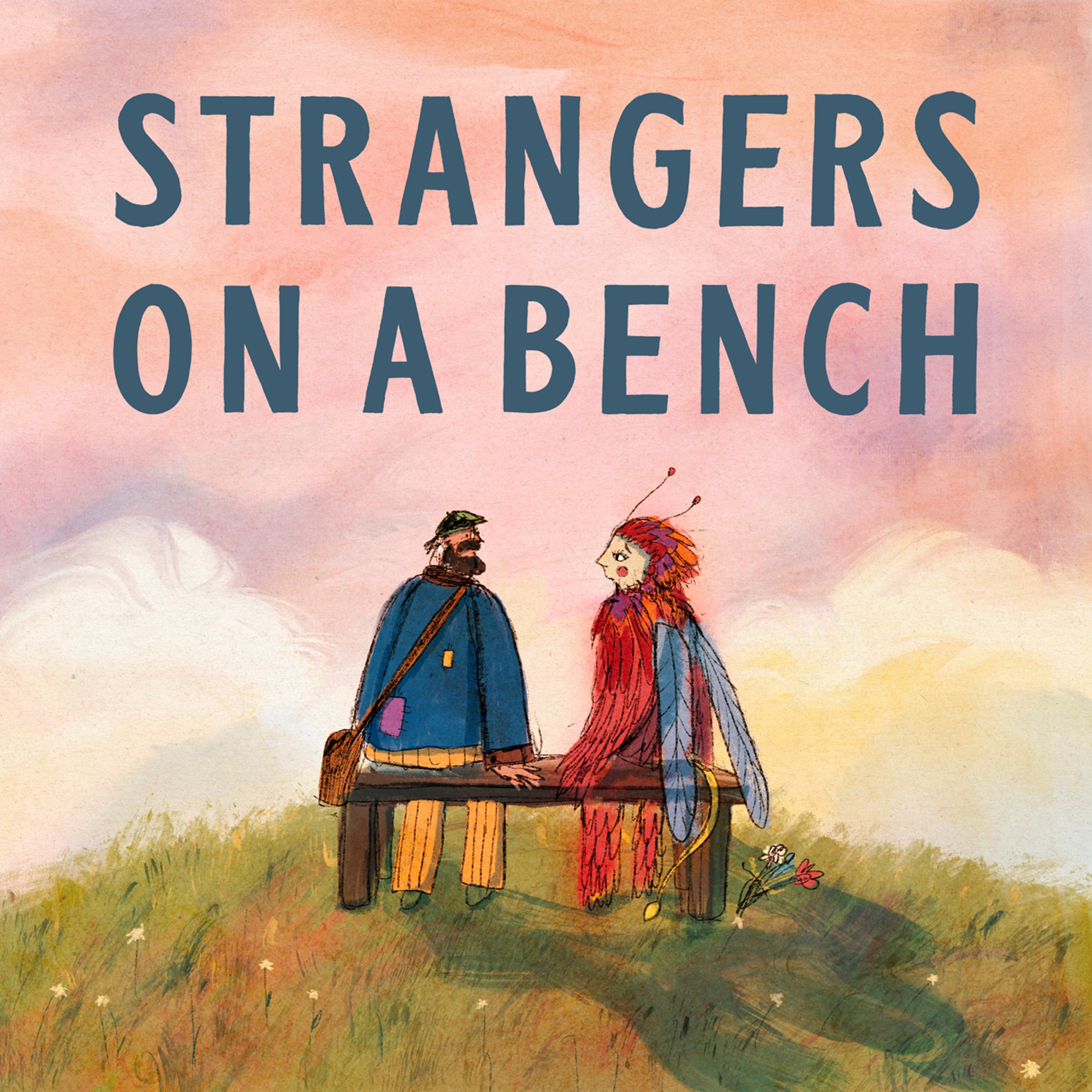
Strangers on a Bench
EPISODE 68: I Hate This House
00:54:43
Tom Rosenthal talks to strangers on park benches, often leading to surprising revelations.
Loading summary
Transcript400 lines
- [00:04]
Interviewer
Hello. Sorry to bother you. Can I ask you a slightly odd question? I'm making a podcast called Strangers on a Bench where essentially I talk to people I don't know on benches for 10 or 15 minutes. Are you up for that? Do you want to give it a. What's your favorite day of the week?
- [00:49]
Female Guest
Friday, straight off.
- [00:51]
Interviewer
Why?
- [00:52]
Female Guest
It always used to be the end of the working week, and although I don't work anymore, it stayed as a favourite day. And there's a lightness about a Friday, so Monday today, it's lovely, but there's not that lightness there on a Friday.
- [01:04]
Interviewer
So you still feel heavy on a Monday, even now?
- [01:06]
Female Guest
No, I don't feel heavy. I just feel lighter on a Friday.
- [01:11]
Interviewer
Okay, let's go from this Friday, from the start of it to the end of it.
- [01:15]
Female Guest
Yeah.
- [01:16]
Interviewer
How are you spending an ideal Friday?
- [01:19]
Female Guest
Waking up without back pain, doing a bit of exercise, looking at the weather, planning a walk, going for a walk. It could be two hours, it could be four hours.
- [01:34]
Interviewer
Quite a chunky walk.
- [01:36]
Female Guest
Yes.
- [01:37]
Interviewer
Four hours.
- [01:38]
Female Guest
Yeah.
- [01:39]
Interviewer
How many miles per hour is that?
- [01:40]
Female Guest
I have no idea.
- [01:41]
Interviewer
What's his walking speed?
- [01:42]
Female Guest
Well, I'm sitting now, looking at the little ducklings, so I factor in sitting down.
- [01:47]
Interviewer
Oh, I see. So is that part of the four hour?
- [01:49]
Female Guest
Yeah. Well, not always, but sometimes I always like to do some hills because hills, I think that's the exercise bit. So I'll go up and down a few hills, home, chat with the husband, few chores, read the paper. That's about it, really.
- [02:09]
Interviewer
Do you not walk with the husband?
- [02:11]
Female Guest
No.
- [02:11]
Interviewer
Why?
- [02:12]
Female Guest
He's got a bad back.
- [02:13]
Interviewer
So. Have you.
- [02:14]
Female Guest
And he walks too slowly.
- [02:15]
Interviewer
He walks too slowly?
- [02:17]
Female Guest
Yeah. It just doesn't head in. It's like having a toddler. No, so. And his. In fact, he's had a bad back for decades and decades. This is just fairly recent for me.
- [02:27]
Interviewer
Oh, I see.
- [02:28]
Female Guest
So I appreciate that it's hard for him.
- [02:30]
Interviewer
Has your back problem helped you sympathise?
- [02:33]
Female Guest
No, not really. Because I get on with it.
- [02:38]
Interviewer
You're physically just and mentally stronger than your husband.
- [02:42]
Female Guest
I certainly moan less than he does, but I will concede that his pain is probably worse than mine.
- [02:47]
Interviewer
But we don't really know that for sure.
- [02:49]
Female Guest
We don't know.
- [02:49]
Interviewer
There's no knowing that.
- [02:50]
Female Guest
But he does walk very slowly. And the very, very interesting thing is that despite having chronic backache, he can still manage to play golf.
- [02:59]
Interviewer
Oh, okay. Plot twist there.
- [03:02]
Female Guest
Cherry picking there, maybe.
- [03:04]
Interviewer
Although there are golf buggies. Is he ever in a golf buggy?
- [03:07]
Female Guest
Well, when he's just got back from a week's holiday in the abroad, a very hot country called Turkey. And I think he's had a golf buggy then.
- [03:20]
Interviewer
If he could walk the exact same speed as you.
- [03:23]
Female Guest
Yeah.
- [03:25]
Interviewer
Would you still like him to come walking with you or do you quite.
- [03:31]
Female Guest
I'd like him to join me perhaps twice a week, but I'm very, very, very happy walking by myself.
- [03:37]
Interviewer
There's a peace time.
- [03:39]
Female Guest
I just love sorting out your head time and I just love it.
- [03:42]
Interviewer
So, on your walks at the moment, what are you mostly thinking about?
- [03:47]
Female Guest
Children, family issues, how to sort things or stand back rather than sort them.
- [03:56]
Interviewer
Where do you stand on interference?
- [03:59]
Female Guest
I'm a big interferer, a seriously big interferer.
- [04:03]
Interviewer
Has that always worked?
- [04:04]
Female Guest
Oh, God, no. No, no, no. One time out of 10, probably it.
- [04:08]
Interviewer
Works, but it keeps it going.
- [04:11]
Female Guest
In fact, I was literally saying to my husband this morning, I don't get how people find having babies so difficult these days. And I think it's because of all the information that's available, because I can remember coming home from hospital with baby number one, husband picked me up, dropped me off, went to work, and it wasn't easy, but it wasn't hugely, hugely problematic. And it's just that someone recently has had a baby and is really, really struggling. And I get that it can be hard, but I just don't get that it has to be that hard. I sound really harsh, then it's okay.
- [04:50]
Interviewer
I'm interested in what you say about information. Why do you think information is making it more complicated?
- [04:55]
Female Guest
Because I think they want to know everything. So rather than let things flow. So if a baby cries, feed it, put it down, if it cries again, just feed it, cuddle it, whatever. But there's this fascination with wanting to know if there's anything wrong, if there is something wrong, what is it? How to go about solving it, who to see, when in fact it's just a baby crying.
- [05:18]
Interviewer
Sure.
- [05:19]
Female Guest
And I experienced this with my own children. Well, I've got four children, so you're four, I've got four.
- [05:27]
Interviewer
That's quite a lot.
- [05:27]
Female Guest
Two of them. And I just think it just leads them to worry about things that aren't worth worrying about. I just thought it was just a really enjoyable time. But that speaks to the control freak in me because the best time for me was having the children being in control of everything and how things were going, being organized, finding it fairly easy. Then as soon as they start to assert themselves, I'm thinking, oh, my gosh, what's happened?
- [06:00]
Interviewer
Here.
- [06:00]
Female Guest
What do I do here? Yeah, absolutely. What do I do? So it was definitely my finest hour, the new baby bit. I've gone downhill rapidly, ever.
- [06:18]
Interviewer
I guess it's must be hard to relinquish being the decisive force suddenly and then not. How do you tell? I guess. I mean, it must be impossible just to turn that off.
- [06:29]
Female Guest
Well, it is and it's. It's more difficult when you know that or you can see the. The accident happening ahead.
- [06:37]
Interviewer
Were there any particular interventions that in hindsight, you wish you didn't make? Oh.
- [06:48]
Female Guest
I'm just a. I'm a nosy person, I'm an interfering person and I'm a really controlling person and I think my interventions inevitably are unhelpful. So a little thing, but in fact, it's quite a big thing in the event. I've got a son who lives in a flat in London, wanted a dog, got this lovely, lovely dog, really, really mad dog, but also a baby. And it's really affected their first six months of having a baby. It's made life so much more difficult. And I was really, really, really against them having a dog. I didn't think it was fair on the dog. This is their first baby and they're never going to have the first baby the first six months again. And having the dog has caused an awful lot of stuff. And I really, really, really wanted my husband to say, just say. Just you. If you say something, they listen to you because. Because you never say anything, so your opinion is worth something.
- [07:49]
Interviewer
You were trying to get him to say something.
- [07:50]
Female Guest
No, I said. I said something. I did. And I kept saying, if you're going to have a dog, have a different dog. What have you.
- [07:55]
Interviewer
Where does this side of you come from, do you think? Is it always. Yeah. Has it always been there or has it. Children bought it on?
- [08:01]
Female Guest
No, I think it's always been there. My mother. My mother was a. Was like this. And yet my father was very much like my husband, a really, really nice man. And my husband's a really, really nice man, but wouldn't deliberately offer an opinion that might be a little bit conflicting.
- [08:17]
Interviewer
So you've replicated your mother's life?
- [08:19]
Female Guest
I have.
- [08:20]
Interviewer
Has that been a good idea?
- [08:21]
Female Guest
No, no, no.
- [08:23]
Interviewer
Does that mean you regret everything?
- [08:25]
Female Guest
No, I don't regret everything. It's just that if you have opinions, it's more likely that you're going to be unpopular. If those opinions are unpopular and. And I'm in an odd place because I come from a fairly deprived background, certainly not privileged background, and I met somebody who had been to public school who was frightfully charming, really, really charming. It could charm you, it could charm your wife or your partner. So charming. And I'd never met anybody like that before and I thought, oh my gosh, that must be really special. And in fact it took me a while to realise that he spoke to everybody like that. So I've moved from really quite a working class existence into a middle class existence. And a lot of my opinions are formed because of the background I come from, but those opinions aren't replicated in the world I move in.
- [09:20]
Interviewer
Does that mean that people don't like you?
- [09:22]
Female Guest
I think a lot of people don't like me.
- [09:23]
Interviewer
Really.
- [09:23]
Female Guest
I think I'm very much a Marmite person. People, when they like me, they really, really like me and they react strongly.
- [09:30]
Interviewer
Against you if they don't.
- [09:31]
Female Guest
Yeah, it's so obvious that people prefer my husband because he's easy to be with. I think people probably find me more interesting but less likable. Well, in fact, I know people find me more interesting and I know they find me less likable, so I haven't any doubt.
- [09:48]
Interviewer
And this doesn't particularly bother you? I mean, do you mind not being likeable?
- [09:52]
Female Guest
Sometimes it does.
- [09:53]
Interviewer
I mean, my general opinion about being likable is that it's really important. The people I like like me.
- [09:59]
Female Guest
Yeah.
- [10:00]
Interviewer
But the people that I don't particularly have any inclination towards, if they don't like me, that's not a big problem.
- [10:06]
Female Guest
Absolutely. And I've noticed it's getting worse actually. I've got old, I think, well, I'm never going to see you again. What is the point of making an effort, you know, so I've become very antisocial because I can't be bothered.
- [10:18]
Interviewer
Yeah, you don't want to make any new friends. You made enough.
- [10:20]
Female Guest
And what I really love, because the day before yesterday I came here and spoke to a really, really lovely young man sitting on the bench there.
- [10:28]
Interviewer
Yeah.
- [10:28]
Female Guest
And we must have spent about half an hour, 45 minutes talking about God, religion. Wow.
- [10:35]
Interviewer
Oh, I see you've just, you've been practicing talking to strangers on benches already.
- [10:39]
Female Guest
Well, I thought, I thought you were part of the same thing. But I do stop and talk and this when, when we go to our holiday home, my husband, because of his baptism, walk very often, although he can play golf there. So I meet so many people, I mean from all over the country and have a chat and a coffee and.
- [10:59]
Interviewer
What have you quite enjoyed that?
- [11:00]
Female Guest
Yes.
- [11:00]
Interviewer
But you also like the fact that you can just walk away and never be seen again.
- [11:03]
Female Guest
Yeah, absolutely.
- [11:04]
Interviewer
So it kind of works. You.
- [11:05]
Female Guest
Yeah.
- [11:06]
Interviewer
Did you strike up conversation with this young guy out of interest or he strike you? Oh, fantastic. No, you. You could take over for me.
- [11:12]
Female Guest
It was.
- [11:12]
Interviewer
I could pass the bat on. On.
- [11:14]
Female Guest
It was about the doctor I was really worried about because they were nice. Started off with, see, look, look what?
- [11:21]
Interviewer
The heron is now prowling around.
- [11:23]
Female Guest
Is he going to. I can't see.
- [11:25]
Interviewer
I can't see any ducklings.
- [11:26]
Female Guest
Well, he hasn't eaten them, has he?
- [11:28]
Interviewer
No, I don't think so. There are no ducklings there. Well, good on you for having the. Having the conversations.
- [11:33]
Female Guest
People are very friendly.
- [11:34]
Background Singer or Ambient Voice
They are, aren't.
- [11:43]
Interviewer
I'm very interested in this idea of your, you know, you come from a background that is not particularly well off by the sounds of it, and then you've stumbled upon, obviously someone who's got money. What's it like to suddenly transform your life like that?
- [11:58]
Female Guest
Well, no, I'm making it sound more dramatic. I mean, he's not a duke or anything, he's not massively rich. I just happened to have a good education, went to university, went into a. An area where there weren't that many women and was introduced to him by a colleague. And I'd never met anybody who was posh before because at university I stayed in these sort of non posh group of people and I slowly got used to how people talked and how they ate and their obsession with education and I think I probably was the only Labour voter that they'd come across ever.
- [12:39]
Interviewer
Interesting.
- [12:40]
Female Guest
Yeah.
- [12:41]
Interviewer
How do you feel about posh people now?
- [12:44]
Female Guest
Honestly? Yeah, I think, well, it depends how posh they are, really.
- [12:50]
Interviewer
Okay.
- [12:50]
Female Guest
Yeah. I don't like privilege. Privilege really gets my back up. I hate, hate, hate privilege. And I say to this to my husband sometimes because he'll go out and buy something or whatever and I'll say, do you know how much that costs? He said no, he, he would never, ever, ever, ever ask the price of anything because he'd never had to do with that money. Whereas if there was five pounds off at a different store, I would walk to the store that had five pounds off and he says, that's stupid.
- [13:17]
Interviewer
Have you lost anything being in these worlds?
- [13:20]
Female Guest
Oh, yeah, yeah.
- [13:21]
Interviewer
What have you lost?
- [13:22]
Female Guest
I'll get upset now. I've lost my.
- [13:28]
Interviewer
All of them.
- [13:29]
Female Guest
Not all of them. I would really, really, really have liked to go into politics. I'm opinionated, I'm gobby. I think if you have me on your side, you're doing well is my view. Because I will fight your corner really hard. Oh, my.
- [13:44]
Interviewer
What is it?
- [13:46]
Female Guest
Just try to eat one of those birds. Sorry, Sorry. Well, that's nature. Look at the little things. Sorry.
- [13:57]
Interviewer
No. So when you talk about politics.
- [13:59]
Female Guest
Politics? No. I would have made a good politician.
- [14:02]
Interviewer
Still time.
- [14:03]
Female Guest
No, no. Why not? Because my backstory, my principles have just gone out of the window.
- [14:09]
Interviewer
Have you heard a spin?
- [14:10]
Female Guest
No, you can't spin me. Because if you really breach your own values and principles, you talk the talk, but don't walk the walk. Then who's going to believe you? She could be a good politician. She could do a good job. Didn't she send her children to private school?
- [14:29]
Interviewer
That's always a way of framing things.
- [14:31]
Female Guest
No, no, that's dishonest. I wouldn't want to be like that.
- [14:35]
Interviewer
What other values have you lost then, in this land? The posh people?
- [14:40]
Female Guest
It's not a posh people. It's very difficult. I find this really difficult because I'm not posh. My husband's posh, my children are posh. And there is this sort of little bit of. Not a barrier between us, but. Whereas I get where they come from, they will never, ever, ever get where I came from.
- [14:57]
Interviewer
Interesting.
- [14:58]
Female Guest
So, for instance, I always buy secondhand clothes. But the children, again, money's no object to them. I will spend money on the children, but I won't spend money on me. And I just think that when you're in a position of privilege, you have to work really, really hard to make other people's lives a little bit easier. So the day before yesterday, I sent a WhatsApp on the family WhatsApp group saying just out of interest, is anybody a blood donor? I used to do that and donate platelets and it just never occurred to me to ask the children if they did that. One of them, big brute of a rugby player, did it about 20 odd years ago and fainted, I think.
- [15:49]
Interviewer
So that happened to me as well, you know.
- [15:51]
Female Guest
What, you fainted?
- [15:52]
Interviewer
Yeah, one of the last times I did it, or the last one did it had a really bad fainting episode and then they said, well, don't do this again for a while anyway. So what happened in the WhatsApp group? Sorry.
- [16:03]
Female Guest
So I sent this WhatsApp and nobody's got back to me, so I'm assuming that nobody is interested. My daughter would be interested, but she's. She can't do it. She's got a pacemaker, so she can't. But all these privileged rich kids can't spend 20 minutes, three times a year and give a little bit of something. Which means more than money. Yeah, it's time. Time is really, really precious to them. And blood, obviously.
- [16:30]
Interviewer
So you say that on the group, you, you rich little whatevers. Why don't you go to. Maybe you should.
- [16:36]
Female Guest
Well, they know that.
- [16:37]
Interviewer
They know you.
- [16:38]
Female Guest
No, they know. They know. They know what I. They know what? I think they'd know why I was sending it. Because they're lovely children, but they're privileged.
- [16:53]
Interviewer
Has there been a time where you've been in this. What can we call it, this privileged posh world, whatever it is, where you've been genuinely upset at something you've seen or heard someone do?
- [17:05]
Female Guest
Oh, yeah, yeah, yeah, all the time. I meet more homophobic and racist people in that world than I do in my world. And as I'm saying it, I'm actually lying because I. I go to a gym in Sheffield that's really, really working class, and I would think most people are racist, misogynistic, certainly sexist. So I'm talking stuff out of my own argument there.
- [17:39]
Interviewer
We're going round. Well, you can. I mean, it's hard to know for sure, isn't it?
- [17:46]
Female Guest
Well, certainly at the gym, when the chap next to you says something like, oh, they shouldn't have a woman's only gym here, and why do they have to wear veils?
- [17:57]
Interviewer
Oh, I see.
- [17:59]
Female Guest
And my response was, but I thought you were a Christian with Christian values. And he didn't know what I was talking about. He had no idea that what he'd said was racist. And there's this horrible, horrible underlying racism, especially against young women. And I think posh people, because they're more educated, can express that in a different sort of way.
- [18:21]
Interviewer
Interesting. Yeah. I mean, that does make sense, doesn't it?
- [18:24]
Female Guest
So, for instance, when we go. When we go to our holiday home, I'm in Paris, it's only a little cottage. It's only a little cottage. But there are certain people there who are very, very middle class and very homophobic.
- [18:43]
Interviewer
Each time, do you try and say, absolutely. Well done for doing that. A lot of people would just let.
- [18:49]
Female Guest
It all the time, but my husband never does, to the point where I could actually be in tears because I used to work with young people and I used to see predominantly men, but boys who would cry about the fact that they were gay, didn't want to be gay, and they'd cry and cry and cry and cry and cry. And then these people in this holiday place, they talk about lifestyle choices and really derogatory things about people who just find themselves attracted to the same sex. Having no idea that for a lot of people, not so much now, fortunately, but a lot of people, it's really traumatic thinking, I don't want to be like this, but I am like this. What do I do about it? Especially if you come from a religious family, they just don't know what they don't know. But if they did know what they don't know, I suspect they'd still feel the same. That's the sad part about it, so.
- [19:43]
Interviewer
Oh, well done for taking people on. Some of you would rather an easier life.
- [19:48]
Female Guest
Yeah, well, I'd rather say something and have an easier life as well, because it's. Because it's just I've spoiled dinner parties and things.
- [19:56]
Interviewer
Have you?
- [19:56]
Female Guest
Everybody's laughing at things. And I'm thinking, no. By saying things like.
- [20:03]
Interviewer
And then the atmosphere is just terrible after it.
- [20:05]
Female Guest
Yeah. It's just fairly obvious that somebody in the group has spoiled the atmosphere. And that's me, but it's not me. It's the person who's saying something derogatory about a lesbian or something.
- [20:30]
Interviewer
Here's a big question for you.
- [20:31]
Background Singer or Ambient Voice
You.
- [20:32]
Female Guest
Yeah.
- [20:34]
Interviewer
Have you ever thought about leaving this world? Sorry, not. Sorry, not the. Not the world in general. Sorry.
- [20:40]
Female Guest
Oh, God, yes.
- [20:41]
Interviewer
This privileged world you don't want.
- [20:42]
Female Guest
Absolutely, absolutely.
- [20:44]
Interviewer
At what point have you thought about it?
- [20:45]
Female Guest
When my husband and I. When I realized that we were completely different, my husband and I agreed compromise, certainly with regard to education has been a really, really big thing for me. Agreed that they'd start in private school and then they'd go into the state school. We've got brilliant state schools in Sheffield. Senior state schools. Brilliant, really. I mean, top schools in the country. And then it happened that that wasn't going to be the case. This was with child number one. And at that point I thought, if this is going to happen, I can't do this. I really can't do it.
- [21:20]
Interviewer
You mean you can't be.
- [21:22]
Female Guest
I can't. I can't be your husband. Yeah. I really thought that. This is a really, really serious thing.
- [21:29]
Interviewer
It's going against your core principles.
- [21:31]
Female Guest
Yeah.
- [21:31]
Interviewer
And so what happened then?
- [21:34]
Female Guest
This is the thing about not knowing what you don't know because he went off to public school. He went off at 9. Most kids will sit and cry or, you know, go to bed and miss their mum for him. He loved it.
- [21:48]
Interviewer
Okay, I see.
- [21:49]
Female Guest
So from year dot, he loved it and he wanted his children to have the same experience. And I'M thinking, well, am I being a bit selfish here by standing on my principles and what have you? So, against my better judgment, number one went away.
- [22:08]
Interviewer
What was that like?
- [22:13]
Female Guest
It was the unhappiest year of my life. It's a bit complicated in that he was at a school that I thought was just a little private school, but in fact it was a prep school. Do you know what a prep school is?
- [22:30]
Interviewer
Yeah, I think so. Well, it's just like a private school for younger ones.
- [22:34]
Female Guest
Yeah, well, that's what I thought. But back in the day, a prep school was preparing them to go away. Okay, I didn't know that.
- [22:41]
Interviewer
Right.
- [22:42]
Female Guest
So when son number one got to the age where people talking about other schools, people were going off to all these boarding schools, and we actually live half a mile from one of the best schools in Sheffield. We came there and he got really upset about that. The husband got upset about it. And somehow I just felt bad about disappointing people. And that was because I didn't know what I didn't know. Now that I know. Well, I didn't know then. There is no way that that decision would have. Would have stood. I just wouldn't have allowed it. I just wouldn't have allowed it. It just wouldn't have happened. In the event, I sobbed for a week, didn't speak to my husband for weeks and weeks and weeks and weeks and weeks. The son had a whale of a time. He just. He didn't miss us at all. He was really, really, really happy. And he's made lots of lovely friends, really, really lovely friends and had a great time. So then when son number two came along, when I said to him that he wasn't going to go to this school, he said, so you don't love me as much, so what can you do? Daughter didn't want to go away, and son number four, because the other two had turned out all right. I thought, well, you know.
- [24:05]
Interviewer
So you're saying in hindsight you would have potentially ended your marriage?
- [24:08]
Female Guest
No, no, no, no. It wouldn't have got that far.
- [24:11]
Interviewer
Okay.
- [24:11]
Female Guest
It's always been a resentment. Always, always been a resentment. I actually, I never, ever, ever, ever told people I had children who went to boarding school. I was so, so ashamed. I mean, really ashamed. I just felt a failure as a mother then because what mother would send her children away to boarding school? It was. It was just really, really hard. Really hard. So every time we went, we went very often to see the boy, my son or sons. I used to cry all the way there and cry all the way back, literally. I mean, that's no exaggeration.
- [24:46]
Interviewer
You were crying because you were going there.
- [24:48]
Female Guest
Crying because I was going there and I hated to go and I was really, really horrible. I was horrible to everybody because I was so worked up and anxious and upset and angry with myself. I was rude, I was unpleasant. I was just horrible, horrible, horrible. And then I'd come back, cry because I regretted my behaviour, but also because I didn't want to leave him there. And it's amazing what you get used to, you know, you just get used to it. So I just got used to it. But I think it was weeks, if not months before I could speak to my husband again because I felt he'd let me down so badly. But the son was so.
- [25:22]
Interviewer
Months of not talking at all to your husband?
- [25:24]
Female Guest
The son. Well, niceties and things. But no, just. I just felt so utterly let down by him. He was quite happy about it, actually. He put his way. Whether it's part of a major plan.
- [25:36]
Interviewer
Do you hold it against him now?
- [25:38]
Female Guest
Yeah. Oh, yeah, absolutely.
- [25:39]
Interviewer
In fact, did it ever come up still?
- [25:40]
Female Guest
Oh, God.
- [25:41]
Interviewer
All the time.
- [25:42]
Female Guest
Seriously.
- [25:43]
Interviewer
Really? Even though it's all gone?
- [25:45]
Female Guest
Oh, no. I never let things go. No, no, no.
- [25:49]
Interviewer
So what. What happened, like, now that. I mean, I'm interested to hear what that conversation would go like.
- [25:55]
Female Guest
I just think that. So we. We live in a house that I've lived. I've hated the house ever since we've moved in.
- [26:04]
Interviewer
I hate the house. You live it?
- [26:05]
Female Guest
Yeah. And we've lived there for 45 years.
- [26:07]
Interviewer
Wow. And you still hate it?
- [26:09]
Female Guest
Absolutely. 45 years later, it's falling down around us. But it was sold to me as a. So. Well, we'd move here for five years and then we'll find somewhere else. And then we couldn't afford to move because we had to pay school fees. So I've lived in a house that I've loathed for decades in order to pay for something that I didn't value. And it really has had an effect on my. We honestly, a real effect on my well being.
- [26:36]
Interviewer
Because 45 years is such a long time to be in a place you don't really like.
- [26:39]
Female Guest
If you. If my husband was here, you could say to him, what's the first thing she says to you in the morning? And he will say, I absolutely guarantee you say, I hate this house. Seriously, Every day that's your first thing.
- [26:52]
Interviewer
You wake up saying.
- [26:53]
Female Guest
Yeah.
- [27:09]
Interviewer
It sounds like your husband is, throughout the time we've been together, persuaded you a number of times Slightly against your wishes. If he was here now and I said, what has your wife persuaded you to do? What would he say to that question? Surely if the relationship has worked, there must have been some kind of give and take.
- [27:28]
Female Guest
But this is. It looks. It looks as if I'm completely in charge because I'm more assertive. I'm always his fall guy. I've always got to do all the. All the battles. And I think I. He will concede small things to me, but the major things in life. It doesn't look as if he's won in inverted commas, but he has education as kids. I think that's one of the major things, especially when it has lifelong repercussions.
- [27:59]
Interviewer
Sure.
- [28:00]
Female Guest
Where we live, his. He's won that, and I think that's fairly major.
- [28:06]
Interviewer
Do you think he's won the core things?
- [28:08]
Female Guest
Well, no, he's won the core things, but he gets looked after. He's got someone who does all the dirty work in the sense that I'm always the person who has to assert myself and be unpopular and say things.
- [28:18]
Interviewer
And he's managed to get all this just by being charming.
- [28:20]
Female Guest
Yeah, just. People just think he's just really, really, really, really, really, really, really. And he is really, really, really, really nice. He's nice. It hurts me sometimes to be saying these things when he's clearly so nice.
- [28:33]
Interviewer
But, I mean, apart from that moment of choosing the first child's education, have there been any moments you thought about not being with him?
- [28:46]
Female Guest
I've wondered what it would be like. You know, we got married 48 years ago and we meant it when we said, you know, till death do us part. And sometimes it's been really, really not very nice, and other times it's fine. I don't know if it's any different from anybody else's relationship, but being married a long time is hard. It's not easy.
- [29:11]
Interviewer
Have there ever been. Bit of personal question, but have there ever been any tempters for you?
- [29:16]
Female Guest
Oh, God, no. Oh, absolutely not. Why would anybody. Seriously. No, no. My daughter, sadly, her husband died a couple of years ago. Really, really sad. And she lives in the country with two small children. He was diagnosed with cancer, 41. And she was part of a cohort of people who were helped by charity.
- [29:42]
Interviewer
A butterfly on you.
- [29:43]
Female Guest
Oh, gosh. Scared of butterflies, are you?
- [29:45]
Interviewer
Oh, is it off? It's off now. That's a rare. It's a rare fear.
- [29:50]
Female Guest
No, it's because it's like a moth.
- [29:52]
Interviewer
I suppose they're like a moth, but it's a butterfly. Sorry.
- [29:55]
Female Guest
So she, she was part of a cohort of people who were all about to lose a partner through predominantly cancer at an early age, late 30s, early 40s, with small children, three men and two women. And they met up a couple of months ago. All the men have moved on. Obviously they've been through a bad thing. They're losing their wife early and having their children. But I'm thinking, well, what are their children thinking? You know, Mum's just died and somebody else on the scene and my daughter doesn't in any shape or form criticize. She just says, well that's, People need different things and I think men are very needy. So why, why would a woman want to go and have an affair with somebody? Why? I mean, this.
- [30:43]
Interviewer
Well, it happens.
- [30:44]
Female Guest
Oh no, it happens. Oh yes, I know it happens. But for me I'm thinking, well, isn't one enough? Why on earth would you. But why would you. I say this actually on a regular basis. I really, really wish my daughter was lesbian because she's got so many lovely, lovely girlfriends.
- [31:00]
Interviewer
The one whose husband died.
- [31:01]
Female Guest
The one whose husband died, she's not lesbian. And I've tried to get her to go to lesbian school but she won't because women are just so much better. Well, they are.
- [31:10]
Interviewer
Sorry, but no, you're exactly right. I completely agree.
- [31:14]
Female Guest
So in our marriage, my husband certainly had a few offers.
- [31:19]
Interviewer
Formal offers.
- [31:20]
Female Guest
No, this, this is, this is quite funny. His secretary came in one day and said, right, cards on the table, I'm in love with you. And he said, I can't, I've got four children. Which I thought was the priceless response, not, I've got a wife and four children. I've got four children. And that's one of the reasons why I know beyond a shadow of a doubt because my husband adores his children. He would never ever, ever jeopardize the well being of the children. And I would never ever jeopardize the well being of the children.
- [31:54]
Interviewer
So even now, though?
- [31:56]
Female Guest
Even now. Absolutely.
- [31:57]
Interviewer
Surely they wouldn't mind that much now. No. Oh, maybe they would.
- [32:01]
Female Guest
They do.
- [32:01]
Interviewer
Really?
- [32:02]
Female Guest
Well, they mind just as much a thing, perhaps even more. Because then they wonder, oh, well, how much of a sham was this? Were we brought up in the, in the bed of life?
- [32:12]
Interviewer
48 year sham? No, I think that's a factor though. Well, a factor in not doing anything is the worry that the child.
- [32:21]
Female Guest
Well, not for me, because I, I.
- [32:22]
Interviewer
So you've had no offers at all?
- [32:24]
Female Guest
Well, I've had lots of offers, yeah. Over the years.
- [32:26]
Interviewer
Oh, okay, yeah.
- [32:27]
Female Guest
Not interested in the slightest.
- [32:38]
Interviewer
What's it like to be with someone who's very charming?
- [32:42]
Female Guest
It's a bit disarming, actually.
- [32:44]
Interviewer
I think I'm interest. How did he charm you for the start? Do you remember the start?
- [32:48]
Female Guest
It's a way of being. It's not insane, charming things. It's just a way of being. And I have to say, he's known. He was the pinup man of all these elderly people in Sheffield. Widows, divorcees, who really thought he was and probably still think he's a bees knees because he's just so. He's just really, really charming and he has a way with him that is just very, very easy, whereas I don't.
- [33:18]
Interviewer
Do you remember how he. How did he woo you?
- [33:22]
Female Guest
He was an arrogant toad. A colleague invited us all to a fundraising event and she introduced me to him and I knew he was interested straight away because he ignored me the entire evening. So I thought, well, that's it, I've got him. So then he came to another function and asked me out and that was it really.
- [33:46]
Interviewer
Do you remember your first moment of kind of true connection?
- [33:50]
Female Guest
Well, I do, certainly within six months, I should think. I think it took him a few years longer.
- [33:58]
Interviewer
A few years?
- [33:59]
Female Guest
Well, just as I'm saying, I moved out of my sort of social circle. By being with me, he'd moved out of his social circle as well. So I certainly wasn't the sort of girlfriend that his parents were expecting.
- [34:12]
Interviewer
That's interesting.
- [34:12]
Female Guest
To bring home.
- [34:13]
Interviewer
Did you have to? I mean, did you ever get his parents approval?
- [34:18]
Female Guest
Well, after decades, yes. After decades, they didn't disapprove. I think it was my. My opinionated part of me that they didn't particularly like, but also not. I used to wear the shorter skirts and I suppose I'd say I look common in Sheffield jargon. So it must have been a bit of a disappointment for them, really, when they had this idea that he was going to marry some sort of steel heiress or whatever. And then he came home with me. So from his point of view, I think there was a certain strangeness, there was a newness. I mean, he'd never been out with anybody who spoke lightly before. And although, I mean, I can still hear my accent, but it's nowhere near as broad as it was. And I think you just hadn't come across somebody like me before.
- [35:11]
Interviewer
What about your parents and him or parents? What did they think of him?
- [35:15]
Female Guest
Oh, they thought he was lovely.
- [35:16]
Interviewer
Oh, okay.
- [35:17]
Female Guest
No, you don't. You can't find anyone who doesn't like him? Oh no, no, no, no. It was a leg up as well far as they were concerned.
- [35:30]
Interviewer
How do you feel about your parents now? Looking back at them?
- [35:36]
Female Guest
I think of the different lives that my in laws had and they had and I think my parents just had it harder and I think it's sad really that some people have to have it so hard and other people have it relatively easy. You know, if the only. The really awful decision of the day is what type of gin to have with your gin and tonic in the evening is indicative of how you live. My parents didn't drink. I remember going to grammar school and everything I had was second hand, all too big and I remember these white sandals that had been dyed brown that were about four sizes too big and I was so out of my comfort zone and then I got there and I was put in the year above.
- [36:27]
Interviewer
You're clever.
- [36:28]
Female Guest
Yeah. So the friends I'd had at my other school, they didn't engage with me because they said I was a snob because I was in the second and in that year it was really hard to make friendships. But also I'd gone from being really quite a bright girl to. I missed a year of chemistry, of physics, of biology, of Latin, of French and I had no idea where I was. So I really, really, really, really struggled just I was going to be a doctor but I spent so much time catching up that it just wasn't to be so. But I was just remembering the discomfort. Now I wear second hand clothes with pride. I mean, you know, I couldn't carry a toss when my son had a destination wedding. I just find it so embarrassing expecting people to go to Italy for a wedding. I never ever, ever, ever, ever spend money on clothes. I just don't. But I bought this really, really special dress because I've been instructed what to wear as the mother of the bridegroom got there and there was somebody else in the same dress. The only time I buy something you and there's somebody there.
- [37:44]
Interviewer
The higher forces.
- [37:45]
Female Guest
Bloody awful dress as well. I mean it really. I don't know why I bought it.
- [37:49]
Interviewer
So you hated this wedding?
- [37:51]
Female Guest
Oh no. In fact the wedding was lovely. I just wish you had a destination wedding. I just don't agree with it because in fact at these destination weddings. Have you been to any of them?
- [38:01]
Interviewer
I have, yeah.
- [38:02]
Female Guest
Everybody gets married beforehand because these places haven't got the license to. So they're already married. So everybody's going off to Italy for a party and it's so wrong. I think it's so wrong.
- [38:14]
Interviewer
Did you tell this to your son?
- [38:16]
Female Guest
Yeah.
- [38:16]
Interviewer
What did he say?
- [38:19]
Female Guest
Can I have some more money, please? We've always gone half on weddings with the. We paid for our daughter's wedding, but we've gone half with the boys and it did cost a lot of money. And I just thought, well, what a bloody waste. And you're married. It's a farce. It is a farce. Why doesn't somebody call it out as a farce? I actually felt embarrassed by it because I thought, well, I've given birth to a son who thinks the destination wedding is a good idea. Seriously. And yet the, the daughter, she wasn't at all like that. When she decided to get married, she already had two children. She wanted it low key. She wanted sort of bohemian getting married in the, in the forest and what have you. And. And then somehow it went from being bohemian getting married in the forest, register off his wedding wedding to make it legal, to ending up in a priory with morning suit suits with a gospel choir and a Rolls Royce. And. And it wasn't. And it wasn't what she wanted. It just sort of evolved like that because they lived next door to a priory. So I said, well, it's a lovely old church and it was a really, really, really lovely wedding. And Rob, who died sadly, his memorial service was in the same church a few years later. You know, that was, that was sad of it.
- [39:55]
Interviewer
What was that time like for you?
- [39:57]
Female Guest
Awful. It's the normalizing of it that makes me unhappy. So the. They've planted a tree. It's a huge hill over the road which they used to walk up a bit, quite a lot. And she's planted a tree that was given to her and just see them go there with their little cups of hot chocolate, talking to daddy and things, but not getting upset about it because that's their normal now. And that it's. It's the normalizing of it that makes me really sad. You know what I mean? It's been really difficult. She's been amazing. It's. When something like that happens, it really brings you up short and you think, well, makes you think what's important. And so now I'm not bothered about. I talk as if I'm bothered about privilege and education or what have you. I just want the grandchildren to be okay.
- [40:52]
Interviewer
Do you see it as another chance with the grandchildren to do what you weren't able to do with your children, education wise? Another principle, ironically.
- [41:01]
Female Guest
No, only because when, when Rob died, they had this plan. They live in a village which has got a very, very nice private school. It's happened to be a boarding school, but it's a very nice school and it was always planned for the children to. For them to go there. And I hated the fact that she was worried about what was going to happen. Actually, this is quite interesting. I have thought about this. Perhaps my viewers change.
- [41:26]
Background Singer or Ambient Voice
Change?
- [41:26]
Female Guest
Because I see that as a place of security for them.
- [41:29]
Interviewer
Interesting. Yeah.
- [41:31]
Female Guest
You know what I mean? It's local. They're not. They deboard. It's a friendly school. Everything they need is on the premises. So I think it's a place of security for them. So perhaps. Perhaps I've got no principles at all now. They have.
- [41:46]
Interviewer
I like how you hold all these worlds within you. Quite a juggling act. I can see why you need the long walks now.
- [41:52]
Female Guest
Well, I know, I know.
- [41:53]
Interviewer
Just some wrestling. Mental wrestling.
- [41:56]
Female Guest
I know I make my life sound really hard. It's not hard at all. The last couple of years has been hard because of the deaths. But apart from that, I'm really, really lucky. Parks like this, gorgeous, nice people, sun shining. It's just love.
- [42:25]
Interviewer
What would you like to do with the rest of your life?
- [42:29]
Female Guest
I've lost the energy because I have.
- [42:31]
Interviewer
Really, though, seriously, Can I say something?
- [42:35]
Female Guest
Yeah.
- [42:35]
Interviewer
What if I say I don't agree?
- [42:37]
Female Guest
No.
- [42:37]
Interviewer
What if I say I see someone who looks very fit, who says they walk two to four hours a day, who has a number of very core principled opinions and is not afraid to share them in an articulate manner? I see someone with plenty to give personally. And I think people listening to this would agree with me.
- [43:03]
Female Guest
Well, I'd say that that's because they don't know me. Seriously, honestly.
- [43:07]
Interviewer
But what are we not. What am I not seeing?
- [43:09]
Female Guest
No. And I think this. I think this is genuinely old age. It is so surprising to me how tired you get beyond 70. It's almost as if a switch has been flicked. Physically. I just feel so much more tired than I did a couple of years ago. All I want to do, my number one aim, is to make my daughter's life easier.
- [43:31]
Interviewer
Yeah, I understand.
- [43:31]
Female Guest
That's all I want to do.
- [43:32]
Interviewer
That's a good aim.
- [43:33]
Female Guest
And we spend a lot of time going up and down, helping out. And we've got grandchildren in London. We do that. And I think that in itself is tiring. I mean, it is tiring.
- [43:41]
Interviewer
Yeah. What if I said that it's slightly controversial opinion, maybe. Do you think a lack of energy can sometimes equate To a lack of purpose.
- [43:56]
Female Guest
Oh absolutely.
- [43:57]
Interviewer
So what I mean by that is if you find something that you're particularly pumped about.
- [44:02]
Female Guest
Yeah.
- [44:03]
Interviewer
Energy comes.
- [44:04]
Female Guest
I don't get that.
- [44:05]
Interviewer
Could that be a thing?
- [44:06]
Female Guest
I get energy to do things I have to do. So this morning before I came out I was up on step ladders painting the ceiling. We've had, we've had ceilings plastered because it had to be done and I did it. Didn't want to do it but I, it's so long since I've thought oh I'm really looking forward to. Really, really looking forward to something like that. Just I can't remember the last time time. I think it's probably what's happened over the last couple of years just sort of dented my enthusiasm for things.
- [44:36]
Interviewer
Yeah. But I think it, I just think this, I don't know. Obviously it's always easy from the outside to throw some ideas over but it's quite rare you meet someone who really believes in things, you know?
- [44:49]
Female Guest
Yeah. Yeah. If you've got no credibility then you can see say what you like. I have no credibility? No, no, no, I, I, I don't. My credibility died the day I'm not sure went to boarding school. Sorry. Absolutely.
- [45:05]
Interviewer
I think that credibility is in you rather than your past. Does that make sense as a person as what they bring to any given situation that's real. That for me is where credibility lies rather than in the decisions of your past. You could always just blame on your husband anyway.
- [45:22]
Female Guest
Well.
- [45:22]
Interviewer
And you do.
- [45:23]
Female Guest
Well, actually not. I'd make him accountable for certain decisions. The, the agreement that we had. That's what hurts actually. The fact that we agreed that this wouldn't happen. It happened because we did.
- [45:33]
Interviewer
Because we can just say you can just blame him.
- [45:36]
Female Guest
Well, no, no, I can't because I've lived the life, haven't I? I've just. No, I wear diamond rings and things for God's sakes. I can't pretend that I'm going to go back to Sunderland and to sell them all. Yeah, could do. Yeah.
- [45:49]
Interviewer
Yeah. The defiant stand.
- [45:50]
Female Guest
Yeah.
- [45:50]
Interviewer
You can do anything at any time.
- [45:52]
Female Guest
I've got no credibility so I've, I genuinely feel that.
- [45:56]
Interviewer
Okay.
- [45:56]
Female Guest
Genuinely feel that.
- [45:57]
Interviewer
I understand.
- [45:57]
Female Guest
Yeah. Yeah.
- [45:59]
Interviewer
I think there's this lots in you.
- [46:00]
Female Guest
Yeah.
- [46:00]
Interviewer
Let's see what you know. The future is a funny place, isn't it?
- [46:03]
Female Guest
Yeah, well it is. Yeah. Yeah.
- [46:24]
Interviewer
Is there anything else you, you wish you had the courage to do that you didn't?
- [46:28]
Female Guest
Yes. I was going to be a doctor.
- [46:30]
Interviewer
Yeah.
- [46:31]
Female Guest
And I would have loved, loved to have been a doctor. And I thought about doing that and I missed the point. And I really, really wish I'd taken the bull by the horns now. I wish I'd done that. But instead I've got my daughter and all her friends to be doctors. Oh, that's because they weren't going to be doctors until I. Oh, you made them be doctors. I didn't make them be doctors, but I offered them the option of helping them to become doctors. They didn't think they were good enough. Quite clearly able, hugely compassionate and kind and what have you. So I would be the one who would sort of get them motivated and start and help them fill in forms and getting them and all of them have made wonderful doctors.
- [47:08]
Interviewer
Oh, fantastic.
- [47:09]
Female Guest
You know, really, really well done.
- [47:10]
Interviewer
Really wonderful.
- [47:12]
Female Guest
Yeah, yeah, yeah. I'm a good motivator.
- [47:16]
Interviewer
Fantastic.
- [47:17]
Female Guest
That's.
- [47:18]
Interviewer
What a lovely thing to, to be.
- [47:20]
Female Guest
Yeah. My, my daughter, she sent a letter last week from her that she'd gotten a, a patient thanking her for his life. And I thought, good on you, girl. You know, if you do nothing else in your entire life, you've made a huge difference to that person.
- [47:36]
Interviewer
So that's wonderful.
- [47:38]
Female Guest
Yeah.
- [47:47]
Interviewer
What would you like to happen at your funeral?
- [47:50]
Female Guest
I'm not having a funeral.
- [47:51]
Interviewer
Okay. No, you already, you already decided.
- [47:54]
Female Guest
Well, I was actually. I've gone for one extra to the other because I wanted to have my ashes thrown into the Ganges only to make it more difficult for my husband because my husband was in that field. He was a solicitor when people died. When people died he'd ring up somebody and say, oh, and organize a funeral. Cuz it was just like that.
- [48:16]
Interviewer
Right. So there's.
- [48:17]
Female Guest
So I want.
- [48:18]
Interviewer
So he'll think about you more difficult for him.
- [48:20]
Female Guest
Really, really hard. So I thought through my ashes in the Ganges would at least involve a, an air flight to India. Then I wanted to be very. Which is actually more difficult for him in a mushroom blanket. You know what I mean by that? Yeah. He'd never heard of that. So I wanted him to find out from his mate, the undertaker about them. He didn't know about them. Oh, this is a really good one because. Because they're going to have to go to extra measures to accommodate my wishes. Undertaker. Haven't heard of it.
- [48:49]
Interviewer
Really?
- [48:50]
Female Guest
Yeah. How odd. Or perhaps that's your Sheffield. But now I'm going to have a promotion and. No, no service.
- [48:57]
Interviewer
No service at all? No nothing.
- [48:59]
Female Guest
No, I think my husband, I've told my husband that just give it a couple of Weeks before he moves on. And I'm fine with that because there will. There would be lots of old people, old women in Sheffield who will.
- [49:11]
Interviewer
They're all going to come to.
- [49:12]
Female Guest
They're going to flop, love to have him as a husband. So in fact he could do it straight away, wouldn't mind in the slightest. Why would you? You just want someone to be happy, don't you? So I'm hoping that I could just be cremated and that's it. And I'm hoping. I'm hoping I can stay steadfast to being a lapsed Catholic. And I would really like to. To think that I have the bravery, the courage to. To go to my death without going back to the Catholic Church.
- [49:42]
Interviewer
Yeah.
- [49:43]
Female Guest
But I have the feeling that I'd be weak, you know? Can I have a priest?
- [49:50]
Interviewer
Oh, get the priest.
- [49:51]
Female Guest
Go on. Yeah, go on. May as well. May as well. Yeah, yeah, yeah. But I'd like to think that I had the courage not to do that because I really, really don't like anything. Well, look, I just don't like the Catholic. Yes.
- [50:05]
Interviewer
So there we go. Well, you've got reached the last question. What are you going to do next?
- [50:12]
Female Guest
You mean immediately?
- [50:14]
Interviewer
Either immediately or just generally. Whatever you want to say, really.
- [50:21]
Female Guest
I'll finish my walk and the plan is in the next couple of days to go and help the grandchildren. My big project is to move after 45 years.
- [50:34]
Interviewer
You've got to do it. You've got to at least live in a house you like.
- [50:37]
Female Guest
I know, that's what I said to my husband.
- [50:40]
Interviewer
Can you just get your own house maybe?
- [50:41]
Female Guest
I've said that to my husband. No studio apartment. Studio flat for me.
- [50:46]
Interviewer
Yeah. Why don't you just do that?
- [50:48]
Female Guest
Because he doesn't want it.
- [50:50]
Interviewer
We could do a studio nearby. Yeah, well, I think you should insist on the house you like next.
- [50:56]
Female Guest
Yeah.
- [50:56]
Interviewer
It's your turn now.
- [50:58]
Female Guest
I know, I know. Well, I think it is anyway, but it. But that'd be definitely in the next year. That's what I want. I want to have moved house. Hopefully things have moved on a bit for the daughter and, you know, just be okay, really.
- [51:14]
Interviewer
Well, thank you so much for talking to me.
- [51:16]
Female Guest
I've rattled on a bit, haven't I?
- [51:17]
Interviewer
Well, that's. That's the dream, really.
- [51:19]
Female Guest
Yeah. You're very good at not butting in and things. Is this a gift that you've got or is it. Have you honed a skill?
- [51:29]
Interviewer
I don't know, really. It's hard to. For me to say that I have a gift, I'd more say, I think listening.
- [51:37]
Female Guest
See what I've done now? I've just interrupted you. This is me all along. I've interrupted you because I think listening is a really, really special gift.
- [51:47]
Interviewer
I think it probably is, but it's hard to. It's hard to think of oneself as having a gift or something, you know, Unless you're like a footballer or something. It's just me, I suppose, but, you know. Yeah.
- [51:57]
Female Guest
And then you'll do another one today, will you?
- [51:59]
Interviewer
I'll just. I'll just do as many as I possibly can.
- [52:02]
Female Guest
Yeah.
- [52:03]
Interviewer
Yeah. Anyway, thank you.
- [52:05]
Female Guest
Well, thank you for listening to me.
- [52:07]
Interviewer
Absolute honor.
- [52:14]
Background Singer or Ambient Voice
Some kind of night Sour at the table. What kind of boxing through farm. Some kind of tide he will. Untie the mind do it alone. It's funny what the eyes complete Empty rooms and tapping themes Used to what we live without but hey, this house. Strange kind of dream I took a right turn. All of the walls. Go to the tree talk Is it bright. Nothing at all Feels like it's new. The eyes complete Empty rooms and clapping feet Used to what we live without I hate this house. You.
- [54:29]
Interviewer
What?
- [54:29]
Female Guest
I.