← Strangers on a Bench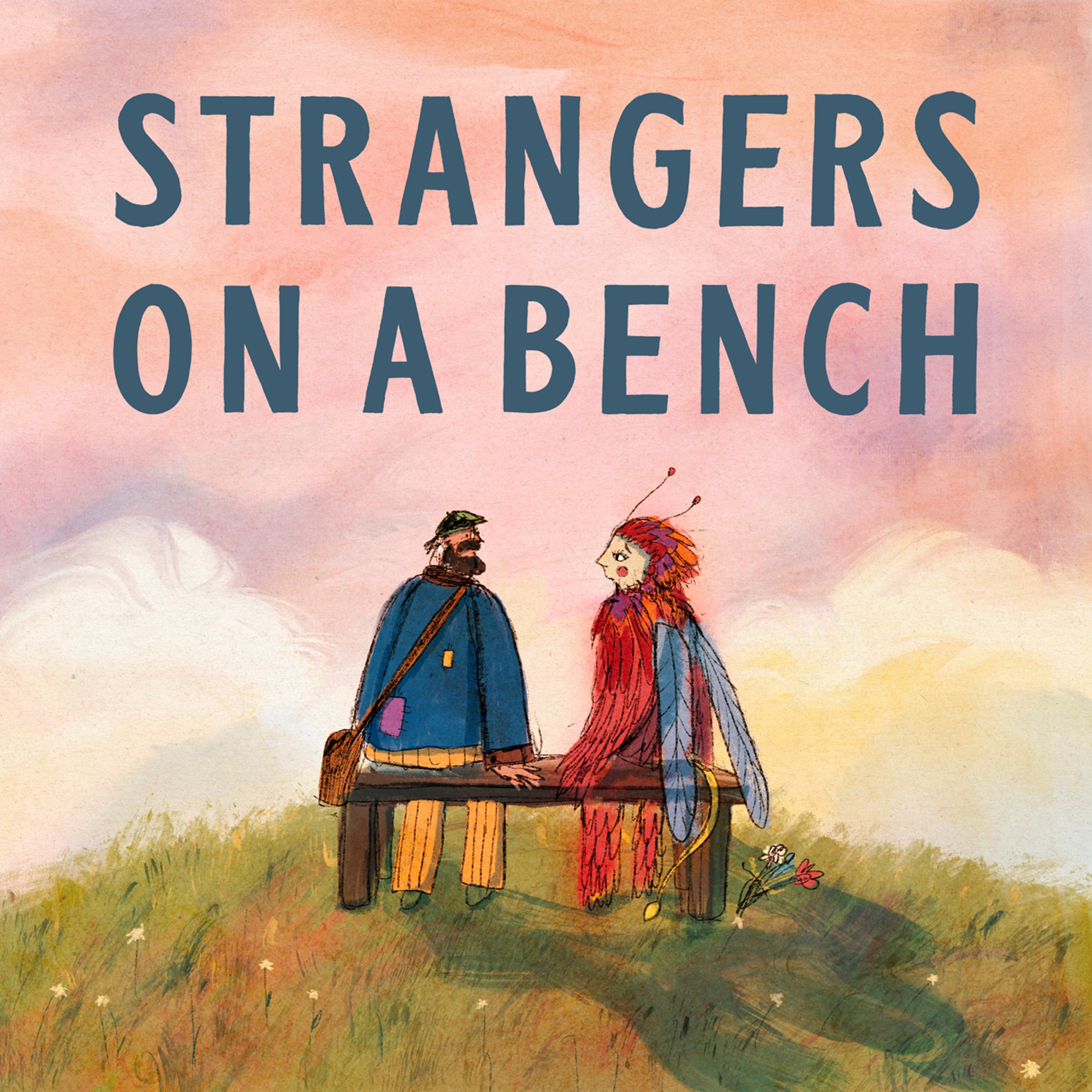
Strangers on a Bench
EPISODE 90: So Glad I Didn't Hide Away
01:02:43
Tom Rosenthal talks to strangers on park benches, often leading to surprising revelations.
Loading summary
Transcript370 lines
- [00:04]
Podcast Host
Hello. Sorry to bother you. Can I ask you a slightly odd question? I'm making a podcast called Strangers on a Bench, where essentially I talk to people I don't know on benches for 10 or 15 minutes. Are you up for that? Do you want to give it a. So you've already heard two episodes.
- [00:52]
Guest
They were great. One was about throwing the mobile in the pond. That was the second one. And the first one was Guy. He'd been to prison.
- [01:01]
Podcast Host
Yeah.
- [01:02]
Guest
And that was pretty.
- [01:03]
Podcast Host
So you're two down.
- [01:04]
Guest
I am. Many. Many.
- [01:06]
Podcast Host
And here we are.
- [01:07]
Guest
We are. That's so strange.
- [01:10]
Podcast Host
Can we say where we are? We're allowed to say where we are.
- [01:12]
Guest
Yeah. Why not?
- [01:13]
Podcast Host
We're in Lewis, on a bridge that I don't know the name of, nor the river. We're over. You know the name of the river.
- [01:19]
Guest
I should probably know that, but now I can't remember.
- [01:22]
Podcast Host
But it's a good spot.
- [01:23]
Guest
It's a lovely spot. Yeah. That's why I chose this bench. The reason I'm here is because I'm on jewelry service.
- [01:30]
Podcast Host
See, that's the first 300 plus down.
- [01:33]
Guest
Yeah.
- [01:33]
Podcast Host
Not anyone on jury service.
- [01:34]
Guest
Yeah.
- [01:35]
Podcast Host
At that moment.
- [01:35]
Interjecting Voice
Yeah.
- [01:36]
Guest
And I haven't been picked, so that's why I've got a moment to sit here and I brought my workbook along and just come out and thought, I'll have a moment.
- [01:45]
Podcast Host
Not much of a moment.
- [01:47]
Guest
Well, I had had a moment before, so that's. That's all right.
- [01:50]
Podcast Host
Do you know why they'd pick. Certain people are not another very.
- [01:52]
Guest
All random. So there's a certain amount of you that go in and then your names are all on cards. And then they picked 12.
- [01:58]
Podcast Host
Were you very excited to get the call? Get the call up.
- [02:02]
Guest
It was interesting. It's actually the second time, so I was surprised to get it again, I suppose, in a way, because you think, what are the chances? But it's just random.
- [02:10]
Podcast Host
I've not had it once.
- [02:11]
Guest
No. And lots of people won't, will they?
- [02:13]
Podcast Host
But, yeah, no, actually someone kind of come and get me. Plea to the authorities. I don't know who won. Civic duty.
- [02:21]
Guest
Civic duty. Absolutely.
- [02:23]
Podcast Host
Funny word, civic duty. I don't quite know what other things can under that. It's just kind of not committing a crime. It's just not pushing someone over on the street. I mean, it's going to kind of, you know, I mean, what is it?
- [02:33]
Guest
What is it?
- [02:33]
Podcast Host
Waving?
- [02:34]
Guest
You should look that up.
- [02:35]
Podcast Host
Say good morning to people.
- [02:37]
Guest
Yeah. We should look it up and see what comes under civic duty. Shouldn't we?
- [02:40]
Podcast Host
But it's one of those rare ones which is just like definitively jury service is civic duty.
- [02:44]
Guest
You know that pretty much, yeah. Yeah.
- [02:55]
Podcast Host
So you've listened to two of these programs. You remember how they start?
- [02:57]
Guest
Yes, I think so. You ask about favorite day of the week.
- [03:00]
Podcast Host
There you go.
- [03:01]
Guest
Yeah.
- [03:01]
Podcast Host
I don't even need to be here. I just. I show myself. What would he ask next? Well, you'd ask me. I've yet to do that. Leave someone on a bench. You just talk as long as you can. I've got to go.
- [03:15]
Guest
Yeah.
- [03:15]
Podcast Host
You know what? Now we've said that maybe, you know, if. If we're happy enough in a certain amount of time, if I leave for three minutes, let's just see what happens. That'd be a first. I feel like once you're on a roll with first, you should just. Yeah, go with the first.
- [03:28]
Guest
Yeah, yeah.
- [03:29]
Podcast Host
Have you had any firsts recently?
- [03:31]
Guest
I did play pickleball recently. First time.
- [03:34]
Podcast Host
Is that the Tennessee one?
- [03:35]
Guest
Yeah. I wasn't sure which was which.
- [03:37]
Podcast Host
There's a few now.
- [03:38]
Guest
Yeah, There are paddle and pickleball. I wasn't sure which was which. It was really good. Really enjoyed it.
- [03:43]
Podcast Host
Why did you do it?
- [03:45]
Guest
My friend and I were away. We're in Northumberland. We're staying in the countryside in a lovely tree house that we've stayed in before. Very contemporary. Treehouse. And they've got tennis court there in
- [03:56]
Podcast Host
the treehouse,
- [03:59]
Guest
just outside of the grounds.
- [04:00]
Podcast Host
So you're getting a treehouse moment.
- [04:02]
Guest
Yeah.
- [04:03]
Podcast Host
At the same time, your pickleball.
- [04:05]
Guest
Yeah, it's lovely, actually. It just works really well on Trust. And they've got an old red telephone box in the. In the ground. And that's where they store all the tennis. Yeah, tennis rackets.
- [04:16]
Podcast Host
And that's what they're used for now.
- [04:18]
Guest
Yeah, yeah, exactly. They found a real good use for it.
- [04:20]
Podcast Host
Yeah. More games, eh?
- [04:22]
Guest
Yeah, more games. It was fun.
- [04:24]
Podcast Host
They feel good, don't they, the game?
- [04:26]
Guest
They do.
- [04:26]
Podcast Host
I've got a good game story for the other day where I'm quite a ping pong fan.
- [04:31]
Guest
I like ping pong.
- [04:32]
Podcast Host
I'm not brilliant at it, but it's such a lovely thing.
- [04:34]
Guest
It is.
- [04:35]
Podcast Host
And I play with my friend Sid. We went where we normally would play. It's next to a college and it was incredibly windy. Your first thought was like, oh, well, that's just not going to work. And the second thought was, you know what, let's just. Let's just try, wasn't it? And it was just so funny, obviously it was ridiculous. You're competing against the width. You know, you slightly. You touch. You touch it slightly and the ball just flies a mile and just to take. And it's like, well, this is completely ridiculous. There was one end we couldn't win from, I'm sure, because. And so it's just. But there was a magic, actually, I realized. And half it was just playing in the first place and just. And just getting involved with the silliness,
- [05:10]
Guest
which is good fun. And that's. Yeah, it's more what we both needed. We've both been really busy at work and I actually said that at the time when I was playing with my friend. I said, we're having some of that fun that we said we both needed, aren't we? It was really like a moment to go. Really enjoying this. It's really fun.
- [05:31]
Podcast Host
I was going to ask. When you mentioned the red telephone box, do you remember in your past the most important call, or at least a memorable one you can remember even from a telephone.
- [05:42]
Guest
From a red telephone box.
- [05:43]
Interjecting Voice
Box.
- [05:45]
Guest
It.
- [05:45]
Podcast Host
See, does it seem. It's so funny how very quickly the thought of diving into this red box to communicate with someone seems absolutely mad. It seems like something from like 500 years ago.
- [05:58]
Guest
Exactly.
- [05:59]
Podcast Host
When actually it was like, what, 20?
- [06:01]
Guest
Exactly. Yeah. I mean, it is.
- [06:04]
Podcast Host
I was gonna go into that red box and then. You'll be able to call someone. Didn't the red box. What was wrong with it?
- [06:10]
Guest
Where's the thing in my pocket. Funny. I do remember ringing somebody I'd met on holiday when I. When I was only 17 and met this boy, his Dutch boy. And I remember ringing him from a red telephone box to arrange to go over and see him, actually, which was quite something to do at that age, really. And, yeah, I ended up going over and had a great time.
- [06:35]
Podcast Host
But it all started in the box.
- [06:36]
Guest
It all started in the box.
- [06:47]
Podcast Host
Just hearing that story sounds like it's not fathomable that you could actually make arrangements from the box.
- [06:53]
Guest
Yeah.
- [06:54]
Podcast Host
It almost seems like you're just like that, actually. That could. The spring. It's almost like. Almost like that's not right.
- [06:58]
Guest
That's how you did it. Or you did it from your home phone. But you wanted some privacy. That's why I think important ones spring to mind are ones like that. But you thought, I just need a bit of privacy from.
- [07:08]
Podcast Host
Although you would have had. You would have had a bit of a time limit. I'm guessing now you're putting the coins in.
- [07:12]
Guest
That's very true. Do you remember the Pips going and having to quickly put some more in or say goodbye quickly. Remember the pip. You're not old enough for that. Of course.
- [07:20]
Podcast Host
Of course I am. I remember the Pips. But it's funny. It's funny to think that's such, again, an absolutely mad idea that, you know, you have to cram this communication in such a short space of time.
- [07:30]
Interjecting Voice
Yeah.
- [07:31]
Guest
Don't you think it's funny though, as well, that now, I don't know, it might not happen with you, but calling was the only way. So that's what you did, you called your friends and now there's less of that. I speak to my friends barely ever on the phone now, and I. That's a bit sad, you know, because texts are not the same, are they? You can let somebody know you're thinking about them, you know, in a quick way, but you. I think you lose something. It almost feels like an intrusion now to ring somebody, doesn't it?
- [08:04]
Podcast Host
They're so right.
- [08:04]
Guest
What are we scared of?
- [08:06]
Podcast Host
It's a great question. I think maybe there's a lot of options that allow us to do stuff in our own time, but it seems like, you know, without kind of bothering another. For instance, like the voice note, obviously becoming more and more popular that, say, would naturally take the place of a phone call.
- [08:25]
Guest
Yeah.
- [08:26]
Podcast Host
It's convenient to me. I'd do it. But then obviously something. There is a bridge lacking, clearly, in that.
- [08:31]
Guest
It's a bit of a loss of intimacy, I think, isn't it?
- [08:34]
Podcast Host
Oh, definitely. You know, I'm not. You know, there are some lovely things about a voice note. You know, it's preferable to a text. Some people. It does the job in some. Some situations. But again, it's no dynamic.
- [08:45]
Guest
No.
- [08:46]
Podcast Host
I think back to, you know, you in that telephone box calling the sweet Dutch. Dutch guy when you're in that box. And I'm thinking now about some of the phone calls I make.
- [08:54]
Guest
Yeah.
- [08:55]
Podcast Host
You know, it's kind of scary, I suppose there's a real vulnerability to. You pick up the phone, you call someone, you don't know what situation they're gonna find them in. You know, you're gonna be interrupting something. Then obviously when you're calling house phones, you might have got someone's parent or whoever was around.
- [09:11]
Guest
Yeah, you should navigate all that, you know.
- [09:12]
Podcast Host
So it's like there was, like a sense of trepidation in making these phone calls. But then I suppose also nowadays, because it is so much more just success, you know, successful not to do it. Then it's like it's less. Why give yourself the fear while just do this?
- [09:25]
Guest
It is. I think that's exactly what it is. I think we're. We're afraid of the rejection, aren't we? And we feel like we're intruding and therefore put ourselves in that position where somebody hasn't possibly got time. And I don't think we think consciously of it as a rejection, but I think that's probably what's under. It's vulnerability, isn't it?
- [09:43]
Podcast Host
When was the last time you got rejected or felt rejected?
- [09:47]
Guest
Good question. Felt rejected. I mean, I can be easily hurt anyway. You can feel if somebody's. If you feel like somebody's not listening very well, you know, active listening takes a lot, doesn't it? You know, and we're not busy lives and we always present. So I think I can feel hurt that way. Yeah. But can I think of something that's recent where I've felt rejected?
- [10:15]
Podcast Host
Maybe you're not putting yourself out there enough.
- [10:17]
Guest
Maybe more phone calls, you know. Yeah, there is that, isn't there? That, you know, what are you not taking up because you're a little bit afraid? That's a good question. You really made me think. Yeah, because there's feeling little bits of rejection because somebody hasn't heard you. That's just normal, isn't it? And I'm very sensitive to that.
- [10:40]
Podcast Host
Who is this person who's not listening to you? Let's go over it.
- [10:45]
Guest
No, I think in my past, who would you think as a child growing up, I think family, you know, listening.
- [10:56]
Podcast Host
Who was the key person you think did not simply listen enough to you?
- [10:59]
Guest
My mum. That's evoked a little bit of an emotional response, isn't it? Yeah, something I'm working through. It's not huge, nothing big happened, but it's just something I've realized, perhaps just. Yeah, I didn't get enough of that. Perhaps, you know, nothing intentional. She'd be really hurt, I'm sure, if she thought, yeah, I didn't feel I got enough of that, perhaps. But clearly at the same time, that can still have a bit of an impact, can't it?
- [11:59]
Podcast Host
What were you trying to say to her that she wasn't receiving?
- [12:05]
Guest
I think overall it was possibly just about just taking notice of. Might not be so much that I was saying things that weren't heard. Although I can remember instances of somebody saw her mum and pops responding in a way that sounds like she's listening and then, you know, she hasn't because of what happens, you know, after. But I think overall, what I've got to get into the bottom of is that possibly wasn't asked enough questions if I was. Interest wasn't taken in what I was doing, maybe. So therefore you think you learn not to bring things up because you can feel that somebody else's needs and interests are sort of taking precedence, you know, so to not get rejected or to feel rejected, you sort of just go along with their topic of conversation and keep yourself just in the good books and. Yeah.
- [13:08]
Podcast Host
Is she with us?
- [13:10]
Guest
Yes, she still. She still is with us, yeah, she is, yeah. She's in the early stages of dementia at the moment as well, so. But only very early, so sometimes you wouldn't know.
- [13:23]
Podcast Host
Yeah. Do you think it's possible to get any. Anything from her now that you would want, or is that too much?
- [13:31]
Guest
Yeah, it's. It's interesting that, you know, talked the therapist a while ago now, before Mum had dementia, and they made the decision that actually bringing it up in any big way probably would have done more harm, I think. Yeah. Yeah. So just trying to understand why I feel like that and take responsibility for then how I show up and what positions I put myself in, I suppose. Boundaries talking boundaries to some extent, aren't you, in how much time you spend, what you share. Yeah. Work in progress still.
- [14:07]
Podcast Host
What has she done? Well, mother. I mean, what. What would. What do you. What do you have to thank her for?
- [14:11]
Guest
She's so smiley friendly, getting on with people, you know, out and about. She's very much in the moment, my mum, so she wasn't restricted by things. Oh, there won't be enough time for that. You know, let's maybe just go and do that. So there's some really good points that. That way. As a kid, we probably benefited from. Not too rigid. She loved fashion and clothes. We had a good bond over that. That's always been a place where we've been able to spend time together, shopping.
- [14:47]
Podcast Host
So just taking from what you said there, what you said previously, she's very
- [14:50]
Guest
present person, very lives in the moment
- [14:53]
Podcast Host
and maybe you wanted to process some things or think about stuff that's already happened or kind of. And she just obviously was just. If you're that present or not wanting to think about things, I think.
- [15:06]
Guest
I think if I'm. I think if. I think there was a little bit of perhaps chaos, perhaps not. Chaos is too maybe strong a word, but where there weren't the boundaries for, you know, we can try this. We can, you know, we can go and let's do that. And it Also didn't sometimes create some of those realistic and safety sort of boundaries that you needed as well, you know.
- [15:31]
Podcast Host
Do you have any idea about why if her being so present was more of a. Something that wasn't her first choice, say something that she just had to be because she didn't want to be the other or didn't want to reflect too much on whatever she would be reflecting on. Can you think about what that would have been,
- [15:56]
Guest
Would she have been trying to avoid? I'm not sure. I feel more like her bandwidth is just taken up with, with what's happening in the moment. There's a lot to attend to. Whether now she would be diagnosed with ADD or adhd. I don't, I don't know. I mean, you know, speculate just because come across a lot of that through, you know, my work. And I do think just attending to what was happening in the moment took a lot. There are four to and think right. Do we need to reflect? Do we need to process just not so much in her nature. I think she, she actually shared with, with us that she didn't always feel as a child getting in to trouble for this very thing. Like because she was a bit, you know, a bit sort of oh, you know, looking at the clouds and looking at the this and looking at that. And it was pay attention from a moment of us, pay attention to this, what you do. So I think, you know, she put
- [16:58]
Podcast Host
the way she is.
- [16:58]
Guest
Yes, just. It's just the way she is. Hence why feeling that you've slightly suffered because of that, it's hard because she is how she is. And I think what I've had to be okay with is that those two things can happen at the same time. She was doing her best and didn't mean anything. And it can still affect you, you know, because as children, you know, you're
- [17:19]
Podcast Host
very formative and we're all limited in some. We've all got these blind spots that we just can't cover. You know, how much someone may say, well have you thought about this? Cannot do more of this. And sometimes we just don't have it in us.
- [17:31]
Guest
No. And we're of a different generation. I'm really interested in growth and trying to understand formative experiences and how that affects us in a positive and less positive ways. And everybody is affected by their childhood in positive and less so because nobody can get everything right because we are complex creatures. But also, you know, there's openness to that, isn't there to reflecting and getting, you know, therapy and if you're interested to try to find your blind spots and, you know, I'm really interested in that. But that wasn't something previous generations had so much access to or thought about and that's it. So it is different.
- [18:31]
Podcast Host
If, if you didn't get quite what you were looking for from your mom, you know, who is kind of the one who went. Who? Yeah.
- [18:45]
Guest
There are definitely some experiences I remember of adults either as a child or as a young, you know, sort of teenager, young adult where somebody took an interest in me and that, that was, that was, it stood out to me. And I really remember our lovely next door neighbors looking. I was often in the garden and I was, was flipping myself about. I was into gymnastics for a long time when I was young, you know.
- [19:17]
Podcast Host
On a trampoline.
- [19:18]
Guest
No, on the grass. Yeah. So gymnastic, proper sort of, you know, artistic gymnastics.
- [19:25]
Podcast Host
Anything for a softer landing or just the grass?
- [19:27]
Guest
Just the grass, yeah. You do backflip? Yeah, I used to do backflips and somersaults at one point. Back somersaults at one point.
- [19:33]
Podcast Host
Whoa. Still. Still got it in you?
- [19:36]
Guest
No, but last week in, when I was in Northumberland, I did do a cartwheel on the beach in a handstand. In fact. I did two or three cartwheels on the beach because I just could still, I thought a big open space. I just thought I've got to just do it and try.
- [19:49]
Podcast Host
And you could, you still could.
- [19:50]
Guest
And I didn't pull anything. Which is a great thing because sometimes
- [19:53]
Podcast Host
when you try more car wheeling.
- [19:55]
Guest
Yeah, absolutely. Especially because I didn't pull anything. Obviously the Pilates and the stuff I'm doing paying off, so. But yeah, I remember next door neighbors just really taking an interest in what I was doing and I just wasn't used to that, you know, Just wasn't used to it. It was lovely. And I remember thinking, yeah. And then other times, I suppose a couple of times with other adults. Just when I was in, I went to. I worked in insurance for the first few years after coming out of school. I'm dossed about in A levels. I was really lost my way. I was too busy with the Dutch boy. With the Dutch boy. Was the Dutch boy. And then other boys. Yeah, it was definitely. It didn't happen after that.
- [20:36]
Podcast Host
I mean, to be fair to you, it's an entirely, you know, I think reasonable choice. I mean, look, it's, I mean what, what's more exciting than romance?
- [20:45]
Guest
Exactly. And it was just at that time I just wasn't ready. I wasn't, I Wasn't mature enough at that point to apply myself. So I went to work. But then I sort of had this thought about because I'd had some work experience through. I can't remember what year in school, but we did some work experience and I went to work in primary schools and I enjoyed it so much for the half term. I asked if I could do it again the next half term. So I think that sort of lodged somewhere. Not at the time. So when I was working in insurance anyway, I decided I was going to pursue this and go to. You need to train to teach. And I remember getting some help from somebody that was actually temping at the insurance company. And she happened to have been a friend of the family years ago. I'd known her daughters and she was really helpful because she'd gone and done some further education herself, I think, later on. And she offered to put me in touch with somebody, primary school head that she knew, try and get me in there. Her lecturer that she'd had, which was. Must have been through uni to look at my application and everything. And that really sticks with me that, you know, she didn't have to do any of that and she took notice of something that I wanted to do just through talking and helping. It was really lovely. So there have been those lovely forms, people along the way.
- [22:22]
Podcast Host
This might be an overreach, but I'll say it anyway. You can tell me if it does make any sense. If mother's not giving you enough acknowledgment.
- [22:28]
Guest
Yeah.
- [22:29]
Podcast Host
Do you think at all you sought that in those early romances, do you think that propelled you towards those?
- [22:33]
Guest
More could easily have done.
- [22:35]
Podcast Host
Seems to make sense.
- [22:36]
Guest
Absolutely. You're not getting something. So. Yeah. When you get some attention from elsewhere,
- [22:43]
Podcast Host
to be heard is so important, really, isn't it? I would say it's like it's a central tenet of love, really.
- [22:48]
Guest
No, completely. And yeah. I think making those connections where you can. Which takes us on to how I ended up down here in this. In the south, really. So now I'm living down in the south coast with. What do we call her? Call her My best friend. Probably morphed now into calling ourselves partners because we saw something in each other and just had such a connection and we even think quite a lot of that is because. Because of being felt to be seen and understood by each other on a really like, amazing level. I'm so lucky. Yeah.
- [23:48]
Podcast Host
Got lots of questions for you. But how. How did you meet this person?
- [23:52]
Guest
Yeah, through. Through work. So through teaching the Same school. We just, we just got on but very quickly there was a, just a like almost a need to be together. It was really quite something. But at the same time wasn't about attraction in a way that you would like, you know, been attracted to, you know, boys and men. But there's that just that need to be together and we changed our lives because of it. We were both in long standing relationships. Came out of those and.
- [24:50]
Interjecting Voice
Yeah.
- [24:50]
Podcast Host
Amazing.
- [24:51]
Guest
It is, it is amazing. It is amazing.
- [24:53]
Podcast Host
Very beautiful. Could I ask how old you both were when you met?
- [24:57]
Guest
Yes. So how old was I? 30. Yeah, 32. She was a little bit younger just to be 30, I think. Yeah, 30 and 32.
- [25:09]
Podcast Host
And you had been in both in long term relationships?
- [25:11]
Guest
Yeah.
- [25:12]
Podcast Host
How roughly how long?
- [25:13]
Guest
So six years. Married for some of that. And similarly she'd been with her partner, you know, living together for quite a number of years as well. So I mean you look back and you're still very young. And I always, I've always felt this, that I've come quite late to things. So you look back and gosh, we were very young. Really.
- [25:40]
Podcast Host
A complicated question for you. Did meeting your partner.
- [25:49]
Guest
Yeah, let's do that.
- [25:51]
Podcast Host
Did she make you aware that what you had had so far wasn't meeting something or was she an entirely other proposition that took you away from that? Does that mean.
- [26:04]
Guest
It's a really good question. Question and I think it's a bit of both. I'd never felt seen and understood and loved anyway in the way that I do with her. So that was different. It wasn't like there was loads wrong in my relationship that I was in. You know, there was compromises that I was possibly making. Compromises that you make in a marriage and perhaps some of that is going around his needs more than mine sometimes. But, you know, nothing major. It just came to there being no question that this is who I need to be with the love and the care and the just the just the understanding that we've got and the ease of being together and you know, that was definitely, definitely different. Not like what I was in was bad in any way. It wasn't. Which was, you know, that's hard in itself.
- [27:23]
Podcast Host
The way you described your partner initially like, well I met this person. Sounds like, you know, a light came on from somewhere. You described it initially as like an amazing friend. Then you say, well that actually really is a partner. You know, there was no particularly like sexual, romantic, whatever you call it. Like that's just purely. Just based on a kindred spirit.
- [27:47]
Guest
Yeah, absolutely.
- [27:48]
Podcast Host
Can you explain without prying too much, did you kind of grow into that side eventually? Or how did that work? Or maybe you haven't for, like, now. You could just be completely platonic friends living together.
- [27:58]
Guest
Absolutely.
- [27:58]
Podcast Host
Which would also be completely fine.
- [28:00]
Guest
Absolutely. We are. And that's what we are.
- [28:02]
Podcast Host
Yeah.
- [28:02]
Guest
Which is why we now use the term partner.
- [28:06]
Podcast Host
Yeah.
- [28:06]
Guest
But it's felt strange saying that because it's not that sort of romantic and, you know, sexual relationship. It's seems. It seems different, but, you know, come into the modern world.
- [28:19]
Podcast Host
Here we are.
- [28:20]
Guest
But. Yeah. So.
- [28:21]
Podcast Host
So. So again, stop me if any of these questions are too evasive in nature, but there hasn't been. There's never been a romantic element to this.
- [28:33]
Guest
It's what I suppose is what you call romantic, isn't it? It's. It's. It's hard to. Yeah. But, yeah, if you're talking physical and such, it's not. And we're not talking that, you know, that relationship. No. It's just. Yeah. I mean, I suppose it's. It's that need to share a bed.
- [28:50]
Podcast Host
No, no. Have you ever.
- [28:53]
Guest
No, not.
- [28:54]
Podcast Host
Yeah.
- [28:54]
Guest
You know, other than. Yeah, no, we have. No. No. This is why it's always been hard to categorize, you know, for people, because. And now somebody would say you're. Yeah, you're. People would want to label you as you're asexual or you're whatever, you know, and it's not as. Not always as simple as that, is it? Because I'm.
- [29:13]
Podcast Host
The thing about labels is you could have a million of them. Doesn't mean you're gonna. You can capture anything.
- [29:17]
Interjecting Voice
Yeah.
- [29:18]
Podcast Host
You know, the dynamic of two humans is always. Is always, always unique.
- [29:22]
Guest
Yeah.
- [29:23]
Podcast Host
You know, there will be people out there who have had a similar situation to you who, probably because of the fact it doesn't fit into certain labels, have stressed about it.
- [29:33]
Interjecting Voice
Yeah.
- [29:33]
Podcast Host
And maybe not gone through with what feels right.
- [29:36]
Guest
Yeah. Yeah. Yes.
- [29:37]
Podcast Host
Because they're like, well, how do I explain this to Uncle Philip at Christmas? You know, how am I going to say? Well, I can't really. Sort of.
- [29:45]
Guest
Absolutely. Because it's not neatly categorized.
- [29:48]
Podcast Host
When I hear that, I think, what a beautiful sounding thing.
- [29:52]
Guest
It is really interesting, isn't it? And it's. So sometimes a lot is put around that sexual relationship anyway, isn't there? But then also, even. Why wider than that, you know, a lot of listening to Esther Perel. She's a brilliant psychotherapist, isn't she? And she's done a lot of work on couples and Intimacy. And her definition of intimacy is just so much wider, you know, and. And the erotic as well. The way she talks about eroticism, she talks about that through the art and everything, you know, not just sex. So, I mean, I think everybody thinks of intimacy has to lead to sex. You know, certainly what my partner and I have got is a really intimate relationship. And that intimacy is about being able to be your full self. And that. That's really special. Yeah.
- [30:56]
Podcast Host
I've got one more annoying, slightly invasive question related to this since living with this. But, you know, have. Have you saw anything physical elsewhere or is it just not. Have you just not been the desire.
- [31:09]
Guest
It's just. It's just. It's really funny because in the early days that was really sort of complicated because obviously the attractions to. To men still was. And also in the early days I'd always thought I'd have children and my partner also herself, the children as well. So that was something to. To navigate. There was that initial what's going to happen there? And there were definitely little bits foraging into, you know, being interested in other people. But, you know, what happened was that we just. That felt like a betrayal of the one of us, you know, because I think, because we know that we needed to be life partners. And I know lots of people will have open relationships where they can have sex with other people. And if that had been a real issue for either of us, we would have had to have navigated that. But it. I think just the desire wasn't there enough to make that happen.
- [32:19]
Podcast Host
And now how. How many years has it been again?
- [32:22]
Guest
Lots. Now where are we? 23 years. 23 years, yeah. Wow.
- [32:35]
Podcast Host
You remember a first moment where it really clicked with her.
- [32:40]
Guest
Like, this is more than.
- [32:43]
Podcast Host
More than just you average.
- [32:45]
Guest
Yeah, absolutely. Because we'd done some things as a group going out together and we'd been away for some weekends as a group of people at work. It's very sociable, but we'd spent quite a lot of that time together. You know, we were staying over on a couple of places, so shared the room together and we just stayed up talking all night. But at that point that was just still very. Just great friend. I've got an extra great friend in my life. And then it just felt more exciting to be able to get that time together or go. I remember us going out one night midweek, went out where I lived and came and stayed over. And so a couple of those things sort of happened. And then the summer holidays came from school and work and I remember driving over to A hospital appointment with my husband at the time. He was driving. And a song came on the radio and it really got me and made me think of her. Her. And it really. I thought, oh, that's a bit different. That's a longing. Gosh. Okay.
- [34:04]
Podcast Host
The power of a song to kind of unite you with that feeling.
- [34:07]
Guest
Absolutely.
- [34:10]
Podcast Host
I've got to ask what the song was.
- [34:12]
Guest
Yeah. And I'm now thinking I never do because I've obviously heard it since, and I can't.
- [34:17]
Podcast Host
Can we think.
- [34:17]
Guest
I'm so terrible at remembering names of things as well.
- [34:21]
Podcast Host
Was it. Was it a female voice?
- [34:23]
Guest
It was a female voice, yes.
- [34:24]
Podcast Host
We've narrowed it down.
- [34:25]
Guest
Yes. Yes. Down to the year. Which year was it?
- [34:29]
Podcast Host
Was it kind of. Was it kind of. Was it acoustic? Was it rocky? Was it poppy?
- [34:34]
Guest
It wasn't poppy. It was definitely a bit more. It's slower. A bit more of a.
- [34:40]
Podcast Host
Okay.
- [34:40]
Guest
You know, a bit more of one of those heartstringy ones.
- [34:46]
Podcast Host
Fantastic. Yeah, but that's beautiful. In that moment, you're like, oh, hang on.
- [34:50]
Guest
Yes. This is a.
- [34:51]
Podcast Host
This is a funny moment. It's a different kind of feeling to what I thought I would feel.
- [34:55]
Guest
Yeah. Yeah, absolutely. And then we've got some summer plans. Went away on holiday and just. Yeah. Really missing her. Missing her and needing to be in touch. There was definitely that need to be together then. Well, that. That was when it was all. This is definitely different.
- [35:30]
Podcast Host
Another big question for you coming up. What has having your kind of needs met by someone, if we can say that, or having your, you know, or to put it to be. Being understood. What has that allowed you to do in your life? Since
- [35:54]
Guest
it helps me do. It's helped me. It's helped me grow. Helped me grow as a person. I mean, I've learned a lot from just being with her because she's such a very. He's a very good person. So I. It's. It's opened me up to, you know, her viewpoints on things, and she's very socially sort of very aware. And I think it's just. Overall, it's just allowed me to be more comfortable with being myself. Allowed me to relax and be myself fully without having to sort of think, how am I being interpreted, you know, what people thinking of me? I don't think that with her at all, you know, but I think to be able to be our full selves is. Is really important. And I can. I can recognize, especially through some help with therapy and everything, that. That I'm not always. Yeah. So she probably gets Some of those bits that are more real.
- [37:03]
Podcast Host
There's a wonderful quote from when I was 18. My father gave me a book by Joseph Campbell, Australian philosopher, writery guy. And a few quotes that. Dots around here and there. One of which has stayed with me is the privilege of a lifetime is being who you are. But that is. That, isn't it? I think that's what you kind of. We all kind of really work towards, or what is there really to strive for beyond that? Like, it's just. It's just the magic, really. It's just the key thing.
- [37:38]
Guest
And it sounds so simple, doesn't it? Be who you are. We're all just who we are. But actually, I didn't realize I wasn't being.
- [37:46]
Podcast Host
Yeah, it's actually really complicated. Really complicated.
- [37:48]
Guest
It's really complex. But I think even realizing that that is a thing that maybe we aren't being is huge completely.
- [37:57]
Podcast Host
And that's the. It says a lot about the world we live in, but also just, you know, general Western society. The whole thing that so many things take us away from that and we've got to, like. It's such a battle to be that. You know, the whole thing about labels is one of them.
- [38:13]
Guest
Yeah, yeah, yeah.
- [38:15]
Podcast Host
You know, being forced to do things at school you might want to do. I mean, you know, do master this because you just have to. Why? I don't like what you're doing. It's your parents saying, well, I'm not sure, maybe you should be doing this instead. Or, you know, so many. There's so many hurdles. It's not like. It's just one coming at you. There's so many forces that want you to be over here instead of over there.
- [38:35]
Guest
Yeah, yeah, absolutely.
- [38:36]
Podcast Host
And then to kind of. And it is such a battle, and it's so easy to lose that battle.
- [38:41]
Guest
It completely. You don't realize you've been fitting in. Yeah, yeah. Just. Do we all get to recognize that in our lives? I mean, on that theme of, like, daring to be yourself. I mean, part of the initial. Oh, my goodness. Like, it's just a stranger on the bench. My temptation was to not do this because I've spent quite a lot of time not sharing openly. Here I am, in case I'm judged without me even realizing I'm doing that. But that was a moment there where I thought, what do you. What are you hiding from? You've listened to two of these and found them fascinating. And those people put themselves out there. Why do you think you're going to be judged anymore? I Didn't have time to process all of that, but do you know what I mean? I said, yes, yes, exactly. I was so scared of, like, things being found out. And I don't even mean bad things, just my thoughts. I had kept diaries when I was younger, probably the sort of the age from 14 up to 17, Dutch guy, whatever. And I got rid of them all about that age because I was just too worried about anybody coming across anything. And I don't think I. I think I probably put things in here. This is another layer to it. I put things in code, I think,
- [40:11]
Podcast Host
to some extent in the. In my diaries.
- [40:17]
Guest
But even putting things down on paper, I found really hard. And once I'd done that and I already had revealed bits about myself, I thought, no, that's got to go. And that's about stage of just not feeling that you're valid as who you are, isn't it? Yeah, Just help me make that connection. I've just. Yeah.
- [40:53]
Podcast Host
With this podcast, people comment, you know, you can make comments on different places. And one of the comments fairly recently said what this podcast has made me realize that if you listen to someone for long enough, you basically can't help but love them. Do you know, as in, you know, if you spend enough time with someone in a meaningful way, you'll understand why they are the way they are.
- [41:20]
Guest
Yes, exactly.
- [41:22]
Podcast Host
Yeah. The more I talk to people, I made awareness of that.
- [41:28]
Guest
We're all connected that way. We started off talking about phones, didn't we? And being separated by not enough connection that way. I think there are not enough connections. Often we're so easy to judge. Isn't it from afar when you get to know somebody, like you've just said, I recognize we're all just.
- [41:46]
Podcast Host
That's it. And there are some really cool. And there are some really, you know, I've also very. I'm very drawn to, as I go on with this project, almost like chucking in, you know, some really complex characters and, you know, let's just give them the time to, you know, explain it all and talk about their parents, where they've come from, decisions they've had, the things, the traumas that have been thrust upon them. And then let's understand all the things they've done in context.
- [42:12]
Guest
Yeah, yeah, yeah, in context.
- [42:13]
Podcast Host
Everything is context. You know, it really is. So that's.
- [42:16]
Guest
That's so important.
- [42:18]
Podcast Host
So really, if this whole project has been about anything, it's like, you know, can we know people better? Can we give people a bit more time?
- [42:26]
Guest
Yeah.
- [42:28]
Podcast Host
And to be fair, to like everybody really. It's the structure of society that doesn't allow for the time of that.
- [42:34]
Guest
Yeah.
- [42:35]
Podcast Host
That's not the individual's fault. You know, we think we're doing it well, we're just not.
- [42:39]
Guest
No, we're not. Capitalism just, you know, and that drive for like everybody's going to be in work and we're pretty busy and you know, just all these things that are constructed just to keep us away from each other.
- [42:52]
Podcast Host
Yeah. The amount of hours we have to put into working and then recovery from the work.
- [42:55]
Guest
Yeah.
- [42:56]
Podcast Host
Who's going to have a time to go and talk to anybody on a bench? It's, it's a, it's mind blowing that it is a luxury.
- [43:01]
Guest
But yet. So yeah, when we started off, you know, saying that actually to be seen and understood and heard is. It's fundamentally what we need, isn't it, as a human. So therefore why don't we see having time to spend talking and properly active listening with people as a pastime that we should invest in.
- [43:29]
Podcast Host
I really think for me it's like the most obvious change. You know, as we've discussed that the first thing people need to time.
- [43:37]
Guest
Yeah.
- [43:37]
Podcast Host
We've been able to have a lovely chat this afternoon because we both weirdly have time. Jury service, you could have easily been called, you know, your name chosen. That's gone. I'm talking to someone completely different today and it's not the same conversation.
- [43:50]
Interjecting Voice
Yeah.
- [43:50]
Podcast Host
And I'm very lucky to have time as well. But yeah, the obvious thing that that needs to happen is it's a four day week.
- [43:57]
Guest
Yeah, right, Absolutely.
- [43:59]
Podcast Host
It just seems like so incredibly sensible. The difference between a five two and a four, three. Four, three sounds like almost like a balance to me. Five, two is not a balance. You know, five people playing on a football team and two people on the side. Not a great balance. Who's going to win. Yeah.
- [44:15]
Guest
And when they've done studies on that, I think I'm right in saying that they've made people more productive because you are so glad you have got more
- [44:24]
Podcast Host
balance without being too. I don't even know. I don't know if this is qualified as a kind of conspiracy theory thought. But if indeed productivity is on par with a four day week. They're like, what is there to be scared of really? It's like. And then you actually start thinking, well, are governments stressed about the idea of people having time? Because if you have time, you have ideas.
- [44:47]
Guest
Revolution. Yeah, you have ideas, you make a revolution. Exactly. You start thinking, well, that's it. That's what.
- [44:53]
Podcast Host
People be busy. You start having conversations. When you have conversations, you start thinking, God, these people aren't the enemy. They're just like. They're just like me and you, or like, we've been made for this and this and this. About so, so and so. So. It's mad, isn't it?
- [45:06]
Guest
Isn't it?
- [45:06]
Podcast Host
It's absolutely mad world.
- [45:07]
Guest
It is a mad world. When you got time to stop and think. It really is
- [45:12]
Podcast Host
on this bridge we don't know the name of. They should name it after us. Congratulations. Sometimes I've got a good 20 minutes in without asking the first question. I actually haven't asked it and you haven't answered it. So I feel like just for. Just to have that for those people who may be stressing going. She never answered the first question. I don't know how many of those people are there, but maybe also I'm one of them. If I'm also kind of looping background,
- [45:51]
Guest
but, you know, still stick. Stick with it.
- [45:54]
Podcast Host
Also, before I answer this question, sorry, I just need to have some jelly babies because my blood.
- [45:58]
Guest
My blood sugar, I've not had anything to eat.
- [45:59]
Podcast Host
Oh, no.
- [46:00]
Guest
Biscuit.
- [46:01]
Podcast Host
Oh. Oh, take a biscuit. Yeah, I'm gonna have this and also I'm gonna have that. I'm type one diabetic, so.
- [46:07]
Guest
Oh, gosh. You really do need to.
- [46:09]
Podcast Host
My blood sugars. I started going a bit funny.
- [46:14]
Guest
See what the time is. We're okay. Oh, it's half four. I'm meeting my friend at quarter.
- [46:22]
Podcast Host
How long have you got?
- [46:23]
Guest
Meant to be meeting it. Oh, my goodness. At quarter past five. So it's half four now, but to get to.
- [46:30]
Podcast Host
Oh, God. Have you got to get somewhere?
- [46:32]
Guest
Yeah, but I can put it a bit later. I can do it later.
- [46:35]
Podcast Host
We can raise through these four last. I can't open this thing. Open this. Amoretti.
- [46:39]
Guest
God, that time was just whizz. That's amazing. And that's because it's good. That's because it's good. Proper in the moment together. In the early years world in the reception age that I teach. My whole background is in that. It's called sustained shared thinking. When you're really properly in something together and you're solving something through your thoughts really properly shared, rather than just about waiting for your turn and not listening and not building on. Isn't it know. And yeah. That we've. We've been in that.
- [47:17]
Podcast Host
Totally.
- [47:18]
Guest
Oh, I've got. Could have offered you an orange as well. I've got.
- [47:21]
Podcast Host
Got a tangerious the biscuit is perfect.
- [47:23]
Guest
You are welcome to the orange as well, if you need. Yeah, but I'm worried about you. Now you've just told me your blood sugar level is low. Do you need to check anything?
- [47:34]
Podcast Host
No, no, I have. It's on my wrist, so I can. I can see. It's absolutely fine.
- [47:37]
Guest
Okay.
- [47:38]
Podcast Host
Anyway, Right, first. Yeah, favourite day of the week for the completionist.
- [47:42]
Guest
Yeah, after the completionist. Yes, Friday, because I've always worked full time, so last day of work and that's all that potential of the time off ahead of you. And it's often sometimes where the magic happens in work because people's shoulders go down a little bit, people are a little bit nicer to each other, you relax a little bit more. Certainly in the classroom sometimes that used to happen. My colleague and I that talk really closely together. We notice sometimes magical things would happen on a Friday and we think, well, is it because we live slightly more relaxed? I don't know, more present, more in the moment. But Fridays have always been a good day, working wise. And then Saturday, because then Saturday you've got the whole of the weekend to go.
- [48:22]
Podcast Host
I quite like those answers because they almost like reinforce everything you've kind of said about society and the time.
- [48:35]
Guest
Yeah, it kind of has to be
- [48:37]
Podcast Host
Saturday, but it's like you've been told it's Saturday.
- [48:39]
Guest
Basically, that's when I can connect with all the people I want to connect with and I'm not bound by all of this work.
- [48:44]
Podcast Host
So you're allowed to do it?
- [48:45]
Guest
Yeah, yeah.
- [48:46]
Podcast Host
I mean, that was another thing we haven't done. We completely circumvented your whole kind of teaching life, which I think is like, obviously an incredible, beautiful profession. It's always been little.
- [49:00]
Guest
Yes, I trained for primary, but I always taught all the different schools. I taught reception all year one and two, but really reception mainly year one and two for only one year. So I just sort of became a bit of a specialist within that. And then when I came out of teaching to do my advisory role, which I'm doing now, it was always around really young kids and they're just great. They're just great. I mean, they're just sponges and they're just there themselves generally. More so at that age, it's a pleasure to work with.
- [49:51]
Podcast Host
Because I haven't got much time. I normally ask a few questions before we get to this kind of question, but can you think of a. A moment of teaching that kind of defines why it is so important to you or what?
- [50:05]
Guest
Yeah, I mean I can think of one little girl and you know, one of many hopefully. But it's so important to get to know them as real individuals and just being able to do, say the right thing at the right time that helps them have that trust in you and you see a bit of breakthrough in some learning. And I can really remember that with this little girl, she wouldn't always say a lot but just by spending a little bit of time with her around something that she has been interested in, having taken an interest in some she's been doing at home, something was pertinent to her. She then later on, not long after was with me, sitting beside me and then started to write all of this sort of stuff down in a very early yearsy sort of way. But she presented this sort of writing, this emergent writing which is such an important stage for them when they're that age, to recognise that you can put something down that you want to communicate on paper is huge. And all of these sort of bits came out and she shared with me what that meant and what it was saying and it was lovely. And it completely linked back to the little bit of time that we'd had earlier in that day, earlier in the afternoon even or morning that she'd obviously felt that trust enough to then come and be, you know, take that risk and do that with me. And it was, it was really wonderful because it was a gateway for her to sort of start, you know, putting her thoughts down and it just emphasized how precious it is to spend that time. I mean, gosh, that's just what we've been talking about. Spend that time with Kit on a one to one. Get to know what makes them tick. Yeah, lots of lovely moments.
- [52:13]
Podcast Host
I'm a man of my word. We said it earlier and I want to do it because I've never done it before. I am going to leave you for how long do you want?
- [52:25]
Guest
Am I just going to be talking?
- [52:26]
Podcast Host
You know you can kind of reflect on what it's been like for you or like anything you want. You're up for that?
- [52:31]
Guest
Well, absolutely, yeah.
- [52:33]
Podcast Host
So I'll leave you. I'll give you a couple of minutes.
- [52:35]
Guest
Yeah, yeah, yeah, okay.
- [52:36]
Podcast Host
Are you okay with my bag?
- [52:37]
Guest
Yeah, yeah, of course, yeah.
- [52:38]
Podcast Host
Okay, see you in two, three minutes. So I've just left her, I'm walking down the street and let's see what she says. I'm obviously not going to know what she says until later.
- [52:52]
Guest
Well, that was amazingly interesting. Who would have predicted that my day would end up like this? I'M blown away because I've just been listening to this podcast for the first time this week, having read an article about it in the paper, and then to be approached to be the stranger on the bench. Amazing. And it's just been so rich to have that time to have a conversation with. With a stranger and to be tuned into, if I'm honest, you know, like that that's. Talking and listening to each other and perhaps some of the things that we talked about maybe might show why I found it so valuable. So thank you. I really enjoyed it and I'm so glad I was on this bench and took the plunge to do it and didn't hide away, which is possibly a tendency. My expectations were much higher. Much higher. My day certainly turned out differently and I'm so glad it did.
- [54:22]
Podcast Host
Okay, I'm going to go back to her now and see if she's still, still there. Back I go.
- [54:30]
Guest
Can't wait to tell my partner about how my day turned out.
- [54:38]
Podcast Host
I'm back. I've returned.
- [54:41]
Guest
Thanks for coming back.
- [54:43]
Podcast Host
How did you get. How did it get on?
- [54:45]
Guest
Well, I just. We just talked.
- [54:47]
Podcast Host
Whatever you did is magic.
- [54:48]
Guest
I'm just processing some of it, I think. Great.
- [54:52]
Podcast Host
This podcast has made you. Just doing this made me realize if you have like any idea that can be done, you should do it.
- [54:57]
Guest
Yeah.
- [54:57]
Podcast Host
You know, if it comes up as a kind of like Sin City thing, if it's possible to try it.
- [55:01]
Guest
Absolutely. Have the fun. Take it while it's there. It's a lesson for all of us, isn't it, really? I think there's room for a bit more of that in my life, definitely.
- [55:23]
Podcast Host
Okay, we've probably reached the end and there's one final question.
- [55:26]
Interjecting Voice
Okay.
- [55:27]
Podcast Host
The last question is, what are you going to do next?
- [55:29]
Guest
What am I going to do next? What I'm going to do next right now is go and drive to see my friend, which would be lovely. And yeah, then looking to certainly retiring out of full time work at some point. But whether that means I do go down another avenue and do some other work or whether I come out of it completely and just decide what I want to do and maybe go back to doing something else later, I don't know. Definitely feels like I'm a bit of a junction. I'm itching to do something else.
- [56:03]
Podcast Host
The itchy junction. No, I was gonna call their momo.
- [56:09]
Guest
Let's not call the bridge this. No, it's not a good name.
- [56:14]
Podcast Host
Everyone comes here when they're in a juncture of their lives to sit and ponder. Should I ask a passing person if they know the name of this?
- [56:22]
Guest
No. The bridge. Yeah.
- [56:24]
Podcast Host
Hi there. Sorry to bother you. Do you know the name of this bridge?
- [56:27]
Guest
Has it got a name?
- [56:28]
Podcast Host
Has it got a name?
- [56:29]
Guest
I don't think it does.
- [56:30]
Podcast Host
Cliff Bridge, isn't it? Cliff Bridge, you think?
- [56:33]
Guest
Is it? We should know. The body of water. Yeah. The river.
- [56:38]
Podcast Host
We've heard of things.
- [56:41]
Guest
River, river, river.
- [56:43]
Podcast Host
And you think it's Cliff Bridge. Bridge.
- [56:45]
Guest
This is Cliff High Street.
- [56:48]
Podcast Host
Because it's only a little one. Maybe it doesn't have a name. We're hoping it's okay. Google Maps doesn't name it. Oh, there we go.
- [56:57]
Guest
There we go. There we go. We can name it.
- [56:59]
Podcast Host
It's coming. It's coming.
- [57:00]
Guest
Lovely.
- [57:01]
Podcast Host
Thank you very much. We're over the ooze.
- [57:05]
Guest
Over the ooze. There we go. That answered that.
- [57:07]
Podcast Host
That's a nice word, isn't it? Well, good luck with this, all this
- [57:12]
Guest
junctiony business and thank you very much. I've had a. Really enjoyed.
- [57:16]
Podcast Host
Thank you very much.
- [57:17]
Guest
It's flown by.
- [57:19]
Podcast Host
Thank the justice system as well.
- [57:20]
Guest
Absolutely, I will. When I go in tomorrow or whenever I get the next.
- [57:25]
Podcast Host
The person who pulled the cards out.
- [57:26]
Guest
Yeah. I'm really, really glad they didn't pull them. Oh, I know. You know.
- [57:31]
Podcast Host
And yeah, good luck.
- [57:32]
Interjecting Voice
Yeah.
- [57:33]
Guest
Thank you. And good luck with keeping doing this. And I just can't. I can't believe that that's happened today. It's just amazing. Timing is everything, isn't it?
- [57:41]
Podcast Host
It really is.
- [57:55]
Interjecting Voice
I never felt so seen and understood. When you've got the time to stop and think oh, just on the cross. Magical things can happen on a day There. Take it while it's there. Let's just try. There's no question that this is who I need to be with. I was too busy. What are we scared of? We were just staying up and talking all night. A song came on the radio. There was this longing. What am I scared? Magical things can happen any day. We're all just people.
- [60:36]
Guest
Oh,
- [60:39]
Interjecting Voice
what are we scared of? What are we scared of? What are we scared of? When you've got time to stop and
- [61:25]
Guest
think
- [61:29]
Interjecting Voice
Just on the cross.