Loading summary
Transcript177 lines
- [00:00]
A
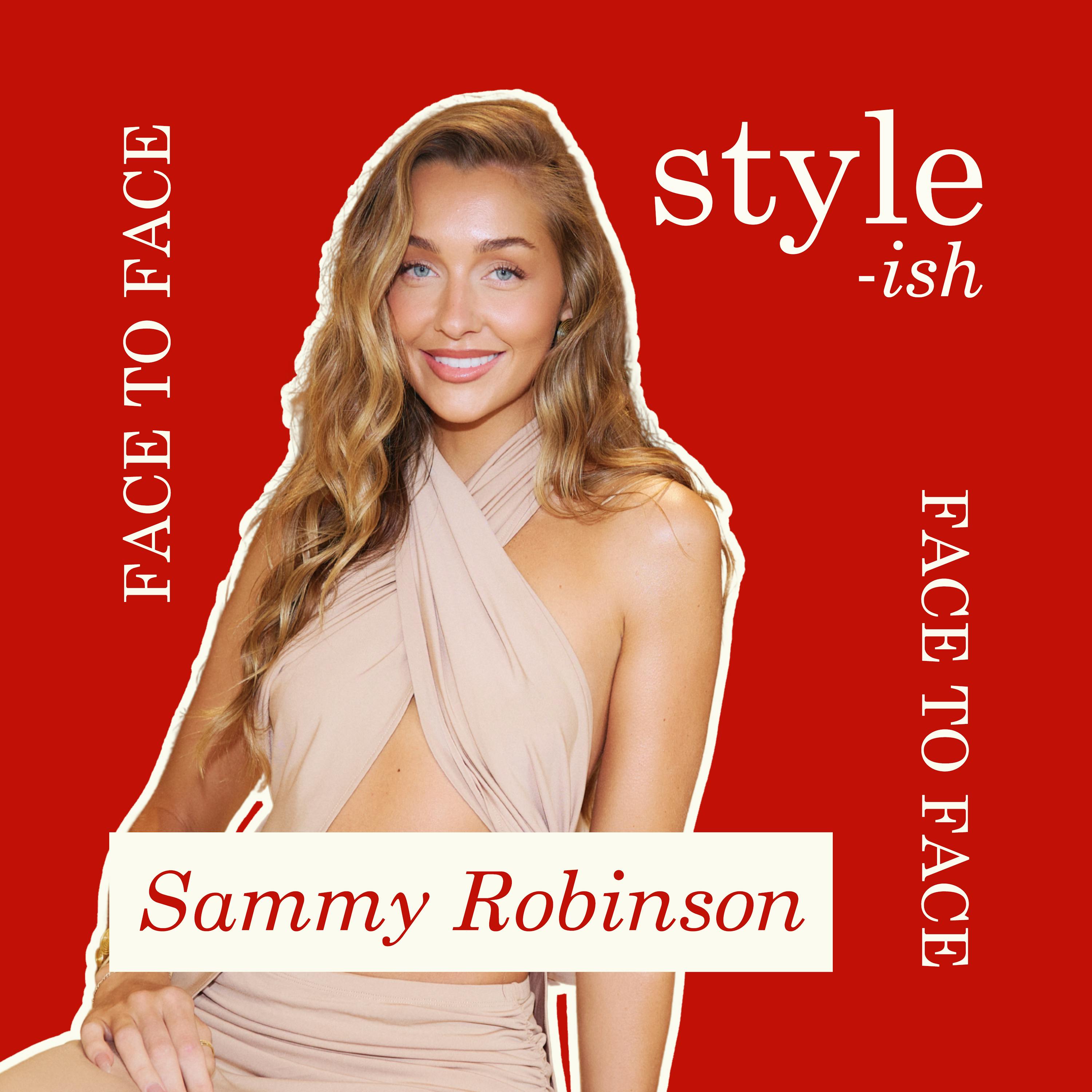
Foreign guys. We are back. Welcome to the first episode of our mini series Face To Face, proudly brought to you by Dan Murphy's. In this three episode series, we're inviting you to sit down with three very ambitious creatives who are cultural taste makers making a mark in their industry. They're the kind of creatives we'd love to sit down for a drink or two with. Within each episode, we'll deep dive into their business journeys, lessons they've learned along the way and what's next? Celebrating the art of a great drink and even better conversation. This series is all made possible by Dan Murphy's the Ultimate Tastemakers, bringing you the next big thing in beer and premixed drinks. Head in store or to the app and remember to choose to drink wise. Hello, I'm Rhiannon Joyce, Shameless Media's head of business development and Style. Welsh this Friday co host. Welcome to Face To Face and today we're talking to the wonderful Sammy Robinson. I'm sure all of you are very familiar with Sammy, but if you're not, she is one of Australia's most successful content creators and she's the founder and creative director of fashion label One Mile. She's always been makeup obsessed and first launched her YouTube channel in 2015 at the very beginning of the beauty influencer boom in Australia. Sample. Since that time, she's massive combined following across all her social media accounts of 1.6 million. So it's fair to say she knows a thing or two about cultivating a loyal and engaging audience. These days, she splits her time between her personal brand and One Mile, which has become a mainstay in the Australian fashion scene, recently opening two brick and mortar stores in Sydney. I'm actually lucky enough to be in Sydney and have Sammy in the studio today to talk about all things fashion, beauty and lifestyle. And Sammy, I'm so excited to have you here. When I spoke to a lot of my friends that I had the pleasure of coming to Sydney and interviewing them, they went crazy. I feel like the sentiment around this episode is really positive and I'm super excited because I feel like you're going to have a lot of tips, tricks, wrecks and really interesting insights to share. How are you feeling?
- [02:18]
B
Oh, thank you. Firstly, thank you for that beautiful introduction. It's always really nice to hear sort of what people preface with. And that's so nice about your friends as well. Thank you so much. No, I'm really excited. Excited to be here.
- [02:29]
A
I'm glad. Now, before we get into the interview, I do want to talk about the summer I turned pretty because I'm so.
- [02:36]
B
Glad you said this.
- [02:37]
A
Well, I saw last night on Instagram that One Mile hosted a live screening of the finale.
- [02:43]
B
Yeah.
- [02:43]
A
Can you tell me about that experience?
- [02:45]
B
Yes. Oh my God, it's so funny. In the office just before I came, I was like, I just want to tell the girls just to scrap all of the fashion and tips. Can we just talk about the summer? Can we just make a focused podcast on that? No, it was, you know, it's what's funny about it. So Georgie watches it religiously and had read the books and I had never seen it. So I binge watched it about two weeks ago and I, I understood the hype because I could kind of see it on social media, but wasn't really into it. Obviously when you binge watch it, you get very much into it. And I'm just madly in love with Conrad now. My boyfriend is like Team Jeremiah, like Team Conrad to my soul and my heart. But the general consensus from last night is that everyone's just heartbroken because he's just ruined dating for everyone.
- [03:29]
A
And was it a community event? So did you invite top spenders in your community or was it a giveaway? How did that come about?
- [03:35]
B
We just posted so broadcast channel on Instagram. We posted to our broadcast and we just said, yep, Open Air Cinema. We're hosting a live showing and within sort of like 10 minutes we had about 100 RSVP. Wow, crazy. And then we did a post to just Stories. There was no obligation. It wasn't paid. It was just come along if you want to come along. Just to our community. And yeah, we got to about 150 girls within like five minutes. And wow, they were all so sweet. Everyone was so excited. Every scene that came on, everyone was screaming and we just got Fun Day and Bobby on board and it was just a nice way just to bring the community together.
- [04:11]
A
Gorgeous. I love community focused events. There are a few brands in the Australian landscape at the moment who I feel like do that really well, One Mile being one of them. And also Elite 11, who we actually work with across Shameless podcast. They're so community focused and it's so nice because you see a lot of those traditional influencer events and they're great for brand awareness and great for that alignment. But at the end of the day, when you're building a brand, community should be first. And I feel like that's something I'm really excited to talk to today later on in the app. But before we get into it. What I want to introduce you to is a stylish ritual, I would say, in our normal episode. It's called the swap. Basically, what we do is we ask our hosts or one of our guests to come to the episode prepared with the swap. So it could be a recommendation, it could be a hot take. Sammy.
- [04:59]
B
Yes.
- [04:59]
A
What's your swap? This week?
- [05:01]
B
I was sort of thinking about this, whether I wanted to do beauty or fashion, and I feel like just a really good underrated one. Because at the moment, I'm really into fragrances and just finding a signature fragrance for myself. I'm also working with a couple of brands and, you know, working on a scent that potentially we can stock in store as well. So there's a lot of scents going on at the moment in my life, and the one thing that kills me the most with perfumes and fragrances is that they fade. So you might find one that you love that smells amazing but doesn't necessarily last. So if you put a little bit of Vaseline on your wrist or, you know, your neck or around where it sort of the veins are unscented Vaseline, and then you spray a perfume, it lasts a lot longer. Something to do with the petroleum jelly. It makes sure that the perfume doesn't evaporate or doesn't fade.
- [05:43]
A
Wow. Okay. I feel like our audience can go nuts for this because anything that's a little offbeat or a bit random always lands really well. I also had no idea about that.
- [05:53]
B
Yeah, I. I only. Because I've been looking into it recently, and we've just. Again, I've been having migraines daily because I've been sniffing that much perfume in fragrances. And that's just my number one feedback is I love lasting fragrance. Not one that's sickly overpowering, but one that you love the scent, but it just lasts a long time. And so that's just a little tip that. Yeah, helps. Helps last.
- [06:13]
A
That's perfect. And you've just led me to a question that was not in my script, but because you've given me a little bit of insight. I love the idea of creating your own bespoke fragrance for the brand. Are you able to tell us a little bit more about that?
- [06:26]
B
There's nothing I can really say at the moment because it's all very up in the air. So there's no timelines. And I hate to be that person that's like, you know, something's coming when nothing's locked in. But I do that. There is an amazing opportunity within a store space, especially to create a bespoke fragrance that's custom to a brand or a person. What do you remember most when you meet anyone, especially if they've got a beautiful fragrance? I always notice how someone smells or how a place smells. So I want to start creating. As I sort of expand into the stores, I want to start creating a custom smell, whether that is a candle or a mist or a fragrance or a incense. So, yeah, there's not much I can say, but I am working on a couple of things at the moment. So watch this space.
- [07:04]
A
I think it's also a great extension of your brand identity because you obviously know your consumer so well. There's obviously a certain type of brand you want to project that. And if you can create a scent that makes that brand stronger and reminiscent of your clothes, the lifestyle and the experiences you want your consumer to have, it's so meaningful.
- [07:25]
B
Absolutely. It's just a full spectrum approach. I think that I'm so big on senses. Touch, feel, sight and smell is just another. Another element that you can add to it. And it just makes anyone beautiful, gorgeous, premium put together. I'm so big on scents.
- [07:38]
A
So, yeah, I'm saying the annoying thing. Watch this space. Watch to see what happens.
- [07:43]
B
Exactly.
- [07:44]
A
All right, let's get into the bones of today's episode. So I want to go back, I want you to tell me your first makeup related memory. Is there a product in particular that or look that comes to mind?
- [07:55]
B
Yes, I think I. My first memory is lipstick. I. My mom had a. It was like a metallic gold lipstick. She would never wear it because my mum never wore makeup. You would maybe catch her in a bit of eyeliner, a bit of lippy, but never wore makeup when we were younger. But there was just one lipstick in there that I found and I would wear every day. So I became obsessed with lipsticks. I was probably, oh, my God, I say three or four, four or five, I don't know, somewhere around that age. And I remember my. You know when you get those little Polly pocket bags, like those little handbags that your parents give you from like the Barbie stores. And we were just in a chemist and mum was, I don't know, picking up shampoos and I had gone and stolen all of these lipsticks from the display and it wasn't until I got home and I emptied them all out. Mum was like, where did you get those? So I had literally gone and shoplifted lipsticks. So we went back and she returned them. I was like, I am so sorry. My 5 year old has just gone in there and just put all of these lipsticks in her handbag. And apparently this is their story. Apparently they let me keep them or they probably just bought them and gave them to me. But I remember from that day forward I had my little lipstick collection and I was so young and I. I actually have no memory of this, but I just. Lipstick was the first thing and then it just catapulted from there. I just became obsessed with makeup and there was nothing around me or no one that was really wearing it. It was just a weird obsession that I developed from a very young age.
- [09:18]
A
And then that transitioned eventually into exploring that creativity on YouTube, which was around about 2015. So what made you want to start a YouTube channel?
- [09:27]
B
I think back then it is a little bit blurry, but my, my main memory of it was that Instagram was becoming a thing at the same time and sort of started gaining traction amongst people, like peers, my people, my age and people around me. And I would always post, say selfies or photos or things with my friends and it would be, you know, a full makeup beat. Because back then you would do full makeup, full glam and to school, like to the shops. And it would just always be then, you know, I would get a couple of new followers. I would just come into my comments saying like, what is this? What's this lipstick? I can't remember how discovered on YouTube necessarily, but I remember I discovered the likes of Chloe Morello and things. And I was like, oh, I could definitely do this. I could just do my look on YouTube as well. Just so that, you know, anyone that's asking questions, I can show them the products and things. And it was just, it was never really like, there was no intention behind it, never really a plan, but it was more just, I'll just do the look that I keep doing on Instagram so I can show people that that's how I do it. And it just again, catapulted from there. It just took off straight away.
- [10:25]
A
Thinking about what content was like in. In 2015 verse now. What do you think's changed the most?
- [10:30]
B
Oh, wow. A lot. Everything, I mean. Oh, that's a really good question. I would say, obviously with the introduction of TikTok, I'd say organic content is much bigger now. I think there was a lot more curation back in the day with how you would edit and everything was. I don't know though. It's always. It has been organic on YouTube for quite a while. But I'd say TikTok has kind of taken photos and like the general consensus.
- [10:58]
A
Of the, the aesthetic being the priority and looking glossy across all channels. Maybe not so much YouTube, maybe more social in general. You feel like TikTok's gone down more.
- [11:07]
B
Of like a natural, organic, natural, organic path. And I think it's then overtaken Instagram where people put less effort into the curated aesthetic content that they may have prioritized on Instagram and people are prioritizing more of that organic content and audiences like it too because they feel like it's more authentic.
- [11:25]
A
It feels authentic to your personal brand and I'm seeing it trickle through as well in one mile. A lot of your social snippets, you are showing up fronting camera, not always glam.
- [11:35]
B
Yes.
- [11:35]
A
And it feels like that's been part of your DNA from the beginning, would you say?
- [11:38]
B
Yeah. And I think that just is honestly laziness. Like I really wish I could be that person that turned up every day with full beat, looking good, hair is clean, blow waved. I don't have time in all honesty. And you have to show up and if that means showing up in gym gear, that that's what it means. And you know, at the end of the day people, nobody shows up every day looking their best. So I just don't think it's that important to showcase that, that side of yourself on social media and especially running a brand. I always say in fashion, for me it's really important to, for people to know that, you know, fashion can have a really, I'd say it can have a toxic perception about it. It doesn't have to be the Miranda Priestleys and everyone has to look chic and it's very Vogue esque. It can also just be normal girls, everyday girls. You can rock up to work in your gym gear, you can have a bad day, you can be on your period, you can have broken up with your boyfriend, we're all normal and fashion can still be cool. It doesn't have to be aesthetically pleasing all the time.
- [12:31]
A
It also makes you more relatable to the consumer though I think about the content that I'm currently gravitating towards at the moment on TikTok. It's very much people who are actually working full time or own their own business and also doing content creation on the, on the side. I'm finding that dynamic is something I'm drawn to because it's not to say that full time influencers, I don't follow them, I absolutely do. But I'm seeing a shift towards those type of creators where it just feels a bit more dynamic. It feels a bit more relatable for me as well.
- [13:00]
B
Yeah, I was going to say relatable. And I think that there also is like, I obviously have a lot of friends that are full time influencers as well and I follow them and love their content. But I think you have to be a little more curated if that's your job. Because it is. It feels a little lazy just to be like, let's authentically vlog my day every day if your job is influencing. Because often at times it can be, you know, getting your nails done or getting a facial and that's absolutely fine. There's always room for any kind of content.
- [13:26]
A
I also love that content as well.
- [13:27]
B
And I love watching it. Oh my gosh, it's like watching mukbangs. It's just, it's easy. It's like I can turn my brain off and just watch, follow people along on their journey, whatever it may be. But I do think if you, if it is your full time job, you do have to be a little more curated because that's what I found anyway. When I didn't have a brand, I had to put more thought into it and more effort into it. So my audience knew that it was, I was putting the work into doing the work. Whereas my, yeah, my audience now can acknowledge I work 9 to 5 and you know, influencing social media side of it is still as important to me, but I just don't have the same amount of time that I used to. So I think they're more accepting if I do show up with zero to no makeup and oily hair.
- [14:06]
A
Are you being more selective about the brands that you work with now that you are a founder?
- [14:10]
B
Yeah, definitely. I think I am very privileged that I still get so many amazing brands, you know, reaching and knocking out, knocking on my door. And I am able to be selective and I have the privilege of being able to, to be selective. But it hasn't necessarily decreased the amount of brands I work with because I just think that there's so many amazing brands out there and One Mile doesn't really play a part. I love to find brands that I can do CR collaborations with where I find that there's that room or it makes sense for the brand to work alongside me and One Mile and then there's the brands that obviously are just exclusively me that I don't think align very much with One Mile.
- [14:47]
A
First of all, I love the idea that you're now thinking you're shifting away from it being just My personal brand into yes, that can serve my personal brand, but it also has to serve One Mile. Can you give me an example of a partnership that you've done with a brand where you have done that cross pollination?
- [15:00]
B
Totally. There's been a couple and that's been a big strategy for us this year, even Kerastar. So I'm an ambassador for Kerastas, which I've seen, lived and breathed, died for their products for such a long time. So that was one of the clubs I was like, yes, this is so authentic and so easy for me to introduce into my personal brand. But I also know just with my audience, my metrics for 1 mile. I know that my customer would also love Kerastas and the Elixir Team Oil, for example, gwp. So gift with purchase is massive right now. A lot of people are just kind of drunk on sales and they're over sales. What else can we provide? What other value can we provide our customers? And an Elixir all Team Oil is really premium, expensive product and it's beautiful. They know it works. You know, I have told them it works from that's my personal testimony. I'm giving it to them through the lens of my brand as well and being able to tie them both together. It's so seamless. Aperol is another one. You wouldn't catch me without an apparel on a weekend, a sunny weekend, Only human, every Friday afternoon. Summer you'll. That's where you'll see me. So Summer Fridays is another one where the founders are amazing and they are such an established amazing brand. They're coming in and doing gift with purchase with the 1 mile girls. And that's not necessarily generating anything for us, but it's just being able to share the love across brands, share audiences. And I think it's just a really authentic way for brands to be able to cross promote each other. I can then cross promote the brand that I love and it's just a really nice synergy.
- [16:27]
A
What we call that is audience acquisition. So the strategy that's like such business jargon, but what I call that with my team is audience acquisition. So is there an opportunity for us to acquire a similar audience or a potential new audience based on demographically their interests, their you know, what they like might be really similar, but we still haven't quite cracked that person. So those brands that you've aligned with, it seems like to me that your approach being audience first. But also again, coming back to this community piece, you're constantly thinking about the value exchange for Your community, that's what's top of mind for you. That's why your brand is successful, because the community can see that you're really thinking, okay, what experiences can I give them? What added value can I give them? Whether that be a product, whether it be a discount. I also think consumers are really, really particular now about the brands that they do want to buy from. There's such an oversaturation in the market. It's really important that you can carve out a really strong point of difference, a really strong tone of voice, but also show your community that you really care.
- [17:31]
B
Yeah.
- [17:31]
A
Now I want to talk about One Mile. You launched your fashion label back in 2020 during lockdown. What was the vision for One Mile back then and how is it it evolved?
- [17:41]
B
So the vision back then is very much the same vision that I hold today. Lockdown was just a lovely little curveball I got thrown at the time because I had been planning, as everyone sort of knows, to start up a business. If it is from scratch and you are investing, you know, sole investor, there's no sort of structure already set up. It took me about a year and a half, two years, especially when you don't know what you're doing. Like, I was learning Googling, YouTubing. Like, I just. You just. You take your time. So I didn't anticipate that it was going to be a thing. I got really lucky that my first collection was knitwear, so I was still able to launch online. And that was just the most insane time for any brand because online shopping increased by like 700. Like, everyone was online, everyone was bored, everyone was getting government incentive and there was nothing else to do except online shop, surf on the Internet, do your job and cook.
- [18:38]
A
So was knitwear always the first product launch that you intended on doing?
- [18:43]
B
Yes.
- [18:44]
A
So that just serendipitously happened?
- [18:45]
B
Yes. But I had 50 other styles already designed because it was very. It was very important to me that it wasn't just an influencer brand that launched one collection and then it took her a year to bring out another one. Like, I wanted the brand to already be planned out to the point that I knew that I had consecutive drops coming bi. Monthly. So the first one was serendipitous that it was knitwear, but then the second third was. Was event wear dresses. And it was. It was all very similar. The fabrics were all similar fabrics and it. It was all same tone. So the collections all married very nicely. But there was a bit of denim in the second one. Denim mixed with knitwear. In the third, there was dresses mixed with like summer. It wasn't even bikinis back then, but it was curated drops that had bits of everything. But the first one was mainly just comfy pants. It was. It wasn't. It was little knit mini skirts with little knit sort of midriff halter tops. So it wasn't something that you'd lounge around the house in as such. But I don't know, I think that people were just online, chronically online at that time. And I just got really lucky that it didn't. It wasn't detrimental. It actually probably potentially could have been a positive for me at the time because everybody was watching and I only had an online store. That's all I had. I didn't have bricks and mortar back then. I didn't have any fixed overheads. I had one employee. So I got very lucky. And as for the journey, it's really sort of. It stayed very consistent in my brand philosophy is the same the, you know, the brand and in general and what we sort of deliver is, is. Has stayed consistent.
- [20:17]
A
What you've described from a knitwear point of view, we have this term on stylish that was coined by one of our co hosts, Madison Sullivan Thorpe. She calls them new news. So basically what they are, it's like an elevated sleepwear or knitwear that you would happily wear at home or be caught, you know, in the supermarket with, or doing the coffee run. We call it new news. So what you're just describing to me is I feel like you launched new news.
- [20:39]
B
I did. It was. It was new news. It would have been a good, a nice little combo of new news, which for, for me, my main reason was that I was a tall girl that wanted slouchy knit pants that didn't touch my halfway up my shins. So it was comfy pants, comfy new news that I, you know, had a little backless jumper, but again, comfy but quite chic. And then there was a couple of little sprinkles of like little mini skirts and halters and things in there that again, new news. They were comfortable and. Yeah, I love that. I'm going to adopt that now.
- [21:09]
A
Yeah, you can adopt that. You already have. You said it like five times.
- [21:11]
B
I'm going to love this. I'm not going to stop saying it. Thanks. Good. That's good.
- [21:16]
A
People who followed you for a long time would make the assumption that beauty was the most obvious route. Why did you choose fashion over beauty?
- [21:22]
B
I found at the time, because I was so heavily involved in beauty I found the market to be, not necessarily oversaturated, but I didn't see a gap in the market or I didn't feel that this driver inherent need to bring out a product that I felt like was just going to go crazy. I think that I had a little bit of a itch to do lipsticks because I loved lipsticks again back in the day, lip liners. It was kind of around the time of the Kylie Jenner lip kit and I just remember being super into velvet teddy. I wore velvet teddy every day and I've never ever to this day probably had more questions about what's on my.
- [21:55]
A
Lips teddy on my wedding day.
- [21:57]
B
Yeah, it's like such a good one and I wore it from the age of 15, like it's just such a good shade. So I felt like I wanted to bring something out and then Kylie brought hers out and I just every, for every reason there was just something in me that went, I don't need to do it. Whereas with fashion I was so love fashion just as much as I love beauty. I just didn't showcase it as much necessarily. And I did feel like I couldn't ever really properly express myself in outfits because I just never felt like they fit me properly as a six foot woman. Like I just felt like it always looked awkward on me. So I just, I thought that there was room there for that.
- [22:30]
A
My sister in law, Lauren, she is just over six foot and her biggest beef is trying to find jeans that aren't super short on her. I'm 58 so I'm not as tall. But again the denim is such a gap. So you've basically taken your own personal experience, seen the opportunity and gone. I'm feeling this gap, I'm making my own.
- [22:49]
B
Yeah, serves up totally. And I think that that was without knowing it, that was the intention. Like I think back then I was just like, I want to create a brand, I want something more for myself. I don't want to be in social media forever or if, if I am, I'm okay with doing that as well as having a brand. But I just felt like I wanted more fulfillment in my life and I knew that I wanted to design things where I wanted to trip on my pants, I wanted my white pants to get dirty down the bottom. Like I just didn't look, I just, it's the look, it's hobo chic. I wanted to have that experience for myself and without knowing it, I created this community of beautiful tall women that now come up to me and thank me at Least every couple of days, I get a gorgeous, tall woman that comes up to me and goes, thank you for creating.
- [23:28]
A
What does that feel like?
- [23:29]
B
It's literally gives me butterflies.
- [23:31]
A
It's such a nice feeling.
- [23:32]
B
It is the nicest feeling in the world. It's better compliment. Like, it's probably my favorite compliment to receive out of all compliments, because I just didn't even realize that there was. I. I knew there would be other girls out there feeling the same way I did, but it's not necessarily like it was a bad thing. It was just more that it was always just underwhelming every time you would try anything on in other. Other stores. And so for me to know that I've made someone's day or made them feel more beautiful or made them feel, you know, more confident, it's just. That's fulfilling. Very fulfilling.
- [23:59]
A
At what point in your creator career? I also am using the word creator because I am very aware that sometimes.
- [24:06]
B
People don't like influencer.
- [24:07]
A
That. And also I myself don't love the word influencer. I feel like it does have a negative connotation. So I'm actively choosing to try and use the word creator. Feel like. At what point of your creative journey did you decide that you wanted to launch? One Mile.
- [24:20]
B
That's a really good question. I can't remember. I just.
- [24:22]
A
It's always in the back of your mind.
- [24:24]
B
It was. Probably wasn't from the beginning. I think it would have just been, you know, I did YouTube for years and years and years, and I think I just probably got to a stage where I was like, I. I'm ready for a little more. I'm ready for a challenge. And I think it might have just been, you know, those lingering thoughts at the back of your mind that start to creep forward, and they've come louder and louder and louder. I think there was no real exact moment where I went, that's what I'm gonna do. I think it was just something that was a thought that transpired into just. I couldn't stop thinking about it and made a yeah, started it.
- [24:53]
A
When you pulled the trigger, was it quick succession? You're like, I'm doing this. Balls in my court. Let's go.
- [24:59]
B
Yes. And it was. I can't even tell you how naive I was. And the amount of orders I placed, of the units I placed, the amount I locked myself into in the beginning, which I'm eternally grateful to myself for now because it really catapulted the brand, gave us amazing cash flow from the beginning. And I was able to just build from there. My God. Naivety is sometimes a beautiful thing when you start a brand. Because had I known after the fact, before I started what I was gonna be putting myself into, I may not have done it.
- [25:29]
A
Do you get demons looking back on that? You're like, what were you thinking?
- [25:31]
B
Oh my God, yes.
- [25:32]
A
But still, as you said, I'm so glad you did because if you didn't, we wouldn't be where we are today.
- [25:37]
B
Totally. And you just like I, I always say you have to get comfortable with being uncomfortable. I always think that as soon as you're feeling comfortable and you're in a, in a moment of life where things are starting to feel really consistent, there's just little challeng and there, it's just good for the soul.
- [25:51]
A
I would say that obviously the landscape is quite crowded. It's common for creators to launch their own brands. You've touched on creating a point of difference, being there was a gap in the market from a product perspective. Can you talk to me about what strategy you've had on building a community in this saturated market? What has been your priority to build that community?
- [26:11]
B
Yeah, that's a good question. I think for me transparency is very important because your customers, I would say transparency and inclusion, I'd say including your customers in and on the journey is the most pivotal thing you can do as a brand because it's free. So social media and anything to do with, sort of anything to do with social media is free. It's the number one thing that is going to engage a customer beyond anything else. You can invest hundreds of thousands of dollars per year on gorgeous campaigns with beautiful models. It's extremely important for branding, but it's not going to convert. It's not going to be what drives the sale with your community and your customers. So I think cultivating a community, it is so important to just bring them along on the journey and include them in any decision that you make. And you don't need to share, you know, your classified information and share every unit that you place and all the designs that are coming up, it's fun to give them little Easter eggs here and there. And I just think if you want to have a really long standing community, one that trusts you, quality is the most important thing. That's always going to come first because if someone buys something once and they are disappointed, chances are they're not going to come back or they're not going to come back for at least a while until they forget it's in the abyss of their mind. Quality first and secondly, they just want to feel like they are a part of the story, the journey and that they trust you as a brand and your story in general.
- [27:43]
A
So you think letting them in on that story and that journey is what helps build that trust?
- [27:47]
B
I think it's so important because I look at, I would look at the brands that I have consistently repurchased from and I think it's that warmth and that inclusion that I like about them, that, that those brands that are really clinical and separate from their audience and don't actually care about their customer. I feel like you can feel. But first and foremost I, I come back for quality and I come back for design. So you know, if the design is beautiful and unique and the quality is there, I'll always come back. So that is always number one. But for consistency and including your audience and your customers would be the next biggest thing. I would say, especially if you're a new brand and you're an up and coming brand, if you haven't already cemented yourself in the market, you need to be using social media and bringing people along on the journey.
- [28:35]
A
You know when you're invited to something, a barbecue, a friend's housewarming, and they say just bring drinks. Like do you go for a classic bottle of something you know and love or do you try and impress everyone with something new? Next time you get this brief, I'd recommend heading straight to Dan Murphy's. They are the self confessed flavor forecasters, literally. Dan Murphy's are always keeping their fingers on the pulse, tracking cultural currents, social media hype and emerging brands to bring us the next big thing in beer and premixed drinks so we never have to stress about what to buy ever again. If you're looking to take something along that screams spring, they've got two recommendations for us. First, for the beer drinkers, the Stone and Wood Citrus Radler. It's beer brewed with additions of lemon, orange and grapefruit. So it's incredibly zesty. And for the Maggi lovers, that's me, they tell me the Jose Curbo Liminada, a tequila and lemon soda Premix is the perfect grab and go alternative, Very refreshing and no cocktail making required. Dan Murphy's has a great selection of new and trending drinks. Drop in store or download the app to get inspired and remember to choose to drink wise. A huge thank you to Dan Murphy's for making this episode of Stylish Possible. I want to talk about the trend cycle and how you navigate it because it must be so overwhelming feeling the pressure of how quickly the trend cycle is moving at the moment. What I love about 1 mile is it feels like to me like you're running your own race. You're not really buying into trends.
- [30:04]
B
Yeah.
- [30:05]
A
How have you stayed true to that?
- [30:07]
B
First and foremost, it's a time thing. So for me, I'm always designing about 12 to eight months in advance. So even if I wanted to jump on a trend that's happening today, it's very unlikely that I would because my mind's just not. I'm not designing now for what's on trend now. I'm designing now for winter next year. So it's just irrelevant to me. But in saying that there's always, there is always a place, space for trends to exist past the current. So I think that there is really fast paced trends at the moment, which is really interesting to watch from a social media landscape. Like a lot of the girls that we see on social media are jumping on like these micro trends. Yeah. Which again, that's fine. Everyone's entitled to sort of wear and do what they want. But I think as a brand I.
- [30:55]
A
You kind of want to be the antidote to that.
- [30:56]
B
Yeah.
- [30:57]
A
To provide an alternative to the consumer. Also, you've touched on quality a lot, which says to me your intention is to create a product that is going to exist in a customer's wardrobe for a really long time.
- [31:08]
B
Our main priority is cost per wear. So I think for us, we love, we love, we love something that's going to last and is more timeless. So for me, I will say that there is a trend going around at the moment, but I think that has existed for a couple of years now. That is polka dots and I do love polka dots. That is just a pattern and that is a pattern that has existed for way before I started my brand. So I don't think leaning into patterns or fabrics that may be on trend is such a bad thing because I think that shows that there's a lot of people that love it and it's flattering and it makes people feel beautiful. And maybe a fabric that you see a little consistently like cotton, it just flows and it's comfortable and you know, xyz, I think it's more the micro trends. That is the interesting conversation and that as a brand we don't. Yeah, we don't, we don't lean into to.
- [31:55]
A
You can tell it's a really, really good distinction. The other point I want to make about the polka dots. Fashion is so cyclical. There Are certain patterns that, yes, might go out of style in a seasonal sense, but long term, you keep those in your wardrobe. I got this beautiful Peony Swimwear polka dot silk dress. I've had it for years, and now it's. I've worn it like five times on my recent Euro trip. I just got married, so I went on my honeymoon. I wore this dress, dress everywhere. And everyone's like, oh, my God, I love it.
- [32:24]
B
I love it. Like, where did you buy it?
- [32:25]
A
I'm like, you can still buy it now because Peony swimwear is a slow fashion brand. But I've had this dress for years. And again, it's just a nice reminder. And we say this on stylish all the time. Wear your wardrobe, shop your wardrobe, go back in, keep the stuff and wear it.
- [32:41]
B
Yeah, I think I completely agree with that. I think that there's so many styles. It's like when people go, denim, denims out of trend, or denim's on trend right now, I'm like, what? Denim is never going to go. I. And it's like someone's like saying stripes. Like, for me, polka dots in my mind, I go in and out. Like you said, it's not always. I'm not always craving a polka dot, but polka dots, to me, like, stripes. Stripes are never going to go out.
- [33:01]
A
And that's when you can play with color as well. It's like maybe you do the stripes in a different colorway, and that's where you can lean into a trend without it feeling like you're leaning into that micro trend. Okay, this might be a hard question, to be honest. I think it will be. What is your favorite One Mile product?
- [33:16]
B
Oh, that's a nice question. I was actually really scared. Oh. If I had to choose just one, I would have to say the Harley jeans.
- [33:26]
A
Why do you love them?
- [33:26]
B
I just love them because I have. I go up a size for a really baggy look, and I go down a size and it just cinches in at the waist and sits perfectly. They're long, they touch the floor, They've got a nice fray. They're a perfect shape where they hug the booty nicely, but then they flare out just ever so slightly. They don't look like flares. I just. The shape is just my. It's my best friend. I could wear them with anything. And they've been around for years now, and we just keep restocking them.
- [33:51]
A
And what is the best selling product.
- [33:55]
B
Of all time or currently?
- [33:56]
A
Both.
- [33:57]
B
Of all time. I actually looked at this the other Day. It's so random. It's called the Cora dress, and it was the core address in Custard, which was a strapless tape yarn dress that we had. And we just must have restocked that up, oh, quite a few times because everyone kept coming back for it. Because it's 100 cotton. It was beautiful, and it just was a nice silhouette. Just plain, simple strapless dress. And currently our bestseller would be. Oh, I don't even know why this. I'm even thinking about this. It's the Elliott jumper. We came out with a zip. Yeah.
- [34:25]
A
That jumper is so good. I saw it in the window in the Paddington store. We stayed in Paddington, and I saw a row of them in the beautiful colorways. I was like, oof, it looks so good.
- [34:33]
B
Yeah, those are definitely the year. The year winners. And knitwear, especially winter knitwear for us is generally our best sellers. I think people come back time and time again because they know our jumpers are good. But the fun colors this year, I think just colors are great. Yeah, they're fun. Cause they're pastel, they feel neutral, but they're not.
- [34:49]
A
I liked the orange one. What is the exact colorway? What do you call that?
- [34:53]
B
It would be. I call. I always call it fire engine red.
- [34:55]
A
Fire engine.
- [34:56]
B
It's like a burnt fire engine.
- [34:57]
A
It reminds me of that Opi nail color. It's kind of like a reddish orange.
- [35:01]
B
Yeah.
- [35:02]
A
Gorgeous.
- [35:02]
B
You can't tell if it's orange or red. Yeah, I love that kind of red because I think there's room for the Burgundies and the really rich reds. But it can be quite a mature color. When you do, like a fire engine red, it just makes everyone's hair like brunettes, blondes, everyone's skin tone. It just makes you pop.
- [35:17]
A
Yeah, you're so right. In the early days of One Mile, I went back deep in the archives on socials to prep for the episode. It felt like you featured a lot in the content, but you've moved away from that. Has that been a conscious strategy of yours?
- [35:32]
B
It's not necessarily a conscious strategy. I just don't think I like being in it as much anymore. It's like pulling teeth getting me to be in it. The poor girls, they have to, like, blindfold me and trick me. They're like, let's go get a sandwich for lunch. And then they just get their phones out and start snapping me, eating it and putting when they know I'm in a one male outfit. So I think it's more just. Again, I'm time poor. I'm more, I'm tired, I'm getting older, I'm running a company. Like, I don't feel as excited about creating content as I used to and it can be really disheartening when you take a really bad photo.
- [36:03]
A
Oh, fails.
- [36:04]
B
It's just, it's not good for your self esteem. So I think I pick my time and place. I definitely don't model as much anymore, but I'm happy jumping in like more of the organic content and across the socials. Whereas back in the day it was probably more of a budget thing. I was just saving on budget and just jumping in because that makes sense. Expensive.
- [36:19]
A
And also the reality of it is when you are launching a brand from the baseline, being a content creator is people seeing you. And the product would add value as well. It's telling them, I'm wearing this product, I'm living and breathing this brand.
- [36:35]
B
Yes.
- [36:36]
A
That also builds a trust piece. It also builds the familiarity piece. They're familiar with you, therefore they're familiar with the product.
- [36:41]
B
Totally. And the girls still even use like my organic content for ads because it's like you said, there's a face to the, to the brand and people find a familiarity with it. So they, they generally are more inclined to click on it if they notice or recognize me versus, you know, a model they may never have seen before or UGC or a flat lay image. It just doesn't resonate necessarily as much. So yeah, there's definitely room for me in ugc. I just think I'm starting to hang my, hang my boots up with the. I think that's fair.
- [37:09]
A
You're busy. You've got a lot going on. I listened to a recent podcast you did. I think it was with Mark Boris. It was interesting. In that podcast you said that you stopped on the street and you said nice jumper and they said thanks, as if they didn't actually realize it was your brand. That must be an exciting moment though, because the brand's almost evolved.
- [37:25]
B
Yeah, I love it. It's way bigger than me. Yeah, it's not, it's not just an influencer's brand anymore, which was my goal. But it is funny when it happens because I kind of go up with like a smirk and they probably think I'm so creepy. I'm like, I love your jumper. And they're like, thanks. I'm like, okay, sorry, where's it from? Like I have to like awkwardly then go along with the conversation.
- [37:44]
A
Pretend like you don't know.
- [37:45]
B
Yeah, because I'm not gonna be like, it's my brand, I own it. Like, that's just even weirder if I go up to someone. So I have to be like, where's it from? I just have to pretend like I have no idea. Like, obviously I just pretend like I have no idea where the brand is and just go along with the conversation. But it does start with a weird smirk on my face. And they always, you can tell. They're just a bit creeped out by me. I'm like, sorry.
- [38:02]
A
You're like, retract, retract, retract. Yeah, just a great feeling. And similar. You know, it's funny that you have a great feeling in response to seeing someone come up to you and say, oh my God, I love your brand. Thank you for creating a product for me, me, that makes me feel good. And then on the other side of the spectrum, it feels so good to have someone sit there and not actually register that that's your brand. I feel like that's such a perfect middle point that you found. I want to talk about bricks and mortar because as I said this morning, walked past the Paddington store. You also have a store in Bondi Beach. Talk to me about the strategy to create bricks and mortar. Why did you want to do that?
- [38:38]
B
I think it's just a really important arm of the business because it creates again, it legitimizes the brand past. First and foremost, influencer brand. Secondly, just an E commerce online brand. And it's just access, a bit of a showroom and meeting space for your customers in your community. For us, we found that we were creating events and things and there was no, there was nowhere that felt right. And for us, it was always a goal to have a store. The timing was just really the question. And. And I think it just adds that extra element of professionalism to a brand when you have a place that you can go, touch, feel the product. It's just really important for some shoppers as well to try things on.
- [39:22]
A
They're really tactile.
- [39:23]
B
Yeah, I'm not much of an online shopper anymore because again, I recognize I am an abnormal height. And I do find that often, more often than not, I need to return it. And I am time poor. I was posters open between nine to five, so I think it's ridiculous. By the way, it doesn't make any sense. I know, but I prefer to go in store or try it on. If it doesn't work, then I don't buy it. Or if it works, I buy it. And I'm also very last Minute shopper. So if I have an event on Saturday night, I go in on Saturday morning. It's just convenience. So I think it's really important to have a place where an online brand, their customers in their online community where they need that kind of form of that tactile shopping experience, they have a place to go. You know, then there's the question, you know, how many when you're scaling how many necessary. And I always just stick to the, the opinion that just stay as lean as possible at the beginning. I like to have at least six months data under my belt before I then make another really large move within my brand. Because, you know, there's more often than not brands may open five at the same time. Three are flops, two are carrying it and your cash flow is really reliant, reliant on the two. And shutting those three down may be tricky because you signed four year leases on them or you've done a massive fit out. So I think that they're really important but I think that they're a very fragile space to enter and you have to do it carefully, with caution.
- [40:37]
A
You have to be thoughtful about it. It, it's interesting. Recently we had an episode where we covered Dion Lee was revived by Revolve in the US and the founder Dion Lee did a really wonderful piece in the AFL where he talked about the journey of why they actually had to close and went into voluntary admission. And a lot of it had to do with opening stores and those stores becoming very costly exercises because there were a lot of issues with store fit outs, buildings not being ready, you know, lease terms, all of those things. That's such an expensive exercise and a lot of the time it's really out of your control. So as you said, it is quite a risky trajectory if you do do it too fast. It feels like you've definitely gone down the more thoughtful route in saying that. Do you have intentions to open more stores?
- [41:24]
B
Yes, we do definitely want to. I think the, the, my strategy for the next couple of years is to do hopefully and again, don't hold me to it. One, one per major city. Yeah, I love the idea of staying in a more boutique environment. Not really joining necessarily Westfields. I don't think that there's a problem with Westfields. I just don't think that's on our cards right now. I just want to again build that really strong brand message that people know exactly what they're going to experience when they come to a one mile boutique.
- [41:55]
A
So you're focusing on high street areas Like Oxford street in Paddington, Bondi in Melbourne. Like, the equivalent would be like an Armidary High Street, James street in Brisb.
- [42:05]
B
Brisbane, Byron Bay, anywhere around there. There's a lot of the new sort of developments in Byron Bay, which we were looking into as well. They're just. Yeah, like you said, they're just really expensive investments and you have to be sure. And for me, I was so sure on Sydney because I live here and I know my audience, and our data says that all the other cities are almost as strong. It's just I'm not there and I think I. The. The idea of not being there. You need to have a really good team on ground, and I want to have a really good store manager that can kind of come on board before the, The. The fit out even begins, that can kind of run. Run that project. I think. Yeah, it's definitely a goal. I'm actually, if you are curious, I am looking at Melbourne, James Street, Brisbane and Byron Bay. So it'll be in one of those.
- [42:48]
A
I love a hot take and I love an exclusive.
- [42:51]
B
Yeah. And I've got quotes and I've got. So we definitely are. It will. It will be a 2026 awesome project. It won't happen this year because I just want to make sure I find the right space. Unless the perfect one pops up and it's really not. There's not much to do in the fit out. But I'm also looking into, like, Sorrento in. Yeah. Like a bit more of the coastal areas as well. So.
- [43:10]
A
No, I want to talk about your team. You've hired a lot of your friends, and I would say that a lot of the advice you hear on business podcasts on, you know, just general verbatim of people who are business owners, is that you shouldn't do that. It seems to have worked really well from you. I've had the pleasure of meeting some of your team myself. Love the dynamic. Why is it working well for you?
- [43:29]
B
You, I think you just have to be. I. I like to say. And I. I mean, I don't. I'm really arrogant about things about myself, but I think I'm a really good judgment of character. I'm a really good. I read people really well. So there's certain friends I would never work with, you know, that I can pick it early. Yeah, I can pick it early. But there's certain friends that, you know that you can just. They have a professionalism about them that it's not going to impact your. Your relationship when it's in Business. Every friend that goes into business would never assume they're going to come out on the other side not friends anymore. But I think that I, I guess I find in my situation it's lucky because I own the brand and I am the CEO and I am the one that's sort of controlling my piece. I'm hiring them for a specific reason and they excel in that area. I'm not. It's not like we're pulling teeth and fighting over a. We don't share the brand, we're not investors together. We're not, you know, one's doing more than the other or we don't have clear set roles. Everything is very clear. Everything is very. Before we enter into a business relationship together, we go so in depth into every single aspect of like, what their roles are, what our roles are going to be together. And that way it just can't impact our relationship. If I hire them and then they perform terribly, then that's on me as a boss and I just, it's just a, it's an awkward conversation to have. But I don't think, think any of my friends, because they're my best friends, would ever get offended if I sat them down and went, it's not working. We're friends first. Let's just find you another job. And I would never just kick someone to the curb, you know, it would be. I would always protect them. It's their friendship comes first to me. And it is a risky thing to do. But I don't think anyone loves you and will work harder for you than the people that you, that you're then your best friends. Yeah.
- [45:15]
A
And it sounds like you've got really clear boundaries in place. And as you said, you've set up top clear roles and responsibilities. And because you are a sole founder, it does make that a little bit easier because you can set the expectation, be really clear and people will either rise to the occasion or they won't. And it sounds like your team absolutely have.
- [45:34]
B
Totally. And also, I guess I will say I've only actually hired two best friends. My sister works for me in the stores, but otherwise the rest of my team didn't start. My best friends, I didn't know any of them before the brand. So actually majority of my team is just, it's just been a professional relationship from the start, but we've all become really close and I think work culture is so important. So I think if you don't like your team and yeah, that's, you spend the most time with the people in the office. I spend more time with the girls in the office than I do my boyfriend and my family. So what are you doing if you're hiring people that you don't get along with? First and foremost. But, yeah, it may appear that we're all best friends online and, you know, we've got this really close relationship, but a majority of of them, it just started with a. With a single interview and then, you know, it sort of led to friendship.
- [46:18]
A
It's interesting you say that because a lot of people always ask me, Michelle and Zara, co founders of Shameless Media and co host of Shameless Podcasts, are two of my best friends. It's really interesting how often people ask me, what's it like working with your friends? But the point that you made, we weren't friends. Before I started at Shameless Media, I had met them once at an industry event. They were introduced to me by a client. Then I started working for them at Shameless Media. Then the friendship grew from there. And as you said, you spend so much time with these people, it's very natural for that to happen. That's not to say that every person I work with is my best mate, but everyone is so lovely and like, brings so much energy to our office and is genuinely a good person and I think that comes down from the top. We have a very good judgment of character, I would say, similar to what you've said. And naturally, everyone who we've brought into the Shameless Media team. Team is the same and we're working towards a shared goal. And I feel that is also really important when you have a team.
- [47:15]
B
I think so. And, and I think I always say if there's one employee that is underperforming, it really does impact everyone else. So it's. It's my main priority to have a really good work culture and ensure that, like you said, not everyone is going to get along and agree on everything. Not everyone is going to want to hang out on the weekend. But we just. We all feel like we have respect for one another and for the most part, everyone steps up to the plate every single day. Every. With the exception everyone. Everyone has a bad day here and there and that's just completely normal. And we also are all very accommodating and aware of each other. So I think that's really nice. And I've noticed that with Shameless as well. I think it's just so important. The most important part about running a brand would be your team.
- [48:00]
A
Absolutely.
- [48:01]
B
Now.
- [48:01]
A
Now everyone does have a bad day. You've spoken a bit about in the past around feeling burnt out and wearing yourself thin. What have you done to manage that in your everyday life and in your career?
- [48:14]
B
The first four to five years of developing One mile, you have to be. When you, when you start a brand, you have to be aware that you are going to enter into an extremely high pressure cooker situation. And that's just the reality and you're not going to be able to get out of that. If you, if it is your brand and it's your vision, then you, you're gonna have to be very involved. I'm now sort of lucky that I'm at the stage where I have such an amazing team. I'm. I'm not hands off, but I have delegated enough that I am far less stretched thin and I am able to sort of lean into just doing a little bit more of the event attendance and photo shoots and you know, whatever else, whatever else I have going on in my schedule. In saying that I think as a personality type, I'm the kind of person that takes on every single single thing. So I need to learn to practice self control and say no. Where, you know, I, where I know I want to say no. I need to be able to learn to say no. But I think I got quite sick in 2023. My cortisol, my adrenal fatigue. I actually developed Hashimoto's and so my thyroid was out of whack. My gut was out of whack. I got sick every. I was probably sick every day. I probably felt like I had the flu every single day just because. Because my immune system, thyroid and gut was completely out of balance, which is very prevalent and common in a lot of founders, a lot of women that work. So it's something to be conscious of. Don't let yourself get to where I got, where I let my body go to complete and utter shit. Sorry if I'm not allowed to swear.
- [49:45]
A
No, you're allowed to swear. I swear all the time.
- [49:47]
B
Yeah. Okay, great. But it was a really hard thing for me to reverse because I, you know, had to take all these supplements. I had to do a whole gut cleanse. I had to. I'm now on medication every day for my thyroid because I can't show up and be the best version of myself for my brand, for social media, for my audience, for any, my family, for my boyfriend, for anyone. If I'm neglecting.
- [50:08]
A
Not healthy.
- [50:09]
B
Yeah.
- [50:09]
A
So it was almost not like a force boundary, but the body keeps score and was telling you. Yeah, okay.
- [50:15]
B
Yeah.
- [50:16]
A
You had to reset.
- [50:17]
B
Yeah. And it's something that a lot of people go through and it's so important not to get to the bottom, to the depths of your health before you start fixing it, because it actually took like a year for me to get better and I ended up talk taking more time off work than I would have if I had just taken a couple of doctor's appointments here and there and taken a couple of days off here and there. Yeah. Your health is so important, especially in women, because we deal with so many hormone fluctuations and, you know, your hormone impacts your thyroid. And your thyroid is what. I actually don't know that much about it, so that's why I'm actually reluctant to speak about the thyroid diagnosis online. I think it's context, though, for people.
- [50:55]
A
To understand that that's also going on in the background.
- [50:58]
B
Yeah.
- [50:58]
A
So you have spoken about it a little bit.
- [51:00]
B
Yeah, I've spoken about it here and there. And it's not something that I hide. It's more just that I don't. Haven't looked into it that much. Yeah. And it's just something that showed up in my blood tests and my doctors, my doc. I'm not a professional. I'm not a healthcare professional, so I very much trust her. And she's amazing. She's completely transformed my health. So I don't look into it probably as much as I should, but it's.
- [51:19]
A
Also maybe something that you don't really want to be defined by. It's good to share your story and be vulnerable, but at the end of the day, there are also things in your life that you're allowed to keep private and you're allowed to hold close to yourself. And if I can imagine, and I don't want to put words in your mouth, but also going through that journey, it's wanting to keep it, work through it, as opposed to sharing it in real time. It also puts a lot of pressure on you to constantly keep sharing.
- [51:43]
B
Totally. And that's one thing that I'm more than happy to do when people are in the similar boat and going through the same thing. But at the end of the day, everyone's journey is so different too. You know, what I may be going through could be completely different to what you're going through. So I think I'm. I'm more than happy to share any. Anything. I'm such an open book. I'm more than happy to share everything and anything, but it's not something that I just have the time or energy to put into talking about all the time. And nor do I really.
- [52:08]
A
I don't let it.
- [52:08]
B
Like you said, I don't let it define me more. More so from the perspective of I actually just don't really let. Think about it. I don't. Yeah. I don't let it affect my day.
- [52:15]
A
I want to ask you a few final questions. The first is, do you love what you're doing and where you are in your life right now?
- [52:23]
B
Yes. Yeah, yeah. No, I'm very, very happy, very grateful. I honestly pinch myself. I practice gratitude even on the days where I am down and feeling overwhelmed. And I think everyone goes through it. Practicing gratitude is the key to success in every single aspect. But I, on top of that, I'm just genuinely so grateful for the life that I live.
- [52:45]
A
I feel obviously no one else is in the room except for our producer, Kate, but what's been really lovely is feeling that energy and feeling that pride. It's. It feels like to me that you are really proud and you feel really content in everything that you've achieved, but also the point you are at in your life. And it seems like you're very excited for the future and you seem very driven and very motivated to get to that next phase. But doing it in a way that is really thoughtful and again, the context around how community focused you are is something that I feel our listeners will really appreciate being community members themselves, that you're constantly keeping them top of the mind. Now to finish, we want to end with a controversial take. We do this in our Face to Face series. We love to, you know, push our guests to think about what their controversial take is. So I'm going to ask you, what's your controversial fashion take?
- [53:37]
B
It's not my controversial take, but it is a controversial take. So I can open up as a discussion between you and I is around. Jeff Dupes. So, as an independent small fashion label, we have had various products that have gone viral and have been duped by the fast fashion labels. My opinion is, I don't think. Look, I looked into it quite a lot at the beginning because it happened to us quite a lot at the beginning. Without trademarking every individual style, I have no right to say I own that style or that design. Design. I do think that there is room for small independent brands to be disappointed because they put your blood, sweat and.
- [54:21]
A
Tears into creating product.
- [54:22]
B
Totally. And so we get incredibly annoyed when it happens. But equally, I think everyone's business model is different for us. We don't place the. The large amount of units that a lot of These other fashion houses do in order to get their prices and their RRP down. You know, there is a conversation for it being more affordable for people that aren't necessarily able to afford your brand. And that's what I mean by when. I don't really have a controversial take on it, I'm. I'm more than happy to have the conversation around it. But I guess I understand both sides. Sides. And I do also have the opinion that I think everything's done before. There is always a way to make things unique and beautiful in their own way. But I do think that fashion has existed for such a long time that nothing is necessarily ever going to be brand new.
- [55:16]
A
Well, first of all, I think that's a really well rounded, considerate answer. It's obvious to me that you have a lot of self awareness as well because a lot of people could come in hot and be like, I'm so angry about this and really center.
- [55:26]
B
Yeah.
- [55:26]
A
You know their opinion and feel personally.
- [55:30]
B
Personally, totally.
- [55:31]
A
I feel you've captured like both ends of the spectrum of why the conversation is also, also very prominent right now. It does feel like the whole dupe conversation. We've spoken about it a lot on Stylish as well. My take is really similar to yours, to be honest. In the context of it affecting small business owners and independent brands. I definitely have more of disappointment when that happens, particularly when it's from really big conglomerates and it's so obvious to me. I find that to be a little bit shady. But again, that's very emotionally driven. And the factual side of it, as you touched on, is there's not a lot that can be done about that, particularly when you're looking at global and local. A lot of patents have to be. You can only paint in a product or trademark a product in your individual market a lot of the time. Unless you have. Yeah, tons of money.
- [56:23]
B
Because I looked at it and they were like, Charlie. And I was like, yeah, I would have to sell millions of this product alone in order to even cover the cost of trademarking that individual product. And imagine if I had to do that for every product. Yeah. It's just never gonna happen.
- [56:36]
A
No. So I, I think you've nailed it. And at the end of the day, it's a conversation I enjoy having. It is a controversial take. It's not yours. It's just opened up like a really interesting discussion. Thank you so much, Sammy, for joining us.
- [56:47]
B
Thank you.
- [56:48]
A
This episode has been incredible and I know our community will absolutely love it. I hope you've enjoyed it.
- [56:53]
B
I have. It's been fun. It's been great. Yeah, just like having a chat with a friend at a bar.
- [56:57]
A
That's exactly what we were going for. And thank you so much to Dan Murphy's for making this episode of Stylish possible. We will be in your ears on our regular roster, which is our Wednesday episode and our Face to Face series. We will be dropping every second Friday, the alternative day, to our Friday episodes with myself and Mads. And we can't wait for you to be tuning in next. See you guys.
- [57:21]
B
Bye.
- [57:31]
C
Hello, everyone. It's Jamie Laing here. Now. Can I just grab you for just one second to tell you about my podcast, Great Company? It's out every Wednesday and I'm joined by someone I really admire for a great conversation. It's a space to share, to be inspired, to learn, to be moved, even laugh. There are so many things that I get from it, and there are no gimmicks. It's just me, great guests, and you. You are the most important person. You, the listener. Listen. Subscribe to Great Company with me, Jamie Lang. New episodes out every Wednesday. Wherever you get your podcasts.