Loading summary
Transcript155 lines
- [00:01]
Rosie Perez
Hey party people, it's Rosie Perez. If you like salsa as much as I do, I hope you'll join me in person. WNYC. We're celebrating a new podcast that goes deep into the history of salsa in Nueva York. We'll talk about the music and get a special live performance from two time Latin Grammy winner Ella Brick June 30 tickets@wnyc.org events
- [00:32]
Acast Announcer
Acast Powers the world's best podcasts. Here's a show that we recommend.
- [00:40]
Monica Reinagle
I'm Monica Reinagle, nutritionist, author and host of the Nutrition Diva podcast. We dig into the questions that you are actually asking. If it's okay to drink coffee on an empty stomach, whether it's possible to retrain your sweet tooth, which ultra processed foods you you might actually want to include in your diet. We take a closer look at diet trends, fact check sketchy claims and track down the science so that you can feel more confident about what's on your plate. New episodes are released every Wednesday. Find Nutrition Diva on Apple Podcasts, Spotify or wherever you're listening and be sure to follow or subscribe so you don't miss a single episode.
- [01:26]
Acast Announcer
ACAST helps creators launch, grow and monetize their podcasts everywhere. Acast.com.
- [01:45]
Julieta Martinelli
Hello Flave. Yes, I was in a meeting. I just read your text.
- [01:51]
Narrator/Producer
It is January 9, 2026 and producer Julieta Martinelli steps out of a meeting to answer a call.
- [01:59]
Julieta Martinelli
He is getting out today.
- [02:01]
Suave
I'm heading right there to the nursing home right now.
- [02:05]
Narrator/Producer
It's a call that we've been waiting for for a long time.
- [02:09]
Suave
As we speak, they're trying for him out now. The reason they didn't tell us yesterday because the policies, they can tell you when they're coming on.
- [02:19]
Narrator/Producer
Julieta is on the phone with Suave, a former juvenile lifer and the subject of our Pulitzer Prize winning podcast about life after incarceration. I met suave over 30 years ago and stayed in touch with him for decades while he was in prison. Then in our podcast Suave, we documented his release in 2017 and his re entry. Julieta was a producer and host of the second season of the podcast.
- [02:48]
Julieta Martinelli
In our second season we met Suave's mentor and father figure in prison, a man in his 90s named Frank Ross. Frank was awaiting a decision that could grant him his release from prison and today there was finally news.
- [03:08]
Suave
He is being transferred as we speak.
- [03:10]
Julieta Martinelli
Okay, I'm gonna. I'm trying to find a flight tonight as soon as possible. How do you feel?
- [03:16]
Suave
Emotional. I Mean, years that man been in prison.
- [03:20]
Frank Ross
Yeah.
- [03:22]
Narrator/Producer
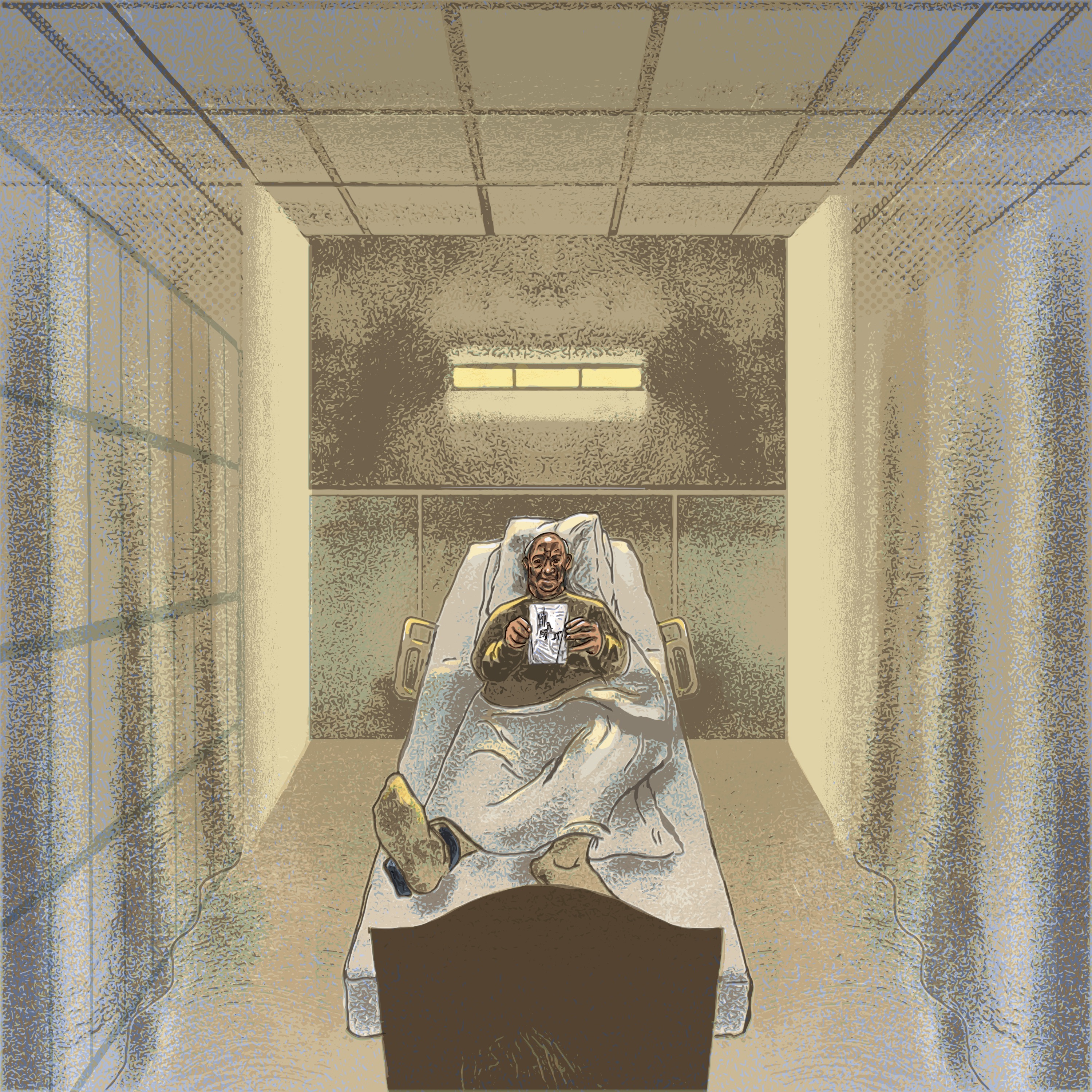
After nearly 50 years behind bars, Frank Ross was free. The there were no friends or family waiting outside the prison gates. Frank was transferred alone in a gurney.
- [03:44]
Julieta Martinelli
That's because Frank is being released under Pennsylvania's compassionate release statute, also known as a medical transfer. That's a law that creates a pathway for seriously ill people in prison to be released to seek out better healthcare on the outside. Frank has been battling cancer for years. He's now terminal.
- [04:07]
Do you remember when the only big weight you felt on your back was that you couldn't do anything for him?
- [04:14]
Suave
Yeah, I remember that.
- [04:16]
Narrator/Producer
For years, Suave told me about the guilt and the regret that he felt at leaving Frank alone inside. After he was released from prison, Frank taught Suave how to read and write. He mentored and he fathered him, along with hundreds of other young men in prison. In exchange, Suave always thought that he would help care for Frank in his final days when they were both in prison.
- [04:44]
Julieta Martinelli
Yeah. And look what's happening. Oh, I can't believe it. Okay, well, this took me totally by surprise. But I'm happy. I'm happy for you.
- [04:52]
Narrator/Producer
Now Suave could repay the man who had given him so much and. And Frank Ross would just maybe have an opportunity for a dignified death on the outside. Maybe. Because nothing in the prison system is ever predictable or simple.
- [05:14]
Julieta Martinelli
From Futuro media and Latino USA, I'm Julieta Martinelli. This is Release to Die Part 1. In this three episode miniseries, we follow Frank Ross, a 93 year old man sentenced to die in prison and his journey to the outside through compassionate release. Frank's case highlights one of the fastest growing trends in incarceration in the U.S. something that experts call the graying of American prisons. We also take a deep dive into Pennsylvania's compassionate release program. How the privatization of healthcare inside prisons is failing older people and what it means to have a chance to die free.
- [06:11]
Narrator/Producer
Between 2001 and 2018, more than 30,000 people aged 55 or older age died in prison. Experts say those numbers are on the rise. Never have there been so many older people behind bars. And the number is steadily rising. By 2030, they will be one third of the prison population.
- [06:38]
Julieta Martinelli
The reason? Harsh sentencing practices that started in the 70s and peaked through the 80s and 90s to today. Data shows that this led to more people than ever serving long sentences, including life without parole. And you've probably heard the term mandatory
- [06:58]
Narrator/Producer
minimums, coupled with three strike laws and other tough on crime policies that meant more people going to Prison. And for longer periods of time, prison populations exploded with vast racial discrepancies in sentencing. And with so many life sentences or decades long sentences, it was only a matter of time until those people became older and sicker, with prisons unable to meet their health care needs.
- [07:26]
Julieta Martinelli
That's part of the reason why almost every state and the federal prison system have some kind of compassionate release policy. It's a way to grant early release from prison to sick or elderly incarcerated individuals who have no other real avenue within the court system. In Pennsylvania prisons where Frank Ross is, an incarcerated person may petition the court for a temporary transfer to either a hospital, a long term facility, or hospice. In order to be considered, someone like Frank must meet seven different parameters. Most importantly, they must be seriously ill and expected to have less than a year to live and be able to prove that their health care needs are better met on the outside. If they were to be cured of their terminal illness on the outside, they could be returned to prison.
- [08:27]
Narrator/Producer
Compassionate release is for people who know that they're going to die. The question is, will they get to die on the outside? And that is all Frank Ross hopes for. Julieta's gonna pick up the story from here.
- [08:48]
Julieta Martinelli
The day of Frank's release, Suave rushes to the healthcare facility for seniors where he's been transferred. Frank is already there in a shared room, separated by a flimsy curtain, surrounded by bare white walls. He texts me to FaceTime him. Yes. Hi. Okay. Hi, Mr. Ross. Congratulations.
- [09:13]
Frank Ross
You don't have to do that.
- [09:14]
Suave
Just talk to the phone.
- [09:15]
Frank Ross
Hello?
- [09:16]
Suave
The first time he held a cell phone.
- [09:18]
Frank Ross
Yeah.
- [09:19]
Julieta Martinelli
Oh, wow.
- [09:22]
Narrator/Producer
Wow.
- [09:22]
Julieta Martinelli
Technology's really changed. Frank tries to put the video call on his ear. He's never held a cell phone. He was convicted in 1980 and was always kind of an old school guy in prison. He never even got a tablet. Hi, Mr. Ross. How are you? Congratulations.
- [09:43]
Frank Ross
This guy here got a good look. Right now I'm just picturing him that way. I mean, he looks better than they don't tell him.
- [09:50]
Monica Reinagle
Really.
- [09:51]
Suave
He done lost some weight.
- [09:52]
Julieta Martinelli
He looked good on his first day out of prison. Frank seems primarily occupied with Suave's weight. I mean, he calls Suave his son after all. He looks good, right? How do you feel?
- [10:08]
Frank Ross
I'm talking about him right now.
- [10:10]
Julieta Martinelli
Now Frank is hard to understand. He's 93, he's lost his teeth, and he doesn't have dentures. Besides the ravages of cancer, he's also struggling with cognitive decline due to dementia. Over the last few years in prison, he was mostly Bedridden, sometimes in a wheelchair, and fully dependent on other incarcerated men to care for him.
- [10:35]
Frank Ross
Yeah, how are you today?
- [10:38]
Julieta Martinelli
I'm very happy because of your news.
- [10:41]
Frank Ross
Are you gonna come to business?
- [10:43]
Julieta Martinelli
I am, yes. I'm getting on a plane tonight so I can see you tomorrow morning.
- [10:48]
Frank Ross
Whenever I've been here.
- [10:51]
Julieta Martinelli
Before we hang up the phone, Frank lays down his chief interest in letting us in to make this series. He's hoping it will help him bring some attention to his writing, get him
- [11:02]
Suave
an agent because he's trying to get some of his work out. You have your boxes and stuff with you?
- [11:07]
Yes, of course.
- [11:08]
We gonna try to get you an agent.
- [11:10]
Julieta Martinelli
Frank hopes to get more of his writing published before he dies. The only item Frank insisted on book bringing with him from his prison cell was a box filled with stories. Nearly five decades of writing. To understand who Frank is as a person, you have to understand that above all he is a writer. And writers dream of sharing their love of words. That's how Suave and Frank crossed paths three decades ago at a maximum security prison, Philadelphia. Suave was in his early 20s and Frank was in his late 50s. We actually told this story at length in an episode of Suave Season 2. But I'll give you a summary.
- [11:58]
Suave
Hey, Frank, what's going on, buddy?
- [12:01]
Julieta Martinelli
This is a phone call between Suave and Frank from 2023, when Frank was still in prison.
- [12:08]
Frank Ross
Not much.
- [12:09]
Suave
I'm over here, man. I'm over here telling my people how much you showed me when I was in prison. Right, and what do you do?
- [12:17]
Frank Ross
I learned how to do bad fiction since I've been here.
- [12:20]
Suave
How many screenplays have you written?
- [12:22]
Frank Ross
Well, I got 45 now and I got about 90 short stories.
- [12:28]
Julieta Martinelli
45 screenplays and 90 short stories. A portion of it was published. Frank was profiled in newspapers decades ago. Some of his books are still out there for purchase. And more than a writer, Frank was a teacher.
- [12:45]
Suave
There was hundreds, if not thousands of people in the DOC that he showed how to read and write. And I was one of them.
- [12:53]
Julieta Martinelli
Frank was an old head, an old timer, and someone who commanded respect. Suave says Frank didn't really get involved in prison politics. He never got in trouble and. And he minded his own business. When he took a liking to someone, though, he approached them with a curious proposition.
- [13:13]
Suave
He was one of the dudes that he had enough heart to step to me, I guess he was like, hey, young boy, let me talk to you. And I used to tell him, look man, what can you get for me?
- [13:23]
Right?
- [13:25]
And he Said, I got some pen and paper for you.
- [13:28]
Julieta Martinelli
That's how he and Suave became close. Suave was illiterate, but over time and under a teacher like Frank, Suave learned how to read and write. Frank then encouraged him to pursue an education, and Suave eventually graduated with a bachelor's. Within prison walls, Frank did the same for countless others. Over time, Suave learned that Frank had made a promise to try and atone for his mistakes and to help others. Here's another old phone call with Frank when he was in prison.
- [14:03]
Frank Ross
I've been incarcerated for 43 years for first degree murder.
- [14:10]
Julieta Martinelli
In his late 40s, Frank was convicted of killing a man. Until then, he had never been in trouble. He was a war veteran. He had a business, a wife and kids.
- [14:22]
Suave
I used to call him the late criminal. Family man. Grown kids, first time ever arrested in his life.
- [14:32]
Julieta Martinelli
Frank doesn't claim to be innocent. He accepted his life sentence and in prison put the old version of himself away. He refused visits. He asked his family to move on and spent nearly his entire time in prison completely alone, except for the young men that he took under his wing. Now, years later, as I prepare to go meet him in person for the first time, I think about a conversation I had with Frank over the phone as he waited for his compassionate release application to be reviewed in my compensation paper.
- [15:08]
Frank Ross
I didn't say I earned the right to come home, which I don't think you ever do if you take somebody's life. But I asked for merchants. That's all I asked for. And I that can't happen no more.
- [15:19]
Julieta Martinelli
Frank said he would never earn the right to come home. He took someone's life. All he was asking for was mercy.
- [16:01]
Rosie Perez
Hey, party people, it's Rosie Perez. If you like salsa as much as I do, I hope you'll join me in person at wnyc. We're Salsa Celebrating, a new podcast that goes deep into the history of salsa in Nueva York. We'll talk about the music and get a special live performance from two time Latin Grammy winner Ella Brick. June 30 tickets@wnyc.org events.
- [16:34]
Julieta Martinelli
The day after Frank is released, I meet Suave outside Frank's door on the fourth floor of a senior living facility in Philly. We make our way into the room. Frank looks frail, much older than I'd imagined. He's wearing an unfastened hospital gown that's fallen down to his stomach. He's hooked to an oxygen tank and fast asleep.
- [16:59]
Suave
What's up, Pop?
- [17:00]
Julieta Martinelli
Suave wakes him, gently holding out the balloons.
- [17:05]
Suave
I know it's not till next week. I have to take care of you, Pop. I had to take care of you.
- [17:11]
Julieta Martinelli
Suave lays out a pint of chocolate ice cream, a slice of chocolate cake, cookies and other goodies. That looks so good.
- [17:19]
So.
- [17:19]
Suave
So what I'm going to do, we're going to sing Happy Birthday to you. To you. Happy birthday to you. Happy birthday dear Frank. To freedom. Happy birthday to you.
- [17:38]
Julieta Martinelli
Happy birthday. Frank smiles through the celebration. But it soon becomes clear that he's not doing well. It's at that moment that I notice how swollen Frank's legs are. It looks really painful. And as the sheets slide, I see a palm sized ankle monitor snapped tightly around his ankle. A mandatory condition for his release. You know, in case he runs away. This man who can't walk on his own or get out of bed. It's not long before visitors start rolling in.
- [18:18]
Acast Announcer
Oh my goodness.
- [18:20]
Julieta Martinelli
Frank Ross. Frank's face lights up. First his sister in law and then his friend Mohammed. They spent decades together in prison. Muhammad is 84, out for a year now after securing his own release under commutation from the governor.
- [18:42]
Frank Ross
Hey man, it's my pleasure. Hey, you look good. Listen man called. I said what I said I'm here. You've had a lot of late people coming to see you today.
- [18:57]
Julieta Martinelli
He's right. Within a few minutes, Frank's bed is surrounded. I count four former lifers in the room. Men who all were once sentenced to life in prison and thought that they would grow old and die inside together here, free. Eating chocolate cake, sharing war stories, reminiscing silly things like who still owes who money for commissary ice cream.
- [19:24]
Suave
He owes us money from the ice cream, remember? I don't know what he talked. They left a thing of ice cream in behind.
- [19:31]
Frank Ross
He don't know what he talked about.
- [19:33]
Suave
I don't know how you feel, man. You remember Frank when we was all on the same block.
- [19:39]
Julieta Martinelli
At some point Swabi walks off and stands by the door. I see him discreetly wipe his eyes with his sleeve. How do you feel?
- [19:49]
Suave
Emotional. See him smile and not. And not have to worry about count time. I just think that for us this is what it's all about. Changing policies and bringing people home.
- [20:08]
Julieta Martinelli
Good to see you again.
- [20:11]
Let me get out the way it.
- [20:13]
I step out of the room to give the family privacy as Frank meets nieces and nephews and other family for the first time.
- [20:25]
Suave
Oh, that's Larry.
- [20:26]
Frank Ross
Huh?
- [20:26]
Narrator/Producer
I'm Scooby.
- [20:30]
Suave
I heard so much about. I'm Glad to meet you
- [20:37]
Julieta Martinelli
on the way out. So Swabit tells me that he feels overwhelmed. He says he's worried about how frail Frank looks.
- [20:45]
Suave
This compassionate release stuff to me is bullshit, really bullshit, because can't remember where he's at. Sitting in the bed with an ankle monitor this big. You call that compassionate? First of all, I want to say I am extremely happy that somebody decided enough is enough, right? But now I'm also extremely mad that this man should have been released 10 years ago when he first got cancer.
- [21:19]
Julieta Martinelli
The thing is, legally, Frank couldn't be considered for compassionate release any earlier, even though he's had a cancer diagnosis for years. Frank is representative of an issue that many others are also facing. There are currently more than 10,000 people that are considered senior citizens in Pennsylvania prisons today. While there aren't public numbers on how many of those are ill and have also submitted petitions for compassionate release, we do know that only 54 people have been granted compassionate release over the last 15 years.
- [22:07]
Narrator/Producer
Advocates say the problem is in how the compassionate release statute is written. While it's meant to remedy the crisis of those aging behind bars, it falls short of actually being able to assist many people because of the built in requirement for their deaths to be imminent and in the midst of their illness. They also have to be able to find a lawyer to take on their case. The reality is that by the time someone like Frank reaches this age, their closest family members have often already died or those connections to the outside world have faded over the decades.
- [22:47]
Julieta Martinelli
Not to mention that if, like Frank, they're lucky enough to be granted release, they must remain under constant monitoring. That means wearing a heavy and sometimes painful GPS tracker on their body 24, 7.
- [23:03]
Narrator/Producer
And remember, they can't seek out health care to get better. If they were to be cured of their illness, they could be sent back to prison. So people like Suave lawyers and activists in Pennsylvania have long asked, where's the compassion in that?
- [23:46]
Julieta Martinelli
Where are we going?
- [23:47]
Narrator/Producer
So we're in Philly now, looking at, I think 30th Street Station. We're in a car on our way to Germantown, which is a little bit in the suburbs.
- [23:58]
Julieta Martinelli
A few weeks later, we're in Philly again, this time with Maria. She's known suave since 93, and while he was in prison, she often heard Suave talk about Frank on the phone.
- [24:11]
Narrator/Producer
And yeah, the team is reunited. Suave, Julieta and me on our way to meet Frank Ross. It's. I'm just. I'm so overwhelmed because it's real Life.
- [24:24]
Julieta Martinelli
Suave has been spending nearly all of his time outside of work with Frank.
- [24:29]
Suave
I just stay there all night, hang out, because it's 24 hours a day visits. So I might just go in at 6 o' clock at night, leave at 4 in the morning, come back at 8. And he probably won't even know I'm gone because by the time he wake up, he see me. I always tell people what I'm doing for Frank Ross is what I couldn't do for my mother when she was in her deathbed, which is take care of her.
- [24:53]
Julieta Martinelli
Suave's mother died before he was released from prison.
- [24:57]
Suave
I mean, I would want somebody to do that for me if I was in my dying bed. So this is what I should have been doing because, you know, so I'm just doing it for Frank.
- [25:08]
Julieta Martinelli
When we arrive, Frank is wearing a sweater, sweatpants and tennis shoes. He's seated up in his chair, hair combed, waiting for his visitors. How are you? Good to see you, Mr. Ross. Look at you with your lunch. How you doing? You look good. I didn't even recognize you when you walked in.
- [25:37]
Thank you.
- [25:37]
Suave walks over to Frank and hands him a folder. It's filled with typewritten pages, short stories that Frank once mailed to Suave while he was in prison.
- [25:49]
Suave
I'm gonna show you.
- [25:54]
I got it.
- [25:55]
Julieta Martinelli
They talk quietly as they look through the pages.
- [25:58]
Narrator/Producer
They have this little secret communication thing going on, which I just love.
- [26:02]
Frank Ross
It's a new thing. They got everything there.
- [26:06]
Suave
Look at his stuff. Frank had a picture
- [26:14]
Julieta Martinelli
following an afternoon eating hoagies. Frank's request. Laughing and sharing stories. Frank turns to me.
- [26:22]
Frank Ross
You're like old man. Like old man. Did I tell you that I. I have. I'm mentioned. I check.
- [26:40]
Julieta Martinelli
Yeah.
- [26:41]
This morning he asks me again if he's on. Already told me he has dementia.
- [26:51]
Frank Ross
Annette is.
- [26:55]
Julieta Martinelli
Frank says that dementia feels, quote, cuckoo crazy. He says he first realized he had it a few years ago when he had to be hospitalized and taken outside the prison.
- [27:09]
Frank Ross
All kind of cuckoo stuff is running, you know.
- [27:12]
Julieta Martinelli
So what does dementia feel like? All kinds of cuckoo stuff running in your head.
- [27:19]
Frank Ross
I remember Constitution. My mother, she was in the house and she was dirty. The hair was mad. She was about your complexion. She's black. She's a horrible.
- [27:37]
Julieta Martinelli
He describes a moment in the hospital where he was suddenly transported back to the house where he was born in 1933. His mother was there, but she was dirty and her hair was matted. She looked horrible. He says he started crying.
- [27:56]
Frank Ross
I remember when. Kept crying I couldn't believe that my mother. Then I.
- [28:07]
Julieta Martinelli
Frank says that's when he started asking questions. And he realized that he was seeing and hearing things that weren't there. Things that had already happened or things that he simply imagined. But all of it felt so real.
- [28:22]
Frank Ross
I was the only one knew I had. Other two didn't even know that you taught him about each other. They walk in and come back.
- [28:34]
Julieta Martinelli
He says it was in that hospital that he realized that he was surrounded by other dementia patients. He would talk to them about something, and then they would forget and have the same conversation all over again. He realized then that he was the only one that knew he had it.
- [28:51]
Frank Ross
I knew I had it, but I didn't know how to control it. They control you.
- [28:56]
Julieta Martinelli
But he couldn't control. Was terrifying.
- [29:00]
Frank Ross
I don't know how better you can tell you. I don't know why I didn't tell you how admin. I know.
- [29:08]
Julieta Martinelli
Suddenly, Frank gets really agitated. He's mad at Suave for not telling us that he has dementia, just like the men he met in the hospital. Suddenly he forgot. Dementia is a progressive, irreversible syndrome. It leads to memory loss, cognitive decline, and reduced functional ability. The disease, coupled with his cancer, is starting to ravage his mind and body. I stop recording on the way out. I can see the hurt in Suave's eyes. And it's then that I realize how limited our time with Frank really is. Frank has made it clear to me over and over that he wants his story told. But I fear we're fighting against time. And soon, Frank is going to have to take on another fight against the prison system, who will attempt to take him back. Over three episodes, we'll explore Pennsylvania's compassionate release program as it stands as we continue following Frank's life on the outside.
- [30:21]
Suave
He didn't recognize me. He didn't recognize me at all. He's like, get the fuck out of my room. I don't know who's you. You're an imposter.
- [30:29]
Julieta Martinelli
The private health care system within the state's prisons, which many incarcerated people say fails to provide adequate care. A half an hour later, he came
- [30:39]
Narrator/Producer
back and he said, Ms. Scott, I'm sorry to tell you you have breast cancer.
- [30:45]
Julieta Martinelli
We'll hear from people attempting to change these laws so that incarcerated men and women can be released to receive the necessary care that the law demands before it's too late. And the ways in which a system that he is too sick to remember still holds Frank's fate in his hands.
- [31:05]
Suave
The doc already put a petition to revoke his compassionate release. They took it to the court and now we got to go to court Tuesday.
- [31:39]
Julieta Martinelli
Release to Die is a production of Latino USA Futuro Studios and Futuro Investigates. This episode was produced by me, Julieta Martinelli and edited by Marlon Bishop. It was mixed by Stephanie Lebeau, scoring and sound design by Jacob Rossotti. Fact checking for this episode by Roxana Aguirre, Victoria Estrada, Jessica Ellis and Nasi Trujillo are our production managers. Marie Nojosa, Penile Ramirez Ma, Marlon Bishop and Maria Garcia are executive producers. Release to Die was made possible by Public Welfare foundation catalyzing transformative approaches to justice that are community led, restorative and racially just.
- [32:44]
Fernandez Chabarri
Some people say soccer culture doesn't exist in the US but it is an American game and it goes beyond the stats.
- [32:52]
Julieta Martinelli
It's not just a game, it's your culture.
- [32:55]
Fernandez Chabarri
To the players and the stories I
- [32:58]
Suave
took an elbow to my head which
- [33:00]
Fernandez Chabarri
cracked my screen call from Futuro Studios, I'm Fernandez Chabarri and this is American Football, a show about soccer culture in the US and its underdog roots. Listen to American football on the iHeartRadio app, Apple Podcasts or wherever you get your podcast.
- [33:22]
Acast Announcer
Acast powers the world's best podcasts. Here's a show that we recommend.
- [33:30]
Minouche Zamarodi
Go Touch Grass. You have probably heard this phrase, maybe you have even said it. But beneath the sort of light hearted nature of this meme is something very real and important. A growing sense that staying in touch with our humanity and being present in our bodies matters more than ever in today's digital world. My name is Minouche Zamarodi and I am taking over as host of of TED Talks Daily this week to explore what technology is actually doing to your body and mind. In special interviews with scientists, doctors, parents, artists and more, we're going to dig into your physical and mental health on tech how we think about our bodies differently now, how we relate to new innovations that are amazing but also a little scary and how we can live a a healthier life in this high tech era. Tune in on TED Talks Daily Wherever you listen to podcasts,
- [34:32]
Acast Announcer
ACAST helps creators launch, grow and monetize their podcasts everywhere. Acast.
- [34:38]
Suave
Com.