Loading summary
Transcript148 lines
- [00:02]
Luis Gonzalez
Futuro.
- [00:07]
Maria Hinojosa
Season 2 of Suave was made possible by the Mellon Foundation. Mellon makes grants to support visionaries and communities that unlock the power of the arts and humanities. To help connect us all more@mellon.org When I founded Futuro, I imagined a home for journalism with radical transparency. I wanted a newsroom where I wasn't the only Latina behind the mic. Now Futuro is becoming a home for more voices than ever. Help grow this future by joining our new membership program. You'll get exclusive interviews whole season binges behind the scenes chisme shape the future of storytelling. Join Futuro Plus Visit our website FuturoMediaGroup.org joinplus ET not Eva's.
- [01:08]
Maggie Freeling
Swabe is brought to you by Progressive Insurance. Do you ever think about switching insurance companies to see if you could save some cash? Progressive makes it easy to see if you could save when you bundle your home and auto policies. Try it@progressive.com Progressive Casualty Insurance Company and affiliates. Potential savings will vary. Not available in all states.
- [01:32]
Luis Gonzalez
Over there sent a box of books.
- [01:35]
Maria Hinojosa
See I had forgotten about that.
- [01:36]
Luis Gonzalez
Magazines, books. And the guys was like what the heck you gonna do with them books? You don't even know how to read them. I said I'm gonna get em, I'm gonna read them one day.
- [01:45]
Maggie Freeling
What books?
- [01:46]
Luis Gonzalez
I remember that one of them was a Hispanic magazine where they had Maria as the 100 top influential people.
- [01:55]
Maggie Freeling
Did Maria just send you a bunch of self promotion?
- [01:59]
Luis Gonzalez
It just happened to be there. And then another one was her book.
- [02:02]
Maria Hinojosa
Maggie's gonna think I was trying to.
- [02:03]
Luis Gonzalez
Do self her book. It's just that I couldn't read the book at the time. So I paid the guy that graduated. The guy tell him look, you smoke, I got the cigarettes. I need you to read this book like a little kid. So he used to sit there and read the book.
- [02:18]
Maggie Freeling
The guy would read.
- [02:19]
Luis Gonzalez
You did the book. So. So I used to tell him read it again, you know cause I, I try to memorize it and I did memorize a whole bunch of it. And he ain't mine cause I every time he read 20 pages I give him a pack of cigarettes.
- [02:35]
Maggie Freeling
From Futuro Studios and prx, this is Suave, a podcast about juveniles sentenced to die in prison told through one man's journey. I'm Maggie Freeling. David Luis Suave Gonzalez was sentenced to mandatory life in prison without parole for a crime committed when he was 17 years old. He was found guilty of first degree homicide. This is his story of incarceration, redemption and an Unusual relationship between a journalist and a man convicted of murder. So, Maria, over those years of phone calls when Suave was in prison, one thing you spent a lot of time talking about was Suave's childhood.
- [03:26]
Maria Hinojosa
Yeah, I mean, because, look, he was a kid when he went into prison, so those are the only memories he had, was of his childhood. But very specifically, he was doing a lot of thinking about his mom.
- [03:38]
Maggie Freeling
So what did you actually know about her?
- [03:42]
Maria Hinojosa
So I remember thinking that Swavia's mom was really complicated.
- [03:47]
Luis Gonzalez
My mother grew up in the Bronx. She grew up in the streets. She grew up hustling. My mother was like the black sheep of the family.
- [03:57]
Maggie Freeling
Maria Gonzalez was born in puerto Rico in 1942. She moved to New York with her family when she was a young girl. Suave and his twin sister were her fourth and fifth kids, and they were born in the Bronx in 1969. His mom would have one more child, and she'd also raise her sister's kid.
- [04:18]
Maria Hinojosa
So she's raising these little kids. In the 1970s in New York City in the South Bronx, there was, like, gang violence, like, tons of crime. The city was so deeply in debt that banks had stopped lending the city money. There were these constant fires raging all across the South Bronx. I mean, it was a crazy time in New York City.
- [04:41]
Luis Gonzalez
In them times, the Bronx was the Bronx.
- [04:44]
Maria Hinojosa
A new Federal Census Bureau study has.
- [04:47]
Maggie Freeling
Revealed that this area, South Bronx, is the poorest in the whole nation. Worse than Watts, worse than rural Mississippi, worse than Appalachia.
- [05:00]
Maria Hinojosa
For years, the name has been a.
- [05:02]
Luis Gonzalez
Way of saying poverty, unemployment, hellish crimes.
- [05:06]
Maria Hinojosa
And Suave's family, his mom was, like, right in the middle of it.
- [05:10]
Luis Gonzalez
My house was the spot where all the kids came and smoked weed. We had a whole bunch of sex workers from Hudspawn hanging in our house. For those that don't know what Hutspawn used to be back in the 80s, hut spawn was like the mecca for prostitution in the south. Run in the 80s.
- [05:29]
Maria Hinojosa
Did your mom do sex work?
- [05:31]
Luis Gonzalez
I don't know, but that's the crowd she attract. They used to do shit in the street and come hide in my house, and my mom used to let them.
- [05:39]
Maggie Freeling
Suave's mom raised her seven kids on her own. Suave says the men who fathered his other siblings were also absent. His mom did all the parenting. But Suave says even though they were always poor, they never went hungry.
- [05:52]
Luis Gonzalez
She believed, like, if I don't feed my kids, no who's gonna feed them? So I gotta go out and hustle and Hustling to her meant cashing checks, forging checks, selling diabetic syringes. You know, anything that was illegal, my mother did. And there's no shame in that. Cause she took care of us to the best of her ability.
- [06:15]
Maggie Freeling
In some ways, Suave idolized her. And although she couldn't provide everything he.
- [06:19]
Luis Gonzalez
Wanted, she could provide for me a way of how to hustle, how to get the lifestyle you want more than you got to go do this.
- [06:25]
Maggie Freeling
And Suave totally wanted the lifestyle at an early age.
- [06:31]
Luis Gonzalez
I used to take green lipstick and try to act like I had tattoos and fascinated with the lifestyle. I was fascinated with Scarface, Tony Montana, say hello to my little friend. That's how I want to be. That's how you get the street credibility. You know, I'm going to be the baddest dude on the block.
- [06:53]
Maggie Freeling
In 1980, when Suave turned 11, New York City saw more violent crimes than any other year in the city's history. 1980 was also a really tough year for Suave pretty personally. He was having behavior problems at school. He'd been in and out of visits with counselors and psychiatrists. And an evaluator with the New York Board of Education made this observation.
- [07:17]
Maria Hinojosa
He is illiterate. He feeds himself but needs help dressing and bathing. He cannot handle money. He cannot socialize or travel independently. Behavior is not age appropriate. Functioning at the mild mental retardation level. He demonstrates cultural deprivation.
- [07:39]
Maggie Freeling
They recommended Soave transfer to special classes and see a therapist weekly. And then that year of violence gets personal for Suave.
- [07:48]
Maria Hinojosa
So Suave's grandfather, his abuelito, was a barber. And his shop was in the heart of East Harlem in Spanish Harlem. So Suave would come down from the South Bronx every week to get a lineup from his grandpa at his barbershop. Except that one day when he went to get his haircut, everything changed. Can you tell me exactly what happened? What happened on that day?
- [08:13]
Luis Gonzalez
His partner walked in the barbershop getting my wiggly haircut. And he had some type of business problem with his buddy. He walked in while he was giving me my haircut and shot him. Shot him in the stomach and said, hey, boom, just shot him. Really? Didn't say much, just shot him. I seen my grandfather. I knew he was dead when he fell, cuz his eyes rolled back. Seen plenty of them in the neighborhood, so. And that was the day that I always say, you know, I kind of lost, right, all sense of reality for me. Like, you killed my grandfather, so I'm entitled to kill somebody else. Too. If I'm hurting somebody, gonna hurt. That was my. My mom friend at that time.
- [09:09]
Maria Hinojosa
So by the time you were 12 years old, how many drugs had you done?
- [09:17]
Luis Gonzalez
Quite a few. It started me smoking weed right after. Right after my grandfather died. And from there went to angel dust.
- [09:27]
Maria Hinojosa
Who turned you on to angel dust?
- [09:29]
Luis Gonzalez
I mean, you didn't know My friends in the neighborhood. This is better than pots. Try this. And I just liked it because it allowed me to get waha. It allowed me to forget things.
- [09:42]
Maggie Freeling
Suave says that year he also tried heroin for the first time.
- [09:46]
Luis Gonzalez
I used to sell dope, and I told my mom, yo, I want to try this shit. She said, all right, let's try it. That's it.
- [09:54]
Maria Hinojosa
That's what I remember him saying. And I was just like, what kind of a mom would do that to her son or with her son? But, you know, things start to get peeled back. I begin to kind of understand a little bit more about Suave's mom. And I'm like, oh, my God, her life was really tough.
- [10:22]
Luis Gonzalez
My mother was a victim. Rape. And out of that incident, me and my sister was born.
- [10:57]
Maggie Freeling
In 1985, Suave says his mom got caught in a check cashing scheme, and she moved her family to Philadelphia, running from a Warrant. Suave was 16.
- [11:07]
Luis Gonzalez
My mother thought she was doing something great, moving us from the South Bronx. And we end up in the worst neighborhood probably in Philadelphia in the 80s, the Badlands, next to the graveyard. And that was like, oh, my God. Just five minutes off of I95 in.
- [11:23]
Maggie Freeling
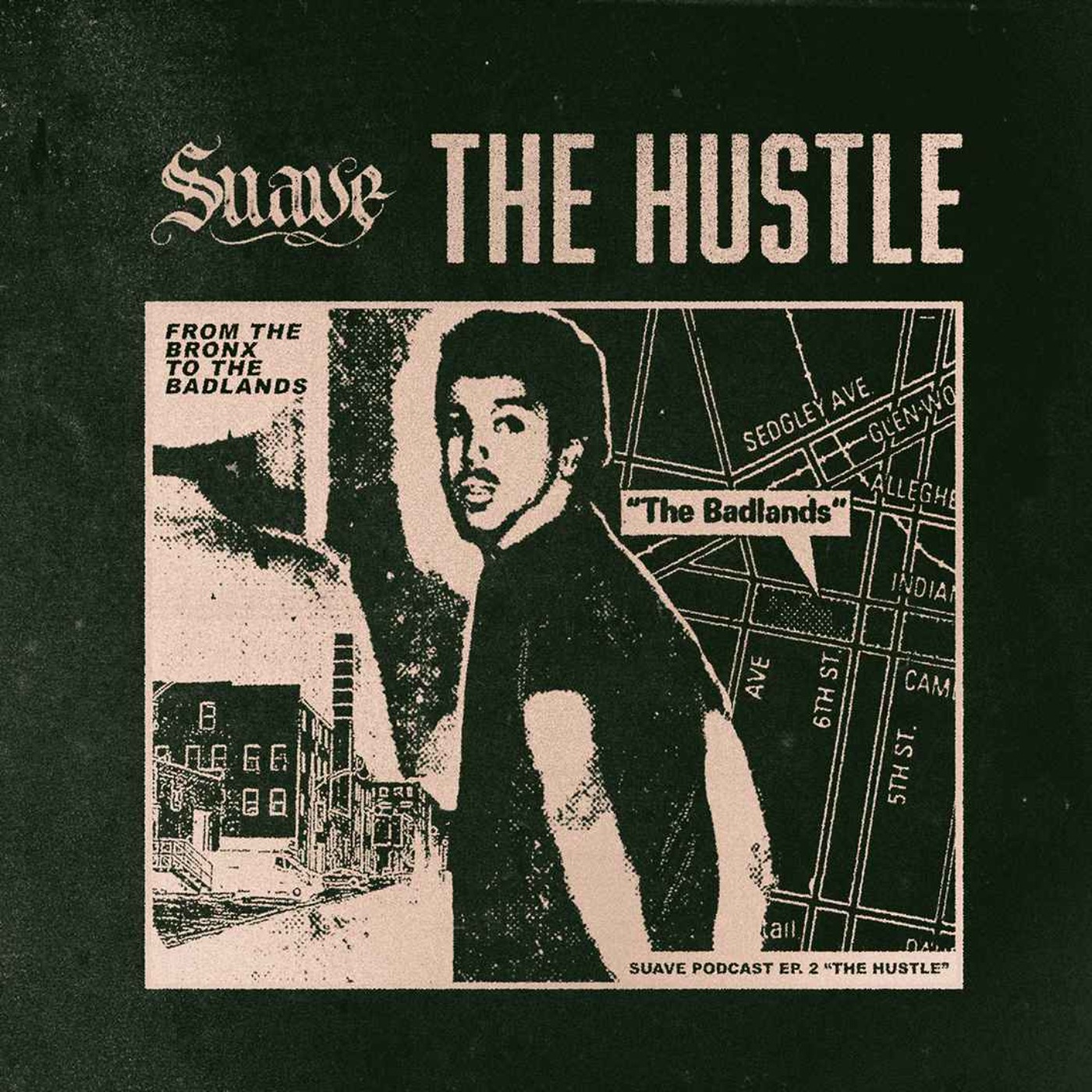
Philadelphia exists a notorious drug destination called the Badlands, a place where dealers sell in the open air market. The Badlands was and still is one of the most dangerous neighborhoods in Philadelphia. And Suave's mom moved her family directly to the center of it, 10th and Clearfield.
- [11:54]
Luis Gonzalez
You know, that was like the words decision ever for me.
- [11:59]
Maggie Freeling
Suave says he lived a couple houses away from one of the most powerful drug dealers in the area, Fat Wilson. Suave says Wilson had a gang of teenagers working for him, carrying guns, selling drugs, and enforcing his dominion over, quote, his blocks.
- [12:15]
Luis Gonzalez
My father figures was the dudes, the drug dealers, the pimps, the people that was living large. Those was my father figures. And, you know, they wasn't telling me, you gotta go to school. They wasn't telling me none of that. Everything they was telling me was the opposite. You wanna make some money, you gotta sell this package. You wanna have some nice girls, you gotta have some money. You gotta be the God on the block. So I follow that path.
- [12:43]
Maggie Freeling
And then came the night that changed suave's life forever. December 6, 1986. A little less than a year after he moved to Philadelphia, Suave was walking with his neighbor, 13 year old Axel Serrano. It was almost midnight on a Saturday and Suave says they were both dealing for Fat Wilson, the neighborhood kingpin. This is when they ran into 13 year old Danny Martinez, a neighborhood kid who worked on a rival drug block. And the only thing we know for sure about that night is that Danny was shot in the head and he died days later in the hospital. Suave says right after the shooting, he and Axel took off running. Later, Axel's mom took him down to the police station and named Suave as the shooter. Suave was taken into custody a few days later. And so once arrested, Suave says the Philadelphia district Attorney's office offered him a deal. If he'd testify for the prosecution, they would give him a lighter sentence.
- [13:44]
Maria Hinojosa
The thing is, is that taking that plea would mean that you would have to point the finger at someone.
- [13:50]
Luis Gonzalez
It's who tell first, that's who get the deal.
- [13:54]
Maria Hinojosa
And that, you know, basically kind of being a rat in terms of the street. Suave was not prepared to do that.
- [14:01]
Maggie Freeling
And on top of that, you know, he was pretty much illiterate at the time. He says he didn't know what he was being offered.
- [14:08]
Luis Gonzalez
I'm not taking that. I don't know what the heck I'm signing because I only sold my lawyer two times before trial.
- [14:14]
Maggie Freeling
Axel's cooperation with the police paid off for pointing to Suave. He got his own charges bumped down to a more lenient juvenile court, where even if found guilty, he'd face a lighter sentence. Over a year later, Suave stood before a judge charged as an adult with murder in the first degree, robbery, criminal conspiracy and possession of an instrument of a crime, a gun. Only one witness spoke at his trial, a 17 year old girl, Sharon Benjamin, also lived in the Badlands, about a block away from Danny Martinez. She testified that Suave, along with Axel, had tried to rob Danny of the fuchsia fur trimmed bomber jacket he was wearing that night.
- [14:56]
Sharon Benjamin
At maybe 10 of 11, not far from 11, I went to the store on 8th in Cambria, but it was closed and I saw Danny on the corner.
- [15:08]
Maggie Freeling
The original trial was not recorded, so we hired actors to read from the transcripts.
- [15:13]
Sharon Benjamin
He asked me where I was going and I told him I was going to the other store because that one was closed. And he said he would walk me because it was too dark for me. To walk by myself. When we got to the corner, we noticed these two people that had come and stood in front of us so we couldn't go past. And they were standing there. And so we just stood there because we didn't know them. And the taller of the two boys said, take it off.
- [15:37]
Maggie Freeling
She points at Suave. Suave was tall and 135 pounds. Danny was short, only 5290 pounds. She says suave demanded Danny give him.
- [15:48]
Sharon Benjamin
His bomber jacket, but Danny and I didn't know him. So we turned around to go back where we came from, and he put his hand on his shoulder and both of us turn around to face him again. And Danny said, what? And then the taller boy said, take it off again. But Danny didn't have a chance to respond because he had taken out a gun and had it at Danny's head and shot him.
- [16:08]
Maggie Freeling
Then Suave tells his version of the story. It's a completely different version than Sharon's. He said it was just a fight gone terribly wrong. There was no robbery.
- [16:19]
David Luis Suave Gonzalez
I was coming from 5th and Somerset, a restaurant, and I was walking down Somerset street, heading back home. I was walking by the school, Edison. That's when three guys came out, and one of them said, I caught you by yourself. Give it up.
- [16:34]
Maggie Freeling
Suave tells about an earlier argument on Thanksgiving with Danny and how Danny threatened that if he saw Suave again, there would be a fight. Now that fight was about to happen. Suave says Danny wasn't alone with Sharon that night. He says Danny's friends had ganged up on him.
- [16:50]
David Luis Suave Gonzalez
That's when one of the guys came up and punched me in my left eye and I fell down. I got back up and I started fighting back. That's when one of them came up with a knife and struck me in the left side of my shoulder. Then I met Axel Serrano.
- [17:05]
Maggie Freeling
Suave says Axel was standing on the corner keeping a lookout for cops.
- [17:09]
David Luis Suave Gonzalez
Axel Serrano took out a gun and he gave it to me. When he gave it to me, it just went off.
- [17:25]
Maggie Freeling
Suave says it was an accident. Two teens, Sharon and Suave, two versions of events. Very little evidence for either version, but the judge believed Sharon's. And so Suave was sentenced to life in prison without the possibility of parole. To understand how Suave was convicted with such a harsh sentence without any direct physical evidence, we need to talk about the political environment. At the time Suave was tried, juvenile offenders in Philadelphia faced a district attorney's office which routinely sought the harshest punishment possible for crimes, including the death Penalty that placed tremendous power in prosecutors hands. And one of the things the Philadelphia District Attorney's office did was offer kids deals, promising not to seek the death penalty if they gave up being tried by a jury. And so this was just one of the reasons that Philadelphia became the epicenter of the juvenile lifer population.
- [18:36]
Maria Hinojosa
Now it begins to make sense. Like, why is it that. That there were so many juvenile lifers based in Pennsylvania?
- [18:44]
Maggie Freeling
Over 500 juvenile lifers in Pennsylvania, and a large number of them are locked up at Greaterford State Prison, where Suave is. And helping them get there was prosecutor Roger King. He was known for attaining more death penalty convictions than any other prosecutor in the city. Roger King was a fixture trying some of the city's biggest cases. DA Seth Williams calls him a legendary prosecutor and says he was a wonderful man and committed to justice.
- [19:14]
Maria Hinojosa
Let me just be clear. So you're saying that Roger King is this basically very aggressive ADA in Philly, and he's basically, we're throwing the book at you.
- [19:25]
Maggie Freeling
Right? And so this is the administration Suave is being prosecuted under. These kids are terrified of the death penalty, including Suave. And so he did take a deal, no jury trial, to remove the threat of the death penalty. And instead his case was heard by one judge who will decide if Suave will go free or spend his life in prison.
- [19:47]
Maria Hinojosa
Wait, but if you just go in front of a judge, then it's like you don't have to. You don't have to present the evidence to 12 human beings. I bet a lot of these cases would have been challenged. It would have been hard to get a conviction, so there would have been.
- [20:01]
Maggie Freeling
A lot more scrutiny. And so that one judge sided with Sharon Benjamin's version of events, and that was it. Suave was arrested at 17. Too young to vote, too young to drink, too young to serve in the military, but old enough to receive a sentence meant to guarantee he would die in prison. We'll be right back.
- [20:48]
Maria Hinojosa
Something unexpected happened after Jeremy Scott confessed.
- [20:51]
Maggie Freeling
To killing Michelle Schofield in Bone Valley season one.
- [20:55]
David Luis Suave Gonzalez
Every time I hear about my dad.
- [20:56]
Luis Gonzalez
It'S, oh, he's a killer. He's just straight evil.
- [20:59]
Maggie Freeling
I was becoming the bridge between Jeremy.
- [21:02]
Maria Hinojosa
Scott and the son he'd never known.
- [21:04]
Luis Gonzalez
At the end of the day, I'm literally a son of a killer.
- [21:07]
Maggie Freeling
Listen to new episodes of bone Valley Season 2 on the iHeartRadio app, Apple.
- [21:11]
Maria Hinojosa
Podcasts, or wherever you get your podcasts.
- [21:17]
Maggie Freeling
We're back. Suave's early years in prison look a lot like his life on the Streets of Philadelphia, those.
- [21:25]
Maria Hinojosa
I mean, first of all, Graterford was like, it was a big ass prison. There was a lot of corruption, a lot of violence. Just as it is. He comes into this prison.
- [21:34]
Luis Gonzalez
My mom used to bring me drugs to the prison. That's how crazy I was. My mom used to bring me weed every week to the prison.
- [21:44]
Maria Hinojosa
And he says he was getting the weed and selling it inside to other guys on the block.
- [21:50]
Luis Gonzalez
I used to get money and send it home to my mom.
- [21:52]
Maria Hinojosa
It's like Greaterford was, you know, it was just another version. It was the South Bronx, North Philly, and now Graterford Maximum security Prison. He just had to prove himself all over again.
- [22:02]
Luis Gonzalez
There was chaos, chaos. People was getting stabbed. People was getting their cells robbed. You had to be prepared for street war at all times. That was the type of jail this was.
- [22:19]
Maggie Freeling
So Suave says he becomes that tough guy he always wanted to be. And he says the things he's doing land him in the hole. Solitary confinement over and over. Maria, even soon after his first meeting with you, he says he went into solitary for fighting with a guard.
- [22:35]
Maria Hinojosa
You know, I didn't hear from Suave for years. So, you know, what I came to understand is that when he was in solitary, it was pretty bad. Later, he would tell me that he spent 23 hours a day alone, locked down in a windowless cell, and that if he could get one hour of yard time, he would be so lucky.
- [22:58]
Luis Gonzalez
And from time to time, you know, I used to find myself talking to myself in the hole. Like, you get lonely, like, three. After years, you can't hear nothing but the guard when they open the door to feed you with a plastic tray. And it's like, you know, you had these conversations with yourself. And people used to say, as long as you don't answer yourself back, you're not crazy. But that's just part of being in the hole and talking to the roaches when they walk by. You become. You want that little roach to come back every night because, you know, you look forward to that. That was like company.
- [23:38]
Maggie Freeling
Suave says at one point, he starts talking with another man through the wall.
- [23:42]
Luis Gonzalez
This older guy. He's been in the hole, like 10 years at that time. And I used to ask him. I used to ask him, can you write my letters for me? And he was like, no, but I'm gonna show you how to read. Juicing the hole. And he used to give me a word every day. I used to memorize it, spell it back to him. I went in there without Knowing how to read and write. I came out of there knowing somewhat, a couple of words, and that inspired me to keep going.
- [24:20]
Maggie Freeling
So when he gets out of solitary, he's determined to become fully literate by identifying, letter by letter, the words in the books he memorized. And that's when he decided to get a ged and eventually he enrolls in college.
- [24:34]
Maria Hinojosa
He starts reading all the time, and he's like reading books about history, philosophy, law, pop culture.
- [24:42]
Maggie Freeling
And he's feeling good about his own education, and it starts to spread to his crew of friends.
- [24:47]
Luis Gonzalez
I just decided that, you know what? I'm gonna put my team, well, what I call my team, I'm gonna put them all in college. And I built an organization where every board member in my organization had a college degree. And the jail couldn't understand it. They was like, what is you doing? I'm building a school. That's what I told the john. Building the school. I had plenty of people tell me, oh, the school. What do a degree in prison gonna do for you? Absolutely nothing. Nothing. When I get my degree, I'm gonna put it up in my ward and probably collect some dust. Don't do nothing in prison, but I use it to motivate other people that you can have a hundred years, you still go to school to educate yourself.
- [25:45]
Maggie Freeling
For a while. Suave took a job at Greaterford's manufacturing plant making uniforms.
- [25:51]
Luis Gonzalez
I produce this here. This is what I produce all day long.
- [25:55]
Maggie Freeling
Certs document this is a video produced by the Department of corrections in 2001. It was later used in schools for youth crime prevention. Suave points to piles of neatly folded brown uniforms. There's dozens of piles, each nearly as tall as he is.
- [26:14]
Luis Gonzalez
One inmate probably did all this in one day. All this right here, you could combine this. This is the equivalent to 25 worth of work right here.
- [26:25]
Maggie Freeling
So Suave and the men at the plant, they cut, sewed and pressed hundreds of uniforms daily. And so this super repetitive task left Suave with so much time to think, right?
- [26:38]
Maria Hinojosa
I mean, you know, he's looking at these uniforms like one after another. And he's thinking about, oh, this is for all the people, the men who they're expecting to come into this prison. And he's like, this has got to stop. Like, how does this stop? How does this cycle stop? And he really, like, zeroes in, becomes obsessed with education.
- [26:59]
Luis Gonzalez
Most people that go to prisons are not hardcore criminals. Most people go to prison because they do stuff out of necessity. They just don't know the system. They don't know the law. So they get caught up. Do people change? Yes, I'm living proof of that.
- [27:17]
Maria Hinojosa
And so he comes up with this idea to help at risk teens who are in the community and he wants to help with their schooling. And that then takes off to like, oh well, wait, let's create a scholarship program.
- [27:34]
Luis Gonzalez
So I said, okay, I gotta come up with the money. So what we did, we donated our own funds to the school district to start the scholarship.
- [27:42]
Maggie Freeling
So in 2008, suave goes cell to sell, asking men to donate from their commissary.
- [27:48]
Maria Hinojosa
So I remember when Suave called me and he told me that this scholarship, you know, like I thought it was just an idea. Now he's calling and he's telling me that they have raised like a few hundred dollars in the first year. And you know, that might not sound like a lot of money, you know, a few hundred dollars, but you have to remember these are men who get paid 20 cents an hour to work inside the prison to make a donation is a huge sacrifice, you know, for them. And it continued year after year, they continued to raise even more money and to donate it. And it was around this time that Suavez starts writing novels about life in the hood. And eventually this independent publisher begins printing his books. And Suave, from inside the prison, from being this illiterate guy, is now penning six novels of his own. And you know, I don't, look, I don't want to give the false impression that everything was, you know, like going fabulously for Suave at this time. Because, you know, the truth is like he was also having this moment where he's realizing He's a 40 year old man who has never spent a single day of his adult life in the outside world. And so he knows that no matter how much he does right, he's still gonna die inside this prison.
- [29:21]
Unnamed Speaker
Where's college from? Louis? Florida.
- [29:25]
Luis Gonzalez
Everybody.
- [29:25]
Unnamed Speaker
I've been crying. I've been crying a whole lot lately.
- [29:28]
Maria Hinojosa
And why are you crying so much?
- [29:31]
Unnamed Speaker
No, you know, because it really, it really hurts me. Like my family knew me as one person and they don't really know who I am today. And you know, and before, you know, I had this attitude when I was younger where real man don't cry, you know, but that's a lot because when these dogs lock and you and yourself and there's nobody around, believe me, you crying. And in the course of you being incarcerated with a life sentence, you're going to lose your mother, you're going to lose your father, you're going to lose family members, and you can't go to the funeral or you can't make a phone call. You're feeling that pain.
- [30:21]
Maggie Freeling
So this is where suave's at. In 2017, when the Supreme Court ruled to have all juvenile lifer cases who were sentenced under mandatory laws reevaluated, Suave finally has a resentencing date, and his lawyers and prosecutors agreed on a deal to get him out. They're going to ask the judge to re sentence soave to 30 years in prison, a sentence he's already served. If the judge agrees, he can get out pretty much right away. But on lifetime parole, which is a very conditional kind of freedom for most parolees, that means no drinking, no leaving the state without permission, drug tests, random home visits, and regular check ins with a parole officer for the rest of your life. Suave initially doesn't want to do this. He knows lifetime parole means any mistake could land him back in prison. But in the end, he decides to accept a deal to get out. The judge just has to agree and anything could happen. The wait is nerve wracking.
- [31:23]
Maria Hinojosa
How are you trying to stay centered?
- [31:26]
Unnamed Speaker
After I'm done talking to you, I'm going back to my cell, I'm gonna listen to my song, and I'm gonna just relax and lock it in for the day.
- [31:35]
Maggie Freeling
When Suave says his song, he means the song Patience by Noss and Damian Marley, which you, Maria introduced him to.
- [31:44]
Maria Hinojosa
So I remember one time when Suave was having a really challenging moment. I mean, he was sad, and I was telling him about a song that has really helped me, you know, Patience by Nas. And Suave said, well, wait, I can listen to that song. He said, I have an MP3 player, which I didn't know. And I said, you know, we'll listen to it.
- [32:08]
Unnamed Speaker
I gotta remind myself, patience. And that's how I'm working, you know? But do I want to go home to bars? Hell yeah. Hell yeah. But I don't expect them to make it easy. It's never been easy.
- [32:24]
Maggie Freeling
Finally, the day of resentencing arrives. It's July 6, 2017, and, Maria, you're on the Amtrak to Philadelphia. And the reality is setting in that this relationship you've had for decades from across prison bars could suddenly move into the real world.
- [32:40]
Maria Hinojosa
It's this very strange experience that I have with this other human being, right. That I frankly, I don't spend a lot of time thinking about Suave in my life. Like, I have an incredibly full, full life of work, travel, jobs. Yeah, Multiple jobs, husband, kids, you know, and Suave pops into my life with a phone call that I never know when it's going to come. You know, I'm thoughtful about what he's experiencing and we talk about him at work. But in the last 48 hours, I've been finding myself like, what's he doing now? And now what is Swabia doing? And now what's going to happen? I mean, this is mind blowing.
- [33:26]
Maggie Freeling
One more thing you're thinking over to yourself on this train ride. Suave's request for you to speak on his behalf.
- [33:34]
Maria Hinojosa
It was like something that I felt like I should do because I actually, you know, can under oath, just talk about my experience with this person. But then, you know, I have really super smart journalist colleagues and they were like, no, you can't, for all kinds of reasons. You know, it's complicated because, you know, I have to acknowledge I'm reporting on Suave, right? I'm, I'm reporting on him at this point. I'm recording our phone calls. I can't get involved with the story source like that. So that's like an issue. And also, you know, I don't really know him outside of prison. So what if something does happen when he gets out and I'm on the record.
- [34:14]
Maggie Freeling
As you arrive at the courthouse, you have to turn your recorder off. There's no recording allowed inside.
- [34:21]
Maria Hinojosa
Just after 3:00, you know, everybody's kind of rushed in. And finally it's like, get in, get it, get in. And everybody sits down. You know, the room was full. Actually, it was, it was pretty much packed. Most of us, you know, strangers to each other, but everybody there for the same reason. And Suave walks into the courtroom. Oh my God, he looked horrible. His face looked horrible. He looked like he hadn't slept, he looked like he hadn't eaten. He looked like he had been crying. And, you know, Suave is this big guy. He's like a football player big with these broad shoulders. He's like 5'11£250. And he's wearing this huge suit that was way too baggy. And he never turned his head, never even lifted his head to look at any of us. I mean, you know, I was like, surely he's gonna turn around and, you know, look for me. Nah, that. Nothing at all.
- [35:14]
Maggie Freeling
Well, again, so the DA put the 30 year deal on the table, but the judge could still say no. He must have been really nervous.
- [35:25]
Maria Hinojosa
We were all nervous because, you know, just like one single judge had decided if Suave was Gonna spend his life in prison when he was 17. Now here he is at 47 and another single judge is gonna decide if he's gonna get a second chance at life.
- [35:50]
Maggie Freeling
Finally, the judge enters. She asks Suave if there's anything he wants to tell the court before she reveals her decision again. We recreated this moment from the transcripts. Your honor. Soave begins.
- [36:05]
David Luis Suave Gonzalez
I, Luis Gonzalez, feel sincerely grief and express remorse for causing the death of Daniel Martinez. I could not imagine the amount of grief and pain the family have suffered as a result of my actions. I felt tremendous guilt then and I still do now. The day Mr. Martinez died, the irresponsibility of Luis Gonzalez died also. I've felt remorse every day since because I'm aware of the ripple effect of my actions. To not allow Mr. Martinez to be in vain. I realize I have to continue taking on the challenges of becoming an instrument of love and kindness, as well as becoming a crusader to end violence in our community. I'm sorry I failed each and every one of you as a man, brother, uncle, a friend, and most of all, a citizen to my mother. I'm sorry you never got the chance to see your only son become a responsible man. I'm sorry for being an embarrassment to the family. I only hope that one day I'm able to serve my community with integrity, honor and respect.
- [37:26]
Sharon Benjamin
I now resentence the defendant, Luis Gonzalez, on the charge of murder in the first degree to 30 years to life.
- [37:37]
Maria Hinojosa
Oh, my God. Oh, my God. I just. I was like, oh, my God. God, I can't believe this. If he's sentenced to 30 years, he's already done 30 years, which means he's going to get out. I mean, he's going to be able to go straight to parole. The judge just made this happen all of these years, and I just saw her say this. You have been re sentenced to 30 years. Boom. He's going to get out.
- [38:05]
Sharon Benjamin
You set the bar high. You said, I can do much with the gifts I've been given. We're going to look forward to that.
- [38:27]
Maggie Freeling
Next time on Suave. Suave moves into transitional housing and gets an exciting taste of freedom.
- [38:33]
Unnamed Speaker
Then I touched the hall and I was like, wow, I didn't touch a hole. I don't ever think I touched the.
- [38:38]
Luis Gonzalez
Hole in my life.
- [38:39]
Unnamed Speaker
That is amazing. And then seeing two cats and a deer with a white tail. Oh. I was like, wow.
- [38:48]
Maggie Freeling
And Suave worries about adjusting to life on the outside.
- [38:52]
Unnamed Speaker
Everybody in prison takes showers with clothes on, with shorts and shoes on. I might not even think about it going to shower on the street with my clothes on. People finally be that was crazy. You know, that kind of stuff, man, like normal stuff is starting to play in my head.
- [39:10]
Maggie Freeling
That's coming up next time on Suave. Suave is a production of Futuro Studios and distributed by prx. It's produced by me, Maggie Freeling and Julieta Martinelli. Additional field reporting by Aaron Moselle, Michael Simon Johnson, Zoe Malik and Zakiya Gibbons. We are edited by Audrey Quinn. Our executive editor is Marlon Bishop. Our director of production and operations is Natalia Fiedelholz. Our engineers are Stephanie Lebeau and Julia Caruso. Maria Hinojosa is the executive producer. Our fact checker is Amy Tardif. Original music from Taka Yasuzawa and Alex Segura. Production help from Lita Halwell, Juan Diego Ramirez, Maya Cueva and Sam Bernitz. Special thanks to Marsha Levick at the Juvenile Law Center. David Santi, Suave's lawyer Julia Kwamya, who voiced Sharon Benjamin Rob Moriera, who voiced Suave Shannon Atala, Jill Settlemeyer and Claire Fitzpatrick. David Bohm. Our private investigation Jodi Kent, Karma El Moussa and Heather Renwick at Campaign for the Fair Sentencing of Youth. Support for this podcast is provided by the Art for Justice Fund, a special project of Rockefeller Philanthropy Advisors and the Heising Simons Foundation. Unlocking knowledge, opportunity and possibilities. More@hsfoundation.org.
- [40:54]
Maria Hinojosa
From PRX.