Loading summary
Transcript73 lines
- [00:04]
Maria Hinojosa
Futura Plus.
- [00:08]
Angelica Sanchez / Naidis Balmun
Hi, my name is Angelica Sanchez. The episode that really shook me and touched me the most was Suave, Season 2, Episode 5, where Suave's crashing out about his car. And just the helplessness I felt listening to that episode, both from Suave and Lydia, really, really touched me. Anyway, I think about it all the time. Thank you so much for the show and everything that. Hi, this is Naidis Balmun. My favorite episode of this school year was Camino, Colombia. Colombian American returns to the motherland. I thought it was great. I actually, I am Colombian too, and had a similar story than Tasha. It was very special to hear someone with a similar story and just to recognize myself in her stories. And kudos to Tasha for an amazing story and thank you for everything you guys do. Bye.
- [01:10]
Maria Hinojosa
Dear listener, always at the end of the year, I'm like, wait, how did this happen? How did we finish a year? But we have finished the year. We are coming up on the end of 2025, and what a year it has been. It has been a challenging year for our democracy writ large for. For journalism. But it's specifically been a very challenging year if you are Latino, Latina, Latinx, or Latin in the United States of America. In terms of public media, very specifically, like the attacks have come to fruition, right? The loss of funding for public television and for public radio across the country. It's real. Futuro media was born 15 years ago in the year 2010. There were also a lot of economic challenges, political challenges, business challenges. And that's when we launched. We have learned that it is a bit of a roller coaster to run an independent, small, nonprofit newsroom founded by a Latina Mexican immigrant. But the thing is, we understand challenges and we face them. We don't give up. You know, in a moment like this, we go back, we look at what we have accomplished in a year. It has been a lot. So we want to share some of this because, you know, we're doing it every week. Every week. Every week we're turning a show. These are the moments when we're able to kind of take a pause and say, wow, we really did something extraordinary in 2025, and we want to bring you along for the ride. We obviously were documenting the first year of a second Trump presidency, one that came into power with many Latino and Latina voters.
- [03:13]
Maria Garcia
While a majority of Latinos voted for Kamala Harris, Trump was backed By a record 46% of Latino voters, even gaining support in Democratic strongholds like New York.
- [03:23]
Maria Hinojosa
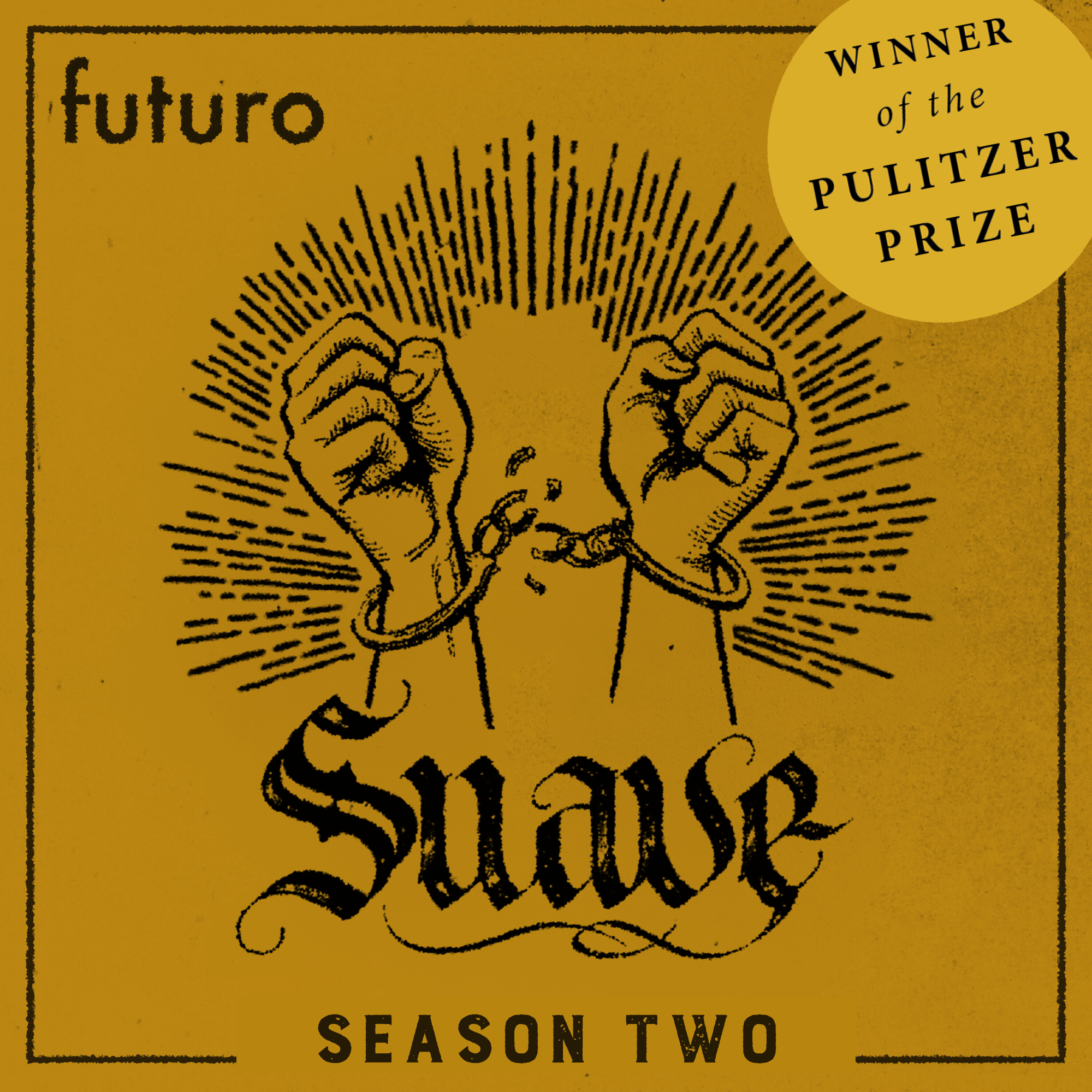
City and, of course, at Dudo Studios. I had this dream of doing a podcast about Suave, and I never gave up that dream. And we formed a team and they delivered a story that, of course, won us a Pulitzer Prize.
- [03:39]
Maria Garcia
For our audience, it's important for them to know that you are one of two Latinas in history to win a Pulitzer. And you did it out of an organization that you founded.
- [03:49]
Maria Hinojosa
And in 2025, we released season two of Suave.
- [03:56]
Maria Garcia
It's been seven years since David Luis Suave Gonzalez was released from prison after being sentenced to serve life without parole as a teenager.
- [04:06]
Maria Hinojosa
A profound feat of journalism, but, oh, my God, really. Telenovela based on fact. So important to follow the life of somebody who spent 31 years behind bars. We pride ourselves in what we have done, but always looking to the next story. What's the next big podcast we're going to do? What's the next investigation? What's the next big get? What is the next. Yeah, celebrity that we're going to do an interview that is going to rock people's boats. Because we talk about things differently at Futuro Media, and to meet the moment we made a big splash, we decided to launch our own subscription service, asking you to become effectively part of our team by subscribing to us on a monthly basis with Futuro plus and all of that to say that we're celebrating 15 years, this notion of getting to celebrate the quince. So if you're like, what is she talking about? In Latin America, you celebrate turning 15 years old. It's like a sweet 16. But in Latin America, it's the sweet 15. It's called the quinceanera. And so we are celebrating our big quinceanera. And what we do at Futuro is that we dream big. So we want you to be a part of a big dream, which is to meet the quince by raising $150,000. Yeah, that's a big number. What's important to us is not every single amount, but the fact that every single person is making the decision to celebrate us, to be part of our quince. We gotta. We gotta reach for the sky, right? But we also have something that's manageable as well, which is we want a hundred new donors. So 100 of you who have never donated, who are like, you know what? I think this is a year. So come on now, 100 of you become a new donor to Futuro Media. You are going to feel so good about it. So there are a lot of things that I love about Futuro Media. I mean, so many things. But one of the things that I appreciate is being able to work with incredible colleagues who have a commitment to the field of journalism and also great storytelling and who are just great humans in the newsroom. So joining me to talk about things that have happened at Futuro are the managing editor of Latino usa, the one and only Fernanda Echavari.
- [07:09]
Fernanda Echeverri
So nice to be here with you.
- [07:10]
Maria Hinojosa
So happy to have this moment because we never actually get a chance to sit down and talk like this. And the executive editor of Futuro Studios, our very own Maria Garcia. MG what's up? What's up?
- [07:21]
Maria Garcia
Hi, Maria. So excited to be in conversation with you all.
- [07:25]
Maria Hinojosa
So one of the things that happened this year is that Fernanda Chavarri made a jump from Futuro Studios to come work with us as the managing editor at Latino usa. This is where Fernanda started her career at Futuro Media in 2015 was at Latino USA, and it's been such a joy. She left Futuro to go work at Mother Jones, and then we were lucky enough to have her come back. And Fernanda came to me at one point, at the height of the ice assault, when many of us, including journalists, were like, how do we cover this story in the best way? And you said, we're going on the ground to la, we're going on the ground to Chicago, we're going to go to Mexico City to talk to the president. We're going to do a takeout about what this all means. And I remember, like, my God, this sounds huge. Fernanda, excellent reporting. Tell us a little bit about why you, as the managing editor, were like, we have to do this story, and we have to do it like this, with a lot of travel.
- [08:30]
Fernanda Echeverri
Well, first, thank you for such wonderful words, Maria. And as you said, Latino USA is where I started at Futuro. So after all these years, this 2025 felt like the year to really be in a weekly show where we are covering everything that's going on. Our trips are not glamorous. We're not leisurely taking time in a city to figure out what we're gonna do next. We got interviews lined up, but we're also super nimble. So if something happens, if we meet somebody, if we're like, this is actually the route we need to go, we do it. But you also said, this is a priority. So, yes, I came to you, I said, I want to do this, we should do this. But you also said, I want to do this, we should do this. So we were on the same page from the start, we all wanted to say, okay, yes, there's a lot that's been going on. Let's take a moment and let's make an episode that will be the one thing you're going to listen to, to understand not just the policies, not just the, like, newest this or that, but how this is affecting people deeply in their everyday lives, in their mental health, in the way also the way that the Mexican president is responding to this. So we really wanted to present something that if you listen to these 40 something minutes, you're going to get all of that. I think Maria and I talked about this at one point. This is us leaving our mark in history. What were you doing in this moment in 2025 when this was happening? This, this is what we're doing. This is what we choose to do.
- [10:09]
Maria Hinojosa
Fernanda. There is a lot to celebrate about Latino usa. The hits keep on coming. Not only did we win extraordinary awards, we have done a lot of viral moments now because of our interviews. What stands out about what we just did in 2025 and what you're thinking about for 2026?
- [10:31]
Fernanda Echeverri
So I have to say, when it comes to having some viral moments, I have to start with the most recent, which is Oscar Isaac. We had been trying to do the interview with him. I had been in communication with his people at Netflix and trying to get something. At first it was, we're going to have Oscar Isaac and Guillermo del Toro Juntos, like, together. I was like, what, are you kidding me? Can we please make this happen? It did not happen, but we got an entire, like hour, 45 minutes with the Oscar Isaac. And obviously people like him as much as we at Latino USA like him. Because there's getting, it's getting a lot of attention online, on social media.
- [11:07]
Maria Garcia
We contributed to every facet of this country, from the top to the bottom, in every field. We're the backbone of this country.
- [11:17]
Fernanda Echeverri
And then this is sort of the bookend of how we're ending the year. But you look back at the beginning of the year and we had AOC.
- [11:24]
Maria Garcia
Understand that America's immigration force and our community of immigrants, including, and especially the millions of undocumented people in this country, are why America has prospered.
- [11:37]
Fernanda Echeverri
We've had Judy Reyes on, we've had Anthony Romero from the aclu. We have had musicians like Puscabuya. We had Luis Guzman. Like, I'm just, I'm looking, I'm literally turning to the right, looking at the list to see all the interviews.
- [11:52]
Maria Hinojosa
We've had Luis Guzman also went viral. Luis Guzman, that face, that voice, viral moment for us.
- [11:59]
Maria Garcia
And these politicians need to understand that we mean something and not saving us for the last second to try to help their thinking. Shit.
- [12:08]
Maria Hinojosa
But based on the journalism, which is what we love. It's not based on a cliquey thing, it's based on journalism, on what he answered to in the interview.
- [12:16]
Fernanda Echeverri
A lot of times, yes, people will reach out to us and say so, and so is doing promotion for their next film or their next TV show. But our interviews here. And again, if you're listening to this, you already know they're not just 15 minute interviews about the role you're playing, the character that you're playing, and what.
- [12:33]
Maria Garcia
This movie is about.
- [12:34]
Fernanda Echeverri
Our one on ones with you, Maria, are interviews that really go deep with the person. Yes, it's celebrity, but it's also it's story, it's heart, it's politics, it's news, it's fun, it's connection.
- [12:50]
Maria Hinojosa
When I was little, I actually, years later, I realized what happened. I'd been gay bashed.
- [12:55]
Maria Garcia
Everything we are, everything that I am, as an Afro Latina, as an actor, as a middle aged woman, mother of a queer kid, creative, everything that I am is being threatened.
- [13:12]
Fernanda Echeverri
You know, when I look back at 2025, we have had such wonderful moments of connection with our audience, be it the narrative stories that we tell. And we've done a lot of investigative work, we've done narrative work, we've done deeply personal work.
- [13:27]
Maria Garcia
The Department of Homeland Security and other state and local agencies have used tattoos.
- [13:33]
Maria Hinojosa
And other items to help determine if someone, documented or not, is a gang member. But the fear of what could happen to my baby is just too much.
- [13:49]
Maria Garcia
My childhood embodied the diaspora school years in the States. But these long, delicious summers in Panama.
- [13:58]
Maria Hinojosa
And at the end of each summer.
- [14:00]
Fernanda Echeverri
A dread formed in me and I'd.
- [14:03]
Maria Hinojosa
Cry all the way back to the States.
- [14:08]
Fernanda Echeverri
And I just, I'm so proud of 2025. Cultural analysis. That's really fun and rowdy. I mean, Love Island, Emilia Perez, the film. Like, when you think about the cultural roundtables that we've had, it would be.
- [14:21]
Maria Garcia
Nice to see a Latina winner on la violence, especially in this current political climate.
- [14:28]
Maria Hinojosa
We need this.
- [14:28]
Maria Garcia
We need a Latino to win. During the press conference for Emilia Perez, Jacques Diart said, I didn't even know that Selena did not speak Spanish.
- [14:38]
Fernanda Echeverri
This is what our life is like. You know, when I look back at 2025, my life is not just all fun. My life is not just all Seriousness. It's not just all suffering or politics. It's a combination of all of it. And I think that's the idea for 2026 is to continue with connection, to keep Latino USA listeners informed, up to speed on what's going on in the world around them, but to do it in a way that is going deeper every single time.
- [15:05]
Maria Hinojosa
A lot of the work that we've done is really emotional, but I think that there's a value to that in the journalism that we do. Getting into an immigrant detention camp in Aurora, Colorado, to interview Jeanette Risguerra, the first immigrant to tell me that she considers herself a political prisoner. This was huge.
- [15:26]
Fernanda Echeverri
I think at the center of it is collaboration. We worked with a freelancer who had been working on stories for us for Latino usa, and she said, I think, I think I can get us into the detention facility. And, you know, since this is a little bit more of a behind the scenes conversation, there is something different now about access to these places. In fact, Maria, when you and I first met in 2015, there was a detention center that you had just toured and that I visited. When we met, it was a lot less difficult to get in to these places. Now it is nearly impossible. So the fact that we were able to put you there with a camera because, you know, yes, we do audio, but we understand the power of the visual medium. So being able to get there on like a super quick notice from ice, get inside, and then hear a woman say, I am a political prisoner inside a detention facility is unlike anything I thought I was going to hear. We've done many collaborations. We did a collaboration with NPR, with NPR's Embedded. We just started hearing that patients were taking some pills.
- [16:46]
Maria Garcia
You can have a safe abortion and.
- [16:49]
Maria Hinojosa
You can do it at home. This is the story of that discovery.
- [16:53]
Fernanda Echeverri
We're doing a collaboration with the Marshall Project, an extremely reputable organization for journalism on criminal justice. And we did the partnership with Calmatters. And it's a time, I think now more important than ever to work with the resources you have and pair up with other people who are also wanting to do the same work you're doing to reach more. More listeners, more viewers, more readers. People don't say two, Two. What is it? Two heads, two brains. What is it in English? Two heads are better than one. Two brains are better than one. So I'm really big on collaborations and I'm really glad that we were able to do that this year.
- [17:31]
Maria Hinojosa
And it shows a lot about how Futuro is being nimble like we are feeling the squeeze. We collaborate. That's one way. Another way is to turn to individual donors, get a lot of foundation support. We need individual donors. Dear listener, obviously you're thinking, wow, I really do need to dig in a little bit deeper and make a gift at the end of the year for Futuro, because they need it. Because I believe in you, because you want to support the work that we're doing. And I know all of us are feeling the economic tightness, but what matters is that you give. But. And then what we really love is a monthly gift. So you can do whatever. 5, 10, 15, 20, 25, $100 a month. I'm a monthly giver because that way I know it's taken care of. I know that I did my. My good deed for the month. So consider that. Now, as you know, at Futuro, we also have our Futuro Studios. Futuro Studios has done exemplary work across the years, but this year was also very special. Maria Garcia, what do you want our viewers, listeners to know about what was beautiful in 2025 from Futuro Studios?
- [18:59]
Maria Garcia
Thanks for those kind words, Maria. It's so fun to be in conversation with you and Fernanda. And I just want to say, first of all, congratulations on an amazing year for Latino usa. I've always believed that Latino USA holds such a unique space in the landscape, not just of news, but also of culture. We're being incredibly transparent about the position that we are covering these stories, which is a position that cares about our communities, is invested in our communities. We are from these communities that we are covering, and we're not afraid to own that and to say that and to say that, like, we care deeply about the people we are covering and that first and foremost, we uphold their humanity. So I just want to shout you all out for all the work you're doing at Latino USA and, you know, at studios. One of the highlights that I want to start with is, of course, our release of Suave Season 2 that you have been working on and gestating for, like, the last, you know, two decades of your life with this incredibly special relationship with Suave Gonzalez. And season one was all about Suave's journey to be released from prison. And, you know, most journalism organizations would cover up until that point, Right? And that would be the end of the story. What I loved about us and your vision for this, Maria, is that season two is all about the quiet evolution of Suave. And frankly, like you and your relationship with Suave after he came out of prison and so season one is very much an external plot, right? Like, what is happening in Suave's life leading up to getting out of prison, et cetera. But season two is so internal. It really is about Suave's internal life and the way he may or may not at times feel incarcerated from within and your very singular relationship and friendship with him and how it evolves, how nuanced it is, how layered and complicated it is. And I think we see a very raw Suave in season two, and we see a very raw Maria as well in season two.
- [21:38]
Maria Hinojosa
You remember when you were like, are you sure you want to put that piece of tape? And I was like, yeah, it's okay if I don't look. Okay. Because that's honesty. That's the transparency. That's what journalism and journalists do, right? We're honest.
- [21:51]
Maria Garcia
I mean, that literally is radical transparency. Transparency, right. The fact that you went there and it's true verite documentary work where, like, we're getting these quiet moments between you and Suave where you two almost forget that you're being recorded. And there are. There's fights in there, there's some bickering in there. There's also, like some reckoning in there. But there's also, like this beautiful bond above all else, like you and him will always occupy a very specific space in each other's lives. I really loved the role of spirituality that the podcast highlights in your relationship with Suave in his own spiritual evolution. We see him go back to Puerto Rico and there this beautiful, beautiful scene with you and him and Julieta, the senior producer who has also been on this journey with you and hosted this season. All the challenges, small and large in Suave's life recede here. He is a survivor receiving a blessing in a place where the waters meet for a single moment. Home. I felt so moved by that and I felt like there was just this, like, catharsis of the season. And there was this moment where I was listening to it and I was like, I'm so grateful to work in a place that does not see, like, hardcore investigative journalism as if it's inherently in opposition or in competition to storytelling that is spiritual, that has heart, that is soft, that is human, and that we see that we can do both. We can be hardcore fact based investigative journalists because Suave is that right? Suave also has a lot of investigative elements, but we can also show up as our full selves. And what is our full selves? Like? We are Latina women who grew up with these spiritual practices and like we bring all of ourselves to our work. That's why I'm so grateful to Futuro and for our listeners out there. As I just want to tell you, that's rare. It's rare to get storytelling like this, for this to exist in the landscape of news right now, A place that does not sacrifice the rigor, the excellence of hardcore reporting, but also make space for the human, for the spiritual, you know, for the fully raw, is just so special. And that's why I'm so grateful for futuro.
- [24:52]
Maria Hinojosa
It's the way, like, we decide that we're going to change the definition of investigative journalism. One of my favorite things that Futuro Studios was able to do in 2025. Oh, my God, I love Loud. The history of reggaeton with Evie Queen. There was big news about loud in 2025.
- [25:18]
Maria Garcia
Huge news, Maria. Something we had been working on for quite some time, you know, so when Loud was released a few years ago, it became like an instant classic. Specifically, even in university classrooms, every semester, we would get dozens and dozens of emails from university professors saying, oh, I'm teaching Loud in my university course. And it was really ne to see that. But as you know, Loud is a podcast about the history of reggaeton. So it has a lot of music. And when it was released, the licensing for the music was only for a few years, and so that expired. And so our partner that we released Loud with Spotify removed Loud from all streaming services. And so suddenly we got so many emails, there was even a picture petition online of people saying, like, bring Loud back. Why is it gone? And so we thought, how can we bring this back? We worked for a long time with Spotify to bring back the show and work and resolve the music issue. And so we have already we're seeing, like, you know, people celebrating. It's back in, like, university courses. People love to hear Evie Queen. She's the host of that show, and people love her voice. Like, who better, right, to tell the history of Jagaton than la caballota who was there. La mera mera. You could say that was the day that Evie Quinn was born. I was at that place that I knew I belong all along Fol comie enco de mi carrera. That made me la diu a la.
- [27:14]
Maria Hinojosa
Potra a la caballota la reina and.
- [27:17]
Maria Garcia
Made me a household name. And so we love to have Yvie Queen's voice back on Spotify with Loud and the show we're working on. One of the shows we're working on for 2026 is very much similar vibe. It's not about reggaeton, but it's very similar. The history of a very specific Latino music genre told by somebody who also has an unforgettable voice. So that's gonna be exciting.
- [27:44]
Maria Hinojosa
Oh, my God. Start guessing. It's gonna be big. There's a lot to celebrate in terms of what's coming up as well for 2026. Another reason why people might be like, gotta support Futuro. We love what they do, we love what studios does.
- [27:59]
Maria Garcia
We are gonna have an extraordinary year next year. La Brega season three is returning. This is our show all about Puerto Rican identity, puert and storytelling. Talk about a kind of show that, like, you're not going to get anywhere else. We're so excited. This season three is going to be all about campiones y campionas, people championing Puerto Rico in different ways, not just in sports. So we're very excited. It's beautiful. It's beautiful. It's inspiring, it's artful.
- [28:31]
Fernanda Echeverri
Oh, I cannot wait. When does it come out, Maria?
- [28:34]
Maria Garcia
We'll announce a launch date very soon. And we're also gonna launch another big show that's all about big cultural moments of the past and of the present. The kind of like, prestige, beautiful, high quality storytelling that you love from Futuro Studios. And it's gonna be a weekly show, a weekly storytelling show. So we just have a lot going on, and it's all thanks to working at such a unique place as Futuro and the listeners who really support us in keeping us, keeping us here.
- [29:12]
Maria Hinojosa
You've both talked about the uniqueness of the kind of newsroom that we have created for those people who are like, why exactly is Futuro so special? Why is it so special for you, Fernanda?
- [29:26]
Fernanda Echeverri
If you've been listening up until this point, you already have heard us talk about why it's so special, right? It's so special because we can start the year interviewing AOC and end it with Oscar Isaac, because we can have a story that we have a producer, Reynaldo Jr. Go to Central America and then take time working on this narrative, investigative, deeply reported story. And then we can also, at the same time do a story in three days. And I mean, we talked about really at the center of it is journalism with heart and is radical transparency. I think those are really two of our guiding principles here. One of the things that I feel very grateful for is that here there is no, oh, is this a news piece or is this a culture piece? Is this A news show or a culture show. Like, we don't have those definitions. That would limit you and that would, frankly diminish the work that goes into everything that we put out and the value in talking about things that are not just news. I think that there is balance here. There is a shared sense of purpose, I think, at Futuro.
- [30:33]
Maria Hinojosa
Maria Garcia, some thoughts about why Futuro is so special.
- [30:38]
Maria Garcia
Well, to me, Maria, it really comes down to this idea of radical transparency. There is no such thing as coming to a story as a journalist from a place of nowhere. You come to the story with the place, place in the world that you occupy and the lenses that brings you. So, for example, with me, I come to every story as a Mexican immigrant, first generation fronteriza, daughter of Juarensis. That is my lens through which I see the world. One of my lenses, the first queer woman in my family to come out. And I think there are many journalistic institutions that would say, take off those lenses because they might make you biased and try to come at the story as if you're just dropped into the world with no prior experience, with no prior context, and just look at it completely fresh, which is, one, impossible, and two, intellectually and morally dishonest. But there's still this idea in journalism that somehow you're supposed to do that. And what I love about Futuro is that Futuro reframes that and says, no, come with your context, Come with your lenses, because that is expertise that we need. That is context that we need. There can be some objectivity to your process. There are standards to reporting, to interviewing, to fact checking, to researching, to writing, to editing that you can implement in the process to make it. It sound journalistically. And so that's what I'm proud of, is that we bring both the radical transparency and the cultural expertise that we have as human beings, plus the super rigorous process to our work. And to me, it's like the best of both worlds.
- [32:53]
Maria Hinojosa
So we are celebrating 15 years of Futuro Media. When I founded Futuro Media, you know, I was like, okay, I'm just going to do this. I was like, oh, my God, please, let's just make it to three years. Well, we have made it to 15. So we are celebrating our quinceanera. Yes, There. There will be celebrations.
- [33:14]
Maria Garcia
Are we gonna. Are we gonna dance the vals? The Cheyenne Vals?
- [33:17]
Maria Hinojosa
We're gonna dance the Ch. Fernanda. Before we wrap, just tell me real briefly, what was your quinceanera like?
- [33:47]
Fernanda Echeverri
I didn't have one Aha.
- [33:50]
Maria Hinojosa
You were like, no, boy, I don't want to wear the dress.
- [33:53]
Fernanda Echeverri
No, no. It's too long of a story.
- [33:57]
Maria Hinojosa
But now we can, because the listeners will be like, we really want to hear this story. Maria Garcia, did you have a quinceanera?
- [34:04]
Maria Garcia
I didn't. My parents gave me a choice between a quinceanera and a trip to Los Angeles. I was in la.
- [34:14]
Maria Hinojosa
And you know what? I also didn't have a quinceanera because the only quinceaneras that I had reference to were my primas in Mexico. And they had va quinceaneras, the coming down the stairs, you know, getting the country club, the big dress, the chambalanes, the whole thing. And I was like, that's just not me. And all of my teenage American friends would be like, are you crazy? If I was to do that. But never say never. Ques Futuro. Miriam is celebrating our quinceanera. There will be dresses. That's all we're going to say. Fernanda Echeverri, Managing editor of Latino usa. Maria Garcia, Executive editor of Futuro Studios. Thank you so much for being my colleagues, for delivering excellence, work that you do with joy and commitment and professionalism. I couldn't be more honored that both of you are part of the senior leadership of Futuro Media. Muchas gracias.
- [35:13]
Fernanda Echeverri
Thank you so much.
- [35:14]
Maria Garcia
Thank you, Maria.
- [35:35]
Maria Hinojosa
So a lot of celebrating, a lot of things to look forward to, a lot of things to be thankful for. So because today is Giving Tuesday, this is the time to do it. It's a moment to actually unlock radical generosity. And if you give between now and December 31st, your gift is doubled by News Match. I love this. It's when I love to give, because I know that I'm going to be matched. So if it's 5, it's now 10. If you're giving 20, it's now 40. If you're giving 100, it's now 200. If you're giving 500, it's now it's a thousand dollars. So remember, you can give@futuromediagroup.org donate. And you know what? We are going to be doing some merch, so keep your eyes out. And more than anything, enjoy your families. Enjoy the love around you. Enjoy great journalism, storytelling, reporting that you can have on the background while you're celebrating and being with your family. Always have us on in the background. We love that. And remember, as always, and now more than ever, Notewayes. Futura plus.