← Success Story with Scott D. Clary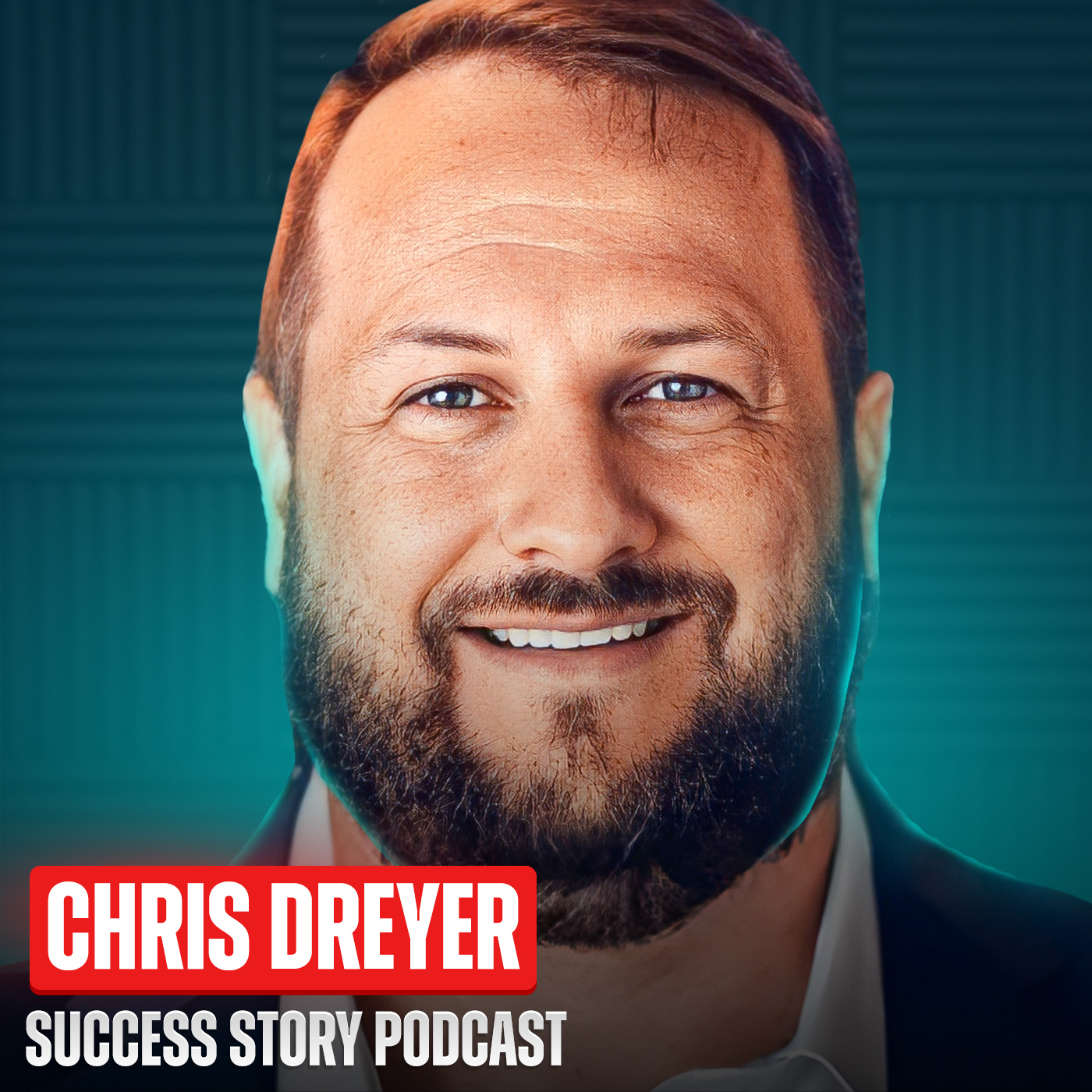
Success Story with Scott D. Clary
Chris Dreyer - SEO Strategist | How Extreme Specialization Created an 8-Figure Growth Machine
01:31:12
Loading summary
Transcript151 lines
- [00:00]
Chris Dreier
I had a business like I had six doors for renting. I had the affiliate stuff. And that's really when it started was that first year teach it. Honestly, part of it was I was miserable.
- [00:10]
Scott Clary
Chris Dreier is the founder and CEO of Rankings IO, an elite SEO agency specializing in personal injury law firms. Under his leadership, rankings IO has consistently ranked on the InCoR 5000 list for five years.
- [00:22]
Chris Dreier
I went to college. I knew I wanted to be an entrepreneur and own a business. Ended up with a history education degree. My first year, I was a detention room teacher. I took this job because it was on the same track as teachers. It's like, what am I doing? Am I going to do this for 20 years? Absolutely not. And I was trying to find a way out. I moved to Tampa and at the time, since I was managing the real estate, wasn't even aware of, like property managers, I ended up selling them. I was very fortunate. It was like the real estate crisis.
- [00:47]
Scott Clary
Starting his journey from a high school detention supervisor to building a top SEO agency, Chris has mastered the art of niching down. As a podcast host, real estate investor, and author of Niching up, his insights on specialization are sought after by top entrepreneurs. This episode is about focus, mastery and building DOM dominance through specialization.
- [01:05]
Chris Dreier
To go to a million to two, you get 100 gains. But when you start hitting 15, 20 million, you have to think about things differently. You have the idea. Don't think about planning to make it perfect, but do it. Then improve. Don't accept defeat. Learn from your failures.
- [01:23]
Scott Clary
Welcome to Success Story. I'm your host, Scott Clary. The Success Story podcast is part of the HubSpot podcast network. But HubSpot doesn't just have great podcast. If you're an entrepreneur, if you're a builder, they've got your back. Now, why is that important? Because if you're building anything, you know that marketing in 2025 is absolutely wild. Now, why is that important? Because you know, if you're an entrepreneur, if you're building anything, marketing in 2025 is wild. Savvy customers spot fake messaging instantly. Anything AI generated, they sniff it out. Privacy changes make ad targeting a nightmare. And everyone needs more content now than ever. And that's why you have to have HubSpot's new marketing trends report. It doesn't just show you what's changing, it shows you exactly how to deal with it. Everything's backed by research, but focused on marketing plays that you can use for your business. Tomorrow, if you're ready to turn marketing hurdles into results for your business, go to HubSpot.com marketing to download it for free. Chris, first of all, thank you for coming on. I'm excited. This is going to be fun. So you built Rankings IO into a powerhouse agency, and when I say powerhouse, you made the Inc. 5000 list five years running. Super impressive. That's not easy to do for anybody who doesn't realize how much of an accomplishment that is. But let's just open it up with the topic that you love to speak about. Niching. And I would. I was about to say niching down. I was about to, because that's what everybody says. But you speak about niching up and this has sort of been your business mantra. This has been what's created so much success for you and what you do now and in past things. So what, what is so important about niching up, not down?
- [03:11]
Chris Dreier
I think the biggest. The biggest thing. First of all, thank you for having me on the show. This is super exciting. Happy to chat. The niching, niching, niching. It's another example or reframing focus. Anything that I've done in my life, whether it was sports, the collectible card game stuff, if we go down that rabbit hole, poker business has been focused niching. My focus in legal has really put me on a path to success.
- [03:40]
Scott Clary
You know, it's so funny. I guess that's like the elephant in the room we have to address. Canadians say niche and Americans say niche. And I, there's times when I go back and forth between the two, but regardless, it is. It is the same concept, regardless of however you pronounce it. So I mean, when you, when you wrote, you literally wrote the book on niching up, and I think that are niching up. Excuse me. I'm gonna, I'm gonna speak. I'm gonna speak.
- [04:11]
Chris Dreier
We're good. We're good. Either one. I'll roll with it.
- [04:13]
Scott Clary
When you wrote the book niching up, first describe what niching up means versus niching down, which I think is a term that people have always used to try and sort of pinpoint a market they're going to go after or customer subset that they're going to. You want to niche down into a hyper specific group of people. They want to, you know, sell to, market to, whatever. What does niching up mean?
- [04:41]
Chris Dreier
I think that the. It's just reframing it like an opportunity, more of a half glass full versus an optimistic view, more as a pessimistic view. And a lot of times when we focus and we want to move upstream, it takes time to build that relationship equity, you know, in legal, the Morgan and Morgans, the Sweet James, these types of firms, like if I was talking to multiple industries, I would never ladder up in a quick enough pace to talk to these individuals. So it's basically an abundance mindset for focus as opposed to thinking that you're going to lose something. Everyone thinks about losing market opportunity and shrinking tam, but there's a lot of benefits that come from niching.
- [05:23]
Scott Clary
And I think like if you look at sort of what you've built now, talk to me about. Actually I don't even want to know about what you're doing right now. I want to know the first time that niching up actually served you and then we'll talk about what it's done for rankings IO but when did this concept of I need to be hyper specific and that's where the opportunity is. When did that idea sort of first work out?
- [05:46]
Chris Dreier
I think the roots, it's from my dad, from sports, it's, you gotta start there. And I play, you know, it's typical. I played all sports. I was good at baseball, I was good at all these other sports, but I was really good at basketball and decided to take all the additional time to focus on basketball. So when people are at baseball practice, like I'm in the gym working on basketball because I saw that, you know, I heard that with Nadal and tennis, like he was an all sports player. But really I think from there it was. And maybe it's just my genetics, my chemistry and liking the focus and the organization. The OCD component kind of lends itself to that. Even you know, the collectible card game stuff. I was a world ranked player and in the game that I played they had multiple, let's call it factions that you could be. Well, I only played one or two. That was it. I always just focused on those and I knew the intricacies of playing those really effectively.
- [06:40]
Scott Clary
That's so interesting. So like, even from like a young age, like with cards, with, with basketball.
- [06:45]
Chris Dreier
Yeah, yeah. I think it's in my DNA. I, I find myself now that I'm a father, my kid's three years old and he's like really into Monster Jams and we'll, we'll like play Monster Jams and on the floor he's like organizing the cars into the different. Like these are all the fish, these are all the blue ones, these are all the green ones. And it's like, is this like a nature or nurture? Like when I'm doing this, am I organizing the cars and he's watching me or is he just getting this naturally? I don't know, but that's. That's part of it. Yeah.
- [07:13]
Scott Clary
Were you. I think that. Forget. Forget about niching for a second. Just in terms of entrepreneurial, were you always entrepreneurial? Like, what. What was your. Your. Your. Your childhood, your upbringing? Were your parents entrepreneurial? Like, talk to me just to give a little bit of an origin story where you came from, because I've listened to a lot of podcasts that you've been on, and you. And you are like a wealth of business knowledge. But even before we press record, there's a lot of interesting stories and sort of past lives that have sort of shaped you to who you are today. So walk me through where you came from.
- [07:46]
Chris Dreier
Yeah. So I grew up in a super small town school district. In fact, you know, graduating my high school class, I had 28 people in it. And. But, you know, even before that, my dad's a mail carrier. He was a civil engineer, but he was always on the road and traveling and decided to settle down and become a mail carrier. My mom was a school cook. And there were points in our life or in my life and upbringing where we didn't have a ton of money. Like, we didn't even have water. Like, we had to go into town and had one of those big tanks in the back of the truck for water, you know, well, water scenario. And my parents worked so hard. My uncle was a very successful CEO entrepreneur, exits very wealthy. We would have vacations for him. So I kind of saw what was possible. And so that was always on the top of my mind that there was there. There was this, like, you could do it. Like it was possible. So that. That's really where it stemmed from, is at the time, I didn't know, like, we were. We were what I would call middle class in the terminology. I wouldn't say that we were like, quote, unquote, poor. Even with the water thing, it was just based upon where we lived, but it created like, some. Some principles, some habits of like, work ethic. And I would help my mom clean houses on the weekends at. She worked at a law office. We clean. Clean the house. She used to do these, like, you know, the. On Sundays, like the. What do you call those where you go into town and they have all the groceries and stuff. The, like the, like the flea market type stuff.
- [09:24]
Scott Clary
Yeah, yeah. Like little markets.
- [09:25]
Chris Dreier
She would hustle. Yeah. And farmers market stuff. And so we were always doing something like that to make extra money. And also on the side I saw like my uncle's success. I would talk to him. I was envious of that. Not in like a negative way. I love my own.
- [09:42]
Scott Clary
I'm so curious. Have you ever thought about. I always think about like, nature versus nurture. You just mentioned that. And is entrepreneurship, is it something you're born with, is something that you can learn? But even if you look at the example of your parents and your uncle, your uncle was entrepreneurial, highly successful. Your parents also were entrepreneurial, did not have the same level of wealth. What do you think? And you learned from both of them very valuable lessons that served you. But what do you think the difference was between their mindset, which I'm assuming then resulted in their success or lack thereof, comparatively?
- [10:20]
Chris Dreier
Really good question. I gotta. I gotta preface this. Mom, dad, if you're listening, I love you guys. So I. Let me say my mom was constantly trying to find her passion or her way that he. That she could contribute outside of being the absolute best mother and caring mother, like, everything was about her kids, everything, every waking moment. And I think that she didn't focus. Honestly, like, we're hustling, doing this thing, cleaning a house. We were, we were then selling, you know, stuff at the farmer's market. Then we're doing this. And she had all these different types of jobs, but I think she didn't really pursue it because of like, being a mom first. It was like, first and foremost. Even to this day. I also just think that she. The interest. She never had an interest to learn. Like, you know, just the, you know, business principles of charging more and repeat customers and all the things that come into running a successful business. The. My dad. My dad is one of the hardest workers I've ever met in my life. I mean, just, just when it comes to grit and work ethic, I mean, he's just. He worked, I think, every overtime hour they ever offered to him and hardly didn't take any days off. I think for him it was like a. He was very risk. Risk adverse. Avert.
- [11:43]
Scott Clary
Yeah.
- [11:43]
Chris Dreier
Yeah, adverse. Yeah. He, you know, very conservative in the stock market, very. Didn't want to go out on his own. Would. Would, you know, prefer the security of working for someone. My dad's upbringing, I lend itself to a lot of that because his, his dad died when he was very young and his mom didn't have a lot of money and this was in high school, so he went right to work out of high school for someone else. And so he didn't have this, like, you know, these, these gap years and this time to reflect.
- [12:14]
Scott Clary
He did not have the privilege, unfortunately, to, to take time and to figure out it was just right into work and, and, and sometimes you get stuck and not stuck in a bad way, but it's what you know. And, and it's scary as hell to do shit that you do not know. And if you've only known the one thing, which is work and safety and security.
- [12:37]
Chris Dreier
And my dad, he is a, a leader of the family, father first, just like my mom and it, and like, I'm not saying that business, like, business is like everything outside of the family to me. Like, I don't have, we'll go into that. We don't really have a hobby. So what I'd say business is my hobby. But he, he was the leader of the family. And, and I would say, like today, look, he has a government, you know, pension or retirement. My mom does too, from, from being the, the cook for those years. And their house is paid off and, and they live a good life. And it's also like, well, what's enough and what is. There's like, why do you continue to strive? They, they go on vacations, they're very happy. I think I had different levels of ambition from a wealth perspective, but they're very secure. They don't have like astronomical debt. They're, they're, they're comfortable and they do have freedom still.
- [13:39]
Scott Clary
I think that, I think that a lot of people who listen to this show in particular could understand that pursuit of wealth does not mean that you should sacrifice any of those things that your parents did so well. And my parents are very similar to yours, by the way. My parents are exceptionally similar. My dad worked for the government, my mom worked for universities. And then she took time off and she had me and my brother. Then she went back to work after. And they are not hurting by any means, but they were not risk takers in an entrepreneurial sense. And they were both like, I did not come from a hard upbringing, like, wonderful life, upper middle class, very much loved, and I'm so grateful for that. And I think that, I think that that's a beautiful thing. When you care about your family, that's what you're put on this earth to do. It's to care about your family, to care about the people that you bring into this world, your kids. And I think because of that upbringing, I'm pretty sure I know exactly what kind of father you are. And you're a great father. And even though you're pursuing wealth and success, you're not doing it and sacrificing all the other things in your life. But I do see some people that are exceptionally successful from a financial perspective that everything else is sacrificed and I don't think that's success at all.
- [15:03]
Chris Dreier
I don't either. And that is me. It's like I want to be a good dad, a good husband, and it's a work in progress. Right? I'm a early dad, he's three years old. And I'm trying to be the best husband. And we're all flawed and I'm doing my best. I will say that I think the values that they passed on to me and I think it was the both of the nature and nurture component. It's interesting. Both myself and my sister are very successful business owners and entrepreneurs. Like my sister is wildly successful. Multiple companies, eight figure five, eight figure wealth. And like we were both, you know, neither of our parents were like that. But I think, I think the values contributed to.
- [15:57]
Scott Clary
I, I think the values allowed you to be that successful in the right way. I, I fully believe that. What, what prompted you, if you didn't come from an entrepreneurial background, what prompted you to be more entrepreneurial? What was the, the first thing that you tried to build?
- [16:15]
Chris Dreier
Well, I went to college. I knew I wanted to be an entrepreneur and own a business, but I didn't know what. And I, I went, literally went to college. I had no idea what I wanted to do. Somehow ended up with a history education degree. I have no idea. I was a big partier. I didn't attend class. I had great grades, but I was not a good student. And I've got some stories about the, that if you want to go down that path.
- [16:39]
Scott Clary
Dude, yes, 100, go for it.
- [16:42]
Chris Dreier
Okay. Okay. Well, let's just. So a lot of history, you learn that throughout your life. You learn it in high school. So I knew that I could pursue that and be really effective and not attend class. Like we're talking about the Civil War, we're talking about these different milestones. It's like how much did you pay attention back then? And are you an effective writer? So it was like the perfect career path for me. Someone that wanted to chase girls and have fun and drink a little bit. And I will say this one thing almost got me in trouble in college. I had this final history education paper and I did not want to do it. Like I don't know how to write this paper. It was like a 30 page paper requirement. So I hired someone to write it for me. And this is pre chat GPT and all the whatever. And she plagiarized. She plagiarized. And so I get called in to like the dean and, and they're like, you plagiarize this. And I'm like, I have no idea. I just thought I was quoting the work, you know, like, like what am I gon.
- [17:41]
Scott Clary
Like yeah, you didn't know even write it. You didn't even write the plagiari.
- [17:46]
Chris Dreier
Right. So thankfully I was able. They allowed me to retake the class and I put in the work and wrote the paper and stuff. But like that was one of the moment where delegation almost.
- [17:57]
Scott Clary
Did you tell them that you paid.
- [17:58]
Chris Dreier
Someone to write it? Absolutely not. I mean that have been, that have been the death kneel, right? And, and thankfully I got that opportunity and was lucky to, to take the class. But like I, I wasn't a good student. You know, quite frankly, even in high school I was like, I was in all of the, you know, whatever you call those, the top classes. There's a name for it. Like.
- [18:20]
Scott Clary
Oh yeah, yeah, I know.
- [18:22]
Chris Dreier
So I took all those classes, all the math, English, whatever. But I was still a B student. And when I went to college, like I was a B student. Like, like this is what it is. Like I wasn't shooting for the dean's list, I was shooting to get this because I, I thought I was going to be a basketball coach and I thought the path was like, you know, high school coach, win a bunch of games, go to college, you know, be a college coach. I thought that was the path because at the time that was really my focus was, was basketball. But you know, that's, that's kind of the beginning of the journey for me. To answer your question, like when did that first entrepreneurial thing happen? I think my first year I was a detention room teacher. I, I took this job because it was on the same track as teachers. So if I was a two year detention room teacher and the third year I'm a teacher, I'm a three year teacher towards that, that retirement. And I typed in how to make money online. I found this affiliate marketing course, made my first like 20 bucks from it. That gave me the itch. But then somehow I got into real estate and I convinced this guy to sell me this triplex, you know, for my salary. Barely could get the loan for it. And then he owned the neck one door, the one next door. So I convinced him to do it. Contract for deed. So then I had six units and I had this Internet marketing thing. So like I had a business like I had six doors for renting. I had the affiliate stuff. And that's really when it started, was that first year teaching. And honestly, part of it was. I was miserable. I was with the, the kids that. Not all bad kids, some of them. It's just like I'm sitting in this detention room. It's like. It's almost like the, the padded walls of white. It's like, what am I doing? Am I going to do this for 20 years? Like, absolutely not. And I was trying to find a.
- [20:20]
Scott Clary
Way out and that, I mean, so now it's ironic because your first version of entrepreneurship is anything but niching down or like buckshot, like anything you can touch. That's not the tension room. This is what you're. This is what you're going after. So when was the first version of entrepreneurship that was successful for you? Like, I mean, you moved into affiliate marketing, Real estate. Six doors, by the way, is, is very like, that's, that's impressive for the, for the lack of experience in real estate and for how old you were. Um, some of these obviously didn't work out, did they? I mean, failures teach us more than wins sometimes. So what did this first version entrepreneurship teach you? What did you, what did you sort of, you know, what did you say? Listen, this is not for me because of X, Y and Z. And how did this clarify your path into SEO, into Internet marketing, into all the sort of stuff that you do now?
- [21:18]
Chris Dreier
So my first website was Lose a double Gencom. It was that. It was, it was niching. It was focused in the weight loss category. And essentially, I mean, there's more to it, but. But essentially weight loss and health, right? And it was wildly successful. I. Look, I built like 80 sites. I didn't, I didn't like, really believe that. I thought I just got lucky. I didn't know it was the focus at the beginning. And I, I built all these other websites. Staining concrete, Acai berry. I had a portable generator site that took off in the Katrina era. I had all these sites, but really the one that hit was the lose a double chin. I ranked number one for double chin for like three to five years. Massive amount of volume. You know, part of why I'm wearing this beard right now, because I'm, you know, I got the double chin, but the. It hit and I was making like 16 grand a month by my second year.
- [22:14]
Scott Clary
But how, how, how were you making, like, just like having 80 site? Like, what made you think, oh, I want to spin up 80 sites? And that's how I'm going to make money.
- [22:23]
Chris Dreier
I thought that it would be as easy to get a win in these other niches, but I didn't, I didn't realize I got, I got very lucky on the Double Chin site for my first site and I should have just.
- [22:34]
Scott Clary
Focused and you were just, you just spun it up and it was just articles and then ad revenue.
- [22:39]
Chris Dreier
Adsense. I had some Amazon products, but overall is ads. Google Adsense. And it was a big driver. I had like, let's, let's say I had 80 sites. I would say four of them produced 90% of the revenue and the.
- [22:56]
Scott Clary
So that's a signal. Yeah, Yeah.
- [22:58]
Chris Dreier
I actually have a funny story on this. Without going too off track. One of them was how to stay concrete floors. And I ranked number one for stained concrete for a few years. And I created this. So my. This. You fast forward. This article's out in the Ethereum that I wrote. And my president today, Stephen Willey, is getting ready to redo his basement. He's going to do the stained concrete floor. And we'd worked together for two years and he's like following this instructional article and he gets down to the bottom and it's me.
- [23:32]
Scott Clary
He's just like, that's funny. So it's still, it's still on the Internet in 2024.
- [23:38]
Chris Dreier
It's a lot harder to find now because I've taken a lot of that stuff off. Like the double chin and the best. I had a best man duties and a pastry chef thing. I tried to get rid of as much of that as I can, but. Or I could, but yeah, there are a few of those out there in the ether.
- [23:55]
Scott Clary
How did you get good at essay? Like, you're so you're OG, like Internet marketer. What year? Okay, so 80 sites. Double chin, Lucid Double chin. What year is this? This is.
- [24:06]
Chris Dreier
Yeah. 2006. Ish. I was the teacher and doing this on the side.
- [24:11]
Scott Clary
Oh my God, that's. Yeah, that's so. That's so old in Internet. In Internet time.
- [24:18]
Chris Dreier
It was so easy back then. It was so easy. I wish I would have just pedal to the metal and did it more. But you know, live and learn.
- [24:28]
Scott Clary
And you were. And you were. The business was spin up a website, write an article, put it on the website. Basic. Basic SEO. Not as. It's not as difficult as it is now, obviously. And were you. Were you writing articles for 80 websites?
- [24:45]
Chris Dreier
I was writing articles for a few, but I had an affiliate team in the Philippines, so I would early on upwork used to Be called odesk before they got acquired. And I had an Odesk team of about eight people. And so they were writing the content. And back then, there was this site called Easing Articles. Ezinearticles was a very authoritative site, and if you got one link from ezinearticles, it would propel you up in the rankings. There was other success factors, but it was heavily weighted there. And what's funny is they sent you whenever you became an expert writer at ezinearticles, they shipped you a coffee mug. Coffee. And like, a pen or something. Well, I had like 30 of those because I had, like, different pins. So I used to, like, play with it and hold them up in videos and stuff. And, like, some of the old G's would recognize the easy articles too. But that's kind of how I got started. Yeah.
- [25:47]
Scott Clary
And that was. Okay. So that was. That was a signal that, I mean, you. You upload, you. You set up all these sites. Three or four are killing it. The rest, not so much. Okay, that's. That's a niche. You shelved real estate and then you just went all in on SEO.
- [26:03]
Chris Dreier
I kept real estate for now. I wish I still had those today because I. Yeah, you know, depreciation and all that, but I was managing those myself. So, like, Chris that didn't know anything about renovation and home maintenance would go over there slinging a hammer around, trying to fix stuff, mowing the grass, collecting the money, screening the tenants, doing all the things. Right. I was doing that while I was teaching and coaching and doing the affiliate stuff. So I was. I was after it at the end of.
- [26:36]
Scott Clary
When did all.
- [26:38]
Chris Dreier
Yeah, I was gonna say at the end of my second year teaching, I was making like 16 grand a month, and I was gonna get paid the teacher salary the whole summer. I got a mentor in Florida, which I can tell you about how I knew this individual. But I moved to Tampa, and at the time, since I was managing the real estate myself and didn't even. Wasn't even aware of, like, property managers, I ended up selling them, but I got. It was the timing of when I sold them. I was very fortunate because right around there, 2000, 2008, was like the real estate crisis. And I got a decent amount of money. Not like a huge amount, but maybe I netted 20 grand or something, 30 grand. But it kind of helped me. With all of these things going on.
- [27:20]
Scott Clary
FreshBooks is supporting today's episode. And if you've ever wondered how successful entrepreneurs stay on top of their finances while growing their business, the answer is Freshbooks the numbers don't lie. Over 30 million people have chosen FreshBooks, processing more than 60 billion in invoices and saving an incredible 192 hours every year on accounting tasks. Think about it. That's nearly eight full days you could get back to focus on what really matters. Growing your business FreshBooks is more than just accounting software. It's your all in one financial command center. Create professional estimates, track time, automatically, bill clients and capture expenses on the go. Plus, it integrates seamlessly with over 100 business tools you already use, all backed by award winning customer service. If you're ready to stop drowning in receipts and you're ready to stop chasing down payments, here's what I want you to do. Head over to freshbooks.com to start your 30 day free trial. No credit card required. And for all you success story listeners out there, I've got something special. Get an exclusive 60% off for six months when you visit freshbooks.com pricing offer transform your business with freshbooks today. That's freshbooks.com pricing/offer for 60% off. Today's episode is brought to you by Vanta. Now listen up. This matters for your business. In today's digital landscape, security isn't optional, it's essential. Without it, deals stall, sales cycles stretch on, and scaling becomes very difficult now. Why? Because investors, customers and partners all expect businesses to demonstrate strong security practices before they commit. If you can't prove trust, you lose opportunities. So whether you're a startup founder trying to land that first big client or an established company scaling your security program, Vanta helps businesses of all sizes prove that they're trustworthy by Automating compliance across 35 frameworks like SoC2, ISO 27001 and HIPAA. The exact certifications your prospects are demanding. Here's why you need to pay attention. Vanta gives you back precious time that you're currently wasting on compliance. Their platform automates up to 90% of the tedious compliance work. It helps you respond to those endless security questionnaires up to five times faster. And it connects you with experts to get your security program immediately. The results speak for themselves. A recent IDC report found that Vanta customers achieve over $535,000 per year in benefits. And the platform pays for itself in just three months. So you're going to join over 10,000 global companies like Atlassian, Quora and Factory who use Vanta to manage risk and prove security in real time. And don't miss this for a limited time only. My listeners can get a thousand Dollars off Vanta. That's real money back in your pocket. Visit vanta.com DoScott right now before this offer expires. That is V-A-N-T A.com Scott, this mentor, who, who were they? What impact did they have on your life? And is this the mentor that sort of pushed you or was the inflection. Working with this person was an inflection point that eventually led to rankings IO.
- [30:23]
Chris Dreier
I'm gonna say major, major contributor to it. I was. And you're, you might, you might go into details here, but between high school and college, I played this collectible card game called Legend of Five Rings. It was the same, it's very similar like Magic the Gathering and the Pokemon. Right?
- [30:46]
Scott Clary
I, I know Magic, but I never knew, I never knew this.
- [30:49]
Chris Dreier
So this game had a very big following for a time and I was a top player. They had these things called KOTAI championships and I won essentially state championships in a two year period. @ the time no one had ever done that. I think a few years after I kind of got out of it, people did. But one of the other top players was an individual named Ryan Carter. Ryan and I and all the top players just like when you really get into a game or something, we, we had a mastermind. All the top players hung out, talked cards, went on these street trips because you know there'd be a 200, 300 person tournament but like you're up against these top 10 like they're going to be at the end, like you know it, you all know each other and Ryan was one of those players and we started just chit chatting about Internet marketing. He was really into it and he started it as a full time job and so me as well. And we basically lived together. We talked about digital marketing every single day. It was a passion. We were both trying to make money and hustling. His life kind of pivoted and he went the Chris Moneymaker route of poker and pursued it not as a hobby. He is a through and through pro poker player that had a mindset coach, a, a tactical coach, was very successful, went that direction. I continued with the digital marketing. Now I did have a brief stand in poker where I made a decent chunk of money. But that, that's kind of the, the direction that I went versus him.
- [32:22]
Scott Clary
Between all the different things that you've been successful at, I mean you, you're, you're recounting a lot of wins. So I mean I'm assuming you're leaving out some failures or maybe you've Just been incredibly successful over your career. But what was the through line between and if you want to talk about failures, be my guest, but I'm not going to push you on those. But what was the through line between being successful at affiliate marketing, being you know, quasi successful even at real estate and being successful at playing cards and being successful at playing poker? Is there a personality trait that served you well, a practice or some idea that you find has sort of allowed you to be successful across all these? It seems like different, very different domains.
- [33:09]
Chris Dreier
Absolutely. It's core values. It is and I'll expound on this. But like our core values at our company are excellence, execution and grit. And I am the epitome of a type A driver. Whenever I take these personality assessments and they're like have these ranges, I'm always like falling off the page on the driver and execution. My orientation in terms of thinking about things is shorter term orientation. Like a year is about as far as I can go. So I have issues wandering and thinking about 3 and 5 and 10 years. So like a Jeff Bezos has a super long term orientation when like a look back window and you know, this orientation of just thinking about the future. I would say like an Elon Musk, like these people are thinking about changing the world 20 years from now, 30 years from now. Me it is just straight have the idea, get it. So I'm not making one affiliate side, I'm making 80. I'm not doing five articles on the website. I'm doing a hundred or a thousand playing basketball. I'm not. I'm playing basketball every single night. I had a key from the superintendent where only I had it that, that I could access the gym. I went every single day I was before school went every single day. It's a obsession, obsession to the point where I cannot play video games. Not because I don't enjoy them, it's because I, I take them to the 10th degree and I just, I have to win. I have to be number one. And I remember, I'll give you an example. It was like a point where I just had to quit playing video games. Is there's this final fantasy on PlayStation 2. There's this one level that you could play in and you can only access it at one point in the game and it gives you like these permanent boosts to your people. Well I played that level for 40 hours to just max out all my guys before moving. And it's like what am I doing? So business has become this, this game, it, this, this, you know, people Joke about the simulation and whatever. And you know, RPGs. When you think about role playing games, it's like you get the guy, you fight some monsters, you level up, you know, you build bigger sitters, cities get bigger swords. Like, that's what I'm doing. That's what I've, that's what I've always done in business, in an affiliate marketing, in everything. It's just keep focus, keep reputation and execution. That execution and consistency is, has been the number one driver.
- [35:35]
Scott Clary
When does, when does obsession in business serve you and when does it hurt you?
- [35:43]
Chris Dreier
It serves me because I want to be the best and I don't have any shame saying that. The Timothy, Timothy, what's his last name? Like, I'm gonna shout out, right? He came out and he goes, I want to be one of the greats. Like that fired me up. Like, please. I love that type of stuff. Some people didn't like it. They thought he was brash. I loved it. I love people saying they want to be the best and having high standards and okay, when does it serve me? It serves me because I, I go all in. Like, look, I'm not. If I take an IQ test, look, I'm real. I'm not going to be like a 160 or whatever. I'm not going to be also, you know, the bottom. But I'm going to be like the average guy. But the difference is every single day, every year for the past 11 years, I've read 50 to 100 business books. I listen to business podcasts every single morning. I talk to. I'm in business masterminds. Like I'm just constantly. Because I can't be the best at everything, but I can be very good at this thing. So that's how it served me is this, this relentless focus and passion. How it's hurt me is I have extreme difficulty shutting it off. Like tremendous difficulty sleeping. My sleep is horrible. I need a sleep coach. I need the ordering thing. I can't shut off my brain. I also, you know, with the wife, I have to be very purposeful, intentional about being in the moment and listening to what she's saying. Because I'm also thinking about this deal I'm trying to close or this marketing initiative or this employee I have right now. I am in an office. I'm the only person in this office. I'm paying a pretty high lease for this office. I'm the only person here because I cannot work from home. Because if I'm, if I get, if I'm at home, And I get off work, I'm still at work. It's. I used to have this house before my wife at this nice house in O'Fallon, Illinois, had a big master bedroom upstairs, but my office was upstairs. And after I got off work, I had to go downstairs because that was when I was off work. So that's, that's, that's the negative, right? The negative is health too. It's like where, you know, in these health and relationship and spiritual. It's like I had always. And I'm getting way better. I'm blocking my calendar, you know, working out, I'm eating better. But like that took a backseat too. Like I was putting all of my time into the business.
- [38:23]
Scott Clary
It's tough, dude. I think that sometimes like the dark parts of a personality, a person's personality is what allows them to be successful. Dark in like the way you just described with obsession. I mean, I've heard this from Mr. Beast, who he went on Stephen Bartlett's diary of his CEO and his podcast and he said, I wouldn't be successful if I cared about my mental health. I believe that to be true sometimes with me as well. I think that I also believe that most entrepreneurs are to a degree, even a small bit neurodivergent. I think that that's reality. I don't think that it's normal or rational to put your life into something, but if you're going to try and build something, it's almost required, at least for a season. The issue is when you can't shut it off and when everything else in your life deteriorates because of it, that's when it becomes a problem. Not if you do it for five years and then you're successful and then you can spend your life focusing on your health and your wellness and, and ideally you do it simultaneously. But I get that sometimes it's hard to balance everything. But yeah, okay, put five years, put 10 years. But then, yeah, have a, have a partner, you know, have a spouse, have kids, be present for your kids. Like there's other things in life that are important too, but it's when they never, they never exit that season of building and they just. And that then they, and they try to half ass all the other parts of their life. They, they lie to themselves saying like, well, you know, I've made a lot of money, now it's time to get married, have kids. But they really haven't shut off and moved away from entrepreneurship. And all the other people suffer. Suffer. Excuse me.
- [40:18]
Chris Dreier
Yeah, and I think, I think my Wife would say, I'm a really good dad, a good husband, and I make time for them. But, but it's, it's hard. You know, it's, it's the standards that we set for ourselves. I think that's, it's like, I don't know what it is. If it's a. Nothing is ever good enough. And like the, you move with a goal like Inc 5000. We talked earlier, like, we're actually seven years in a row. We're definitely going to be eight years in a row. So it's like, what, what do you have to do to continue to move, you know, to continue to achieve these things?
- [40:49]
Scott Clary
And, and by the way, for that. It's not based on, it's not based on starting from zero. You have to, you have to show growth based from, from last year.
- [40:58]
Chris Dreier
It's a, that's how you hit that list. Yeah, so, so it's like the revenue, you know, when you're, and I'm not trying to devalue, like, like right. The, the audience listening, the solos, the startups, right? When you hit that first million to go to a million to two, you know, you 100 gains, but when you start hitting, you know, 20 million, you know, 15, 20 million and now it's like another 20. The. You have to think about things differently. But yeah, it's, it's, it's the game.
- [41:28]
Scott Clary
When do you, when do you, like, when is your, like, enough's enough. I've hit like. I don't think it's a money thing anymore. So what's the, what's the milestone that you're trying to achieve?
- [41:39]
Chris Dreier
I ask myself that a lot. I, I enjoy the game. I sound like Hermosi, right? I listen to every, all her Moses podcasts, a Layla, stuff like, you name it, Bartlett. I've listened to the Mr. Beast thing, right, Because I'm like a student of the game. I, I ha. Look, right now I'm still in the real estate. I've got 99 doors. I've got, you know, I'm in a position because I live in the Midwest where I, I don't have to work again. I'm good from a financial perspective, but I just enjoy the game. Like, I'll tell you, like right now, P.E. and there's a lot of money for agencies. Like, they're just scooping up these agencies and I had some big, big numbers thrown at me. But the thing that I couldn't solve was what do I do afterwards? Like, what do I do? Like, I don't I don't have hobbies, and I need to get those. I. I think having some physical fitness, like, think would help me with my health, help me connect with my son and my wife better. But right now, I don't have those. And so I was like, I couldn't. I couldn't think about what's next. So I'll just continue to build. That's where I'm at right now.
- [42:48]
Scott Clary
Yeah, it's tough. It's. It's very tough. I. I don't have an answer for you. I just know that, like, as a friend, I would say that find. Find something outside of work, because I think that this is. This is. I'm. When I'm telling you this, I'm also talking to myself because it's way easier to give advice and to live it.
- [43:03]
Chris Dreier
Yeah.
- [43:03]
Scott Clary
But I also find, like, my identity is wrapped into my work.
- [43:06]
Chris Dreier
Yeah.
- [43:07]
Scott Clary
And I know that it's not good. Yeah, I know that it's not good, but it is. It definitely is. As much as it's, you know, I. I also, you know, tweet out nice little novel ideas about balance and seasons and don't let you. And. And it's ironic because a lot of the things that, if you ever read my content, most of those lessons are, like, me telling me, like, therapy.
- [43:30]
Chris Dreier
Yeah. I like that. It's like reminders. Yeah. It's great.
- [43:34]
Scott Clary
Yeah. Because it's not easy. It's not. And. And once you. Once you get on this. This hamster wheel, so to speak, it's just another hamster wheel. It's just another, you know, you. It's hard to get off and. And completely change what your focus is. But I've, Like, I don't. I don't have kids yet, but that. My. My promise to myself was that I would not be working at the level and with the. The. I would not put as much of myself into my work when I have kids. That was really the promise, because I. And it's not because, like, my dad was absent. It's actually because my dad was very present, and that's the exact experience that I want for my kids.
- [44:11]
Chris Dreier
So I love that.
- [44:13]
Scott Clary
At least you're thinking.
- [44:14]
Chris Dreier
I love that. That's amazing.
- [44:15]
Scott Clary
At least you're thinking that way.
- [44:16]
Chris Dreier
That's great.
- [44:18]
Scott Clary
Let's talk. We can talk about. We can talk about SEO if you'd like. I mean, it is kind of what you do for a living.
- [44:24]
Chris Dreier
Yeah.
- [44:27]
Scott Clary
So I think that it's interesting. We'll tackle SEO and rankings IO, sort of from two perspectives. One I think is just this. You are a wealth of knowledge in SEO and business. But I think that also we can go back to that very first question I asked about niching. Niching up. Excuse me. And when you started rankings IO, you already probably understood that niching up and niching in general was like what you wanted to do. So from advice to a young entrepreneur, you niched up into. Into law and then personal injury law. And I've heard you speak about how you could even niche even further. But what was your thought process for niching up into law?
- [45:12]
Chris Dreier
As an SEO friend, I think, I think there's. You might be surprised at this. I think, I think individuals have to have experiences in a lot of areas to find their purpose and passion. And ultimately it's that Vin Dagger and purpose, passion and profit. It's like you got to have all three. Like, it can't be just a purpose and passion, but you can't make money. You got to be able to generate money too the all three. And well, I knew that legal was saturated. I knew that it had been around for many years. It had stood the test of time that they were, you know, willing to spend money on advertising. And so all those things lends itself to a good industry. But at the end of the day, I had worked with many lawyers because before I started my own, there was a brief stint of time for about a year and a half where I worked for three agencies and one of them worked with a lot of lawyers. It's kind of how to funny how I landed in that position or kind of that you talked about wins and losses and setbacks. So I had a big setback on the affiliate side and had to get a job temporarily. But it's. I think, yeah, those experiences. And I just found that they, they were a good option for me because I wasn't majorly capitalized. I was bootstrapped. Like, what am I? So I had to be. I had to have a community that I could like throw the pain at as opposed to trying to target everyone.
- [46:40]
Scott Clary
And that's.
- [46:40]
Chris Dreier
And.
- [46:41]
Scott Clary
And you just chose legal because they were people that could afford to, you know, allocate budget, you know, every.
- [46:48]
Chris Dreier
At least when I was in college and hearing on the news more and more attorneys graduating every day and can't find a job and more and more law firms. And I'm like, okay. So a lot of times people say, I think there's this really poor advice where there's two different versions of this. Some people talk about Blue Ocean and, you know, going to in creating something new, I think that's. That is the Peter Thiel 0 to 1. But I also think that people have flawed ideas in this. And what I mean is, if you don't create something absolutely new, it's actually better to go where the competition is. You want to go where the bloodbath is because of. Because of competition. It demands expertise. Right. I'll take the air. I'll take legal right now, for example. Right now, there might be a few bankruptcy attorneys in a city, right? Or the one patent attorney or the couple in immigration lawyers. When there's a ton of personal injury attorneys. Well, there's only three spots in the map pack, like who's gonna win? So they want to hire the expert to get them in the top three. Other. If you're just the only one, by the nature of being the only one, you don't have any competition. You automatically rank. Right? So. And because of that, that, you know, and the time people are willing to pay for expertise because of the time saver it provides for them, you know, I'm more like. Because I put in the reps, I. I'm more likely to achieve the objective as opposed to then spending the time to learn the craft. It's all centered around time.
- [48:27]
Scott Clary
When was the moment when you knew that your sort of your bet on SEO for lawyers was like the right bet?
- [48:36]
Chris Dreier
Well, let's just. My first year, we grossed like 79 grand. 79,000. Not a ton. But the next year it was like 300. Right. So it's like the amount of money that I was making doing this and helping other individuals was just versus working for someone else. It was like, I never liked the idea of being a teacher or being working for someone else because of caps and ceilings. That's why if I was going to work for someone, I would absolutely be in sales. It's like, it's on me. I would want to sell a good product and I would have no ceilings. You know, I would hire my own assistant if I was. Look, if I was at a. All the salespeople listening, I would hire my own assistants. Right? And I. And that's kind of what I did. So I'll tell you a brief story because I think this kind of encapsulates a lot of things about my character and just things you hear about, but maybe in a vacuum. So I had a big setback around 2011 or 12. That first algorithm hit my affiliate. Money went from, let's just say, 20 grand. I don't know exactly what it was to be Honest, I have no idea. Down to like two overnight, and that's a big dip. And I wasn't saving money. I was still partying. I was still doing this. You spending the money. And I looked at and I like, there was nothing, no way around it. So at the time I got on Craigslist, I fired off my resume to, like, so many comp. I just typed in SEO and fire off the resume to so many companies that I hit Craigslist filter that I couldn't shoot my resume anymore. I don't even know what that is. That's like hundreds. Well, from that, within a few days, I had three interviews for three agencies, all remote. This was pre zoom. This is like go to meeting days. This is like operating a remote company by phone. Essentially. Basecamp was a project management tool. I don't even know if some of the other ones existed. I had three interviews, and I got three job offers. And most people would be like, well, which one did you take? Well, I took all three. And the reason I took all three is because I had my team from the Philippines, so I was the best SEO specialist at all three jobs because my output was better than any other person at any of those organizations. At the end of the day, the owners are very happy with my work. Why can Chris do 10 times the amount of this other people? Because I had eight people working for me. So instead of making, you know, 40, 50 grand a pop, you know, now I'm making 120 to 100 and whatever. And I get this experience of learning what the agencies are doing right and what they're doing wrong. So that's. That's kind of the. The mindset of, hey, you're gonna offer me all three? Well, why can't I accept three? Wait, why do I have to only accept one?
- [51:39]
Scott Clary
Entrepreneurs just think different. They just think different. I love it. I love this. I love this story. I'm sure the agencies wouldn't love to know that you did it, but at the end of the day, it doesn't matter, because if you're performing, it's all that matters. But that's.
- [51:56]
Chris Dreier
So I can tell you this. Even if I think if they knew, they were very, very disappointed to lose me. They were very happy with my output. That's why a lot of times you get in these different scenarios where people, you know, that you talk about in house or outsourcing or whatever. At the end of the day, it's about results. It's about productivity. It's about, you know, it can be a pricing arbitrage component in there too to make profit. But at the end of the day I was a very good employee at all three of those.
- [52:28]
Scott Clary
One last question on niching up. If somebody, if an entrepreneur who is just starting out is sort of listening to this and like, oh that's a great idea, I'm into it. It makes a lot of sense. I have a service based business, I want to niche up into something. What's your advice to them? If they have every single type of customer they can sell to in front of them, what should they think about?
- [52:52]
Chris Dreier
The first thing that I would do is I'd look at the data. Are you generating profit from a focused group, a clientele? You know, I would put it in, I would put, I would draw out those three circles on the Venn diagram. Purpose, passion and profit. Like what, where do I generate profit? Who do I like working with? You know, because at the end of the day if you don't have the purpose and passion and you're tired or and something happens, you're not going to have the energy to, to overcome that, to stick with it. So you gotta have all three. And that's what I would say. Look at the data. Look at, try to take either an objective view of the data or a subjective view of who you enjoy working with.
- [53:36]
Scott Clary
If you think about some of the sort of things that have changed with SEO from when you first started to where we're at right now. Just to give me like an overview of the SEO landscape, what are some like obviously outside of algorithm updates, like what works in 2025 that or what doesn't work in 2025 rather that used to work really, really well.
- [54:02]
Chris Dreier
I'm going to answer this a bit different. I think that, I think by all accounts from Malcolm Gladwell, 10,000 hours or 100,000 hours at this point, who knows? I, I, you put yourself at the top of Bloom's taxonomy and I can deconstruct things into a more simplified manner. So I think a lot of times people try to overcomplicate it. They, they talk about the 200 ranking factors and the, and this and that and at the end of the day, the first is the opportunity you have to have great content that targets themes, topics or keywords or all the above in order for Google to understand that you want to drive traffic around these areas. So the content has to be better than the first result and that goes back to that core value and excellence, everything. Right? It has to be better. If it's not better, Google's what Google is Trying to do is trying to organize the web to give the consumer the best experience. Now there's without going crazy on their financial motivations. But at the end of the day they're trying to organize the web, right? So it starts with the content. It has to be the best, it has to be the best piece of content out there. The second component is that I, that I look at is the links. Google how they differentiated from aol, Yahoo is they use links as a, as an algorithmic mechanic to sort the web. Now there's different things that they look at in terms of the quality of the link. They've added other things to their algorithm like click through rate and engagement signals and things like that. But at their core it's links. Today we just analyzed 40 million words of content in the legal vertical. 40 million using chat, GBT and AI. It's all kinds of stuff, right? Crazy stuff. We found that 66% of the content that, that didn't index didn't have a backlink. There's some other signals on this. I could go into this expansive study that we did, but it means that like why would Google crawl or index a piece of content that's not in, that doesn't have. Let's, let's talk about a link. What it is an endorsement. If a piece of content is not endorsed via social media, even if it's a nofollow link or a credible website, it is not going to rank. It is not Field of Dreams. It's not going to rank. It's not Field of Dreams. You know, if you build it, they will come. You have got to promote and get your content at least those initial links. Maybe not hammer it, you know, with a thousand links every, you know, every single month, but you at least have to get it recognized for Google.
- [56:52]
Scott Clary
Google's crawl, is that something as simple as like posting it on your own social.
- [56:57]
Chris Dreier
Yes, posting it on social, talking about it to different communities, getting traffic to come to it, to, to visit it. That's the start of it. If you don't do that, you know, you take a look at the Internet. In my space, let's talk about personal injury attorneys. A high volume article is you know what to do after a car accident. How many times has that been written? 10,000? 30,000? 3,000,000? Why would Google index it? It's already been indexed a million other times. Why should they rank your piece of content? There's two reasons. Either your content's better or it has more endorsements or it's a combination of both. I Think all these people. It's, it's the snakey snake oil life, right? It's the. We're going to do this GEO stuff. We're going to do this. Oh, it's your, it's your meta description length. No, it's not. Is it better? Is it endorsed? That's, that's the name of the game. And that rules today. It ruled 20 years ago. It is as simple as that.
- [58:13]
Scott Clary
I was going to say people then just over complicate the out of SEO.
- [58:16]
Chris Dreier
They absolutely do. They try to pull the, the curtain over the eyes and, and a lot of these sites, your WordPress and setting up a title tag and those types of things. It's like very easy. They overcomplicate it.
- [58:33]
Scott Clary
A big thank you to Indeed for supporting Success Story because hiring people is one of the hardest things you're ever gonna have to do. As an entrepreneur, as a founder, as somebody who's trying to build a business, it's important to hire well and find the right person. But it takes so much time and it's so labor intensive because like most entrepreneurs, you have a thousand things going on and there's a good chance that you just realized your business needed to hire somebody yesterday. So how can you find that great, amazing right fit candidate fast? It's easy. Just use Indeed. Because you don't have to waste time struggling to get your job posts seen on all these other job sites. If you're using Indeed, you can just use their sponsored jobs to help you stand out and hire Fast. Your post jumps right to the top of the page for relevant candidates so you can reach out to exactly who you're looking for faster. And the results really speak for themselves. According to Indeed data, sponsored jobs posted directly on indeed have 45% more applications than non sponsored jobs. And you know what I love most about Indeed? It really just makes hiring so fast because everything is streamlined in one place. No more juggling multiple platforms or waiting weeks for the right candidate. And how fast is Indeed in the minute I've been Talking to you, 23 hires were made on Indeed according to Indeed data worldwide. There's no need to wait any longer. Speed up your hiring right now with Indeed and listeners of Success Story will get a $75 SP job credit. To get your jobs more visibility at indeed.comclarity. terms and conditions do apply. Just go to indeed.comclarity A huge thank you to Netsuite for supporting today's episode. Now, what does the future hold for business? If you ask nine experts, you're going to get 10 answers. Bull market, Bear market Inflation up, inflation down. Honestly, at this point you just need a crystal ball. But until we get one, over 41,000 businesses have found the next best thing. They future proofed their businesses their operations with NetSuite by Oracle, which is the number one cloud ERP. Imagine having your accounting, your financial management, your inventory, your HR all flowing together in one fluid platform. And here's what makes NetSuite different. It gives you one source of truth for your business. You get the visibility and control to make quick, confident decisions. While others are guessing. You're working with real time data, insights, forecasting. You're basically looking into the future of your business with actionable data. Whether you're company earns a couple million or even hundreds of millions, NetSuite helps you respond to immediate challenges and helps you grab your biggest opportunities. And speaking of opportunities, they put together the CFO's guide to AI and machine learning@netSuite.com ScottClary this is the playbook for understanding how to use AI for your business. The guide is free. That is NetSuite.com ScottClary so, say you can write good content and I'm curious actually, what is good mean? Like good is subjective.
- [61:19]
Chris Dreier
Does it answer the consumer's intent? Effectively, that's it.
- [61:23]
Scott Clary
So it isn't so subjective.
- [61:24]
Chris Dreier
Well, I say that is the direct answer. But let me give you some complication here. A page can have multiple forms of intent that it needs to address. Okay, so if I had a page on car accidents, well, do they need a lawyer? Do they need to know what happens after a car accident? Are they wondering how many car accidents occur in a city? Do they? There may be many questions that consumer asks. So that page has to answer all of those. It can't answer just one version because if it only answers the one version and a different consumer comes to the page and it doesn't answer their intent and they leave. Well, that's a bad, that's, that's, that's a bad signal, right? Bounce rates, page on time, all those things. It's. If someone comes to your website and it's not a good piece of content and it doesn't answer intent, and then they do another query similar or they go to another website for the same query, it means potentially that they, that this website, this landing page did not help them or it wasn't helpful for them. And over time, if there's enough of that, Google will stop serving you in the number one position.
- [62:38]
Scott Clary
That's, that's scary because if you See a high bounce rate and low time on page then you know that it's not answering all the questions but you don't really know or I guess you could, you could so there figure out what questions it's not answering.
- [62:52]
Chris Dreier
So there's, there's always the asterisk, right. And it depends, right? Yeah, there are. I would say the longer the query to the more specific it is. You know what are the steps I need to take after car accident? Okay, here's the article. There's no guessing the intents defined in the query but there are certain situations where a high bounce rate is absolutely okay because they could come to the page, get their intent answered and then leave. They don't have to go to other websites. They take, take something like definitions right. Nowadays AI overviews eating those up. But define this. Okay, well like do I need to write 10,000 words on this definition? Do I need multiple articles to, to explain? Do they, do they need to visit other people? They don't. They need to go there. They get the definition, they can leave. So it, it really depends. But it depends on, on your goals, on what you're, what you're trying to achieve and a lot. But at the end of the day it's great content. Does it answer the, the consumer's intent effectively and is it endorsed by other people? Do other people vote and think it is a good piece of content?
- [64:03]
Scott Clary
Interesting that you mentioned AI overview. So AI overview, if you, if you Google anything it'll give you an AI overview right at the top I'm assuming. Tell me if this is a conspiracy theory but I think that Google is doing this so that your page isn't ranking as high anymore. People aren't going to the pages. So then that means that you're forced to spend more ad dollars to get a sponsored position for your page to show up. Is that the conspiracy or is that what Google is doing?
- [64:31]
Chris Dreier
Absolutely accurate. They're a for profit business. They make the majority of their publicly traded company's revenue from Google Ads. If they can make more money there, they're going to do it. I will say it's not like the AI overview zero click scenarios didn't exist. We had rich snippets. They were zero click scenarios that showed the answer and you didn't have to click through through a website. And they have such market share domination. I think they're finally below 90% but still that they can create a less satisfactory user experience to supplement their ad revenue.
- [65:10]
Scott Clary
And what does that mean for businesses and SEO?
- [65:13]
Chris Dreier
Well it Means I'll tell you this right now, I've seen a dramatic shift in the benefit of pay per click ads and LSA as opposed to organic and maps. Even if you look at things like above the fold on a monitor, the things that are above the fold are typically local service ads and, and Google Ads after that. Then you start getting AI overviews, you start getting the maps and organic so they have the best positioning from a virtual real estate perspective. So what does that mean if you're, if you're a firm or a business? Well, you need to reconsider Google Ads if you had tried it in the past or didn't have a lot of success because they're kind of forcing you to use it now. You got to get all your economies and metrics right for cost per lead, cost per acquisition and roas and all the things right. But it's becoming more effective because of how Google's designing Google search.
- [66:15]
Scott Clary
Now the interesting bit about AI is that those, those AI overviews or the. If you're using Chat, GPT or Perplexity or I guess Claude wouldn't be used as. Or Gemini I guess as a search tool. Yeah, Grok, exactly. That is obviously taking some of the traffic away from Google because people are using Generative Chat as search tools but at the same time the results in some cases are referenced to websites. So now you have an SEO game through Generative Chat. How do you play that game?
- [66:52]
Chris Dreier
Really like this question. See, you're dead on. So there's two things that you want to do. First, focus on what I would say bottom of the funnel, the, your, your service pages, your sales pages because it lends itself to optionality and choice. Right. Back in the day you could write a what do you do after a car accident? And like maybe you could get a conversion out of that. But like that's just like an evergreen topic and like it's going to be in the AI overview but car accident lawyer of Chicago. They're going to give you some options to review. You know the, how close is this firm to you? You know what's the review rating? They're going to give you optionality first. So I would say strategically to kind of counter the AI component. The first thing is focus bottom up of the funnel instead of the top of the funnel where you're trying to get awareness. I really look at Google and search engine marketing all encompassing everything on Google as a capture play more so than an awareness play. So it is, it's capturing demand more so than creating demand. The, the Next thing is your question about geo Generative engine optimization. The LLMs, they, the truth is no one really knows, but I will say that schema and some of these highly trusted sites are, are cited. You go look at perplexity, it'll definitely tell you where the citations are. And Chat GPT will, will, will give you. Based upon their analysis, you can start to understand where they're pulling that from. I'll give you an example for myself. Right now we rank like third for SEO for lawyers. Above me is a competitor and then Clio. Well, I get on that. And I remember before I was listed on Clio, I would say, you know, who's the best personal injury SEO company? And I wouldn't pop up yet. I'm on 20 other websites that say we're number one, right? Clutch Design Rush, competitor sites, putting us number one. The one article we weren't on was Clio's. I get on that. You go type in the same thing for GPT. Boom. So it's, it's the trust signals for certain sites are different. Wikipedia is a big one for LLMs. And so in different categories there are different trusted entities. It's an association. An entity is an association with something. So I go really down the rabbit hole here without trying to get too nerdy. I'm gonna sound super nerdy.
- [69:35]
Scott Clary
No, I, I love it. I love it because first of all, there is a lot of people that care about this stuff. A lot of entrepreneurs are trying to figure out this new game. They're smart. But also I, I'm seeing, I'll give you another example, something I noticed now I'm playing around with the deep search tools on Perplexity and chat GPT and, and they both, ChatGPT in particular, I think they both actually show their workflow as they're going through this. ChatGPT's deep search for any query. 8 to 11 minutes. So long comparatively. But if you open up the sidebar, it shows every question that it has and the source that it's going to for the answer. And I'm just so curious, like some of these sources, like how does it pick this source and that source? And it'll go through like 20 to 30 different sources to come out with a very complex answer. It'll be cited in the actual output, but it'll also be cited in this source column as it's thinking and showing you all the websites it's navigating to.
- [70:31]
Chris Dreier
Yeah, it's unreal. It's changing the game. And even in the AI overviews It's citing the source. Right. Where it's pulling from. So it's a combination of all that. And, but I think again, typically, even when you ask it, it's still going to give you multiple answers for like a business, like who are the top whatever. It typically doesn't give you one. Even on a. Who's the best car accident lawyer. If we type that, what was the.
- [71:04]
Scott Clary
What was the nerdy rabbit hole that you were hesitant to go down?
- [71:08]
Chris Dreier
Well, I'm trying to think where, where I was gonna go with that, you know, with your schema and signals and things like that. Yeah, I'm not sure, but I think we hit it on the head. It's, it's schema, it is entities. So, okay, so, so like on the entities component, they're basically entities are associations. Right. And, and Google, if we go back to the beginning, Google's job is to organize the web LLM. It's to pull accurate sources. Right. Kind of combination of both. So you take something like St. Louis. One of the first things that probably popped in your mind when you're thinking about the city of St. Louis is large. Right. That's an entity. Right. If you can become an entity in the city, there's an association that will help you contribute to trust and to rank in that respective city.
- [72:01]
Scott Clary
Is there any way for a business to become an entity in a city?
- [72:06]
Chris Dreier
I think, I think it's reputation, it's, it's word of mouth. It's being listed in other associ. Other entities. So you take something like a chamber of Commerce, right. In St. Louis, you're now listed as a business entity in this chamber. It goes back to old school, you know, SEO things and listings and citations. But the quicker you can do that. That's why a lot of businesses when they're expanding to their secondary market struggle. Because a lot of times they're getting a satellite office, they're not getting, they're not doing the full brick and mortar. They're not being a part of the community. Guess what? They're not a known entity in that market. That's, that's the issue.
- [72:45]
Scott Clary
Last question on this, and I'm sure you get it a lot. What happens when you use a generative chat tool to write content?
- [72:52]
Chris Dreier
Well, it's significantly better. There's a lot of tools. Surfer Jasper, there's a ton of them. And we've used.
- [73:00]
Scott Clary
It still ranks.
- [73:01]
Chris Dreier
It still ranks, absolutely. But it still needs human oversight. It's, it's, it's like a tool. Currently, it's Not a standalone still, in my opinion, it's a tool to enhance productivity. So we see a lot more prompt engineering editors as opposed to, you know, manually sourcing and citing writers. There's a lot, a lot of things that you can do here. You know, there's even other tools to check for AI, there's for originality, for voice. But it also, I was having a conversation with a big firm in San Antonio and I use the language like, hey, we can do this old school because I don't really want to do it old school. I want to do cutting edge, right? I didn't want to be negative and talk down but, but it is old school now. Like I can prompt engineer something to look and evalu top ranking pages to determine length things I need to include to make my article better. I can take an existing piece of article and I can fill it in and say, you know, what are the weaknesses? What should I consider adding to this? So right now it's in a tool and enhances productivity and utilization. But you have to be careful because sometimes the sources are incorrect and so it's used with care.
- [74:23]
Scott Clary
I want to, I want to just pull out some sort of last bits of wisdom from, from your entrepreneurial journey. And if there's anything else that we didn't go into, like, feel free, but we went through a lot. I, I'm really happy with you going into the weeds on SEO because that's going to help me too. But I think that it's moving so fast, right? It's moving so fast that you just, it's just hard to keep up. Very hard to keep up. If you look at, you know, your career and we touched on some of your personal growth and your entrepreneurial growth just to get people that are just starting out a little bit of hope because it's not going to be all easy. Tell them a story about one of your harder moments. I don't want to say like darker, but something that you struggled through as an entrepreneur. You learned something from it, but you maybe wouldn't wish that experience or that lesson on someone else.
- [75:23]
Chris Dreier
I'm going to give two stories here. I have to. I'd say that the first story experience that I had that is not monitoring the numbers closely enough, even though you see all the revenue coming in and you have these cash acceleration formulas and you see it hit the bank account, it's for a time I didn't have, I have a CFO today, right? I didn't have the visibility and I over hired, I overextended Myself and I accrued a lot of debt. This was about year five, so I went into debt. It was very scary. A couple of circumstances could have took me out. There's no question there. It would have. I like to think in my head that I could have found a solution from someone to borrow or save me and, and figure. But I was close to the edge, right? I'm talking just because I over hired, overextended, I spent too much and didn't have enough coming in. And it just, I was close. So the one thing that helped me, Mike Michalowicz's book At Profit first. It helped me get through that. I think there's a time and place for Profit first methodology where I think the overall guiding principle of allow yourself to take profit is a good principle to have. I don't know that you need the 10 bank accounts and the envelope system of organizing because there's advantages to having one bank account and all the cash sitting there from a money market perspective. And if you have the visibility from a CFO or a controller or somebody like that, that. So look at the numbers day in, day out, really understand it. If you're running a business, you just have to be cognizant of what's going in and what's coming. What's, what's going out, what's coming in. The other one that everyone is going to relate to is it's the, you know, the people that got you here won't get you there. It is. This is from Dan Kennedy. It is the employee's responsibility to make them indispensable. If they're no longer helping your organization, if they're not growing at the pace that you're growing, you may have to let them free. They may been the greatest employee at one point in time, but a growing to grow as an owner. If they're not growing and you're giving them all the resources and ability to do so, you have to let them free. It just is what it is very painful. You have these emotional relationships with these people, but if they're hindering your ability to grow into your business, you have to let them free.
- [78:11]
Scott Clary
What did you have to sacrifice to get to where you are?
- [78:14]
Chris Dreier
A lot of times people think that if I'm my own boss, have all this freedom, I can take time off. Whenever I would argue the opposite. You always have to be available. You got to put in the hours. I hear these. I'm in a very local, you know, city area and I see these local businesses complaining about, you know, the big Franchises, the Starbucks coming in and then, then I go to their business and they're open from 9 to 4, Tuesday through Friday, you know, and it's like, of course you're gonna get beat. It's not their fault. So you gotta sacrifice time. You gotta be willing to do the hard things and just keep. I think perseverance is a very, it's a tremendous quality for top entrepreneurs.
- [79:07]
Scott Clary
I think it's required. I think it's a required quality. Yeah. I mean it's, that's why I always say like, why are you getting into entrepreneurship? Like, who are you doing it for? Is that a conversation that you wish you had with yourself when you were first starting in life, first starting rankings IO do you wish you told yourself to not do it?
- [79:36]
Chris Dreier
I love what I do. I love it. I look forward to a Monday. So there are components of it I don't like. Right. A client gets irrational or employee, you know, there is employee drama.
- [79:57]
Scott Clary
Yeah. I wouldn't want to piss off your clientele. They're all lawyers.
- [80:00]
Chris Dreier
That's, that's a, that is a red flag for the legal. They're more, they're more likely to, to, to sue. Right. That is, that is a weakness. And we do have, you know, we don't have, we haven't ever had anything major. But, but you, you have to be prepared for that. That's one of the reasons why we have month to month. I look at these legal agencies and they don't have month to month contracts. I'm like, are you really going to hold the attorney's feet to the fire like you don't have in house counsel? Are you gonna like, what are you doing? They went out, just let em out, I think. Yeah. I don't know the original question, but I enjoy what I do. I, if I had that.
- [80:38]
Scott Clary
Oh no, it was just, it was just. What would you, if you were, if you were able to go back and tell before you started, would you tell yourself not to do it? But you said, no, I love what I do. So I'll change the question. What would you tell yourself?
- [80:51]
Chris Dreier
Well, it makes me think of like Mario 1 on Nintendo, like speedrunning a level, speed running a game. I would be very intentional. I would have paid attention to the classes that I needed to pay attention to, like English and writing and some of the entrepreneurial classes I would have had I gone to close because I think it was a good social exercise and it was a lot of fun and I don't regret any of that. I probably wouldn't have went to law school. Right now I can't outside of applying to an alternative business structure through Arizona. It's the only state that allows this. I can't participate in fees. Right. So I, I, I lose out on the asynchronous, you know, ability to, to monetize where if I was just a lawyer and went to law school, I could have that. So I, knowing that I would end up here, I would have speed run the game and, and you know, been intentional about some of those choices.
- [81:46]
Scott Clary
What keeps you up at night, 3am you're worried about things. What would that be? That your, your clients, your team, people that follow you, they never see I.
- [81:57]
Chris Dreier
For the most part, I don't. We handle issues. We're very accountable and we have a plan to address them. We're willing to, if we're in the wrong, give individuals their money back. We're very secure from a financial standpoint. I think what keeps me up is I'm so impatient, so anxious, and I just want to do the next thing. I'm thinking about, like, how can I do the next thing?
- [82:21]
Scott Clary
That's a good answer, dude. That's a good answer. That's, I feel like that's a cop out answer. That's like when in an interview when they say, like, what's your worst trait? And I'm like, I, I work hard.
- [82:30]
Chris Dreier
Like I, I read. So I'll take it, I'll take it. The negative sign standpoint, right? It's like I said, the positive for myself on an idea to execution. But it's also like, if I task someone to do something and they tell me it's two weeks, the first thing that I say is, okay, do it. Give it to me in seven days. I just half it. Like, why can't it be done today? Why can't it be done tomorrow? Like, why does it have to take a month? How, like, how long is this task gonna take? Oh, it's gonna take three hours. Okay, give it to me tomorrow. Like, but that's not all, you know, you know, people don't love that. And it's people don't have. I try to hire people with those values of a sense of urgency.
- [83:14]
Scott Clary
People have mixed feelings about that, obviously, but at the end of the day, it's how you operate. And I think that the answer is you hire people that are okay with that expectation. Neil Patel, obviously you know him because he's in the same game as you. He hires people who are okay with working weekends. He says, if you are working for me, you're working weekends. He doesn't give a shit. He has no qualms with saying that because he says it in the first interview. The issue is when there's a disconnect and you BS the person and you try and not trick them, but you don't give them the full picture of who you are, they come work for you. And then the expectations that you laid out in the interview are completely different than what the reality is in the business. That's the issue, in my opinion, at least. If people are okay to work hard, to make a lot of money doing it, and they're happy with what they signed up for, no issue with that. It's the. It's a disconnect.
- [84:12]
Chris Dreier
I really resonate with that. You gotta measure against your values. Like, I'm not going on the EOs and the, you know, the people analyzer plus minus. But to some degree, you have to analyze with KPIs and have an objective and subjective viewpoint on who's really performing. Because, you know, things like time tracking and utilization, like, it doesn't paint the picture. I don't want to penalize someone that's very effective. That just does something more quickly.
- [84:42]
Scott Clary
Yes, exactly. Exactly. No, a hundred percent. What was. Whenever. Whenever you're building anything significant, there's stress there, anxiety, there's hits to your own mental health at points, for sure. What allows you to persevere? What's the tool, the framework, the mental model that allows you to push through the hardest times so that you can continue to show up? And not only show up, but like, you're thriving. You love what you do. But I know there's times when it hasn't been so easy or just even events have been stressful. So what's the strategy that you deploy that someone else could emulate?
- [85:20]
Chris Dreier
You know, what immediately popped into my brain was like, f you. Like, like, I'm gonna. I'm. You're not gonna beat me. Like, it's a. It's the mentality. It is. It is an issue. Like, I remember, like, it's from the play to win mine. It's like a mindset thing. There's a commercial with Tiger woods when he's. He's with his dad in the golf cart and it's talking about, like, his dad keeps trying to distract him when he's hitting, and he's like. Like one thing that you will have above everyone else is you'll have mental toughness. And I think you have to have extreme mental toughness and that drive. And I remember My dad was very, very hard on me. Very high standards, even to the point of leisurely games like Yahtzee. I would roll the dice and he would tell me when I'm wrong, when I don't roll the correct dice or make the correct play. Even from a pitch or a poker standpoint, like mathematically, like, are we playing the game to have fun? Are you playing to win? Like this role combination has this percentage. And because it's a civil engineer background, it's mathematics background. Just super high standards drive, mental toughness, all above.
- [86:41]
Scott Clary
And I think that you build those, at least for me, by exposing yourself to hard situations again and again and again and again.
- [86:49]
Chris Dreier
So true.
- [86:50]
Scott Clary
Chris, I appreciate you so much, man. Thank you. And I guess I'll give it over to you. What do you want to leave the audience with? What is one last words of wisdom insight story that you think somebody listening would benefit from?
- [87:08]
Chris Dreier
I think the biggest thing that would benefit them from a an entrepreneur perspective is to. It sounds cliche to outwork not my 10 times by a hundred times your competition. The reality is I look at my legal competitors, we're doing significantly more volume in almost everything. And just because of that volume, some of it's going to land some of I'm going to, I'm going to create opportunities for myself. If you're prospecting on the phone significantly more, you're going to get more leads and appointments. I think you have to be prepared to focus your time and attention on execution. First you have the idea. Don't think about planning to make it perfect, but do it. Then improve and do it a hundred.
- [88:01]
Scott Clary
X more than anyone else. And yes, you know, two things can be true at the same time. There will be a time when you have to build out systems and processes and hire and delegate, but especially if you're just starting out, you know, do it, do it a thousand x more than anyone else. That will be what it takes to get it started. And then you'll figure out how to delegate and build systems around your success after we don't. You can't, you know, you can't jump past the hard work when you're trying to be an entrepreneur. You really can't. Where can people connect with you? I mean, so I know that you have one of the largest personal injury. Like you have a personal injury podcast, you have a personal injury conference. I mean, not everybody in this audience is a personal injury attorney unless they just want to come listen. I think you speak about a lot of other stuff as well, like business, entrepreneurship, life but tell people where they can go. So list out like podcast if people want to actually come in person. All the socials, website, all the.
- [88:59]
Chris Dreier
Yeah, let's, let's start with a couple things. I'm gonna try to not give people too many options. But first the book we talked about, it's on Amazon niching up so you can check that out. If you want to hear my podcast, it's the Personal Injury Mastermind. I've had Neil Patel on as a guest. I've had Seth Godin on as a guest. Big name entrepreneurs and the biggest of the big personal injury attorneys. Most of the time we're talking about business that I think would be applicable to any, any business owner. I have a conference, pimcon last year we had David Spade as a comedian. I interviewed Michael Spelps. We had some heavy hitting personal injury attorneys. Some of the, you know, the big of the big. This year we're gonna have Nikki Glazer as a comedian. We're gonna have a really high end, top notch coach. I can't say who yet until that's finalized. And then if you, if you are an attorney and you need some SEO and digital marketing help, it's rankings IO and then lastly, if you want to connect with me on social media, LinkedIn, Chris Dreyer and Dreyer's D R E y E R. LinkedIn's the best network to connect with me on.
- [90:07]
Scott Clary
Awesome. Yeah, I know. And if you're, if you're listening and you're like, I can't remember all those links, they'll be in the show notes. So we'll put everything there. So pick and choose how you want to connect with Chris. But I just want to reiterate, I've listened to a lot of your content, obviously, even in prepping for this. I've watched a few of your podcasts and it's just general good business info. You bring on some really good guests. So if you just want another great podcast, go listen. Last question I like to ask and you've given like so much and it's always unfair to ask for more. But I think this is the way that I, the way that I frame this is say you had, you only had one idea, one sort of word of advice that you want to pass over to your kids. You can't give anything else. This is the most important idea that you've learned your entire life and you have given quite a few. But what would that last idea be and why?
- [91:00]
Chris Dreier
I would just say don't accept defeat. Learn from your failures.