← Success Story with Scott D. Clary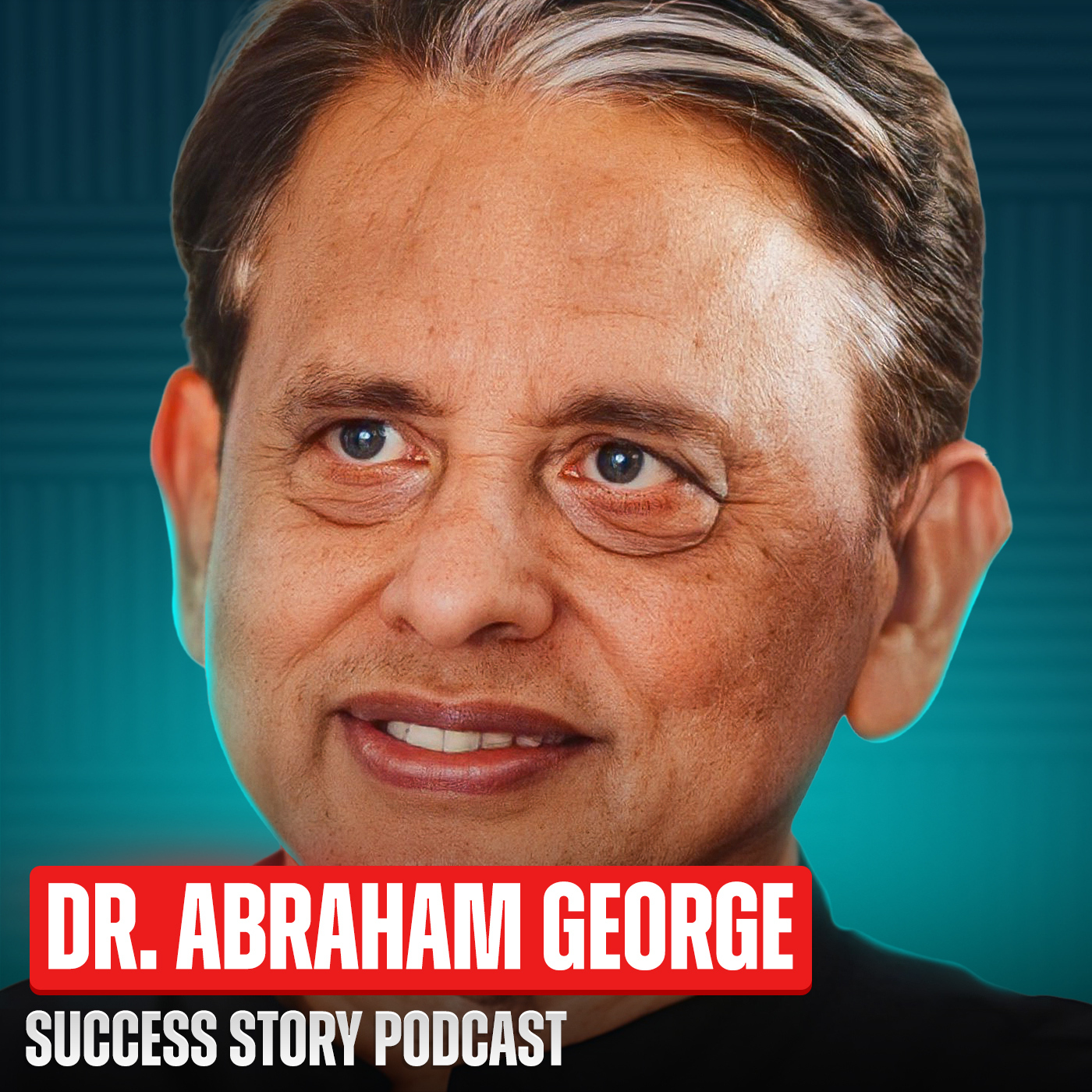
Success Story with Scott D. Clary
Dr. Abraham George - Shanti Bhavan Founder | The Life That Actually Matters
01:24:15
Loading summary
Transcript100 lines
- [00:00]
A
Everyday Dose is a success story partner. Now. New year, new goals. And if you're like me, you've got big plans for 2026. But here's the problem. Keeping that momentum going. Week one, you're fired up. Week two, you're already tired. Your brain is fried. You're running on fumes. Wondering how you will sustain this all year long. For the longest time, I thought the answer was just more coffee. Drink more, work more, achieve more. But that just led to afternoon crashes and burnout and jitters right when I needed to be the sharpest. That's when I realized I didn't need more coffee. I needed more, better coffee. Something that actually supports my lifestyle and what I'm building. Enter Everyday Dose. It's coffee with benefits. High quality coffee combined with lion's mane, chaga mushrooms, collagen protein and nootropics. You get the boost you need to accomplish your New Year's resolutions. It tastes like coffee. There's no crash. There's no jitters. There's clean energy that lasts. If regular coffee is a flip phone, Everyday Dose is a smartphone built for 2026. And right now, get 61% off your coffee, plus starter kit and over $100 in free gifts. Plus enter for a chance to win $100 cash or get your entire order refunded. Visit everydaydose.com success story or use code Success story at checkout. Gusto is a success story partner. Now look, I talk to business owners every single day, and you know what I hear constantly? Scott? I love running my business, but I hate dealing with payroll. And I get it. Nobody starts a company because they're excited about calculating tax withholdings and benefits administration. That's exactly why I use Gusto myself. And the smartest business owners use it as well. Gusto is online payroll and benefits software built for small business. It's all in one remote, friendly, and incredibly easy to use. So you can pay, hire, onboard, and support your team from anywhere. Now, here's what sold me. Unlimited payroll runs for one monthly price. No surprises, no hidden fees when you need to run that extra payroll. And when you hit a tough HR situation, and trust me, you will, you get direct access to actual certified HR experts, not a chatbot. Real people who know what they're talking about. Plus, they're the number one payroll software according to G2 for fall of 2025. And over 400,000 small businesses already trust them. Try Gusto today at gusto.com success story and and get three months free when you run your first payroll. That's three months free payroll@gusto.com success story. You made millions specifically to give it away. Why?
- [02:08]
B
I had made up my mind to spend my life on social service, to do what I decided to do in my search for purpose.
- [02:16]
A
He left behind corporate success to solve problems most people never see. Dr. Abraham George is a social entrepreneur whose life has spanned battlefields, boardrooms and villages in rural India.
- [02:27]
B
Lying in the hospital thinking about what had happened, apart from injuries, I was quite okay. That was a miracle. Asking yourself, now that you have a second life, what should I do with it? People early in their careers, they want to be successful in their business and they want to make a lot of money. Purpose of your existence can't be for making more money. And it's an endless game.
- [02:50]
A
He could have built a comfortable career, but instead he chose a different mission, championing education, health and equity for the most underserved. His story isn't about comfort, it's about conviction.
- [03:00]
B
You need to fight agents for change, people who have a heart. You don't need a lot of people. If they are really committed, they can carry all the others. It is not whether you came from a poor home or not. It is the opportunity you have. You have to believe that human beings have the potential. It's a matter of using that potential.
- [03:31]
A
Doctor Abraham George, you made millions specifically to give it away. Why?
- [03:36]
B
Well, I didn't make millions to give it away. That would be a wrong assumption. But I had made up my mind to spend a good part of my life on social service. And I knew that I need to make enough money. So I had work for my own company and otherwise for 25 years and made a reasonable amount of money. And apart from leaving aside enough for my, my wife, my children, I felt that I should use most of it to do what I had decided to do almost 30 years earlier. So the reason is that I had found in my search for purpose to my life, I had come to the conclusion that the best way to achieve that and be happy with what I am doing is to serve those who are deprived. I had 200 acres of banana farms to employ all the poor women in the villages. Surrounding 13 villages, I am building houses for the poor where they're broken down hearts. Every two, three months I supply food rations to some 5,000 people. Every day we serve lunch to old women and men who don't have families. So there are so many different things I'm doing at this time along with my work with the.
- [05:16]
A
Yeah, I realize that of course, when you're building your businesses, you're making money to survive and to live. But you had altruistic tendencies from a very young age. And obviously there's quite a compelling story that led you to think that way. But you mentioned years and years and years ago. So from what I understand, a lot of sort of your worldview and your inclination to want to give back, it came from a very early near death experience. Is this correct when you were 18?
- [05:53]
B
That's correct. You know, I was a military officer stationed in the himalayas at actually 14,000ft above sea level. Quite a high altitude. That was the highest battleground anywhere in the world at that time. Very cold and short of oxygen and so on. And I lived there for 11 months. And I used to climb some of the nearby hills and sit there and watch the sky go under me, the clouds under me. And I had a lot of time to think and reflect. And before that I had read two books that had a big impact on me. One was by Bertrand Russell, modern day philosopher. And he writes about many things. But one line caught my attention and that was, he said, there is nothing right about war. It's about who is left. Oh, I, that's, I, I said, look what I'm, what am I doing? I'm spending my time and the years to come training to go to war. And I didn't think that was the purpose for my existence. And the other was by Albert Schweitzer. You know, he's a German doctor. He was a German doctor who won the Nobel Prize. Later on he went in a small canoe type of boat all the way to Equatorial Africa, to a country less known, Gabon. And he went into the jungle, cleared some portion and established a clinic for the tribals there. And he lived among the animals. And I found it very fascinating. And he writes about the reverence for life, that every life is very important. And that also had a great impact. So those had set my earlier inclination or impact on me. And then I almost met with death in a dynamite, dynamite accident. I could have been killed in, you know, blasting rocks in the Himalayas. And I escaped by noticing the blast that it was about to blast, fraction of a second before it happened. And I turned around and jumped. And I was injured, but didn't, obviously I escaped. So then lying in the hospital bed, I asked myself, why was I somehow saved? And that was the purpose. That's where I decided that I should spend a good part of my life later, years after making some money on service to humanity.
- [08:55]
A
You were right beside this blast that should have killed you because the. There was a. You were basically setting up this fuse for dynamite blast to, I guess, blow up rock. And you were. You didn't have as much wire as you should have had. So basically the blast went off literally right beside you. So there's a really good chance you could have died in this situation. What happens when you go through an experience like that, when you realize that there was a very good chance you could have died?
- [09:27]
B
The feeling is thankfulness that you had escaped. And the second is asking yourself, why did that happen? And then, now that you have a second life, what should I do with it? How can I somehow reward the blessing I had? And I was thinking about how I should spend the rest of my life. And obviously I had to get out of the military and start my career from the scratch. I had to get educated, I had to make money to start on social ventures. So I was thinking about all those things. Uh, but it was another two and a half years before I could get out of the army.
- [10:21]
A
So you still had to serve for a period of time, yes.
- [10:25]
B
I finally got out on medical grounds.
- [10:28]
A
So as you move into the next stage of your life, I think a lot of people, I. I believe a lot of people want to serve, want to help people that aren't as fortunate as them. I genuinely believe that if everybody was given the opportunity, they could. But how did you decide to do that? So now you have this sort of new lease on life in your mind because you were so close to death in this explosion. What's next in your life? What are the steps you take?
- [10:53]
B
The next thing is to make money so I can do what I had to do. And the way to make money is to come to America. Come to America and go to school, do a couple of masters and their doctoral degree and work for a major bank, J.P. morgan, for two years, and then start my own company. It. It all had a purpose, that is, that I wanted to make money, live comfortably, enjoy some of the joys of living at the same time, save enough money to embark on what I had to do.
- [11:33]
A
So when you came to America, that was the goal. Make money, and then at some point you can sort of give back. Did you ever get lost in the making money part of it for a period of your life where, like, the money sort of consumed or took over? Because I know there was a period in your life where you were living very lavishly, like you were enjoying the money, Right? So there has to be a point where you have to go back to giving. But obviously For a period of time, you. You. You completely just. What's the word? You. You just. Everything about the money, capitalism, all of it. You were living it. So walk me through that period of your life, because you speak about in your book living very lavishly and understanding that maybe this wasn't the reason why you were making all this money, but you knew why you were making the money before. So, like, I'm trying to figure out, like, what happened? Why did you sort of, like, fall off the path for a little bit?
- [12:30]
B
I'm not sure I would use the word lavishly. I would use the word. I was living a comfortable life, enjoying life, enjoyable life, traveling around the world, you know, living in a nice home, bringing up my children. Right. All that I was doing. And at the same time, I was reading up on how to do what I wanted to do, which was go to a remote part of the world. Initially, my thought was to go to Africa just like Albert Schweitzer, but do something in the educational arena because I didn't have experience in the medical area. And so I was reading up on developmental economics. That's a subject I took at NYU Stern. And I was reading up on stories of people who have done tremendously great work and how did they go about doing and preparing myself. And at the same time, I was striving very hard to make as much money as I could in the 25 years I had my own company.
- [13:38]
A
Is it hard to. When you are living in, like, a. Sort of, like a. An entrepreneurial world where you're growing, you're. You're making money? I think at one point you sold your company, you exited to a Fortune 500, so obviously incredibly successful. Is it hard to pivot your whole life and to go to a remote part of the world and to start to give back, like, that's a. It's a massive shift.
- [14:06]
B
It depends. In my case, it wasn't all that hard. In fact, towards the end of my business career, I was depressed. I realized that I hadn't fulfilled my dream. My promise to myself and my great desire to make an impact on others was my driving force in making all that money. Of course I wanted to enjoy it, the fruits of my labor, and put my children, both boys, in. In through good schools and so on. But it was a means to an end, all of that. So for me, towards the end of my business career, I felt that I. I needed to get out of this. There is no end to it. I. I can keep on making money. My company was doing very well, and so in fact, I was so depressed that I used to get up in the morning at 12 o' clock or 1 o' clock in the morning and go to a music room and play the music. Adagio for Strings. It's a callic music Barbers Adagio for Strings. And I would listen to it very quietly and think of what I should do next.
- [15:27]
A
Everyday Dose is a success story, partner. Now, new year, new goals. And if you're like me, you've got big plans for 2026. But here's the problem. Keeping that momentum going. Week one, you're fired up. Week two, you're already tired. Your brain is fried, you're running on fumes, wondering how you will sustain this all year long. For the longest time, I thought the answer was just more coffee, drink more, work more, achieve more. But that just led to afternoon crashes and burnout and jitters right when I needed to be the sharpest. That's when I realized I didn't need more coffee. I needed better coffee. Something that actually supports my lifestyle and what I'm building. Enter Everyday Dose. It's coffee with benefits. High quality coffee combined with lion's mane, chaga mushrooms, collagen protein and nootropics. Get the boost you need to accomplish your New Year's resolutions. It tastes like coffee. There's no crash, there's no jitters. Just clean energy that lasts. If regular coffee is a flip phone, Everyday Dose is a smartphone built for 2026. And right now get 61% off your coffee plus starter kit and over $100 in free gifts. Let's enter for a chance to win $100 cash or get your entire order refunded. Visit everydaydose.com success story or use code Success Story at checkout. Gusto is a success story, partner. Now look, I talk to business owners every single day and you know what I hear constantly? Scott? I love run, but I hate dealing with payroll. And I get it. Nobody starts a company because they're excited about calculating tax withholdings and benefits administration. That's exactly why I use Gusto myself. And the smartest business owners use it as well. Gusto is online payroll and benefit software built for small business. It's all in one remote, friendly, and incredibly easy to use. So you can pay, hire onboard and support your team from anywhere. Now, here's what sold me. Unlimited payroll runs for one monthly price. No surprises, no hidden fees. When you need to run that extra payroll and when you hit a tough HR situation, and trust me, you will, you get direct access to Actual certified HR experts, not a chatbot. Real people who know what they're talking about. Plus, they're the number one payroll software according to G2 for fall of 2025. And over 400,000 small businesses already trust them. Write Gusto today at gusto.com success story and get three months free when you run your first payroll. That's three months free payroll@gusto.com success story. You know, it's so interesting because you had this mission from like a very young age that you, like, you knew exactly what you wanted to do when you made the money. Do you feel like a lot of people who are successful, probably some of your peers as well, they make X amount of money and then they don't really know what their purpose is. Like, is this something that you'd actually advise somebody who's earlier on in their career, young entrepreneur, to sort of figure out before they start playing the entrepreneur game?
- [17:59]
B
That is hard. That's hard. People early in their careers, they want to be successful in professionally and or in their business, and they want to make a lot of money. They can't be thinking about the work they do, social work, or anything else they do later on. But somewhere along as they start making money, the purpose of your existence can't be for making more money. And it's an endless game. You make 10 million, then 100 million and 1 billion. Where does it end? And that's a choice they got to make. But I don't think most people, people would have had the opportunity, as I had almost near death experience and so on, to think of it much earlier in my life.
- [18:51]
A
I think that you're right. I think when I'm just thinking back to like when even I was young, but you know, young friends of mine that are really successful is still young entrepreneurs, when they start, they don't think about, you know, what they're going to be doing after they exit. But I do think it's important at some point to know your number and to know, know what kind of lifestyle you're going to live, because I think that most people think they need more money than they actually do and they don't realize that. I don't know if you felt this, but maybe that's, maybe that's part of why you felt like a little bit depressed.
- [19:26]
B
Scott, you know, there is something else. If you are always in the midst of the affluent society, you know, moving in the midst of millionaires and so on, or you are traveling to only Europe and where the, you know, lifestyle is very different, from, you know, most parts of the world, if you have had the experience of traveling to some parts of Africa, good part of Asia and, and even South America, Latin America, and you are among the poorest of the poor and you see that life, what they go through and the suffering they face. And then you will begin to ask, what can I do for them? How can I make their lives better and more than half the world is suffering. And then you begin to ask those questions. But if you are amongst the rich all the time, then you probably won't come to think about these things.
- [20:33]
A
Yeah, it's very valid. I, I actually I, who I was speaking to Peter Cuneo, who is, he was a CEO of Marvel and he's done several big turnarounds in his career. And I just asked him like, what would be the advice that you would give to your children? And he said just travel more, travel more and just get exposed to more reality. Because obviously I think that if you don't like to your point, that's a really, that's really wise. You're never going to see how good you have it and you're never going to understand, you're never going to understand what life is really like for the majority of people if you're in this sort of bubble of success and wealth and, and, and what Americans consider to be achievement. Right. And I say Americans predominantly because even when I go to Europe, people are way less, way less focused on work than the average American is. Right. We always want more and more and more and more. And I think that I, even when I go to Europe and, and Europe is not a difficult spot like Europe, nobody is really struggling significantly compared to Africa when you go to Europe. But even then you notice like a mindset shift away from work and more towards life. And I think that's something that most people could probably internalize.
- [21:51]
B
Correct. I run into number of people, executives in companies, entrepreneurs who come to visit projects and I ask them, do you have any children? They say I got an 8 year old or a 12 year old. I said, listen, why don't you consider the possibility of sending your kid once it's become crossed 16 or 18 to a place like ours and live among the poor in a remote area for a couple of months. It will be a life changing experience, a transformation will take place. And I've seen this happen in some cases. Some kids who have gone astray in the opinion of their parents, they don't know what to do with them, they have no purpose, they're not attending classes and all that and they somehow got this kid to come and spend two, three months with us. And he goes back changed, a changed human being, because then he would have seen what poverty means, the suffering that people go through. And then you would ask himself, boy, I have so much going for me and I wasted it, you know.
- [23:06]
A
So I know you said you weren't like living lavishly, but objectively, compared to poverty, you were living quite well. When you're building your company and life's going well, there was never a point, there was never a point where you said, you know what? Life is very good right now. I am rethinking my objective. There was never that point. You were always, always thinking, at some point in my life, I will give a lot of this back to people who need it the most.
- [23:37]
B
I wasn't thinking of how much I give back. I was thinking of what do I have to do to. To improve the lives of the people. And I was looking for strategies, looking for a strategy to make a difference and whatever it would take, no matter how much money it would take. I wasn't thinking about it that I thought I would make in my business. But my whole focus was developing a strategy. I met with number of people, including my professors at NYU and the great professor by the name Robert Hawkins, with whom I had numerous conversations. And he directed me to the kind of things that people in developing countries that he had visited, what they are going through. So apart from my own personal experience, he was communicating to me what he had seen. And so I was more engaged in developing a strategy as opposed to thinking about, oh, I'm going to spend so much money. Money can just disappear if you are not careful, but you really need to do the right thing.
- [24:54]
A
And the people who you were building this company with, did they know what your life plans were? Did they think you were crazy? Were they supportive?
- [25:03]
B
I never revealed it fully. I never told them that this crazy thing I was going to do until the very end. I called them all up and said, listen, I want to sell this company. He said, what? You know, they were more concerned about what will happen to them. I assured them that they'll be quite okay in the new company. No, they didn't have a clearer understanding, but often I would talk about the subject of poverty and things like that, their experience. So in that sense, they knew I had a heart for this.
- [25:35]
A
What is the first step that you take? Because there's so many. I mean, you're speaking to your professors, you have an idea of all the different problems that plague the World and impoverished countries. There's a million different ways that you can try and help and support people that aren't as fortunate. But where do you start? What was your mission? What was the way that you wanted to do this?
- [25:59]
B
Very good question. In my case, I had thought through the reason for poverty. I. And in many cases is the social injustice. People, the bottom of the society don't have an opportunity to rise up. They were discriminated. They were. You know, in India, there is a caste system where people of the lower castes are treated like subservient, very subservient. And I felt the way to, to bring about social justice is through education. And I need to do that right from the beginning. There's no point in throwing some money at some schools and getting them some education. I felt that in order to compete in the marketplace with children going to excellent schools, I had to bring them up from a very age, early age. So the strategy was, again, I'm coming back to the strategy was to get the children to live with me from the age of four. And that needs some convincing of poor people, even poor people, you know, they care for their children, they don't want you away. And so I had a school, a residential school, and I was bringing them up with three things in mind. The first is how do I offer the best education possible? The second is how do I give them leadership skills, communication skills so that they can shine just like anyone else from affluent society? And third was something very personal. And that was how do I turn them into people with character, the humane values. I'm distinguishing it from leadership qualities, how to be humble, to be kind, generous, those humane qualities. That was very important to me. So that's a very difficult thing. Also in schools, they don't teach you that. They leave it to the parents to bring them up that way. Here I had taken ownership of the children. In a way, I was their guardian and I had to do that too. So those three aspects of one's personality I was. And development, I was involved in. And so this was my mission.
- [28:35]
A
Quick question. What's your go to when you got 10 minutes before a meeting or a workout? For me, it just used to be whatever I could grab, which usually meant skipping meals entirely or just grabbing something that left me crashing an hour later because it was just full of garbage. That's why I'm partnering with Huel. This black edition Ready to Drink is a complete meal. So it has 35 grams of protein, 6 grams of fiber, 35 essential vitamins and minerals. It is no sugar added, gluten free under five bucks. I always keep a few of these in my fridge and honestly it solved the whole back to back meetings. Go go go non stop no time to eat problem. Super well and this one's new for me. It's Hu's Daily Greens. I had the blueberry this morning. Honestly first impression it was way better than I expected. It's developed by registered nutritionists and dietitians. There are 42 vitamins, minerals and superfoods. Only 25 calories, 4 grams of fiber and just 1 gram of sugar. I throw one back first thing Performing morning calls every single morning. Look, if you're running a business, time is the most valuable asset. Heel makes healthy eating simple and they also just launched it at Target stores nationwide so you can get it everywhere. Try both products today with 15% off your purchase for new customers with my exclusive code Scott at Huell.com/Scott Try both products today with 15% off your purchase for new customers with my Exclusive code Scott Seot@huell.com Scott Use my code fill out the post checkout survey to help Support the show that is Huell.com Scott they really make healthy living taste amazing. Even if you're on the go. Healthy eating, healthy lifestyle doesn't have to taste bad. It doesn't have to suck. NetSuite is a success story. Partner now what does the future hold for business? If you ask nine experts, you'll get 10 answers. Bull market, Bear market Rates are up, rates are down. At the end of the day, it'd just be easier. Somebody invented a crystal ball. But until then, over 43,000 businesses have future proof themselves with NetSuite by Oracle, the number one AI cloud ERP that brings accounting, financial management, inventory and HR into one unified platform. Here's what I love about it. Instead of juggling multiple systems, you get one source of truth, real time insights and forecasting that actually let you peer into the future with actionable data. When you're closing your books in days instead of weeks, you're spending less time looking backwards and more time focusing on what's next. Whether your company is earning millions or hundreds of millions, netsuite helps you tackle immediate challenges while seizing your big opportunities. If I needed this product in my business, this is what I'd use. It's a game changer for business visibility and control. If you want to see how AI can transform your financial operations, download the CFO's Guide to AI and Machine Learning for free. That's netsuite.com Scott Clary that's netsuite.com Scott clary netsuite.com Scott Clay so this, this strategy of like focusing on early childhood education, did you sort of architect this strategy? Was this something that, Because, I mean, like, I think a lot of people think about philanthropy as they're giving money to food or housing or poor communities or clean water. These are sort of like the things that people would assume that's where you put your money. You weren't throwing money at everything. You were building, you were building a system really that didn't exist. So how do you, you did not have a background in education. How do you do this properly? Because this seems like obviously a huge undertaking. I understand that. And obviously you spent your whole life thinking about this, so obviously you had some time to plan. But you, you take kids 4 years old, you, you obviously these kids are coming from very poor families and you are basically educating them from 4 to I think, what, 20 years old, if I'm not mistaken, for almost 17 years. So where does this strategy.
- [32:24]
B
Until they get their bachelor's, it's total care. They have nothing to spend. Everything was covered. After they finished 14 years in school, I sent them to good colleges and I'm still with them until they land their first jobs. And the children, some of them go to Indian colleges, some of them come to America. And you probably have read in some of the colleges they currently are enrolled in America. So, you know, remember, they're coming from a one room hut, attached roof, leaking roof, no toilet, no kitchen. And from that environment ending up in Harvard or Stanford never happened before. So that, that is the challenge that I had taken on. And, and that's what I was doing.
- [33:25]
A
I know it's a, it's a huge challenge. It's incredible. So with a strategy, you, you take kids at 4. Why, why such an early age? Why is 4 so important? What, what, what are you trying to solve for when you take somebody who is, I mean, four is what I'm trying to think is that like kindergarten.
- [33:44]
B
One year before kindergarten.
- [33:46]
A
Okay, so preschool, so why four years old?
- [33:48]
B
Preschool? And in our case, these children had never used a paper or a pencil, never played with a toy. They have no language skills other than their own local language. So they don't know how to use a toilet. They're not, they never brush their teeth. So you're talking about total immersion. And if you don't bring them up at an early age, it's very difficult to change habits and outlook. And some people tell me even four years is too late. You should probably take it at three. So I find three would be very difficult to bring them up. So four was the number that I came up with. And you have to put a house mother or an auntie, as we call, for every four to six children, you have to have one adult looking after them in the dormitory full time, obviously 24 hours. You know, all kinds of things happen. Bedwetting and you know, all kinds of problem human beings have. And they have to be willing to take care of the kids just like they take care of their own. And that is the effort that is needed. And then of course, education is another thing. Teachers hold classes and so on, and then they go for games and they fall sick and tempting, you know, you know, if you bring up a kid, what all things will happen to you.
- [35:14]
A
So this was something that, and you funded this yourself. Because from what I understand, I mean the result, like the results which is that child eventually growing into an adult and, and going to like a, an Ivy League school and then securing a job. This is again 17 plus years. Donors probably wanted and, or investors probably wanted like a, I don't even a return sounds like an inhuman metric to apply to this kind of situation. But it's hard to convince somebody to give you money for a result you're going to get in 17 plus years from now. And I don't even know how you, how, how you measure this because I'm assuming most, most nonprofits, they operate in quarters and annual reports not in 17 year time frame.
- [36:03]
B
Absolutely right, Scott. You hit the nail on the head. But luckily I had made enough money in the first 15 years or so. I did not have to go around asking others for money. I wanted to do it my way. And this was not a model the rest of the world was doing. Nobody wants to spend their time and money in a remote village bringing up somebody else's children for all this time. And so I didn't have to go to anyone, but only when I ran into some financial difficulty, the 2008 financial crisis, I had to go to others and ask for it. But fortunately by then my children had grown up. They were almost in 10th, 11th, 12th grade and they were doing extremely well. So I had a model that was, you know, it wasn't proven yet. They haven't got a job yet, but, but people could come and see what I had done. So when I asked for money, the biggest hurdle was when will we see a return? You said the right thing. People want to know within maximum of 1 year how many people who have benefited, how Many people who have fed, how many people were cured of some illness? But I am telling them you had to wait 18 years. No donor in his right mind is going to give you money. Luckily I had a few people who, who did help.
- [37:34]
A
What made you decide? Like I know that now, in hindsight it all makes sense. You, you focus on early, early early childhood education that brings somebody all the way through to getting their first job. You basically guide them through their whole young life. But what at the beginning made you commit, want to commit to somebody for over 17 years when you had no proof this would work?
- [37:57]
B
I had a conviction. I was absolutely convinced that if I do the right thing, bring them up the right way and bring them up with love and caring and bring them up as though they are your own children, they are likely to succeed. Even though at the first board meeting I had all my board members told me this is doomed to fail. And I said no, you wait for 18 years. And they were saying 18 years. This is crazy, but you have to have the staying power. My conviction was the way to convince others.
- [38:43]
A
Is the thesis true? Is it like does this help the, the community that they come from? Like what happens when, when somebody goes from a, you said like a one bedroom hut like truly like poverty to Stanford to getting a job at wherever.
- [39:01]
B
Absolutely, Scott. Right from a very young age. Their burning desire, their burning desire is to change the status of their families, bring dignity to their lifestyle, their parents lifestyle. They have been insulted and treated very poorly. So they know that if they can, can live well in a nice house and you know, dress well and so on, they don't have to go through this indignity. And so that's a burning desire. And every kid who has got a job, they start improving their parents homes, they build a new house, they provide food rations every month, bring clothing, put the parents and the rest of the family, siblings on medical insurance, pay for their sisters, you know, dowry. There is a dowry system in India. So there's so many things they have to do, it'll take them two, three years to fulfill all of that. And without exception, every one of the children are doing it or have done it.
- [40:10]
A
Listen, a lot of my audience is in the US and I don't, I'm sure some of them understand, but I don't know if all of of the audience understands the cast system and we're talking about poverty, but maybe explain also why outside of just being, you know, not financially secure, obviously when you say one bedroom hut you truly, you're not being, you're not being, you're not exaggerating like it's it that is truly the, the life they're living. But the caste system in India, from what I understand it is a 1500 year old caste system that is not just about poverty, it is about discrimination. It is like it's very bad. Is there, is there any other like, I mean if it's 1500 years old and it's still alive and well in, in 2026 now obviously it's not being fixed anytime soon. But this is, this is one way that you can slowly start to fix and repair the caste system. Correct. And maybe explain like what that, what that is for people who don't understand it.
- [41:12]
B
It's a very large. Those who belong to the very bottom, there are 200 million of them. Very bottom. There are other levels of caste and if you consider those who so called low caste, some two, three levels of low caste, there are some 600 million people. So it's not a small number. And the government's way of approaching this is to say okay, we will provide government schools where you have to pay a very small fee or we will provide medical care in substandard hospitals at a very low rate or we will assign quota for jobs and admission to colleges. So the government is doing something. But my take was this is not going to break the caste system. The only way to break the caste system is those who are at the bottom. They themselves get empowered not by somebody handing out something from the top. So that's why this educational model that I came up with was to make them immensely successful through a quality education, proper upbringing. They can move in any society and they carry not only their families but, but the neighbors, the community and so on. The multiplicative effect that I am focusing on each child in their lifetime would impact 100 others. That's what I hope would happen. And if that happens and then they in turn multiply that this effect of this will be very large and the cost of this program will be very small.
- [43:00]
A
I think that also to your point, like the multiplicative effect when people, when you see your neighbor and you see what they have accomplished and you see what's possible, reframes your perspective with the world and with. From that, from that person who's living in a very poor village, what, what they can achieve and what they can accomplish and how much money they can make and what they can do, I think that's probably one of the most important things. It's like the influences that these people are going to have on all the other people that they grew up with.
- [43:35]
B
Absolutely. When the children go back to their village for the summer vacation or, you know, whatever holiday and they go back, the whole village crowds around these kids because they're speaking beautiful English, their mannerisms are very different from the rest of the village.
- [43:54]
A
Village.
- [43:55]
B
They're admiring these kids and their sense of, their confidence level is very high and they're, yet they're polite. So it has a tremendous impact on others in the village too.
- [44:09]
A
This is incredible because it's not just that you've put your money and your life into and, and the, and the, the education system, I guess is, is this is what Shanti Bhavan is, right? This is the program, this is the education system. But, but this is also like where you spend most of your life. So for people to understand you don't just sort of fund this and then just observe from, you know, off site. Like you live, you live on campus. You, you still live on campus. You spend hours daily talking with the kids that are still going through the program. So like, you have fully immersed yourself in this. This is not something that you are, you know, you're, you're funding and you're, and you're living in like a penthouse in New York or you're, you know, you're going to south of France and you're spending, you know, six, ten months out of the year all over Europe partying and enjoying life. Like you live in this right now.
- [45:11]
B
Right. It's not a check signing exercise. Sitting in New York City and sign a million dollar check and something magic will happen. You have a million dollars will disappear, that's for sure. You need to find agents for change, as they call it. People who have a heart, people who are the right people, train them, motivate them, you know, treat them well and make it exciting for them. And some of them may have religious reason. They, that's God's work, some people say. Others feel that they, this is the way they, you know, they find their purpose in life. So there are different, different motivations and there are, some people just want the salary, you know, but if you have, you don't need a lot of people. I have in the school 150 or so people working to bring up these children, I would say 10 or 15 of them, if they are really committed, they can carry all the others. It's not like all 150 have to be truly, truly driven by the cause. And over time, they too feel good about what they're doing and they will be motivated to Do a good job. So that is the trick. So sitting in New York will not work. You have to be there or you have to find the right people or agents like me who are willing to give their lives to the cause. Then you can get this job done. And there are enough people like that.
- [46:44]
A
How has this changed you? Like, you always assumed that you were going to do this with your life, but how has it really changed you after living it? Going from US entrepreneur building a business background in finance to. So this is sort of one version of, of. Of Abraham, and then the second version of Abraham is, is. Is living probably in, in a. In a. You're not living it lavishly now, for sure. If you're, if you are living on this campus, you're giving your life and your time and your energy to it's. How has it changed you? Was it everything you wanted? Was it everything you expected? Was there things about this that you didn't expect?
- [47:25]
B
I'm a happy man. I wake up every morning with no worry other than how to solve a problem for a kid who is not doing well in class or whose behavior is not right, or a staff member who needs to improve the work he or she's doing. I got a dozen or more issues to handle and I am preoccupied from 6 o' clock in the morning to 11 o' clock at night. I don't feel tired. I'm quite old, but I don't feel tired. This is some form of energy that I get and the satisfaction of seeing improvement. And I often tell people, when you help a poor person, you know, on the street and you stop by, you know, your car, it's a red light, and some woman with a, with a baby on a hip and she hasn't eaten for three days and come to the window and ask you, you roll down the window and give some money for enough for a breakfast, okay? You can see in her eyes the joy. And that is what you're going to get. And the same thing is true for what I do. The happiness for small things I say to the kids or the work that I do, how happy they are. Their smile and their love for you. And of course, your love for them, that's what makes a difference. And for me, I have found tremendous joy in doing what I am doing.
- [49:07]
A
What was the hardest point when you were building Shanti Bhavan? I mean, I know that in 2008 there was a financial crisis. That's when you started to look for more money. Obviously that was a low point and a difficult point for sure. Just because I know that that's stressful. When you. You're trying to build this thing out and you had this money committed to it, and now life happens. Was that the hardest point? Was there other hard points? Talk to me about something that, you know, I don't want to ever say made you question if this was worth it, but definitely what caused you more stress than you expected, right?
- [49:46]
B
There was no point. In my years, now almost 30 years, there was never a point where I asked that question, is it worth it? It was a question of how do I make it work? It was a question of how do I overcome this hurdle or that hurdle. Having said that, there have been many hurdles working in a rural area. You know, there are many power blocks, landlords who want to control the poor. And they would say, it's something like this, oh, if you bring up all these kits of poor people and my kid can't join there because you say they are not qualified because we are slightly richer than the other, what will happen 10, 15 years from now? They're all going to be our bosses. Okay, so they want to stop this project. Then there is, of course, a bureaucracy and corruption. You know, you have to overcome that. And I, you know, I shouldn't talk too much about it to annoy anyone, so I wouldn't. But you have to. You have to deal with the environment in which you are doing your work. Then there are but superstitions, habits, you know, religious beliefs. There's so many things that, you know, they play the dynamics of that. You have to deal with all of that. But at the end of the day, the challenge is the success of the kid. And when that doesn't happen, in a few cases, you feel very sad. I'll give you a little story. There was a woman who had a husband. Both were blind. I don't know. They married each other, they're blind, and they put a kid in a school. And at one of the, you know, assemblies I had of all the parents, at the end of it, they came up to me and thanked me and sort of touching my feet and so on. I lift her up. I said, don't worry, you know, she's your daughter is being taken care of. She thanked me and I said, I know you are blind. One day you will see through your daughter's eyes. And that was a moving point for them, too. I was moved also from the line I came up with. It wasn't a preplanned statement. And then what happens? Three, four years from now? That woman said, I can't look after myself. I need my daughter back in my house to take me to the toilet and this and that. And she pulled the kid out, broke my heart. Now you ask me what are the hurdles or what are the difficulties? These are emotional pain. There are many stories like this and that you have to stomach. These are ramifications of poverty. And poverty is not hunger alone. You know, there's so many, so many aspects to poverty and you have to deal with it.
- [53:02]
A
What is your hope? I mean, is your hope. I mean it's a very, it's a very big goal. But what is your hope for tackling poverty? Obviously in India to start tackling the caste system. There's so many hurdles to overcome. Like you're mentioning that people don't even consider when you're trying to solve a problem as big as this. Do you think you'll even make a dent in, in the problem? Do you feel like if you, if this continues over the next 50 years you're going to actually shake up the caste system and, and, and it's not even going to be a thing anymore. Like what is. You've probably thought about this like how big an impact can you have?
- [53:48]
B
You're asking me a very profound question. I came to India 30 years ago with the hope that I will impact the caste system and I will impact poverty. And the way I thought apart from my own school. Now I have two schools and in my lifetime I probably would do another two or three more. But that's nothing. I had thought that I would create 100 schools and they producing 300, 400, 500 and they multiply our effect in 50 years it'll completely change society. That was my model. But now I know that I can't do 100. Now I have to expect people with substantial wealth having agents for change working for them. And I could be one of those agents who could train them to manage those schools. So I'm looking at different models and I'm also looking at transition folks myself. I'm not going to live forever. My son Ajit is already taking over many of the things that I'm doing. For the last 15 years he has been working with me and I have number of others who are not my family members who were extremely dedicated and I am trying to pass on what I have accomplished to them. And so for the next 50 years or so I have a model working. But beyond that I'm already talking to them how to carry it on for 100 years or whatever. And the answer to that question is it will make a dent, a substantial dent. If I can motivate enough people with wealth to contribute to the cause, either through people like me or they had.
- [55:43]
A
To take their own Indeed is a success story, Partner. Now, if you're hiring, Indeed is all you need. Let me give you an example. If I needed to hire a new editor for this show, I'd go to Indeed and be super specific. Not just can you edit audio. I'd say I need someone who's edited a conversational podcast for at least three years, gets our style and knows our software. Someone who's done this before. And here's the thing with Indeed Sponsored Jobs, I'd get people who fit that description. I'm not digging through resumes from people who've edited one YouTube video. I'm getting actual podcast editors who know what they're doing, people who've worked on shows like ours and can prove it. That's what makes the difference. You get people who actually are what you're looking for. According to Indeed data, Sponsored jobs posted directly on indeed are 90% more likely to report a higher than non sponsored jobs. And people are finding quality hires right now. In the minute that I've been speaking to you, companies like yours have made 27 hires on Indeed. According to Indeed Data worldwide. Spend more time interviewing candidates who check all the boxes. Less stress, less time, and more results. Now with Indeed Sponsored Jobs and listeners of this show will get a $75 sponsored job credit to help you get your job the premium status it deserv deserves. @ Indeed.com Clary just go to Indeed.com Clary right now and support our show by saying you heard about Indeed on this podcast. Indeed.com Clary terms and conditions apply. Hiring do it the Right way with Indeed. HubSpot is a success story, partner. And if you're into this show, you're probably someone who likes learning from people who've actually done the thing. That's why I want to put Create like the Greats on your radar. It's a great show. It's hosted by Ross Simmons, part of the HubSpot Podcast Network. Ross breaks down some of the greatest creations and creators of all time time, what they built, how they thought, the actual process behind it. And he's not just talking theory. He's been doing this stuff for over a decade. What I appreciate is that he makes it practical. Like how do you actually systematize creativity? So you're productive, but you're not burning out. So if you like learning from history, understanding how great work gets made, and you want Something that's easy to listen to, check it out, listen to, create like the greats wherever you get your podcasts. I think that more people have to know this story. Like when I first, when I first started of found out about what you've done and then I went down the rabbit hole and I just want to read this because the effectiveness of this it first of all, the idea itself is very impressive and I'm sure that would get a lot of people excited about what you're doing. But it's the effectiveness that I think is the most important. So from what I understand, you have a 98% college graduate graduation rate. You have students at Stanford, Princeton, Dartmouth, Duke, Harvard. You have people that are working at Goldman Sachs, Google, Mercedes Benz, Ernst and Young. Like these are people that came from one room huts with no kitchen, no bathroom, parents earning less than $2 a day from this untouchable, quote unquote untouchable caste system. This has never happened in the history of India really ever. So that, that alone is incredible effectiveness. I, I think that that's probably the most important thing for people to take away. This is not just a feel good initiative. Like I think that these graduation rates are probably some of the highest graduation rates of a, of a population and community of people globally. Like I don't think that the average, I have no idea what the average data is but I can't imagine that the average US less upper middle class community that goes to College has a 98 graduation. I don't think that's the case. I could be wrong, but I, I genuinely don't believe that's true. So these p. These kids are outperforming people that have significant privilege growing up. So that's, I mean, congratulations, you're doing an incredible job. And I think if more people understand the effectiveness of the program, not just the fact that it's doing good, which should be, that should be enough reason to get involved, but if they understand how effective it is, is that's just even more reason to sort of support and to and for someone else to take it and run with it if they want.
- [59:35]
B
To. Yeah, Scott, the fact of the matter is, you know, it is not whether you came from a poor home or not. It is the opportunity you have and what others, how they are helped and the commitment and love that you give. And you have to believe that human beings have the potential. It's a matter of using that potential. And that's what I have done. I haven't done anything else. I have given these children love and the care that is needed for them to succeed. And whether they are poor or rich, it's the same thing. Of course you have to work harder because of their backgrounds, you know, to overcome their superstitions and many other things. But at the end of the day, it doesn't matter where they come.
- [60:34]
A
From. This is one quote from you that I thought was really powerful and I just want you to explain it for me. So some people have empathy. You see someone suffering and feel bad, that's not enough. Some people have compassion. You want to help, that's also fine, but it's not enough. You need compassionate action. You have to actually do something. So speak to me about where that idea came.
- [60:57]
B
From. It came from my own experience. I have run into lots of people who feel a lot of empathy, sympathy, empathy or even compassion. They want to be involved and they tell me they want to be involved. But when it finally comes to doing something and spending their own money for doing it or spending their time on it, they back off. So what is the point if you are not going to have the impact on the beneficiary? See, you can feel sad about all these people who are suffering. That may make you happy, make you feel that you are a good person. Oh, I'm feeling sorry for someone. You know, it's your self gratification, you know, it's not doing anything for the other guy until you act on it. So all the other stuff, empathy, sympathy, compassion, they mean nothing unless they are willing to act on it. And I say to people, when I go from my village to the city, I tell my manager, keep a few rupees in my glove compartment. So when I stop at a light and some woman or some old man comes to me, I should be able to give enough for a breakfast. I have to go prepar prepared for it. I can't say I don't have money. You have to prepare yourself for it. And that's what I mean by compassionate.
- [62:26]
A
Action. Gusto is a success story, partner. Now look, I talk to business owners every single day and you know what I hear constantly, Scott? I love running my business, but I hate dealing with payroll. And I get it. Nobody starts a company because they're excited about calculating tax withholdings and benefits administration. That's exactly why I use Gusto myself. And the smartest business owners use it as well. Gusto is online payroll and benefit software built for small business. It's all in one remote, friendly and incredibly easy to use. So you can pay, hire onboard and support your team from anywhere. Now here's what sold me. Unlimited payroll runs for one monthly price. No surprises, no hidden fees. When you need to run that extra payroll. And when you hit a tough HR situation and trust me, you will, you get direct access to actual certified HR experts, not a chatbot. Real people who know what they're talking about. Plus, they're the number one payroll software according to G2 for fall of 2025. And over 400000 small businesses already trust them. Try Gusto today@gusto.com success stor story and get three months free when you run your first payroll. That's three months free payroll@gusto.com success story framer is a success story partner. Now you could be a solopreneur. You could be an entrepreneur. You could be somebody just sitting at home who's trying to start a business out of their house. But you know the drill. You need good design to create a website to get your business off the ground. But good design is expensive. And you can't afford to hire a designer for every single landing page. Social posts but you also can't afford to look amateur. And I've been there. You need to move fast. You need to look professional. But you also need to not blow your budget on five different tools. Framer already built the fastest way to publish beautiful production ready websites. And it's now redefining how we design for the web with the recent launch of design Pages, a free canvas based design tool. Framer is more than a site builder. It's a true all in one design platform. From social assets to campaign visuals to vectors and icons, all the way to a live site. Framer is where ideas go live, start to finish. And the best part is it's actually free. Not a trial free. I'm talking unlimited projects, real vector tools, 3D transformations, everything you need without the nickel and diming. So if you're ready to design, iterate and publish all in one tool, start creating for free@framer.com design and make sure you use code success story for a free month of framer pro. That's framer.com design and use promo code success story framer.com design promo code success Story Rules and restrictions may apply when you when you chose to write mountains to cross, what was your.
- [64:58]
B
Goal? I had several goals. One I want to tell the story. It's almost like a secret nobody had really come to know except a few. And people need to know what was accomplished. And coming from New York, in a corporate environment, Wall street and so on. How I ended up where I am. And it's possible for others to may not be my model, but some other model and they can impact thousands and thousands of people. So I wanted to tell them, hey, I am not just a do good landed up on Mars or something. I came from the same type of place like you came from. Just that I wanted to make a difference. That's one thing I want to, I want to tell them how I did it. So the entire book is full of stories. You probably every chapter has got a lot of incidents. So that way they can see how I overcame those incidents or the setbacks. And it is how I reflected on them. And I wanted people to see the way I dealt with it. The third you just said what is needed, you know, the compassionate action. I wanted people to realize that that is absolutely the driving force that has to be there in you. And then in talking to the children, in my conversations, I. I want people with children. Maybe they will see there is one aspect that we are not probably giving enough attention and that is how do turn our kids into good human beings who are going to transform society. How they're going to reach out to others in need, those who are suffering. Half the world is suffering. So I wanted to give that message and these are some of the goals. And of course I want to leave something behind for others who follow to carry this model.
- [67:08]
A
Forward. Now you're in your 70s, you've lived an incredible.
- [67:12]
B
Life.
- [67:12]
A
Life. What does a life well lived mean to.
- [67:16]
B
You? It needs a lot of satisfaction that I've used my life meaningfully. If I was just making more money in the corporate world, I don't know what I would do. I can only eat so much. I can, you know, I can drink wine somewhere on the beach or something. And what happens after that? Here I am a happy man, as I said earlier, bringing joy to so many others. And then you have a community. You know, you are in the midst of people who love you and you love them. Not one, hundreds of them. And where can you get that? It's such a, such an rewarding experience. That's what I have achieved for.
- [68:01]
A
Myself. What do you know about achievement and success now that you wish you knew? When you were 20 years old.
- [68:10]
B
20 years old though, I had this great idea of service. My thought was all about how to make money and how to succeed and so on. So I have to admit I wasn't deeply thinking at 20, maybe 30s and 40s, I started thinking how I can serve love. So making money was my.
- [68:34]
A
Goal. When you, when you look at what you've built and you wake up, you know, tomorrow morning on that campus, what, what makes it all worth it? What do you, what do you see in your day that just makes you realize, yes, I made like the right.
- [68:48]
B
Decision. Hope is what I offer. I offer hope to those children. The hope that they can transform their families from poverty to a modest life life. The hope that they themselves can succeed in their careers. Hope that, that they can have a good life for themselves. So it is. I am in the hope business. I am giving these children the, the hope for a better day. One.
- [69:20]
A
Day. If somebody reads Mountain to Cross, Mountains across, excuse me, and they only take one thing away from it, what would that, that lesson.
- [69:27]
B
Be? That lesson is that they will find happiness and satisfaction and contentment with their lives, in their lives if they reach out beyond themselves. They can't be talking about me, me, me all the time. They have to say to themselves, how can I help someone else? And the power of that, that the transformation you create for others that will make you a very happy person. If you ask me one source of joy in your life, that's what it is. That you have lived a meaningful life, that you have helped many others. Their lives have become, become far better because of you. They don't have to suffer the, the effects of poverty. This, you know, the various ramifications of poverty. You have helped them overcome them and you have brought hope and joy to.
- [70:36]
A
Them. Abraham, I appreciate you so much. I want you to, I want you to just let people know where they can connect with you. So website, socials, anywhere you want to send them. Obviously, like I mentioned before, Mountains across is going to be available wherever you can get books, I'm assuming. So Amazon or a variety of other different. It, it, it'll be on your website as well, all the links where they can purchase.
- [71:01]
B
It. Right.
- [71:02]
A
Right. So where can they go and, and sort of learn more about you, your life, your.
- [71:06]
B
Work? Well, very simple. Instead of me giving a website they can't remember, I hope they can remember. Abraham. George. Abraham for Abraham Lincoln and George for George.
- [71:18]
A
Washington. You got all the presidents, so you type.
- [71:23]
B
Those. Abraham, George, and you're going to hit a lot of websites. And my personal site, drabramgeorge.com will tell you all about it. I bought the book and of course you can go to Amazon and ask for Mountains to Cross. You'll get the book. The book has my story from actually the childhood to today. Because a lot of people ask me what made you what you are. And making of Abraham George. You know, what prompted me to be the person I am, you know, doing this work. I, I don't want to elevate myself, but I'm just saying there are so many influential factors. How my mother brought me up and what she told me and so on and all those had tremendous impact on me. So my story is there in addition to what I have done, and then my message to the world is there. All of that in the book. So the book will be a good source, a cookbook for you if you want to get into this business. This cookbook will tell you what are the recipes for this, and I would urge you to buy. And by the way, all the money that comes to the author is used for charity for this purpose. So instead of giving a website, just Google my name, Abraham George, and you'll, you'll hit the.
- [72:52]
A
Book. I'll, I'll make sure to, to link your website too, in the show notes so people can find it easily. I guess the last thing I'll ask, you know, you've given over a lot of different wisdom. If you could pass on just the most important lesson, most important life lesson, business lesson, philanthropic lesson. You can pick one, pick one that you would want to leave your kids with, because that's usually the most important lesson. What would that lesson be and.
- [73:20]
B
Why? Be humble, be caring, and ask one simple question all the time. When you face an issue that you have to deal with, simply ask the question, what is the right thing to do, do and do the right thing. So humility and caring and doing the right thing will get you ahead. This is my all the time. That's what I tell very young.
- [73:48]
A
People. So I know a lot of your focus has been on Shanti Bhavan in the school, but you've done a lot of other things for India. And I, I think that those things, even when I was listening to other podcasts that you've been on, they're not highlighted as much. And I think that it just, they just deserve a mention. And it also, to your point, you can, you can help in a variety of different ways. Like, don't think that just because you're listening to this podcast and you know, like Dr. George has helped India with this specific sort of strategy, doesn't mean that you have to follow that exactly. Like, the whole point of this conversation is just encourage action and encourage empathy and encourage, really take. What is the word you use? Compassion. It Action, I think, is the word you used towards cause. So just to help people understand the scope of what you do because you live it. You truly live everything we're talking about in a really big way. What are some of the other things you've taken on and, and sort of put your time and energy and effort and money.
- [74:52]
B
Into? I came to India because, you know, I look like an Indian. It's easier there than, say, Africa. So that's the only reason. And somebod asked me to come there, but I had, I could have gone anywhere, I would have been just as happy anyway. But anyway, my, my goal was to bring social justice. That was very, very important to me, that people are treated equally with dignity. And so that was. That was the driving force and, and associated with that is poverty. You know, the poverty path to social justice is through opportunity, through an education. That is the model. Actually, the path to social justice is economic opportunity you give through education that will empower them and they will succeed and they will then achieve some greatness in terms of professional and monetarily, that the social stigma will disappear. That was my model. Now. Now, obviously I did a number of things with Shanti Bhavan that we talked about, but all the other things I did, I just fell into it. I don't know how it happened. When I was there, I was falling sick. The pollution was so bad in the city close to where we were working. And I found out that India was using leaded gas in vehicles. And I tried to see whether there was any plan for the government, and there wasn't any. So I went back to America, met with New York City Environmental Agency and then went down to CDC and then met with World bank, who, us, epa, everybody. And they taught me what to do. I carried with me some lead poison testing equipment for blood lead. How much of blood is in your blood? And we carried out blood testing of 22,000 children all over India. It's the largest study, according to cdc, ever conducted on lead poisoning. And the results were published and we had a conference in Bangalore. Some 25 countries sent their representatives to that conference. And at the end of the conference, though, oil companies, the three largest oil companies, their managing directors turned up without telling us to announce that within 15 months they will remove lead from gasoline in all over India. Amazing. Something I never thought would happen. And in the year 2000, India became unleaded. It has helped hundreds of millions of people, people, you know, throughout the country, all the urban areas. So. And it probably was one of the least cost projects I had undertaken. So it's not necessarily always money that you have to spend. Sometimes the impact can be very large. This is one of the others, Banana plantation. You know, I was trying to empower women living in these villages who didn't have jobs or seasonal jobs and modern farming in 200 acres of banana farms. But unfortunately, that project didn't succeed after five, six years because we went into a drought season for three, four years. There was no rain. And without rain, bananas would succeed. The ground level water was going down and our wells were not producing water. So I had to abandon that project and. And journalism, journalism school. I started one because I wanted investigative journalism and good governance and transparency, press and all these things. I was very idealistic. I went about doing all these things and they were all very successful. That was. We turned out the best postgraduate journalism school in India. So number of things I did, I found time for all these things. You know, somebody says he doesn't have time, I don't believe it. You have time for everything if you want to do it. Just got to get the right people around.
- [79:23]
A
You. And it's incredible what you can do. I mean, like even the gasoline story, that's a really interesting story because all it took was.
- [79:32]
B
Awareness. Right.
- [79:34]
A
Right. And you never know, like, when you start to bring some of these issues to light, how many other people are going to end up supporting.
- [79:40]
B
You. Correct. And it had a worldwide impact. Worldwide impact. All those 25 countries who came to the conference, I'm sure they did something in their own.
- [79:49]
A
Countries. I have no doubt. I think that sometimes, you know, something like lead and gasoline causing lead poisoning, we are. What year was.
- [80:01]
B
That? That was 1999. 1999.
- [80:05]
A
2000. I feel like there are still in 2026, probably some pretty bad issues around the world that we aren't aware of or that we ignore just because people aren't, aren't putting. Making enough noise about them. And we, I mean, like, in the world that I'm in, everybody is, is focused on innovation. Right. Innovate this, innovate that. AI, which is fine. That's great. It's gonna, it's gonna hopefully change a lot of people's lives for the better. But there's so many things that maybe aren't that complicated that we should try and solve as.
- [80:39]
B
Well. Yeah. You know, see, we have this PC and it's gonna got parts to it and it's got quite dangerous metals in it in there. And when you dump this PC, somebody's, you know, breaking it apart and taking things out or I don't know what they do with it. I don't know how these PCs and all computers disappear. From the surface of the planet. This is true of car batteries. You know, car batteries have lead panels in there, you know, and previously it was a cottage industry. Poor women in villages would break these batteries and take out this lead and sell it and they all die by the age of 30, 40. That was the situation. I don't know how they do it today. Maybe mechanized, they may break these batteries. So there are smelters or, you know, soldering various things. They still use lead and other metals and they are, you know, they're dumping a lot of things into the rivers and people are drinking that water. You know, you can kill bacteria, but you. To remove trace metals from water, it's a very hard thing to do. So if you dump chemicals or, you know, fine metals, they don't go away with radiation or killing, you know, bacteria is a totally different purification system. It's very expensive. So there are so many things that we are not aware and it is polluting. And now people are talking about organic food and so on, you know, chemicals in the fertilizer, chemicals in the pesticide, you know, pesticides that you have so many sources of environmental damage. I've been causing environmental damage, so.
- [82:44]
A
And causing, causing human, human health conditions too. Not just environment, but yeah, endless.
- [82:49]
B
Number of issues and plastics and so on. Do we have time for all these things to solve? Yeah, somebody has to do it, you know, and, and I got myself involved in lead, but there are hundred.
- [83:08]
A
Others, 100 others, all in different countries around the world. I would actually ask you for somebody that is inclined to want to help and give back with their time and their energy and money, what would be your advice to them? Because like, again, this, this world can be overwhelming. This like getting involved can be overwhelming, Overwhelming. You don't know who you should spend. First of all, you don't know. Not a lot of people. Not, I don't say not a lot of people. There are less people who are as entrepreneurial as you who would feel comfortable starting an entire school system or trying to remove lead from an entire country's, you know, gas supply. That's, those are very big, big projects. Now obviously there's some people that are fully capable and fully comfortable taking on big projects like that because there's of lot, a lot of other people like you, but they're not, not everywhere. So if somebody's just trying to get started, not they're like, this is overwhelming. I don't want to build the whole school system and have 4 year olds that I'm being, I'm taking care of all these four year olds in like a residential school. It seems like a lot for me to get involved in from, from day one. What would be your advice for somebody who wants to get involved? Which causes should they work with? How do you audit whether or not a cause is good or not? Not right. These are all questions that people have when they have some money and they don't know where to.
- [84:33]
B
Go. Right. First starting point is you have to ask yourself an honest question. What is your motivation? Some people feel for whatever reason that's God's calling is a religious. You know, after all, you know, Christians believe that Jesus said, you know, help your neighbor. So people, they, they get involved for that reason. There are others who feel sympathy, empathy, compassion, whatever reason and they want to do something. But in many cases people don't want to dirty their hands. They are more comfortable finding somebody they can write a check to. And all that they want to be sure about is that that person is honest. So trying to find the right NGO who is willing to do or if you are willing to be in a hybrid mode and that is you do spend some time in the project and the rest of the time you are in New York or wherever and you monitor. And today it's very easy on the Internet you can remotely monitor everything. You can watch what is going on. Everything is possible. You don't have to be physically there. Of course, physically there is important for human touch. Okay. And that's very important too. So I would arg. I would say that choose the area that you have some passion for. It could be medical, for example, taking care of poor. The health care. Health of poor people who don't have the money to go to a good clinic or a hospital. How do you prevent diseases? How do you, you intervene in early stages. How do you make sure that poor people, they have women have safe delivery? It could be. In my case, we were involved in preventing infanticide, that is killing girls when they are born. That was a prevailing thing. That was in the villages we were in. They don't want too many girls. They were seen as a burden. They have to give dowry and so on and so on. So we overcame all these things. We put the right people to monitor when the child is being born so they don't kill. So it could be any number of projects. They have to ask themselves what fires them up. It could be education, it could be healthcare, it could be any number of things. And choose that. And then what is the level of involvement that you want to have? And of course, if you have the money, you can make a big difference. So I would urge anyone, young people, especially when they asked me, I like to start with an ngo. I said, don't do it, don't do it. You go and work real hard, go to college, make some good money, and then get on with it. But in the meantime, learn about what you want to do. Visit a few places during your summer vacation, learn about, about it, make some contacts, networks, choose the right NGO to work with, and do your job when you have the money. So I would definitely tell people to make money first. I, I might just sound like a, you know, this corporate kind of.
- [88:06]
A
Guy. I, I think, I think, you know, I agree with you. I think you need money to help. I, I think, think that's, you have to have money to help or you're not going to help.
- [88:15]
B
Much. Right? Nobody will listen to.
- [88:17]
A
You. It's very true. It's very true. No, I, I, I fully agree. I think it's wise, I think it's wise. Work hard, make money, do something good with that.
- [88:24]
B
Money. Correct. It's like the fisherman, you know, you go, you know, fishing, you know, the, the exercise of catching the fish with the fly fish, you know, throwing it, and finally after one or two hours of trying to catch the trout, you got it and then you put it back into the water, the same.