← Success Story with Scott D. Clary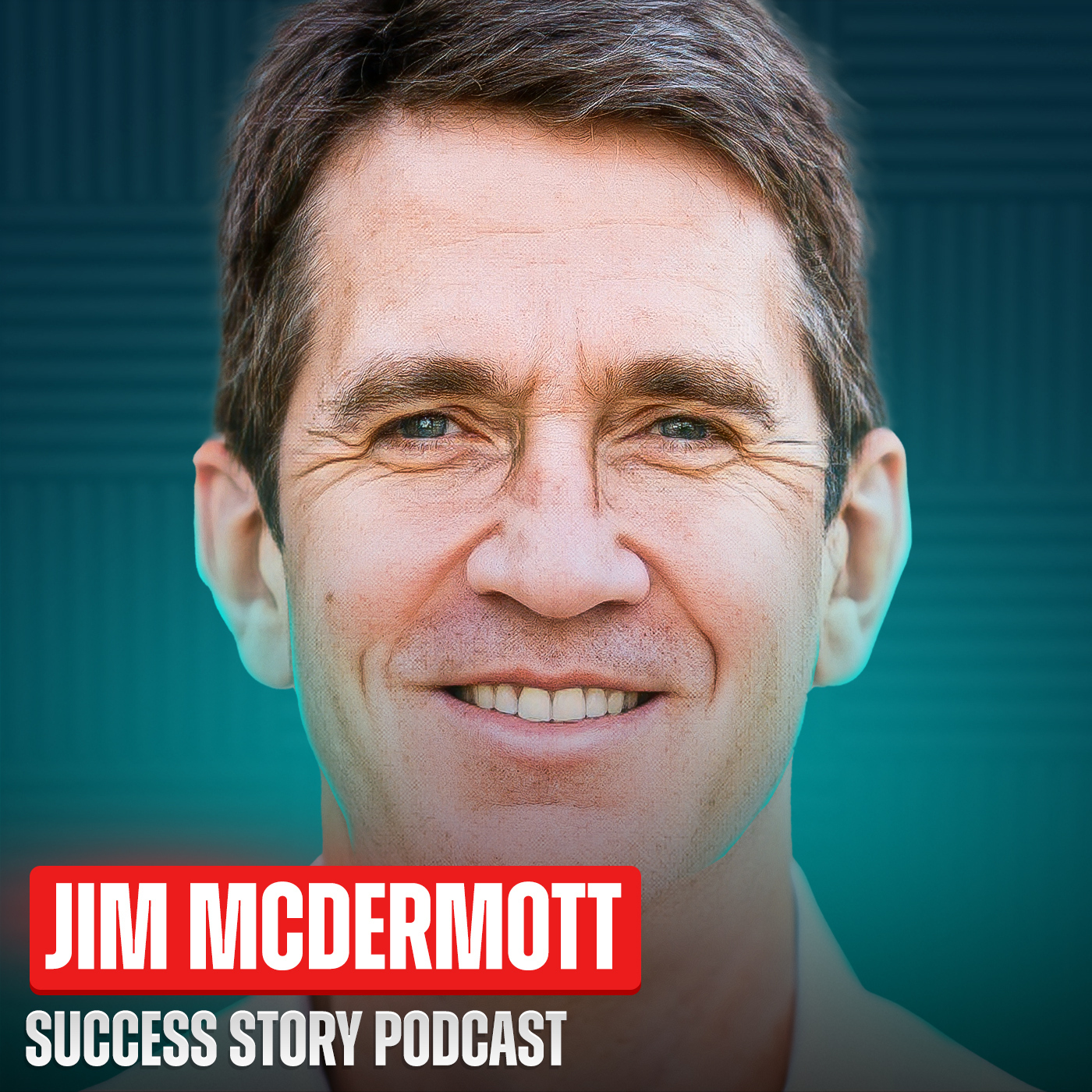
Success Story with Scott D. Clary
Jim McDermott - Clean Energy Pioneer | Why Smart Entrepreneurs Are Betting Everything on Climate Solutions
01:20:31
Loading summary
Transcript68 lines
- [00:00]
Scott Clary
HubSpot is a success story. Partner. Now, if you're an entrepreneur, listen up because HubSpot makes impossible growth impossibly easy for their customers. If you are building a business, you need to get HubSpot. Why? Here's the perfect example. Morehouse College needed to reach new students with fresh, engaging content. A problem that every single business in the world has. But with a 900 page website, even the tiniest update took 30 minutes to publish. Now Breeze, which is HubSpot's collection of AI tools, helped them write and optimize their content in a fraction of the time. And the results? 30% more page views and visitors now spend 27% more time on their site. If you are ready for impossible growth like this, visit HubSpot. Com.
- [00:49]
Jim McDermott
You have to look at the consumption of electricity, whether it's crypto or large language models. How much economic value are they producing? Large portion of crypto. I don't think they create enough economic benefit to justify why the electricity that they consume. He doesn't chase trends. He builds the future quietly, deliberately and with a mission. Jim McDermott is the mind behind over 25 companies from Stamps.com, which he took public, to groundbreaking climate tech ventures that were acquired by giants like LG Chem and Occidental. You need to go solve as an entrepreneur at the problem that you find most interesting. I think that climate is the single greatest economic opportunity in the next 50 years. And this is one of the things that's really important about climate is there's a lot of people who in the discussion are like, well, it's either wind and solar, which is zero emission, or it's natural gas, which is emissions. That's not true. You can make a natural gas power plant that emits no CO2. It just costs more money. He's not just a founder, he's an architect of sustainability, launching startups before the world realized how much they need them. Jim's work sits at the intersection of deep science, serious capital and real world impact. Most people talk about saving the planet. He's out here building the tools to do it. Find people who are good at taking technologies, deploying them and building them into real businesses. Invest with them. The true mark of success is not whether or not you get something right, it's what you do when you get knocked down.
- [02:21]
Scott Clary
Jim, I find your background very interesting because obviously one of the larger companies that you're known for is FoundingStamps.com. you were an entrepreneur during the first.com boom and now you work with climate and climate tech companies. And I'm curious about the through line between those two ventures or between those two ideas. So what connects sort of the old gym and the dot com entrepreneur gym to climate and what you do now?
- [02:53]
Jim McDermott
Yeah, it's a great question. Anyway. And by the way, thanks for have me on. Yeah, I think that the three line for it, frankly is, is energy. I had started off my career in New York. I was working actually for a bank, First Boston there. And they. I was in the. What was then called energy and infrastructure. So we built freeways, tollways, large power plants, things like that. So I actually started off financing coal and natural gas power plants. And so if you want to think about it sort of as a continuum, what ended up happening was essentially that I started off making electrons, and electrons ultimately are the basis of all compute. And compute is what makes the Internet what it is. And so when I ended up starting stamps.com while I was still in graduate school, I was really interested in postage and I'd been doing a lot of other interesting things. But I think the through line was that when we went to go do the first installation of our servers, we went to a place called Exodus Communications in Irvine, California. This is 1998, I think. 98, 99. And I was standing in this room and there were racks and racks and racks of these, what were then, I think compact PCs or maybe Dell, early Dell machines. But there was an enormous amount of heat coming off these things, as well as an enormous, you know, the, the, the amperage that it was pulling was just enormous. And I was standing there thinking to myself, this is all very exciting. We're going to put this thing on the, you know, this new thing called the Internet. But where does all this electricity come from? And if, and if the future is all, everybody's going to be using computers and we're going to have the Internet, there's going to be all these promise, you know, all these things are going to happen. What happens upstream of all of that? And because of sort of happenstance and whatnot, I'd been working to build, you know, build the power plants that deliver all the electrons to the data centers. And it hit me very hard. I was like, wow, if we're going to have racks and racks and racks of PCs all over the globe, connecting everything and everyone communicating all the time, the upstream implication in terms of pollution, and in this case it was predictably from coal plants and from natural gas plants. And the rule of thumb then and now is that every megawatt hour of Power generated using coal plants puts one ton of CO2 into the atmosphere. And every megawatt hour for a natural gas power plant is a half a ton. And so I was running these numbers in the back of my head about, my gosh, like, the amount of pollution that's going to go up as a result of all this new demand is going to be profound and at some level unsustainable. And my partner and I brought this up with my partner and he was like, look, stop, you know, stop with that. We're printing postage on the Internet. I don't think, I don't care about that, you know, focus. But it, it frankly was just sort of this kernel that was like, I couldn't stop thinking about it. I was like, everybody's using the compute and it makes our lives better and more interesting and exciting and it's collaborative and all these other wonderful things. But there's a downside to all of this that the general public, I think, is unaware of, and if they were, they might be more concerned. And that basically flows through to today.
- [06:03]
Scott Clary
I know, I was going to say I think that. So a couple points. First of all, that's interesting because 1998 was still very early days Internet subjectively compared to what we have now. And now, if I think fast forward, if I think about this, the companies that are enormous, the, the, you know, the ChatGPT of the world or all the. I've heard this argument with bitcoin and all the mining that goes on. If you were concerned about that in 1998, I would be interested to understand your concerns in 2025, given the fact that the, the size, the scale, the scope of Internet companies is just enormous compared to 98. That being said, I also think that what your partner said is not. I think it's the general sentiment of most entrepreneurs that are trying to build something like, listen, it's hard enough. I can't solve all the world's problems when I'm just getting this company started. I have to focus on, you know, paying rent and getting this thing off the ground. So I think that we'll talk about what this means for the average person, but I want to frame the problem and sort of show the seriousness of it. Because again, 1998, you had an idea, just because of your background, what the problem was or what it was going to be. What does this mean in 2025? And I know there's a lot of other factors outside of just tech companies that contribute to this, but the two that I just mentioned, like cryptocurrency and AI, which seems to take massive amounts of compute, plus all the other, and all the other startups and all the other things coming out of SF&Y Combinator and everywhere else around the world. What does that mean in 2025?
- [07:48]
Jim McDermott
Yeah, it's a great question. And I think depending on how you look at it, right, you can take a very, very dour, sort of terrible view, which is, oh my gosh, that just means we're consuming more electrons and more electrons means more pollution and we're not doing anything about it and things are sort of spiraling out of control. I think the more positive thing, or at least the way I tend to think about it and frame it, is the history of humanity is sort of a race between progress and disaster. And I think when I look at ChatGPT or I look at large language models and sort of what they do and the impact that they have, I take sort of a positive view in that unquestionably we are consuming more, you know, fossil fuels to do compute like, and, and by the way, there's going to be more of that. You see it across. I mean, I joke that for 25 years it was uncool to be in the power business and know anything about the power business. And in the last 18 months I'm like the coolest guy I know because power plant building is back and all this stuff that was boring. People are like, wow, you know, and I, and I happen to know something about that. But what I would say is that I think crypto, I mean we'll separate crypto from, from large language models. I think large language models are profound in that, yes, they consume more electricity and they need a lot more compute power. But the rate at which innovation, and this is directly related to companies that I'm invested in that it affords people with domain expertise, particularly I own a company, I'm an investor in a company called Avnos, which is one of the fastest growing direct air capture companies in the world. The rate at which the company has been able to, to innovate and find different, different, more effective chemical pathways using large language models has cut, you know, has cut years off the development cycle. So if that company can ultimately get to market quicker and be able to remove CO2, you know, years or decades sooner, the fact that large language models are consuming more electricity I think can be offset. So you have to look at the consumption of electricity, whether it's crypto or large language models or other forms of compute or in my mind is how much economic value are they producing? I would tell you that I think a large portion of crypto, particularly like meme coins and things of that nature, I don't think they create enough economic benefit to justify a lot of why they, of the electricity that they consume. I happen to think that Bitcoin as an example, may actually, there may be an argument there that there's a, that says a stored value like similar to gold. But I think every single one of these things, you have to look at them and say what economic value you know, are they creating and what benefit? Because life is never, you know, you just consume electrons and you get nothing. It's, you consume it, something is produced, some value is produced. And in some cases that value is extraordinarily high. In other cases it's low. So I'm not as pessimistic, I think, as some people in the sense that we have to. There's more CO2 in the atmosphere that is definitely causing positive feedback loops. Right. Which are accelerating feedback loops. But I think there's a pathway to use that same technology to innovate at a rate that's potentially faster than the rate of degradation.
- [11:14]
Scott Clary
Another thing that I find very interesting. So again, you had that conversation with your partner when you were first starting out. And again, I do believe that that's what the majority of young entrepreneurs, that's the sentiment they have. But we can talk about, you know, what should entrepreneurs focus on? Should there be more purpose driven entrepreneurs building business hard enough? How do you, how do you build a business in environment and tech and clean tech versus building a business for a consumer? That's an interesting point. But I'm also, you'd mentioned something that I think ties back to this idea because after stamps.com you exited the Internet, quote unquote, exited the Internet because you think the problems weren't fundamental enough. So obviously your view of problems when you started stamps.com versus when you exited were different. What do you mean by the problems weren't fundamental enough? Because I think that most entrepreneurs, again, that's why they start Internet companies, because they do think that they're solving fundamental enough problems. Problems.
- [12:16]
Jim McDermott
Right, right. And let me, let me start by saying, to address part of your question and then I'll get into the exiting part. I, I don't think that everyone has to spend their lives thinking about climate. I don't, I don't think, actually, I don't think that produces a society that's worth anything. Right. You need to, you need to go solve as an entrepreneur the problem that you find most interesting. Right. My dad used to always tell me that the success is the intersection of, you know, that which you're good at, that which you'll, you know, people will pay you to do and that which you love to do. Right. And, and I think a lot of times, so, so when people talk about the climate, like if climate is not something that's fundamentally interesting to you or you're not fundamentally good at it, you probably shouldn't do it. Right. And, and that means that there are going to be people who do all sorts of things using the Internet that I don't find interesting, but it doesn't mean they can't do them and be successful entrepreneurs and have a role to play. So I, I, I think that this idea of like, that everyone has to have a climate overlay, you know, I mean, somebody's got to design shoes and fashion and make movies like, you know, because I consume that sort of stuff and I like it. So I don't, I think it's a little, it's sort of a specious argument to say that everyone must be a climate entrepreneur. I don't really buy that. Now for me, I mean, I, part of the, part of the reason I was really interested is I was, I've always been interested in fundamental systems. I actually started off college as a, as a physics and philosophy major, which are sort of, if you take the two bookends, right, and stem, I believe physics is sort of where the, where the road, you know, you go, that's about as far down the road as you can go. And philosophy is the other end of that in, in what I would characterize as liberal arts. So I've always been interested in sort of like, what's the end of the road look like. And so for me, once, the Internet, I mean, I was fascinated by the Internet because of all the, you know, like, all the switching and the gear and like, you know, how do we connect all this stuff up? And stamps was an interesting play in that it was a, you know, it was government, it was a government license. So I felt like it had a competitive advantage and there were a number of other things, but once it was done, I realized, you know, it's a utility and people need postage and it's not harming anyone, but it's not really solving anybody's problem. I mean, in the sense you don't have to go to the post office. And that's why I started it. But I was much more interested in sort of more fundamental problems like global pollution and things of that nature. And so when I started to see where the Internet was headed, which was social networking, I actually, I mean, I built a company called spoke that was 18 months before LinkedIn existed. I launched this thing and I mean, so it was pretty obvious at the time what was going on, but I just couldn't make myself feel that it was really solving, I mean, a social networking problem was something for Jim McDermott doesn't mean, you know, Reed and all the crew went on to make billions and God bless him, I used LinkedIn all the time, but I didn't care enough about it. And so the reason I left was I didn't feel that the, like, the problem of social networking, which is basically graphing, you know, figuring the highest probability across a graph is, it's an interesting intellectual problem. I just didn't care about it. And so I was like, I'm much more interested in trying to address something that's further upstream than, than social networking. So I turned and went back towards sort of power plants, fuel, I mean stationary power generation, clean fuels and, and energy infrastructure because I thought that's an area where I have knowledge, I care about it and I think I can get paid to do it. So I'm going to go solve that problem. And I think it's important for every entrepreneur to feel the meaning of it. I mean, I believe that. And meaning, oftentimes I think people, they let other people put an overlay on it for them, right? That they're like, well, that, you know, you want to whatever, design skateboards and your parents tell you no and, but you really, if it has meaning for it, you should go do it and never mind what your parents think or what other people think. And so it was purely an individual's decision in that I felt that trying to fix excess CO2 in the atmosphere was a, was a problem set worth trying to solve.
- [16:21]
Scott Clary
I completely agree with you that, I mean that's a, that's a much more fundamental, it's a, it's a huge problem. It's, it's like a, it's a beautiful idea to say, hey, this is a problem I'm going to solve that's going to not just impact the consumer and their ability to sort of save a couple seconds off or a couple of minutes off the day by not having to go to a post office. But now I'm going to, you know.
- [16:43]
Jim McDermott
It does have the world, it does have 93% market share, which is kind of true.
- [16:48]
Scott Clary
It does. It's like that's a, that's a, it's.
- [16:50]
Jim McDermott
A monopoly, which I always like, I always kind of thought was cool.
- [16:54]
Scott Clary
But to the same token, it's such a big problem that it's hard to wrap your mind around how you can even have an impact. And I think that could also be slightly demoralizing for an entrepreneur. Like an entrepreneur wants to define a tam. And I know that when you, you know, the Stanford school of thought is like, is the problem big enough to affect billions of people? And not everybody has a school of thought when it comes to entrepreneurship. Some people just want to cash flow and quit a 9 to 5 and they just want to make a little bit more money and, you know, afford themselves a nice lifestyle. But you just didn't go to the Stan. How do I disrupt billions of lives? You literally went to the peak of the mountain and you said, I want to save the world to a degree. Not to joke around with what the goal is, but that's basically where you're heading. How do you even conceptualize the first step when you're solving such a massive problem? Because that's enormous. You could build a company. You could almost even say, you know what, I don't even understand how I can impact this. This is a government's problem. You could say that easily. So where do you start?
- [17:57]
Jim McDermott
So it's actually interesting the way that I've always started. I actually learned this actually from one of my. It was actually a physics professor a long time ago was start by doing a systems level analysis. Like what does the end to end system look like? And then map out all the component parts and then determine and then do a secondary analysis, which is what should the system look like? So this is how the system operates today in an idealized world. How would it, how would it look then? Look at the discrepancies between the two and determine, you know, are there places where there are, you know, companies that don't exist, products, companies, opportunities, or are there places where they already exist, they can be improved and then start to basically drill in from there. So you say like, you know, you'd say, okay, it starts with mining coal and it ends with somebody working on their computer. Let's look at all of the sectors through. There you go. Okay, well, you know, PCs, Michael Dahl's got that one covered. We're not going to, you know, thank you very much. We'll move on, you know, oh, switching gear. Cisco, those guys are running everything. And you just keep looking for a spot. And what I realized, one of them was that the, the, the opportunity to Build wind and solar, which were an alternative form of, you know, of producing electrons that are zero. Zero emission was a really interesting place. There was lots of companies and there was a need for developers, like people who would actually go out and put the projects together, get them financed, get, get the permitting done, all the rest of that. And so what we did is we just systematically went through and looked at where can we find that? And we defined. And the good news is, Scott, is that like, almost every one of those tams is gigantic. So you don't, you're like, oh yeah, like electricity, like that's a big one, right? You know, water, that's a big one. And so what, what we did then is because you're right, like if you simply say, like, I'm going to save the world, like that's a. Frankly, it's a fool's errand, right? You're not going to do it. What you have to do is you have to pick a. I mean, that's the macro thought, right? The micro thought is, what's the firm? And then you apply all the basic things that you apply in any entrepreneurial situation, which is, okay, what's needed, what skill sets do I have? What skill sets am I going to have to go buy or rent? Is there, you know, is there an intellectual property position that I can, that I can obtain either through licensing or invention? How much money is it going to take to get me there to the next proof point? And, and again, that's a, that's a, that part of it is entrepreneurial, is applicable no matter what you're doing, whether you're selling bubblegum or you're trying to remove CO2 from the atmosphere. And so what we did was just do a systems level analysis, look at the idealized system, look at the actual system, and then start looking for gaps and find companies or find companies or ideas or problems that needed to be solved that had a TAM that was large enough to go after.
- [20:46]
Scott Clary
And this is where, this is where you came up with this. I mean, was this the first version of what you're doing now where you came up with the idea that CO2 isn't just waste, but it's valuable?
- [20:55]
Jim McDermott
Yes, well, so the first test was to simply. Or the first sort of incarnation was I started in early 2003, I started a firm called the US Renewables Group. And the idea was, look, whenever there's a structural change in technology, the first thing that happens is the infrastructure, right? And this is exactly, I mean, like, first you build the railroad lines, first you lay down the Internet infrastructure, then you build the software layer on top of it, right? So until Cisco, like when the Internet started, right, everybody's like, oh, we're gonna have all this great stuff. Well, everybody had a, had a, you know, you know, an 8, 8 baud k hookup and only half the people had them. So the idea of delivering streaming tv, not a thing. And so you had to watch as first the dial up guys got rolled up, then Cisco laid the T3 fiber, and then, and only then can you have Net Netflix, right? So when you overlay that type of understanding on the, we'll call it the clean infrastructure, what you realize the first thing was going to have to happen is there was going to have to be a lot of lower carbon fuel. So that was ethanol, biodiesel, sort of lower emissions per unit per kilojoule of energy, and wind and solar. And so we started there, we said, let's be infrastructure players. The idea of removing CO2 from the atmosphere came later because one of the things that I realized was that as I was building all this stuff and we were looking at the build rates which were getting faster and faster and bigger and bigger, but you were looking at the rate at which CO2 is going to the atmosphere, it became apparent to me that we weren't going fast enough to deal with the legacy. And the way to think about that, Scott, is that if you take there's 420 parts per million CO2 in the atmosphere today. We're putting about 3 per, 3 parts per million every year of new, so incremental. So and we started at 180 when the industrial revolution started. So if you take 420 minus 180, right, you basically have 160 ppm that is legacy and you have 3 ppm which is new. And what that leads you to is the vast majority of the problem with climate is the CO2 that's already in the atmosphere as a result of the last 150 years of industrialization. And once you realize that, you're like, okay, it's important to continue to decarbonize, but that's going to take a while, right? And now we have this new growth factor with, you know, AI and bitcoin and all the rest of that. But we have a legacy problem of all of the CO2 that was, you know, for all the steel and the railroads and the aerospace age and all the rest that we're all paying for in some, some format. And so once I realized that that and, and candidly that is the that is, I think ultimately may well be the the domain of government, right? That the government may need to play a significant role in cleaning that up because everyone looks at it and says, well, I didn't do that, I didn't put all that CO2 up. But the reality is we're all dealing with it. And so oftentimes when you have sort of shared common problems, that ends up being the domain of government. But the private sector has to deliver the technical solutions and so I'm focused on the technical solutions.
- [24:19]
Scott Clary
NetSuite is a success Story partner Now Business is brutal right now. Tariffs are crushing margins. Supply chains are breaking in cash flow. It is strangling companies every single day. And if you can't see what's coming and pivot fast, you're dead in the water. Now here's what separates winners from losers. Total Visibility netsuite by Oracle gives you X ray vision into every corner of your business, from global shipments to tariff impacts to real time cash flow. Over 42,000 businesses trust this AI powered system because it works. NetSuite is the number one cloud ERP for a reason. It puts accounting, financial management, inventory and HR into one powerful suite. No more data silos, no more guessing. Just one source of truth that lets you make lightning fast decisions while AI automates the busy work. If I had need for this kind of product, I would use NetSuite one system, full control. Tame the chaos with NetSuite and if your revenues are at least in the seven figures, download the free ebook Navigating Global Trade. Three insights for leaders. That's NetSuite.com Scott Clary indeed is a success story partner. Now say you just realized your business needed to hire someone fast. How can you find amazing candidates fast? It's easy. Just use Indeed. When it comes to hiring, Indeed is all you need. Stop struggling to get your job post seen on other job sites. Indeed sponsored Jobs helps you stand out and hire fast. And with sponsor Jobs, your post jumps to the top of the page for your relevant candidates so you can reach the people you want faster and it makes a huge difference. According to Indeed data, Sponsored jobs posted directly on Indeed have 45% more applications than non sponsored jobs. Plus with Indeed sponsored Jobs, there's no monthly subscription, no long term contracts. You only pay for results. There's no need to wait any longer. Speed up your hiring right now with Indeed and listeners of this show will get a $75 sponsored job credit. To get your jobs more vis, go to indeed.comclary right now and support our show by saying you heard about indeed on this podcast, Indeed.com Clary terms and conditions apply. If you're hiring, Indeed is all you need. I think that, that. Listen, I'm not, I'm not nearly as involved or understanding of, of climate discourse as you are because you live in this space. But it seems like climate, it seems like the conversation around climate, it's like it turns into, like a political weapon.
- [26:49]
Jim McDermott
Yes.
- [26:49]
Scott Clary
And when things turn into political weapons, that means that they're being used for votes. They're not being actioned against according to the actual severity of the problem. They're just being used to sway a person this way or that way towards who should I vote for? So where do we stand now in the climate conversation? I mean, we just switched administrations. Where, what, what is the, what is the prevailing view on dealing with legacy problems, dealing with this going into the future? Because private industry is going to be private industry. They're going to disassociate, they're going to separate themselves from the government they're going to be building regardless. But in 2025, what does the government believe about legacy CO2, future CO2, CO2 in the atmosphere, the impact it has? Because I feel like that shouldn't be a political talking point, it should be something that we should be trying to collectively work together to solve. But objectively it doesn't feel like that's the case.
- [27:42]
Jim McDermott
Yeah. So I think, again, I think you gotta, you have to tread lightly when you, when you talk about these things because it, there are lots of places where it is sort of politically charged and people, you know, and. Right. Politics exists and people do it. But I think the way to think about it is that there are a number of companies and, and surprisingly, actually many of them are in the oil and gas sector who, if you think about CO2, right, you think about gases and you think under the ground and things like that. Who knows the most about that? Well, the reality is the global oil and gas industry does. And so they're keenly aware and there's lots and lots of very smart people in the oil and gas industry, in chemical engineering, petrochemical engineering, subsurface geology, who understand these problems quite well. Fact, I would argue, in many respects better than a lot of the people, some of the people on the climate side of it, if you will, and it's because they deal with it every day and they have for 100 years. So all of them in, in my conversations with them, almost all of them understand that this is a problem, but they view it like the way that you deal with NOX or SOX or sort of low earth pollutants. It's another gas. It turns out that in excess, you know, in large amounts it's dangerous and it needs to be managed. They don't have a view that we should never use hydrocarbons again, which some people who are on sort of the further, the left end of the liberal spectrum sort of have this view of hey, we can't have any of this. And I think the way that the conversation can be useful is to take a scientific approach and say like look again, let's look at the system, let's look at where the system started, let's look at where it is. Maybe let's try to think about idealized things and Then let's view CO2 and the infrastructure that will need to be built to deliver or move or repurpose that as an economic opportunity and work from there. And there are lots and lots of large corporations globally that have made and are continuing to make significant investments in management of CO2. That's the reduction of the primary source, finding ways to capture source that's in the ambient atmosphere and then ways to repurpose it. So although, and I'll tell you like the current administration has a much, I think their view is natural gas is a better answer than say wind and solar. Or at least the President's view of that is. I think he's been very clear on that point. I think when you talk to people in industry who are thinking about how to run their businesses for 20, 30 years forward, all of them have the view that CO2 is, is a real right. The, the amounts of it are significant and detrimental. And C, you can invest against that thesis, right? You can find ways to make money and manage the problem. And so I think that there actually is sort of this funny disconnect in the moment in that I think a lot of this discussion, the public discourse around CO2 has been very politicized. Like basically if you believe in CO2 then you're a leftist communist who lives in San Francisco. And if you don't, then you're a freedom loving, whatever the nomenclatures are. Right? I don't really ascribe to either one of them because I look at it and I'm like, there's both an opportune economic opportunity. I tell people all the time I think that climate is the single greatest economic opportunity in the next 50 years. And I think frankly large language models and compute will be the tool through which we make the discoveries around these topics. So I think that although the government maybe at this point is, is sort of more right of center or further right than they were whatever five months ago, four months ago, industry has taken a very long term view on this and continues to do that and they're continuing to invest, to find. And this is oil and gas companies. I mean, one of the things I think it's really important to highlight if you care about climate, is that the oil and gas community knows a lot, they have a lot to add. And, and the idea that you would, you know, whatever name and shame them or engage in that type of stuff is, is, you know, counterproductive and should be, you should think of them as, as a partner who can help you. And while maybe it's also true that in the past they, they were anti, you know, your climate beliefs, these days they're actually moving pretty aggressively. And I'm, you know, I'm invested in companies that work with them and all the rest. So I, I think it's a more nuanced answer is maybe what I'd say.
- [32:17]
Scott Clary
Well, first of all, I agree with you. I think it's always a more nuanced answer. It's never oversimplified. And it is interesting to understand that some of the quote, unquote, legacy companies are probably leading the charge on trying to figure this out and probably for themselves too. Because if you're a smart executive at a company that's been around for 100 years, you're not stupid. You do know that things will eventually change. So you have two options, right? And I, I, it's so cliche, but you can either be, you know, Blockbuster or Netflix. You can choose, you can choose at the end of the day who you want to be. And most would rather be Netflix. Most would rather disrupt themselves before they get disrupted by someone else.
- [32:52]
Jim McDermott
You know, to, Sorry to interrupt, but the, the, probably the best example of this that I can give you is I believe that Vicky Hole at Occidental, I mean, she, we start, I was on the board of a company called Carbon Engineering, which is up in, actually in Canada that was run by a professor named David Keith, that's basically the leading direct air capture company in the world. They came in, invested, ultimately bought the company from us for, for 1.6 billion. And then I had a joint venture with her called 1.5, which is now the largest direct air capture company in the world. That's in Texas. She bought both of them from us. And you know, here's a, here's a woman in the middle of the Oil and gas business who is leading the charge on direct air capture and transforming Oxy into a world leading not only oil and gas company. Right. But director capture company. And she's a classic example, in my opinion, of someone who saw the future and has been systematically moving towards creating that future by repurposing some, not all of the cash flows of Oxy. So it's still a very stable oil and gas business, but positioning herself for a world in which we will have to remove CO2, and she and her company's gonna have a piece of that. And I, I think, by the way, being able to navigate those types of, you know, currents, it's a, It's a real skill, like to be able to take a legacy company and move it in, systematically move it into the future. Like it's not for kids, you know.
- [34:20]
Scott Clary
No, that's not easy. That's not. But that's. But how she's operating is how you do it. It's not easy, but that's the job. The job is not easy. In your. I want to talk a little bit more about some of the initiatives and some of the ideas that you've brought to the table. But before that, I just want to tee it up for the audience in a perfect future, because then again, the average person here is. This is my issue. They hear all the discourse, they hear all the conversation, and they don't really understand what's going on. They're not talking to the executives of the oil and gas or the clean tech companies. They're just, you know, turning on the news at night and that's the information. So in a perfect future, what is the energy mix? Where does coal, wind, solar, nuclear, all of it, just lay it out so people understand where we should be heading and why.
- [35:10]
Jim McDermott
Okay, well, let's start with this is my opinion, because I don't know that there is in fact a. There is no right answer to that in the, in the sense of sort of a absolutist way, I think of the world. My belief in the future is that probably what the most likely scenario will be is that you will see right now, I think nuclear is maybe 10% of the global mix. I could see it growing to maybe 20 to maybe 25% over the next. Call it 50 to 100 years. I think that what you will see right on the wind and solar side is that you're going to see continued build out of that. That will need to be coupled with batteries because there's a fundamental problem with wind and solar in that wind and solar are intermittent. Wind tends to blow in the morning, in the evening and when there's a temperature differential. And the sun obviously generates when the sun's up. So. But if you need a steady stream of electrons throughout the day and the night, there's always a question of how do I take the, maybe the solar, the excess solar that I'm producing during the day, store it away and then deliver it back. Same with wind. So you're going to see a lot of wind and solar, I think maybe 20, 25% globally that will be paired with storage. And then I think you're going to see a lot of natural gas. And this technology again exists today where you will combust natural gas and you will capture the CO2 in situ. So basically that means during the combustion process, you will actually strip the CO2 out, you will compress that CO2 and you will push it back underneath the ground. So there will be lots and lots and lots of natural gas power plants where they're combusting, but the CO2 is not reaching the atmosphere. And so the way to think about that is it's effectively a decarbonized hydrocarbon. This very, very big business. There are companies already, there's actually a company that's public called Net Power, that was developed by some friends of mine at a group called Eight Rivers that, and they built a plant, there's one in Louisiana, they're building more in Texas, where they combust natural gas just like a normal natural gas power plant. But instead of emitting the CO2, the atmosphere, they capture the CO2 and then they dispose of it. So I think that hydrocarbons will play a significant role and it might even be the largest role going forward. But CO2 will be removed from the equation in terms of emissions. And by the way, that will cost more money. Right? So that means that you're, you know, an electron that comes from a natural gas power plant will be more expensive, but it will have a zero emission profile. And this is one of the things that's really important about climate is there's a lot of people who in the, in the discussion are like, well, it's either wind and solar, which is zero emission, or it's natural gas, which is emissions. And that not, that's not true. You can make a natural gas power plant that emits no CO2. It just costs more money. And it's, from an engineering perspective, it's a little more difficult. So I think it's probably, you know, call it 20 to somewhere between a fifth and 25% nuclear, call it 25% wind and solar. Natural gas is probably, if I had to bet, probably 40 to 50%. And I mean, and then you'll have like hydro and some of these other things. But I think hydrocarbons going forward probably will be the majority. The question is going to be, or maybe not the majority, maybe the plurality.
- [38:38]
Scott Clary
Right, yes.
- [38:39]
Jim McDermott
Is how carbon intense will the emissions be. And I will tell you that I think the big loser in all of this is coal. Coal's going away. And again, this is another one, just to give you a sense of it. When the president says we're going to have lots of big beautiful coal plants, that's his opinion, he's entitled to it. But when you talk to the people who finance these plants or try to develop them or want to build and own and operate them, there's nobody out there. Nobody like coal in America is gone. And I know this because I've been to Campbell county in the Powder river, based in Wyoming, which is the largest mining area in the world. They all know it because they're seeing demand go down. And what are they doing? They're repositioning their assets, you know, to do natural gas with CO2 storage. It's very windy in Wyoming. They're, they're market driven people. And so I think you're going to see an energy mix that won't be all one thing, won't be monolithic, and that's good. And you're going to see, you're going to see the wind and solar people recognize that their intermittency problem needs to be addressed. And you're going to see the hydrocarbon people recognize that they need to deal with their emissions problem better. And both will innovate and both will bring products to the market that solve the fundamental issue, which is we just have to reduce the amount of CO2 that's emitted.
- [40:04]
Scott Clary
I think that even after speaking to you for a little bit and sort of studying your work, you make a very compelling argument for climate not just being a feel good opportunity, but being highly lucrative. And I think that I don't see a lot of people really pushing that message and helping people understand that climate isn't just a feel good, it's like this is how you actually make money in it. When I think about people that have even attempted to put money into climate, people that are not in climate, but they're just smart, successful people, I want to put a couple bucks here or there, it's always like, well, you know what this is like, the feel Good fund that I put money into. And all the opportunities you're talking about, these are real money opportunities.
- [40:49]
Jim McDermott
Yeah. And, and I think, look, Scott, one of the, one of the things that's, that's, that is harder about climate is that you're holding yourself to sort of a double standard. And the double standard is I want to make money. I want, I want, you know, above market returns if I can achieve them. Because my partner and I used to joke it's like sustainability that's not sustainable, is not a business. Right? So it's like if someone gives you, you know, 100 bucks and you invested in something and you return them 50 and it's quote sustainable what you put it in. It's like then they don't give you the, they don't give you the money again. And so your business is not sustainable. So why would you do it? When you're looking at climate, you're looking at a sort of through a dual lens. One is I need to make money full stop. And what I need, what I'm also doing has to have a second lens which is it has to have an economic or an environmental benefit to it. And if it has an environmental benefit but it can't make money on it, then it's, then it's a non starter. And if it's only about making money and has no environmental benefit, then we're not going to do it either. Which means that you, that you say no a lot. Like a lot. And there's a lot of people who will come at you when you're looking at these opportunities, like, well, this is good for the world. It's like, yeah, but it's good for the world if we can scale and repeat like and, and, and, and again, if you want to give money to people on charitable basis to do things that you think need to be done, great. But if you want to build businesses and I, this maybe sound a little avaricious, but I believe it. I believe when you talk to young people and they get out of school, like they need to make money. They need, they need money because they want to have houses and they want to put their kids through school. And so one of the jobs that, that you are doing if you're going to be a climate investor is that you're showing young people with skills and energy you can build a career and make money and have a family and a house and you know, and you can afford health care. And if you can't show that in climate, they're not going to do it or Said another way, I think that probably one of the greatest, probably the greatest poster boy for climate for a long time was Elon Musk. Because people can look at him and be like, that guy's building electric cars and he's rich. Right? And they, you know, they're like, I want to do that too. I want to, I want to have a good life. And so I think climate is a massive economic opportunity. One of my things, my dad used to tell me all the time is if you can stay calm when disasters are happening and try to look on the other side of the coin, the biggest disasters are always the biggest economic opportunities. But it's really hard when people are like pitching all the time, like, oh my God, you know, PPM keeps going up, there's forest fires everywhere. I mean, like I live in la, everything west of me burned down six weeks ago, right? I was last canyon. And you can look at that and you can say, God, it's terrible. Well, you know what we're doing, we're in the midst of putting together a company right now that is going to make it possible to do five day, very highly accurate five day smoke forecasts. So when fires light up in the western US and Canada, smoke is effectively a new weather event that is being driven by climate. So there are ways to predict and then help people adjust to the fact that there's going to be more smoke and that smoke's going to be flowing across larger and larger geographic areas. So instead of focusing on it was terrible, which it was, what can we do about it? Where is there an opportunity to fix something, be useful to other people? Right. And again, is smoke management going to change the whole world? No. But will it make it possible that if a fire starts in British Columbia and the smoke gets all the way to Iowa, that the people in Iowa will know that that smoke plume is coming five days beforehand so that they can close the schools, make sure that asthmatics are not on the streets, you know, all the things that are quality of life things. That's a, that's a way to address a problem in a positive manner, in a positive economic manner than to sort of wring your hands and say, woe.
- [45:01]
Scott Clary
Is me when you think of. And I agree with you, I mean, you, you started a fund and you, and now you do this for a living. And I want you to speak about that a little bit. But if you think about where you put your money or where you put LPs money, I think that I'm again, layman's sentiment is if I put money into climate. Even if it does find a way to become successful, it's going to take way longer than anything else I could put money into. And I feel like it's just going to take, you know, a ridiculous amount of time to see some sort of return. So is that true or not? What's your sort of investment thesis? Because now you're coming from the capital allocation side. And I think this will be a lesson for entrepreneurs as well if they're thinking about, okay, if I want to build in something that's in climate or climate tech or clean tech, if I want to build. You should always be thinking from the perspective of what makes this business investable. But from your perspective, what are your expectations when you put money into a company and what should other people's expectations be?
- [46:04]
Jim McDermott
Yeah, so I think there's a, there's a couple things there and those are good points that you make. I mean, the first one is when you, when you're thinking about capital allocation, you have to think about sort of, there's, we'll call it the micro and the macro. Like as an example, as a, as Jim McDermott as an individual, right. I've got a portfolio of securities and all these things and all of them are growing at different rates and different, and have different sort of levels of volatility. So as an example, right. Real estate, which I own a, you know, a fair amount of, it's relatively low growth but pretty stable. And then I've got stuff, you know, where I'm investing in, you know, very high volume. You know, I have money with a friend who runs a fund up in Seattle that does nothing but like, you know, LLM and cloud computing. Right. And really, really, you know, so I think one of the things about climate is it does, in fact, if climate, the stuff that you're looking at is maybe software driven, then it has the same characteristics as any software company, which is, you know, the incremental cost of the next unit of distribution is zero. So it can scale super, super fast, very low cost. But if it's hardware, right. So if you're building like a plant or, you know, or something like that, these things, they look a lot more like real estate, right? Because you got to get them entitled. There's a, you know, there's a large component of debt. You mean you have to use debt and leverage to get the returns that you're seeking. So if you're building, if you're an entrepreneur and you're thinking about hardware, you probably need to be thinking that These things are going to take five to 10 years, right, to to get the types of returns. Now I will also tell you Scott, any software company I've ever invested in that really made a lot of money took 7 to 10 years anyway. Like there's this idea that everybody's going to make money instantly. It's like even the most, I mean, it's like, like I'll give you an example. Amazon went public. I owned Amazon. I bought Amazon in 2003. It didn't move for like six years. I mean it was crazy. And I was like, I was a total believer, right, and didn't go anywhere. Same with Tesla. Tesla went public at 19 bucks a share, which I bought at that point. It didn't go anywhere for the longest period of time because it took a while for him to really get going. And you know, and then it, you know, it took off. So I think you have to like any entrepreneur, I believe when we back companies we're always like, listen, our view is we're going to be in this for 7 to 10 years no matter what. If it turns out somebody takes it off our hands in three, then hurrah. But you can't build businesses that way. I don't actually believe in it. So I think if hardware means it's always going to take longer and a lot of climate is hardware, that's true. But the fundamental thing that I tell people is, look, how do you view your house? When you buy a house, do you think you're, I mean if you, you know, some people are into flipping houses, but most people are buying them for long term holds. I think of climate as a long term hold because it's a problem that's not going away and a 5 to 10 year horizon is not unreasonable. So if that's, and what I'd say is ultimately you should have a portion of your portfolio focused on long duration things. It shouldn't be 100%. That would be crazy, right? I mean, it's funny, the only person I'm aware of who kind of went that way was Musk. I mean he took all, all his PayPal money and within like 90 days started Tesla, SpaceX and SolarCity and made them all work. You're like, okay, well some people are just not me, right? Like, wow. But for the rest of us mortals, right, maybe it's 5% is in climate, right? And then 10% in real estate and you know, 40% in bonds and the rest is in public stocks. The reason I think that that's interesting, Scott, is I Did a study, this is about 2019. I looked at the top, the top, it was Basically the top 400,000 ultra high net worth people on the planet, basically more than 30 million in net worth. If every high net worth family, ultra high net worth family on the Globe taxed themselves 10 basis points per year on their net worth and we invested that in direct air capture plants, it's enough capital to build all the direct air capture plants globally to take us from where we are today back to pre industrial levels. So if the, if the richest people on the planet said I'll take 10 base. So for every 100 million of net worth, you put in $100,000. If everybody on the planet did that and we used that equity capital to build director capture plants, we could build all the director capture plants we need, get ourselves back down. So the point of all of that is you don't, you don't have to be all in on climate. That's not a realistic thing. What we need to be doing is allocating dollars the same way you allocate to real estate and the same way you allocate to, you know, Internet high volume stocks. Because it's an asset class, it's going to continue to grow and it has real returns.
- [51:08]
Scott Clary
It's interesting you mentioned that if you take those individuals 10 basis points off each of those individuals and that would in theory solve the problem that's still putting it. It's not like they're just flushing money down the toilet. They're actually investing in a profitable business. It's just about the, it's the education component that's lacking right now. That's really it.
- [51:28]
Jim McDermott
I mean, it's funny. One of the, one of the things I was going to say is like, you know, to the extent that any of your listeners are in that category, I think, I mean in, in a funny way, it's sort of like the giving pledge. And the way that, the way that I always talk to people about this is it's like, look, let's say you're worth, you know, whatever 30 million bucks or $100 million or $1 billion, and you built it all. Building a business, whatever it is, you've worked very, very hard, you take a lot of risk and you're planning on handing it off to your kids. I plan to hand off some of what I've made to my children. Right. If, but, and, and today, you know, when I look at all the costs that I have in my life, a huge percentage of it is insuring things. My homes, my Cars, my health, right? Wouldn't it make sense that if you were about to hand off, say, let's say your family was worth a hundred million dollars and you were planning to hand that off to your children, wouldn't it make sense to send to invest some portion of your net worth to future proof the world so that when you hand all that money off to your kids, it's a world worth living in. Like you already do that, right? You spend money on insuring your house, your boats, you know, your business interruption, like, you know, on and on and on. And yet there's no mechanism that exists for basically buying insurance against the future, right? And like most insurance premiums, they run between like 50 basis points and maybe 2, 2%, right? So for 10 basis points, if the top, you know, the, whatever the global elite or whatever we call them these days, right. If they were to do that, we could, we could future proof, we could go a long, long way to future proofing climate as an idea. I think that's a interesting idea and it's feasible.
- [53:15]
Scott Clary
I just want to take a second and thank Cornbread Hemp for supporting today's episode. Now, Cornbread Hemp CBD gummies have been this really nice addition to my wellness toolkit. I don't use them every day, just when I want to unwind after those extra busy weeks, but they're perfect for those moments when you want to take the edge off and just find your balance, really just shut off from work. And what makes them special is how Cornbread Hemp crafts them. They only use a flower of USDA organic hemp plants. That's the best part. For the purest, most potent experience, no fillers, no artificial fluff, just clean, full spectrum goodness and delicious watermelon, berry and peach flavor. I keep them in my nightstand for those moments when I just need a little extra help relaxing. And I love how transparent they are too. Every batch is third party lab tested so you know exactly what you're getting. And they put together a special offer for all success story podcast listeners. All listeners can save 30% off their first order. Just head to cornbread hemp.com success and use code success at checkout. That's cornbread hemp.com success code success. For 30% off your first order of these amazing gummies, the HubSpot Podcast Network is a success story partner. Now, if you like Success story, you're going to love other podcasts in the HubSpot Podcast network. One of my personal favorites is I Digress, hosted by my boy, Troy Sandich. Each show is under 30 minutes. I digress. Helps eliminate complexity, complications and confusion in your business with frameworks that and strategies to achieve true, scalable and sustainable success. If you're an entrepreneur building anything you need to listen to, I Digress. This is one of the most useful business podcasts, trust me. Go do yourself a favor and listen to I Digress. Wherever you get your podcasts.
- [54:53]
Jim McDermott
1.
- [54:53]
Scott Clary
One thing that you don't like, you don't like, like climate doom and pessimism. You don't think it serves any purpose. You've. You've mentioned before that you compare climate action to Pascal's Wagers. So you're essentially betting on solutions because you've got nothing to lose, but you're still betting on solutions. You're still taking an optimistic view. So is this just clever optimism? Is it something deeper? Why do you hate the climate? The gloom and doom?
- [55:19]
Jim McDermott
Yeah, so, I mean, well, it's funny because the other part of my college career was studying philosophy, right? So Pascal's Wager is fundamentally right. The question that gets posed to Pascal is, why do you choose to believe in God? And he says, well, because if I spend my life doing good acts and being in service and all these other things and I die and I get St. Peter's at the Pearly Gates, I'm gonna get in. That's a good deal, right? I want that. If I get to the end and it's just lights out and I die, well, then at least I spent my life being optimistic and not being depressed, thinking I was going to get in. So that's a good mental state to be in. The reason I think climate is quite similar is that the one thing we know is that if everybody decides that climate is bad and we're all doomed, then nobody does anything, and then the predicted future is a disaster. So why not choose to engage in a future in which you believe and whether or not you will ultimately find out whether or not this is right or wrong, Particularly because these fixes may take, well, will take longer than our individual lives. Why not choose to say, I'm going to be part of the solution. I'm going to take some piece of it and I'm going to work on it. And I'm going to be sort of a happy worker, right? Because that'll make me feel good. It feels like I'm part of the problem. And the reality is, if we collectively all do that and everybody takes a little bit of action in their part of the world, the likelihood that we do solve the problem goes up dramatically. And if. And if we get to the end and it's all, you know, whatever, the world's 10 degrees Celsius hotter, and we're all going to die. Well, at least you kind of diluted yourself along the way into being happy about it. Right. And I will tell you the other analogy that I'll give you around that. And one of the reasons I believe this is when I was younger, I thought we were going to die in a nuclear holocaust. I was terrified of it. Like, my, you know, my dad had been in the Navy. There was all this talk, meaning we had a bunch of family that was very involved in politics. And I thought Khrushchev or, you know, all these Russians were going to bomb the crap out of us, and that was going to be it. So 1989 comes along, I'm in college. I decide to go backpacking in Europe. And I'm in Europe, and the wall comes down. And I got to tell you, it's got like. Blew my mind. I was like, wait a second. What the hell? Like, I thought these guys were like, the existential threat. What do you mean, they're gone? And I came home and it changed my life because I was sort of wandering through life doing what my parents told me to do, because I sort of figured, what's the point of it all, right? Well, I get home and I realize that they're gone. And I realized a. I had to completely start thinking about the future because I had no. I had no future plan. But what I also realized in talking to my parents was that my dad was like, the reason you didn't recognize this is that there were people working for generations, starting in the 1950s, you know, on the. You know, the industrial defense complex, building the economy, all these things all in service of the moment, where basically the U.S. you know, the USSR couldn't keep up with the U.S. and they collapsed. But you couldn't see any of those people. You didn't know them. And I very much believe that climate can have the same effect, which is if we all do stuff and work individually on our piece over time, that collective momentum will eventually turn the corner. And at some point in the future, there will come a day where all of a sudden, parts per million is actually going down, and a whole bunch of younger people will be like, but I thought the future was so dark. And you're like, no, it's that there's a bunch of old gray hairs who, you don't know, who spent 25, 30 years building businesses that make Climate a profitable thing. And now it's just a thing, just part of the background. And that's a, that's a worthwhile thing to do because you want to make money, but you also want to hand off a world to the next group that's better than you found it.
- [59:22]
Scott Clary
No, I was going to say on the flip side of that, the, to the 20, 22, 23 year old, what's your advice to them if they're like you said at the beginning, not everybody has to be a climate entrepreneur. Maybe some of them want to be, maybe some of them have no interest, but they just, they don't want to live in the world that, you know, is all doom and gloom and is burning up and they're, and they're not going to have kids. So what's the advice? What do they do? What's the part they can play?
- [59:48]
Jim McDermott
I think there's a couple things. I mean, one of them is, right, don't actively resist the change. Right? Because like, there's lots of. My dad taught me this. Right. Is that there's lots of things in the world that you don't necessarily agree with. Right. But as long as they're not harming anybody, let people go do it, like, it's okay. Right. And so as, as the climate and you know, things move forward and like, you know, some of this stuff's going to be more expensive. Right? Just don't resist it. Just be like, okay, that's something we got to do. And yeah, it's going to, you know, change my life a little bit and I'm going to work on it. That's one. And two is, I think, try to think about how you integrate these solutions and changes into the businesses that you're already in. Right. I mean, like, I always, you know, I was, I always joke with people. I'm like, you know, if I could just get a hold of Kim Kardashian, like, if she'd ever call me back. I have all kinds of ideas about how Kim Kardashian could help, could drive a climate agenda in a profitable way. Right. There's all sorts of things that, you know, the cosmetics industry is touching in terms of how they're sourcing stuff. All, all of those things because we live in a consumer economy. And so I think the other thing that I would say is it's like, right, think carefully about how you consume, you know, which is give it a little bit of thought. Like as an example, maybe buying the lowest cost thing is not the answer. You know, maybe something like if like the example I often give people is if you actually look at the amount of CO2 in an automobile, the single best thing you could do for climate on, on an emissions basis is not buy an electric car, it's buy a used car. Because two thirds of the CO2 emitted from, in the, in the life of an automobile is from the manufacturing of it.
- [61:42]
Scott Clary
Wow.
- [61:43]
Jim McDermott
And I ran a big green climate fund, right? But I'm just telling you the math is buy a used car. Well, nobody ever tells you to do that. They tell you to go buy a new car, right? Buy a green, buy an electric car. And so I think it's just trying to be thoughtful about the world that you inhabit, whatever that world is, whether you're working at a restaurant or working at a ski area or you know, doing fashion, there's some element of what you do that involves CO2 and CO2 emissions because growth equals CO2, like period. And so look at your own businesses and then try to remain open minded and think carefully. But it doesn't have to be everything, right? You don't have to spend your whole life doing it. It's like if you're running a clothing manufacturer, go through the supply chain and try to figure out how you can eliminate CO2 or see if you can utilize CO2 or, you know, all of those things, it's just incorporated into your thinking. Right? And I don't, like I said, I don't think it's a useful thing to say to people. Like, everyone must be a climate warrior. That's kind of a stupid, I'm like, who does that? Like we can't, we have to have teachers and truck drivers and lumberjacks and you know, doctors. Like, like I don't want to go to the hospital and be told by my doctor, I'm super great at CO2, but I don't know about oncology. I'm like, huh? No, no, no, no, let me, let me handle the CO2. You make sure that like, you know, my knee reconstruction goes great. Like I, I believe in specialization and, and, and if, but if I can find ways, or, you know, he or she can find ways to, to incorporate that into their businesses, that's great.
- [63:26]
Scott Clary
What would be one belief about climate solutions that's changed the most radically since you first started researching, understanding things that have changed over your career or belief that you've held that it's changed?
- [63:41]
Jim McDermott
Well, I'll tell you one, that, that I, when I actually did some research on it, really blew my mind. About 60 to 70% of the reason that, that like if you take cost and you build up cost, the cost reduction in the production of solar panels is directly attributable to, to the cost reduction in the price of natural gas.
- [64:07]
Scott Clary
Really?
- [64:08]
Jim McDermott
Wow. Manufacturing solar panels, like one of the most energy intensive steps is basically taking the silica and heating it up. When you heat it up, you got to burn a lot of natural gas to do it. And the fact that, that, that natural gas in the United States got very, very cheap was a function of fracking. And so through the transitive property, cheap frat gas was the single biggest contributor to low cost solar panels globally. And by the way, you want to get kicked out of a dinner party in West LA fast, try that one on for size.
- [64:49]
Scott Clary
Right, but when, when, when I was going to say when, when that, when that's a truth, when that's a truth, then I mean that, that's what's so important about having like a nuanced conversation about climate. Because now you understand the whole supply chain, you understand all the components versus just living in a silo which is benefiting no one.
- [65:08]
Jim McDermott
And, and, and what's what. Again, the interesting thing about that is so natural gas was the single biggest contributor the, the reduction. So all the guys in Texas who, who were in the fracking business really, they, they played a role and it was a big one. Now it's also simultaneously true that once you have the solar panel, all of the years of use that you get are actually very net reductive. You get 25, 30 years of useful life where you're producing zero electrons or zero carbon. So that nets out to the benefit you combusted natural gas, which is sort of put you in the negative. And then you ran the solar panel for long enough that it overcame that negative. So both are simultaneously true that the solar business is highly dependent on the natural gas business and solar is ultimately a great NET reducer of CO2. But again, that's one of those ones where you're like, you know, you bring that up depending on who you're at dinner with and it can go, it can go either way badly because people don't want to hear that. They're like, what do you mean? Like whose side are you on? I'm like, I'm not on anybody's side. I'm just telling you where the, where the math and the chemistry took me.
- [66:21]
Scott Clary
That's funny.
- [66:23]
Jim McDermott
Yeah, that, that's one. And then the other one I'd say is that this is another one that's wildly unpopular but is Also true. If you look at the net reduction in CO2 per called mega joule or you know, energy unit produced over the last 25, 30 years, the single biggest contributor to that reduction was closing coal plants and bringing natural gas power plants online. That differential between 11 ton and a half a ton. So that half ton, the total megawatt hours produced by natural gas dwarfed the megawatt hours produced by wind and solar. So moving from coal to natural gas was the single biggest carbon reducer across the US economy. Doesn't mean that wind and solar aren't good things. And this is why one of the things about, about climate that I find really hard sometimes is people are like, well it's about wind and solar versus gas. No, it's about reducing the number of tons of CO2. So any place that we can reduce the number of tons of CO2 we should do.
- [67:35]
Scott Clary
I think it's about holding two truths at the same time. That duality is very important.
- [67:40]
Jim McDermott
And, and, and I think that is something that gets lost a lot.
- [67:47]
Scott Clary
If you want to, if you wanted to sort of leave the audience with like one last thought or message, you've, you've given a lot steering us away from doom and gloom, which I think is very important. But if there's anything that I haven't asked that I should have, what would be that last message that you want to, to leave people with? Just as they sort of listen to this, they've learned a lot, they're probably going to consume more of your content now because there isn't a lot of that non partisan information which is actually helpful information. And also I'll also say like, just tell people where they can actually find you, like websites and social. But then I want you to leave them with a little bit more.
- [68:30]
Jim McDermott
I think what I would say is consider the idea of what I would characterize as the 10 basis point solution and how you can deploy that capital into something over time. And I'll give you an example of it. It's something that we've been, my partner and I have been sort of toying with is the idea of effectively a perpetual fund that says, look, I mean it's kind of like aol, we always joke about it in the early days. Aol, you set your credit card on AOL and then you could never turn it off, they would just keep hitting it. And you're like, right, but the idea of the same way that people invest in 401ks, which is take some percentage of your money and enough that it doesn't really matter to you and think about where you could put that on a perpetual basis and just set it into motion. And maybe the way that I would characterize this is one of my favorite expressions, is that oftentimes in climate you're planting seeds for trees under which you will never sit. The problem emerged over 150 years. It probably isn't going to be fixed in our lifetime. That's okay. But if you take a small enough percentage of the money that you have to invest and think about where you can put it and just put it so it's effectively, once you write the check, you just sort of forget about it forever and just let it compound over time in managers or people that you think are responsible with that type of investing. Because it's a problem that will generate massive returns over time. They're not going to be immediate, but it's an intergenerational problem. And it's sort of like the analogy I use is like, look, if you were lucky enough to move to Montana or Idaho or California in the 1880s and you bought land and you really had, you know, a 50 year or 100 year time horizon, you're rich. You're really rich. And that climate is not a problem that will be solved overnight, but it's a, it's a problem that the returns to the people who actually do it are going to be accelerating because it's a, it's a problem that's not going away. Right. You can, we can jawbone it, we can talk about it, but the reality is CO2 in the atmosphere has no political opinion. And so if you can think about ways that you might deploy some percentage of your net worth, whatever it is, into, and with managers who are going to take that type of long term view, I think it's a way that you can take a portion of your portfolio or your net worth or if you want to do it as a business, find those types of opportunities. And they're hard to find. I mean, we're one group that does it. Okay, so I'm talking my own book, right? But you know, seek out people who have that type of view that the problem is fixable. It's really, I mean, maybe the final thing I'd say is that I believe climate is really just a question of political will and money. I don't believe it's a question of technology. So find people who are good at taking technologies, deploying them and building them into real businesses and invest with them. Or if you find an idea that's that good in and of itself, start the business and go and run it. Because the opportunity is it's economy wide, right? It's not going away. And the TAM is just beyond imagination. I mean, right? There is no bigger TAM than energy.
- [72:15]
Scott Clary
It's the biggest tam. It is the biggest.
- [72:18]
Jim McDermott
And the reason that it's the biggest is that it's the most fundamental, right. I think of it as like Maslow's hierarchy of needs, right? It's like you have to have electrons to engage in social media to get people to buy Spanx, to get people, like it's like all the way up, right? And you know, to watch TikTok videos, like all of that is built on energy and energy right now is emitting too much CO2. And so to the people who can figure out that, that bottom layer, they're going to have an impact on everything above them and it'll be positive and it's enormous and it's ongoing. So think about the world that way and then figure out how you can deploy. You don't have to put all your money and this, the other thing is like, I don't believe. I believe in diversification. Take a small percentage of it and figure out how you can do it. But commit, don't do it once, do it for the next 25 years. Right? I mean, maybe I'll finish on this. I had a friend when I was 20 who was like, you should buy Berkshire Hathway. I had some money and I was like, I don't know, who is this old codger? Blah, blah, blah, Right? Well, you know, my buddy, my buddy, he plowed in. I mean, he plowed in which at that point in my life was a lot of money. He plowed in like in a couple fifty thousand dollar bonuses. He plowed him in like in his twenties. He's never sold. He's got a lot of money.
- [73:40]
Scott Clary
Wow.
- [73:41]
Jim McDermott
Because Warren Buffett's a great example of like, I'm just gonna, I'm relentlessly moving forward. I'm always finding good businesses. I'm just gonna keep knowing I'm not in it for 100% return today. I'm in it for a compounded 15.
- [73:54]
Scott Clary
Yeah, just play. Let's play the long game.
- [73:56]
Jim McDermott
I believe that climate offers that opportunity. You got to look around. It's not always obvious, but great investing never is. Right? It's. I don't know. I don't know if that's a great ending or not, Scott, but where do.
- [74:10]
Scott Clary
People actually connect with you? Which site? I don't think you have a Ton of social. But where do you want people to go?
- [74:17]
Jim McDermott
I'm busy doing that because I turned it all off time ago. You can actually find me at. It's a James A.C. mcDermott on LinkedIn. That's probably where I do most of my posting. Rasheen www Rasheen, which is R u s H-E-E-N.com is, is the site for our firm. And you know, if you want to email me, it's jim.mcdermott rasheen.com. i will tell you. I, I love, I've had some of the most interesting interactions in my entire professional career. People listening to podcasts and then they just send an email because they're like, I, I'm thinking about X. Right. I very much believe that one of the geniuses of the Internet is that there are people working on problems in other sectors that they're running in parallel to you and then they hear you. I mean, the essence of creativity in my mind is someone's thinking about climate. And some mathematicians, like, like, well, but if you apply this to that, you'd really fix it. Or, and, and so I, I love it. I always tell people like, you should have lots of friends who don't do what you do. Like if all of your friends, if all of your friends are in finance, you're doing it wrong, right? If all of you know, and if you're a musician and all you have is guys who play music, wrong move. So, you know, email me if you've got a great idea and you want to talk about it. I have email and I read it. I'm not going to give out my cell phone number because that's too much.
- [75:42]
Scott Clary
Don't do that, don't do that.
- [75:45]
Jim McDermott
I don't want to self dox myself.
- [75:48]
Scott Clary
No, don't do that.
- [75:49]
Jim McDermott
But yeah, I write a lot. I guess what I'd say is, if you're actually interested, go read all of my posts on LinkedIn because I've written probably, I don't know, a couple hundred of them. They tend to be sort of short form, but they're on particular topics, usually around climate, usually around. Can we have a more nuanced short form? You know, it's whatever. LinkedIn has a limit, but just sort of talking about, trying to think about things in different ways, in more practical ways than what is often, I think, thrown up in the public, the public domain is, that guy's an idiot. We're winners. I'm like, I'm not interested in that. I'm interested in how do we solve Things.
- [76:32]
Scott Clary
The last thing that I like to ask, because again, you've given over a ton of different ideas and wisdom about entrepreneurship, about climate. You've spoken a little bit about your children and how we should think about how we want to leave the planet for our kids. And I ask everybody the same question. So you can take this question and interpret it however you'd like. But if you had to pass on one piece of wisdom to your children and you could only pass on one piece of wisdom, that's the lens. It can be about climate, it can be about life, it can be about entrepreneurship, anything. What would that piece of wisdom be and why?
- [77:06]
Jim McDermott
I probably. I have many, so you'll have to invite me back at some point.
- [77:09]
Scott Clary
Deal.
- [77:11]
Jim McDermott
The true mark of success is not whether or not you get something right. It's what you do when you get knocked down. Because failure is. Is the mode most often experienced. And so if you want to be successful in anything, it's totally. It doesn't matter what it is. It's more about how you rebound from losing than it is that you pick a winner. And you need to build that muscle emotionally. I mean, financially. There's a whole bunch of things. Is that learning how. So I'll give you a very concrete example. My dad ran for governor of the state of Washington three times, and he lost three times. He lost in 1972, he lost in 1980, and he lost in 1984. And one of the most important thing. And eventually he got elected to the United States Congress. When I went to College in 1989 and was on the Ways and Means Committee for 30 years, but he started off in 1972 wanting to be a public official. He was a doctor. He kept losing. And the third time he lost, I went down to the concession speech, and I was like, my entire identity was tied up in this guy, right? Because he was my dad, and I thought he was going to be governor, and he lost. And I was in the car and I was crying, and he said, okay, for the next five minutes, we have to go into the concession speech, and you have to stop crying because it just. It looks bad on tv. You can't. It doesn't. Doesn't look good, so please stop. So I made it through the night. We went home, I made it through the five minutes, went home, cried some more, went to bed. My dad woke me up in the morning and he came in and he said, do you know where I'm going? And I said, no. And he said, I'm going to the office to See patients. And I said, oh. And he said, I lost, but I'm not a loser. And if you. And if you go big, sometimes you just lose. Like, effectively, if you go big, you will go home. And then he went off to the office and he kept being a physician. And seven, eight years later, he eventually won a congressional seat and he got to do what he wanted to do. And it was absolutely seminal in my life because it taught me that if you want big things and you go after them, sooner or later stuff blows up and it just. It's inevitable. I mean, no one wins all the time. And when you lose, if you just give up, it's over, right? But if you choose not to give up, as much as it hurts and it's ugly and it's public and you lose money and blah, blah, blah. But if you choose not to give up. And so the act of not giving in to failure is the defining issue. For most of the people I know who are highly successful, it's that they. They just. They don't give up. I mean, I have all these analogies in my head. It's like they're willing to be dragged behind the boat or. One of my favorite ones of all time is Jeff Bezos said, I'm willing to be misunderstood longer than you. Right? So if I had to give any wisdom, it's learn how to rebound from failure and just be relentless. No matter what happens, just be like, okay, this sucks. I gotta get up again. Do it again. Because at least my experience has been that's. That's the main operating mode is it doesn't work. And. And if you give up when it doesn't work, you get nothing. And if you just keep hanging on and it looks ugly sometimes, right. A lot of times you're, like, not working, like, what's going on? And then you have the. Then you have a big success, and that sustains you. Like, the memory of that, of what it feels like to win, it's great. But most of the time it's losing. So you have to get used to, like, how to manage losing.