← Success Story with Scott D. Clary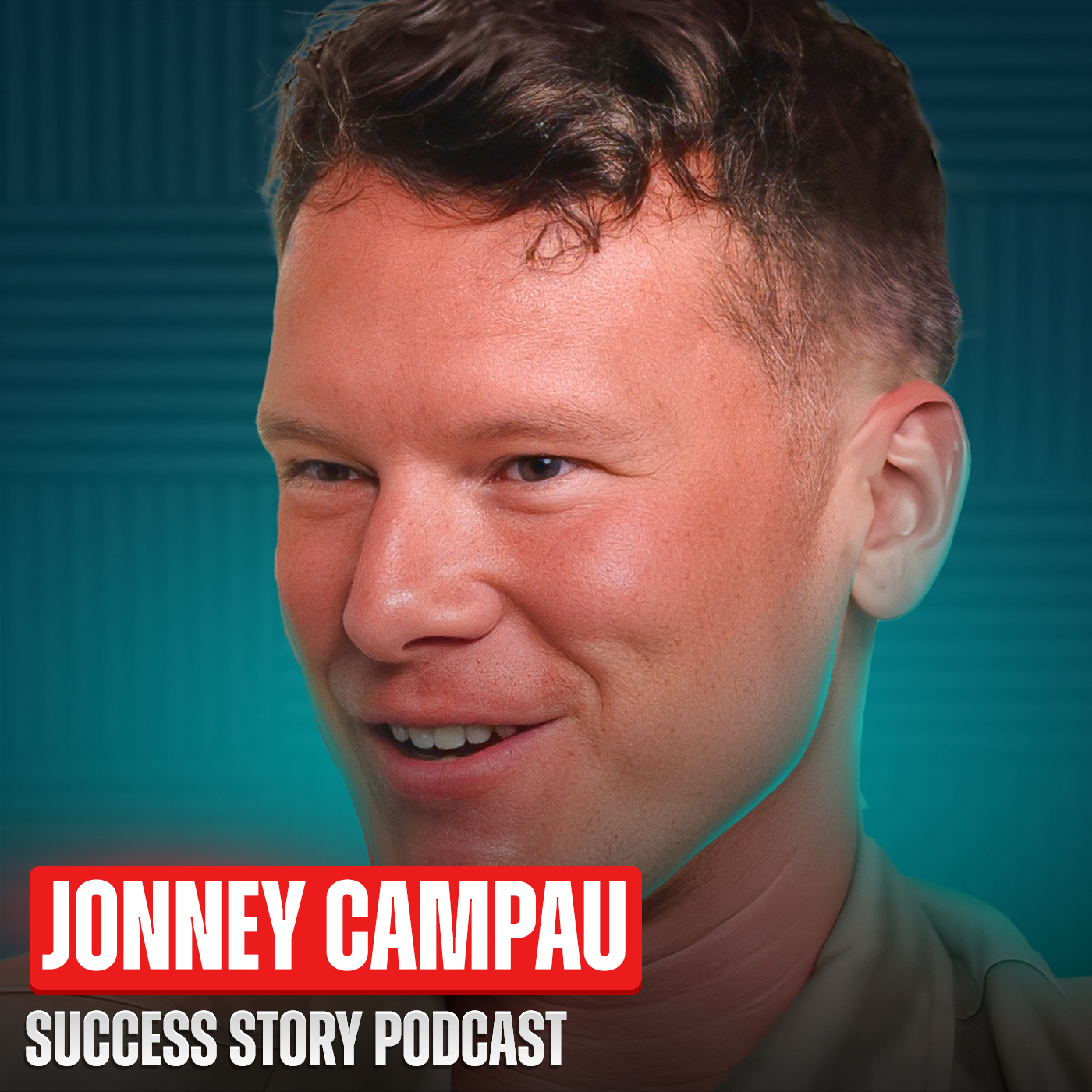
Success Story with Scott D. Clary
Jonathan Campau - Luxury Hospitality Pioneer | How He Built a $700M Real Estate Portfolio Serving The 1%
01:37:14
Loading summary
Transcript262 lines
- [00:00]
A
Lingoda is a partner of Success Story. Look, I'll be real with you. My French used to be solid. I learned it in school. I even had decent pronunciation. But when I booked a trip to France last year, it was a total blank. I could barely order a croissant without sounding like a tourist. So I jumped into the Lingoda Sprint challenge and man, it changed everything. I'd take live classes late at night after podcasting. Only five students max. Real teachers, real, real conversations. And in just two months, I went from bonjour to holding full conversations at a Paris cafe. Confidence unlocked. Now here's the play 30 or 60 classes in 60 days, and if you finish them all, you get 50% cash back. That's basically €4 or $5 per class. That's insane value. Go to try.lingoda.com successsprint and then use my code Scott Sprint for an extra €20 off on top of their current deal. Registration closes May 5th. Classes start May 12th. Let's get fluent. The HubSpot Podcast Network is a Success Story partner. Now, if you like Success Story, you're going to love other podcasts in the HubSpot Podcast Network. One of my personal favorites is I Digress, hosted by my boy Troy Sandich, which shows under 30 minutes. I digress helps eliminate complexity, complications and confusion in your business with frameworks and strategies to achieve true, scalable and sustainable success. If you are an entrepreneur building anything you need to listen to I Digress. This is one of the most useful business podcasts you're ever going to subscribe to. Listen to I Digress. Listen wherever you get your podcasts.
- [01:52]
B
My first property I bought was 32,000. Timing is great. Location is great. We pump in money into it. I remember the feeling of oh my God, I just made a million dollars. This is insane. Johnny Campow isn't just building properties. He's building a lifestyle brand for the world's elite. As the founder and CEO of Luxury, Johnny turned a bold idea into one of the fastest growing luxury hospitality companies in the US. I didn't belong buying a $10 million property to begin with. I should have 2, 3, 4, $5 million properties as my comfort zone. So just don't bite off more than you can chew. That's where you get in at 600k. You spend the money and the work. Make it beautiful and then you can earn higher revenue and have an appreciated property. But the real money in real estate is not selling. But this didn't come from generational wealth. It came from relentless vision, obsessive attention to detail and an unshakable belief in creating experiences, not just spaces. From ultra high end vacation rentals to personalized concierge services and hotel acquisitions, Luxury is changing the way luxury is lived. And Johnny is the mind behind the movement. My advice for anybody who has big plans is you have to first find your faith. If you don't have that, then it's going to be very difficult and you'll probably give up. In this episode, we dive into the hustle, the mindset and the moments that turned one man's grind into an empire of luxury.
- [03:07]
A
What would be a lesson that you learned that you hope nobody else would ever have to learn?
- [03:11]
B
Well, it's really okay. Are you wanting to know if Miami is a place of luxury?
- [03:15]
A
I guess no. Why is that? So, Johnny, if somebody's going to ask you what you do for a living, what do you tell them?
- [03:37]
B
I generally would respond with I'm, it depends on who's asking the question. But if I'm in a networking event, generally depending on the individual, I would say I'm a property manager. But my, my passion isn't is hospitality. So I'm a hospitality expert. That's my, that's, that's how I would classify my, your job. My, my passion is, is hospitality. My job and my career is, is real estate, property management.
- [04:06]
A
I mean that's, I feel like that's not, that that's not doing justice to what you do because some of the, some of the projects you've worked on, some of the people that you've, you've worked with, I don't think that's the normal clientele that the average hospitality.
- [04:24]
B
It depends on who's asking.
- [04:25]
A
But when did this. So you grew up, you grew up in Kansas?
- [04:31]
B
I grew up in Michigan.
- [04:32]
A
Michigan and then. But you started working in Kansas with like flipping small homes.
- [04:37]
B
So I grew up in, grew up in Michigan and I went to college in south Florida and then I got a job after college in Kansas City. So I moved to Kansas City after college and I worked there for a hedge fund mutual fund company called Waddell and Reed Ivy Funds. So I worked there for five years and then I started using my money that I was earning to purchase real estate in Kansas City, which is, I.
- [05:01]
A
Mean, I just think the reason why I point out Kansas City because I can't think of Kansas City is like such a small town idea. I find that Kansas in general, what is that like wizard of Oz? Like, like this is like, just seems like such like a small town and now the people that you work with, and I think the majority of your work now is. Is. Is it in Miami, the majority of your work, or is it all over.
- [05:23]
B
The US It's Miami and Aspen.
- [05:24]
A
Yeah, Miami and Aspen.
- [05:25]
B
So we have an office in Aspen and an office here in Miami.
- [05:28]
A
If I think of the people that you work with now, it's like a complete 180 from the type of clients that I would assume you're working with.
- [05:35]
B
Yeah. Kansas.
- [05:36]
A
When, when you look back to where you came from, your family, your upbringing, now you're very entrepreneurial. You built an incredible business. Was this something that was taught to you? Were your parents entrepreneurial? They were. So did they hate that you went to go work for a hedge fund? Were they like, what's wrong with you?
- [05:56]
B
No, I mean, they. My parents both own companies, my brothers own companies, my uncles and grandparents, they all own companies. So it was kind of in our DNA as a child. I get to learn from many mistakes and many successes that they've. They've each.
- [06:13]
A
Like it was a real estate though, or.
- [06:15]
B
No, no, no. None of my family members are actually in real estate. So. Yeah. And I remember when I was, when I was a kid, when I was in high school, I was looking at which university to go to and I told my dad I wanted to go to school for hotel management. And he was like, no, no, no, no, no, no. He's like, you can go to school for business and if you want to be in hotel management, you can, you can, you know, always manage a hotel with a degree in business, but you're not going to go to school for hotel manage hotel management.
- [06:45]
A
So when you think about, like, how you started in real estate, I mean, now I understand. So that's how you ended up in Kansas. What was. And like, you're young still and you've built a massive portfolio. You've done incredible stuff. We're going to talk through sort of some of like the journey. But what was the reason for starting in real estate? What was this? Because, like, there's a million different people. I mean, real estate seems oversaturated in general.
- [07:11]
B
Yeah, I mean, I started, I started like 15, 14, 15 years ago is when I started. And it was cheap. So in Kansas City, the real estate's not like Miami prices. So my first property I bought was 32,000, and then I did rent to owns on more properties that were in the same street. And so I did another one on like 50,000 and 70,000 and 100,000, then 200,000, then I started doing more properties downtown and I was doing these rent to own type projects and as doing long term, long term tenants in them and then converted those over into short term rentals.
- [07:49]
A
Is that like. I mean, if you think about how most people should get started in real estate, would you say that you picked a good path, this rent to own?
- [07:58]
B
Yeah, the rent to own was. I kind of figured it out on my own. I had, I didn't have any instruction. There wasn't anybody coaching me through it other than my mentor Larry from here in Miami, who when I went to college, he was my mentor when I was in college and I got my real estate license in Florida and, and I would call Larry and I'm like, man, I don't like the tenant who's living next to me in my, the house where I had. And I was like, I don't like the tenant next to me. He's like, well, buy it. And I was like, well, I can't afford to buy it. And he was like, well, offer him a rent to own. I was like, well, what is a rent to own? And then he started explaining it to me and I was like, oh, okay, that's great. But there was nothing really online about it. There wasn't a lot of, there wasn't contracts out there for, for that. And so I hired a local attorney who I still work with today, actually in, still in Kansas City. Yeah, he's the broker for my company in Kansas City. And yeah, so he helped me draft the contract and I made the offer and they accepted. And I was like, wow, this is nice. And then next thing you know, I had 20 more of them over the course of another year and a half, two years. It was just quickly getting those contracts and then earning enough money from the assets to start purchasing out the contracts that I.
- [09:08]
A
But I feel like that's moving. So it seems like you're moving quick when you first start out because. So the rent to own seems like an ideal situation because you're renting it eventually. All the, the capital that are the principal, the, the capital that you're putting into the rental eventually just turns into ownership. So like, it just seems like a very low stress way to acquire properties.
- [09:30]
B
Because you're, you're, you're. Generally I would find a property that was on the market for sale for like 12 months or 6 months to 12 months and it hadn't sold. So then I would put an offer out there and I would offer them what they're asking or maybe a little bit more. But in five years or in two years, whatever the best terms I could negotiate. And then they would accept, I would pay, and then I would bring the value of the home up by making it, you know, by bringing. Making it a better property. Doing redoing the kitchen or floors or paint or. And then staging it and then photographing it with professional photography and then. And then doing rentals. I was actually initially started out by renting by the room to college students. So I would have like a four bedroom house, for example, where my, My rent was like 1200 and I'm renting it out at say 500 per.
- [10:18]
A
Per like 800 bucks.
- [10:20]
B
800 bucks a month? Yeah. And then they pay their utilities. So that got really hairy though, because they're like, start fighting over like, someone ate my cereal. And you're like, you're like 20 houses times, you know, four feet. Yeah.
- [10:31]
A
Like, were you managing yourself?
- [10:32]
B
Yeah, I was managing and I'm working at the.
- [10:34]
A
That's funny.
- [10:35]
B
Yeah. So I, I'm like, this is too much. I'm getting texts of like, someone parked in my spa and, you know, it's. It. That was when we. I was like, there's got to be a better way. And. And so as one of the tenants moved out, one of the units was almost completely empty. I had told another tenant who wanted to work for me and help me. He's like, I'll manage all this for you. And I was like, well, how about when they move out of that property that we go ahead and convert that into an Airbnb? It's already staged. I already staged it, so it's already ready. And I wanted to do Airbnb. I just didn't have the ability to manage that and work, you know, 40, 50 hours a week at my.
- [11:12]
A
Yeah, your actual job. And like, this seems like such a simple, like, tell me if it's just. I'm assuming that it's simpler than it is because there's so many strategies to get involved in real estate. And the way that you accomplish it, where you could find. Find people that could do this rent to own agreement, it seems like, well, why wouldn't everybody get involved in real estate this way? Because it just seems like the smart thing to do. Where I see people trying to do like, true fix and flip, where they're actually buying it. And I have friends that do it, and they keep telling me it's like, very hard, especially in Miami, to find houses that, you know, at the right cost per square foot, where you can actually put money into it. And Then flip it because the square foot pricing is so ridiculous. So maybe it's like a regional thing. Why that's an issue for some people. People talk about like the Burr method. People talk about house hacking. I just, it seems like, why doesn't everybody get into real estate this way, the way you got into it and maybe not manage it themselves? And people talk about Section 8 as a way to get into real estate as well. Like a million different things that people do to get into real estate. A million different influencers and thought leaders and gurus on YouTube talking about this, that and the other, go into REITs, go buy, whatever. Why don't more people do this? Is it just because it was time and location, which is I guess the secret?
- [12:35]
B
I would say time. My timing was pretty great. I mean there was, you know, there was a lot of real estate on the market that wasn't moving. So that's one thing. Right now you're, you're in a market where there's less inventory. You know, there's less inventory. So the sellers are, are in control of the properties. You don't have desperate sellers. They're not selling for below market price. They're, they're all listed for higher than what they're, they're valued at for the most part. And so if you make an offer at market price, you might get it. Like I said, the offers I was making were on properties that were not, not moving, they weren't selling. So, and again, I started in the lower end market, you know, the lower end properties, and moved my way into middle and then higher end properties in Kansas City. And that was, that was actually, to my surprise, the first property that I took, that I took on was like, that was a bigger property. I was pretty nervous about how well it would perform. And then I couldn't believe how, you know, the cost was 4,500 and it was making 18, 20, 25,000 in a month in Kansas City. And I was like, oh my God. And I was calling my mentor like, Larry, you've got, you're not going to believe these numbers. And that was when he was like, you've got to, you got to do what you're doing up there, down, down here.
- [13:50]
A
Because he was, he was in Miami.
- [13:52]
B
He was in Miami. Yeah, yeah, Larry. And so he's, he said you have to do your, your rental arbitrage and your, your lease to own and these contracts to purchase. There's lots of different forms of rent to own. There's rent to own, contract to lease, lease to purchase. There's lots of different options. They're very similar. There's option contracts, which is not an actual rent to own. You're not building any equity, you just have an option to purchase it.
- [14:18]
A
So like a right of first refusal to a degree?
- [14:21]
B
Yeah, essentially a right of first refusal.
- [14:23]
A
Okay, I have to take a second and thank Northwest Registered Agent for supporting today's episode. Now listen, I know a lot of entrepreneurs listen to this show. If you're an entrepreneur, if you're building a business, you have to listen if you want to get more. When you're launching your next big idea, Northwest Registered Agent lets you establish your entire business identity in just 10 clicks and 10 minutes. For nearly 30 years, they've been the secret weapon for entrepreneurs who want to move fast while getting expert guidance. For just $39 plus state fees, they'll handle your formation, create a custom website, and establish your local presence wherever your business takes you. As an entrepreneur myself, when what I value most is their one stop business solution, you get everything from formation paperwork to custom domains to trademark registration all in one easy to use account. No more juggling all these multiple services or wasting time figuring out the legal stuff. So don't wait. Protect your privacy, build your brand and set up your business in just 10 clicks and 10 minutes. Visit northwestregisteredagent.com success and start building something amazing. Get more with Northwest registered agent@northwestregisteredagent.com Success NetSuite is a success story. Partner now. What does the future hold for business? If you ask nine experts, you're going to get 10 answers. Bull market. Bear market. Rates will rise. Rates will fall. Honestly, I just wish somebody could invent a crystal ball. But until then, over 41,000 businesses have future proofed their business with NetSuite by Oracle, the number one Cloud ERP bringing accounting, financial management, inventory and HR into one fluid platform. With real time insights and forecasting, you're peering into the future with actionable data. And when you're closing the books in days, not weeks, you're spending less time looking backwards and more time on what's next. If I had needed this product, this is what I'd use. Whether your company is earning millions or even hundreds of millions, NetSuite helps you respond to immediate challenges and seize your biggest opportunities. And speaking of opportunity, download the CFO's guide to AI and machine learning at netsuite.com Scott Clary the guide is free to you at netsuite.com Scott clary netsuite.com Scott Cl Cary this podcast is brought to you in part by Stash. Are you still putting off saving and investing? Because you'll get to it someday. Stash turns someday into today. Stash isn't just an investing app. It's a registered investment advisory that combines automated investing with dependable financial strategies to help you reach your goals faster. They'll provide you with personalized advice on what to invest in based on your goals. Or if you just want to sit back and watch your money go to work, you can opt into their award winning expert managed portfolio that picks stocks for you. Stash has helped millions of Americans reach their financial goals and starts at just $3 per month. Don't let your savings sit around. Make it work harder for you. Go to get.stash.comsuccess story and see how you can receive $25 towards your first stock purchase. And to view important disclosures, that's get.stash.comsuccess Story paid. Non client endorsement, not representative of all clients and not a guarantee. Investment advisory services offered by Stash Investments LLC and SEC Registered Investment Advisor. Investing involves risks and investments may lose value. Offer subject to T's and C's. Again, like the last question I just have on this like initial strategy because again someone's going to say, well, how do I find the people that are cool with this? Right? How do you find the owners that are cool with Rent to Own? And I listen, I don't come from real estate, I don't pretend to come from real estate. But a comparable idea is, you know, Cody Sanchez is.
- [18:00]
B
Yeah, yeah, so he's amazing.
- [18:02]
A
And she talks about how all these business owners are retiring and why not sell or finance the acquisition of these businesses? And I've tried, like I've looked, I go on biz, buy, sell, I go to. And I'm like, nobody wants to fucking sell their finance. But they want cash. They want cash for their business now, maybe like a portion of it, but they want. And if you could just de risk the deal for yourself so that again, business acquisition world, you're not taking on a massive SBA loan that you're personally liable for if things don't work out and the seller is financing most of it, all of a sudden you have this whole world of acquisition or purchase opportunity. But I find it very hard to find the people that are willing to do that. It sounds like when Cody talks about it, I love Cody too, but it sounds like you just find these people all over the place. They're like, you know what, I'm retiring. I want no money up front. I'M just gonna, you know, sell or finance my business. And I've, I have not been successful at finding.
- [19:03]
B
So you did reach out to some companies and what, give me an example.
- [19:06]
A
Like what's, it's like 10 seller finance and the rest in cash.
- [19:09]
B
Was the business like a good operating, smooth running machine already?
- [19:14]
A
More often than not. Yeah.
- [19:15]
B
Okay, that's the, that's the guy that's.
- [19:16]
A
All cash and it's all, it's always the stuff that's on market, never off market.
- [19:20]
B
So I did, I did a seller finance on two car washes. Very random. I know this is like 12 years ago. I did seller financing and I, I, I was going through and I'm like, I can't believe I have all these houses that are doing these deals with me. I was very surprised myself of how many people were willing to do these and some of them were doing them. I had one, one house that he didn't even accept any. I, my offer he accepted was no money down, but I'm going to fix up the property. Why would I go delinquent on a payment when I'm enhancing the value of your home by 30 or 40,000? But these are Kansas City numbers. 30, 40,000 on a house that's only worth 60K. You know, I'm, I'm enhancing the, the value now to 110,000 dol. Thousand legitimately because I was doing work, I did all kinds of work on the property and, and then rented it out and I show the revenue which then increases the value of the home based on the revenue. Right. If you want to go with that type of loan. But the car washes, I basically was just in my job in my cubicle at my, at the fund company and I was going through LoopNet and I was looking at all the different businesses that are for sale and I was literally just had a same text message of like hi, I'm interested in purchasing this property with just putting down, you know, 10k down. Let me know if you're interested. I would close out in two years. Copied, pasted, sent this to like gas stations, car washes, parking garages, storage facilities. I sent it out to mobile home parks like everything, Everything, anything. Yeah, there was no like direction. And I had one, one guy, Chuck, he replied back, he's like, he's like available for a meeting. And I was like, sure, when? And so at the time, my now wife, I took Hallie with me and we went to this place called the Peanut. The Peanut or the Cashew. I don't remember it's not there anymore, but I think it's called the Cashew. We went to the Cashew and I met this guy and I had my checkbook, and he's like, I have another. After we talk about the car wash, he's like, I have a second car wash that's in. One was in Missouri, one was in Kansas. And I was like, asking, do you have the numbers? Like, oh, it's all cash. You know, it's hard to tell how much revenue. And I'm like, okay, do you have, you know, like, maybe the utility bills? I can see. He was like, yeah, but, you know, we pay him on this car and we pay him on that car, and we pay. We don't really have a spreadsheet for it. I'm like, okay, well, he's like, but look, do you want them or not? And I was like, well, like, can I. I remember just being like, very. Like, this guy's literally putting me. I don't even. I haven't even verified if he owns the properties or not.
- [22:05]
A
You know, he just doesn't want them anymore.
- [22:08]
B
Yeah, he's just done. This guy, he had his own real estate brokerage. He had lots of stuff going on. I could see who he was. I knew he was a legitimate individual who had lots of stuff going on in his world, and these things were taking away from what was profiting him, you know. And so I literally pull out my checkbook and I wrote him a check for 12,000 for each property, 24,000. I gave him 24K. And I hadn't even been to either of the car washes, and I have no idea how to run them either. So he's like, do you want to go see them tomorrow or. When do you. When can we finalize this? I'll have all the paperwork sent to you tonight, and you can just finalize it tomorrow. And I'm like. I left there and I'm like looking at my now. My now wife, I'm looking at her, I was like, I think we just bought two car wash. And.
- [22:52]
A
And he was cool with the finance. He didn't give a shit.
- [22:54]
B
He didn't care. No, he didn't care. He did not care at all. He just pay him every month and operate the business and.
- [23:02]
A
Did you.
- [23:03]
B
I operated them, yeah. I ran the two car washes. I was my. Again, my girlfriend at that time. My wife now. But my Hallie and I were like, leave work during lunch and she'd go to one car wash. I go to one car wash. We were like grabbing the money out of the machines, emptying the trash cans, like cleaning up the place really quick. We had one person who would work both as a cleaner, but he would do all like the nasty stuff because it's pretty gross. But we would like basically make sure all the vending was full and gave all, grab all the cash and run to the bank and then hurry up and get back to our job.
- [23:37]
A
When you look at. So again, it's a numbers game. You have a clever message that forces the realtor to actually put the offer in front of the client, which is smart if you think about the type of homes that this strategy works on. I know it's a numbers game, but just like objectively like, you know, you send out 10 messages, you get a higher response back. With one type of home versus another, you. Is it the ultra luxury where they don't really need the cash? Is that, have you thought about that? Because some people need the cash. Some people are house poor and they need the cash to go buy another house. So that would not be your ideal client.
- [24:13]
B
Yeah. Your ideal client is someone who is distressed for one reason or another. It doesn't mean that they can't afford the home. It may be that they're getting a divorce and they want to be out of the house. It may be that they're moving and their job took them to another state and they don't want to be here anymore and they just, they just want out. It may be that their realtor is at the five month and three week, you know, timeline of their six month contract and they're like, wow, they didn't bring me one buyer. And I'm, and I'm, I'm not a realtor. Okay. I own brokerages, but I'm not a realtor. So I, I'm sending a message to a realtor as a buyer or to an owner as a buyer. So then they always ask, are you a realtor? And I'm like, no, I'm a buyer. And then they're like, oh, okay. And then their, their guard comes down and they start, you know, talking terms with, with me. Yeah. But I try to do it all through tax. I, I don't want to get on a phone and have a whole like call or start touring properties and wasting my time like going through home.
- [25:12]
A
You have, you have a process that works.
- [25:13]
B
Yeah.
- [25:14]
A
And copy and paste it again and again. And I guess some like, I mean, at this point now I want to understand when you started moving to more luxury and sort of like what prompt I mean not just luxury. Now you work with like hotels and massive properties. But this has all been sort of a progression. If somebody ever wanted to start just to sort of finish up with your origin story, what would be your advice for them if they want to get into, into real estate this way? I mean, in 2025. You mentioned Kansas at the time was good. I don't think that Miami is a city for somebody to start this in.
- [25:48]
B
Now. This is like a big boys.
- [25:51]
A
Yeah.
- [25:52]
B
Pond here. Yeah, I know the pond actually.
- [25:54]
A
Watch it.
- [25:54]
B
You know, it's so funny ocean here.
- [25:56]
A
Most of the people that I know that are in real estate investing, they actually stay away from Miami and, and very.
- [26:01]
B
So they're big investors. Stay away from Miami. Yeah, they do Ohio, but that's probably multi family.
- [26:08]
A
It is, yeah. I'm trying to think where else. I have a friend who does only section 8 and I'm not going to remember where it is, but it is in some like very bad, like really impoverished. There's some, there's some place where he does only section eight. Definitely not Miami. The point is, anybody who I know is into real estate basically stays away from Miami for a variety of reasons.
- [26:31]
B
Even my fix, a long time to build.
- [26:33]
A
They can't find good GCs. They can't find good GCs and they can't do fix and flips or people are screwing them or taking advantage of them. So I mean like Miami in general seems to be like a, a stressful place to do real estate.
- [26:44]
B
You got to have a great team. I have an amazing team. I would absolutely not be able to do what I do without an incredible team. They, they find the deals, they find the tenants, they find contractors that do work. I mean I'm, I'm not so much involved in that process. The process I set up and created. I'm not so involved in that process anymore. Unless I just, I mean, I can't help myself. I'm always like looking for deals. But I, I would say that for somebody who comes to me and says, how do I get started? At least save from whatever your job is. I had a day, I had a day job, so. And I earned and I saved and then I got that cheap property, 32k. I would start saving from your. Wherever you're at, get 20k. If you got 20k, then I would start with an offer of, you know, 5k down or do a project, a house and get it ready and then either flip it like a, like a wholesaler, you know, so you can increase the value and Then wholesale it to another buyer or an investor, occupy it, fill it with tenants, show the revenue, and then sell it to someone like me who's like, yeah, I'll buy that because it has a tenant in there. There's lots of buyers out there for that. And it's really easy to get into that. And if you're wanting to do in the Airbnb section and you know, getting into short term rentals, then I would. And you want to scale it fairly quick, I would probably go there's. Here's what I've learned is that there's a tenant for every property. It didn't matter if it was a $32,000 property in the hood of Kansas City, like south Kansas City, not even a good area or downtown or the big houses in Kansas City or on the Plaza or these nice beautiful homes. Like there was always a tenant. It didn't matter what it was, whether it was an apartment, a penthouse, it doesn't matter what it is. There's always a tenant tenant for it. So I would recommend starting in, in the fringe of a best of a great area, someplace that's close to a good area, not someplace, you know, out in farm land. Like I would find a property that is maybe on the market for sale. Like right now I would probably find something that's like six, like a six bedroom commercial property. Right. Some like apartment that. The units are like $600 a month, $800 a month. I would find a property like that that's on the market on, on LoopNet and, and I would reach out to them and make an offer of something like 20k. And then you're going to do the work and like run it. I mean I like literally did the work. I was doing renovation work and learning how that process works and hiring local people and I'm monitoring and like doing the work, you know, in the property.
- [29:33]
A
So when did you move into luxury? What was sort of like the, the thing that gave you confidence to move into the luxury space because that's a huge leap too. You're not dealing with thirty thousand dollar homes anymore. Now you're dealing with like multi.
- [29:46]
B
Million dollar.
- [29:47]
A
Multi million dollar.
- [29:48]
B
Yeah. So when was Covid? That was 21.
- [29:51]
A
Yeah, 21.
- [29:53]
B
Yeah, whatever. The super bowl was so from Kansas City.
- [29:56]
A
I feel like that whole part of my life is just like this blur.
- [29:58]
B
I had one year. Yes. Like it's like one year. Yeah. But in super bowl that was in Miami. The Chiefs were playing in, in Miami. And being from Kansas City, I was very hyped. About that. I made a million bucks in profit that weekend from our rentals. And those were not like super luxury properties. Those were like two, three, four million dollar homes that we were managing or subleasing.
- [30:29]
A
So same strategy just for.
- [30:31]
B
I was either. Yeah. I was either leasing and subleasing on short term rental platforms or I was managing for someone else. Maybe you gave me your home and I'm managing it for 30%, made a million bucks and right. That was February 2nd. I remember it. This is like, I feel like every entrepreneur has a moment that was like a turning moment of where you were either like toast.
- [30:51]
A
Yeah.
- [30:51]
B
Or you. You through the.
- [30:55]
A
The.
- [30:55]
B
Yeah.
- [30:55]
A
The hardest points. All the. And then on the other side of that, that's when you see like the.
- [31:00]
B
Yeah. The. The hockey stick.
- [31:01]
A
Yeah. The hockey growth.
- [31:03]
B
Yeah. And that for me was Covid. And I remember feel, I remember the feeling of, oh my God, I just made a million dollars. This is insane. Like, I mean, in like a weekend. Like, and it was. And just like a week before we had, I'm not kidding, we had paid our payroll and there was like $50 in our bank account. Like, we were so low. Like, we were so low. And I was so scared. Like, gosh, I know I just got to make it to super bowl like every. Because I just got this property and I just rented that property and I just hired these people and I just staged this home and I just arbitrage that property and then we go right into super bowl and I'm broke and I'm ready, like, bring me the money. And then we made a million bucks. And I was like, yes. And then I, I subleased this waterfront home and another waterfront home for 15k a month, 25k a month. And I'm le. These are big homes because before I was renting, like I think the most I ever rented was maybe seven or eight thousand a month homes. But I realized all the way back from 32k a month that the value of the. There was always a tenant for everything. The only thing that changed was the value of the property. The margin stayed the same. So if I'm making 2x my costs, for example, if I'm making 2 to 3x on my cost on a 30k house, I'd rather do it on a $3 million house because it's the same amount of work. Check in, checkout, text class, client, text the client to check out. Why are the owner like, it's the same process. Pay the utilities, pay the landscaper, pay the housekeeping, pay the Pool is the same exact process. Nothing changed. The only thing that changed was the profit was so much more because it's a more expensive property. So when I, that weekend I took my, the next, that over the next week, I was like leasing this one. 50k out here, 25k out here, 100k out here, 75k out here. I was just like running through my money, renting all these new homes. And then my parents and my friends that don't live in Miami were like, hey, like, you should be careful. This, you know, Covid's really taken over. Like, what is Covid? Because if you're, I don't know if you were down here during that time.
- [33:02]
A
No, I wasn't yet. I was still in Toronto.
- [33:04]
B
It was like it didn't exist down here.
- [33:06]
A
I realized it very much existed in.
- [33:08]
B
Toronto, did not exist here in like February, I think we got into the first part of March and it was like spring breakers were all down here partying. They're like, what is Covid? And everybody's like joking, laughing. It was like on March 15th or so, Airbnb and VRBO sent a cancellation email that the state of Florida has banned short term rentals until further notice. And in one email, in two emails, I had millions of dollars of my future revenue was all at zero. So I was 100% dependent on platforms, on OTAs is what we call those platforms. Airbnb, VRBO, TripAdvisor, all these platforms. So I now had zero revenue with high overhead.
- [33:55]
A
Well, yeah, because you're in, you're into agreements with all of these homes and you owe them monthly.
- [33:59]
B
Yeah, and I just got into a lot of them and I was ready for season. I was like, I'm gonna, I'm gonna do this because I, I realized during super bowl how the homes that were booked the most were the most expensive, lavish luxury homes. To answer your question of what got me into the luxury side was I realized Super Bowl I made most of my money was from those big homes, the ones that were smaller homes, I couldn't hardly book them. So the clients demand for this market was luxury, was luxury properties.
- [34:28]
A
Today's episode is brought to you by Vanta. Now listen up. This matters for your business. In today's digital landscape, security isn't optional, it's essential. Without it, deal stall sales cycles stretch on and scaling becomes very difficult now. Why? Because investors, customers and partners all expect businesses to demonstrate strong security practices before they commit. If you can't prove trust, you lose opportunities. So whether you're a startup founder trying to land that first big client or an established company. Scaling your security program Vanta helps businesses of all sizes prove that they're trustworthy by Automating compliance across 35 frameworks like SoC2, ISO 27001 and HIPAA. The exact certifications your prospects are demanding. Here's why you need to pay attention. Vanta gives you back precious time that you're currently wasting on compliance. Their platform automates up to 90% of the tedious compliance work. It helps you respond to those endless security questionnaires up to five times faster. And it connects you with experts to get your security program running immediately. The results speak for themselves. A recent IDC report found that Vanta customers achieve over $535,000 per year in benefits and the platform pays for itself in just three months. So you're going to join over 10,000 global companies like Atlassian, Quora and Factory who use Vanta to manage risk and prove security in real time. And don't miss this. For a limited time only my listeners can get a thousand dollars off Vanta. That's real money back in your pocket. Visit vanta.comScott WR right now before this offer expires, that is. V A N T A.com Scott Prolon is a success story partner. Now long weeks and busy weekends can leave everybody feeling depressed and tired. We work nonstop and that's why I love Prolon's five day Fasting Mimicking diet. I absolutely love this company. Let me explain how it works. Basically, they have a fasting mimicking diet that rejuvenates you from the inside out. They deliver plant based soups, snacks and drinks to keep your body in a fasting state while giving you the nutrition you need. And when your body's in a fasting state, this triggers cellular renewal and it actually works. This is why I've loved intermittent fasting for so many years. This is the magic of Prolon. And the exciting news is they just launched their next gen five day program. It has all the benefits they had before, but now they have 100 organic ingredients in all their foods. Better taste and ready to eat meals. They make the whole process easier. I tried the original Prolon program. I feel incredible whenever I do it. I personally can't wait to try this new and improved version. And if you've never tried them before, you are in for a treat because the old one was great. I can't even imagine how good this new Prolon five day program is going to be. And for a limited time, Prolon is offering success Story listeners, you guys 15 off site wide plus a forty dollar bonus gift when you subscribe to their five day programs. Just go to prolonlife.com Clary to get your 15 discount and your bonus gift. Prolon life.com Clary so this is something that I'm interested in. Just again we're sort of going through the mechanics of your business. But the options, the options were always key in these like rent to own scenarios. So putting options on this for acquisition, for purchase really is that sort of like the play that you've always used for since Kansas to luxury properties in Miami to now like some of the hotels exact same. So it's not just when you work on this deal with the owner or the landlord, it's not just, it's not just I want a sublease. It's always sublease. But then with the option, yeah, because.
- [38:11]
B
If I say to you can I rent your house? If you are a landlord, can I rent your house and turn it into a commercial enterprise, turn into a hotel? You're going to say no. But if I say I want to buy your house in two years, it's a different contract than just a lease with the option to sublease. So I'm now coming to you saying I want to buy this house. And you're like well it's not for sale. You know, I want, I want it's, let's say it's, it's worth a million. I was like okay, I'll give you a million one. And you're like it's not for sale. I'll give you a million two. What's your cost? I can see what you paid for. So I know what your mortgage is. You paid 600k for the house, let's say and I know your mortgage probably around 4,000amonth. So I'm going to start offering you at your mortgage cost 4,000. That's where, that's the starting point. And okay, so I'll pay you 1.3 and I'll pay you 6,000amonth. I told you it's not for sale. I'll give you 6,500 and I'll pay 1.4 million. Why would you do that? Well, I need five years to get it there. Now the terms, the levers start to move. The lever is not now a two year contract. We're on a five year contract. Because I need to get you one point. I need the property, I need time for the property to appreciate and they.
- [39:15]
A
Know that just with the market the property is going to Appreciate. But they're assuming that you can have outsized appreciation because of the work you're going to put into, plus also the fact that you're going to draw revenue from it. So that's going to actually help.
- [39:25]
B
They're hoping I, I default.
- [39:26]
A
They are hoping you default.
- [39:28]
B
Yeah. That's the game on this. On the, on the landlord side. On the landlord side. If you came to me and I'm the landlord and you made this offer, I would make sure that it's, that the, the deck is kind of stacked in your favor. Stacked in my favor to make sure that you're putting a lot down. You're renovating my asset and if you miss the payment on the third day, I'm taking your assets. Which I have a great story about this actually, but dull.
- [39:51]
A
I mean, what, what, what?
- [39:53]
B
This wasn't on a Rent to own. This is on my house that I bought on Flamingo. It was a, this is crazy. This is a crazy story. I bought this house, it was $10.2 million and it was a normal contract. Like put down the, the money to buy it and had it. My idea was that I was going to sell this house. I thought, I bought it off market, so I thought that I could get it, I could flip it for 14 million in like 90 days. Didn't work, didn't, didn't pan out. So I had the loan that I used on it. This is crazy. The loan that I had on it, I had only a 12 month term loan on it because again, I had only anticipated being in the deal for 12 months. So I go to the closing table to purchase it and my lender is like, hey, they knew I had other assets. He's like, hey, we're going to need an extra. I forget what the dollar amount was. We need an extra $800,000 down in order for you to close. I'm like, how are you telling me this today? Like that's crazy. He's like, well, we have an option. You can, we see you have this other property over here. We'll go ahead and pay off your loan on that other house. You have a million 5 in equity on that house. We'll pay off that house and we'll now hold the note here. And that's just basically what's called cross collateral. So we're going to cross collateralize your two properties. And I'm like, well, that doesn't sound great, but I don't.
- [41:15]
A
Why would they do that to you?
- [41:16]
B
Because they can. Because I have no option. They know I'LL do it. I have, I'm at the closing table and I've already put down 500k to purchase the property in that I'm way past my due diligence. So that's now in the seller's pocket. There's no like collecting that back. If I say, you know, I don't want this property anymore, let me leave, it's gone. And they know that, the bank knows that. And the bank knows I have another asset with equity, other, other assets with equity. So the easiest thing is for them to just reach into my pocket and say, hey, I want to take the loan on that property and have all the equity on that property. We need 30, we need 30% down rather than 20% down. So now I have to be, you know, three and change down on this property. Anyway. It is what it is. I cross collateralized two properties go to the, the, the closing table. Twelve months later, I sold the house to Lindsey Vaughn. She's a Olympian gold medalist. I don't know if you know, Lindsay is, but she, she bought the house and she, the offer comes in from, from Lindsay and they, they're set for like a 45 day close. They put their money, they're past their due diligence. I've already been down the road where she's in, right?
- [42:29]
A
Yeah.
- [42:29]
B
So I'm, I'm now in the seller's position and they're at their 45 worst. My loan is only a 12 month loan. Okay? So my loan is a 12 month loan and my lender is saying, hey, I want you to renew for another two years. I'm like, well, of course you do, you know. And he's like, he's like, yeah, I don't want you to, you know, he didn't say I don't want you to sell. But he, in, in less words, you know, he's like negotiating with me with you can. I'll renew your loan two points higher than you currently are, but you need to pay another $200,000 down to renew the loan. And I'm like, that's crazy. That's robbery.
- [43:07]
A
But he knows that you don't have a choice.
- [43:09]
B
If I can't sell in my 12 month period, I have to renew. So this is like, let's just. I don't know the exact dates or whatever, but it was a Thursday. I remember that it was a Thursday. Bank's man. So the banker, he's like, it's a Thursday. And he calls me, he's like, Johnny. He's like, have you decided if you're going to extend the loan with me. I said, no, I have a closing. As you know, it's supposed to close on Monday. And he says, I said, they're supposed to close on Monday. And he goes, I want to be very clear with you. Let me just be very clear. And he gets closer on the phone with me and he's like, I, he's like, if you do not close on Monday, I will take both of your homes. They will be mine. I want to be very clear with you. And I have a $2.75 million property over here and a $10.5 million property over here. And he's going to take them both, right? Because I can't one day. And I was like, you won't just give me an extra two days. And he said, let me repeat myself. And he goes through over it again. Okay, So I hang up, I call.
- [44:20]
A
I'm like, this guy that you've done.
- [44:22]
B
Business with before, never did business with.
- [44:23]
A
This guy before or again.
- [44:25]
B
No, I would never do business with him again. But I learned a great lesson from it. So I, so I, I, so then Lindsay's attorney calls me. This is Friday. This is Friday morning. No, this is. Okay, so our. So the closing on the bank was Monday. My loan was over on Monday. The closing with the house was Friday. Right. So the, before the Monday. So, so it's the next morning, Friday morning. The lawyer calls me, hey, Johnny. With my attorney. And my, and Larry's on the phone, of course, you know, Larry's always right there like, and he's like, what do you. He's like, hey, listen, we're going to need another 30 day extension. And I said, let me be very clear with you. Like, if you do not close today, I will keep Lindsay's $500,000. There will be no extension. This house will not be for sale. He will. She will never purchase this house. I will hold this home. I want to be very clear. We are closing today. There is no extensions. And they hung up. I hung up. Everyone hung up. I'm like turned around, I look at Hallie, I'm like, oh my God. Like both homes are in the balance right now.
- [45:36]
A
And you didn't, you didn't think that if you told them what was going on it would have helped your case?
- [45:40]
B
No, then they would have waited for me to default and bought them from him at a discount. Oh, shit. For sure. You can't let your cards be shown. They would have been, oh yeah, he's in a weak spot. We'll see you Tuesday. You know, like, that's what, that's how that played out. That's how I would have played it out if I was on their end. So. Yeah, I learned once that generally I'm a for giving very. Like give everybody lots of opportunity. Sure. Extend, extend, extend. And then, and then, you know, in this case, I was like, heat was here and the fire was there. It was like, no, I'm, I'm. I had to push back in the same, the same tone.
- [46:22]
A
What happened?
- [46:23]
B
The wire cleared Friday and I sent it to my lender and paid him off and, and got all of my. Everything was done by Monday. Cashed out. Both properties. Both properties sold. I forgot that's this. The second detail was there was two closings. I had another buyer for the other property and we had teed them up to both close on that same Friday because with cross collateral you can't sell one without the other. So we had multiple times. We had a buyer for this one, but not that one, and buyer for that one, but not this one. And I kept trying to deleverage the properties from each other. So there's, there's some wisdom. Don't cross collateralize assets.
- [46:58]
A
Well, I was, I was going to. You know, he obviously would never say this, that, that lender, but it sound like he knew that if you cross collateralize, it's going to be harder.
- [47:06]
B
Very hard.
- [47:07]
A
He knows that there's a real good chance that he can milk you for.
- [47:10]
B
His anything and take both.
- [47:12]
A
Yeah, take both. Or force you to renegotiate and renew. Add 2 points plus another $200,000 and you can't say shit because you can't sell the properties simultaneously.
- [47:24]
B
So they, we did it.
- [47:25]
A
He knew that he was like to a degree, fucking you over.
- [47:28]
B
He had planned it from the beginning.
- [47:31]
A
Yeah, I, I can see that. When, when someone gets into this game, someone's going to listen to the story. They be like, okay, well that's scary as hell. How do you avoid that?
- [47:39]
B
I didn't belong buying a $10 million property to begin with. I shouldn't have gotten into that type of property where that I should have if, you know, two, three, four, $5 million properties is my comfort zone. And this one was, oh, a $10 million property. I can flip it in 90 days because it's worth 14. There was another property that just sold for 14 on the same block, same square footage, same lot size. I was like, okay, I can, I can get probably 14. So that was the plan, was to, you know, get in and get out. So just don't bite off more than you can chew. That's where you, that's where you, you lose.
- [48:12]
A
You're saying that, but now I know you deal with like ultra luxury and, and hotels and all that. So what was your thought process after that? Because that was obviously like a little bit of trauma, a little bit of stress that worked out. But then you think about how you've progressed since then. Now you do ultra luxury and you do high end and you do, I think like what, 30 to 40 million dollar plus property. So what was the point when you decided to get into that, into hotels? Yeah. And right now you still just do two to three million dollar homes, but you also do hotels.
- [48:41]
B
No, I, no, no, that's not true.
- [48:43]
A
I know. So I'm asking, so what was the.
- [48:46]
B
I mean I'm gonna buy good deals. So whether if it's 2 or 3 million or it's 4 or 5 or 6, the one I'm going to close on next month is, should appraise over 5 million. We should get our appraisal back this week. It just, I, I, how can it cash flow and what's the future value of the property? You know, you don't want to necessarily be buying. I think I see a lot of people say real estate didn't work for them because they got in and got out and they got burned or they didn't really make a profit. And it's because, you know, real estate's not a, a game to get in, get in and get out of. It's a get in and, and let the property appreciate and get all of that depreciation every year and, and let your tenants pay it, pay it down. So 2 million or 5 million or 20 million, it's the property price isn't the main focus for me. I'm in the hospitality game. I'm in the hospitality business. So for me what's important is that I can earn money in the villa or the hotel. And it's in a prime location. Waterfront for homes. Most of the homes are waterfront for hotels. They're all for mine. They're currently, they're all on South Beach.
- [49:59]
A
Yeah. And then that's, so that's when you moved into hotels.
- [50:04]
B
So last I got into hotels actually just one year ago. But my, when I was a kid my grandmother used to take me traveling all the time and she'd always get me whatever the presidential suite is in the hotel and I felt like Kevin McAllister, like with a big cheese pizza and I would have A. I would stay in the presidential suites. My grandma would get her own suite. And, and I would, she would always let me buy the robes. And like, just I, I did this every summer, like from middle school all the way until I graduated high school. I always traveled with my grandma for a week every summer. And, and I'd said, and I used to say, I want to manage a hotel. I want to, man. My grandma would say, someday you'll own your own hotel. Don't worry, you'll own your own house, you'll own your own hotel. And that's why I wanted to go into hotel management. And my dad said, no, you can't go into hotel management. And, and so last year I was just, just had a, an agent who works with, works now he's with our company. But at that time he, he's just an agent I know here in Miami, David. And, and he's, he's great. I really like David. He's, he's very genuine person. And he's like, Johnny, I got these hotels. And he's just hitting me with, you know, and I, I get deals and all day long from people texting me deals, all day long of, you should buy this building, you should do this, you should do that. And so I, I was like, a hotel. I kind of like hotels. This is a cheap one. This was a 7 million. It's like 7.5 million dollar property on Collins. He's like, I have this property. This owner's in a bad situation. I was like, oh, I speak more. I like these deals. That's where you find good deals. Yeah, no, I have a distressed seller. He needs to get out of this property. He'll do a, he'll do a contract on it. You should, you know, like, come and look at it. And I was like, all right, let's go look at it. So I go and I look at the property and I'm like, man, this is, it's only a 17 room space with a retail space in the hotel. Yeah, a little boutique hotel on Collins. And so I went and toured the property and I was like, I like this. Yeah, I think I can do this. And I'm looking at how they were and I asked how much revenue is like, oh, it does like, it does. Like, I hate when someone says that because now, you know they're BSing. You know, it does like seven seventy thousand a month. And I'm like, okay. And I'm like running the numbers in.
- [52:21]
A
My head, like, okay, I think account for the factor.
- [52:25]
B
So, and, and it was in January and February. So I was. That. You know, that was in February of last year. And so I was like, yeah, I would try it. Let's. Let's do it. I'll just make an offer. I'll pay you first. You know, the rental amount was 35,000 per month. I was like, I'll just give you first, first, last, first, first, and second month deposit, but I want two months free because I'm going to pump money into the property. And they agreed. So for 70,000, I took keys of a $7.5 million property.
- [52:59]
A
When you think about this business, how do you think, like, when you go into a hotel, how do you know that you can make the improvements to bring the value up to, like. Like, what's your. The math that you do or the strategy? Because, like, the hotel is different than a villa, which is different than a. A luxury home, which is different than a home in Kansas. But you seem to be. I'm sure there's a lot of times I don't know if it hasn't worked out. Feel free telling me about, like, the horror stories, but you seem to be pretty capable at doing this strategy again and again and again. And I know you're saying it's the same strategy, but, like, it's also not, because somebody who can flip a home, I don't think they know exactly what they have to do to increase the value of a hotel, but you've done it pretty successfully. But there's. There's something that you, like, there's some sort of math or some sort of margin or some sort of, like, leeway that you give yourself.
- [53:47]
B
Traveling myself. Personal travels, personal experience gives me a standard that I want to uphold within our own company and being better than our, you know, the other inventory. Now, when people say, what do you do? You do Airbnb? Like, I. Like. I don't. I try not to, like, like, cringe at that, but I'm. We're not Airbnb. Like, that's not. Yes, we generate. Yes, our properties are on Airbnb, but. But this. Now, our customer experience when someone books our properties is so much more than just booking. And here's a code. Our. Our guests. Now, they get, you know, the agents represent all of these properties, and they list them on the mls. They're all listed like Larry and I did during COVID right? They're all listed on the MLS as fully stocked, fully furnished, utilities, beautiful home. So. So we get the property, we list it for a high price for sale right out the gate. So if we buy it for 5 million, we might list it right away at 6.6.2.
- [54:46]
A
Yeah.
- [54:47]
B
Yeah. Just in case. You wouldn't believe how many people have bought properties that we listed for a million five, $2 million over market price. And they pay for the price because they want that house because of where. And it's like, if you don't want to pay that price, that's okay. We're earning revenue in the, in the meantime. So we're just generating. But it's giving the property an immediate value by increasing the monthly rate online, increasing the sale price online, and then giving it a great customer experience. So the properties are all represented by, by a professional licensed real estate agent. And then we have have amazing property managers. They do in person check ins only. Groceries are all stocked in the home for when the customer arrives. They're getting boats and cars and jet skis and massages and dog walkers and.
- [55:37]
A
Oh, it's true luxury.
- [55:39]
B
It's true luxury. Yeah. We're giving a full, full some of these invoices. Casey and Aspen, she just showed me an invoice yesterday. It was $42,000 from the customer that just checked out and she's like $42,000 is like massages and hair and makeup people and like whatever the customer wants. The agent who represents that property will absolutely get the customer. What with discretion.
- [56:05]
A
And you and you. Yeah, and you and you. So you go to these properties, you experience true luxury and that's the experience that you give the people that stay.
- [56:15]
B
When we, when my wife and I travel or we take our family to wherever we go in the world and we stay in beautiful properties or we do house swaps a lot. So we do home exchange or we'll swap one of our villas here and stay in Cape Town, South Africa or stay in south of France or wherever. We've stayed all over the world and we were like, oh my God, this is so opulent. Everything is just perfect. There's nothing like everything's clean. Like there's, there's the service is incredible. The explanation of how to use the proper. Okay, we need to incorporate the. And then you go to the next place, you're like, oh my God, they picked us up from the airport. They had our refrigerator. We need to incorporate this, you know, like, oh my gosh. They had all the options of places to go and you know, and introduced us to, you know, five different vendors that, that are. They recommend like the yacht person or the. Okay, let's incorporate that. So the more I travel, the more things I begin to incorporate in. In our business, in your.
- [57:12]
A
In your opinion, what is like, true luxury.
- [57:15]
B
So I don't think that luxury is actually about a price tag. Luxury is a feeling someone gets after they spent their money. So when you spend your money, you go into Louis Vuitton and you leave and you spend $3,000 on a bag. Do you feel great because you spent the money? Or do you feel great because while you were in there, they were giving you the coffee and they were calling you by name, and they cleared out a space for you, and they didn't rush you. And the bag is so high quality that the bag is inside. And then you get home and you open it up and it's sprayed with the fragrance, and it's still giving you memories of the store you were in. That's the luxury experience of the product. And so when someone stays in our homes, the experience begins when you book. When you book the property and you. And that wire clears on our end, and we're contacting you with, like, who are you? Why are you coming? What is your purpose for being here? How can we accommodate your every need and your request? And you begin to just build. It's not about upsells. I don't even like this word. It's really just about satisfying the needs that the customers have, as well as desires they didn't know that they had. And. And then they. They leave feeling cared about and. And that everything was intentional.
- [58:40]
A
One thing that I've noticed, and you can correct me if I'm wrong, this is what I personally feel, because I've also traveled, and there's been beautiful places that we've stayed and beautiful restaurants that we've dined at. And I better have Gina. She's into Michelin restaurants, and I don't really get it, but she likes it. And I find that in Miami in particular, it's easy to spend money, but I don't feel like there's a lot of luxury in Miami. I find it. I feel like people are focused on extracting as much money from people as possible without the luxury component. I find that I can spend. I. I mostly benchmark against restaurants and food, less so hospitality, because it's not the world I come from. And I find that in Miami in particular, restaurants are overpriced. Quality is sort of underwhelming versus if I could spend that money in, like, a London or even in a New York. Like, I find that that's something that I hope you and other people that are sort of adding value to Miami in particular, because now we live here, it's like our city. I hope that that changes. I don't know if you feel that or if you think that that's totally off base, but I've noticed that.
- [59:47]
B
I think that the prices are expensive in Miami. I'm not gonna water that down. It's expensive to live here. It's expensive to dine here. It's expensive to drive here. It's. It's expensive to park here. It's just.
- [60:01]
A
But is it luxury? And I. I don't mind spending money, but in my opinion, that there's. To your point, you have to remove the. Just spending versus what do you actually get for it?
- [60:12]
B
So is the. Is. Are you wanting to know if Miami is. Is a place of luxury?
- [60:17]
A
Yeah, I guess.
- [60:19]
B
No.
- [60:21]
A
Why is that?
- [60:24]
B
No, but I think that it has all of the right mechanics to be that. And I would say that it's not because of the feeling that most people have when they see their credit card the next day. Seeing your bill, what you paid, you shouldn't have remorse about your experience. And some people may spend and feel that they overspent and that they shouldn't have done that. But. But, I mean, if you spend, there's some. Okay, so go to.
- [60:56]
A
I'm just speaking from personal experience. Yeah, you can. You can push back if you want. Like, when I spend money, when I go to Vienna and I sit in one of the oldest cafes in the world at Cafe Central, and I'm getting, like, a ridiculously overpriced coffee or pastry, and it's, like, beautiful, and it's like, obviously, like, centuries old. And like, the art, I mean, I. You know, it's just a completely different experience. And I don't mind it. I don't mind paying anything because I'm like, wow, I'm sitting in history. When I go to a restaurant in Miami and I get a class azul, it's a hundred dollars for a glass of class azul. And all I get is my food being brought to the table with the sparklers and there's a stripper at the restaurant dancing. That, to me, is not luxury. That, to me is exorbitant. And it's showy, but it's not luxury.
- [61:49]
B
It's like a matador.
- [61:51]
A
Yeah, exactly.
- [61:51]
B
Like keeping you occupy your mind occupied while the bill is going higher. That's not. No, I agree with you on that. I don't think that. But my industry in particular, for what we do in our home, in the villa side, Forget the hotels, the Hotels we have right now, they're not, not high end luxury hotels, they're beachfront hotels, they're nice hotels and I'm working on bringing that experience to a luxury experience. So this is a fun project for me actually. The team, I have a completely new different team, different staff that's operating the hotels than is operating the villas. I keep them very separate. But the villas, I don't have 100% money back guarantee situation. But, but when you do come to the property, you do tour the home and you do an inspection and you do look at it and then you sign the paperwork that says you've checked and you approve of the property and you agree to the terms and you know, I don't know, pets, parties, are smoking in the villa, whatever. If you weren't happy in that moment, that's the time to speak up because that's the time where we would put you in another property or we would refund you. I do care about your experience. And then we're checking in with you all day, every day. Like, did the chef come? How was his experience? You know, we're like in communication with all the people who are, who are servicing the home during that stay. We're talking to the captain on the yacht. Are they having a good time? No, they're not. Okay, maybe they need a playlist, you know, and then we'll send them like a special playlist for Vibe up.
- [63:22]
A
Yeah. So that is luxury. It's like being aware of the experience.
- [63:25]
B
I want them to have an amazing experience and come back and come back. More than 30% of our customers that are these high paying customers are repeat customers. They just. Yeah, and that's, that's awesome to have.
- [63:38]
A
That's what it shows. It shows. And I like, I mean like again, I'm not in the property game, but there's a lot of restaurants in Miami that I just don't go to any.
- [63:44]
B
With a restaurant experience though, it's easier to be in and out and turn tables. I personally waited tables before and waiting tables, you're just trying to turn, turn tables, get them in and out in the luxury or the higher end, I won't call them luxury. The higher end restaurants in Miami, there's time tape, there's time limits. An hour and 45 minutes to two hours is the max time frame. So with the villas we're not like that, where you're there with us for three or four days and if you're not having a good experience, we're probably going to hear about it pretty quickly.
- [64:15]
A
I just want to take a second and thank Cornbread Hemp for supporting today's episode. Now Cornbread Hemp CBD Gummies have been this really nice addition to my wellness toolkit. I don't use them every day, just when I want to unwind after those extra busy weeks, but they're perfect for those moments when you want to take the edge off and just find your balance. Really just shut off from work. And what makes them special is how Cornbread Hemp crafts them. They only use a flower of USDA organic hemp plants. That's the best part for the purest, most potent experience. No fillers, no artificial fluff, just clean full spectrum goodness and delicious watermelon, berry and peach flavor. I keep them in my nightstand for those moments when I just need a little extra help relaxing. And I love how transparent they are too. Every batch is third party lab tested so you know exactly what you're getting. And they put together a special offer for all Success Story podcast listeners. All listeners can save 30% off their first order. Just head to cornbreadhemp.com success and use code success at checkout. That's cornbreadhemp.com success code success for 30% off your first order of these amazing dummies. FreshBooks is supporting today's episode. And if you've ever wondered how successful entrepreneurs stay on top of their finances while growing their business, the answer is FreshBooks. The numbers don't lie. Over 30 million people have chosen FreshBooks, processing more than 60 billion in invoices and saving an incredible 192 hours every year on accounting tasks. Think about it. That's nearly eight full days you could get back to focus on what really matters. Growing your business. FreshBooks is more than just accounting software. It's your all in one financial command center. Create professional estimates, track time automatically, bill clients, and capture expenses on the go. Plus, it integrates seamlessly with over 100 business tools you already use, all backed by award winning customer service. If you're ready to to stop drowning in receipts and you're ready to stop chasing down payments, here's what I want you to do. Head over to freshbooks.com to start your 30 day free trial. No credit card required. And for all you Success Story listeners out there, I've got something special. Get an exclusive 60% off for six months when you visit freshbooks.com pricing offer. Transform your business with FreshBooks today. That's freshbooks.com pricing offer for 60% off. What what are some of the so with some of these luxury villas and some of these luxury clients and just say whatever you're allowed to say. What are some of the more funny, interesting, ridiculous stories requests that people have had? Because you deal with, I mean, name whoever you want to name. You deal with some very high end celebrities, clientele, some of them people would know their names obviously. So I'm sure they have interesting requests.
- [66:54]
B
David Beckham booked a home one time, wanted to have complete privacy, so he tinted the entire front of the house, added $50,000 in shrubs to the front of the property so that nobody could see the house from, from the water. So that's interesting. You get, you get, but you get.
- [67:10]
A
Fined when you do that, don't you?
- [67:12]
B
By who?
- [67:12]
A
I don't know. I've heard this story about like if you put like shrubs and you block the water view, the city finds they.
- [67:18]
B
Were gone before it was. They were in and out and we just put them in and take them back out. I probably should have pulled permits for that, but I didn't. Let's see what else. We've hosted so many events, so many, like Bad Bunny, he's recorded several of his albums of his last albums have been recorded inside of our homes. He converts the upper area into a studio and, and that's cool. So yeah, I mean, turning properties into studio is interesting. Having Megan Stallion, she hosted her hot girl summer at one of our houses. Her opening when she first popped off. This is back, I think this was before COVID actually.
- [68:08]
A
Was there any times where a client just absolutely trashed a luxury villa?
- [68:15]
B
Never.
- [68:16]
A
Never.
- [68:16]
B
Of course.
- [68:17]
A
Okay. I was like, what? What? For real?
- [68:20]
B
Yeah, of course. Yeah. But you know, the, the thing about a property being trashed is we take damage deposits for it and we repair it pretty quickly. So I mean, I, I, a house being trash for me, when I first got into the business in Kansas City, I would panic when I would walk into a property and I'm looking around and stuff's broke and couches are destroyed and whatever. And you know, with platforms like Airbnb and vrbo, they're pretty good about having policies that protect the host. So they do pay out. So you get, you know, more used to. Okay, it's not a big deal. You take all the pictures, you submit it all, you make the claim, you get the money back from the platform. And the higher end homes that are not necessarily on platforms like Airbnb and vrbo, we take damaged deposits for a reason and we fix the property up and we have surveillance on the exterior of the property only Never anything on the inside. But we also have 24 hour security. We have monitoring. They're watching the cameras, they're driving, they're tapping. There's, you know, taking a picture of the QR code outside of each home to verify that the security guard went to each house, which gives our customers a sense of security in the home. Now the average property price, villa price for our customers are spending between 4 and 10,000 per night for these homes. And the caliber of client that's paying that price point is generally either a 1 percenter or they're a celebrity status. A diplomat. I had a diplomat one time book a property in and Aspen and they requested to have six exact SUVs that were all identical with six drivers that were all the same color and height. Because. I'm sorry, it wasn't a diplomat. It was a, it was a, it was a sheikh, it was a Saudi sheikh. They wanted all the drivers to be the exact same. They wanted all the cars to be the exact same. And then they would leave the property in one vehicle. They'd go around the corner and get out and get into another vehicle, and then they would keep driving and they'd get out and get into another security. It was all secured to keep him safe, like, so that nobody knew which vehicle he was in. And, and so like, that's a very specific request that somebody has that's like, how tall are you? What's your weight? What's your skin color? Like you're, you, I mean, you're, you had to have all of the, the drivers had to look alike and all the cars had to look alike. They had all be the same.
- [70:48]
A
And yeah, if you think about all the guests that you've hosted, like, like, what's the level that you're playing at now? So, like, what would be the highest rent that somebody would have ever paid for any one of your properties?
- [71:00]
B
Right now we have a customer that's closing that wire we should be receiving this week. That's 800k. That's a good, that's a good looking.
- [71:08]
A
What do they get for 800k?
- [71:11]
B
They get a very nice villa. I, I really, I wish I could say I can't tell you who that customer is. I mean, you would definitely know who they are. And I can't even say the, the time frame of how long it is for, unfortunately, but 800k, that's a, that's a, that's a good one. We did, we did another contract. This was for four years, which is a good deal. This is a four year contract now. It was 11 million. Yeah, that's all going to be serviced. You know, those aren't just like a long term tenant. It's a. Four years is a long term, is not a short term rental. But it's a, it's a full service. I mean we're handling landscaping and housekeeping and pool and they're living there concierge where there's their servants during their stay for four years, you know. And that's a, that's awesome. I love that because you get to know the customer, you get to know the client and, and you get to know the homeowner really well. And yeah, I'd say the most per night I've ever received. We have a house in Aspen that, that regularly gets 25 to 30,000 per night. And that's literally there's zero availability in that property during season. So that's incredible. To have a house that produces 20, $25,000 a month.
- [72:28]
A
That's not bad.
- [72:29]
B
I mean 20, $25,000 a day.
- [72:30]
A
A day. Yeah. No, that's not bad. If you think about like the health of the business now. So for people to understand like how, I don't know, I don't think you're not public about all your numbers but like how big is this business now? Like in 2025 you have your hotel portfolio, villas, you still have all the, I'm assuming a whole bunch of other units that are not as pricey as that. But what's like the, what's the number to benchmark how big you built this? Doors, revenues approximate.
- [73:02]
B
So we've got a, we've got 60 properties that are full time exclusive. Those are 30 days a month. Those are occupied at 80% or higher occupancy. We've got the three hotels on the beach and we've got another 150, maybe 200 properties that are one off properties where we book them a few times per year. So when you get over a certain caliber of a home, like say a $20 million home for example, these are. We would never sell an investor a $20 million home and say buy this house for its cash on cash return. Like it doesn't compute when you have taxes and insurance and it's and mortgage payment, it's too much and we just can't occupy that type of property. But the requests are there for that type of villa. So what we do with that whole, that's like another whole business model. But like I said, there's another 150 homes there got the 60ish properties that are on the full time. The three hotels. And then I have a software business and I have three real estate brokerages. We have a brokerage in Aspen. We have a brokerage here in Miami. We have a brokerage in Kansas City. And then my software business is a. Is a support software. I'm 3 million in three years in on building a software that's a support. It's a full. It's a full pack. A CRM PMS system that kind of brings all of these components together of the concierge. It brings the. The owner's report. So when a booking comes in from a platform like, like Airbnb or vrbo, it will come in and immediately disperse the data. It'll tell the housekeeper you now have a check in. It'll tell the property manager you have a check in. It'll tell the agent that the calendar is blocked. It'll tell the owner what their payment is. It'll tell admin how much taxes are due to pay the city. It just auto reports every. All aspects of the business, which cuts our communication down by like 80%. Because right now, if you saw my phone, there's just probably 150 group chats of, of, you know, like every. There's just a group chat for everything. And we do use tech packs, so we use a tech for housekeeping communications, a tech for property management, a tech for, you know, there's all these different platforms that we're using that then are all synced together. So I've. We created our own where it's proprietary. We're using it for ourself now and, and our own team is using that. It's. It runs our website. It runs. You can instant book properties on our website, and when you instant book, it disperses that data appropriately. And that's a. That's an awesome technology that I'm really proud of.
- [75:39]
A
Are you gonna build. Are you gonna eventually put that on the market just as an entrepreneur? Like, is that how you think eventually.
- [75:44]
B
You'Re gonna sell software as a service? Yeah, yeah, I, I would. That's in the pipeline. For now, I'm using it for our own company to work out any kinks and continue to perfect it and then. And then bring it to market.
- [75:58]
A
Amazing. And I mean, like the, the rest of your portfolio, like, I don't know what an average occupancy rate, but 80 is very good.
- [76:06]
B
Yeah, it's good. And the hotels were over 95%. This like all of season. We're going to be running right at 100 occupancy for the hotels.
- [76:15]
A
So where do you, where do you go from here? Like what are you excited about in the future? Because obviously you already have like an incredible business. Diversifying revenue. Super smart. I love when people build lake software for their own problems because then it's probably already something that they commercialize. It could commercialize and make a ton of money off that.
- [76:31]
B
I, I would want to, I would want to expand my business. I will expand my business into the luxury markets that are on a global level. South of France and Greece and places that I like to travel.
- [76:46]
A
Yeah, right. So what is, what is, I mean for people that are, you know, just. I know that luxury real estate, whether or not you can afford it, the thought of going to a luxury villa in south of France is like, it's just like this like romantic idea. That's why the YouTube channels all have like millions of hits. Even if people can't afford it regularly, maybe they go on like some bucket list trip. What is a really interesting luxury opportunity or vacation destination that, that you would be excited about investing in that you also think somebody should go to that isn't as well known like a place.
- [77:24]
B
Cape Town, South Africa. Yeah, Cape Town, South Africa. I've been there twice. Took my, my parents and my in laws there. This last trip we went and Cape Town's just, it's like the Malibu. It's like a cheap, a cheaper version of Malibu. Yeah, the, the ocean's just slamming up against the cliff. The modern villa we stayed in is right on the cliff. It's just like overhanging with an infinity pool.
- [77:50]
A
Is beautiful.
- [77:51]
B
2 million dollar house beautiful in Malibu. That's a, you know, 40 million, 50 million dollar house. Like these are beautiful, well created homes in, in with incredible views of the sun setting right on the ocean. And then there's just unlimited amounts of things to do and then the service is incredible and, and the food is decadent and yeah, you can take a small plane right over to the safari lands all over the place. You can go and stay in another villa in the bush as they call it and you can go and do safaris where they come right to your house and they pick the villa in the middle of the Serengeti or wherever you decide to stay. The villas are there, they come pick you up and they take you out and they come drop you off and the chef is preparing the whole experience. Is an ex, is, is inexpensive. It's, it's, it's not common. I don't know very many people who have Been and actually gone through with, like, the full experience of a. Of a South African trip. But, yeah, Cape Town's amazing.
- [79:05]
A
If you could go back and, and tell yourself something about, you know, what you've learned so far, something that would sort of change what you, what you did when you first started out, what would that lesson be and why? And sometimes people, you say they don't want to do anything different. That's also an, that's also an answer.
- [79:25]
B
But also, I'm just not one that tries to live with regrets. You know, I really learned from so many of each one of these things, these challenges, these hurdles I've had. My attorney says it's the cost of tuition, and I take that pretty serious. My advice to my entire team is live low and build high. Don't spend just because you can just live low, be humble, continue to serve. If you were checking into my home right now, one of my properties, I personally would be there opening the door for you. I would open the trunk, I'd be grabbing your bags, I'd be taking it inside. Staying humble and not just, just because of all these things I have or we've built doesn't take the service element out of my DNA. Even when I'm at my own hotels, I'm opening the doors for the customers. I'm helping the bag boys. I'm showing them one of the baggers. He's like, I said, are you making at least 150, $200 a day in tips here? He's like, how? And I'm like, let me show you. And I was basically just opening doors and grabbing bags and calling customers by name. And I'm here, $5 here, $10 here. And I'm handing it to the bellman, and he's like, I've been here for three hours and haven't gotten a tip. I'm like, because you're not paying attention. You've got to. This is a service industry. Like, and now we got to go back to training, you know, So I think that staying humble and living low, well below your means, live low and build high. All the car wash story, all that. I'm emptying the trash cans like, you've heard my story. Like, I'm, I did it myself. I didn't have some big investor that pumped money in. I, I took my profits, I got the next part. I took my profits, I got the next one. I, I had all these properties in the first 24 months of doing it from living below what my means were, having roommates, house hacking or how did you call it?
- [81:24]
A
It's house hacking.
- [81:25]
B
Yeah, House hacking.
- [81:25]
A
Yeah.
- [81:26]
B
I didn't know there was a name for it. Oh.
- [81:27]
A
So house hacking. I, I learned that from one of my early mentors. And it was basically you buy like a fourplex and you live in one and then the other three pay for your mortgage. That was like the concept of, of how.
- [81:37]
B
When was that? When did you learn about that?
- [81:40]
A
Like, 23.
- [81:41]
B
Yeah, two.
- [81:41]
A
23. Like young.
- [81:42]
B
Young. Yeah.
- [81:43]
A
But like, I mean, like, I don't think that many people knew about that.
- [81:46]
B
Yeah, I didn't know anyone else that was doing that.
- [81:48]
A
The only reason why. The only reason why I learned about that is because the guy was a tech entrepreneur, real estate investor. But he was also similar to you. Like, he like, kind of always just did everything himself. So he's like, I want to learn real estate, I don't want to raise money, so what do I do? Okay, so let me just live in this, you know, one of. And the condo he lived in was probably not a beautiful condo within a four plex that he could afford at the time. And he's like, well, that got me my first four doors.
- [82:16]
B
Yeah.
- [82:16]
A
And just like rinse and repeat. So. And. And he was just very entrepreneurial, which I think that's a whole other conversation of. Even if you aren't an entrepreneur, you don't feel like taking the risk.
- [82:25]
B
Risk.
- [82:26]
A
Working in a startup is also a smart idea because you get access to people that think differently versus if you go work out of school at a, at a hedge fund, I don't know how big it was, but say you work at, you know, Fortune 1000, Fortune 500, maybe you're lucky if you find a mentor, but it's not always the case. But when you work around entrepreneurs or you work for a startup or you work for someone like you, you think. And you look at the world differently than somebody that's only ever worked.
- [82:53]
B
I share my, my expenses and my burden. I share it with my team. So they see it, because when they see, oh, I just closed $100,000 booking, and you're like, great. And then they. And I don't, like, I'm not like throwing a party, you know, because we have 100k booking, I'm. There's so many. They see the costs, they see that the revenue is, is great. But it didn't beat what we did last year yet, like, and, and living. They see me continuing to serve and then trusting the people. I will trust you if you tell me to do something unless you've given me a reason not to. I'll try. When the guy said buy this, you know, do this hotel deal or buy this property, I'm generally trusting the team that's with me that they've vetted the deal, they think it's a good deal, and then if it doesn't work, then that's my lesson to be learned.
- [83:43]
A
Indeed as a Success Story Partner now say you just realized your business needed to hire someone fast. How can you find amazing candidates fast? It's easy. Just use Indeed. When it comes to hiring, Indeed is all you need. Stop struggling to get your job post seen on other job sites. Indeed Sponsored Jobs help you stand out and hire fast. And with Sponsored Jobs, your post jumps to the top of the page for your relevant candidates so you can reach the people you want faster and it makes a huge difference. According to Indeed data, Sponsored Jobs posted directly on Indeed have 45% more applications than non sponsored jobs. Plus with Indeed sponsored Jobs, there's no monthly subscription, no long term contracts. You only pay for results. There's no need to wait any longer. Speed up your hiring right now with Indeed and listeners of this show will get a $75 sponsored job credit. To get your jobs more visibility@indoubtedly.com Clary just go to indeed.com Clary right now and support our show by saying you heard about Indeed on this podcast. Indeed.com Clary terms and conditions apply. Hiring Indeed is all you need. HubSpot is a success story Partner. Now if you're an entrepreneur, listen up because HubSpot makes impossible growth impossibly easy for their customers. If you are building a business, you need to get HubSpot. Why? Here's the perfect example. Morehouse College needed to reach new students with fresh, engaging content, a problem that every single business in the world has. But with a 900 page website, even the tiniest update took 30 minutes to publish. Now Breeze, which is HubSpot's collection of AI tools, help them write and optimize their content in a fraction of the time. And the results? 30% more page views and visitors now spend 27% more time on their site. If you are ready for impossible growth like this, visit HubSpot.com what would be if you look back at your at your life, what would be the biggest risk that you've taken that maybe people don't know about? And what was the outcome?
- [85:51]
B
Well, the I would say just as of late doing these hotel deals, the second hotel I was like I was telling David, the agent who brought me these three different properties, I I Was like, I need the revenue. I need to see the income. How much have they made? Let me see, like, report, you know, the same question, like, can I see the utilities? How much? I should be able to tell an occupancy based on utility usage. You should see, you know, if you see water bills that are like, way up here and then they go way down here, you'll know those are. That should line up with, like, your slow months, you know. Anyway, I. I'm. They said they're not going to provide any of that information. It's based on your personal. What you think you can produce, not based on how we produce. And the attorney, it was like, johnny, we're not giving you that information. And we're just. We're just not going to give you how much money these properties have produced. And honestly, it's just. It's based on what you. You can do. And I was like, I called my attorney and I'm like, I don't know what to do. Like, you know, we're. Today we're supposed to close. And my attorney said, johnny. Myron goes, Johnny, he goes, wire them the money, send them the money. Don't sign the contract. Once you do that, call them, put me on the phone, and let's go from there. I was like, okay, so I'm sitting at Chase Bank. I send the wire. I called the lawyer. I was like, did you guys receive the wire in your escrow? He's like, I did, but I didn't see the signed contract. Can you send that over yet? And I was like, well, now that I have the wire, the Myron steps in. He's like, like, go. He's like, well, now that you guys have the funds, you can tell he's not just wasting your time. He's. He is interested. He is doing this deal. Can you guys just please relinquish the, you know, the rolling 12, the past 12. And the. The attorney, like, has another, like, lean into the microphone moment. And he was like, let me be clear. If you do not want to be in business, don't be in business. And he hung up the phone. And I'm like, like, motherfucker. I was like, let me dot loop. Sign, sign, sign, sign, sign, sign, sign, sign, sign, sign, sign it through. And then I opened up the books and, you know, there's just my own experience with certain religious groups is their. Their position. Their position is their disposition is to. They would treat themselves or their own culture, if you will. And then. And I just went with that experience that I have that for this particular religious group, I was like, they would never say that to me. And then haha, got you. There's no income. Like that would be a really. That would be a really poor reflection on that.
- [88:38]
A
It would be.
- [88:38]
B
Yeah. And I just went with a gut instinct of, of do it. And then I opened up the books and they were at 90 occupancy. And I was like, oh my God, this is great. There's all this purpose.
- [88:51]
A
What is the purpose of somebody being a dick about it though?
- [88:55]
B
But, but doesn't for me now. It makes me just want to hold my cards a little tighter. I've been pretty loose with my cards. Like if you say how much does this. I've already overshared on this podcast of all kinds of details of the sauce to my creation and these guys would never do that. You know, it's in a, in especially in the midst of a deal making, you know, the, the art of a Deal and the Donald Trump book, great book by the way, talks about, you know, hold what, what you, what you allow them to see and what you allow them to perceive is the most important part of your deal making.
- [89:29]
A
I've always been, I agree with that. I've always been so conflicted about this idea because I have made great deals by being radically candid because then people can work with the truth and they trust you and they trust me. As opposed to negotiating on theoreticals.
- [89:46]
B
These guys are multi billionaires and they do not need me. And so their, their position is we don't need you. You're either going to do a deal with us or you're not going to do a deal with us. And that's interesting. That's your own risk. Yeah.
- [90:03]
A
And it's also a personality thing. Some people like, there's a lot of billionaires that are very candid and don't care about this is what the business is. And especially if you're serious about it. I think that it depends on who the person is and understand.
- [90:16]
B
I don't know, maybe I just looked at it and I saw a great property in a great location that in my personal opinion had really poor customer service and had a, had a, a falling apart product that I knew I could re. I could matters.
- [90:29]
A
Yeah, you're confident.
- [90:30]
B
But I didn't know their occupancy was great even in its, in its current state.
- [90:35]
A
I guess maybe you're right. If you do understand what the value that you bring to the table, it doesn't really matter.
- [90:39]
B
And that's what they were. That was the lesson for me was, and now I look at my own occupancy rate. I've raised the adr, the average daily rate. I've increased the average daily rate by 40% of the property, which is nuts. So for me to have increased the income, increased the product of the property, and I'm averaging, like I said, all season long. We're, we're going to be at 100 occupancy during your, especially from Thursday to Monday, but the rest of the week you're maybe running a 95% occupancy. Tuesday, Wednesday, and then back to Thursday you're going back to 100 occupancy.
- [91:13]
A
Amazing. What would be, what would be a lesson that you learned that was useful to you but you hope nobody else would ever have to learn because it was so traumatizing.
- [91:24]
B
Boy, it's really, it's really embarrassing to check somebody into a property that's not prepared, that's not ready yet. And you think it's great and it's not great. Like, I don't know if that's a great, if that's a good example, but those are humiliating moments for me, being in hospitality, that a customer checks into a house.
- [91:42]
A
What happened? What led it to not be ready?
- [91:44]
B
Well, the baby, you know, Jonathan, da baby with a da da baby checked into one of the houses on New Year's. We were walking through the property and it was the last house we had available. It was like 10 o' clock at night. His whole team was there. They're all pulling up in all the Suburbans and Escalades and everything. And I'm like running around with. Or we're both running around the house, turning on all the lights, getting it all ready because they're going to be showing up in like five minutes and, and then they show up and they're like touring the house and they're unloading their copious amounts of bags and I mean, the amount of stuff they travel with and then they're all in there and then they're like, oh, this house has bedbugs. And I'm like, the house does not have bedbugs. It's impossible to have bedbugs in these. Like, our mattresses have proper protection. We spray the homes properly. We have, I mean, we put in all kinds of protocols. Anyway, we go into the room where he's at and he's like pointing. There's an ant, literally one ant, crawling across the bed of the white sheet. Just one ant. And he was like, he's like, what do you Call that. And I was like, well, that's an ant. And he's like, ain't that a bug? And I was like, yeah, it's a bug. He's like, that's a bed bug. He's like, I can't stay here. I can't. He's like, I came too far. I can't stay here. And I'm like, oh my God. And then. And you gotta be kidding me. And so we, like. I were like changing the sheets. He's like, forget the sheets, I'm out of here. And like, give me my money back. And he had paid us like 25 racks in cash. And it was like, like, oh my God. It's like the most painful part to give money to a client on New Year's Eve. Like, I'm not going to book the house now. Give it back. And there's a, an ant on the bed. Could have been avoided had one had we seen it when we were walking. I don't know how to avoid that. I mean, the house is perfectly, meticulously clean.
- [93:44]
A
I don't know. That's just bad luck. It's a lot of bad luck.
- [93:47]
B
It just, it feels bad when a customer leaves your house and thinks that it's dirty or, you know, like. And I know the house was in excellent condition. I know the house was, was. There was nothing wrong with it, but it still wasn't up to their standard, which still is below mine.
- [94:03]
A
I think that's a good lesson. If you lost everything and you had to restart, what would you do differently?
- [94:09]
B
I'd start as a free property manager working for somebody else. I can be a property manager. I know more than everybody else. I can. I'll be your property manager. I'll make you more money. I'll teach you how to make money on the pro. I mean, that's first just offering my, my skills. What if, if I didn't have any skills, if that's the question, if I don't have any skills and I don't, I don't know anything and I want to get into this industry, I would start out as a property manager, which is where pretty much everybody starts in our company. You start out as a property manager and they're like, I want to make more, I want to be more on the client facing side. Then you get your real estate license and then we teach you concierge and real estate. Then you start learning real estate property management.
- [94:55]
A
Is there anything that you did sacrifice on your way to build this? But also, what would be the lesson for maintaining balance while still building a very large company.
- [95:07]
B
Yeah. I think that the time. The. The. The one on one time. I see other couples, like, going out on dates and stuff all the time, you know, like. Like their date night. And I think in the. In our relationship, that was a. A conversation we've. We've had before of like, you know, can we have date night? And I'm like. But we're not like every other couple. So, like, we can go to Europe for six weeks. Like, you know, like, we can.
- [95:35]
A
I think. I think the most, like, I think especially my. My better half would be fine with that.
- [95:40]
B
You know, like, that's, That's. It just takes a different. When you don't have an. I don't have. I have amazing parents. My parents are amazing. They are still married to this day. I'm one of five boys. You know, they've been exceptional examples. And I just. I saw my father a lot make statements like, you know, I chose your mother. Yeah, you were a byproduct. You know, like, I chose your mother. And that it was instilled at me at a very young age of. Not that I'm less than less loved by my father, but just that I want that. I want that, like, irrevocable, can't be broken love with. With my wife. That whether we had money when I was a kid or when we didn't have money and when we had money again or whatever, those different experiences that never changed. And so I. I have a really. I have a really great example of that. And I'm also. I also believe in. In God and Jesus. And I. I grew up as a Christian and a Christian home. And. And so I keep faith at the center of my relationship. And even in the midst of our most difficult, challenging times where I may be trying, struggling with regret of a decision or a car wash or a flamingo $10 million house purchase or some regret I may be having. I try not to have regrets. I try to just focus right. And learn from these. And so I would say that I don't have the date nights. I wish I had date nights. I feel like that's a sacrifice, if you will, but we get to be together all day, every day we live together. And sometimes that line can be blurred with just feeling like it's always work. So it's. It requires me to be intentional with, like, leaving my phone is now, like, that's my thing. If I leave my phone in the other room, then, you know, I don't care what's going on. You know, with. It's just her and I.
- [97:51]
A
And it doesn't have to be date nights. I think it's just about intention.
- [97:55]
B
It's just our. Where we come from in Kansas City, it's like, people are. It's like date night. You know, it's, you know, Tuesday is our date night. When's your date night?
- [98:02]
A
Yeah.
- [98:05]
B
I mean, so I would say that's something that. I wish that we had more time, but I cannot plan for a date night because there's inevitably something going to come up at all times. We're here for this month of March, and then we'll be back in Kansas City for the month of April. And when we're there, we go for walks every single morning. I leave my phone in the house a lot of the times we go for coffee or breakfast every morning.
- [98:29]
A
So I don't think you're giving yourself enough credit. I think just being. I don't think you need. That's another thing, too. Like, what works for you or worse, someone else. It could be different. But the point is, what's the end result? Like, you focus on the end result. The result is a happy marriage, good communication. I think that when people say, oh, if I don't have. I can't. I can't do date night. I'm too busy. I'm traveling. I have too much going on. I can't plan. But then there's nothing else. That's when you run into problems. It's not about date nights, about, okay, what's. What's the. What's the alternative in your life? And it's going to be the same when you have kids.
- [99:03]
B
But let me be clear, traveling to Europe for six weeks doesn't mean I left my phone in Florida, but I enjoy traveling internationally with my wife because now the work schedule is asleep when we're awake over there. So I don't mind where I sleep less hours. So I can work different hours and pivot and then hang and be completely unbothered all day long and just be, you know.
- [99:30]
A
Yeah.
- [99:30]
B
Weeks with her. And that's. That's amazing.
- [99:32]
A
I actually find. That's a totally, totally side point. But when I actually go to Europe, I actually find I'm more efficient.
- [99:36]
B
So efficient.
- [99:37]
A
Because all the emails come in while you're sleeping.
- [99:40]
B
Yeah, yeah.
- [99:41]
A
And then you can just answer them all in the morning and nobody can bug you. So it actually forces.
- [99:45]
B
And vice versa. When they wake up in the morning, they feel plagued with duties and tasks and bullet points, and you're just crushing during the day and then you close the laptop and they wake up in the morning with all their.
- [99:57]
A
How much just like BS like do you deal with throughout the day?
- [100:02]
B
Yeah, yeah, yeah.
- [100:03]
A
In the same time zone. It's like pick up a call, jump on a zoom. Should be a quick conversation, ends up being 30 minutes. It's like you're checking emails through the day. I think there's a lesson there about batching tasks. But when you look at what your definition of success was when you first started versus what it is now, how has it changed? How do you define success in your life and your business? All of it.
- [100:28]
B
I have a pipeline. I have a 20 year pipeline that's on a spreadsheet. I'm a spreadsheet guy. I have a spreadsheet for everything. So I generally hit most of the marks on my benchmarks. I'm pretty, I'm consistent with it.
- [100:45]
A
So you put a thing pipeline in terms of like life?
- [100:48]
B
Yeah, I have a 20 year pipeline. So it was like last year I wanted to hit three hotels and I did, you know, or I wanted to expand into Aspen and become brokerage by the end of 2023. We did, we wanted to have, you know, by the end of this last quarter I wanted all the merch lines to be out for all the hotels and for the villas and for Aspen. With everything having its own separate, you know, personality and branding but being consistent with the luxury brand we did. I wanted to be on auto instant book. So everything is like, is like timelined out. My idea of success. I never really like put a, like a, a big grandiose thing out there that I'm like striving towards. I just have a lot of, of things that I enjoy doing, like hotels, like houses, like tech, like my tech that I'm building the software as a service that I have these things and I, I put the end goal for that on the pipeline and then I just backwards put it to. What do I need to get to.
- [101:54]
A
Get to reverse engineer?
- [101:55]
B
Yeah, I just reverse it all the way backwards. So.
- [101:58]
A
Love it. I love it. Last thing that I like to ask because you know, you've given like a lot of different insights and wisdom that have helped you over your life and your career. So if you had to only pick one and the frame is say you want to pass on one lesson to your kids at some point and you can only pick one lesson, the most important lesson that you've ever learned, what would that lesson be and why?
- [102:26]
B
I mean for mine it's going to come down to my faith in Jesus. Like, you have to have, have without having a moral compass, without having, you know, your faith in line. It's just I can't imagine making decisions or feeling like I'm a. Like I'm doing it on my own. I don't feel like I'm doing it on my own. My Instagram is luxury CEO, but I'm. I'm just the CEO. I'm not like, it's God's business, it's God's. You know, I'm just his. I'm just here. So I would say my, My advice for, for anybody who has big plans is you have to first find your faith. If you don't have. If you don't have. If you're not grounded in, in faith, in your. Whatever your belief may be, if you don't have that, then it's going to be very difficult. It's very cold out there and. And you'll probably give up. You'll probably quit. I'm. I don't feel like a failure even when I fail, because I know that I'm just like, working for him. I'm doing what he's. God opens doors no man can close. God closes doors no man can open, and that's that. If the door is closed, that door wasn't meant for me. If the door is open, then I'm going to walk through it and I'm going to have the faith that he's going to take. I can't see it. I just. Blinding light. The door's open. It's blinding light in there. I don't know what I'm walking into, but it. Let's go. And then you. I start walking through it and I've never ran a car wash. And now here we are. You know, like, I know I didn't ever own a hotel. I've. I've worked in hotels, but I never owned a hotel. I never been in this on the operating side. And so to come in and realize you have to have like 15 different permits and, you know, inspections and, yeah, it's faith.