← Success Story with Scott D. Clary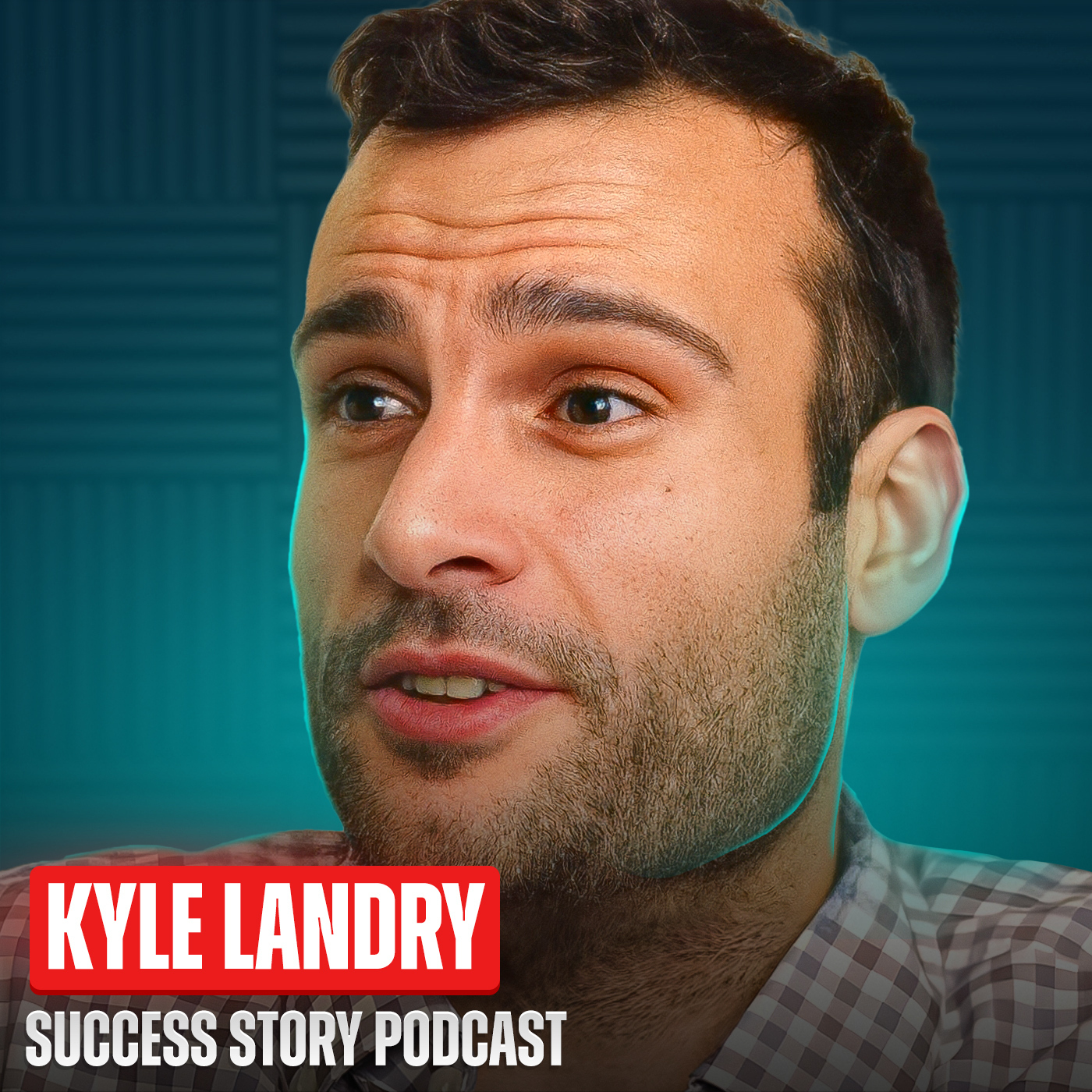
Success Story with Scott D. Clary
Kyle Landry - President at Delavie Sciences | Revolutionary Skin Science from Nature
02:12:15
Loading summary
Transcript445 lines
- [00:00]
Scott Clary
A huge shout out to bamboohr for supporting today's episode. Let me share something I've learned from building multiple businesses. Your time has a dollar value and if you're spending hours on HR tasks, you're literally burning money. That's why I'm fired up about bamboohr. This isn't just another software tool. This is Strategic business optimization. Over 34,000 companies are already using them because it transforms those time consuming HR tasks into streamline processes. Here's what makes it different. It's actually built for entrepreneurs like us. Simple to use, easy to implement, and it scales as you grow. No complicated onboarding, no HR degree required, just pure efficiency. Listen, if you want to operate like a true CEO, reclaim your time. Do what I did. Check out the free demo@bamboohr.com freedemo see for yourself all that bamboohr can do and how truly affordable it can be too. That's bamboohr.com/free demo. Bamboohr.com free demo this isn't just about HR. It's about strategic growth. I have to take a second and thank Northwest Registered Agent for supporting today's episode. Now listen. I know a lot of entrepreneurs listen to this show. If you're an entrepreneur, if you're building a business, you have to listen if you want to get more when you're launching your next big idea. Northwest Registered Agent lets you establish your entire business identity in just 10 clicks and 10 minutes. For nearly 30 years, they've been the secret weapon for entrepreneurs who want to move fast while getting expert guidance. For just $39 plus state fees, they'll handle your formation, create a custom website and establish your local presence wherever your business takes you. As an entrepreneur myself, what I value most is their one stop business solution. You get everything from formation paperwork to custom domains to trademark registration all in one easy to use account. No more juggling all these multiple services or wasting time figuring out the legal stuff. So don't wait. We're protect your privacy, build your brand and set up your business in just 10 clicks and 10 minutes. Visit northwestregisteredagent.com success and start building something amazing. Get more with Northwest registered agent@northwestregisteredagent.com success.
- [02:12]
Dr. Kyle Landry
When I was doing my Masters, it took me a year and a half before I got any positive data. That was very disappointing. Dr. Kyle Landry is a scientist turned entrepreneur redefining innovation. From earning his PhD in food science at UMass Amherst to founding Delavy Sciences, he's applied cutting edge research to create revolutionary products like Aeonia an age defying skincare breakthrough. Besides running the company, my main thing is driving the R and D in a meaningful way. I'm the only one there first for food science. When I graduated, it was only me and one other kid graduating. Food science, in my opinion, is one of the most applied sciences you can go for because your goal is to make something that everyone will eat or touch. It's one of the most underappreciated jobs with one of the highest job placement rates. Named to the 40 under 40 list and honored as an outstanding young alumnus, all driven by his passion for merging science and business. This episode is about transforming knowledge into impact and building brands that challenge the status quo. Science is the same thing. All the techniques that I learned and used can be applied to all other science. On the International Space Station, the water systems are filled with bacterial biofilm. If you have a good product coming out, there's always time to reinvent it and tweak it. If it's successful and it goes family first. Having a good relationship with your family gives you a good foundation to take risks.
- [03:34]
Scott Clary
Welcome to Success Story. I'm your host, Scott Clary. The Success Story podcast is part of the HubSpot podcast network. But HubSpot doesn't just have great podcasts. If you're an entrepreneur, if you're a builder, they've got your back. Now why is that important? Because if you're building anything, you know that marketing in 2025 is absolutely wild. Now why is that important? Because you know, if you're an entrepreneur, if you're building anything, marketing in 2025 is wild. Savvy customers spot fake messaging instantly. Anything AI generated, they sniff it out. Privacy changes make ad targeting a nightmare. And everyone needs more content now than ever. And that's why you have to have HubSpot's new marketing trends report. It doesn't just show you what's changing, it shows you exactly how to deal with it. Everything's backed by research but focused on marketing plays that you can use for your business tomorrow. If you're ready to turn marketing hurdles into results for your business, go to HubSpot.com marketing+ to download it for free. FreshBooks is supporting today's episode. And if you've ever wondered how successful entrepreneurs stay on top of their finances while growing their business, the answer is FreshBooks. And numbers don't lie. Over 30 million people have chosen FreshBooks, processing more than 60 billion in invoices and saving an incredible 192 hours every year on accounting tasks.
- [04:45]
Unknown
Think about it.
- [04:46]
Scott Clary
That's nearly eight full days you could get back to focus on what really matters. Growing your business FreshBooks is more than just accounting software. It's your all in one financial command center. Create professional estimates, track time, automatically bill clients, and capture expenses on the go. Plus it integrates seamlessly with over 100 business tools you already use, all backed by award winning customer service. If you're ready to stop drowning in receipts and you're ready to stop chasing down payments, here's what I want you to do. Head over to freshbooks.com to start your 30 day free trial. No credit card required. And for all you success story listeners out there, I've got something special. Get an exclusive 60% off for six months when you visit freshbooks.com pricing offer transform your business with freshbooks today. That's freshbooks.com pricing offer for 60% off. Today's episode is brought to you by Vanta. Now listen up. This matters for your business. In today's digital landscape, security isn't optional, it's essential. Without it, deals stall, sales cycles stretch on and scaling becomes very difficult now. Why? Because investors, customers and partners all expect businesses to demonstrate strong security practices before they commit. If you can't prove trust, you lose opportunities. So whether you're a startup founder trying to land that first big client or an established company scaling your security program, Vanta helps businesses of all sizes prove that they're trustworthy by Automating compliance across 35 frameworks like SoC2, ISO 27001 and HIPAA, the exact certifications your prospects are demanding. Here's why you need to pay attention. Vanta gives you back precious time that you're currently wasting on compliance. Their platform automates up to 90% of the tedious compliance work. It helps you respond to those endless security questionnaires up to five times faster. And it connects you with experts to get your security program running immediately. The results speak for themselves. A recent IDC report found that Vanta customers achieve over $535,000 per year in benefits, and the platform pays for itself in just three months. So you're going to join over 10,000 global companies like Atlassian, Quora and Factory who use Vanta to manage risk and prove security in real time. And don't miss this for a limited time, only my listeners can get $1,000 off Vanta. That's real money back in your pocket. Visit vanta.comScott right now before this offer expires. That is V A N T A dot com Scott.
- [07:24]
Unknown
How would you describe what you do for a living?
- [07:27]
Dr. Kyle Landry
Okay, that is a very interesting question. So right now I'm in consumer product goods and cosmetics. But what I do, I would say is try to innovate and fill gray spaces and areas. And cosmetics is an interesting one because there is innovation, but the actual innovation there is very thin in terms of, you know, real depth in science behind it. So because of my background, I'm able to really dive deep into the science and do it. So I guess my, besides running the company, my main thing is driving the R D in a meaningful way to actually make creative. Not creative, but functional ingredients to really help people. But cosmetics, just one thing. I also teach at Boston University. You know, I have a few other side businesses and you know, I have my general life that I deal with. Family, kids, hobbies, lack of sleep. So all those things. But you know, it's all over the map.
- [08:36]
Unknown
Yeah, I mean, your background's interesting, we'll talk about it. But even right now, forget your background. Even what you do right now is interesting. I don't know, you juggle a lot of stuff. You juggle a lot. You're entrepreneur, you're a scientist, you're, you know, husband, father. But take us back to. I want to talk about even some points in your life where you could choose different paths. I think that's fun. I just learned about, I learned about the, I learned about the history, about where you could have gone into TV and film. But even before that, growing up, what was your household like? Was there science, was there entrepreneurship? What was it?
- [09:17]
Dr. Kyle Landry
My dad was a cop, my mom was a nurse.
- [09:20]
Unknown
So none of it.
- [09:20]
Dr. Kyle Landry
Nope. And rest of my family was basically blue collared workers, construction workers, electricians, pipe fitters, bank tellers, manufacturing people in machine, machine shops. Not really much going on in the science world. And then even in high school, when I was going to graduate high school, I didn't even want to go to college. I actually was going to enlist in the Navy. And my father goes, just apply to one school, just please do it. I was like, ah, fine. So I applied to one small school and I didn't know what I wanted to do, but there was this major called food science. And I'm like, I like food, I like science, I'm just gonna go with it. And that kind of started. But yeah, my, my family, one thing my, my father and mother did, they love collecting things and that kind of segues into stuff I talked about earlier, which we'll cover later on. But they love collecting things. Very hands on, always building things. Around the house, doing a lot of construction, yard work, hands on stuff with cars and motorcycles. So I really had the hands on aspect, which is why I think I fell in love with science and specifically what I did in school, because it was all hands on. I'm working with my hands, I'm purifying things, creating things, and that's what I still do.
- [10:39]
Unknown
Now you chose the degree, the undergrad, that basically shaped your entire life. Like people choose a liberal arts degree.
- [10:47]
Dr. Kyle Landry
Better believe it. So, so what happened? So I, so I was like, I'm going to go for this degree. My dad googles it and he's like, you're going to be making Twinkies. Like, what the hell are you doing?
- [10:58]
Unknown
Food science.
- [10:59]
Dr. Kyle Landry
What is food science? So I go to an open house and there's a professor there and he's like, I'm the only one there. First for food science. The school I went to when I graduated, it was only me and one another kid graduating. So it's a very, very small degree at this university. And he's like, oh, I gotta run to a class, but I want to show you something. So he holds up these test tubes, he's like, do you see what this is? I'm like, I don't know. My parents are behind me. Like, this guy's whacked. And he's like, look at this. And he puts it under UV light and one fluoresces blue, one fluoresces green, and one fluoresces red. He's like, these are all the toxins in peanut butter and milk that come from just, you know, fungi growing on the crops. I'm teaching about toxicology and I turned to my dad, I was like, I like this, this is fun, exciting. So that's literally how I picked it. Yeah. And I actually didn't do well in college.
- [11:47]
Unknown
But you graduated.
- [11:48]
Dr. Kyle Landry
So my first year, I almost failed out. My GPO was like a 1.3, something like that.
- [11:54]
Unknown
Was it because. Was it because high school was easy? And then when you get into college, you realize that you can't just drift.
- [12:01]
Dr. Kyle Landry
Through, now that I think about it. So in high school, yeah, it was. I kind of, I didn't really have to try. I kind of would just do it. My father would always be like, I don't understand. You're the only high school kid with no homework. And I'm like, oh, but I did the homework, but you know, whatever. So I, I do bad the first year, but then I get my act together because my dad's like, you better do better. You're getting kicked out this and that, and the school's like, you're gonna get kicked out. So then I was on dean's list and president's list every year after that. I only graduated with a three point something after all that time and effort. But I still graduated and went on to grad school. But that was also just a, a whim decision.
- [12:39]
Scott Clary
Grad school?
- [12:40]
Dr. Kyle Landry
Yeah.
- [12:41]
Unknown
The other journey that you could have taken in life, you're very entrepreneurial. I think that, that, I mean that the things that you did growing up, you still see that you still apply the same, I don't know, entrepreneurship, you know, thrill to build. Things like that has always been a through line. So I know that when you first were going to school, there was an opportunity for you to go onto tv and you were, you know, you talk about your brother and how you both like collect. And from a young age you were very entrepreneurial, arbitraging the collecting, buying collections.
- [13:15]
Dr. Kyle Landry
And then reselling them either at auction or online.
- [13:18]
Unknown
Yeah. So I want to understand what the opportunity was before you chose to do your postdoc. Correct me if I'm wrong, I haven't done that much school. So it's undergrad, which is what I did that I did my MBA, which is like grad, and then after that is PhD, then postdoc.
- [13:35]
Dr. Kyle Landry
Yeah. So I did my bachelor's, then I did my master's, then I did my PhD, and then I went, went on after as a visiting research scholar.
- [13:42]
Unknown
Okay, so after you did your PhD, what was your other life you could have pursued before you chose the postdoc?
- [13:49]
Dr. Kyle Landry
So my brother and I had the opportunity to create a reality TV show called Kings of Pop. And it was produced by members of the A and E team, and it was all about collecting collectibles. Reality tv. And because at the time my brother was, you know, he, he was on travel channels, Toy Hunter, getting ready for Antiques Roadshow, and it was all about collecting. So we went to the director of the Blair Witch Project, Eduardo Sanchez's house, talked, looked at his Star wars collection, filmed a few episodes, and that was in 2015. And that was right when I was graduating my PhD. So at the end, we did the pilot, it was screened, we were like, okay, am I going to go into reality TV or have this opportunity that came up at Harvard Medical School? Like, what do I pick? And I already did, what, 10 plus years of college, and I was like, oh, do I want to risk it all to go film for six months and have the show flop and Lose this opportunity or kind of go with what I know. So I ended up going to, you know, the medical, Harvard Medical.
- [15:00]
Unknown
And at this, at this point, what, what is your. You have a very interesting life. I'm just going to say that because we're going to go through it and your life is actually very interesting, all the different things that you've done. But at this point, what, what is your, what is your, what is your passion? What kind of science do you care about? After a four year undergrad in food science, you do your masters in food Food science. So now you love PhD in food science. It makes a lot of sense that you're probably going to figure out how to have a career in food science when you go through everything, you have your PhD and then you're going to your postdoc and also food science.
- [15:35]
Dr. Kyle Landry
No, longevity. Longevity, Department of Genetics.
- [15:38]
Unknown
What does that mean? Like what kind of job is food science? What are you, what are you solving for humanity with food science?
- [15:43]
Dr. Kyle Landry
So every single thing people drink from that water or any food they touch, a food scientist has worked on it. And food science, in my opinion, is one of the most applied sciences you can go for because your, your goal is to make something that everyone will eat or touch. So you could be in food, micro food safety product design, so developing, you know, cookies or chips or the next snack bar or healthy foods, or you can be food engineering. So actually working on the machines that make the food processing in the food processing plants, it's phenomenal. I think, you know, based on my experience of what I know being on the board of a department, a few other things. It's one of the most underappreciated jobs with one of the highest job placement rates in general. Because everyone needs to eat. We have finite land, the population keeps growing, so somehow we have to provide food for all the people while we're losing resources. And food science is an interesting thing. So originally I was going to be a professor. So I started teaching at Boston University when I was 23.
- [16:51]
Unknown
That's young, no?
- [16:51]
Dr. Kyle Landry
Yeah, it's pretty young. Yeah. So I was teaching classes in the graduate undergraduate for, in the Department of Health Sciences at Boston University. My goal was after I graduate my PhD, go there full time and teach there. But the opportunity at Harvard came up.
- [17:08]
Unknown
And what made you switch from food sciences to longevity?
- [17:11]
Dr. Kyle Landry
That was an opportunity. So I was doing my PhD and I remember I got a phone call, Boston area coats I thought was BU Pick it up. And it's this guy, David Sinclair from Harvard Medical School. He's a big deal. I had no idea who he was. And he's like, hey, Kyle, I read some of your papers. You're the only person in the world doing this type of work. How about you come to my lab and work on this when you're done with your PhD? And what he was asking me to do was in the wheelhouse of what I did. So, like, let me step back. Like, you know how math is like a universal language? Science is the same thing. Like, even though I'm in food science, all the techniques that I learned and used can be applied to all other sciences, whether it's running protein gels or sequencing or doing enzyme assays. Yeah, I applied it for, like, in my case, bean sprouts. But all those techniques I could use in the area of genetics and longevity. So even though it seems like a big stretch scientifically, my. The toolbox I had fit like a glove. So I decided to go there.
- [18:14]
Unknown
Was there ever a point in your.
- [18:16]
Scott Clary
Career when you went back and used.
- [18:17]
Unknown
Some of the food science?
- [18:19]
Dr. Kyle Landry
Oh, all the time. All the time. So believe it or not, cosmetics are very similar to food. A lot of the ingredients in cosmetics are food ingredients. So you're making emulsions or delivery systems or stability. Even the cadence of creating things and the business sense for margins and production scale timelines kind of mirror that of the food industry. So I use it all the time. Believe it or not.
- [18:43]
Unknown
What we're spending so much time studying food and food science. What are some, I would say, scary, unnerving things about the food that we eat that people don't quite know?
- [18:57]
Dr. Kyle Landry
There's a few things I'm in the mindset of moderation is key. So, yeah, there's some negative attributes to foods, maybe some of the preservatives or the colorants, but everything in moderation, you know, should balance out fine. It's even like if you eat McDonald's, like, fast food, like, eating it now and then isn't going to destroy you. But having a moderation mindset is. Is good. My biggest thing pet peeve is like, kind of the marketing side, where people market things as like the. The cure for something or help alleviate something. And the science is there, but it's not science that's actually been proven out as rigorously as some people think.
- [19:44]
Unknown
Well, I see. So where I'm going with this is people speak a lot about seed oils.
- [19:50]
Dr. Kyle Landry
Oh, yeah, That's.
- [19:51]
Unknown
People speak a lot about why they feel every time they go to Europe, they lose weight and they feel healthier versus when they're in the U.S. obviously, pesticides. And plus, like every second fitness guru on Instagram has their own view about food and what you should eat in this diet and that diet. But not many people are scientific. And I'm curious what actually holds weight or what actually is true outside of just some, you know, Instagram influencer spouting off the latest trend.
- [20:21]
Dr. Kyle Landry
So, like seed oils and other things that are pro inflammatory things that drive inflammation. You know, inflammation is bad information, causes a lot of problems. But there are a lot of other things that are inflammatory as well. Like my favorite is like, you know, I don't want to eat, you know, seed oil or something, but I'll go drink alcohol every night. You know what I mean? It's like you have to, in, in the, it has to be a whole lifestyle change, right? And even some diets, like Paleo diets or, or some of these other things, they're not necessarily sustainable for a long period of time. They're good to cut weight or they're good to like, you know, get you feel good for a little bit. But you can't live on those your whole life. It's difficult. So like I always say, like moderation. And try to stick within the 2000 calorie, 2500 calories, because that alone, that with sleep and good hydration will make you feel amazing. Because a lot of people don't realize how many calories are actually taking in. And if you try to stick with the 2000 calorie or 2500 calorie, whatever you want to do, you'll be like, wow, I actually like, can't eat the snacks or the chips or the things I go to all the time. But there is one things to say to whole, whole foods or minimally processed foods. We get a lot of fiber, a lot of nutrients, right? Nothing will replace those. It's just our biology and how fast things absorb how you feel after glycemic index. Things like that, that impact your feelings.
- [21:53]
Unknown
Is part of the work that food scientists do. And I guess this, it's not like a conspiracy, but it sounds like something that is a little bit nefarious. Like including ingredients and foods that make them addictive. Is that so?
- [22:09]
Dr. Kyle Landry
I guess I, I'm going to say no. Like it's not intentional, but food is designed for what to sell. Yeah, right. Like if you're a food company and your goal is to sell, you want to make foods that people want and people want certain foods because we're biologically designed to want high calorie foods, because back when we were in the caves, we didn't know when we would eat. So we, we have that craving for high calorie foods, like high fats, stuff like that, because we want to pack on as much as we can. But now with our sedentary lifestyle, you know, all these different things is kind of counteracting our.
- [22:50]
Unknown
So now we're still craving the same foods, but we don't move and everything's accessible.
- [22:54]
Dr. Kyle Landry
Right. I can go down to the store and buy a bag of chips for 99 cents. Oh, that's amazing. That's great. You know, so it's a different. You have to look at all facets.
- [23:05]
Unknown
You were working with bean sprouts. Yeah, yeah. So bean sprouts, I think they've sort of carried through all of your work because what I'm looking at here, they impacted your work with David Sinclair. They also impact some of the things that you did in space with NASA. So talk to me about bean sprouts. And this is work that you were doing when you were still in school.
- [23:29]
Dr. Kyle Landry
Yeah, so my PhD was all about bean sprouts, of all things. But bean sprouts are incredibly dirty. And I say dirty as they have a lot of bacteria, a lot of bacteria on bean sprouts. And they're minimally processed, which means, you know, if you have some foodborne pathogens on there and you eat them raw, you get sick. So one of the things around bean sprouts is bacterial biofilms. And these are basically structures that bacteria builds, like on your teeth. You know, like, you don't brush your teeth and you scrape it. Like the stuff that's a bacterial biofilm. It's the same thing happens on produce on bean sprouts. Same thing happened in the. Happens on the International Space Station, the water systems. Same thing happens with some of the stuff we're working with David with. And I was trying to figure out how to stop them. And so I developed a novel disinfectant. It's. This is patented, where I would make spontaneous nano emulsions of Carvacrol oil. It's like essential oil, and would basically disinfect bean sprouts and seeds and make them safer. We actually went and pitched this to commercialize it, but the manufacturing process and the overall, like, cost per unit was just a little too high for farmers to really adopt because the margins on bean sprouts are like, razor thin. You're not making a lot. So adding, you know, an extra 10 cents per production kills the kill. So. But the Technology was sounding great. It just was an example of something that wasn't commercially viable because the economics didn't plan out.
- [25:04]
Unknown
So how do you take that into longevity research?
- [25:06]
Dr. Kyle Landry
So one of the. So there's another technology I was working on which a bunch of these enzymes. And these enzymes break, broke down components of bacterial biofilms. And there's one specific part that broke down DNA. And believe it or not, bacterial biofilms are held together by extraneous DNA. So DNA that bacteria release and acts like a glue. So longevity wise, the organisms that this came from are called extremophiles. So these are organisms that live in extreme environments. And this one organism was able to grow at 55 degrees centigrade, that's like 135, 137 degrees Fahrenheit. And why David was interested was how can this organism survive for a long time without taking on a bunch of mutations and mutating and dying? Right. So we were looking at like DNA repair mechanisms and the enzymes associated with it. Because with longevity, damage to your DNA accelerates the aging process. And this is something called epigenetic drift, where over time all the environmental stuff we get exposed to, whether it's food pollution, sunlight, makes these damages over time, where eventually we were not what we used to be in this leads to cancer. So we were trying to figure out how we can hijack these extremophiles and use them to protect ourselves and understand aging. And that led to another patent that ended up bringing us into the biodefense space, which is a whole other area things.
- [26:42]
Unknown
Was there anything that you discovered that is currently used commercially?
- [26:47]
Dr. Kyle Landry
Yeah, yeah. So the enzymes are used in some of our commercial products, like face cleansers, toners, stuff like that.
- [26:56]
Unknown
Now the commercial. Okay, okay.
- [26:58]
Dr. Kyle Landry
And then the stuff from space is using sunscreen, stuff like that. But the delivery system, that hasn't been licensed or incorporated. But the technology, the fundamentals around the technology are being incorporated in other areas.
- [27:12]
Unknown
Well, I meant like in terms of DNA protection.
- [27:14]
Dr. Kyle Landry
Yeah, so. So not commercially used, but in a lot of research for whether it's astronauts health on the way to Mars.
- [27:25]
Unknown
And that's how that, that's one of the things.
- [27:28]
Dr. Kyle Landry
Okay, one of the things.
- [27:29]
Unknown
Yeah.
- [27:29]
Dr. Kyle Landry
So I wouldn't say it's not on the market, but it's the foundation for a lot of research now that's moving forward in the space.
- [27:36]
Unknown
When you, when you, when you patent these like very novel technologies or is.
- [27:42]
Scott Clary
That the right word?
- [27:43]
Unknown
Technology?
- [27:43]
Dr. Kyle Landry
Technologies.
- [27:44]
Unknown
Yeah, The. What's the path from when you start working on it until somebody can go buy it and then use it for themselves for whatever longevity practice.
- [27:55]
Dr. Kyle Landry
So it depends on the type of product, right? So for example, with the space ingredient, which we can, we'll cover, we proved it in lab, we did all the clinical testing, we submitted it for a patent. But then we have to go from a test tube to scale, right? Like doing something in the lab is great, but if you can't scale it to the masses, it's useless. So then you have to scale that and then once that's scaled, then you got to put it in products and then you got to scale the products, you got to test think goes to market. So for like the ingredients for a lot of the products, we have maybe three, four years, maybe five years depending on how complex it is. The, the space ingredient, that was, when.
- [28:39]
Unknown
You say space ingredient, just to clarify, that's also the DNA protecting ingredient.
- [28:43]
Dr. Kyle Landry
That one. That's sun protection and sun protection and DNA production. DNA activation. That's one of them, yeah. That's one of them, yeah. It's like five years, give or take.
- [28:54]
Scott Clary
This podcast is brought to you in part by Stash. Are you still putting off saving and investing? Because you'll get to it someday. Stash turns someday into today. Stash isn't just an investing app. It's a registered investment advisor that combines automated investing with dependable financial strategies to help you reach your goals faster. They'll provide you with personalized advice on what to invest in based on your goals. Or if you just want to sit back and watch your money go to work, you can opt into their award winning expert managed portfolio that picks stocks for you. Stash has helped millions of Americans reach their financial goals and starts at just $3 per month. Don't let your savings sit around. Make it work harder for you. Go to get.stash.comsuccessstory and see how you can receive $25 towards your first stock purchase. And to view important disclosures, that's get.stash.comsuccess story paid non client endorsement, not representative of all clients and not a guarantee. Investment advisory services offered by Stash Investments LLC and SEC Registered Investment Advisor. Investing involves risks and investments may lose value. Offer subject to T's and C's. A huge shout out to Federated Computer for supporting today's episode. Let me explain why I love Federated Computer. Why they are friends of Success Story. They are changing the way businesses buy software because we all need software to run our businesses. I don't care what kind of business you're building. But the best business software doesn't have to cost thousands of dollars each month. So Federated Computer replaces a lot of the software that you're using right now. Let me explain the average typical Federated computer customers save 75% or more on their software bill and gets great software, top notch customer service and support and a software solution that is uniquely installed for your business without any sort of surveillance or breaches of privacy. For example, if you use Google for email, Salesforce for CRM, Slack for team chat, list, Monkey for customer acquisitions, and Airtable for data management. With a team of 10, you'd save $9,000 per year on software costs by switching to Federated Computer. They replace all of those. And what's wild is that cost of Federated Computer doesn't grow as your team grows. You can use Federated Computer savings to grow your business rather than feed the woke Silicon Valley software companies. The Federated Computer team literally invented cloud software. They actually have the patents to prove it and they are taking a hammer to the ridiculously high prices of business software that all entrepreneurs are suffering from. Federated Computer They've been a longtime supporter of Success story. They're offering 30% off their already low prices when you use the coupon code freelance. So go to www.federated.computer to begin saving 75% or more on your monthly software costs. That's www.federated.computer. these folks are going to do you a big favor. Check them out. I just want to take a second and thank Cornbread Hemp for supporting today's episode. Now Cornbread Hemp CBD gummies have been this really nice addition to my wellness toolkit. I don't use them every day, just when I want to unwind after those extra busy weeks, but they're perfect for those moments when you want to take the edge off and just find your balance. Really just shut off from work. And what makes them special is how Cornbread Hemp crafts them. They only use a flour of USDA organic hemp plants. That's the best part for the purest, most potent experience. No fillers, no artificial fluff, just clean full spectrum goodness in delicious watermelon, berry and peach flavor. I keep them in my nightstand for those moments when I just need a little extra help relaxing. And I love how transparent they are too. Every batch is third party lab tested so you know exactly what you're getting. And they put together a special offer for all Success Story podcast listeners. All listeners can save 30% off their first order. Just head to cornbreadhemp.com success and use code success at checkout. That's cornbreadhemp.com success code success for 30% off your first order of these amazing gummies.
- [32:46]
Unknown
When, when these products actually roll out and somebody can buy them. Based on your work with David Sinclair and a lot of the other longevity items that you worked on, what does that actually, in your opinion, mean for the human lifespan? Health, wellness, disease mitigation?
- [33:04]
Dr. Kyle Landry
It's actually a big deal.
- [33:05]
Unknown
I have no doubt. It sounds like a very big deal.
- [33:07]
Dr. Kyle Landry
So it's exciting. And I'm still blown away every time I see products that feature our ingredients in them. I'm like, wow, I can't believe, like, it's real. Like, you know, I'm just like, blown away. Nothing's cool.
- [33:18]
Unknown
You're on bleeding edge.
- [33:20]
Dr. Kyle Landry
Nothing's cooler than, you know, seeing something you developed, you worked on for years and years and years now be accepted and adopted by the industry. It's phenomenal. But like, for the, one of the ingredients helps protect from sun damage, and sun damage is a huge thing. And it actually is added to sunscreens and helps increase the sun protection factor. You know, skin cancer is a big deal. People are craving for innovation. Brands and companies are craving for innovation because there's almost no innovation in sunscreen protection at all in the US and it's just great to see something that we worked on that started out as a novel research project ended up changing an industry.
- [34:00]
Unknown
No, no, I have no doubt.
- [34:01]
Dr. Kyle Landry
I mean, like, that's phenomenal.
- [34:02]
Unknown
Well, I mean, even looking at just so from what it sounds like, when you, when you do this research, you target, you will target sun damage as one of the most practical applications for this. But there's a whole bunch of other applications that can eventually be applied, but you're probably focusing on the most commercially viable application or the most whatever, the most useful application of this technology.
- [34:25]
Dr. Kyle Landry
Yeah, you have to like, juggle it because time to market's a big factor. And then obviously, you know, you got your TAM and, and where it can go, especially when you're in regulated spaces. You got to figure out, okay, if this is regulated by like a drug agency, is it worth the 10 plus years and X millions of dollars? Are you going to recoup that when you, when you find launch? In our case, the answer was no. So we went another way and went into SPF boosting, where it's not the main protection that's in a sunscreen, but it boosts the current protection and makes it more effective. That was A faster timeline to market, shorter cost of entry in production was a lot cheaper than making a drug. So we decided to make that decision to go to market faster so we can actually start generating revenue to fuel some of the other R and D projects we have on boem.
- [35:19]
Unknown
How many, how many longevity products, life saving products, disease prevention products, never see the light of day because of the economics not working out well.
- [35:32]
Dr. Kyle Landry
Just look at drugs, right? So people will put in decades and decades of work on a drug, they'll put millions and millions of dollars, then all of a sudden it fails safety or you know, you'll go through phase one, you'll go through phase two, but then when it goes to phase three trials, which you know, takes you years, 10 plus years to get there, it fails, right? So there more often than not products fail, whether it's in the drug space or in the commercial space. And the commercial space is interesting because you could still go to market with something with some scientific claims, but it may not actually work per se like some of the supplement industry, stuff like that. But in regulated spaces where, like sunscreen for example, where there has to be efficacy, you know, that's, you have to make stuff work there.
- [36:24]
Unknown
Was there anything that you were working on that would, that could significantly impact some, how long somebody can, can live?
- [36:32]
Dr. Kyle Landry
Yeah, there was.
- [36:33]
Unknown
Is this like a telomeres thing? Is this like anything to do? Not. That's a different thing. I always hear that word associated with.
- [36:40]
Dr. Kyle Landry
The length of telomeres. That's questionable in my opinion, honest opinion. But you know, we have a sister company, a drug company and they're in five phase two trials working on various indications linked to aging with all novel compounds. So that's like the exact opposite. So I'm in the consumer product space, you know, get to market to help the masses. The other arm of the business which I'm part of, I'm not involved with them day to day, but we're in the same group groups is going to drug route where they're targeting very specific indications linked to aging with a bunch of novel compounds. And so those are going to be monumental because they target, some of them are vast, vast indices like diabetes or acute kidney disease. And also some very small ones as well. Niche markets that will be game changers too. So that's, that's a big deal that, that's the drug side drugs.
- [37:42]
Unknown
I mean when I think about some of the work that you've done, I want to talk about before we go into, into delavi and what, and what you do now I think that it's interesting just to talk about how at certain points in your career to find these extremophiles. You were going 5,000ft underground into abandoned mines. Like talk to me about the day in the life of somebody like a scientist, like what are you, what are you doing to find novel technologies and, and novel. What's an extremophile? What is an organism?
- [38:13]
Dr. Kyle Landry
Yeah. An organism that lives in extreme environments. Yeah.
- [38:16]
Unknown
Where are you finding these organisms that impact a consumer? Good. Somebody on the space station. Like so how do you even for a second think If I go 5,000ft underground, this is what I'm going to discover? It's going to have so many other applications.
- [38:32]
Dr. Kyle Landry
It's all in the mindset. So I started out with extremophiles 2009 and what I did was I put an insemination glove on like for cows. It goes all the way up to my shoulder and I shoved my arm into a pile of dead animals and feces and I pulled out samples. And from that I isolated maybe 20 new species of extremophiles. So I've been working with extremophiles since 2009.
- [39:00]
Unknown
These have a million different applications, millions.
- [39:02]
Dr. Kyle Landry
And millions of different applications. Now I've even worked. So I'll give you another story. So during the BP oil spill, this was 2010 I think, or something like that, my lab was contracted, I was contracted by an environmental group to try to find like a bacterial remediation for the oil spill. So I went to a pine forest and I isolated samples from pine tree roots, fruits and you may think why the hell would you go to pine tree? Well, pine trees secrete pine oil and I know it's not the same type of hydrocarbon structure as oil, but pine oil, if enzymes can hydrolyze that and bacteria can use that for food, there's a good chance they can hydrolyze petroleum based products. So we actually found three organisms that could break down oil and was so crazy. I remember getting buckets and buckets of oil, like oil tar balls, all this stuff from the beaches of Alabama and working on it day and night trying to figure this out. We actually found three organisms that could do it and a way to remove the oil from the sand. And we sent that over to the environmental group in BP and they used it for some time to, to break down the oil. So that was 2010. So it's thinking what can you use like the oil? The mine for example? Yeah. In the mine it was full of pro oxidants Things that drive oxidation or promote inflammation. So if these organisms could survive in an environment that would normally oxidize or break down or destroy DNA, there, they must be doing something to survive. So I go down there, I find them, do some stuff in the lab, and then I find out what they're producing or what compounds they make that protect themselves, and then see how it impacts your skin.
- [40:50]
Unknown
So it seems like a lot of. A lot of the work that. That you've done is you. You find organisms in one environment and you figure out how they can impact everything else.
- [41:00]
Dr. Kyle Landry
Yeah, and that's the easy part. The hard part is bringing it to market like commercial life. Figuring out how to produce it at scale.
- [41:06]
Unknown
You have to prove out. It's a variety of tests and long processes.
- [41:10]
Dr. Kyle Landry
So it's safe. Yeah. Figure out how to manufacture it and all that stuff.
- [41:13]
Unknown
Yeah, that's very interesting. So talk to me about how bean sprouts then went into extremophiles and then eventually ended up on the space station and working with NASA. And I have a word here, and I'm gonna. I'm gonna say it, but I don't know if I'm pronouncing it right. Bacillus lysate.
- [41:32]
Dr. Kyle Landry
That's right, it is.
- [41:33]
Unknown
Okay, good.
- [41:33]
Dr. Kyle Landry
That's right. So here's the story. So the extremophiles that I was isolating produced enzymes that could break down bacterial biofilm films. On the International Space Station, the water systems are filled with bacterial biofilms, and there's no way to clean.
- [41:49]
Unknown
And why is that?
- [41:50]
Dr. Kyle Landry
It's just been up there for decades.
- [41:51]
Unknown
And bacteria, it's not like a space thing. It's like.
- [41:54]
Dr. Kyle Landry
It's just. Well, remember, we go up to the space station, we shed bacteria all over the place it colonizes. It's not like they're up there with bleach, like bleaching things, because it'll oxidize all their computers, all their components, all the delicate equipment. And these bacteria grow, and some of them even short circuit the computers. Like, bacteria will grow on the circuits and blow out, like, cause electrical issues. It's crazy. So we're working with jpl. We did some subcontracts and did some research on removing bacteria biofilms that are linked to the space station. And then we started looking at dead bug bodies on the Mars Rover. So perseverance and insight, two things that went to Mars. And we're figuring out how to remove those and trying to figure out what's going on there. So while we're working with them, they go, hey, we did this experiment 10 years ago or something, and we have this organism that survived outside of the space station for a year and a half. And when we brought it back down, it survived UVC radiation. Maybe you can use it for something.
- [43:05]
Unknown
And I was like, they'll just give this to you. And they'd be like, figure it out.
- [43:08]
Dr. Kyle Landry
Well, and we're like, all right, maybe it's for a sunscreen. And they patented it. They had. They had a. Jpl, had a patent on it for some applications like UV protection, stuff like that. So we took it in the lab. Now, UVC is not. It's relevant to us, but our ozone layer blocks it. We care about UVB and uva. So after about a year and a half, two years of work, we were able to extend its protection into the UVB and UVA range. And when we started putting it in sunscreens, it significantly improved the sunscreen factors. Sun protection factor. So we said, hey, we have something. And then we looked at the market, and we're like, wow, there's not a lot of innovation here going on in the sunscreen space. Everything's like zinc or titanium or, you know, avobenzone or homo salicylate also sounds not so healthy. Well, yeah, there's a lot of issues with some of those things, which is why a lot of people are getting rid of them. Or some of them are banned now. They're phasing them out. So there was need for innovation. And then we said, okay, how do we make this a product? And then the journey started. But working with NASA and JPL and a lot of those projects, I mean, going to JPL campus, going to the simulated sun room, seeing mission control playing and messing around with the Mars Rover, it was. It was awesome.
- [44:25]
Unknown
Yeah. The one thing that I thought about when you said it survived outside the space station is if it's surviving outside the space station, it's definitely not dying once it's inside My.
- [44:33]
Dr. Kyle Landry
Well, there's no real bacteria in it. Right. We extract. We extract the compounds that it makes to block the radiation.
- [44:40]
Unknown
So you're not actually getting back this extra living thing?
- [44:44]
Dr. Kyle Landry
No, it's not like a probiotic where you eat the live bacteria. The bacteria is grown, and then we extract and pull out the active components.
- [44:53]
Unknown
So this is how an organism's ability to survive radiation in space, that translates into human skin benefits.
- [44:59]
Dr. Kyle Landry
Human skin benefits, exactly. Yep.
- [45:02]
Unknown
I have a note here that clinical trials show a 48 reduction in melanin.
- [45:08]
Dr. Kyle Landry
Yeah. Yeah.
- [45:09]
Unknown
So explain to me How? Because melanin is found in your skin.
- [45:13]
Scott Clary
Yeah, already.
- [45:14]
Unknown
So does this work twofold? It blocks. It blocks the sun, but then it also impacts, like, age spots or dark spots.
- [45:22]
Dr. Kyle Landry
Yeah, exactly. So the ingredient is really cool. And this is where the longevity factor comes in. So when we did the UV testing, we were like, this is great. But we're like, this has to also do something else, because blocking UV is one thing, but there has to be something, like, mechanically going on to kind of protect it. So we started looking at various things. The first thing we looked at were sirtuins. And sirtuins are these ancient enzymes. They're like DNA repair. They're linked to longevity. You know, activating them has been shown to. To extend lifespan, and yeast and worms, a whole bunch of other things. And that's one of the key, you know, pathways linked to, you know, epigenetics, repairing your DNA damage, stuff like that. So we found that this turns on sirtuins, and we're like, wow, that's a big deal. The second thing it did was outside of, you know, helping with uv, it absorbed and blocked radicals or things that promote oxidation from sun exposure that lead to accelerating skin aging. So not only does sun, you know, come in and potentially damage your DNA, but it can also start cross linking things in your skin, like collagen, elastin, all that, the proteins, and this blocks that. And then we found out that our products impact over expressing melanin cells, which are linked to age spots and in dark spots. And we. This, we didn't even know. So we did the clinical trial, and all the people came back, and they're like, hey, can I talk to you about something? We're like, yeah, what is it? We thought it was hard, but they're like, like, my age spots are going away. And that wasn't like, something that we were told to look for. I was like, what? They're like, yeah, like, all of our age spots, the little things, they're. They're gone. They're like. I started putting on other parts of my body to get rid of them. So we look, oh, we got to go back to the lab. So we went back to lab, we figured out the pathways. It inhibited, what it blocked, and we were able to reproduce it with enzyme assays and also tissue culture assays that lined up with the clinical data we did on humans.
- [47:29]
Unknown
So this isn't just now at this point, you've discovered it's not just impacting, like, melanin, and it's not just protecting from the sun. But then it's actually addressing like other visible signs of aging. So what's actually happening with the other parts of the, the age spots that are disappearing?
- [47:44]
Dr. Kyle Landry
Yeah. So what it's doing is it's sequestering. So with the DNA repair with sirtuins and then the upregulation of hyaluronic acid in your cells, the protection from strong antioxidant power, protection from radicals, all that stuff we say it's bio optimizing the skin, the cells, it's, it's getting the cells back to the best possible function they can be at that time. It's getting like the nutrients for it and it's impacting all these key pathways like tyrosinase, which is an enzyme that leads to hyperpigmentation. It's slowing that pathway down. It's helping these other DNA repair pathways kick up. And it blew us away. Like we weren't expecting that. And that's why we were like, you know what, we really have to like come out and really make something with it.
- [48:35]
Unknown
Outside of good diet, sleep, take care of yourself. Are there any other ideas that maybe the Instagram health and wellness longevity influencers put out that are actually helpful?
- [48:51]
Dr. Kyle Landry
So like things like cold plunges, hyperbaric chambers, saw IR saunas, things like that, like fasting, stuff like that. There's. So calorie restriction is so far one of the only proven ways to extend longevity. And that's intermittent fasting type of things. Right? The other things, yeah, there's scientific evidence behind it, but doing the fundamentals of sleep, exercise and hydration and diet. So those four things will outweigh any of the benefits you'd get from a cold plunge. You know, like those things are, are small. Like if, if you do those things but you have a horrible diet, a horrible lifestyle, you're going to counteract any benefit that's there. So you want to do the most impactful things first. Then if you get to a point where, okay, I'm running a lot, I need to, you know, I want to increase my VO2 mat, I want to start, you're fine tuning your body. That's when you can go to those other things and really see if you can biohack yourself. But if you go in a cold plunge and then go sit on the beach, get sunburnt, go have a, all day drink all day, go eat TACO Bell at 3 in the morning, you know, that's the end.
- [50:08]
Unknown
I feel like people use some of these, like these health and wellness hacks as an excuse for a Bad lifestyle. And they're just like, they make it, they make them, it makes you feel good about yourself. If you cold plunge after you drink all night. I just think that, I mean, if you're gonna do it, if you're gonna do it, like do the basics first and then, and then all the other stuff is icing on the cake. Yeah, yeah, exactly your point. If you're drinking, if you're eating, like, if you're not sleeping, like, why are you, why?
- [50:35]
Dr. Kyle Landry
Yeah, why are you doing that?
- [50:36]
Unknown
You know what, you, you have a very specific approach to clinical testing that differs from the industry standard. Why is that important?
- [50:44]
Dr. Kyle Landry
It's very important because I come from a drug development, heavy science background, so I want to know the products actually work more than just doing a subjective questionnaire. A lot of cosmetic products or consumer care products, well, just do subjective questionnaires where they ask 20, 30 people, does your skin feel smoother than it did before the product? Yes or no? Like, that's literally the answer. And that's why you'll see things like 98% of people think their skin looked better after using it for a day. Right. So we do a very intentional study where we do scientific proof for us. So we look at tissue cultures, enzyme assays, ex vivo data, so a lot of in lab data. Then we go to the clinical test and we do clinical testing. We do instrumental measurements. So we use instruments to measure things. We do expert grading, so we have experts in the industry actually grade. They look for wrinkles, they look for smoothness. Then we do before and afters and we actually computer analyze the before and afters to get solid data. Then we do subjective questionnaires. And the icing on the cake is when every single one of those things line up. And that's what happens with our products. And that's why we release all the data on our website for people to.
- [52:02]
Unknown
See a big thank you to indeed.
- [52:04]
Scott Clary
For supporting success story. Because hiring people is one of the hardest things you're ever going to have to do. As an entrepreneur, as a founder, as somebody who's trying to build a business, it's important to hire well and find the right person. But it takes so much time and it's so labor intensive because like most entrepreneurs, you have a thousand things going on and there's a good chance that you just realized your business needed to hire somebody yesterday. So how can you find that great, amazing right fit candidate fast? It's easy. Just use indeed, because you don't have to waste time struggling to get your job posts seen on all these other job sites. If you're using Indeed, you can just use their Sponsored Jobs to help you stand out and hire fast. Your post jumps right to the top of the page for relevant candidates so you can reach out to exactly who you're looking for faster. And the results really speak for themselves. According to Indeed data, Sponsored jobs posted directly on indeed have 45% more applications than non sponsored jobs. And you know what I love most about Indeed? It really just makes hiring so fast because everything is streamlined in one place. No more juggling multiple platforms or waiting weeks for the right candidate. And how fast is Indeed in the minute I've been Talking to you, 23 hires were made on Indeed according to Indeed Data worldwide. There's no need to wait any longer. Speed up your hiring right now with Indeed and listeners of Success Story will get a $75 sponsored job credit to get your jobs more visibility@inn Indeed.com clarity terms and conditions do apply. Just go to Indeed.com clarity A huge thank you to Netsuite for supporting today's episode. Now, what does the future hold for business? If you ask nine experts, you're going.
- [53:36]
Unknown
To get 10 answers.
- [53:37]
Scott Clary
Bull market Bear Market Inflation up Inflation down. Honestly, at this point you just need a crystal ball. But until we get one, over 41,000 businesses have found the next best thing. They future proofed their businesses their operations with NetSuite by Oracle, which is the number one cloud ERP. Imagine having your accounting, your financial management, your inventory, your HR all flowing together in one fluid platform. And here's what makes NetSuite different. It gives you one source of truth for your business. You get the visibility and control to make quick, confident decisions. While others are guessing. You're working with real time data insights, forecasting. You're basically looking into the future of your business with actionable data. Whether your company earns a couple million or even hundreds of millions, NetSuite helps you respond to immediate challenges and helps you grab your biggest opportunities. And speaking of opportunities, they put together the CFO's guide to AI and machine learning at netsuite.com ScottClary this is the playbook for understanding how to use AI for your business. The guide is free. That is netsuite.com Scott Clary I think.
- [54:42]
Unknown
That first of all I didn't realize how low the bar was for for taking a product to market. I. I know, listen, I come from a sports background to a degree and I know how how interesting the supplement industry is. Yeah, I don't know much about the cosmetic industry But I guess it's very similar, Very same. And it's, it always blows my mind of how lenient the guy, how lenient the rules are about what you can say a product does. And I mean, if we go back, there's been products that not only are, you know, they're very lenient about their claims, they actually have like banned substances in them.
- [55:18]
Dr. Kyle Landry
And what's interesting is you can go to market, not do any testing, base your claims on the ingredients you have in the product, but you don't even know if the ingredients are active in your formulation. So you can put something in there and be like, oh, this ingredient has been shown to do this. Yeah, but you don't know what percentage it's in there. You don't know if it does anything because you don't have to test it.
- [55:40]
Unknown
What percentage of the cosmetic or supplement industry is most?
- [55:45]
Dr. Kyle Landry
Most? Almost. Big chunk. Yeah, big chunk.
- [55:48]
Unknown
So for the person listening who actually wants to buy products that do what they say they do, I mean, it's a minefield.
- [55:56]
Dr. Kyle Landry
It's. If you go into any outlet, any store, you read the packaging and you look at the claims and you see the little asterisks and you see it's made with 10 people. Yeah, it's like 90, 90% of subjects said they love the product out of 10 people. And you, they don't really show it. Some of them will show before and after photos, but they don't highlight. Like they're so small and grainy you can't see what they're showing. You know, you go in the store, you'll.
- [56:24]
Unknown
Why does the FDA allow this?
- [56:26]
Dr. Kyle Landry
Because it's not regulated by the fda. It's not.
- [56:29]
Unknown
What was it regulated by?
- [56:30]
Dr. Kyle Landry
Nothing. The FDA now has some called MOCRA Modernization and Cosmetic act, which you're trying to regulate it, but that's more for safety and accountability. Like if there is an issue, if a bunch of people have a reaction or get burned or something, they can trace it back. But claims are just. Unless someone files something with the trade, you know the trade.
- [56:51]
Unknown
But why does the FDA care about a bag of Doritos and not, not like a pre workout?
- [56:56]
Dr. Kyle Landry
Because one's a supplement and one's food.
- [56:59]
Unknown
That's such a, that's such a, such a horrible answer though.
- [57:04]
Dr. Kyle Landry
That's what it is.
- [57:05]
Unknown
But why was, I mean, do you know the history? I don't know the history. Like, was there one point when someone said, hey, you're putting this, this supplement into your body. Let's not classify it under the fda.
- [57:16]
Dr. Kyle Landry
I. It's. It's a whole.
- [57:18]
Unknown
It's like, it's such an obvious.
- [57:19]
Dr. Kyle Landry
It's. Yeah, it's an obvious thing. And it's basically on the company to do its due diligence to make it safe. And if that's why there's so many issues with a lot of flash tick tock products. Yeah. The celebrity gets on it, promotes it, then you never see the brand again because it was just a money grab.
- [57:40]
Unknown
Out of all the different. It's horrible. It's scary as hell. It's super scary.
- [57:46]
Dr. Kyle Landry
I shouldn't be laughing, but. Yeah, no, it's.
- [57:48]
Unknown
It's very. I remember that there was a pre workout that used to exist called like Jack.
- [57:53]
Dr. Kyle Landry
Jack 3D. Yeah.
- [57:54]
Unknown
And it had 13 dimethyl.
- [57:56]
Dr. Kyle Landry
Yeah. This stuff worked.
- [57:58]
Unknown
I know it worked.
- [58:00]
Dr. Kyle Landry
I know it was a banned substance, but it worked.
- [58:03]
Unknown
What is, what is that? It was like a party drug or something.
- [58:07]
Dr. Kyle Landry
It was. I remember it was a stimulant that was in there.
- [58:10]
Unknown
Yeah, I remember.
- [58:12]
Dr. Kyle Landry
So back in the day when I could work out before kids and everything, I would take that, my buddy and I'd like see spots.
- [58:18]
Unknown
Yeah, I know. And there's been, there's been, there's been guys that have gone to jail because they put like steroids in there in their supplements. It's a wild world, man. It's a wild world. All the, like. I mean, all people want to do is go into a GNC and not get. That's going to kill them. That's all, that's all they want. But you know what was in your research career, and I know you're doing R D now too, but what was your most significant scientific disappointment?
- [58:46]
Dr. Kyle Landry
All right, that's a good one. So first, when I was doing my master's, it took me a year and a half before I got any positive data. That was very disappointing. And I was like, I'm a bad scientist. But. And then the second thing was when I started my PhD, I started on a project working on like an antibiotic, something from an organism, and I lost the strain. So this was a cool bacteria that produced something that could kill E. Coli for foodborne illness. And then I was sloppy in the lab and I lost it. This is technically ran away.
- [59:22]
Unknown
Like, what do you know?
- [59:24]
Dr. Kyle Landry
This is technical, but the, the genes are put on a plasmid, and a plasmid is like a piece of DNA that's outside of the chromosome. And I didn't maintain it properly from the temperature. Temperature growth conditions, keeping it under certain pressures and it lost the plasmid. So then it lost its ability to kill E. Coli 0157:H7. But that happened. My advisor was very upset. But then I switched to a new product project and I got five papers and a patent and did a bunch of other stuff. So it's kind of a blessing in disguise.
- [59:58]
Unknown
You can, you can't recreate that though. Why not?
- [60:01]
Dr. Kyle Landry
No, because it was a specific and I didn't sequence it at the time, so I didn't know what it was. I was still doing like the rough stuff. So once it's lost, it's lost. It's sad.
- [60:12]
Unknown
That's incredible. When you think about like a take to market strategy for innovation and new technology and organisms. How did you think through that? You didn't want to just keep it for yourself or.
- [60:22]
Dr. Kyle Landry
So it was kind of already built in. It was too late. So when we started, we discovered the SPF aspect before the longevity aspects, and we were thinking more of an ingredient play. So we were going to be an ingredient supplier for sunscreens. But then after messing around with the longevity aspect in our, you know, backgrounds and history in it and our connections in the industry and academia, we thought, let's make a longevity product, the skincare product, outside of the sunscreen. And it was already too late. We had other companies who were working with it for a year and a half already putting it in sunscreens. So we couldn't be like, oh, guess what, you can't do that anymore.
- [61:03]
Unknown
And is it because it was licensed? Licensed out?
- [61:06]
Dr. Kyle Landry
It wasn't really licensed, but, you know, it was already kind of built into their supply. They've already did the regular regulatory stuff to get it to market. They already invested hundreds of thousands of dollars on their end to make a product. So it would have just been, you know, bad, bad business.
- [61:21]
Unknown
Just say, hey, guess what, you could have patented it.
- [61:24]
Dr. Kyle Landry
We do, we. Yeah, it is.
- [61:26]
Unknown
You could have blocked them from using it. In theory.
- [61:28]
Dr. Kyle Landry
In theory we could have. But originally we were going in and then we decided to try skincare on a whim. So we weren't planning on making serums or anything, but the chairman was like, hey, Kyle, you know, just try to make a serum. See how it does only make like 100 bottles. See if it's. I'm like, we can't make 100 bottles. You have to make a few thousand. And we launched October 2022, and by the end of the year, we almost did half a million dollars in like two months with almost no advertising.
- [61:56]
Unknown
So what, what was the, what was the thing that was. Made the product so attractive?
- [61:59]
Dr. Kyle Landry
People just loved it. It worked. They would say they noticed something in like a week or a few days, and it was all word of mouth that spread the. The product. So we were like, wow, we actually have a good serum here. We did a cold start.
- [62:13]
Unknown
Yeah.
- [62:13]
Dr. Kyle Landry
Minimal advertising, if any. I did like an Instagram live.
- [62:17]
Unknown
I think you don't have a lot.
- [62:18]
Dr. Kyle Landry
Of followers and I don't, I don't have any. And this is before I had social media. So I was invited on an Instagram Live with Davidson Claire and Serena Poon. They have a lot of followers. And that jump started and then I finally got on the social media bandwagon last year, late last year. I had to get like 300 followers, whatever. But I'm trying, not trying to go grow.
- [62:40]
Unknown
This will hopefully send a few more your way. I want to talk a little bit about. So the first product that Delavy launched was obviously sun protection.
- [62:50]
Dr. Kyle Landry
Yeah, the ingredient.
- [62:51]
Unknown
The ingredient. But when you, obviously you're a scientist, so when you think through what you're going to launch, there's more than just that one particular piece of it. So what other sort of novel skin care ingredients did you include?
- [63:03]
Dr. Kyle Landry
Yeah, so when we launched the serum, it was very intentional. So we knew what bacillus lysate worked on, what it did. So we view like bacillus lysate as the engine, but it needs gas to go. Right. So the other ingredients we added were like the fuel to help drive the pathways that the bacillus lysate activates. And that's from decades of. Not just my experience. I don't have decades in it, but, you know, David Sinclair and Harvard Medical's longevity type of understanding of the pathways. We, we fine tuned it to really work on those things.
- [63:36]
Unknown
Okay, that makes sense. And I want to, I want to talk about skincare and skincare myths, like what's useful and what's not. But with your products, what would be sort of like the theme around all the products that you actually launch.
- [63:51]
Dr. Kyle Landry
So our products, we don't have a lot of SKUs. A lot of skincare companies will come up with 30 SKUs and you're confused as a consumer, which one to use. You have five different serums, ten different moisturizers. Right. So we formulate with intentionality. So we were like, okay, let's make a serum. Let's make an eye cream, which is very niche because I. Skin is different. Let's make a general moisturizer and Then we're coming out the sunscreen this year. That's it for the Aeonia line, which has the space ingredient. Our new line that's coming out uses novel enzymes from an extremophile to cleanse, exfoliate and unplug your pores. So this is what you use first to get your face ready for Aeonia with all the beneficial ingredient. So we're very intentional. Again, maybe we're going to have three SKUs in there. Face wash, toner and a mask. That's it. Because we design things that work, we show things that work clinically. And we're not out to sell 50 different things.
- [64:53]
Unknown
No, there's a lot of noise, there's a lot of.
- [64:55]
Dr. Kyle Landry
Yeah, I, I want to be efficient as possible. So I would just want. I mean it's bad business, I guess I, I should be making 8,000.
- [65:03]
Unknown
I don't think so, but I mean, I don't.
- [65:05]
Dr. Kyle Landry
Functional.
- [65:05]
Unknown
You can build businesses different ways.
- [65:07]
Dr. Kyle Landry
Yeah, yeah.
- [65:08]
Unknown
I don't think it's bad business. I think it's. I think it's when you have confidence in your product, you aren't trying to cross sell into things that people don't need because it compromises the integrity of the company. Now if you don't have a science based understanding of your product and you just have this, this little survey you send out and you can send out a lot of surveys about a lot of different products and well, you know, I can cross sell and upsell and increase the LTV of the customer because all of our stuff will work. Works to some degree, but it's not science based. But it seems like the market receives it. Well, I don't know. I like the way you build businesses better. What are the, some of the biggest misconceptions? Because obviously most people have some sort of skincare routine. I need, I need, I need a better one than just moisturizer. Like in my mind I just want like a moisturizer that has everything in it because I just don't want to put on like five different things because I'm. Because I'm a guy. I don't know. But what are the biggest misconceptions about the average person's skin care stack that they have right now? What do they need? What do they not need?
- [66:11]
Dr. Kyle Landry
Yeah, you basically need a good face wash, a good moisturizer and a good sunscreen.
- [66:16]
Unknown
Not a dozen different products.
- [66:17]
Dr. Kyle Landry
Not a dozen different products. Because what ends up happening when you have a dozen different products, it can start causing negative reactions between one another. That's why sometimes you'll add one thing and all of a sudden you have breakouts, right? And then you change something, you'll have breakouts. Just like what I was saying with longevity, like diet, exercise, hydration, sleep, basics for skin care. Find a good face wash that works. Find a good moisturizer and a serum, you know, for extra actives you if you want those, and a sunscreen for protection. See how that works. Because I've talked to a lot of people and they're like, oh, I got 15 things, it takes me 45 minutes. I'm like, do you need all that? That? And they said, well, I'm afraid to not use it.
- [66:57]
Unknown
So someone's a marketing.
- [66:58]
Dr. Kyle Landry
So I said, why don't you just try doing the basic essentials for like two weeks? Because you can always go back to using what you used before. It's not like you're going to age exponentially in two weeks. Yeah, right. So just see what you can cut back and if you notice anything and then you'll feel like liberated and self empowered. And that's like one of the things like, like I like to talk about my aone and daily and what we go for. It's like we want to give you things that work so that you feel like self empowered. You're not like bogged down with 20 different things and you have to do this routine. It's like, just use these things and go with it and, you know, free up a lot of time.
- [67:39]
Unknown
Is this where, is this where the, the sort of the joke that guys don't put anything on their face and they always look good and then like women put on everything and they always have like skin condition.
- [67:49]
Dr. Kyle Landry
I mean, there's hormones and stuff too built in there. But I mean, unless you're using like junky soap and stuff like that. But if you use a basic moisturizer and a good face wash, like, you're not, you're not stressing your skin.
- [68:02]
Unknown
Remember the more products that, I mean, 12 products. Yeah, that's stressing the skin. So you're wondering why you're always trying to like, you know, you're suffering from some kind of skin condition.
- [68:11]
Dr. Kyle Landry
And now there's a big push and understanding in the skin microbiome, which wasn't here 10 plus years ago. Now we are starting to understand what these products do to your microbiome on your skin, which can lead to acne, boil, scarring. Right. And again, we were, I don't want to say ahead of the curve, but we were very intentional when we made our products, we made sure they were healthy and beneficial for your skin microbiome. They're actually certified beneficial for your skin microbiome, which again, is something that we're trying to show how our products are intentionally designed things.
- [68:44]
Unknown
What does it mean when somebody says scientifically proven versus clinically tested?
- [68:50]
Dr. Kyle Landry
Yeah, so scientifically proven and clinically tested or clinically proven are two different things. Scientifically proven is done in a lab, test tube tissue culture, not done on humans. Clinically tested is done in a clinical setting on humans with subjective endpoints and time points. So a lot of consumers don't realize that. They think, well, if it's scientifically proven, it must have been tested on people. That's not true. They could have just done an enzyme assay or did something in a tissue culture plate, showed that it worked. But there's no guarantee that it translates over into actually working on the body.
- [69:25]
Unknown
If you think about all the other skin care trends like micro needling, chemical exfoliation, what's useful, what's not, like exfoliation.
- [69:36]
Dr. Kyle Landry
By the side, because there's some good stuff there. But there's also a lot of, like, hype and marketing pull in there. You know, a good exfoliation, cleansing, unplugging your pores, removing the dead cells that is necessary. Micro needling is good to help get things deep into the skin. But again, too much is a bad thing. I mean, you can go and if you have so much damage occurring to your skin over and over again, it's not going to, you know, be able to rebound as if you do it in smaller increments. Same thing with lasers. Right? Like, people will go get lasers and then their face will be all inflamed and then they'll get hyperpigmentation because they damage their face. And it's like, how do you prevent that? Well, now you're going to use something else. Well, maybe you shouldn't have done, you know, 10 laser treatments. You know, it's, it's a balance. You know, it's a balance.
- [70:29]
Unknown
What, what claims or ingredient, what ingredients do you think make claims that are just super hyperbole, super exaggerating, or, and, or are just downright false and dangerous?
- [70:44]
Dr. Kyle Landry
So it depends. If you look at the products, if they test on the products, the claims are around the product itself. It's hard to pinpoint an individual ingredient.
- [70:55]
Unknown
So they just bulk because they bulk it all together.
- [70:59]
Dr. Kyle Landry
If they do an individual ingredient, you have to question, was this ingredient tested by itself or was this ingredient or endpoint tested with the final product, it's hard to say if it's dangerous or not because they're all, they all have to be safety tested, right? There all has to be stuff in there. It's just. Is the dose that's in there actually causing the outcome that they're claiming in the final product? And that's where having, where you do the scientific testing, the clinical testing and then testing the ingredient by itself is needed to support it. But very few companies actually go out and do that because a lot of them just buy ingredients from ingredient suppliers. Like they don't create their own ingredients. They buy them, put them together and it's the same ingredient you'll get in one brand as it is in another. It's just a different product and a different celebrity on it.
- [71:49]
Unknown
But without naming brands, are there anything, is there anything that's actually dangerous that people should stop using?
- [71:58]
Dr. Kyle Landry
Things with a lot of acid, very low ph, a lot of the chemical peels, things like that can cause some damage. Things that react in the sun. Like a lot of products that have high retinol, stuff like that, that actually reacts in the sunlight and can cause damage to the skin. So you got to be very careful with what you use, when you use it, and how you read the use case instructions. Some people don't read instructions. They just put it on whenever they feel like, like, and then they'll have.
- [72:25]
Unknown
Like user error, user error.
- [72:27]
Dr. Kyle Landry
But they, you know, like they'll go out in the sun after they put on like retinol cream, stuff like that and cause get burns and stuff.
- [72:33]
Unknown
You do have to have a podcast. I think you do have to have a podcast because you see people spending. Outside of the fact that you have a company that has good products that are science based and science backed and done, but the research has actually been put into it, the education around how to use it and also just see the exceptional amount of money that's wasted on products is not good. It's like, I don't know, I, I always. When there's products that impact your health, obviously every company needs good marketing. But sometimes when you have great marketing and a product that hurts, you know, hurts your health and well being. I'm not really a big fan of that.
- [73:11]
Dr. Kyle Landry
Yeah, there's a woman on the plane when I.
- [73:13]
Unknown
So you should, my point is you should have a podcast so you can educate.
- [73:17]
Dr. Kyle Landry
So I can educate people on food, on all space, art, whatever. You.
- [73:23]
Unknown
We haven't even spoken about art. Yeah, it's a whole other, that's a whole other Side.
- [73:26]
Dr. Kyle Landry
It's a funny, funny thing though. There's a woman on the plane when I was flying down and we were talking and she heard herself running. She sprained her ankle and something with a tendon, and she bought these peptide pills for $80. She was like, do you know what this peptide is? I was like, no, that's like a trademarked, like, random peptide. And she said that the advertisements were saying that would help improve muscle growth and, and damage ligaments and stuff because it improves collagen. And I was like, I don't know if that's good. And she's like, well, you know, I spent $80, I took it for two months and I didn't notice anything. I'm like, yeah, that's usually what happens.
- [74:03]
Unknown
With those sounds like the, the, the upscale version of the, like the gas station Viagra. That's the B pills.
- [74:12]
Dr. Kyle Landry
Or the horny goat weed, I think.
- [74:15]
Unknown
Yeah, exactly. That's exactly what it sounds like. Because, I mean, I know a little bit about peptides. I've had some people speak about them, but most of them are not. A lot of them you take through a pill format, usually injection.
- [74:27]
Dr. Kyle Landry
Yeah. Because you get denature in your stomach or the bacteria break them down and it's people.
- [74:33]
Unknown
I mean, this is my. Again, outside of just like health and wellness influencers, a lot of companies take advantage of, of someone stressed out about, about how they look, how they feel.
- [74:47]
Dr. Kyle Landry
And hey, for 20 bucks.
- [74:49]
Unknown
Yeah.
- [74:49]
Dr. Kyle Landry
Which is like maybe a few days worth of coffee, you might as well try it to see if it works. And you multiply it by 100 million people.
- [74:56]
Unknown
But then forget the fact that somebody spent 20 or 80 bucks. Like, if it isn't effective, then what's in it? What's the, what's in the filler in the pill or what's in any of.
- [75:06]
Dr. Kyle Landry
It that you're putting into methylcellulose, which is just, just nothing. Rice flour, you know, it's.
- [75:12]
Unknown
That's the best case scenario. Yeah, that's the best case scenario.
- [75:15]
Dr. Kyle Landry
That's the best case. Yeah.
- [75:16]
Unknown
Best case is it doesn't. It has like a neutral impact.
- [75:19]
Dr. Kyle Landry
Neutral effect. Yeah. What.
- [75:21]
Unknown
When you think about, you know, moving from scientists to entrepreneur and you'll always be a scientist, but now you're, you're building an actual business, what would be your biggest challenge in taking like cutting edge research science back products and then bring it to the market?
- [75:36]
Dr. Kyle Landry
Yeah, this is a big one because scientists and academics want to drill down and get every answer and be perfectionist. And that's not what's needed. You have to get it to a point where it's acceptable and it's functional and it'll make an impact in the market. Launch with that and then make innovations and improve it as you go. Because you will be killed by trying to make something as perfect as possible. And as someone who is in the space, I will always see imperfections. It's like if you build something right, it may look amazing, but you know, where all the imperfection and you try to go and fix it. It's the same thing with products. And then you'll end up in a downward spiral where it's like, oh, I gotta wait to fix that, gonna wait to fix that, wait to fix that. And then you never go to market. It's. It's death by analysis or over overthinking. If you can get a good product, consumers like it's gonna be impactful. You launch with it and then you take that feedback and you make the appropriate changes. Because what you think is important may not be what is important for the market or for consumers. Right. Like we're going through this now. Like, I love the bottle, I love the dropper, but consumers find it confusing. And I would have never known that unless I launched it right? And now we're trying to change it. We're moving, you know, we're adapting as it goes. But I've known a lot of people who have a great idea, but they say, oh, it's not ready, it's not ready, it's not ready. And then someone else comes out with it and they get scooped and then they're nothing. Right? And that's. So you have to know when to call it.
- [77:04]
Unknown
You have to know when to call it. You have to know how to take a complex product and find a way to tie it into existing user behavior as well. To your point about the dropper, there was a point where I tried to launch a transdermal vitamin patch company. And telling somebody that instead of drinking a coffee in the morning versus putting on a patch with caffeine, it's a hard user behavior to crack, right? Like, they're not. They don't want to put on a pass.
- [77:32]
Dr. Kyle Landry
It's not natural.
- [77:33]
Unknown
No. They have to have this whole experience of drinking a coffee and to build a business, I would say that trying to modify human behavior is one of the highest friction points you can overcome. So if you don't have to, don't do it. Find a way, if possible, to take what they're already used to and then just Layer on a better product, even a slightly better product. I mean, in your case, it's a significantly better product, but even a slightly better product tied into existing user behavior is going to be probably the easiest way to take something to market. Easiest.
- [78:01]
Dr. Kyle Landry
And the consumers will think it's amazing because it's better than what they have and what they know. And even though you know there's more now you have, there's room for other improvement, but it's for any business, you got to think like that.
- [78:12]
Unknown
I'm curious if, like the scientific messaging helps or hurts your marketing.
- [78:19]
Dr. Kyle Landry
Yeah, it's, That's a big problem. So when we launch, we're very, very science heavy and it almost scares some people. I was thinking, so now we're, we're dialing it back. We're going, I don't want to say a rebrand, but we're dialing back on more of the crazy innovation and more of things that support why the innovation is good. So testimonies, reviews before, and things that are digestible. It's very hard to digest all the crazy stuff that goes into it because people just want to use it and see if it works. They don't care about the science. And it was good to cut through the noise, but now as we're maturing, we're understanding, okay, we have to dial it back. And instead of being science forward, and then everything will be like, oh, here's why it's great. Here's what people are seeing, here's the benefits. And guess what? You can trust it because it's backed by all these things. It's backed by, oh, here's all the credibility if you want to look into it.
- [79:14]
Unknown
Yeah, I would so change. I was wondering, because you have to, you know, you as an entrepreneur, you have such a heavy science background, but you have to think like a marketer now.
- [79:23]
Dr. Kyle Landry
Exactly. Yeah. Watered down the things that drive, like click. Like, even we found, like we can get people to our site. And when you look at the flow maps, maps, it's like they get, I don't want to say they get lost in it, but we're redefining the flow maps. It's a lot of stuff that goes into, like you said, human nature, what you expect.
- [79:42]
Unknown
I have no doubt when you think about the R and D that you're doing right now and the potential for new products. Normally when, like, I'll speak to an entrepreneur, it's pretty easy to figure out the, the, the tam, the total addressable market opportunity because I don't usually recommend People do Red Ocean products, Blue Ocean, I recommend they don't do blue Ocean. Just find an existing market and then sell into that with a slightly better version of what already is there. But when you think about like all the different opportunities as a, as an entrepreneur that can literally invent something new that's never been done before, how do you sort of weigh out the possibility where you want to spend your time and energy and resources?
- [80:24]
Dr. Kyle Landry
The shiny object is very hard to combine. I have no doubt the good idea theory should be shot out of the sky, right? And this was something we started out with in the beginning because we had, you know, where daily spun out of. We were a very unique company where we were developing products to solve and address some really serious problems. Everything from new gels, new polymers, even working on submarines type of stuff. And to go into skincare, it's like you have all that stuff in your back pocket. But you need to focus and be good at one thing and make and become known for that. So we focus exclusively on ingredients and skin care for that. And we are slowly building out. But that doesn't mean other companies or groups who want to partner with us will come in and be like, hey, you know, I see that being used for this. And I'll be like, okay, let's do an agreement or partnership to go after that. I'm going to stay focused on what we're doing, but we can work with you to go into this new market in return for royalty with certain sunsets, stuff like that. So it's diversifying without being too distracted. And that is another thing that. Because everyone will give you good ideas like, wow, I want to do that, I want to do that. But then you pivot so much, you end up in the same spot. You just go around in a circle over and over and over again. So you got to be very disciplined on what you do. And if opportunities come that are outside of your focus but you think they're a good idea, maybe you can leverage a group or a partner or something else to co develop something into an area that you don't see yourself going.
- [81:58]
Scott Clary
A quick shout out to the HubSpot Podcast Network for supporting Success Story. Now, if you like Success Story, you're going to love other podcasts in their network. One of my favorites is Create like the Greats. It's hosted by Ross Simmons, obviously brought to you by the HubSpot Podcast Network. You're going to join Ross on Create like the Great Ross dissects the genius behind history's most remarkable creators and their legendary work. So you're going to get this blend of history and business and creativity. He has a great voice, always good for a podcast, and he has a decade of practical experience. He's going to break down some of the best creative processes that built influential companies, brands and stories in a way that anyone can apply. So whether or not you're fascinated by history, creatures, creative thinking, or you simply want to improve and systematize your own creativity without sacrificing productivity, this podcast is your perfect listen. Go listen to create like the greats wherever you get your podcast. A huge shout out to Lingoda for supporting today's episode. Now if you're ready to master a new language, Lingoda is the online language platform trusted by over 100,000 students worldwide. Lingoda offers live classes with real teachers available 24 7. You can choose from German, English, business English, French, Spanish or their newest addition, Italian. What sets Lingoda apart? The smallest class size in the market. It's just you and up to five other students. Or if you want, you can go one on one for personalized attention. Their native level teachers don't just teach language, they share culture too. And you'll speak confidently from day one. With Lingoda's flexible scheduling and proven curriculum, students report being able to navigate real conversations in weeks, not years. And if you're using Lingoda for business, their CEFR aligned courses ensure that you're learning internationally recognized language standards that employers value. Between sessions you're going to reinforce your skills with downloadable materials and bite sized practice exercises. And all success story listeners, they put together a special deal trial lingoda free with three group classes or one private class plus you save on any course with my link try.lingoda.com success story and code Scott25 don't miss this chance to transform your life through language learning.
- [84:11]
Unknown
When you when you started daily and you sort of took it to market, you're a scientist first and I guess an entrepreneur second.
- [84:17]
Scott Clary
But you always had like a little.
- [84:18]
Unknown
Bit of entrepreneur in you even from you know, we're talking about what you're doing as a kid and so you, I think it came a little bit more naturally to you than most other like incredibly brilliant science or non business people that are sort of product first people I think like PhD or a CTO, engineer developer. Like somebody who is so obsessed with the product and build a great product but has never built a business around that product. So for that kind of founder, what is your advice to them?
- [84:51]
Dr. Kyle Landry
Yeah, that's a hard one. It's letting go I would say because you can be so involved around the technology, you want to make it the best you can, but you have to listen to what the business people, if you're surrounded by good people, are saying and be like, okay, I'm going to weigh what they're doing. I don't agree with them exactly on the tech development or when we should launch, what we should do, but they have a better understanding of the marketplace than that. Like I said, knowing when to launch or knowing when to put your flag in the ground to go to market is a big one. And understand that there's always time. If you have a good product coming out, there's always time to reinvent it and tweak it. If it's successful and it goes. And you know, the market will tell you yes or no. If your idea was good right away, right, you'll know. And then you'd be like, that's great. I want to build upon that. It's, you know, I'm not a business person. I have like, some business training. I have a certificate in business from Eisenhower.
- [85:50]
Unknown
But you're figuring it out.
- [85:51]
Dr. Kyle Landry
You're figuring it out.
- [85:53]
Unknown
I know a lot of people that have, like, you. You figured. I would say you have figured it out successfully. I know the, I know the business is like, still a work in progress, it always will be, but I'm talking about the incredibly brilliant person who is just paralyzed with fear because they have no idea how to build it.
- [86:10]
Dr. Kyle Landry
Just, just try it. Just go out there. There's a lot of tools. Surround yourself with good people. Like, find people who will work with you, who share your vision, who understand the technology, leverage your network. That's another thing. You'd be surprised at the people you know who know someone else and, and you can work with that. I never valued networking. I'll tell you, when I was in graduate school, I was like, oh, conferences, networking, why do I need that? Now all I do is network. And it's amazing because I'll be in a bind and I'll call somebody like, oh, yeah, I know somebody does this. And, you know, they give you a warm introduction and you can go from there and allows you to grow. So really understanding your network's worth is very, very important.
- [86:54]
Unknown
You probably have more than most. I always laugh when people are so concerned about their ip, when their IP is insignificant, it's nothing. But you actually have IP that is significant. You have, you have intellectual property that, that no one else, very few people else on this earth can understand or have access to.
- [87:13]
Scott Clary
Right?
- [87:14]
Unknown
So if you think about that from a commercial or a business lens, how do you decide when to patent something versus when to keep it a trade secret? Or how do you protect your IP when IP is actually integral to your business? A lot of founders, they're worried about their, you know, their secret sauce getting out when there's really nothing under the hood. But you actually have, we have a.
- [87:36]
Dr. Kyle Landry
Great legal team and we always go for composition of math matter. Right. Which is like everything that is, could possibly come out of something. And then we, like in our patents we'll disclose what it uses, what it can be used for, its efficacy. But for example, we keep a lot of trade secrets. So like the way the organisms grown, how it's maintained, all that's trade secret, that's not, you know, available.
- [88:01]
Unknown
So somebody gets your product, they can't reverse engineer it.
- [88:04]
Dr. Kyle Landry
Yeah, they can't because it's not alive, it's not living. You know, it's an extra extract from the organism. We have complete control of the organism. You know, it has to be grown, maintained a certain way. And even though we have manufacturers that produce it at massive scale, we just hand them something and they just do something. They don't actually know the secret sauce or the stuff that goes into it. Right. So it's like being intentional on. Because patents are published, right?
- [88:30]
Unknown
Yeah, I know, that's what I mean. So when you publish it.
- [88:32]
Dr. Kyle Landry
Yeah, you'll see you have to be very intentional and understand that's where good IP lawyers, which luckily we have, really, really comes into play. Where you can publish your novel and you know, innovative thing but not completely give it away. And then some things are pure trade secret. We have some pure trade secret things. You know, patents aren't always the best strategy, but it's always good to have an opinion or something look at it.
- [89:00]
Unknown
What would be the most important? I want to just, just unpack some, some like entrepreneur lessons that you've, that you've learned throughout your life and your career and your journey. But building a science based business in particular, what would be a very important lesson that you've learned, takes a lot.
- [89:17]
Dr. Kyle Landry
Longer than you think. It takes a lot longer. I mean, coming in, not being in this space, I mean I basically went into the business world right out of like graduate school after my stuff, right. So I wasn't really excited, exposed and something that I thought would take, you know, three months, took like eight months, this and that. So you have to be patient, right. And you have to understand that there's a lot of ups and Downs. Nothing is as easy as you think it is. One other big thing is we did a lot of work in the lab, but we didn't realize that some of it wasn't transferable to scale up technology. So like the methodologies we're using, the R and D label lab weren't compatible with bringing it to market. So we had to tweak it. So, you know, in hindsight, if I would have leveraged on manufacturing consultants more and been like, hey, we're trying to make this at scale. Here's what we're doing, is this compatible? They would have probably said no. And then we could have tweaked it and saved things a lot of time. Money is always an issue. Right. You know, whether you survive by grants or you go and get VC money or private money, learning to pitch is something that is very, very important. And one thing I learned is science is great in a pitch, but too many plots and graphs and too much science is a snooze fest. Yeah. You know, you have to again understand that everyone is as excited about the science as you are. Yeah. It'd be great to do it, but they care more about like roi, like how fast go there, what milestones, what they could do for it and really understanding that and leading with that and then coming with the science instead of being science. I mean, I've seen a lot of scientists present in pitch at events and everything is graphs and data and this and that. Then they have one slide on like products and impact on market, maybe two slides.
- [91:08]
Unknown
That's what people care about when they're putting.
- [91:09]
Dr. Kyle Landry
And the bankers. And they care about that. And they only need like two slides of science.
- [91:14]
Unknown
Yeah.
- [91:14]
Dr. Kyle Landry
To show that it works. Right. And. And that's it type of thing. So that's another thing. Yeah.
- [91:19]
Unknown
If you think about just personally building this business, what has it changed in you as a, as an entrepreneur, even as just a, as a person, like. But coming from a science background into building a business, being an entrepreneur, what have you had to adjust?
- [91:35]
Dr. Kyle Landry
Yeah. So I don't want to say I've been like a risk taker, but I don't mind taking risks. Like I've started and created a handful of companies. Some of them failed. I had a baby clothing company that failed, an AI company that we had to close down after a handful of years. But understanding like what I can handle in terms of workload, what my limitations are, when to ask for help, what to go for. You know, a lot of people as a founder think they have to know everything they don't want to show weakness, right? But you know yours only as good as your strong, as your weakest link. And if you're the only link and you can't do everything. So you know, I had to start being like, okay, let me pull in other people to do that from that. It's, but it is doable. Like you can learn a lot of things. If you put the time and effort in and really listen and be open minded to people and not listen. You know, just take inputs from all different angles you can build a pretty good roadmap on how to move forward.
- [92:41]
Unknown
I think that, I think that understanding your own like weaknesses, I think that's the, the key being the cell, the massive amount of self awareness. I mean for me I always have to understand my own shortcomings to be successful. And I think that when the sooner you can get rid of the ego is probably big thing, that's when you find yourself being successful because the ego is going to, it's going to block you from making good hiring decisions, from delegating, from asking for help. All, all these cliches, but they're so, so, so necessary. If you think about sort of a personal truth you've had to accept about yourself as an entrepreneur or as a leader. What was that truth? That, that one thing that you are not good at that you need someone else to help out with.
- [93:27]
Dr. Kyle Landry
Obvious one is marketing is, I'll say that straight away, marketing. But the first thing was like I understood the business, I understand the model. I didn't understand all the pieces that were necessarily there. And in the beginning I think I oversimplified it. I was like, oh, just this and this, this and this. And unfortunately I only learned about the hiccups when I hit the hiccup and I was like, oh man, I have to do that. So I think you know, fully understanding everything, the best you can, no matter what business it is to it, to the best of your ability. Not just jumping into something blind and saying you'll figure it out on the fly, but being like, okay, this is my roadmap, this is what I want to do. Here are some of the hurdles and that may seem common sense and obvious, but an entrepreneur startup, you're doing a thousand things right and you're trying to, to, to build everything. And yeah, I have a team, we have a big lab, you know, we, we move forward but it's still not like a 200 person enterprise, right? It's still a startup and you know, we're in the millions for what we do for products and stuff like that, but we're still building it. And understanding that is very, very important.
- [94:39]
Unknown
One thing that I think you've done exceptionally well. And people don't know that you actually do other things outside. Outside of being a scientist and teaching and running an incredible skincare company, you also have other, you know, businesses, passions, whatever. But everything you jump into, you seem to do it with so much confidence. Have you never had imposter syndrome in anything that you do? A lot of people suffer from that.
- [95:09]
Dr. Kyle Landry
Yeah. So imposter syndrome is something interesting.
- [95:13]
Unknown
I'm just thinking about how different all.
- [95:14]
Scott Clary
Of your worlds are.
- [95:15]
Unknown
People who don't know. Like, he also has an art business. He also has a real estate business outside of this, so.
- [95:20]
Dr. Kyle Landry
And I've done other business that have failed.
- [95:21]
Unknown
The AI business.
- [95:22]
Dr. Kyle Landry
Yeah. Clothing company. And I was actually going to create a nonprofit for something, but I decided to wait because I got too much going on. But I witnessed something. So instead of creating one, I just do it out of my own goodwill, without any, you know, stuff. But imposter syndrome, I think, because I'm passionate about it and I invest to understand it. I'm. I'm not like, oh, my God, I don't. I don't belong here. Like, with art. Like, I love art. I've been around art and collectibles for a long time, and I just feel comfortable with it. Yeah. I don't know all the small nuances that go with it, but because I'm invested in it, I'm willing to learn and do it and not be like, oh, my God, I don't know how to do that. I'm afraid to do. I'll be like, you know what? I'm gonna do it. I'm just gonna go and do it. And that's. That's one thing I can say is that, you know, I'm not afraid to. You know, some people, like, oh, I don't know how to create an llc. I don't know how to do this. And then they get afraid. I'm just like, let me. What are the steps? Steps? Oh, these are the steps. Let me do it. Let me do the next thing. How do we do this? What's the next thing? And it's just taking the first step. And I always say something, you know, inch by inch. Life's a cinch. Yard by yard. Life is hard. And that's what, like, I go with. Like, if you take things in incremental steps, it's easy to get somewhere. But if you want to create A company, and you want to make it like a million dollar company the next day. That's impossible.
- [96:49]
Unknown
Unless you'll be overwhelmed.
- [96:51]
Dr. Kyle Landry
Overwhelmed.
- [96:51]
Unknown
The fact that it's impossible to do.
- [96:53]
Dr. Kyle Landry
But if you take it small pieces at a time, you build confidence. You're like, wow, I did that. Wow, I did that. Wow, I did that. Wow. I closed my first deal. Wow, I got into my first store. Even though it's small, you did it. And then you just build on that. And that gives you the confidence to go.
- [97:09]
Unknown
You do so much. And you also have a family. And that's, that's the only reason why you haven't started a podcast yet is because you have kids.
- [97:17]
Dr. Kyle Landry
I got three kids.
- [97:18]
Unknown
Apparently you can't return them.
- [97:19]
Dr. Kyle Landry
I can't. I can't return the kids. So I'm stuck with the three daughters.
- [97:22]
Unknown
That's fine, that's fine. But if you think about balance, I think that that's something that a lot of entrepreneurs have an issue with. And I'm curious if you have advice and if, if you haven't done it perfectly, that's also a good lesson. But do you have advice on how to balance family and other relationships outside of work?
- [97:41]
Dr. Kyle Landry
Yeah. So when I first started, before I had kids, it was work, work, work all the time.
- [97:46]
Unknown
I have no doubt, Go home, work all the time. It still sounds like it's working.
- [97:49]
Dr. Kyle Landry
Go do that. But what I learned is things can wait. Emails can wait, texts can wait. You know, I work in a lot of different time zones, and that's another problem. I mean, there were times when I'd be taking calls from Australia, 3 o'clock in the morning in a closet so I wouldn't wake anyone up. And the guy I remember on, the guy's like, like, what's around your head? I'm like, oh, I'm in a closet. He's like, why the hell are you in a closet? I'm like, because I don't want to wake anyone up. And, and this. But yeah, so now it's like, okay, I do all my work, and then when I get home, I understand the emails can wait, but that's very hard to do. Your phone's ding all the time. Your emails ding all the. You're like, oh, my God. If I don't answer this call, this guy will never call me back. Just remember, everyone else has lives too. It seems people seem to forget that the bank you're doing business with probably has a family or probably wants to go on vacation next week. So even if you respond right away, they may not respond right away. And I think once you understand that and you're like, okay, I'm here. You do your life balance, you work out, you know, you're with your family and you, you try to work out for yourself, whether it's exercise or doing hobbies to, to help recharge you, you'll actually perform better at your work, right? Instead of being drained and tight, oh my God, I could do this. Oh my God, I do this and you get worn out and you don't know what to do. Make time for yourself. I know it's so hard. I, I still suffer from it now. I'll be like, at the dinner table and like, I'll be like, oh, I gotta take this, email this and that. I'm like, no. And guess what? I don't. I wait two hours when the kids are in bed, everything's done, and then I'll just do it. And the same thing happened as before.
- [99:33]
Unknown
It's, it's funny because I think that you made a really good point that it's really hard for like an ambitious, high performing person to, to understand this. But when you do have those hobbies or you create space for that leisure activity or movement or gym or family, I do believe that it makes all my work more focused. Because now I know, what is it? It's not, it's not Pareto's principle. It's 80, 20. What's the other one that the work expands to? The time that you give it. I'm blanking on the actual term for it, but that's, that's the theory, the work.
- [100:07]
Dr. Kyle Landry
Because you put so much effort in because you know it's your time to do it.
- [100:09]
Unknown
Exactly.
- [100:10]
Dr. Kyle Landry
Efficient.
- [100:11]
Unknown
You have to be efficient and you have to, you have to shut off distractions and you have to work on urgent, important, and, and a lot of us work on things that are, they make us feel good because we're doing.
- [100:23]
Dr. Kyle Landry
Stuff, because they're easy to do, but.
- [100:25]
Unknown
It'S not really required. And I, even when, I mean, when, when Gina's out of town and I don't have anything else to do, at the end of the night, I'll find myself posting like 3 more posts on Instagram because I'm like, well, what else am I going to do? Like, that's really not going to make that big of a difference in the grand scheme of things. Like, it's really. Or even worse, I'll start thinking about other things. I can start like complete other businesses and I'll start going, you know, and Coding up a website in my spare time because I. Because I just. But really, is that going to make a difference in your life? Most. More often. Most often it's not. But I think that even some of the other businesses that you have, I actually think, and I'm curious if they act as hobbies for you. To a degree.
- [101:10]
Dr. Kyle Landry
Yeah. Everything is a hobby.
- [101:12]
Unknown
Like, yeah, I see that now. And that's why, you know, when you first told me about the art business, I'm like, that seems like such a disparate idea and business. Like, why are you art over here and then your science and skin care over here. But I think art is a creative outlet to a degree. So yeah, it makes money. Good. Your hobbies can make money, but it, it balances.
- [101:34]
Dr. Kyle Landry
Yeah, there's a lot of hobbies. I drive my wife nuts. Yeah, I got some LEGO sets, I got pinball machines I fix. I used to work on cars and motorcycles. I got all the things to keep my hands dirty because like I said when I was younger, I did a lot of stuff in my hands. And yeah, I can do stuff in my hands now, but it's not the same thing. Right. Like the stuff I work on, it takes years to see it come to reality. Where like, like last summer I built a 750 square foot deck off my house. Just. Well, my wife's like, oh, let's do a little deck. I'm like, let's make it bigger. And then she wanted even bigger. And that's like, I don't know. And it caused an argument. But anyway, I built the deck. I did it all myself. My dad came and helped, you know, dig some holes, poured some concrete piles. But then I did the frame, everything else myself. To have everything. And people like, why do you do that? That's so stressful. I said, no, it's like relaxing. I don't have to think it's a different type of outlet where I see what I'm building instead of working with microscopic things I can't see. You know, it's in same with all the other hobbies. Yeah.
- [102:38]
Unknown
Yeah. In businesses I think it's important. I think it's important sometimes to like, focus is good, but also taking space to be creative, to, to think about something differently. I've always found that helps me solve problems. In the main thing. I, I always find that what would be the most difficult or, or darkest moment that you've experienced as either a scientist or an entrepreneur, Something that hasn't gone the way that it's supposed to go really. But it was a lesson that you learned, but you wouldn't wish that lesson on anyone else.
- [103:10]
Dr. Kyle Landry
Yeah, I don't want to say like false prophets, but there's. When you're beginning, you're starting out and you're trying to find people to help help you. Mentors, mentors or people that actually help you with the business, you want to make sure they'll actually help you and do things, not just give you like support or ideas. Like you need people to actually help you to do the grunt work to get stuff going.
- [103:37]
Unknown
Not just people like pontificating, pontificate, oh.
- [103:40]
Dr. Kyle Landry
Be great to do this. Oh, you should do that. And I've known a lot of friends who've had startup companies and stuff and they get these really cool people to help, but they actually don't help.
- [103:51]
Unknown
They, they want to latch on.
- [103:53]
Dr. Kyle Landry
Exactly. And, and noticing that right away is an issue. Now I haven't experienced that myself, but I've seen people do that. I've been very lucky. Where the ecosystem of people that I've been around with are very like minded. They want to get in the trenches, they want to see it go. I mean, my mentor had, I think 27 companies at one time spin outs from all different things.
- [104:17]
Unknown
So he's, he's been in the arena.
- [104:18]
Dr. Kyle Landry
It's been in the arena. And that's like priceless information. But I've seen other people, you know, they're very desperate. They, they grab onto anyone to help and it's almost like it kind of drags you down because you think you're going to get actual help and traction, but it actually just piles more things on you. And then you get more nervous because you don't know it. And then you find out that person actually doesn't know it. They never did it. They just were in a meeting where someone said the same thing.
- [104:44]
Scott Clary
Hey everyone, Scott here. I just want to take a second and say thanks for listening to the podcast over the past couple years. Obviously this wouldn't be possible without each and every one of you. I have a favor to ask, so I would love to get some more information about you and why you listen to the podcast and why you listen to the show and why you tune in every week. And I have put together a short survey and we are using this to help us sort of inform what type of content we want to create and the direction of the podcast going forward. This information is not shared with anyone else. So this is just for us internally and I put together a link. So scottdclary.com survey where you can go and you can fill in some information so we can know what kind of content you love. Also, for the first 100 people that respond to the survey, you will be entered into a draw for a hundred dollar Amazon gift card. So we'll be giving out one of those to the first people that respond to it should not take more than two minutes of your time to fill out the whole survey. It's really not that long and it will help you shape the future of the podcast. So I really appreciate each and every one of you and thank you for listening. A huge shout out to Bank On Yourself for supporting today's episode Entrepreneurs. Here's the retirement secret that Wall street doesn't want you to know. While you are pouring everything into growing your business, they want you gambling your Future in their 401k casino with no guarantees. As a business owner, you already take enough risks. Why gamble with your retirement?
- [106:12]
Unknown
2.
- [106:12]
Scott Clary
It is time to discover the financial strategy smart entrepreneurs are using to protect their wealth. Bank On Yourself is the proven approach that gives business owners what they need most certainty, flexibility and control in their retirement. Unlike traditional retirement accounts, Bank On Yourself gives you predictable guaranteed growth that isn't at the mercy of market crashes, a liquid cash reserve you can tap anytime to seize new business opportunities or weather downturns. There's zero penalties or restrictions and tax free retirement income that shields your hard earned wealth from future tax hikes. For entrepreneurs who understand the value of financial leverage, here's the game changer. When you access your money, it continues growing as if you never touched it. This means your capital works twice as hard just like you do. You can get a free report that reveals how you can bank on yourself and enjoy tax free retirement income, guaranteed growth and control of your money. Just go to bankonyourself.com Scott and get your free report. That's bankonyourself.com Scott bankonyourself.com Scott.
- [107:17]
Dr. Kyle Landry
We see you getting after your fitness goals, but what about those money goals? You can count on Credit Karma for a clear view of your finances and.
- [107:26]
Scott Clary
Your progress, helping you see results so.
- [107:28]
Dr. Kyle Landry
You can keep checking off those financial.
- [107:30]
Scott Clary
Personal bests and find your way to money progress never felt so good.
- [107:36]
Dr. Kyle Landry
Download the Intuit Credit Karma app and start achieving your money goals today. Intuit Credit Karma Karma you can count on.
- [107:45]
Unknown
I think that I don't know. I, I, I've had to develop a pretty good like BS meter for people. It's tough though. It's very tough. People are very compelling. They're Very compelling. I mean, I don't know what advice that I would give outside of, if you have the luxury of it, see how people work for an extended period of time before choosing to take their advice.
- [108:09]
Dr. Kyle Landry
Yeah, yeah, exactly.
- [108:10]
Unknown
I mean, some of the people that I take advice from, I've known them for years and I've, you know, been to their wedding or I've seen, you know, their kids grow up and at this point I've seen how they navigate work and business and entrepreneurs spend their own lives and then I can sort of trust their, their advice. When you're first starting out, you latch on to anyone and anything that seems like they're going to guide you towards what you want to accomplish. But a lot of people just want to latch on, take a little bit of equity.
- [108:38]
Dr. Kyle Landry
That's. Yeah.
- [108:38]
Unknown
And they don't do much. So you can also protect yourself. Like, I mean, it's important to understand like vesting schedules and setting up contracts that specifically outline what they're going to contribute and KPI whatever you want to do. But I mean, first time entrepreneurs, definitely they're not thinking about, don't think about all this. Just thinking. And same goes for raising money too. Like, raising money is also not the best thing to do. Raising money from the wrong people, it's going to put more stress on human pressure. And I think that just taking a step and understanding that, taking like a step back and understanding, okay, what do I really want to build? How fast do I want to build it? Why am I doing this? Who do I want to align myself with? What evidence do they have that they're actually going to help me versus hurt me? Whether or not it's money or just mentorship advisory. I think these are all just pause for a second before you jump into anything. Legally. Definitely.
- [109:28]
Dr. Kyle Landry
Yeah. Money is the big one because everyone needs money. Right? But you have to understand some people who come in with money have a certain milestone. Oh, you need to exit in five years or exit three. So you want to make sure you want people who will walk, who have the same mindset and will walk with you to get to your goal. But I can understand also as an entrepreneur, you're trying to raise some money. You know, any money you eventually see is better than no money, because no money, you're out of business. So try to do the best you can to find someone or have terms in their contracts that allow you to, you know, still grow without having to be forced into something.
- [110:05]
Unknown
I think it's, I think it's so smart. And that's why I hope that when people listen to this, they can understand that like you don't have to speed run entrepreneurship, you don't have to rush it. You only have to be successful once in your life. That's, that's really it. And that's, that's you'll make more, more money than you ever thought possible. I mean you've been building de la Vie like how many years if. No, but I mean considering that first bean sprout.
- [110:30]
Dr. Kyle Landry
Yeah.
- [110:30]
Unknown
So that is what led to this company.
- [110:33]
Dr. Kyle Landry
Yeah. First beansprout in the, actually the dead animal pile led to it too. So a long time. I've been working indirectly with this since 2009, 2010 and I had no idea I was going to end up here. It's amazing, you know, pathway, but just goes to show to keep doors open, don't assume that you have to stay in a rigid pathway. That's it. That's another big lesson, is like be open to any opportunities that come around. I know a lot of people, even scientists, they're very stuck in their ways. It has to be this way. I want this to be like this, this, I want my product or this invention to be just like this. When in fact, if you just pivoted a little bit, yeah, it was outside of your comfort zone a little bit. But that would have had more of an impact. It opened up more of a market than, you know, being stuck in your ways. And that's another big thing.
- [111:25]
Unknown
Out of all the things that you've learned, what was one thing that you had to unlearn to get to where you're at today?
- [111:31]
Dr. Kyle Landry
That's a very good question. I had to unlearn. Believing everyone has good intentions, I think is a big thing. You have to assume everyone has good intentions, but at the same time you have to assume that they're not going to be as invested as you are in your idea or your thought process. When you hire people, you know, as an entrepreneur and you create a company, you create something, you're, you love it so much, much. But the person you hire is not going to love it as much as you. And you have to understand that, like that's what I'm saying. Finding people who work with you, believe what you're doing, want to put in that grunt work to do it because some people will just say, oh, it's a 9 to 5 job, whatever. I'm just in for it for whatever. I'm doing the two year thing and going to a new place. Luckily, I've had a lot of employees. They've stayed four, five, six, seven years, eight years because they love the product, they love what we're doing. Yeah, some leave for a personal reason, stuff like that. But none of them are like, I'm only here as a, a step because it's a very driving, empowering thing. But that is a privilege to have. It's not normal. And I know a lot of people too have like, oh, I got this great tech company. I love it, I love it. But my engineers leave like every six months because they use it just. And you have to understand that. And it's kind of, you know, part of it.
- [112:59]
Unknown
It's, it's tough. It's really hard to find good people. It's hard to find people that are aligned with, with the mission that you have. Do you have any advice on how to, on how to find those people? I mean, that's, that's tough.
- [113:10]
Dr. Kyle Landry
It's very tough.
- [113:11]
Unknown
And I think it's gotten more tough in 2025 when people can work from home with any company in the world. So the incentive to stay is, is diminished. It's not because they live within a 20 to 30 minute commute and that's the incentive. And you're the only company that they want to in their, you know, local area. So it's, you have to, first of all, you have to be a, a good person and a good entrepreneur. And that's like the, that's like the bare minimum at this point. Like if you're an. People are gone. Yeah. But outside of that one idea that I've always had, and maybe you have some ideas as well, but one idea is that you make a contract with the person, forget the employment contract, but a contract with the person that, so that while they're contributing part of their life to building your company, you're also seeing where they want to go and you're helping them get there. But being, not, not just giving it like lip service, but being purposeful about. Okay, so if you want to make X amount of dollars or have this title or do this kind of work, let's figure out a path to get there. And I don't know if the people in your. I don't have a big team like I used to, so I haven't tested this theory in 2025. It used to work very, very well. Pre covered people weren't as transient in their jobs pre covered as I think they are now. So the people that are four or five years in that are still working with you, do you see like a, a Thing that you give them, that makes them want to stay there.
- [114:41]
Dr. Kyle Landry
Yeah. So the big, the hardest thing with a startup or anything is that there's not a lot of growth, right? There's not a big ladder. So it's like you have a team, team, 10, 15, 12 people. But you're not gonna have 12 vice presidents, of course. You know what I mean?
- [114:57]
Unknown
So you won't be around for long.
- [114:59]
Dr. Kyle Landry
Right. So, you know, it's been a challenge, but we offer a great work environment, you know, competitive benefits and salary. In my. I don't like to micromanage. Sometimes I do micromanage, depending on how urgent the stuff has to be. Like, if there's. But normally I give the employees, like, freedom to be creative as long as they hit the milestones and deadlines for certain projects that are required. You know, they can do other research, look for new things. It's. It's a work environment that is more free and forgiving for, you know, it's not just, you're doing this every day, not blah, blah, blah type of thing, because it's, It's. It's very hard to do that. And when I hire people, I look, yeah, you get the resume, you got the credentials. But I look for, like, grit. It's hard to explain, but it's like people who've, like, done a lot of different jobs, not, not like every year, but like, okay, maybe they did landscaping or then they did something else, or when you interview them, you ask them and they, They're. They're not just like, oh, I did this, I did this, and that's it. They stayed in one lane. Someone who's kind of had.
- [116:11]
Unknown
Had to learn and upskill repeatedly successful.
- [116:15]
Dr. Kyle Landry
Exactly where they had to, like, overcome things. And they, They've worked with different types of people, different, you know, work ethics, stuff like that. Because in a startup, you have to wear tons of hats. And if you come in and hire someone who's only known, you know, pure industry 9 to 5, they do one thing. They may not like having to do marketing one day and R D another and help with this. And then they're like, well, I just want to come in and do my task and leave. So I always look for that type of.
- [116:46]
Unknown
It's a hard person to find. But when you can't find them, is. Is there a way that you found works to hold on to those kinds of people? Like, like, are they people that are passionate about skin care?
- [116:59]
Dr. Kyle Landry
I don't know.
- [116:59]
Unknown
Is that like an X factor? Is it just. They like working with you like, I'm trying to figure out what keeps somebody around.
- [117:04]
Dr. Kyle Landry
I, I think you have to have an interesting job. There's a lot of stuff going on, keeps their interest. You have to have a work environment that supports them, whether it's financially or, or conditions in the work environment. And you have to have like an obvious goal direction that is an improvement. Right. Like, if you're just making the same widget, there's no like, stimulus in like, be like, wow, I get creative freedom. I get to actually build something.
- [117:33]
Unknown
No, you're gonna feel like you're dying every single day a little bit more. Yeah, I totally agree.
- [117:38]
Dr. Kyle Landry
And because we're ingredients and skin care and innovation, there's a lot of freedom, creativity, like creative freedom for like, okay, like, what's an indication. We want to go after what's missing. Let's work on that together. And then they get so excited about it, like, oh, I want to work with packaging. Oh, I want to work with regulatory. Or I want to help do the clinical studies. So you build this ecosystem of a team. And yeah, our team is separated. We have some people who just do R and D in the lab up. Some people who just do like ingredient manufacturing. Some of that just does like logistics manufacturing or packaging stuff, marketing. But they're all working together as a goal because they all know how one person influences the other. So they all kind of come together and help. So it's an interesting, interesting place.
- [118:23]
Unknown
No, I mean, you built a, you built an amazing company. You build a company that people stick around and want to, and want to help build with you. And it's just is from all of my friends that are currently building. It's not easy to find great people that are on along for the ride. What do we not go into? We went through a lot, a lot of things art. We didn't talk about art yet.
- [118:47]
Dr. Kyle Landry
Hobbies, whatever, Whatever you think is interesting, it doesn't matter.
- [118:50]
Unknown
I think, I think art's a little bit interesting because I, I mean, it's, it's totally a 180 from what you, from what you've, you know, spoke about so far. But I think the level of detail that you understand the different hobbies that you take on is, is. I don't know. There's something to be said for just how you think through a problem.
- [119:09]
Dr. Kyle Landry
Maybe I don't think at all.
- [119:11]
Unknown
Maybe that's the answer. Maybe that's.
- [119:13]
Dr. Kyle Landry
No, I do, I do think.
- [119:16]
Unknown
But how does, how does art, how does art help you with the rest of your work? Do you Find that it gives you creativity.
- [119:25]
Dr. Kyle Landry
I like the idea of art, both the creative side but also the market side. So like speculation whether it's art, watches, cars, now that tangible is becoming a massive commodity and almost investment grade type material. Just seeing that with what I love, like when I was a kid and even when I was working my brother, like I appreciate it, but I never thought like the magnitude or the scale of the, just like anything, right. Like coffee, for example. You can love a Starbucks coffee, but when you start digging into coffee and you look at the espresso machines at your house and all the fine beans you can get, it's like an infinite wormhole. And then you feel like, wow, there's a lot more to coffee than just the dollar network. $7 now coffee I get, right? And it's like the same thing with art. Like, like, wow, I like it. It's interesting. Wow, I like all this stuff. And then you start going down and you're like, wow, there's a whole industry around it and there's a sub industry and then there's the industries that influence that industry and that's tied to the markets and markets are tied to capital and capital rate and it just fascinates me. This is going to be stupid, but when I was younger I always loved to play like city games, like Sim City where you manage, you know, you try to manage 8,000 things, get the roads, the traffic, the water, the taxes.
- [120:48]
Unknown
Yeah.
- [120:48]
Dr. Kyle Landry
The farm plots, the commercial, the police stuff. And you're like, wow, I have to plug all these things to make it work in unison to, to make a successful thing. And I love that challenge. Like I, I, I love it. I'm like, wow, this does this, this does that, this is that, this is the map to get it. How can I tweak it? I tweak one thing, it changes. And I guess that's what excites me with business as an entrepreneur because like, like each business is similar, but they're all different.
- [121:17]
Unknown
But you see, you like, you like building an ecosystem, at least to an outcome.
- [121:21]
Dr. Kyle Landry
Exactly. I love the idea of working on something that ties into so many different things that all leads to something successful.
- [121:30]
Unknown
How did you get involved in art?
- [121:32]
Dr. Kyle Landry
So from my brother, actually. So my brother, he's on Antiques Roadshow, he has a big art gallery, an art auction house, and he introduced me to the world of contemporary art. And I've always liked art, but I never really appreciate.
- [121:47]
Unknown
You collected everything else as a kid.
- [121:49]
Dr. Kyle Landry
I mean, I collect, I have, I collected cereal boxes. So I have like this is gonna.
- [121:55]
Unknown
People are gonna be so bad for your wife.
- [121:57]
Dr. Kyle Landry
People are gonna judge me now. But, like, I have, like, unopened cereal boxes from the 80s that are graded. Graded Silly Putty. I used to have, like, a collection of orchestra whistles. I have pinball machines. Yeah. It's embarrassing, but, yeah. Anyway, so I liked collecting, like, interesting things. Not just, like, oh, this because everyone collects it. It's like. Well, I like this because of all the detail. Like, pinball machines, for example. If you open up a pinball machine, it's a mass network of wires, yet each of them impact something else. And if one of them is off, off, everything fails.
- [122:35]
Unknown
Just like building cities, you apply science to everything. Just like the science part of your brain. I see. You apply it to literally everything.
- [122:43]
Dr. Kyle Landry
Yeah, I. Yeah, I just. I'm like, wow, there's so many different things, so many factors, and I'm getting excited because I'm like, yeah, this is so cool. Like, this little thing impacts this impact.
- [122:51]
Unknown
You ever, like, take apart computers and stuff like that?
- [122:54]
Dr. Kyle Landry
I build. I build computers all the time.
- [122:56]
Unknown
Cars.
- [122:57]
Dr. Kyle Landry
Cars. I've rebuilt, so I have a 1969AMC AMX. Yeah, I rebuilt that with my father in 2005. We rebuilt a 1966 Pontiac GTO. I rebuilt two motorcycles. I build house. I do construction. Decks, plumbing, electrical, heating system, like, all that stuff. And because they're all connected, and I like. And I apply that to science. I try to connect all the dots. So. Okay.
- [123:27]
Unknown
So anyways, your brother got you into art.
- [123:29]
Dr. Kyle Landry
He got me into you.
- [123:30]
Unknown
You know more about art than, like, we were talking before, Professor Cord. You know more about art, maybe the.
- [123:35]
Dr. Kyle Landry
Art market, but I learned it all from my brother. I'm not taking credit. My brother knows a lot, and he taught me a lot, and I have a lot of mentors and stuff in the art space. ARC series, art collectors.
- [123:45]
Unknown
So you started an art business?
- [123:46]
Dr. Kyle Landry
Yeah, so we started an art business. And it was fun. I mean, we. We. It's called variable additions. We're kind of on a hiatus now, waiting for the market to come back, but we can't.
- [123:57]
Unknown
You get that. You can't just overview. We just did hard 80 into art. You got to go to the weeds. No, it's very interesting. So talk about. Please, like, educate. I've never had anybody on this show who has ever spoken about art.
- [124:09]
Dr. Kyle Landry
Yeah. Yeah.
- [124:10]
Unknown
Really? Never a lot of entrepreneurs. Never. Never really a science or skincare, either. You. You actually have a lot of different things to offer that I've never been able to bring on before. So I appreciate you. So you got into art, taught you. You were telling me before that we are in like an art recession.
- [124:28]
Dr. Kyle Landry
Yeah. For certain types of art, like a lot of art prices are down. Yeah. There's some that are doing really well, but usually when the markets are not performing well, tangible assets, especially arts, are some of the first to be hit because people want to be more conservative and hold on to their funds. Then I don't want to say risk it, but then put it into things that aren't guaranteed. Nothing's guaranteed, but you know, but a little less.
- [124:54]
Unknown
Less risky.
- [124:55]
Dr. Kyle Landry
A little less risky.
- [124:56]
Unknown
And this is, this is. So the question I had just to tea. That's. People understand the context. So the art like the Warhols or the Picasso's that are bought by billionaires.
- [125:07]
Dr. Kyle Landry
Those will always have a set value. Those. But kind of the emerging artists, the ones that are on their way to be blue chip or on the way to be in institutional artists, those are very susceptible along with just the budding artists. Right. Because. So we made a company where it's called Variable Editions, and we would have an artist make a line drawing and then on top of that they would do an original piece of artwork.
- [125:35]
Unknown
Because what happens when nobody knows this?
- [125:39]
Dr. Kyle Landry
So, like artists, when they go to galleries, there's like usually a stipulation where a gallery can only sell the original works of art, but artists can make prints and reproductions of things. So because we had them make a print of a line drawing and then they embellished it or made an original on top of it, it was kind.
- [125:59]
Unknown
Of outside of the legal agreement with the gallery. Yeah.
- [126:03]
Dr. Kyle Landry
For the galleries. And it allowed us to bring unique pieces of artwork to people who couldn't necessarily pay a hundred thousand dollars or $50,000 for an original piece of art. And it was, it was great. It was fun. The artists loved it. We were very good to the artists compared to some of their other deals. And the customers loved it because we gave them access to high quality art from artists that they could only dream or hope to have access to. And this led to a lot of connections and introductions to people in the art space. You know, and my, my brother being on Antiques Roadshow is a big deal. He does pop culture on their comic books, trading cards, stuff like that. But that still is a big, big deal. And that's why we did a TV show or tried to do a TV show before I split. Yeah.
- [126:56]
Unknown
And that was, that was, that was the decision. TV show or postdoc. And now.
- [127:02]
Dr. Kyle Landry
Yeah, yeah. So now I could, I could still do TV if I wanted, I guess.
- [127:05]
Unknown
I think you, I think start with the podcast. That's for. And I didn't even realize this and people are going to be probably surprised. I mean, it just goes to show you how you should support, you should support the smaller guys if you can. But if an artist is not selling or if an artist loses relevance for a period of time, they could be gone forever.
- [127:23]
Dr. Kyle Landry
It's.
- [127:23]
Unknown
I have learned that it's almost like their career is over, in some cases forever. So if you are not trending on social media and say you're, you're not selling, you know, you're not selling blue chip art, but you're selling fifty thousand, a hundred thousand dollar piece, which seems like a lot of money for. Yeah, but if you're not trending, then someone else will replace you and then it's very hard to get that traction back. So it's not like, it's not. I, I don't know how art markets work now. I do a little bit, but it's not like a stock market where. Yeah, okay. If some, some stock tanks, well, the company's still operating, you know, it'll come six months or whatever, it's going to come back. That's not the case for some artists.
- [128:01]
Dr. Kyle Landry
That's not the case. They'll become irrelevant and then they end up just being a bargain piece.
- [128:07]
Unknown
Because it's, because that's right. So all their pieces get dumped on the market and just tanks their value as an artist.
- [128:12]
Dr. Kyle Landry
Yeah, that, that's like a big, a big problem. Like secondary markets impact artist value all the time. So if you're in a recession, people are exiting, there's problems with the, the art, and then the artist can have to do a complete change of careers. And it's unfortunate because a lot of artists are very talented and stuff like.
- [128:33]
Unknown
That, but they just seem also talented. That's what I don't understand. When see a piece of art and right here you walk around, I know you walk around, you see art everywhere. Art Basel. Yeah, I know some of these people are not making a lot of money, but I see their works and I see and I follow some of them on Instagram and some of them record how long it takes and the energy required to put these pieces together. And I'm like, man, like you're spending like weeks of your life putting something together that doesn't make you any money at all. It's a tough business. It's a very, very tough business.
- [129:02]
Dr. Kyle Landry
Very tough business. Yeah.
- [129:03]
Unknown
So it's how do you break out? Do you know any opinion on how you break out as an artist? I, I wonder, for example, when there's so many. I mean, I don't know any artists. I mean, I see Alec Monopoly everywhere because we're in Miami. But first of all, I have no idea how he sells his for so much money. But I also see a ton of talented artists that I feel are not making much money at all. And I, I can't figure out like why that piece is worth, you know, half a million dollars versus the other one is.
- [129:34]
Dr. Kyle Landry
It's the art game, it's, it's who's collecting it, who's promoting it, what gallery you're in, what feature you're in that drives the hype for the limited piece that there's only one of.
- [129:47]
Unknown
So it's, you see, social is like the biggest, that influence now.
- [129:52]
Dr. Kyle Landry
Hype, hype, beast type art and stuff like that is kind of, you know, that took a huge hit because that was based on just social media excitement, not necessarily lineage of artwork.
- [130:05]
Unknown
Lineage means time the artist has been.
- [130:07]
Dr. Kyle Landry
How long you've been around, what museums you're in, what art shows you've been in, where are your pieces located? All that stuff impacts the overall, I don't want to say trajectory, but the overall holding of the art. And it's fascinating. I mean even comic books are fascinating how there's some that are millions of dollars and there's some that aren't. And it's all graded. So there's a certain grade that drives value. And you know, it's just, and there's people leveraging that now with all these limited editions. Right. The only problem now is people are actively saving and collecting them. Where the original spider mans, the original comic book books, people never thought they'd be worth anything, so they threw them out. Which is why there's a demand where there's no supply. But now everyone's saving everything that's a limited edition. So in 20 years there'll be a million of them. So there's no, there's no value. Where the high end comics, kids ripped them, they threw them out, they wrote.
- [131:06]
Unknown
On them, that's what created the value.
- [131:07]
Dr. Kyle Landry
And that value because people like, well, I want to relive that, but there's not any left or not a lot left that are actually in good condition. So now you're fighting for it. Where now a kid will buy a comic book, not even read it, put it in a drawer thing, it'll be worth money. But a million other kids are doing that. So now you have a whole other market pushing limited editions based on what they see from the price value of comics or other collectibles that there were never limited editions of.
- [131:37]
Unknown
Are there any. What in your mind. This is not investment advice, but what in your mind is. Is a place that you could put your money that's not in stocks. I mean people talk about, you just know, collectibles. I don't know what you know. I mean people talk about Chanel's or Birkins or Rolexes or. But outside of that, I don't know anything about comic books or cards or is there anything that you. I mean your brother deals with this all the time.
- [132:03]
Dr. Kyle Landry
Brother deals with all the time.
- [132:05]
Unknown
I'd have to have him on talk about all that.
- [132:07]
Dr. Kyle Landry
I'll tell you, there's actually funds that invest in comic books. They will. There's funds that buy comic books, hold them and liquidate for returns. I mean you have whole companies like Masterworks is a great example, is an investment thing where you buy a piece of a comp of a piece of artwork with the idea you'll sell it in a few years to make money.
- [132:31]
Unknown
Art, Art. People know, are there, are there some categories that people don't know that you think people should put money into or at least look at that.
- [132:38]
Dr. Kyle Landry
I mean, everything's a gamble, right? And there are some things like name brand things like Rolex watches, stuff like that. They'll always be, you know, they'll always have a floor. You don't really know what the ceiling is because it's based on demand. But you know, there'll always be a good chance that you'll do that. High end comic books are becoming more in that category. People laugh at them, but. But comic books sell for millions of dollars. Cards, cards, Pokemon cards, Magic, the gathering cards. My brother didn't appraisal on Antiques Roadshow where a woman brought a box of magic cards and was appraised at $250,000. And like she was.
- [133:20]
Unknown
I gotta go get blown away by it.
- [133:22]
Dr. Kyle Landry
Right? You know? Yeah, there's a lot of things out there. You just have to be smart and do your research, right? There's a lot of people trying to pull fast ones. Especially in things that aren't regulated. If you don't know what to look for, you know, you can easily think, wow, this comic that has this is worth this. But it's not, right? So you just like any investment, you want to be educated on it. Do your diligence, figure it Out. And don't look at this as like your main, main way of making income being like, it's fun, like, oh, I like this comic book. I like this video game. I like this. When I was a kid, I want to put it on my shelf and look at it and if it's, it's worth something in the future if people.
- [134:03]
Unknown
Actually end up do, if people do want to put money into it. I know that one of the Paul brothers bought like a fake charizard for some ridiculous amount of money, like in the hundreds of thousands. I think it was some, something stupid. But is there like a body that gives you the okay?
- [134:24]
Dr. Kyle Landry
Yeah, there's grading companies that will grade the card, basically the quality of it, the authenticity of it, all that stuff. And it, it basically gives it a set value. Right? So like if I had an opened card or an open comic book, there's no real way to say, oh, this is worth a thousand versus five thousand. But when you have something great and authenticated, you know, it gives you a certain number out of 10, like five out of 10 or eight out of 10. And then you'd be like, okay, this is this vet, this is this quality. So therefore it correlates to this value, which is why grade cards, comic books, graded baseball cards, graded coins.
- [135:03]
Unknown
You said you have graded cereal boxes?
- [135:05]
Dr. Kyle Landry
Yeah, I have graded cereal boxes and I actually have graded Silly putty from the 1960s unopened.
- [135:10]
Unknown
And yeah, it's, have you seen how much it's worth?
- [135:14]
Dr. Kyle Landry
Cereal. Cereal boxes? Some of them a few hundred. $500 for some cereal boxes. Unopened. Some. Yeah, some few hundred dollars. Yeah.
- [135:23]
Unknown
So if you're going to put money into any of this stuff.
- [135:25]
Dr. Kyle Landry
Not cereal boxes. Yeah, but I did it because I collect a lot of garbage Ghostbuster things. So I collected some Ghostbusters cereal box.
- [135:32]
Unknown
But anyway, that's, God bless your wife for putting up with.
- [135:35]
Dr. Kyle Landry
That's why she wants me to start purging with the three kids and all their stuff now. It's like, okay, so now I'm just trying to get rid of stuff to make up space, dude.
- [135:44]
Unknown
You never know, maybe, maybe you sell something and you make more money than you make with your company. Who knows? Who knows?
- [135:51]
Dr. Kyle Landry
I, I know what I have and I don't have anything there yet. I, I, I would know right away because I would already be gone. A college would be paid for for the girls right away if I had something like that.
- [136:04]
Unknown
I love it, dude. Okay, where, where should people connect with you if they want to find out about what you're working on.
- [136:11]
Dr. Kyle Landry
Yeah, so I'm on Instagram @KyleAndrew, PhD. I'm on LinkedIn if anyone wants to go the business route. But besides that, you go to dailysciences.com and you can reach out to us. We could talk to you about stuff, but otherwise, just Instagram and LinkedIn. I'm always open to talking to people. I've helped mentor a lot of students. A lot of students come up with new companies. So I help them create new companies, work with them to, you know, help them not fall into the road pits, the things that I did over the time.
- [136:44]
Unknown
But, you know, you have such a diverse set of hobbies and passion, and.
- [136:49]
Dr. Kyle Landry
This is just the tip.
- [136:50]
Unknown
What else do you do?
- [136:51]
Dr. Kyle Landry
There's a lot of.
- [136:52]
Unknown
You have to come back.
- [136:54]
Dr. Kyle Landry
Yeah, I have to come back. There's a lot of interesting things outside of that, that I, that I've done fundraising and community work and stuff like that.
- [137:04]
Unknown
That's all very important. Do you have. You should. You should put up a website at some point.
- [137:08]
Dr. Kyle Landry
Yeah, that. In a podcast.
- [137:10]
Unknown
And if you, if you put me on the. On a zoom with your marketing team, you're going to have a whole personal brand built out. Oh, my God. T shirts at the bare minimum. All I want is a podcast out of you because you have a lot of wisdom. So please start. Please start. Maybe next time. By the next time you come on. Yeah, yeah, we'll have to. We'll have a podcast to push people to. Last question. I like to ask, out of all the different things that you've learned in your life, say you have to pick one that you want to pass on to your kids.
- [137:43]
Dr. Kyle Landry
Kids.
- [137:44]
Unknown
What is that lesson? And why.
- [137:47]
Dr. Kyle Landry
Family first. And why that's important is having a good relationship with your family gives you a good foundation to take risks. A lot of people. And I'm not saying I have the perfect relationship with my family, my wife, whatever, there's always ups and downs. But knowing that I have a solid foundation there, someone I can go to, whether it's my father or, or my aunt, whatever, to talk things out allows me to take risks without worrying. Nothing's worse than being successful in business and then having a family issue and then that will impact your business, you know, like, understanding priorities. So, like the kids, the wife, and like I said, I've not done everything perfect. Like, I, I'm still working on a lot of things, but, but understanding that, you know, like I said, like work, life, balance, like that is very important because, you know, businesses can come and go, but your family is there and you want them to be there to help you, support you, understand and eventually work with you is the ultimate goal. And that's easy to lose sight of, right? I mean it's very easy. Like I said before, kids, it just be work with my wife, same thing. She's very high performing as well. She, she's very top rigorous job, excellent in what she does. And we just work, work, work, work, work. And it was fine. Single, right. And then when the first kid came along, okay, we could still balance it. Now I have three, right? A six year old, a two year old that's going to be three in April and an eight month old. And that's not doable now. Something someone always is losing. So having that balance to make sure everything is solid there. So then when I go to work, I can focus on work. I can focus on growing, expanding and not worrying about the other things. And that's so easy to lose sight of.
- [139:42]
Unknown
I think that's one of the most important ideas. I appreciate you sharing that. I speak a lot about how the person that you pick, like your, your spouse is one of the most important business decisions that you're ever going to make. Because if your house is chaos and it bleeds into your business, it bleeds into everything. But I can only imagine the spouse for sure. But if you don't have a, a healthy like safe household with the kids as well everything else in your life, you won't be able to commit 100 of yourself to it.
- [140:11]
Dr. Kyle Landry
Yeah, it's. And I will tell you like you don't realize it because you'll be like, wow, I'm doing this business, I'm working hard to raise money for them. But they don't care about that. They want you as a person to be there to engage with them, to listen to, need to. That is worth more money than any money you can save for them to go to college. Because you need to build a relationship with them so that they want to be around you when you're older. Like, honestly, like I want to hang out with my kids and my family and stuff. I don't want them to be like, peace out, dad, I'm never, you know, I'll talk to you once a month type of thing.
- [140:47]
Unknown
And people lose sight of that. Yeah, they lose sight of that. Then they on the other side of the exit. Then they're trying to repair.
- [140:54]
Dr. Kyle Landry
They're trying to repair and it's not the same because the damage is already there. And like I said, I still struggle with that now. I tried the best I can, but I can't say everything's been rosy. There's been really good times, really bad times. And now I'm just, you know, trying to work. Work it out so everything is okay.