← Success Story with Scott D. Clary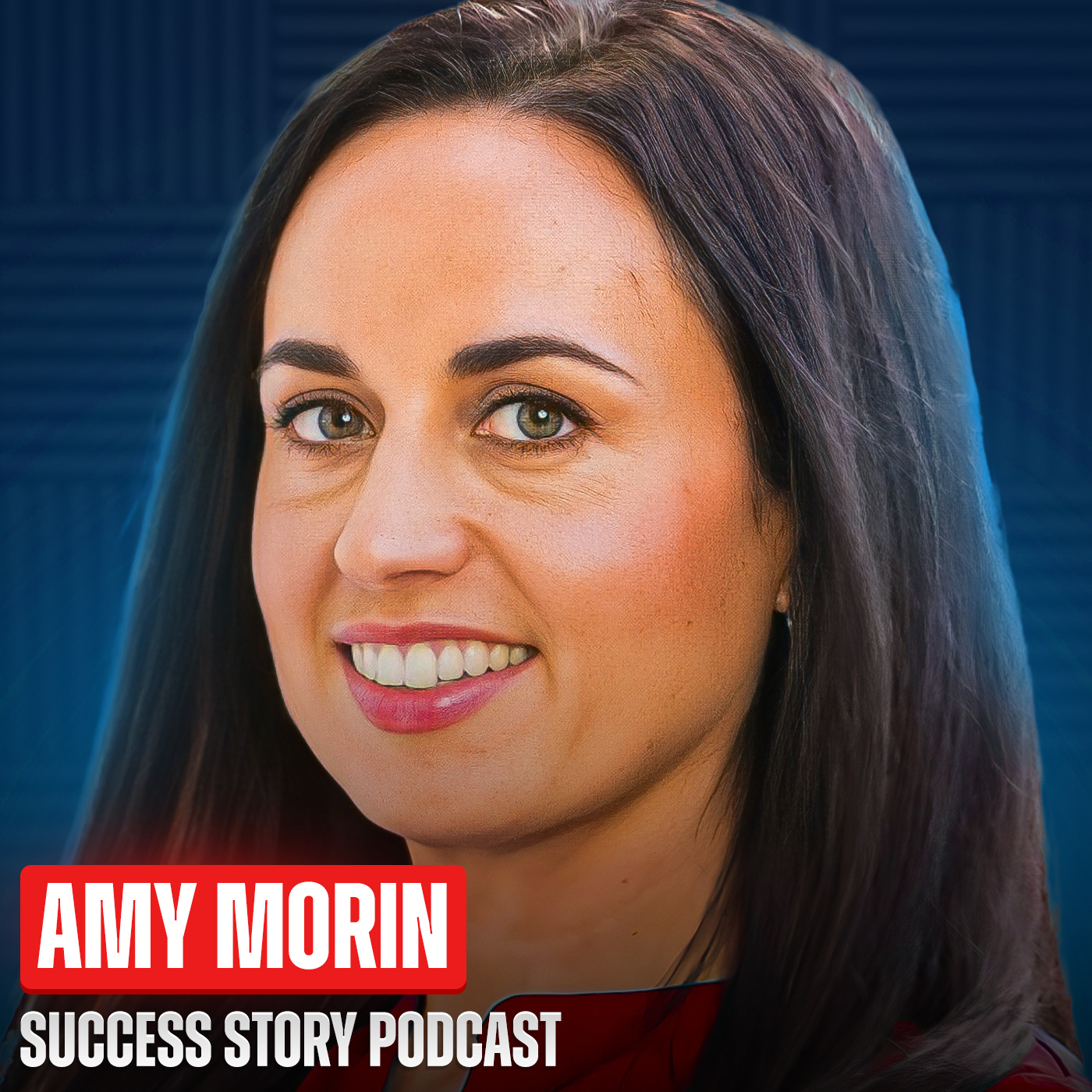
Success Story with Scott D. Clary
Lessons - Building Mental Strength When Everything Feels Impossible | Amy Morin - Mental Toughness Expert
00:11:01
Loading summary
Transcript11 lines
- [00:00]
Scott
I have to take a second and thank Northwest Registered Agent for supporting today's episode. Now listen. I know a lot of entrepreneurs listen to this show if you're an entrepreneur. If you're building a business, you have to listen if you want to get more when you're launching your next big idea, Northwest Registered Agent lets you establish your entire business identity in just 10 clicks and 10 minutes. For nearly 30 years, they've been the secret weapon for entrepreneurs who want to move fast while getting expert guidance. For just $39 plus state fees, they'll handle your formation, create a custom website and establish your local presence wherever your business takes you. As an entrepreneur myself, what I value most is their one stop business solution. You get everything from formation paperwork to custom domains to trademark registration all in one easy to use account. No more juggling all these multiple services or wasting time figuring out the legal stuff. So don't wait. Protect your privacy, build your brand and set up your business in just 10 clicks and and 10 minutes. Visit northwestregisteredagent.com success and start building something amazing. Get more with Northwest registered agent@northwestregisteredagent.com success I just want to take a second and thank Cornbread Hemp for supporting today's episode. Now. Cornbread Hemp CBD gummies have been this really nice addition to my wellness toolkit. I don't use them every day, just when I want to unwind after those extra busy weeks, but they're perfect for those moments when you want to take the edge off and just find your balance. Really just shut off from work. And what makes them special is how Cornbread Hemp crafts them. They only use the flour of USDA organic hemp plants. That's the best part for the purest, most potent experience. No fillers, no artificial fluff, just clean full spectrum goodness in delicious watermelon, berry and peach flavor. I keep them in my nightstand for those moments when I just need a little extra help relaxing. And I love how transparent they are too. Every batch is third party lab tested so you know exactly what you're getting. And they put together a special offer for all six Success Story podcast listeners. All listeners can save 30% off their first order. Just head to cornbreadhemp.com success and use code success at checkout. That's cornbreadhemp.com success code success for 30% off your first order of these amazing gummies. In this lessons episode, explore the power of mental resilience through 13 key habits that emotionally strong people avoid during adversity. Learn how taking ownership of your emotions helps you navigate grief and trauma. Learn why controlling your thoughts and behavior can change how you feel. And learn practical tools to regulate intense emotions such as sadness, anxiety, or anger so they do not control your decisions. And, and this, this first list, this, this list that, like, again, like, went viral, obviously. It's when things like that just hit home, you know, that everybody's dealing with it, but nobody knows how to put it into words. And you incorporate into this list things from your own lived experiences, probably, but also from your. From your, from your professional background. You understood how these things impact you. So let's actually just start off with that. Let's start off with like the first version of. Or the list really, that I think helps people get through these really tough times based on all the different things that you went through. And then we can talk about maybe why these things work so well. And we can talk about the psychological, maybe even biological pieces to it because there's a lot there that encompasses like, mental toughness and making yourself not impervious to these horrible situations that everybody's going to go through, but at least better equipped to deal with them.
- [03:49]
Therapist
Sure. Want me to run through the list?
- [03:50]
Scott
Let's go through the list. Yeah, yeah, let's go through the list. Just kick it off. It's a good framework just to start, and then we can take it from there.
- [03:56]
Therapist
Let's see how good my memory is if we can do these in order.
- [03:58]
Scott
So I think I have it written down somewhere too.
- [04:03]
Therapist
Yeah. Don't feel sorry for yourself. Don't give away your power. Don't make the same mistakes over and over again. Don't give up after your first failure. Don't fear alone time. Don't shy away from change. Don't resent other people's success. Don't worry about pleasing everybody. Don't feel like the world owes you anything.
- [04:25]
Scott
Let's talk about these, these rules or these, I guess, these, these laws of things that mentally strong people don't do. So can you, from like a therapist perspective, talk about why these things are so powerful and you don't have to go through each one, but talk about what these things actually do to the person when they're going through a tough time. Why does, for example, not doing some of these things allow you to go through a death or this very traumatic experience?
- [04:55]
Therapist
So it really boils down to taking responsibility for the way that you think, the way you feel, and the way you behave. So the reason the list starts off with don't feel sorry for yourself is because that's right where I was. I was thinking, this isn't fair. I got another loss in my life. Why me? But I knew as a therapist, like, anybody who comes in feeling sorry for themselves isn't going to get any better. And if you see somebody who feels sorry for themselves and you offer a solution, an idea, any kind of support, their immediate response is, well, that won't work for me. And here's why. Like, my case is special. Like, yes, that Strategy works for 99.9% of the people in the world, but I'm the 0.1% that that is never going to work for. And they kind of get angry that anybody's even trying to help them out. So I knew that it's okay to be sad and that we have to be sad, and that's part of our grieving process. And that's how you heal, is by going through those tough. But I also knew that if I dug in my heels and exaggerated that my life was worse than everybody else's, or that this was so horrible I could never recover, I would make those things true. That I could say, yes, my life is awful, and I'm going to spend the rest of it sitting on my couch and never leaving again. But that wouldn't do me or anybody else any good. So. And a lot of the things on that list are really about that. Like, if you looked at, don't give away your power. That's really about saying, well, I'm in charge of how I think, feel, and behave. You can call me an idiot, but I don't have to let. I don't have to feel bad. Like, that would be my choice. If I said, like, oh, I feel really bad because Scott called me names today. No, I can just be like, all right, that's his opinion, and I can move on. Or if you have a co worker who talks to you a lot, you could be like, you know, that person wastes my time and they ruin my day because they won't stop talking and I can't get anything done. Or you could set a boundary and say, hey, we're not going to do that right now. Or, thanks for. Thanks for having a chat with me, but I can't talk. I'm busy. I have something to do. And all of these things are tough sometimes to be like, oh, you know, it really is me who's in charge. But at the same time, like, there's a lot of freedom in that, knowing I get to pick what kind of life I have. I can't control all the things that happen to me. But there are so many choices I have. And even when we look at things you can't control, you can't control somebody else's behavior. You can't control the economy. You can't control whether people buy your products, but you can control how great of a product you make, or you can control how you respond to people when they behave a certain way. So just keeping that in mind, I think, brings us into a lot of freedom where we can say, all right, the choice is up to me. Like, just like you can't always control the hand you were dealt in life, there's so many options in how you respond to it. So this list is really about that. Because people who would come into my therapy office, some of them had been handed incredibly difficult cards in life. And yet the ones who were still optimistic, the ones who would say, you know, this has been tough, yet I have these skills and resources, and here's how I'm going to get through it, could get through it. And they still were, like, hopeful about the future compared to other people who are like, can you believe how bad my life is? And they wanted to come in next week and tell me how horrible everything happened in the past seven days. Like, can you believe how awful this has been, too? And these are the people that don't get better. And it seems so obvious from the outside. Like, yeah, it just takes some time. A little bit of hope, a little bit of optimism, a willingness to try new things and an openness to say, I'm going to experiment and if I fail or make a mistake, I can handle that and I'll be okay.
- [08:18]
Scott
Lingoda is a partner of success story. Look, I'll be real with you. My French used to be solid. I learned it in school. I even had decent pronunciation. But when I booked trip to France last year, it was a total blank. I could barely order a croissant without sounding like a tourist. So I jumped into the Lingoda Sprint challenge, and, man, it changed everything. I'd take live classes late at night after podcasting. Only five students, max. Real teachers, real conversations. And in just two months, I went from Bonjour to holding full conversations at a Paris cafe. Confidence unlocked. Now, here's the play. 30 or 60 classes in 60 days, and if you finish them all, you get 50% cash back. That's basically €4 or $5 per class. That's insane value. Go to try.lingoda.com success_ sprint and then use my code Scott Sprint for an extra €20 off on top of their current deal. Registration closes May 5th. Classes start May 12th. Let's get fluent. Hey everyone, Scott here. I just want to take a second and say thanks for listening to the podcast over the past couple years. Obviously this wouldn't be possible without each and every one of you. I have a favor to ask so I would love to get some more information about you and why you listen to the podcast and why you listen to the show and why you tune in every week. And I have put together a short survey and we are using this to help us sort of inform what type of content we want to create and the direction of the podcast going forward. This information is not shared with anyone else, so this is just for us internally and I put together a link so scottdclary.com survey where you can go and you can fill in some information so we can know what kind of content you love. Also, for the first 100 people that respond to the survey, you will be entered into a draw for a hundred dollar Amazon gift card. So we'll be giving out one of those to the first people that respond. It should not take more than two minutes of your time to fill out the whole survey. It's really not that long and it will help you shape the future of the podcast. So I really appreciate each and every one of you and thank you for listening. Prolon is a success story partner. Now long weeks and busy weekends, they can leave everybody feeling depleted and tired. We work non stop and that's why I love Prolon's five day fasting mimicking diet. I love this company. Let me explain how it works. Basically they have a fasting mimicking diet that rejuvenates you from the inside and out. They deliver plant based soups, snacks and drinks that keep your body in a fasting state while giving you nutrition. And when your body's in a fasting state, this triggers cellular renewal and it actually works. This is why I loved intermittent fasting for so many years. This is the magic of Prolon. And the exciting news is that they just launched a new next gen five day program. So it has all the benefits that they had before, but now they have 100% organic ingredients in their food, better taste and ready to eat meals that make the whole process easier. I've tried the original Prolon program. I felt fantastic whenever I do it. I personally cannot wait to try this new and improved version. And if you've never tried them before, you're in for a treat because the old one was great. I can't even imagine how good this new Prolon five day program is going to be. And for a limited time, Prolon is offering success story listeners, all you guys, 15% off site wide plus a $40 bonus gift. When you subscribe to their five day program, just go to prolonlife.com Clary that's P R O L O N l I f e.com Clary to get your 15% discount and your bonus gift. Prolon life.com Clary I love that it's just about, it's about ownership and to be like, I need to ask because it's easy to say and like you mentioned, much harder to do and to live. So yes, extreme ownership, yes. Believing that you happen to the world, the world doesn't happen to you, and you can take control of your circumstances. It's a very important mindset shift. But in the moment, whether or not it is, God forbid somebody passes away, or on a much lighter scale, your business isn't working out, or your spouse cheats on you in the moment. For some people, it is almost impossible to remove themselves because I think just like anger and anxiety just like take. They take over. They take over and you feel helpless. So maybe talk about your strategy or even like some of the strategies that you've helped your clients with. As a therapist, how do you remove yourself from the moment so you can think clearly, so you can take yourself back to this list? Because I think that if somebody's not going through something traumatic, it's very easy to say, oh yeah, that sounds good for next time. Until they're going through some shit and then all of a sudden, like the rules go out the window.
- [13:34]
Therapist
Correct. And that's what happens. We know from the research, like when our emotions goes up, our logic goes down. So the more intense we feel an emotion, the more difficult it is to think clearly, as you just alluded to. So if somebody gave you a test to take when you're really angry, you would score poorly on it. Like, you literally get stupid when you're angry. And anxiety does the same thing to us. Or overwhelming sadness, it's nearly impossible to. To figure out what do I do next? So we all need tools to deal with uncomfortable feelings. And sometimes they're simple things. Just putting a name to an emotion takes a bunch of the sting out of it. If I could say, hey, I'm really anxious today. My anxiety goes down just a little bit just because I've helped my brain and my body make sense of it. If I can, then say, all right, is this emotion serving Me? Well, we'll call it a friend or an enem. Like, sometimes it's our friend. Like, if you feel really sad about something you've lost, by all means, embrace it. But if you're sad and you're about to go ask for a raise in that moment, that's not your friend. You want to boost your mood before you walk into that meeting. So we all need skills and tools to boost our mood. So could be listening to a happy song for a few minutes. It might be a matter of saying, I'm going to go for a walk around the block. I'm going to go outside in nature. I'm going to do something to reduce the intensity of this feeling. Acting the opposite helps. If I feel really sad, my brain's gonna say, you know, stay in your pajamas and sit on the couch today. You don't need to go out and do anything. Well, I've never met anybody who said, you know, I skipped work today, sat on the couch in my pajamas, and by noon I felt amazing. And other than when I was 8 and I didn't wanna go to school. But for the most part, when we do what our brain tells us to do when we're, like, stuck in a bad mood is it just reinforces a bad mood. We listen to angry music when we feel angry, and it makes us feel angrier. So sometimes you have to then say, okay, this emotion isn't serving me well, so I'm going to do the opposite. And I'll sometimes work with people to create what we call a list of mood boosters. So I'll say, what do you do when you're really happy? If you came home from work and you were in an amazing mood, what would you likely do? And somebody might give me a playlist of the songs they'd listen to. They might say, I would call a friend, I'd go for a walk. I might work in my garden for a while. And we'll take that list of whatever things they say, and you hang it on the refrigerator. And when you come home from work and you're in a bad mood, I want you to do something on that list. You're not going to feel like doing it, but it makes you feel a little bit better. And we have control over our emotions. So many people say, well, you shouldn't control how you feel. No, by all means, you should. And it's okay to feel sad and it's okay to feel anxious when those emotions are serving you well, but you don't have to stay stuck in them. We have some control over our behavior and we can also control what we think. When you wake up and you're sad, you're going to think this is going to be an awful day. I can't handle anything. People are going to be mean to me. Nobody likes me. If you keep thinking those things, the worse you feel, and the worse you feel, the more you're going to think about it. So change what you think. Say, well, what's one reason today might be a good day? What's one thing I can do today? And then you change your behavior too. So if we change how we think and we change how we behave, we change how we feel. This all seems like common sense stuff when you really think about it. But literally nobody teaches us this when we're kids. And I don't know why they don't because it would have changed so many lives. And that's what I get from people, is if only I would have learned this 20 years ago.
- [16:53]
Scott
Thanks for tuning in. If you found this valuable, don't forget to hit that subscribe button so you never miss an episode. And if you want to dive deeper into this conversation, check out the links in the description to watch the full episode. See you in the next one. This podcast is brought to you in part by Stash. Are you still putting off saving and investing? Because you'll get to it someday? Stash turns someday into today. Stash isn't just an investing app. It's a registered investment advisor that combines automated investing with dependable financial strategies to help you reach your goals faster. They'll provide you with personalized advice on what to invest in based on your goals. Or if you just want to sit back and watch your money go to work, you can opt into their award winning expert managed portfolio that picks stocks for you. Stash has helped millions of Americans reach their financial goals and starts at just $3 per month. Don't let your savings sit around. Make it work harder for you. Go to get.stash.comsuccessstory and see how you can receive $25 towards your first stock purchase and to view important disclosures. That's get.stash.comsuccess story paid non client endorsement, not representative of all clients and not a guarantee. Investment advisory services offered by Stash Investment llc, an SEC registered investment advisor. Investing involves risks and investments may lose value. Offers subject to T's and C's.