← Success Story with Scott D. Clary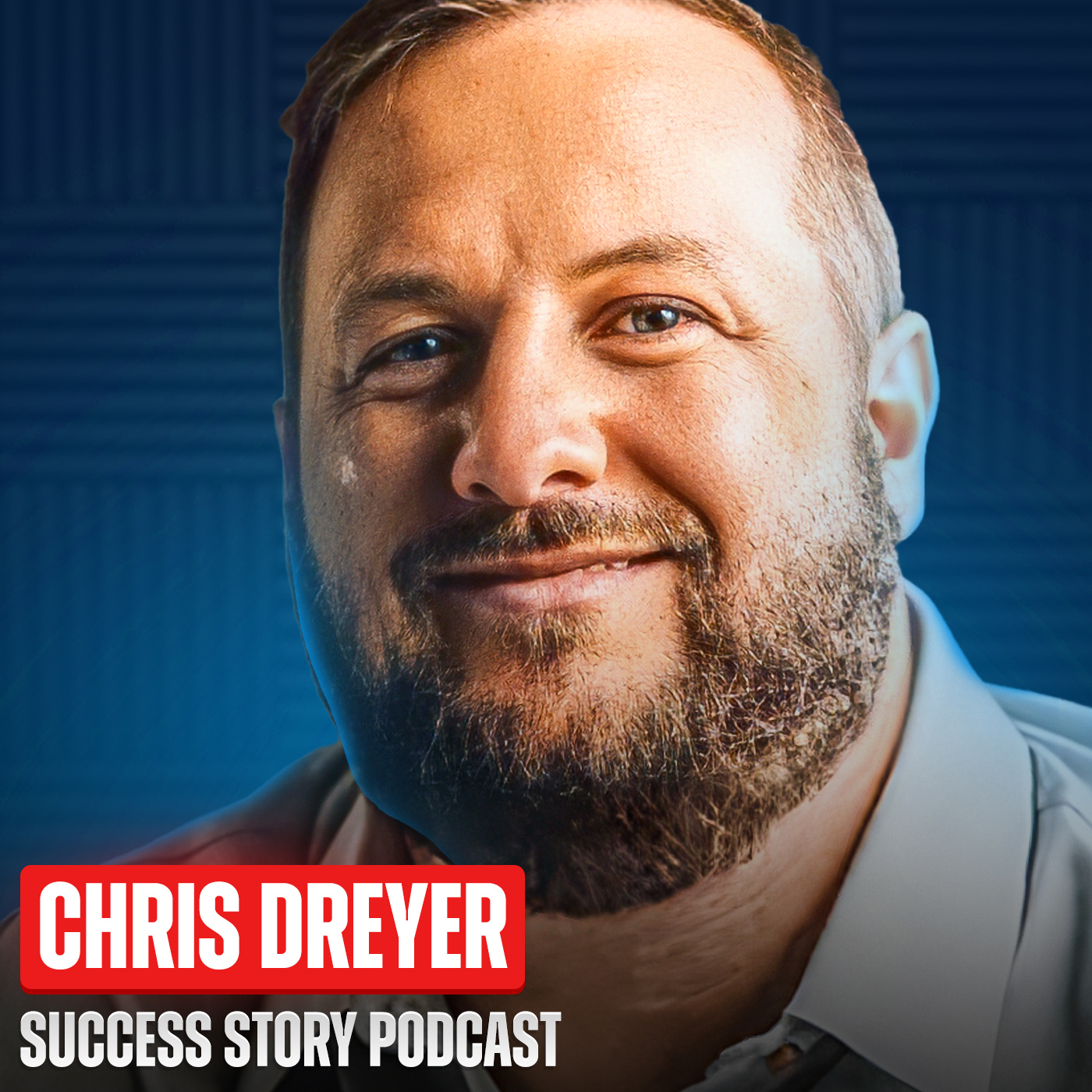
Success Story with Scott D. Clary
Lessons - How Extreme Specialization Created an 8-Figure Growth Machine | Chris Dreyer - Rankings.io Founder
00:14:02
Loading summary
Transcript30 lines
- [00:00]
Peter Cunho
The Superhero Leadership Podcast Is a Success Story Partner now what does it take to lead like a superhero? You're going to find out on the Superhero Leadership Podcast. It's hosted by Marvel's former CEO and legendary turnaround expert Peter Cunho. Each week, Peter is joined by top performers from business, media and beyond, leaders who have mastered the art of impact, resilience and vision. Together they explore Peter's 32 leadership essentials, revealing what it really takes to rise, inspire and lead with purpose. If you want to level up your leadership, this is your blueprint. Search for superhero leadership. Wherever you get your podcasts, HubSpot is a success Story Partner now if you're an entrepreneur, listen up because HubSpot makes impossible growth impossibly easy for their customers. If you are building a business, you need to get HubSpot. Why? Here's the perfect example. Morehouse College needed to reach new students with fresh, engaging content, a problem that every single business in the world has. But with a 900 page website, even the tiniest update took 30 minutes to publish. Now Breeze, which is HubSpot's collection of AI tools, helped them write and optimize their content in a fraction of the time. And the results? 30% more page views and visitors now spend 27% more time on their site. If you are ready for impossible growth like this, visit HubSpot.com in this lesson's.
- [01:25]
Unknown Host
Episode, discover how content quality is measured.
- [01:28]
Peter Cunho
By how well it meets user intent.
- [01:30]
Unknown Host
Learn why bounce rates and engagement reveal.
- [01:32]
Peter Cunho
If your content is truly helpful.
- [01:33]
Unknown Host
Learn how AI oversight reviews and generative search tools are reshaping SEO strategy. And learn why relevance, trust signals and human oversight still define success in today's search driven world. Say you can write good content and I'm I'm curious actually, what does good mean? How like good is subjective?
- [02:01]
Unknown Expert
Does it answer the consumer's intent Effectively?
- [02:04]
Unknown Host
That's it. So it isn't so subjective?
- [02:05]
Unknown Expert
Well, I say that is the direct answer. But let me give you some complication here. A page can have multiple forms of intent that it needs to address. Okay, so if I had a page on car accidents, well, do they need a lawyer? Do they need to know what happens after a car accident? Are they wondering how many car accidents occur in a city? Do they? There may be many questions that consumer asks. So that page has to answer all of those. It can't answer just one version because if it only answers the one version and a different consumer comes to the page and it doesn't answer their intent, they leave. Well, that's a bad, that's a bad signal. Right? Bounce rates, page on time, all those things. It's. If someone comes to your website and it's not a good piece of content and it doesn't answer intent and then they do another query similar or they go to another website for the same query, it means potentially that they, that this website, this landing page did not help them or it wasn't helpful for them. And over time, if there's enough of that, Google will stop serving you in the number one position.
- [03:19]
Unknown Host
That's, that's scary because if you see a high bounce rate and low time on page, then you know that it's not answering all the questions but you don't really know or I guess you could figure out what questions it's not answering.
- [03:33]
Unknown Expert
So there's, there's always the asterisk, right. And it depends, right? Yeah, there are, I would say the longer the query to the more specific it is. You know, what are the steps I need to take after a car accident? Okay, here's the article. There's no guessing the intent's defined in the query. But there are certain situations where a high bounce rate is absolutely okay because they could come to the page, get their intent answered and then leave. They don't have to go to other websites, they take, take something like definitions. Right. Nowadays AI overviews, eating those up. But define this. Okay, well like do I need to write 10,000 words on this definition? Do I need multiple articles to explain? Do they, do they need to visit other. They don't. They need to go there. They get the definition, they can leave. So it, it really depends. But it depends on, on your goals, on what you're, what you're trying to achieve and a lot. But at the end of the day it's great content. Does it answer the, the consumer's intent effectively and is it endorsed by other people? Do other people vote and think it is a good piece of content?
- [04:44]
Unknown Host
Interesting that you mentioned AI overview. So AI overview. If you, if you Google anything, it'll give you an AI overview right at the top, I'm assuming. Tell me if this is a conspiracy theory, but I think that Google is doing this so that your page isn't ranking as high anymore. People aren't going to the pages. So then that means that you're forced to spend more ad dollars to get a sponsored position for your page to show up. Is that the conspiracy or is that what Google is doing?
- [05:12]
Unknown Expert
Absolutely accurate. They're a for profit business. They make the majority of their publicly traded company's revenue from Google Ads. If they can make more money there, they're going to do it. I will say it's not like the AI overview zero click scenarios didn't exist. We had rich snippets. They were zero click scenarios that showed the answer and you didn't have to click through through a website. And they have such market share domination. I think they're finally below 90% but, but still that they can create a less satisfactory user experience to supplement their ad revenue.
- [05:52]
Unknown Host
And what does that mean for businesses and SEO?
- [05:54]
Unknown Expert
Well, it means, I'll tell you this right now, I've seen a dramatic shift in the benefit of pay per click ads and LSA as opposed to organic and maps. Even if you look at things like above the fold on a monitor, the things that are above the fold are typically local service ads and Google Ads after that. Then you start getting AI overviews, you start getting the maps and organic. So they have the best positioning from a virtual real estate perspective. So what does that mean if you're, if you're a firm or a business? Well, you need to reconsider Google Ads. If you had tried it in the past or didn't have a lot of success because they're kind of forcing you to use it now. You got to get all your economies and metrics right for cost per lead, cost per acquisition, roas and all, all the things right. But it's becoming more effective because of how Google's designing Google search.
- [06:57]
Unknown Host
Now the interesting bit about AI is that those, those AI overviews or the, if you're using ChatGPT or Perplexity or I guess Claude wouldn't be used as, or Gemini I guess as a search tool.
- [07:11]
Peter Cunho
Yeah, Grok, exactly.
- [07:14]
Unknown Host
That is obviously taking some of the traffic away from Google because people are using Generative Chat as search tools but at the same time the results in some cases are referenced to websites. So now you have an SEO game through Generative Chat. How do you play that game?
- [07:33]
Unknown Expert
Really like this question. So you're dead on. So there's two things that you want to do. First, focus on what I would say bottom of the funnel, your service pages, your sales pages because it lends itself to optionality and choice. Right. Back in the day you could write a what do you do after a car accident? And like maybe you could get a conversion out of that. But like that's just like an evergreen topic and like it's going to be in the AI overview but car accident lawyer of Chicago they're going to give you Some options to review. You know how close is this firm to you? You know how what's the review rating? They're going to give you optionality first. So I would say strategically to kind of counter the AI component. The first thing is focus bottom up of the funnel instead of the top of the funnel where you're trying to get awareness. I really look at Google and search engine marketing all encompassing, everything on Google as a capture play more so than an awareness play. So it is, it's capturing demand more so than creating demand. The next thing is your question about geo Generative Engine Optimization. LLMs. They, the truth is no one really knows. But I will say that schema and some of these highly trusted sites are, are cited. You go look at Perplexity, it'll definitely tell you where the citations are. And Chat GPT will, will, will give you, based upon their analysis, you can start to understand where they're pulling that from. I'll give you an example for myself right now we rank like third for SEO for lawyers. Above me is a competitor and then Clio. Well I get on that. And I remember before I was listed on Clio I would say, you know who's the best personal injury SEO company? And I wouldn't pop up yet. I'm on 20 other websites that say we're number one, right? Clutch Design, Rush Competitor Sites putting us number one. The one article we weren't on was Clio's. I get on that. You go type in the same thing for GPT. Boom. So it's, it's the trust signals for certain sites are different. Wikipedia is a big one for LLMs. And so in different categories there are different trusted entities. It's an association. An entity is an association with something. So I go really down the rabbit hole here without trying to get too nerdy, I'm gonna sound super nerdy.
- [10:17]
Unknown Host
No, I love it. I love it because first of all there is a lot of people that care about this stuff. A lot of entrepreneurs are trying to figure out this new game. They're smart. But also I'm seeing, I'll give you another example, something I noticed now I'm playing around with the deep search tools on Perplexity and chatgpt and they both, chatgpt in particular, I think they both actually show their workflow as they're going through this. ChatGPT's deep search for any query. 8 to 11 minutes. So long comparatively. But if you open up the sidebar, it shows every question that it has and the source that it's going to, for the answer. And I'm just so curious, like some of these sources, like how does it pick this source and, and that source? And it'll go through like 20 to 30 different sources to come out with a very complex answer. It'll be cited in the actual output, but it'll also be cited in this source column as it's thinking and showing you all the websites it's navigating to.
- [11:12]
Unknown Expert
Yeah, it's unreal. It's changing the game. And even in the AI overviews, it's citing the source. Right. Where it's pulling from. So it's a combination of all that. And, but I think again, typically even when you ask it, it's still going to give you multiple answers for like a business, like who are the top whatever. It typically doesn't give you one. Even on a who's the best car accident lawyer.
- [11:44]
Unknown Host
If we type that, what was the, what was the nerdy rabbit hole that you were hesitant to go down?
- [11:50]
Unknown Expert
Well, I'm trying to think where, where I was going to go with that. You know, with your schema and signals and things like that. Yeah, I'm not sure, but I think we hit it on the head. It's, it's schema, it is entities. So, okay, so, so like on the entities component, they're basically entities are associations. Right. And Google, if we go back to the beginning, Google's job is to organize the web LLM. It's, it's to pull accurate sources. Right. Kind of combination of both. So you take something like St. Louis, one of the first things that probably popped in your mind when you're thinking about the city of St. Louis is large. Right. That's an entity. Right. If you can become an entity in the city, there's an association that will help you contribute to trust and to rank in that respective city.
- [12:43]
Unknown Host
Is there any way for a business to become an entity in a city?
- [12:47]
Unknown Expert
I think, I think it's reputation, it's, it's word of mouth, it's being listed in other associ. Other entities. So you take something like a chamber of Commerce, right. In St. Louis, you're now listed as a business entity in this chamber. It goes back to old school, you know, SEO things and listings and citations. But the quicker you can do that, that's why a lot of businesses when they're expanding to their secondary market struggle, because a lot of times they're getting a satellite office, they're not getting, they're not doing the full brick and mortar. They're not being a part of the community. Guess what? They're not a known entity in that market. That's, that's the issue.
- [13:27]
Unknown Host
Last question on this, and I'm sure you get it a lot. What happens when you use a generative chat tool to write content?
- [13:33]
Unknown Expert
Well, it's significantly better. There's a lot of tools. Surfer Jasper, there's a ton of them. And we've used.
- [13:41]
Unknown Host
It still ranks.
- [13:42]
Unknown Expert
It still ranks, absolutely. But it still needs human oversight. It's, it's, it's like a tool currently. It's not a standalone still, in my opinion, it's a tool to enhance productivity. So we see a lot more prompt engineering editors as opposed to, you know, manually sourcing and citing writers. There's a lot, a lot of things that you can do here. You know, there's even other tools to check for AI, there's for originality, for voice. But it also, I was having a conversation with a big firm in San Antonio and I use the language like, hey, we can do this old school. Because I don't really want to do it old school. I want to do cutting edge, right? I didn't want to be negative and talk down, but it is old school now. Like I can prompt engineer something to look and evaluate the topic, top ranking pages to determine length, things I need to include to make my article better. I can take an existing piece of article and I can fill it in and say, you know, what are the weaknesses? What should I consider adding to this? So right now it's in a tool and it enhances productivity and utilization. But you have to be careful because sometimes the sources are incorrect and so it's used with care.
- [15:05]
Unknown Host
Thanks for tuning in. If you found this valuable, don't forget to hit that subscribe button so you never miss an episode. And if you want to dive deeper into this conversation, check out the links in the description to watch the full episode. See you in the next one.