← Success Story with Scott D. Clary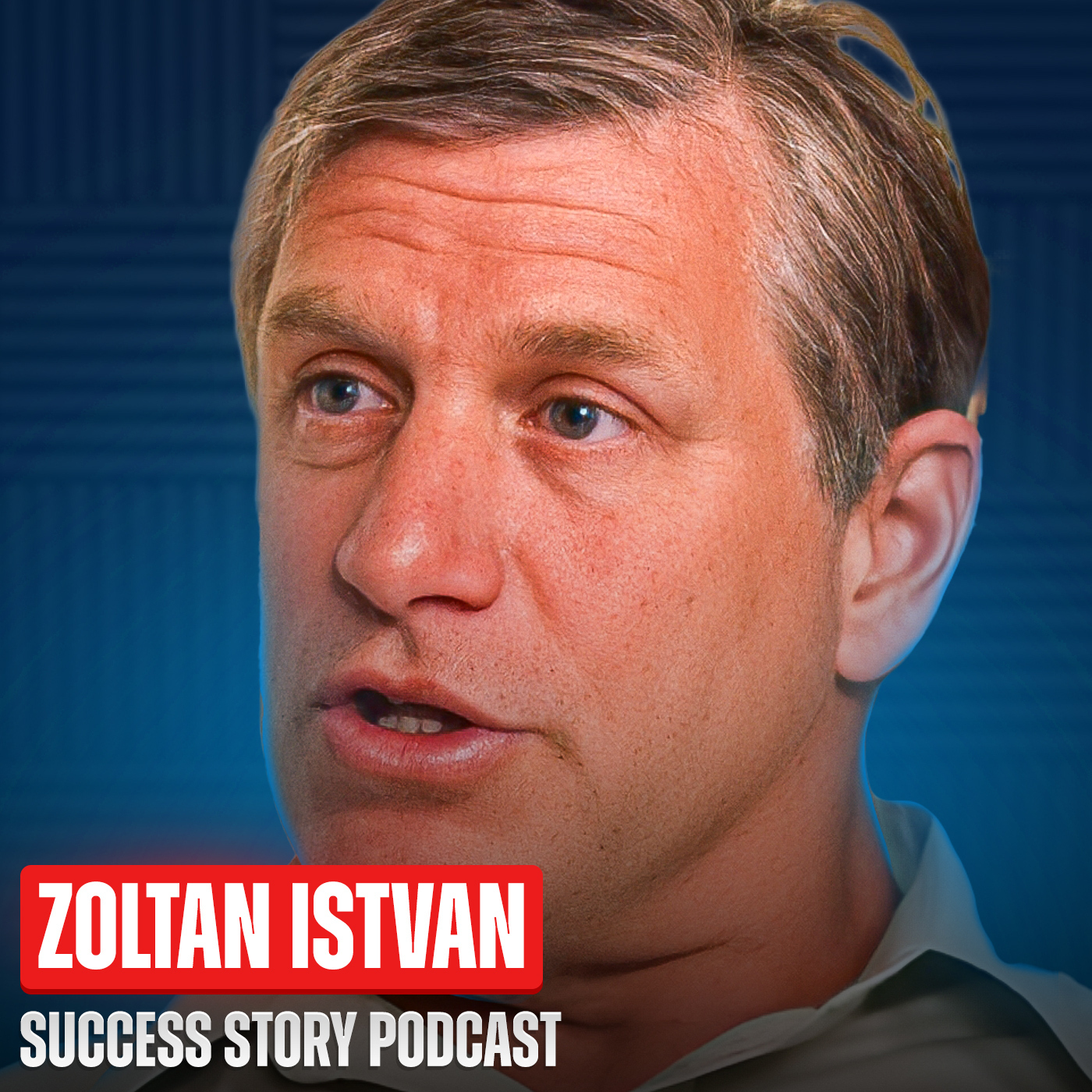
Success Story with Scott D. Clary
Lessons - How Technology Will Make Death Optional Within Decades | Zoltan Istvan - Futurist & Presidential Candidate
00:11:58
Loading summary
Transcript17 lines
- [00:00]
A
HubSpot is a success story partner. Now if you're an entrepreneur, listen up because HubSpot makes impossible growth impossibly easy for their customers. If you are building a business, you need to get HubSpot. Why? Here's the perfect example. Morehouse College needed to reach new students with fresh, engaging content, a problem that every single business in the world has. But with a 900 page website, even the tiniest update took 30 minutes to publish. Now Breeze, which is HubSpot's collection of AI tools, helped them write and optimize their content in a fraction of the time. And the results? 30% more page views and visitors now spend 27% more time on their site. If you are ready for impossible growth like this, visit HubSpot.com in this Lessons episode, discover the bold world of transhumanism and the quest to radically extend human life through science and technology. Learn how synthetic organs, gene editing, and mind uploading challenge, challenge the limits of mortality. Explore why religious and societal beliefs spark controversy around life extension and understand how redefining aging as a disease could unlock major government investment in longevity research. For people that have never heard of transhumanism ever, what does that actually mean? Is it disease prevention? Is it like neuralink? Is it what is it?
- [01:26]
B
Sure. Well, transhumanism is just a social movement and has a fun. It's a funny name. It's just an umbrella term for a lot of different things like cryonics, immortality, life extension, singularity, thinking, whatever it is. It's just a term that covers a huge movement of scientists and normal people that are pushing to use science and technology to radically extend the human being's life. Now how would we do that? Well, most people die from organ failure. So for example, one of the transhuman's greatest cause is working on synthetic organs and 3D bioprinting them. And there have been huge movements. And it's not just, you know, synthetic organs could be pigs organs, you know, which they a big giant company in Florida is dealing with that. There's so many different ways of extending life. But the point is transhumanists want to stop death through science. Now the other methods are, you know, genetic editing, for example, trying to adjust your cells so they don't age. There's a little thing called the telomerase at the very end of the, you know, DNA. And if you could eliminate that like the jellyfish, you could live perhaps hundreds of years long. So there are transhumanists working on that. And then it gets a little bit more science fictiony where it's kind of like some people are working on uploading your mind. And I just heard Peter Diamandis yesterday, a big, you know, the X Prize founder, he said, within five years, we're going to be uploading our minds. Okay, five years. This is crazy. Uploading your minds. So this is another form of not dying. So it's across the board. We don't know which one's going to work. But what we do know is that there's now hundreds of billions of dollars, especially in Silicon Valley, where I live, that are pushing towards overcoming biological death. And when you have that much money involved in something, I think there's going to be success.
- [03:05]
A
I was listening to a couple podcasts and one of the hosts mentioned your views were controversial. I don't understand how. Now that I understand what transhumanism is, how living longer and extending lifespan and keeping people healthier, what's controversial about that?
- [03:21]
B
Sure. Well, you know, you would think up front nothing is controversial about it, but what really is, is we live in a very religious dominated country. About 80% of the United States believes in an afterlife and believes in some type of God. And around the world it's even higher, around 85%. So the point is that if you believe in those things, then you have to wonder, well, why should humans take the power of immortality or indefinite lifespans? I'm not sure. Immortality? No. You know, most transhumanists don't say we're going to live forever. We just like to going to live 100, 200 years, 300 years. We might be able to control when we die. And if we die, that's really the goal of it. And I think that is controversial to the natural state of things. So if you are a religious person and you hear somebody saying, oh, we're going to overcome death, and you think, well, wait a sec, the whole dichotomy of religion is that you live, you live a good life and therefore you go to heaven and you're judged by God and everything's okay. But if you eliminate that need of the judgment and of God, then where does that even leave religion? And that's where the controversy, in my opinion, arises from some other people. Just to be fair, other people say, well, death is needed in human evolution in order that new things will spawn. And that's actually a good point. It's very hard to argue against that. The problem though, is that even if death is needed to spawn new ideas, I still don't want to die. And I'm not sure that I need to die in order for others to feel like there's some kind of new spring always happening. I certainly don't want my kids to die just because I'm supposed to make way for other people. I think humans can maybe find other ways to be creative and spawn new beginnings.
- [05:04]
A
I agree with that. I'd love your opinion on is the government doing any sort of job in terms of longevity or quality of life? I feel not to the degree they should. I feel like we have a sick care system, not a healthcare system. And maybe that's why you ran for president. But just talk to me about sort of the current state of what the US government doesn't matter which party, Democrat, Republican, what do they feel about longevity?
- [05:33]
B
Sure. Well, let me just say, you know, when I ran for office, and still the number one goal I would say, of most transhumanists and longevity activists is to characterize aging as a disease for the government, United States government, governments around the world to say that aging is a disease. Because if all of a sudden we say that ag a disease, it will be treated like cancer, like Alzheimer's, like diabetes, and all of a sudden huge amounts of NIH and other types of funding will go into it. But right now no one wants to say for those religious reasons we talked about before, that aging is the disease. And I couldn't agree with you more. You know, what is the point of living to 100 years if the last 15 years of your life is really in pain and most 85 year old and plus people it really is dramatically hard. So we do need to invest things. So I think, you know, the government has not invested enough. And I come from a little bit of a libertarian bias with my like to like let you know that the people do what they want to do and hands off from the government type of thing. It's not a party or a political affiliation, anything like that. It's just more, you know, I think I believe in people and entrepreneurs doing thing and not the governor, the government holding them back or putting on regulations. But at the same time I think since the government has such deep pockets, it would be very useful if they would stimulate entrepreneurial entrepreneurship and people around the world trying to start businesses that would defeat aging. But in order to do so, you're going to have to characterize that and designate that as a disease specifically like you would cancer. Treat aging like cancer. If we do that, the game will change. Right now the amount of money flowing into aging related, you know, anti aging stuff is very minimal in the millions. But if all of a sudden we treated it like cancer, we would be putting billions into it. And immediately, probably within five to seven years, you would see a big impact in the. Every gay American's life.
- [07:24]
A
I think it's so important what the concept of. Of morphological freedom. What is that concept and why is it so important?
- [07:32]
B
Sure. Morphological freedom is this idea that you should be able to do with your body whatever you want to do. No one should be able to stand in the way of that. And of course, if you're doing something to your body that is interfering with someone else's body, that's a whole different thing. But morphological freedom says as long as you're not interfering something else or anyone else, you should be able to do with your body what you want. So, for example, I have a chip implant in my hand, but in various states across the United States, even this chip implant, which is just kind of an elective party trick, I can go to. I can trade Bitcoin with it or something. I can. It holds my information. It has a credit card, you know, things like that, you can sometimes scan it, send text messages with it. But in certain states, it's illegal. It's illegal, yes. Yes, it's illegal. And so I wrote a piece for the New York Times on this because all the states are saying, well, should we allow people to recreationally put in chips inside their body, even if it's just for fun and party tricks? And the answer was, yes, we shouldn't allow people to do that because we don't want them to have freedom with their bodies. So this is something that goes against the morphological freedom concept. And, you know, generally speaking, transhumanists are a little bit on the edge. They're like biohackers. You know, they're fringe. They're putting stuff in their body, trying out new things. We're trying to see what works. And we don't want to be stopped by the government saying, no, you can't do that. You know, if we're not hurting somebody else, we would like to write the experiment with our bodies.
- [08:57]
A
That's interesting. What do you. I mean, so you're an entrepreneur, you've built some businesses, but also, are these businesses sort of focused on transhumanism, on optimizing the human body? I. I heard that you had a winery, but there's like a. A nootropic component to this. This wine as well.
- [09:15]
B
So.
- [09:15]
A
So when you think about how you live your life, talk to me about the businesses you build, but also talking about personally, like, how do you live your life as a transhumanist.
- [09:24]
B
Sure. Well, you know, the, the ironic thing is that I have built a lot of businesses, but they have not really had much to do with transhumanism so far. Transhumanism has been this thing because I wrote my novel the Transhumanist Wager, about 10 years ago. It became a bestseller. And then through that, I formed the Transhumanist Party and ran for office for the, you know, for the US Presidency. And that, you know, just got lucky. The media took off with it, said, oh, we have a science candidate running for president. All of a sudden I sort of became semi famous because of that. But my businesses were kind of boring. You know, I was working for National Geographic. I was getting maybe, you know, six, seven thousand dollars for every three, four, five weeks I was away. But it was coming all in cash, and I didn't really know what to do with it. And at the time, my father was sick, I was, you know, help to pay some of the bills for him in Oregon. And so I, I said, well, maybe I'll start investing some in real estate up there, since real estate was quite a bit cheaper than it was in California, where I live now. And I started buying fixed rubbers. And then on the office days when I didn't have assignments or, you know, I'd be home for two months at a time, I'd fix those houses up. I'd always had a good knack of tools because of my sale trip. And then I, I flipped them. And very quickly I amassed almost 20 properties. And, you know, before the crash in 2008, I sold the majority of it because I realized things were kind of out of hand, too good to be true. And I, but you didn't.
- [10:46]
A
You, you timed it right.
- [10:48]
B
I timed it very right. And I got very lucky. And, and, and then I joined a band with a friend, which is one of the reasons I sold the ironic part. The band didn't succeed. I played guitar. The band didn't succeed, but I had quite a bit of money. And here I was sitting in my young, in my early 30s, as, you know, as a multimillionaire. And, and what should I do with my life now? And this is when I, I wrote this book, the Transhumanist Wager. And, and that sort of launched my career as a public Persona, I guess, going around, speaking, talking about transhumanism. Now, though, I have started to invest in vineyards through a company called Zoltan Ishvan Vineyards and Wineries. So we have a vineyard in Napa Valley, as well as a winery, we have a. A vineyard in Mendoza, Argentina, the first one I bought. And then we have one in Bordeaux, France, a nice big giant one in a winery there, a little Chateau. And, you know, it's all combined under one company. And while we're. Our goal with that is to actually put transhumanist drugs called nootropics. These are brain drugs that supposedly make you smarter. Some of my Berkeley PhD friends have helped me out with it. I gotta be honest, I'm not sure drinking wine, even with this, makes you smarter, but we're working on it.
- [12:01]
A
It's wishful thinking.
- [12:02]
B
It's wishful. We're trying to get better than just no effort. So there's no question here, your cognitive abilities are a little bit better, I think. But we haven't actually come to the solution yet where you drink wine. It becomes super smart, though. We're working on it, but this is the new company that I've been working on, and we won some awards last year with our Malbec and Cabernet Sauvignon. And so it's my newest company, and we'll see where it goes. I'll send you a bottle one of these days when we have something that works.
- [12:28]
A
Thanks for tuning in. If you found this valuable, don't forget to hit that subscribe button so you never miss an episode. And if you want to dive deeper into this conversation, check out the links in the description to watch the full episode. See you in the next.