← Success Story with Scott D. Clary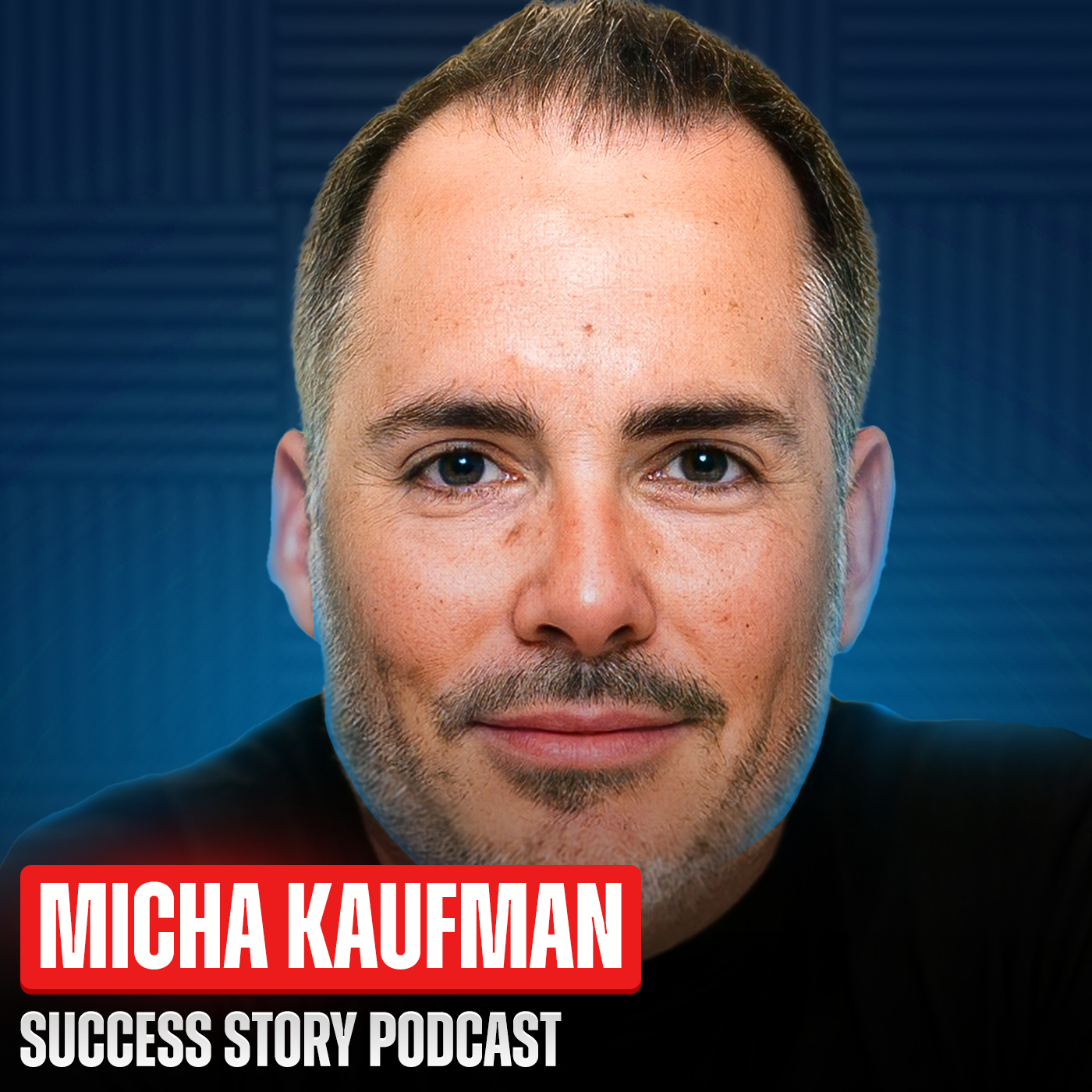
Success Story with Scott D. Clary
Lessons - How the Gig Economy Is Reshaping Enterprise Forever | Micha Kaufman - Fiverr Founder & CEO
00:11:16
Loading summary
Transcript9 lines
- [00:00]
A
In this Lessons episode, discover how continuous reinvention is essential to future proofing a company in a rapidly evolving market. Learn why complacency can lead even the most successful ventures to disruption. And understand how embracing iterative failure and constant self introspection fuels sustainable growth and innovation. So the question is really, as somebody who's, I would have thought Fiverr is a first mover, but I'm not in the space and I don't know the history obviously as well as you, but the, the question really is how do you build a company that is, that is undisruptible? And you're going to say it's impossible to make it undisruptible, but you as a founder, CEO, you built a massive company. How do you not become an ebay? I know you're not going to become a blockbuster because again, blockbuster was like an analog to a digital solution. But then ebay was disrupted by Amazon because they took a different perspective. So as a founder, what do you do to future proof?
- [01:06]
B
Yeah, it's a, it's a, it's a great question and there's no easy answer to it. This idea of, of reinventing yourself, you know, some of the things that we're doing as we're thinking about this, you know, when you start a company, you do the, I mean everybody, probably your listeners have read, you know, crossing the chasm. I mean these idea, this idea of going through a J curve where in the bottom, you know, end of the J's, what's, what's being fueled by VCs and, or investors, private investors. And then at some point, hopefully you grow in companies. What happens is as years go by, you need to, if you don't disrupt your own model, someone else will. And so you need to keep this very fresh approach where you challenge everything you do and you keep questioning your strategy and you keep thinking about the next waves of innovation because nothing, nothing is static. Everything moves. There's ways of transformation. Some of them are cultural, some of them have to do with generations and in our case, 2010, millennials got into the workforce. Then Gen Zers, it's, it's changing the fabric of, of the workforce. Technology have changed. The App Store has become super popular and that created this massive opportunity. Cloud computing. Then now recently you have AI. So there's multiple things that change constantly. You need to continue challenging yourself. And one of the things that are really hard as an existing company is that you need to do additional J curves. But now you are the VC and every bone in your body Every, you know, every aspect, every person around you tells you don't do it because, because it's going to come at the expense of your profitability, at the expense of your growth, at the expense of being able to laser focus on just one thing. But you need to do it. You need to reinvent yourself. You need to do the next wave of transformation. Because if you, if you fail to do it, you end up like many companies that we know like BlackBerry and Kodak and whatever. I mean the, the, unfortunately, the corporate, you know, you know, trash bin is, is full of incredible, extensive and big names that, you know, blockbuster was a $6 billion revenue a year company. This is like, you can't stop a company that size. Remember Yahoo at its greatest times? I mean these, it seemed to be impossible to destroy. But there's very few companies that are actually able to survive. And when you think about it, on, on a, on a personal level, there's very few management founders, managers that are able to go through this entire thing. I have, you know, as a founder, CEO, I have a, like, I have a ritual, a yearly ritual where I take a couple of days to actually do an introspect and ask myself, am I the right person to continue leading this company in next year? And I think that this is like. And we do the same for the way we're structured and organized and we keep challenging this because if you don't, then you become complacent and this is where companies start falling. And if you listen to the Netflix story told by Netflix, you know that Blockbuster was really, really close to being able to beat Netflix at its own game because they had the advantage of doing physical distribution and doing online or via mail distribution. And then the move to digital was, was not such a big deal, right? But, but because of management changes, they, they lost it.
- [05:47]
A
Then they, they lost an acquisition opportunity too with, correct for it.
- [05:53]
B
I don't remember what it was 15 or $50 million.
- [05:56]
A
It was like, it was ridiculous.
- [05:58]
B
It was crazy. But, but the, again, the corporate history is full of these stories and it's, it's, it's tough not to become one of them. You know, you need to be, you need to be very aware that you can be you. I mean if, if you become complacent, if you, if you don't disrupt your own business, someone else will because you just proven that it's a great business. Which makes you, you know, which makes Target. Yeah, exactly.
- [06:26]
A
When you look back at like I, I want people. Because people know what Fiverr is and we can talk about, we can talk about the future of work all day but I think it's also important to understand sort of what you've experienced in your journey and your come up. If you look back because you've you this is not your first rodeo that you've done other companies talk to me about even before fiverr biggest failure or biggest lesson that you've that you've experienced over your career. Like a hitting the fan moment that at the time felt like, you know, this is not going so well.
- [07:01]
B
Yeah. Oh man, I wouldn't know where to start. I mean there is yeah, I've done my share of podcasts. I should have had a pre ready answer for this. But the reality is that there's what happens between companies as you evolve as an entrepreneur is that just your miss rate is getting a little bit lower. Meaning if to begin with and you're unexperienced 80% of what you do is wrong, then by the time you're an excellent entrepreneur you're probably doing 70% you know, error you're not going to, I mean I think what's changing in many ways is just, is just the size of the cycle of recovering from a failure or a mistake and having a system to quickly learn, overcome, not dwell on it and just move on and just take anything you've done wrong is a great lesson and promise yourself that you're not going to make it again because if you do, you're just stupid. And by the way this is something that I've, that I've applied to the company as well. Like there is, it's the same principle. I mean it's okay to make mistake mistakes as long as you make them in good faith, not, not by negligence. As long as it's not the same mistake again. Like if you do it, you probably shouldn't be here because you don't care enough. But if you made a mistake, even sometimes it's costly mistakes but you've done it with passion and not out of negligence and you're on top of it and you found it and you fixed it. That's a great lesson. If you can spread it, if you can share it with the rest of the team. So I've done mistakes in how I picked co founders. I've done mistakes in hiring people or not being very good at hiring people. I've done mistakes in, in running boards and investors. There's I, I wasn't aggressive enough. I, I, I didn't realize that I was, that I was not good enough at doing marketing or sales myself and not bringing the right people fast enough. There, There's. I mean, there's such, I mean, in, in your. When you grow up as an entrepreneur, there are so many mistakes that you do. It's just. I. It's very hard to pick one. But, but there. And if, if you think about shit shows, in. In, I mean, Fiverr started as a shit show when you think about it. And, and funny enough, it was. It was not because it was, it was not going well. It was because it was going extremely well. So when. So sometimes you succeed and it feels like it's the end of it because when you succeed too fast, so many things start falling apart. And again, I'm happy to talk into anecdotal stories. Most of what we do, we're a very iterative company. We're religiously testing stuff. So by definition, most of the things that you test will fail. Like you, you. You fail. The mentality of failure, of, like, getting comfortable failing is something that you, you have to. To be super rooted in your. In. In your company's DNA.
- [10:54]
A
Thanks for tuning in. If you found this valuable, don't forget to hit that subscribe button so you never miss an episode. And if you want to dive deeper into this conversation, check out the links in the description to watch the full episode one.