← Success Story with Scott D. Clary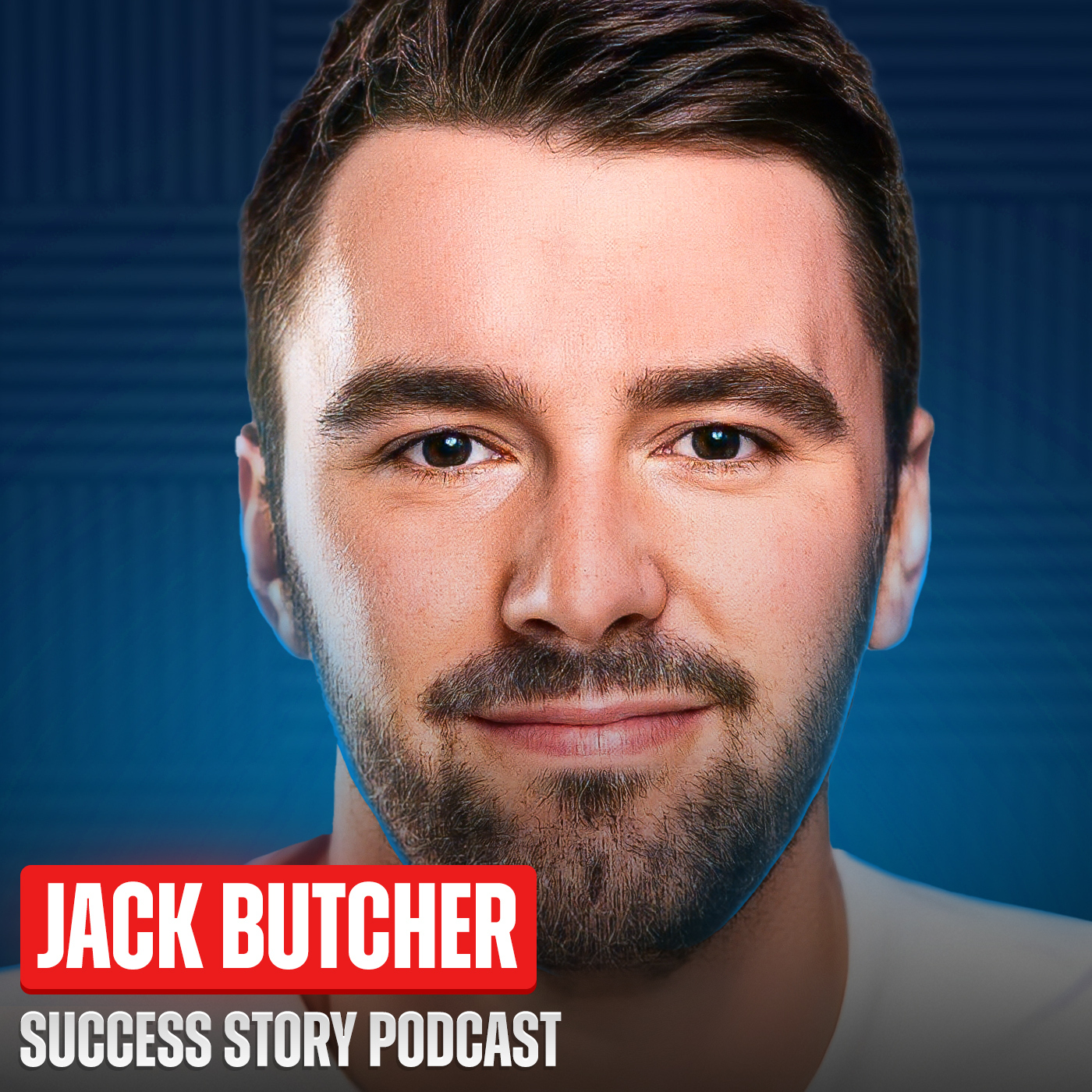
Success Story with Scott D. Clary
Lessons - How to Build a Valuable Community Without Venture Capital | Jack Butcher - Visualize Value Founder (1.2M Followers)
00:12:24
Loading summary
Transcript13 lines
- [00:00]
A
In this lessons episode, explore why showing your work publicly has become the ultimate currency for building credibility and opportunity online. Discover how transparency and proof of work drive community growth and long term success. Understand how creators can productize their skills to create scalable income. And uncover strategies to stay focused amid distractions and avoid chasing every new trend. I'm not sure if you, if you've, if you did this purposefully or not, but also I found that everything you did, you built a great community around it. So it wasn't just putting out great content, like there was a great community that you built it. And if I'm not mistaken, even the products that you, the course, the final, the second course, I'm not sure about the first one, but did you build those in public as well? Like you involved the community. And so that's something else that I noticed that people, people that do it very well, especially on Twitter, just because it seems to be like such a huge or the organic reach is immense compared to many other social platforms. So walk me through if you have any tips on building that community. Because if somebody does build one sell twice, that's they have a product, fine, but how do you build this reach? Because that's really what's going to really benefit, right?
- [01:19]
B
Yeah, I think one of the, one of the advantages I have as a designer and one of the things that's been like extremely instrumental in the, like the development of my career is showing my work. So it's like nobody's ever cared about my degree, nobody's ever cared about where I went to school, every interview I've gone to, every like job I've even every project I've gotten to work on internally at an agency has been because of the thing I did last. So. And you have a very tangible set of assets to point to as a designer because you, you produce a portfolio of work, right? This is a project I worked on, this is a brand I designed, this is a website I built. And I think that was almost a subconscious advantage for such a long time because I'd always had that mentality. Right. It's like it doesn't, it doesn't matter what you tell me, show me what you did. And that's how I managed to move jobs and get a job in the first place, by showing my portfolio. So I think that's an, that's a skill that other, not even a skill, it's a practice, I should say that.
- [02:40]
A
Other.
- [02:43]
B
That other industries and other disciplines are coming around to now. So if you're, you know, if you're academia does this, like, they publish what they're thinking about.
- [02:57]
A
Right.
- [02:57]
B
They're always producing. There is always an output of, okay, this is the research that we've done. This is how we're going to present it. This is, you know, our thesis. And I think convincing people that whatever it is you're thinking about, you have an opportunity to, like, produce deliverables that convey that. Right. And that to me is. It's like a fundamental shift in thinking that seems completely obvious to me as a designer. But when I introduce that concept to other people, they're like, oh, yeah, that's a great idea. I'm going to start doing that. And the idea that you think you're going to get discovered or people will, you know, actively seek out your thinking without doing that is. I mean, it's insane when you look at it that way, but it's.
- [03:46]
A
It is. But that's what everybody does. That's what everybody does.
- [03:49]
B
Right, right. That someone's just going to come and, like, pluck you out and be like, oh, can you. Yeah, can you sell me on your services? And, you know, the way the. I mean, the Internet is just a monstrous force in that equation. Right. Every. There's an evolved quote the. The Internet. The Internet democratizes consumption but consolidates production. So if you're the best in the world at anything, you get to do it for everyone. And that's like a really huge overlooked force in society. I think that just because you've had this experience offline or because you have this anecdote of a friend of yours that got, you know, that knew somebody and got this job here, proof of work is now like the currency that is going to move your career forward, I think, in almost every field. And people who can produce visual assets or tangible assets or record podcasts or make videos are just that much more likely to generate luck, you know, create relationships at scale because, you know, it's just sheer surface area. And that is just the one thing I think that is hugely underestimated. And it takes a long time to build it and get good at it and all of those things. But.
- [05:20]
A
Yeah, but that's what differentiates. That's having that asset, right? Is what differentiates. How do you. So this is something that now you teach over to people that are building the build one, the build once, sell twice. So as part of that, I'm assuming you actually have the way to ideate on how to productize your knowledge and your experience. But also part of that is also the building the community, building the brand. And is that the core lesson, the core learning is to. Is to show your work in some format or another. And I guess I'm just thinking through, like, for. For somebody who isn't a Designer, a podcast, YouTube, whatever it may be, that's probably the easiest way there. Are there other ways that you can show work? I'm just curious. I don't know if there's something else that you would recommend people do to build out this brand.
- [06:10]
B
Another thing that's interesting, and this is like, there's so much nuance to this, and it often doesn't get covered in conversations about it. But the. One of the fundamental things I think is, do you have a skill set that allows you to produce a result for someone on your own? If you do, then you have a massive opportunity to teach other people that skill set. Right. If you're a designer, a writer, video producer, if you produce something tangible or you have. You can analyze data in a certain way, there is. It's like reverse engineering the results. So a huge part of the curriculum is to get people focused on the result they generate and then essentially build things that help you deliver that result with a less linear relationship to your time over time. So you begin as a designer that spends three days with a founding team getting all the information out of them and then turning that into a asset. The second iteration of that is you have systems to collect that information from them, and you write better questions and you spend less time. You spend less time, like, grilling people individually, so it gets more and more efficient. And then eventually you have a program that's so watertight because you've sent 100 people through it, and you've figured out all the blind spots and figured out what you need to introduce somebody to at what time in order to get them to think about something in a different way that helps you slowly divorce your time from the delivery of the result. But I think that is the introspective question that all of this begins with. If I. If I can create leverage for someone else on my own, then I can produce an asset that essentially replicates my ability to do that. And that, like, we're in a period of time now where it's really hard to build that very specific skill set and stay focused long enough to be able to produce that result. Right. When I started my career, I would get like two text messages a day, and I'd read them on my lunch break. People that are like practitioners and trying to learn skills now are going on Twitter or Instagram every 45 seconds and it feels like you're missing the boat every time you look at something else. Right. It's like, oh, I should be working on this or I should be, you know, I should learn that skill or I should be following this person and like, emulate what they're doing. So I'm really empathetic to the fact that it's harder or at least my perspective of it is it's really difficult to build these standout skills.
- [09:05]
A
Yeah. And you have that shiny object syndrome for sure, right. That's, that's always an issue now with social and constant exposure. And you're always questioning whether or not you're doing it right. Even if you're getting results, should you redo it or learn something new or do it a different way? So how do you, how do you personally focus on what's driving results and not follow that shiny object all the time?
- [09:30]
B
It's increasingly difficult. Right. The amazing thing about building a business like this is it sort of trails your curiosity. So you have to be interested in something that you're not quite great at in order to continue to deliver those learnings to people who haven't gone down the same path as you. But you also have to recognize when you are like, just completely distracted and wasting time. And that's the, the, like. The amazing thing about the Internet is it cuts both ways, right. You can go super deep and build one, sell twice. The addressable market for that is enormous. You could go and sell that for a decade probably. Right. There's enough people that have not been exposed to those ideas. But you can get in this little echo chamber where you've, you've, you start to burn out on, on that thinking because you've been teaching it for a year, for example. But then you, you could switch too far in a different direction, right? Or for me, like, my shiny object is crypto, so I'm like down all these different rabbit holes. I played around with NFTs this year and I'm incredibly like, I'm a huge believer in all this technology, but there's also a cost to being distracted from the thing that a hundred thousand people know you for.
- [11:03]
A
For example, thanks for tuning in. If you found this valuable, don't forget to hit that subscribe button so you never miss an episode. And if you want to dive deeper into this conversation, check out the links in the description to watch the full episode. See you in the next one.