← Success Story with Scott D. Clary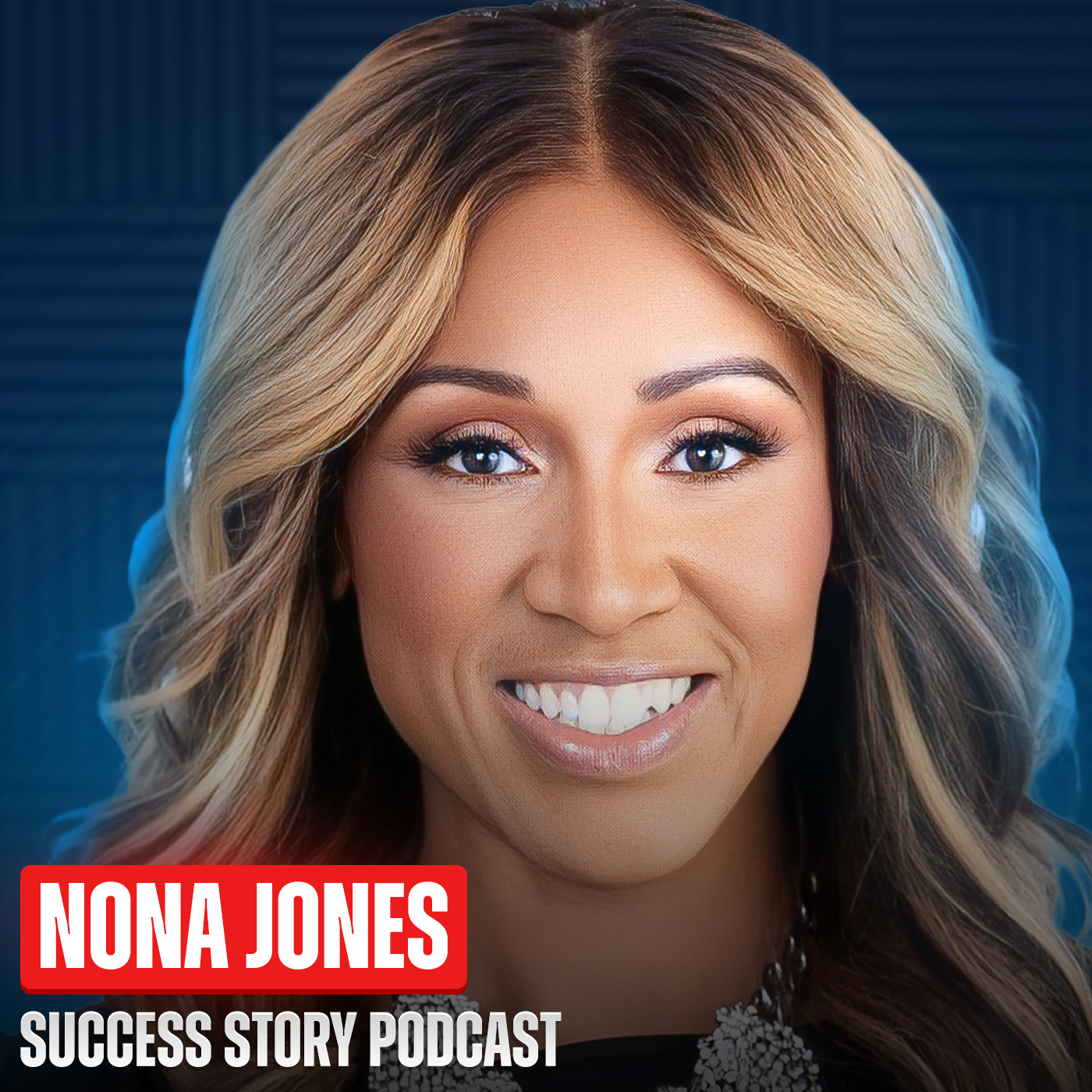
Success Story with Scott D. Clary
Lessons - How to Transform Your Personal Narrative Into Your Greatest Strength | Nona Jones - Resilience Expert
00:14:28
Loading summary
Transcript15 lines
- [00:00]
Scott
This podcast is brought to you in part by Stash. Are you still putting off saving and investing? Because you'll get to it someday. Stash turns someday into today Stash isn't just an investing app. It's a registered investment advisor that combines automated investing with dependable financial strategies to help you reach your goals faster. They'll provide you with personalized advice on what to invest in based on your goals. Or if you just want to sit back and watch your money go to work, you can opt into their award winning expert managed portfolio that picks stocks for you. Stash has helped millions of Americans reach their financial goals and starts at just $3 per month. Don't let your savings sit around, make it work harder for you. Go to get.stash.comsuccessstory and see how you can receive $25 towards your first stock purchase and to view important disclosures. That's get.stash.comsuccess story paid. Non client endorsement, not representative of all clients and not a guarantee Investment advisory services offered by Stash Investments llc, an SEC registered investment Advisor. Investing involves risks and investments may lose value. Offers subject to T's and C's. I have to take a second and thank Northwest Registered Agent for supporting today's episode. Now listen. I know a lot of entrepreneurs listen to this show if you're an entrepreneur. If you're building a business, you have to listen if you want to get more. When you're launching your next big idea, Northwest Registered Agent lets you establish your entire business identity in just 10 clicks and 10 minutes. For nearly 30 years, they've been the secret weapon for entrepreneurs who want to move fast while getting expert guidance. For just $39 plus state fees, they'll handle your formation, create a custom website and establish your local presence wherever your business takes you. As an entrepreneur myself, what I value most is their one stop business solution. You get everything from formation paperwork to custom domains to trademark registration all in one easy to use account. No more juggling all these multiple services or wasting time figuring out the legal stuff. So don't wait. We're protect your privacy. Build your brand and set up your business in just 10 clicks and 10 minutes. Visit northwestregisteredagent.com success and start building something amazing. Get more with Northwest registered agent@northwestregisteredagent.com success in this lessons episode, discover how to turn life's harshest rejections into catalysts for growth with a simple four step framework. Learn why observing your inner talk track reveals the root beliefs holding you back. Learn how pausing and Exploring those beliefs frees you from old trauma. Learn how naming your next step empowers you to move forward with purpose.
- [02:39]
Guest 1
Obviously that has an impact on your top track, because then you start to see signs that rejection is a gift. But is there, is there work that somebody has to do beyond that? Because that's like a shock. That's like a sort of a flash in the pan event and you're like, oh, it's like a wakeup call, which is just. It's good. Those things, those things help. But for somebody who's gone through a life of trauma, how do they. How do they rewrite their talk track fully?
- [03:07]
Guest 2
I think now that I've. I'm kind of on the other side of this revelation. I truly believe that it starts with observing what is the talk track. Because what's going to have to happen in order to even get to a place of healing and freedom is you're going to have to be able to go back to the place where the defeat happened. You're going to have to be able to go back to the place where there were words that were spoken over you. There was an action that was taken. Because sometimes it's not even words. It's what people do. It's the fact that your father chose to leave when you were in elementary school. It's the fact that this person that you loved chose to leave and be with somebody else. It's not even what they said, it's what they did. So you have to go back and you have to begin to ask yourself, what did I believe because of what was said or because of what was done? And is that true? For example, when he cheated on me, I thought, no one will ever want me. How could anyone ever want me? Like, I gave my heart to this guy and he basically discarded it. No one will ever want me. Well, as it turns out, I actually had other relationships after him. Some of them were crazy, but one in particular ended in marriage. And my husband and I have been married now for 20 years. And so this. This idea that no one will ever want me actually isn't true. And here's the thing. Even if I never got married, this is where I know there are some people who don't necessarily believe in, like, God or spirituality or anything like that. But I want to say this. I was a microbiology and cell science major in college. I love science. I love math. I think I took up to like, Calc five. I love calculus. Of all the things, it is literally impossible. There is no law of physics where order Descends from chaos. Think about like this. If a chandelier drops from the the ceiling and crashes onto the ground, I don't care how many millennia go by, it's not going to either reform into a chandelier or something beautiful and amazing, right? It's going to just continue to disintegrate. And I say that because no matter what you've been told, you are not a mistake, no matter what has happened to you, you are not an accident. Somebody else's choice was not your fault. And it doesn't invalidate the purpose on your life. And so you have to observe what is the talk track and is it true? Because even if they didn't want you, the reality is you are here because you have purpose on your life.
- [05:44]
Guest 1
I mentioned this before we press record and I think it's just an interesting point and I want to get your perspective on it. And I love that. I love that. I love that sort of that thought experiment because it makes a lot of sense when you, when you lay it out, how everyone is. It takes so much, there's so many coincidences or what, however you want to call it, that we're alive here living today. It almost seems impossible. I think statistically it is almost impossible that we're alive living here today. But I think that a lot of people, they don't have spirituality. And I think less and less people have have God in their life. And maybe not just speak about the important, speak about if somebody does not have God in their life, what problems do they run into when facing rejection? Is there ways that God's spirituality helps? I'm sure, because, I mean, you've mentioned it, that it's impacted your life twice just in this conversation. But if somebody doesn't have that piece in their life, what is the puzzle piece or the component that they're missing that they should try and solve for to make some of these difficult life events a little bit easier?
- [07:02]
Guest 2
I love this question because what I can tell you, first of all, I did not grow up in a church going home. Like, I didn't grow up in a situation where I just knew about the Bible or Jesus or God or any of that. I had my own encounter, my own awakening, my own experience. And what I will tell you is I had my own awakening in the middle of being abused and not the act. But I'm saying in the chronology of my life, the abuse was still happening. And so what it did for me is my awareness about God. There's a verse of scripture in the Bible that says it's in Romans, chapter 8, verse 28. And what it says is that God will work all things together for the good of those who love him and are called according to his purpose. What that says to me and what that even said to me then is this situation may not be good, but God has made a promise to work it together for my good. Which means I have to figure out what is the good in this. Like that, that what is. What is the kernel of good in this that could serve other people? I think what, what spirituality does, what faith does, is it gives you an anchor for hope in the absence of, of the belief that all things will work together for my good. You can get so fixated on the bad and what happened that you lose sight of this, will eventually work together for my good. Maybe not today, maybe not tomorrow, maybe not even next year. But I know at some point I will look back on this situation and I will be able to say, oh, that's why that happened. I think about my God. I think about the rejection of my mom. I think about the many times I was cheated on. I think about professional rejection, like deep, deep rejections that I've experienced. And every single experience has worked together in some way for my purpose and for the, for the ability to serve other people. And so even if a person doesn't have a faith or spirituality, I do think that what, what we ultimately need is we need hope. And that's why the gift of rejection is really a message about hope. It sounds crazy, right? It's like, how can you say rejection is a gift, but understanding that it is, is a source of hope. And I take my hope from my faith in God and just knowing that it may not feel good, but it will eventually be good if I just continue and persevere in this, in this situation.
- [09:36]
Scott
A huge shout out to bank on yourself for supporting today's episode entrepreneurs. Here's the retirement secret that Wall street doesn't want you to know. Well, pouring everything into growing your business. They want you gambling your Future in their 401k casino with no guarantees. As a business owner, you already take enough risks. Why gamble with your retirement too? It is time to discover the financial strategies smart entrepreneurs are using to protect their wealth. Bank on Yourself is the proven approach that gives business owners what they need most. Certainty, flexibility and control in their retirement. Unlike traditional retirement accounts, bank on Yourself gives you predictable, guaranteed growth. It isn't at the mercy of market crashes. A liquid cash reserve you can tap anytime to seize new business opportunities or whether downturns there's zero penalties or restrictions and tax free retirement income that shields your hard earned wealth from future tax hikes. For entrepreneurs who understand the value of financial leverage, here's the game changer. When you access your money, it continues growing as if you never touched it. This means your capital works twice as hard just like you do. You can get a free report that reveals how you can bank on yourself and enjoy tax free retirement income, guaranteed growth and control of your money. Just go to bankonyourself.com Scott and get your free report. That's bankonyourself.com Scott bankonyourself.com Scott I just want to take a second and thank Cornbread Hemp for supporting today's episode. Now, Cornbread Hemp CBD gummies have been this really nice addition to my wellness toolkit. I don't use them every day, just when I want to unwind after those extra busy weeks, but they're perfect for those moments when you want to take the edge off and just find your balance. Really just shut off from work. And what makes them special is how Cornbread Hemp crafts them. They only use the flour of USDA organic hemp plants. That's the best part for the purest, most potent experience. No fillers, no artificial fluff, just clean full spectrum goodness in delicious watermelon, berry and peach flavor. I keep them in my nightstand for those moments when I just need a little extra help relaxing. And I love how transparent they are too. Every batch is third party labs tested so you know exactly what you're getting. And they put together a special offer for all Success Story podcast listeners. All listeners can save 30% off their first order. Just head to cornbread hemp.com success and use code success at checkout. That's cornbreadhemp.com success code success for 30% off your first order of these amazing gummies. A huge shout out to Federated Computer for supporting today's episode. Let me explain why I love Federated Computer. Why they are friends of Success Story. They are changing the way businesses buy software because we all need software to run our businesses. I don't care what kind of business you're building, but the best business software doesn't have to cost thousands of dollars each month. So Federated Computer replaces a lot of the software that you're using right now. Let me explain. The average typical Federated computer customer saves 75% or more on their software bill and gets great software, top notch customer service and support and a software solution that is uniquely installed for your business without any sort of surveillance or breaches of privacy. For example, if you use Google for email, Salesforce for CRM, Slack for team chat, list, Monkey for customer acquisitions and Airtable for data management. With a team of 10, you'd save $9,000 per year on software costs by switching to Federated Computer. They replace all of those. And what's wild is that the cost of Federated Computer doesn't grow as your team grows. You can use Federated Computer savings to grow your business. Rather than feed the woke Silicon Valley software companies. The Federated Computer team literally invented cloud software. They actually have the patents to prove it. And they are taking a hammer to the ridiculously high prices of business software that all entrepreneurs are suffering from. Federated Computer They've been a longtime supporter of success story. They're offering 30% off their already low prices when you use a coupon code freelance. So go to www.federated.com to begin saving 75% or more on your monthly software costs. That's www.fiberated.computer. these folks are going to do you a big favor. Check them out.
- [13:47]
Guest 1
I think that's beautiful but I think the biggest issue with, with lack of faith or spirituality or God. And I've, I love this, I don't love this concept but I love sort of this thought experiment is when you do not have God or spirituality in your life, something else becomes your God or your spirituality. And it could be, it could be money, it could be women, it could be gambling, it could be drugs, it could be alcohol, it could even be work, which is technically not a vice, but it can be all consuming. And when shit hits the fan, none of these things really give hope because they're, they're, they're not things that you, they're not things that like kind of like exactly what you described. They let you see some potential better future. They're just sort of these vices in the moment. And I think people, yes, you're absolutely right.
- [14:40]
Guest 2
We, we actually all do have a place that we look to for hope. Some of us, and you use the exact right word is like our God is something. For some of us, our God is frankly ourselves. Like, we're like, look, I, I've got it all figured out and I'll make it happen and I'll make it. But there comes a point where you just realize that you've exhausted all of your personal resources and you need that higher power to be able to kind of re. Infuse the sense that yeah, I can't do this on my own. I can't. And I have a bunch of friends who are atheists and agnostic and I'll always joke with them because I'm like, you guys actually have more faith than I do because you have to have a lot of faith to look around at all this and be like, just came from nowhere, you know, so we all have faith in something.
- [15:34]
Guest 1
Yeah, no, that's. I love that. I want to just a framework that people can at least walk away with. And I'm just going to caveat with this. So. So the book is out now, so you can get it wherever you get your books. Like, we'll put, we'll put the links in the show notes and whatnot. But one framework that you speak about is the open framework. So I just want to leave people with a framework they can take away and then they're going to go dive into the book and learn a little bit more, obviously. But I want to, I want to unpack that one.
- [16:06]
Guest 2
Thank you for even offering me the opportunity to do this because one of the things I am very careful about as a writer is I don't ever want people to read my books and just be like, oh, that was nice. I don't know what to do with it. Um, that's honestly one of the reasons I write my books is because I want people to be able to have practical tools that they can apply that I had to discover on my own because I couldn't find it anywhere else. So the open framework is. It's essentially kind of a four part framework that will help you really start to get intentional about understanding what is the gift in this rejection experience. And so the O stands for observe. And I talked about this a little bit earlier. But what you want to do is when a rejection happens before you allow yourself to mentally, emotionally, psychologically and spiritually spiral into your normal rabbit hole, you want to observe what am I thinking and what am I feeling? What are the thoughts that are just automatically playing in my mind? What are the feelings that are just automatically cascading through my body? And when you kind of pause and you. And you actually think about the thoughts, like metacognition, like, you think about the thoughts you're actually able to then begin to pinpoint. Where did this come from? Where did this, this belief that nobody wants me, where did this idea come from? And once you can actually pinpoint where the idea came from, now you have something that you can start to work with. Okay. And it's important to pinpoint it because until you identify where it comes from, you'll think it's you. You'll think, this was just my own thought. But I promise you, 95% of what we think after we experience rejection was seeded into us by words somebody else said. So start with observing. Secondly, what I encourage people to do is just pause. Just pause. Don't allow yourself to act, because sometimes what we'll do is the pain will be so real that we'll just want to either get back at the person immediately, we'll want to take some sort of action to try to, you know, nullify the pain.
- [18:11]
Scott
No, just.
- [18:12]
Guest 2
Just pause. What I do is I pause and I pray, and I actually bring those thoughts to God. I'm like, okay, I just thought. My thought was, no one will ever want me. No one ever supports me. No one ever. And I bring it to God because that then gives me the opportunity to reflect on. Is this true? You know, as I've been releasing this book about rejection, I've been experiencing so much rejection, Scott, it's been crazy ironic. And I got. Isn't it ironic? And I got to a place where I literally felt. I was like, man, nobody's. Nobody's supporting me. But as I paused and I prayed about that, I had to actually reflect on the fact that, Wait a minute. A lot of people are supporting me. And there are people supporting me who I've even not even met before. And, like, even being on this platform is just such a gift because it's like, you've so lovingly cultivated this platform, and yet you're inviting me on it. Like, that is a gift that counters the idea that nobody supports me, nobody wants me. Right? So we pause with pausing for me. I pray, and I just get into a meditative place. And then the E is explore. So I believe that every rejection has a lesson that it can teach us about ourselves or about others. In the case of my book release, and, you know, having some folks that I thought I could count on not show up for me, as I explored that, what I realized is I placed them in a category of friendship that they actually weren't in. Like, these are people that I supported. These are people that I just knew would show up for me that didn't. And so as I explored it, I realized, oh, our relationship actually isn't where I thought it was. So now I don't hold a grudge against you because you didn't show up. I just realize I can't count on you for what I thought I could count on you for. And so that then changes the nature of the relationship and the last step, which is N. The N stands for name. And what I talk about is just name your next step. So you've observed your thoughts, you know how you're feeling, you've paused, you've actually explored the lessons and the experience. Now what are you going to do with what you've learned and how is it going to change the way that you show up? So that's the open framework in a nutshell. And you're right, I go into a lot more detail in the book, but but it's practical and it's something that I've even used as I've experienced rejection releasing the book. And it works.
- [20:28]
Narrator
Thanks for tuning in. If you found this valuable, don't forget to hit that subscribe button so you never miss an episode. And if you want to dive deeper into this conversation, check out the links in the description to watch the full episode. See you in the next one.
- [20:46]
Guest 2
Foreign.
- [20:51]
Scott
Scott here. I just want to take a second and say thanks for listening to the podcast over the past couple years. Obviously this wouldn't be possible without each and every one of you. I have a favor to ask so I would love to get some more information about you and why you listen to the podcast and why you listen to the show and why you tune in every week. And I have put together a short survey and we are using this to help us sort of inform what type of content we want to create and the direction of the podcast going forward. This information is not shared with anyone else, so this is just for us internally and I put together a link so ScottD Clary.com survey where you can go and you can fill in some information so we can know what kind of content you love. Also, for the first 100 people that respond to the survey, uh, you will be entered into a draw for a hundred dollar Amazon gift card. So we'll be giving out one of those to the first people that respond. It should not take more than two minutes of your time to fill out the whole survey. It's really not that long and it will help you shape the future of the podcast. So I really appreciate each and every one of you and thank you for listening. A huge shout out to bamboohr for supporting today's episode. Let me share something I've learned from building multiple businesses. Your time has a dollar value and if you're spending hours on HR tasks, you're literally burning money. That's why I'm fired up about bamboo hr. This isn't just another software tool this is Strategic business optimization. Over 34,000 companies are already using them because it transforms those time consuming HR tasks into streamlined processes. Here's what makes it different. It's actually built for entrepreneurs like us. Simple to use, easy to implement, and it scales as you grow. No complicated onboarding, no HR degree required, just pure efficiency. Listen, if you want to operate like a true CEO, reclaim your time. Do what I did. Check out the free demo@bamboohr.com free demo. See for yourself all that Bamboohr can do and how truly affordable it can be too. That's BambooHR.com free demo BambooHR.com free demo this isn't just about HR, it's about strategic growth.