← Success Story with Scott D. Clary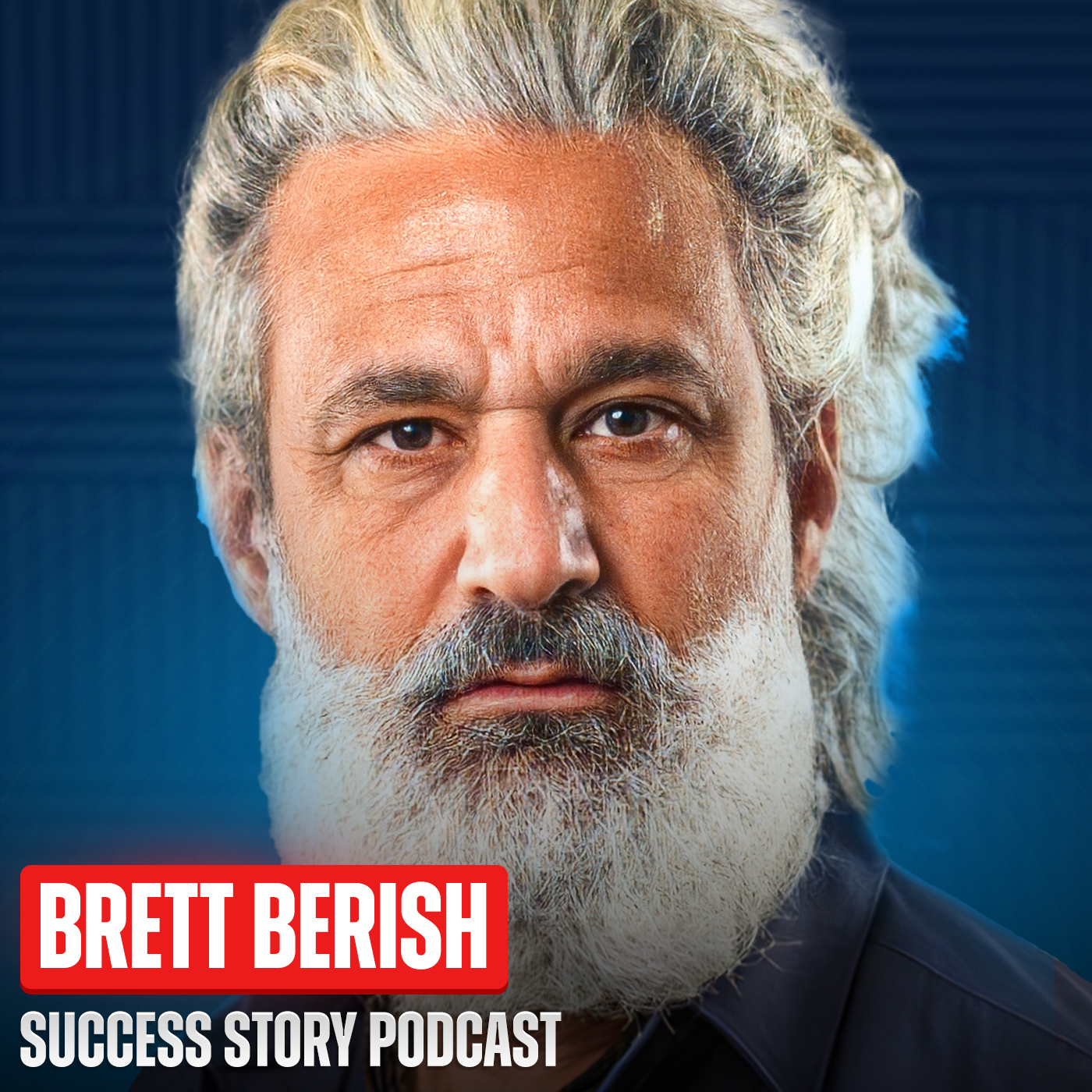
Success Story with Scott D. Clary
Lessons - How Unconventional Marketing Built Multiple Billion-Dollar Alcohol Brands | Brett Berish - Spirits Industry Disruptor
00:11:54
Loading summary
Transcript34 lines
- [00:00]
Scott
In this lessons episode, discover how to build a compelling brand that transcends trends with authentic storytelling and unwavering commitment. Learn why prioritizing long term loyalty over quick exits is the key to sustainable growth. Understand how staying true to your North Star and iterating over time transforms mistakes into enduring success. When you look at, when you look at even like the, the brands that you have right now, what is, what is the strategy? What's the, what's the framework behind this is what we're going to put out into the world. This is the story behind it. This is who I want it to resonate with it.
- [00:45]
Brad
So it, I take Bumbu.
- [00:47]
Scott
Yeah.
- [00:48]
Brad
So Bumbu, we launched maybe five or six years ago. The goal was, the goal wasn't is I want to create a new level of rum premium. I think rum is unappreciated. I. The, the. And when you look at it again, it goes back to this idea. If you look at trends and if you ask anybody in our industry, they would say stay away from rum.
- [01:12]
Scott
Well, they're probably going to say go to tequila.
- [01:14]
Brad
Correct. Well, that's the hot thing. So rum is not hot and it's declining and you've got these big giant brands like Captain Morgan and Bacardi and I want to do something that's better than them. I think there's a better product out there for consumers. I think there's a product that tastes better for them and it's more premium and we hit on a taste that we love and then we created a story around it and brought history in. So there's a story around bamboo. Back in the 16th century, merchants who traveled the West Indies, the Caribbean, didn't like the taste of rum, which they called grog and they would craft their own out of it and they would call it Bumbu. When we brought that back. So once we have all that, then it's, it's, it's push. It's birthed into the world. Yeah. But I don't know what we have yet. So I kind of let things breathe and you figure it out. So now fast forward. Not even fast forward. Canada, where you're from, is our single biggest market in the world for Bumbu, single biggest outside the United States. And I jokingly say until this year, no one from our company's ever been there.
- [02:20]
Scott
That's so funny. So there was a gap in the market?
- [02:23]
Brad
Well, it's, it's a, to me it's always. It's not a gap to me is it's always with anything. If it's a great brand. People will find it.
- [02:32]
Scott
You know what else I've not. So I used to drink a whole bunch of Captain Morgan. That was like my, my high school drink. That was my go to drink. But there was no story behind it. Nobody gave a shit. It was just like the cheap tequila wasn't really that big when I was in like high school, university. So it was always Captain Morgan. But then the second you find something else, you move off of it because you don't really care. There's no affinity to that. There's no story behind it. But you were, I think in one of the videos I was watching, you were saying that this is in like 30 at least when the video was pushed out. There's 35 countries and you can't even get it in more countries because you're always selling out.
- [03:10]
Brad
But actually Today it's in 80 countries.
- [03:12]
Scott
Oh, okay. Sorry.
- [03:12]
Brad
No, no, no, no. But, but it's, it's, but what's, what's fantastic about this story is, and again, it goes back to this idea that if you believe in something, it can happen. We're in, we're in like 80 countries today and there's only one market in the world and I didn't even know that's a premium realm market and that's France. We do well everywhere in the world and all these markets are not premium rum markets or they're not even rum markets. And we crush it. It's a great brand. If your brand is great, it'll get talked about. People will find it, they'll consume it. And I also believe in premium. It's like your Captain Morgan example. I think premium brands can exist everywhere in the world. Cheap brands, difficult.
- [04:01]
Scott
When you think about building out a brand, do you care if there's going to be like a wave or a cultural shift towards that thing? Or do you not care? Do you just want to get a little like, are you banking on rum becoming the next tequila or do you not care? Maybe you're just thinking, I just want to be a significant part of the existing market. And we're going to be premium and we're going to be talked about. We're going to, we're going to have loyalty from our customers and evangelists from our. You know what I'm saying? I think you can't see the future.
- [04:34]
Brad
But look at Patron. And I always used to laugh when people would say, and I get presentations. I want to be the next patron. I just want 1% of the category. And Patron took 30 plus years. So if it happens overnight, God bless. But that's not the way it's supposed to be. And I was that person who had that report, that business plan that said I'm going to get 1%, 5% of the industry and the multiples are, you know, 20 times and I'm going to sell it for X. That's where I make mistakes. That's where people make mistakes. If you have a healthy brand and you're growing, you're going to get there no matter what.
- [05:14]
Scott
And when you launch these, these are kind of like your kids to a degree. How do you think through as an entrepreneur? Because this is very subjective. People could launch a brand and they want to hold on to it forever and they never want to exit it, never want to sell it. How do you think through that? Do I want to keep it? Do I want to sell it? Do I want to. What?
- [05:31]
Brad
I again, it goes back to this idea that when I was younger, when I started this, my mistake was thinking about the exit before you even start. And I think that to me is my mistake. And maybe it's a mistake for a lot of people out there. I don't think about that. If it happens, great, but I don't think, boy, now I'm ready to sell or the brand is mature enough or this is the time. I don't think like that. I. My goal is build the brand. You keep building it. Whatever happens will come. But focus on brand building. That's the key.
- [06:10]
Scott
Do you feel like when somebody's focusing on the exit first they're trying to take shortcuts or they're not paying attention?
- [06:16]
Brad
They're not. It's not real, it's not to me, I, I don't know. I'm. I'm that guy who I have to love and have passion for what I'm doing because the exit may not ever happen. So you gotta, to me, it's about being in that moment of loving what you're doing because exit doesn't matter. That's not the goal. So. And the only reason I can say this, Scott, is, is. And I tell this story to people. So I, I've lost everything in this world and I've gained everything by being in this business. So there was a moment where I did have investors and they wanted to wind up the company. And I remember speaking to my mom, we were bring a board meeting that day and I remember speaking to my mom, who's my hero and I was telling her about it and she says, brad, I'll sell my. All my Rings for you. And I said, no, I'll figure this out. And. But I remember telling her I was standing on Wooster and Broome street in Soho outside, because I didn't want. I had imp. Fake apartment, which was my office and a couple of employees up there. I remember telling her, I love what I'm doing and if I could just survive, make enough money to live this way and keep doing what I'm doing, I'm happy. And I needed that moment because then it's not about the money. It's just I'm happy. I got to love what I'm doing and let things come as they go.
- [07:37]
Scott
I love that. I, I wish more, I wish more entrepreneurs would hear that message because I think that this is a great exercise. I don't think people actually even realize how much money they actually need to survive and the things that they think are out of their reach or they would only ever get if they were worth. Pick a number. Could be 10, 50, 100 million. Whatever it is, whatever your number is, the things that you actually want in your life are actually not that expensive. And I think that most people screw that. The trips, the work life balance. You want to have a private chef, you don't have to have $100 million to do that stuff.
- [08:12]
Brad
I remember I was speaking at a Citibank conference about disruptive brands. And I was the next person to go on. And the person who was up there before me had started a company called Casper the bed company.
- [08:24]
Scott
The mattress. Yeah, yeah, yeah.
- [08:26]
Brad
I guess at that time I. Casper was one of those unicorns. And he was saying it was crazy. He was saying how they're in whatever seven continents, they've got 2,000 or 10,000 employees, they're global business within a year and they've raised X billions of dollars. And I remember going up afterwards and saying, listen, if you think I'm going to tell that story, I don't know how to do that. I don't know how to raise money like that. God bless them. I only know how to do what I've done. So there's different paths to get there, but I don't know how to do the other one. I only know how I've gotten to where I am.
- [09:08]
Scott
Yeah. But then the question is like, are you happy?
- [09:10]
Brad
Sure. Oh, 100.
- [09:11]
Scott
So that's really all that matters, 100%. Are you happy with your business? Listen, when I say, are you happy? It's not saying that this has not been highly successful to have the reach that you've had. You've had. You've sold brands before, and throughout it, yeah, there's been ups and downs, but ultimately, you knew your North Star.
- [09:28]
Brad
But it's true. And it's. It's. You're hitting on which I try to tell my team all the time, success is relative. So this is already successful. This is doing more than I ever could imagine or anybody else could ever imagine. So I have to be happy with it. It's still small in relative terms compared to other things out there, but I got to be happy with it. This Deacon we just launched is in 60 countries. Come on. I love the.
- [09:53]
Scott
I love the plague mask on the. Oh, yeah, yeah, that's good.
- [09:56]
Brad
But that's like, it's all relative to what you. What your own expectations are. So I don't want to just like kids, you can't force them. I can't force my son to be better at soccer. You know, he is what he is. So you got to be happy with. With how far they've come. And. And that's how I look at it.
- [10:16]
Scott
I think that when I think that successful entrepreneurship, if you know your North Star, you know it would make you happy, and then you can stay in the game long enough. I think that's, like, the secret. I think a lot of people, they have these unrealistic expectations, and then the work doesn't align with those expectations, and then they don't want to stay in the game long enough, and then they get nothing out of it. But if you can stay in the game long enough. I thought about this a lot. Like, if you're building any business, if you do it for 10 years, there's a really good chance that you are going to be financially quite well off. If you're not an idiot, you've learned from your mistakes, you iterate, maybe you pivot a little bit. It's not going to be the same year 10 as it was day one. But I don't think you're going to be hurting. I don't know anyone who hurts when they do one thing for 10 years, 100%.
- [11:02]
Brad
And if anything. And that's what I've learned. So if you ask me, Brett, do you still have new ideas? I always have ideas, but I don't want to do anything else because I've learned that this is what I know best, and this is where I've made the most mistakes and I've learned the most. So why would I do anything else? It's literally starting over. So if you're. If you stick to something for a long time you're going to have success.
- [11:29]
Scott
No matter 20 and 20 plus 20.
- [11:31]
Brad
And yeah and still going and still growing.
- [11:33]
Scott
Thanks for tuning in. If you found this valuable, don't forget to hit that subscribe button so you never miss an episode. And if you want to dive deeper into this conversation, check out the links in the description to watch the full episode. See you in the next one.
- [11:55]
Monster.com
Are you looking for a new job or want a career change? Look no further than monster.com need a little help standing out? Our expert resume writing services will make sure you shine. Want to brush up on your interview skills? Engage with our AI Interview Prep tool. Want some advice on negotiating your new salary? Visit our salary tools and extensive library of career advice articles and you'll have all the tips and tricks you'll need to succeed. Visit monster.com today and take the first step towards your career. Monster.com find your right job fit.