← Success Story with Scott D. Clary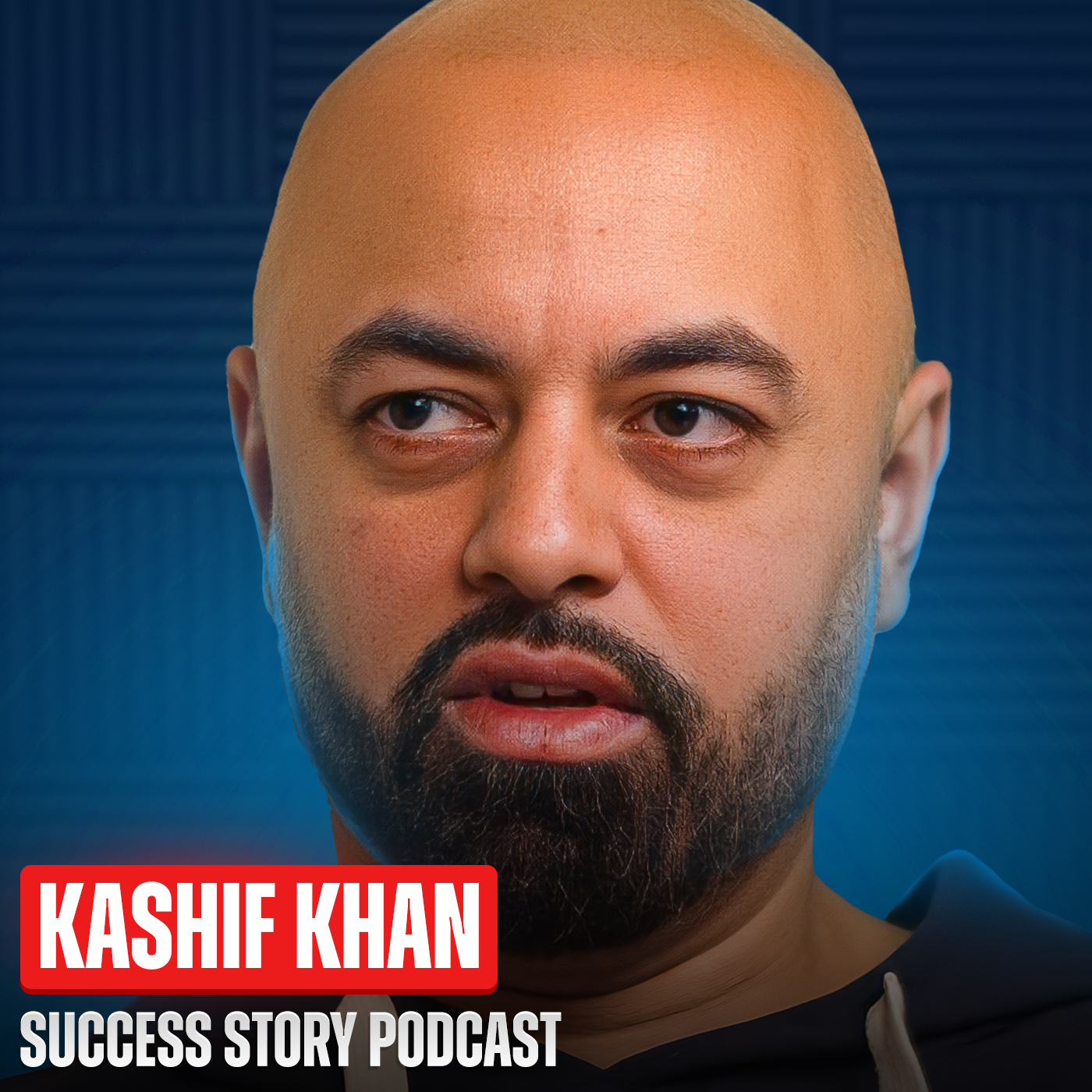
Success Story with Scott D. Clary
Lessons - How Your DNA Holds the Key to Preventing Disease | Kashif Khan - Genetic Health Expert
00:10:19
Loading summary
Transcript19 lines
- [00:00]
A
Indeed is a Success Story partner Now say you just realized your business needed to hire someone fast. How can you find amazing candidates fast? It's easy. Just use Indeed when it comes to hiring, Indeed is all you need. Stop struggling to get your job post seen on other job sites. Indeed Sponsored Jobs help you stand out and hire fast. And with Sponsored Jobs, your post jumps to the top of the page for your relevant candidates so you can reach the people you want faster and it makes a huge difference. According to Indeed data, Sponsored Jobs posted directly on Indeed have 45% more more applications than non sponsored jobs. Plus with Indeed sponsored Jobs, there's no monthly subscription, no long term contracts. You only pay for results. There's no need to wait any longer. Speed up your hiring right now with Indeed and listeners of this show will get a $75 sponsored job credit to get your jobs more visibility@indoubtedly.com Clary just go to indeed.com Clary right now and support our show by saying you heard about Indeed on this podcast. Indeed.com Clary terms and conditions apply. Hiring Indeed is all you need. NetSuite is a success story partner. Now what does the future hold for business? If you ask nine experts, you're going to get 10 answers. Bull market. Bear Market rates will rise. Rates will fall. Honestly, I just wish somebody could invent a crystal ball. But until then, over 41,000 businesses have future proofed their business with NetSuite by Oracle, the number one cloud ERP bringing accounting, financial management, inventory and HR into one fluid platform. With real time insights and forecasting, you're peering into the future with actionable data. And when you're closing the books in days, not weeks, you're spending less time looking backwards and more time on what's next. If I had needed this product, this is what I'd use. Whether your company is earning millions or even hundreds of millions, NetSuite helps you respond to immediate challenges and and seize your biggest opportunities. And speaking of opportunity, download the CFO's guide to AI and machine learning at netsuite.com ScottClary the guide is free to you at netsuite.com Scottclary netsuite.com Scottclay in this lessons episode, discover how your lifestyle, not just your genes, shapes your risk for diseases like Alzheimer's. Learn how brain inflammation is often the root cause how small changes in diet, stress and environment can prevent chronic illness and how your body is built to live longer than you think if you care for it the right way. I mean, I I've heard you speak about Alzheimer's and dementia quite a bit. And, and I'm predisposed to that, I think, to some degree because I think my, my grandpa got it. And I've. I actually did a DNA test of some sort. I can't remember which one it was, but it was showing like that was like the one thing that I should look out for. And I've thought about like, lifestyle changes and, and, and, and food and whatnot, but I've never really considered environment, and I've never even thought that there's supplementation that could completely or with a high degree of success find a way to sort of push off or delay Alzheimer's dementia. So you're saying that, like, I'm sure you know a lot about this. There are like supplement combinations, if you are in the proper environment and your, and your health and wellness is sort of on point that you can actually push this off, even if you're predisposed to it.
- [03:35]
B
Perfect example of what is believed as possible, even at the medical level. The doctor will tell you, you have this genetic marker. It speaks to an elevated risk of dementia. Watch out. Right? And the anxiety of that alone will cause the dementia, because that's one of the causes is high cortisol. Right. So we really need to use that more as a priority as opposed to a prescription. What biology actually leads to this outcome. So we reverse engineer. So what do we see? By the way, Chris Hemsworth, Thor. Right. We used to do, during our research, a lot of work on the Marvel movie sets. So the trainers of the stars, we'd work with them to build these cocktails to keep people at their best. So that those long shoot days, they had good recovery, good everything, good energy, good sleep. And so because of that, the one of the producer that made the show Limitless, remember Chris put out the show. Right. We were supposed to work on that show on the Genetic episode. And then Covid hit production got shut down. Chris is in Australia. I said, you know what, I'm gonna just do it anyway. I'm gonna pick up some cameras with my buddies. And that's what he did. So in that episode where he did the genetic test, he was told, you have the APOE gene, right? The Alzheimer's gene.
- [04:43]
A
I know, that was like a big story. It was, you know, cowboy story. Yeah.
- [04:46]
B
Everybody has the gene. What version you have determines what clinicians will say is a very low risk, 8 to 10 times risk or 17 to 25 times risk of getting dementia versus the average population. If you ask that doctor that told Chris that, and I literally sent an email to the producer saying, I just watched this episode. This is nonsense. There's so much more. Right? Here's what I told him, that yes, this gene is linked to people that have Alzheimer's. Because we only study things in a disease centric setting. Pharma companies don't study healthy people to ask them why they didn't get sick. They study people with a disease and figure out what genes are tied to it because that helps them make pills, right? But that's too late. What does this gene do? This gene is responsible for lipid transport. So moving cholesterol in your body, literally moving it around. So everybody has this, everybody has this gene, right? If you have inflammation in your brain, this gene is responsible to send cholesterol there to fight the inflammation. Cholesterol is a very beneficial hormone that fixes things all over your body. It's also, you know, a root for your sex hormones like testosterone, et cetera. It's also good for your brain, right? If you have the bad transport tool, you don't do a good job of transport. And so when you have the inflammation, the cholesterol deployed, it's easier for some to get less behind, left behind, I should say, and start to build what we call amyloid plaque, this plaque in your brain. That plaque starts to choke at the brain cells, kill the brain cells, and eventually lead to cognitive decline and a behavior that a doctor will call Alzheimer's. But if you actually reverse engineer it, step one, why did I have inflammation in my brain? Right? If, if that didn't happen, I didn't need to worry about what version of this gene that I had, which only comes from disease centric thinking, which is where research money goes, Right, I understand. So what causes the brain inflammation? Do you have leaky gut like I did, which is why I had brain fog and depression. Toxins exiting your gut wall, crossing the blood brain barrier, causing brain inflammation. That's one big cause. Do you have high stress, constant high cortisol, which is another source of brain inflammation? You need to tone that down. Metabolically dysfunctional. What are you eating? And what are your unique genetics saying about your ability to process those things? Some people decide to become a vegan, some people decide to go to on a keto diet when their genes actually don't allow them to do that and they're going to get sick from that thing, right? Fourth is environmental. And this is probably the biggest big underlying one that most people don't realize. There's a gentleman named Dr. Tom O' Brien who's one of the sort of pioneers of the functional medicine movement. And he did some research in California and said that 66% of California's dementia is based on what thing people are breathing. You know, one hour of LA traffic is an equivalent to a pack of cigarettes in terms of the amount of inflammation it causes. Right? So when you do that day in and day out, the cause, the brain inflammation just increased. The last one and the big one. This is why 80% of dementia cases are in women, is because your hormones that are meant to benefit you can cause inflammation if you're not doing the activity that your hormones are designed for. Right? And some women make toxic estrogens that can reside in your brain, cause inflammation. So all of these five things. So when I got your gene results, say we were working back then, when you got your thing, I would have said, okay, park this, don't worry. Let's look at these five things, right? If we plug the gaps and holes on these five things with either the right supplement or the removal of the wrong habit or cleaning up the environment, whatever your priority is, it's not happening. No brain inflation. You don't have brain inflammation now, which is why you don't have dementia now. Right. Once you get to a certain age, your mitochondria, the energy that's in the brain, starts to also reduce. So the ability to fight the inflammation changes. And that's why it's an old age disease. So if you start to look at all these little pieces of what's the biology actually driving the net outcome, you can work on each step and then it becomes a choice. You don't need to have this thing that you're told you have a risk for.
- [08:31]
A
I have to take a second and thank Northwest Registered Agent for supporting today's episode. Now listen. I know a lot of entrepreneurs listen to this show. If you're an entrepreneur, if you're building a business, you have to listen if you want to get more. When you're launching your next big idea, Northwest Registered Agent lets you establish your entire business identity in just 10 clicks and 10 minutes. For nearly 30 years, they've been the secret weapon for entrepreneurs who want to move fast while getting expert guidance. For just $39 plus state fees, they'll handle your formation, create a custom website, and establish your local presence wherever your business takes you. As an entrepreneur myself, what I value most is their one stop business solution. You get everything from formation paperwork to custom domains to trademark registration, all in one easy to use account. No more juggling all these multiple services or Wasting time figuring out the legal stuff. So don't wait. Protect your privacy, build your brand and set up your business in just 10 clicks and 10 minutes. Visit northwestregisteredagent.com success and start building something amazing. Get more with Northwest registered agent@northwestregisteredagent.com Success Lingoda is a partner of Success Story. Look, I'll be real with you. My French used to be solid. I learned it in school. I even had decent pronunciation. But when I booked a trip to France last year, it was a total blank. I could barely order a croissant without sounding like a tourist.
- [09:55]
B
So?
- [09:56]
A
So I jumped into the Lingoda Sprint Challenge and man, it changed everything. I'd take live classes late at night after podcasting. Only five students, max. Real teachers, real conversations. And in just two months, I went from bonjour to holding full conversations at a Paris cafe. Confidence unlocked. Now here's the play. 30 or 60 classes in 60 days and if you finish them all, you get 50% cash back. That's basically €4 or $5 per class. That's insane value. Go to try.lingoda.com successsprint and then use my code scottsprint for an extra €20 off on top of their current deal. Registration closes May 5th. Classes start May 12th. Let's get fluent. The HubSpot Podcast Network is a Success Story partner Now, if you like Success Story, you're going to love other podcasts in the HubSpot Podcast Network. One of my personal favorites is I Digress, hosted by my boy Troy Sandich. With shows under 30 minutes, I digress helps eliminate complexity, complications and confusion in your business with frameworks and strategies to achieve true, scalable and sustainable success. If you are an entrepreneur building anything you need to listen to I Digress. This is one of the most useful business podcasts you're ever going to subscribe to. Listen to I Digress wherever you get your podcasts. So all. All. All these predispose like predisposed to cancer, predisposed to heart disease. They're all things that can be mitigated to some degree.
- [11:41]
B
So. So there is some truth to genetic conditions, right? That is less than 3% of healthcare. According to the CDC, 90% of the $4.3 trillion healthcare budget in the United States is spent on chronic disease management. Things that are caused that we do not need to have. You're not born with it. It's not in you. You cause it. No fault of your own. You didn't know any better what you ate, what you breathed. The toxic people you're surrounding yourself by, whatever it was caused the inflammation that caused the disease. So if we can eliminate that in the United States, of the top 15 reasons why people die, 14 are rooted in inflammation. So if you don't have inflammation when whatever part of your body which leads to whatever disease, those are all off the table. And then all of a sudden you go from a, like you said, this expectation that, that you get your first chronic disease at 55, which is the American average, second by 65 and you spend the last 15 years of your life in treatment that is the norm versus a few simple tweaks and all of a sudden you jump from 78 average life expectancy to 90. Like I don't smoke, I eat clean, I exercise three times a week. And this literally by way is a result of a Harvard study, they studied a bunch of 90 year old plus people and they said, here's the five things. They didn't smoke, they exercised more than three days a week, they drank less than three drinks a week, they were not obese and they had a healthy whole food diet. That was it that got them from 78 to N. The 70 to 90 was 90 with good health, not 78 in a hospital bed.
- [13:17]
A
So without even doing a DNA test, I mean like if you just adopt these like 5 lifestyle changes which just seem to be smart common sense. So this is already going to fix the majority of the problems in your life and the majority of causes for inflammation.
- [13:32]
B
It said, you know, remove the modern conveniences that are making us sick.
- [13:36]
A
I was going to say it seems like our whole life is actually so. It's ironic because everything you just mentioned is so common sense and so easy. But our whole life and most people's lives are shitty food, stressful environment, and we just go through it every single day think and I think that intuitively we are, we always think, oh, I'll get better. Yeah, and I'll be less stressed and I'll work less and I'll eat better.
- [13:56]
B
And I'll do it later, I'll put it off. Right? Yeah. To prevent Alzheimer's in your 60s, you need to start working on your health when you're 35. Yeah, right. Because the chronic disease is not a switch that gets turned on over time. Your body's able to fight and is resilient at that age and can tone it down. Then all of a sudden the disease wins. And one last thought, there is the sort of kicker to all this is yes, adopt healthy habits. The last bit that people need to know is that some things that you think are healthy that is good for somebody else is actually bad for you.
- [14:28]
A
That's the X factor where you have.
- [14:29]
B
That's the X factor. Yeah. And that's the thing where that's how you get from 90 to 120. If you look at actually RNA, the cells aging is the degradation of DNA. So damaged oxidization, environmental wear and tear. There's these caps in our DNA called telomeres that are like bumpers, wear and tear. They're physically designed to last 120 years. So we know that our cells are designed to last 120 years. That's what we're supposed to get to.
- [14:54]
A
Measuring those can indicate your biological age.
- [14:57]
B
Exactly. Okay. Yeah. So that's why we use it for biological age measurement. We know they're supposed to last to 120. So if we already know that, we know 120 is what we're wired for and it's supposed to be 120 and you see it.
- [15:08]
A
We're willing ourselves.
- [15:09]
B
We are taking years away that we already have as a God given gift.
- [15:13]
A
Thanks for tuning in. If you found this valuable, don't forget to hit that subscribe button so you never miss an episode. And if you want to dive deeper into this conversation, check out the links in the description to watch the full episode. See you in the next one. HubSpot is a success Story Partner now if you're an entrepreneur, listen up because HubSpot makes impossible growth impossibly easy for their customers. If you are building a business, you need to get HubSpot. Why? Here's the perfect example. Morehouse College needed to reach new students with fresh, engaging content, a problem that every single business in the world has. But with a 900 page website, even the tiniest update took 30 minutes to publish. Now Breeze, which is HubSpot's collection of AI tools, has help them write and optimize their content in a fraction of the time. And the results? 30% more page views and visitors now spend 27% more time on their site. If you are ready for impossible growth like this, visit HubSpot. Com. This podcast is brought to you in part by Stash. Are you still putting off saving and investing? Because you'll get to it someday. Stash turns someday into today. Stash isn't just an investing app. It's a registered investment advisor that combines automated investing with dependable financial strategies to help you reach your goals faster. They'll provide you with personalized advice on what to invest in based on your goals. Or if you just want to sit back and watch your money go to work, you can opt into their award winning expert managed portfolio that picks stocks for you. Stash has helped millions of Americans reach their financial goals and starts at just $3 per month. Don't let your savings sit around, make it work harder for you. Go to get.stash.comsuccessstory and see how you can receive $25 towards your first stock purchase and to view important disclosures. That's get.stash.comsuccess story paid non client endorsement, not representative of all clients and not a guarantee. Investment Advisory services offered by Stash Investments, LLC and SEC Registered Investment Advisor. Investing involves risks and investments may lose value. Offers subject to T's and C's.