← Success Story with Scott D. Clary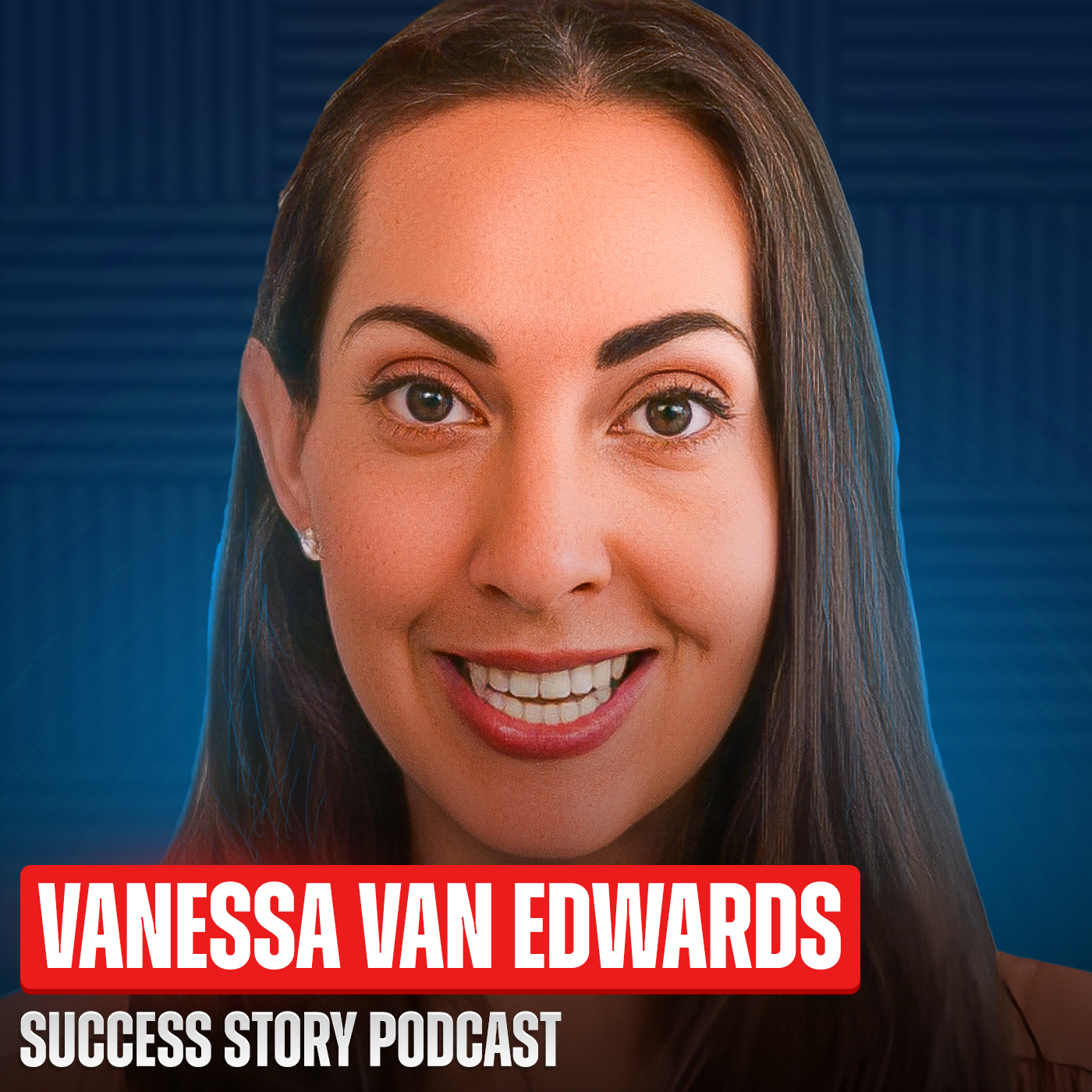
Success Story with Scott D. Clary
Lessons - The Hidden Body Language That Controls Everything | Vanessa Van Edwards - Behavioral Scientist (70M+ Views)
00:13:16
Loading summary
Transcript19 lines
- [00:00]
Interviewer
Success story is a Square partner now your favorite neighborhood spots run on Square. You know, I was just at Panther Coffee here in Miami last week. And beyond the incredible cortado, what struck me was watching them seamlessly handle the morning rush the barista mentioned they've been using Square to manage everything from inventory to building their loyal customer base. It's so much more than just that little white card reader that we all recognize. Square knows that local businesses can be big businesses. And as things get more complex, Square meets you at every opportunity. So whether or not you're expanding, expanding to new locations, building a loyal following, even covering cash flow gaps, Squares powering all the behind the scenes stuff that matters. They knock out today's to dos and they unlock tomorrow's what ifs. If you're ready to see how Square can transform your business, go to square.com go/success to learn more, that's square.com go/success square meet you there.
- [00:59]
Commercial Narrator
From taco night in Tulum to sushi in Tokyo, every bite is rewarding and Pulse worthy with MX Gold's 4 times membership rewards points at restaurants worldwide. Wherever you dine, points are piling up. So bring your friends along for your next course. Because it's not all about the posts, it's about the company and the memories. How can Gold from Amex sweeten your next food moment? Learn more at americanexpress.com/explore gold terms and.
- [01:27]
Interviewer
Points cap apply in this lesson's episode. Explore how unconventional career choices and persistence can transform ideas into thriving businesses. Discover how identifying untapped audiences creates rapid growth opportunities. Understand why tailoring content to match learner needs builds long term engagement and uncover how creative pitching and platform selection open doors to new markets. How did you start signing to people? How did you think like this is a viable business idea? How did you commercialize your brand to the point where now you're I guess you're writing books, you have other products I guess would be courses. You have like your whole social going on. You have people school. So how did that start as like, you know, entrepreneur? Go go.
- [02:19]
Course Creator / Entrepreneur
A funny story is that my parents are both lawyers and so when I was in college my mom, I think I was home for the summer or home for a break and she said I signed you up for a financial class. I was like great, I'm so excited to do that on my break. She said I am a lawyer and I'm paid by my hours and I don't want you to have to do that. I am constantly counting my hours. It was really hard for her as a working mom. She's like, I want to show you another way. She said, when I was going to college, I didn't know of another way. I thought you could be a doctor, a lawyer, accountant. Everything was hourly to a certain extent. There are other ways now. So she dropped me off at the. I think it was the LA Convention Center. I grew up in Los Angeles and was a Millionaire Mind seminar by T. Harv Eker. Have you ever heard of him?
- [03:03]
Interviewer
Yeah. Yeah.
- [03:05]
Course Creator / Entrepreneur
So it was a millionaire mind seminar. It was like a weekend seminar. And this seminar completely blew my mind because he introduced me to the concept of passive income. So at the time, I believe I was 18 or 19. So it's very young. And he explained that there is this other way of earning income that's not just based on your hours, that books and products and courses and. Or very powerful active income, which is like speaking or training or teaching. And so from that age, I knew that I wanted to create a career with passive income streams. And so from 2006 to 2011, I was trying all those ways. I hadn't found one that worked. So I was doing a lot of active income youth coaching. I had a youth workbook that I was selling, which was a passive income stream. Had my first book, which was published by Penguin at the time, and the one that you mentioned, do I get my allowance after I'm grounded? Very long title. Don't recommend that, by the way, if you're writing books, shorter titles are better. And so I had these very small little revenue streams and I could see how it was working. They were very slowly paying the bills. But still, most of my income at that time was coaching and consulting, which was very active. Once I figured out, you know what, there's something broader here, more than just the niche of working with youth and parents. I think these frameworks could be used by engineers at companies. I think that C Suite would love these. I think that coders and graphic designers would love to have people skills in their back pocket. And at the time, I believe it was 2011, 2012, I just started the website. Udemy, which was a new online learning platform, was just starting. And at that time it was all for engineers. It was almost all technical classes, a couple of accounting things on there. And so I thought that's my ideal person, someone who's super engineering minded. And so I said, I'm going to upload a body language course to Udemy as a passive income stream and just see what happens. So I filmed in my living room. I had no professional lights. I literally had all the lamps in my house. I had a $28 microphone that I had bought from Amazon that I, like, weaved through my shirt and pinned on my little blouse. And for three hours, I just taught the body language frameworks that I had been using. And I was like, okay, my goal was 30 sales. Like, if I can get 30 sales of a $49 course, it will just be major game changer. 30 sales. So I go to sleep, and it takes. At the time, it took about 24 to 40 hours for them to approve your course. So I go to sleep, I wake up the next morning, and my inbox was filled with thousands of sales. Thousands.
- [05:40]
Interviewer
Seriously? The first time you uploaded a course?
- [05:43]
Course Creator / Entrepreneur
Yeah. Yes. The very first time I pulled the course.
- [05:45]
Interviewer
Wow.
- [05:47]
Course Creator / Entrepreneur
I think now I want to say I'm at like, 376,000 students in that course. In my living room. It's still the same course. It's me in my living room with no lights, with a mic that probably didn't even work. And by the way, the entire thing was filmed on my phone. The entire course is filmed on my phone. That was the first time where I went, hmm, maybe there's something here. And so I. I'm rethinking what I'm.
- [06:17]
Interviewer
Doing for a living now. I'm not. The wheels are turning.
- [06:21]
Course Creator / Entrepreneur
I mean, yeah, it was. It was. It was like madness. And so in a wild. It was like the wild West. In. In six months, I completely changed everything that I was doing. I filmed four more courses, and this time, and every course got a little bit better. By the last course, I actually was with a little small crew. I found them, I put them on the platform. They were selling like crazy. Very quickly, requests started coming in for me to speak at companies. And the reason why it worked, I think, is because this was a platform where my people already were. There was already engineers and coders and accountants on there, learning online. This was the only soft skills course. I think there might have been one or two others. And so people were like, ah, something new. And what I heard was my students kept telling me, you're my lunchtime course. They would watch these other very serious courses during the day, but I was their break, their lunch, their dinner break, and they would buy every single course that I put out. And so that's when I realized, okay, like, I can be the soft skill balance to the hard skills, and I can teach soft skills. Like, hard skills. And that was in 2011. 20. I think 2012 was when I finally cracked the Udemy game. Yeah.
- [07:36]
Interviewer
Success story is a Square partner now your favorite neighborhood spots run on Square. You know, I was just at Panther Coffee here in Miami last week. And beyond the incredible curtado, what struck me was watching them seamlessly handle the morning rush. The barista mentioned they've been using Square to manage everything from inventory to building their loyal customer base. It's so much more than just that little white card reader that we all recognize. Square knows that local businesses can be big businesses. And as things get more complex, Square meets you at every opportunity. So whether or not you're expanding to new locations, building a loyal following, even covering cash flow gaps, Square's powering all the behind the scenes stuff that matters. They knock out today's to dos and they unlock tomorrow's what ifs. If you're ready to see how Square can transform your business, go to square.com/go/success to learn more, that's square.com go/success square. Meet you there. SurveyMonkey is a success story partner. Now look, we get it. You can hardly go anywhere or do anything these days without hearing about AI this or AI that. And if you're like most people when it comes to AI, you're impressed, but you have a few concerns. But what if AI was used not as a tool to replace people, but as a way to help understand people better? AI from SurveyMonkey is designed to do just that. From crafting the perfect survey, which is harder than you might think, to analysis that digs deep, finds patterns and services trends quickly. SurveyMonkey's powerful suite of AI capabilities makes it faster and easier than ever before to get insight from real people, helping you make confident decisions for your business. Try it today@surveymonkey.com Scott the HubSpot Podcast Network is a success story partner. Now the HubSpot Podcast Network has great podcasts like the Ops Authority. If you are constantly putting out fires in your business instead of focusing on growth and innovation, listen to the OPS Authority, hosted by Natalie Gingrich and brought to you by the HubSpot Podcast Network. Natalie speaks about actionable strategies that actually move your business forward. So every week, Natalie shares some transformational stories from real business owners who've mastered their backend systems so they can focus on what really matters. So get your OPS in order, get your business running smoothly so you can scale and you can really build something meaningful. Stop letting all this chaos steal all of your energy, and listen to the OPS Authority wherever you get your podcasts. Very impressive. Congratulations. Seriously, that's incredible success. Like, and like, you know, you got the content, timing, platform and it just took off. That's really, really impressive. I had no idea, seriously, that this was, this is how you sort of built your own brand, your entire company. The reason I was asking about education was sort of alluding to why I was also. So I'm just blown away by the fact that you put this on Udemy and it took off. And my point is, or my question is, is there anything else like this out there that teaches people? For 50 bucks, I'm assuming it's great content because 300,000 plus people have. I haven't taken the course yet. I can go check it after we finish this call. But it's so old.
- [10:40]
Course Creator / Entrepreneur
Take it. It's so old. If you want to take a course, take my newer one. It's. I'm so little. I'm so old. Oh, gosh.
- [10:45]
Interviewer
But the point is 300,000 people can't be wrong. Let's, let's be honest. Like that's, that's some social proof that the course is pretty damn good. So is no one else teaching this stuff or are there just the people that charge the Tony Robbins $5,000 for $10,000 at the competition?
- [11:04]
Course Creator / Entrepreneur
Right. Okay. So I think it was critical. It was definitely good timing, right? So it was very good timing that this was before the wild west of online courses, right? Like 2012, people were like, online what? Like, people kind of knew what it was, but it was very new. And so the timing was really good. The other thing was there are a few other. At the time, there were a few other people teaching soft skills or body language, but they were doing it in a very traditional way. It was very traditional. So they would be hired by a company, they would come and they would do a two day sales workshop and that was it. You couldn't access them otherwise. You couldn't even hire them as a coach. Maybe you could hire them as a dating coach. But no one had thought. In fact, I had other people tell me, you can't teach body language online. You can't teach body language in a video. And so that was actually hard. It was hard to move the content into video format. But I think that being willing to try, readers and students were like, yes, I don't want to attend. People also don't want to attend a two day workshop where they have to role play with their colleagues. My person. So I think it's also really important to know your person. My ideal student is a super high achiever, above average, intelligent Usually very technically minded, recovering, awkward person. They do not want to do a role playing workshop. They do not want to have to go to an HR webinar on here's how you smile at someone. They want to learn on their own time. And so that means, and this is one of the reasons why I almost exclusively teach on video is if they want to speed me up 2.5 speed, because that's how fast they learn. Cool. I'm not offended. Great. Do it. If they are like, no, I want to actually pause the video and absorb it. We have a lot of our students who say, I learn in chunks. I have to. I can only do 15, 20 minutes at a time. Cool. You can consume my content however you want. And so I think it was also critically important to know that my ideal student didn't like the way that a lot of my competitors were teaching.
- [13:09]
Interviewer
And I want to sort of unpack what you teach a little bit more before we go into that, because there's entrepreneurial lessons and then there's very tactical lessons that you teach over that. I kind of want to tease out and run through some of those and understand some of those. But before I migrate off, like your career path, was there anything else notable in your career path that you think would be good to chat about? Or is this kind of the summary of where you've been?
- [13:37]
Course Creator / Entrepreneur
So, yeah, I think that. So that was the first part. And the second part was I try to go to where my students are. So I try very hard to go to other platforms or other podcasts where my students are. So from Udemy, I went to CreativeLive. My next group that I wanted to meet was a different audience with a highly creative audience. Artists, photographers, who are super creative but hate selling. So that was my next group. I hit my engineers and my amazing computer geeks in Udemy. And then I wanted to hit my creative. CreativeLive was where they were all watching online content. And so I cold pitched CreativeLive. I was not invited to speak there. I had to bang on their door and I cold pitched them in the most creative way I could think of. I sent them an email to their support inbox that said, I want to make you money. And then I outlined all the ways that I thought my course could make them money. And it got forwarded internally. I didn't know this until later. It got forwarded internally and bounced from department to department to department until it finally had the right content producer who was willing to take a risk on me. And they brought me in San Francisco So this was a very different way of filming. They bring you into San Francisco, you film your course. And we took a risk. We did my first course with a three day course and it was one of their top selling courses across their entire platform. And so I've done four more courses for them. That is a different audience than my Udemy audience. And so I think that one of the major things that I've tried to do over the last 15 years is go to my people, know who my people are, one who are my people, and then try to meet them where they're at.
- [15:15]
Interviewer
Thanks for tuning in. If you found this valuable, don't forget to hit that subscribe button so you never miss an episode. And if you want to dive deeper into this conversation, check out the links in the description to watch the full episode. See you in the next one. Claude is a Success Story Partner Now As a podcaster, my worst nightmare used to be going into an interview under prepared. Now Claude has completely changed my prep game. And if you don't know what Claude is, Claude is the AI for minds that don't stop at good enough. It is the collaborator that actually understands your entire workflow and thinks with you, not for you. Whether or not you're debugging code at midnight or you're strategizing your next business move, Claude extends your thinking to tackle the problems that matter. I feed Claude my guest articles before I do a podcast. I feed it their company updates, past interviews, and it helps me spot the angles that nobody else is talking about. Last week, Claude's research capabilities pulled together insights from over 30 sources about my guests industry and it helped me ask questions that always make them say great question. Nobody's ever asked me that before. Claude is by far the most useful tool to grow any business, any podcast, and really just help you extend your thinking on whatever it is you're working on. If you're ready to tackle bigger problems, sign up for Cloud today and get 50% off Cloud Pro when you use my link. Claude AI/success SurveyMonkey is a success story partner. Now look, we get it. You can hardly go anywhere or do anything these days without hearing about AI this or AI that. And if you're like most people when it comes to AI, you're impressed, but you have a few concerns. But what if AI was used not as a tool to replace people, but as a way to help understand people better? AI from SurveyMonkey is designed to do just that. From crafting the perfect survey, which is harder than you might think, to analysis that digs deep, finds patterns and surfaces trends quickly. SurveyMonkey's powerful suite of AI capabilities makes it faster and easier than ever before to get insight from real people, helping you make confident decisions for your business. Try it today@surveymonkey.com Scott.