← Success Story with Scott D. Clary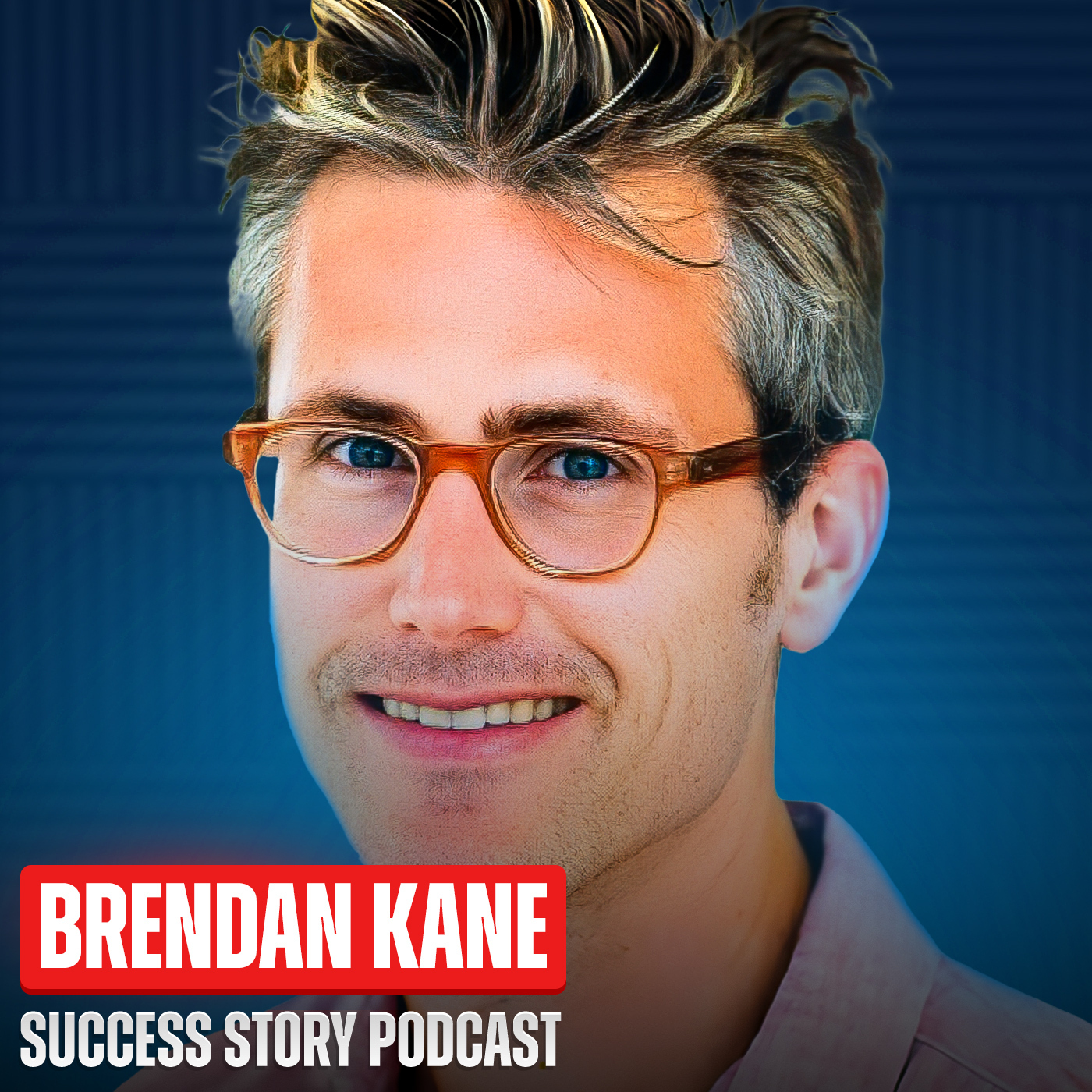
Success Story with Scott D. Clary
Lessons - The Viral Content Formula That Built Millions of Followers | Brendan Kane - Social Media Strategist
00:12:22
Loading summary
Transcript9 lines
- [00:00]
A
HubSpot is a success Story Partner now if you're an entrepreneur, listen up because HubSpot makes impossible growth impossibly easy for their customers. If you are building a business, you need to get HubSpot. Why? Here's the perfect example. Morehouse College needed to reach new students with fresh, engaging content, a problem that every single business in the world has. But with a 900 page website, even the tiniest update took 30 minutes to publish. Now Breeze, which is HubSpot's collection of AI tools, helped them write and optimize their content in a fraction of the time. And the results? 30% more page views and visitors now spend 27% more time on their site. If you are ready for impossible growth like this, visit HubSpot. Com. Indeed is a Success Story Partner. Now say you just realized your business needed to hire someone fast. How can you find amazing candidates fast? It's easy. Just use Indeed. When it comes to hiring, Indeed is all you need. Stop struggling to get your job post seen on other job sites. Indeed Sponsored Jobs help you stand out and hire fast. And with Sponsored Jobs, your post jumps to the top of the page for your relevant candidates so you can reach the people you want faster and it makes a huge difference. According to Indeed data, Sponsored jobs posted directly on Indeed have 45% more applications than non sponsored jobs. Plus with Indeed sponsored Jobs, there's no monthly subscription, no long term contracts. You only pay for results. There's no need to wait any longer. Speed up your hiring right now with Indeed and listeners of this show will get a $75 sponsored job credit. To get your jobs more visibility@indoubtedly.com Clary just go to indeed.com Clary right now and support our show by saying you heard about Indeed on this podcast. Indeed.com Clary terms and conditions apply. Hiring Indeed is all you need. In this lesson's episode, discover how early content creators broke traditional film rules and built deeper connections by making social media personal. Learn why storytelling still drives attention in a crowded digital space. Learn how today's viral content relies more on retention than follower count. And learn why building trust with your audience through organic content creates long term business impact. When you when you started to look into what these individual content creators like, really early nascent stages of social were doing. It's interesting. I'm sure you saw it from a professional lens because this is what you went to school for and you worked with the best of the best. But what were they doing? Anything that was taught in film school at all in sort of best practices for creating compelling content at all. Was there any similarities or was this radical shift in almost a 180 from the way Hollywood was doing it actually serving them better?
- [03:03]
B
Yeah, so it's a great question. There were some major differences and there was also some similarities. So in terms of the differences, one of the big differences that was kind of overlooked in the beginning was you had these, most of the, kind of like the bigger influencers at the time. And again they weren't called influencers, but there were people in their bedroom on web cameras and a lot of people wrote them off because of that. They're like, oh, it's just some kid in their bedroom on a web camera. But the difference was if you think about movies and television, it's a very passive experience. You're just kind of engaging with this content from a passive. You're just watching it, consuming it, versus in the. And it still holds true today with social media. It's a very active experience. Like the first YouTubers would let you in like they're your friend, like they're connecting with you in a one to one basis. And that's a big mistake that people make with social media is they think it's one to many when it's really a one to one platform. Because if you think about when we're mostly consuming social media, we're sitting on a couch, on the train, on a bus, whatever that may be, by ourselves consuming that content. So that's a big distinct difference. Now similarities is you're still having to tell a story. Like you need to be able to grab that attention and hold that retention through retention and have some type of payoff. And that's what a lot of the top creators were doing at the time. Now it's a different type of storytelling. They're not using like the three act structure in terms of how those stories were unfolding, but they were still telling stories even if it was about their day of what unfolded or things of that nature that was causing the people that were really rising to the top to connect and you know, generate that level of engagement initially.
- [04:45]
A
Yeah, no, I just, if I think about, I mean I've looked at a lot of your work and you really pinpoint and you like you, you slay some, you know, sacred cows and really some really sort of, you kill some ideas about what creates great viral content that I think are incorrect. I think that's probably some of the best work that you do. And I think that you sort of reposition and refocus people on what they should be focusing on and what they should be sort of over indexing on and what they should be paying attention to when it comes to creating viral content, that's really, in my opinion, like, that is your life's work. And when you think about what has created these early influencers versus what creates viral content today, do you think it's the same things you think it's changed over time? Do you think that it's evolved or are like there's core fundamentals that you have studied, you believe to be true, you've seen replicated again and again and again and again that hold true over the lifetime of social media?
- [05:45]
B
I think it's definitely changed. And there's one, there's one key ingredient that's caused that dramatic shift, and that's the number of people using social media. So when I first started, like back in 2005, we're talking maybe a few million people on these platforms. Today, it's close to 5 billion. And the reason that shifts that dynamic is the sheer amount of content that's being produced. And what that means is you have far more competition. So what worked and broke through in 2005, 2006, 2000, even through 2010, the barrier of entry is much lower. So your storytelling didn't really need to be as dialed in as it needs to be today. In addition, people have been using social media for so long that they've become professional consumers of content on these platforms. Meaning they can tell within like a split second or less than a second. And it may not be a conscious decision, it may be subconscious. Am I going to consume this piece of content or am I going to scroll to the next one? So there's a lot of fundamental kind of storytelling dynamics and nuances that go into what makes successful content today versus if you were doing it back in like 2005 through 2010.
- [06:56]
A
But I want to, I want to differentiate between successful content and viral content. Are they. Are those different kinds of content? Or in your mind, can all content be viral content?
- [07:11]
B
I love that question. That's such a great question because virality is a term that's like thrown around. And some people think of virality as Mr. Beast, but other people getting like 50,000 views on a post is going viral. To me, it's like, what is important for your business? What is important for the impact that you're trying to have and the brand that you're trying to build. Now when we're analyzing content to try and understand what are the patterns, what are the structures that we need to emulate, we're looking at a certain benchmark of in the millions of views to kind of gauge and dissect the content. But for an individual, for a business or brand, fifty thousand, a hundred thousand, two hundred thousand may be considered viral or more maybe success. And that's more kind of what we're after is like we what is going to have the impact, the bottom line that you're going after with your content and not saying that like if you're a, you know, a, a dentist or a nutritionist or something like that, maybe a hundred thousand views is all you need and you can consistently do that and you have more business, more impact than you know what to do with. And that's completely fine.
- [08:17]
A
The Superhero Leadership Podcast Is a Success Story Partner now what does it take to lead like a superhero? You're going to find out on the Superhero Leadership Podcast podcast. It's hosted by Marvel's former CEO and legendary turnaround expert, Peter Cuno. Each week, Peter is joined by top performers from business, media and beyond. Leaders who have mastered the art of impact, resilience and vision. Together they explore Peter's 32 leadership essentials, revealing what it really takes to rise, inspire and lead with purpose. If you want to level up your leadership, this is your blueprint search for superhero leadership. Wherever you get your podcasts, I have to take a second and thank Northwest Registered Agent for supporting today's episode. Now listen. I know a lot of entrepreneurs listen to this show. If you're an entrepreneur, if you're building a business, you have to listen. If you want to get more when you're launching your next big idea, Northwest Registered Agent lets you establish your entire business identity in just 10 clicks and 10 minutes. For nearly 30 years, they've been the secret weapon for entrepreneurs who want to move fast while getting expert guidance. For just $39 plus state fees, they'll handle your formation, create a custom website and establish your local presence wherever your business takes you. As an entrepreneur myself, what I value most is their one stop business solution. You get everything from formation paperwork to custom domains to trademark registration all in one easy to use account. No more juggling all these multiple services or wasting time figuring out the legal stuff. So don't wait. Protect your privacy, build your brand and set up your business in just 10 clicks and 10 minutes. Visit northwestregisteredagent.com success and start building something amazing. Get more with Northwest registered agent@northwestregisteredagent.com Success NetSuite is a Success Story Partner. Now what does the future hold for business? If you ask nine experts, you're going to get 10 answers. Bull market, bear market. Rates will rise, rates will fall. Honestly, I just wish somebody could invent a crystal ball. But until then, over 41,000 businesses have future proofed their business with NetSuite by Oracle, the number one Cloud ERP bringing accounting, financial management, inventory and HR into one fluid platform. With real time insights and forecasting, you're peering into the future with actionable data. And when you're closing the books in days, not weeks, you're spending less time looking backwards and more time on what's next. If I had needed this product, this, this is what I'd use. Whether your company is earning millions or even hundreds of millions, NetSuite helps you respond to immediate challenges and seize your biggest opportunities. And speaking of opportunity, download the CFO's guide to AI and machine learning at netsuite.com ScottClary the guide is free to you at netsuite.com Scottclary netsuite.com Scottclay you know, you've put out work about how to build a massive audience, a massive following in your mind. Now if you sort of like if you look at what's been most impactful in, in your life, in your career, and whatever metric you're tracking, do you think that brands should even focus on that? Because a lot of people throw around the word like vanity metric and is it useful? Is it not social proof? Does it add value? Is it actually driving leads, revenue, all that? So I mean, you wrote a whole book on how to grow your following. So is that a metric people should even track anymore? Was it ever a metric people should track? Talk to me about that.
- [11:42]
B
Yeah, it's, there's a lot of levels to that question and it's really intelligent question. So when I first wrote the book, 1 million followers, that was 2017, I wrote the first version of it and I've released like three or four different versions of that book. But back then following meant a little bit more than it does today from the standpoint is the amount of reach that you would get with each post. Like you around that time, if you had say a million followers, you could get like reach of like 30 to 40 to 50% of that audience with the content that you're publishing. But as we just recently discussed, like the more people are on the platforms, the algorithms really have to determine like what are the pieces of content they're going to retain audience because the, there's a lot of demonization and myths around the algorithms. They're there to serve One goal, and that's just to keep people on the platforms longer. The longer people spend on the platforms, the more ads they conserve. 99% of the time they're not shadow banding your shadow banning your content. They're not suppressing it to get you to pay for reach. It's just they're looking for the best content that can grab and hold attention over other content. So if any one of us opened up our favorite app today, like whether it's TikTok, Instagram, YouTube, Facebook, there's probably 150,000 pieces of content it could see to us based upon the accounts we follow, the content that we've engaged with. So they can't just because you're following an account, make sure that every piece of content they're going to see because there's all this other competition out there. So just because you have a lot of followers doesn't mean you're going to reach a lot of them. So. So that's kind of number one. I always kind of say focus less on the number of followers and focus on like what is the impact that you're having with that content. Typically we're looking at views to see is it breaking through, is it holding attention? But to your point is like, why are we doing social media? And for people it's different reasons. Like for some people it's like pure leads. Like I need to generate leads for my business and I need to generate, you know, you know, sales calls, sell products, whatever it may be, whatever that foundational piece is, like, that should be your guiding light in goal there. For some people it is getting kind of the recognition having a number next to their name so they can get on stages, get book deals and things of that nature. So it really kind of depends on the individual. The one thing that I will say though is there is a big distinction between organic social and paid social. And a lot of people misunderstand organic. They think that organic social is meant to sell your product. It's meant like, I'm going to do a product shot, I'm going to talk about my product and things of that nature. Organic social is about building that trust that what we call to get people to know like and trust you. If people know like and trust you with organic, they're ultimately going to want to buy from you and take that next step. But you can't lead with the sale. You know, paid media, you can kind of lead with the sale and go more direct response. But that's a big distinction is like organic is really about how you build that relationship, how you tell that effective story, so. So that ultimately people want to take that next step. Then as you get more experience and more success, you can play paid and organic off of each other. That's where you can really maximize it. Just to give you an example of that, because it kind of seems counterintuitive. It's like, why am I going to make content if it's not selling my product? We were working with a leather craftsman. His name's Tanner Leatherstein. And he came to us really struggling with social media, didn't have a lot of experience. He has like 2000 followers. And the. The challenge and problem he was having was he was trying to sell his products. And what his products were with leather goods, it was like leather handbags and purses and wallets. But we took a step back and said, well, what is the way that we could best express his expertise and genius through a storytelling format. Build that know like and trust where it motivates people to go and buy the product without having to talk about his products. So we helped him design a format called Is it worth it? Where. Where he'll buy like a $500 Chanel handbag, deconstruct it on screen, and tell you whether it's worth the money that you paid for it. So that format took him from 2000 followers to 2.5 million across all of his social channels. And if you watch his content, there's no CTAs, he just has the link in his bio. And previously he was spending ads on like pay per click advertising, search advertising. He was generating 10,000 visitors a month. But when the organic took off, it jumped to 100,000 purely organic. And his most expensive items, the items he was selling for thousands and thousands of dollars, that were custom made, he couldn't keep them on the shelves. So I just use that as an example. Is first, he's a very niche, kind of like expertise. But also he's not trying to kind of sell you the product. He's trying to kind of build that relationship. And by building that relationship, it ultimately pays that dividends. And you think about, like, why do you. Why does Nike and Reebok and Adidas and all these beauty companies spend billions of dollars on like celebrity endorsements, athlete endorsements, and things of that nature? Because that inherent relationship is already built there that you're just tapping into it that leads to that ultimate sale and conversion.
- [16:48]
A
Thanks for tuning in. If you found this valuable, don't forget to hit that subscribe button so you never miss an episode. And if you want to dive deeper into this conversation, check out the links in the description to watch the full episode. See you in the next one. The HubSpot Podcast Network is a Success Story Partner now if you like Success Story, you're going to love other podcasts in the HubSpot podcast network. One of my personal favorites is I Digress, hosted by my boy Troy Sandich. With shows under 30 minutes, I digress helps eliminate complexity, complications, and confusion in your business with frameworks and strategies to achieve true, scalable and sustainable success. If you are an entrepreneur building anything you need to listen to I Digress. This is one of the most useful business podcasts you're ever going to subscribe to. Listen to I Digress. Wherever you get your podcasts.