← Success Story with Scott D. Clary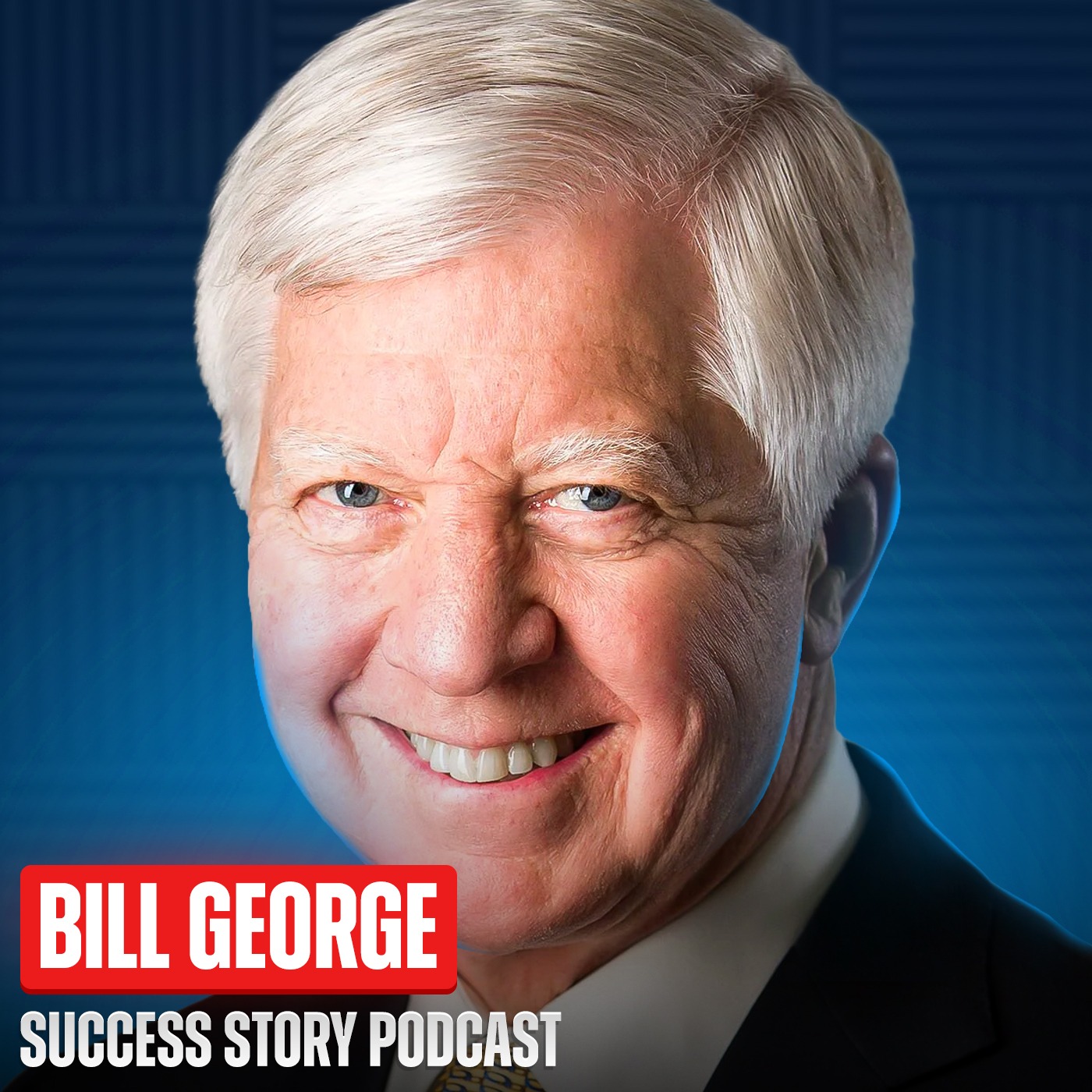
Success Story with Scott D. Clary
Lessons - True North Is the Only Leadership That Scales | Bill George - Former Medtronic CEO
00:14:25
Loading summary
Transcript53 lines
- [00:00]
Scott
Wix is a Success Story Partner now.
- [00:02]
Co-host
When I started Success Story, I was doing everything myself. I was building the website, I was.
- [00:06]
Scott
Editing episodes, I was figuring out tech.
- [00:08]
Co-host
That I had really no business figuring out.
- [00:10]
Scott
But if I was starting today, I'd use wix.
- [00:12]
Co-host
Here's the thing. Wix is not some basic drag and drop situation.
- [00:16]
Scott
You can build legit professional grade websites in minutes. Their AI website builder asks you a few questions and it generates a custom site ready to go. Or if you're more hands on, They've got over 2,000 templates and and an editor that lets you customize literally any detail. What I really like is the AI tools built specifically for entrepreneurs. Unlimited image generation, automated email marketing, SEO help. The stuff that used to eat up your entire week. And it's all backed by enterprise grade security with 99.99% uptime so your site doesn't go down when it matters most. 280 million businesses run on Wix. If you've been putting off building your site, this is your sign. Sign up for free@wix.com that's wix.com Belay is a success Story Partner now are you spinning your wheels on low value tasks? Do you spend more time putting out fires and planning your long term goals? As your business grew, you brought on more people and booked more meetings, but focus became even harder to find.
- [01:15]
Co-host
Here's the truth.
- [01:16]
Scott
Business leaders shouldn't lose hours to emails, scheduling, project tracking and avoidable interruptions. Just because it all has to get done doesn't mean it needs to be done by you. That's where our friends at Belay can help. Belay's US based Remote Executive Assistants don't just take work off your plate. They learn how you operate, what slows you down and where things tend to go sideways.
- [01:38]
Co-host
Then they get ahead of it.
- [01:40]
Scott
So if you're looking for a practical tool to help you start leading with clearer purpose, download Belay CEO Tricia Shortino's free resource the 40 Hour CEO Workweek Planning Guide. Just text the word Scott to 55123 for your free copy today. That is S C O T T to 55123 to start accomplishing more while juggling less with Belay. Northwest Registered Agent is a Success Story Partner now when I first started my business I had no idea how much goes into just existing legally, right? LLC paperwork, registered agent, business address compliance. I I was googling at 2am trying to figure out what all this meant. And if you're starting something right now, I am telling you don't do it that way. Northwest Registered Agent lets you build your complete business identity in just 10 clicks and 10 minutes. We're talking LLC formation, domain name, business email, phone number, business address, registered agent, and compliance all for just $39 plus state fees. They've been doing this for almost 30 years. Largest registered agent service in the country with over 1,500 corporate guides who are actual human who know your state's laws and will walk you through it. Don't wait, protect your privacy, build your brand and get your complete business identity in just 10 clicks and 10 minutes. Visit northwestregisteredagent.com paid success and start building something amazing. Get more with Northwest registered agent@northwestregisteredagent.com paid.
- [03:13]
Co-host
Success in this lessons episode, explore how.
- [03:16]
Scott
Finding a true north shapes purposeful leadership and long term fulfillment.
- [03:20]
Co-host
Beyond external success. Discover how deep self awareness clarifies values and career direction. Understand why authentic leadership builds trust and.
- [03:27]
Scott
Resilience inside organizations, and uncover how mission driven principles guide leaders through uncertainty, growth and crisis.
- [03:41]
Co-host
So the concept of True North, I want you to describe that concept and I think that that's that would be the epitome of finding your purpose and your calling in a professional and personal sense. Correct? Is that what True north means?
- [03:56]
Bill George
Absolutely. True north is who you are at your deepest level. It's the beliefs that you have that you're raised with or you have the values that you live by, the principles you lead by, and where you find real joy and satisfaction and fulfillment in your life. Again, it's not about the external motivations like money, fame and power. Those things will come along, by the way. But you have to find the right place for you, which we call your sweet spot, where you are highly motivated by mission values. And see, that wasn't true at Honeywell. The mission was making money in those days. That was some time ago, 30 years ago. But you know, and you weren't, you were coming. Engineers come, you really couldn't be yourself. And I think today it's all about being authentic. And that's what younger leader, younger people in your organization, the Millennials, which are more than half of your employees, are looking for, they want you to be real. They aren't interested in somebody who's terribly impressive. They're much more interested in someone who cares about them.
- [04:58]
Co-host
It's interesting though, because when a CEO is real and authentic and vulnerable, that's super scary because then it opens up all the flaws in the business and it makes things seem not as. And in reality, things probably aren't as great as the CEO would like them to be. So for, for a leader, actually I want to, I want to double down on true north first and then I want to understand how they can best do that while building and scaling an organization. So first a leader. That's that. So you have somebody who wants to lead an organization, whether or not they're building it from the ground up or they've worked their way up and they're trying to figure out where they want to place themselves and position themselves as a, as a manager or an executive vp, C suite director, whatever. How do you discover your true north? How did you discover your true north outside the fact that your, your wife called you out on being miserable and not being happy and not being in the right spot? How can a leader effectively figure out and define their true north so that they can make more meaningful career decisions?
- [06:02]
Bill George
Well, I think you have to spend a lot of time developing your self awareness. It starts with understanding your life story, who you are, where you come from. Those are your roots. It's like a giant tree is nourished by its roots, your values and the principles that you and beliefs you have. But beyond that, then you kind of deal with the difficult times as you started out asking a question. Difficult time. Well, those define you much more than the good times. The good times, you tend to think you're better than you are. And it's when everything gets stripped away that you realize who you are. You look yourself in the mirror. And I strongly advocate two practices for everyone, including all the CEOs we work with, from MBAs to CEOs and that's one. Take 20 minutes a day for some form of introspection. I'm a meditator. I've been meditating for 45 years. It could be some form of mindfulness. It could just be going for a long walk, taking a jog, something you kind of clear the mind, put all the electronics away and think about how did I show up today? Was I the kind of leader I wanted to be? I was excited about what I was doing, Did I feel fulfilled? And those are really important questions to ask yourself every day. That's the first one practice I recommend people add. The second one is get honest feedback, have people around you that tell you what you don't want to hear that'll tell you the truth or how you're coming off. I had a lot of people around me will walk in my office and say, bill, you didn't handle that meeting well today. A lot of people are upset you know, you need people around that tell you the truth. And I think 360 feedback, particularly from your subordinates and your peers, is the most valuable thing you can get. And every class I teach at hbs, so I get feedback. Some of it's kind of painful, but that feedback is how you learn. Otherwise you can be deluding yourself about how well you're doing. That's the honest feedback.
- [08:01]
Co-host
And then let's. So then to follow up on that, you figured out who you are as an individual. You have a feedback loop in place. You have time set aside for self awareness, introspection. So you've now slotted yourself into an organization in a spot where you want to be with a team that you want to work with. But that whole concept of authentic leadership and even like radical candor and transparency for a leader, that's usually probably a very scary thought. So how do you effectively action that in an organization without jeopardizing the organization?
- [08:38]
Bill George
Well, I think that's a very good question because it is scary. And I know for a long time I try to be the guy that had all the answers. And then you're not really using the people you work with. I think it's extremely important, Scott, for leaders to admit their mistakes, because if you don't admit your mistake, then the people working for you can't admit theirs. And that's a form of vulnerability. And, or to say, I need your help, I don't know how to solve this problem. Will you help me? And people invariably will help you if you're willing to admit that. But if you think you act like you have the answers when everyone knows you don't, you're going to be in trouble. So I think that opening up now, you just don't go to a town hall with 10,000 people. And you know, and totally do that. But you can be very comfortable with people you're closest to. And you need to know who those people are. And that's why it's so important that people have around you both in your key leadership roles, but also people who will mentor and guide and support you.
- [09:39]
Scott
Framer is a success story partner. Now, you could be a solopreneur. You could be an entrepreneur. You could be somebody just sitting at home who's trying to start a business out of their house. But you know the drill. You need good design to create a website to get your business off the ground. But good design is expensive and you can't afford to hire a designer for every single landing page, social post. But you also can't afford to look.
- [10:00]
Co-host
Amateur and I've been there.
- [10:02]
Scott
You need to move fast.
- [10:03]
Co-host
You need to look professional, but you.
- [10:04]
Scott
Also need to not blow your budget on five different tools. Framer already built the fastest way to publish beautiful production ready websites and it's now redefining how we design for the web with the recent launch of Design Pages, a free canvas based design tool. Framer is more than a site builder. It's a true all in one design platform. From social assets to campaign visuals to vectors and icons, all the way to a live site. Framer is where ideas go live, start to finish.
- [10:33]
Co-host
And the best part is it's actually free.
- [10:35]
Scott
Not a trial free. I'm talking unlimited projects, real vector tools, 3D transformations, everything you need without the nickel and diming. So if you're ready to design, iterate and publish all in one tool, start creating for free@framer.com design and make sure you use Code Success Story for a free month of framer pro. That's framer.com design and use promo code success story framer.com design promo code success story rules and restrictions may apply. LinkedIn ads is a success story partner Now I get served the worst ads. Like I'm a 35 year old guy running a podcast and a business and.
- [11:13]
Co-host
I'm seeing ads for retirement communities and.
- [11:15]
Scott
Cat food and I don't have a cat. Someone paid for that impression and it was completely wasted on me. So when you want to reach the right professionals, use LinkedIn ads. Over a billion professionals, 130 million decision makers you can target by job title, seniority, industry, company size. You're actually reaching the people who can say yes. LinkedIn ads delivers the highest B2B return on ad spend of any major ad network. Not just some of them, all of them. So here's the deal. Spend $250 on your first campaign and get a $250 credit on your next campaign. Just go to LinkedIn.com success. That's LinkedIn.com success. Terms and conditions apply. Northwest Registered Agent is a success story partner. Now when I first started my business, I had no idea how much goes into just existing legally, right LLC paperwork, Registered agent, Business address compliance. I was googling at 2am trying to figure out what all this meant. And if you're starting something right now, I am telling you, don't do it that way. Northwest Registered Agent lets you build your complete business identity in just 10 clicks and 10 minutes. We're talking LLC formation, domain name, Business email, phone number, business address, Registered agent and compliance, all for just $39 plus state fees. They've been doing this for almost 30 years. Largest registered agent service in the country with over 1,500 corporate guides who are actual, who know your state's laws and will walk you through it. Don't wait, protect your privacy, build your brand and get your complete business identity in just 10 clicks and 10 minutes. Visit northwestregisteredagent.com paid success and start building something amazing. Get more with Northwest registered agent@northwestregisteredagent.com paid success.
- [13:07]
Co-host
Yeah, and when you look at the average leader and what they're dealing with in organizations, let's look at what a leader would have to deal with 30 years ago versus what they're dealing with now. So what is the difference in how you lead an organization? What are the norms and what is the sort of the status quo of what leadership is? And then also why are some of the principles that are true north principles timeless? So what has changed? What has stayed the same and how did these, how do these principles effectively, these will be applicable in right now and also in, you know, 10, 20, 30 years from now?
- [13:48]
Bill George
Well, 20 years ago we were admiring the command and control style, the all powerful white American male, if I may say, you know, and Jack Welch is epitome of that. But there are dozens of others who tried to emulate that style and moving away from that now played it out. And I think everything has changed because today the people you work with have changed dramatically. They want you to be real. They don't want you to be an image. They don't want you to be some person in the corner office driving, you know, a Porsche. You know, they want to know who you are and what are the challenges you face and who you are you need. Leaders today need to be out with their employees, not sitting in looking statistics, sitting in their offices or having meetings in their conference rooms. They need to be out with their people. And employees today want to know, is this person for real? Can I trust this person? And can I, am I willing to give everything I've got to this organization? Because if I don't trust the leader, I won't do it. And so that's the big change. That's a huge change. And the reason I wrote the book for emerging leaders is I really feel like we need to have this generational change from the baby boomers, if you will, to the Gen Xers and the millennials and eventually the Gen Zs to take over leadership for our organization because they grew up in this they understand the other thing I would say, Scott, there's been an enormous change in expectations of our leaders. In the old days, you could just kind of put your head down, do the job, delegate out all the work and make the numbers. Make your quarterly numbers, stock markets, please, and everything's fine. That's not true. Today we're looking for leaders to have a position on public issues, to represent their employees in public. When George Floyd was murdered here in Minneapolis, any CEO in this town that not only had to speak out, but beyond that needed a real plan to recognize the flaws in the organization relative to diverse people and how they weren't being treated properly and getting the opportunities. And that's what people expected. And frankly, the CEOs in this town stepped up. But that's a big change, to know where you stand on things. And your employees want to see that you're real and you're out there.
- [16:03]
Co-host
And Minneapolis was basically ground zero from one of the most topical social issues in the past two years. And obviously you had proximity to that, and you had CEOs that had proximity to that. But when you deal with something like that as a CEO, there's no playbook. You didn't even learn about this. I mean, probably before in hbs, maybe now there's more education and understanding about how to react and how to do things differently. But outside of just improving your organization and improving DE and I within an organization, how does a leader react? How does a leader take a stand? When should a leader take a stand?
- [16:43]
Bill George
Well, I think anything that relates to your mission and values, I think every corporation has to be clear about its mission or its purpose, same thing. And what its values. And if it violates that and say you value diverse people, and if it violates that, you better step into it. The real backstory. And Bob Chapek at Disney is, unlike Bob Iger, he didn't represent his employees. And then he shifted position in mid midterm and got himself in a political maelstrom with the governor of Florida. But what the problem was, he didn't step out and take a stand on things. So leaders today are doing that not just because it's expected, but because they're being chosen because they care about these issues. And that's really important. But I think you can't speak out on everything. So you need to concentrate on issues that are really important to your organization, to its mission and its values. And that's what it comes down to. So if that's the only grounding you have there, like you said, Scott, there's no crisis playbook for these things. There's no Covid crisis playbook that existed three years ago. There was no playbook for, you know, a black man being murdered by a policeman and with a video that goes viral around the world. There's no playbook for this. So that's why you have to know how to step up and you have to be have experience having led through crises because if you haven't today, you're not going to be ready when the big crisis comes along.
- [18:11]
Co-host
And, and so something as close to home as George Floyd, it makes a lot of sense for somebody to take a stand on, but when you look at other topical global events like Ukraine, for example, well, you can't necessarily make a ton of changes within your organization that are going to be directly tied to what's going on in Ukraine. So should, for example, something like that, should a CEO take a social stance on that even if they don't have international like, you know, international reach? Is that something that's, I guess would like hit that threshold for CEO speaks out or does that start to seem like a distraction to the core business?
- [18:53]
Bill George
Both. I think they've been forced to. The work coming out of Yale is kind of calling people out, but I think, you know, and they're outstanding companies like Cargill in this community, Johnson Johnson, who may have the greatest respect, are staying in Russia. Many hundreds of companies like Goldman Sachs who are served on the board are pulling out. But I think each company has to make its own decision then say why J and J would say, you know, our credo calls for us to provide life saving drugs to people and we can't pull those out. But yeah, I think people had to take a stand, have to take a stand on that. Now a trickier one is China because, you know, you can easily give up your business in Russia where it's going, but it's pretty hard to give up the Chinese marketplace, this is much trickier. And the Chinese government's been so punishing of anyone who speaks out. Look what happened to Jack Ma, who I featured in a previous book. A CEO, founder and CEO of Alibaba, former CEO, fantastic leader, you know, and he's been more or less isolated and disappeared for weeks and months at a time.
- [20:01]
Co-host
He was very, he was very outspoken and, and, and he got to the point where he was almost too outspoken. And that's what, I guess that spooked.
- [20:07]
Scott
Him a little bit.
- [20:08]
Bill George
Well, Morton spooked him. I think he got taken down, so to speak, not, you know, not physically, but I think he was isolated. But I think, you know, business leaders now in China are frankly trying to stay over the stay under the radar. Not many business leaders, American business leaders or European are going to go out and criticize the Chinese Communist Party or President Xi himself. They're trying to stay below that radar screen because it's important. So I think some pragmatism and good judgment comes in here. It's easy to say we disagree with Russia doing it in Ukraine, China. You have to find a way to work with them. It's going to be the world's largest economy. You can't just ignore it.
- [20:48]
Co-host
Thanks for tuning in. If you found this valuable, don't forget.
- [20:50]
Scott
To hit that subscribe button so you never miss an episode. And if you want to dive deeper into this conversation, check out the links in the description to watch the full episode. See you in the next one. WIX is a Success Story Partner Now.
- [21:09]
Co-host
When I started Success Story, I was doing everything myself. I was building the website, I was.
- [21:12]
Scott
Editing episodes, I was figuring out tech.
- [21:14]
Co-host
That I had really no business figuring out.
- [21:16]
Scott
But if I was starting today, I'd use wix.
- [21:19]
Co-host
Here's the thing.
- [21:19]
Scott
Wix is not some basic drag and drop situation. You can build legit professional grade websites in minutes. Their AI website builder asks you a few questions and it generates a custom site ready to go. Or if you're more hands on, They've got over 2,000 templates and an editor that lets you customize literally any detail. What I really like is the AI tools built specifically for entrepreneurs. Unlimited image generation, automated email marketing, SEO help. The stuff that used to eat up your entire week. And it's all backed by enterprise grade security with 99.99% uptime. So your site doesn't go down when it matters most. 280 million businesses run on Wix. If you've been putting off building your site, this is your sign. Sign up for free@wix.com that's wix.com Elay is a success Story Partner Now. Are you spinning your wheels on low value tasks? Do you spend more time putting out fires and planning your long term goals? As your business grew, you brought on more people and booked more meetings, but focus became even harder to find.
- [22:22]
Co-host
Here's the truth.
- [22:23]
Scott
Business leaders shouldn't lose hours to emails, scheduling, project tracking and avoidable interruptions.
- [22:29]
Co-host
Just because it all has to get.
- [22:30]
Scott
Done doesn't mean it needs to be done by you. That's where our friends at Belay can help. Belay's US Based remote Executive assistants don't just take work off your plate. They learn how you operate, what slows you down, and where things tend to go sideways.
- [22:45]
Co-host
Then they get ahead of it.
- [22:46]
Scott
So if you're looking for a practical tool to help you start leading with clearer purpose, download Belay CEO Tricia Shortino's free resource the 40 Hour CEO Work Week Planning Guide. Just text the word Scott to 55123 for your free copy today. That is Scott to 55123 to start accomplishing more while juggling less with Belay Northwest Registered Agent is a Success story. Partner now. When I first started my business, I had no idea how much goes into just existing legally, right? LLC paperwork, registered agent, business address, compliance. I was googling at 2am trying to figure out what all this meant and if you're starting something right now, I am telling you, don't do it that way. Northwest Registered Agent lets you build your complete business identity in just 10 clicks and 10 minutes. We're talking LLC formation, domain name, business email, phone number, business address, registered agent and compliance all for just $39 plus state fees. They've been doing this for almost 30 years. Largest registered agent service in the country with over 1,500 corporate guides who are actual humans who know your state's laws and will walk you through it. Don't wait, protect your privacy, build your brand and get your complete business identity in just 10 clicks and 10 minutes. Visit northwestregisteredagent.com paid success and start building something amazing. Get more with Northwest registered agent@northwestregisteredagent.com paid success.