← Success Story with Scott D. Clary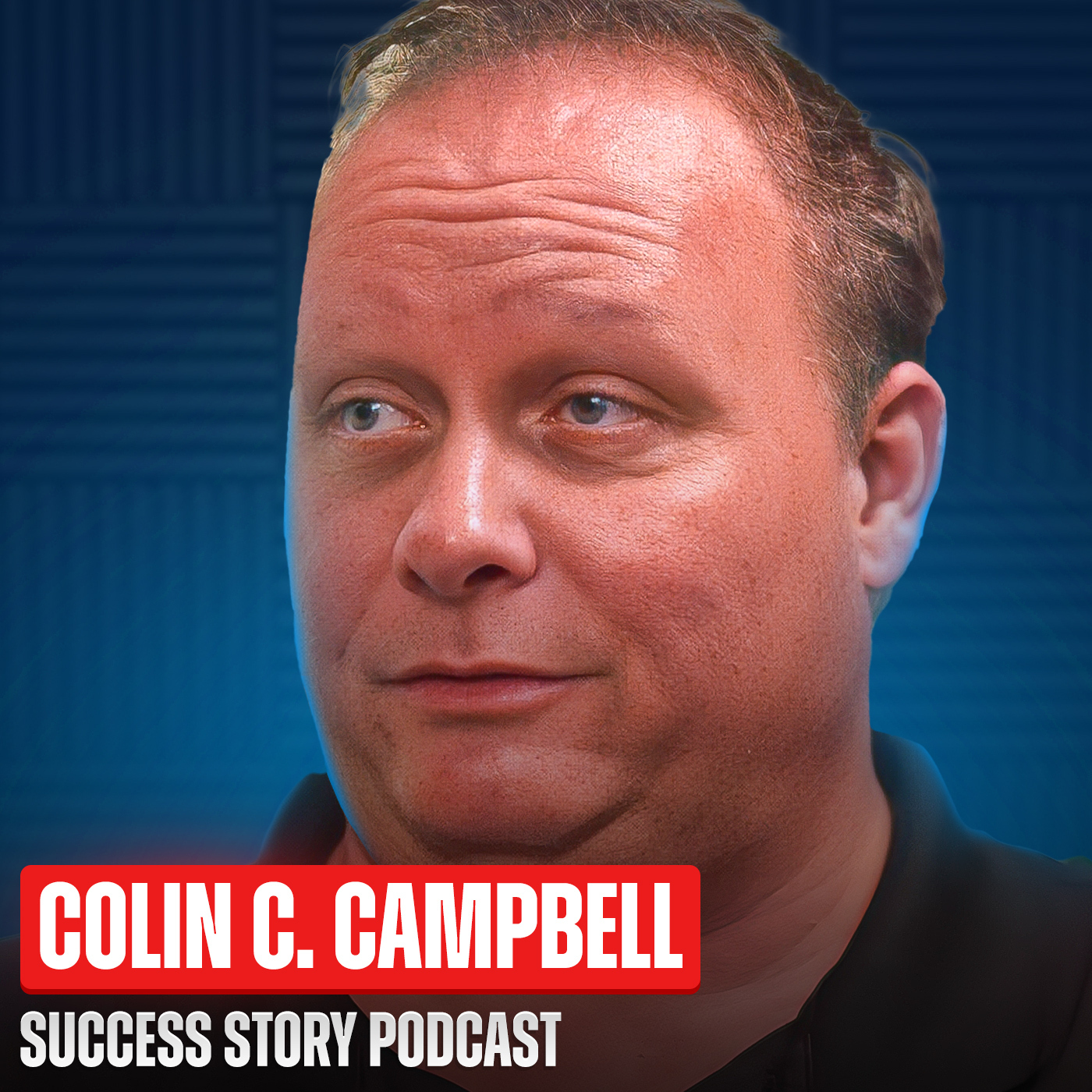
Success Story with Scott D. Clary
Lessons - Two Proven Frameworks That Built Multiple 8-Figure Companies | Colin C. Campbell - Serial Entrepreneur
00:10:50
Loading summary
Transcript28 lines
- [00:00]
A
In this lessons episode, discover how a decade long commitment to excellence built a top ranked book on entrepreneurship. Learn why relentless effort and deep focus create a competitive edge. And understand how a framework of story, people, money and systems drives scalable success and profitable exits. I'm actually very impressed with your book and I don't usually, I don't usually like completely focus on the book when we do a podcast, but how many, how many? You sent me some accolades or some rankings or some top charts that you hit with this book. And I'm super curious where this book has ended up right now because actually I can probably pull it up.
- [00:49]
B
Well, I'll tell you.
- [00:50]
A
Yeah, tell me, tell me.
- [00:51]
B
Yeah, mean, think 30 years as a.
- [00:53]
A
Serial entrepreneur, but I'm also curious why. Yep. Why this book did so well.
- [00:58]
B
30 years as a serial entrepreneur, 10 years writing the book. We interviewed over 200 people.
- [01:04]
A
That's insane. No one last 10 years writing a book.
- [01:06]
B
I know, it's insane. I did it on airplanes. You know as there's one passage there about Doclub which was written 10 years ago. So I kept the exact, exact thing because this was before Doc club launched. I wrote it is fascinating. And so I kept exactly. I said we're going to follow the start, scale, exit, repeat methodology. We're going to focus on story people, money and systems. And it's there. So we Also, of the 200 people we interviewed, phenomenal people and only about 50 have actually made the book. We also wrote the book for adhd entrepreneurs. There's 58 chapters and they're very short and digestible. And by the way, it's stories. It's the stories, my stories. And it's the stories of those other 50 people who were interviewed for the book. Then we also put in illustrations, 30 illustrations. We color coded it. Forbes Books did a phenomenal job putting this book together and making it look like a world class book. It's been number one on Amazon in 15 categories. It's won 13 awards globally. And it came out 11 months ago, already won 13 awards. It's the most awarded book on entrepreneurship in 2024.
- [02:16]
A
That's. Congratulations, dude.
- [02:17]
B
Thank you.
- [02:18]
A
It's phenomenal.
- [02:19]
B
And you know, you do these things. I see a lot of my friends, they launch these books and they're people are famous people watching these books.
- [02:24]
A
I don't think I get them all.
- [02:26]
B
My podcast call it and they look at the like last week we're number one in every category. We were the number fourth. We were number one in entrepreneurship for a week and we were number four of all business books in the United States last week. It was up there with Elon Musk and start, scale, exit, repeat. Right. That was fascinating.
- [02:45]
A
I think that there's a lesson there. I think putting 10 years into something like there's so much competition at the bottom and in mid market in terms of like mediocreness. There's so much competition when you put out mediocre content. There's so much competition when you build a mediocre company. But when you put so much time and energy into something and you are in like the 0.001% of individuals, which I think taking 10 years to write a book definitely puts you.
- [03:13]
B
I had some other businesses to run too.
- [03:14]
A
Yeah, I know. But there really is not a lot of competition at the top of the market when you put that much energy or effort into something. And I think that we are in an era where everyone's trying to do the least and expect the most. And I think that the one. And people are so frustrated because they don't stand out on social or they don't feel like they're. They write a book in. In a couple months and they put it out and nobody buys it. Like why did. Why, why does effort, not the minimal effort, not equal output or outcome? I think it's really because like anything, you just have to put a lot of yourself into it. And the market recognizes when you put a lot of yourself into it. I believe that's why it's so successful, because you spent so long and so much energy and blood and sweat and tears and insight and thought leadership and experience goes into it.
- [04:07]
B
Yeah, I mean, and I think a lot of very successful entrepreneurs like myself, they write books and it's all about them. This book is not an autobiography. Yes, there are the short. There's still stories are in there, right? There are stories in there, but it's not about me. It's about the reader who wants to learn how to start a business. It's about the reader who wants to learn how to scale the business. It's about a reader who wants to learn how to exit. And it's also about the leader who wants to know how to do this over and over again. So it's really. It's a philosophy and it's a different philosophy too than a lot of other books out there. You know, I read at the very beginning of the book that if you want to become a unicorn, this is the wrong book for you. This is not. This is all about building a solid foundation, a base Building something up, selling that off, taking some money off the table because bad things do happen, and then repeating that process over and over again. See, entrepreneurship, you are not a CEO of one particular company. You're not just a podcaster. You're an entrepreneur. And entrepreneurship's a trade. And if you can learn that trade, you can increase your chances of success dramatically. In fact, we've seen that with serial entrepreneurs. They have a much higher chance of succeeding. It's like almost double. It's like 18% for a first time, and it's 36% for a second or third time entrepreneur. Because even if they failed in the past because they've had that experience, doing really is a trade. And we need to learn how to sharpen that sword and improve our knowledge on the topic of entrepreneurship. And there's a lot of mental health challenges that we have to talk about as well.
- [05:37]
A
We'll talk about that in a second. I don't, I want to just sort of tie a bow. And so the concepts coming out of the book as well, and then we can talk about mental health and a couple other concepts. But so just so that people are clear, because we sort of gone back and forth between, I would guess, I would say two frameworks. Because you have start, scale, exit, repeat. But then you also have story people, money and systems. So there's. How do these two frameworks play into each other?
- [06:04]
B
Okay, so in start, you have to start, you have to come up with the idea. You have to solve a problem. So you're talking about the story. And then you also have the people who do you need in start. And really it's all about the entrepreneur and start, right? And then you have systems. They talk about systems and start. I just say, just figure out your KPIs. Don't get too complicated.
- [06:23]
A
So these four components, they do play a piece in each one of those.
- [06:27]
B
Section, but they change dramatically. I got you between each section and that's how we wrote the book. So you'll, you'll see there's the, the story, people, money and systems and start, and then a story, people wanting systems and scale. And by the way, it's all different in Exit. You wouldn't be surprised how many things you can do as an individual, as an entrepreneur, to increase the valuation of your company just by understanding what goes into selling the company, by understanding the mindset of the buyer. I was, I was on, when I did work for the Fortune 500 company, I bought probably about 15 companies. So I totally understand the mindset of the buyer. Now and so that's reflected in the book as well.
- [07:03]
A
When you go through this process of start scale as it repeat what are the things? Because again, this is position for an entrepreneur not trying to build a unicorn or a billion dollar company. If it happens, good for you. But you're trying to build a process that it's almost like you're teaching entrepreneurship. It's not, it's not just dumb luck. This is a process that can be repeated again and again and again as, as you've shown, as you've done in your, in your own life. But what are keeping the end in mind or the exit in mind, what are the most important things in the start process that can impact the exit process?
- [07:38]
B
Well, I think one of the things we did at doclub is we actually identified the buyer who we wanted to buy the company from day one. And we knew it was GoDaddy. I mean they're the big ones.
- [07:47]
A
Back to the elephant, right?
- [07:49]
B
And so often we go to conferences and we pitched to GoDaddy, met with people, got to know them at the conferences. I like to, when we start a company, I always say, you know, one of the biggest challenges when you're selling a company are the schedules and the due diligence. So make certain every contract is in a virtual drive. Every single contract. It's got, you can't be scrambling at the last minute to put documents together. And we know bad things can happen. Right. And when you, you know, they've got 20 people on the other side, you got two. Right. And that's it. And it's, it's, it's, it's a, it's daunting when you go into these exit processes and it can take months and get bogged down. But no, no, you, you need to, when you get into deal mode, it's closed mode. There's no such thing as weekends or evenings. It's, it's a football game. You got to get that ball across the line. That's it. And, and it start. If you're not organized, you know that's going to be, it's going to make it that much harder to actually sell the company down the road. So then we also want to stay a family, right? Yeah, we also want to stay pure. You know, we're running a software platform company. We don't want to buy a farm and put that in the company. And this is, you got to, it's got to be clean. Okay. And there's some certain, there are other things we need to do as well. For instance, to get venture capital or we want to stay within the normal standards. Like for instance, when you do give options in your company, you want to, generally you want to do it between 10 and 20% of your company. If you go too much higher, it's going to be negative for your valuations down the road, you go a little too low, that can be negative as well. But you generally want to be around 10 to 15% for options in your company. So there's certain standards that you can set up early on as well. And we talk a lot about that in the book. It just, it really isn't the type of book that's going to tell you how to make a billion dollars. And I, I worry a lot about, and I've, I've seen too many companies, I've invested in too many company founders where they get Silicon Valley disease. And this is a term that I coined based on this concept that we get this venture funding, we're going to build it out and we're going to build that billion dollar company. By the way, they're pushing you. They're pushing you to get the 10X. They want you to gamble. They want the gamble. They don't want that double or triple. That's not what they want. So they're actually pushing you. And it also can lead to issues in your company and spending that you shouldn't really be doing. One of my favorite forms of funding is customer funded startups. And we had a gentleman named John Mullins on who wrote the book Customer Funded Startup and we interviewed him for this book. And I can't tell you how many Companies that Fortune 5000 list use customer funded techniques. Use your customers to fund your business.
- [10:28]
A
Thanks for tuning in. If you found this valuable, don't forget to hit that subscribe button so you never miss an episode. And if you want to dive deeper into this conversation, check out the links in the description to watch the full episode. See you in the next one.
- [10:45]
B
RA.