← Success Story with Scott D. Clary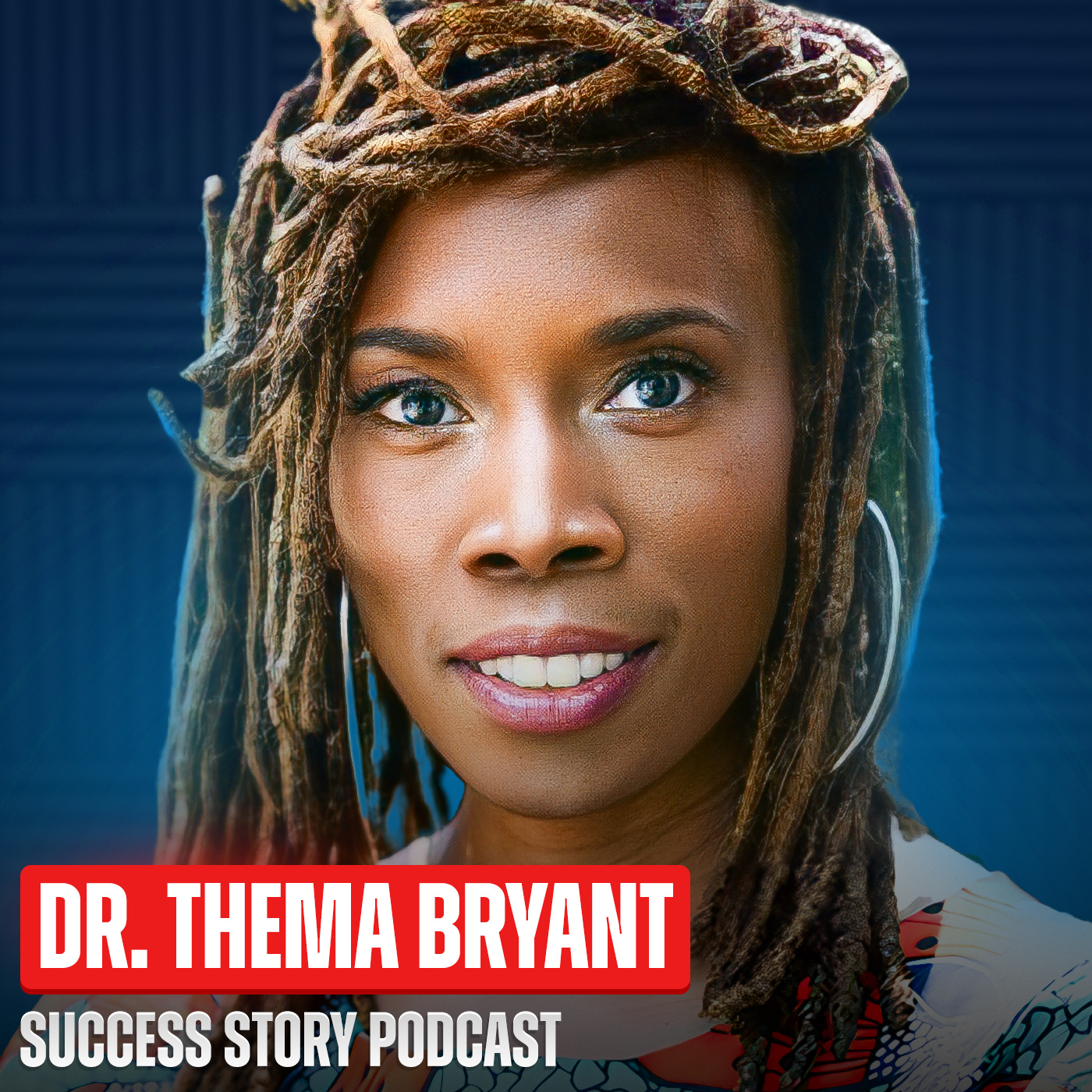
Success Story with Scott D. Clary
Lessons - Understanding How Trauma Shapes Our Relationships and Success | Dr. Thema Bryant - Clinical Psychologist & APA President
00:11:36
Loading summary
Transcript36 lines
- [00:00]
Host
HubSpot is a success Story Partner now if you're an entrepreneur, listen up because HubSpot makes impossible growth impossibly easy for their customers. If you are building a business, you need to get HubSpot.
- [00:13]
Co-Host
Why?
- [00:14]
Host
Here's the perfect example. Morehouse College needed to reach new students with fresh, engaging content, a problem that every single business in the world has. But with a 900 page website, even the tiniest update took 30 minutes to publish. Now Breeze, which is HubSpot's collection of AI tools, helped them write and optimize their content in a fraction of the time. And the results? 30% more page views and visitors now spend 27% more time on their site. If you are ready for impossible growth like this, visit HubSpot. Com.
- [00:49]
Co-Host
Indeed is a Success Story Partner. Now say you just realized your business needed to hire someone fast. How can you find amazing candidates fast? It's easy. Just use Indeed. When it comes to hiring, Indeed is all you need. Stop struggling to get your job post seen on other job sites. Indeed Sponsored Jobs help you stand out and hire fast. And with Sponsored Jobs, your post jumps to the top of the page for your relevant candidates so you can reach the people you want faster and it makes a huge difference. According to Indeed data, Sponsored jobs posted directly on Indeed have 45% more applications than non sponsored jobs. Plus with Indeed sponsored Jobs, there's no monthly subscription, no long term contracts. You only pay for results. There's no need to wait any longer. Speed up your hiring right now with Indeed and listeners of this show will get a $75 sponsored job credit to get your jobs more visibility@indoubtedly.com Clary just go to indeed.com Clary right now and support our show by saying you heard about Indeed. On this podcast. Indeed.com Clary terms and conditions apply. Hiring Indeed is all you need.
- [01:59]
Host
In this lesson's episode, explore how unhealed emotional wounds can silently shape high achievers lives. Learn why emotional disconnection often stems from early trauma. Learn how suppressed feelings can affect relationships and leadership. And learn why true healing blends science, heart and soul to build both success and personal well being.
- [02:28]
Guest 1
It's so interesting because I've always found that we make these decisions with emotions, but then we justify them with logic. But for some reason we try and trick ourselves into thinking that it was just logic the entire time. So first of all, just speak to why we do this and also maybe give some context as to how did your research go in this direction? What was the inflection point that pushed.
- [02:57]
Co-Host
You down this path?
- [02:58]
Guest 2
Yes Absolutely. So my area of research is actually trauma recovery. So many times people have gone through very difficult experiences, whether they were the direct target of the trauma, or they love and care about someone who went through a traumatic experience individually. Or we see, like, collective trauma as well, whether school shootings or a veteran after war. And so many times when people have experienced extreme stress or trauma, they disconnect. And a part of what you disconnect from can be your heart. So when you ask people, like, you know, how'd you feel about that? Oh, yeah, I don't know. Or like, nothing. So they're just kind of numb. So a part of the healing process is reconnecting with yourself, including reconnecting with your heart.
- [03:53]
Guest 1
And I feel like that's not an easy. It's not an easy thing to prove if everybody just thought, hey, if I just spend, like, a little bit more time focusing on myself and focusing on how I feel. But I think there. I think there's something scary there about going and looking inside, like, what. What actually happens with trauma? Like, what's the scientific reason for that disconnect? And you're talking about these really horrible examples of trauma. But I think that most people have some sort of trauma, childhood trauma, things that they haven't dealt with, things that are not as incredibly horrific as school shootings and war, but just things that still impact them.
- [04:40]
Guest 2
Absolutely.
- [04:41]
Guest 1
What happens with this?
- [04:42]
Guest 2
So it becomes really a priority for people to feel safe. And so one way we can feel safe is, you know, when we hear the teenagers say, like, I don't care. You know, you tell them there could be a bad consequence. I don't care. And then some of us become adults who still convince ourselves not to care because we don't want to be hurt again. We don't want to be disappointed again. So then people think the solution is the illusion of control. If I try to control everything in my environment and try to control myself, including my emotions, then that feels safe to people, then that can be falsely thought of as strong, you know, that this person is so strong, nothing moves them or nothing phases them. And so the heart has become hardened as a way to feel safe. And even though we're disconnected from ourselves.
- [05:34]
Guest 1
And do you feel like this goes counter. What is the. I guess the legacy or the traditional way to deal with this?
- [05:43]
Guest 2
Yeah. So, you know, what happens is basically, we can't heal a wound that we don't acknowledge. So if I keep saying I'm fine, but I'm actually not fine, I'm just kind of diving into being a workaholic, being a perfectionist, being very driven being, but I think I'm fine, then the negative consequences can show up in the way that I treat myself. So that can be self neglect and self abandonment. It may be the way that I treat people who are close to me because that doesn't feel safe or comfortable. And so the way that I parent can be affected by my unhealed wounds, the way I treat my partner can be an effect of my unaddressed hurts. And so it is important that we start to tell ourselves the truth, that we have been through some things that were disturbing or that were upsetting, that had an impact, and that we then open ourselves up to being transformed, to making a different decision. So that my wounds are not running my life.
- [06:49]
Guest 1
And I think that. So you're saying most people don't even realize that they have these.
- [06:54]
Guest 2
Yeah, Especially if, as you mentioned, if it was a childhood wound, then people will say, oh no, that's just my personality. Right. Because they develop this armor so early. They don't remember a version of themselves before they were so defended or cold or hard. And so what I say is that's actually not you. That's your wound. You never got to develop a freely flowing you. But you can, you can develop that now. Even in adulthood. We can develop it.
- [07:26]
Host
Shipstation is a success story partner now you know what's chaotic? Last week during one of my interviews, my guest dog knocked over their mic stand. My Internet crashed mid recording. I spilled coffee all over my notes. It was not a great interview. But speaking of handling chaos well, that same guest told me something fascinating about their business after we stopped recording. Life can be unpredictable, but a large component of their business is E commerce fulfillment. And that is a whole different level of chaos. Unless you're using ShipStation. They told me that since switching to Shipstation, They've saved around 15 hours every single week by shipping from all of their stores with one login. The automation is incredible. One click and their labels are printed. And what really impressed me most, it is a massive business that they run is how it scaled their business. They doubled their order counts last quarter. Shipstation handled it without a hiccup. And the shipping discounts. They've nearly saved 88% on USPS and UPS rates. Go to shipstation.com and use code Success story. Sign up for your free trial. That's shipstation.com code success story.
- [08:39]
Co-Host
Quint is a success story partner now living in Miami. I need clothes that can handle the heat while still looking good. I picked up these linen shirts from Quintessential and they're phenomenal. Stylish, European. I love the cut, I love the fit. Now, whether or not you're in cold Seattle, Dry Phoenix, they have got premium essential clothing for every single climate. But these linen shirts are a game changer. They're breathable, they're lightweight, they handle Miami heat like nothing else. I wear them everywhere. Business meetings, dinners, you name it. Now here's what makes Quint different. They work directly with premium manufacturers, but cut out all the middlemen. That means you're getting luxury quality linen at 50 to 80% less than comparable brands. We're talking the same materials, the same craftsmanship without the insane markup. Plus, they only partner with factories committed to ethical manufacturing and sustainable practices. And that matters. Elevate your closet with quint. Go to quince.com success for free shipping on your order and and 365 day returns. That is Q-U-I-N-C-E.com success to get free shipping and 365 day returns. Quints.com success Netsuite is a success story partner. Now, what does the future hold for business? If you ask nine experts, you're gonna get 10 answers. Bull market, bear market. Rates will rise, rates will fall. Honestly, I just wish somebody could invent a crystal ball. But until then, over 41,000 businesses have future proofed with NetSuite by Oracle, the number one cloud ERP bringing accounting, financial management, inventory and HR into one fluid platform. With real time insights and forecasting, you're peering into the future with actionable data. And when you're closing the books in days, not weeks, you're spending less time looking backwards and more time on what's next. If I had needed this product, this is what I'd use. Whether your company is earning millions or even hundreds of millions, NetSuite helps you respond to immediate challenges and seize your biggest opportunities. And speaking of opportunity, download the CFO's Guide to AI and Machine Learning at netsuite.com Scott Clary the guide is free to you at netsuite.com ScottClary netsuite.com ScottClay.
- [10:59]
Guest 1
And then when this, when they don't heal these wounds. For the average person listening to this, who is a high performer in their work or in their business or just in life, they just want to kill it at everything. Do incredible.
- [11:13]
Co-Host
How do these wounds manifest?
- [11:15]
Guest 1
Because I think that part of you teach so much in terms of healing with yourself, with others. But nobody can heal if they don't even recognize, to your point, that they have a problem. So how do these things show up in your day to day?
- [11:29]
Guest 2
Yeah, you may be financially successful, resume. Incredible. But my question would be, how are you in the middle of the night by yourself? Right. Because many of us can outwardly perform that. That's our way of coping, is to stay busy. But as you were alluding to, for some people, it's scary to be still and let truth show up. So that's why some of us are workaholics. You know, you want to be so busy because you're either running in pursuit of self worth or running from the stigma and shame of your past. And so for you to actually be well, not just look good on paper. This is what we're talking about, tending to your heart. And it also can affect the way you show up in the workplace. We've all had that supervisor or boss who was very controlling, very dismissive, very dishonoring. They were not. Well, they're on top of this business mountain, but they're not a well person. And so many times we set it up as an either or. We say, do you want to be a successful person or do you want to be a well person? And it's not. That's a false choice. You can be both, but you have to invest in both. Right. So we've invested in the business part. Have you invested in the inner part?
- [12:59]
Guest 1
Yeah, because I think that I'm just thinking about some of my friends that have been like, ridiculously successful from a financial standpoint. And, you know, they, they have their exit or they build their business and then the relationship with the kids isn't great, or they divorce their wife or they, they, they. And then they, you see these crazy stories, absolutely crazy stories of people that have had like $100 million exit. Then they're depressed.
- [13:27]
Guest 2
Yes.
- [13:28]
Guest 1
And they can't figure out why. And it. And they can't say that because everyone's going to be like, well, right now it's so happy.
- [13:36]
Host
Yeah.
- [13:37]
Guest 2
We see the same thing happen with lottery winners. Right. Where people thought, like, if you made this amount, that that's guaranteed happiness. And people you know, can live in a mansion and be miserable. Miserable.
- [13:50]
Guest 1
You blend, you blend heart and you blend sort of.
- [13:54]
Co-Host
How do I say this?
- [13:55]
Guest 1
Like, you blend the heart and you blend science and then you blend soul all into this healing formula. Why is it important to bridge these gaps? Like traditionally, I mean, you were, you were president of the apa, which was just phenomenal. Does traditional textbook APA say that? You blend science and soul and heart into healing somebody. Or is this a sort of like a new novel idea?
- [14:23]
Guest 2
So one of the beautiful things trend that's happening in psychology is an increased attention to our spirituality or faith or religion, which returns psychology to its roots. That it's not just about your cognitions, but to really think about ourselves holistically. So your thoughts, your emotions, your behavior, your sense of what is sacred to you and your relationships and community. So it's an important part, and we have well established research of these things as what we will call protective factors, that when you go through the difficulties of life, the stress of life, having a sense of what's sacred to you and, or having community, those things can protect us and help us to deal with life challenges.
- [15:17]
Guest 1
Okay, so that makes sense. So you, you do have to account for all the factors that impact your data. Like you can't heal yourself fully by saying, I'm gonna, I'm gonna logic myself into doing some inner work and some, and some internals and some internal searching. But I'm going to remove the emotions out of it. I'm going to remove the spirituality out of it. Which I think that's what people tend to do. People that are high performing, logical people like, how do I fix everything? With a solution or a template or a playbook. And you're saying that's the wrong attitude to go into any of this.
- [15:57]
Guest 2
Yeah. You want to say, I'm not going to ignore or censor parts of myself. I want to be fully grounded in truth. And so we say to ourselves, what parts of you do you miss? What parts of you were you taught to suppress or to ignore? That in order to be successful, I can't be connected to feelings, or in order to be successful, I can't have relationships. So there are these false notions that we've been given and that we then go and teach the people after us. You know, some people who were mentored to believe that these things were true, and yet maybe the person who is mentoring them still has some brokenness or has some aspects of their life that are unfulfilled.
- [16:46]
Outro Voice
Thanks for tuning in. If you found this valuable, don't forget to hit that subscribe button so you never miss an episode. And if you want to dive deeper into this conversation, check out the links in the description to watch the full episode. See you in the next one.
- [17:03]
Guest 2
Foreign.
- [17:08]
Host
The HubSpot Podcast Network is a success story partner. Now, if you like success story, you're going to love other podcasts in the HubSpot Podcast network. One of my personal favorites is I Digress, hosted by my boy Troy Sandich. With shows under 30 minutes, I digress helps eliminate complexity, complications and confusion in your business with frameworks and strategies to achieve true, scalable and sustainable success. If you are an entrepreneur building anything you need to listen to I Digress. This is one of the most useful business podcasts you're ever gonna subscribe to. Listen to I Digress Wherever you get your podcasts.