← Success Story with Scott D. Clary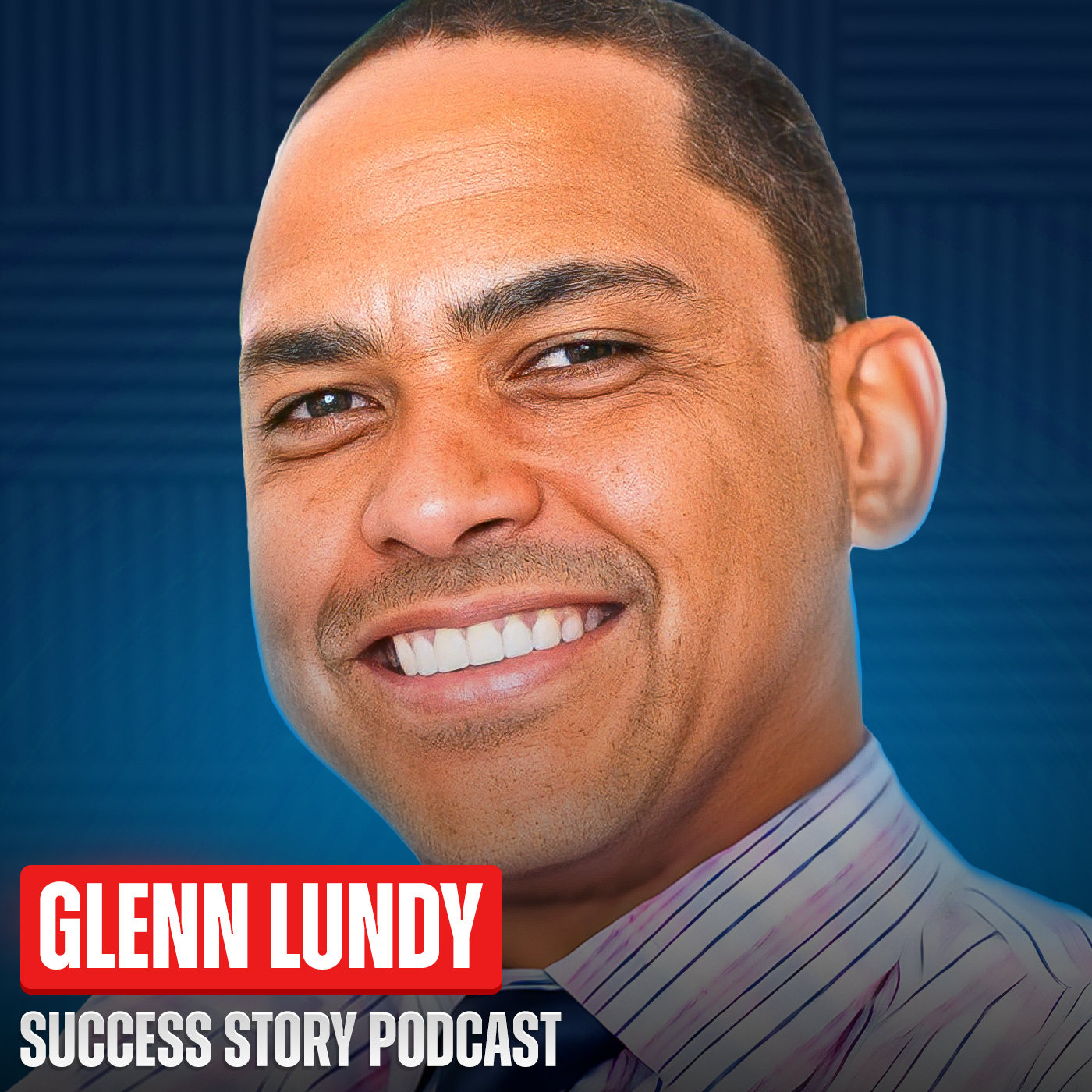
Success Story with Scott D. Clary
Lessons - Why 99% of Leaders Fail Before 9AM | Glenn Lundy - Host of #RiseAndGrind
00:16:14
Loading summary
Transcript13 lines
- [00:00]
A
In this lessons episode, uncover how redefining leadership transformed a struggling car dealership into one of the nation's top performers. Learn how people first culture drives long term growth and loyalty, how the lead framework turns managers into true leaders, and why servant leadership and empathy outperform traditional sales tactics in any industry. Let's, let's speak about and unpack the first iteration of the strategy that you use to upskill and up level those people in the dealership. Because obviously it's evolved and I want to understand how it's evolved, but I also want to just speak about like the very, the very basics, like the grassroots of that idea because I think it's important and it obviously was successful. So let's talk about what sales traditionally is in car dealerships and let's talk about what you made it.
- [00:54]
B
Yeah, definitely. So the auto industry at large is an industry where you did not have to be integral, you did not have to even be excellent, you did not even have to be good to be able to make, turn a profit. So back in the day everything was very regional. If you had a dealership located in an area that people drove by, you were going to sell some cars and you were going to make some money. And for the longest time it was, the hiring process was filled with many underhanded, seedy people just because the way the industry was built, it was built where like we need you there from 7:00am till 8:00 clock at night, seven days a week, right? So what kind of person do you have to be to be able to be at work 7 o' clock in the morning till 8 o' clock at night, seven days a week? Well, you're probably not much of a family man or woman. You probably have some type of outside influence to keep your energy levels up, right? And you probably drink your sorrows away because there's these empty voids that come along with that. And so it attracted a certain type of human. And regretfully, we still deal with the ramifications of that today, even though the industry is evolving rapidly and tremendously. And so going in, it was important to me that we like literally I wrote a mission statement and my team, we read it together every single day. And the statement said, I am on a mission to eradicate the negative stigmas associated with the car business. I can do this by making people feel special, feel important and feel like they're the only ones. I will offer an experience that will exceed my customers expectations today, tomorrow and in the future. I will not just sell cars, I will create fans and so we created a culture and an environment around that. I wouldn't hire anyone with more than two years experience. I wanted people that were brand new into the business or zero experience so that ultimately we could cultivate them and shape them the way that we wanted to, not based on previous bad habits. And we brought people into this inclusive environment. Scott, it was very important to me that we put people first, our people first, our customers second, and our profits third. So all decisions were made in that order, right. If it makes sense for our people, if we're going to elevate our people, then the answer was yes. Customers. You know, they always say customers always. Right. We didn't believe that our employees were always right first, right. Unless we found out they were wrong. But we always trusted our employees and stood behind them before any other customer because they were the most important. And I followed this lead process that I'll share with you and I'll share with everybody listening. This is a really powerful acronym that I put together and. And really made a big difference for us. So the word lead is spelled L, E A D, D, right? L, E A D D. Now, some of you are listening, going, this guy can't spell, right? But I'm going to break down why it's le A, D, D. I'm going to break that down for you right now. All right? So the L in lead stands for listen. You have two ears and one mouth for a reason. I know your mama told you this. You should listen twice as much as you speak, right? So we very much had this mindset as leaders in the organization that we were always going to listen twice as much as we spoke. We always made sure that our employees felt seen, heard, and significant. That comes through listening. And by listening, we were able to tap into not just why they were there, but who they were, what mattered in their lives, what problems do they have outside of work, so on and so forth, right? So listening was the first key to great leadership in the dealership and evolving our people. The E in lead stands for encourage. As we were listening to our people, we weren't listening to defend, we weren't listening to object. We weren't listening to overrule. We were listening, trying to find opportunities to encourage the behaviors we wanted to see more of and the greatness that exists inside each of these individuals. Right? So we would always, for example, in a meeting, every single meeting that we had started off by listening, letting our people speak first. And then we would encourage, we would celebrate. If somebody got a great review, we would celebrate if somebody took care of a customer in the way that we wanted to, we would celebrate. Anytime they sold a car or, or did you know, any of those things, picked up trash in the parking lot, we would celebrate. So every meeting started with listening and then encouraging. Now, most managers that I know, they start every meeting with the A in lead, which is advise. So most managers just want to go in and tell people what to do, smack them on the butt and send them on their way, right? Here's what you need to do. Here's what you did wrong. Here's where you suck. Here's where you can get it right. Now get out of here, right? That's the typical meeting, especially in the auto industry. So we start by listening. Then we encourage. Now, when you do that, you've now earned the right to advise. See, I'll take advice from someone who listens to me and encourages me. I will totally, 100% do that. I won't necessarily take advice just at face value from anybody. Like, see me first, make me feel important, then I'll listen to you. So we listen, we encourage, we advise, and then we develop. The D in lead stands for develop. Please, please, please. Everyone listening here, please do not advise people and then not take the time to develop them. Telling someone what to do and then taking the time to actually show them how to do it. Two completely different processes. You can have all the knowledge and wisdom in the world and you can share it, right? And you're not going to move anybody's life forward unless you take the time to really develop them, right? Give them, teach them to fish, as they say, right? Develop that. And then the last D and D in lead stands for daily. You need to do these things every single day, not just on Saturday in the meeting, not just when the cameras are on every single day. So we listen, encourage, advise, and develop, and we do it daily. It's got, I'll tell you, this works with your spouse, this works with your children, this works with employees, this works with prospects that you're looking to close a deal. This works in every situation humanly possible. If you listen, encourage, advise, and develop. If you make that your mantra and that's what you do, you will go incredibly far. You'll have incredible success, and you'll help develop everyone that comes behind you.
- [07:59]
A
And this is just. I had no idea this was the strategy that you implemented to grow the dealership. And I. And I'm very happy that we dove into this because you just highlighted the fact that this. The. I'm going to Say in air quotes, a sales strategy that allowed you to go to the dealership was not a sales strategy at all. It was, it was a, it was a very empathetic, self aware, you know, employee centric, a leadership strategy. And you just took this and I don't know where, I don't know how you came up with this. We didn't even go into that because that's incredibly impressive. But you just took this, you transplanted it into an industry that is honestly known for just horrible salespeople and horrible sales practices. And you just like, you know, you see, you see the stuff that you just mentioned, you'll see maybe this in very forward thinking Silicon Valley venture backed startups, you know, with the kombucha and the dog in the office and the ping pong table and whatnot, but you don't see it in traditional industries as much. Right. And it's just incredible like how you can take that, apply it to any business and you see the results. So my question, my question to you is, where did, where did this come from? Because you didn't have this when you were killing it in the car dealership and you were making money and you were going out drinking at night. You didn't have this mindset for sure. I know you didn't. But then also to, to speak to Cummings, when you, when you started working at this place in Kentucky and you convinced him that this was going to be the strategy that you're going to implement, he probably looked at you like you had three heads and said, no, we just got to go poach the top seller from, you know, from Toyota, from Porsche. I don't know what type of car dealership it was, but we got to go get the top seller and bring, bring them over here. So how did you think of the strategy and how did you, how did you convince, convince his dealership to take it on?
- [09:53]
B
So a couple of things. The universe aligned beautifully. So Josh Cummins and his brother Dusty had just bought the dealership 11 days before I started working there. They had just bought it from their dad. And Josh is incredibly forward thinking, incredibly empathetic. He is the picture perfect servant leader. Now that term, servant leader gets thrown around a lot. So I want to make sure to define it for all of those that are listening. A servant leader is not someone who says, oh, I'll do anything. If people, you know, somebody asked me, I'm willing to do anything. That's not a servant leader. A servant leader is someone who seeks opportunities to serve. And so Josh would always Seek opportunities to serve. Including me. I mean, the guy other than wash my feet, he basically washed my feet. Right. He was just incredibly servant leader. And so I learned a lot from him about what servant leadership looked like. And he was a forward thinking human. And so together we really had some great synergies. I was more charismatic, I was more face of the dealership. I was more rally the troops, motivate, inspire, that type of thing. And he was more like analytics and back end type thing. But ultimately a servant leader through and through. And so together it made a pretty incredible force. And at one point I sat down and I wrote down all of the things that I hated about being an employee in a car dealership from the old dealership I worked at. And then we also wrote down a list of all things that the consumer hated about buying a car from the typical dealership. And once we had that list, Scott, it really was as easy as doing 180 degree opposite of everything that on that was on that list. Right.
- [11:36]
A
Just do exactly what led to this incredible leadership moment. Just take a car dealership and do the opposite. And you have the epitome of good leadership. Oh, that's funny.
- [11:45]
B
Exactly. That is exactly where it came from. So once we had that list, you know, Josh and I worked together to cultivate a team of incredible humans and really pour into them. And Josh was just very. He saw something in me that most people didn't. And so he trusted me to make good decisions when it came to the store. Now when it came to like numbers and certain strategies, that way they'd look at me like, you know, I had three eyes sometimes. But after our first year where we had, we increased from selling 120 to like 240, which they had never done in 50 plus years. And then the second year we started selling 300amonth. In the third year, we were up in the fours and the fives. And I remember in 2016 we sold. In 2016 we sold 7,500 car. Not sorry. We sold 6,000 cars in 2016, 6,000 cars that year. And up until that point, every time I set a goal or a target, they'd look at me like I was crazy. Crazy. But once we hit the 6,000 target, they immediately were like, so Glenn, what's next? Right now, they were believers.
- [12:56]
A
What is the average dealership close?
- [12:58]
B
Just to put it, your average dealership will sell roughly between 1200 and 1500 cars a year.
- [13:05]
A
So you almost 5x'd an average dealership.
- [13:09]
B
Yeah. And then we took it further than that, too. We. My best month was March of 2018. We sold 1043 cars in 27 business days in a tiny little town population 9600 people.
- [13:22]
A
Wow. So you're doing something right. And I don't think everybody had seven cars or eight cars. So you're figuring something was working.
- [13:31]
B
Yeah, man. We created a culture. Every single salesperson on the floor sold at least one car a day every day that they were at work, which the national average is. They say that your Salesperson should sell 10 cars a month, which is one car every three days. And I thought that was just nonsense, Scott. I'm like, you're going to take people away from their families, you're going to make them work 70 hours a week, you're going to not train them properly, you're going to do all of these things, and you're going to make them work two out of every three days for free. Like, in my culture, that's called slavery, bro, when you make people work for free from the. From sunrise to sunset. And so we changed that right away. We took on the responsibility as the leaders to make sure to create an environment where every salesperson could sell at least one car every day while they were at work. We took that very, very seriously, and we were able to shift that. Shift the cold.
- [14:25]
A
Thanks for tuning in. If you found this valuable, don't forget to hit that subscribe button so you never miss an episode. And if you want to dive deeper into this conversation, check out the links in the description to watch the full episode. See you in the next one.