← Success Story with Scott D. Clary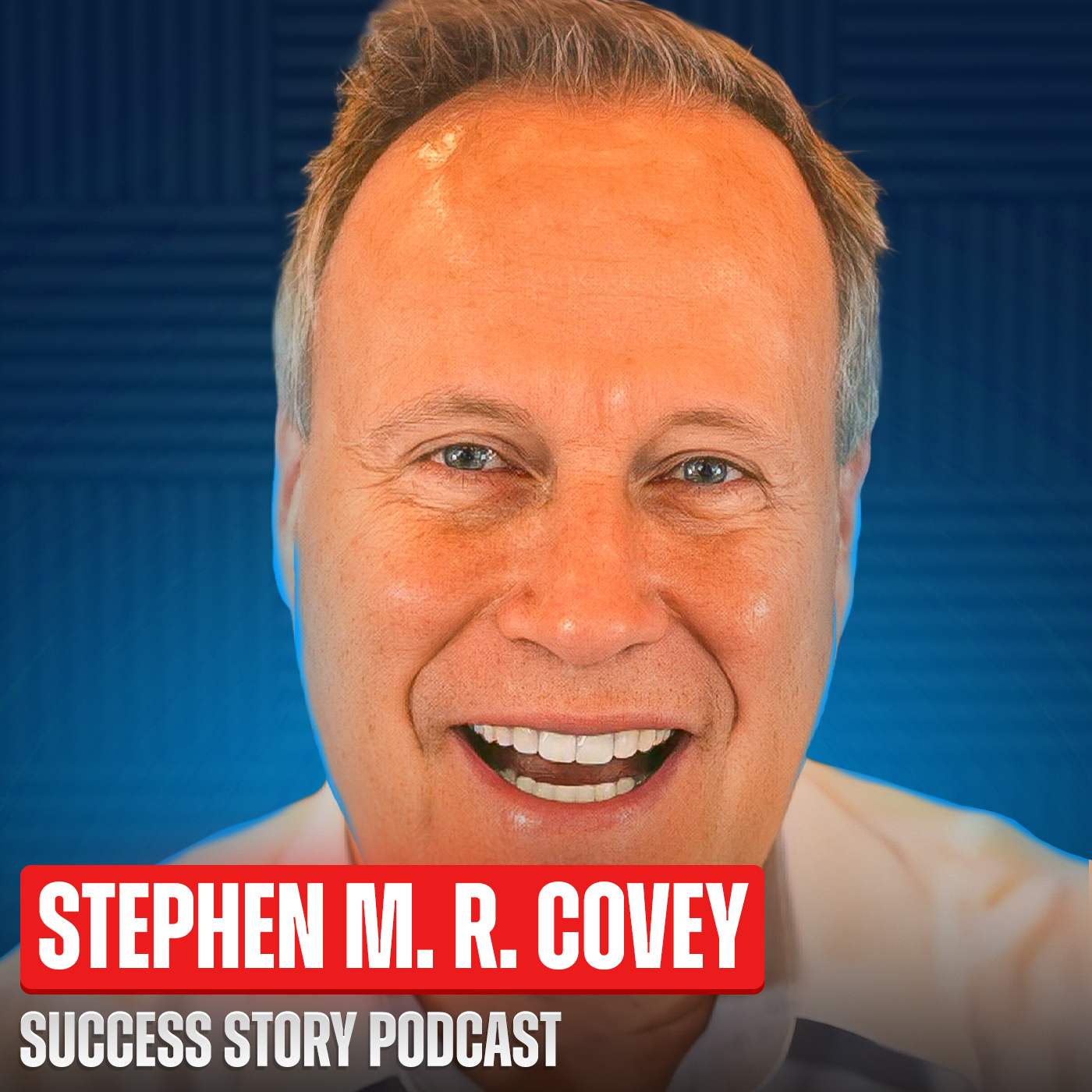
Success Story with Scott D. Clary
Lessons - Why Command & Control Is Dead | Stephen M.R. Covey - Speed of Trust Author
00:16:59
Loading summary
Transcript11 lines
- [00:00]
A
In this lessons episode, explore why leadership is moving beyond command and control in today's workplace. Discover why trust without inspiration limits performance. Understand how purpose driven leadership fuels deeper engagement and uncover how inspired cultures unlock higher commitment and lasting impact. I think that what you're trying to solve for are the most difficult things to solve for in leadership. And if we look at what one of the points that you make, you spoken about it on past past podcasts in your book as well. We're migrating from this traditional command and control model, which actually it's unfortunate, but when you're in a command and control model, you don't actually need a ton of trust because people are just, you say do this and they say yes. And you say do that, they say yes. So there may be internally, they don't trust your decisions, but ultimately they're still going to do what you're telling them to do, which is not again, this is not a sustainable business model. We see it more and more. So if we look at the future of. Well, first, I'd actually just like to get your opinion on where leadership actually lies right now, to date in 2022. What are the observations that you see about businesses? Do you still see businesses trying to succeed with a traditional command and control model, or do you see that being a business strategy and a leadership strategy that is going away very quickly?
- [01:25]
B
Both. It's still, in spite of all our progress, we're still trapped a bit in the old command and control model. We become better at it, though, more sophisticated, more advanced. I call it enlightened command and control. So it's a lot better version of it. But still we're deeply scripted in our mindset, in our paradigm that we too often still treat people like things, just a more sophisticated, advanced, enlightened version of it. So I call it enlightened command and control. And the data shows that still about 9 out of 10 organizations are still in some version of enlightened command and control or some version of command and control. But to your point, and you reference this, they're recognizing that it's not working anymore. And it's certainly not going to work with this new generation of workers of, you know, Gen Z. And it's not working very well with millennials. And that this new world of work requires a new way to lead. And the old model, the old command and control isn't going to work. That like you said, that's operating not on trust, but on fear and on position. And you know what, people have choices and options today and people want a Sense of meaning and purpose and contribution, they want to matter. People want to be trusted. They want to be inspired. And the old model, even the enlightened version of it, command and control, doesn't inspire. You don't build high trust cultures that inspire people through command and control. You can't collaborate and innovate through command and control. So we need a new way to lead in a new world. And I call it trust and inspire. And so I think that is the future of leadership. I think we are moving from command and control to trust and inspire. And we're in that process of moving and I think we're further along in our in what we're saying than in what we're doing. We're saying we need to move to the equivalent of trust and inspire. But our practices and our systems and our structures, there's still too much caught in the old model of command and control. But we're recognizing for the first time this is not working very well and it hasn't for some time. And we need to shift. So we need to become equally clear not only where we're moving from command and control, but where we're moving toward. I'm calling it trust and inspire. You model, you trust, you inspire. That is the new way to lead in our new world. It's what Satya Nadella has done at Microsoft. He came in and instilled a growth mindset. He modeled, he trusted, he inspired. And they call it modeling, coaching, caring. And they moved. They really revitalized the organization at a time when they still were big, but they were becoming less relevant, less innovative, less impactful, and revitalize the organization through his leadership style. You know what Cheryl Bachelder did at Popeyes to completely revitalize the organization through leadership style, unleashing the greatness, the potential inside of people through the style of leadership that saw the greatness inside of people and unleashed it. That's the kind of leadership that's needed today. And that's where we're going. It's where we need to go. But you know what? We're still in that process of getting there. And we need to examples, models and mentors of leaders that can help us do this. And we need to become those kind of leaders to help us get there.
- [05:03]
A
HubSpot Podcast Network is a success story partner. If you like success story, you are going to love some other great shows in the HubSpot podcast network. It is the audio destination for business professionals. One of my favorite is Business Made Simple. It's hosted by Donald Miller an incredible friend, a great entrepreneur. Business Made simple takes the mystery out of growing your business. So if you're trying to figure out how to get to the next level, what Donald does is he gives you tactical steps that actually move the needle in your business. You can go listen to Business Made simple anywhere you get your Podcast Business Made simple part of the HubSpot Podcast Network, Elay is a Success Story Partner Now. Are you spinning your wheels on low value tasks? Do you spend more time putting out fires and planning your long term goals? As your business grew, you brought on more people and book more meetings, but focus became even harder to find. Here's the truth. Business leaders shouldn't lose hours to emails, scheduling, project tracking, and avoidable interruptions. Just because it all has to get done doesn't mean it needs to be done by you. That's where our friends at Belay can help. Belay's US Based Remote Executive Assistants don't just take work off your plate. They learn how you operate, what slows you down, and where things tend to go sideways. Then they get ahead of it. So if you're looking for a practical tool to help you start leading with clearer purpose, download Belay CEO Tricia Shortino's free resource the 40 Hour CEO Workweek Planning Guide. Just text the word Scott to 55123 for your free copy today that is S C O T T to 55123 to start accomplishing more while juggling less with Belay. Monarch Money is a Success story Partner now. You know, it's weird. I'm doing well financially, but I have this constant low level financial anxiety that I was missing something because I have crypto on all these different exchanges. I have multiple Investment accounts, old 401ks, savings scattered everywhere. See, I knew the pieces were fine, but I had no idea if the whole picture made sense. I finally got Monarch Money to pull everything into one view and the first thing I noticed, I had $10,000 sitting in a temporary savings account from eight months ago when I sold some stock. And that's eight months, $10,000 it could have been working instead of just waiting for me to remember it existed. Also, it showed me that I was spending tons monthly on all these subscription services that I couldn't even remember I signed up for. Every Sunday morning it takes me five minutes to check everything. All my financial stuff in one place. No more wondering. No more anxiety. The Wall Street Journal just named it the best budgeting app of 2025. But honestly, it's more about finally having control. So don't let financial opportunity slip through the cracks. Use code successonarchmoney.com in your browser for half off your first year. That's 50% off your first year@monimal money.com with code success. It's interesting because I think that you actually unlock something that's very important. You don't just have a high trust culture, because a high trust culture is great. That means that you trust people to do the thing that's going to move the business in the right direction. But if those people aren't inspired, you can trust them all day long. And then they're probably not going to be doing the thing that's going to actually get the business to the next level. If they don't feel inspired, they don't feel some purpose for what their work is, they're never going to be giving the 110% that you would need from that person that you would try and get them in a command and control. So if people just think, I'm going to trust, I'm going to trust that everybody does the right thing. But you have people that are completely disenchanted with the actual thought of showing up every single day and doing the thing that they're going to do. The trust model falls flat. So it can't just be trust alone, because trust alone people are going to be like, well, she trusts me to do whatever I want to do. I'm going to apply for another job in my free time because I don't like my work, or I'm going to start a side hustle that's going to take up most of my day because I don't really care about what I'm doing in my nine to five. So you have to have these inspiration. But that's such a difficult thing to wrap your mind around. Like, how do I. Because you always say that, oh, you know, you want all your employees to feel like they're owners. I mean, you can give out some equity, you can maybe give them some options. But, like, it's very difficult to inspire somebody at the same level as the founder, CEO, people that own the business. So how do you do this? How do you actually do this?
- [09:22]
B
Yeah. Well, I love how you framed it, Scott, because you're exactly right that the high trust culture is half of it. The high trust culture that inspires that inspiration is the other half. And you need both halves in our world today to differentiate, to make a difference, to be the kind of organization and place where people feel like they can, where they're trusted and the Work they do matters and makes a difference, and they want to make a difference. And so how do you inspire? Well, first of all, let me say this, that I think you've identified, you know, to use the Wayne Gretzky metaphor, where he was asked what makes you so great at hockey? And he says, I skate to where the puck is going to be, not to where it's been, but to where it's going to be. I think in leadership, the puck, so to speak, where things are going is towards inspiration. Inspiration. And I think inspiration is actually the new engagement, the next frontier of engagement. We've been focused on engagement for the last 20 years, and it's a good thing. I'm not going to downplay engagement. It's vital to engage people so that they have that discretionary effort that they're giving. That's a good thing. We need to continue to move towards engagement. But I think there's another frontier, another level that's inspiration even beyond engagement. And there's actually a study from Bain & Co. That shows that inspired employees are, yes, 125% more productive than merely satisfied employees. Now, you might expect that, you know, satisfied is not enough, but they're even 56% more productive than engaged employees. So there's another frontier level that we can reach when people feel inspired. And inspiration to inspire comes from the Latin term inspirare. It means to breathe life into. So you breathe life into relationships, into teams and organizations, into culture. You light the fire that's within people. It's internal, it's intrinsic, it's inside of them. See, motivation is external, is extrinsic. So you motivate people with carrot and stick. That's. That can come out of command and control. And it's not a bad thing, per se. It's just that you're trying to move people through carrots, through sticks, to try to move people to do things. Inspiration is internal, is intrinsic, it's inside of people. You're trying to light the fire within and let that fire burn. And, you know, doesn't need constant new incentives, new stimuli thrown at it. It can live on. And if you can ignite that fire that's inside of people, that can burn on for years. And that's a higher level that we're trying to achieve, to tap into the desire for purpose, for meaning, for contribution. I think that's where things are going towards inspiration, to be inspired, to have that fire lit within. I'll give you an example of this. I was, I went and worked with the Pepperdine University, beautiful university in Southern California. And here's their. I worked with Jim Gash, their president, and their cabinet and their team, they send to the School of Business there, the Graziado School of Business, they establish a purpose that people really feel a sense of connection to that inspires them. And they phrase it this way, that our purpose is not to develop leaders who are best in the world. Our purpose is to develop leaders who are best for the world. You know, best for the world leaders. Now, to be best for the world, you got to also be pretty good in the world too, you know, so it's not saying it's not either or it's an and. But the overarching purpose is contribution, to make a difference, to matter best for the world leaders. And imagine what that does to inspire the professors. The fact the staff, the janitor, anyone working there feels like I'm part of developing best for the world leaders and tapping into that sense of purpose and meaning and contribution. That's what we want to do. So that, you know, tapping into that sense of purpose matters. But I think it's even possible to inspire people when we do it through caring as a leader that you care, you connect with people through caring in a sense of belonging as well as connecting people to purpose, meaning and contribution. So it can be grand in the sense of there's purpose, meaning and contribution, but it also can be micro in the sense of there's this. My. My immediate supervisor, my colleague, my peer. They care about me. I feel this sense of caring and that inspires me. I feel a sense of belonging and that inspires me. And every one of us as leaders can do that. Everyone can inspire. It's a learnable skill through a sense of caring and purpose as well as connecting people. Excuse me. A sense of caring and belonging as well as connecting people to purpose and to meaning. That's the idea. It's learnable. It's not just for the charismatic. Everyone can inspire. It's a learnable.
- [14:42]
A
Skill. Yeah, I was going to say it's, you know, like sometimes some of the points that you're bringing up, it's not just for a leader who is a charismatic evangelical, first class on stage, public speaker. When you're talking, the things that you're talking about, if we unpack them a step further, there's sort of two things that I pulled out from that. So you have an organization that has clear purpose, mission, culture, and they actually focus. Focus on making sure that the, the mission statement on the website is more than just the mission statement on the website. It's something that the whole company believes in, buys into, maybe even adds into. But then you also have at a leadership level, an individual level, you have people that are just being very high eq, empathetic individuals caring for each other. So it's something that permeates all the way throughout the entire organization. And that's what I guess you're saying, when somebody's living and breathing that every single day, that's what actually gets them to go. The whatever, the 125% or whatever that number.
- [15:42]
B
Was.
- [15:43]
A
Yeah. Is that correct? Okay.
- [15:45]
B
Absolutely. That's it. It's that simple and that.
- [15:48]
A
Difficult.
- [15:49]
B
Yes. But I love, you know, your point is this is not just for the charismatic. I think too often we've equated inspiration with charisma, thinking you got to be this charismatic soul to inspire people. But think about it, Scott. I bet you're like me. I. And I bet our listeners and viewers feel the same. I know people, some people who are very charismatic but who aren't necessarily inspiring because it's all about them. And, you know, they might be charismatic, but I don't know if that inspires me. I know other people who no one would necessarily describe as charismatic, but who are extremely inspiring because of who they are, how they care, how they connect, how what they do matters. So let's separate charisma and inspiration. And everyone can inspire. And you named it. You inspire when you connect with people through caring, through a sense of belonging. And then you inspire when you connect people to purpose, to meaning, and to contribution, like Pepperdine University is doing and others are doing. And we can learn to do that as leaders in both fronts. And if all you do as a leader, if all you do is focus on caring for others, caring for people, caring for those that you serve, empathy, compassion, showing that that actually will inspire them when they sense that you care for them. And I like how Maya Angelou put it, the great poet, civil rights advocate champion. She said, I've learned that people will forget what you say, they'll even forget what you do, but they'll never forget how you made them feel. And when you have a sense of caring that people feel and a sense of belonging that inspires like almost nothing else, and that will move the needle. And we can learn to do.
- [17:57]
A
That. Thanks for tuning in. If you found this valuable, don't forget to hit that subscribe button so you never miss an episode. And if you want to dive deeper into this conversation, check. Check out the links in the description to watch the full episode. See you in the next.