← Success Story with Scott D. Clary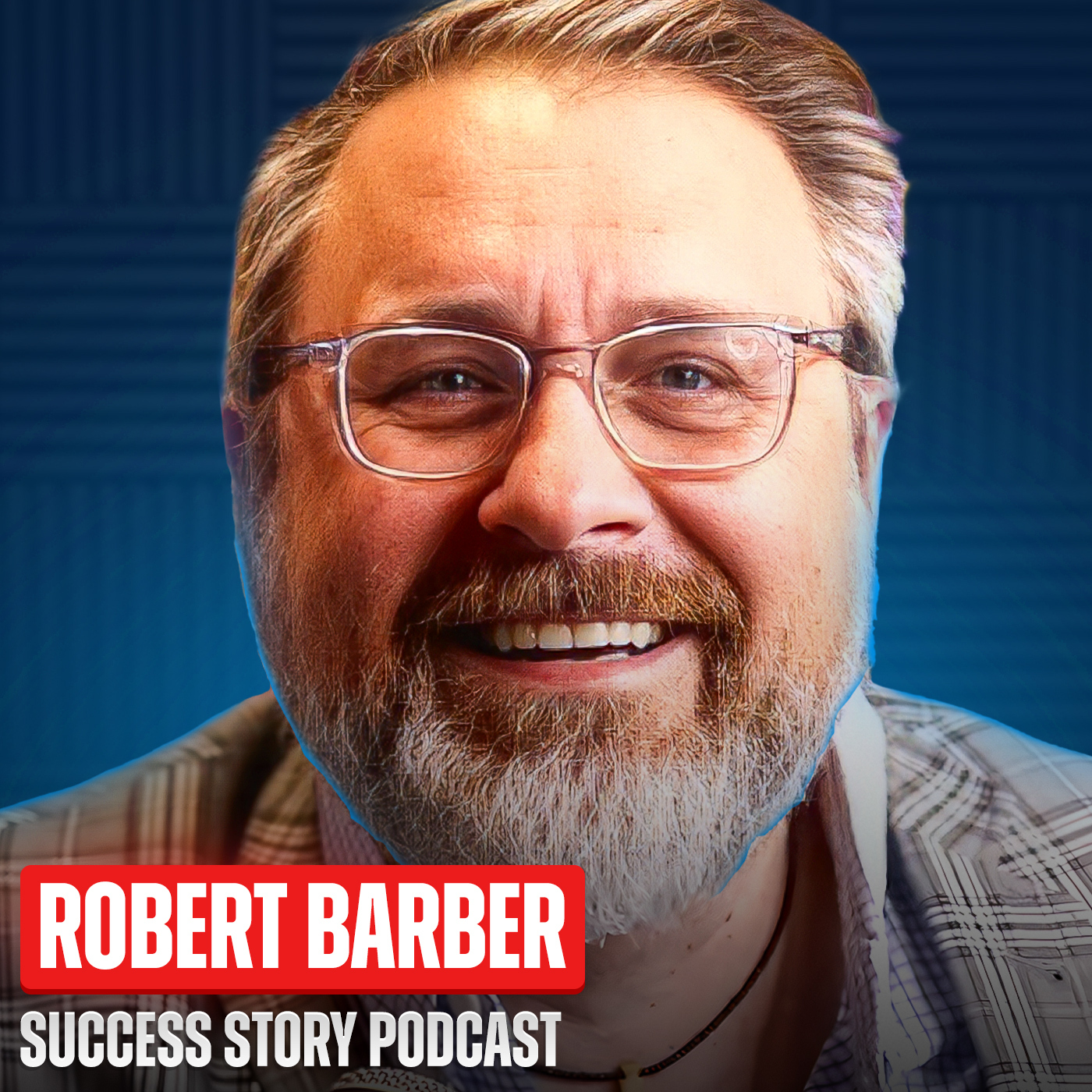
Success Story with Scott D. Clary
Lessons - Why Most People Fail at Life Management | Robert Barber - Author of CEO for Life (Fortune 150 Executive)
00:12:10
Loading summary
Transcript19 lines
- [00:00]
A
Success story is a Square partner. Now your favorite neighborhood spots run on Square. You know, I was just at Panther Coffee here in Miami last week. And beyond the incredible cortado, what struck me was watching them seamlessly handle the morning rush. The barista mentioned they've been using Square to manage everything from inventory to building their loyal customer base. It's so much more than just that little white card reader that we all recognize. Square knows that local businesses can be big businesses. And as things get more complex, Square meets you at every opportunity. So whether or not you're expanding, expanding to new locations, building a loyal following, even covering cash flow gaps, Squares powering all the behind the scenes stuff that matters. They knock out today's to dos and they unlock tomorrow's what ifs. If you're ready to see how Square can transform your business, go to square.comgo/success to learn more. That's square.com go success square. Meet you there.
- [00:58]
B
Got an idea for an app with base 44. You don't need to know a single line of code. Just describe what you want and base 44 instantly designs the interface, builds the database and connects the logic for you. Whether it's tracking invoices, planning meals, or managing a whole team, you can build at the speed of thought and customize it as you go. Stop waiting on developers, start running your business smarter with base44. Visit base4.com and and turn your idea into a live app today.
- [01:28]
A
In this lessons episode, explore how lessons from real estate and coaching reveal the importance of focus and discipline in both business and life. Discover why consistent small wins outweigh chasing shortcuts. Understand how adopting a CEO mindset creates alignment between personal and professional growth. And uncover how accountability and self awareness unlock the actions that drive lasting success. Foreign deal with that.
- [01:58]
C
What's a lesson that you learned in real estate on how to find where to spend your time? And is it something that we could easily take into other environments so that people can figure out where to not waste time?
- [02:08]
D
Yeah, that's, that's super good because I do, you know, because now I'm in coaching, right? So I'm doing the same same thing. I'm selling my time. But with that being said is I got to, like you said, qualify what those opportunities are like. So anyone that is in a sales role or growing a business and trying to figure out how to pick up clients and customers, those kind of things, the first thing you have to ask or you have to do is you have to be a really good listener. You have to Listen for the cues of what people are telling you. First thing you need to know, if it sounds too good to be true and you don't have to really work hard to make it happen. Guess what?
- [02:46]
C
Too good to be true.
- [02:47]
D
There's no there. Yeah, there isn't. And you know, that's. That's the first thing. That's the first thing you qualify. If it really. If it sounds too good and it's too easy. It's not. It never. Those things don't happen. You're going to hit singles a lot more than you're going to hit those home runs. So, you know, look for the singles always. You know, what are the deals that I can get done that I know that are real, that can make happen and, and get rid of that swinging for the fences mentality?
- [03:17]
C
Yeah, no, it's. It's very good advice. What now? I'm curious. I'm curious what you're working with now. So let's, let's keep going down the career path because that will dovetail into some great questions as to what you're helping people with out right now, after your career. So what's next? After. After you exit real estate and you're done that. What are you doing now? What's.
- [03:38]
A
What's the book?
- [03:39]
C
What's coaching? What's your academy, all that stuff? And why are you doing that?
- [03:44]
D
Yeah, so I was in my last two years as a partner and I found myself coaching more than I was really doing the sales anymore. And I was finding my joy in there. I found a new joy. Right. The deal making was fun, but what I was really enjoying was watching other people be successful and working through them. And I was finding my joy through that process. I decided I wanted to get coaching. I talked to my partners, they talked me out of it twice, but I finally, eventually made that happen. So. So I did. So I jumped in and I created a coaching company called the return on you investment academy because I wanted it to tie back to money because everything does come back to money in terms of, you know, a basis of successful measure. But really there's another piece to it, which is how are you investing in you? Right. If you invest in you, then the money will come. So it's a return on you investment academy. So I started a coaching academy. I went and got certified. I'm a certified high performance coach. So I carry some credentials with me. And I started this company. And along those lines, I started to reflect a little bit, especially when Covid happened is this mindset that came to me about a CEO, right? I'm coaching executives, I'm coaching CEOs, entrepreneurs for their own company. And I'm really thinking about what it is that makes them successful. And what I began to realize is that this concept of work, life, balance and all this other stuff is really flawed. Because what I see in the most successful people, and I also see it in my own life, is that I'm no different at home than I am in my job. I'm the same person. Why do we break apart the workplace and the lifeplace? Really? Let's bring those two things together. And if you can bring those two things together, you will be successfully rounded. I started thinking about the CEO job description. If you go through a CEO's job description, you'll see it's a lot like how you should leave your life. You should have a vision, you should have mission, you should have goals. You should know who the people are that are around you as your shareholders. You should be able to say no. You should have values, you should set boundaries. You should know how to deal with a lot of shit every day because it's going to come. And so all of those things, and so I wrote this book, CEO for Life, for that purpose is to try and bring the concept together for people that you really should be the same person in the workplace and lifeplace. So it's been a lot of fun and I've really enjoyed it.
- [06:06]
A
The HubSpot Podcast Network is a success story partner. Now, the HubSpot Podcast Network has great podcasts like the Ops Authority. If you are constantly putting out fires in your business instead of focusing on growth and innovation, listen to the Ops Authority. Hosted by Natalie Gingrich and brought to you by the HubSpot Podcast Network. Natalie speaks about actionable strategies that actually move your business forward. So every week, Natalie shares some transformational stories from real business owners who've mastered their backend systems so they can focus on what really matters. So get your OPS in order, get your business running smoothly so you can scale and you can really build something meaningful. Stop letting all this chaos steal all of your energy and listen to the OPS Authority wherever you get your podcasts. SurveyMonkey is a success story partner. Now look, we get it. You can hardly go anywhere or do anything these days without hearing about AI this or AI that. And if you're like most people when it comes to AI, you're impressed, but you have a few concerns. But what if AI was used not as a tool to replace people, but as a way to help understand people better. AI from SurveyMonkey is designed to do just that. From crafting the perfect survey, which is harder than you might think, to analysis that digs deep, finds patterns and services trends quickly. SurveyMonkey's powerful suite of AI capabilities makes it faster and easier than ever before to get insight from real people helping you make confident decisions for your business. Try today@surveymonkey.com SL Scott success story is a Square partner now. Your favorite neighborhood spots run on Square. You know, I was just at Panther Coffee here in Miami last week and beyond the incredible cortado, what struck me was watching them seamlessly handle the morning rush the barista mentioned they've been using Square to manage everything from inventory to building their loyal customer base. It's so much more than just that little white card reader that we all recognize. Square knows that local businesses can be big businesses. And as things get more complex, Square meets you at every opportunity. So whether or not you're expanding to new locations, building a loyal following, even covering cash flow gaps, Square's powering all the behind the scenes stuff that matters. They knock out today's to dos and they unlock tomorrow's wh ifs. If you're ready to see how Square can transform your business, go to square.comgo/success to learn more. That's square.com go success square. Meet you there.
- [08:27]
C
No, I, I appreciate the, the, the transitioning. I think that actually you probably, your love for coaching probably comes from your, your love for helping people and that's actually probably why you transitioned from electrical engineering to HR in the first place. I'm just reading along your career, it makes like, it makes a lot of sense. You keep defaulting to and, and what you sort of excel at. But I guess, I guess my question, you know, the CEO for life. I love the, I love the analogy that you have to run your life like a CEO. So how do we solve, how do we solve for that? How do we remove the work life and the, and the personal life? Because there's things that I'm sure like this is ingrained in people. Like they have to act one way at work and they, and they act differently at home. So what are like the actionable steps.
- [09:15]
A
You can start doing?
- [09:16]
C
Or is it just a matter of finding the right organization that also recognizes that they want a certain authenticity in who they hire? How do you fix that?
- [09:24]
D
That's great. It's a great, that's a great conversation. It's a super conversation. So the first thing is you have to work your roadmap to make sure that your, your life and your work, who you are, maps to what a CEO is, right? Do you have a, okay, first thing you got to know is do you have some level of self awareness? Listen, if you're a dick, it ain't going to work no matter what you do, right? I mean, you know, or if you're a bad person or you know, whatever, whatever label you want to call it in terms of being a jerk or working difficult with people, you have to some have some level of self awareness. Once you have some self awareness, from there you can decide, okay, well what is the vision for my life? And what I tell people is their vision is never big enough. When I sit down with clients and I talk to them, tell me about your vision for your life. It's never big enough. It's never big enough. It's always, it's always, well, this year I want to do this or, you know, you know, we're looking to buy this house or you know, we're, you know, one of my kids to college. Well, what I talk about in the book is dream generationally. You know, a CEO doesn't, a CEO measures in a year or a quarter, but when they look at casting vision for the company, they're thinking 5 years, 10 years, 30 years, where, where are we going to turn this ship and take it to? You know, Elon Musk is looking at Mars. He's not, he's not just thinking about trying to get this thing to go up and then come back down, right? I mean, he's so dreaming generationally is super important. So self awareness and making sure you have a big dream and then from there you can begin to put your roadmap together. Okay, so what are the goals that are going to get you there? What values are going to keep you in line? Right? So you're not going to cross any ethical barriers, those kind of things. Then what are the people that you're surrounding yourself with? Who are your shareholders? Listen, it's cliche, but it's truth. I guarantee if you look at the people you spend the most time with, the five people you spend the most time with, you eat where they eat, you listen to the same music they do, you dress like them, you talk like them, you drink the same beers or wine, I mean, that's just what we do, right? It's funny because I have a 16 year old daughter and it's just so apparent in her boyfriend. All the boys in high school, they dress the same, they have the same Bieber haircut. They all listen to the same music, they all drive the same trucks. They all, you know, it's. It's all the same things, right? And it's so apparent in, in high schoolers that. But it never leaves us. We're always there. So who are you leveling up in your sphere? And then from there, you can then begin to say, okay, now that I have all these pieces in place, how am I. How am I learning to. To work within that? And that comes with having this firefighter mindset is, I was told a long time ago, you learn, live your life in three states. You're either in a storm, coming out of a storm, or going into a storm. That is life, period. And so you better be preparing today for that storm that you're either in, going into or coming out of. And every day be a good firefighter. So those are the things that are wrapped up in the book, and they all have practical exercises around it. And that's what I'm trying to help people find, is that direction for their CEO.
- [12:23]
C
And do you find those are good lessons? And so the context of the book makes sense. Excuse me. Do you find that that's similar to what people reach out to you for when they look for business advice or coaching advice? Are those. Is that the core problem that they're trying to solve? Or what other types of coaching do you actually work with people on outside of this CEO work? Life balance.
- [12:50]
D
Sure. And so it's, you know, coaching is so interesting to me is because it, I guess the easiest way to say it is everybody that I coach already knows what they need to do. We all do. We all know we need to lose weight or we need to exercise or we need to do this, or I need to pick up the phone and make those phone calls, or, you know, I need to get my accounting. You know what everybody, nobody knows what they need to do, but what they need is someone to speak that truth into them so they can then release themselves to go do it. And that's really what coaching does. It allows a person to release themselves into what they know they need to do. Because what happens often is we get caught up in this mental chatter, right? We talk to ourselves in our head four times more than we talk to a person verbally. So you're having a conversation in your head four times more more than you're having a conversation with someone else. And so we get lost in that. But sometimes you need that person to have that verbal conversation with, make some accountability, go through that. So that's what I spend a lot of time with people is we first start at what is it that you're not doing that you know you should do. And from there, everything else unravels. We put a plan in place, we execute on that plan. And my normal coaching time is 12 weeks. At the end of 12 weeks, I mean they've, they've gone way beyond they ever thought they would have been from the beginning.
- [14:10]
A
Thanks for tuning in. If you found this valuable, don't forget to hit that subscribe button so you never miss an episode. And if you want to dive deeper into this conversation, check out the links in the description to watch the full episode. See you in the next one. SurveyMonkey is a success Story Partner now look, we get it. You can hardly go anywhere or do anything these days without hearing about AI this this or AI that. And if you're like most people when it comes to AI, you're impressed. But you have a few concerns. But what if AI was used not as a tool to replace people, but as a way to help understand people better? AI from Survey Monkey is designed to do just that. From crafting the perfect survey, which is harder than you might think to analysis that digs deep, finds patterns and surfaces trends quickly. SurveyMonkey's powerful suite of AI capabilities makes it faster and easier than ever before to get insight from real people, helping you make confident decisions for your business. Try it today at SurveyMonkey. Incogni is a Success Story Partner now have you ever wondered how all those scammers get your phone numbers? All those telemarketers? How you're always drowning in all these spam calls? It's data brokers. Right now hundreds of companies are collecting and selling your personal information without your consent. Your address, your phone number, even your family members names to anyone who's willing to pay. And this puts you at risk of identity theft, scams and harassment. And that's where Incogni comes in. They contact over 230 data brokers on your behalf and legally force them to delete your personal information. No more spending hundreds of hours doing it yourself. Incogni handles all the paperwork, follows up on objections and keeps your data off the market with repeated removals. I've actually been using Incogni myself. It's scary and also incredible to see how much of my data was out there. But they get rid of it. They've got a 30 day money back guarantee, so you can try it risk free. Use my code. Success@incogni.com success to get an exclusive 60% off their annual plans. You have to take back control of your privacy today.