← Success Story with Scott D. Clary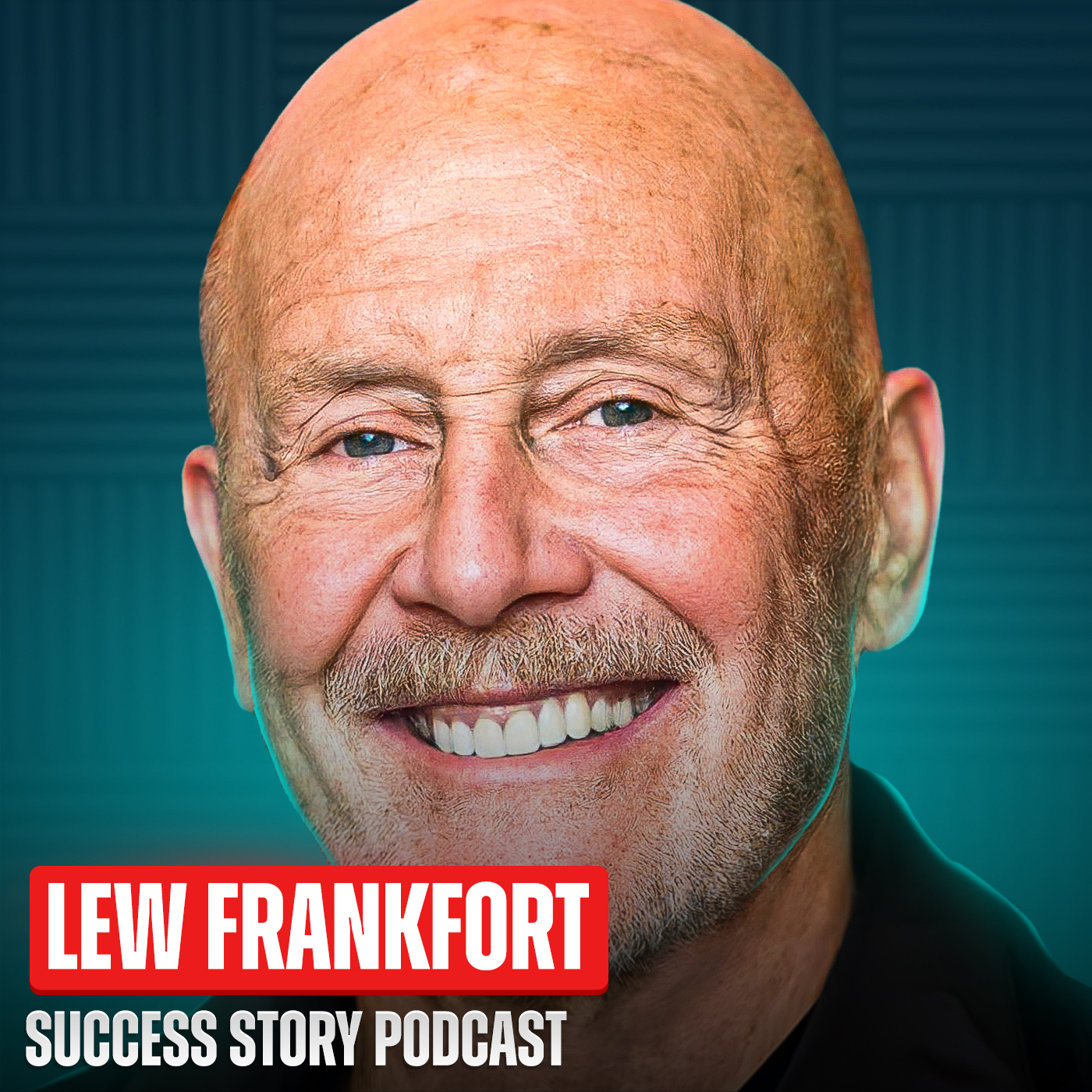
Success Story with Scott D. Clary
Lew Frankfort - Coach CEO's Untold Story | The Fear and Depression That Fueled My Success
01:07:23
Loading summary
Transcript53 lines
- [00:00]
Lou Frankfurt
My adult children pushed me to tell an authentic story. My drive for excellence, fear of failure, and the depressive episodes they experienced when I was going through them. In my case, over the decades, I sought out help and learned to really listen to my body.
- [00:19]
Podcast Host / Narrator
He turned a small accessory shop into a global luxury icon. Lou Frankfurt is the visionary behind the Rise of Coach, transforming it from a niche leather goods company to a worldwide lifestyle brand.
- [00:30]
Lou Frankfurt
When you're running a growing business, you can never be complacent, even with success. You need to be relentless. You need to make wrong career decisions to find the right destiny. The logic comes from analytics, collaboration, and the magic comes from imagination and belief.
- [00:51]
Podcast Host / Narrator
His leadership is about more than growth. It's about craftsmanship, authenticity, and sustainable legacy building. Through bold risks and unwavering values, he redefined what a luxury brand could be.
- [01:02]
Lou Frankfurt
Be open to possibilities. Maintain a feeling that things are possible. Life is a journey. Challenge yourself to become a better version of yourself.
- [01:23]
Interviewer / Podcast Host
So, Lou, first of all, thank you so much for, for coming on the podcast. I'm really excited about this. I guess my main question to just kick this off is 10 years after you left coach, a decade after you, you know, quote, unquote, retired from that season of your life, what prompted you to codify your life, put it in writing, speak about the things that you went through? What was the thing right now that's made you write Bagman, which is the book that's coming out, the story behind the improbable rise of Coach? What was the. The inflection point right now that pushed you to do that and write that?
- [02:02]
Lou Frankfurt
It's a. It's a great question. And succinctly, my adult children, all of whom are involved in some way in. In business, who I'm very close with, actually pushed me to tell an authentic story that not only discusses my values and building an iconic brand, but my drive for excellence, fear of failure, and the depressive episodes that they experienced as my children when I was going through them. And one of the reasons they wanted me to do this is, was because I've been mentoring people. Gen Z, millennials, even Gen X, and baby boomers, people of all ages, both in portfolio companies where we're active, as well as friends of friends who have been going through transitions. And almost invariably, when I meet with someone who is going through some form of transition, there's anxiety, there's fear, and they get heartened when I'm able to share with them that they're not alone, that it's very frequent and very commonplace and where I discuss the techniques that I've used both to identify low periods as they were coming and the actions I took to prevent them from slipping further and to avoid them. Because your body doesn't lie to you. So when you're under stress, the what you're feeling can turn into insomnia. It can turn into waking up with terrible dreams and sweats, fatigue, loss of mojo, a feeling that you might even be an imposter or you don't really have. You can lose a lot of confidence. And so I'm someone who went through a lot of this very. Although in my case over the decades I, I sought out help in a, in a variety of areas and learned to really listen to my body and I encourage others to do that.
- [04:37]
Interviewer / Podcast Host
Talk to me about some of the things that you have like some just high level themes about going through high pressure, high environment situations because again, you grew coach from successful to just ultra successful over the course of your career. IPO like I think 12 billion plus minus around the time when you were at its peak. That's not a low stress environment. So when somebody is operating at that level, what are the things that they.
- [05:07]
Podcast Host / Narrator
Are dealing with that the public that.
- [05:09]
Interviewer / Podcast Host
The outside doesn't see that you are dealing with internally, that you've had to deal with through your life when, when.
- [05:16]
Lou Frankfurt
You'Re running a growing business, particularly a rapidly growing business, especially in discretionary categories where fashion or style makes a difference, you can never be complacent even with success. So whenever you reach a milestone, yes, it's important to acknowledge that and celebrate. But you need to be relentless. And in being relentless, CEO jobs are 24,7 and I'm really talking about share of mind. And it's really very important to find ways to turn that off, to be able to compartmentalize not only for balance in life, but for renewal and refreshing. And, and I start with exercise. Very important. I mentioned earlier listening to your body and that might lead to massage, it might lead to acupuncture, it might lead to yoga, it might lead to therapy. And all of these things can be really helpful depending on where you are and in your journey. And to your point, Gen Z is a very different generation. And when we talk about societal shifts, they're occurring at galactic speed and attention spans are going down. Younger people are looking for self actualization, are looking for fulfillment. It wasn't long ago when you looked at a 30 year old who was a college graduate and you asked how many jobs did they have since school? Maybe 1.3. Today it's 6 or 7. When your parents and I went to work, the thought was it was a career and that you weren't looking to self actualize, you were looking to a Maslow's hierarchy depending on where you sat. You wanted a better life for yourself, for those around you.
- [07:45]
Interviewer / Podcast Host
What was the, the framework or the decision tree that you went through in your head to figure out where you wanted to end up? Said differently, did you always think that you wanted to be a leader? You wanted to work in corporate, you wanted to build something great? Was that something that you knew from a young age? Or did this, this journey into CEO of coach, was that more just something that happened through just figuring things out and trying different things and learning up and ending in different places along the way?
- [08:17]
Lou Frankfurt
It's a combination of things. One of the things I, from my experience and many others, what I often say is you need to make wrong career decisions to find the right destiny. And I encourage people who have the discretion to explore to see what really gives them fulfillment. For myself, from the early days I felt I was a natural leader. I was president of my student body, Hunter College in my senior year and I ran as an activist on anti war platform. The Vietnam War had divided the country. I felt social justice was very important and I always was value driven. And when I went into city government I knew that I wanted to be of service. I wanted to improve the quality of life of New New York in New York. And I went to work initially for an inspirational mayor, John Lindsay. And over the next 10 years I had a series of positions culminating in running Head Start and daycare during the city's fiscal crisis. And I felt my customer, so to speak, was children and their families. And I wanted to do everything I can to give them the highest level service with qualified staff in clean facilities with the right type of support programs. So I was very focused on service and I built a team of like minded individuals who were looking out for the greater good.
- [10:18]
Interviewer / Podcast Host
Now that period of your life, there was a point where I find this very interesting. In your story you were called too principled. And that's what led to that particular two Principled. You were passed over for promotion and that was a catalyst that eventually put you on the path to coach. So speak to me about the concept of, of being too principled, what that actually means and, and what does that say to who you are as a person and your character and sort of what you're put on this earth to do?
- [10:50]
Lou Frankfurt
I've always been a believer in speaking truth to Power, and I'd like to say informed truth to power. Not just the highest paid opinion, but a studied view looking at all of the constituencies and all of the issues involved. And when I first started in city government, I. I was not in an environment where my leaders were concerned with the greater good to the extent that I felt was appropriate and warranted. And I found an opportunity with someone who became a mentor and eventually a very close friend who was really focused on reducing education, educational inequality, who was concerned with the immigrants and let's call it the underclass people who were coming into the United States to give them the type of tools that. Where they could have a better life for themselves and their families. And that was very motivational. When I took the job of running Head Start in daycare during the city's fiscal crisis, I said to the deputy mayor at the time, if I do this, I want no political interference because it's a hard enough job as it is. And my. And the job was to really bring the programs into compliance with federal and state law, which meant that I had to, with analytics, look at the num, the percentage of children who are eligible who are receiving care because you needed to be below a certain household income. You also needed to have staff within these programs who were qualified. I got no interference from City Hall. However, there was a congressman at the time, Ed Koch, who came to my office, and I had been forewarned that he was interested in protecting a particular program. And by this time, my team and I, we did analytics and tried to understand, against a set of criteria, we ranked programs. And that particular program was in the bottom 10% of programs that only had, as an example, 15% eligible children, meaning we could only find income verification for one out of seven kids. The other six kids presumably came from more affluent households. And I said to him, congressman, I'd like to just share with you why I don't think that's possible. He said, I don't want to see that. I just want you to save the program. Very polite, he walked out. Little did I realize that he would become my boss about 18 months later when he was elected mayor of the City of New York. So he became mayor, and I continued to work in the Agency for Child Development, Daycare, Head Start. And there was an opportunity to basically be able to shape union contracts and the workforce in the city. In New York, I'm a very big believer in meritocracy and really a big believer that you need to have metrics to measure how people work, whether it was in government or elsewhere. And I was p. I did not. I was passed over. Despite lots of support within the city in New York. And when I went to see the mayor, he said to me privately, Lou, you're just too principled. And what he basically meant was that he could not trust that I would follow his positional authority as mayor in situations where I felt the city would be better off doing something else.
- [15:30]
Interviewer / Podcast Host
When you think about after this period in your, in your life and you think about the next career step, it would also be, obviously there's lots of good corporations out there, but I think there's lots of corporations where I think people would also find that being too principled would actually be a detriment to your growth within the corporation, depending on the company. Right. So talk to me about. I know your personality. I know what you stand for. How did you make the entrance into, into corporate America, into leadership, being who you are and wanting to work with a company that works with people who are of the same sort of caliber and ethos as. As you. Was Coach the first stop or were there other things along the way that didn't work out?
- [16:19]
Lou Frankfurt
Great question. Coach was actually the first, first and only stop after government. And it was serendipity. I had not even updated my resume yet and I was in a yellow taxi with someone who was an adjunct professor at Columbia University and also an HEW official in Washington who had oversight for programs like Head Start and was familiar with my work. I had just spoken at it one of his graduate classes where there was a case study on the work I did in daycare. We share a taxi going downtown. And he said, what do you do for a non core. And I said great question. I have no idea, but I, I need to leave government. And he said, well, I have a friend who has a small pocketbook company, a childhood friend on who's 60 years old and he's looking for a protege from outside the industry who has good values. And I thought to myself, well, I think I have good values and I'm certainly from outside the industry. And he set up an appointment for me with the founder of the business. And what occurred in the. From the appointment time to my getting the job and taking it early on, being eternally curious, I did my due. I did some due diligence because I, I had barely heard of Coach. It would, I somewhat would need to mention the name Coach for me to know that it was a handbag company. I wouldn't be able to have done that. An unaided awareness. So I pretended to Be a Business Week reporter. And I called and visited places where I spoke with the Bloomingdale's buyer, the Bonwetteller general manager and others who said that Coach was a small brand, very strong following. The founder regulated production and they often ran out of product by Thanksgiving. But people really loved Coach. For my last interview, I visited a small handbag store on the west side of Manhattan on 72nd Street. There were back then in the 70s, there were many, many small groups of stores, mom and pop stores, small chains. It was before the department stores basically drove most of them out of business. And so I go into this specialty store and I say, I don't see a Coach bag. And I say, do you carry Coach? And the owner said yes, and went under the counter and lifted one Coach bag. And she said, it's not, I only have one bag now. And it's. And it's reserved for a loyal Coach consumer. And I said, tell me about Coach. And she said it had a cult following. And that intrigued me, the idea that people felt passionate about Coach and it gave me a sense of purpose to try to understand what were the qualities of the brand that Emmett resonated with people that encouraged them to buy Coach rather than another brand or a no name brand. And that curiosity I brought to Coach and early on, consumer insights and data analytics became a cornerstone of the way in which I learned the business and to some extent led the business.
- [20:29]
Interviewer / Podcast Host
Do you feel like it's a little bit of a superpower to have no preconceived notions as a leader going in, just a blank slate, but also following up on that, how do you do it successfully? When a lot of people from outside industries try and go into them and they don't, they don't actually work out.
- [20:48]
Lou Frankfurt
I don't think it's actually a superpower. What I do believe, for the right person who is curious, coming in with no predisposition and having a willingness and openness to explore best practices, Trends, understanding the 360 perspective of a company which is product, brand, marketplace, team and so forth, is I think, something that people can learn from the outside without predispositions. And in fact it, it shows up in corporate America every day today.
- [21:38]
Podcast Host / Narrator
HubSpot is a success story, partner. Now think about listening to this podcast. Right now you're probably multitasking. You're probably catching 70 to 80% of what we're talking about. But let's flip that and imagine you're only catching 20%. That'd be crazy, right? It's really not a good use of your time if you only remember 20% of what we're talking about.
- [21:54]
Interviewer / Podcast Host
But most businesses, most entrepreneurs are only.
- [21:57]
Podcast Host / Narrator
Using 20% of their data. All the most important details in call logs, emails, chats with their customers, it's just left floating in digital space. Not being HubSpot, it gives you the access to those insights to help you grow your business. Because when you know more, you grow more. Visit HubSpot.com to get the full picture of your business today. NetSuite is a success Story Partner now what does the future hold for business? If you ask nine experts, you'll get 10 answers. Bull market, Bear market. Rates are up, rates are down. At the end of the day, it'd just be easier if somebody invented a crystal ball. But until then, over 43,000 businesses have future proof themselves with NetSuite by Oracle, the number one AI cloud ERP that brings accounting, financial management, inventory and HR1 unified platform. Here's what I love about it. Instead of juggling multiple systems, you get one source of truth. Real time insights and forecasting that actually let you peer into the future with actionable data. When you're closing your books in days instead of weeks, you're spending less time looking backwards and more time focusing on what's next. Whether your company is earning millions or hundreds of millions, netsuite helps you tackle immediate challenges while seizing your biggest opportunities. If I needed this product in my business, this is what I'd use. It's a game changer for business visibility and control. If you want to see how AI can trans your financial operations, download the CFO's Guide to AI and Machine Learning for free. That's netsuite.com ScottClary that's netsuite.com Scott Clary Netsuite.com Scott Clary Indeed is a Success story Partner now, if you're hiring, Indeed is all you need. Let me give you an example. If I needed to hire a new editor for this show, I'd go to Indeed and be super specific. Not just can you edit audio, I'd say I need someone who's edited a conversational podcast for at least three years, gets our style and knows our software. Someone who's done this before. And here's the thing with Indeed sponsored jobs, I'd get people who fit that description. I'm not digging through resumes from people who've edited one YouTube video. I'm getting actual podcast editors who know what they're doing. People who've worked on shows like ours and can prove it. That's what makes a difference? You get people who actually are what you're looking for. According to INDEED data, sponsored jobs posted directly on indeed are 90% more likely to report a higher than non sponsored jobs. And people are finding quality hires right now. In the minute that I've been speaking to you, companies like yours have made 2027 hires on Indeed. According to Indeed data worldwide. Spend more time interviewing candidates who check all the boxes. Less stress, less time and more results. Now with indeed sponsor jobs and listeners of this show will get a 75 sponsored job credit to help you get your job the premium status it deserves. @inn Indeed.com Clary just go to Indeed.com Clary right now and support our show by saying you heard about INDEED on this podcast. Indeed.com Clary terms and conditions apply. Hiring do it the right way with.
- [24:37]
Interviewer / Podcast Host
Indeed, what do you think was because now you have your in coach, they have a cult following. It's obviously they have a cult. I guess you can define it as like not enormous group, a very, like a very niche group of people that absolutely love the brand. So your job now is to carry on a legacy is I guess the founder wants to to retire at some point and you have to find a way to take the cult appeal and then, and then you have to find a way to get the world to have that same love for the brand as this as a smaller group of people. But you also at the same time can't dilute what made it special to those small that small group. So what do you end up what do you end up doing that is so successful? What's the magic?
- [25:25]
Lou Frankfurt
Well, before we get to the magic I was or the combination of magic and logic, when you I realized I was going from a position where I had three or 400 people that reported directly into me within the agency to a situation where I was going to have a desk outside the founder's office. So first thing I needed to do was build his confidence that I could actually get things done. And I also had to work within the guidelines that he allowed me to operate. And to the founder's credit, he believed that there was an opportunity for us to reach consumers directly without middlemen. Because when I joined Coach, we sold to anyone who paid their bills even late. And we had no direct, no direct consumer business. So one of the very first assignments I undertook was starting a mail order business, a catalog business. And in order to do that I had to learn the catalog business and I had to learn what success looked like. And I used my investigative skills to, to meet veterans in the industry study best practices and and developed. We developed a successful catalog business and but even before the catalog business I shared the founders desire to gain control over our destiny because I also looked at brands around the world even before I started a coach, but especially in the first six to 12 months while a coach. And there was one brand that really got my attention and it was a small French brand called Louis Vuitton. And they had only about 20 stores at the time and that was the only way they distributed their product. They did not sell through the wholesale channel and they had complete control over the environment, over service levels, over merchandising. And I thought to myself that if we could open stores, retail stores and actually be able to express the full personality of the brand that it would lead to even faster growth and more loyalty and it would be a laboratory for us to real time hear and see what consumers are saying about product. Two years after I joined Coach, I convinced the founder to allow us to open our first full price store which we opened on 65th street and Madison Avenue. And it was in October, 40ft by 11 so 450 square feet long and narrow and with a full basement. And for $25,000 we, we created library walls and treated our. Put our bags which at the time were online leather bags on the shelves library style. So you could see the gusset and the range of colors. And that Christmas we had lines down outside the store down to the corner about 100ft away. And I knew that we had something that was special and if there was a way for us to scale it we could, we would be a very successful what I called multi channel business. At the time there were no other American manufacturers that had a fleet of stores. They all sold to third parties and some were starting catalog businesses. So we did over a million dollars in the first year and 450ft, the average ticket might have been $100 which meant lots of transactions.
- [30:04]
Interviewer / Podcast Host
Why when you say boundless growth opportunities was was was there truly boundless growth opportunities or were there things that had to be layered on to take it to the next level? So it's yes, multi channel for sure. Interesting actually choice that the founder had never gone. I guess the, the more modern way of saying it is like direct to consumer. But that's, that's, that was just a strategic choice at the time. And I guess it's a little bit more expensive to take a product and launch a store. It's like a little bit more high risk than going through established channels. I don't know I've never built a consumer brand like that.
- [30:39]
Lou Frankfurt
It's very capital intensive. And of course, now that we're in the digital age, and perhaps 30% of discretionary purchases in the United States, maybe even higher now, are online. The stores, brands that have stored up have reduced their physical footprint to adjust to societal changes where people are spending more online. Catalog is not and does not require capital. So we started with a mail order business. The capital is the cost of the catalog. But you do your economics and you understand when you layer in the cost of the product and the cost of the marketing, what you would need to break even or be profitable. I will say, being an outsider, even though I had been warned by an insider before he opened the first store that I might need to go back to city government. He said, because the first store was going to fail for multiple reasons. First, we would be thrown out of Bloomingdale's, which was down the street. And second, people would not want to buy Coach in its own store. And well before we opened the store, I was asked by my colleague who ran sales revenue to meet with the chairman of Bloomingdale's, who was an. Who was an icon, Marvin Troupe. And I went to his office. I'm just blocks away from my Coach store, which was under construction. And I went into this conference room, formal conference room. Everyone was wearing suits. Not me at the time, but the department store staff. And I was waiting to get blistered by this fellow and Marvin Trout and this guy that was with me. And I only brought one, one other person with me. The grand fellow had the relationships. And he said, wait until you hear what Marvin says. Before the meeting started, I had seen his picture, of course, in Women's Wear Daily and elsewhere. He came to the conference room and asked that Luke come out. And I went out, I went outside the conference room, and just the two of us. And he said to me, lou, I'm going to tell you when we go into the room that you're doing the most unpartner like thing you can imagine, that it's going to jeopardize our future and that you're not a good partner. But what I want you to. What I want to tell you, but you must never say anything about this to anyone, particularly the fellow I was working with. It's the smartest thing you could do, open your own stores. Because he was a visionary and he understood consumers and he understood trends, and consumers were looking to have more intimate experiences with brands that they cherished.
- [34:00]
Interviewer / Podcast Host
Talk to me about the idea of magic and logic. So where did this come into play? When did, when did you first think about the, the concept of magic and logic as it relates to coach? So you've obviously now the stores, you, you're building out stores successful. The whole brand is, is, is going in the right direction. Why did you, why did you come up with this particular philosophy?
- [34:29]
Lou Frankfurt
When we say logic and magic, we can, we can say science and art, we can say left brain, right brained. And the way we came up with the term was due to a presentation that we needed to make to the chairman of the one of the five leading department stores in Japan. And this was back in 1988. The department store's name was Mitsukoshi. And I was introducing this new concept of coach in Japan. And for background, Japan at the time did not have significant local brands. The economy in the late 80s as it is today is really shaped with almost no poverty because of limited immigration and the social support systems. Basically in that shaped economy, middle class. Of course now there's some needles at the top with people that are billionaires, but the reality was that European luxury brands dominated Japan. And they, every household that could remotely afford it through savings had a luxury bag which they coveted. And I'm talking the leading brands at the time was lv, Gucci, Prada, to name a few. And the market had not grown for many years. So it was a $5 billion market because the population in Japan really wasn't, was not growing and people. So there weren't more households in these bags forever. So we needed to change, we needed to provide a distinctive product that would meet the needs of younger people. And now I'm bridging from your question of magic and logic. I'm actually telling you how we employed both magic and logic. And it was clear to us from all of our research and analytics and interviews that I did myself that were translated into English, if indeed the person did not speak English, that Japanese women in 1990 who were graduating from college were looking to have professional careers. They were not looking to be immediately married. They wanted to travel. They wanted to be able to express themselves. And with that societal trend which we evidenced by tourists coming into our stores in Hawaii, into third party retailers like duty free shoppers and our own handful of by that time 10 or 15 stores, that these were young women looking for product that they could relate to emotionally, that also gave them good value. And we went into Japan insinuating ourselves as an alternative to European luxury brands where an average bag at the time might cost 100,000 yen which would be $1,000 from a European luxury brand. While a coach bag might cost 40,000 yen in Japan that for that 60,000 yen savings a consumer could go to Taiwan or Korea for a weekend, airfare, hotel and expenses, or could save that $600 for rent towards an apartment. And we insinuated ourselves effectively by as an alternative by getting prime real estate. This is when we opened stores. So back to 1988 with Mitsukoshi I shared with the founder the the notion that there was societal shifts through analytics and research showed that the appeal for Japan American made coach products by our experience with Japanese tourists. So we had a presentation and we needed to name the presentation and we coined it magic and a combination of magic and logic. And the founder who at the time was probably 70 years old and had been in the position for a career person at Mitsukoshi for 25 or 30 years, loved the term magic and logic. And the, and the. The logic comes from analytics, consumer research, rigorous application of metrics, collaboration, adaptability. And the magic comes from imagination and belief. So when we talk about I had a belief that we could be successful with a Japanese consumer I really felt strongly and it was driven by things that I was familiar with, which is analytics and trying to measure where consumers were had been where they were today and where they were traveling. And my entire philosophy from the beginning was to meet consumers where they were going, not where they were today or where they were yesterday. And so taking looking it's new consumers who fuel businesses. You need satisfied consumers to buy again and again. We had lots of satisfied consumers in Japan. If we were entering the market it would be all new consumers. And with that phrase he never went into the presentation and for 10 or 15 years afterwards whenever he would see me in Japanese he would call me Mr. Magic and Logic. So we would have dinners. Ah, you're Mr. Magic and Logic. He and he embraced us and it was a very successful partnership which evolved over a 20 year period. And subsequent to that very successful meeting I started to use the term magic and logic at Coach. And there's logic in magic and there's magic in logic. And I we help build a learning culture that really focused on collaboration and looking out for the greater good. So when we talk about a greater good mindset, that's logic. You need to the magic is having belief in possibilities, imagination. Curiosity is immersive. Curiosity is what I call, I call that magic as well. Instinct. Following your gut is magic. But you can't follow. You can't just use one of them. It's always a blend of magic and logic. And certain companies and brands and products, it's more magic. Others, it's more logic. I'm now talking about companies that produce physical products that have emotional connections to consumers. Because all a brand is, is a. Is a lasting sum of images and associations that people have when they see the brand or the product. There's a set of images and associations, and if those associations are positive, and in the case of Coach, it was very positive. Bags are a very intimate object for women because they open it 60 or 70 times a day, they touch and feel it, they take out their most important possessions. Less so today in the digital age than before, because you can almost do everything on an iPhone, but the iPhone needs a vessel to put it in your keys, grooming products and the alike. And in the case of Coach, we used a natural leather, which we still do, which develops a patina over time. It burnishes. So it gets better over time. And today in the marketplace, the collectibles are selling for more than many of the collectibles. Older bags are selling at prices well, more than the new styles being introduced today because they're coveted.
- [44:02]
Podcast Host / Narrator
The HubSpot podcast network is a success story partner. Now a quick podcast recommendation. I've been listening to Truth, Lies and Work. They're in the HubSpot podcast network. Just like Success Story, it's this husband and wife team, Al and Leanne Elliott. They break down why people actually do.
- [44:16]
Interviewer / Podcast Host
What they do at work. So if you have a business, if.
- [44:19]
Podcast Host / Narrator
You manage people, if you have to hire people, at any point, you have.
- [44:22]
Interviewer / Podcast Host
To listen to their show. I just listened to an episode on.
- [44:24]
Podcast Host / Narrator
Why good employees suddenly quit. That's an issue that we all have. And it totally clicked for me. One of the reasons they explained is why it's not usually about the money. It's about all these little promises that we as founders, entrepreneurs, managers, leaders, we break without realizing it. Like when you tell someone you just hired that they're going to learn all these new skills, but you just keep giving them the same tasks over and over and over again. It made me realize that I probably lost a lot of good people for dumb reasons that I never noticed. And hiring is one of the most important things you can figure out. So if you manage people or if you just want to understand what makes your coworkers tick, it's worth checking out. Listen to Truth, Lies and work wherever you get your podcast. Shipstation is a success story partner. You know what separates successful online businesses from literally everyone?
- [45:05]
Interviewer / Podcast Host
Else.
- [45:05]
Podcast Host / Narrator
It's not just having great products, it's delivering an amazing shipping experience that keeps customers coming back. All of my friends that run the biggest e commerce companies, they use ShipStation and it has completely transformed how they handle orders. They save thousands on shipping costs thanks to the Rate Chopper tool that finds the best discounts and what makes Shipstation brilliant. You never need to upgrade because it grows with your business no matter how big you get. And they offer discounts up to 88% off UPS, DHL Express and USPS rates and up to 90% off FedEx. It integrates seamlessly with every selling channel you're already using and your customers get branded tracking updates that keep them happy and informed. When shoppers choose your products, you turn them into loyal customers with cheaper, faster and better shipping. No credit card required. Cancel anytime. That's shipstation.com code success story HubSpot is a success story partner now. The future of business is happening right now and you don't want to miss it. That's why you have to be at Inbound 2025. They are bringing together the brightest minds in marketing, sales, business, entrepreneurship, AI for three incredible days in San Francisco, the global epicenter of innovation and technological disruption. Picture this. You are learning directly from Amy Poehler about creative leadership. You're getting AI insights from Dario Amodi, who's literally shaping the future of artificial intelligence. Here's what makes Inbound special. It's not just the great keynotes you're going to dive into breakout sessions where you can immediately implement implement what you learn. And plus, San Francisco's legendary startup ecosystem provides the perfect backdrop for networking with all these great entrepreneurs, decision makers, industry leaders, peers who are actively shaping the future of business. From September 3rd to 5th at the Moscone center, you're going to be surrounded by forward thinking professionals who turn insights and ideas into breakthroughs. Don't just watch the future unfold, be part of creating it. Visit inbound.com register to get your ticket Today.
- [46:54]
Interviewer / Podcast Host
I wanted to sort of get your perspective on on leaders who lean more towards magic or more towards logic? Because now you now you mentor a whole bunch of entrepreneurs and leaders. And I guess this is again a two part question. First of all, do you see people leaning towards, on average leaning towards one or the other more often than not and like is that a detriment to lean on one more often than not? And also for somebody who's listening to this, who is a very say logic or magic driven person, visionary or somebody in the in the data and they want to have more of a balance. Is there a way for somebody to become more balanced or is that something that you have to hire for to complement your sort of native disposition or native proclivities to one versus the other?
- [47:57]
Lou Frankfurt
It's also an interesting question and not surprisingly, it varies by whether it's a service that you're introducing or a physical product, whether it's a disposable product where you just buy it every few days versus a discretionary purchase which is something that you would keep for a longer time that has a lasting value. So it all depends. One of my jobs in mentoring leaders or in determining whether we're going to invest in a particular early stage requirement is to understand the superpowers of that particular person. And not only the superpowers, but their very nature and whether they're collaborative, coachable, strong ethics, looking out for others rather than themselves. And clearly when we talk about entrepreneurs, for the most part they have the idea and many of them have the training or the disciplines to turn it, a great idea into a successful business. And what we try to do is complement that founder with others who have complementary skills and help the founder respect the value of those skills. So financial disciplines are absolutely critical to every startup in every business. And to the extent that the founder has a big idea and is a visionary, but isn't really focused on profitability or, or developing comprehensive strategic plans to sequence things, you need to look to find people that complement them and vice versa.
- [50:06]
Interviewer / Podcast Host
Just to summarize and wrap up the story with Coach, talk to me about how that period of your life ended and obviously what you've transitioned into now and some of the things that you took from those years at Coach and I guess your entire career and what you've, you know, that was a season of your life. Now you're in a new season of your life. What you're focused on now and sort of what that period of your life led you to do.
- [50:35]
Lou Frankfurt
When I was working at Coach, I was looking to build a brand that would withstand the test of time, recognizing that most brands do not, and trying to understand what are the underlying equities within a brand that need to be nurtured and developed so that even if the company goes through a tough run or bad management, it can be revitalized again. I really do believe Coach is a legacy brand because it has endured for multiple generations and today, under the leadership of Todd Kahn and Stuart Vivas, it is undergoing a remarkable renaissance, reaching all time highs as it focuses on Gen Z, continuing to look at societal shifts and have really responded to what Gen Z is looking for. And they actually created a term called accessible as call. I'm sorry, they created a term called expressive luxury. We had created a term accessible luxury prior to going public as a moniker for investors in particular to understand where we were playing between mass and luxury. There was a lot of white space. It was, and you know, we had a single lane. Over the, over the following 15, 20 years it turned into a superhighway accessible luxury because that is what Americans gravitate towards because we don't have a history of luxury. So bringing it to other brands and businesses. When I look at a. When we look at a. A discretionary brand that is entering a new space, we look at the unmet need, what need, perceived or existing, they're going to fulfill, or even if it's not a known need. So in the beverage category, as an example, more than a dozen years ago we got involved in a concept that was in the sports drink category called body armor, which was developed as an alternative to Gatorade and Powerade. That industry was about $5 billion in the United States and not growing. Both companies had drinks with unhealthy ingredients, artificial sweeteners and the alike. And the visionary founder created a sport sports drink with a great taste, with natural ingredients, 10% coconut water. And it was clear to me with shifting norms towards healthy eating and drinking. If we were able to market it correctly and reach the hearts and minds of target consumers, that could be successful. And the category started to grow as a result of body armor. And ultimately the business was sold to Coca Cola when we had, I believe, $1.5 billion in sales about 10 or 12 years later. And that's an example of a visionary with a great idea reinforced by what I would call a second founder who built a world class team of seasoned people to really build this business to its ultimate worth.
- [54:44]
Interviewer / Podcast Host
The last thing that I wanted to go into, because you've had an incredible career, obviously you still provide tons of value from a strategic standpoint and a tactical standpoint for the founders that you work with and the companies you invest in. But a lot of what you speak about in your book are some of the not so fun parts and we sort of touched on them at the beginning. But you speak about fear and depression and anxiety and I'm sure things that every single founder you've worked with and every single founder and even non founder that's planning on doing something is dealing with right now. Why did you, why did you think it was important to put this stuff out there. Actually, I'll say that differently because it's important to put the stuff out there. But what was the thing that made you comfortable speaking about this publicly? Because I think that's less common.
- [55:44]
Lou Frankfurt
First, I started to clearly, I talked openly with my family, who witnessed my highs as well as experienced my lows. And I found over time I was increasingly comfortable sharing that with individuals who I was coaching, mentoring, or even in select cases, people on my team. And when I decided to write my story, which I mentioned was motivated by my adult children, I wanted to tell an authentic story, a real story, and that's what they wanted me to tell too. And the reality for me is I was always driven by a drive for excellence and a fear of failure. If you only fear failure, it doesn't work. If you only are driving for excellence and not scared that you might fail, that can lead to complacency and hubris. And so I was always driven and continue to be through today by a fear of failure. But it's motivated by a drive for excellence. When someone's afraid, they can do three things you can do when you're afraid. You can flee, you can freeze or you can fight. And you need to be driven by positive things to fight. Otherwise you can freeze and many of us freeze. Or you can flee and avoid the tough stuff until it explodes, because you cannot. But that's also a portion of you can freeze or flee. You want to fight and to fight you need to have belief. So the positive side is when you drive for excellence, you have to believe in what you're doing and you need to lead consistently. You need to motivate people. And there has to be a genuineness because people, people, employees, customers, everyone is smart. They will know when someone's faking it.
- [58:06]
Interviewer / Podcast Host
So.
- [58:08]
Lou Frankfurt
I also say to people, you need to listen to your body because your body doesn't lie to you. And again, if you're feeling like maybe you're an imposter because you're alone in a big office and you got the world on your shoulders and being a CEO is often very lonely, I would say leave your office, confide in your senior team and work together. I also suggest that you get help and that and there's a lot of self administered help. Exercise is so important to get your adrenaline, endomorphins, meditation therapy, massage, acupuncture and so on. All of these things are really very helpful. And I also believe you need to create if you want people to perform at their best, you need to create a culture that allows people to be authentic and honest and where they can explore their issues. And you could be helpful to them either through coaching, therapy, medical support, leaves of absences.
- [59:37]
Interviewer / Podcast Host
Do you feel like having a, a little bit of fear? Although it can be destructive if it's too much, but a little bit of fear is actually required for success.
- [59:48]
Lou Frankfurt
For sustained long term success, yes. And I, I underscore sustained long term success and, and oftentimes people who don't have that fear, but I might say get complacent or feel the hubris that they're in a moat that no one can get into, are frequently shocked and then they have to do double time to transform their business to catch up with the new competitors of the changing trends.
- [60:29]
Interviewer / Podcast Host
Is there, is there a specific tactic that you've used over your life that turns sort of fear into some productive action versus just paralysis? Like, I mean, I know there's stories about when you were pre IPO and you were stressed out and you had nightmares. How do you work through that?
- [60:51]
Lou Frankfurt
Tenaciously, because it's not really easy. And the most important thing for everyone to know is that you're not alone. Every family is affected at some level, at some time by issues, by mental health issues, whether it's a loss of mojo, whether it's depressive episodes, whether it's uncertainty about life. And that is the human condition. And I think with the ascendancy of Gen Z in the digital age, as you said earlier, it's much more open. People are much more open to therapy, are open to becoming better versions of themselves and wanting to lead a better life. What I try to do, I'm focused entirely on purpose and relationships at this point and feel having authentic, real relationships is critical, as is purpose doing something that I believe in. And when you have belief in something and you're able, whether it's a coach on a team or running a business, it is not only renewing, it's energizing and very fulfilling. So I encourage people who are going through periods of tough periods to stay active, to get help, develop routines that will require them to get out from who they are. You cannot dwell and medicine often helps.
- [62:43]
Interviewer / Podcast Host
So if you could go back and tell a word of wisdom to your 20 year old self, that would be comforting, that would help them on their career journey. What do you think that would be?
- [62:54]
Lou Frankfurt
Be open to possibilities, maintain a feeling that things are possible, optimism is, is a critical factor. And be willing to try new things. They're not for life because you can often find Your best destiny after. After having another experience that leads you to understand that's not where you want to go. Be open. Be positive. Be willing to do anything that's required and in. In your job. Also look for, to the extent that you have discretion, meaning you have the means not to necessarily earn a paycheck next week, or you have multiple opportunities. Look for an affirmative culture where your values are consistent with the values of the company and how they actually practice. If you have the opportunity, look for a learning environment where you can find mentors, either individuals or, because it's a learning environment, classes and courses that you're encouraged to take to help you develop skill sets and a level of consciousness that you might not have today.
- [64:19]
Interviewer / Podcast Host
I love. I like that a lot. Good answer. Very good answer. Your book so Bagman, the Story behind the Improbable Rise of Coach, that's coming out October 14th, and you can get that, obviously anywhere you get books. I would say if somebody picks up this book, what would be. And they could only take one lesson away from it, the most important lesson. What would you hope that they take away from this?
- [64:47]
Lou Frankfurt
Life is a journey. Be open to possibilities. Challenge yourself to become a better version of yourself. Have humility. Be able to listen to others. Be able to grow from experiences. Be less judgmental. Understand that the world has a lot of gray in it.
- [65:13]
Interviewer / Podcast Host
And I think that the last thing that I like to ask, and you know, even before we press record, I'm sure you'll have a very good answer for this because you're speaking to me about your family or asking me if I have kids yet and how important it is to, you know, that's the legacy. That's really what we all do this for. So after all the things that you've learned over your life, over your career, if you could only pass on one lesson to your kids or I guess, even your grandkids, you can pick one or the other. Maybe it's the same lesson for both. What would be the most important thing? It doesn't have to be about business. It could be. But what's the most important life lesson that you would want your kids to take away?
- [65:52]
Lou Frankfurt
Live a life that's authentic and real, with good values. Understand that we're part of a global society and our place in it, and it's all about the journey. Be prepared. Work hard, but look for special moments and be sure that you're there for your family along the way.