← Success Story with Scott D. Clary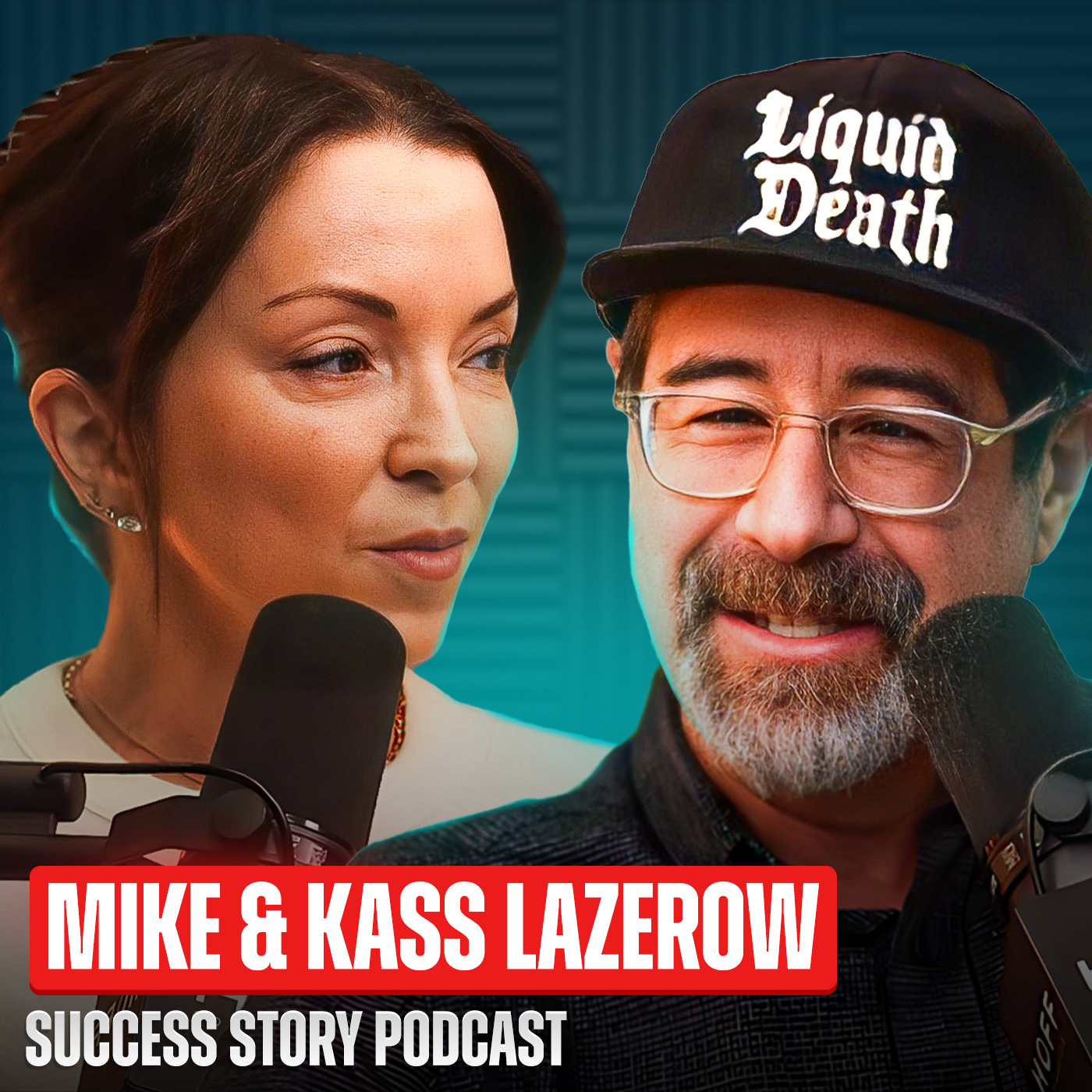
Success Story with Scott D. Clary
Mike & Kass Lazerow - From Zero to $745M | The Simple Truth About Growth
01:19:59
Loading summary
Transcript220 lines
- [00:00]
Mike
There's nothing worse than being an entrepreneur, and it's awesome. There's nothing better. Best entrepreneurs just love to suffer. When I look at the where people find their purpose, where they find their passion, it's in entrepreneurship.
- [00:11]
Interviewer
They're not just partners in life. They're partners in ambition, strategy, and growth. Mike and Cas are the duo behind one of the fastest growing coaching brands in business and lifestyle mastery.
- [00:22]
Cas
You were in a marriage, dating, whatever it is, you have to have the big conversations. Why are you doing this? You just have to both know why someone's doing this. Co founders that have the same morals and values. Values, I think, are really winners.
- [00:34]
Mike
If you want to build a real venture company, you have to have the opportunity to reach billions of people.
- [00:40]
Interviewer
Together, they've helped thousands turn confusion into clarity and ideas into thriving, predictable income. Their partnership isn't just about success. It's about the journey, the grind, and the transformation that happens when two minds commit to excellence together.
- [00:54]
Cas
If you're brutally and radically honest with everybody, including yourself, pivoting is part of every entrepreneur's life. If you can constantly explain what you're doing to the team teams around you, then those pivots become easier and easier.
- [01:07]
Mike
If you do the right thing every day, week, month, quarter, you'll be successful in some way. Money does not come with that. Find something that you really are passionate about and put all of your energy behind that.
- [01:29]
Interviewer
So, Mike, you write that entrepreneurship is awful and awesome suffering that you wouldn't trade for anything. So help me understand why anybody would choose this life.
- [01:38]
Mike
There's nothing worse than being an entrepreneur. Nothing. You get up, you get hit in the face, things go bad, clients cancel, employees go rogue, and it's awesome. There's nothing better. It's why the book is shoveling shit. A love story. It's our love story to each other, but also to entrepreneurs. And the best entrepreneurs just love to suffer. They realize in order to get to where they want to do, where they want to go, it's just going to be full of obstacles and shit hitting the fan. And so when I look at where people find their purpose, where they find their passion, it's in entrepreneurship. So if you talk to an entrepreneur, you say, how's it going? Oh, I'm killing it. Then you're like, well, are you really? Tell me a little bit more. And it's like, well, no, I'm stressed. I'm running out of money. I'm doing all this stuff that's not fun. But at the end of the day, you Ask. Well, would you rather do something else? Would you rather have a job? Would you rather have security? No way. I'm doing exactly what I'm doing want to do, and it's miserable. And so we tried to capture that in this idea of shoveling shit. A love story.
- [02:43]
Interviewer
Did either of you have any idea what you were getting yourselves into? I don't think anybody does, really.
- [02:49]
Cas
You mean becoming an entrepreneur?
- [02:51]
Interviewer
Yeah, becoming. Not with yourselves. No, no, no. Maybe that's a whole other. A whole other podcast. No, I'm kidding. But just becoming entrepreneurs because you started working together before you even were married. Correct. So you were working together 30 years, married for 25. So something was working out in the business that you said, o, let's not only be business partners, let's be life partners. But what was that sort of inflection point in when you were dating when you said, let's build a business together?
- [03:18]
Cas
So I. I had this idea to build Golf.com I was in a kind of recreational golfer. No money, like, didn't belong to a private course. And back then, you had to go to these public courses and go to the same machine to enter your USGA handicap. So when I had this idea, there was no one else I wanted to do it with other than Mike, because I would come home even from the day job that I had, which was at a big agency, and I would ask him questions about, like, business models and monetization. So he would come home from his job. He actually was running his company, uwire, and talk to me about, like, operations and execution. So I think we were lucky that we figured out that we have no overlapping skills. Like, none. And that's a good thing.
- [04:09]
Interviewer
Explain why that's important.
- [04:10]
Cas
It's really important when you're co founders, because you don't micromanage each other. You don't have this, like, paralysis of decisions. And it just was a natural fit. So obviously I had a recruiting advantage. We were living together. So I just literally said to him, when are you coming on board? When are you coming on board? And then finally he did, and things went from there.
- [04:34]
Interviewer
We can talk about business strategy all day, but I think that what's even more important is figuring out, like, when you build a business with a partner, what are the things that you have to think about so that that doesn't ruin the relationship.
- [04:45]
Cas
We definitely have to have the uncomfortable conversations. Just like you were in a marriage, dating, whatever it is, you have to have the big conversations. Why are you doing this? And it doesn't mean that the answers have to be the exact same. You just have to both know why someone's doing this, right? So that there's no resentment that gets, you know, gets built up later on. How I always ask the question, like, how do you. Like what refills your cup? I always want to see founders who know the emotional side of their co founder so that if they decide I'm going to play golf one day, they know, A, that they are at their, you know, end of the line here and they're getting really stressed out, and B, they're not resentful. So uncomfortable conversations. You got to have the same vision. People who have the co founders that have the same, like, morals and values, I think are really winners.
- [05:38]
Interviewer
What do you have to watch out for when you're building with your spouse? Like, just so that you don't. That you don't let it ruin everything.
- [05:45]
Mike
We think it's a superpower. And what's ironic to us is people will say, I don't want to work with you, but let's have these three kids, right? And kids are so much harder than companies, primarily because you can't fire your kids. You can't pivot your family into something else, right? And so if you can have. First we had a dog. It went well, you know, Cookie in Chicago, baby steps. And then we had a business. And then it's like, okay, we like this. Let's start having kids. We were young. I was 22 when I met Cass. And we were very different, but we had the same foundation. We worked hard. We looked at work as kind of a virtue. It was centerpiece of everything that we did. We had friends and family and everything. But work was, like, really important. And so it just felt so natural to do it. We didn't overthink it. I think where you get into problems if you don't think about it enough or you overthink it and you try to overanalyze it. If it feels good, it usually will turn out well. I'm not talking about good. The first time you talk about it, let it sit. Have conversations. How hard do you want to work? Are you full time? Are you going to want to sell it or play the long game? What's your philosophy on investors? Do we want to bring on money? Do we want to bootstrap it all? These are conversations that we outline in the book, a chapter called Saying I Do, which is a marriage. Once you get. You can change markets, you can fire employees, you can do a lot of stuff. What's really hard is Changing co founders. So make sure that you spend the time early on to do it.
- [07:24]
Cas
And we protected our time as a couple by always having date nights. So even when we had newborns, we had two date nights a week. And I remember in the early days, because we had three kids under five, we were exhausted and we were working, I don't know, 12, 14 hour days. And even if we didn't go out, we would be there just trying to connect. And I think that helps. I think there's a lot of entrepreneur couples out there that don't do that and you need to do it. And yes, you're still going to talk about some work stuff because it probably will be the only time you're only meeting just the two of you. But everyone always used to say, like, how do you work with them? Well, I never worked with him on a daily basis. That's the key. Like I.
- [08:11]
Interviewer
So you knew what you were good at?
- [08:13]
Cas
Yes. And we outsource it. Yes. Implicit trust.
- [08:16]
Interviewer
You said that Mike shakes the trees and you pick up the mess. So I like that.
- [08:23]
Cas
That's really true.
- [08:24]
Mike
Who did you tell that to?
- [08:26]
Cas
I don't remember that.
- [08:27]
Interviewer
It was on one of the podcasts. It was on one of the podcasts. But I love it. I like that. How do you identify? First of all, what does that mean? But also, how do you identify who's good at what? And again, this is talking about you as a. As a married couple. But also, this is an important lesson for founders that are just founders with somebody who they're obviously not married to.
- [08:45]
Cas
Right. So I think in those, like, beginning conversations when you're like, oh, I have this idea. Do you want to come work together and do this? You have to decide what you're going to own. And the best founders literally say, okay, that's yours, this is mine. And I'm never going to pick at it. Right. I'm going to not micromanage you. For Mike, I always knew he was great at sales, client facing, fundraising, money, business models, vision. And it happened to be everything that I'm not good at. We overlap a little bit in marketing, but anything that has to do with a daily grind of like, hiring people, operations, finance, accounting, marketing, legal, like, I just pick it up and I run.
- [09:30]
Mike
She's an incredible operator.
- [09:31]
Interviewer
No, I was just going to ask if you agree with that statement. No.
- [09:34]
Mike
Hundred percent. And we've seen it. We've done over 100 investments, primarily tech, but also like liquid death and, you know, some CPG companies. And she's just the Best operator I've ever seen. And when I say operator, it's not only how she operates the business and executes the plan, but it's how she lays people off. People get laid off by Cass and it's like the best day of their life. Like literally she tells them, here are your strengths, here are your weaknesses, here's where you fell short, here's why you're not a fit for us, but where I think you should go. And it's kind of like, man, I just got like a life direction. I go to lay people off and they get a raise and more money, right? Like, it's just, I'm like conflict adverse. So it's like we've settled into something that works for us, but it really is the model for all businesses that you should bring someone on board who one plus one equals five, right? That you're both moving in the same direction. Where we've seen a lot of issues is if you have two technical co founders arguing about stuff that doesn't matter. Tech stacks and code that are so.
- [10:40]
Interviewer
In the weeds and they both are the experts and they both have the complementary skill sets.
- [10:44]
Mike
It took us a while, so I would kind of chime in on operations and after a few years and losing every argument, I'm like, okay, I get it. Like you know, as an entrepreneur, especially as kind of a man, we're not very self aware. Like we're very optimistic. We don't always listen well, we're not always present. And I don't want to like it's not just a female male thing, but I tend to see men are a little less self aware, less open to talking about emotions and over communicating. And so after a few years I was like, yeah, I am kind of an asshole. Like I gotta like slow roll this. I gotta be present. I can't, I gotta put my ego as. And I think that's why the first business was successful. We sold it for 25 million after a few ups and downs. But why we really got in a groove by the time Buddy Media came, where we went from zero to hundreds of employees, 50 million annual recurring revenue in basically three years. Because we had, you know, we were in our lanes.
- [11:46]
Interviewer
So when you started Buddy Media, you've already sort of figured out how to work together at this point, right? So after sort of going through golf.com, $25 million exit with that, you're starting Buddy Media, like sort of what's the, what's the game plan for day zero? So the things that you wish that you had known when you were starting golf.com that would be useful for you, but also useful for founders that are just starting out.
- [12:10]
Mike
So Golf.com was a relatively small market. So if you look at the golf space, yeah, it's like $80 billion. But like most of it's like travel and owning a golf course. So golf media was really small. I saw social media. I say I because a lot of the vision comes from me, like the areas we attack, you know, I've been one of my superpowers have been getting there early, whether it's Internet social, you know, AI, you know, whatever we're doing. And so, you know, at this point, Cass is having our third kid, she's in the hospital, you know, delivering a C section. And which means, just means I'm. It's an operation, I'm on my BlackBerry and Facebook launches. And I just thought it was a huge thing for the Internet. Internet up to that time was a one person player game, right? You would shop, search for information. There wasn't really a social layer. I saw this as the opening of the social layer. And so Facebook, Mark Zuckerberg on stage. And this was May 24, 2008, right? Yeah. At his F8 event, announces their platform, which basically invites developers to build social applications. Out of this came Zynga and game companies. Right. You could play games against friends versus just games against yourself, Solitaire. And I just knew it was going to be a huge market. And so the biggest lesson we learned from the early businesses is focus on a big market. Focus on something that's like if you want to build a real venture company, you have to have the opportunity to reach billions of people to sell it, you know, to tens of thousands of companies. And so we picked the right market and we got lucky. That really was the lesson there.
- [13:56]
Interviewer
How much, okay, so how much was luck? Because everybody who's listening to this is going to say, yeah, for sure, pick a big market. But then you have the, the, the blue ocean versus red ocean.
- [14:06]
Cas
Like so when Mike picks things like, and he literally thinks like, okay, this is where we're going. It's not like we didn't pivot five times, right. So if about our business model, I think the other lesson is can you pivot to survive? Right. And do you have the self awareness to know when things aren't going well and you pull the plug? Right? Because a lot of entrepreneurs, they dig in when things aren't going well and then they try to convince themselves and they think that they tell themselves stories like oh, the board. I sold this idea on, you know, to the board. Like, I can't change. All the employees are going to think I'm a fruit loop if I change now. And the key is that, you know, if you're, if you're brutal, brutally and radically honest with everybody, including yourself, pivoting is part of every entrepreneur's life, period. And so then if you can, if you can constantly explain what you're doing to the teams around you, then those pivots become easier and easier. So yes, like we jumped at, you know, this social, you know, industry, whatever that was going to be, but we pivoted until we could find recurring revenue.
- [15:16]
Interviewer
You pivoted until you could find recurring revenue. Okay, so before. So you did four plus pivots.
- [15:23]
Cas
We started with something called Ace Bucks. I can't even say it with a straight face. It's like the worst idea ever.
- [15:29]
Mike
But she didn't veto for the revenue. It was a bad idea.
- [15:32]
Interviewer
Nobody knew at the time. No, you just.
- [15:34]
Cas
I had a baby, literally that, you know, two days. Yeah.
- [15:38]
Interviewer
And then you, and then you started Ace Bucks.
- [15:40]
Mike
So we went from Ace Bucks to, you know, building custom apps.
- [15:43]
Cas
Ace Bucks was so that you knew. I want to.
- [15:45]
Interviewer
It shows how much of a pivot you can actually have before you become successful.
- [15:50]
Mike
So yeah, even the name of the company we sold to Salesforce, basically the largest social media management system software that helped very large brands, nine out of the top 10 global marketers, manage all their social media marketing. Paid, earned, owned across Facebook and Twitter, which was called at the time YouTube, Instagram. And it was a business that was a software business you never started out called Buddy Media. Right. If you think you're going to get there. So yeah, we launched this web wide currency, Ace Bucks. The idea is that you earn it playing different applications on Facebook and elsewhere and you burn your points or spend your points. That's how these things were Mike's motto. Yeah. And then you could burn for buying like ipods. And we had all these like different, like, you know, it's kind of like you go into Chuck E. Cheese, you earn tickets.
- [16:42]
Interviewer
Yeah, I know exactly what you're talking about.
- [16:44]
Mike
Yeah. Let's just say that we're not economists. Like massive inflation. It didn't work. It was like stupid. And then we started talking to brands and I think one of the biggest things that we did is we got the customer in the room, we said, listen, we got this Ace Bucks thing and let's take Amex points and exchange them. And we're talking to all these companies, I remember with amex in particular, they're like, that's so stupid. However, we've heard about this Facebook thing. Can you help us?
- [17:13]
Cas
Right?
- [17:14]
Mike
We're like, and you listen. That's a business, right?
- [17:16]
Cas
That's key, right? You gotta be able to listen.
- [17:18]
Mike
And I'm like, okay. They're trying to figure it out. So we started with custom apps, like, let's build an AmEx reward system on Facebook. And eventually we're building the same types of apps for all these companies. We productized it in a drag and drop type, no code development system that also let you post your content and run ads.
- [17:40]
Cas
It was, I would say, not a difficult decision for you and me, but I think the salespeople were freaked out because they were making a ton of money on custom apps, right? They were going to lower l' Oreal and Unilever and everybody.
- [17:53]
Interviewer
So you had a business that was working?
- [17:55]
Cas
Yes, it was working. Yes. And we had probably 2 to 3 million in sales. And Mike's like, who's going to tell Jeff, who we named co founder, our third co founder at the end because he's just so great. Our head of sales. And Mike's like, not it. I'm like, okay. And it was the one and only fight Jeff and I ever got into, and it was a screaming match because he had so much on the table. He's like, you're going to ruin this business. You're literally giving up. And I'm like, just watch. Just trust Mike.
- [18:26]
Interviewer
That's tough, though. Yeah, that's very tough. I think that also, I think you. You were fortunate that. That it wasn't as big a deal for you, because I feel like most founders, their ego and their identity is wrapped up in what they've built. And. And this is always the difficult conversation. And I. Maybe you can help me have, like, a clear answer for this. There's always two conflicting schools of thought. It's like, stick with it for an unreasonable amount of time until it works. Versus, to quote Kevin o', Leary, like, when do you take it behind the barn and shoot it, right? And how do you decide which one is the right answer? And I don't know.
- [19:03]
Cas
Well, for us, I mean, if you really look at what we did over the past 30 years, it's a series of pivots all the time. And those pivots could be many or big. And we always know now when something's not going well, not only from like, like customer feedback and data, but we can tell that our ego's talking to our gut, right? And your gut knows what's right. Your gut knows what's happening. So, like, Mike loves this V2 mom. You know, we learned it from Mark Benioff at Salesforce. It's the framework by which you can come up with a plan, know what your obstacles and measurements of success are. And so as entrepreneurs, we tell ourselves stories, right? We're really good at it because marketing is a big deal. That's how you get off the ground. And as Mike says, you have to have a big ego, right, to do that. But then you need to look back at something to say, okay, am I actually executing and did I hit the measurements of success that define what I've already sold to the board or to your investors? And I think that's where founders get caught. They're like, well, I did these projections, but they weren't real. And we're always kind of like, everything's.
- [20:17]
Interviewer
Up and to the right.
- [20:19]
Cas
But I'm kind of like, well, you said you were going to get 10 customers and you have zero. So what are your customers saying? That's. That's the friction right there. And so if you can get, you know, entrepreneurs to really focus on, here's my plan. This is what I'm going to execute for this quarter or this year. Make sure you also write down the success measurements, because otherwise your brain's just going to keep saying to yourself, oh, this is working, this is working. We gotta. We gotta wait one more year. We're going to do this one more quarter. It's going to be great. Well, it's not. If you look at those success metrics and that.
- [20:54]
Interviewer
And V2 mom is just a way. It's a framework to figure out if it's working or not. Because when you're running at like two or three million dollars in top line, there's things working, but because you have a framework, you know that it's not working as well as it should be working.
- [21:08]
Cas
And also, like, when you. When we thought about, like, custom maps and we were going and doing this, I start to look at, okay, how many teams, how many people, how many resources do I start pairing per custom app? And so I start projecting out, wait a second, this makes no sense. Like, we can't keep up the economics. We're going to be an agency and that, that's not really where our expertise is, because we were getting people wanting, you know, very custom, brand oriented, you know, heavy graphics, you know, that kind of stuff. It just wasn't our expertise.
- [21:44]
Mike
It also points to like how to run businesses. I and I think we've gotten lost as just definitely in this country, but potentially everywhere else where a lot of young entrepreneurs think that they're democracies. Right? They want to get feedback and everyone has a vote, everyone has a voice. We believe in this benevolent dictatorship because no one has all of the information other than the founders, the people who are looking at everything, who see everything, who know everything, who know the investors know, the clients know what, what people are working on. And so we would listen, but it was always our decision. So when we went to Jeff and we said we're doing this, it wasn't an effort to get him over. It's like we're doing this and here's why. And we will take responsibility if it works or not. So definitely on us if it doesn't work. But here's why we think it makes sense because it's a more scalable business model and compensation's everything. And so if you're doing two things and you have like this new development platform and custom apps and the salespeople make commission on both, but it's easier to sell the custom apps. They'll just sell custom apps. And so you have to take that out of their toolkit in order to kill the business. If you let them sell it, they'll sell it all day because they just want money. Right. And it feels good to close deals. I mean your background sales, my background sales. I love closing deals.
- [23:14]
Interviewer
And you always wanted to sell the easiest thing to call.
- [23:16]
Mike
Exactly. But like if you up level yourself. Right. You have to focus and it's what you've done so well with your company now. Like your focus, hyper focus. You can do anything, but you can't do everything right now, quick question.
- [23:30]
Interviewer
What's your go to when you got 10 minutes before a meeting or a workout? For me, it just used to be whatever I could grab. Which usually meant skipping meals entirely or just grabbing something that left me crashing an hour later because it was just full of garbage. That's why I'm partnering with Huell. And this black edition ready to drink is a complete meal. So it has 35 grams of protein, 6 grams of fiber, 35 essential vitamins and minerals. It is no sugar added, gluten free, under five bucks. I always keep a few of these in my fridge and honestly, it solved the whole back to back meetings. Go, go, go, non stop, no time to eat problem. Super well. And this one's new for me. It's Hu's Daily Greens. I had the blueberry this morning. Honestly, first impression it was way better than I expected. It's developed by registered nutritionists and dietitians. There are 42 vit minerals and superfoods. Only 25 calories, 4 grams of fiber and just 1 gram of sugar. I throw one back first thing before my morning calls. Every single morning. Look, if you're running a business, time is the most valuable asset. Huel makes healthy eating simple and they also just launched into target source nationwide so you can get it everywhere. Try both products today with 15 off your purchase for new customers with my exclusive code Scott@huel.com Scott Scott try both products today with 15 off your purchase for new customers with my Exclusive code Scott S C-O-T T@Huell.com Scott Use my code fill out the post checkout survey to help Support the show that is Huell.com Scott they really make healthy living taste amazing even if you're on the go. Healthy eating, healthy lifestyle doesn't have to taste bad. It doesn't have to suck. NetSuite is a success story. Partner now what does the future hold for business? If you ask nine experts, you'll get 10 answers. Bull market Bear market Rates are up, rates are down. At the end of the day, it'd just be easier if somebody invented a crystal ball. But until then, over 43,000 businesses have future proof themselves with NetSuite by Oracle, the number one AI cloud ERP that brings accounting, financial management, inventory and HR into one unified platform. Here's what I love about it. Instead of juggling multiple systems, you get one source of truth, real time insights and forecasting that actually let you peer into the future with actionable data. When you're closing your books days instead of weeks, you're spending less time looking backwards and more time focusing on what's next. Whether your company is earning millions or hundreds of millions, netsuite helps you tackle immediate challenges while seizing your biggest opportunities. If I needed this product in my business, this is what I'd use. It's a game changer for business visibility and control. If you want to see how AI can transform your financial operations, download the CFO's Guide to AI and Machine Learning for free. That's netsuite.com Scott Clary that's netsuite.com ScottClary Scott Clary netsuite.com ScottClay Bringing people on board for the journey is important too. So yes, you have to be a benevolent dictator and you know all the information. But sales is easy because sales is driven by compensation. So you could make the argument saying, okay, well, this is, this is how much money you're going to make over here, and I'm going to make sure that you can sell it. But to bring everybody over who's not on board with a new vision or the new idea, when you have, you know, 10, 15, I don't know how many people you had, or maybe a few less for 2, $3 million, probably not 15 plus, but you had a few people in the organization. How do you get them on board with the new vision? Because this is, this is, this is investors. If it's not working, it's very easy to get them on board with the new vision. You say if you want to, if you want to return, we're going to go in this new direction. But how do you get everyone else on board?
- [27:01]
Cas
So we had this belief, or maybe I came up with it, that we should share everything with the employees, that they were just like the board and investors. And every quarter we would have a quarterly all hands meeting, fly people in. When we were doing custom apps, I think we were growing to 30 people, which is why I said, like, this isn't working. We shouldn't have 30.
- [27:23]
Interviewer
A lot of people.
- [27:24]
Cas
30 people. You know, like, this was too much, too many people. So when we got up to even like 350 people, everyone was flying in. They were mandatory. And part of that was getting the leadership team to give a presentation to the employees as if they were the board. So here's the. The new logos, here's who we didn't win, here's the red accounts that we lost that churned, you know, from our head of client success. And you kind of go through that and you educate. We also gave out financials, right? And we showed everybody how we were doing, good, bad and ugly. And because we were truthful all the time. And we never, I never hid anything like whenever, like, because you can see it on people's faces, right? And that's what. If you don't explain things, that's what builds the cracks in companies. And the reason why cracks are awful. It's not just because people jump ship. It's that when you have to make a big pivot, they won't follow you because they'll panic, right? So if you've always been constantly, you know, truthful and honest and shared everything, then when you have to do something difficult, they will believe and trust you and they will go along for the ride. Especially not especially everybody but the salespeople. Because the salespeople, like you said, it's Easy.
- [28:50]
Interviewer
You've spoken about creating a cult, like culture, like a good version of the cult within Buddy media.
- [28:55]
Cas
Positive, positive.
- [28:55]
Interviewer
A positive cult. So this is sort of. This is leading into that conversation. How do you do that? Because I think that's also something that a lot like. Listen, we're talking about different companies at different sizes, for sure, but I think a lot of people have a hard time getting everybody on board. Not just getting everybody on board, but getting everybody excited about what's going on in the company. So how do you build this. This cult, like culture?
- [29:20]
Cas
I mean, it starts with rituals. It starts with, like, the very first touch points. So every time we hired someone, we did a ton of personal research, like, what were their hobbies, what was everything. So when we came on board, we already knew them very well, and we made sure they were like a culture fit. And then it wasn't just like, oh, you're going to have a lunch that day when you come on board. There was a whole program that I did across the company so that they would really be exposed to what was the purpose of their job and their impact. And. And I think again, you couple that with radical transparency and communication, and then you reward people and you make a big deal about it. And we never forgot to celebrate little wins. So if we had a little win, like the tech team released something like, I had balloons, I had cupcakes, you name it. Because it was a big deal and we weren't just going to be go past it, right? And we had, you know, if you got through a year with me and I didn't, like, fire you, we had. You had the biggest trophy I could do, which was a custom bobblehead, which, if you think about it, even when we were at the very young stage, it was like $400 at that point. You can get them a lot cheaper now, but like, $400 gift to employee. Doesn't really scale, if you think about it. But I wanted to show people that, like, you made it, you understand why this is so important and you understand that we're always going to take care of you.
- [30:55]
Mike
And it was visual. I mean, it would be on their desk. And I think Cass built the culture. I kind of participated and watched her do it. And looking back, a few things that I'd recommend to others. One is this idea of symbol and rituals. So what are the symbols in your business, including your origin story, that people grasp onto? What are the rituals? Every religion, every organization has these. A cadence of whether it's holidays or meetings or get togethers and the third is cults, real cults that are bad. You ask, how do these people join this crazy, usually guy, cult leader? And the reason is because it's friends recommending it to friends. You gotta come here. Because it's transformed my life not knowing they've been brainwashed. Right. We always thought of that for the good, which is like, how do we get our employees to get their most talented friends? And there was our biggest growth year. We added over 100 employees. The, you know, 70% of them came from referrals and. And employees, people. They won't recommend their friends if they aren't great, if they aren't easy to get along with, and they won't fit if they don't fit, and they won't fit. And so it's, you know, when we talked about the culture we built, it quickly became in our mind. Wow. We created this cult through rituals, symbols, recruitment.
- [32:33]
Cas
And we had, like, that year, I remember we also had zero people leave in a whole year, which is amazing. And when we had this referral system referring a buddy. Right. You could make. I don't remember. It was like 1500 or 3000.
- [32:47]
Mike
Up to five grand.
- [32:48]
Cas
Yeah. But during the quarterly meetings, I would put up the leaderboard of which employee was referring the most.
- [32:56]
Mike
And so there's one employee who made more money recruiting, like, engineers and friends than salary. Than salary. And we love that.
- [33:04]
Interviewer
That's healthy. That's healthy. It's a healthy setup. Mike, you said that there are three reasons companies fail. Co founders fight, they're not focused on the right thing or they run out of money. So obviously, that's usually talking about some of the investments that you've done and what you decide to put money into or not. But I'm curious which one of these that came the closest to killing Buddy Media out of those three things.
- [33:28]
Mike
So Buddy Media was the right company at the right time with the right team. And so that was a company that we pivoted. But we knew we were in the right market, and we never doubted that we'd figure it out.
- [33:42]
Cas
Nor run out of money.
- [33:43]
Mike
Nor run out of money because we, by that point, we were very lonely. @golf.com we didn't raise a lot of money. We had partners who we didn't necessarily choose. So, like, two New York hedge fund people. Like one who owned a big Vegas casino, Phil Ruffin, who wasn't, like, the nicest guy, and I was, like, scared of them. I set out to put together the best investors I could, and I reached out to Mark Pincus, who was doing Zynga, he was in the ecosystem. Peter Thiel was one of our investors who's on the board of Facebook. I thought that would be important. And Howard Lindsin and Roger Ehrenberg and all of these people who invested before we even launched. And so Buddy Media went really well. There were no co founder issues, which was awesome. There were focus issues. We needed to figure out what to do. And by this time, we knew that we would need money. So we always raised money when we didn't have to. And so.
- [34:51]
Cas
And we also pivoted when we had money.
- [34:54]
Interviewer
So there wasn't like a really low moment when Buddy Media was operating as Buddy Media.
- [34:59]
Mike
Correct. However, like, we sold Golf.com, the company we sold it to, went bankrupt. We had to buy it back, and then we grew it back. So we'd been through some issues of like, losing investor money, losing family members money, and we didn't want to make the mistake again. So we kind of. We raised 100 million. And eventually. And people were like, why do you raise so much? Well, people seem to. Employees want to get paid cash. Like, and we. We needed to build software. You have to invest before you replay.
- [35:33]
Cas
But also, I think a big point here is you asked earlier about pivoting. We pivoted when we had money in the bank before it starts tanking.
- [35:42]
Interviewer
So it wasn't like this stressed out.
- [35:43]
Cas
Right. Like panic. Yeah. Decision at what point?
- [35:47]
Interviewer
Okay, so there was a point where you had hundreds of employees, you had over $100 million raised, and then you hired a business coach named Tammy Jersey.
- [35:55]
Mike
Oh, man. Oh, man.
- [35:56]
Interviewer
Like, there was just a whole bunch of you getting involved in things that even. Even after this is, after 100 million raised, after hundreds of employees. So what was going on at that point, because you had already, at early stages in your career, understood that there was things that you should do and shouldn't do.
- [36:15]
Mike
I think I was ill prepared at the time, you know, in my early 30s now, to run a global organization. And I was CEO and Cas was doing all the work as COO. We now had hundreds of employees. We had offices in Singapore, in London, all over the US we had customers everywhere. We had to be there because that's where the customers were. And what I would learn is that your job as a CEO is like, hire the right people, focus the organization, let them do their work. Right. I would go and talk. I love engineers. So I would go down to the engineering floor, which I banned. Eventually we were in Soho, not far from where we are, it's actually like probably a quarter of a mile from here. And I just shoot the shit, right? Like, hey, what's up? Wouldn't it be cool? And all of a sudden, one conversation, one conversation where I would say, wouldn't it be cool? Is like 10 engineers stimming out and going to build something. And then the head of engineering, Patrick Stokes, getting word of this and being like a fucking asshole. Like, he's coming down here, he's getting my team on focus. We have all these deliverables. It was happening on the sales side, you know, green lighting deals, you know, without talking to the head of sales. And basically I wasn't listening. And I was kind of like a bull in the china shop. And Tammy Jersey Cass brought in as a coach, as a coach, quote, unquote, first thing she did was interview, do a 360 review, right? Like interview all the people who I work with. And what came back was like, it was awful. I reread it as part of the process of writing the book and I was like, man, this is like, I would have fired this founder like if I were on the board, right? And it just showed how self lack, self awareness, really lack of confidence I had in the team. And you know, I wasn't. At the same time, I didn't know how to handle this. You know, I had gained 40 pounds, I'm not working out, I'm not particularly pleasant at home. You know, I'm traveling to Singapore, like 19 hour flights for like two meetings and coming back. So it's like, I wasn't great across the board. But this was like evidence that's like, oh, I gotta change or else.
- [38:39]
Interviewer
The lesson from that sort of period in buddy media, like when you're working with a new founder, how do you make sure they never get to that point? Or is that a personality? Because like, I mean, you were successful in spite of that because you had the right people around you. But how do you make sure that, like somebody who's just starting out, because I feel they don't start out micromanaging or losing themselves in the business.
- [39:01]
Cas
But I mean, we tend to get portfolio companies who want us as investors because they know that we're gonna give them some of the cheat codes that we share in the book. And one of the biggest things that we tell them is radical transparency. Number one, make effort. I don't care if you're a remote company, then the founders travel and you should have that as a line item for like expenses so that your employees are actually getting face to face with you. And the third thing is that you need to develop. And a lot of founders do this the wrong way. But a leadership team and it's not like 50 people, it's probably like six. And you have a weekly meeting that can't be missed unless there's a wedding or a funeral like period. And that's where decisions are made. Nowhere else are decisions made. Not outside of that. So when I get wind of like Mike going and hanging out the next meeting and Patrick's upset, like we look at it as family, like this is a kitchen table. We're going to get everything out. Then we made a rule. Mike's not allowed to go down to the engineering floor. I know that sounds really ridiculous, but we also said here's the product roadmap. We're never going to change it unless all six people in the room that represent sales, engineering, product and customer service. Because if we change it it, even if someone didn't vote to change it, we all agreed on it and we know we all agreed on it and we can move forward. So we like to coach our companies to do it that way because it's such a great, like succinct way of having the communication work and decisions so that you don't get to the point of someone's walking a hall and saying a great idea and rumors happen.
- [40:50]
Mike
And I would focus on like, like it's a really good question because we've now seen so many founders, right. And so I never really thought about it like this. But as a founder, focus on your superpowers. So the reason why you raise money is you do something really well, whether you're an engineer, sales communicator, whatever it is and then hire for everything else. And it's why kind of. One of the best founders we've ever worked with is Mike Cesario. At liquiddef he was a creative director for Gary Vaynerchuk and for some agencies he's the best marketer we know and the most self aware founder because he realized I'm a marketing guy. I don't know how to make hundreds of millions of cans and supply chain and quality assurance and customer service. So he has built an incredible team that then lets him lean into his superpower. And I think everyone has those superpowers as entrepreneurs realize what they are and just be. I'm okay with kind of offloading everything else.
- [41:55]
Cas
And when we invest in companies and I start doing the due diligence for teams, it's really like, am I going to get one of these founders who thinks he knows everything, she knows everything. I want to see founders who know.
- [42:07]
Interviewer
What they don't know and be okay.
- [42:09]
Cas
With that, be okay with it and then say, like, my next. If I get this money, I'm going to hire the people that can fill in my gaps.
- [42:16]
Interviewer
Let's have a conversation about health because something that has been important for me on this show at least, is to sort of highlight all while you're building and while you're trying to achieve some sort of success. Right. People are usually trying to. You know, a lot of people listen to the show, are very entrepreneurial and I don't want them to think that they can't sort of maintain. Not balance. I think balance is the wrong word. But I don't want their relationships to go to shit. I don't want their personal health to go to shit. I don't want all these other things to really degrade in pursuit of the goal. But I know it happens a lot and I know that I was listening to an interview with. I hope this is correct and apologies, Sam, if it's not, but Sam Parr was talking about how when he was building the Hustle, which he sold the HubSpot, he had a really hard time finding time for health and wellness and the gym. And I know that obviously you can talk about your story and I don't really know your. Your health story, so maybe go into that a little bit. But is there something you would do different? Is it just being cognizant of it? Is it something where for a period of your life, if you truly want to build something remarkable. I don't believe this, but some people do. It's really hard to have balance. It's really hard to go to the gym and take care of yourself and make smart choices because you are all in obsessed with this, this thing that is your baby that you're building. So tell some stories about your health as you were growing, but also some lessons.
- [43:46]
Cas
So I am one of those people who believe you can only do one thing really great at a time. So it doesn't mean that everything else has to go to zero. It just means that the one thing you're concentrating is getting the majority of your focus and energy. And that even meant our kids, just for the record, for the moms out there, it. That was a little bit of a sacrifice. So when we were moving, we had hit 50 million in ARR in three years, which was just unheard of. And we had so many different people. Like Mike said in Offices. Mike was, as he said, 40 pounds overweight. I was having migraines. After migraines, I've always suffered, but they were coming two, three times a week. I had gained 30 pounds and it was an undiagnosed thyroid issue, which I didn't figure out for 10 years actually after that. And what we realize now, at least I do, is if you don't put something on your calendar, it's never going to happen. For instance, if I don't today, like I don't have a trainer today, if I don't put a workout inside the calendar, I'm going to tell myself stories about why I don't need to go work out, right? And I'm going to say, well, you know what, I'm going to, I'm going to say this, this meeting and this work I'm doing was a little bit more important than working out or meditating or taking a walk outside and getting sunlight. So we also tell all of our founders, you have to put it on the calendar and it's okay to do it.
- [45:16]
Mike
So I look at wellness as kind of the fundamentals and then what you optimize from there. And I didn't understand this. And it's hard. Like this is still a struggle for us. I've been on the road for the last two weeks and I know it's a struggle for every entrepreneur who hasn't quite made it right, who don't have resources. And so for me it came down to drinking. So I stopped drinking because I was going to a lot of client meetings. We'd have steaks and I'd get. We were in the enterprise software space.
- [45:51]
Interviewer
Everybody's drinking all the time.
- [45:53]
Mike
I wasn't sleeping because I felt like sleep was a weakness. If I'm asleep, there are other entrepreneurs up working. And so I didn't sleep that much. And that I think contributed to everything else, which is the third not eating well, right? So now at the time I was drinking, I wasn't sleeping. Big meals, grabbing stuff in the airports, right? Whatever it is. And it then came down to I didn't feel like working out, right? If you're like overweight, you're hungover, you have no sleep, you're not eating well, you have no energy. Are you really gonna work out, let alone have. And so I think you need to put on your calendar, sleep, right? Like I am gonna go to sleep at 10:00 clock tonight because I know I have a 6:00am flight, which means I'm leaving my place at 3:30, right? So you Kind of put it on. On exercise. I don't think you have to do it for two hours a day, but if you can find half an hour, 45 minutes, three days a week, it'll reset your brain. Like the neuroplasticity that comes from sweating and just kind of exerting yourself and you'll feel good. Do it first thing in the morning. You've accomplished something before other people wake up, and then just make, if you can, better decisions about food, whatever that means for you.
- [47:15]
Interviewer
Yeah, but it's like a flywheel to a degree. If you start with the sleep and the food and the work.
- [47:19]
Cas
Even doing this book. So did you know it was released in June, and I would say the quarter leading up to it, we were sacrificing health. I mean, I know we were because we were literally flying all over the place for the book.
- [47:34]
Mike
We were very nervous that, like, a book about hard work would fail because we weren't working hard.
- [47:39]
Cas
Working hard.
- [47:39]
Interviewer
It's very ironic.
- [47:40]
Mike
So it was like people were like, how do you become New York Times bestseller? It's like, oh. Like there was no doubt that we were going to, you know, show up for everything that was going to sell 10 books that was going to get us over the top. But, you know, it was tough personally because we felt like we were back in the buddy media days.
- [48:00]
Interviewer
So I think that the issue is not that there's like imbalance. I think that if you, like you mentioned before, if you're building anything great, there's always going to be imbalance. Smarter choices sort of reduce the negative effects of the imbalance.
- [48:12]
Cas
Integration is what.
- [48:13]
Mike
Yes, yes.
- [48:14]
Interviewer
But it's also like there has to be seasons of it. So if you go hard for three months, that's fine. If you're building something for 10 years, that can be a death sentence if you don't take care of yourself for those 10 years.
- [48:25]
Cas
And that's what that was the lesson, the death sentence. Like, Mike went after, you know, we were acquired and he started working at Salesforce for the earn out after you went to your doctor. And he's like, literally, you're gonna die. Like you're so unhealthy healthy.
- [48:41]
Mike
So I have an artificial heart valve and I've had my heart rebuilt and my cardiologist. This is, I think 2014. I'm now working hard at Salesforce. I'm chief strategy officer. I'm like working probably just as hard because that's the kind of company that Salesforce is. Was definitely and still is. And my cardiologist said, like, what's the point of, like, making all this money? Like, you have three kids. Like, you will die from if you continue on this. And I remember, I. Then, you know, September 2014, called Rico Wesley, who I've worked with, I'd already worked with as a trainer. And I'm like, I need you to keep me accountable. And we started three days a week. You know, he helped me with nutrition and eating and protein shakes. And it was also a dinner we had. I don't know if you remember this. We had dinner with Gary, you know, Vaynerchuk and Lizzie, and he.
- [49:38]
Cas
And.
- [49:39]
Mike
And there's just the four of us. And he just brought on Mike, who's like, would travel with him to work out and, like, would hand him, like, smoothies. And he's like, you got. And I. And I remember he's like, you have to figure this out because you don't look good and you're gonna, like, Gary.
- [49:54]
Interviewer
Was telling you this or.
- [49:55]
Mike
Yeah, to me, this. And he goes, I have it figured out. I will help you. You, like, do it. And that's what got me on. I'm like, I need to.
- [50:04]
Interviewer
Same time in 2014. Ish.
- [50:06]
Mike
Yeah, it was exactly this time.
- [50:08]
Cas
And you have to. There's something about being held accountable to things that you might feel are not necessary or, like, in the stack, rank order of things at the bottom. And I don't know, I think it's because it's integration. So I think you're right that you have to minimize the negative effects of lack of sleep, lack of exercise and eating poorly and drinking and all that kind of stuff.
- [50:35]
Interviewer
But there's something to be said for, like, it's also personality trait.
- [50:41]
Cas
100%.
- [50:42]
Interviewer
You're telling me that your cardiologist is telling you this three years post acquisition at Salesforce's cso. I get it. Cso, Salesforce, whatever their market cap was at the time, very important job.
- [50:53]
Mike
But.
- [50:53]
Interviewer
But. But I don't know if their whole C suite is having health concerns, because it was probably. You were putting 150, 200% of yourself into this job when you.
- [51:04]
Mike
That wasn't that important to the company. Like, chief strategy officers, like, go talk to clients and wow them. Right.
- [51:10]
Interviewer
Like, you didn't have to be in that position.
- [51:12]
Mike
Yeah. Like, Salesforce is not like, I. I'm not the founder. I wasn't critical. Right.
- [51:18]
Cas
But. But this was going on. Let's just be clear. We see. When we see our founders suffering, I will step in and have a conversation about, like, mental well being.
- [51:28]
Interviewer
Yeah, you have to.
- [51:30]
Cas
You have to. And it's a big deal because it is lonely. I, I don't like being like woe is us. Like, it's. But it is, it's, it's a lot of pressure. And so that integration rule, putting things on the calendar is a big deal. I also never had back to back to back. Whenever he has back to back meetings, it's a, it's a horrible day for him. You have to schedule breaks.
- [51:51]
Interviewer
Indeed is a success story partner. Now, if you're hiring Indeed is all you need. Let me give you an example. If I needed to hire a new editor for this show, I'd go to Indeed and be super specific. Not just can you edit audio. I'd say I need someone who's edited a conversational podcast for at least three years, gets our style and knows our software. Someone who's done this before. And here's the thing with Indeed sponsored jobs, I'd get people who fit that description. I'm not digging through resumes from people who've edited one YouTube video. I'm getting actual podcast editors who know what they're doing. People who've worked on shows like ours and can prove it. That's what makes makes a difference. You get people who actually are what you're looking for. According to Indeed data, sponsored jobs posted directly on indeed are 90% more likely to report a higher than non sponsored jobs. And people are finding quality hires right now. In the minute that I've been speaking to you, companies like yours have made 27 hires on Indeed. According to Indeed Data worldwide. Spend more time interviewing candidates who check all the boxes. Less stress, less time, and more results. Now with Indeed sponsored Jobs and listeners of this show will get a $75 sponsored job credit to help you get your job the premium status it deserves. @ Indeed.com Clary just go to Indeed.com Clary right now and support our show by saying you heard about Indeed on this podcast. Indeed.com Clary terms and conditions apply. Hiring do it the right way with Indeed. HubSpot is a success story partner. And if you're into this show, you're probably someone who likes learning from people who've actually done the thing. That's why I want to put Create like the Greats on your radar. It's a great show. It's hosted by Ross Simmons, part of the Hotspot Podcast Network. Ross breaks down some of the greatest creations and creators of all time. What they built, how they thought, the actual process behind it. And he's not just Talking theory. He's been doing this stuff for over a decade. What I appreciate is that he makes it practical. Like how do you actually systematize creativity? So you're productive, but you're not burning out. So if you like learning from history, understanding how great work gets made, and you want something that's easy to listen to, check it out, listen to, create like the greats wherever you get your podcast, podcasts. I want to talk about the founders you work with and betting on people. And just for context, like, I, I know that if people sort of research you and listen to other podcasts, they've probably heard this story. But like one of the most famous people that you bet on is Gary Vee. But obviously you can tell that story. It's fun. But then also, let's talk about like, what you look for when you bet on people as business partners as now, investments. I know you've done over 100 investments. You've probably had, you know, thousands and thousands of pitches. So there's a select few that you've actually decided to work with. So what's the personality of somebody you choose to bet.
- [54:18]
Mike
On? I think it comes down to first, like, do I like this person? Like, is this someone. Because businesses take a long time and in 10 years, when things aren't going as well as maybe they hope, like will, I still want to be in the trenches with them. And that comes down to like, do I like having lunch with them? Do I like having dinner? Would I invite them over, over to Thanksgiving dinner if they don't have family in New York.
- [54:42]
Cas
City? Which we did.
- [54:43]
Mike
Often. Which we did all the time. I mean, I remember one Thanksgiving, I don't even know if you remember this Walter Driver who started a company called Scopely. He was in town. I'm like, yes, come over to our townhouse in the city. And he was stressed out. He was thinking about a round he went on to and very humble, knew what he didn't know. We provided some of the seed capital to that they sell for $5 billion to another game company. And that's someone who I miss working with. I mean, he's the best, right? So people were always like, I remember early on, it's like they deliver bad news or any news, but don't take it personally. And for us it's like, oh, this is all personal. There's nothing that we're doing that's not personal. I don't know if you've noticed. I'm married to my co founder and my co investor. And so there's nothing that you can say that is going to stop me from taking everything personally. And so it starts with that and then it's basically like, is it the right founder for this.
- [55:46]
Cas
Opportunity? And that's where I come in and really dig deep in trying to understand who this founder is or the co founders and then really separate the co founders in a call to try to see if they know each other well.
- [55:58]
Mike
Enough. And it's getting harder because as investors, we're now the old people. And venture is like a young person's.
- [56:06]
Cas
Game.
- [56:07]
Interviewer
Yeah. And so what do you mean by.
- [56:09]
Mike
That? Meaning, like reinventing new stuff. And a lot of the new stuff that's created is created by young people who don't know any differently and.
- [56:18]
Cas
Also don't need as much as we did. Like, we.
- [56:20]
Mike
Didn'T. I mean, and they're just smarter because they have access to the Internet and stuff content like yours. We didn't. Right. And so I look at like, you know, Robert and Gavin, two Harvard dropouts. They come up with a crazy idea which is, we are going to beat Nvidia. Literally a few years ago now, they invented a chip that's 10 times faster than Nvidia's fastest chip. It costs half as much and it saves 75% of the energy. And we're like, this is crazy, but I like them. Maybe we do it right. Fast forward and Etch the company. Etch AI is transforming the design of like chips. Right. And is now a.
- [57:08]
Cas
Thing. But when we met them and we, you know, like dug deep on them, they had even though, you know, like, okay, they dropped out of Harvard, who cares? But they had the.
- [57:19]
Mike
Same. No, I like.
- [57:19]
Cas
That. We like that. But like Harvard anyway morals and values. Right. And they had the right foundation and they knew how to work together. Things like that.
- [57:28]
Mike
Are. I'm like, I want to hang out with these guys. Like they're smarter than.
- [57:31]
Interviewer
Us. That's where you start. It's like, is there like a. Can you just enjoy like a coffee or a drink with.
- [57:36]
Cas
You? Yeah. Do you want to break bread with.
- [57:37]
Interviewer
Them?
- [57:38]
Mike
Yeah. And are they ballers in their area? Like, they're as good in like the math world. It's what it is. And chip design, as Mike is in the creative world or Walter was in entertainment and games and all of these like founders find the synchronicity, right? Which is this intersection of like passion, purpose, skill set, which is just great fuel to become really rich. I mean, at the end of the day, these are very now very rich people because they Found that synchronicity what makes.
- [58:12]
Interviewer
You. And he didn't tell the Gary Vee story about your boardroom. I just find that to be funny because he always talks about that story. But I didn't know that you.
- [58:21]
Cas
Were with the people who had the boardroom. Gary came to Mike. What year was this? 2008, I think we just started. Yeah, we started the company in 2007. We had moved into kind of like a different office, which was kind of a big deal, right? Cause we were still trying to get our footing and we just had one floor of this kind of brownstone on 60th and Broadway. And somehow Mike and Gary come into my office and Mike says, hey, like, no preface, meet Gary, meet Gary. And I obviously knew who Gary was because Mike had been following him on WineTV, Wine Library. And I was like, God, this guy's outrageous. And he doesn't tell me beforehand. Which was a big no no, because I think he knew what my answer was going to be. That I'm going to allow Gary and his brother and friends to work out of the conference room. And I thought he meant just that day. And I was like, okay, okay, that's cool. Like, I'll rearrange some things. I think I borrow a conference room from yext was down, you know, downstairs. And. And then Mike pulls me inside and says, no, like, they're moving in. And I'm like, what? And he's like, yeah, he is incredible. Like, trust.
- [59:38]
Mike
Me. Well, no one really knew Gary as a business person. He was like, early YouTube. And he basically came to me very vulnerably and said, you know, I'm 34. I've never made more than 100, you know, thousand a year working for my dad. He won't give me equity. And we know his dad. We love him. You know, Sasha, love you. And I don't have money for an office, but in my mind, I'm like, this kid has it. Whatever it is. I say, kid? He's only like two or three years younger than me, but whatever it is, he had it. And he also. His pitch was, I'm creating an agency to do for brands what I did for my dad's store at Wine Library. Using social content to grow business. And I'm like, well, we have social software. But this wasn't really transactional. I just liked him. And fast forward, like just that act of giving. We've gotten so much in return. We did a three hour live stream. We created a holiday for the book called National Shovel Day on National Garden Day. And the three of us livestreamed selling the.
- [60:46]
Cas
Book. But also we get to see, like, the really cool part was to watch up close and personal, like, the story of Gary and his brother AJ betting on themselves and realizing they weren't going to raise $1, they were going to bring in clients. That's what they were going to do. And they did that. And Gary literally annoyed me five times a day, running into my office, trying to talk to me about deals, how excited he was, and to play pink.
- [61:16]
Interviewer
Pong. That level of, like, passion and obsession, do you see that? With all the most successful founders.
- [61:22]
Mike
We see that, like.
- [61:23]
Interviewer
Gary. Not like, there's a different level, like.
- [61:26]
Cas
70%. You definitely see it in the industry that they're in. So Gary has this love of life and that energy that's just surpasses anybody. But, yes, we see the passion and everything, but his enthusiasm, like, he would drive. I'd be on, like, with Amex, like, talking about client issues they were having. He'd be like, gas, gas, you gotta come in. We're gonna play ping pong right now. I have this idea and I'm like, oh, my God, there's two of you. Because I would say the same thing about.
- [61:56]
Mike
Him. And we also, like, what was great is we were young entrepreneurs in the same space. And I remember going with him, I'm like, hey, the NHL's interested in our software. Come with me. Let's sell them some shit.
- [62:10]
Cas
Right? And that's.
- [62:11]
Mike
Fun. And I'd go on, and he's supposed to be joining me in meeting, and he takes. He just takes.
- [62:15]
Cas
Over. Of course.
- [62:16]
Mike
He. He stands.
- [62:17]
Interviewer
Up. So he's acting as your best sales.
- [62:18]
Mike
Guy. Yeah. And he's like, listen, this is what. This is where the world's going. And you guys, you get set up with all the teams on Buddy Media, and then I'm going to work with everyone to get the best content. And D. It was just fun. We'd come out of the meeting, I'm like, I don't know what just happened, but I think we're going to get some.
- [62:34]
Cas
Money. And then he'd come back and he's like, I think Gary and I close at a deal. I think we.
- [62:40]
Mike
Did. He definitely did. But whether we get anything, we'll.
- [62:44]
Interviewer
See. You know, that's something, though. There's something to be said for that. Like, just like, the energy of a founder is so.
- [62:49]
Mike
Contagious. And if you're, like, starting out now, like, treat everyone as if they're the future. Gary Vee, ask how can you help? Because the relationship, like the network eventually becomes your net worth. Like, what we've realized is that our network, network built over the last 30 years, these are our friends. These are people we would do anything with. And it's not a surprise. We own a pickleball team with Gary. We did Empathy Wines, Vee Friends, which is his latest. He's been supportive of every one of our projects and there's probably maybe 20 others that we kind of continue to just do stuff with. And a lot of the. We find a lot of younger entrepreneurs are more transactional. Like, why should I spend time with this person? Like, what are they doing for me? And I would just shy away from that.
- [63:44]
Interviewer
Outlook. I like that. I feel that too. I feel a lot of that. Like everybody's like, what can I get out of this.
- [63:49]
Cas
Person? Right? How am I spending my.
- [63:51]
Interviewer
Time? It's a gross attitude. It is a gross. It's like, it's very short term thinking. But I don't know where that came from. I just feel it. I feel it a.
- [63:59]
Cas
Lot. Well, it came from the immediacy that they feel they want things when they want it, they want. They don't want to earn anything. And. And it's just this transactional way of.
- [64:12]
Mike
Thinking. There's also wasn't. When we started out, it was never about money, it was about freedom. You wouldn't have started an Internet company in 1994, which is the first one I started. If you liked money, good for your age, man. That's going on. I'm 51. Yeah, I'm 51. But I was in college and there were 13 million people on the Internet. So people are like, oh, you got on the Internet because it was about the money. I'm like, oh, no. This was like, like pre Amazon. Like there wasn't even the Netscape browser. Forget, you know, like Mark Andreessen was working on Mosaic at University of Illinois and everything we've done that was just for money has pretty much turned out awful. Other than just like passive investments, like real estate and stuff. Because like when you optimize for money and the money doesn't happen, you just, it's.
- [65:01]
Cas
Miserable. You give up and you make bad.
- [65:04]
Mike
Decisions. So like a lot of the transactions stuff I think comes from this kind of keep up with the Joneses that you see on Instagram that like, if I don't do this, I'm not going to have the Lambo, I'm not going to have. And I'll tell you that there is no kind of pot of gold at the end, that makes you happy, like you will get if you do the right thing every day, week, month, quarter, year, you'll be successful in some way. Money does not come with that. Your happiness will not be found in your pot of.
- [65:38]
Interviewer
Gold. Yeah, I was going to say. Do you think that social media is ruining.
- [65:41]
Cas
Entrepreneurship? We've talked about this. Mike and I have talked to this because we feel like we kind of helped the evil part of social media with our management system back in the day. I think that social media for entrepreneurs can help them get their story out and build their own brand. And I think that's a really positive thing because I think the amount of money you have to spend is less at the end of the day in terms of how these young entrepreneurs see themselves compared to others. The FOMO that they have and the comparison, you know, which is the thief of joy, I think it does ruin their mindset so that they get to a transactional stage.
- [66:29]
Interviewer
Right. Which in turn will actually ruin the business, diminish the chance of them being.
- [66:33]
Mike
Successful. Social media has fundamentally destroyed mental health in this country, and that's proven it's not going to get any better with ChatGPT and AI therapists and agents and friends. And so entrepreneurs are not immune to that. And, and all I would say is the good news about entrepreneurs is you're really internally motivated. Great entrepreneurs kind of are driven by this fire inside them that could come from proving someone wrong or wanting to get somewhere.
- [67:13]
Cas
Whatever. Fear of not wanting to have a.
- [67:15]
Mike
Job. Yeah. And these social media sites which were guilty as charged, helped popularize. They're all about external validation. And so I would just make sure that you're optimizing for the right things. You want your employees to like you. You don't care about getting 100 likes on every post. Right. So tune into what really matters, which is personal relationships, what your clients think, what your. Are you a good son? Have you called your mom this week?
- [67:48]
Interviewer
Right. Yeah. But also if you're happy with what you're doing.
- [67:50]
Mike
Too.
- [67:51]
Interviewer
Yeah. I think that some people just like, they don't even pay attention. Like, this is all the self awareness thing for sure. They're not even happy with what, like their own life and their own business and. And when they wake up, they're depressed and they have anxiety and they're stressed out and which a little bit of that is normal. But you still have to figure out like, okay, if I'm waking up and I hate the work that I'm doing.
- [68:11]
Cas
Why? Well, as an Entrepreneur you. I mean that then you shouldn't be doing, doing it.
- [68:16]
Mike
Period. You've already.
- [68:17]
Cas
Lost. You've already.
- [68:18]
Interviewer
Lost. You could be doing it because this is what Instagram says you should be.
- [68:21]
Cas
Doing. I know. And then that's, that's just the wrong.
- [68:24]
Mike
Equation. Things change over time. I mean, there's difference between when you start out, like your job as a startup is to become a company startup, losing money, trying to like, figure something out, company profitable, employees, resources. That's great. Once you get like, once you're a company and you have like cash flow and you can like get yourself in the right position, you should be able to have a more, I would say an easier to live imbalanced life. It'll still be imbalanced, but you will learn to live with that because it's not. Every day is not existential. And so your job is to go from like, where you are today, startup to a company. And if you're still miserable as a company, figure out how to replace yourself. A company should outlast any one person. If it doesn't, it's just like, you're a service.
- [69:20]
Interviewer
Provider. What would be the one thing that is an immediate red flag or a no about working with somebody or an investing in a.
- [69:28]
Mike
Founder? I'm turned off by gross arrogance that every question there's an answer for. There's no vulnerability. We have no competition. We hear that again and again. It's like, oh, you have competition whether you admit it or not. And I love when entrepreneurs say, I don't know. We don't know what's going to happen, but here is how we know it's going to be working. Here's what we're optimizing for. The second thing is I asked a very simple question. It seems simple, but it's hard sometimes. What are you focused on? And if they're not like, product one, sales two, like, you know, customer churn third, whatever their version is, it's like, well, we gotta do this, we gotta do that. We're thinking about this. It's like, no, they're.
- [70:22]
Cas
Lost. Yeah, they're totally lost.
- [70:23]
Interviewer
Yeah. So it's distraction and arrogance or not.
- [70:27]
Mike
Knowing. It's not even like a lot of founders are doing work, but they don't know what they're working working on. Like, okay, great. Like, what are you trying to become? Like, even if you do this, like, where does that get.
- [70:39]
Interviewer
You? So the last thing I want to speak about is something you talk about called the go gauge. So explain to me what this idea is. And why it's important for an entrepreneur to understand this idea.
- [70:51]
Mike
Yeah. So starting out, we made a lot of mistakes in terms of like how we spend our time time. And we really wanted to think about how do we greenlight ideas. And this is for investors also, how do you greenlight an investment? And it came down to five or six things which are really important, which I'm not talking about. Do you want to hang out with a founder? A lot of that stuff is just you have to figure out. But in terms of a business and we write on one piece of paper, what's the problem Product, Why is it different? So if it's not different, like how big is the market? But we define the market by how many real buyers are there and how much they gonna spend. Versus the golf industry is $80 billion. Great. But you don't own a golf course, so you don't own travel. The most important thing I think we've realized is the fourth question, which is sales and marketing. How are people gonna find out about this? Right, because there's so many good businesses that are just sitting on a shelf that people don't know about. So many great products, so many great services. And we're in a world of like information overload and filter failure. And you're not going to break through unless you have a really targeted way to get to your customers. How do they find out about it and how do you sell to them? Is it product led growth? Is it enterprise sales? Is it. So we spend, I think more of these than a lot of entrepreneurs focus on that. We feel like in a big market we can kind of figure anything out, but it's all about like the business. Now we added number five after liquid death, which is all about distribution, not marketing. But okay, like the whole supply chain and how do you distribute the product? If we knew what we know about the CPG world, we may not have invested in liquidity death. It was really hard to take Austrian mountain water, put it into cans, get it into trucks, to then get it to trains, to get it to boats, to get it to more trains in the US to get it to customers. We were losing money on every can at the beginning. And so we added that of like, oh, we should probably figure out the whole distribution supply chain stuff. And number six is just like on the back of an envelope. Do the financials make sense? We're very big unit economics. Investors and entrepreneurs. What does it take to create the product? What do you sell it for? Is there enough money left over for just general expenses? And it's why we've gravitated toward virtual currencies, software stuff that's very high margin, telehealth and telemedicine. And those six things for us have really helped because businesses usually crater around one of them or two of them. Like, one of them. You can kind of talk yourself into a deal. But if you're like, man, it's a tiny market. And even with that, like, there's no way to get to those customers.
- [73:57]
Cas
Like, it's, it's kind of like our weeding, you know, like, mechanism. And it, it's a filter through which we can really help. A lot of entrepreneurs think not just about whether they start their company, but any kind of product change or service change. It helps them to think through that.
- [74:15]
Mike
Framework. Well, it's interesting is there's like, there are 5 million businesses created this year. We think, you know, there was a little more last year. There are 50 million businesses that are in people's heads, right? So you're sitting at your desk and you're like, ugh, I'm miserable. I wish I just had the freedom, did my own thing. Your most valuable asset as an entrepreneur starting out is your time. Time, Right. You may not have money, you may not have a network, but your time is very limited. And so use the go gauge to figure out, is this worth my time. And a lot of entrepreneurs, I give that, when I see it, I'm like, I don't think this is worth your time. And I had one entrepreneur recently came back and said I caused her to start drinking again because I was really harsh to her. And I'm like, no, I just told you stuff that other investors would bullshit you about. I told you what I thought. If you didn't want to meet, then you shouldn't have met. But you're in a very small market. It's not going to be a big market because your market's been around forever. And so I was just saying that you're really talented. Is this where you should apply your talents? And I see so many entrepreneurs who, they start a business, they get all excited and then they're like, like, oh, what did I do? Like, this is not going to end well and they don't know how.
- [75:34]
Interviewer
To get out of.
- [75:35]
Mike
It. Yeah. So put the time in, sleep on it, talk to people. A lot of entrepreneurs, I don't want to talk to anyone with such a secret idea, like, such a good idea. It's like, oh, no, that's going to be. It's not about the idea. It's about the execution.
- [75:50]
Interviewer
Right. I was going to say that's why it's so important to have this personal board of advisors around you that, that are not sycophants. Yes, yes, yes. What's the most common delusion that a founder has about their.
- [76:02]
Cas
Ideas? I think, I mean, we see it over and over that there's no competition. Like Mike said that that like their or their products better, they're going to be able to do something faster. Any kind of adjective or adverb that they put on things, we just kind of are like.
- [76:17]
Mike
Okay. Or it's so good, you know, it's so good that, you know, they'll just find me. Like customers will find me if.
- [76:23]
Interviewer
Like, if, if I build it, they'll come. I don't have.
- [76:26]
Mike
To. Which is why we love like creator businesses. Like, we love businesses that have built in distribution. Right. So is it a surprise that like Veefriends won or that prime won or that any of these businesses with like passionate. And I'm not talking about just like, I don't love businesses where someone attaches their name. But like when someone who has distribution really goes after something that they're passionate about, like, there's a lot of magic that's happening. It's easier than ever to market because of social media and all these.
- [76:59]
Interviewer
Tools. If people want to connect with you, if they want to get. I'm assuming so your book Shoveling Shit, A Love Story that's available anywhere you can get books. Yes, but where should they go? Where do you want to send.
- [77:12]
Cas
Them? Well, you can always DM us because we're actually on it, if you can imagine that. But you can go to infoassandmike.com.
- [77:20]
Mike
Or just cass and Mike on any social note. Instagram cassandmike.com what do you admire.
- [77:26]
Interviewer
Most about each other that you've never said out.
- [77:28]
Cas
Loud? I think his ability to consume information and know what's going on. It's just remarkable because he reads, he listens, he networks and he's able to synthesize all of the. That at such a rapid pace. I think it's just. It's just very.
- [77:52]
Mike
Unusual. It was very nice of you. I would say. Her smile. Love her smile. I love her pace of aging. She's still super.
- [78:04]
Cas
Hot. Oh.
- [78:05]
Mike
God. Our advanced age, no one cares more. Like if you are in her world, you feel the love and if you're not, you don't because she doesn't spread it far and wide. And I think that that's, you.
- [78:21]
Interviewer
Know, it's pretty special if you could. After all the things you've learned over your lives and careers, you can only pass on one lesson to your kid. It's the most important lesson. So what would that lesson be? And why? And both of you can take it.
- [78:34]
Mike
Too. Mine would be focus. Find something that you really are passionate about and put all of your energy behind.
- [78:41]
Cas
That. That mine would be to always help those whom you love. To always be there to lend a.