← Success Story with Scott D. Clary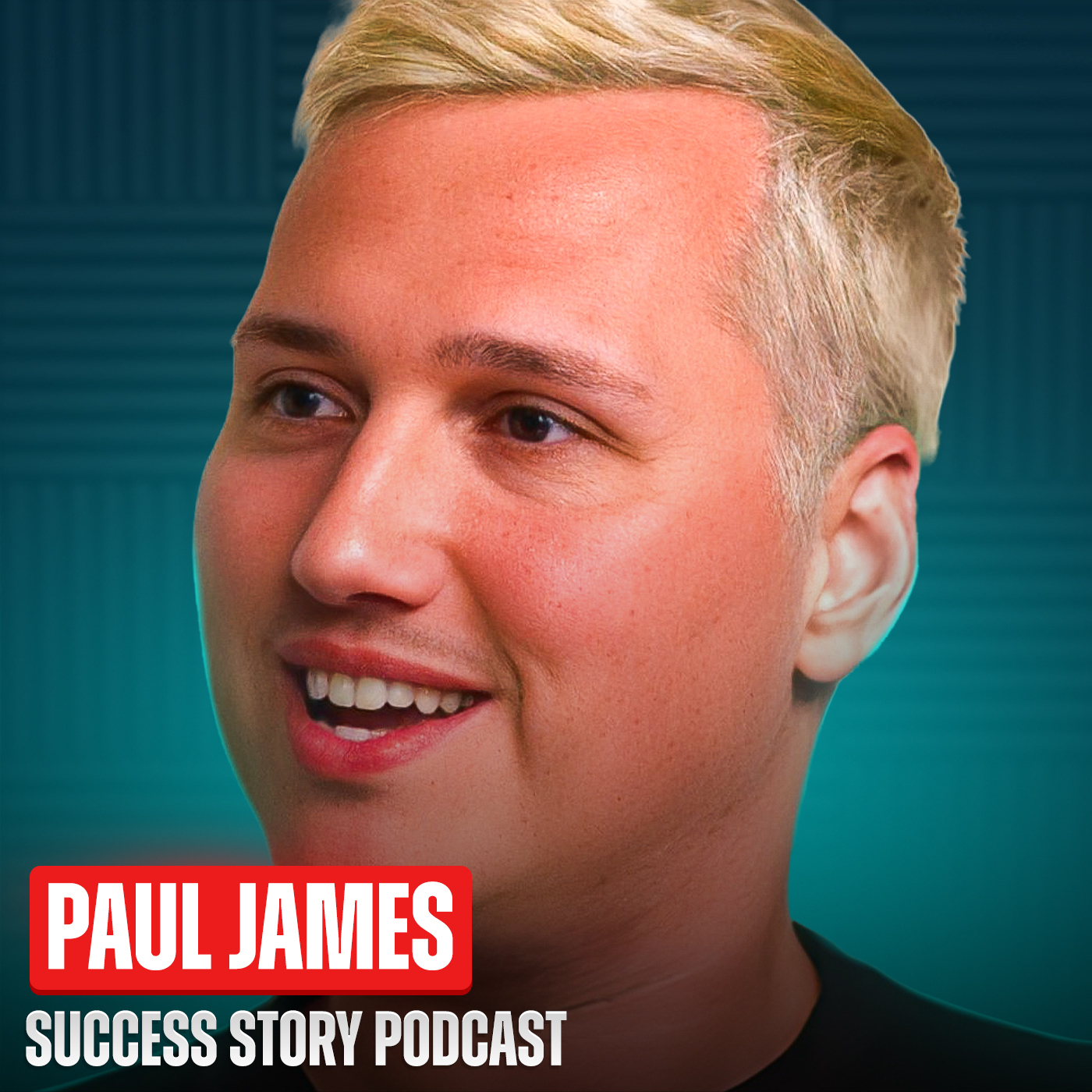
Success Story with Scott D. Clary
Paul James - Founder of DialHawk | From Brother's Garage to Multiple 7-Figure AI Businesses
01:03:31
Loading summary
Transcript273 lines
- [00:00]
Paul James
When I started off an SEO game, you could literally register an exact match domain by that.com, put no content on the site and it would literally rank.
- [00:08]
Scott Clary
Some people don't just talk about growth, they build systems that force it. Paul James is one of those people. From scaling brands to mastering influence, Paul has built a reputation for turning clarity into momentum.
- [00:19]
Paul James
I grew up wanting to do music in several bands, but I always found myself in the bands being the person that driving the business side of it. What I'm doing now, I think that really helped with me learning to nurture an audience. So many new developments started happening with with AI and it's been so exciting for me. So I've been experimenting a lot with that and actually evolving from just doing SEO to generate leads to now using faceless videos to generate leads.
- [00:41]
Scott Clary
He understands that success isn't about hacks, it's about consistency, discipline, and doing the work when no one's watching. This conversation goes beyond surface level wins into the mindset, decisions and systems that actually move the needle.
- [00:55]
Paul James
ChatGPT. You have to really train it to get the output that you want. Everyone knows about ChatGPT. That's not the secret. The sauce is how you train ChatGPT to do what you want it to do. Knowing how to control AI work for you instead of replace you is going to be the best way to future proof your job right now. I think learning that you can figure things out on your own, actually doing is going to help you learn much faster.
- [01:27]
Scott Clary
Paul, you've been in the SEO game since 2009. Yeah. So what about the 2009 SEO playbook is still valid? What about that Playbook is obsolete with AI and all the new marketing stuff that is available in 2025 because that's 2009. That's a long time.
- [01:51]
Paul James
A long time. Yeah. It's kind of crazy because when I started off an SEO game, you could literally register an exact match domain, which means like, let's say you're trying to rank for like, I don't know, best podcast studio microphone. You could literally buy that.com and then put no content on the site and it would literally rank.
- [02:10]
Scott Clary
It's amazing.
- [02:11]
Paul James
Yeah. So I mean, it's kind of good. It's not like that anymore, I guess, but it was nice. When you're trying to like rank stuff and like, you know, whether it was gonna be like an affiliate marketing type site or your own business, that was pretty cool. So that's changed a lot since then. Like you just can't just run and gun Put stuff up like that. But I would say a lot of like, what's stayed the same is like good content. Trying to Google, after all, is like a business, right? So their job is to. A searcher comes, they need to solve their problem, they need to end their search ultimately and solve the problem for them. So if you can do that, that's usually through content providing good content that actually solves what they're looking to, to solve that is like something that hasn't really changed at all. And AI has made that a lot easier because now we have chat GPT, we have Claude, we have Deep Seek. And I mean, I use a combination of all the above for everything that I'm doing that helps with content. And then also I think, like, we have this whole, like, ethos of other things that fit in with the SEO now, like social and you know, stuff like that, like posting videos on social and shorts and all of that stuff can help play a role and is equally important, I think.
- [03:25]
Scott Clary
But at the end of the day, it's just about like, are you solving the, Are you answering the question that the person is, is seeking? And it's interesting because if you go back to 2009, like. I know, I know. It's so funny how so many entrepreneurs, like, started their like, sort of their entrepreneurial journey with like SEO and making money on Google and people that have now built like random companies and all these different industries at some point in their life. Like, yeah, I was making like 10 grand a month with affiliate links on Google or something like that.
- [03:57]
Paul James
Yeah, like, I mean, there's like, like Becker, Alex Becker, some like the biggest people out there. Like I remember they were like doing SEO, like right alongside me and now they're like running like big companies and stuff. It's. It is kind of crazy to see that. Yeah, I just think it's very cool. And you know, a lot of people try to do different things, like look for loopholes like backlinks and things like that and all that's great and, and does help. But at the end of the day, I mean, focusing on like content and, and providing value is going to be something that never is going to go away.
- [04:25]
Scott Clary
You know, going back, I wanted to understand sort of where you came from that turned you into the person that you are today that has all these different interests and passions and skill sets and is still like an incredibly successful entrepreneur and builder.
- [04:39]
Paul James
Thank you. I appreciate that. I think that it comes definitely from my roots. Like, I grew up wanting to do music and was in several bands But I always found myself in the bands, being the person that was like, kind of like driving the business side of it. So, like, I'm thinking about, like, how can we sell more CDs, how can we sell merch at shows? How can we get on bigger and better shows? And I remember like driving in a van, touring, not even having gas to get to the next show. And I'm at the mall and, you know, telling my bandmates, hey, we need to sell CDs, like, this is. So we walk around with an ipod, a super scrappy. Yeah. And be like, hey, can you listen to our song? And then people listen and be like, hey, we got a CD. It's $5 now. Obviously there's not really CDs anymore, but you know, that, that's just always kind of been my. My hustle is like, I've always just found a way to like, if I want something, I'm gonna find a way to get it. And as that move forward into what I'm doing now, I think that really helped with me learning to nurture an audience. Because I learned in the music industry, like, everything comes back to like, making people feel like they're part of something. And like nurturing an audience and that creativity and everything has just really helped with what I'm doing now. Like whether it's doing YouTube or, you know, finding brand sponsorships and things like that, like, it's. It's been much more than just, you know, just business, but making people feel like they're part of a community and stuff.
- [06:03]
Scott Clary
I love that.
- [06:04]
Paul James
Yeah. And also me as a person too, like, I understand, like, I could do different things to scale differently. Like I could go get an office building and hire employees. But at the end of the day, the question I ask myself is like, what's the trade off for this going to be in order for me to make this happen? So, like, if I'm gonna go and hire like five people and then I have to show up at an office every day potentially and manage these five people, like, what is that trade off gonna be for my lifestyle? So I'm very much a lifestyle driven person and every decision I make when it comes to business, hobbies, anything, is does this improve my lifestyle or does it hurt it? Because, you know, money's great and all, but if it's going to like really hinder my lifestyle, I'm not gonna take it, I'm not gonna do it.
- [06:48]
Scott Clary
So when did you move from music into building a business? Because 2009 was SEO, but I mean, you Also had a successful exit. And you built an actual, say, an actual company, like a more traditional company?
- [07:00]
Paul James
Yeah.
- [07:01]
Scott Clary
So what was first?
- [07:02]
Paul James
Let me walk you through the timeline. So 2009, 2010, I'm living in my brother's garage. My mom lost her house, and I was living with her. And I'm trying to, like, figure out what to do with my life. So I'm in college. I was thinking about going to become a nurse. I mean, I was trying to become a nurse, but I didn't. I didn't like the clinical portion of it. I really only liked, like, the science behind it. So basically every day I'm coming back from class and I'm trying to figure out, like, what do I want to do with my life? Like, I don't think this is it. And I came across SEO, and that's what got me started. And, you know, I still dabble a lot in SEO. I use it a lot with, you know, the handful of clients I still have for SEO and also YouTube and stuff like that is very prevalent. But, yeah, so I started a marketing agency at that point and took it very quickly to six figures. Moved out of my brother's garage, dropped out of college, which was crazy at the time because everyone's like, tommy, what are you doing? Like, why are you dropping out of college? Do you think that's a good idea? And I just knew, like, you know, this is. This is what I had to do. Like, I was. I was spending more time in class, like, trying to build this agency than I was, like, trying to learn stuff. So, yeah, I mean, pretty much right before then, right before I went to school just to cover the music stuff too. Kind of skipped past that a little bit. But I had kind of came to the point in my mind that, like, music is going to be a very hard industry to break into.
- [08:27]
Scott Clary
Yes.
- [08:28]
Paul James
And, like, I did not have the money to fund that, to try and make that happen. So that kind of all happened at once. Nursing school, ending music, starting the agency all at once.
- [08:40]
Scott Clary
How do you, for somebody just starting out who does have, like, a lot of creative passion they want to pursue, and it could be something traditionally creative, like music, or it could be them trying to wrestle with business idea one versus business idea two based on, like, what happened with you, or it could be college, traditional job, and you're wrestling with all these sort of life decisions. How do you decide, like, what you should pursue? Like, how did you know that marketing agency was what you were destined to do and you were going to make it successful? Like, no matter what.
- [09:17]
Paul James
Yeah. So also the other part is that I now am doing music again. So it was like, it was kind of just a temporary pause in what I wanted to do, and I was able to, like, build up that momentum with the funding to actually make that happen later in life. So I think that's kind of sort of like a delayed gratification lesson as well. Like, you can do the unsexy thing now to, like, fund what you really want to do later. So kind of looking ahead, but also, I kind of just took, like, what was going on in my own life. I was working for a heating and cooling company at the time, and they were getting a lot of calls from, like, HomeAdvisor at the time. They're called Service Magic back then, and they were trying to sell leads. And I thought, you know, what if I could help businesses get leads by ranking my own websites? So that's kind of what led me to go down that path. So I think leaning into, like, what's going on in your own life, are there some certain skills that you can learn that are going to help you achieve this and allow you to still be creative with what you're doing, and then just knowing that, like, this doesn't have to be forever. Like, it can just get you to where you want to be going eventually. Because eventually I did a lot of other things. I started a software company. I started a YouTube channel. So all.
- [10:27]
Scott Clary
All businesses, by the way. Yeah, yeah, yeah. And when I say that, because when you think about the strategy to start a marketing agency versus a software company versus a YouTube channel, like, it's. You still have to figure out the full complement of business skills and strategy to get it off the ground.
- [10:41]
Paul James
They ended up tying into each other very nicely. But I didn't know that was going to be my end goal at the time. At the time, it was just, I just need to, like, get on my feet and make enough money to where I can support myself. And then they all. Eventually I needed a software to track phone calls for the marketing agency, and I built that software company. And then eventually people who were joining the software company wanted more training on doing SEO and lead generation. So that fed into the YouTube channel. And before I know it, like, I'm back into the creative stuff again, which is awesome.
- [11:14]
Scott Clary
I love that. And I also think that that's a really smart way when you're. When you build a business. I. One thing that it seems like you've done very well is you look for all these, like, all these opportunities that are sort of like forcing themselves on you, and you lean into it not as a distraction, but when you know your customer so well and you know what they need, then you build stuff for them as opposed to just guessing.
- [11:38]
Paul James
Exactly.
- [11:39]
Scott Clary
And sometimes you have to have a little bit of traction to have the luxury to do that. Because if you didn't have, like, marketing agency customers, you wouldn't know that you have to build SaaS for them, and then you wouldn't have to know that you have to build training for them. But, like, if you pay attention, then you, like, lean into the opportunity that's basically like, knocking at your door and can't be ignored. And that's kind of. Now that I see, now that you're laying it out, that's exactly how you've built, like, your entire career.
- [12:04]
Paul James
Yeah, 100. And I also think too, like you said, knowing your customer, part of, like, not getting too big, where you have all these employees and stuff, kind of distances you from your customer a lot. So, I mean, even I find myself. It happens now with myself where I'm. Sometimes I'll get a little further away from the customer service aspect just because, you know, customer service is. It's one of those jobs. Or, like, it can be super rewarding or it can be super taxing, too, because, you know, if you're answering an email and it only takes one customer that's maybe having a bad day to throw off your whole day, and then it's hard to be creative. But I do think it's really important as a business owner to try and still have a hand in that, Even if it's once every couple months to, like, be answering some support tickets and, like, actually getting on the phone with customers. Even sometimes it takes that to really know your market and be able to build what you need to build for them.
- [12:53]
Scott Clary
And I think that you should never really, like, never, never completely remove yourself from the customer interaction. Yeah, I think that's super important. Okay, so that. That ended up sort of over. Over time, creating your entire business ecosystem, for lack of a better description. Right. So then you built the marketing agency. It's going well. That turns into SaaS. That turns into the actual software that you build out. Yeah, you chose to exit that business. And. But so explain to me as sort of like your, you know, your entrepreneur career progresses, why did you choose to exit one piece of the business? Why did you choose to keep another? Like, just walk me through sort of your thought process for how you, you know, how you sort of structure and how you choose to build things, exit other things. Because that's also, I think that knowing when to add on new products, knowing when to exit them, knowing when to sell, like, these are all very difficult ideas that a lot of entrepreneurs don't think about when they're first starting out.
- [13:55]
Paul James
I think for me, like, I was really left with no choice. So to give you some backstory, I was going through a divorce and it was a long divorce, like a couple years long.
- [14:05]
Scott Clary
I'm sorry. That sucks. That's.
- [14:06]
Paul James
Yeah, yeah, it's okay. It actually turned out to be great, you know, like, now I'm. I met my fiance, so.
- [14:12]
Scott Clary
That's true. Yeah.
- [14:12]
Paul James
Yeah. So, I mean, and, and yeah, I'm happy. And it's been kind of rewarding as well in a way because like, I always said, like, you know, you can take everything away from me, but you can't take the skills that I learn. Right? And I always said that to people, like, to, you know, people who are wanting to start off and do a business, like, learn a skill. Learn a skill. Like, you cannot take that away from you. So I kind of got thrown into a situation where, like, I almost had to rebuild. So I decided to exit the company for that reason was one of the main drivers behind why I wanted to exit. But I did it in a way where I'm still involved, which is really cool. So the, the new owners have taken over, like, the, the role of like managing the company, but I'm still involved in like a, a profit sharing way, so.
- [14:59]
Scott Clary
Okay, that's not bad.
- [15:00]
Paul James
It's been really cool actually. And it's. Now it's allowed me to focus on other things. Like, I'm pursuing like, my passion, like the music and stuff, and we're traveling around the world in an rv, which has been really fun.
- [15:11]
Scott Clary
I know. I know you are. I know.
- [15:13]
Paul James
So it's been like, it's like opened up so many doors and also like, it's been like one of the best things that happened to me.
- [15:20]
Scott Clary
Like, can you explain how a divorce causes you to have to sell a company? Because, listen, like, I think that the person that you're with is, can be the biggest advantage, especially for an entrepreneur. Because, listen, building anything is difficult. There'll be a lot of times when there's ups and downs. And I think that when you have like the right person at home, your partner, your spouse, whatever, husband, wife, whoever you know, you're with, that can be like the biggest blessing or the biggest curse to your success. Now I don't. So if, if obviously you know, you're going through a divorce, things aren't going great. I get it. But how did it come to the point where it forced you to sell a company?
- [16:03]
Paul James
Yeah, so good question. I totally agree with you as well. Like, if you don't have peace in your life at home, like, it's almost impossible to do anything else and, like, build. Right. So that is, like, super important. But, yeah, I mean, in a divorce, you're losing half of everything. Half of your.
- [16:18]
Scott Clary
You did not, like, prenup or postnap.
- [16:21]
Paul James
No, because I didn't have anything when, you know, when we got married, we got married young. So, like, at that time, I didn't have anything. I mean, I was living in a garage.
- [16:28]
Scott Clary
Yeah. That's fair. Okay, fine.
- [16:29]
Paul James
Yeah. So, I mean, like, you know, everything was sort of, like, built up during the marriage, so you lose basically half of everything. And then because, you know, you're the person driving the income, you're also having to pay, like, alimony and maintenance, so that becomes, like, a huge burden.
- [16:45]
Scott Clary
And. And when that happens, you have, like, you're not forced to sell. But no, I guess the.
- [16:52]
Paul James
Oh, well, you could be in certain scenarios. I wasn't forced to sell because we were able to work out that I wasn't forced to sell. But in the end, you know, like, I was put in such a tight financial position that it was like, lifestyle choice. Right. Do I want. What kind of lifestyle do I want to live? Like, I like to drive nice cars. I like to live in a nice house, and I didn't want to downgrade. So for me, selling that seemed to be the best way to still achieve what I wanted to do and kind of give me a reset.
- [17:19]
Scott Clary
Okay, so after this exit, where are you now? You still have. You still have the marketing agency. You're still. At this point, what year is this, approximately that this all happened? Yeah, like, when you sold the company.
- [17:32]
Paul James
This is really recent this year. So the beginning of this year, I sold the company.
- [17:36]
Scott Clary
This is all very recent.
- [17:37]
Paul James
Yeah, divorce finalized last summer. So that's been a year. And then I was going through the divorce for two years before we actually finalized things. So, yeah, it was a. It was definitely a rough, like, three years for sure.
- [17:50]
Scott Clary
Yeah.
- [17:51]
Paul James
But, yeah, I mean, like I said, I'm, like, so great right now. Everything is, like, amazing.
- [17:55]
Scott Clary
I'm happy for you.
- [17:56]
Paul James
Thank you. Yeah, like, I'm living my best life now and so happy.
- [17:59]
Scott Clary
And what. The reason I asked, sort of timeline was because I was. I was trying to understand from, like, a business Perspective like the marketing agency had evolved obviously was this is like now fast forwarding like 2009. So like almost like what, 13?
- [18:14]
Paul James
Yeah, let's hop back to there. So the marketing agency sort of scaled down over time, naturally with building a software company because like running two things at once, not like you said, focus is important. So like you definitely do have to decide what you're going to focus on. I still keep my hands into marketing. Yeah, quite a bit. Like I have like, I'll say like maybe like a dozen clients or so, but I'm not actively seeking clients.
- [18:37]
Scott Clary
Understood.
- [18:38]
Paul James
But I want to still have a pulse on what's going on.
- [18:41]
Scott Clary
And when you think about after the exit, like your first thought was, where should I spend my time? Should I rebuild the marketing agency? Should I go into something else? Should I? I mean like now you're building at the YouTube channel, but you never stopped. So I know that there's like creative pursuits, but where did like the, the, the entrepreneurship business energy go after that exit?
- [19:04]
Paul James
After that exit, I think it went into AI and content creation. So so many new developments started happening with AI and it's been so exciting for me. Like, I don't know about you, but I just love a thousand percent. Yeah, like it's just, it's so crazy to think like I can literally clone my voice with 11 labs or something like that and then be typing something and have it like make content for me. So I've been experimenting a lot with that and actually evolving from just doing SEO to generate leads to now using faceless videos to generate leads or like, you know, certain content with AI, which has been insane. I mean, I've taken, for example, I've taken reels that I've done on Instagram that have gotten like a million views and literally cloned the reel with AI and use nothing but like pictures and like 11 labs voice. And it'll still get hundreds and hundreds of thousands of views and thousands of leads. So like just thinking about that is kind of crazy.
- [19:57]
Scott Clary
Quick question. What's your go to when you got 10 minutes before a meeting or a workout? For me, it just used to be whatever I could grab, which usually meant skipping meals entirely or just grabbing something that left me crashing an hour later because it was just full of garbage. That's why I'm partnering with hu. This black edition ready to drink is a complete meal. So it has 35g of protein, 6 grams of fiber, 35 essential vitamins and minerals. It is no sugar added, gluten free, under five bucks. I always keep a few of these in my fridge and honestly it solved the whole back to back meetings. Go go go non stop no time to eat problem. Super well and this one's new for me. It's HUS Daily Greens. I had the blueberry this morning. Honestly first impression it was way better than I expected. It's developed by registered nutri and dietitians. There are 42 vitamins, minerals and superfoods. Only 25 calories, 4 grams of fiber and just 1 gram of sugar. I throw one back first thing before my morning calls. Every single morning. Look, if you're running a business, time is the most valuable asset. Huel makes healthy eating simple and they also just launched into target stores nationwide so you can get it everywhere. Try both products today with 15 off your purchase for new customers with my exclusive code Scott@huell.com Scott try both products today with 15 off your purchase for new customers with my Exclusive code Scott S C-O-T T@Huell.com Scott Use my code fill out the post checkout survey to help Support the show that is Huell.com Scott they really make healthy living taste amazing even if you're on the go. Healthy eating, healthy lifestyle doesn't have to taste bad. It doesn't have to suck. Net Suite is a success story. Partner now what does the future hold for business? If you ask nine experts, you'll get 10 answers. Bull market Bear market rates are up, rates are down. At the end of the day, it'd just be easier if somebody invented a crystal ball. But until then, over 3,000 businesses have future proof themselves with NetSuite by Oracle, the number one AI cloud ERP that brings accounting, financial management, inventory and HR into one unified platform. Here's what I love about it. Instead of juggling multiple systems, you get one source of truth, real time insights and forecasting that actually let you peer into the future with actionable data. When you're closing your books in days instead of weeks, you're spending less time looking backwards and more time focusing on what's next. Whether your company is earning millions or hundreds of millions, netsuite helps you tackle immediate challenges while seizing your biggest opportunities. If I needed this product in my business, this is what I'd use. It's a game changer for business visibility and control. If you want to see how AI can transform your financial operations, download the CFO's Guide to AI and Machine Learning for free. That's netsuite.com/scott Clary that's netsuite.com/Scott Clary netsuite.com Scott Clary after you exited, you listen, you still have like this vested interest in this company that you sold. You still make money and you still support them. At this point, you weren't taking on new SEO clients. So when did you make the shift into AI? Because AI is a very broad topic. Obviously as an entrepreneur you understand the potential as somebody who is sort of like always on the bleeding edge of marketing of tech, like, you see it probably better than most. So what was the, I mean, like, obviously it's easy to ask, like, why is AI interesting? It's incredibly interesting. But where did you see the biggest opportunity with it?
- [23:23]
Paul James
Initially I saw the biggest opportunity with helping businesses get AI implemented. So being like an AI consultant. But then I saw how I was utilizing it with myself with like Instagram and stuff like that. And I thought like, you know, hey, we could be doing this for other people or teaching other people how to implement this. So I started putting out like courses and trainings on how to implement pretty much what I'm doing, generating leads on Instagram because I still generate tons of leads for the software company. Just posting 30 second videos with my phone. Sometimes I don't even have to show my face. So, you know, you, you get people to reply yes to the video and then have, you know, follow ups.
- [24:00]
Scott Clary
Like, like a dm. They send them?
- [24:01]
Paul James
Yeah, send them like a dm.
- [24:02]
Scott Clary
Okay, so this is what I, what I really want to unpack because every time somebody does an AI conversation, podcast, whatever, it's all this like super complex shit that the average business person does not understand. What right now have you found is a really strong marketing strategy leveraging AI?
- [24:22]
Paul James
You can literally go into chat GPT, right, and ask it for an idea. Like I want, I want a trending video idea that is going to blow up. Or I want you to analyze this competitor's YouTube channel and find their best performing video. Like I want the outlier, the video that really went crazy. Then you can have it transcribe the video for you and find out exactly what was talked about. So now it's kind of. I use AI like my assistant, right? I'm making it do the things that would normally take me or even an assistant a very long time to do. It can do within a second. So then it can pull out what the video is about. You can have it ask, ask it to rewrite the video in a way, like come up with your own sort of like hooks in it. And then you could either post a video yourself, like redo it redo your own variation of it. AI will tell you what the caption should be. AI will even do the thumbnail for you now, which is kind of crazy. So you could do that or you can have like something like 11 Labs clone your voice. Or if you want to be like an AI consultant and work with business owners and help them do this, clone the business owner's voice. And now you're doing content for them. But they don't have to do anything because business owners, they don't have time to like, like learn all of this. So yeah, I mean that's been huge for me. Then using something like ManyChat to automate follow up. So I always end pretty much every video, especially short form videos and make them comment. Yes. Like, hey, if you want, if you want to get started, comment, yes. And then if you look, you've got comments pouring down the Instagram feed or even on YouTube that's like, yes, yes, yes, yes. And then you're responding back to them with a link to get them in. Now you can go a step further and let's say like you need to build out a landing page for your offer. Yeah, well, in the past we'd be using something like click funnels or something like that. Well now you could just use Deep Seek. They have, they have this thing called deepsight. Really super cool. If you haven't checked it out yet.
- [26:10]
Scott Clary
I have not yet. No. This is new.
- [26:11]
Paul James
Check that out. This is crazy. You can literally go in and type, make me this website or here's my video. I want my video on the website. Make it like a webinar replay or make it a landing page and it will design it, it'll write the copy for it. It'll do everything in 10 seconds.
- [26:27]
Scott Clary
That's insane.
- [26:28]
Paul James
Really?
- [26:28]
Scott Clary
I didn't realize it. So I. Listen, I. Most of what you just described I use as well. So what we're really talking about is like using AI for research, for content creation, for as like a. It could be an aid for you to create more efficiently and more effectively. Or it can literally, if you want to really just replace you completely. Because now again, it can clone you, it can write the script, thumbnail, clone your voice. I think with. Hey, is it. Hey Gen. Hey Jen.
- [27:00]
Paul James
Yes.
- [27:00]
Scott Clary
Video avatars. Yeah. Crazy. It's like, it's so crazy what it.
- [27:04]
Paul James
VO3 now is also crazy with cinematic footage and stuff.
- [27:07]
Scott Clary
So you can use it for basically all content creation and research, but then you can also use it for. I mean, I didn't realize building out Landing pages, websites, copy, copy. Is there anything.
- [27:20]
Paul James
It writes copy better than most copywriters that you pay to write copy.
- [27:24]
Scott Clary
So that's what I was going to ask you. So I find that Chat GPT at least has limitations when it comes to writing. Yeah, I, and I was going to ask you also, like, what does it do very well and what does it sort of not do so, so well? And I'm curious that if I'll just give context. I don't do a lot of like, like say 10 minute YouTube style videos. I do a lot of like long form podcasts. So I use it for research. But I'm curious, sort of two questions. First, does it do a good enough job of researching writing hooks where you actually see the performance when it, when you sort of rely on it? And then secondly, what sort of AI tools are best for what tasks? Meaning in my personal experience, ChatGPT is good for research. I don't love the copy it generates, so I use Claude for copywriting. Yeah, I just. So are there other nuances like that?
- [28:25]
Paul James
Yeah, totally. And I think, I think the way that I look at these tools is it's more about how you use them.
- [28:30]
Scott Clary
Yes.
- [28:31]
Paul James
So it's much chatgpt. You have to really train it to get the output that you want. And I think that that's the biggest takeaway here. Like if you're going to go in and you're going to learn AI, it's everyone knows about Chat gbt, Right. That's not the secret. The sauce is how you train Chat GPT to do what you want it to do. So like if I tell Chat GPT that I want it to be a world class copywriter like John Carlton, I'm gonna get really great copy coming out of it versus if I just say, hey, write. Yeah, write. Write this. So I think that that's, that's in the nuances of, doesn't. It's. I haven't really found personally like using something like Deep Seek or Chat GPT or like using these different tools that it makes that big of a difference if you're training the, if you're training it, if you're trying it properly.
- [29:18]
Scott Clary
Yeah. Yeah. Okay.
- [29:19]
Paul James
So I think that's the biggest thing. And I, I don't know, maybe it's just like my creative brain where I'm in there like tinkering, like figuring out exactly like what kind of output I'm getting from what I'm typing in. But it learns, it keeps like a history, a record of what you're saying. To the point where now I can tell chat GPT to write an email from me.
- [29:36]
Scott Clary
And it sounds like.
- [29:37]
Paul James
It sounds like me. Like, I. It writes better emails than I write emails now. Like, it's so easy.
- [29:42]
Scott Clary
It's true.
- [29:43]
Paul James
Yeah, yeah.
- [29:44]
Scott Clary
There was a Naval Ravikant tweet that just. I just saw yesterday. And it was, it was so prolific. It was. This is what he does, you know, takes this, like, really simple wisdom and just, you know, he finds a way to package it in a way that you're like, oh, yeah, that's right. But the tweet was, if you can train someone to do it, you can train AI to do it.
- [30:04]
Paul James
Yeah.
- [30:05]
Scott Clary
And it was. I may be paraphrasing, but that's really what it comes down to.
- [30:10]
Paul James
I think we're at a really unique junction right now where we're about to see a huge boom with AI agents.
- [30:15]
Scott Clary
Yes.
- [30:16]
Paul James
And that, I think is like, the thing to watch out for.
- [30:18]
Scott Clary
Have you been dabbling with, like, what is it? N8N 8N. Yeah.
- [30:23]
Paul James
And some of the very tiny bit. But that's like, that's what I'm. That's kind of what I have my eyes on for the future, is dabbling in that more and learning it more, be mastering it. I think that's where the future is headed. I think over the next year or two, that industry alone is going to make so many multimillionaires. Like, if you're sitting here right now, like, watching this and you're thinking, like, what's the next thing I should do? Become a master at that.
- [30:47]
Scott Clary
So. So break down, break down your, like, your audience building content strategy. You kind of already touched on it a little bit. But there's sort of two components that I see at least, and you can correct me, but the way that I see it, you have sort of like the research piece and then you have like the faceless channel piece and.
- [31:05]
Paul James
Or even if you want to be on camera.
- [31:07]
Scott Clary
Yeah.
- [31:07]
Paul James
Like, for me, I'm kind of doing a combination of both. Right. Like, I'm taking it and using it for, like, idea generation. I trust it to give me better captions, better titles than I can come up with, better hooks than I can come up with. But I still want to be the face, I still want to be the brand. So for me, that's normally what I'm doing. But for a lot of business owners out there, like, if they're running a plumbing company, they maybe don't have time to do that. Or maybe if someone wants to, like, help someone Generate leads for a plumbing company. They could very quickly go out and start, you know, Miami Vibes Instagram page and start posting videos about the top five places to eat in Miami. And then next time post, hey, do you have a water heater leak? You know?
- [31:50]
Scott Clary
Yeah.
- [31:50]
Paul James
Give this plumber a call.
- [31:52]
Scott Clary
Do you notice when you do true faceless? Because I get the research piece, but the faceless piece, I feel like I can, I can at least still tell if it's like AI generated or not. But do you notice it still performs decently?
- [32:07]
Paul James
Well, that's the crazy part about it.
- [32:08]
Scott Clary
Yeah.
- [32:09]
Paul James
Is that people don't really care. I think we might, I think we might eventually see a world where, you know, we have a Paul James AI page and a Scott Clary AI page and people come just to see their content instead of just ours. Right.
- [32:25]
Scott Clary
That's so crazy. So the, I mean like this could be like the future of influence we already see.
- [32:29]
Paul James
Yeah. I mean, who knows, right?
- [32:30]
Scott Clary
Influencers.
- [32:31]
Paul James
Yeah.
- [32:32]
Scott Clary
So when you post faceless stuff to some of the businesses that you work with.
- [32:36]
Paul James
Yeah.
- [32:36]
Scott Clary
Still get leads.
- [32:37]
Paul James
Still get leads. Obviously not as great of content. Right. You and I can tell.
- [32:41]
Scott Clary
Yeah. Like, yeah, but I mean like, but it's like zero effort.
- [32:46]
Paul James
Zero.
- [32:46]
Scott Clary
Yeah. Zero effort. Some leads versus significant effort. Meaning like CEO has to show up film.
- [32:52]
Paul James
And it might work and it might not.
- [32:53]
Scott Clary
So if you look at the payoff.
- [32:55]
Paul James
Yeah, yeah. It's, it's, it's like I think people should be doing a mix of both.
- [32:59]
Scott Clary
Yeah.
- [32:59]
Paul James
If they can. If they can't, they should at least be doing faceless. Why not? What do you have to lose?
- [33:05]
Scott Clary
So people don't really care. So they don't. Even though people are smart, they'll trust AI. It's not about. It's If a business is using AI to create content, like faceless content or even like a hey gen, like avatar style thing. People don't care that much.
- [33:20]
Paul James
Not really. And I think it depends upon the type of content. Right. Like, you know, if you're watching like the top five restaurants to eat or something, like you don't really care if it's like AI necessarily. Some people.
- [33:31]
Scott Clary
No. But most you just care about is it going to be good food.
- [33:34]
Paul James
Yeah.
- [33:34]
Scott Clary
So if.
- [33:35]
Paul James
Even if it gives you an idea that you can then go and research, like does it have good reviews or what, it's still like putting the idea in their head. So yeah. I think it's obviously not as great of content. People can tell it's AI, but it does still generate leads. And that's the crazy part about it, I literally, the early testing of this, I took some of my top performing reels and cloned it with AI and they still were my top performing reels, even though it wasn't me. And, and that to me just blew my mind.
- [34:01]
Scott Clary
I was like, wow, what would be your advice for somebody who's listening to this, who's working in a company who's like, shit, I don't want to get replaced.
- [34:09]
Paul James
Yeah.
- [34:10]
Scott Clary
So what would you tell them?
- [34:12]
Paul James
I would say, like you said, the output of what you get out of like ChatGPT is based on the puppeteer. Right. It's based on a person who's controlling it, at least right now. So I think being very good at knowing how to control AI and knowing how to make it work for you instead of replace you is going to be the best way to future proof your job right now.
- [34:36]
Scott Clary
I fully agree.
- [34:37]
Paul James
And I mean, even in the future, as you know, with stuff with N8N where it's actually, it can, it can borderline make decisions. Right. On what it should do. If, if a customer says something on a phone call, it can decide what it wants to answer. There's still someone that has to be there to be the puppeteer and set all that up and monitor what's going on. Be that person.
- [34:58]
Scott Clary
Be. Yeah, you have to be that person.
- [34:59]
Paul James
Yeah.
- [35:00]
Scott Clary
You teach a lot of, I guess, sort of like business opportunities. And like I, I looked at some of your content and even going way back, you were sort of like, like showing people, okay, this is like right now, this opportunity is a land grab. Find a way to go build a business around this. So you're not just like teaching the tools. You're being like, okay, so here's the tools, but here's how you monetize it. As an entrepreneur, one of the things that you talk about frequently is like, local lead gen. With AI now, lead gen is always a great business opportunity. You're literally showing people how to make more money, but explain why that's an opportunity. So local lead gen, what does that mean? If somebody's listening to this and they're like, oh, I want to start a business, I know AI. This is a great way to actually make some money. Where do they start and what do they do?
- [35:44]
Paul James
So in the past to generate leads, we were looking at like SEO, things like that, things of that nature. But now with AI, we can set up an Instagram page and start flooding it with videos or, you know, things of that nature, or even content in general. It could be Facebook posts. It could be posting in groups, things like that. So there's this huge multi million dollar market, Multi million dollar a year market. You look at companies like Angie and HomeAdvisor, they're doing I think 500 million a year or something crazy like that. So they sell leads to business owners essentially. Like let's say you go and you need a new roof or your roof is leaking. They will sell the, the lead or the phone call from someone who needs that service to five different roofers for $100 a call. So that's the opportunity is really stepping in and providing a similar service to them, but generating your own leads using AI and then selling them to business owners. And if you want to stand apart from like Angie's List or HomeAdvisor offering exclusivity to the lead because they sell it to five different times to the same, like, that's the same lead to like five different roofers.
- [36:52]
Scott Clary
Yeah.
- [36:53]
Paul James
So only one person is going to get that job, but all five people are going to pay for it.
- [36:56]
Scott Clary
It's kind of, it's kind of shitty of that.
- [36:58]
Paul James
It is, yeah. And, and a lot of their, a lot of their people that they work with aren't very happy with it.
- [37:04]
Scott Clary
So that's it, that's. So that's like a.
- [37:05]
Paul James
But they choose to work with them.
- [37:06]
Scott Clary
A market that you could disrupt.
- [37:08]
Paul James
Yeah, you could disrupt. It's very good point. Yes. It's a very disruptive marketing opportunity because of the fact that there's an opportunity there that people are choosing to work with this company because there's not a lot of options or the options that are out there aren't super saturated yet.
- [37:24]
Scott Clary
I also think that to your point, like AI, AI allows you to compete. Right. So yes. Can, can, could you have built a lead gen company like an Angie's List via SEO, pre AI? Yes, of course you can.
- [37:37]
Paul James
Yes.
- [37:37]
Scott Clary
There's competitors. But if you understand sort of lack of a better term new age marketing, then you can compete with really, you.
- [37:49]
Paul James
Know, resources are solid.
- [37:50]
Scott Clary
Yeah. You don't need the resources. You don't need a lot of money to build a company, you know, because if you actually listen, if you just went through that workflow or even if you do without the workflow, you could have like 10 different pages posting content nonstop.
- [38:03]
Paul James
It's crazy.
- [38:04]
Scott Clary
Yeah.
- [38:04]
Paul James
And then, and then you have something like my software. That's what it did was it handled the, the, the tracking of the leads and the reporting and automated billing.
- [38:13]
Scott Clary
Dialhawk is like a CRM to a degree.
- [38:15]
Paul James
Or no, it's similar. It's. It's more of like tracking, reporting and invoicing of the lead. So we don't, we're not really concerned with what happens to the lead once they get it. It's kind of their job to close it. But we're handling the distribution of the lead.
- [38:29]
Scott Clary
Some of the questions that come up around AI that you continuously see, like, whether or not it's comments on YouTube or just like people that reach out to you, like, what are people struggling with?
- [38:39]
Paul James
Honestly, I think a lot of it is just getting started. People seem to find a lot of excuses of why they can't get started. I'm not technical savvy enough.
- [38:47]
Scott Clary
Yeah, yeah, yeah.
- [38:48]
Paul James
Like, stuff like that. Or like, you know, I don't have the confidence to do this. And like, my brother the other day decided he, you know, he's not super tech savvy, by the way, just to give, to preface. Usually, like anything that's technical related. He's like, paul, can you just do it for me? I'm like, go to lovable.dev and it will build an app for you.
- [39:07]
Scott Clary
Yeah.
- [39:08]
Paul James
And he did it. And sure enough, he's got like an app fully built out of his idea that normally would have taken eight months and probably $20,000. And he did it in two days because he did actually just get started. So you have to start, like, no excuses, just open up chat, even if you don't know what to do. Like, if you want to build out an app, ask ChatGPT. What is the best AI app coder? Okay, it's lovable.dev. how do I use lovable.dev like, you can literally ask it anything. Treat it like you're like teacher.
- [39:42]
Scott Clary
What was your. Out of all the videos that you've put up on AI, I'm curious what was the most watched?
- [39:48]
Paul James
I recently did one that said I asked Deep Seek how to make money.
- [39:54]
Scott Clary
Everyone wants to know how to make money. What did it say?
- [39:56]
Paul James
So I told Deep Seek that I, you know, I want to know how to make money. Like HomeAdvisor. Like, theoretically, you know, if I was coming into this as a beginner and knew nothing, could I rely on something like Deep Seek or Chat GPT. So I asked it and it came back and gave me 50 of the top businesses that I should go after. So, like, I didn't have to think about what niche I wanted to enter. It told me what to enter. It told me how much to charge these businesses per lead. And it gave Me an exact blueprint of like, exactly how to get the leads and how to get how to even reach out to these business owners and get them to say yes to working with me without having to lift a finger. And it was totally accurate, which is the crazy part. So I, I, I basically documented this and put it on video and it went really crazy. It got like 150,000 views in a few days.
- [40:43]
Scott Clary
Indeed is a success story, partner. Now if you're hiring Indeed is all you need. Let me give you an example. If I needed to hire a new editor for this show, I'd go to Indeed and be super specific. Not just can you edit audio. I'd say I need someone who's edited a conversational podcast for at least three years, gets our style and knows our software. Someone who's done this before. And here's the thing. With Indeed Sponsored Jobs, I'd get people who fit that description. I'm not digging through resumes from people who've edited one YouTube video. I'm getting actual podcast editors who know what they're doing. People who've worked on shows like ours and can prove it. That's what makes a difference. You get people who actually are what you're looking for. According to Indeed data, sponsored jobs posted directly on indeed are 90% more likely to report a higher than non sponsored jobs. And people are finding quality hires right now. In the minute that I've been speaking to you, companies like yours have made 27 hires on Indeed. According to Indeed data worldwide. Spend more time interviewing candidates who check all the boxes. Less stress, less time, and more results. Now with Indeed Sponsored Jobs and listeners of this show will get a 75 sponsored job credit to help you get your job the premium status it deserves@ Indeed.com Clary just go to Indeed.com Clary right now and support our show by saying you heard about Indeed on this podcast. Indeed.com Clary terms and conditions apply. Hiring do it the right way with Indeed. HubSpot is a success story, partner. Now look, look. If you're in marketing right now, or if you're an entrepreneur who's hired marketers, or if you're a founder who leads a whole marketing team, you know the drill. You are creating content for 12 different channels. You're launching campaigns, you're scoring leads, you're analyzing all the data and somewhere in there you're actually supposed to do great marketing. And it's exhausting and you're spread too thin. But this is what actually works for marketers to give you your life and your time. Back HubSpot's marketing hub, HubSpot's content hub, combined with their new AI called Breeze. Now, what this actually does does is basically everything that you shouldn't have to do yourself. It remixes your content instantly so you're not starting from scratch every single time. It handles lead scoring so you know exactly who to focus on, which customers will probably convert. And it pulls all your analytics and your data and KPIs into one place instead of having them scattered across 15 different tabs and tools. Plus, the AI agents that HubSpot builds for you can automate the repetitive stuff that's eating away your day. Bottom line, you get better results faster without burning out. See, with HubSpot, everything's connected in one platform instead of duct taped together. So if you're tired of being spread too thin, check out HubSpot.com marketers to see how this actually works. You speak a lot about going viral and sort of your content strategy when you start to leverage AI. Because now you're learning via data. Yeah, because AI is just massive data sets. So somebody wants to create content, I know you're going to tell them, do the research, use AI. But, but what are some of the things that you've discovered about good content that you may have not realized before you leveraged AI? Like, what are, what are some of the patterns that you're seeing that show up?
- [43:43]
Paul James
For any creator, really, I'm noticing particularly it can come down to something as simple as, like, the actual, like, title of a video, the thumbnail of a video, and even like the structure, like how it starts off. And if you can replicate those, obviously I'm not saying directly copy, but if you can get very close to what they're doing, you're almost guaranteed to go viral.
- [44:04]
Scott Clary
You notice this?
- [44:05]
Paul James
Yes.
- [44:05]
Scott Clary
Really?
- [44:06]
Paul James
Yeah. So go reverse engineer like your competitor or any competitor of yours and look at like their top video in the last, let's say, like month. Try to reverse engineer it as close as you can, make it a little bit better. Yeah, you're almost guaranteed to go viral. It's almost impossible not to.
- [44:24]
Scott Clary
So what AI is doing is it's just taking the guesswork out of content.
- [44:28]
Paul James
Yeah. So you can use, you can use AI to like, research this for you.
- [44:31]
Scott Clary
Yeah.
- [44:32]
Paul James
You know, with YouTube, there's tools like Vidiq, which will show you, like, outlier scores. That's pretty helpful. But just being able to like, sort through data that normally normally like, I mean, you just, you just wouldn't have.
- [44:44]
Scott Clary
Like the time, energy, resources, all of that. I want to unpack like a few sort of, I don't know, like, just some of the things that you've done in your life and your career, I think they're valuable for entrepreneurs. Like, forget about, forget about AI for a second. Just like how you've, how you've built in the way that you think. I've touched on this, but I think it's useful to go into it a little bit deeper. You have, and, and if, if you feel like this is not a fair assumption, that's fine. But I feel like you've been able to reinvent yourself multiple times and you've, you know, you've persevered through a lot of ups and downs. When somebody is going through a difficult period in their life, in their business, which everyone will at some point, what's your advice to them? Like, what is the mental model or the daily practice that gets you through those more difficult times?
- [45:34]
Paul James
I would say I'm always looking at the bright side. Like, I'm not, I'm not a, like, glass half empty kind of guy. I'm always looking at, like, you know, it could always be worse. So I try to focus on like, the little wins because that very quickly allows you to snowball and not always be focused on the negative. Because when you're always focused on the negative, like, you're just doomed. Like, you're, you're not going to have a positive outlook on what you're trying to accomplish.
- [45:59]
Scott Clary
So does that come naturally to you?
- [46:01]
Paul James
It does, yeah.
- [46:02]
Scott Clary
I think that's such a blessing.
- [46:03]
Paul James
Yeah.
- [46:04]
Scott Clary
That's tough. Because a lot of people, just a.
- [46:05]
Paul James
Lot of people, they don't have that.
- [46:06]
Scott Clary
I know, I know a lot of, like, listen, when, when things don't go right. Forget life just in business, like, when things don't go right, I think a lot of people just, just, they just feel like it's worse than it is. Yeah. And that doesn't happen to you?
- [46:19]
Paul James
Not as much, no. I'm, I'm always like, I think my mom raised me that way to like, you know, someone's always got it worse than you.
- [46:25]
Scott Clary
Yeah.
- [46:26]
Paul James
And that kind of stuck with me. So that's just kind of how I always try to think, like there's. It could always be worse. And on the other side of this one day I'm gonna look back like, this isn't a forever thing. Right. Whatever you're going through is not a forever thing. It's just a right now thing. And on the other side of this one day, you're going to look back and you're going to be like, you know, I learned this is, this is tough. It was a hard thing to go through, but I learned this, this, and this. And maybe it was the best thing that ever happened to you. Maybe something else came out on the other side that you weren't expecting.
- [46:52]
Scott Clary
What would be the, the one thing that you had to unlearn to become a successful entrepreneur? Something that was holding you back.
- [47:00]
Paul James
I think learning that you can figure things out on your own. You don't always need to, like, know everything right away because, like, actually doing is gonna help you learn much faster than trying to, like, have all the pieces to the puzzle right away. There's a lot of very book smart people that end up doing nothing because they still feel like they don't have everything yet they still want to keep learning. So I would say just like doing, like learning how to just actually do and, and figure it out along the way, being okay with making mistakes too. You know, sometimes we can be perfectionists. I can get that way sometimes where I'm, you know, is it ready or.
- [47:38]
Scott Clary
Should I. Yeah, in the same way.
- [47:40]
Paul James
Yeah, you just got to get to it.
- [47:41]
Scott Clary
So I've thought about this a lot and I, and I, I think that there is an obsession with, like, knowledge accumulation.
- [47:47]
Paul James
Yes.
- [47:48]
Scott Clary
And okay, great. You've learned and you've watched 10,000 YouTube videos on something, but like, just go do it. Just go do it. And I've actually found myself, like, I think that anybody who's an ambitious person, they kind of fall into this trap at some point of just like loving, just consuming content.
- [48:06]
Paul James
Yeah.
- [48:07]
Scott Clary
Or podcasts or books or whatever. Nothing wrong with that. No, keep us in the podcast. But I think that, listen, I think that there's a point where, you know, you, you're just really consuming information because you don't have the courage to, like, take action.
- [48:23]
Paul James
Yeah. It makes you feel good.
- [48:25]
Scott Clary
It's like an excuse almost. So, I mean, like, I think that just shortening like that gap from education to doing is very, very important when you learn something. I mean, like, I feel like you're the kind of person that you learn it and like the second you're done, the YouTube video, you're trying that thing, opening up that tool, executing.
- [48:44]
Paul James
Exactly.
- [48:44]
Scott Clary
I mean, because you teach a lot of entrepreneurs too, so I'm assuming that you see some bad habits in people that you work with. It's ironic because you're kind of like, you're kind of like teaching your own competition. But that's like, besides the point To a degree. I mean, like, you're teaching people that are kind of doing the same thing as you, but forget that. When you work with so many entrepreneurs, you teach so many entrepreneurs. What are some of the worst habits that you see them doing that sort of holding them back and people that are just starting out, what should they do differently?
- [49:11]
Paul James
Yeah, I think a lot of people feel like they're not confident enough to, like, actually get going. And I think that confidence is one of those things where, like, it actually takes the experience to be creative, become confident at whatever it is you're trying to do. And if you're never getting started, you're never getting that experience. Well, you're never going to be confident at that thing. So. Yeah, I think that's the. That's one of the hardest habits that I have to try to get people.
- [49:35]
Scott Clary
To just take action so that. Because if not, then it's like a chicken egg situation.
- [49:38]
Paul James
Yeah, exactly.
- [49:39]
Scott Clary
Yeah.
- [49:39]
Paul James
Get out there and make a mistake. Like, what's the. I always say, ask yourself, what's the worst that's going to happen? Well, business owner asked me this, and I don't know how to answer it. Just tell them you don't know how to answer it and you'll get back to him with an answer. Like, you know, it's not. It's not always, like, the worst. Like, just be. I feel like people feel like they have to, like, know it all in order to, like, do the thing they're doing.
- [49:59]
Scott Clary
Yeah.
- [50:00]
Paul James
And I just don't think that's the case. Like, humans understand, like, we're not all perfect. Like, we're gonna make mistakes. Like, you might not know everything, but being honest about that. And like, for me, when I hire someone, I'm not really concerned. Like, do they know literally everything? I really would rather know. Like, are they capable of figuring it out? Are they a problem solver? Like, if I'm hiring someone to, like, work on my kitchen and do a remodel, like, maybe they haven't worked with this particular tile before, but I'm confident in their ability that they're going to learn or figure it out, because they've figured out tough things before.
- [50:35]
Scott Clary
I think that skill set is going to be one of the most valuable skill sets. It already is. But I mean, like, going forward, we're talking about, like. Like, if you're an employee and you want to not be laid off.
- [50:48]
Paul James
Yeah.
- [50:49]
Scott Clary
The ability to figure out is incredibly important.
- [50:52]
Paul James
A self starter, you know, like, especially, like. Like I said, I know we talked a lot about AI, but the fact that you literally have AI in your back pocket to like ask questions to. Yeah, like just figure it out.
- [51:04]
Scott Clary
Where do you think marketing AI, like where do you think we're going to be in like the next six months? Or you're like, what's your forecast? Like you, you deal with these tools and you expose your every single day. What are some of the trends that you see?
- [51:18]
Paul James
It's hard to even imagine like, even as myself, like someone who like develops software companies and things like that, like, where does that leave us even, you know, because it's like, it's like someone can go and like create their own software nowadays. But I do still think of like the aspect, like there does still need to be the puppeteer, like there still needs to be someone making sure it's secure, that things are working. Bug fixes. So I do still think there's going to be a need for that, but I think there's going to be a shift in efficiency. I think, I think AI agents are going to be huge. They're going to be taking over a lot of the mundane tasks of things that like even something like cold calling, like, but I think it will be like more of like a handout thing. Like maybe AI's agent is handling cold calling. Someone answers the phone, they get someone on the line, boom, transferred over to an agent or something like that. So I think we're going to see more shifts like that where it's more like AI is kind of doing like the beginning of the task, but then it's shifting off to like maybe a real person to kind of finish the job and make sure everything is good.
- [52:15]
Scott Clary
I think that that's, I think that's probably a smart take because I think that the most important thing in, in the age of AI is the human to human interaction.
- [52:23]
Paul James
Yeah.
- [52:24]
Scott Clary
Because again, yes, you can get leads, but when you're trying to close significant deals, at least now I think that there is still a level of trust.
- [52:32]
Paul James
Yeah.
- [52:33]
Scott Clary
And it's the, the, the person buying the thing wants to understand that there's a person on the other end that's going to take care of the problems, if there is any. So I think that, yeah, you can use AI for like that, like to.
- [52:46]
Paul James
Your point, it's going to be the beginning of the top of the funnel.
- [52:48]
Scott Clary
The beginning, whatever you want to call it. But human. So now humans are going to do the more complex tasks, the tasks that require trust to be built and rapport to be built, and they're not going to be Wasting time doing the administration.
- [53:04]
Paul James
Yeah.
- [53:04]
Scott Clary
And the admin stuff that really can be outsourced to AI.
- [53:08]
Paul James
You can't really get rid of, like, emotion, right?
- [53:11]
Scott Clary
No.
- [53:11]
Paul James
So that'll always be there.
- [53:13]
Scott Clary
And hopefully.
- [53:14]
Paul James
Hopefully we'll see, I guess. But in the next year, at least, I don't think we're getting rid of that component.
- [53:21]
Scott Clary
Every. Every time I do, like, an AI podcast or conversation, I'm like, I hope I don't, like, watch this in 50 years. Like, running away from a robot.
- [53:29]
Paul James
It'll probably be less than 50 years of that happening.
- [53:32]
Scott Clary
I know. Like, oh, if only I knew.
- [53:34]
Paul James
I'll probably be, like, five years from now if that does happen.
- [53:37]
Scott Clary
So what I really want to show, because obviously you've also built a massive audience, and a lot of what we're talking about is how to help businesses. But, I mean, you kind of, like, listen to your own. You listen to your own advice. You eat your own dog food, for lack of a better description. But, like, I've seen. I've seen what you've built. So for people that are. Call them skeptical, whatever, they're business owners. They're content creators. How can you sort of quantify the results of your marketing strategy that you've used for yourself? Like, how has it impacted your business, your life, all the different opportunities that it's led to? Because when you actually look through your content, like, you've blown up. And I know that you use your own marketing strategies for a lot of your content. So maybe just lay out, like, how your life has changed as you've applied your own strategy to all your own content.
- [54:29]
Paul James
Yeah, for sure. So, you know, a big part of, like I said, is lifestyle for me. And my mom came and visited my fiance and I in Orlando, and she flew in. And we had a Mustang at the time. We don't anymore, but we had a Mustang at the time. Which means, like, trying to get everyone into that car is kind of crazy.
- [54:49]
Scott Clary
Small car to get everyone into.
- [54:50]
Paul James
Yeah. We actually decided to surprise her and take her on. What? But she was wanting to be, like, her dream vacation, basically. She loves casino, she loves gambling. So she wanted to go on, like, an RV trip around everywhere and, like, try out all different casinos. Right. So we randomly. We're very spontaneous. We randomly saw a billboard that said, rent an rv. So we're like, this is interesting. We should do that. So we tell her to wait at home. And Willow and I, my fiance, we. We say we're gonna go get a rental car. Cause we're sick of driving around in this Mustang. Like, with all three of us, it's too much. So we come back. We actually come back with the rv and then we. And then we film it for the. For YouTube, of course, for a vlog. And, yeah, she comes out and tell her to come out and look at the rental car. And it's actually an RV sitting there.
- [55:37]
Scott Clary
I love that now. So, I mean, you've built out, like, a massive audience. Like, talk to me about, like, even, like, the business opportunity. Like, the. The partnerships opportunity.
- [55:46]
Paul James
Like, neither of us Will or I are, like, camping people, per se. Like, maybe glamping, right? Like, we.
- [55:53]
Scott Clary
I also like glamping.
- [55:55]
Paul James
Yeah, but we don't want to be out in the woods, like, in a tent. So we're skeptical. We don't know if we're going to like RVs necessarily, but we go on this trip and we just have, like, the greatest time ever. My mom is super excited. We go up to Mississippi, Biloxi, and then we come down to Miami to the Hard Rock here, and we just take it all over. And we get the idea. This is fun. What if we could do this all the time? Well, lifestyle, me, I'm thinking, like, how can I fit this in my lifestyle? I don't really want to buy an RV right now, but I want to travel around in an rv, right? So we look and we see that there's a. There's an RV show coming to Tampa. This is like, they rent up the fairgrounds and they have. It's like a big thing in Florida. They also do it, like, Pennsylvania, too, but they bring all the RV company manufacturers down from all over, like, the world.
- [56:45]
Scott Clary
Like a trade show?
- [56:46]
Paul James
Yeah, like a trade show. And RVs are expensive, but they don't have to be. We found out, which I'll get into that. But anyways, we go down there and I email the guy before we go down there of an RV that we see on YouTube that we absolutely love. It's like this. They call it cacti green color. So it looks really, really cool. And it's a coachman, and I email coachman and I say, you know, I'm an influencer and I do content on being free financially. I think it'd be a really cool opportunity if we could integrate you into my brand and talk about how, like, you know, people can travel around in an RV and it's not as expensive as they might think it is, and, you know, just live a free, financially free lifestyle and weave in that, you know, travel and RV aspect. And he said, yeah, Come on. I mean, come on down to the show, we can talk. So we go down to the show, we look at the rv and funny enough, they're all there, like all like the decision makers, like the person in charge of social media, you know, the person who's, who's running everything. The whole division of like Coachman. Our specific RV is a prism. And yeah, I mean we just love the rv. And I convinced them, like, hey, you know, can we work something out where I'll post X amount per month, talk about the rv. People are going to see it in the videos, but I want to do it organically. I don't want it to feel like a sales pitch because that's not who I am. I want if just people see it in the brand, it's going to feel organic. And they're totally down with that. They're like, you know what, it's funny enough that you should say this because we actually are looking to tap into a younger demographic.
- [58:20]
Scott Clary
That's so funny.
- [58:21]
Paul James
Yeah. So RVs, the cool part is, is that you can finance them over 20 years. So if they have a bathroom.
- [58:28]
Scott Clary
Really?
- [58:28]
Paul James
Yeah. So like a hundred thousand dollar RV comes out to like 800amonth.
- [58:33]
Scott Clary
I didn't know that.
- [58:34]
Paul James
So someone could theoretically live in an rv. They're really, really nice. Like super nice.
- [58:39]
Scott Clary
So I knew that like motorhomes and RVs were like very big in Florida.
- [58:45]
Paul James
Yeah.
- [58:45]
Scott Clary
Like, so when I used to go down to Florida, like my grandparents always had a place down here and sometimes there was a period where they had like a house and then they, they had like a. I think an rv. I can't remember the. No, RV is like the one that attaches. Motorhome is the one that you're kind of used interchangeably.
- [58:59]
Paul James
So the motorhome is the one that has like the vehicle in it.
- [59:02]
Scott Clary
Yeah.
- [59:02]
Paul James
And then I guess it would be like a towable would be.
- [59:05]
Scott Clary
Yeah, yeah, exactly. But some of them are very, very nice. Yes, they're very nice.
- [59:09]
Paul James
It's actually a big thing. Two people come down from Canada to Florida every year.
- [59:12]
Scott Clary
I know.
- [59:13]
Paul James
And live in it for the, for the winter.
- [59:14]
Scott Clary
Yeah, it's really, really big down here and there's little communities and stuff like that. But you're right, I don't think that. I'm talking about grandparents. Like, I don't, I don't think that younger people really using that money.
- [59:24]
Paul James
Exactly. So we, we found out that the target demographic like even on YouTube is like 50 plus.
- [59:30]
Scott Clary
Yeah.
- [59:31]
Paul James
So this is a big opportunity for them to Come into a, you know, a new demographic. Yeah, it's an opportunity for me because.
- [59:38]
Scott Clary
We get an rv, you get like a lifestyle upgrade. You can fun. Yeah, yeah.
- [59:43]
Paul James
That we love doing and we turned out, we just love doing it and I don't have to pay for it.
- [59:48]
Scott Clary
I love it. And this is all the result of personal brand. Personal brand content strategy, all of it.
- [59:55]
Paul James
Yeah, it all just kind of feeds into each other. So you really can build a lifestyle.
- [59:59]
Scott Clary
Around you if people want to connect with you. If people, because I know you vlog put out a ton of content. So there's a couple reasons why people want to connect with you. So follow the vlog, check out all your RV adventures. You also have a whole bunch of AI training and if you are actually looking to make money, create a business that, that you know you're proud of and also sort of gives you the lifestyle that you want. This is where you can learn about. Okay, one business idea is legion. I know you have a whole bunch of business ideas for people, but this is just one that's all YouTube as well.
- [60:32]
Paul James
Yeah, YouTube. I am Paul James on YouTube and then hello Paul James on Instagram. Those are like my two main platforms. And talk about a little bit different stuff on both. So definitely recommend checking out both and yeah, learn about stuff for free. Keep up with the, the lifestyle stuff. It's fun.
- [60:49]
Scott Clary
The last question I like to ask because you've given over a lot of tips, but say you could only pass on like one bit of wisdom to your kids. It's like the most important thing that you've learned that you think will make the biggest difference in their life. What would that lesson be or those words of wisdom be and why?
- [61:07]
Paul James
I think always keeping in mind like the perspective of like everyone in life has a different perspective. And you know, when, when something happens to you in life, maybe think about like what their perspective was like in that moment and being patient and you know, also just being like a self starter. No, no excuses. You can accomplish anything you set your mind to accomplish. You know, where there's a will, there's a way.
- [61:32]
Scott Clary
And then for like a younger generation of entrepreneurs because you, you work with so many, what would your advice be for them?
- [61:39]
Paul James
I noticed the younger generation, they're like, they have this relationship with making money where they think it's almost a bad thing. Like for them being cool or like appearing like they have money is almost better to them than actually trying to make money and like sell stuff to like their audience. So like they're worried about being like a sellout or something like that, which I just think is so backwards and funny.
- [62:01]
Scott Clary
I don't understand that at all. I mean, you know, listen, I don't know what people's reasons would be for not wanting to make money, but know that whatever those reasons are, you won't have an impact and you can't do any good in this world without it.
- [62:15]
Paul James
I mean, I'm be a sellout like. Like it's no cool being broke and like, not having any money. So, yeah, that would be my advice for that.