← Success Story with Scott D. Clary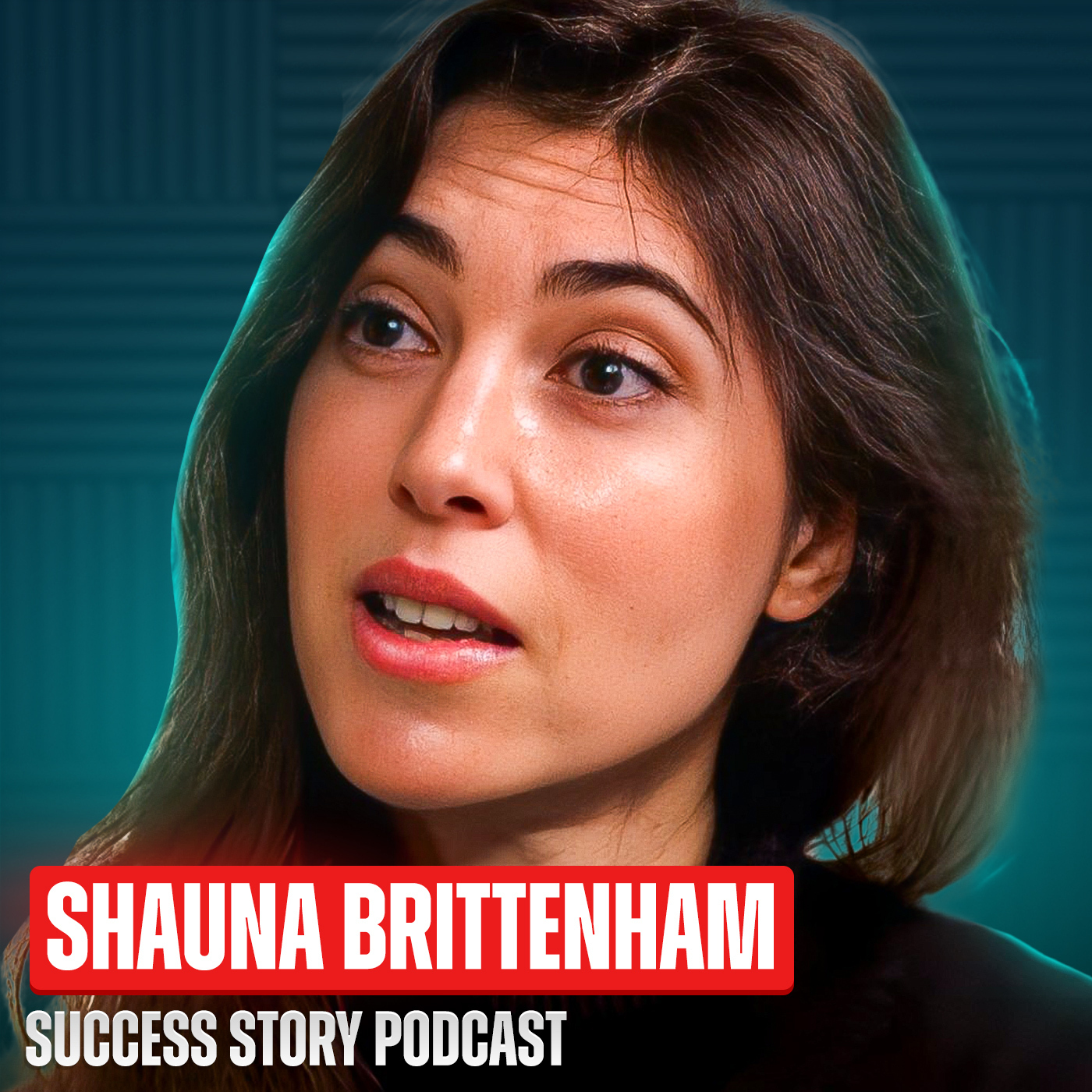
Success Story with Scott D. Clary
Shauna Brittenham - Emotional Intelligence Expert | How to Transform Fear Into Your Greatest Business Advantage
01:09:11
Loading summary
Transcript144 lines
- [00:00]
A
HubSpot is a success story. Partner now if you're an entrepreneur, listen up because HubSpot makes impossible growth impossibly easy for their customers. If you are building a business, you need to get HubSpot. Why? Here's the perfect example. Morehouse College needed to reach new students with fresh, engaging content. A problem that every single business in the world has. But with a 900 page website, even the tiniest update took 30 minutes to publish. Now Breeze, which is HubSpot's collection of AI tools, helped them write and optimize their content in a fraction of the time. And the results? 30% more page views and visitors now spend 27% more time on their site. If you are ready for impossible growth like this, visit HubSpot. Com.
- [00:49]
B
I start from a place of passion and interest and then, generally speaking, success follows. It's most fun in life to do the things you love because they end up being a service to others.
- [01:00]
A
She's not just a powerhouse in venture capital, she's the quiet force shaping the future of tech and innovation. Shauna Brittenum brings a unique blend of strategy, heart and grit. Helping founders not just raise money, but build companies that actually last.
- [01:14]
B
If we're not giving ourselves permission to feel anxious, to feel troubled, to feel down, then we can't fully experience the flip side of that joy. Emotional freedom. Relief. They go hand in hand. If we use our worst moments to our advantage, they are always a blessing. You have more authentic relationships with people when you are authentically creating your boundaries.
- [01:38]
A
Her track record backed industry shaping startups, advised on billion dollar growth and always shows up with clarity and conviction. She's proof that you don't need to be loud to be powerful. You just need to know your worth and help others realize theirs.
- [01:52]
B
So much of anxiety is our imagination. It's our imagination playing a mean game and thinking about the worst possible case. Scenari. That's what creates anxiety. Anything that feels hard will one day feel easier. I really believe that.
- [02:18]
A
If you're going to have to describe what you do for a living, how would you describe your work?
- [02:25]
B
Human. The umbrella is human.
- [02:27]
A
The umbrella is human.
- [02:29]
B
I, I'm, I'm in the wellness space in multiple capacities with an emphasis in creativity.
- [02:37]
A
Where did. Okay, so if we talk about the businesses you've built, even some of the work that you do now, what would be a major inflection point? Something that pushed you into wellness and serving humans?
- [02:53]
B
Well, I have had a lot of autoimmune issues since I was young and I've worked tirelessly to support my body. And so my company, Alliance Naturals, was born out of the desire, in many ways to help myself and then to give other people the tools to help themselves physically.
- [03:16]
A
And when you started this, what was sort of the gap in health and wellness? I mean, you said being able to.
- [03:22]
B
Trust quality, cleanliness, you know, for myself, not necessarily feeling like I was getting the results I wanted in terms of energy and just feeling fully alive.
- [03:36]
A
No, I think that if I look at all the different things that you've done, what I love about most entrepreneurs, but I think I really see this with you, is you've solved your own problems and then you've made those solutions sort of available to the world.
- [03:51]
B
And I think it's most fun in life to do the things you love because they end up being a service to others.
- [03:58]
A
Yeah.
- [03:58]
B
Versus thinking about how you can serve others and then reverse engineering it. I start from a place of passion and interest, and then generally speaking, success follows. Right. So I'm never pursuing success.
- [04:12]
A
When you think about sort of your journey, even from a young age. So at a young age, when you were 19, you ended up in a psychiatric ward. So all of these things, and I want you to tell that story and sort of what it taught you and what happened there, but all of these things impact how you operate today. Even before we press record, we were talking about a lot of what drives people are events that happen early childhood. I mean, 19 is not so young, but that informs the work you do, how you operate, how you function, the tasks you take on. So what happened at 19?
- [04:51]
B
At 19, a lot of repressed trauma surfaced from childhood. From childhood. And I think that all of us have incredible coping mechanisms to get us through life. And I was an overachiever. I started college at 15, I graduated college at 19, moved to Boston, got my first job, was working at 19. And at a certain point, we all crash and burn when we haven't addressed the deeper layers that are fueling us and in many times, you know, are fueling our achievements even. So sometimes we present positively and, you know, the way in which the world receives us is with a lot of admiration and sort of with open arms based on what we've accomplished. But beneath all of those achievements, what's fueling us is something so much deeper and it's not always positive, you know. And so in my case, if you were to look at my life on paper, you know, I was. I graduated from college magna cum laude and was, you know, working and living this really sort of robust, you know, Rich life, spiritually rich in life. But there was a lot under the surface that hadn't been addressed. And so it took a very long time for me both to sort of accept the nature of what I had been through and then to piece together a way to heal. And healing isn't linear the way creating a career isn't linear. Like we were just talking about how there are so many different unique paths to get to where we are and every single thing we do informs that. That has been true for me in terms of psychological, mental, you know, emotional facets of what was required for me to get to where I am today. To a place where I'm integrated, you know, in all. In all capacities.
- [06:56]
A
Yeah.
- [06:56]
B
Have a thriving family, beautiful, abundant business, all of it, you know, but it took, I will say it took a lot of time and a lot of very sort of creative approaches.
- [07:08]
A
What are the personality traits that would lead you down this path, to have to go into this situation that were also the same personality traits that allowed you to be successful? That. I think that there's an overachievement perspective. There's a. I don't, I don't know if you've ever thought about this, but I feel like they're not such different traits. I think that somebody who has all these neurodivergent, quote unquote, not normal traits, they can use it for good or it can be self destructive to them if they're not careful a thousand percent.
- [07:39]
B
I mean, I think, I think for better or for worse, I'm a very authentic person. And so that level of authenticity that occurred when I was 19 was not something I would have necessarily consciously chosen. And like I said, I've never, I. Since that moment in time, I have never been so honest in my entire life.
- [08:02]
A
Explain that though. Just. Sorry, explain that. So it was. It was that you felt like you weren't being honest that led you down this path or in terms of.
- [08:12]
B
Yeah, in a sense. Because when you're not fully embodied and fully consciously integrating trauma in a way you're living. Not a lie necessarily.
- [08:25]
A
Yeah.
- [08:25]
B
But sort of like an almost partially true version of your life. Right. Like there was this huge part of my story that I didn't even have access to because I wasn't willing to fully commit to and connect with it. And so to allow that to surface in a really radical sort of overwhelming way that maybe was difficult to metabolize for other people is something that occurred despite me. But it is my reference point now in the sense that I think many of Us are still striving to be palatable to society, to our friends, to our partners, to our colleagues, to our customers. We want to be accepted, we want to be liked, we don't want to be rejected. It's a very natural, survival based sort of human instinct and it can prevent us from behaving and relating in a way that's fully authentic.
- [09:27]
A
So you stated that becoming the quote unquote boss of you, I guess ownership of your own life. It starts with confronting trauma.
- [09:36]
B
I believe that we all have experienced certain levels of trauma and I, in my personal opinion, we don't have to relativize our trauma. It's okay to just look at your life and say, hey, I had a pretty wonderful life or I had great grounding parents, but I'm prone to depression, you know, or some an incident occurred where someone made fun of me when I was a little kid and it really affected my self esteem. And because of that I've never been able to step into a leadership role. You know, that could be considered a form of trauma for a small child. Or I had a dad who was always comparing me to my older brother, never said I was good enough, you know, always made me feel like the underdog. Like all of these things inform how we approach the rest of our lives to some capacity unless we're awake and able to see it clearly.
- [10:31]
A
But so how do you, how do you recommend people? That's where they start. Everyone has trauma to a degree. Where do they start looking? What and what is even relation? What did you meant? You mentioned relationizing.
- [10:46]
B
Well, we all tend to relativize our experiences, right? Like you and I were talking before this about how what I've been going through or what someone else, it may not be as bad as what, what someone else has gone through. We don't need to compare our lives and our life story to anyone else's. What you've been through is what has shaped who you are. And it in many ways has created the fabric of your being that has influenced your decisions and how far you've allowed yourself to go in your life. A lot of people even keep themselves from achieving because deep down inside they believe they're not worthy of great things. And so for me, it began with actually really listening to my body. So in conversations and alone, really beginning to sense when I'm anxious or when I'm feeling down or when I'm lackluster or uninspired and starting to understand the signals and messages of my body because the body is always communicating with Us all the time. You know, it's going like, this is safe, this is not safe, this is comfortable, this is not comfortable. And we have to in, in many cases distinguish between fear that has in, you know, served a purpose at one stage of our lives but is no longer truly relevant, and a truer system of knowing, a true, truer sort of, you know, intuitive knowing that is informing us from a highly intelligent place, you know, so that's a whole other. And I talk a lot about this in my book, you are the boss of you is distinguishing between our true knowing, the deeper higher guidance, you know, within our own minds, and fear because they're not, as you may know, they're not the same. And, and oftentimes we confuse, we get confused and we confuse ourselves because we can't distinguish between the two.
- [12:50]
A
So there's going to be two conflicting ideas here. So one, you want to make sure that you're not too selfish and you serve other people in everything that you do. But on the flip side, you also have to serve yourself to a degree. So how do you balance that as you go through life? How do you balance that successfully? How do you balance the concept of I want to be a good person and serve the world, but I also have to take care of myself in my business relationships, in my personal relationships, because sometimes those two things people find themselves at odd, right?
- [13:23]
B
Well, I guess I've been very lucky in the sense that everything I pursue ultimately is in service to others and I happen to love it. So I write music and I sing. Other people hear my stories through song and feel connected to their own experiences and emotions. They feel freed in some way or not alone. You know, with Alaia Naturals I created nutrients that I myself needed for my body to thrive and, and created a service to others. So I don't think they're mutually exclusive.
- [13:55]
A
Netsuite is a success story. Partner now. Business is brutal right now. Tariffs are crushing margins. Supply chains are breaking in cash flow. It is strangling companies every single day. And if you can't see what's coming and pivot fast, you're dead in the water. Now here's what separates winners from losers. Total visibility. Netsuite by Oracle gives you X ray vision into every corner of your business, from global shipments to tariff impacts to real time cash flow. Over 42,000 businesses trust this AI powered system because it works. NetSuite is the number one cloud ERP for a reason. It puts accounting, financial management, inventory and HR into one powerful suite. No more data silos, no more guessing. Just one source of truth that lets you make lightning fast decisions while AI automates the busy work. If I had need for this kind of product, I would use NetSuite one system, full control. Tame the chaos with NetSuite and if your revenues are at least in the seven figures, download the free ebook Navigating Global Trade. Three insights for leaders. That's NetSuite.com Scott Clary indeed is a Success Story Partner now say you just realized your business needed to hire someone fast. How can you find amazing candidates fast? It's easy. Just use Indeed. When it comes to hiring, Indeed is all you need. Stop struggling to get your job post seen on other job sites. Indeed Sponsored Jobs helps you stand out and hire fast. And with sponsor Jobs, your post jumps to the top of the page for your relevant candidates so you can reach the people you want faster and it makes a huge difference. According to Indeed data, Sponsored Jobs posted directly on Indeed have 45% more applications than non sponsored jobs. Plus with Indeed sponsored Jobs, there's no monthly subscription, no long term contracts. You only pay for results. There's no need to wait any longer. Speed up your hiring right now with Indeed and listeners of this show will get a $75 sponsored job credit. To get your jobs more visibility, just go to indeed.comclary right now and support our show by saying you heard about Indeed on this podc podcast. Indeed.com Clary terms and conditions apply. If you're hiring, Indeed is all you need. When you, when you started Alaya Naturals, was that was that the first thing that you tried to build and it was successful or did you sort of apply this framework to your own life? You tried multiple things. Nothing really worked.
- [16:17]
B
My initial idea, because I was breastfeeding my second child at the time and I was in early stages of mommy mode, was I actually wanted the nutrition line to be for pregnant and postpartum.
- [16:31]
A
Solving your own problem.
- [16:32]
B
Solving my own problem. I felt like my second kid just took everything out of me. My kids are 24 months apart and I just felt like I didn't have the capacity to live life on my own terms. And then, you know, I had a very poignant conversation with my husband and he said, you know Shauna, you're so passion driven. I'm worried that in a few months or years you're going to outgrow this phase and you may or may not be as passionate about it, so why not create something that has more longevity? And what I've always struggled with my whole life is this host of autoimmune you know, issues that in many ways have served the purpose of creating mindfulness and forcing me to be in a.
- [17:18]
A
Rhythm that works, your body physically reacts.
- [17:21]
B
I am not a person who can get away with things, so to speak. I crash. If I'm not taking care of myself, the whole system crashes. It's like, you know, the train comes to a very abrupt halt.
- [17:34]
A
Your, your worst moments, I think, are actually blessings in disguise.
- [17:38]
B
And that may be true for most of us. I think if we use our worst moments to our advantage, they are always a blessing.
- [17:47]
A
And.
- [17:47]
B
And nothing, no circumstance is empirically. Well, that's not necessarily true. This is what I'll say. We all go through very hard things. A lot of not most, but many circumstances are not empirically good or bad. The meaning we assign to them dictate and influence our experience of the world around us and of ourselves. So if I look at an experience and say, wow, there are all these powerful tools I've learned from this, or I'm creatively inspired by this now, or I have the ability, ability to empathize with people on a significantly deeper level because of what I've been through now this has become an advantage. Now this has become a beautiful part of my life. I could also choose to view it as, yeah, what a setback. Like, nothing's getting done, nothing's happening. I'm, you know, this was so hard. Or I can say, yeah, because this was so hard, I'm now in a position to help other people more impactfully.
- [18:48]
A
Listen, it takes a lot of maturity to look at life that way, because I know what you've been through, even recently now. And to look at some of these setbacks as a glass half full, silver lining moment, that's difficult.
- [19:07]
B
It's a choice. We always have the choice about how we perceive things. Perspective is always in our control. Circumstances out of our control. How other people react, completely out of our control. There's environmental factors, there's political factors, societal, familial. There's so many factors that are out of our control. But we can always choose how we react to them, how we respond to them. With intuition, with compassion for ourselves and for others, with empathy and with a sense of resilience that allows us to move forward with positivity. That doesn't mean that we don't feel really crappy sometimes. Like, I'm a friend. I mean, I have an entire chapter in my book about feeling your feelings. I am a person who cries. I love to be in the deepest part of my being. I want to feel things, because I know that when I do, and I know this a lot based on my experience at 19, I know that when I. When I feel things in my guts, in my soul, I then move forward empowered. I then move forward stronger and more. It's not a weakness to feel things and to be emotional and to be sensitive. It's a superpower. When we come from that place of vulnerability, we can move forward with our whole selves, with our full being and activate everything else that needs to be on board to have a successful life.
- [20:40]
A
I feel like. I feel like, especially with this audience and people that listen to this show, I think sometimes we just turn off the emotion and focus on outcome.
- [20:53]
B
Why I think that's a huge mistake.
- [20:54]
A
Is I do I.
- [20:56]
B
Our emotion can very successfully drive us.
- [20:59]
A
Yes.
- [20:59]
B
Even in terms of our decision making. Because think about how intuition plays a role in who you choose to have on your team, who you choose to do your deals with. You know, who you trust, who you don't. If you're not fully accessing that deeper part of you, you're also disconnecting from the intuition that can drive you to make very good decisions.
- [21:23]
A
Yeah, I agree. I think that one thing. So there's a couple. You've mentioned a couple strategies. First of all, just having sort of like the awareness that you should be in tune with your internal dialogue, especially as a high performing individual, because it actually will help drive outcomes. But you mentioned something else about sort of creating space or gap in your life so that you are not constantly doing and you have a chance to sort of be alone with your thoughts and think and just, I don't know, just have a finger on the pulse of your own internal dialogue. And the only way to do that is to not always be on this hamster wheel.
- [22:00]
B
It's also just to be in touch with your rhythm as it's unfolds from day to day. Because your needs today, Scott, may be very different from your needs yesterday. They're different from your needs tomorrow. So we can't apply a formula to this. We can't codify it. This is an organic data.
- [22:17]
A
Very different. You see how I think, Right?
- [22:20]
B
But let me explain one thing.
- [22:21]
A
Yes.
- [22:22]
B
So and right, because formulas and calculations and data, you know, analysis and, and polling and you know, analytics, like all of these are great strategies. Okay. And I. And I want to present an alternative reality, which is that I wrote four books in four years. My first book is coming out February 4th. You are the boss of you. I did not follow any of the guidelines I was given by writers to sit down every day at a certain time and write whatever comes out and then stop when you stop. But, you know, make sure you write a certain number of pages every day. I collected all of this wisdom from friends. I watched some master classes online about, you know, tools and tips and strategies for writing. Guess what? None of them applied to me. The basic human experiences are the same for many of us. A lot of us have similar needs, but we're all wired completely differently. So what works for me may not work for you. You need to establish your own rhythm. You need to figure out what works for you. What works for me is listening to my body day to day. There were days I didn't write at all. There were days that because I allowed myself to putter for 45 minutes in a kitchen drawer, I had an idea that then fueled 45 pages of my book. Sometimes, for me at least, many of my most poignant, brilliant, imperative, impactful seeds that create momentum and inform what I'm doing next come from moments of silence of what would look to any outsider as playing as puttering, as being sort of unencumbered, in a sense. And because I'm giving myself space to be creative, I then apply that creativity in a strategic way that's impactful. Right. So then I go write the book. I don't have the idea because I'm wandering through my garden, and then just keep the idea bottled up inside. I then sit down at my computer and write and write and write. And then at the end of that, I edit. And then I have to, you know, do all of these things to publicize the book. Right. So there are action steps that require a certain formula and strategy. But the meat of it, like the heart of what I wrote, it came from a place that was completely uninformed by strategy. Like, it was all inspired in moments that would look completely ridiculous to an outsider.
- [24:52]
A
Why do you think? Because even just listening to myself, I'm realizing that I'm the case study for somebody that over indexes on formula and strategy all the time because it's comfortable and it feels safe, right?
- [25:06]
B
Yeah.
- [25:07]
A
So why. I'm actually curious why you think that we default to that.
- [25:11]
B
I think we don't trust ourselves. We don't trust in our ability to do things organically. When I say organically, what I mean is to tune into what's happening in the moment, in real time, and respond to it accordingly when really that's the most brilliant solution anyway. Right. Any problem is to deal with what's actually Happening versus trying to troubleshoot and foreshadow. We can't control circumstances. You know, obviously there's a place for predictions. I go to the Weather Channel. I want to see what the forecast is. Right? But if I go outside and the weather forecaster didn't predict rain and it's raining, I don't knock at my umbrella. I go. I respond to what's happening in real time. Right? But if we don't trust ourselves because we've been conditioned by society and our parents and all of the adults comes back to that. It all comes. Well, a lot of it comes back to the fact that when we were very young, we were told not to trust ourselves. I'm cold. You're not cold. It's hot outside. I'm tired. I want to go to sleep. No, you got to get up. It's time to go to school. Over and over again, we're taught in these insidious microscopic ways not to trust ourselves that become paramount when we're adults, because then we're adults who are relying on structures. We're reliant on the outside world to tell us what's right and wrong, what we feel and what we don't feel. We don't even trust how we feel. We're asking someone else, do I have a right to feel sad about this? Of course you have a right to.
- [26:43]
A
Feel sad about it, because there's industries that are built on us not trusting how we feel.
- [26:47]
B
Exactly. And. And in this moment in time, if there's no other takeaway, it's. You will be significantly less reliant on structures and outside data information if you begin to cultivate a relationship of trust within yourself. And step one is the internal dialogue. Starting to question yourself. Wow. Okay. I don't feel safe in this situation, do I? You know, why? What's going on here? Where am I feeling it? It's in my shoulders. Okay, is this. Where is this coming from? You know, right, today, I don't want to record a podcast. I want to do this. And then where is that coming from? What's driving that? And really, to be in conversation with yourself. And then all of those other things become tools, but they're not a crutch, right? It doesn't mean you're not polling. It is one of the most important and imperative aspects of my business is polling my customers. I want to know what they want. I want feedback, what's working, what's not. These are very real calculations. These are numbers. But at the end of the day, they don't detract from my own intuition. And there are pieces of the business that are driven entirely by that.
- [28:08]
A
I know that health and nutrition has impacted your journey and how you've sort of healed yourself. There's a lot of mental work that you've done as well. And there's a lot of different frameworks in the book that you speak about that are healing frameworks. So maybe speak about some of the more successful ones, the ones that have had the biggest, the biggest impact on you.
- [28:25]
B
Things in job Defining boundaries. First of all, learning how to define boundaries because that not only informs who you work with in business, but who you let into your life in general. Being able to say no without feeling like you need to justify it. No is just no. Sometimes I am not available for that commitment. I'm not available for that networking event. I'm not going to show up at this party. I don't need to explain why I might choose to.
- [28:57]
A
My whole life you said you're a people pleaser.
- [28:59]
B
Absolutely. I really struggled with that. But being able to trust that my inner guidance and communication is true for me, may not be true for you. It's true for me. And run my life based on what feels right in my body is absolutely paramount. Sleep. I wrote an entire chapter on sleep. I think sleep is huge. And I think part of this kind of overworking mentality of if we work longer hours and if we God and grind through it, it's like, you know, for me that isn't how I'm most productive. I am most productive when I sleep eight hours and then I wake up energized and I actually have the capacity to recognize where my energy should go and where it should. Energy allocation in general is a huge conversation like where are you channeling your energy? Where are you investing your emotions, your ideas, your time? These are huge. And sometimes we can't accurately navigate the answers to those questions. If we're tired, we're coming from a place of deficit. Right? So that is huge. Learning how to self soothe. I talk a lot about this. It sounds like a babyish thing and it is. As adults, many of us are children walking around in adult bodies. And so, you know, we're having tantrums, we're feeling unwanted, we're feeling all. We're not feeling as, you know, successful as the other person in the room. You could be a self made gajillionaire with the most successful, you know, company in your city or town and then you go to an event and you're on a panel with Four other people who have accomplished more in quotes, you know, so to speak, and then suddenly feel like a loser. And they. It's like we're. We're terrible sometimes to ourselves. Part of how I learned to soothe myself was by talking to my children. You're okay, or I can see you're having a really hard time right now. That feels really tough. Are you sad? Is what you're feeling sad? You seem really angry. Like, we sometimes.
- [31:16]
A
How does that help you? How does that help you? It seems like you're being a great parent and you're empathetic to your kids.
- [31:21]
B
Because this is how I've learned to speak to myself when I'm in a room full of very successful people who are expecting a lot of me. How I sometimes talk to myself is the way I would talk to my child in the simplest, most efficient and not, not, not convoluted terms, which is like, you're okay. You've got this. You're. You're feeling scared. And wow, like, all you need to do is show up and be yourself. I mean, the things I tell my kids, they apply to us. It doesn't matter how much money you make. It doesn't matter how success. We all need to be talking to ourselves this way, right? It's the simplest thing sometimes in terms of communication.
- [32:03]
A
I think that. So correct. I think that sometimes we just overcomplicate lessons and ideas that we already knew. The we already knew. I see a lot of. I see a lot of that. I feel like we're always. Right now. I feel like everybody is always seeking new ideas and new wisdom to help improve their life, help improve their relationships, whatever, But. But at the end of the day, I think we all know what we have to do. We almost look, we almost accumulate information as a crutch to not actually do the work that we should be doing.
- [32:37]
B
There's so much over researching.
- [32:39]
A
So much, so much.
- [32:40]
B
And what I'll say is, like, there's a perfectionistic sort of thing that can like. And I have an entire book on softening perfectionism because I'm a perfectionist. And perfection isn't a real thing. It doesn't exist. It's created by us to make ourselves not feel worthy and valuable. There is no perfect thing or perfect person out there. It's not real. So what we can do is our best at any given moment in time with the information we have. And then as you begin to move into the reality of what you're trying and what you're experimenting with and what you're discovering, you adapt, you amend, you reformulate, you rethink, right? So you need to sometimes take action to even know what the problems are that you need to solve for yourself and your customers. If you're, you could do all the research in the world and then you jump in there. And the real life way that this plays out is so different from the theoretical thing that you envisioned, right? Or you're, you have new data, right? So you're constantly having to recalibrate what's happening, you know, what your approach is based on, what's happening in real time. And you just have to get your hands dirty. And to do that, you need to give yourself permission to make mistakes and to fail. Because that's just information. Like to me, failing doesn't even exist. It's just more information about what's working and what's not. So you can recalibrate sometimes. I have a lot of friends in different businesses, very, very successful businesses and businesses that have been incredibly unsuccessful in the ways that we tend to measure success in a quantifiable, you know, way. And by the way, some of my friends who had the businesses that flopped because they flopped had the idea to do the next great thing or learn something that was like the pivotal key in how they now live their entire lives. But, you know, if we're not willing to get in there and figure it out in a way that feels really messy, like we probably won't get as far as we could. You might get very far, but you might not get as far as you would. And I think we were talking about this earlier, Scott, before you press record, but trusting in your resilience and trusting that your identity, who you are fundamentally in your being, your value, your worth, it has nothing to do with the outcome of your business or of your success. Like those are two completely separate independent things. You're 100% worthy and valuable because you're a human who exists, period. The moment you were born, you had a hundred percent of your value. You can't add to that, you can't subtract from it. The rest is icing on the cake. The rest are just the ways in which we're playing on our lives.
- [35:38]
A
It's easy to say, but you know how hard it is, especially for an entrepreneur, somebody to remove their self worth from the business and understand that if their business doesn't succeed, it's not a hit on their self worth as a human being. That is such an incredibly hard concept. It's not a hard concept to understand. It's A hard concept to live.
- [36:00]
B
But the word concept is also cerebral and it's also left hemisphere. It's not even a concept. It's an internalization. It's an emotional scaffolding and construct that our worth is contingent on what we produce and how people perceive us and the levels of success that we define based on these really arbitrary standards. Like, I don't care how much money you make, Scott. Like, I don't care how many even follow you. Like, it's amazing. I'm connecting with you as a human. I think you're an amazing, priceless individual who has a lot to offer in your being as a human, as a soul. And what motivates us to create, I believe ideally would be just desire to do something like completely wonderful and amazing. And as a consequence of that, other people benefit. Success sometimes happens because our motivation isn't to prove that we're enough or that we're worthy. It's to just. To create from a very pure place for the love of creating.
- [37:06]
A
I think that there's an idea that I love, and it's sort of very simple idea, but whatever it is that you're trying to build, give it minimum 10 years of your life. And the reason why I like that idea, first of all, because it increases the chances of success significantly. But second of all, if you can commit 10 years of your life to something, not only will you most likely be financially successful by some quantifiable metric and how we. How we interpret and define success as society to some degree, but also when you can commit to something that long, it just means that you're in it for reasons outside of money, which, ironically, will end up leading to money.
- [37:45]
B
Exactly. That's the thing. Because I could have done anything not write books, right? Like, no. Period. Like no one, maybe no one will read them. That's okay with me. It's not going to keep me from writing.
- [37:57]
A
Exactly.
- [37:57]
B
I sing to myself. No one is listening to me at this point. I used to be on a stage. I had a band, I recorded music. People came, I had. There was an audience. No one is hearing me in the shower. And I will never stop singing because it lights up my soul. I'm not doing it for anyone else. But guess what? Because I'm singing for the love of it in my house, my daughter has absorbed my music and now she's a singer herself.
- [38:22]
A
I love that.
- [38:23]
B
It's amazing how when we're energized by what we love, we set the people around us on fire.
- [38:29]
A
Yeah. And you can tell too. You can tell when somebody is actually living the life that they want to live.
- [38:35]
B
It's an inspiration. We all want to feel good. That's the thing. Like what you're looking for isn't really success. It's a feeling, it's an experience. Right? So like, if you can identify what that is, you're one step closer, I think, to living a meaningful and purposeful life. Right. I want to feel authentically expressed. I want to feel authentic creative freedom and passion. Like there are these things I want to feel. And as a consequence of that, I create and I continue to broaden the base of, you know, what I'm doing and what I'm pursuing professionally and entrepreneurially. But it's really motivated by this deeper place.
- [39:14]
A
I, I've thought about this a lot, even with the podcast, because this has probably been the quote, unquote, hardest thing that I've ever built in terms of revenue. It's much easier. I could go and launch a new product tomorrow and spin up a Shopify store, or I could partner with a developer and spin up an app. And I like, I know how to build a business from scratch. So I could make a lot more money doing that in the first six months than I've probably done with the podcast. But the podcast I really enjoy because for me, I get to meet some of the coolest people in the world. I get to have great conversations and it's much more fulfilling than watching numbers in a stripe account.
- [39:54]
B
Right. And don't get me wrong doing it. People are listening.
- [39:57]
A
Exactly. And, and don't get me wrong, like there's some podcasts that have hundred million dollar Spotify contracts and there's like, there's money in this game too. But for me, I rather make money and spend a little bit more time building something that I actually enjoy doing then just doing something just for money. Now I get that that's a, a place of privilege that I come from and that's, that's something that not everybody can afford. So people have to worry about rent next month and food to like this afternoon. But I'm just saying that there's ways to structure your life that if you play this long game with something that you enjoy and it doesn't, doesn't mean you're quitting your job, it doesn't mean you're putting your life at risk, it doesn't mean you're putting your, your livelihood at risk. But if you can find a way to work your 9 to 5 and to build something on the side, even for the couple hours. If you put enough time and energy into that thing over a period of time, and if you love it enough, you'll find a way to become successful.
- [40:53]
B
If you love it enough, you can't not do it. And that's kind of how, you know, I think if something is your calling or one of your callings, because many of us have many callings.
- [41:01]
A
Yeah.
- [41:01]
B
At different stages of our lives. If you can't let it go, if you're relentless about it, you're probably meant to do it. It may just not be the right time.
- [41:09]
A
Yeah.
- [41:10]
B
And timing is everything. I mean, when I, when I was starting to write, by the way, I didn't have any time. I had, when I wrote my first book, my son was four months old. This was a book that I didn't even include in the other books because no one will. I hope it never sees the light of power. It was a passion project for sure, but I was literally writing while I was cooking dinner, while I was holding him and he was taking a two hour nap in my arms. I was doing little voice memos into my phone. I was accessing, I was, I was touching the dream. Right. Like in these minute small ways that at the time maybe felt insignificant. But five months later I had a novel and I didn't, I never sat at that time. I did not have the luxury of sitting down and just writing. Okay, so like people with full time jobs, you have to pay the bills. Where can you touch the other dream? In what capacity can you make contact with it? It doesn't have to be every day. If that, if that's not within grasp, don't wait until you can do it every day. If people are saying, well, you need this many hours a day and this much time, like, then don't, don't make that, you know, a requirement just. But begin to think about where in your life can you take advantage of and seize opportunities to connect with that bigger dream and that bigger purpose. It doesn't have to look perfect. You don't have to have a room with of you. It can be very scrappy and very resourceful and, and very organic.
- [42:45]
A
We're talking about a lot of, a lot of mindset and a lot of things that can heal you and heal your mind and some sort of more, I guess, mental. Esoteric. Yeah, I was gonna say esoteric. That's a great word. I was, I'm curious because I'm sure that you have opinion on this because you're so into like physical health and wellness and the products you consume and the environment you interact with. So maybe just give people some. Some insight as to, you know, what you put into your body, on your body, surround yourself with. How does that impact your health, your wellness, your wellness, your mind? Any of that?
- [43:24]
B
Yeah, I mean, I. I do try to eat organically. I drink a ton of water. I take my supplements. I mean, I have a supplement company. I. I create what I want to take for myself. And I think movement's really important. I think movement's also very important for creativity in the mind. I don't have a set exercise routine. I don't go to a gym. I'm not super into sweat and steel. I think if you watch the Blue Zone documentary on Netflix, it's so fascinating.
- [43:55]
A
There's only one left now. I think, if I'm not mistaken.
- [43:58]
B
That's really sad.
- [43:59]
A
I think there's only one left.
- [44:01]
B
Yeah, I said blue Zone. Actually, I meant to say blue zones, but maybe, like, intuitively I was tapping the fact.
- [44:06]
A
No, I think it's in California. I think there's one left in the world.
- [44:10]
B
Oh, yes. It's a religious right. Environment. Right. It's interesting what they find or what they found with the Blue Zones, is that the areas of the world where people live the longest, they're moving quite a bit throughout the day. Right. They're not as stationary as we tend to be in our society. And it's a problem for people sitting at desks all day and not moving. And also, like, a lot of my best ideas come when I'm not at my computer. So I'll be writing or working. I'll step away from my computer to peel an apple and it's like, boom, there's the answer, right? And it's not that I'm not working on finding a solution to the problem. It's just that I find that when I stop overthinking it, usually the answers come to me.
- [44:56]
A
I just want to take a second and thank Kornbread Hemp for supporting today's episode. Now, Cornbread Hemp CBD gummies have been this really nice addition to my wellness toolkit. I don't use them every day, just when I want to unwind after those extra busy weeks. But they're perfect for those moments when you want to take the edge off and just find your balance, really just shut off from work. And what makes them special is how Cornbread Hemp crafts them. They only use a flower of USDA organic hemp plants. That's the best part. For the purest, most potent experience. No fillers, no artificial fluff, just clean full spectrum goodness in delicious watermelon, berry and peach flavor. I keep them in my nightstand for those moments when I just need a little extra help relaxing. And I love how transparent they are too. Every batch is third party lab tested so you know exactly what you're getting. And they put together a special offer for all Success Story podcast listeners. All listeners can save 30% off their first order. Just head to cornbread hampton.com success and use code success at checkout. That's cornbreadhemp.com success code success for 30% off your first order of these amazing gummies. The HubSpot Podcast Network is a Success story partner now. If you like Success Story, you're going to love other podcasts in the HubSpot Podcast Network. One of my personal favorites is I Digress. Hosted by my boy Troy Sandich. Each show is under 30 minutes. I digress helps eliminate complexity, complications and confusion in your business with frameworks and strategies to achieve true, scalable and successful, sustainable success. If you're an entrepreneur building anything you need to listen to I Digress. This is one of the most useful business podcasts, trust me. Go do yourself a favor and listen to I Digress. Wherever you get your podcasts. I want to, I want to talk a little bit about your family motherhood, because you bring that up a little bit in the book as well as how that's impacted you and it's influenced your approach to healing. But speak to me about, I mean, you just, you had a daughter. I'd say just, you look, you look 35. I said you had a daughter at 35. You look younger than that, but you had a daughter.
- [46:58]
B
I'll take all of it. Any reduction in age, fine.
- [47:04]
A
And some trauma memories surfaced when you had your daughter at 35. So speak to me about that part of your life, why that even happened? Because that if that happens to someone else who's listening, that could be like, why are these memories from my past coming up when I'm having a kid? What do I do with this feeling or this emotion? But yeah, I just want to understand how that particular moment shaped your approach to healing, how motherhood shaped your approach to healing, what it forced you to understand about yourself. All of it.
- [47:39]
B
Right. Well, I think patterns can be intergenerational. So if we're not aware of how we're living our lives or why we're making certain decisions, we pass that ignorance down to our children. Right. Like everything we do, they're watching. So I could Say to my child, you're safe. You know, everything's fine. And then if I'm in a chronic state of anxiety or highly overwhelmed all the time, and she sees that I'm unsettled and that I don't have the ability to calm myself down, it doesn't really matter what I tell her. She's not going to believe me because she is absorbing the message that fundamentally she's unsafe. Because she can see that I don't feel unsafe, even if I'm telling her words that should, on some level inform herself. Sense of safety. I hate to say it, but when you have kids, a lot of your unprocessed trauma, even things that you thought you had worked through, surfaces because I believe, because you see how vulnerable they are, and the most vulnerable parts of you surface. So the times in your life where you felt the most helpless and out of control and powerless tend to rise to consciousness. And it could be something as simple as. And this. It's not simple, and I don't like that I use that word. But it could be something as, you know, as every day, as a mother who, when you are crying, said, you know, you're fine. Get over it, right? Because, like, that informs you how you parent yourself. You then grow up to be a person who isn't feeling fine and says, I'm fine, I'm fine, I'm fine. Until you're not fine. And that's what happened to me at 19, right? Like, I was fine because I was telling everyone I was fine until I wasn't fine, right? So I. I feel like the vulnerability of our children, in many ways, is an access point, almost like a portal, in a sense, and can take us back in time to the parts of our lives where we felt the most out of control.
- [49:41]
A
And that's what happened with you.
- [49:42]
B
That is what happened with me. And it's. As my children continue to grow and evolved, I am learning all of these other access points, right? Like, so, for instance, my son, who is so massively creative and just. He's like an absolute genius in a lot of ways, but very honest in how he presents. He doesn't care what people think of him. He's. It's the idea, it's the movement, it's the energy. He's just out there with everything, with his feelings, with his thoughts, his ideas, his creativity. And there's some piece. There's still some unhealed piece of me that for all the work I've done with honesty, is like, oh, you shouldn't say that. In front of that person or oh, I don't like that they're seeing you have this tantrum, right? Like it's embarrassing to me. That's how I feel. And I, I don't like that. I don't like that I'm looking at my son have a tantrum going like, oh, goodness, what will people think? Right? Because what I want more than anything is to, is for him to have access to the freedom that comes with that level of honesty that we suffocate as we get older and learn to cope and learn to behave and present. But you know, at different ages, you realize where you still have some areas where growth is definitely possible.
- [51:11]
A
One idea that I really want to unpack is you've spoken a lot about setting boundaries, which is very important. And even setting boundaries, I'm assuming within your own family to a degree, because that's also important. But with anybody, your family, your business partners, you still have to have an authentic relationship with them. So how do you manage setting boundaries plus still building a deep authentic relationship?
- [51:36]
B
I think actually you've juxtaposed things that are on the same team, on the same side.
- [51:42]
A
Explain.
- [51:42]
B
You have more authentic relationships with people when you're authentically creating your boundaries. So when I'm honest about my needs and trust that you can receive them, not personalize them and implement them in a way that's healthy for both of us, everyone wins, right? And there's reciprocity there. So if you create your boundary with, first of all, I trust if you're a person who's creating boundaries and in the habit and routine of creating boundaries, I trust that you mean what you say when I trust that you mean what you say and believe you. There's freedom for both of us. Right? I'm not guessing. I'm not walking on eggshells. I'm not tiptoeing. I'm not having to ask you three times. I'm understand that you are a person who is speaking and communicating your truth based on your real time needs and desires. So first and foremost, there's that. Then there's this thing of how do we fully connect with others when we're not being honest? We can't. Right. So I will say to my husband often, I am afraid of disappointing you right now. I know that. So first I just kind of name the thing that I'm afraid of because that helps me clear the air for myself more than him even. I say, I want to be the fun wife right now and I want to go out and party with you and go to the hot new restaurant and do the thing and feel alive and be the way we were, you know, when we were dating. And right now I can't do that. And here's why. What I need is to be in bed watching Ally McBeal reruns at 8pm so that I can wake up and feel okay tomorrow, right? And because I've, like, named my fear, and I'm also, like, aware of his expectations and desires and I'm not, like, not even interested in them. I'm. I'm deeply aware of them, but also able to state what I really need. We're then in conversation and working as a team to first meet our own needs and then meet the needs of the other person. Right? And there is a certain level, as we know, of compromise and sacrifice in any relationship. Relationship, right. Like if I want to stay in bed every single night, which I do at 8pm maybe at some point I will have to surrender to going out on a night where I don't feel like, you know, that's the thing that I would love most to do, but it's not every night. And most of the time I'm taking care of myself, you know, and then when we do go out and have that intimate quality time, it's really meaningful and I'm really present. So the thing about not creating boundaries is that when you show up because you feel like you have to, or you're obligated to, or you're afraid of disappointing or angering someone else, or you fear their reaction, you're not even showing up as the version of yourself they want you to be. So nobody would.
- [54:40]
A
It's very ironic, isn't it?
- [54:41]
B
Right? Like, when I show up because I'm excited to be there. I'm a lot more fun when we do go on dates. Like, I'm a riot, you know, like I'm pleasurable to be around.
- [54:50]
A
You're not. You're not. You haven't built up all this resentment.
- [54:55]
B
And you're acting and I'm not exhausted and feeling like I'm doing this for you. And I never take care of myself. And where am I in the equation, Right? Like, like I said, in any relationship, they're going to be like, I'm a mother of two children. I spend a lot of time doing things I don't want to do. So again, like, this isn't a situation. I'm not creating a boundary that says I will not slice your apple or take you to school. Right? There's a lot of Rinse and repeat to life. That is just kind of outside of the bounds of choice in family. But there's a lot that actually is a choice. Like, for instance, you know, me coming here today. I have my in laws watching my daughter. She wanted me to take her out, and I said, you know, mommy has this really exciting opportunity. And I explained what I was doing. And what's so interesting is that she was disappointed at first that I wasn't going to be with her, and then she got really excited for me. And now I get to go home and tell her about this incredible experience I had with you, Scott. So in a way, it's like other people ultimately benefit when we're living our best lives as well. And so creating that boundary in the short term, while it might feel uncomfortable, also inspires everyone around us to live their best lives.
- [56:11]
A
What do you think causes people pleasing? Is it fear?
- [56:15]
B
I think it's fear of being rejected, not accepted, or having people withdraw. Love, attention, support, material resources. I mean, think about how the exchanges go as children. I do X, I get Z. I do well on the test, I get an A. I drop my ice cream, Mommy yells. You know, we have in so many ways internalized, you know, action and reward speech and reward speech and punishment. You know, if I say this, I'll get in trouble, but if I say that, I won't. And there's safety associated, you know, with all of this. So the thing that I ask myself when I'm afraid of creating a boundary is what am I afraid of losing? And often it's respectful. It's people thinking that I'm X, Y or Z thing. I want them to think of me in, in it, I frankly am wanting to control how other people perceive me. So if I, if I'm in this space of wanting to control what other people think, I'm not making an authentic decision for myself. Right? I'm a prisoner to this paradigm of trying to please. But it starts very young. Like, if I do X, Y or Z, I'll get in trouble. And then attention is withdrawn, love is withdrawn, admiration is withdrawn. Right. So even again, as an adult, talking to myself the way I would a child, wow, I really don't want my sister to think I'm X, Y or Z if I say this or don't do that, and then comforting myself. But I know that I'm lovable, likable, and worthy of attention and good things. Even if I don't make other people happy or even if they think whatever thing they're gonna think that's outside of my control. And it all is anyway. It's all an illusion that we can control what other people think anyway. Right. So it's, it's really, I think, very primal. When you boil it all down. Those initial roots that grow into us and, and plant, you know, are planted at such a young age and grow into these trees of like, if we say the right things and do the right things, we'll be safe because we can guarantee that the people around us will behave this way. They'll be nice to us, they'll like us, they'll give us stuff, they'll invite us to the party. It's so young, you know, it's so primal.
- [58:48]
A
But listen, if, if you can, if you can sort of reconcile all these thoughts that first of all, you are enough. And the worst case scenario that you envision happening will most likely not even happen. And it's very freeing because then you don't, you don't operate, you don't operate with fear going through life, you can take control of what you actually want to achieve.
- [59:12]
B
So much of anxiety is our imagination. It's our imagination playing a mean game and thinking about the worst possible case scenario. That's what creates anxiety. Yeah, right. It's wanting to control the unknown and feeling like if we can micromanage everything, we'll stay safe. And the opposite is true. What gives us access to emotional freedom and peace is letting go of trying to control and micromanage anything and everyone around us and just trusting that if even the worst case scenario happens, let's say it does. Yeah, you're still lovable. You'll be okay. You know, you, you will be able to give yourself the nourishment internally and the guidance you need and require to pick yourself up and move on.
- [60:05]
A
What would be. We spoke about a lot of different ideas and be your own boss and just in your life as well, what would be an idea that we haven't gone into or a question that I should have asked that I didn't?
- [60:15]
B
Well, you've asked a lot of questions. I think the question that a lot of people have is fundamentally like, am I okay? And it's the simplest question. Like we're wandering around at the end of the day just wanting to know we're going to be okay. Right. So I think that when push comes to shove, I provide all of these tools. There are so many practical strategies in my book and I have an entire workbook on my personal site, helloshawna.com that will give you more application than you ever would want possible. And at the end of the day, we all just want to hear that we're okay. And the truth is, we are. We don't have to be perfect moving into anything. We don't have to have the right answers. Most of the time we don't have the right answers. So the question you can ask me is, how do we know that we're okay? And how we know is that we believe that we are a hundred percent valuable at birth, as I said before. And nothing can add to or subtract from our value. If we really not just know that in our conscious minds, but feel it in our bodies, it's okay to fail. It's okay in business for things not to go your way. You will make another way. There will be a brand new light, an idea, something will come into mind. Someone will approach you. Right. And also just kind of making ourselves available for opportunity is something else that I would love to pass along to your listeners. I was here in Miami because I was displaced from my home by the fire and had this opportunity to meet you because of that. Right. And I was available for that opportunity and you so generously.
- [62:16]
A
It is crazy how this all came together.
- [62:18]
B
It is. And it really. The root of this was a catastrophe, an actual crisis. And there's this little piece of gold in it, right? Like this beautiful conversation.
- [62:31]
A
Well, now I made a connection that I would have never made before. Work.
- [62:35]
B
Yes. And I'm here to help you with your endeavor.
- [62:37]
A
I appreciate.
- [62:38]
B
And your life pursuits.
- [62:39]
A
I mean, it is. It is wild sometimes how, how life works out. It's the. I mean, I have no idea. Now I'm gonna meet your husband and you'll meet. Not in my network. And. And I'll meet your network. You're gonna come over for dinner and. Life is strange. Life is very strange. How, how it all works out and.
- [63:01]
B
And it's so important to be open.
- [63:03]
A
Yes.
- [63:04]
B
To opportunity. Some of the most pivotal conversations I've ever had in my life were people who don't even know they've changed my life. It happened in a taxi once. This guy changed my life, like indefinitely. Right. This. This taxi driver in New York City. And guess what? Like, I was there in that moment in time.
- [63:23]
A
Was it the one you're talking about before you?
- [63:25]
B
No, that was the Uber driver who took me here to see you today.
- [63:28]
A
Oh, today, yeah.
- [63:29]
B
No, this was years ago. Years ago. I had gone through this breakup that felt like the end of my life because I was in my 20s, I was super in love with this guy. And. And I was. I got into a car, sniveling, you know, drenched with my own tears and completely inconsolable, just gushing in the back seat of this. Of this taxi driver. And he kind of was like, tentatively peeking at me through the mirror, really not knowing how to respond. And he goes, are you okay? I was like, yes. But I went through this, you know, breakup, and I'm just. Now I don't know if I'll ever meet someone I love as much again. And he goes, ah, he let you go. It was liberation. You were liberated. And I just stopped in my track and said, what? He goes, this was liberation. He let you go. He doesn't deserve you. And I thought to myself, oh, my goodness. I was thinking of this as. Even though I did the breaking up, you know, I convinced myself that ultimately I broke up with him because of this is, you know, because of his rejecting me in this other way. And whatever point is, he reframed it for me. Same situation, a breakup felt catastrophic. Suddenly I went from being rejected to being liberated. And this was actually a very powerful day. Guess what? Six weeks later, I met my husband. Okay, I would not have met my husband, I don't think, if it were not for that taxi driver, because I was very close to going back and just making it all work again. Like, had I not gotten into that cab, I don't think I would have met my husband. So we never know where sources of inspiration will come from. I wish I had this man's name. I want so badly to tell him how the story ended. But just being available in life for people to support you, influence you, give you the right listening to.
- [65:27]
A
Yeah.
- [65:28]
B
You know, next introduction or idea. It's invaluable.
- [65:32]
A
I love it. If you wanted to. Actually, I'll ask you this first, and then we can. Then I'll ask a couple last questions just to close it out. But where do you want people to go? You mentioned a website, other social that you want to send people to.
- [65:47]
B
So the book you are the boss of, you can be found on Amazon.com and I've created this workbook that's my gift to you at my website, my personal website. Hello, Shawna. H E l l o s H-A-U-N a dot com. Hello, Shauna.
- [66:06]
A
I'll put that in the show notes.
- [66:07]
B
Yes, thank you. My spelling is faulty even with my own name. Apparently. It's lunchtime. There's a caloric deficit. My brain is dwindling rapidly, and my personal Instagram is At Shauna Brittenham, Writer and my business insta is Liah Naturals.
- [66:28]
A
Perfect. Okay, so I'll put that all in the show notes if you wanted to. If, you know, you mentioned, I guess the. The one question that I didn't ask you was, you know, am I, Am I enough? And what would be one last bit of wisdom that you want to leave the audience with?
- [66:45]
B
I want the audience to know that anything that feels hard will one day feel easier. I really believe that. I believe deeply that we can be on a path to experiencing a level of emotional freedom that even when hard things come up in life, make life feel really exciting and really joyful and really abundant and really inspired. And so if you're devastated because your startup didn't work out and maybe you invested all of your funds in this one way, or your team got dismantled, or you don't even know what you want to pursue next and you're feeling like, what's wrong with me that I don't know even what I want to do in my life? Like, all of that's okay. It's all human, it's all natural, and there is a way forward and there are tools that can help and support you, and life will get better and better and better. I do deeply believe that in my heart. And that's a huge part of why I wrote this book, is because my life has continued to evolve as I've worked. The tools that I share, as I've questioned myself, like, if I'm having a moment of self doubt, just questioning that, like every thought I think isn't necessarily true. Right? It's real, but it may not be true. Like these small ways of sort of finessing and maneuvering our mindset and our mind frame, they can impact our lives substantially. And wherever you are today in your life, emotionally, fiscally, you know, mentally, I know in my heart that you will be at an even better place in five years from now if you just continue to give yourself permission to access your feelings, comfort yourself in moments where you feel like you're not enough, and be ignited by passion.
- [68:51]
A
Out of all the things that you've learned in your life and all the different things you've accomplished, say you could only pass on one lesson to your kids, the most important lesson. What would that lesson be?
- [69:03]
B
Be gentle with yourself. Be kind with yourself. You know, forgive yourself quickly. Don't dwell on mistakes, things you should have said, should have known, could have done better. That compassion that we have for ourselves drives our ability to support and hold space for other people. And their vulnerability and their humanity and how raw and weird it is to be on this planet. It's very hard to be human. It doesn't, you know, regardless of your circumstances. It's just we're all really fumbling and trying to figure it out day by day. And so what I would want most deeply for my children and what I try to instill in them now is just a sense of self love and self care, which is like, it's okay to be human. It's okay to be messy. You get to be raw, be kind to yourself.