← Success Story with Scott D. Clary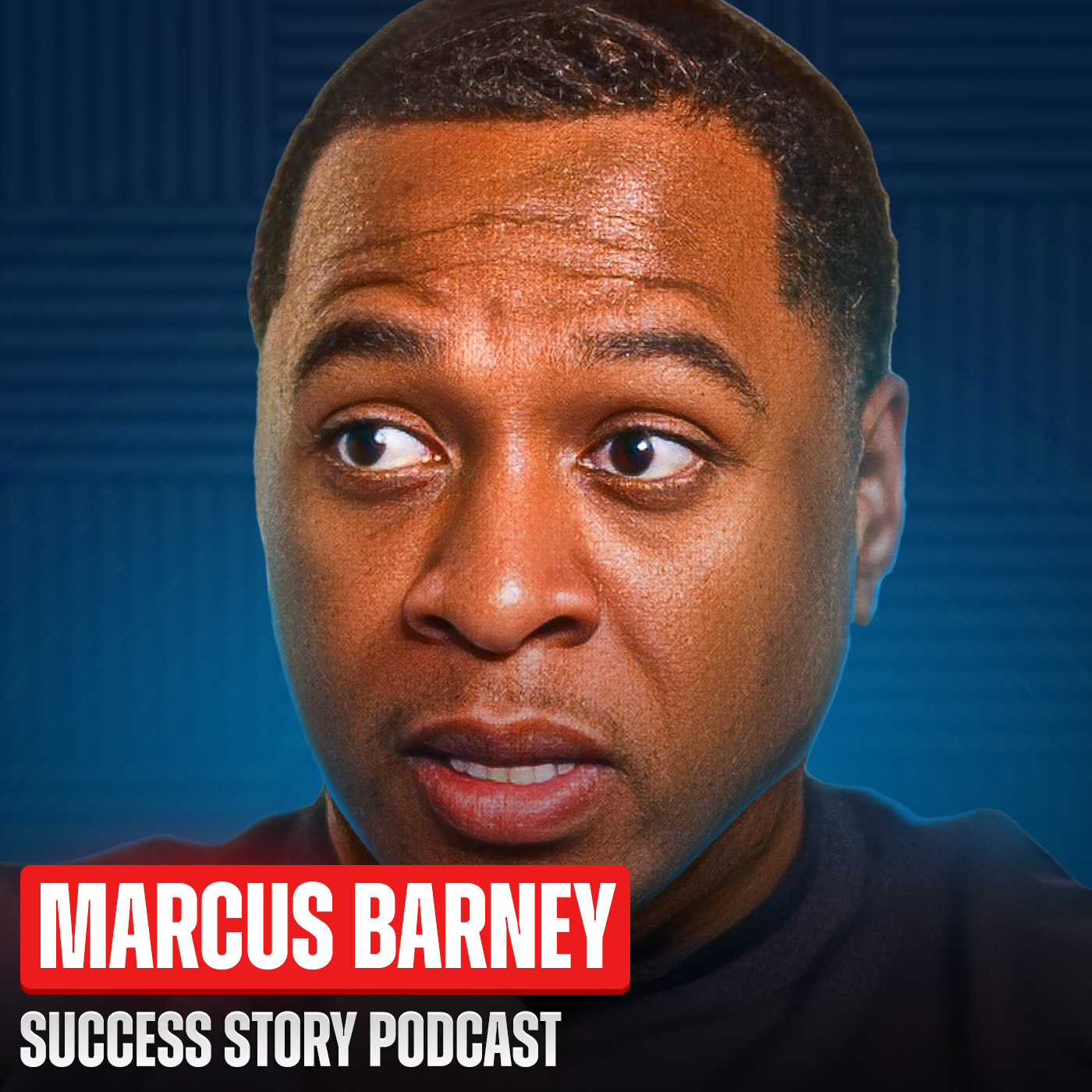
Success Story with Scott D. Clary
The Money Rules No One Taught You About Building Wealth | Marcus Barney - Financial Education Expert
00:11:28
Loading summary
Transcript28 lines
- [00:00]
HubSpot Representative
HubSpot is a success story. Partner. Now, if you're an entrepreneur, listen up. Because HubSpot makes impossible growth impossibly easy for their customers. If you are building a business, you need to get HubSpot. Why? Here's the perfect example. Morehouse College needed to reach new students with fresh, engaging content. A problem that every single business in the world has. But with a 900 page website, even the tiniest update took 30 minutes to publish. Now Breeze, which is HubSpot's collection of AI tools, helped them write and optimize their content in a fraction of the time. And the results? 30% more page views and visitors now spend 27% more time on their site. If you are ready for impossible growth like this, visit HubSpot. Com in this lesson's episode, uncover the.
- [00:50]
Financial Expert
Truth about credit and how it shapes financial freedom or traps.
- [00:53]
HubSpot Representative
Learn how the system is built to.
- [00:55]
Financial Expert
Benefit banks, not consumers.
- [00:56]
HubSpot Representative
Learn why most people misuse credit due to miseducation and conflicting advice. And learn how using strategic credit and business can fuel growth without giving up equity.
- [01:11]
Financial Expert
It's so confusing because you have Dave Ramsey saying, don't buy on credit and now you have predatory credit cards and then America's built on credit. I actually just learned this recently, that credit is actually like a relatively new concept that was like based in the US where in Europe for a long time there wasn't as much credit as there is in the us. Like, the thought of buying shit with not your own money in history is actually, I think, very new, if I'm not mistaken. And nobody knows how to play that game like really, really well. And there's so much conflicting advice. I think that's what really screws people.
- [01:47]
Entrepreneur
And you gotta understand that it comes from a capitalistic place, right? In reality, I believe in credit because it's available to us. So we should know how to utilize tools when you don't have any. But if you look at it on the flip side, is that the way the credit is, is. Is even pushed out and pushed into the community. And for you to be able to finance things, it's not for the benefit of the consumers, for the benefit of the bank, 100%. And so when you start to realize and identify that, you start. For me, I was going, okay, well how do I make this beneficial for me? I understand you guys set us up on a spin wheel for your benefit. I'll allow you to finance this or pay, imagine on, on a mortgage. I'll allow you to pay 30 years first 8 years interest only, year 15 you fall on hard times. We got our interest, and now we foreclose on you in year 15, year 12. But we've already collected the interest. Now at this point, once it starts going to principal, if you ever fall on hard times, you lose the house. Yeah.
- [02:50]
Financial Expert
People don't realize any of this. There's so many levels to this.
- [02:54]
Entrepreneur
Even with auto loans, you have a bad. You got bad credit. Like, okay, who think about it, the car is $80,000. If you have great credit with interest, you'll pay 93,95,000. Bad credit, you'll pay 140, 160,000. Okay. In that buffer for the same car you came in. Ideally, you don't want to help people with good credit. It makes more sense to service people and have people with bad credit. I'd rather you be confused. If I'm going to make double the money.
- [03:33]
Financial Expert
You take advantage of people.
- [03:35]
Entrepreneur
So it's just. That's. That's the importance of it is understanding that this system is not created to help you grow if you're not educated on how to properly use it and navigate it. That's why they say, well, why don't they teach credit in schools? Well, why would they? They don't teach business and how to be your entrepreneur and how to not believe in the school system in school either. It's a circle that we kind of go into where we have to realize that there's. There's pros and cons. The cons are naturally sitting and presented to us more. The miseducation is. Is often much easier to get than the correct information. And that's one of the key things that I like about where I'm at, is that I teach people how to use credit the right way to their own benefit. Don't get suckered into doing it and thinking, oh, this is how I was taught to do it in this room.
- [04:24]
Financial Expert
So teed up for people because we talk a lot about investment on this show. And, like, should you raise money from investors and angels and VCs, or should you just bootstrap? I've never really had a conversation on the show about, like, strategic credit for business. So just frame it for people. Where in their business should they use credit versus bootstrap and fund it with customer cash versus VC versus angel investing? Like, I don't think it's a. Oh, I was gonna say.
- [04:55]
Entrepreneur
Sorry. I don't think it's a bad.
- [04:57]
Financial Expert
I think it's a great idea. But it's not something that. If I watch a hundred videos on entrepreneurship I don't think any of them are gonna talk to me about how to use strategic like credit or is it debt, I guess, for a business compared to all the other types of ways to fund it.
- [05:12]
Entrepreneur
So when you bootstrap, ideally, honestly, if you most entrepreneurs will end up, they'll start bootstrapping. Yeah, Right. And so when they bootstrap at the beginning, what happens is, is that I believe that's the prove it method. Because it's a lot of things that you have to prove to yourself. It's a lot of things you have to prove to your customers. Develop, improve your brand after you bootstrap. And let's just say you get to a point to where you're doing six figures. Yeah, right. You're doing multiple six figures. And you figured out the kinks, right? You went through it. You, you're going through it now and it's going, okay, I have a proven model. I've worked out my customer support support. I, I understand the lifetime value of my customers. I understand customer acquisition, how to get customers. I understand. And I now I understand my business. I'm actually a business owner at this point. I'm not, I'm no longer risky and gambling. And I don't know what's going to happen. I kind of have numbers on the board that I can actually check, have data to be able to look at. At that point, most people go, I'm ready to scale. That's the point. When you're ready to scale, you'll get entrepreneurs that start, I just want to scale. But you don't know your numbers. You don't understand the psychologically, if you don't have a control over your business, you don't understand it. Can't look inside the hood. You don't really, you're not running a business. You're in the hustle and you're just running. And you, you really don't know what's going on.
- [06:30]
Financial Expert
You take that, that's going to mess.
- [06:32]
Entrepreneur
Crushes it.
- [06:32]
HubSpot Representative
Yeah.
- [06:33]
Entrepreneur
But when you have somebody who understands it now, when you deploy somebody else's money into it, you know what your, what atmosphere and what environment you're putting that money into. So you imagine as an entrepreneur and business owner, you figure out, okay, I'm actually profitable now. This is how I make money. These campaigns work for me, these marketing styles work for me, or this yellow pages work for me. This billboard works for me. Okay, now how can I use somebody's capital and be able to put it out? And most entrepreneurs go, I want to scale and if I say, hey, I'll give you $50,000 for 15 of your business, they go 15, maybe 10 or 12 like and they're willing to do a deal. Yeah, but they don't know of, of banks like Marcus through Goldman Sachs and Apple. Right. Like you can get an Apple credit card. Same thing with the Golden Sachs, Goldman Sachs is that you can go and apply for a pre approval. You go apply for a pre approval and it'll tell you if you're pre approved and what you're pre approved for. You now know what you can get access to. You don't even have to get a hard inquiry or apply or do the full application. You just check the pre approval and now you say okay, well here's 25,000. Here's 20,000. I have $45,000 sitting there. If I need it, I get it. Now I put that into my business. Right?
- [07:52]
Financial Expert
You already have the business figured out. That's the difference.
- [07:54]
Entrepreneur
And it's growing and it's working. But you realize, hey, if I had an extra 10, $15,000, $20,000 to put into products or to, to, to be able to expedite and grow my marketing and advertising or to hire more staff to get things out faster, whatever it may be, depending on the industry. You realize you get to a point where you can operate and you understand it. And now I can actually deploy somebody else's money to put gas on something that works.
- [08:21]
Financial Expert
Yeah, I think that's smart too. But plus you also get to hold on to a hundred percent of your business. You're not diluting yourself, you're equity with, with credit. Where did like, I know that sort of your interest in credit came from like failed, failed businesses. That wasn't going so well. Did you get any? Because I, I'm looking, I'm thinking back to like when I was in, in school and I got zero financial education about credit, about entrepreneur. To your point, nothing. Did you have any like education growing up at all? Like is there, why is our education system so messed up? And, and we just don't give kids the tools that they need.
- [09:00]
Entrepreneur
Because I, I honestly think that it's a different, I don't think this is for kids. Right. Because it often comes up like they should put it and teach it in schools. And it's like, no, there's other things that they, that that are more important. Right. About the human development, about self development and actually allowing people to develop versus putting them right into the rat race of finances and dealing with money. Because what we realize and we can even look at adults, once they figure something out or they get miseducated or a misunderstanding, they can stay and live with that miseducation and misunderstanding for 10 years. I know. And if you're not properly educated on how to, how to be cognitive of how to think, how to process, how to analyze, you know, how to use your discernment, teaching people about how to go get access to capital is dangerous for a 16 year old who, who looks online and wants a hellcat who wants to be able to spend money on streaming and he's figuring out ways. You know, now when it comes to financial, when it comes to credit. Right. But now when it comes to budgeting things like that, it's super important. Those are things that need to be taught in school. It's like, how do you actually manage the relationship with money? How do you manage the relationship with money? And on, on a, on a spectrum of not going and getting money from other people, but just how to deal with it, how to, you know, deal with your bank accounts, how to actually look and check. Nowadays we got apps and things like that out there now to tell us all of our, how we're spending, where we're spending at, things like that. But it's like, okay, well now how do we read these things? How do we actually govern it to make ourselves better?
- [10:36]
Financial Expert
Yeah, I mean like we can like kind of outsource our thinking to apps. We still don't do a good job of, of, of managing money. And even some. Now there's, I know there's apps that like show you like, hey, you're spending this much on your monthly subscriptions. And I think those are smart. But I think that, that early childhood education about finance, that's important just to figure out how to like where you're spending, what a balance is, like how much, you know, your personal cash flow. Yeah, kind of. That's really the way that I think about it. And that doesn't exist in schools. But then like when you're older, like credit is important.
- [11:08]
Entrepreneur
I mean there's a mandatory for kids going into college.
- [11:11]
Financial Expert
I agree with that. As opposed to just having like a little booth at the credit card on campus.
- [11:15]
Entrepreneur
No, it needs to be, it's something that should be a prerequisite in college. Not as much high school. So when you think, when I think about kids, I think about high school. I think high school needs to have a very strict, strategic, across the board course and trainings on relationship with finances. Right. To understand it. But I think by the time people get to college. Now it needs to go into actually understanding finances how it works, the understanding credit what it is. Because at this point now you're it's available to you. So coming in freshman year, it should be automatically, hey, you got to take prerequisites on credit. Because what happens is, is that now all the credit card offers start and. And now it's like, okay, I'm just taking things and I don't know any better.
- [11:58]
Podcast Host
Thanks for tuning in. If you found this valuable, don't forget to hit that subscribe button so you never miss an episode. And if you want to dive deeper into this conversation, check out the links in the description to watch the full episode. See you in the next one.