← Success Story with Scott D. Clary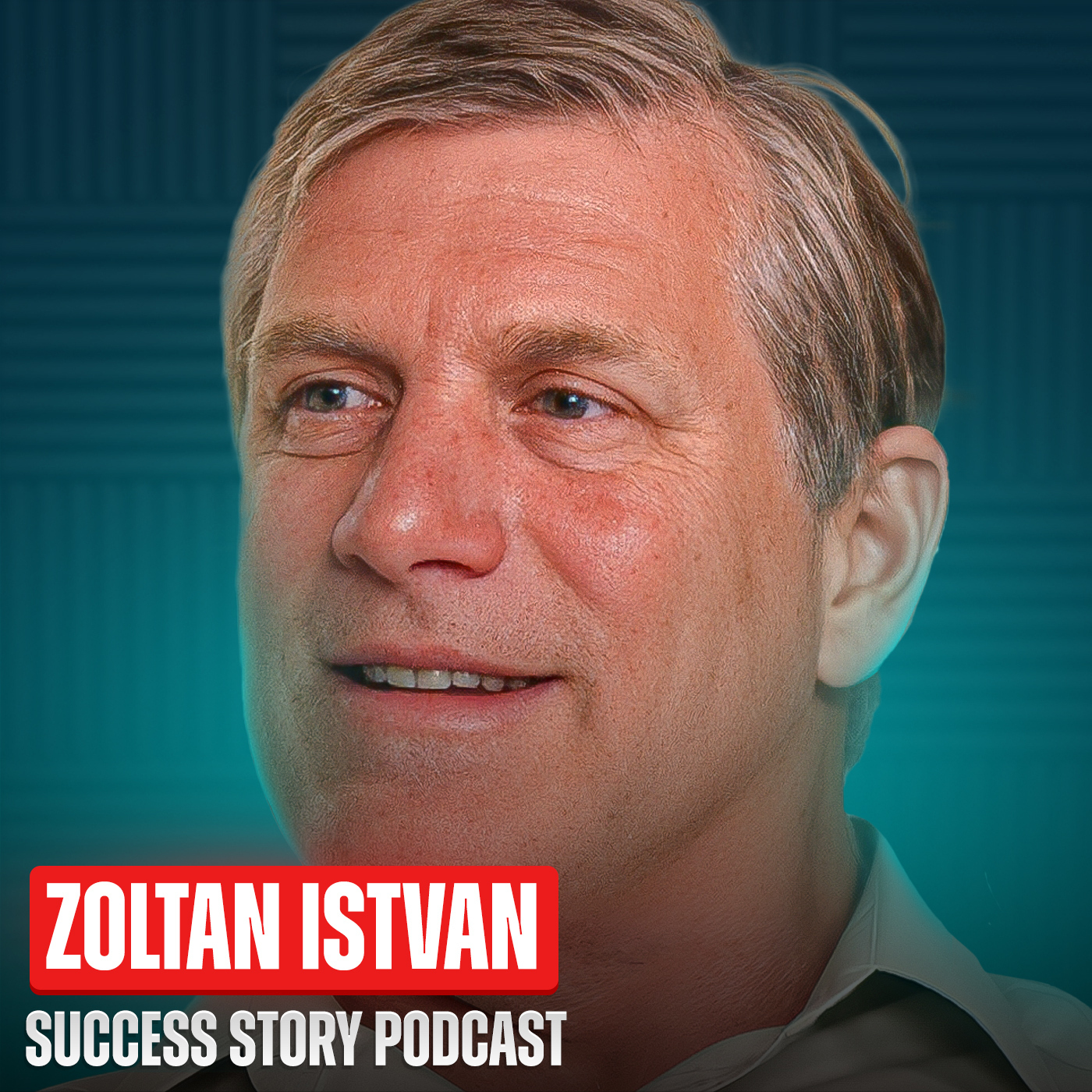
Success Story with Scott D. Clary
Zoltan Istvan - Futurist & Presidential Candidate | How Transhumanism Will Redefine Success and Survival
01:04:00
Loading summary
Transcript118 lines
- [00:00]
Scott Clary
HubSpot is a success story. Partner now if you're an entrepreneur, listen up because HubSpot makes impossible growth impossibly easy for their customers. If you are building a business, you need to get HubSpot. Why? Here's the perfect example. Morehouse College needed to reach new students with fresh, engaging content, a problem that every single business in the world has. But with a 900 page website, even the tiniest update took 30 minutes to publish. Now Breeze, which is HubSpot's collection of AI tools, helped them write and optimize their content in a fraction of the time. And the results? 30% more page views and visitors now spend 27% more time on their site. If you are ready for impossible growth like this, visit HubSpot. Com I have to take a second and thank Northwest Registered Agent for supporting today's episode. Now listen. I know a lot of entrepreneurs listen to this show. If you're an entrepreneur, if you're building a business, you have to listen if you want to get more more when you're launching your next big idea, Northwest Registered Agent lets you establish your entire business identity in just 10 clicks in 10 minutes. For nearly 30 years, they've been the secret weapon for entrepreneurs who want to move fast while getting expert guidance. For just $39 plus state fees, they'll handle your formation, create a custom website and establish your local presence wherever your business takes you. As an entrepreneur myself, what I value most is their one stop business solution. You get everything from formation paperwork to custom domains to trademark registration all in one easy to use account. No more juggling all these multiple services or wasting time figuring out the legal stuff. So don't wait. Protect your privacy, build your brand and set up your business in just 10 clicks and 10 minutes. Visit northwestregisteredagent.com success and start building something amazing. Get more with Northwest registered agent@northwestregisteredagent.com/success.
- [01:56]
Zoltan Istvan
I would absolutely say do not strive to be like Elon Musk or some of the other billionaires. They were one offs and if you train your brain to think you can be like them, you will never succeed.
- [02:05]
Unknown
Zoltan Istvan isn't just thinking about the future. He's trying to upload humanity into it. A philosopher, journalist and former US Presidential candidate, Zoltan is one of the loudest voices in the transhumanist movement, an ideology focused on using science and tech to radically enhance the human condition.
- [02:21]
Zoltan Istvan
I just heard Peter Diamandis yesterday. He said within five years we're going to be uploading Our minds, we don't know which one's going to work. But what we do know is that there's now hundreds of billions of dollars that are pushing towards overcoming biological death. And when you have that much money involved in something, I think there's going to be success.
- [02:36]
Unknown
From writing the Transhumanist Wager to advocate life extension and AI rights, he's constantly pushing boundaries most people are too afraid to even question.
- [02:44]
Zoltan Istvan
Morphological freedom is this idea that you should be able to do with your body whatever you want to do. This is something that goes against the morphological freedom concept. The world has gotten weird and craz. Whether it's politics or this, don't get too involved. It's just on the outside. Worry about your family, worry about your success, but don't worry about the big, giant world. It's going to go on.
- [03:04]
Unknown
In this episode, we explore his bold vision of immortality, ethics in AI and what it means to be human in a world where machines might soon do it better.
- [03:12]
Zoltan Istvan
I think people are underestimating, oh, AIs. It can never replace me. It can. I have no doubt it will start to massively take over jobs in the next six to 12 months. I think the most important thing about transhumanism right now, and I couldn't have said this 10 years ago, but I can say now is that.
- [03:37]
Scott Clary
If you.
- [03:37]
Unknown
Think about some of the more unexpected adventures that you've had in your life, what would be a great story to tell the audience that would really just encapsulate who you are as a person?
- [03:48]
Zoltan Istvan
Sure. Well, let me speak about volcano boarding, because I think that's, you know, one of the, the best things that's ever happened to me. I got very lucky out of college and got a job with the National Geographic Channel right as the mini DV camera was born. And the mini DV camera kind of changed broadcast journalism because instead of carrying around this giant 80 pound device, you could carry around this five pound device and get good quality footage. And so when I had been sailing before in Vanuatu and I had had a chance to see this volcano on Tana, you see this giant face of sand. It looks just like a slope. And so I went back to National Geographic a few years later and said, look, I want to go volcano boarding. I know no one's done it, but I can do it. And I filmed the whole thing and sent it back, and they thought the footage was spectacular. And it launched my career really for National Geographic because what I was doing was a one off for them. And then all of a Sudden I became a real regular journalist for them. And volcano boarding, of course, has taken off since then. All these spewing gases, the danger, molten lava. Roc. But that was a defining moment in my early 20s that really helped launch my career. And to be honest with you, a lot of the credit belongs to the MiniDV camera. Just innovation in technology because it allowed a non journalist person like myself to become a journalist and to become a well known journalist overnight. And so it was a big moment for me in my 20s.
- [05:15]
Unknown
I love that. I mean you, I don't know how to describe it, you think differently than most. I think that's your forte, that is your specialty. Like you think differently. I mean, if you think about other sort of inflection points in your life. So as a National Geographic journalist, you almost stepped on a landmine at one point in your career. I'd love to hear that story if people haven't heard it in the audience. And that was in Vietnam. But that was something that changed your perspective on morality, on human condition, I'm assuming, on life. So, so that was, was. Is that correct? That was the inflection point.
- [05:50]
Zoltan Istvan
Yes, yes, definitely. So before National Geographic I had been a philosophy student at Columbia University, had a great time there and I had learned about transhumanism, futurist stuff and trying to overcome death with, you know, science and things like that. These were all science fiction topics at the time, but they were in the back of my mind. But when I worked in National Geographic, they sent a lot of the young journalists to war zones to kind of prove themselves in conflict zones in order to. That's how you make a name for yourself. And that was kind of the natural back then. And I was covering a conflict in demilitarized zone in Vietnam, so there wasn't a war anymore, of course, but there are landmines everywhere and it's still in these places. They're just desolate, they're dark, there's blown up buildings everywhere. It still feels like a conflict zone. And I was doing a story on bomb hunters where essentially the Vietnamese locals, they are digging up American bombs that were dropped but never exploded. So we dropped like 40 million bombs and, and 10% of those bombs never exploded. Now those things are like eight feet long and they're filled with metal. And if you sell one of them, you can get a few hundred dollars of metal because that's just how big they are. And for a rice farmer in Vietnam, that's like a year's worth of working in the fields. So there's A lot of bomb hunters in Vietnam, but the problem is that people step on the landmines and lose their legs. So it's very much a Jeopardy type of business. And so I was covering this story for National Geographic, and I had a very close call with a landmine where I almost stepped on this thing in the ground. It was a disc. I didn't know it. I was just oblivious. And my guide pushed me out of the way and said, hey, dummy. Kind of like threw me down. Look at that thing. And so later we were like, oh, my God. I almost, you know, I could have at least been maimed and maybe even died. That was the moment, that moment after a number of years of covering conflict zones that I said, you know what? I may be through with National Geographic. I may be through covering conflict zones. I need to do something more science based. I need to do something to keep myself alive. And I knew from previous college in Columbia that there were movements like transhumanism that want to dedicate themselves to overcoming death with science. And so after that moment in Vietnam, I really decided to dedicate myself to one of those movements. And transhumanism, which sounds like a funny term, but really means just using science and technology to overcome whatever the human being's limitations are. I found a method to a way to kind of belong to that movement and use it to push forward my career. But it really was, you know, stimulated by this moment where I almost died by stepping on a landmine. You know, for National Geographic in Vietnam.
- [08:32]
Unknown
First of all, it sounds like not the. Not the. For the. For the rice farmers. That sounds like the worst version of entrepreneurship. I mean, we complain about. We complain about, you know, our quality of life and what we do for money. And that's. That's a insane, ridiculous story. If you think about, you know, a lot of people on this podcast, I find, like, transhumanism, the ideology, to be the complete opposite end of the spectrum of stoicism, which is really just like accepting your own death and using it to, like, fuel your, you know, your ambition and your. And your. And the way that you move through life. What is. What is the. I don't. I don't want to say argument, because it's not an argument. It's like it's an idea that can be achieved. But what is the drive behind somebody wanting to live forever?
- [09:20]
Zoltan Istvan
Well, the main drive, and this is kind of what I discovered in Vietnam with National Geographic, was that I want to live. I want to live because I love life. Everything that I'm Doing, you know, traveling to these different countries, reporting on humanitarian causes. I mean, you love life, you love people, so you don't want to let that go. But the real problem with human life, at least to my perspective and a lot of other kind of people out there, is that it ends. It, you know, it died. We are a terminal being. We are designed and we are. We're kind of a ticking time bomb. At some point, we will end. And, and that's where I really realized something and said, you know, what? Can we change that? And then all of a sudden you're like, wait, yes, we can change it. There are many different ways to extend lifespans. And one day we're going to come to a point, you know, in science, probably the next five to 10 to 20 years, where we're able to dramatically extend lifespans. And once I realized that, you know, having covered conflict zones, war zones, shooting and other places, because I covered many other places in Vietnam, Kashmir, South America, you know, all these other places, and the Middle East, I realized that, wow, we might be able to overcome death. So that, that moved me. That was the moment when I realized I have a goal in life I love.
- [10:37]
Unknown
I mean, when you make it. When you, when you phrase it like that, it's really hard to argue against it. But I think that for a lot of people who haven't studied your work and don't even understand the ideology, it seems like science fiction. Like, it seems like, okay, you're saying 5, 10, 20 years, we're going to dramatically extend life. So for people that have never heard of transhumanism ever, what does that actually mean? Is it disease prevention? Is it like neuralink? Is it. What is it?
- [11:02]
Zoltan Istvan
Sure. Well, transhumanism is just a social movement and has a fun. It's a funny name. It's just an umbrella for a lot of different things like cryonics, immortality, life extension, singularity, thinking, whatever it is. It's just a term that covers a huge movement of scientists and normal people that are pushing to use science and technology to radically extend the human being's life. Now, how would we do that? Well, most people die from organ failure. So, for example, one of the transhuman's greatest cause is working on synthetic organs and 3D bioprinting them. And there have been huge movements. And it's not just, you know, synthetic organs could be pigs organs, you know, which a big giant company in Florida is dealing with, that there's so many different ways of extending life. But the point is, transhumanists want to Stop death through science. Now the other methods are, you know, genetic editing, for example, trying to adjust your cells so they don't age. There's a little thing called the telomerase at the very end of the, you know, DNA. And if you could eliminate that, like the jellyfish, you could live perhaps hundreds of years longer. So there are transhumanists working on that. And then it gets a little bit more science fictiony where it's kind of like some people are working on uploading your mind. And I just heard Peter Diamandis yesterday, a big, you know, the xprize founder, he said, within five years we're going to be uploading our minds. Okay, five years, this is crazy. Uploading your minds. So this is another form of not dying. So it's across the board. We don't know which one's going to work. But what we do know is that there's now hundreds of billions of dollars, especially in Silicon Valley where I live, that are pushing towards overcoming biological death. And when you have that much money involved in something, I think there's going to be success.
- [12:40]
Unknown
I was listening to a couple podcast and one of the hosts mentioned your views were controversial. I don't understand how. Now that I understand what transhumanism is, how living longer and extending lifespan and keeping people healthier, what's controversial about that?
- [12:56]
Zoltan Istvan
Sure. Well, you know, you would think up front nothing is controversial about it, but what really is, is we live in a very religious dominated country. About 80% of the United States believes in an afterlife and believes in some type of God. And around the world it's even higher, around 85%. So the point is that if you believe in those things, then you have to wonder, well, why should humans take the power of immortality or indefinite lifespans? I'm not sure. Immortality? No. You know, most transhumanists don't say we're going to live forever. We just like to think we're going to live 100, 200 years, 300 years. We might be able to control when we die. And if we die, that's really the goal of it. And I think that is controversial to the natural state of things. So if you are a religious person and you hear somebody saying, oh, we're going to overcome death, and you think, well, wait a sec, the whole dichotomy of religion is that you live, you live a good life and therefore you go to heaven and you're judged by God and everything's okay. But if you eliminate that need of the judgment and of God, then where does that even leave religion. And that's where the controversy in my opinion arises from some other people. Just to be fair, other people say, well, death is needed in human evolution in order that new things will spawn. And that's actually a good point. It's very hard to argue against that. The problem though is that even if death is needed to spawn new ideas, I still don't want to die. And I'm not sure that I need to die in order for others to feel like there's some kind of new spring always happening. I certainly don't want my kids to die just because I'm supposed to make way for other people. I think, you know, humans can maybe find other ways to be creative and spawn new beginnings.
- [14:40]
Unknown
I, I agree with that. I'd love your opinion on is the government doing any sort of job in terms of longevity or quality of life? I, I feel not to the degree they should. I feel like we have a sick care system, not a health care system. And maybe that's why you ran for president. But just talk to me about sort of the current state of what the US government, doesn't matter which party, Democrat, Republican. What do they feel about longevity?
- [15:08]
Zoltan Istvan
Sure. Well, let me just say, you know, when I ran for office, and still the number one goal, I would say, of most transhumanists and longevity activists is to characterize aging as a disease for the government, United States government, governments around the world to say that aging is a disease. Because if all of a sudden we say that aging is a disease, it will be treated like cancer, Alzheimer's, like diabetes, and also huge amounts of NIH and other types of funding will go into it. But right now no one wants to say for those religious reasons we talked about before, that aging is the disease. And I couldn't agree with you more. You know, what is the point of living 200 years if the last 15 years of your life is really in pain? And most 85 year old and plus people, it really is dramatically hard. So we do need to invest things. So I think, you know, the government has not invested enough. And I come from a little bit of a libertarian bias with my like to like let you know that the people do what they want to do and hands off from the government type of thing. It's not a party or a political affiliation, anything like that. It's just more, you know, I think I believe in people and entrepreneurs doing thing and not the governor, the government holding them back or putting on regulations. But at the same time, I think since the government has such Deep pockets. It would be very useful if they would stimulate entrepreneurship and people around the world trying to start businesses that would defeat aging. But in order to do so, you're going to have to characterize that and designate that as a disease specifically, like you would cancer. Treat aging like cancer. If we do that, the game will change. Right now, the amount of money flowing into aging related, you know, anti aging stuff is very minimal in the millions. But if all of a sudden we treated it like cancer, we would be putting billions into it. And immediately, probably within five to seven years, you would see a big impact in the everyday American's life.
- [16:59]
Unknown
I think it's so important what the concept of morphological freedom. What is that concept and why is it so important?
- [17:08]
Zoltan Istvan
Sure. Morphological freedom is this idea that you should be able to do with your body whatever you want to do. No one should be able to stand in the way of that. And of course, if you're doing something to your body that is interfering with someone else's body, that's a whole different thing. But morphological freedom says as long as you're not interfering something else or anyone else, you should be able to do with your body what you want. So, for example, I have a chip implant in my hand, but in various states across the United States, even this chip implant, which is just kind of an elective party trick, I can go to, I can trade Bitcoin with it or something, it holds my information, it has a credit card, you know, things like that, you can sometimes scan it, send text messages with it. But in certain states, it's illegal.
- [17:50]
Scott Clary
It's illegal?
- [17:51]
Zoltan Istvan
Yes. Yes, it's illegal. And so I wrote a piece for the New York Times on this because all the states are saying, well, should we allow people to recreationally put in chips inside their body, even if it's just for fun and party tricks? And the answer was yes, we shouldn't allow people to do that because we don't want them to have freedom with their bodies. So this is something that goes against the morphological freedom concept. And you know, generally speaking, transhumanists are a little bit on the edge. They're like biohackers. You know, they're fringe. They're putting stuff in their body, they're trying out new things. We're trying to see what works. And we don't want to be stopped by the government saying, no, you can't do that. You know, if we're not hurting somebody else, we would like to write the experiment with our bodies.
- [18:33]
Unknown
That's interesting. What do you. I mean, so you're an entrepreneur. You've built some businesses, but also, are these businesses sort of focused on transhumanism, on optimizing the human body? I. I heard that you had a. A winery, but there's like a. A nootropic component to this. This wine as well.
- [18:50]
Zoltan Istvan
So.
- [18:50]
Unknown
So when you think about how you live your life, talk to me about the businesses you build, but also talk to me about personally. Like, how do you live your life as a transhumanist?
- [18:59]
Zoltan Istvan
Sure. Well, you know, the. The ironic thing is that I have built a lot of businesses, but they have not really had much to do with transhumanism. So far. Transhumanism has been this thing, because I wrote my novel the transhumanist wager about 10 years ago. It became a bestseller. And then through that, I formed the Transhumanist Party and ran for office for the, you know, for the US Presidency. And that, you know, just got lucky. The media took off with it, said, oh, we have a science candidate running for president. All of a sudden, I sort of became semi famous because of that. But my businesses were kind of boring. You know, I was working for National Geographic. I was getting maybe, you know, six, seven thousand dollars for every three, four, five weeks I was away. But it was coming all in cash, and I didn't really know what to do with it. And at the time, my father was sick, I was, you know, helping to pay some of the bills for him in Oregon. And so I. I said, well, maybe I'll start investing some in real estate up there, since real estate was quite a bit cheaper than it was in California, where I live now. And I started buying fixed rubbers. And then on the office days when I didn't have assignments or, you know, I'd be home for two months at a time, I'd fix those houses up. I'd always had a good knack of tools because of my sale trip. And then I flipped them, and very quickly, I amassed almost 20 properties and stuff. You know, before the. The crash in 2008, I sold the majority of it because I realized things were kind of out of hand, too good to be true. And I.
- [20:21]
Unknown
But you didn't. You. You timed it right.
- [20:23]
Zoltan Istvan
I timed it very right. And I got very lucky. And. And. And then I joined a band with a friend, which is one of the reasons I sold the ironic part. The band didn't succeed. I played guitar. The band didn't succeed. But I had quite a bit of money. And here I was sitting in my young. In my early 30s, as you know, as a multimillionaire. And what should I do with my life now? And this is when I wrote this book, the Transhumanist Wager. And that sort of launched my career as a public Persona, I guess, going around, speaking, talking about transhumanism. Now, though, I have started to invest in vineyards through a company called Zoltan Ishvan Vineyards and Wineries. So we have a vineyard in Napa Valley, as well as a winery. We have a vineyard in Mendoza, Argentina, the first one I bought. And then we have one in Bordeaux, France, a nice big giant one in a winery there, a little chateau. And you know, it's all combined under one company. And while we're, we're our. Our goal with that is to actually put transhumanist drugs called nootropics. These are brain drugs that supposedly make you smarter. Some of my Berkeley PhD friends have helped me out with it. I gotta be honest, I'm not sure drinking wine, even with this makes you smarter, but we're working on it.
- [21:37]
Unknown
It's wishful thinking.
- [21:38]
Zoltan Istvan
It's wishful. We're trying to get better than just no effort. So there's no question here, your cognitive abilities are a little bit better, I think. But we haven't actually come to the solution yet where you drink wine and become super smart, though. We're working on it. But this is the new company that I've been working on and we won some awards last year with our Malbec and Cabernet Sauvignon. And so. So it's my newest company and we'll see where it goes. I'll send you a bottle one of these days. When we have something that works.
- [22:03]
Unknown
Yes. When you think about. I think that when I look at what you've taken on in life, I mean, you were a respected journalist, you did run for presidency, you wrote best selling book, you are a successful entrepreneur. I know that you speak on a lot of different, very technical topics, but just in terms of like a quick pivot to a mindset that's guided you throughout your career. When you see somebody who's so successful in so many different categories or different industries, there's something about the way that you think or the way that you operate that drives you. What do you think that thing is for somebody who's just starting out on their journey?
- [22:40]
Zoltan Istvan
Yeah. I mean, that's such a weird secret. And I think about it a lot. So, I mean, not to pour water on this idea, but I think a lot of it is to some extent Luck. But there's more to luck than, I think a lot of people realize. You're going to get unlucky and get lucky in life, but when you get lucky, you got to capitalize on it. And when you get unlucky, you just got to throw it behind you and say, hey, man, I screwed up. And this is a key for entrepreneurs. You know, you start 10 businesses, you got to know that seven or eight are going to fail. But if two start gaining traction, you put everything, your heart and soul into that because you get a little bit lucky, and also that luck doubles, and then it quadruples, then it's exponential, and pretty soon you're dealing with something that's 100 times what you started with. For example, when I started my real estate business, I didn't really think much that this was going to be a business, but all of a sudden, you know, I just had an investment here, a property there, a property there. And pretty soon things started booming, things started doubling, and then things started quadrupling. And, you know, I just happened to be very lucky that there are things, but I recognized that I was being lucky, and I recognized that this is the moment. And I think this has happened actually recently to some of my friends in transhumanism who are big supporters of cryptocurrency. You know, I was like, look, I think you're getting lucky, so this is your moment. And, you know, but a part of being lucky is also realizing that the luck's not going to be there forever. And so you need to know when to sell. And another thing I'd say beyond just, you know, capitalizing on luck is don't be too greedy. Most people will get further ahead by being successful, but knowing when to get out, starting again, being successful again based on that, and doing that a couple times, and pretty soon you're find yourself, after a few decades, very successful. I have never had any huge home runs in my life, but I have had solid base hits again and again and again. And very quickly, I found myself dramatically wealthier than when I was in my 20s, in my 30s. Then something like Covet happened, and I still had a ton of properties, and again, they doubled.
- [24:43]
Unknown
Yeah.
- [24:44]
Zoltan Istvan
You know, and I think the key is to just. Now, some people like Elon Musk or whatever, they. They hit a home run. It's a grand slam, and they got, you know, they go. But I think the majority of us can't necessarily go for that all the time. You have to be a little bit realistic. You have to be realistic. Not only that it's not just money too. It's in your relationships, your friendships and how you deal with things. Don't always bat for the bleachers. Sometimes a second base hit can be really good, especially if you know you can hit a second base hit again and again and again and eventually find yourself even further ahead than having been the person who swung for the bleachers. And I know that doesn't sound like very exciting advice, but I have found myself more of a traditional person watching my wealth grow every time. And now by the I just turned, you know, 50 recently and all of a sudden it's like, wow, how did I become an 8 figure person? How did that happen when I really haven't been working for the last 20 years? But it just happened to be that there were smart investments, never too greedy. And here I am, quite happy about it.
- [25:46]
Scott Clary
Today's episode is brought to you by Vanta. Now listen up. This matters for your business. In today's digital landscape, security isn't optional, it's essential. Without it, deals stall, sales cycles stretch on, and scaling becomes very difficult now. Why? Because investors, customers and partners all expect businesses to demonstrate strong security practices before they commit. If you can't prove trust, you lose opportunities. So whether you're a startup founder trying to land that first big client or an established company scaling your security program, Vanta helps businesses of all sizes prove that they're trustworthy by Automating compliance across 35 frameworks like SoC2, ISO 27001 and HIPAA, the exact certifications your prospects are demanding. Here's why you need to pay attention. Vanta gives you back precious time that you're currently wasting on compliance. Their platform automates up to 90% of the tedious compliance work. It helps you respond to those endless security questionnaires up to five times faster. And it connects you with experts to get your security program running immediately. The results speak for themselves. A recent IDC report found that Vanta customers achieve over $535,000 per year in benefits. And the platform pays for itself in just three months. So you're going to join over 10,000 global companies like Atlassian, Quora and Factory who use Vanta to manage risk, improve security in real time, and don't miss this for a limited time. Only my listeners can get a thousand dollars off Vanta. That's real money back in your pocket. Visit vanta.comScott right now before this offer expires. That is. V a n t a dot com Scott Vantage Prolon is a success story Partner. Now, long weeks and busy weekends can leave everybody feeling depressed and tired. We work non stop and that's why I love Prolon's five day fasting mimicking diet. I absolutely love this company. Let me explain how it works. Basically, they have a fasting mimicking diet that rejuvenates you from the inside out. They deliver plant based soups, snacks and drinks to keep your body in a fasting state while giving you the nutrition you need. And when your body's in a fasting state, this triggers cellular renewal and it actually works. This is why I've loved intermittent fasting for so many years. This is the magic of Prolon. And the exciting news is they just launched their next gen five day program. It has all the benefits they had before, but now they have 100% organic ingredients in all their foods, better taste and ready to eat meals. They make the whole process easier. I tried the original prolong program. I feel incredible whenever I do it. I personally can't wait to try this new and improved version. And if you've never tried them before, you're in for a treat because the.
- [28:32]
Unknown
Old one was great.
- [28:33]
Scott Clary
I can't even imagine how good this new Prolon five day program is going to be. And for a limited time, Prolon is offering success story listeners, you guys 15 off site wide plus a $40 bonus gift. When you subscribe to their 5 day programs, just go to prolonlife.comclary to get your 15 discount and your bonus gift.
- [28:53]
Unknown
Prolonlife.comclary I think that a couple ideas to pull out of that and and I'm actually going to tie it back to, to the current state of technology and opportunity for entrepreneurs. One thing that you mentioned was like when something works, you put all of yourself into it. And I'm curious if you see with younger entrepreneurs. I've spoken about this a lot on this podcast. A lot of them are outsourcing their thinking or they're looking for quick wins or they're looking for instant gratification. And I think they have a lot. I think they, I think that because of the environment that a young entrepreneur grows up in, I think it's harder for them to put in the time required for them to see the returns for them to know if they should go all in on something because they're looking for instant gratification. This is what I believe. I believe that this is why people the barrier to entry for entrepreneurship has never been lower with the technology we have access to. But at the same time people's attention has never been shorter and I think that that is actually hurting significantly. And if you had the same attention that you had when you were 20 and you apply it to something, plus you leverage technology that we have access to now, you're unbeatable. But I don't think that's the norm. Do you agree with that?
- [30:08]
Zoltan Istvan
I do, I do. I mean I am seeing huge cultural changes and I, you know, for your audience to know, I have an 11 year old and a 14 year old daughter and I'm thinking about what are they going to do? Will they take over my wine business, the, the real estate endeavors? Because we have properties now around the world as well and manage them or, you know, I, I don't know. Their attention span is definitely different than mine. Their, their way of doing things also, you know, attention media, social media, you know, there's this whole different side of things where like you can make a lot of money or a lot of success based on just becoming somebody, but that, that only works for a very small few amount of people. I'm not sure in the AI world the other 800 pound gorilla in the room that's going to continue to work. So I agree with you. You know, everybody, every generation faces a different, you know, I guess challenge. But it does seem like it's becoming more difficult for somebody just out of college to, to break into it and they have to be more focused than.
- [31:09]
Unknown
Ever to be so focused. But like if they can listen to you and, and they have to be focused and they also have to stop listening to like the social media entrepreneur gurus and, and stop idolizing people like an Elon Musk. Nothing that, not. I don't care what you think about Elon, but know that to be an eight figure person you don't have to have, you know, rockets going to Mars. You can have a very good life just building very boring businesses.
- [31:38]
Zoltan Istvan
Totally. And I would absolutely say do not strive to be like Elon Musk or some of the other billionaires. They were one offs. And if you train your brain to think like you can be like them, you will never succeed. 99.9999% will never succeed. However, if you get to San Francisco, you realize like, wow, a lot of people are eight figures or pretty close to it. A lot of people are going to nice resorts and doing this and living the life and you know, sending their kids to camps and whatever you want to do, which is a great life. And that's achievable. That's very achievable. If you work hard and you're smart about things. I think it's actually very dangerous to try to strive to be super wealthy like a billionaire. I think people don't realize that. First off, a lot of that is handed down, and a lot of that is super lucky or just coincidence that has happened. But in America is still, in my opinion, very much the American dream. If you want to work hard and you be a little smart about things and you put your mind to it, you can still accomplish an enormous amount. And I guarantee it that you could probably end up a multimillionaire unless something terrible happens.
- [32:45]
Unknown
I agree completely. If you think about sort of how all the things that you've learned about longevity and transhumanism have sort of impacted your worldview, does that change how you operate in terms of your own life? I mean, like, there's a limit on life right now in 20, 25. Maybe not in five or ten years. We'll see. But does it change how you operate in your own life in terms of what you take on or how you live? Or does it change how you raise your kids? Or what I'm trying to figure out.
- [33:18]
Scott Clary
You.
- [33:19]
Unknown
What does transhumanism mean for you today?
- [33:22]
Zoltan Istvan
Well, I think the most important thing about transhumanism right now, and I couldn't have said this 10 years ago, but I can say it now, is that we are in the cusp of some major discoveries, whether it's through genetic editing or different drugs coming across the board. But we will start to reverse aging here within 10 to 25 years. So what's most important for people that are 50 and above, like myself, is to try to remain healthy, because the transition is coming. But if you get cancer in five years, you're not going to make it, and you're going to miss the greatest opportunity you've ever had, this ability to maybe live 50 years longer, 100 years longer, and entered like, let's say the Star Trek era or the era of going to Mars and things like really amazing times. So it's really important. That's the one thing that I've taken away. It's really important right now to start treating your health as a top priority, not because you're not going to die, but because you're. You don't want to miss out what's going to happen. It's getting so crazy out there. It's getting so wild. Technology is changing so rapidly. I want to see what happens. What a terrible time to. To die now, right? As you know that the world is on the cusp with artificial intelligence, with overcoming biological aging, with, you know, spend sending rocket ships to other planets. What a time to be alive to see what happens. Really exciting.
- [34:42]
Unknown
It's super exciting. And I guess the question really was like, is there, is there daily practices or even, I mean, peptides or some sort of technology that you think is. Is going to be beneficial people today and not have to wait five years that you think already expands your.
- [34:58]
Zoltan Istvan
There are a number of different, you know, drugs out there and things like that. I got to be honest. I know like Ray Kurzweil will take 80 pills a day and. And Brian Johnson of the don't die movement also does all sorts of things. Things I am not doing that. It's a little boring. I just believe very simply. I exercise every day religiously, period. Whether it's running or surfing or whatever I do. I try not to eat too much of anything in one direction that's not too much meat and not too much fats and not too much sugars and just try to keep it where it is. And I do drink, which is probably my single greatest vice. And you can see it sometimes in my tummy. And that's probably my biggest problem. I wish I could stop, but you know, I am in the wine business. That's part of what's going on.
- [35:43]
Unknown
You're excused.
- [35:45]
Zoltan Istvan
But you know, these are things that right now, for me, the main thing is just to remain healthy and active and try not to be too weird and fanatical about it. Certainly there are biohacking techniques out there that can dramatically help your health. And if you can figure those out what they are for your genetic blueprint, that's great. But for me it's really just about, you know, sleeping well and also I think, trying to remain stress free. The world has gotten weird and crazy. Whether it's politics or this. Don't get too involved. It's just on the outside. Worry about your money, worry about your family, worry about your success. And if you're writing a book, worry about that. But don't worry about the big giant world. It's gonna go on.
- [36:26]
Unknown
We're not even supposed to be aware of all the trauma going on in the book.
- [36:31]
Zoltan Istvan
We never were for, you know, genetically speaking, evolutionary speaking, that was never a part of the program. We were just our immediate tribe. And now all of a sudden we all take, you know, let's take place in global politics. My voice matters on Twitter. It likely doesn't, you know, so I tell people, back off, man, for your own safety, your own health and Also, just because it gives you more energy to focus on things that matter. Your friendships, your family, your, your kids, your parents, your money, your businesses. I mean, things like this are really, I think people forget that maybe. And I want to say also that the government is designed to make you want to be so involved in this circus of life. But the real life is in the people you love, the businesses that you're creating, the things you're building with your hands. And this is what matters most to me.
- [37:22]
Unknown
What technology are you most excited? We can talk about AI, but that's like, kind of like the easy answer. What other technology are you most excited about?
- [37:29]
Zoltan Istvan
Sure. Well, you know, I mean, I think the, the coolest technology out there really right now is the creation of synthetic organs. We all could become super Olympic athletes type people if they can get us a synthetically created heart. A heart that is like, like, you know, a heart better than Michael Phelps of swimming, you know, and, and they are working on this. There are multiple countries, companies around the world, multiple universities that are doing this stuff. Same thing with the eyeball, you know, they're working on the synthetic eye that can already see better than you. So some, you know, blind people in the United States have eyes that have better telescopic vision than you and I will ever have or were born with. And soon that telescopic eye, you know, that robotic eye is going to be able to transmit, for example, social media, or we might be able to do this interview directly. In fact, they're already experimenting with these exact technologies in Silicon Valley right now. They're just not on the market yet. And I really believe that that's some of the stuff I'm most excited when you talk about transhumanism, that's really the next level. So probably in a year or two, it depends on how regulations go. But there are people working on robotic arms that tie into your neural system that will be as functional as your arm in terms of throwing a baseball or playing the piano, and eventually be even better ones that can heat up your coffee just by holding your coffee cup. And there are, again, there are companies already working on this. So the question is, how do people adapt to it? Or do they want it, you know, in the marketplace? And it does, the FDA and regulations.
- [39:02]
Unknown
And all this, which is really gonna.
- [39:03]
Scott Clary
Be the biggest blocker.
- [39:04]
Zoltan Istvan
Yes, yes. And let me just say, though, this is where China puts on a good amount of pressure for the United States, because Chinese have a culture that they're not so opposed or they don't think a lot of this stuff is so weird. They're like, oh, an upgrade, fine, I do it. They just, they've been doing, it's part of their kind of Confucius Buddhist culture. Whereas America has to realize, even though we're leading the innovation in these things, it's often other countries that push us to accept innovations that our culture or our people might. You know, if you take a robotic arm to somebody in let's say, Kansas and say, oh, here I have a robotic arm, they're say, oh, this is stupid. I don't want to be anything like that. Whereas I think, you know, maybe Florida, California, we're more open minded like that. We'll be like, you know what, is it useful? If I'm in construction, will I be able to get more work done so I get higher pay? Well, if, if that's the case, then yes. So I think that's how you have to sell these things is, is really to consumer, you know, through a consumerism method. And also just capitalism. Let capitalism run its course. And you people say, I want that because, honey, I'm gonna make more money, we'll have a bigger house or whatever it is that you want to do.
- [40:04]
Scott Clary
I just want to take a second and thank Cornbread Hemp for supporting today's episode. Now, Cornbread Hemp CBD gummies have been this really nice addition to my wellness toolkit. I don't use them every day for just when I want to unwind after those extra busy weeks, but they're perfect for those moments when you want to take the edge off and just find your balance. Really just shut off from work. And what makes them special is how Cornbread Hemp crafts them. They only use a flour of USDA organic hemp plants. That's the best part for the purest, most potent experience. No fillers, no artificial fluff, just clean full spectrum goodness and delicious watermelon, berry and peach flavor. I keep them in my nightstand for those moments when I just need a little extra help relaxing. And I love how transparent they are too. Every batch is third party lab tested so you know exactly what you're getting.
- [40:52]
Unknown
And they put together a special offer.
- [40:53]
Scott Clary
For all success story podcast listeners. All listeners can save 30% off their first order. Just head to cornbreadhemp.com success and use code success at checkout. That's cornbreadhemp.com success code success for 30% off your first order of these amazing gummies. FreshBooks is supporting today's episode.
- [41:14]
Unknown
And if you've ever wondered how successful entrepreneurs stay on Top of their finances while growing their business business.
- [41:18]
Scott Clary
The answer is FreshBooks.
- [41:19]
Unknown
The numbers don't lie. Over 30 million people have chosen FreshBooks.
- [41:22]
Scott Clary
Processing more than 60 billion in invoices.
- [41:24]
Unknown
And saving an incredible 192 hours every year on accounting tasks. Think about it, that's nearly eight full.
- [41:30]
Scott Clary
Days you could get back to focus.
- [41:31]
Unknown
On what really matters.
- [41:33]
Scott Clary
Growing your business.
- [41:34]
Unknown
FreshBooks is more than just accounting software. It's your all in one financial command center. Create professional estimates, track time, automatically bill clients and capture expenses on the go.
- [41:43]
Scott Clary
Plus it integrates seamlessly with over 100.
- [41:45]
Unknown
Business tools you already use. All backed by award winning customer service. If you're ready to stop drowning in receipts and you're ready to stop chasing down payments, here's what I want you to do.
- [41:54]
Scott Clary
Head over to freshbooks.com to start your.
- [41:57]
Unknown
30 day free trial.
- [41:58]
Scott Clary
No credit card required. And for all you success story listeners out there, I've got something special. Get an exclusive 60% off for six months when you visit freshbooks.com pricing offer.
- [42:09]
Unknown
Transform your business with FreshBooks today.
- [42:11]
Scott Clary
That's freshbooks.com pricing offer for 60% off.
- [42:16]
Unknown
A device like Neuralink, a lot of what you're talking about is I guess mission critical to a degree if you have like if you have a synthetic heart or synthetic eyes. But neuralink is tapping right into your brain. So I think that that's what somebody who is stressed about, or maybe not as big a fan of neuralink is saying. Well that's like that is the one part of your body that I mean, do you want tech in that part of your body? So I mean, I guess I can ask like if you're a fan of neuralink and the concept or are there parts of the body that you think transhumanism should stay away from?
- [42:52]
Zoltan Istvan
No, I think transhumanism should go for every single part of the body. I think though, if you ask me, am I ready to upload my mind or to take on a neural link, I'm ready to experiment it just a little. I want other people to do it first. Or like if you say would want my child to do it, do it. I would only want my child to do it right now if it was a medical necessity. Because I, I am worried about these things. Just like I would be worried about the COVID vaccine, you know, I mean I'm no longer a big trusting person in terms of pharma companies and this like that. Don't get me wrong, I still think vaccines, I still will take them, but I am Definitely a more discerning individual after what I've seen politically in the last five to 10 years. And the same thing with neuralink. I don't want my brain to be messed with. I've done some brainwave feedback stuff and it, it's like it can almost make you feel high or something. And afterwards I was like, this is a little weird, I feel a little weird. I wasn't so sure. Like I don't want people messing around with my neurons because you don't know how that's going to, how that's going to go. At the same time, I think if enough of us do it and there's enough of a basis to say, hey, this is great, you get to tap into AI, you can have Google, Google Maps in your head, you can do, do interviews like this in your brain, you know, mind to mind, then I think I would definitely want it and would love to do it, but I'm not going to be first. To be honest though, if you had done this interview 15 years ago, I probably would have said I want to be first. So again, maybe age is actually changing this a little bit in me. I, you know, we talked about this earlier with how do you treat things differently? Especially now that, you know, if I'm a father, you know, do, would I do these things because I have children, I want to take a little bit of a step back and let others do it first. But I still am right on the ball with wanting to do it over, over time. There's no question that the biology of the brain has to be replaced. It is biology, it's frail, it's designed to die. All the cells will go and machine interfaces, machine brains, ones and zeros will ultimately be the ones that triumph. It might be 100, 200 years in the future, but there's no question that, that AI and that type of interface is going to be far smarter than us. Therefore, we'll want to be tapped into it. We'll want to have a neuralink system where we can connect to it. We may want to get rid of the biological side altogether. I would, I would say so a couple ideas.
- [45:12]
Unknown
I guess the first question is going to be a multi part question. I'm sorry, but there's a lot, there's a lot that I think comes with this idea. So first, what happens when we've completely replaced ourselves with technology? Where does the robot begin in the human end? I think that's an interesting idea. And secondly, I am curious about what your vision of the future is. If everybody is Optimized on top of AI. If the human is so optimized that everybody is the same IQ and lives forever, what is your ideal version of a future? Are people working? Are we just living in this beautiful society where everyone's just enjoying quality of life and nobody actually works on tasks anymore? That's kind of like a two part, like where you think we're going.
- [45:58]
Zoltan Istvan
But the second part of the question fascinates me because first off, I'm not sure where the first part of question, I'm not sure where the cyborg starts or ends. This is a personal decision for every person to make. I've often said that once you make your body more than 25% synthetic organs of some sort, you probably could say, well, I'm definitively a cyborg, but what does it mean to be a real transhuman being? Well, probably more than 50%. So we're not even really close to that. At the same time though, how do you know your second part of the question? How do we keep society so that it's not just everyone's the same and it's in the doldrums? Well, I guess, you know, we have a ton of car, like for example, the, the car world. There's millions of different types of cars out there and millions of different affordability issues. And as a result, the freeways are very, very diverse in terms of what you can buy. So I see the, you know, the idea of human enhancement, or you know, what we call human body shops putting on like robotic arms, robotic eyes. It's still going to be very diverse, almost like software is or AI is right now, China has is, Russia has is. There's always going to be different variants. One's going to be better than the other, one might be more affordable given what your price tag is. So I don't see equality as being an issue. I do see though, lives continually improving using these types of technologies. I think if you look at the graph of science through whether it's vaccines or whether it's just, you know, overall scientific, you know, innovation, our lives have gotten better. You know, less women die from childbirth, less people die from the flu. You know, over time it's just skyrocketing in how long the average person can live. And that kind of quality, that improvement of quality of life will continue with all these radical enhancements that humans will get. And therefore everybody will be dramatically happier than their, let's say, great grandfather was. And that's good for me. But certainly I don't think it's going to get boring. We're never going to be equal. We're always going to be at different stages. And I don't want equality. In fact, I want some people to want to be better than others. And I want competition in the system because that's what will continually propel us all forward.
- [48:04]
Scott Clary
I agree.
- [48:05]
Unknown
I think that competition is core to the human experience and innovation. If there's no competition, then I think innovation dies.
- [48:13]
Zoltan Istvan
Totally dies. Totally dies. And I, I have a feeling that AI, however we incorporate that into our lives, will also have competition in it within itself, as, as it, you know, it wants to be better than the other, or program to be better than the other. Whatever it is, I don't see competition going away anytime soon and I'm very thankful for that.
- [48:31]
Unknown
We have to talk about AI briefly. I know that. I mean, even in your own life. So U.S. navy officers, they visited your home to talk about AI. So it's obviously top of mind for the government. Obviously. But not just in commercial or a consumer context, but in like a defense and threat context. What do you think the near term future looks like for AI in terms of global power dynamics, military capability? Forget me. Using it to write a tweet with ChatGPT, like the real implications of it short term and then maybe long term after we achieve AGI?
- [49:09]
Zoltan Istvan
Sure. Well, you know, it's funny because the short and long term are getting closer together. So I was just here at this Florida university speaking on AI just yesterday. And I gotta say that everybody, all the professors also that were there and speaking as well, we are all scared out of our minds of how quickly it has come about. You know, when I was recently at the University of Oxford doing a graduate degree, I was studying under Nick Bostrom, who's one of the leading AI professors in the world, and, and we had an AI module and nobody was speaking about ChatGPT yet because they didn't know it existed. These are the best professors in AI in the world. Eleven days after that module at Oxford ended, ChatGPT was launched. So it really showed me that very few experts have any kind of idea of what's happening with AI. But that said, let's just take a look at what, you know, you get from some of the CEOs who definitely do know, like Sam Altman and whatever. You know, it is growing so fast. It's getting better at writing, it's getting better at thinking. Eventually I think it will develop some type of sentience that's kind of comparable to ours. I have no doubt it will start to massively take over jobs probably happening in the next six to 12 months. That's jobs of lawyers, accountants. I mean, already as a journalist I have, you know, use it all the time and eventually it would, you know, I have a name that people need, so that's why I might survive later. But if you're just a normal journalist without a name, you know you're going to be replaced and you're seeing it already. You're seeing all these layoffs. Outside magazine just the other day, I mean, some big publications, but it's going to go beyond that. It's going to go to the nursing fields, the policing fields. I was just out watching the lifeguards and I thought, oh my God, AI could do such a better job of scanning for people drowning than one lifeguard who keeps looking at people and that these things will, and maybe not replace lifeguards for a while, but eventually everything will be replaced. So when, probably within three to seven years, a huge amount of the workforce, upwards of 50% will be challenged with AI in the next six to 12 months, you will start seeing mass layoffs. You're already seeing mass layoffs right now in Silicon Valley. You're seeing it because they know that within 12 months most coding will be done by AI. And already quite a bit of coding is being done, so there's a lot less need for software programmers. And here they said, last five, ten years, oh, learn to code, that's your future.
- [51:35]
Unknown
Well, I've seen the graphs and like, the drop off for developers is insane.
- [51:39]
Zoltan Istvan
It's crazy. It's, it's absolutely insane. And I think people are underestimating, living in la la land, thinking that, oh, AI is, it's maybe not just a fad, but it could never replace me. It can, it's going to be dramatically smarter than you. In fact, I, I would go on the record and say within 24 months, you would be better to have a holographic vision of Zoltan here with an AI brain going through all my different podcasts and interviews and having that AI answer your questions. And that AI would be smarter and more eloquent in answering the question, this hologram than I am, than myself. So I, why should I even send my real yourself to muck up things. Yeah. And mispronounce things.
- [52:20]
Unknown
Yeah. And then, you know, AI doesn't have to deal with.
- [52:22]
Zoltan Istvan
Yeah.
- [52:23]
Unknown
Like, oh, I had a bad lunch, so my energy levels aren't great.
- [52:26]
Zoltan Istvan
Of course, of course. I was just driving traffic, I was a little frantic, you know, and this is, this is probably within 18 months, I could say that that kind of thing will already have happened. And I worry. I've just been trying to enter into a PhD program in England right now. And, you know, I talked to some of my professors and they said, you know, we know that the PhDs will be better written by the time you finish by the AI than it is you going through the system. So are you sure you want to do this? But, you know, I mean, yeah, but.
- [52:57]
Unknown
You'Re not doing it for. Of course you're doing it for you. Yes, but that, that will be now an issue for the professor. How do I know if this paper, this thesis, had been written by a student or by AI?
- [53:08]
Zoltan Istvan
Of course. And that's going to be very difficult to determine. And a lot of why I'm doing the PhD is because I feel like it fits my classical view of the world. Thankfully, I'm not having to do it for money. But if you're trying to do this for money to get a job later. No, no, no. There's no job later. When an AI can write, it just hire the AI. And this presents a huge problem for intellectuals. We're not just talking about somebody, you know, anybody off the streets doing any kind of menial job. We're talking about the top, top to the bottom, affecting everybody. And it's, it's going to be incredibly challenging three, four years in the future. I don't, I wouldn't be surprised. We have mass riots and real issues against people that are creating the AI because it's going to be taking so many jobs and challenging so much.
- [53:54]
Unknown
Well, you can, you can now add IQ points to yourself overnight.
- [53:58]
Zoltan Istvan
Right?
- [53:58]
Unknown
Like, that's, that, that there's never been a tool that has allowed you to do that to the degree of, I mean, like, what's, what's the tool? Before spending hours reading books, I guess, in a library over a period of time. Now I can answer a question in the next five minutes.
- [54:14]
Zoltan Istvan
Yeah, no, it's, it's, it's a changing world. Very bizarre. I, I don't know exactly. I used to feel like I had a good vision of the future, but now it's grown darker. It's grown a little bit more dystopian. And I am afraid I'm no longer promoting or pushing AI like most transhuman Loomis had done for many years before. I'm now saying, hands off. Let's be a little bit cautious. Skepticism is what we need. And I also say to any entrepreneur right now, start your business today. Do not wait, do not go to college anymore to do something. If you have a chance to make money, make it today. Because I don't know what's going to happen to the economic world in five years. But I do know that if you have a chance to make some money today and make an investment and start a business business, do it now rather than put it off and go to college or something. Because who knows if college is going to be even helpful in five years time. But making money today will be at least something you'll have in your back pocket when the world is, you know, whatever it is. Yeah, whatever it is.
- [55:12]
Unknown
One last thought on AI and I mentioned this and I just want to get your take on it. So right now we're talking about AI replacing jobs that impacts livelihood.
- [55:22]
Zoltan Istvan
Good.
- [55:22]
Unknown
But on a global scale like Global Power Dynamics. We saw deep sea coming out of China. Now there seems to be this AI arms race. And I think that the biggest issue with an AI arms race is that it's nation state versus nation state trying to sort of outpace each other. But at the same time there's, there's bad actors that are not nation states that are also developing AI and it seems like we're only us is only focusing on what China's doing, not what terrorist group that nobody's even focusing on is trying to develop. So what do you think happens in five years with Global Power Dynamics? Do you think that nation states have to work together or do you think that there's going to be, I don't know, this, this, like where does it, where does it go from here?
- [56:08]
Zoltan Istvan
So I mean, I can tell you the conspiracy theories that I've been hearing at the conference recently. In fact, I had been thinking them forever. So first off, we have to beat China in AI because the way AI works is that if you have a stronger AI, you can just send the other AI that's being developed a virus and that will take that other AI down.
- [56:26]
Unknown
There's no collaborative, there's no option for collaboration.
- [56:29]
Zoltan Istvan
It would be great to collaborate, but that just hasn't worked. It hasn't worked when it came to nuclear weaponry. We just, our cultures are way too different. And one of the conspiracy theories going around the conference right now is that one of the reasons that again, this is not politics. I'm not going to say anything in a political way, but there is a, a lot of in from Oxford down have said that the only way to stop AI is to unify the world under a single global government where you could then have your hands in everyone's pocket saying, nobody can develop AI. Because I think the development of AI is the most dangerous thing humanity has ever faced. And the reason is, is we're going to create a superintelligence that can do things to the human race that we can't imagine. It may not be a Terminator style thing, but it might be things like AI decides one day to stop every single car on the road. And most of them are smart cars, so it can do so. And it may do things like stop all the power, all your refrigerators, WI fi, anything. It can send us back to the 70s, essentially, or the 60s, where everything is analog. And so a lot of people think that even some of the Trump dealings right now with Russia have to do with him just going to make an ally out of Putin, and then they're going to go after China and kind of create a world dominance where we can then say, police everyone to not develop AI, because you cannot just let AI continue to develop, whether it's the China, whether it's United States, whether it's the bad market actors. If somebody keeps working towards superintelligent, at some point that AI becomes smarter than us. And when it becomes smarter than us, it becomes a real challenge to the human race. What if it chooses it doesn't like us? What if it says, you guys are using all the resources on planet Earth? Those are my resources, AI's resources. You guys are done, you know, and just stops the world. So the conspiracy theory at this conference was that there is a push afoot for Trump perhaps to become an emperor in order to stop AI, not because he wants to be an emperor, but just to stop AI. And what's really interesting is this is a lot of PhD level academics that are thinking these things, and they're not, they're not, they're usually leftists, so they're, they're not actually even for or against politics, but they're just trying to figure out what can we actually do to stop bad actors, China, Russia from developing an AI that's, you know, going to be super intelligent. It doesn't help anyone if super intelligent AI is. Now, the reason I just mention all this is just to give you a little bit of an inside glimpse of what the academic conference.
- [59:03]
Unknown
So everyone's freaked out.
- [59:04]
Zoltan Istvan
Everyone's freaked out. And we all think that superintelligence will be here within two to five years at the progress that's going. So if something like World War 3 doesn't happen quickly to stop it, then we are in Deeper trouble. World War three is not the worry. The real worry is that superintelligence gets created and stops civilization as we know it.
- [59:23]
Unknown
It.
- [59:23]
Zoltan Istvan
And that's what a. I, you know, I found fascinating to hear a lot of academics writing papers and thinking about that. Like. Like it's real. Like, this is the bigger thought process.
- [59:35]
Unknown
Absolutely incredible. Okay. I appreciate you so much. You've given a lot. I want to. I want to give people the opportunity to connect with you and just sort of consume more of your work. Where do you like to send people if they want to tune into, like, what you're working on? Website, social, all that.
- [59:50]
Zoltan Istvan
That. So, you know, I have a website, zoltanishfon.com if people want to go to and discover a lot of my work, because it involves some of my business work and some of my writings, my past journalism, my sailing work. But if you just want to follow on social media and hear what I'm doing, I have, you know, it is somewhat well known that I have been thinking about running for California governor. I'd have to make a decision here in the next few months. I'm not doing so at the moment, but I have definitely been thinking about it a lot. Lot. So that might be something fun, be an upgrade. Yes. And, you know, I would definitely be running very strongly on how can we deal with AI. I'm also, you know, a fan of other concepts. Like, you know, I hear all these people talking about the public school system. So when I ran for governor in 2018, and they asked me this question, one of the debates, and they said, you know, well, what are we going to do? And, you know, 2035, about the school systems, I laughed and I said, there's not going to be school systems. Like, we know by 2035. Already in 2025, it's like colleges and schools are starting to say, oh, my God, what are we going to do? There is no reason for a college anymore except for socializing. You know, that's a different thing than learning mathematics. Yes, we want to make our kids smart, but there's no more. We're pushing them towards a job. You can't imagine there's going to be jobs that a human can do that an AI and a robot can't do by 2035. And so you really are starting to rethink the school system and rethink what it means to be a human being alive, especially in, you know, beautiful California and beautiful Florida. So it's funny, though, these are questions that, you know, if I was running for governor, I would be answering. So if, if you're, you know, your audience wants to follow that, they may, they may have a good time hearing at least. I don't think I'll, I'll win unfortunately. But certainly I will have some interesting talking points if I go down that path.
- [61:36]
Unknown
Path. I love it. And I think that I'll ask you this just to leave the audience with. There's been a lot of probably stressful topics for people that are tuned into technology and AI and, and I think they're all asking kind of the same questions that I probably asked you today. Assume, listen, like we have to assume that AI is not going to take over the world. Let's just, let's just assume that and let's say that we want to set ourselves up and more importantly our kids for a good life. What, what is the, what is the words of wisdom you have to somebody who's like saying, okay, so I'm already, I'm, I'm older, I'm successful, I've already sort of figured out life and money and wealth and, and happiness for my kids. What's the path that I put them on? Do I, do I send them to school? Do I turn them into entrepreneurs? What's the job they should focus on? Like what's the words of wisdom for somebody who wants to figure out how to set their kids up for success?
- [62:25]
Zoltan Istvan
I think the, the most important thing is that if you're a parent these days, you want to build wealth that you can pass down to your kids. You, if, if you for some reason die or you know, aging takes place, that's really important for me. Like creating a world where my kids may not be able to work and survive because they have some type of houses and funding investment properties. That's very important to me. So if you're a parent, do that. Now I think for the kids themselves though, you gotta get them to be happy and find fulfillment and meaning in what they're doing in their day to day lives. We might all become artists in the hundred year future because there's no work that we have to do. And art can be something beautiful that you can do. May not be selling it much, but it's something that can be meaningful with what you want to do, you know, and we might all. It's hard to know where the real future lies. Maybe it lies in really just a lot of physical activities. You know, I'm a big surfer and if I had a chance and you give me a dream life, I'd love to just Be on the beach in the Bahamas and surf all day and improve my surfing. And this might be something that our kids can do, a real life of luxury without this strong defined meaning to work because of robots and AI doing it. However, if the robots and AI don't come, and as I mentioned, they may not come because there may be people that stop it. It's really important to tell them, hey, competition is key. Find your inner wolf and develop that, your inner tiger, whatever it is, and find something that means something to you and go after it and make some money doing it and have a soul about it. You know, develop some spiritual connection to your work, to your life, to the people around you, and create a real world. And I think, most importantly, make something with your hands. And I don't mean, like it has to be with your hands. I mean physically form something, you know, make the world better. When I drive through Miami and I see the skyscrapers, I think, wow, who are the people that created these things? These are monsters. These are beautiful. And so make something. Make something of yourself.
- [64:22]
Unknown
I love it. I think that also kids should, should lean into new technologies just so they're not oblivious to what's happening in the world. I know a lot. I mean, we. We come from tech, and you even more so than me, and I'm, you know, I'm reading the news all the time trying to figure out what's happening. But I know, like, I know a lot of people in my life that don't come from tech, that have no idea what's happening with AI and they're just completely oblivious because they just assume, well, if I don't, if I don't learn about it, it's not going to impact me. I think that's the wrong attitude. I think that at least knowing what's going on is important. I appreciate you so much. Thank you so much for coming. On the last question I always ask, and we can keep it short, but out of all the wisdom that you've learned over your entire life, say you had to distill it all to one lesson that you wanted to pass on to your kids. And you've given a lot of different lessons, but the most important lesson that you want your kids to remember as they grow up, what would that lesson be? And why?
- [65:12]
Zoltan Istvan
Don't let fear rule your lives. I think a lot of people are afraid to take chances. I think we kind of grow up being afraid of so many different things. Society, our parents, this. Forget it all, man. None of it matters. Don't pay attention to what people think about. Don't let fear rule your life. Just go out there and do what you're going to do. And if you get hurt or maimed or harmed in the meantime, hey, that's. That's part of the life. That's part of life. It's rough and tumble out there. It's not always perfect. But don't let fear rule your life. Because in the end of the day, if you're honest about moving forward and taking chances. Chances, you'll always be successful. Successful. You'll always be stoked with who you are.
- [65:57]
Scott Clary
Lingoda is a partner of Success Story. Look, I'll be real with you. My French used to be solid. I learned it in school. I even had decent pronunciation. But when I booked trip to France last year, it was a total blank. I could barely order a croissant without sounding like a tourist.
- [66:13]
Unknown
Tourist.
- [66:13]
Scott Clary
So I jumped into the Lingoda Sprint challenge and man, it changed everything. I'd take live classes late at night after podcasting. Only five students max. Real teachers, real conversations. And in just two months, I went from bonjour to holding full conversations at a Paris cafe. Confidence unlocked. Now here's the play 30 or 60 classes in 60 days and if you finish them all, you get 50% cash back. That's basically €4 or $5 per class. That's insane value. Go to try.lingoda.com success_ sprint and then use my code Scott Sprint for an extra €20 off on top of their current deal. Registration closes May 5th. Class start May 12th. Let's get fluent. The HubSpot Podcast Network is a Success Story partner. Now. If you like Success Story, you're going to love other podcasts in the HubSpot Podcast Network. One of my personal favorites is I Digress, hosted by my boy Troy Sandich. With shows under 30 minutes, I digress helps eliminate complexity, complications and confusion in your business with frameworks and strategies s to achieve true, scalable and sustainable success. If you are an entrepreneur building anything you need to listen to I Digress. This is one of the most useful business podcasts you're ever going to subscribe to. Listen to I Digress. Wherever you get your podcasts.