← Success With Jewelry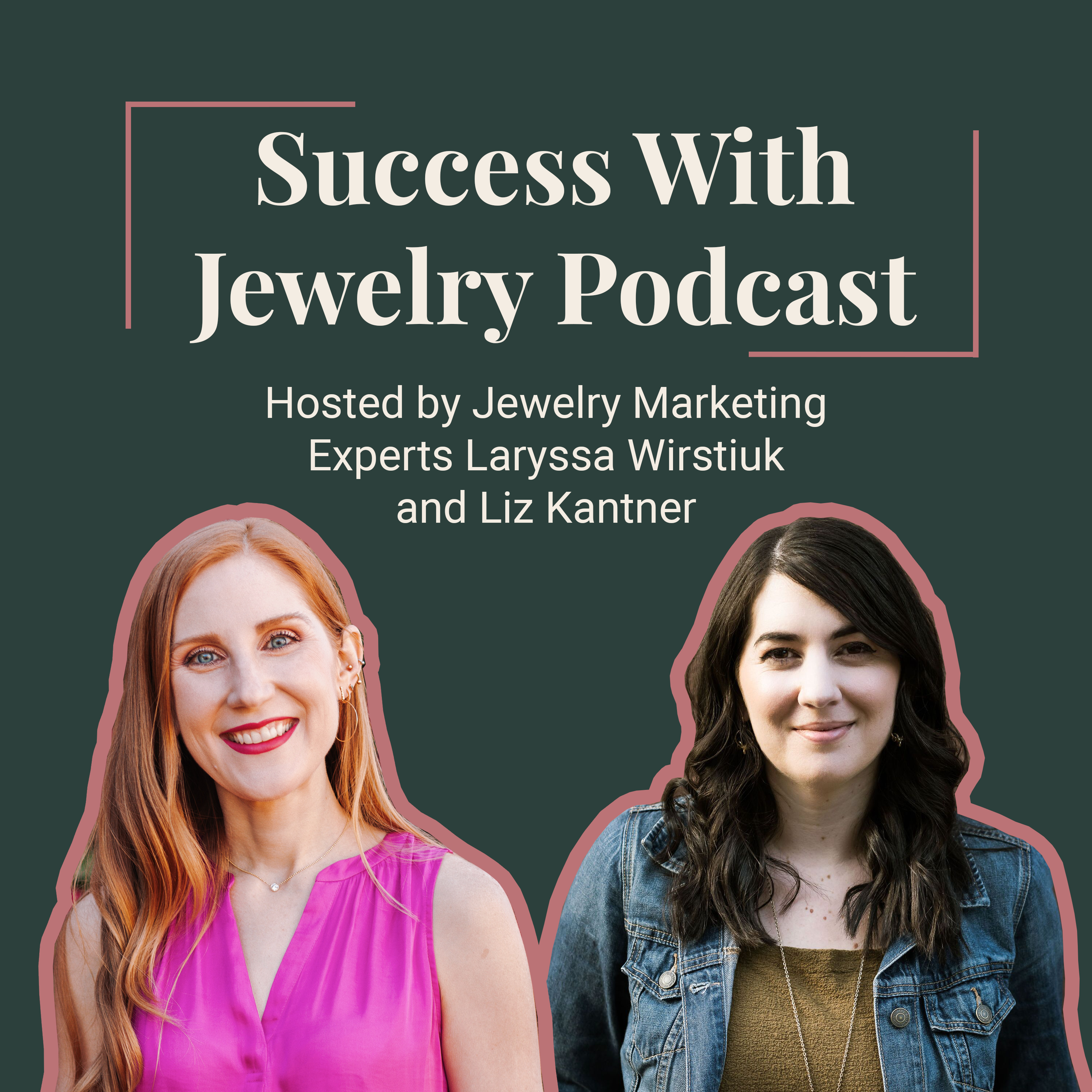
Success With Jewelry
139 - Laryssa and Liz on Mastering Direct Outreach to Grow Your Jewelry Business
00:14:26
Welcome to the Success With Jewelry podcast, hosted by Laryssa Wirstiuk and Liz Kantner, two experts passionate about helping independent jewelry artists thrive. In Episode #139, we’re diving into one of the most powerful sales and marketing tactics...
Loading summary
Transcript51 lines
- [00:01]
A
Welcome to the Success With Jewelry podcast. Your go to source for real conversations about business marketing and what it actually takes to succeed as a jewelry brand.
- [00:10]
B
Today, I'm Larissa, the strategist, systems queen and the one who finds joy in turning vague marketing challenges into step by step plans that actually work. Email marketing and generating revenue through it is the specialty of my agency, joyjoya.
- [00:27]
A
And I'm Liz, your creative compass and advocate for designers doing things differently. I live for brilliant brand storytelling, beautiful visuals, and helping designers confidently show up and shine. I founded the Stay Gold Collective to create community and support for independent jewelry brands.
- [00:46]
B
Together, we bring you nearly two decades of jewelry marketing experience. And on this podcast, we're pulling back the curtain on everything we've learned. Whether you're just starting out or scaling to your next big mile milestone, you'll get honest insights, helpful tips, and maybe a few laughs and giggles along the way.
- [01:05]
A
This is episode 139 and we're diving into direct outreach. How to connect authentically with retailers and clients, craft messages that get responses, and build relationships that grow your jewelry business. And if you're an insider, we're taking this conversation even further with a bonus episode where we share outreach examples, discuss common challenges, and give you tips to boost your confidence and results. Hey, Larissa, let's get into it.
- [01:33]
B
Let's get into this tactic. Probably one of the most powerful today.
- [01:39]
A
I think it's so important. And even like last week when we were talking about analytics, I was kind of like, but direct outreach, you know.
- [01:47]
B
Yes.
- [01:49]
A
Is one of the biggest things that's working. And I think that that's partially like email marketing, I think is still definitely something that's working, but taking it a step further and directly connecting with people is going to cut through the noise in a really big way.
- [02:05]
B
Yeah. And it, I mean, it's probably the marketing approach that takes the most work and effort, but you get the most juice from your squeeze, in my opinion, because you have like the most control over it. It feels the most personal. It's, you know, in this age of AI and automation and all of the bombardment of just mass marketing messages, like, this is the thing that is going to help you stand out.
- [02:34]
A
Definitely at the end of the day, people really just want to connect. I also think that there are a lot of dropped balls. You know, I think there's a lot of, like, if you go through your dms, if you go through your emails, if you go through inquiries from clients, whether they're clear inquiries or they are like a soft, like Oh, I love this ring. There are people you can follow up with. So I think starting there is important. And I think I was walking a craft show this past weekend, and I ran into a ceramicist who took one of my workshops locally in Asheville, and she was like, I directly outreached this client who asked about a commission ages ago, and it turned into a huge order, like a couple thousand dollars for a ceramic brand. And I was like, that is it. Like, there are so many places to start with direct outreach. The first. The number one place to go to is, are there any dropped balls? Are there any people that you haven't followed up with? Even if they asked about something six.
- [03:38]
B
Months ago, I would guarantee that everyone listening to this has some dropped ball. And that's not. That sounds so.
- [03:46]
A
Like. That sounds so negative. Sounds so judgy.
- [03:49]
B
But, no, let's make it a positive thing, like, opportunities waiting to be uncovered.
- [03:57]
A
It's a. I understand the overwhelm with this, what I just said, though, because I could go through all of my stuff too, and there are things that.
- [04:06]
B
I didn't drop the ball on.
- [04:08]
A
I gave the information, but maybe I didn't circle back if to see if they had any questions or to, you know, check in. There's. I actually just remembered a proposal I sent out that I never followed up on. That would be a place to start.
- [04:21]
B
Start.
- [04:21]
A
When it comes to direct outreach, I would. I think I'm getting ahead of my outline here, but I would write on a list, maybe right now, maybe pause the episode and write on a list, like, the things, the people that you could start with. Because I'm sure if you sit for a minute and think about it, there are a few that will come to mind.
- [04:38]
B
And if you feel nervous because a lot of time has gone by and you're like, oh, is it weird now? I say no, I do it all the time. And I'm. I just. You know, people get busy. That's a hundred percent understandable. Life happens. No one's gonna be like, oh, why didn't they reach out sooner?
- [05:02]
A
I. And I would say to you, if you are in that mindset, because I have talked to designers before who are like, oh, well, I reached out to a retailer, and we had a conversation, and they know I exist, so. So if they wanted my work, they would contact me. I will tell you, no, that retailer will not contact you. I mean, maybe sometimes. Definitely. If they're, like, really? Like, oh, I do definitely want this, and, like, it's top of mind. And a customer just came Asking for, came in asking for something similar, then they might reach out to you. But it is so important for you to continue that outreach. So if you had a positive interaction with a retailer, you need to keep following up consistently. And that's not to say that you need to nag them, but, you know, maybe they said, yeah, I like your work, I'd be interested to stay in touch, like, you know, follow up. Maybe it's not like, you know, the next week, but maybe in a couple of months. Like, hey, I've added these new pieces to my collection. I just wanted to show you, I hope you're doing well. Or hey, I just saw that great post you did on social media about the new cases you put in your store. They look beautiful. Congratulations on that. There are little ways to touch base with people that keeps you top of mind, but doesn't necessarily, necessarily isn't a hard sale.
- [06:13]
B
It shows interest on your end and that goes a long way because, I don't know, a lot of times people will just think, oh, maybe they don't want to like work with us or have a partnership with us because they haven't bothered to like, reach back out. You know, it's about relationship building at the end of the day.
- [06:31]
A
It's about relationship building at the end of the day. People aren't going to purchase from a brand that they've necessarily just discovered. And especially if you're spending, you know, a lot of money, even a hundred dollars on something, that's not something I'll spend lightly and most people won't spend lightly. So if you're relying on just, I'm putting out great Instagram content and I'm emailing my list, but I'm not having any conversations with people and I'm not inviting them to ask me questions and I'm just putting content out at them that's not necessarily going to build trust. If somebody follows you for a long time and you're telling your story, that will build trust eventually. But you can take it a step further and move things a little bit quicker by just pursuing relationships.
- [07:19]
B
Absolutely.
- [07:22]
A
Anyway, so key, some key thoughts about crafting an effective message is first and foremost, make sure it's personal. And I know it takes a lot of energy to, to write personal messages, but it's so it makes a huge difference. So even if you're doing, say, wholesale outreach, which I know is a big drain on a lot of designers, but it's really, really important. But you can have the core of your message pre written but always taking the Time to pay attention to who you're writing to. Making sure that their name is in, you know, the message, like, hi, so and so. And then something that feels personal. Even if, you know, like, maybe you've been to their store before or maybe you just saw it's their 10 year anniversary on Instagram or, or maybe you just saw, you know, they got a new puppy or whatever. Anything that feels personal to add to that will make it more likely that somebody responds also, you know, compliment them. This is great tactic for editors too, and it doesn't even need to tactic sounds like weird, but this is a great approach because you want to build relationships and store owners put in a lot of work. Editors put in a lot of work. It's really important to acknowledge that and they will appreciate it.
- [08:33]
B
It shows that you're noticing them and it shows that it's not just about.
- [08:37]
A
You and it's not just a blind email. I mean, I get asked things of me all day, every day. Like, granted, I have a toddler, or maybe he's not a toddler anymore, a preschooler, but. And you know, when I get a message that like compliments me, I'm like, oh my gosh, what do you need? Let me help you. Yes.
- [08:59]
B
Sort of thing.
- [09:01]
A
So true.
- [09:02]
B
I know there's a way to be nice to people.
- [09:06]
A
Like, I don't know. I would just.
- [09:10]
B
Yeah, I don't know. And there's a way to be entitled and there's a way to be generous and nice and I think you'll get that energy matched back to you if you approach it that way.
- [09:22]
A
Also, clarity and brevity are really important. You don't want to write a novel. No one really has time for that. So, like a clear description of who you are and what you do is important. And then sort of call to action. Whether that be as simple as like, I'd love to connect.
- [09:37]
B
Yeah.
- [09:37]
A
Or I'd love for you to visit me at this show or this craft fair or, you know, take a look at these stones I have available. You know, there's got to be some sort of call to action and make sure it's concise. Just make sure it's concise. People don't have time for reading a huge thing.
- [09:55]
B
Run it through AI if you don't trust yourself.
- [10:01]
A
Yeah. You can always write something and check and then. Yeah, but write like you speak. I think that also designers get kind of hung up on. Like, it needs to be super formal. No, but it doesn't need to be super formal. Just write like you speak and come from, like, an authentic place and it will pay off.
- [10:24]
B
Yeah, I mean, if you curse a lot, don't. No, you.
- [10:29]
A
What needs to be aligned with your.
- [10:30]
B
Brand voice, it should be aligned with your brand voice. But you can be personable and casual to a degree.
- [10:37]
A
And the more you chat with somebody, the more you know about them. So in terms of, like, different channels to use, I know some people that I correspond with prefer DMs or text messages, while others prefer emails. If you're trying to get in touch with me, I prefer emails, but I will respond to DMs, so think about that and you'll get to know your clients better. Like, maybe there's somebody who always DM'd you or wants text messages or some people just love phone calls or, you know, visiting your studio or seeing you in person. Just every client could be different. And so putting together a list just in Excel, you don't need a fancy CRM system. CRM meaning client relationship management system. You can just start with an Excel spreadsheet or a list and just make notes on who these clients are or leads are, how they prefer to be outreached. When's the last time you chatted with them? Do they own any pieces in your collection? What is a goal? Perhaps, you know, you could even put in, like, what you think their spending capabilities are so you can make sure you're showing them the right product you can put in when their birthday is. So you have an understanding of that and you have more reasons to reach out. Their kids names, their pets names, anything that you know about them that you want to follow up on or use to, like, you know, stay in touch with them.
- [12:03]
B
And please don't try to keep this all in your head, even if you have a really, really good memory and even if you don't want to use the CRM yet, as Liz said, have some kind of way to track all of this stuff. Because even if you can do it now, a year from now, when you have more contacts, when, like, your outreach gets more complex, you're not going to remember it and you're going to miss opportunities to say, like, more personal things that, you know, you could have logged and had ready for you to reference.
- [12:37]
A
And it's okay to follow up, you're not being pushy. I would, you know, do what feels comfortable to you. I did have a conversation with a wholesale sales rep who's really, you know, she's been in the industry a long time and super respect it. And she says sometimes she follows up until she gets an answer, which I thought was such a. It made me feel like, ooh, I can do that kind of thing.
- [13:02]
B
You know, I think that if the person you're talking to asked something of you or there was a kind of an idea that, you know, you were going to deliver on something or give them information if they don't respond to you, I think you have the right to keep following up until you get an answer.
- [13:21]
A
Especially if it's like a one of a kind piece or something that you do need an answer on. Because at the end of the day.
- [13:26]
B
Sales is a service.
- [13:27]
A
If somebody mentioned or really said to you, I want this, I am interested, but it's like a one of a kind piece. You do need to follow up until you get an answer, because otherwise, once it's gone, it's gone and you are missing out on selling it to other people. So, yeah, that's a good point. But following up's important because things do get missed. I mentally respond to emails or texts all the time and then forget that I actually didn't respond.
- [13:57]
B
And a lot of people are like that.
- [13:58]
A
So a gentle follow up is. Is great and you should not feel weird about it.
- [14:02]
B
Yeah, definitely.
- [14:05]
A
And celebrate your wins, big and small, always. Okay. All right. Do you. Have you tried direct outreach? Let us know. Visit successwithjewelry.com and if you love the podcast, we'd love to hear from you. Send us a message or leave us a review. Thanks for being a part of our community.