← Suffer the Little Children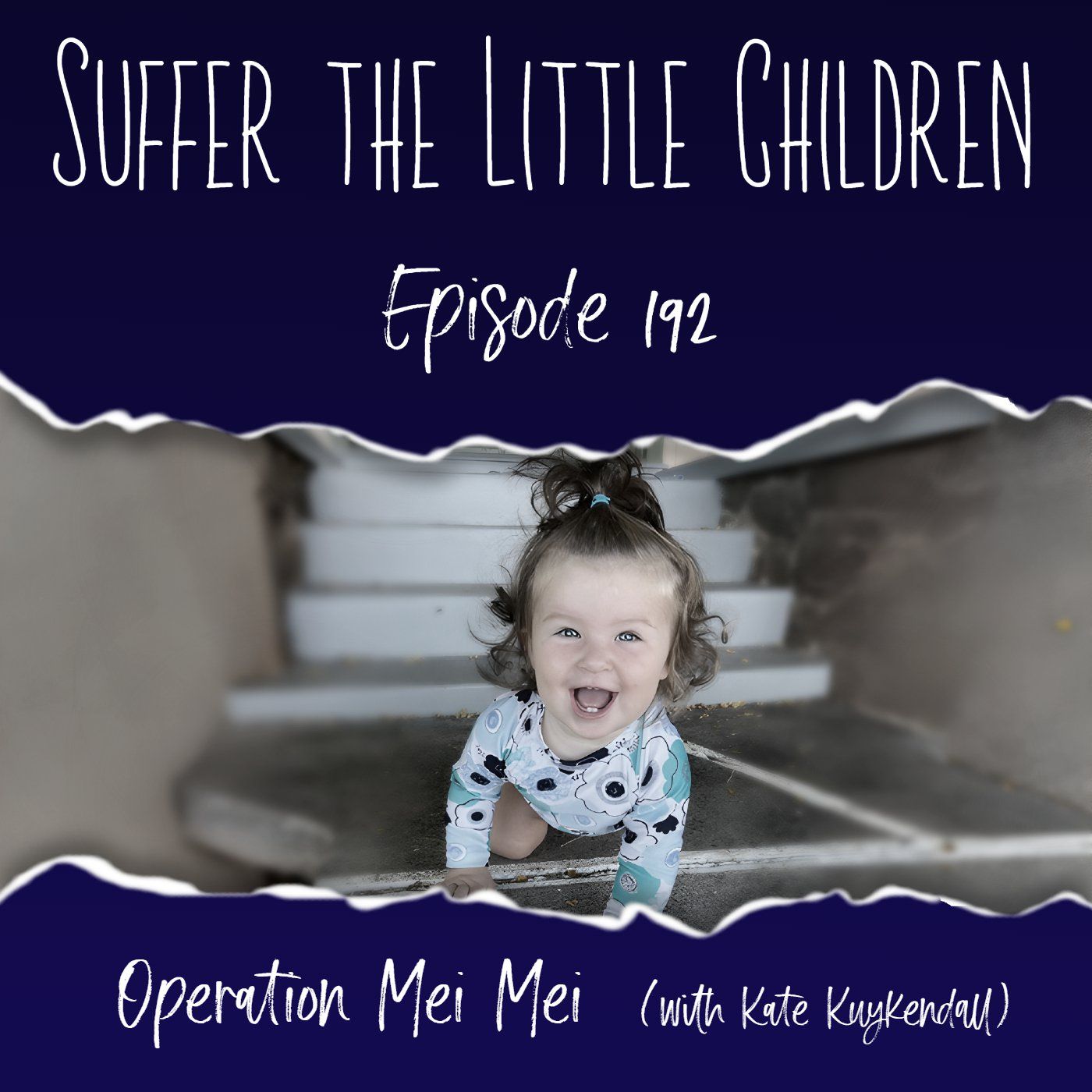
Suffer the Little Children
Episode 192: Operation Mei Mei
00:48:34
Get 25% off the Magic Mind gummies here: magicmind.com/LAINEGM You can also use my code, LAINE25, directly on their website. #magicmind #gummies In 2022, 15-month-old Isabella Kuykendall attended the United States Navy’s Ford Island Child...
Loading summary
Transcript259 lines
- [00:00]
Heba Botanica Advertiser
If you're a label reader, this one's for you because your skin deserves more than empty promises. At Hiba Botanica every formula is made in house in small batches using organic, truly non toxic ingredients, Plastic free packaging, clean, effective botanicals and safe for all skin types. Even acne prone, no green washing, no filler, just skincare that's gentle, non comedogenic and designed with intention. Heba Botanica Non toxic plastic free, always safe for your skin. Shop online at hebabotanica.com that's ex Lowe's.
- [00:32]
Lowe's Advertiser
Knows how to get you ready for holiday hosting with up to 35% off select home decor and get up to 35% off select major appliances. Plus members get free delivery, hallway, basic installation parts and a two year Lowe's Protection Plan when you spend $2,500 or more on select LG major appliances. Valid through 10. One member offer excludes Massachusetts, Maryland, Wisconsin, New Jersey and Florida. Installed by independent contractors. Exclusions apply. See lowe's.com for more details.
- [01:00]
RealReal Advertiser
This podcast is supported by the Real Real. Meet Christine. She loves shopping and this is the sound of fashion overload. Too many fabulous things, not enough space. So Christine started selling with the RealReal.
- [01:14]
Kaitlyn Kuykendall
I've always loved collecting designer pieces, Gucci bags, Prada heels, but my style keeps evolving. Selling with the RealReal game changer. I earn more and they do everything.
- [01:25]
RealReal Advertiser
Seriously. Just drop off your items or schedule a pickup. We handle the photos, descriptions, pricing, even shipping. You just sit back and watch your items sell fast to our 38 million.
- [01:36]
Kaitlyn Kuykendall
Members and I get peace of mind knowing I earn more selling with the RealReal than anywhere else.
- [01:41]
RealReal Advertiser
Exactly this. That's the sound of your closet working for you. The RealReal earn more, save time, sell fast and right now you can get an extra $100 site credit when you sell for the first time. Go to therealreal.com to get your extra hundred dollars. Therealreal.com that's therealreal.com this podcast contains descriptions.
- [02:02]
Lane (Podcast Host)
Of violence against children and adult language and is not suitable for all audiences. Listener discretion is hi everyone and welcome to Suffer the Little Children, the podcast giving voices back to the victims of child abuse, murder and their families. I'm your host, Lane and this is episode 192, Operation May. In 2022, 15 month old Isabella Kuykendall attended the United States Navy's Ford Island Child Development Center, a daycare at Pearl Harbor, Hawaii for three days. During those three days, Bella went from a happy, bubbly baby to alternately crying hysterically and becoming quiet and withdrawn. Then her parents noticed a distinctive pinching bruise on Bella's thigh. An investigation turned up hours of CCTV footage from inside the daycare showing three workers abusing the baby, including pinching, shoving, crushing, slapping, shaking and smothering her. Bella's parents, JD And Kaitlyn Kuykendall, assumed their baby's abusers would immediately face consequences, but instead officials seemed hell bent on sweeping the incident under the rug. The daycare workers responsible remained working at the CDC for months. Only when Bella's parents went public with her story were any charges pressed, and those were woefully inadequate. In this episode, you'll hear my conversation with Kaitlyn Kuykendall about what Bella endured, how it continues to affect her to this day, and why Caitlyn and her husband went public with her story. This is the inspiring story of Operation May Mei. Just a quick note up top for new listeners, I will only cover a story with the involvement or at least permission of the child's innocent family members. Bella's abuse at the Ford Island Child Development center occurred from August 22nd through 24th, 2022. The two daycare workers who were eventually charged and convicted of misdemeanor third degree assault were Annalyn de Guzman and Marilyn Canicoa. According to court documents, the two women did intentionally, knowingly or recklessly cause bodily injury, to wit, physical pain to 15 month old Bella. However, they weren't charged immediately. When the Kuykendalls reached out to news station Hawaii News now in early 2023, HNN contacted the Honolulu prosecutor, Military Public affairs and the Honolulu Police Department to find out why there were no charges in the case. An hour and a half later, the women were charged with Bella's abuse. The timing of their charges, months after Bella's abuse, and only when the media got involved, is highly suspect. And you'll hear more about the shady way officials handled the case later in this episode. When HNN reporter Mahealani Richardson asked what they made of the timing of the charges, Bella's dad, Army Captain Jeremy JD Kuykendall, and her mom, Kaitlin, said, if.
- [05:20]
Heba Botanica Advertiser
That'S what it takes to get accountability, I'd say that's unfortunate.
- [05:24]
Kaitlyn Kuykendall
We're borderline happy, but borderline sad and scared and upset. I mean, it shouldn't have taken this long to get to this point, annalyn.
- [05:32]
Lane (Podcast Host)
De Guzman, the deputy prosecutor, told the court, sat on Bella's legs until she cried, squeezed her painfully tightly, stretched her tiny body and hit her repeatedly on the head and face. When pleading no contest to her charge. The woman lamely explained that the CDC was understaffed, Bella wouldn't stop crying and she needed help. In January 2024, she received a sentence of 30 days in jail for hitting Bella in the back. Marilyn Kanakoa, who also pleaded no contest, was sentenced to eight days in jail in order to attend anger management. Ms. Kenokoa at least dared to look at Caitlyn and JD in court while tearfully saying through her court mandated mask.
- [06:16]
Kaitlyn Kuykendall
I don't mean any harm Mr. And Mrs. Creek and does I don't mean any harm to Isabella.
- [06:26]
Lane (Podcast Host)
A third worker seen in the CCTV footage allegedly abusing Bella has not been charged, nor has the CDC director who allegedly knew about the abuse. While waiting for some semblance of justice for Bella, Caitlin created a Facebook page called Operation Maymay, so named because Bella's middle name is May. I'll include the link to the Facebook page in the show notes. You'll hear my conversation with Caitlyn in a moment. First though, if you've heard any of my episodes over the past couple of months, you know I've been using Magic Mind's little Green Mental Performance shot for some time now and I'm a big fan of the way it helps me focus and dial in without the too much caffeine jitters. Honestly, I don't know what I'd do without it. I've also tried their little purple sleep shot, which I also love, so when I heard they were launching gummies, I couldn't try them fast enough. Magic Mind Mental Performance Gummies give you all the benefits of the green shot, but in gummy form without the caffeine. And these aren't little bitty barely there gummies. These are chunky, dense little guys about the size of half a grape. They have a really nice green appley flavor. And when I say they're dense, I'm not kidding. Each bag, which has a 30 day supply for one adult weighs over a pound.
- [07:41]
Lane (Interviewer)
To say I'm impressed with these gummies is an understatement.
- [07:45]
Lane (Podcast Host)
Not gonna lie. Sometimes I take the shot and the gummies and wait for my superpowers to kick in. So far no laser eyes, but I do have laser focus, which I definitely need more. I can't drink coffee in the afternoon or I'll be up half the night. So when I'm up to my ears in research or writing, I love popping a couple gummies around mid afternoon for an extra focus boost that won't leave me tossing and turning at night. These gummies can even give kids and teenagers, some much needed calm energy and focus at school. And hey, you could even wash out one of the shot bottles and use it to carry a few gummies for.
- [08:18]
Lane (Interviewer)
When you need them.
- [08:20]
Lane (Podcast Host)
Magic Mind Gummies are available now, you should give them a try. I highly recommend them. You can visit magicmind.com laingm or visit their website and use my code lane25 at checkout. My link again is M a g I c M-I-N-D.com sl l n e g m or go to magicmind.com and when you're checking out use my code L a I n e 25 for 25% off your first pack of gummies. Let me know if you try them now. Here's my conversation with Bella's mom, Kate.
- [09:05]
Heba Botanica Advertiser
If you're a label reader, this one's for you because your skin deserves more than empty promises. At Heba Botanica, every formula is made in house in small batches using organic truly non toxic ingredients, plastic free packaging, clean, effective botanicals and safe for all skin types. Even acne prone. No green washing, no filler, just skincare that's gentle, non comedogenic and designed with intention. Non toxic plastic free, always safe for your skin. Shop online@hibabotanica.com that's excellent.
- [09:35]
GoFundMe Advertiser
Imagine if today was the day your idea changed someone's life. Imagine if you could help someone pay for college, help your community build a new playground or help a child make it to that dream competition with GoFundMe. It's all possible. GoFundMe is the world's number one fundraising platform, trusted by over 190 million people every week. Ordinary people meet their goals and do extraordinary things. Your ideas matter. GoFundMe isn't just for emergencies. Want to raise money for your kid's soccer team? Or raise funds for a small business, a creative project or event? GoFundMe helps you turn ideas into reality and help adds up. Fundraisers you start for someone else raise up to five times more. So think right now. Who could use your help? Change rarely comes from waiting. It comes from someone deciding, today I'll start. Don't wait for someone else to bring change today. Start your fundraiser in just minutes@gofundme.com that's gofundme.com to start your fundraiser. Gofundme.com this is a commercial message brought to you by gofundme.
- [10:35]
Lane (Podcast Host)
My guest today is Kaitlyn Kuykendall who is Bella's mom.
- [10:39]
Lane (Interviewer)
Thank you for joining me. I had not heard of Bella's story. And when I watched the surveillance video yesterday, it just tore my heart out. I can't imagine how you and your husband watched it.
- [10:50]
Kaitlyn Kuykendall
Yeah, it was definitely a challenge to watch. We weren't allowed to see it until like four months after the abuse actually happened.
- [10:56]
Lane (Interviewer)
Oh, yeah, because you were supposed to go in there and then the police went along with you.
- [11:01]
Kaitlyn Kuykendall
Yeah, the director was going to show me one little clip. She was trying to downplay it and I think if she did show me that clip, maybe I would have just stopped right there thinking that they were being forthcoming. But it's funny, not funny how things kind of work out for the better.
- [11:15]
Lane (Interviewer)
So no doubt. How much footage was there? Your husband watched what, 75 hours of footage or something like that.
- [11:22]
Kaitlyn Kuykendall
So Baldo was there? Yeah, for three days. And there are 75 hours of video footage because there are the three camera angles that he had to go through and then like the playground footage. So it took him like three months.
- [11:37]
Lane (Interviewer)
In between trying to be a father and work and everything else, right?
- [11:41]
Kaitlyn Kuykendall
Yeah. It's insane.
- [11:43]
Lane (Interviewer)
Do you want to start from the top?
- [11:44]
Kaitlyn Kuykendall
Yeah, absolutely. I was trying to get our oldest daughter Sophia, who's three at the time, who's already going to this Ford Island Child Development Center. She was already there for three months, but I was trying to get her into the school school program at the local elementary school because she was speech delayed and I thought they would be able to help her more and support her more. So I went in with her and I was offered this teaching position. They were short staffed and I was a former teacher and I was like, you know, I can't pass this opportunity up. I would love to get back into teaching. It's been five years. So I kind of like on the whim, took this teaching position and I had like two weeks before I started. So I was like desperate to find a spot for Bella and I was like, well, really? Ford Island. And it's right in our backyard and it's on the military base and it's on its own island. Safest place on the planet. Never heard of any bad reviews. Very positive. So it was a no brainer. I was going to put Isabella into the same daycare that Sophia was in, but they didn't have any spots available right away. So she was like an hourly care baby. And I was only allowed to take care the three days because you're only allowed, I think, 21 hours for a week. So I did the first three days and Isabella was familiar with Ford Island CDC from dropping off her older sister and she was always really excited at drop off and like, like just seeing other kids made her happy. She's very social and outgoing. So Ford Island CDC has 27 classrooms.
- [13:08]
Lane (Interviewer)
Wow.
- [13:09]
Kaitlyn Kuykendall
Yeah, it's huge. And it's brand new. Well, it's 2012, I think it was built. But cameras everywhere and just very shiny and sparkly and clean. And Sophia's classroom was like one of the main classrooms that you walked down the main hallway and it was on like the right hand side and there's like a picture window you can look in, but Bella's was all there at the end of the hallway and out through the courtyard. So there's like no foot traffic.
- [13:34]
Lane (Interviewer)
Oh, okay.
- [13:35]
Kaitlyn Kuykendall
Yeah. So it's kind of scary, but I didn't think anything about the time. Obviously I was dropping off Bella and Bella was so excited, like, oh, I'm.
- [13:42]
Lane (Interviewer)
Sure she probably felt like such a big girl going to her sister's school.
- [13:46]
Kaitlyn Kuykendall
I know she was so happy and she was just such a, like a jolly little baby. Just, I don't know, like, just really easygoing. So I was so excited for her. I was excited for Sophia and like going back to work. I was ecstatic. So hiccup that day, the first day she was there, they told me that she cried out a window all day, that she cried for three hours straight. They tried to call me. The call didn't go through and I was like, this is so weird. Like three hours. That's a long time for like a 15 month old to cry. Like there's so many toys here, there's.
- [14:15]
Lane (Interviewer)
Other kids and that's exhausting.
- [14:17]
Kaitlyn Kuykendall
Yeah. I was like, her older sister is here. Like it couldn't have brought her to her older. I don't know. It's just all these thoughts are going through my head. That's. It was just alarming. That was like my first sign. Like, okay, that doesn't sound like Isabella, but okay. So it's kind of like beside myself that night and felt kind of down because he always feeling like on top of the world with this new job and it's also at a military school. So I feel like we're all part of the same community and just support in the same kind of community that I want to be there to support. And I thought I was getting the same support and yeah.
- [14:47]
Lane (Interviewer)
And it would seem like if she hadn't been to daycare before, this is just separation anxiety or something like that.
- [14:53]
Kaitlyn Kuykendall
Right. And that's what I thought too. So I was like, okay, maybe it's Just separation anxiety, and we'll just see how tomorrow goes. And it was weird because I knew she had a really off day the first day. I can't forget to mention, too, that when I went to go pick her up, they, like, rushed to grab her to change her diaper because she had, like, soaked through her diaper and was trying to change her quick before I. Oh, so that was another thing. I was like, why? Why is her romper soaked? Like, it was just. It wasn't adding up. I was like, okay, this is weird. So the next day, I went to go drop her off, and there's three women in the classroom when I dropped her off, and they're very cold. They weren't like, oh, Isabelle, you're ready for another day. We're gonna have a good day today. It was none of that. It wasn't, like, warm and fuzzy. It wasn't like, hi, Mom. I remember them being, like, very direct with me. Like, mom, wash your hands. Put her down and put her things in the other room. And I said it, like, kind of, like, harshly. And like, this other parent came in with their kid, and they were living on that baby. And I was like, okay, just overthinking things as I'm, like, washing her hands.
- [15:51]
Lane (Interviewer)
And, yeah, maybe they'll get used to her and she'll get used to them.
- [15:54]
Kaitlyn Kuykendall
Right, right, right. And Isabella, she was kind of, like, not very excited to be there. She was a little upset, but she was okay. It wasn't, like, too. Too terrible, you know, to drop off. And then I picked her up that day, and they were like, oh, is she afraid of doors? And I was like, okay, that's super strange. Like, why would my child be afraid of doors?
- [16:12]
Lane (Interviewer)
The weird question, right?
- [16:13]
Kaitlyn Kuykendall
And I was like, well, what do you mean? And they're like, well, whenever the door opens, she just starts crying hysterically. And I'm like, I. I don't know what to tell you. Like, I don't know. And I noticed she had, like, a little scratch on her arm. And they're supposed to, like, give you, like, grams if there's ever an incident or anything that happens. But no.
- [16:31]
Lane (Interviewer)
So the gram is like a daily report sort of thing?
- [16:34]
Kaitlyn Kuykendall
Yeah, yeah, yeah. Because she can't talk. So it's something that they do for the younger kids. And I think actually they did show me it, and I was allowed to take a picture of it, and it mentions the scratch on it. But I'm just thinking, okay, she's playing with other kids. She's gonna fall down. She, like, Started walking that summer and they're on the playground. But the next day was her last day there. It was Wednesday this day. I asked my husband if he would go in with me that morning for drop off. I was like, I just want you to see how you feel with the vibe of the room. Cause Bella's demeanor had changed so much. She was so tired, she was sleeping so much, she wasn't eating anymore. She was having night terrors all of a sudden. And something wasn't adding up. Ben, I was like, I need you to come with me. I need you to see how you feel the vibe you're getting from these women. Because it just seems off to me.
- [17:18]
Lane (Interviewer)
And we always kind of question our gut instinct right off the bat, don't we? It's like, maybe I'm overthinking this. Maybe it's nothing. And I hope no one blames you for leaving her in for three days, which was a short time as it is.
- [17:29]
Kaitlyn Kuykendall
Right? Right. No, but I. I definitely blame myself for it because it's so hard. But on Wednesday when he went in with me, we still had to wear the masks. Like Covid. It was like towards the end of it, so everyone wore a mask. And we dropped off Sophia first. And then my husband was like, oh, I forgot my mask. He went the opposite direction of Bella and I. And once Bella saw him going the other way, she started crying hysterically for him, grabbing onto me so tightly because she knew we were about to go to her classroom. And I, like, just froze. I was like, holy cow. Like, Bella, what is going on? Like, it's okay. You're okay, you're safe. And. And we waited for my husband to come back to meet up with us. She just held on so tightly. And she was crying for her daddy. And we walk in the room and I don't know if it's cause I walked in with my husband, but all of a sudden these women were being friendly with my husband and like making small talk with him while I'm washing Isabella's hands. I just remember Isabella, while I was washing her hands, just like visibly shaken. Like her whole body was shaking. Like she was so scared. And I was just.
- [18:31]
Lane (Interviewer)
That's not something that usually happens, right?
- [18:33]
Kaitlyn Kuykendall
That's not normal. This is. And it was not Bella's personality at all. Like.
- [18:37]
Lane (Interviewer)
And how old was she? You said 15 months.
- [18:39]
Kaitlyn Kuykendall
15 months, yeah. And I just was holding her with my husband. We were showing her the goldfish. They had this big window where you could see, like the birds being fed outside. So all the kids are watching the birds. And my husband's like, it's gonna be okay. We'll just put her down, and we'll just, like, make a quick escape, right? So we tried to comfort her. We put her down, and when we left. And I just remember hearing her crying. And. And you see in the video from the third day that that's when Annal and de Guzma started pinching her at the door until it happened as soon as we left.
- [19:10]
Lane (Interviewer)
And they called her the crying baby. Right? It was something.
- [19:13]
Kaitlyn Kuykendall
Oh, yeah, right. So when my husband picked her up that afternoon. Cause I had open house that night. He picked her up. And, yeah, they said, oh, are you here for the crying baby? And that's what they referred to her as at the front desk. So they were aware of Isabella's crying. And on Wednesday, I left her with a T shirt that I slept in and a picture, like, a Polaroid of her dad. And I think that would comfort her. And, you know, she could smell me. So they put her in my T shirt. And I think it, like, covered up a lot of, like, the red mark she probably had on her body. So my husband had no idea. And I remember her, like, carrying these four tight buns. When I got home from work, I was like, holy cow. Why would they do her hair if she's having such a tough time at school? She had a lot of hair, and she didn't really like to have her hair played with or touched that much, and it was so tight. And they told my husband. They were like, oh, wow, she hit herself a lot today.
- [20:04]
Lane (Interviewer)
Oh, that's great.
- [20:06]
Kaitlyn Kuykendall
Yeah. And he's like, well, that's weird. And again, she slept that whole night. Then from the moment we put her up that night, she just wasn't herself. And her little body was, like, kind of, like shaking from all the abuse. I think it was just. It couldn't. Like, it was just trying to normalize herself. Yeah, exactly. And when she would cry, I remember she kept holding her nose, like, putting her hands to her nose. And I'm like, that's weird. I don't know why she's doing that. So Thursday night, it was when I found the distinct pinch mark bruise on her thigh.
- [20:36]
Lane (Interviewer)
Yeah, you can tell that those are pinches for sure.
- [20:39]
Kaitlyn Kuykendall
And I had no idea. I had to look up pinch mark bruises. I don't know where these bruises would come from, but it was also in a spot that a car seat could have maybe pinched it. So I was, like, trying to, like, rationalize.
- [20:51]
Lane (Podcast Host)
I'll Pause here for a quick word from my sponsors. How to have fun anytime, anywhere.
- [21:01]
Kaitlyn Kuykendall
Step 1 Go to Chumbacasino.com Chumbacasino.com Got it.
- [21:05]
Lane (Podcast Host)
Step 2 Collect your welcome bonus.
- [21:07]
Kaitlyn Kuykendall
Come to Papa. Welcome bonus.
- [21:09]
Lane (Podcast Host)
Step 3 Play hundreds of casino style games for free.
- [21:11]
Numerica Credit Union Advertiser
That's a lot of games all for free.
- [21:13]
Lane (Podcast Host)
Step 4 Unleash your excitement.
- [21:15]
Kaitlyn Kuykendall
Woo hoo. Chumba Casino has been delivering thrills for over a decade.
- [21:19]
Lane (Podcast Host)
So claim your free welcome bonus now and live the tempa life. Visit chumbacasino.com no purchase necessary vgw group.
- [21:26]
Kaitlyn Kuykendall
Void where prohibited by law 21 +.
- [21:28]
Numerica Credit Union Advertiser
Terms and conditions apply.
- [21:31]
Podcast Host
I've got Dan Morgan here on the pod. Say hi Dan.
- [21:34]
Lane (Interviewer)
Hey.
- [21:34]
Dan Morgan
How's it going today?
- [21:35]
Podcast Host
It's going good, man. Tell us who you are and what you do.
- [21:38]
Dan Morgan
I'm Dan Morgan. I'm an attorney and a managing partner at Morgan and Morgan, which is America's largest injury law firm.
- [21:44]
Podcast Host
That's pretty awesome. I think I saw a billboard of yours recently that said 20 billion. Wonderful. 20 million is an insane number.
- [21:53]
Dan Morgan
Yeah, 20 billion recovered. It's actually I think somewhere north. Probably closer to 22, 23 after this year. And each year we get bigger and badder and our army grows. So the number will hopefully keep getting bigger and bigger as time goes on.
- [22:05]
Podcast Host
Awesome. So how does someone get in contact with Morgan and Morgan? What would I do if I got into an accident?
- [22:11]
Dan Morgan
Probably the easiest way is dialing pound law. That's £529 from your cell phone. We are always open. Our call center is always waiting to take your call. 24, 7, 365.
- [22:20]
Kaitlyn Kuykendall
Wow.
- [22:21]
Podcast Host
Dan Morgan from Morgan and Morgan, America's largest injury law firm. Thanks for coming by the show.
- [22:25]
Dan Morgan
Thanks for having me. Visit forthepeople.com for an office near you.
- [22:29]
Kaitlyn Kuykendall
Meet Olivia. Hey, what's up? Olivia dreams big. I want to go back to school and get a pet and buy a house and save for retirement and travel the world.
- [22:38]
Heba Botanica Advertiser
That's quite the list.
- [22:39]
Lane (Podcast Host)
Thank you.
- [22:40]
Numerica Credit Union Advertiser
Numerica Credit Union is the perfect partner to help turn Olivia's dreams into reality.
- [22:44]
Kaitlyn Kuykendall
Really? Yep. We're all about helping our members create a life that feels like theirs. And we have the tools, expertise and guidance to make it happen. I'm in. Let's get started.
- [22:54]
Numerica Credit Union Advertiser
Numerica Credit Union Money where it matters.
- [22:57]
Kaitlyn Kuykendall
Federally insured by NCUA So I asked my husband because he was going to deploy that day or he was going TDY that day for two weeks. So he was going away and I just was like, can you come speak with the director. Bella wasn't there that Friday on the 26th, but I just wanted her to know our concerns and to see if she could see anything, because I was afraid to put her back in on Monday. Yeah, of course, knowing that she had those bruises and. And she was not combative at all. She was very much like, yeah, I'll get with the trainer, we'll review the video, and I'll get back to you. So my husband, he left on his plane, and I went to work. And at the end of my work day, I got a phone call from the director, and she was having a casual conversation, and I was, like, ready to laugh this off. I was like, okay, I'm gonna look like a crazy person. I sound crazy. Like, there's no way this happened. And she was like, we found video footage of Isabella being inappropriately touched.
- [23:59]
Lane (Interviewer)
Wow.
- [23:59]
Kaitlyn Kuykendall
My heart just sunk, like. And I felt like I failed her.
- [24:02]
Lane (Interviewer)
So much, and such a scary statement.
- [24:05]
Kaitlyn Kuykendall
It was. It was. Yeah, it was terrifying. And I was like, what do I do? And she goes, you can come to the cdc and I can show you the video clip. And so I went straight there, and the gate guard actually saw me very upset. And I explained to him the situation, and he was like, oh, no, you're not going there by yourself. This happens way too often.
- [24:28]
Lane (Interviewer)
Like, really?
- [24:30]
Kaitlyn Kuykendall
Yeah. And I was like, what? Like, I've never heard of a bad review of Ford island of any of the CDCs, honestly. And he goes, yeah, I know what happens. And they cover it up, and they sweep under the rug. Like, you're going there with one of our guys. I'm going to call the local law enforcement. And that's when they escorted me to the cdc, and that's when the director saw me with the beast police officer and told me, okay, well, since things have escalated, I'm not allowed to see the video anymore.
- [24:57]
Lane (Interviewer)
Interesting.
- [24:58]
Kaitlyn Kuykendall
Yeah. And she pulled me into her office by myself. She told the officer, can I have a moment with her alone? And he was like, sure. Pulled me in. And she said, mom to mom, I'm so sorry. And, like, gave me a hug and was crying with me. And she goes, from here on out, I have to be professional.
- [25:15]
Lane (Interviewer)
Kind of covering herself. Yeah, yeah.
- [25:18]
Kaitlyn Kuykendall
Right, right. And I just remember CID showing up, which is the Navy cid, and they were just going to investigate the crime scene, so the classroom that the abuse happened. And I remember the director being kind of combative about it, like, no, no, no, she's not here today. You don't have to clear the room, there's children in there. Like, let's not do that. And he's like, oh, no, no, no. We have to. The CYP director, like the. From D.C. like this. I don't know if he's a CYP director, but he's like a higher up of the Child Development centers across the country. He was in Hawaii at the same time. So he was there with me too, in the room. And at this point we have like an ambulance showing up to check out Bella. We have HPD on the way, is the Honolulu Police Department. CID was there, base police. He goes to me, you know, you didn't have to do all this. You didn't have to make such a scene. And I was like, I'm sorry. When he gave me the parent handbook that, like, I didn't look at, hey, if you think your child is being abused, this is, this is your step.
- [26:15]
Lane (Interviewer)
Keep it quiet.
- [26:16]
Kaitlyn Kuykendall
Right, right. I'm like, how dare you say that? Like, nobody else called authorities. There are so many small conversations happening. It was very hush hush and it definitely was not the image they wanted and they didn't want this kind of attention. So it was clear.
- [26:31]
Lane (Interviewer)
Right.
- [26:32]
Kaitlyn Kuykendall
So they basically like downplayed everything. And I will say one thing about the CID clearing out the room. I don't know if you saw, but there was apparently a baby garment they found that had seeming like consistency on it. And this head director just came in and said that. And I was just like, wait, what? And I remember just being in shock and he was like, oh, I must have misheard that over the radio.
- [26:56]
Lane (Podcast Host)
Right.
- [26:56]
Lane (Interviewer)
I. I saw something about that, but I didn't see if it was ever proven or not.
- [27:00]
Kaitlyn Kuykendall
Yeah, right, right, right. But I don't know the whole story beyond that because they didn't inform parents about it until three months later. And they told them that it was one person, one incident, one child. And three months later, knowing that all the video footage was erased. So nobody else could request for video footage from that time period.
- [27:20]
Lane (Interviewer)
Really? What did you have to go through to get it?
- [27:23]
Kaitlyn Kuykendall
The video, they have a form you can fill out and you can request like a time and dates. And the reason why at the cdc, although they didn't tell me that until I talked to like a Navy JAG lady and she told me about it. So I filled out that form and then I created a letter demanding that the video not be tampered with or anything like that. And then we had to go through the Freedom of Information act to request.
- [27:48]
Lane (Interviewer)
For it, which can take some time Yep.
- [27:50]
Kaitlyn Kuykendall
Yes, it did take a lot of time. And I think they were just all hoping that we would be burnt out and tired and just give up on it, because they were telling us it's going to cost like $215 per edit an hour, 75 hours of footage. It's like a lot.
- [28:04]
Lane (Interviewer)
Because they had to redact, blur out.
- [28:07]
Kaitlyn Kuykendall
And redact and all that. So then they told my husband, well, if you want to come in and basically be babysat in the JAG office and review the footage on your own, you can come in and review the footage and then we could just narrow it down from the time you want so you don't get all of the footage. So he did that, and that's when he created like a 260 page, like, police report, basically, of every time that Isabella or another child was being touched or mishandled type thing. And then because he sent it to somewhere at the NCIS out of Virginia or something like a headquarters, and it forced. Asked the NCIS in Hawaii to open up the case, because they did not want to open it. They didn't want to touch it. The Honolulu Police Department didn't want to do anything. They just kept telling us there's something there and gaslighting us and telling me that Bella was just a Covid baby and she's unsocialized and. Yeah, Yep, right, right. 15 months old. And just like sick things like that, or comparing our case to other cases that they've seen. And it was really heartbreaking because Isabella just. She wasn't herself. She was having really bad headaches and she couldn't walk. Right. She kept falling over. And I was scared, so I kept taking her to the doctor. And everybody that called to ask, hey, can I see the footage? Can a doctor see the footage? They're like, no, if you have concerns, just bring it to the doctor. And I remember the director telling me, like, nothing life threatening was on the video. So they're just making that determination on their own.
- [29:32]
Lane (Interviewer)
Of course.
- [29:33]
Kaitlyn Kuykendall
Right. And it was this everybody bullying up against my family and I. And it hurts so bad.
- [29:38]
Lane (Interviewer)
And it's kind of like a betrayal, especially when you felt like part of that community so much.
- [29:44]
Kaitlyn Kuykendall
Right. And all I wanted to do was help them out and help advocate and help warn other families about it, but it was very clear that they didn't want this to be anything. And I think just realizing that it happens a lot more often than they're willing to admit, it's so sad. And I think at this point, like, I realized, like, I'm so blessed that Bella is still here today. And I'm so lucky that, yeah, some.
- [30:07]
Lane (Interviewer)
Of the things they did to her were awful. I mean, honestly, if they had just held on a little too long or.
- [30:12]
Kaitlyn Kuykendall
Right.
- [30:13]
Lane (Interviewer)
For them to say it wasn't life threatening is pretty glib.
- [30:16]
Kaitlyn Kuykendall
Right? Right. Well, we actually saw a child abuse doctor for the first time last Friday. Over two and a half years after her abuse, we finally were able to see a child abuse doctor. And at the er, they wouldn't see her because there's no police report done, so they refused.
- [30:31]
Lane (Interviewer)
Oh, and the police didn't do a report?
- [30:33]
Kaitlyn Kuykendall
They did not. They said it was a misdemeanor. There's nothing there. They open and closed it within a week.
- [30:38]
Lane (Interviewer)
Oh, God. A misdemeanor, no less. Which is the number of times that Bella was hit in some way, touched, smothered, all of those things.
- [30:47]
Kaitlyn Kuykendall
Right.
- [30:48]
Lane (Podcast Host)
Was torture.
- [30:48]
Lane (Interviewer)
There's no official definition of childhood torture, but I would say that qualifies that. There's so many different things that they did to her, and they just tormented her.
- [30:56]
Kaitlyn Kuykendall
Right? Yeah. And this child abuse doctor showed her the video, and she was like, you know, that was enough to. And I stopped her, and I was like, caused serious injury. She goes, well, yeah, but not only that. That was enough to kill her. Like, that could have killed her. And I was just like, what? And it was at the part where she was being shaken up and down on Annalindig Guzman's legs and, like, her head just kind of limp after a while. So if my husband and I didn't do anything or say anything, Annalindig Guzman would still be there. She had been there for three years. They didn't do a background check. When they finally did a background check after she abused Bella, it was flagged, and she was not a US Citizen. She didn't have, like, a card to get on base. She didn't have any form of identification. So I think there's so many pieces to this story that they wanted to cover up and hide because they were afraid of the embarrassment of it all.
- [31:47]
Lane (Interviewer)
Is she the one who was told to get anger management after.
- [31:51]
Kaitlyn Kuykendall
Yes.
- [31:51]
Lane (Interviewer)
Okay. Okay. So maybe Bella was a little off the first day because it was her first day, and maybe she was crying a little more than she normally would, and they just couldn't take it. I mean, that's the most basic thing you should learn when you're becoming a teacher.
- [32:05]
Kaitlyn Kuykendall
Right. But Bella was fine. Bella. We watched the video the first day. He wasn't even crying. They, like, went out of their way to grab her, to like enforce pain onto her.
- [32:15]
Lane (Interviewer)
That's awful.
- [32:16]
Kaitlyn Kuykendall
It was awful. And then you can tell that those kids in the classroom are all conditioned to exist in the classroom. So they're ages of one to two. And all the three days that my husband had watched and I had watched parts of it, none of them cried.
- [32:30]
Lane (Interviewer)
They're all flying under the radar, right?
- [32:33]
Kaitlyn Kuykendall
Like some of the older ones were waiting to be moved from one spot to the next. And I believe what they were doing to Bella, which is trying to condition her like she was the fresh meat in the classroom. She didn't know how things worked yet. And they just kept instilling pain and they kept pinching her, pinching her until she got the clue like, okay, I can't cry. I'm not supposed to be upset. But they never showed love or affection to her. They never tried to comfort her. It's scary. And they left two teachers there who abused Bella for months.
- [32:59]
Lane (Interviewer)
I had never even thought about something like this being an issue until I heard from you and I looked into it and it's like, wow, other bases, CDCs, people are being arrested there and other directors not reporting and things like that. It's way more widespread than you'd think.
- [33:16]
Kaitlyn Kuykendall
Right? Which is like shocking because the director of Ford island who was there with Bella is still hired today and she didn't report. She like gave them a verbal reprimand for things that they got charged for and jail time for.
- [33:28]
Lane (Interviewer)
Right. A verbal reprimand.
- [33:29]
Kaitlyn Kuykendall
Right. You're right. And that was it. So I'm just like, if she doesn't get in trouble, then it's obviously higher up protecting her and. Because that would be a no brainer, like, get her out. Because I think parents are afraid, rightfully so, to put their kids into Ford island because the director is still there today.
- [33:44]
Lane (Interviewer)
Oh, I would be sure.
- [33:45]
Kaitlyn Kuykendall
Right. But I think they bank on. It's a military base, so families are constantly rotating in and out. People forget about it. And the new group wouldn't have any idea.
- [33:54]
Lane (Interviewer)
Right. How long were you in Hawaii at the time?
- [33:57]
Kaitlyn Kuykendall
So when she went in, we're. We weren't even there for a year yet. And. And Hawaii is beautiful and we love Hawaii and everyone's so nice. I had no idea. But the Navy also poisoned its people with jet fuel and they're drinking water and we were one of the affected families and they downplayed it. They didn't tell families about it. They said there was nothing there, you could still drink it. So I Just remember, like, all of our neighbors, like either being like, all in. Yes, there is, jet fuel or no. But once Isabel's abuse happened and I saw how they downplayed that, I was like, oh, for sure. They would poison their families and not tell them. Like, if you cover up abuse, like, what would you cover up?
- [34:32]
Lane (Interviewer)
Sure. That's terrifying too.
- [34:34]
Kaitlyn Kuykendall
Yeah, yeah. So it was at first, and then Bella's abuse, it was like a double whammy.
- [34:39]
Lane (Interviewer)
The whole family could be affected by that. The whole family is affected by what happened to Bella. Trauma doesn't just happen to the one person. And I'm sure you're dealing with a lot. And it surprised me to hear that infants can be traumatized even if they don't remember what happened to them.
- [34:55]
Kaitlyn Kuykendall
Right. Well, Isabelle still has like, triggers to this day, like certain things. Like she won't sleep with a blanket. She has to stay in her routine. When she gets out of her routine, she gets really anxious. She'll like play with her hands. And she's kind of like cowered in and shut down.
- [35:09]
Lane (Interviewer)
And she's what, four and a half? Ish.
- [35:11]
Kaitlyn Kuykendall
She'll be four in May. She's just so smart. And I just thank God that she gave me all the signs I needed to know and warned me. And she's super resilient. But yeah, she just has these little triggers still and. And just seeing like the look of terror on a 15 month old's face when she saw anybody that looked like her abusers. Oh, yeah, it was hard to see.
- [35:32]
Lane (Interviewer)
Oh, that poor kid.
- [35:33]
Kaitlyn Kuykendall
But since going public, it's amazing to me how many families have reached out and are in the same situation, are experiencing the same thing and asking for advice.
- [35:42]
Lane (Interviewer)
And so you're already helping people and that's amazing. That's exactly what you set out to do.
- [35:47]
Kaitlyn Kuykendall
And then I also don't feel so alone anymore because, you know, at first you're like, oh, this is so rare and all this stuff. But like now I feel like I have a community behind me too. Yeah. And she's here, so I'm so.
- [35:59]
Lane (Interviewer)
Thank goodness. I've been doing this for five years and I've seen a lot, but I can never imagine. It'll never click with me how these people do these things to these sweet little innocent people.
- [36:11]
Kaitlyn Kuykendall
Right, right. And they're just so pure and exactly innocent. So I don't know how.
- [36:16]
Lane (Interviewer)
And they're not even theirs.
- [36:17]
Kaitlyn Kuykendall
Yeah. Right.
- [36:19]
Lane (Interviewer)
So you started up a Facebook page. Was that the beginning of going public or how did that all unfold yeah.
- [36:25]
Kaitlyn Kuykendall
So nothing was being done. Nobody was being charged with the abuse of our daughter. So it took going to Hawaii News now and them doing the first story. And the da, our DPA in Hawaii was like, what is going on here? We had to charge these women. So instantly after the reporter reached out to them, these women had, I think one assault each out of all those three days and they refused to charge the third person.
- [36:49]
Lane (Podcast Host)
Really?
- [36:50]
Kaitlyn Kuykendall
Yeah. And that's the only way they were charged. So we didn't go public with it with the news. I don't think they would have ever been charged.
- [36:57]
Lane (Interviewer)
And how long was that? When was the first piece?
- [37:00]
Kaitlyn Kuykendall
That was almost a year later. It was in May, so like probably nine months after the abuse.
- [37:07]
Lane (Interviewer)
So it was the summer of 2022.
- [37:09]
Kaitlyn Kuykendall
When it all happened in August 2022. And then like around, I want to say, like in May 2023 was when things started to like kick in, you know, and then I just remember the struggle with all the bureaucracy of it all and everybody having each other's back. It was just really an eye opener for me because I come from a family of state troopers in New York and nothing but respect, but seeing how they gaslighted me and downplayed it. So I'm not saying everybody's like this, but there's definitely a few bad apples. And just seeing how like nobody would protect an innocent child and downplay it. It was just an eye opener, like, and I'm sure you've seen that before and heard of that, but unfortunately, yeah.
- [37:44]
Lane (Interviewer)
I always say if you see something, say something. Because a lot of the people who should be reporting don't.
- [37:50]
Kaitlyn Kuykendall
Right? Yeah. That's so scary to me. Like Child Protective Services refused to get involved. They said it wasn't their jurisdiction. So we just had a director who was doing their own investigation internally. And whatever she produced, she sent out to like the Navy fap, which is the Navy Family Advocacy Program. And then they would send up to command, but that's not of any legal authority.
- [38:13]
Lane (Podcast Host)
Now for one last sponsor break.
- [38:20]
Heba Botanica Advertiser
If you're a label reader, this one's for you. Because your skin deserves more than empty promises. At HIBA Botanica, every formula is made in house in small batches using organic, truly non toxic ingredients, plastic free packaging, clean up effective botanicals and safe for all skin types, even acne prone, no green washing, no filler, just skincare that gentle, non comedogenic and designed with intention. HEBA Botanica Non toxic, plastic free, always safe for your skin. Shop online at HIBA Botanica. Dot com. That's ex.
- [38:52]
Podcast Host
I've got Dan Morgan here on the pod. Say hi, Dan.
- [38:55]
Kaitlyn Kuykendall
Hey.
- [38:55]
Dan Morgan
How's it going today?
- [38:56]
Podcast Host
It's going good, man. Tell us who you are and what you do.
- [38:59]
Dan Morgan
I'm Dan Morgan. I'm an attorney and a managing partner at Morgan and Morgan, which is America's largest injury law firm.
- [39:05]
Podcast Host
That's pretty awesome. I think I saw a billboard of yours recently that said 20 billion one 20 billion is an insane number.
- [39:14]
Dan Morgan
Yeah, 20 billion recovered. It's actually, I think somewhere north. Probably closer to 22, 23 after this year. And each year we get bigger and badder and our army grows. So the number will hopefully keep getting bigger and bigger as time goes, goes on.
- [39:26]
Podcast Host
Awesome. So how does someone get in contact with Morgan and Morgan? What would I do if I got into an accident?
- [39:32]
Dan Morgan
Probably the easiest way is dialing pound law. That's £529 from your cell phone. We are always open or our call center is always waiting to take your call. 247 365.
- [39:42]
Kaitlyn Kuykendall
Wow.
- [39:42]
Podcast Host
Dan Morgan from Morgan and Morgan, America's largest injury law firm. Thanks for coming by the show.
- [39:46]
Dan Morgan
Thanks for having me. Visit forthepeople.com for an office near you.
- [39:50]
Numerica Credit Union Advertiser
If you've been thinking about getting serious with your money, like actually serious, now's the time. The Motley fool is offering new members 50% off their iconic stock recommendation service, Stock Advisor. This is the same service that's crushed the market with recommendations that have returned 1,057% since inception compared to the S&P 500's 180% over that same period. This isn't guesswork. The Motley fool has a track record of finding companies before they become household names. So if you want to invest smarter and you like saving money while doing it, go to fool.com listen to claim your 50% off discount off a one year term of stock advisor. Again, that's fool.com/listen. Returns of 1,057% are from the Motley Fool's product Stock Advisor and measured against S&P 500 returns of 180% as of July 10, 2025. Past performance is not an indicator of future results. All investing involves a risk of loss. Individual investment results may vary.
- [40:48]
Lane (Interviewer)
Does the military have a CPS type.
- [40:50]
Lane (Podcast Host)
Organization of their own or they're supposed to use it?
- [40:54]
Kaitlyn Kuykendall
They're supposed to use cps. So for whatever reason in Hawaii they said, no, it's not our jurisdiction. And I mean, don't get me wrong, Hawaii has a lot of child abuse cases.
- [41:03]
Lane (Interviewer)
So, like, I'm sure, yeah.
- [41:05]
Kaitlyn Kuykendall
Bizarre to me, but it's because nobody wants to put an end to it, I feel like. And it just. It's gonna happen if no one stands up to it.
- [41:12]
Lane (Interviewer)
They probably are afraid of taking on the military. And even so, there's no excuse for that. CPS is a wreck. Anyone who's heard a single episode of this show will tell you that. But, yeah, but that's. That's insane. They wouldn't even touch it.
- [41:25]
Kaitlyn Kuykendall
I just remember that the NCIS liaison to the Honolulu Police Department, I had a phone conversation right before my husband and I actually started reviewing the video footage. And I just remember telling him, like, hey, if I watch this video and my husband watches the video, I'm gonna see any mishandling of our daughter? Cause this guy told us, there's nothing there. You can't charge anything. I was like, if I see any mishandling on my daughter, I'm gonna lose so much respect for you and your agency, who, like, covered this up because, you know, mom instinct. I knew it was way more than what was being told because it took Bella's bruises a few days to show up. And so once all the bruises started showing up, we found them on Friday. She never had a bruise on her body before this, and now bruises on her stomach, her face, her legs, like, her neck. I was like, I'm just gonna, like, lose all my trust in you. Like, how can you do this? And he told me, well, if you go public with this story, you're gonna look pretty effing stupid.
- [42:18]
Lane (Interviewer)
Well, I'm glad he's wrong, because that's.
- [42:20]
Kaitlyn Kuykendall
Well, like, here we are, so.
- [42:22]
Lane (Interviewer)
Exactly. And who looks stupid now?
- [42:24]
Kaitlyn Kuykendall
Right? Exactly.
- [42:26]
Lane (Interviewer)
Something has to happen. It can't stay that way. Someone else is going to lose a baby, and that's not acceptable, obviously.
- [42:32]
Kaitlyn Kuykendall
Right? That's what I told the Navy command. I asked her, I was like, what is it going to take for this to be taken seriously? Is it going to take a child die in a child development center for you guys to make any changes? And she was just silent. She had nothing to respond back with. She's like, I don't know.
- [42:48]
Lane (Podcast Host)
Right.
- [42:49]
Lane (Interviewer)
Because that's the answer. They're not proactive. They're reactive.
- [42:52]
Lane (Podcast Host)
And that's too late.
- [42:53]
Kaitlyn Kuykendall
Exactly. So that's all I've been this whole time is just trying to save face and keep gaslighting the parents and.
- [43:00]
Lane (Interviewer)
And just hope it never happens. And when it inevitably does and everyone is in an uproar about it, well, maybe we should look at this.
- [43:07]
Kaitlyn Kuykendall
Right, Right.
- [43:08]
Lane (Interviewer)
And I hate to think that I'm so jaded about all this now, but. Yeah, I do hate to think that. That a baby has to pay the price and another family has to pay the price for this.
- [43:18]
Kaitlyn Kuykendall
Exactly. And they're just banking. Oh, well, you know, Isabella can't talk, so it's really hard to know what happened to her. And, I mean, you saw the surveillance video. There was audio, but they pulled it without the audio intentionally.
- [43:30]
Lane (Interviewer)
That's okay. I was wondering about that.
- [43:32]
Kaitlyn Kuykendall
Yeah, there was audio. They just never pulled it with the audio. So we've never heard the audio part we requested for it. And they're like, oh, they. They forgot to pull it with the video.
- [43:42]
Lane (Interviewer)
Right. Conveniently.
- [43:44]
Kaitlyn Kuykendall
Right. Clicked the button. No audio.
- [43:46]
Lane (Interviewer)
But that would be awfully hard to hear, I'm sure.
- [43:49]
Kaitlyn Kuykendall
Yeah. Yeah. I can't even imagine.
- [43:51]
Lane (Interviewer)
No, just watching her crying silently was awful.
- [43:54]
Kaitlyn Kuykendall
Right. And that was just the worst of it. Like, there is way more to the videos. And it was really hard to watch the other children, too, because they're so, like, just watching your own child, and there's two other adults in the room, so we had no idea what's really going on, the other two.
- [44:06]
Lane (Interviewer)
But, yeah, you don't know exactly how deep it went. And that was the toddler room, or was it the infant room? I'm not sure what they would.
- [44:13]
Kaitlyn Kuykendall
It was the pre toddler room. Yeah. So right after infant. Yeah. And pre toddler. Yeah.
- [44:17]
Lane (Interviewer)
And they can't talk. They can't tell you what's going on.
- [44:19]
Kaitlyn Kuykendall
Right.
- [44:20]
Lane (Interviewer)
I am so glad that Bella had given you the signs. And that's one thing I really do want to focus on, is what to watch for when there's something going on and your kid's too young to say it out loud. So you saw shaking and withdrawing into herself. Her personality sort of changed really quickly. And the bruises, of course.
- [44:41]
Kaitlyn Kuykendall
Yeah. Just her demeanor. Like, she had this blank stare all of a sudden, too. Like, I remember not wanting to take photos of her anymore. And I mean, like, most moms. Well, I don't know. I think a lot of moms love to take photos of their kids. And I always have taken photos of my kids. And during this time frame, I remember not wanting to take photos of Bella because I just didn't even recognize her anymore. And it was just hard to see her that way. And just that overall feeling of that I failed her. But, yeah, so she. She was soaking through her diapers all of a sudden, which was like a new thing. Her Demeanor had changed. She would start freaking out as soon as I left her room. Like, she could be in the room with people she knew, but if I wasn't there, she would start crying hysterically. Which she was never, like, attached like that before. She always wanted to hold my hand everywhere. She wasn't really eating much, sleeping a lot, and her balance was way off.
- [45:30]
Lane (Interviewer)
Her balance?
- [45:32]
Kaitlyn Kuykendall
Yeah. Like, she was, like, walking crookedly and falling over a lot more. And my husband, I would always have to be, like, right next to her because she was falling so often.
- [45:41]
Lane (Podcast Host)
Wow.
- [45:41]
Kaitlyn Kuykendall
And because this was downplayed so much to us, we did put her into another CDC on the same installation, but it only had four classrooms, so it was much smaller.
- [45:51]
Lane (Interviewer)
Oh, good.
- [45:52]
Kaitlyn Kuykendall
One of our neighbors was going to be her teacher, who I at the time trusted. And her first day, they said, like, oh, yeah, she stopped crying within 15 minutes. And this is after being abused and all that stuff, so they had no problem with her. But every day at pickup, she would just cry hysterically as soon as she saw me. Like, she just lost it. And it always, like, killed me to see her like that. And this time we only knew it was the pinches. We didn't know anything more except that one pinch by that one person. And my husband was like, you have to keep working. You can't let them win. Like, that's letting them win if you quit. When I really wanted to quit and just be with Bella and heal with her. But she kept going to the CDC. And then we didn't know about the third suspect. We didn't know about the second suspect either. And she watched a video. But the third suspect we found out about in February of 2023, they were all workers.
- [46:42]
Lane (Interviewer)
That didn't count the director.
- [46:43]
Kaitlyn Kuykendall
That did not count the director. Correct. These are all, like, in the classroom with her. So this third one, she was in there for nap time, and she abused her during a nap time for like, the 30 minutes she was in the classroom. And she was only a floater teacher. And we reported it to Navy Fab and they couldn't figure out who she was. They're supposed to sign in the classroom. And they just didn't know who this employee was. They were telling me they couldn't figure out who. Who it is. And I was concerned because she looked so familiar. She looked like another teacher at this new cdc she's been going to. And I remember going to that director, asking her about it, like, hey, does this teacher work here? Like, I just need to know. Cause I have Bella here and I cannot have her in this CTC with this teacher. She, like, said, no, no, no. But oddly enough, that week they promoted her to a new position and made this whole big sign. Congratulations at your new position. And I was like, well, that's weird. Now she's getting out of this cdc, right?
- [47:36]
Lane (Interviewer)
So it was her.
- [47:37]
Kaitlyn Kuykendall
So I feel like it was her. We've never had like this. Yes, it is her from anybody. But we did get the commandlet investigation that the base did after the abuse and everything, which showed that she was fired a few days after I reported. So also, Bella had more pinch mark bruises. Cause at the same time, I didn't bring this up. She had pinch mark bruises again at this new cdc. Oh, yeah. And two days after I brought that up, that teacher was fired. But they said it was from a different incident a month before where she was abusing another little boy. And in her statement, she said, oh, yeah, well, if you watch the other video footage, you'll see me doing the same exact thing in the other videos to him. Like, so nonchalant, like, I don't care that we're not going to do anything. I'm just going to tell you what's happening.
- [48:20]
Lane (Interviewer)
Unbelievable.
- [48:21]
Kaitlyn Kuykendall
Yeah.
- [48:21]
Lane (Interviewer)
They get so bold, right?
- [48:23]
Kaitlyn Kuykendall
And they had no fear of what they were doing, knowing they were being recorded and knowing they were getting away with it. So I just can't imagine they highly must have had after getting away with what they did to Bella and no way with it.
- [48:34]
Lane (Interviewer)
That's the scary part.
- [48:36]
Kaitlyn Kuykendall
There are policies and procedures and laws all in place for all this stuff, but none of it was being followed. So I think that's another thing that parents should be aware of. Like, and this is the government investigating itself. So it's. I don't know.
- [48:51]
Lane (Interviewer)
That's like saying you can't sue the government without the government's permission. Yeah, exactly, exactly.
- [48:56]
Kaitlyn Kuykendall
So.
- [48:57]
Lane (Interviewer)
So you did manage to do that though, right? You filed a civil lawsuit, was it?
- [49:01]
Kaitlyn Kuykendall
But yeah, it was a tort claim. So it's against the government and we'll see where that goes. And hopefully that helps to bring about change too, some accountability and knowing that they can't get away with it.
- [49:11]
Lane (Interviewer)
Yeah, that's. That's the main reason for, I would say most of the lawsuits that I've seen is it's not give me money, it's bringing them to account because no one else is doing it.
- [49:19]
Kaitlyn Kuykendall
My husband, I never wanted to go this far, but we have seen zero accountability and no acknowledgement. And I think meeting with a child abuse doctor for the first time last week gave me so much validation, you know, like, she, like, was like, no, this is abuse. Like, when so many other people of authority was like, no, there's nothing here. It's too fuzzy. It's not clear enough. It's this. It's that I know the truth. I mean, it's clear to see. And I had the public already watching it and, you know, had my back. And all their comments and support, it's meant so much, but just the letdown of those who could have made the difference, who didn't want to make a difference.
- [49:52]
Lane (Interviewer)
It's kind of like something has to be done right. What are you doing with the Operation May Mei Page? Is it going to be to raise awareness, or are you planning to take it further? Or what are you planning on?
- [50:05]
Kaitlyn Kuykendall
This is really jumping into the deep. And I feel like I. I just really want to share Isabella's story the way, like, you're sharing all these innocent children's stories and create more awareness and advocacy and support for other parents who are going through similar situations. They know they're not alone, and there's other people out there who are experiencing the same thing because the gaslighting, it was so real. And I felt like the whole community had turned against me. Even at my work, I was, like, kind of isolated, and people were talking about me behind my back, and there was zero support. And the CDC was allowing their employees to say that we were abusing Bella. And Bella came in with the marks.
- [50:42]
Lane (Interviewer)
Of course, that's in the handbook. I think it's blame the parents and then blame the child. As in she's hitting herself.
- [50:49]
Kaitlyn Kuykendall
Exactly. So people are kind of, like, keeping their distance from us. I felt like. And not really want. I mean, I get it. They don't know me, and why wouldn't they trust authority? So create the advocacy and the awareness and support and then just tell the entire story, because I don't know how else to get it out there. And we've tried to reach out to other news outlets, too, to see if they would do the story, but it's been pretty quiet, so I had no other choice. And I think the thing that pushed me to actually do it was a close friend of mine, a neighbor of mine from Hawaii, was experiencing the same thing with her son at a different CDC out of Washington.
- [51:25]
Lane (Interviewer)
So it's all across the country.
- [51:26]
Kaitlyn Kuykendall
It's all across the country. And I was like, all right, that's it. Like, nothing has changed. Nothing has happened. I can't keep quiet. I felt like I was keeping some deep, dark secret. And I think since going public and since creating Operation May Mei on the Facebook page, I feel. Feel so much lighter, and I feel free, and I. I just feel overall better that it's out there, and I'm not, like, harboring this, all these emotions.
- [51:49]
Lane (Interviewer)
And you're pulling people together and helping others, and it's so important. I give you credit for doing that because you're immersing yourself in these awful things and remembering it about your own baby so often. But it's all for the bigger good. So thank you for doing that.
- [52:04]
Kaitlyn Kuykendall
Absolutely. Absolutely. I just think, like, if anybody had spoken up the way I'm trying to speak up now, I would have never put Bella into the cdc, like, knowing what I know and how it's being handled. So I just. I don't know what I would do if I had heard that someone was killed or seriously injured at the cdc and I didn't say anything, you know? So at least it's out there, and hopefully it brings about positive change.
- [52:26]
Lane (Interviewer)
Absolutely. I'm sure it already has. I'm. I'm positive that people have at least thought twice before putting their child in a cdc, if not, come up with another option.
- [52:35]
Kaitlyn Kuykendall
I hope so, too, because they go through so much already, these families. And a lot of the families that use Child Development centers are dual military, so both husband and wife.
- [52:44]
Lane (Interviewer)
Yeah. They don't have much of a choice.
- [52:46]
Kaitlyn Kuykendall
Right, right. And I feel for those families so much, and they really were trying to make it look like my husband and I were abusing Bell at home with the gram, they would write down all the marks that they gave her. And so come that next week, when I brought up my concerns, when the bruises were finally showing up, the teachers would be like, oh, well, she came in with those marks. See, I wrote them down on the.
- [53:05]
Lane (Interviewer)
Gram here after you didn't see them.
- [53:07]
Kaitlyn Kuykendall
Great. I can't imagine how many families foretold that. And I. I know it has happened, so it's just. It breaks my heart to know. And these kids go through so much already, and these families, these parents.
- [53:18]
Lane (Interviewer)
I hope Bella's able to work past these triggers that she's got, and I just hope the best for all of you because this is way too much for a family to go through.
- [53:27]
Kaitlyn Kuykendall
No, I really appreciate your time and helping us get the story out there, and no problem. Means a lot. Yeah. Yeah. I'm sure you'll have other families reaching.
- [53:36]
Lane (Interviewer)
Out, too, so maybe I'll send them your way.
- [53:39]
Kaitlyn Kuykendall
Absolutely. Hey, you know what? I don't know if this is gonna bring any comfort and I don't know what your religion is or anything like that, but when everything happened with Bella, my three year old was speech delayed and my husband was away that weekend and I was just like beside myself crying hysterically in bed, I remember and had the two girls with me and I wasn't really going to church or anything and Sophia had no idea. Like I never talked about angels to her or anything and super speech delayed but she like I was crying and she goes Mommy. I was like yeah. And she goes the angel is here. She goes yeah, Mommy angel loves baby Bella and mommy and daddy and me. And it just like brought such comfort to me and help me to fall asleep that night because I felt like we weren't alone. It was so special. I'll never forget it.
- [54:28]
Lane (Podcast Host)
Huge thanks to Caitlin for sharing Bella's story with us before hearing from her, I had no idea this problem was as widespread as it is. Please follow the Operation May Mei page, which again I'll link in the show notes and don't forget to use my link magicmind.com laingm or visit Magicmind's website and use my code Lane25 for 25% off their new mental performance gummies. My sources for this episode were official documents, the Operation May Mei Facebook page, Hawaii News Now, CNN and Kaitlyn Kuykendall. That's it for this episode. Join me next time for another child's story.
- [55:11]
Lane (Interviewer)
If you like the show, please follow or subscribe to Suffer the Little Children on Apple podcasts, Google Podcasts, YouTube, Spotify, Spreaker, Pandora, iHeartRadio, Stitcher, or your favorite podcast listening app. And please leave me a five star rating and a positive review on your favorite podcast platform. Visit the website at sufferthelittlechildrenpod.com you can support the show by visiting patreon.com stlcpod where you can become a patron for rewards ranging from a shout out by name on the show to exclusive gifts. You can also support the show at ko-fi.com stlcpod Follow the podcast on Facebook and Instagram @sephirothelittle children podcast and on TikTok tlcpod. View photos Related to today's episode on Facebook. This podcast is researched, written, hosted, edited and produced by Lane Intro theme music is by Dreamnote Music and all music for the show is licensed from audiojungle.net for more information about preventing or reporting Child Abuse, visit childhelp.org or call your area's child abuse hotline and remember, if you see something, say something.
- [56:27]
Heba Botanica Advertiser
If you're a label reader, this one's for you. Because your skin deserves more than empty promises. At Hiba Botanica, every formula is made in house in small batches using organic, truly non toxic ingredients. Plastic free packaging, clean, effective botanicals and safe for all skin types. Even acne prone, no green washing, no filler, just skincare that's gentle, non comedogenic and design with intention. Hiba Botanica non toxic plastic free, always safe for your skin. Shop online at hibabotanica. Com. That's excellent.