← Sunday Sitdown with Willie Geist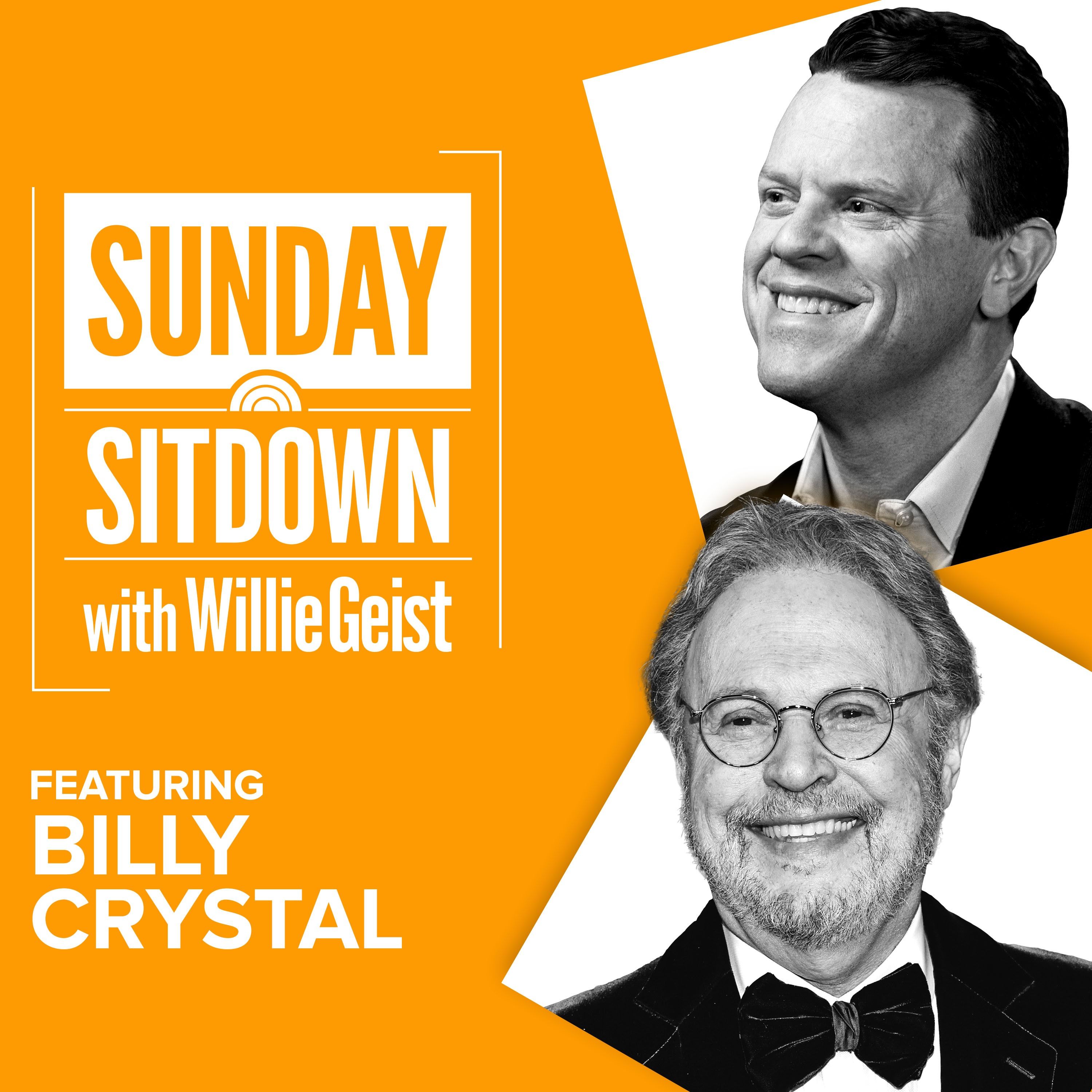
Sunday Sitdown with Willie Geist
Billy Crystal Reflects on ‘When Harry Met Sally’ and Studying Under Scorsese (December 2024)
00:51:54
Beloved for decades of iconic performances, Billy Crystal has left an indelible mark on comedy and film. In this chat from December 2024, Billy sits down with Willie at NYU Tisch’s Jack Crystal Theater, named for his late father, to reflect on his time studying under Martin Scorsese, the enduring legacy of When Harry Met Sally, and his acclaimed series, Before.
Loading summary
Transcript139 lines
- [00:01]
Billy Crystal
When work gets crazy, I like to stop by the bar after have a few cold ones. I don't drink at all until 4 o'. Clock. We limit ourselves to one bottle of wine a night. Excessive drinking has a way of sneaking up on us. A few drinks a few nights a week, it can add up and suddenly we're at greater risk for long term problems like heart disease, cancer and depression. Reason enough to rethink the drink. More more@rethinktodrink.com no HA Initiative cash flow.
- [00:31]
OnDeck Advertiser
Crunch on Deck's small business line of credit gives your business immediate access to funds up to $100,000 right when you need it. Cover seasonal dips, manage payroll, restock inventory, or tackle unexpected expenses without missing a beat. With flexible draws, transparent pricing and control over repayment, get funded quickly and confidently. Apply today@ondeck.com funds could be available as soon as tomorrow. Depending on certain loan attributes, your business loan may be issued by Ondeck or Celtic Bank. Ondeck does not lend North Dakota all loans and amounts subject to lender approval.
- [01:07]
Willie Geist
Hey guys, Willie Geist here with another episode of the Sunday Sit down podcast. My thanks as always for clicking and listening along. I am absolutely thrilled to bring you my conversation this week with a man who truly needs no introduction. He is a legend in Hollywood. He is a legend in comedy. He is Billy Crystal. I will just give you a little background about our location. Sometimes when we do these interviews, we reach out to the team around our guests and say, is there any where you'd like to do the interview? Is there anywhere meaningful to you? And Billy Crystal immediately said, I would love to do the interview in the Jack Crystal Theater at NYU's Tisch School of the Arts in New York City. Why? Because that theater is named for Billy's father, Jack Crystal, who was a band leader, a guy who in the 1950s had a record label, a guy who kind of brought in all these different sounds and these voices into that very building. That space. It, of course, has been changed and renovated since. But Billy Crystal, basically, as a young kid, grew up going to shows at this very theater where he and I are sitting and talking. And it was the first time he ever got up on a stage. His love for performing and entertainment was sparked in that room. So it was very special to sit there with him inside those four walls. Walls in the Jack Crystal Theater, now named for his father. So I don't need to tell you about Billy Crystal's career. I don't need to tell you about snl. I don't need to tell you about Harry Met Sally, City Slickers, Monsters, Inc. Everything he has done over the course of his career. Getting his break with the Dean Martin celebrity roast of Muhammad Ali in 1976 that sparked a friendship between the two for some 40 years. Now, Billy Crystal, obviously so known for comedy, is in a very dark series on Apple TV. It's called Before. He plays Dr. Eli Adler, who's a child psychiatrist caring for this very troubled young boy who kind of exposes Crystal's character's own demons and makes him explore all these other things about himself. It's a really heavy, dark show, but he's so good in it. It's called before. So I'll get out of the way, sit back, relax, and just imagine how significant and meaningful and moving it is for Billy Crystal to have kind of born his career in this room with his dad, who he so reveres and who he lost when he was just 15 years old and who was the inspiration for his Tony winning Broadway show 700 Sundays, and to be able to be in a position in his life and his career to have a theater named after his dad. So sit back, relax, and enjoy Billy Crystal right now on the Sunday Sit down podcast.
- [03:49]
Billy, thanks for doing this.
- [03:50]
Billy Crystal
Oh, my pleasure.
- [03:51]
Willie Geist
So good to see you. In fact, doing this in the Jack Crystal Theater, of all places. Jack Crystal is your father?
- [03:58]
Billy Crystal
Yeah.
- [03:59]
Willie Geist
Can you tell me why this room is so significant to you?
- [04:03]
Billy Crystal
My dad produced great jazz concerts here on the weekends. They were called the sessions from 1949 until his untimely death in 1963. I used to come with my brothers and my mom on weekends and watch the shows just to, you know, be with him. And this place was a catering hall. It was known as the Central Plaza. And the Sessions were called Jazz at the Plaza. So I couldn't help myself. And the music started. I was five. I ran up on stage and tap danced with the band as best I could. Crowd went wild. It's just little kids up there with the great Dixieland stars of the day. And that always stayed with me. It always stayed with me. I talked about it in my Broadway show on 700 Sundays. And then over time, this became an NYU building and raised a lot of money to renovate the hall. It's now a dance recital hall and theater. And they were, you know, they understood the history. My dad and I said, can we name him for your father at the theater? For your father? And I said, it's the greatest compliment you could have. A lot of great things happened here. He was one of the first producers to integrate bands to play white players with, with. With African American players and, and even a great Navajo named Big Chief Russell Moore, who was so an indigenous American to also play. I mean, it was like an amazing melting pot of talent. So it means a great deal to me. So when I knew you wanted to talk, I said, this makes a lot of sense.
- [05:46]
Willie Geist
I'm so honored, honestly, to be here. This is really cool. And you say you remember being five years old on this stage. Is it because of the reaction you got? You never forget that.
- [05:54]
Billy Crystal
Oh, you never forget your first laugh, your first applause and that feeling of that music, you know, it just drove me and it still does to this day.
- [06:04]
Willie Geist
What's it like to sit here now? Is there any memory that rushes back or is it too different for you?
- [06:09]
Billy Crystal
It's too different, but it is still the air, you know, it is still the space. And the floors are pretty much the same in certain areas. Great Broadway shows would rehearse here, and Playhouse 90, the live television dramas, would rehearse here. So oftentimes the floor would have tape all over it for where the sets were. And then over time, as I made my way in the industry and I would talk about this place, all these people would come, say, I used to go to the sessions. I mean, Carl Reiner told me several times, oh, yeah, we would go to Mel Brooks, Jack Nicholson, really, when he came to see Seven Sundays and he saw the section about the central plaza, said to me, I used to go there on the weekends when I was in high school. God damn, that's cool. Yeah, it was really something.
- [07:05]
Willie Geist
These were happenings. I mean, your dad had a major label in terms of the acts that he run and Billy Holiday and all kinds of really well known jazz acts.
- [07:14]
Billy Crystal
Yeah, and, and that was. They were the, the family friends, you know. So it was, it's a big reason why I ended up doing whatever, whatever it is I do.
- [07:25]
Willie Geist
It's probably inevitable from that tap dance. You were five years old.
- [07:28]
Billy Crystal
Oh, no, I was hooked. I was, I was hooked. And I just, you know, never, never spit the hook.
- [07:34]
Willie Geist
Well, here we are now, from a five year old to your new series, which is just extraordinary, called Before.
- [07:42]
Billy Crystal
Yeah.
- [07:43]
Willie Geist
As I said to you a minute ago, it is going to be at first a shock to people, I think, to say, this is the Billy Crystal I've known and loved for so many years. In a way I've never seen him. How do you describe this series to people?
- [07:58]
Billy Crystal
It's a psychodrama thriller. It's the Story of a pediatric psychiatrist dealing with a troubled young boy who's presenting trauma in a way that this psychiatrist has never experienced before. And it's a story about a man who's losing his mind in order to find himself. And it's so. Well, I know I'm in it, but I'm just saying it's so well made. It's a brilliant cast. Rosie Perez, Hope Davis, Judith Light, Robert Townsend, and this incredible young actor who plays Noah, the troubled boy named Jacoby Jupe. And it was a find of a lifetime to have him join us and be the incredible actor he is. It's a surreal world that'll make total sense right at the very end of the 10 episodes.
- [09:02]
Willie Geist
So I'm halfway through. I'm five in. It hasn't quite made sense yet, but I can feel it building to that.
- [09:08]
Billy Crystal
Place where it's coming. It's coming. And that's why I like that apple. We started with two on October 25th, and that's been one a week since then. So it just keeps you now what now? And it keeps people talking about it. You know, it's very exciting that way. And it's a world I never thought I would perhaps be in, but once I was in it, I loved every second of it.
- [09:31]
Willie Geist
I was gonna ask you about that. I said, people will be surprised and have to reorient themselves to Billy Crystal in this series in a good way. When it came across your desk, given the scripts and the pitches you hear, how did you respond at first?
- [09:45]
Billy Crystal
Well, I was one of the creators of it, so I was responding before there was something to respond to.
- [09:50]
Willie Geist
You were seeking this, right? You were seeking something different, though, in other words.
- [09:54]
Billy Crystal
Yeah. But it wasn't a conscious effort of or thought process of, I gotta do something. I'm fine. It just was an amazing character to play, and I hadn't intended to play him. I was going to produce it. The short, long strokes of it is this started as a show called Deathbed, and it was a story loosely based on my grandmother's tapes that she made before she died about how the family came to America. And, like, when she first comes on the tape. Well, I want you to know that my grandfather was the tailor for Tsar Nicholas, and that when the program started, they got us out of there because they were going to kill us because we were Jews. That's how the family came to America. And I went, oh, my God. Oh, my God. I'm in. I'm in. So the thought was this older man recounting like, These tapes, his life. And talking to a gerontologist who was trying to think, was this dementia? What was. You know, these stories, could they be real? So. So we could never break it. And I was working with this great screenwriter, Eric Roth, who won the Oscar for Forrest Gump and Dune and Killers of the Flower Moon. I mean, as good as you can get. And Howie Miller and Sam Spreck. And we were working together and we couldn't bust it. And then came across a book that Howie gave me. Just take a read this. And it was called Life Before Life. It's a story about kids who present a past life experience. And it's a phenomenon. And it was just to read it. So one day in a meeting, we weren't getting anywhere. We couldn't bust the story about. And I said, well, wait a minute. What if he's not 100? What if he's 8? But he has these memories. He has these memories of an old person. Is that something? And we went. Got it. Then Eric said, why don't you meet Sarah Thorpe? She writes amazing stuff. Sarah came in two weeks after we told her the big bones of it and pitched out. This world of Dr. Eli Adler, dealing with this young Noah and where that would lead us. His late wife Lynn. How do they tie together? Where are we, you know, and who did this and who did? And it was incredible pitch. And I said, stop, I'll play him. I want to play him. And that's really how it started. And then once we got a commitment from apple to do 10, I was on Broadway with Mr. Saturday Night, so they were writing. So my only day off was Monday. So Sarah would send a script, say, what do you think? And I would read and go, oh, my. I get to. What, are you kidding? So that was a discovery process that I did. The. Oh, my God. How she and the writing staff she put together wrote AN Amazing, amazing 10 episodes.
- [12:57]
Willie Geist
And it sounds like, Billy, you got into this character, Eli, differently than you have previous characters. By that, I mean, you kind of had to stay there for most of it.
- [13:07]
Billy Crystal
Yeah. You know, it really developed a method for me which I hadn't had to have before. I couldn't shake him. Janice and I, over our 54 year old.
- [13:23]
Willie Geist
Your wonderful wife.
- [13:24]
Billy Crystal
Yeah. I've tried to maintain a rule that we're never apart more than two weeks, and sometimes it's just impossible. This time was very difficult for us to be together. For Eli's alone, his wife, Judith Light has passed away. Judith didn't die. The character died. And so we were shooting in New Jersey, and I'd be on the set 12, 13, 14 hours a day. You see, I'm like, in every moment.
- [13:52]
Willie Geist
Yeah.
- [13:53]
Billy Crystal
So I'm him all day. I would come home, learn my lines for the next day all alone, maybe make something to eat and not him again. Morning comes out the door at 5, 30, 6 o' clock with my teamster driver and pull over. You're this character. Run these lines with me till we got to the soundstage. Then I'm him again. So I was so immersed in Eli and fearless in what I would do and all the. When you're mad, you can go places that are pretty spectacular, you know, as an actor. And I had great directors who. I said, from the time we're together, push me, stretch me, never hold back what you want. Nothing's impossible. If it's way too much, I'll say I'll do 75% of that, but whatever I can physically do. And it was emotionally so satisfying to inhabit the sky. And I really feel like I did that, you know, I was really. And it took a while to shed him, I'm sure. Yeah. Yeah.
- [15:12]
Willie Geist
I don't know. I don't know how you shake that. I mean, I came out of watching the fifth episode, you know, 30 minutes before this, and I saw you, and I just had to, like, take myself. Take myself out of it. I wasn't in the series, but you mentioned Jacoby, the young actor, who's 11 years old, was 10 when you were shooting.
- [15:29]
Billy Crystal
I guess he plays eight. That's how good he is. He's an extraordinary kid.
- [15:34]
Willie Geist
He's an amazing actor.
- [15:35]
Billy Crystal
Yeah. And. Yeah. You know, kid's almost insulting to him. He's a great actor. He has a natural instinct about him. That's very rare. You find it in veteran actors. And he just gets it. He's just instinctual. And in the first half of the series, he doesn't speak much and he has these panic attacks and these fantasies and these horrors. And he's violent and he's mute. He's sort of feral in a way. And it's all here and it's in his soul. And he just does it over and over again. And then he'll go, cut. And he'll go, could I have a cruller? I mean, he just turns it on and off. I mean, he was astounding. And he's a wonderful young man. Yeah.
- [16:29]
Willie Geist
I mean, I was thinking about from his side of it, you're 10 years old and here you are with Billy Crystal. This Legend for really your big acting debut. But, man, he stands in there with you, doesn't he?
- [16:43]
Billy Crystal
Oh, for sure.
- [16:43]
Willie Geist
I mean, he's not.
- [16:43]
Billy Crystal
We wouldn't have a show if he didn't. Yeah, we wouldn't have a show. We auditioned over 700 kids in the US and Canada. Wow. Till we came across Jacoby, who had just done a Disney film where he played one of the darling kids in a. A Peter Pan movie with Jude Law. And he's the little guy, Michael. But there was something about him and they put him on tape and. And they said, he's pretty special, this guy. And we looked at him and it was. So let's arrange an audition. But he was in London and I was in la, so we did it over zoom and he blew me away. We did the Mad Game, which is from one of the episodes. So I was setting up the blocks in my computer in LA and he was knocking them over in London and he just. And then we just spoke for a long time and so we. It was coming close to shooting, so we got him to the States, I think seven or eight days before he actually started. Till I first physically met him, which was perfect because in the show, he just shows up one day right out of the blue. So it was like I didn't want to spend too much time with him. I didn't want to over rehearse it and just let it just naturally be. And he's. He's so good.
- [17:58]
Willie Geist
And it came together so well, I'm sure. When is it one of those shows where you're in it and you have a feeling that you're onto something, that this is going to be special, that it's going to be good, and then when you sit back and actually get to watch it, it delivers on that. Was that one of those cases?
- [18:14]
Billy Crystal
Yeah, I think so, yeah. With comedies you never know sometimes, right? Because it's, you know, you set up the joke in September and you don't get to laugh till May. So in between is a lot of. Is this gonna work? These scenes were so intense and, and, and so well directed and, and, and performed. I think that you had a feeling that this was really something. And then, you know, it had a lot of. It has a lot of videos, you know, visual effects that take a while to come in. And in post production, Sarah and I, you know, worked very closely together till we finished, you know, I think about a month before we debuted. And the music is spectacular and it's just, It's. You have a feeling this is gonna Work. Yeah.
- [19:01]
Willie Geist
And it does.
- [19:01]
Billy Crystal
It does.
- [19:02]
Willie Geist
You mentioned Nicholson in a different context. I was interested to read that you found something in the Shining to sort of compare yourself to or the way that character slowly goes mad.
- [19:16]
Billy Crystal
Yeah, it was like, you know, let's go full Jack Nicholson and Jack Nicholson on this and just watch, you know, he's like my favorite. And to watch that as a. Oh, and he was a writer. And the scariest moment is when Shelley Duvall looks at the page and he's just written the same thing over and over and over again. But the whole movie has an atmosphere to it, and we wanted that into Brownstone that Eli lives in, where all of these bad things happened and. Yeah. So Jack at any time is a role model.
- [19:54]
Willie Geist
Do you love doing the miniseries now, something you haven't done much of? Right. And to be a creator and a star in this format where you get to make 10 little movies kind of.
- [20:04]
Billy Crystal
Yeah, yeah. That's what it feels like. You know, it's like five hours of television, and then you're on to the next thing, and, you know, there's something great about it. It's very interesting. And all the production values are like feature film. Working with great people, the directors are great, the DPs are great. Camera crew is amazing. And then you can move on. And if, you know, maybe there's talk of a second, one second season with a new patient or what happened to Eli? I don't know.
- [20:37]
Willie Geist
It sounds like the door is open to a second season.
- [20:39]
Billy Crystal
I had a great time. I had a great time at this point in my life, in my career, to find something new and so invigorating is really thrilling.
- [20:50]
Willie Geist
I was gonna ask you that. You've done everything. You've succeeded at everything. What does it take to get you out the door and spend as much time and invest as much energy as you did in this character these days? It'd have to be something new, something that feels challenging like that.
- [21:04]
Billy Crystal
Something really like, oh, I would like to do that.
- [21:07]
Willie Geist
Yeah.
- [21:07]
Billy Crystal
You just sort of know I'm sort of itchy to get back on stage, you know, back to where it started here, you know, just in front of people, you know, talking. You're working on something as I'm noodling around. Noodling around. All right, but, yeah, that would be great. But I, I. And if nothing happens, it's all been great.
- [21:32]
Willie Geist
I have a feeling there's plenty more ahead.
- [21:34]
Billy Crystal
Billy.
- [21:35]
Willie Geist
Hey, guys, thanks for listening to the Sunday Sit down podcast. Stick around to hear more from Billy Crystal. Right after the break.
- [21:44]
Billy Crystal
A Real Etsy Buyer review for handmade home decor by a real Etsy seller. I could not be happier about the quality or the wonderful personal message supplied with it describing its journey into existence. Discover original items created by real people.
- [21:58]
Willie Geist
And loved by real people just like you.
- [22:01]
Billy Crystal
Special starts on Etsy Shop the Etsy app.
- [22:07]
OnDeck Advertiser
Cash Flow Crunch on Deck's small Business line of credit gives your business immediate access to funds up to $100,000 right when you need it. Cover seasonal dips, manage payroll, restock inventory or tackle unexpected expenses without missing a beat with flexible draws, transparent pricing and control over repayment. Get funded quickly and Confident today at OnDeck.com, funds could be available as soon as tomorrow. Depending on certain loan attributes, your business loan may be issued by Ondeck or Celtic Bank. Ondeck does not lend in North Dakota. All loans and amounts subject to lender approval.
- [22:38]
Meet the Press Advertiser
This week only on Meet the Press as the US Pushes for a Ukraine, Russia peace deal, Kristen Welker sits down exclusively with Vice President J.D. vance and Russian Foreign Minister Sergei Lavrov, plus Senator Adam Schiff. This this week only on Meet the Press. Listen to the full episode now, wherever you get your podcasts.
- [23:02]
Willie Geist
Welcome back. Now more of my conversation with Billy Crystal.
- [23:05]
We were talking about your dad a minute ago and I'm curious beyond the five year old tap dancing, when the performance or entertaining bug really bit you to the extent where you said this is something I want to do with my life, was it at Long Beach High School? Was it before that?
- [23:23]
Billy Crystal
It was all before, yeah. My brothers and I with the relatives performing. It all just felt all right. What else am I going to do, you know? And then performing in high school, we had a show called the Swing show, which was a variety show. It was a dance band, singers, something, and I did stand up in it and it just sort of came naturally. And I'm at ease in only a few places, honestly, talking to people and fielding ground balls. Otherwise I don't know what I am. No, it's always been the safe place. Always has been.
- [24:14]
Willie Geist
That's interesting because it's the exact opposite. For most people, the safe place is not standing up in a.
- [24:20]
Billy Crystal
You know, I get it, I get it. Always felt like that's where I wanted to be, you know.
- [24:24]
Willie Geist
And you chase that here to nyu, right where you.
- [24:29]
Billy Crystal
I was in film school here. Yeah. Maris Scorsese was my film production professor. He was a graduate student at the time, just doing his first movie called who's that Knocking on My Door? And it was 1968, 1969, 1970. This neighborhood was wild. It was a terrible time for America, but a great time at the same time. Because through all of that adversity and all of that protesting against the Vietnam War, it brought us together. It also, you know, what came out of it was a renaissance in music and poetry and art that we're still feeling today. I mean, suddenly there were voices. There was Joan Baez, there was Dylan, there was the Grateful Dead. There was all O. Guthrie. There was, you know, we shut down a New York State Thruway. There was. All of that world was like right here. And so when I was at nyu, Marty was a professor. And big, big beard and granny glasses, hair down to his shoulder. And he looked like everybody. But he'd stand behind you while you're editing your film. And he would be very scary. Cause he would look and he was so intense. And he would speak very quickly. Even then. He spoke quicker then because he was, you know, 50 years younger and he was. Why'd you shoot that way? Use a wide shot? You shoot. Howard Hawks, always use the wide shot. I said, I'm 19. I don't know who Howard Hawks is. One time he spoke so quick, he. He disappeared into the future. He just. Where'd Marty go? Poof. Yeah. God.
- [26:11]
Willie Geist
So he was basically what he is now, a version of that?
- [26:14]
Billy Crystal
Yeah, yeah. No, it's the same. It's the same energy. Every time I see him, I say the same thing. Why'd you give me a C?
- [26:21]
Willie Geist
Did he really give you a C?
- [26:22]
Billy Crystal
Oh, come on, man. No grades. It was just. I think you could do better. I think you could do better.
- [26:27]
Willie Geist
So what was the vision then? What was the ideal? You're in film school here. What do you want to do with it? You want to make films? You want to be an actor?
- [26:33]
Billy Crystal
I thought so. I thought so. But then I really always was acting. And then I had gone to this junior college before NYU called Nassau Community College. And they had an amazing theater department. That's where I broke through as an actor, was there. I still wonder why I came here as a director. I'm just. I don't. Even now, I don't. I'm not sure why I did that, because my soul was always in acting. So then we had an incredible head of the theater department at Nassau. I have to say his name because he was a wonderful man for me. Dr. Wesley Jensby. And Wes started something called the alumni theater group. These are all graduates. This is a two year school, right? And we did a summer stock Program. So you audition for the. For the. For the team to be part of the team, the acting team. And we did four plays in rep for the summer, summer stock. And he got an equity bond, and that's where I got my equity card. So it's really interesting because the theater now, this was a concert hall and, you know, an event hall. Weddings, bar mitzvahs, and now it's a theater. Out there was an Air force base. Right. And there were hangars for planes. So we turned one of the hangars into a theater, and you could open up those huge doors, and people would sit on the runways, and we had big musicals. We did Finian's Rainbow. Janice and I were in Finian's Rainbow together. Funny thing happened away at the Forum. Sweet Charity. It was a summer of rep, you know, summer stock. And we get 2,000, 2,500 people sitting under the stars. Indoor, outdoor. You know, if you got there early, you got to sit inside the hangar, and then there was no turning back. There was really no turning back.
- [28:38]
Willie Geist
It was kind of an extension of what happened when you were five. Here you were feeling the crowd and the excitement, the energy, putting on a show.
- [28:43]
Billy Crystal
Yeah. And you got to play good parts. I was Rosencrantz and Rosencran Guildenstern, the dead OG Infinion's Rainbow. The leprechaun got to sing. When I'm not near the girl I love I love the girl I'm near and I was near the girl I loved, so it made a lot of sense.
- [28:57]
Willie Geist
Can we talk about the girl you love? We can talk about her if she's not here, even though she's sitting right there. I am also. My wife and I were high school sweethearts. Actually met in junior high school.
- [29:06]
Billy Crystal
Wow.
- [29:07]
Willie Geist
So now I know what it's like to grow up together. How gratifying, I guess, has it been to have the life and the career that you've had with Janice at your side from the very beginning?
- [29:20]
Billy Crystal
Yeah, from before the beginning. Yeah. The most important moment for us was I was substitute teaching right. In the same junior high that I had gone to in Long Beach. And I was really frustrated with myself. I was with two friends. Was an improv group called Three's Company, where that was the three of us. And I loved these guys. They were my best friends, and we were very funny together. But I was hiding. I needed to be on my own, and I didn't know how to do it, and I was really scared. And it was at the beginning of when the comedy clubs were Becoming a thing, the improv here in New York, that started it. And then there was a club on Eastside called Catch a Rising Star. And we would go there as a group and work and it was, things just weren't happening. And then my manager who was managing the group at the end, it was the little tail part of us said, the group's not going anywhere. Have you thought of being a single? Because we'll be there for you. And these are the managers who managed Robert Klein, Cavett, Woody Allen. Like they were the Jack Rollins, Charlie Joffe, Buddy Moore, they were like the class comedy managers. And I said, oh. He said, because we'll be there for you if you want to do it. A couple of days later I get a call from a friend at NYU saying, you know, a comedian can do like 20 minutes in front of a folk singer. Friday night at ZBT fraternity house on Mercer Street. I said, I'll do it. He said, when did you start doing it? And I lied. Oh, I've been doing it for a while. So I threw together some stuff I did, you know, pretty well that night. It went great. And now there's no turning back. In the interim, we have a baby. So now Janice comes to me and says, the baby's six months old and this is the turning point in my life. She says, I'm going to go back to work. We really need the money. I get health benefits at my job. You'll watch Jenny all day. I'll come home around five and you go off and you'll be the comedian I know that you can be. And that was the deal. So two things happened. I'm now responsible for this six month old all on my own and with this amazing gift of time at night and go do it. And it's now, now you're on the clock. And I found with Jenny that you can love something so much more than yourself or anything else in your life. She can't get through the day without you. And that was. And then Chance would come home, hand her off and then drive an hour into the city and try to get on before 1:00 clock in the morning, drive all the way back. Janice would leave for her job in this like 6, 7, 8 o' clock in the morning. I'd be up and then it would start all over again. But that was, that was the, that was a turning point for me because I, I talked before about a guy losing his mind and finding himself. I was finding myself in spectacular ways, you know, that you, that you can't really Almost explain anyone. Unless they have their own kids and they have a, you know, a goal that they so want to achieve. And I don't know. I might have. If that didn't happen, I don't know, would I have backed off and say, is there a full time teaching job that I could have? I don't know.
- [33:28]
Willie Geist
And a partner who believes in you and says, go do it. I think you can do it.
- [33:32]
Billy Crystal
I love that.
- [33:34]
Willie Geist
Yeah, I think that's critically important to have somebody at your side who says you're.
- [33:38]
Billy Crystal
No, I was.
- [33:38]
Willie Geist
You're good at this.
- [33:39]
Billy Crystal
I was. I was Mr. Mom before it was. It was cool.
- [33:44]
Willie Geist
So then things do start happening for you. I'm looking at, I think in 76. You do Carson. You're on the Deus, the Dean Martin Rose with Albi. I mean, those are big gigs at that point.
- [33:55]
Billy Crystal
Well, the. The first one was with. And it would turn out to be an amazing relationship. 1974, Ali beats George Foreman. The Rumble in the Jungle. They're going to honor him at the Plaza Hotel in a Tri State special. It was only going to be seen in New York, Pennsylvania and Connecticut. Sport magazine was a great magazine at the time. And its editor in chief was Dick Shap, who's a great writer and would later become one of our best friends. So he calls my agent because they're gonna do this special for Ali. Is Robert Klein in town? Because Robert did a lot of great sports stuff. And she said, no, Robert's not in town. But I have this new kid and he does this imitation of Muhammad Ali and Cosell. It's really funny, Dick. It's like three minutes long. I've seen him at catcherizing store, you know, And I signed him and Dick said, great. It's a Plaza Hotel. Friday, 8 o'. Clock. Give me his number. I want to talk to him personally. So I'm actually feeding Jenny. Billy. Dick Shapp. Hi. We're doing this thing. I'd like you to be on the show. Really? Yeah. And he's telling me all about it. And he said, and I'll leave. I know he'll like. I said, wait, Ali's gonna be here? Oh, yeah. We're honoring him. And we'll see you Friday night, 8 o'. Clock. So I hung up the phone. I just. I couldn't believe that this was gonna happen. Janice and I drive in from Long beach, the Plaza Hotel. We walk into the ballroom and cameras are all set up and all of these people are mingling around and we hold hands and we look like As I described it, two people who had just gotten to America, we were like, oh, my God. And then I saw Ali for the first time still. I mean, he was just. There was. Everyone else was like. It was like a Scorsese shot. Everybody else was in slow motion except him. It was amazing. And then Dick meets us and he says, janice, you're gonna sit with me. Billy, you're like two seats from Ali on the deus. Yeah. And he goes, how should I introduce you? Because, no, I was not on anything. So I said, just say I'm one of Ali's closest and dearest friends. I said, good, good. All right, good. Because then I'll. In my mind, I'll go right to the mic. I'll just launch into the Howard Cosell of it. I won't have to talk as myself. My dry mouth will go away, and then it'll be fine. So I'm sitting next to Gino Marchetti from the Baltimore Colts, Archie Griffin. It was all the great individual sports stars. They're all on there, including Neil Simon and. Oh, my God. Talk about an all star team, right? And George Plimpton.
- [37:03]
Willie Geist
And you're still a kid at this point.
- [37:04]
Billy Crystal
Yeah, yeah, yeah. And I've never been on television before. And there's Ali, my hero. I mean, because with the Kennedys gone and Martin Luther King gone and Malcolm X gone, all these people gone, this was the man who said, this war is wrong, who stood up for something and stood up for all of us by saying it's not. I will give up everything because this isn't right. And I just loved him for that. And on top of it, he was unbelievable. And now he's Ali's closest and dearest friend. So I get up and there's like two people applaud, which was Janice and Dick Schapp. And so I got to the mic and I went right into the Cosell of it. Hello, everyone. Howard Cosell in the ring here in Zaire, Africa. And someone starts yelling at me from the audience. It's Drew Bondini Brown, who was all these, like, right hand man in the corner, Bundini, floating like a butterfly. Sing that guy. And he's yelling at me. I'm getting heckled. 20 seconds into my breakthrough. You got a man. That's what he's yelling at. You got a man. And I thought. And I just. I just kept going. Then I hit the ollie. Everybody's talking about Joe Fraser. I was talking about Joe Fraser. George Farmer is a slow motion of a rope, a dope, and went on and on and on and on. And it ended. Big applause. Ali grabs me and whispers in my ear, you're my little brother. And that's what he called me for 42 years. Oh, man. It was unbelievable that we would know each other all of this time. So flash forward. Sadly, he passes on. Lonnie, his amazing wife, calls me and says, muhammad wanted you to be one of his eulogists. It's in Louisville. And so I said, of course, of course, of course. So Janice and I fly to Louisville. It's in the. Where the basketball team plays in a big arena. 17,000 people. They just had a funeral where they're chased after the coffin. Not unlike Robert Kennedy on the train with everyone waving goodbye and watching the great man go. And we're still holding hands. And I'm sitting next to President Clinton. And all I'm thinking about, Willie, is this. What if Robert Klein was in town? All right, maybe this didn't happen.
- [39:44]
Willie Geist
None of this happens.
- [39:45]
Billy Crystal
Maybe none of it happens if Robert Klein is in town.
- [39:50]
Willie Geist
Have you told Robert Klein that you thanked him?
- [39:53]
Billy Crystal
Oh, yeah. And he was pissed off. Damn, I should have been a dad. But it's fate. It's destiny, you know? Like, the first time I met Janice, it was, like, meant to be. Yeah.
- [40:03]
Willie Geist
But you also have to deliver in that moment. You get the opportunity, and you gotta do that.
- [40:07]
Billy Crystal
Yeah. No, it was electric. It was crazy. Cause no one knew who I was. And, you know, it just worked. It just worked. And Ali recognized that. And. And he was on that Dean Martin roast when I went and went from there to do my first costume show right after that. But another one. We have time. Oh, all of them. Okay. Yeah. You talk about things. I'm a new guy, had come to LA second or third time. And they set up a night for me at the Comedy store to do 20 minutes. And they. With them, they invited a bunch of really heavyweight people to come if they wanted to see this new guy from, you know, from New York. So Carl Ryan was in the audience. Norman Lee was in the audience. Jim Brooks was in the audience. All of these people, it went really good. I'm standing outside. If you've been to Comedy Store, the scene is outside. And Mr. Reiner walks out, introduces himself like he had to. You know, I'm Carl Reiner.
- [41:09]
Willie Geist
Yes.
- [41:10]
Billy Crystal
And, like, what was the name? Do I know you from? And then Norman Lear comes out. Same thing. Hi, I'm Norman Lear. So nice to meet you. Really enjoyed it. Tell me about yourself. So and so forth. Two weeks later, I'm Again feeding Jenny, she's like such a good omen for me. Good luck. Good luck, Charlie. Hello. Hold on for Norman Learster. Crystal. So did I. What did I, did I offend him? What was it? Billy. Hey, Norman Lear. We met at the Comedy Store and I want to go. I don't, I don't recall. You know what? He is so self effaced. There's a part on all in the Family that's coming up next week and I think you and Robbie would be really good together. The script's not there yet, but it'll get there. That's how we work. And so can you get here? Yeah, of course. Great. We'll make all the arrangements and I'll see you when you get here. And I won an all in family and played Rob's best friend and we became, you know, best friends after that. We sort of said this worked good. Should we keep it going? And that relationship, he's like a brother to me. And I was fortunate enough to be in three amazing movies and one line in Spinal Tap, a bunch of lines in the Princess Bride and then most of the lines, a lot of. And you know, that body of work of just with Rob and I alone means so much to my career and so much to me personally that, you know, you know, we're in our 70s now and that we have this great friendship still. And the body work is, it was a big reason why, you know, nice things have happened for me.
- [43:00]
Willie Geist
Stick around for more of my conversation with Billy Crystal right after a quick break.
- [43:06]
Shopify Advertiser
Businesses that are selling through the roof like Untuck it make selling and for shoppers buying simple with Shopify, home of the number one checkout on the planet. And with shop Pay, you can boost conversions up to 50%. Businesses that sell more sell on Shopify. Upgrade your business and get the same checkout. Untuck it uses. Sign up for your $1 per month trial period at shopify.com podcastfree all lowercase go to shopify.com podcastfree to upgrade your selling today.
- [43:35]
OnDeck Advertiser
Need to restock inventory, cover seasonal dips, or manage payroll. Ondeck's small business line of credit provides immediate access to funds up to $100,000 exactly when your business needs it. With flexible draws, transparent pricing and full control over repayment, you can tackle unexpected expenses without missing a beat. Apply today at ondeck. Funds could be available as soon as tomorrow. Depending on certain loan attributes, your business loan may be issued by On Deck or Celtic Bank. On Deck does not lend in North Dakota. All loans an amount Subject to lender approval.
- [44:06]
Meet the Press Advertiser
This week only on Meet the Press, as the US Pushes for a Ukraine, Russia peace deal. Kristen Welker sits down exclusively with Vice President J.D. vance and Russian Foreign Minister Sergei Lavrov, plus Senator Adam Schiff. This week only on Meet the Press. Listen to the full episode now, wherever you get your podcasts.
- [44:30]
Willie Geist
Welcome back now to the rest of my conversation with Billy Crystal.
- [44:34]
Yeah, those three movies are all classics, obviously. I know you've been told this 35 years since when Harry Met Sally.
- [44:42]
Billy Crystal
Yeah.
- [44:42]
Willie Geist
And you and Rob worked together. Are you pleasantly surprised by the endurance of that movie? By that I mean young people today quote it. Everybody's. I mean.
- [44:52]
Billy Crystal
No, I'm very upset about it. No, of course. And not even, you know, after a while, you're not even surprised because it keeps happening. And I'm not surprised because there's so much truth and love in that movie. There's so much romance in that movie. There's so much confusion in that movie about relationships that that's, that's an internal situation for people and young kids now they're in the phase of their life where they may be falling in love and is this the right thing? It took Harry and Sally 12 years to figure it out, you know, but it's thrilling that it still happens. I mean, one of my granddaughters in school last year as a senior, they were doing a class on Harry and Salad said, grandpa, you're not gonna believe this. You're not gonna believe this. Could. They're watching. We're watching Harry and Sally now. Could you come and talk to the class about, you know, and it's, it's very, it's so satisfying. You never know.
- [45:58]
Willie Geist
Right?
- [45:58]
Billy Crystal
That's. One of you asked me, do you know if you, you know, before? Do you know if it's good? We knew it was good. It was a wonderful script. Meg and I were so good together. And Bruno and Carrie, amazing director and a great cinematographer. Barry Sonnenfelder became a terrific director on his own. Right? And it was New York, it was the fall, and you were hearing Gershwin whether it was playing or not, you know, and it was like the perfect, it was the perfect time for Meg and I in our careers to have this moment together. We had done some To Throw Mama from the Train and things were happening a little bit, and it just was meant to be.
- [46:49]
Willie Geist
What did that movie, Billy do for your. Not just your career, but your life? It obviously changed things. You were a great stand up. People knew you in comedies. They knew you from television series. And Some of the other movies you'd done, but this was something else. This had a life of its own.
- [47:03]
Billy Crystal
And it still does.
- [47:04]
Willie Geist
Yeah.
- [47:04]
Billy Crystal
You know, it just was. It's a way. Suddenly you're being told you're a romantic lead. That was. That was. Took a lot of adjustments for me. No, but it's. It's. Even to this. To this day, 35 years later, I see people come up and they want to meet Harry. You know, they want. Where are they now? What's happened to them? Do you know? You know, what do you think? And all of that stuff, it's. And then, you know, when I got the. Fortunate enough to receive the Kennedy center honor last year, and Rob was sort of the maestro of it, and Meg walked out, and I'm set. That was, you know, duplicate of the Katz's Deli. It just, you know, it just. I'm wearing that. The beautiful Kennedy center honor medallion. And there she is, you know, talking about it. And she was so charming. And from all of that distance was. There was still that chemistry. It was just, you know, it means as you get older and you look back and you go, that was a good one.
- [48:24]
Willie Geist
I'll have what she's having. You could hear it anywhere. Out on the street tonight at a bar somewhere. Rob is always quick to point out that you actually wrote that line.
- [48:32]
Billy Crystal
I did, yeah. I mean, for his mom, right? That's Estelle, who says that line.
- [48:40]
Willie Geist
Incredible. Did you just think of that on the spot?
- [48:43]
Billy Crystal
We were in a rehearsal, and it started to happen. The concept. Nora brought up the fact that women made fake orgasms. And Rob said, well, they haven't faked one with me. And she goes, well, that may not be true. And I could hear Nora writing, you know, just those lines. And then Meg said, I think I should have one. I said, now? No, no. And I said, yeah. In a public place, like at a restaurant. Now we're all laughing. And she said, yeah, I'll do. And I said, then we'll. We cut to a woman, an older woman, and she'll say, I'll have what she's having. And that was. That's how. That's how it happened.
- [49:23]
Willie Geist
And the rest is history. To tie it up, I want to ask you about 700 Sundays, which is in December, will be the 20th anniversary of the debut.
- [49:33]
Billy Crystal
I'm freaking incredible. Yeah, That's. That. That was when we real. I realized that, like a couple of months ago. I said, Witch. 20 years. Yeah. Yeah.
- [49:45]
Willie Geist
And those Sundays, a lot of them were in here. You were saying, because this is.
- [49:49]
Billy Crystal
The Sundays were home. Because his always home. He was here Friday and Saturday.
- [49:53]
Willie Geist
Right?
- [49:53]
Billy Crystal
Okay. The Sundays were in Long Beach. Yeah.
- [49:56]
Willie Geist
And so that was. It's such a. The concept is so moving because you lost your dad when you were 15 years old, and that's too young to lose your dad. Before you stop and think about that. That had to be so special to be able to tell that story to an audience every night.
- [50:12]
Billy Crystal
Willie. You know, it came at a time when I needed to say it. The luggage gets heavy, carrying it around all that time. And I just needed to do it in a way that I was comfortable with, and that's in front of people and telling them the story of. Of my family. From my experience in trying to deal with the loss at 15, out of the blue, after a night where we. Evening, we had an argument, and then he never comes home. And I just wanted to do it in a theatrical way that was honest. And doing it here and talking about the music and the family in front of the house that I grew up in. The set was the house I grew up in in Long beach was the highlight of my creative experience. I gave, you know, so much every night and got back so much from audiences. I have so many hundreds of letters from people who experience pain like that but found strength through the show. They would leave me notes. They would leave me. Someone left me a brick from the hospital that I was born in, which was Doctors Hospital, right across from Gracie Mansion. He said, your show made me think about that, you know, and I lived there. But, yeah, that was. That was the most amazing experience, was hearing 1500 people a night not make a sound. Sometimes during the show, I would sit on a lawn chair and just talk to them about what this house meant to me, how important it is to fight through and putting a face on grief as this boulder that I. I pushed around the high school when I went back to school, and just feeling all of that terribleness and understanding that life isn't always. There's no guarantees, you know, and just being taught that as a young age hardened me. Maybe before I really wanted it to, you know.
- [52:45]
Willie Geist
And it took you that long to work through it.
- [52:47]
Billy Crystal
Yeah, yeah, yeah. And then. But then you work through it in with your. You turn it into something that's art, you know. I likened it to Rumpelstiltskin. You take all the straw in your life and you turn it into gold if you can, you know. And for that 700 Sundays. And again, why I wanted to be here, because it basically starts here in Many ways. And that was so important to me. And that it was important to audiences too, still makes me glow.
- [53:24]
Willie Geist
I can't help but think sitting in the Jack Crystal Theater, what your father would have thought. Seeing the things you've done in your life, in your career and the person and the artist you've become. Do you think about that sometimes?
- [53:39]
Billy Crystal
All the time. When things happen, the babies being born, the babies going off to college, our grandchildren, it's those moments, the career moments. Of course, I couldn't get them out of my head. And my mom too. At the Kennedy center, shaking hands with President Biden and wearing the medallion and sitting up in a box and all of these wonderful people coming to say nice things. I kept saying, ah, man, what they missed, you know, but in some ways you think they've seen, they, they've been watching.
- [54:24]
Willie Geist
But the five year old kid here who's a movie star, who's hosting the Academy Awards, who's getting the Kennedy honors, that's beyond any father's dream.
- [54:33]
Billy Crystal
Oh, big time. But I think what he, hopefully the, the thing that would be most important is he'd say, you did good. You're a good man. That would mean the most.
- [54:45]
Willie Geist
Thank you, Billy. I appreciate the time.
- [54:47]
Billy Crystal
You did great, Willie.
- [54:48]
Willie Geist
Honor to be in here with you. Thank you in this theater.
- [54:50]
Billy Crystal
Thanks.
- [54:55]
Willie Geist
My big thanks again to Billy for a great conversation and for helping us open the doors to the Jack Crystal Theater at nyu, the Tisch School for the Arts. You can check out Billy's series before on Apple tv. And my thanks to all of you for listening again this week. If you want to hear our conversations with our guests every week, be sure to click follow so you never miss an episode. And don't forget to tune in to Sunday Today every weekend on NBC. I'm Willie Geist. We'll see you right back here next week on the Sunday Sit down podcast.
- [55:33]
Tide Advertiser
Did you know Tide has been upgraded to provide an even better clean in cold water. Tide is specifically designed to fight any stain you throw at it. Even in cold butter. Yep. Chocolate ice cream. Sure thing. Barbecue sauce. Tide's got you covered. You don't need to use warm water. Additionally, Tide pods let you confidently fight tough stains with new coldzyme technology. Just remember, if it's gotta be clean, it's gotta be Tide.