← Sunday Sitdown with Willie Geist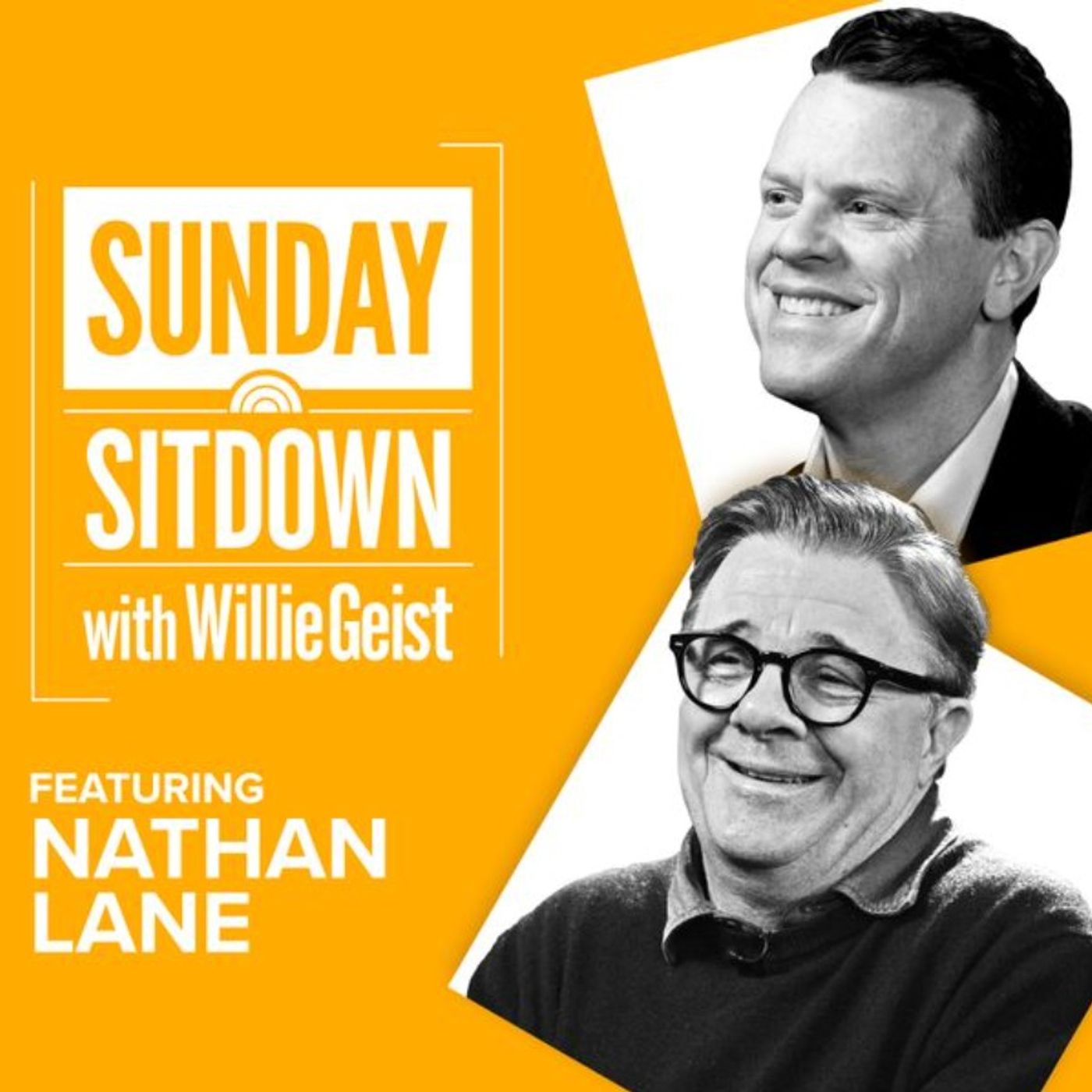
Sunday Sitdown with Willie Geist
BROADWAY STARS: Nathan Lane on Returning to Broadway in ‘Pictures from Home’ and Decades of Iconic Roles (March 2023)
01:15:05
Nathan Lane is a three-time Tony and Emmy Award-winning actor beloved for his roles on stage and screen, from "The Producers" and "The Birdcage" to voicing Timon in Disney’s "The Lion King." In this conversation from March 2023, Lane opens up to Willie Geist about his return to Broadway in "Pictures from Home," his journey from theater to Hollywood, and the performances that have defined his decades-long career.
Loading summary
Transcript209 lines
- [00:01]
Willie Geist
A real Etsy buyer review for handmade home decor by a real Etsy seller.
- [00:06]
Nathan Lane
I could not be happier about the quality or the wonderful personal message supplied with it describing its journey into existence.
- [00:13]
Willie Geist
Discover original items created by real people and loved by real people just like you.
- [00:19]
Nathan Lane
Special starts on Etsy Shop the Etsy App.
- [00:25]
Michaels Advertiser
Attention party people. You're officially invited to the Party Shop at Michaels where you'll find hundreds of new items starting at $0.99 with an expanded selection of party wear, balloons with helium included on select styles, decorations and more. Michaels is your one stop shop for celebrating everything from birthdays to bachelorette parties and baby showers to golden anniversaries. Visit Michaels store or michaels.com today to supply your next party.
- [01:00]
Willie Geist
Hey guys, Willie Geist here with another episode of the Sunday Sit down podcast. My thanks as always for clicking and listening along. Got a really fun one for you today with Emmy and Tony winner Nathan Lane. I don't really need to give you a big introduction on Nathan Lane. You know him, you love him. He's won three Tony Awards for his work on Broadway. He's done the Birdcage and a whole bunch of other movies. He's done animated. He was the Lion King, Kahuna Matata. You know the story there. Of course. He's been on Modern Family. He's been on Mad about yout. He's been on Only Murders in the Building, for which he recently won his first Emmy Award. The guy's done it all over the course of about 40 years. Grew up in New Jersey, interestingly enough, as Joe Lane. Joseph Lane was his name at birth. Had a very difficult childhood, which you'll hear about with his mother and father, but he had two great older brothers who helped him along and encouraged him into theater. When he decided to become an actor, there was another Joe Lane, Joseph Lane. So he made his stage name Nathan Lane after the character Nathan Detroit in Guys and Dolls Apart. He later played on Broadway in A Wonderful Twist of Fate. So he's just fun to talk to. He's a guy who's done it all and seen it all. He's in a new play called Pictures from Home, which is playing in New York at Studio 54. He told me before our interview that he went once back in the day to Studio 54. He was at Eddie Murphy's 21st birthday party. Said he knock, knocked over someone's bottle of champagne, had to pay for it, and then was asked to leave. So that is the extent of his experience at the debaucher's original Studio 54. It's now a theater space where he's performing the new play Pictures From Home, which he will tell you all about. We got together in a little music space beneath Studio 54 for our conversation. I think you'll enjoy it with one of the greats, really one of my favorites, Nathan Lane, right now on the Sunday Sit down podcast. Thank you for doing this, Nathan.
- [03:04]
Nathan Lane
It's my great pleasure. Willie, nice to see you.
- [03:06]
Willie Geist
Great to see you. I feel like we've just done an entire deep dive interview, but we'll pick it up officially here before we even.
- [03:13]
Nathan Lane
Have that on camera. Yes.
- [03:15]
Willie Geist
We were just talking about your wonderful play Pictures From Home, which just happens to be your 25th starring role on Broadway.
- [03:22]
Nathan Lane
Yes.
- [03:23]
Willie Geist
What does that number mean to you, if anything?
- [03:26]
Nathan Lane
Well, I think I get a Rolex from Actors Equity. I'm not sure what the prize is for hitting 25. You know, you try not to look backwards. You try to look forwards and say, what's next? I mean, it's impressive, and it's an impressive number. I've done a lot of stuff and, you know, and that's not even including off Broadway, regional theater, the national in London. So, yeah, I've spent a large majority of my career on stage and. And I've had enough. This is it. It's time. I. I'm ready to throw in the towel. Theater wins. No, it's you. Look, if you're going to do a play or a musical, especially, you know, a musical, that's really hard. I don't want to do. Do musicals anymore. But eight shows a week, you know, that's a huge commitment because, you know, they're paying a lot of money and they want to see you, and you, you know, you have to deliver, and it's. It's really, really hard. It's a real discipline, and you have to. You have to live like an athlete to take care of yourself so you can be there. I mean, the first, after the 10 days into rehearsal, all three of us, the wonderful Danny Burstein and Zoe Wanamaker, all three of us got Covid. I got it, and I was like Typhoid Mary and I gave it to them, and then the production designer got it and the sound designer got it.
- [05:04]
Willie Geist
You were patient zero then.
- [05:05]
Nathan Lane
Yeah. So we lost about. We lost two weeks of rehearsal. It was upsetting. But you have to be passionate about what it is you're doing, you know, that's why you're doing it. This play, I read it and I was incredibly moved, and I thought it Was incredibly funny, you know, because you're dealing with parents and watching them get older, and it's sort of funny, sad. It's all at the same time. You know the thing that always made me laugh? Well, we did a couple of readings of the play, and it always made me laugh when the father would walk in limping at the airport and then say to his son, am I limping? Yes, dad, you have a limp. All right, put your stuff down. You know, he's gonna prove to him that it's not that bad a limp. That always made me laugh.
- [06:02]
Willie Geist
Did you know anything about this book ahead of time? No, nothing. Okay.
- [06:06]
Nathan Lane
Nobody did.
- [06:07]
Willie Geist
I didn't either, coming into it.
- [06:08]
Nathan Lane
I mean, the critics seem to have thought been intimately familiar with this book, like it was the Grapes of Wrath. But I would venture to say if you didn't come from the world of photography, you were not familiar. So I'm not alone. I consider myself a well read person. But I had heard of Larry Sultan or this book, Pictures from Home. But he was this very celebrated photographer known as sort of the master of color photography. And he had had a couple of books before this one. And then by accident in the garage, he found boxes of old home movies and started watching them and then decided to start photographing his parents and interviewing them. And I think the impetus was really he wanted to figure out his father. So that was really on his mind. I mean, there were these other highfalutin notions of it's the Reagan years and sort of the politicizing of family values. And he wanted to take all these. He made stills from the home movies, different activities, and then he took pictures of them. And they were in the process, they wanted to move from the San Fernando Valley to Palm Desert. That's sort of where the play is. The play is. It's not happening in real time. It's a memory play. But it takes place sort of during the last two years of what was a 10 year process of interviewing them, photographing them. And so by that point, nerves were frayed and they wanted this project, as Larry called it, to be over. And so that's where the play is happening.
- [07:59]
Willie Geist
Yeah. When I was watching, I thought, 10 years, you're out after a week of this pictures in my Face interviews. Pose here. And they sort of endured it begrudgingly.
- [08:10]
Nathan Lane
You know, I guess it's proof of their love for him. And, you know, and as Larry says in the play, I think the father was sort of annoyed, aggravated, but also slightly flattered he was going to be in A book. And so they went along with it for that long and. And then, you know, it became his. His magnum opus. It's his sort of masterwork. And I mean, I was on a. Doing a photo shoot, and the photographer said, what are you doing next? And I said, it's a play called Pictures from Home, based on the Larry Sultan photo memoir. And he said, oh, my God, that's like. That's one of the top five greatest books of photography ever. And the pictures are extraordinary. And Larry turned out to be this, a wonderful writer. The opening of the book, his description of it's the middle of the night and they're asleep. He can hear them snoring. And, you know, everything was. All the electrical stuff was timed to go off. So it was like, he says, like the house had turned on its side to go to bed, and he's sort of sitting on the couch thinking about, why am I here taking pictures? I'm trying to figure out my parents and myself. And so the play is also about his process. And the father not really understanding his process or them not understanding that he's a rather celebrated photographer. They're not getting it. The mother, Jean, says, I just. I just hope we can get a few nice pictures for the fridge.
- [09:54]
Willie Geist
Well, it is. And it's so much more obviously than a collection of photographs. It's sort of an exploration, an examination of our life, right. Our past and what's beyond. Because that's what I started to think about. And I think people who have come to see it have felt the same. There's the still image, there's that snapshot. But what was really going on outside the frame during that time?
- [10:18]
Nathan Lane
Well, that's what Char White, the wonderful playwright, saw. He went to an exhibition of these photos in la, and one of the photographs next to it, there was something from the book which was, whose truth is it? It's your picture, but my image. Something Irv said to Larry, Whose truth is it? It's your picture, but my image. And he was looking at the picture in this quote and thinking, what. What happened here between these people in this family in that long a period of time? So I think anyone, yes, anyone who has parents, anyone who is watching their parents age, it deals with mortality, it deals with so many, you know, thing little things about life that we all wind up going through whether we like it or not.
- [11:18]
Willie Geist
And did you get it right away, Nathan, when you read the script, did you say, okay, I know what this is about now I get Irv. I know who he is?
- [11:28]
Nathan Lane
Well, there's the real Irv Sultan, the man you see in the book, which I look nothing like. You know, Zoe, maybe a little bit looks like Gene, but not really. And none of us look like them. So this piece was this unusual combination of family dramedy, little bit documentary behind the scenes of these pictures and also this three way TED Talk. We directly address the audience. There are asides to the audience. We're constantly fighting to give our version of the family narrative. And you have to figure out who's really telling the truth here and why are they telling us this. And so it was unusual. It's unusual with a play to start that way where we come right out and we're just talking directly to them. It's a little unnerving when we started because it's like, I don't want to talk to them. They can eavesdrop on this conversation, but I don't want to have to talk to them. But then you sort of get used to it because they're. The audience is sort of another actor in the play and it builds an intimacy and they become a part of this family. You know, when you look at the pictures, Irv Sultan looked like, you know, later years Johnny Carson.
- [13:01]
Willie Geist
Yeah, the white hair.
- [13:02]
Nathan Lane
So I was never going to look like him. But I've listened, you know, I read the book, I listened to the real tapes that Larry made with his parents and. Boring. Excruciatingly boring. I assure you, you would not want to spend two hours with them. I'm sure they were lovely people. But, you know, Larry has taken the best of those interviews and put them in the book. And the rest is you're like trapped on an airplane with a traveling salesman who wants to tell you about his exciting life. So Char White has created a version of Irv that I think any actor could play of any shape, size, color. You don't have to. It's not about. It was always from the beginning, are we gonna look exactly like them? Cause we'll never achieve that. And then we decided we weren't gonna do anything. And then we decided we would suggest the look of the hair. White hair or whatever it might be. Certainly the clothing they wear.
- [14:07]
Willie Geist
You look good in Adidas tracksuit.
- [14:10]
Nathan Lane
I have to say, yes. There's nothing better than just slipping on your tracksuit for the show. And then you have to let go of all that. You have all that information, some of it. In the interviews, all they do is talk about how angry he was. He was a really angry guy. He used to get into physical altercations with his oldest son, Mickey. But none of that comes through in the interviews. He's very laid back. Both of them are very laid back. But then there's no drama. So Irv Schar White, the playwright, has given him a kind of sardonic sense of humor.
- [14:55]
Willie Geist
Yes.
- [14:55]
Nathan Lane
Because he's always undercutting Larry. You know, you're being pretentious, and half of the time, he's kind of right. And he's fighting him on this and questioning things, questioning his process. And in an astute way, you know, what are you doing with these photos? What are you saying by, you know, what truth are you getting at constantly? So it leads to interesting conversations. And so that's the character. It's not unlike, say, Tony Kushner creates his version of Roy Cohn. And I would venture to say the real Roy Cohn was never as charming and witty and seductive. You know, he was probably in his reptilian way. But, you know, Tony has created a great character based on that horrible human being. So Char, I think, has created a very interesting character that anyone can play. You don't have to look like Johnny Carson.
- [16:01]
Willie Geist
Right. And then when the actual photographs go up there, you see there is some resemblance, but different, you know, but by the.
- [16:07]
Nathan Lane
You know, someone said to me, by the end, I thought you looked like him, right? Because you start to believe your character and his point of view, and that's what. That's the theatricality of it all is, are you. Can I make you believe I'm that guy, even though I don't really look like him at all? So. And that's the fun of it, the challenge. And I would say, for the most part, most people accept the theatrical conceit after 10, 15 minutes.
- [16:39]
Willie Geist
Forgive the cliched theater question, but I always love the answer from someone like you who's done this a little bit. The eight shows a week in a play like this, which is emotional, and you've got a big monologue with a lot of passion in it, and it's funny and it has all that. How is that for you? How rigorous is that schedule for you?
- [17:01]
Nathan Lane
Eight shows a week is rigorous for everybody unless you're 25.
- [17:06]
Willie Geist
Right.
- [17:08]
Nathan Lane
You know, it's rigorous. It's, you know, as you get older, the rigor of it, you know. You know what you have to do, you have to take care of yourself. You have to like an athlete. As I was saying, you have to, you know, get enough sleep, do all of the right things. And it is about the. The joy of it Is the challenge. Going out each time and trying to make it happen for the first time, making it fresh and with the. With actors like this, it's joyous. That's the joyous part of it. And then you forget. You know, I'll be standing in the wings and think, I just want to lie down and take a nap. I'm so tired. I'm just so exhausted. My mind and, you know, I have a life. You know, I have a dog that just went through major surgery. I'm thinking about her.
- [18:05]
Willie Geist
How is she?
- [18:06]
Nathan Lane
And she goes, well, she's coming through. She's an old. She's about 11 years old. She was a rescue dog we got during the pandemic.
- [18:15]
Willie Geist
Oh, wow.
- [18:16]
Nathan Lane
And two. Two rescue dogs. I have Bernadette and Woody. And Bernadette is. She's the one who had the surgery on her ear and. Which is tough at her age, you know, to go through something like that. So you're thinking about that. You got all of that going on. And then I walk on and I start talking to Danny and it's. And then suddenly all of that is. Goes away.
- [18:43]
Willie Geist
Right. But you can go in and out of that that quickly. You got your grocery list in one.
- [18:48]
Nathan Lane
Minute, and then you're back out there. Well, I'm not. Well, I'm not a grocery list. I'm not on stage. No, when I'm on stage, I'm thinking about what I have.
- [18:56]
Willie Geist
No, I mean in the wings.
- [18:57]
Nathan Lane
Oh, in the wings. In the wings. You think, jesus, I wish I didn't have to do this. I wish there was some easier way. If I only could have a series that worked. But, you know, and then you walk on and you have this wonderful material and these wonderful characters and this story to tell that, you know, you hear them, they laugh, they cry. You know, they're quiet for the serious stuff. It seems to be working.
- [19:28]
Willie Geist
Hey, guys, thanks for listening to the Sunday Sit down podcast. Stick around to hear more from Nathan Lane right after the break.
- [19:36]
Michaels Advertiser
Surprise Beach Day. No excuses.
- [19:39]
Nathan Lane
I'm in. Give me five.
- [19:40]
Michaels Advertiser
With Bic Soleil Glide Razor, you'll have hydrated, smooth skin that's ready to go on the fly. No.
- [19:46]
Nathan Lane
No shave cream needed.
- [19:46]
Michaels Advertiser
You can prep, shave, and hydrate all in one step. Thanks to moisture bars that hydrate your skin during and after shaving. 5 flexible blades hug your skin for a close shave. Glide into smooth. It's your time to shine with Bixsol A buy now at Amazon and Walmart. Ready? Your skin looks amazing. So smooth and beach ready.
- [20:04]
Nathan Lane
Let's go.
- [20:06]
Michaels Advertiser
Attention party people. You're officially invited to the party shop at Michaels where you'll find hundreds of new items starting at $0.99 with an expanded selection of party wear, balloons with helium included on select styles, decorations and more. Michaels is your one stop shop for celebrating everything from birthdays to bachelorette parties and baby showers to golden anniversaries. Visit Michaels store or michaels.com today to supply your next party. Are you ready to get spicy?
- [20:35]
Nathan Lane
These Doritos Golden Sriracha aren't that spicy.
- [20:38]
Michaels Advertiser
Maybe it's time to turn up the.
- [20:40]
Nathan Lane
Heat or turn it down. It's time for something that's not too spicy. Try Doritos Golden Sriracha, spicy but not too spicy.
- [20:49]
Willie Geist
Welcome back. Now more of my conversation with Nathan Lane. It is moving and as I said, it causes and forces a little self evaluation about your own life. For me, it did. Anyway, about the photographs of our lives and what was going on and is the story that we tell ourselves about our family, the true story, all that.
- [21:08]
Nathan Lane
Right.
- [21:09]
Willie Geist
Did you have some of that with yourself and your upbringing? It was very difficult with both of your parents. I know. Did you start to think about some of that as you got through this material?
- [21:19]
Nathan Lane
My family dynamic is so different from what this family dynamic was.
- [21:26]
Willie Geist
I don't think people realize how difficult your childhood was, your family dynamic.
- [21:30]
Nathan Lane
Well, it's been discussed in interviews and you know, look, there is, you know, there's been worse childhoods and there's been better childhoods. It was my childhood. It was, yeah, my parents were my father was an alcoholic and he died from drinking when I was 11. And then my mother after he died, and then her mother died. My grandmother, who I was very close to, she had a breakdown. And then eventually this was diagnosed as what they used to call manic depression. But she was bipolar. So I was growing up and dealing with those issues. And so it's so different from what Larry's story was, this migration from Brooklyn to California and going from an apartment in Brooklyn to a house with a front lawn and this whole other life and nice weather. So and my family was, you know, Irish Catholic, dysfunctional. And, you know, you had to I had to grow up quickly. You know, I sort of became a parent to my mother when my father died. And she was going through this before she was diagnosed and she was in and out of mental hospitals. And it wasn't until maybe five years later that it was finally diagnosed as manic depression. And she was able to they prescribed lithium and that changed everything. So you Know, early on, they would say things like, she had an overactive thyroid, but she went through, you know, this manic stage, the depressive stage. It was intense during my formative years.
- [23:45]
Willie Geist
For you and your two big brothers, right?
- [23:47]
Nathan Lane
Well, they both got married. They had moved out. I mean, they were there.
- [23:52]
Willie Geist
They were a lot older than they.
- [23:53]
Nathan Lane
To help. Yeah. And. But so it was mainly my mother and myself living together when she was going through all this, this whole period. So. Yeah. And, you know, I would cook and clean, I would take, you know, care of her and then go to school. So it was, you know, intense.
- [24:11]
Willie Geist
And at some point along the way, you find theater as a nice outlet, as a way to.
- [24:17]
Nathan Lane
Well, it was my oldest brother, Dan. He became a teacher. And he. Early on, you know, I always tell this story, you know, since my father was gone and he felt like he had to be the father figure. And he and my brother Bob both took me out to throw a football around. So this went on for about 10 minutes. And then finally, I think I was 10, 11. Finally I said to them, I said, stop, stop. They said, what's wrong? And I said, listen, I am not a sportsman. I am not a sportsman. I said, at 10, 11. So they. They realized a lot of things in that moment. And so my brother. My brother used to take me to theater. He had classes. You know, he would. This was. Well, that was sort of later, but he was in college initially. What happened was he was in college and friends of his were putting on a play. It was then called Jersey City State College. And they were putting on a play and they needed a child in the second act for this play. And he said, my kid brother will do it. And he came home one day and said, you're going to be in a play. And I said, okay. And then. So I, you know, I had to learn the lines. You know, he just forced me into show business anyway, you know, and then I went and I did the play, and I was. I just. I can vividly remember this guy had to carry me in on his shoulders. And I remember coming on and I just looked out and stared at the audience, you know, not something you're not supposed to do. And. And then I remember they had, like, an opening night party, and I was a kid, so I was supposed to go home. And I was truly upset that I was not allowed to go to the opening night party. And I walked home very miffed, but.
- [26:22]
Willie Geist
It turned something on in you.
- [26:24]
Nathan Lane
And. Yeah, and then he used to take me a lot to the theater in New York, you know, So I saw things as a kid, you know, odd things. He took me to see this British forest black comedy. I saw Butley with Alan Bates, One Flew over the Cuckoo's Nest, which was off Broadway, which I loved, and Hair, the musical Hair. So I started to have that experience, and that's sort of what led to my interest. Yes.
- [26:57]
Willie Geist
And at some point, you got serious enough about it that you said, I'm moving into the city and this is what I'm doing. This is who I'm going to be, I think. Right. In the early 1980s.
- [27:07]
Nathan Lane
Well, earlier than that.
- [27:08]
Willie Geist
Was it before that?
- [27:09]
Nathan Lane
Oh, Willie.
- [27:13]
Willie Geist
Well, I should say the early 1980s, when you made it, you got your first Broadway job.
- [27:19]
Nathan Lane
So before that, I moved to New York in the late 70s, right. So, yeah, I had been. You know, I didn't go. I went to college for like an hour and a half. You know, I went the first day, and then I owed them more money. I had gotten a drama scholarship to St. Joseph's College in Philadelphia. And then I had a government loan and a student loan. And then they said, oh, you owe this amount more. And I was upset about it. And my brother said, well, you could work for a year and then go to college. You don't have to go to college right this minute. And I said, okay. And we took the bags out of the room and I went home. And I think he was in a state of shock that I was doing that. And then I had worked for a little summer stock company doing theater, and then they put together a musical about the history of New Jersey. A musical review about the history of New Jersey. Book your tickets. Now. Was it a very short show? I'll tell you that. Anyway, we. You know, this sort of kept me going. And then eventually, yes, I moved to New York in the late 70s, you know, and became a struggling actor and, you know, did commercials to make a living. And. And then. And then became a comedy team. I worked with an actor in a show. You know, people thought we were funny together. We put an act together, which was an interesting learning experience. And then we were signed by William Morris, went to la, opened for Rock Acts, you know, did the Merv Griffin Show. You know, neither one of us really wanted to become. You know, we went to the Comedy Store and all of that. I can remember seeing David Letterman on stage, really, you know, late at night in la. And. And so. And. But that's that we were just hoping as two actors that it would lead to something, right? To a television series of some Kind. And then he stayed on and I got a job shooting a television series with Mickey Rooney. That's a whole other. We'll have to do another.
- [29:30]
Willie Geist
That's a separate interview.
- [29:31]
Nathan Lane
That's a whole separate thing. That's really.
- [29:33]
Willie Geist
That's a podcast.
- [29:34]
Nathan Lane
Yeah, it's about. Definitely an entire podcast about Mickey Ro. Rooney. You've heard Dana Carvey talk about it. I was the biggest star in the world and nobody wanted me, but he was, he was a character. So we did this. I did this series for 13 episodes that was over and then it finally, it led to my. I got a. My. My first Broadway show, which was with George C. Scott, another troubled soul, directing and starring in a revival of this Noel Coward play called Present Laughter. And that was my first show.
- [30:15]
Willie Geist
How's that for welcome to Broadway? George C. Scott. What was that experience like?
- [30:20]
Nathan Lane
I can't. Most of this is not for television. If I told you some of the things he said, we'll talk offline. I loved him very much, but he was, you know, he was an alcoholic, so it was right up my alley. I knew all about that behavior. But he was, you know, a brilliant actor and, you know, some people probably don't even know who he was, but he was a great, he was a great actor. Famous for winning and refusing the Academy Award for patent. But his heart really was. He was a stage actor at heart, I think. And you know, he did those plays for Joe Papp in the part, you know, he did this great Richard iii. He could, you know, he could do anything. And, you know, if he wasn't so self destructive, you know, he, you know, might still be here or lived a lot longer. But he was very kind to me. He was very paternal with me and, and we had a great success with that production and. And then nine years later I worked with him again. We did another play at Circle in the Square. But it was, you know, to be on stage with him, he was just, he was electric on stage. It was just, you know, I always remember that it was, you know, circle in the Square, you're in the round. And it was the opening night and George was, you know, he's yelling at me about. He had some huge speech, some tirade against me and. And out of the corner of my eye I could see Tony Randall sitting in the audience. Tony. I was so young, Tony Randall. I thought, boy, I've really made it. George C. Scott is yelling at me and Tony Randall is watching him do it. So, yeah, it was an exciting way to make a Broadway debut. Yeah. For sure.
- [32:14]
Willie Geist
And then you sort of moved up the ladder, continued to have success. And then Guys and dolls hits about 10 years later and you're nominated for a Tony Award, which I have to imagine for a guy who came up through the theater must have just been sort of surreal that I'm viewed in a way that I viewed these great actors of Broadway.
- [32:34]
Nathan Lane
You know, it was. You know, there were many ups and downs along the way, but, you know, it was really. It was Terrence McNally. It was his play, the first play I did with him, the Lisbon Traviata, which is the sort of the show that put me on the map in a way. And then. Yes. And Guys and Dolls certainly became this huge hit. It was a big deal at the time. And that part. I had done Guys and Dolls in community theater, and I had done it in non equity dinner theater production. I had played Nathan Detroit. And so when I had my real name is Jo Lane, and when I had a Joint Actors Equity, there was already a Joseph Lane. And so I had to change my name and I changed it to Nathan because of that character, because I loved the character so much. But yes, that show was such a phenomenon and because it hadn't been done in a long time. And so it was. That was a, you know, Faith Prince. It was Peter Gallagher, J.K. simmons, Future Academy Award winner. Yes, it was a great cast and just a great experience.
- [33:45]
Willie Geist
Feels a little fateful to have used that name as your stage name and then, I know, break out with that character.
- [33:52]
Nathan Lane
Yeah. No one. I remember auditioning and thinking, you know, if I got to play Nathan on Broadway in the. In this revival, what it would mean. And that's just. That show is. Look, it's. It's having a huge success in London right now. Nick Heitner did it, an immersive production, but he's doing an immersive production where you have to walk around for three hours to watch them do the numbers. Anyway, it's a. That show is. You know, it is. It's the perfect musical comedy. It's the greatest. Arguably, that and Gypsy, but, you know, Guys and Dolls is my favorite. There's nothing better.
- [34:34]
Willie Geist
Then a few years later, you win the Tony for A Funny Thing.
- [34:38]
Nathan Lane
Yeah.
- [34:38]
Willie Geist
What was it like to be standing on that stage with that trophy?
- [34:43]
Nathan Lane
Well, it's very emotional. Very. You know, I had seen. I had seen in. When I was in high school, there was a production of it with Phil Silvers. That's who they wrote it for. And he turned it down originally. And then they were going to do with Milton Berle, that didn't work out. And then they got Zero Mostel. But this was a revival that was started by really Larry Blyden, who played Hysteria Minute. And it started in LA and came to New York. Won best revival. Phil Silvers won. Larry Blyden won a Tony. They couldn't sell tickets. Can you imagine? Phil Silvers is doing A Funny Thing Happen on the way to the Forum, and people weren't going anyway. As a publicity stunt, they had a free Fourth of July matinee. And I came over. I was in high school, it was 1972. I came over with two friends. We got on this line. It was a blazing hot day. And it was at the l'. Enfantin. And we went. We were around the block, we went all the way up. I was led into the theater and then they closed the doors on my two friends and I was put into standing room. And then Phil Silvers came out. By far, he's the greatest pseudo less I've ever seen. Better than zero, better than me, better than anybody. It was just what he did. Better than anybody. And he was hilarious. And the audience went crazy because they were all there for free. So it was this tremendous performance. I didn't know if they could even do the show anymore, you know, because it has courtesans who dance. We can't have that, can we? I don't know. Heaven forbid. Here's what I remember is he was. He wore his glasses, his fake glasses that he always wore as Sergeant Bilco. He wore them in ancient Rome. And he had. And one of the courtesans, you know, lands on his lap and she's wearing long tassels and she has little symbols, little cymbals on her fingers, you know, and he's, you know, terrified. She's. She's laying on his lap. And then he started to play the cymbals and he was sort of twirling the tassels that were hanging from her blouse. And the kid who was playing hero interrupts with the dialogue and he says. He says, stop. What are you doing? I'm. Can't you see I'm working here? And because he wanted to continue with this comedy business. And then he. I remember he turned to the audience, said, so young, so anxious. And he went back to the, you know, the comedy business with the symbols and the tassels. And then he finished and he said, you were saying it was just musical comedy. Heaven. So I having. Having seen him, and then. Then to do it, just to get to do It. And. And then, you know, went to work with Sondheim. And at that point, I had worked with. I had done the original workshop of Assassin, so I had known Steve and worked with him. But that. To do that was just. It was just like a dream.
- [38:18]
Willie Geist
I promise I'm not gonna go through every show because we'll be here for six hours and you have a show tonight. But I am fascinated by your work. You win another Tony for the Producers, of course, becomes a movie. Then you win another Tony for Angels in America, which I saw you and Andrew Garfield, both. Both shows, as you must.
- [38:39]
Nathan Lane
Right.
- [38:40]
Willie Geist
You touched a little bit about Roy Cohen. And I think there was something, if I'm right, personal about the story to you. Having lived in New York city in the 1980s and understanding what that culture was and what was going on and how devastating it had been to the community here in New York, what was it like to play sort of a man you probably reviled personally, but who was telling that story?
- [39:06]
Nathan Lane
Well, you know, anyone who gets to play that part, you've been handed a huge gift. It's just that play, it's one of the great greatest plays of the 20th century. So that material, you know, is. It's just, you know. Yes. You do all the research. You know, there's not a lot about Roy Cohn. There's one autobiography. There's one. His autobiography, which is just hilarious, but has nothing to do with reality. And then there's this book, Citizen Cone. And so. And it. The first chapter focuses on the last two years of his life, which is when Angels. Around the time Angels in America is happening. And it was. So what was interesting about that was it really followed the whole disintegration of his health because of aids. And there were hospital reports and so forth. And so I thought it was. From what I was reading, I thought. I don't think I've ever seen anyone quite do this. What was happening to him. So I wanted to. In the second play in Perestroika, I wanted to chronicle that as he was slowly dying, you know, so that it. Because one thing that. The most interesting thing was to me was he had a tremor in his hand. And sometimes it would be in the left hand, sometimes it would be in the right hand. I don't mean to laugh, but it's Roy Cohn. So he. But this tremor. So he would get it, but if it happened, he would hold his hand still. What if he was talking, you know, because he was, as he always was, trying to control everything. And I thought that Was interesting. And so I used the tremor, you know, he had thrush. So his voice, he was losing his voice. At a certain point in that play, there was a hospital scene with Joe Pitt and suddenly his voice is changing, he's losing his voice a bit. It's very weak. So I thought that was interesting. And then written into the play are these sort of full body seizures that he has. And so that fascinated me. I mean, because as horrible as he was, he was still a human being. So all of this was going on too. And I wanted to show that I wanted the audience to see the frail human being underneath the monster. But, you know, I always used to watch, I would go back to it from time to time to remind myself there's a Mike Wallace interviewed the last. He did two 60 Minutes interviews. And the second one was Mike Wallace was really hard on him and you know, asked him pointedly, are you gay? And he denied it. And he looks, you know, I always watch it and I would think, I always think maybe he's going to tell the truth this time. Maybe he'll say he is gay and he'll do something positive, you know, or he, he, you know, he always says, he says it's liver cancer and. But he couldn't, I think, because of the generation he came from, you know, and also he would never allow himself to be that vulnerable, you know, so he was a self loathing Jew and a self loathing homosexual. And it's sort of, it's a tragic story because he was so brilliant, you know, and if only he had used it for good rather than evil, but a fascinating, complex human being to get to play. And then in Tony Kushner's hands, it's just, it's a, it's, you know, honestly, it's joyous to be that evil.
- [43:08]
Willie Geist
I get that.
- [43:09]
Nathan Lane
He's so confident, just and powerful and just doesn't give a crap, you know, and so there's, there's a freedom to that.
- [43:18]
Willie Geist
Yeah.
- [43:19]
Nathan Lane
How he plays with people, how he manipulates them and flatters them to get them to do what he wants. And then, and then at the end of the first play, he has that glorious scene where he unleashes all the, all the venom, all that's been sitting there because he's so tired of, you know, this guy being, you know, wishy washy about working for him and he, it's just awful. And how we, what he did to the Rosenbergs, he lets it all out. Yes, you get to do that. Everything, everything comes out. He vomits it all out, and then he makes a pass at him. It's like, what could be better than that? It's like to get to do that stuff. It's like. It's why you want to be an actor. It's why you want to be in the theater, you know, to get to do a part like that.
- [44:15]
Willie Geist
I love hearing you talk about these roles, even years later, how much you loved playing these characters, what. That kind of language in your heart.
- [44:23]
Nathan Lane
I mean, if you love language, which I do. I mean, I love Terrence McNally because of his use of language. He liked to have people talk, and they would go off here or go over there and then come back to. To the point. And you. I love working with language that way. Tony Kushner, the same thing, you know, or. The language is very spare, and it's what's happening underneath or in between the lines, you know, or, you know, the doctor scene in Angels where he says he's not a homosexual? You know, it doesn't get better than that. That's as good as Willy Loman asking for a raise, you know, it's the same kind of. These things come along rarely, so it's a privilege and a thrill and a joy to get to do them.
- [45:09]
Willie Geist
And you're playing another great one right now while you're having all this success in the 90s. Now, the screen stuff starts coming in, too, right. You get the unforgettable role in the Lion King, and then the birdcage comes along. Did that feel like an exciting time in your career?
- [45:25]
Nathan Lane
That's where it ends, folks. That's it. That's where it ended.
- [45:27]
Willie Geist
Cutting it right there.
- [45:29]
Nathan Lane
Yes. You know those. Yes. I happened to be in a little cartoon that did very well that's lasted. Boy, that has stood the test of time. Yeah, the Lion King. It was an accident, you know, and, you know, it came about because I was doing Guys and Dolls at the time, and I went over and out of the. Out of the. Where they were auditioning people, Ernie Cibella, who's playing Harry the Horse, comes out, and they wanted me to read for Three Hyenas. And I said, could I read with Ernie? And then I. You know, I don't have to come up with three different voices, and we can just. And so they let Ernie go back in with me, and we started riffing and improvising. And so. And then. And then we went, you know, to have dinner and do the night. The evening show, Guys and Dolls. And then when we. And then they said, we're creating these characters for you two to play. You know, it's a warthog and a meerkat. And I was like, great, whatever. How much. How much is you're paying? And then. So, you know, and then two years went by and it became this. It was like. I remember we went out and Ernie and I would do, like, a showcase for the press with Jeffrey Katzenberg, who would come out with real lions. Real lions. He came out with.
- [46:52]
Willie Geist
Now, that's a press tour.
- [46:54]
Nathan Lane
And then Ernie and I would come out and do some jokes. And then we would sing Hakuna Matata. And then they would show two clips from the movie. And when you saw them, you were like, wow. You know, there was the wildebeest stampede. That was a big deal, I remember. And it was very upsetting. Cause, yeah, I lost family members in a wildebeest stampede myself.
- [47:15]
Willie Geist
It was personal for you.
- [47:16]
Nathan Lane
Very. So anyway, so that was, you know, that's what I became known for. And then the. The birdcage was just luck, you know, that was just. Steve Martin was supposed to do it with Robin. Steve was. Robin was gonna play the part I played. And then Steve couldn't get out of another movie. And then Robin decided he'd already been in a dress, so he decided to play the other part. And then the part opened up and Mike Nichols thought of me for some reason, which was very surprising.
- [47:49]
Willie Geist
Did you have a sense when you were making that movie that it was something special? You knew it was funny in the moment, but that it was going to have this. The impact.
- [47:58]
Nathan Lane
What?
- [47:59]
Willie Geist
The enduring impact that it's had.
- [48:00]
Nathan Lane
Oh, the enduring impact. Well, it's an enduring plot. You know, it started, you know, these two guys, Michel Seurreau and Jean Poiret, were a comedy team on variety shows. And then Jean Poiret said, I'm going to write a play for us. And he wrote this play, Le Tage aux Faux, that ran for eight years in Paris. And then they made. It was a co production with an Italian company. Then Ugo Tanyazzi took over his part. And then they made that movie, which I saw in 1978. 79, and thought, this is the most hilarious thing I've ever seen. And the gay people are the heroes, the straight people are the villains. It was wonderful, hilarious and very touching. And so that story has lasted a long time. Then they tried to do it as a musical. They were going to do it. Maury Yeston was going to do it with Mike Nichols. And it was set in New Orleans. It was called the Queen of Basin Street. And it didn't come together. But then eventually they still. It was Alan Carr. He put the elements together, and then it became Jerry Herman and Arthur Lawrence and Harvey Fierstein. And then it became a big success, the musical. And so it's such a great comic plot. And that's why Mike Nichols and Elaine May, they always loved that plot, and they always wanted to do an American version.
- [49:33]
Willie Geist
And so it's so good. And when it's on, you stop and watch it, and it holds up and, you know, it's just classic in the true sense of the word.
- [49:42]
Nathan Lane
Yeah, yeah. But no, the answer to the question was, you know, it certainly felt special. I mean, Mike rehearsed it like a play. We rehearsed for two weeks. And that's very rare in movies. And it was just. And he. Mike always used to say to me, nathan, I only want nice people on this film. I said, okay, if you can find nice people in show business, I'd be happy to work with him. And he did. He found these great. Obviously, this great cast. Gene Hackman and Diane Wiest, you know, and Robin was just the greatest person. Just such a beautiful, sensitive soul and so kind and generous to me. And so that's. And that's, you know, the heart of it is this their love story, you know, their enduring love story. And it was, you know, it was sort of prescient about gay marriage, you know, because I keep asking for a palimony agreement. And then, you know, the beautiful little. This is my favorite scene in the movie when I'm at the. I'm at a bus stop waiting to go to a cemetery to die, and he shows up and he says, here, and he gives him a palimony agreement. He signed everything over to him.
- [51:02]
Willie Geist
Yes.
- [51:02]
Nathan Lane
Because what is my life without you? Right. It's really, really moving.
- [51:07]
Willie Geist
It is. It is. Did you start to feel in the weeks and months and even years after that it had sort of changed the conversation in the country?
- [51:18]
Nathan Lane
No. I mean, I think people just love the movie because it's funny and that's a way of. It's disarming. You know, that's how you draw people in. And even homophobic people liked it.
- [51:30]
Willie Geist
Right.
- [51:31]
Nathan Lane
You know, it's. Now, when you look back at it, it was. It's sort of. It's like, oh, it's the most financially successful film that deals with, you know, gay characters ever. And it was Mike's most financially successful.
- [51:46]
Willie Geist
Film, if you can believe business.
- [51:48]
Nathan Lane
And. And. And it has endured, you know, I think, just because it's. I Mean, I. I think it's really well made, well written and well acted, but it's. It's just a. It's such a great story ultimately, and I think that's what endures. And so many. Yes. A lot of young people, you would say to me, oh, it was. You know, I went. I remember being. Going with my parents, you know, and realizing I was gay and them. Watching them enjoy this film, you know, there was some comfort in that. And, you know, so, yeah, it certainly has. You know, I think it's held up for the most part.
- [52:30]
Willie Geist
Is it true that it helped you go out publicly after that, too, and talk about your personal life? I mean, that was not news to people who knew you.
- [52:37]
Nathan Lane
No, no, but it wasn't. I mean, I realized that I was gonna have to deal with that side of it because I remember. I remember. I don't know why I was so naive, but, you know, I've been. Obviously, I've been out since I was 21, you know, and certainly in the business and in my personal life. So then this comes along and literally, before we go into the press junket for that movie, I Then, you know, suddenly I had a publicist. I'm still with the same person, Simon Halls, and he says, you know, they're going to ask if you're gay or not. And, you know, and I was like, oh, I forgot about that. I forgot. And I said, oh, I said, I don't wanna. I don't wanna talk about that. I want it to be about the movie, you know, I don't want it to be about me coming out, you know, for. That was my decision. I was like, I'm not. I don't want to talk about that. I want to talk about the film and my acting and the role and, you know, and if you say. And at that point, if you say, I'd rather not discuss my personal life, you might as well have said, and I like sleeping with men. You might as well have just told them. But I was like, you know, nowadays, nobody. Oh, it's all. We're all fluid. It doesn't matter. Nobody. People casually mention it in acceptance speeches, but in those days, you had to make a public declaration. And I was not prepared at all for that. And I certainly wasn't ready to go from table to table and tell them all I was gay. I just wanted to talk about. I finally got a big part in a movie and I didn't want to make it about my sexuality, although it's. It was sort of unavoidable. Because of the nature of the film and the character, you know, and there was, you know, this famous moment on when we had to do Oprah, you know, and I don't think she was. I don't think Oprah was trying to out me, but I. You know, I said to Robin beforehand, you know, I don't. I just. I'm not prepared. I'm so scared of going out there and talking to Oprah. I don't. I'm not prepared to discuss, you know, that I'm gay on national television. I'm not ready. And he said, oh, it's all right. Don't worry about it. We don't have to talk about it. We won't talk about it. So. And then, of course, she was like, how come you're so good at that girly stuff? You know, And I was, you know, are you worried about being typecast? And then Robin sort of swoops in and diverts the. You know, Oprah goes off on a tangent and protects me because he was a saint.
- [55:33]
Willie Geist
Intercepted the pass.
- [55:34]
Nathan Lane
Oh, yeah. And so. Because I just was, you know, I don't know. I just wasn't ready to do that, to make this whole thing of being, you know, the public side of it, the celebrity side, you know, oh, now you're a public figure, and you have to make some sort of public statement about it. I was terrified. I just didn't want to, you know, I wasn't ready to do that. And, you know, it's great that everyone now feels comfortable, but, I mean, homophobia is alive and well, and there are plenty of gay people who are still hiding.
- [56:15]
Willie Geist
You know, that was almost 30 years ago, too. In fairness, it was a lot different climate than it is now.
- [56:21]
Nathan Lane
Yeah, no, sure. And if I had it to do over. Yes. I would have just said it and gotten it out of the way if I knew then what I know now. But at the time, I was just like, I don't know. It was a heady experience. It was just. I don't know, I couldn't believe I was working with Mike Nichols, Elaine May, Robin Williams, and Gene Ackman, you know, and just the whole thing was scary to me, and just. I just wanted to do good work, and I hoped that people would like it. And I wasn't ready to discuss my sexuality, my personal life with people. No one had ever been interested in my personal life until that moment. So it was shocking.
- [57:09]
Willie Geist
Well, the movie is amazing. I saw it recently. You stop on the guide and you go, oh, yeah, it's still right There. It's so good. Before we go over to the theater real quick, you won an Emmy for Only Murders. Congratulations to that.
- [57:22]
Nathan Lane
Thank you.
- [57:22]
Willie Geist
How much fun to work with Steve and Marty and the crew over there.
- [57:26]
Nathan Lane
It's. Yeah, it was just one of the best experiences. They're. You know, Marty and Steve are. They're so gracious, and they make everybody, all the guest actors feel so welcome. And, I mean, I've known them a very long time, so it was very comfortable. And they were. They're just the greatest. And, you know, it was surprising because I thought, oh, I'm gonna go work with Marnie and Steve, and it'll just be comedy hijinks. And then I had all the drama. You know, I was this sort of rather sinister guy and with a deaf son, and I had to learn for those scenes, American Sign Language. And it was really challenging and interesting. And I worked with this beautiful young actor, James Caverly, and so I sort of won on a comedy. I won doing drama on a comedy. But it was. And silent, by the way, too. The silent episode. All these years, the Academy just wanted me to shut up. So. Yeah. Yeah. The seventh time was the charm. I finally won.
- [58:39]
Willie Geist
You earned it. Teddy was a great character. Is a great character.
- [58:42]
Nathan Lane
Yeah. Teddy Beamus.
- [58:45]
Willie Geist
What else is out there for you? Nathan, what do you want to do next? This run ends in a month or so.
- [58:49]
Nathan Lane
Yes.
- [58:50]
Willie Geist
What's on the horizon for you?
- [58:51]
Nathan Lane
Well, I have two films coming from a 24 now, the hottest studio. Yes, it is in the world. One called Beau is Afraid. Ari Aster wrote and directed. Ari Aster, who did Hereditary in Midsommar. This star is Joaquin Phoenix. It's an intense film. It's a. He calls it a nightmarish comedy, but, you know, it's a story. I like to call it the Jewish Everything Everywhere, all at once. Because it's all about guilt.
- [59:31]
Willie Geist
You want to brand it that way, too, if you want the Oscars.
- [59:33]
Nathan Lane
Yeah, it's all about guilt and one man's odyssey to get home to see his mother and everything that keeps all the obstacles that get in his way. And then the second one, I don't even know if we can discuss the title on Sunday today, but it's called. You'll just bleep it, right?
- [59:56]
Willie Geist
Yeah, sure.
- [59:56]
Nathan Lane
Yeah. It's called Identical Twins. It's a musical. It's written by these two guys, Aaron Jackson and Josh Sharp. That came from Upright Citizens Brigade. It started as a musical sketch there. It was very successful, and then it was optioned, and now it's a film from A24. And it's a very. It's a. It's a musical. It's a queer version of the Parent Trap in which they play two very macho corporate businessmen who realize they're identical twins and want to bring their parents back together. And Megan Mullally plays the mother, and I play the father.
- [60:34]
Willie Geist
Oh, I love this already.
- [60:35]
Nathan Lane
And Bowen Yang plays God. He narrates the film. And Megan the Stallion.
- [60:44]
Willie Geist
Yes, I saw that.
- [60:46]
Nathan Lane
The rapper plays their boss.
- [60:49]
Willie Geist
Incredible.
- [60:50]
Nathan Lane
Yes. So it's an outrageous. I mean, it's outrageous. It's just. If you think Beau is afraid is outrageous. This out outrages Beau is afraid. It's. Yeah, it's very funny. I've seen a little bit of it.
- [61:08]
Willie Geist
And you're a busy man. Busy man.
- [61:11]
Nathan Lane
So that's what's coming next.
- [61:12]
Willie Geist
Gives you a little breather from Broadway.
- [61:14]
Nathan Lane
Yeah. Yeah.
- [61:15]
Willie Geist
Maybe you come back, maybe take a nap.
- [61:17]
Nathan Lane
Maybe I'll. Maybe. Maybe I'll come back. Maybe I won't.
- [61:23]
Willie Geist
After we chatted downstairs, Nathan and I went up to the theater at Studio 54, where he showed me around the stage for pictures from home theaters. Go.
- [61:34]
Nathan Lane
Yeah.
- [61:34]
Willie Geist
How is this room for an actor?
- [61:37]
Nathan Lane
This. I've. I've played this. I've played this house before. It's a very intimate theater. I did Waiting for Gadot. I say Gadot.
- [61:54]
Willie Geist
If some people say no, Godot.
- [61:56]
Nathan Lane
Well, I'm telling you, that's what Sammy Beckett wanted was Gato. But, yes, I did it here with Bill Irwin and John Goodman, John Glover. So on that play, one Time was a matinee, and Bill and I were waving goodbye to John Glover and John Goodman, waving our little dusty derbies. And in the audience, you heard a commotion and you heard someone. See these doors here, doors there. And you heard someone going, open the door, open the door. I gotta get out. I gotta get out. He's banging. And then this went on and on. And finally you heard the door slam open and slam shut. I thought Samuel Beckett would have been so happy that we drove someone out of the theater with his play. That's what he really hoped for, that.
- [62:59]
Willie Geist
He had to escape.
- [63:00]
Nathan Lane
A great artist. Not a great businessman, but a great artist.
- [63:03]
Willie Geist
It's a beautiful room.
- [63:04]
Nathan Lane
Shall we sit?
- [63:05]
Willie Geist
I get a look up here? Should we sit?
- [63:07]
Nathan Lane
Oh, sure. Oh, okay. So this set is. It's based on one of the photographs in the book where Irv and Gene Sultan are moving out of the house. And they're sort of in the corner looking at everything. And there are sliding Doors there and curtains. And also you have to have enough room to show. Because we show all the photographs.
- [63:35]
Willie Geist
Yeah, the multimedia is very cool and fits in beautifully on that back wall. Yes, there's something very familiar. I was just saying to you about the decor. I think a lot of people who sit down in this theater will identify with. From a certain time in life.
- [63:48]
Nathan Lane
You've ever visited a retirement community? Yeah, it's very familiar. It's very Palm. Palm Springs. You know, there's. I mean, this is minimal because it's. Because it's a memory play. There's just sort of. There's a. There's an area for Larry, for Jean Sultan, where she has her real estate stuff. The kitchen and this couch is sort of my area a bit. Yeah, but it's very simple, but has to accommodate a lot of. A lot of visual stuff that all the pictures we were talking before we.
- [64:29]
Willie Geist
Started recording about audiences, cell phones, wrappers, maybe some chatting back and forth during the show.
- [64:38]
Nathan Lane
How.
- [64:39]
Willie Geist
How much of it do you hear up there?
- [64:41]
Nathan Lane
Yeah, this I remember going to see. And this is years ago, going to see Cherry Jones in the Heiress, and there was a guy behind me who provided a DVD commentary. So is she. Is she the Heiress? Is she. Is she gonna open the door and let that guy in? Because there's. All this knocking is getting on my nerves. You know, there's a lot of that, I think. You know, there's. Yeah, I mean, there's been articles written about it now that there's this lack of etiquette. The mob has taken over. And, you know, because they. Look, the theater owners don't care as long as they buy stuff at intermission. They can bring in, you know, a hibachi and start cooking if they want. So it's. Yeah, it's. It's gotten out of control. There used to be, you know, people dressed for the theater and there was a respect, but now, because ticket prices are so high, they feel very entitled to do what they want. And they talk back to. You know, sometimes they talk to you. Talk back to you when you're addressing. There's a lot of direct address in the play. So they start to answer back. That's when you know you're in trouble. They think it's a Q and A, but. Yeah, it's like they think it's a big screen TV sometimes, and they forget that there's an actual performance. And people can't. I don't know why it is, but people can't seem to. They can't go two Hours without having food and water and their phones. It's unbelievable.
- [66:17]
Willie Geist
I was in here a few days ago watching the matinee, and I thought, I've never heard it take that long to open a bag of Twizzlers.
- [66:23]
Nathan Lane
Is there a problem over there that I could help you with? It is only because I'm finally maybe approaching being a mature adult that I, you know, that it takes everything for me not to stop and say something to those people ripping open some bag and you think, what is it? What are you trying to get to in that bag? Yeah. And it's usually candy or something. I don't know what's going on. Medication, perhaps?
- [66:51]
Willie Geist
Well, in that case.
- [66:52]
Nathan Lane
Yeah, yeah. You know those childproof caps, you hear them grunting. You know, what's the worst? You know, now that you brought it up, now you've let the floodgates have been opened, is when they open the bottle of water and it's like noisy, right? And then they have to. They're compelled to crumple it at the end. Like, they couldn't just hold it. They have to crumple it to let you know they finished their bottle of water. And the worst, maybe the worst is. And it's always in a quiet, intimate moment, you know, that that's meaningful to the play. The other night it happened. I took a pause and you heard this. Oh, anything? Are you not aware. Is this your. Is this your not so subtle way of saying you don't like the play? What paper are you reviewing for? You know, it's really unbelievable. Yeah, so.
- [67:58]
Willie Geist
But these are the exceptions.
- [67:59]
Nathan Lane
Really. No, that's. That's the worst part of eight shows a week. The audience. But, you know, what are you gonna do? You can't live with him. You can't live without him.
- [68:10]
Willie Geist
Stick around for more of my conversation with Nathan Lane. Right after a quick break. A real Etsy buyer review for handmade home decor by a real Etsy seller.
- [68:21]
Nathan Lane
They are truly beautiful to look at and absolutely original. Discover pieces created and loved by real people.
- [68:29]
Willie Geist
Shop the Etsy app.
- [68:31]
Range Rover Advertiser
What makes a leader? It's a tough question, but this we know for sure. True leaders lead by example. They take risks and plunge into life with determination. And for real leaders, there's a symbol of high adrenaline and high achievement. The Range Rover Sport. The Range Rover Sport redefines sporting luxury with a dramatic modern design that meets a distinctive sporting character. And a well appointed cabin brings a sense of occasion to every drive. The active noise cancellation feature filters out unwanted sound, making the cabin a cocoon like sanctuary optional PM2.5 filtration reduces odors, bacteria and allergens while CO2 management enhances the wellness of everyone on board. Plus, you can curate the mood of every journey with configurable cabin lighting and bring a hint of refinement to every drive with optional 22 way adjustable heated and ventilated electric memory front seats with massage function. Build your Range Rover sport@range rover.com US Sport that's range rover.com US Sport.
- [69:32]
Michaels Advertiser
Attention, party people. You're officially invited to the party. Shop at Michaels where you'll find hundreds of new Items starting at 99 cents with an expanded selection of party wear, balloons with helium included on select styles, decorations and more. Michaels is your one stop shop for celebrating everything from birthdays to bachelorette parties and baby showers to golden anniversaries. Visit MichaelSinstore or michaels.com today to supply your next party.
- [70:01]
Willie Geist
Welcome back now to the rest of my conversation with Nathan Lane.
- [70:06]
Nathan Lane
You ready for your Broadway debut? Wow.
- [70:09]
Willie Geist
So this is your big entrance and the ovation comes. Or at least you hope it comes.
- [70:15]
Nathan Lane
Yeah, yeah. Yes. There was a recent matinee where I came out and it was very, it was so quiet, I thought, oh, well, this is it. It, it's time to retire. They don't know who I am. But finally there was a smattering of applause. Out of pity, really.
- [70:34]
Willie Geist
They sensed the awkward silence.
- [70:37]
Nathan Lane
Even they were embarrassed that nobody was applauding. Yes, this is the couch.
- [70:44]
Willie Geist
Yes.
- [70:46]
Nathan Lane
I, I, it's up close.
- [70:50]
Willie Geist
It really is.
- [70:51]
Nathan Lane
It's not so pretty.
- [70:52]
Willie Geist
No, it's a lot.
- [70:54]
Nathan Lane
It's very simple. It's a very simple set to accommodate all of the visual stuff that happens from the book, the photographs from the book.
- [71:04]
Willie Geist
Is it still exciting to walk out here, Nathan, after all these years? See the crowd, hear the applause?
- [71:16]
Nathan Lane
Well, sure it is, sure. Yes. I mean, it's sort of, it's, in many ways, it's sort of, it's like, oh, yeah, this is home. This is my home away from home. This is, you know, where I feel the most comfortable. And I've spent so much time on stages and, you know, dealing with audiences. Yeah, it feels very comfortable. But no, you don't, you don't take it for granted. It's, you know, it's still, look, it's still, I think, the purest form of acting. I, you know, you, no one's editing your performance. No, no, you know, it's. Actors are in control. You tell the story from the beginning to the end. And there's something about that people sitting out there, I don't want to turn it to Norman Desmond sitting on those people in the dark watching you. But it's that the communal experience, you know, that they're trying to get back into movie theaters, but it still happens in the so called legit theaters, you know, that people come together. And it's fascinating how a group of, however many, 800, 1100, whatever it is, a group of people just takes on a personality. And when you walk out, how you judge them on the first few lines, if there's a little. If there's laughter, you think, all right, we're okay. And then if there's dead silence, you think, it's gonna be a long night. And then you have to. Again, in the search to become a mature adult, you have to say, you know, you learn how to play to different kinds of houses, quiet houses, you know, there are houses that they just want it to be a comedy and so they're gonna laugh at anything. You scratch your head and they're laughing. You think, let's calm down, folks, I know you had a couple of drinks at dinner, but let's work together. Yeah, it's a fascinating thing because as you're totally involved in a scene, there is this radar that keeps track of what's happening in the house. Whether it's the aforementioned sounds of eating, coughing, you know, all of that conversation, but you are aware of them. And that experience is just. It's still, to me, this the greatest.
- [74:01]
Willie Geist
And if it doesn't go well, you get another chance tomorrow night.
- [74:04]
Nathan Lane
That's the beauty. Well, you know, in the old days, if it didn't go well, I would drink. And then if it went very well, I would also drink, which created a problem for quite a few years. But I was younger then, you know, if it doesn't go well, it's just different kinds of reactions. It's interesting with this play, there have been nights when there isn't much response. And then at the very end, even though now standing ovations seem obligatory, these people leap to their feet and they're screaming, bravo for the three of us. So you think something good must have happened, right? And what it makes you do when they're that quiet is you just have to concentrate more on what you're doing. So it's about that. And if you're doing that, they're getting it. At least if they're quiet, they're actually listening. If you hear a lot of seats popping up, like they're running to the bathroom, it's Unbelievable. I know we keep coming back to this, but let's face it, they're animals.
- [75:24]
Willie Geist
But you love them.
- [75:27]
Nathan Lane
It is, you know, if I'm being totally honest, and you could ask anybody, ask anybody. Judi Dench. It's a love hate relationship. Because you have to, in a sense, you have to control them, win them over. There are audiences that want to take over the evening. You know, they want. And you have to, you know, you have to play hard to get sometimes. You have to. It's a fascinating little dance we have. And, But. But ultimately it is, it is. It is about all of us being together, sitting around a campfire, telling a story. That's. That's what it comes down to. It's that it's that basic and you're hoping, hoping that it has. It has some effect on them, that when they leave, you know, they want to talk about it, they're moved, you know, all of that.
- [76:29]
Willie Geist
Well, this does that for sure. So I'm going to let you go rest because you have to engage with this audience again tonight. Win them over to your side.
- [76:39]
Nathan Lane
I know it's a battle. It's not easy. Let me tell you. Just the other night, there was a woman right here. She had a mask on and she was dead asleep, like she was in a coma. And right here, right here, right in the front row. And I can't tell you how encouraging that is, you feel in a coma. She was in a coma, ladies and gentlemen. Yeah, When I was. When I did. When I did, a funny thing happened on the way to the Forum. And I. Once there was a guy who was dead asleep in the front row, and sometimes I would wake him up and recap the plot that so far. But there was one time I came. One time I came out and there was a guy asleep and I brought out coffee. I gave him some coffee, told him, come on, you've got to join, stay with the group. And. Or then another time I came out with a blanket and I said, put this on him because he's never gonna wake up.
- [77:41]
Willie Geist
Also to pay for a front row seat only to go to sleep is.
- [77:44]
Nathan Lane
Really something for some people literally come to the theater to sleep. It's not ambien, it's not NyQuil. It's let's go see a show and I can catch 40 winks.
- [78:01]
Willie Geist
Thank you so much, Nathan. This is a blast. Thank you very much.
- [78:05]
Nathan Lane
Thank you.
- [78:05]
Willie Geist
My big thanks again to Nathan for a great conversation. You can see him on Broadway in Pictures from home through April 30th. And my big thanks to all of you, as always, for listening. If you want to hear more of these conversations with my guests every week, be sure to click follow so you never miss an episode. And don't forget to tune in to Sunday Today every weekend on NBC. I'm Willie Geist. We'll see you right back here next week on the Sunday Sit Down Podcast.
- [78:56]
Michaels Advertiser
Attention party people. You're officially invited to the Party Shop at Michael's where you'll find hundreds of new Items starting at 99 cents with an expanded selection of party wear, balloons with helium included on select styles, decorations and more. Michaels is your one stop shop for celebrating everything from birthdays to bachelorette parties and baby showers to golden anniversaries. Visit Michaels store or michaels.com today to supply your next party.