← Sunday Sitdown with Willie Geist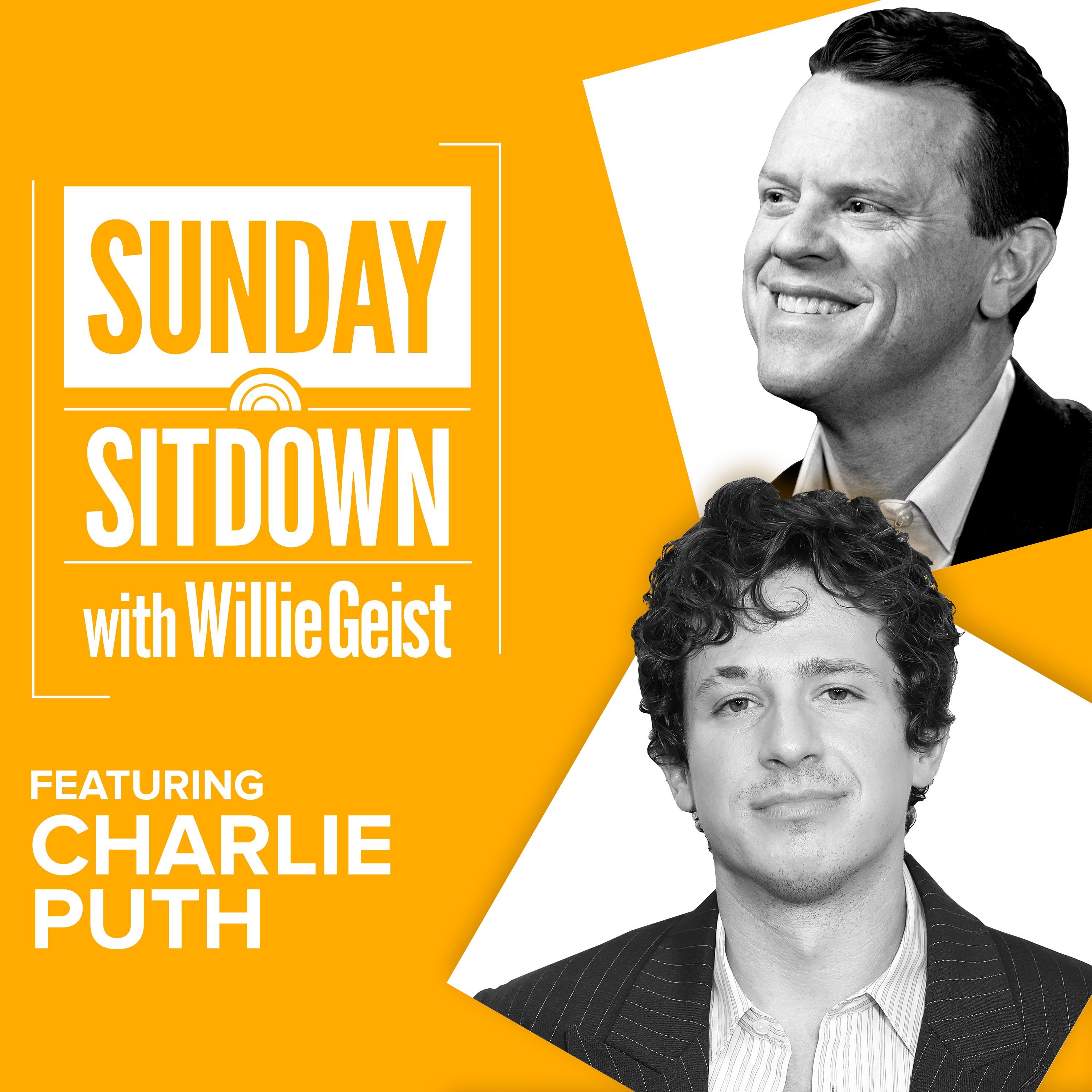
Sunday Sitdown with Willie Geist
Charlie Puth on His Super Bowl National Anthem, Taylor Swift’s Influence and New Album ‘Whatever’s Clever’
00:51:21
Grammy-nominated singer-songwriter Charlie Puth has spent the last decade topping charts with hits like “See You Again,” “Attention” and “We Don’t Talk Anymore” and recently performed the national anthem at the 2026 Super Bowl, drawing inspiration from Whitney Houston's iconic rendition. Puth sits down with Willie Geist at a New York City jazz club to discuss his fourth studio album, “Whatever’s Clever,” an orchestral pop record influenced by late 1980s and early 1990s yacht rock, while reflecting on the pivotal moments that shaped his rise from accidental pop star to global headliner. Plus, he opens up about a recent conversation with former President Barack Obama about the importance of music education, how Taylor Swift’s “The Tortured Poets Department” lyric pushed him to be more vulnerable and how marriage and impending fatherhood have reshaped his songwriting.
Loading summary
Transcript270 lines
- [00:00]
Narrator/Commercial Announcer
By order of the Peaky Blinders Academy Award winner Cillian Murphy returns alongside an all star cast including Rebecca Ferguson, Tim Roth, Sophie Rundle with Academy Award nominee Barry Keoghan and Emmy Award winner Stephen Graham in Netflix's upcoming film Peaky Blinders. The Immortal Man Tommy Shelby must face his own demons and choose whether to confront his legacy or burn it to the ground. Peaky Blinders the Immortal man is in select theaters March 6 and on Netflix March 20. March Rated R. Sometimes you want the
- [00:31]
Ritual Zero Proof Advertiser
full cocktail experience and the freedom to say yes to more the next day. That's where Ritual zero Proof comes in. These high quality alcohol alternatives are crafted to bring the bite, flavor and vibe of real spirits without the alcohol. Mix an Agave spirit margarita, pour in aperitif, spritz or sub in whatever fits your go to each one swaps in ounce for ounce, zero proof and low to no calories. More flavor, more moments, no trade offs. Ditch the rules. Keep keep the ritual. Find yours at ritual0proof.com.
- [01:06]
Willie Geist
Hey guys, Willie Geist here with a new episode of the Sunday Sit down podcast. My thanks as always for clicking and listening along. Got a great one for you with a truly brilliant musical mind, pop superstar and so much more.
- [01:20]
Interviewer
Really, Charlie Puth.
- [01:21]
Willie Geist
He writes music, he produces music for other people, and of course records his own, including the new album titled Whatever. Trevor's clever, which he calls yacht rock for 2026. As you'll hear in our interview, Charlie's story maybe you know it truly Born to do this, a music prodigy learned to play the piano at 4 years old. His mother was a music teacher. Then there is this seminal moment in his life. At 12 years old, he's sitting in church, the church organist is out and they literally ask the congregation for somebody to come up and play in place of the tape that they were just gonna put in. Without an organist in the house, 12 year old Charlie Puth raises his hand, steps forward and plays the entire service from memory. Having been in those pews for all those years, it just gives you a window into his musical mind and his musical talent. He went to Berkeley College of Music, a prestigious school up in Boston, graduated and moved almost immediately to Los Angeles to become a producer. On the second day he was there as a producer, he wrote a song called See youe Again. He cut a demo for it, gave it to all these record labels. They were trying to add it to the one of those Fast and Furious movies. They said we actually like the voice on the demo, let him record it. So overnight you'll hear him talk about this. Charlie goes from producer to artist, and he's thrust into the spotlight. When that song blows up, it's number one for 12 weeks. It gets nominated for three Grammys, and he's off to the races on the career of a pop star. You also just saw Charlie sing the national anthem at the super bowl and nailed it. Did kind of a gospel tribute in some ways. He said to Whitney Houston's version. He's always thinking about music. We spent some time at the piano, and I got to watch how he builds a song. It's just so cool to sit down and say, how do you do it, man? How do you come up with this music? Another cool note about his new album, Whatever's clever, it was inspired by his name, to his surprise, turning up in a lyric from a Taylor Swift song. The recent hit Tortured Poets Department. And she says, we declared Charlie Puth should be a bigger artist. Felt a little out of left field, but he took inspiration and motivation from that. So let's let him tell you these stories instead of me. I'll step out of the way, sit back, relax. Enjoy my conversation with Charlie Puth right now on the Sunday Sit down podcast.
- [03:46]
Interviewer
First of all, great to see you.
- [03:48]
Charlie Puth
Great to see you.
- [03:48]
Interviewer
Thanks for doing this.
- [03:49]
Charlie Puth
Absolutely.
- [03:50]
Interviewer
I like how you sit down and you're already studying the room. What do you see in here?
- [03:53]
Charlie Puth
Have you ever sat on one of those benches that kind of look like this, like in Central Park?
- [03:58]
Interviewer
Yes.
- [03:58]
Charlie Puth
There's one particular. I don't remember exactly where. Big Park. But if you sit on this side, and I were to sit on this side, you could whisper something to me, and the sound would travel the speed of sound all the way to. They call it the whisper bench. I think there's a few of them in the city.
- [04:16]
Interviewer
Yeah, yeah, yeah, yeah.
- [04:16]
Charlie Puth
And that's kind of what the curvature of this room is, kind of giving that upside down.
- [04:22]
Interviewer
And that's intentional for jazz, you think, to just keep it intimate, and.
- [04:26]
Charlie Puth
I think so, yeah. It's definitely. This room definitely has some intentional. Intentional things that my friend designed a restaurant who.
- [04:36]
Interviewer
Where.
- [04:36]
Charlie Puth
Where he put sound panels in the ceiling. So there's. I. I think that's kind of a common thing here. I don't see any sound panels, but maybe there's some good pink insulation.
- [04:47]
Interviewer
Yes. You're a musician through and through. You walked in, went right to the piano. You're just like. You can't help yourself, right?
- [04:53]
Charlie Puth
Well, that's the thing that calms me down. New York City can kind of get me like, sure on edge sometimes. So anytime I see a piano, it's like it's the only thing other than like food. If I'm hungry, that can instantly calm me down.
- [05:08]
Interviewer
And you've been doing it since you were what, 4 years old or something like that, right?
- [05:11]
Charlie Puth
Yeah, Since I was 4, yeah.
- [05:13]
Interviewer
More on that later. But I have caught you in just an absolutely incredible moment in your life. First and foremost, you're about to have a baby.
- [05:21]
Charlie Puth
Yes.
- [05:21]
Interviewer
Congratulations on the dance.
- [05:23]
Charlie Puth
Thank you. Thank you.
- [05:23]
Interviewer
You're about to give birth to an album.
- [05:25]
Charlie Puth
Yes.
- [05:25]
Interviewer
And a tour.
- [05:26]
Charlie Puth
Yes.
- [05:27]
Interviewer
And you just played the national anthem at the super bowl for like 150 million people or whatever it was.
- [05:33]
Charlie Puth
Yeah.
- [05:34]
Interviewer
How are you grappling with all the things that are happening in your life right now?
- [05:39]
Charlie Puth
I mean. Yeah. I'm not going to lie. Sometimes it's difficult to comprehend how I'm going to get all of this done at the same time. Having my first child and then going on a world tour, that's literally what it's called, the whatever's Clever world tour. So we're going around the world, having that all happen at once. I just want to make sure I'm always there for my baby.
- [06:05]
Interviewer
Yeah, yeah, yeah. I mean. And that hopefully you're able to do that, right?
- [06:09]
Charlie Puth
Shoot back and forth. Whatever. Whatever it takes.
- [06:12]
Interviewer
Yeah. I'll.
- [06:13]
Charlie Puth
I work hard for a reason. So if I have to fly somewhere just to. Well, not just to, but to play a show, see my fans, and then fly back and then fly somewhere the next day, I would do that.
- [06:28]
Interviewer
Gotta ask you about the anthem because as a viewer, we trust you. We know you're a great musician. We know you can sing and play and arrange and all the things you're so good at. But still the stage is so big, the audience is so big. There's some nerves. What did it feel like for you to stand up there?
- [06:47]
Charlie Puth
You know what's so funny is that when, or maybe this is typical for a performer, once I was on the field, I was no longer nervous. It was the hour long drive getting into the stadium the night before. Sleep, not sleeping. That's where the nerves were. It was the week leading up to it. But once I was on the football field, I felt fine. It was an oddly calming chaos. It was beautifully calm, yet not. And I didn't expect that. I didn't expect fans of the Patriots and the Seahawks to almost forgot who was playing musician. I almost forgot that I thought they were gonna be. I thought it was gonna be like people like, throwing things. It was the most calm. It was like we were in Carnegie Hall. Everyone was so calm. It was very nice.
- [07:50]
Interviewer
And there's a reverence for that song that lends itself to that calm. There was a moment at the end, right after the flyover, Home of the Brave. You nail the note, and the song ends. And I saw you just kind of go like this, and like.
- [08:06]
Charlie Puth
Cause I did it.
- [08:07]
Interviewer
You did it.
- [08:08]
Charlie Puth
I manifested this walking along the Hudson when I was told that I was chosen to do this. And I just. I. I think that was what I was thinking in that moment was, oh, my gosh. It sounds exactly how I thought it was going to sound in my head. It just sounded exactly how I imagined it to sound. And I think seeing the jets fly over was obvious. That was the obvious wow moment. But what I was really wowed about was, I can't believe it sounded exactly like how I had it in my head.
- [08:45]
Interviewer
I mean, the arrangement of chorus and orchestra feel like church, like you said a minute ago. And it was a nod to Whitney Houston in some way, right?
- [08:55]
Charlie Puth
Absolutely.
- [08:56]
Interviewer
So when you thought about it, was that right away you said, I want to give a little Whitney Houston energy to this.
- [09:00]
Charlie Puth
Yeah, but that will. The thing about Whitney's version, in my opinion, it'll. That will always be the best one ever done. So I wasn't trying to compete with it, but I wanted to pay its respects. Getting back to the music. When you listen to Land of the Free, you hear the melody. If you play Whitney's version and my version side by side, I'm singing the exact same. That's a complete respect paid to her and her version. Her melody is the same. Rather, mine is the same as hers. And there's. In the arrangement. I kind of hint at a. There's a lot of callbacks in the arrangement as well.
- [09:46]
Interviewer
I love what you did with it. It was really. You're in the pantheon. Whitney is. Whitney Stapleton, a couple years ago, did his own thing, did this beautiful rendition of it.
- [09:55]
Charlie Puth
Yeah.
- [09:55]
Interviewer
Congrats on nailing it. That's a big moment.
- [09:57]
Charlie Puth
Thank you.
- [09:58]
Interviewer
That's a big moment.
- [09:59]
Charlie Puth
I just. I want to inspire people to. I want people, music students, people just getting started or having done it for a while, who might be discouraged at times. I want them to look at that performance and know that they can do that too, because I never thought in a million years that I'd be able to do that.
- [10:14]
Interviewer
Boy, did you.
- [10:15]
Willie Geist
Hey, guys, thanks for listening to the Sunday Sit down podcast. Stick around to hear more from Charlie Puth right after the break, Tyler redick
- [10:24]
Tyler Redick
here from 2311 Racing. Game night's fun until someone spends five minutes lining up one shot.
- [10:29]
Charlie Puth
Chalk.
- [10:30]
Tyler Redick
Breathe. Re chalk. Still aiming. While they figure it out, I fire up Champa Casino. I can spin anywhere, anytime. And there's always a new social casino game every week, so spins happen way faster than that shot. Waitings for amateurs play now@chumbacasino.com let's jumba.
- [10:47]
Narrator/Commercial Announcer
No purchase necessary VGW Group void where prohibited by law. CTNC's 21/plus sponsored by Jumba Casino.
- [10:53]
Monday.com Advertiser
Close your eyes. Listen to Monday.com feel the sensation of an AI work platform so flexible and intuitive it feels like it was built just for you. Now open your eyes, go to Monday.comstart for free and finally breathe.
- [11:08]
Blue Apron Advertiser
When you think about meal kit companies, what do you see? Probably long, complicated recipes and subscriptions you can't escape. But with the new Blue Apron, we're doing meal delivery differently. No subscription needed. Faster, easier meals and the same dedication to quality we've always had. Shop 100/Meals@blueapron.com, get 50% off your first two orders with code apron50. Terms and conditions apply. Visit blueapron.com terms for more.
- [11:39]
Willie Geist
Welcome back. Now more of my conversation with Charlie Puth.
- [11:43]
Interviewer
Let's talk about the album. I got a chance to listen to it over the last couple of days. It's amazing.
- [11:49]
Charlie Puth
Oh, thank you.
- [11:49]
Interviewer
Really good.
- [11:50]
Charlie Puth
You're kind of a yacht. Rock 2026.
- [11:52]
Willie Geist
Is that what we're calling it?
- [11:53]
Charlie Puth
I think that's the easiest way for me to describe how the album sounds. We have Michael McDonald and Kenny Loggins and, and Kenny G. And we also have Jeff Goldblum.
- [12:03]
Interviewer
Goldblum, yeah.
- [12:04]
Charlie Puth
And we have new artists like Raven Lyne who are killing it. And Coco Jones, who also performed at the super bowl is one of the best voices out right now. I think there's. It, it's, it's in the arrangements. You listen to every song. The, the, the, the way that they used to craft these yacht rock songs, they, they were rock records, but they'd, they, they'd have like elements of jazz in them.
- [12:28]
Interviewer
Yeah.
- [12:29]
Charlie Puth
And on my second album, I really leaned into the R B plus jazz. And now this is kind of leaning into the rock ish plus jazz. It's not a complete. There's, it's still an R and B pop record, but I think that's the best way to describe it.
- [12:44]
Interviewer
Well, I heard as a child of the 80s, I heard like notes of my Favorite kind of music from like, late 80s, early 90s does that.
- [12:52]
Charlie Puth
Yeah, late 80s, early 90 s is definitely the. There's a. There's. There's always a decade comparison to my. My records, which I like a lot, but I'd say late 89 going into the 90s is how you describe it.
- [13:07]
Interviewer
Right. Little Phil Collins on some. Yeah, I thought I heard like a Wilson Phillips on the little. I'll. I'll let you know which one. There's just like all those. There's a nostalgia to it that feels good when the songs come in.
- [13:18]
Charlie Puth
Yeah. Without completely ripping off the. How it was done 30 years ago, but kind of swirling it and making it into a new. Its own new thing. I think we accomplished that. It's the first time I ever worked with an orchestra and a choir. That's all. There's a reason why you saw a choir at the Super Bowl. And when you listen to my album, that will make a lot of sense because there's choirs everywhere. Gospel choirs everywhere. There's an element of gospel all over the album, especially on the Jeff Goldblum song. Yeah, but those chords. I really laid into the chords.
- [13:54]
Interviewer
So how does your musical brain decide. This is the sound I want to go with on this album. Like, where. How did you land on this? Okay. I did R B on the last one. This time it's this.
- [14:06]
Charlie Puth
I think I have to take my mind. And this is very. This is a very hard thing for me to do. I have to take my mind out of music world and just sit with myself and think, where am I in life right now? I'm not where I was when I wrote Attention, so I'm not going to do that again. Although I love that song, I still love performing it. But where I am right now in my life, I live on a farm, and I live with the person who I'm going to spend the rest of my life with. And I'm very happy. So I'm going to make music that reflects that.
- [14:43]
Interviewer
And it's personal. I mean, song by song, there's something that minds. Whether it's singing to your father about your late grandmother and cry or you can hear it your brother. Like, you can hear it all.
- [14:55]
Charlie Puth
Disappointment as well. There's a song called Don't Meet yout Heroes that's being about being disappointed by someone who you might have looked up to for a very long time and still do. But now it's like this tennis match, internal tennis match that you have with yourself. Like this internal. Like, I. I still look up to this person in. In a lot of ways. But I don't. I don't know how I feel. The way I felt five years ago isn't the way I feel now. It's a. That's bottled up into a three minute song with a nice orchestra in it as well. And it's kind of sad, but it's happy sounding. There's a dichotomy there, which I like.
- [15:33]
Interviewer
Did you feel more free, Charlie, on this album to like talk about your life in a way that maybe you haven't in the past?
- [15:41]
Charlie Puth
I definitely felt more free to talk about my life in ways that I haven't in the past. Cause I felt like I was allowed to for some reason, but no one was saying I couldn't before. I think I had to just grow up. And it took me a while to do that as well. So I'm not really good at telling everyone about my life unless there's a beat behind it. I'm very. If there's. That's why. Again, why I walk to the piano. It kind of opens me up.
- [16:13]
Interviewer
Right, right. And you definitely do that on this album. There's a song called Jersey, which a couple of Jersey guys.
- [16:20]
Charlie Puth
That's right.
- [16:21]
Interviewer
Can really get behind.
- [16:21]
Charlie Puth
Bergen County.
- [16:22]
Interviewer
Yeah, Bergen County. You're down in Monmouth. And that's okay. We can still sit here and we
- [16:27]
Charlie Puth
can still be cordial with some. We can be court. Yeah.
- [16:29]
Interviewer
Yes. But we go our separate ways after this. But obviously.
- [16:32]
Charlie Puth
Absolutely, for this brief time, we like each other.
- [16:34]
Willie Geist
Yeah.
- [16:34]
Interviewer
For now. Yes. What is it like to sit down and talk about not just where your life is now, but where it's been to talk about your roots and to kind of mine some of the old material from childhood.
- [16:49]
Charlie Puth
Well, that song in particular is kind of a. I. I still love New Jersey. I'll always love New Jersey. I'll probably live in New Jersey again one day. That's a song about being in denial. Just because something not great happened to you once there. You're like, well, I'm just not going to go there anymore. It's like, dude, grow up. Of course it's your home. Of course you're going back there. So it's kind of a fun. That's. That's with Raven Lynae. And it kind of like sounds west Coast. Even though it's a song about the east coast, it's. It's a dichotomy. It's funny. There's an element of comedy throughout on this album, which I've never. I've never really Approached music that way before. But I realize some of my favorite moments in culture and in music have elements of comedy sprinkled in there. In them, there's a song called I Used to Be Cringe, which almost sounds like the middle of a funny Broadway show.
- [17:52]
Interviewer
And that's, I think that's the first song you wrote for the album. It's the last on the album, but it's the first one you wrote, I think. What do you. I was listening to it just this morning and there's almost a little sadness to it.
- [18:02]
Charlie Puth
Yeah.
- [18:03]
Interviewer
What are you talking about when you say I used to be cringe?
- [18:05]
Charlie Puth
Meaning I. For a long time as I was figuring out how to be an artist, I maybe put up a front a little bit at times. Maybe I pretended to be someone that I wasn't because I just wanted people to like me so badly. But again, part of growing up, it's funny, every time I say that, I keep hearing the Growing up song by Bruce Springsteen because we're talking about Jersey. Greetings from Asbury Park. It's a part of me growing up realizing that I didn't have to pretend to be anybody. All I needed to be was myself. And that's, I guess anybody watching this right now who might be going through that. It's sometimes hard to admit, but it is the best thing to be yourself. That's what's going to resonate most with people, especially if you're creating art because you're one of one. You want to create art. That's one of one. Just be yourself sounds easier than it is.
- [19:02]
Interviewer
I was going to say that's hard in the moment. There's a line in that song where you say something like, I just wanted a seat at the table.
- [19:09]
Charlie Puth
Yeah.
- [19:09]
Interviewer
I wanted to play it apart to get there.
- [19:11]
Charlie Puth
Absolutely. I want it so badly. It's get a recording contract. And I, once I got the recording contract, I wanted people to like my music so bad. So I would, I would slouch in interviews and like try and be this like, I, I, I'm not a mystery, like a cool guy. What makes me cool is that I am myself and I love art and I love people inspiring people to make art. But tell that to 20 through 22, 23 year old me. I just wasn't there yet.
- [19:44]
Interviewer
But it has to be gratifying to know that part of why you've exploded is by being yourself. Whether it's doing the stuff on social media and just saying, I'm a musician, I love music, I want to share with you What I know. And that's really where you've grown.
- [19:57]
Charlie Puth
Absolutely. I was telling Barack Obama the other night that there.
- [20:00]
Interviewer
This guy.
- [20:01]
Willie Geist
Go ahead.
- [20:02]
Interviewer
I didn't get the name you just dropped. Here you go.
- [20:04]
Charlie Puth
I'm sorry. Well, I mean, how am I going to tell the story? And it's a brief one too. The first thing I said to him is that there should be. Is there any way that we can have more music in schools? I travel everywhere in Europe. You go to Sweden. Every student starts. Maybe not everywhere, but most students start their day off with something creative and then they're excited to do the left side of brain activities for the rest of the day. It's that music curriculum has always taken a backseat here in America. Not everywhere. I mean, there's great schools here in Manhattan up in Harlem and Manhattan School of Music where I went, and upstate in Rochester at Eastman School of Music. There's great programs everywhere, even in Tanglewood and New England Music Camp and Count Basie Theater in Red Bank, New Jersey. It's there, it's. But why is it on this side of the. I want go in the middle of the country. There are great places there too. But I want, I, I just, I. And you know, maybe I can be the person to kind of lead the charge. That's a. You know, I, I care more about that than have. I want success in my music, but not just for self gratification. I want it to be the vessel that brings people to want to make music.
- [21:20]
Interviewer
And you're totally right about that. Whenever there are budget cuts, they go, go to the arts. Give me that.
- [21:25]
Charlie Puth
We need it for the football team, which is fine. Football is great. I love football, obviously. But I just believe that there's an artist in everybody.
- [21:35]
Interviewer
I love that. So let's talk about the artist in you. We talked about you from a very young age. Your mother being a music teacher, playing the piano when you were four. This moment famous now where you filled in on the organ at church at
- [21:50]
Charlie Puth
Holy Cross Apostolic church in Rumson, New Jersey.
- [21:53]
Interviewer
And you were how old?
- [21:54]
Charlie Puth
I was 11 or 12. Yeah, around, I think 12.
- [21:57]
Interviewer
And you weren't prepared for it. You just. There was a need and you filled it.
- [22:01]
Charlie Puth
Yeah, I, I always. And I, I love filling a need to this day at 34, I still have that same year in that I did at 12 years old to just musically feel something if, if I'm needed. And I was needed that day. There was. They were going to play the entire Mass on cassette and I raised my hand, I said, don't do that. I can. I've listened to it every Sunday. Like, we go to mass two times a week. I know it by heart. And everyone looked at me like, what? It's just like reading a, studying for a vocabulary test. If you read the definition of oxymoron a hundred times, you're going to remember what the definition is just because you read the passage so many times. So I just went up at the keyboard thinking that music is this literal thing that anyone can just listen to, like, words and memorize. And I just played the whole mess from memory. And I realized that that wasn't a typical thing and ended up, it would end up being a really useful tool later in life.
- [22:59]
Interviewer
Yeah, I mean, that's the kind of thing where you, that might be a watershed moment where you go, oh, I have something that's maybe a little bit different than other people have.
- [23:07]
Charlie Puth
Yeah, that was the watershed moment.
- [23:08]
Interviewer
That was it. And so was there ever any question, as you grew up and you came up, started doing YouTube videos and everything else, were you always going to be a musician in some form?
- [23:20]
Charlie Puth
I think I always knew I wanted to be a musician. My dad is a builder. He builds houses. So I was, I was always very fascinated by what he would do. And I, and I saw the similarities of what it was like building a house versus building a record. I'm gonna mess this up. So if he's watching it. But to. Typically when you build a small house, you, you start with the foundation, you lay the concrete down. No one in California has a basement. Some do, but in New Jersey, we need the basement. So I, I, you start with the basement and you just build the house layer by layer. And I realized that that's kind of how you produce a record too. You don't just, to produce a record, you don't just, like, throw every instrument in all at once. You, you can start with the, the low end, the bass, and, and then add the percussive elements and the little windows and finishes and the particular type of paint. That's what you put at the very end of a song, the little bells and whistles.
- [24:19]
Interviewer
And you saw it that way from a young age, like, oh, I think I know how to build a song.
- [24:23]
Charlie Puth
Yeah. And another thing I saw from a young age were my parents reactions to music that they loved. They put on a. In my mind I'm Going to Carolina by James Taylor and it would make the, the road trip better. And I knew from a very young age that I wanted to be responsible for writing those types of Records that gave people, AKA my parents, that type of reaction.
- [24:46]
Interviewer
I've heard you say before, you like being able to set a vibe or change a vibe. Only a room. And that's a gift that you have. If sometimes a vibe needs changing and you can do that.
- [24:57]
Charlie Puth
I mean, imagine. Have you ever been to a spa before? Imagine going to a spa and there's, you know, they're playing Metallica and I love Metallica, but you don't want to listen to it. Well, I do sometimes, but like a, like a fancy, nice spa where you're. I don't know, whatever people do at spas, you're not going to.
- [25:16]
Interviewer
Getting massage to Enter Sandman.
- [25:18]
Charlie Puth
Yeah, you're. You're not going to, you're not going to hear Sad but you're Enter Sandman or For Whom the Bell Tolls. When you're getting a relaxing Swedish massage, you're going to hear music that goes along with the experience. That's the same thing at a concert as well. In an hour into the show, it might be the part of the show where, you know, the vibe goes down for a second and then it picks back up. If there's a bunch of picture, there were a hundred people in this room talking, you wanted them to kind of chill out a little bit. There's a way to do that without getting on a megaphone to be like, please be quiet. You can, you can, you can convey that through the chords.
- [25:54]
Interviewer
Right, right. You can command their attention in different way.
- [25:57]
Charlie Puth
Music is. I don't think there's anything else that does that.
- [26:01]
Interviewer
That's so cool. You mentioned you went to the pre college program, Manhattan School music. You go to Berkeley, like you're very well and classically trained. And then eventually it's time to move to la.
- [26:13]
Charlie Puth
Yeah.
- [26:13]
Interviewer
And you go out there, you correct me if I'm wrong to be a producer, really, to make. Write songs and make music for other people. But then very, very quickly, that changed. That changed.
- [26:24]
Charlie Puth
Yeah. Because so for everyone who doesn't know, there are these things called demos. You have to sing the demo and sometimes the artist will hear the demo and then get excited by it and maybe want to change a couple things or rewrite some parts. But you send them the demo and then they re sing what you wrote most of the time. So that's what, that's what my job was in 2014. So I would sing the demos and then all the record label executives would ask, well, who's this singing? It sounds like an artist. And I'm like, well, no, I'M not the artist. I want X, Y and Z to sing it. And the song that I'm referring to is of course, See youe Again. And we wrote it for the Fast and Furious franchise and they were looking for artists to sing it. And nobody and their words, nobody did as good of a job as me. So overnight, I became the artist. That goes back to me, you know, fumbling a little bit and saying things that I shouldn't say in interviews and making things up. And because I. I didn't know what. I didn't know how to be an artist.
- [27:31]
Interviewer
Right.
- [27:31]
Charlie Puth
I didn't really. I knew myself, but I, I again, I thought I had to put up, you know, a fake front.
- [27:37]
Interviewer
Right. Because all of a sudden you were being asked to be the, the face of the song.
- [27:41]
Charlie Puth
Yeah. And I was. Sometimes I was getting bad advice, like, oh, you need to concoct this controversy for people to, to want to listen to. There needs to be some sort of story to draw people in. I didn't realize that it's just the song needed to be good.
- [27:56]
Interviewer
Well, you're also young and new, so you're listening to that and go, okay. I guess that's how it works out here.
- [28:00]
Charlie Puth
Just wanted to, you know, make people happy. I still want to make people happy. But now I know how to make myself happy.
- [28:08]
Willie Geist
Stick around for more of my conversation with Charlie Puth, right after a quick break.
- [28:16]
Charlie Puth
Oh, no, my coffee. Brawny here. New brawny 3 ply is now more absorbent. Wow.
- [28:24]
Blue Apron Advertiser
Got a clean shirt.
- [28:25]
Charlie Puth
Do you wear plaid? Some of the strongest.
- [28:30]
Willie Geist
Bubba Wallace here with Tyler Red.
- [28:32]
Charlie Puth
You know what's more nerve wracking than
- [28:34]
Willie Geist
waiting for qualifying results?
- [28:35]
Tyler Redick
Waiting for the green flag to drop.
- [28:37]
Willie Geist
Instead of pacing, we rev up with
- [28:39]
Charlie Puth
Chumba Casino's weekly new releases.
- [28:41]
Tyler Redick
It's like a fresh set of tires for your brain.
- [28:44]
Willie Geist
Play for free@chumbacasino.com.
- [28:47]
Charlie Puth
let's Chumba.
- [28:48]
Narrator/Commercial Announcer
No purchase necessary. VGW Group. Voidware prohibited by law. CTC's 21. Sponsored by Jumba Casino.
- [28:56]
Blue Apron Advertiser
This is a Monday.com ad, the same Monday.com designed for every team. The same Monday.com with built in AI. Scaling your work from day one. The same Monday.comwith an easy and intuitive setup. Go to Monday.com and try it for free.
- [29:13]
Willie Geist
Welcome back now to the rest of my conversation with Charlie Puth.
- [29:18]
Interviewer
So, see you again. True that. You wrote that on the second day you were in la.
- [29:23]
Charlie Puth
Yeah.
- [29:23]
Interviewer
So you arrive in la, two days later you write, see you again. Not again. Not with the intention of your Singing it right at get together. Wiz Khalifa.
- [29:32]
Charlie Puth
Yeah. Well, not with Wiz, who I just spoke to the other day. He's doing great. I got together with the two other songwriters on the song named DJ Frankie and Andrew Seder and DJ Frankie. Justin Franks, really talented songwriter. Would. We'd find out that we were. We had both just recently, in years time had experienced some form of loss. But why would we tell each other that, having just met each other? But we told each other that through the music, and because of that, we were. It was like, it's been a long day. And he'd say, oh, we should say something about friends without you, my friend. And then I said, and I'll tell you all about it when I see you again. And then he said, we've come a long way. And then I said, from where we began. And we're just meeting each other and having this amazing musical moment. And Andrew was working on the chords, and it's just. And then best friends came about just from our songwriting session.
- [30:32]
Interviewer
I can't imagine what it's like. And I've talked to other artists about this. To be in a room like that, and it feels good, but you don't know how it's gonna end up or where it's gonna go. And then to, like, you'll be in. In a couple of months, you'll be in a stadium halfway around the world, and the whole place will be singing the song back to you.
- [30:48]
Charlie Puth
Absolutely.
- [30:48]
Interviewer
That you wrote in that room. That must be an incredible feeling.
- [30:51]
Charlie Puth
It is an incredible feeling. And I'm not the only one who can do it, too, which is. There's a lot of. I believe there's a lot of discouragement going on. Like, if you try and be an artist and put yourself out there in the world, you're almost, like, laughed at nowadays. That's the only way to do it, is to put yourself out on the Internet and showcase your artistry. So let me be the example.
- [31:17]
Interviewer
Yeah, absolutely. Absolutely. That song becomes a huge hit. It's number one for 12 weeks. You get nominated for three Grammys. I think you would agree it's the song that changed your life. Yeah.
- [31:28]
Charlie Puth
We lost all of those, by the way.
- [31:29]
Interviewer
I know. Nominations. That's okay. It's all right.
- [31:32]
Charlie Puth
One day. I think this is the last year of me being a Grammy nominee.
- [31:35]
Interviewer
Yeah, I like that.
- [31:36]
Charlie Puth
Yeah, we'll play this. We'll rewind this back. I like it when I won several.
- [31:40]
Interviewer
I think you're gonna get a couple for this album.
- [31:42]
Charlie Puth
I think you should Anyway, yeah, we'll see. Yeah.
- [31:46]
Interviewer
What did that song mean to you? Your life, your career, when it really just took on a life of its own? What was that like in that time?
- [31:55]
Charlie Puth
It was equal parts amazing and frightening because like I said a couple times now, I had to figure out suddenly how to be an artist in front of millions of people. And they were all waiting. Well, not all waiting, but everybody was intrigued. What will he put out next? It's See youe Again as a piano based song. Okay, There's. Let's put out a song called Marvin Gaye. And it has nothing to do with See youe Again. And it's a great song, but it's. There's. There's no consistency in music really. I mean, the only. One of the only consistent things about that is the fact that I'm singing it and that I'm playing pian piano on it. I produce both records, Marvin Gaye by myself and then. But it didn't really serve me as an artist. No one really knew me yet. So then we put one call away out, which is more in the world of See youe Again, I'd say. And it's a song that I love. Oh, wait until you hear it on. On. On the road. It's. We have this new arrangement for it. I get excited and then I made out of Nowhere while I was traveling in the Philippines. I remember it was really hot and felt very tropical. And it was like 2016. And I thought, well, maybe I'll make some tropical sounding song. And then ding, ding, ding, ding, ding, ding, ding, ding, ding. We don't talk anymore. It all like kind of fell into place and then. And then attention and then had its bass line. Because I love Rick James and I love the Give it to Me. And how long has this been going on? Kind of has that same thing. So I started to have consistency, but it took probably eight years to get there. Okay, definitely. So it was an overnight thing, but not really.
- [33:41]
Interviewer
Well, there was probably also. I mean, you just alluded to pressure like this song is such a hit. Quick, get something else out. And you didn't have time to think about what that would be exactly. Or do it the way maybe you would do it with time.
- [33:52]
Charlie Puth
Absolutely. I couldn't have said it better. That's been most of my career. I've been on a radio promo tour with a hit out and nothing else. And I have to make an album in my tour bus. This is the first time with this record. Whatever's Clever. My fourth album, my fourth studio album. That I was able to say to myself, okay, you just got married. You have all intentions of starting a family. You are going to Asia for four weeks, doing that part of the tour. Think of songs like take your time. This is the first time where I had the luxury of being able to take my time.
- [34:32]
Interviewer
There was a moment when you kind of pulled away in 2020 that your third album and you said, this isn't right. Yeah, that felt like, to me, just reading about it felt like a moment for you where you're like, I'm gonna like, step off this treadmill for a minute and make sure I start to get things the way I want them to be.
- [34:49]
Charlie Puth
Is that fair? Yeah. Well, I felt that there was a lot of inauthenticity kind of clouding me at the end of 2019, right before the pandemic started. And I'm not going to sit here and be like, oh, the pandemic was good for me, but it was basically forced time for me to sit with my musical thoughts. And I didn't have that time. The last time I had that time was 2014, before my record deal, when I was living at my parents house. So where Was I in 2020? Living at my parents house again. And concocting these songs for this new app called TikTok and thinking, well, there's this duet function on this app that no one's really using or utilizing musically. I'll put up some chords. This song is half baked. It's unfinished. Maybe someone in New Zealand can write some top line or a melody or put a beat to it. And I started collaborating with. And a lot of these songs didn't come out. But I started really getting excited by the idea of Internet collaboration. And then Zoom became a thing. We would have Internet songwriting sessions. It sounds like I'm in 1993 right now. The Internet used fired up Netscape. But that was a really inspiring time for me too, because I think my third album was the Internet album.
- [36:22]
Interviewer
So what was happening in 2019 that made you feel like you needed a reset when you said it was an inauthentic time?
- [36:28]
Charlie Puth
Well, I think it was a combination of the people I was surrounding myself with. Maybe there's. But it's hard for me to describe because I'm really thankful for every moment because I wouldn't be here speaking to you at 34 fully. I believe I figured a lot out. I'm thankful for those moments of not having things figured out. And I don't place blame on anything or anyone. I was just kind of going through the motions, but I just wasn't really. I wasn't in a good place. It's like I knew Brooke was my wife now, was the one for me, and I didn't. I just wasn't allowing it to happen. For some reason.
- [37:14]
Interviewer
That's interesting.
- [37:16]
Charlie Puth
From a early point on, I was like this. I can't have that part of my life figured out. I just. I need to travel the world. I need to. It's just typical male stuff. Not figuring it out yet.
- [37:30]
Interviewer
So when did you smack some sense into yourself and say, wait a minute, I gotta do this?
- [37:35]
Charlie Puth
I think when I saw her with someone else and I knew that she was going to get married to them. And that was a real. That was a scary moment for me because I realized that's music. I always thought music was the one thing that could make me feel better. And for the first time, I was making music, and it wasn't making me feel better. It's the person that I should be writing songs about that was going to make me feel better, and I was gonna lose that person. So I had to really smack myself into shape.
- [38:12]
Interviewer
And now you are writing songs about her.
- [38:13]
Charlie Puth
Yes, absolutely.
- [38:14]
Interviewer
And you got a baby coming, so it's working out.
- [38:16]
Charlie Puth
Yeah. Whether baby likes music or not, that's totally fine.
- [38:19]
Interviewer
But I have a sneaking suspicion the baby's gonna like music. It'll be in the room anyway.
- [38:25]
Charlie Puth
You play this interview back in 18 years. We'll see.
- [38:29]
Interviewer
We'll see. I gotta ask you about the lyric in Tortured Poets Department from Taylor where she talked about you.
- [38:39]
Charlie Puth
That's the lyric that inspired this album.
- [38:41]
Interviewer
Well, that's what I was gonna ask you because it could be, like, kind of a fun one off. Oh, that's cool. She name checked me and you're like, no, actually it meant a lot to you and inspired you.
- [38:50]
Charlie Puth
Yeah. I think there was a lot layered into however many words that that nice lyric had. Bigger artists means that you have to open up. I think it was a message to, dude, open up a little bit, be an artist. She does that so well. That's why millions of people can relate to her. And I always felt like I kind of put a cap on how many people could relate to me. And that's a scary thing to open that can of worms. But I looked at that as, oh, it was very nice. But I think. I think that was a message to me to open up.
- [39:31]
Interviewer
That's so interesting. You don't hear that as like, he's so talented. He should be even more popular. Than he is. You thought she wants you to be a different kind of artist?
- [39:40]
Charlie Puth
Yeah. I mean, I don't know what her thoughts are about my music specifically. They can be whatever they are, but I do. And it would be advice that I would pass down to other artists, too. Just open up and it sounds like such an easy thing to do, but it's a terrifying and hard thing to do. But it's a good push to hear
- [40:03]
Interviewer
that in a song, and you're a good example for it because it took you so long to get to that place. Whereas you said you wanted to kind of keep everything tight, but you feel, like, a little bit liberated now that you've done it on this album.
- [40:14]
Charlie Puth
Well, I'm a very private person, but I realize that I can make art and talk about my private experiences and realize that they're actually not so private. There's a lot of people that go through what I go through. And that's how you relate to people who choose to listen to your music.
- [40:32]
Interviewer
Yeah. You're talking about universal themes.
- [40:34]
Charlie Puth
Absolutely.
- [40:36]
Interviewer
Last thing I want to ask you about is Professor Puth, because I think it speaks to who you are.
- [40:41]
Charlie Puth
I kind of look like Ross Geller right now, who I guess was a paleontologist in French.
- [40:46]
Interviewer
Is this the Ross look? I like it.
- [40:48]
Charlie Puth
This is a very pottery reborn. Like, I like it. They say days go by now. This is. That's.
- [40:58]
Interviewer
There's.
- [40:59]
Charlie Puth
We're in fall time. There's acorns on the ground. We'll re Air this coffee. Yeah, Coffee Village house. Yeah. Publicity will love that. Air it in the fall. Perfect timing.
- [41:09]
Interviewer
Very strategic of you. I can see now we have to air it later, too.
- [41:12]
Charlie Puth
I came up with Professor Puth with my friend Justin from the record label, just because I love talking about music. And he was like, oh, it's like you're kind of. He said he's. Well, he's Gen Z. So he said, oh, you're giving teacher. What are you saying right now? What is that? It's not a complete sentence. You're missing some prepositional phrases there. But he was like, no, you're kind of like a teacher. You could be the Internet's music teacher. Like, you're like. You're a Professor Puth. I'm like, pp Cool. All right. That's what I'll call this. That's the end of it. That's the end of that story.
- [41:48]
Interviewer
How cool, though, that. Because you are. You've got the perfect pitch. All these things that people know about you to in some Ways kind of give away your secrets so that other people can fly.
- [41:57]
Charlie Puth
I don't think there should be any secrets in music. I never understood accomplished producers who never handed out their sound banks and gave tips to other aspiring producers like, it was just meant for them. I believe music's meant for everybody. So I just gave out the stems, meaning the separate music files, to the pro tool session, to my song Beat Yourself up, which is the second single we put out on this album. And I just gave it to millions of people. Said, do what you want with these stems. Maybe make a remix of this. Like, make something that inspires me. I just think it goes. I think great music should be recycled, and I don't think there should be any secrets.
- [42:41]
Interviewer
That's so cool. Well, congratulations. The album's great. Congratulations on the national anthem, on the tour, and most of all on Baby.
- [42:49]
Charlie Puth
Thank you.
- [42:49]
Interviewer
Great to see you, man.
- [42:50]
Charlie Puth
Great to see you, Jersey.
- [42:51]
Interviewer
Thanks, Jersey, baby.
- [42:52]
Willie Geist
After our conversation there in the Django Jazz Club in New York City, Charlie just couldn't resist. There was a piano on stage. We hopped up. He told me how he builds a song. Also talked about the fact that. That he famously has perfect pitch.
- [43:06]
Charlie Puth
Like, there's a difference between that and. It gets ugly and then a little less ugly. Officially pretty. Really pretty. Even prettier, and then deep pretty. Same for, like, you can minor second. Versus. You have to put a little bit of ugly to make things really pretty, if that makes sense.
- [43:44]
Interviewer
The ugly is the foundation. Then you build on that.
- [43:47]
Charlie Puth
Yeah. I mean, even. Maybe ugly isn't even. It's. Well, it is ugly. That's like what a fire alarm is. But if you. You know, same thing. That's just. With that E flat added in there. And then you add the fifth, and that sounds like Toto. Although that's how you write songs. You just, like, play around. And, like, that's why it's really important for, like, the piano to sound, like, good. And this one's pretty good. I mean, so let's take a song
- [44:27]
Interviewer
like Changes, which is your first single off this album. Big hit.
- [44:30]
Charlie Puth
There's Been Some Changes.
- [44:32]
Interviewer
How'd you build that?
- [44:35]
Charlie Puth
That actually started out with the drums. It was like Blood Pop, who helped me produce that record, start off with that. And we were going through all our sound libraries, and nothing was really resonating. So I was like, all right, let's just go to the basic. Let's just go to a piano. And. And he stood up and he like, yum. That's what he says when he likes something and we put a little guitar. And then I just.
- [45:13]
Charlie Puth (singing)
There's something in the air. There's been a lot of smaller talk.
- [45:19]
Charlie Puth
Just out of nowhere, like just fell out of the sky and that.
- [45:22]
Interviewer
The lyrics come from there.
- [45:23]
Charlie Puth
Absolutely. And then we kind of knew what we wanted to sing about. The changes is about a friendship that's kind of morphing into a new thing maybe. Whether that be like you're not as close with the person or you just, you know, life happens, you get married, you move to different parts of the world. There's been some changes in our life. I can feel the distance, space and time has made everything different. Day and night, everything has changed. And I don't know why, but there's a Vertical Horizon song called she's everything she wants.
- [45:59]
Charlie Puth (singing)
She's everything you need. And she is everything inside of you that you wish you could be. He says all the. He says all the right things at exactly the right time, but he means nothing to you. And you don't know why.
- [46:17]
Charlie Puth
That's the inspiration. You don't know why, but you know why.
- [46:19]
Interviewer
Right?
- [46:20]
Charlie Puth
You internally know why, but you know, above the epidermis, you know, you don't know why.
- [46:25]
Interviewer
And does that hit you in the room? You think of that song or you come in with that as some kind of inspiration? It just hits you.
- [46:32]
Charlie Puth
Yeah, it's for that one specifically, like I said, started with the drums, the chords brought the melody out. Cuz I was in kind of a toto vibe, Phil Collins. And I'm listening back to, you know, kind of pacing the room because we recorded. And I'm looping it, I'm listening to. And it starts in. It just came out.
- [47:02]
Interviewer
Yeah. Yeah.
- [47:03]
Charlie Puth (singing)
There's been some changes in our life. I could feel the distance, space and time.
- [47:10]
Charlie Puth
I love when you can mute the vocals and hear the lyrics. They're like invisible lyrics. Like even like if you maybe attention. And the prechorus. That's the melody to the prechorus. And you hear it the moment you press play on the record.
- [47:37]
Charlie Puth (singing)
I know that dress is karma perfume.
- [47:39]
Charlie Puth
Regret.
- [47:40]
Charlie Puth (singing)
I mean, thinking about when you were mine and now I'm all up on you.
- [47:44]
Charlie Puth
What you expect? It almost sounds like a classical piece of music. So if the melody in a song is at the very top of the song and the human brain is hearing it and it's embedded in there already. Then when you fast forward 45 seconds, 50 seconds into the chorus and you hear something familiar, I believe that's what a hit record could be.
- [48:05]
Interviewer
And none of us knows that's happening. You just told me that. And I go, oh, I never thought of it that way.
- [48:10]
Charlie Puth
Because maybe it's not the. I mean, when I take medicine to feel better when I'm sick, I don't. I'm not necessarily like, well, what are these molecular components? Like, I'm. I'm. I mean, I'll still be interested in that, but, like, I just want to feel better. Yeah, People sometimes just want to put a song on. They just want to feel something.
- [48:29]
Interviewer
Don't intellectualize it.
- [48:30]
Charlie Puth
Just feel it or do it if you want to. I would, but not everybody wants to.
- [48:35]
Interviewer
I gotta ask you about the perfect pitch thing. Have you always had it, like, since you were a kid?
- [48:41]
Charlie Puth
I believe so, because there is a video. My mom used to, like, have one of these cameras around and, like, document. And that's what I'll do with my child as well. She used to document everything. And there's a video of me singing Cheeseburger in Paradise by Jimmy Buffett. And I'm singing it. My voice was higher back then.
- [49:07]
Charlie Puth (singing)
Cheeseburger in Paradise.
- [49:09]
Charlie Puth
I'm singing it in D major, so I probably did have it. I just didn't know how to articulate it that early on.
- [49:15]
Interviewer
For the layman, what does it mean exactly? Any noise you come across in your day, you hear?
- [49:21]
Charlie Puth
Well, everything. Yeah. Basically everything has tonality, including this air conditioner that the film crew so desperately wants to eliminate out of. And I understand why, but everything, like, from hitting. There's like a M like that just because of this room. If I hit this, the sound that happens, it kind of changed to B flat after that. But everything has tonality to it. If I hit the boop boop, which is. So it's the sound that happens after you hit something. That's especially true with things that naturally have. Like, if you hear James Taylor playing. I can hear that. And pick out all the notes that he's playing. So I'm able to. I'm lucky enough where I'm able to hear something and dissect it. Like, zoom in on it and see what all of the components are made of. It's the same thing as, like, a really good chef tasting a pie and knowing exactly what the person put into it. Right.
- [50:27]
Interviewer
All the ingredients.
- [50:28]
Charlie Puth
All the ingredients.
- [50:29]
Interviewer
How much of that is a gift? How much of it is the amount of time you've spent around music and absorbed things?
- [50:35]
Charlie Puth
I think they go hand in hand together. It's definitely. I've been. I'm definitely very lucky to have it because it Makes me able to come up with music very quickly. Like, I can hear a song finished in my head and then reverse engineer it. And it'll most of the time sound like how I imagined it, kind of like the national anthem. That what you heard at the super bowl is exactly how I thought it was gonna sound in my head. So I'm lucky in that sense. But do you need it to make a great song? No. There's people who make brilliant songs, and they're not the most proficient at their instrument.
- [51:13]
Interviewer
These kind of rooms, jazz clubs, you like playing these places? The intimacy of it.
- [51:19]
Charlie Puth
I do. They're actually a lot harder to play than the stadiums and the arenas because, you know, there's someone there looking at you like this. And if you play one wrong note, which is fine, by the way, but it's very noticeable. And just. You can really feel 200 people, 50 people's energy when they're right in front of you. It's very obvious that you're playing a show where in an arena you can have some lights. You got the smoke machine. You got some.
- [51:51]
Interviewer
You know, you can hide a few things. You need to.
- [51:54]
Charlie Puth
Yeah. If you need to. And there's more reverb. It's very dry in here. It's.
- [51:59]
Interviewer
Yeah, this is cool. With that said, how cool is it going to be to play the Garden on this upcoming tour?
- [52:05]
Charlie Puth
I've always wanted to play the Garden. I've always wanted to put a show on that is just not overly musical, but just musical over. It can be overly musical for those who want it to be, and then for everyone else who just wants to simply listen, it's for them as well. And to be able to have it sell so well is such an amazing thing. I'm not gonna say I never thought that I could sell out the Garden, but, like, I always wanted to. I just kept it in the back of my brain.
- [52:41]
Interviewer
A kid from Rumsen, New Jersey, to sell out the Garden. It's about as good as it gets.
- [52:46]
Charlie Puth
Yeah. I've been very fortunate to play the PNC Bank Art center and Count Basie Theater. And you're gonna. For everyone who saw me there, you can expect an even better musical show. We got a. I think we have the best band in pop and a lot of. Oh, that's not right. All those jazz chords, like, all those little kind of things that make you go, mmm. Like, I just made you go, mmm. And I was. I didn't even say, say, mm. I could just. You're going to hear all of that at the Garden show and on the, on the tour, if you choose to come to any more shows as well. I just think it's, I'm just, it wows me hearing the band play, so it's definitely going to wow everyone else.
- [53:33]
Interviewer
Awesome, man. Can't wait. Congrats on everything.
- [53:35]
Charlie Puth
Thank you.
- [53:36]
Interviewer
Appreciate the time today.
- [53:37]
Charlie Puth
Thank you. Thank you for this piano that you gave me.
- [53:39]
Interviewer
It's yours.
- [53:46]
Willie Geist
My big thanks to Charlie for a great conversation. His new album, whatever's Clever is out March 27, and his tour kicks off on April 22. By the way, Charlie and I had that conversation at the Django Jazz Club in the Roxy Hotel in New York City. A really cool room if you're ever in town. My thanks to all of you for listening again this week. If you want to hear more of my conversations with our guests every week, be sure to click follow so you
- [54:13]
Interviewer
never miss an episode.
- [54:14]
Willie Geist
And don't forget to tune in to Sunday Today every weekend on NBC to see these interviews with your own two eyes. I'm Willie Geist. We'll see you right back here next week on the Sunday Sit Down Podcast.
- [54:32]
Monday.com Advertiser
Real talent is defined by what people can do, not where they learn to do it. So by stopping at the education section of a resume that you might throw away the perfect hire skills first. Hiring helps you see talent others miss. Like more than 70 million stars skilled through alternative routes, let their story unfold and gain a competitive advantage. Because hiring managers who start with skills are 60% more likely to find a successful hire hire skills first. Learn why at tearthepaperceiling.org, brought to you by OpportunityAtWork and the Ad Council.